
 Loading more
A to F
Men from the Blackburn area commemorated on the Thiepval Memorial
A B C D E F
Letter A
Abbott George | Addison Arthur William | Addison Thomas | Ainsworth Albert | Ainsworth George
Almond George | Almond Samuel | Altham Ernest | Arkwright James | Ashton George
Aspin Richard | Astley Walter
Private George Abbott
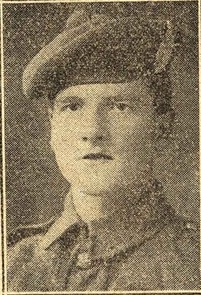
2nd King’s Own Scottish Borderers, 13480
Private George Abbott, son of Ellen Abbott of 7 Stakes Hall Place, Mill Hill, enlisted in August 1914 into the King’s Own Scottish Borderers, with his brother Percy. It is likely that they were to report to the main barracks at Berwick upon Tweed, where they will have received extensive training. This must have been a massive change of pace for the entire family, who had all been cotton weavers previously.
George joined the 2nd Battalion over in France on 27th August 1915, at a relatively quiet time for the Battalion and even Division. It would not be until March 1916 that the Battalion saw significant action, at Vimy Ridge, with trench raids, mining activities and sniping a constant threat.
In July 1916, after the initial attacks on 1st July, the Battalion was once again in action, at the attacks on High Wood near Bazentin-le-Petit. Over a period of 2 months the wood was fought bitterly over, and eventually won by the British.
The Battalion, meanwhile, was moved to fight in the battle of Guillemont, commencing on 3rd September. The Battalion was tasked with two others to take Falfemont Farm (13th Brigade). On this day the farm had not been bombarded as had been planned, owing to some mistake. Machine gun fire from the Germans at the wood broke up the attack, but the farm was finally taken in the early hours of the 5th September by the 1st Cheshire’s and 1st Bedfordshire’s after the 1st Norfolk’s had been held up in the front. No part of the farm was left standing by this time and there were no dugouts or trenches.
It was on the first day that George, aged only twenty-one, was killed in action.
His body was never recovered, and so George is honoured on the Thiepval Memorial to the Missing Pier and Face, 4 A and 4 D along with over 70,000 other soldiers.
Private Arthur William Addison
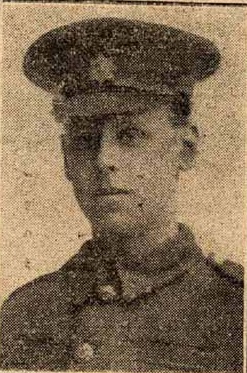
3rd Coldstream Guards, 12138
Private Arthur William Addison of the 3rd Coldstream Guards, son of John Solomon Addison and Ellen Ann Addison of 207 Beaumont Terrace, Blackburn, was killed on 15th September 1916.
Arthur was killed in action on the first day of the Battle of Flers-Courcelette which consisted of using massed artillery and infantry attacks to cut through the German lines.
The 56th Division was to form the right flank of the attack, but its attack soon bogged down. To their left the 6th Division needed to overcome a strong German position known as the Quadrilateral, north of Leuze Wood, before it could attack its first objective for the day.
Despite some bitter fighting, little progress was made. Next in line was the Guards Division. They eventually reached their first objective, but in some chaos.
Once there they believed themselves to be at their third objective for the day, and halted. By the end of the Battle on 22nd September 1916, the strategic objective had not been achieved.
The battle is significant for the first use of the tank in warfare. It also marked the debut of the Canadian and New Zealand Divisions on the Somme battlefield.
Arthur William Addison has no known grave and is remembered on the Thiepval Memorial to the Missing on the Somme, Pier and Face 7 D and 8 D.
Arthur’s brother, Roger Addison, was in the East Lancashire Regiment as a temporary 2nd lieutenant in 1918 and was awarded the Military Cross during the First World War (in London Gazette 3rd June 1918).
He was seconded to the Observer Corps as an Observer Officer (in London Gazette 23rd August 1918). He was awarded The Distinguished Flying Cross for his bombing on 10th October 1919 at Tsaritzin (in London Gazette 1st April 1920).
Private Thomas Addison
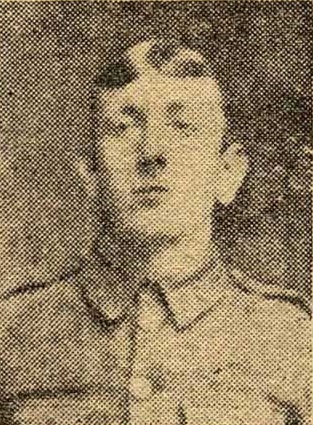
8th King’s Own Royal Lancaster Regiment, 18122
Thomas Addison was born in 1895, and would quickly follow in the family tradition of the Cotton Industry. He was employed at Lewis Bros.’ Springfield Mill, Blackburn. His parents resided at 86, Peter-street, Blackburn.
Thomas Addison was 19 years old when war broke out, and he joined the 8th Battalion of the Kings Own (Royal Lancashire Regiment).
After basic training Thomas embarked from France on 17th July 1915.The Battalion gained experience in smaller raids and trench-building works before the major offensive in the Somme region in July 1916. After first fighting in the Battle for Albert, the Battalion, and Thomas, would fight in the Battle for Delville Wood.'
The battle for Delville wood took place between 15th July and 3rd September 1916. By 13th July the British advance had taken it to a point where it was now facing the second German defensive complex. A well planned and novel night attack on 14th July took British troops through that line but they now ran into stiffening enemy defence at Guillemont, Delville Wood and Longueval, High Wood and Pozieres. Attack and counter attack ground relentlessly on as the British edged forward.
It was during these attacks that Thomas was killed, on 19th July 1916.
Thomas Addison is honoured on the Thiepval Memorial to the Missing Pier and Face 5 D 12 B
Corporal Albert Ainsworth
7th (City of London) London Regiment, 3937/351464
Albert Ainsworth started off as a private in World War One and joined the London regiment in the 7th (City of London) Battalion at Hammersmith, London under the regiment number: 3937.
He lived in Notting Hill, London, after moving from Blackburn.
The 1/7th battalion was formed in August 1914 in Finsbury Square, a district in central London and was assigned to the 2nd London Infantry Brigade in the 1st London Division.
Later on in his military career, he was promoted to Corporal and his service number changed from 3937 to 351464, this was because before 1917 all men serving with Territorial Force units were given either three digits or four digit service number. So from this information we know that Albert Ainsworth was a territorial forces soldier and was enlisted in the army before 1917.
The 1/7th battalion embarked and landed in France in 1915 and first saw action in Festubert in May 1915. The battalion took part in several major battles in World War One such as the battle of Loo’s in the September of that year, Vimy in May 1916, High wood in September 1916 and many other major battles.
The battalion did suffer major casualties in these heroic battles and Corporal Albert Ainsworth was one of the many casualties, killed in action on the seventh of October in 1916.
The 1/7th battalion were, at the time of Corporal Albert Ainsworth’s death fighting at Butte de Warlencourt in the October of 1916. There was a lot of casualties, as the soldiers were pinned down by machine gun fire. Around 300 officers and men lost their lives. The battalion was awarded the Battle Honour Le Transloy.
Albert Ainsworth is remembered at the Thiepval memorial, Pier & Face 9D 9C 13C & 12C.
Corporal George Ainsworth
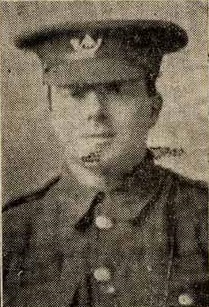
2nd Oxfordshire and Buckinghamshire Light Infantry, 16669
George Ainsworth was born in 1888, the son of Aaron and Maria Ainsworth. As a child, he was of a studious disposition, he was a great reader, and was passionately fond of music. George attended New Row Chapel, where he was actively involved in the choir.George married Leah Cross in 1912, but had no children.
George was an overlooker at Livesey’s Cotton Mill, Ewood. His father, Aaron and brother George were also weavers.He joined the 2nd Battalion Oxfordshire and Buckinghamshire Light Infantry in October 1914 and was sent to France on the 26th January 1915, after three months training.
On 28th July 1915 the 2nd “Ox. and Bucks.” moved to front-line trenches near Waterlot farm and sustained heavy casualties during battle on 30th July. They fought on the Somme at Delville Wood and Guillemont. Following months of bitter fighting into the autumn, the Battalion moved to fight on the Ancre. Just prior to this, George had been recommended for a Commission and was recommended for a Military Medal for gallantry in the field.
The Battle of the Ancre took place between the 13th and 18th November. The objective was the “Elimination of the German salient between Albert-Bapaume Road and Serre, with Beaumont-Hamel at its head.” At 5.45am on Monday the 13th November an artillery bombardment began. It was not only dark but there was a very thick fog. The attack was hindered by mud and heavy enemy fire but Beaumont-Hamel was taken the attackers pushed onto the outskirts of Beaucourt.
It was on this day that George Ainsworth lost his life. He was much esteemed by officers and men alike. The offensive operations all across the Somme were called off on the 19th of November, just a week later.
His younger brother Henry, who was in the 3rd Battalion of the Oxford and Buckinghamshire Light Infantry, was killed at Vermelles on the 15th October 1915. He was 24 years old and married to Martha Ainsworth
.George’s body, along with 70,000 others, was never found. He is still remembered on the Thiepval Memorial on the Somme, Pier and Face 10 A and 10 D.
Gunner George Almond
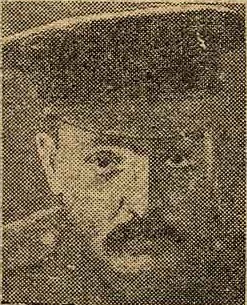
9th Loyal North Lancashire Regiment, 15981
George Almond was born around 1888, at 53 Toxteth St., Liverpool. He previously worked as a Dock Labourer, probably with his father, George Almond senior, who was a Dock Gateman. The 1911 census shows George Almond living with his parents, siblings: one brother and one sister; his sister’s husband with their two children.
When George enlisted he was 25, married and had moved out of his parent home. George Almond joined the war effort on the 17th of September 1914 at Liverpool, and was given the service number 15981. He joined the Loyal North Lancashire Regiment, 9th battalion, which was formed at Preston in September 1914 as part of K3 and came under command of 74th Brigade in 25th Division.
The battalion moved to Christchurch in December 1914 and to Southbourne in January 1915. In May 1915 they were moved to Romsey and then onto Aldershot the following month. On 26th September 1915 the Battalion landed in France.
His enlistment documents state that he had already served with the 3rd North Lancashire Regiment. George almond was awarded the Victory Medal, British Medal and the 1914-1915 Star for his efforts in the Great War. He took part in the first battles of the Somme, at Albert. It was here that George was killed.
George Almond died on 7th July 1916 aged 28, in a firefight north of La Boiselle, the fortified village of Ovillers was the centre of fierce and protracted fighting from 7th to 15th July in which the 2nd and 8th South Lancashire’s and 8th and 9th Loyal North Lancashire’s, all in the 25th Division, played a prominent role in capturing the ruins from the Prussian Guards.
His name is recorded at the Thiepval memorial, at the St. Bartholomew’s memorial Pier & Face 11 A.
Private Samuel Almond
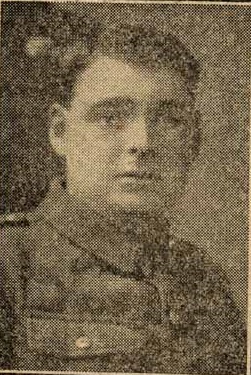
2nd East Lancashire Regiment, 22757
Private Almond was a single man, aged 28. He was the son of William and Johanna Almond and lived at 5 Hollin Street, Mill Hill, Blackburn. He was one of nine children. Samuel attended the Emmanuel School.
Samuel followed the family tradition, and was employed as a weaver at Waterloo Mill. Not long after war was declared, Samuel joined up; enlisting in September 1914 into the King’s Shropshire Light Infantry. He was quickly discharged in November 1914 though, for having flat feet and not having the character of a soldier!
Undeterred, he later joined the East Lancashire Regiment, 2nd Battalion. The 2nd Battalion took part in the Battle of Albert from 1st July 1916 to 13 July1916. The Battle of Albert is the official name for the British efforts during the first two weeks of the first Battle of the Somme. As such it includes the first day of the Somme, the most costly day in British military history.
Private Samuel Almond was reported as being killed in action on 23rd October 1916. At that time, the 8th Division, of which the 2nd East Lancs. were a part, had been battling around the Ancre Heights, although they were not directly engaged in any major offensives. Given this, it is more likely that Samuel was killed by artillery fire whilst the unit kept up its sentry work in the trenches.
Samuel Almond has no known grave and is remembered on the Thiepval Memorial to the Missing on the Somme, pier and face 6c.
His obituary notice stated that his brother William and a brother-in law had previously been killed.
Lance-Corporal Ernest Altham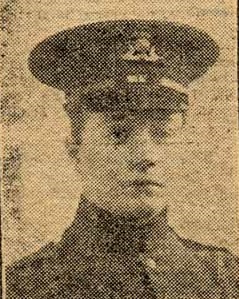 18th Lancashire Fusiliers, 17010
Ernest Altham was born in Blackburn in 1895, the son of George and Elizabeth Altham. His father and mother were both weavers, and in 1911, they lived at Sabden. The 1911 census shows that Ernest was 16 years old and a calico print works labourer for a colour mixer; later he became a weaver at Livesey Mill, Ewood.
He joined the Lancashire Fusiliers, 18th Battalion, January 1915 aged 20. This was a Bantam Battalion which meant that men who may be rejected due to their being too small were able to join up and fight for their country. The height of a “Bantam” was between 5ft and 5ft 3in.
The 18th Lancashire Fusiliers were part of the 35th Division, which landed at Havre in January 1916. They took part in the Battle of Bazentin Ridge between 14th to 17thJuly, 1916 which was a great success for the British when the German 2nd line was captured on a 6,000 yard front.
Arrow Head Copse and Falfemont Farm were part of the battle of Guillemont 3rd – 6th September 1916 where fierce fighting took place. Guillemont was at the Southern corner of the Somme Battlefield. Falfemont Farm was to the south east of Guillemont and was not taken until the 5th. The battle ended on the 6th of September with the major part of Leuze Wood being captured. Sadly, further advances were not possible.
In March 1917, the German armies on the Somme made a strategic withdrawal known as Operation Alberich. The withdrawing army destroyed everything they could not take: villages, and poisoned wells, blocked roads by blowing them up and cut down trees. They set booby-traps in ruins and dugouts. This withdrawal took the Germans to the Hindenburg Line.
It was on the 15th of April 1917 that Ernest lost his life. Ernest has no known grave and is remembered on the Thiepval Memorial to the Missing on the Somme, Pier and Face 3 C and 3 D
Private James Arkwright
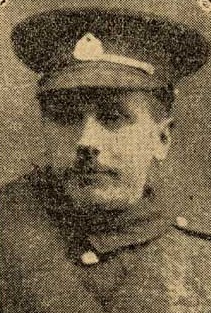
2nd/5th Lancashire Fusiliers, 7539
James Arkwright was born at Blackburn in 1880. In 1901, he married Eliza Greenacre, and by 1911 they had four children. He was, before joining the army a fire beater at Haston-street mill. He also attended church at St. Anne’s Catholic Church.
On the 4th of December he joined the East Lancashire Regiment, Number 3441. At some point he left the East Lancashire Regiment and joined the 2nd/5th Battalion of the Lancashire Fusiliers No. 7539.
Originally, the 2nd/5th Battalion was attached to the 66th (2nd East Lancashire) Division. By January 1916, it was part of the 164th Brigade 51st (Highland) Division.
The attacks on High Wood were part of the battle of the Somme. Between the 14th July and 15th September 1916 the British and Germans fought for control of the woods. The weather was atrocious; and the trenches water logged which restricted movement.
There were heavy casualties on both sides and James Arkwright was officially killed on the 12th of September, although the newspaper reported that he ‘fell in action’ on 9th September. By the 15th of September the British captured the woods.
James is remembered on the Thiepval Memorial, Pier and Face 3 C and 3 D.
Private George Ashton
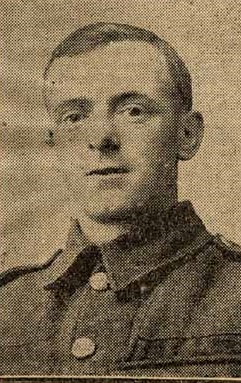
1st/5th East Lancashire Regiment, 242752
George Ashton was born in Blackburn in 1887. His parents were William and Margaret Alice Ashton; he had a younger sister, Elizabeth Ellen. George was a spinner at John Dugdale & Son’s on Higher Audley Street before the war. He was also prominently connected to the St. Matthew’s Church Lads Brigade.
His enlistment date is not known but it is likely that his first posting was to Egypt. In 1915, the 1st/4th Battalion became part of the 126th Brigade, 42nd (East Lancashire) Division. It is possible that George participated in The Battle of Romani.
The village of Epehy was captured at the beginning of April 1917 and it was here that George Ashton lost his life. At this time, small trench raids and sniping parties were part of normal life; it is likely George was on a trench raid when he was killed.
George is remembered on the Thiepval Memorial, Pier and Face 3 C and 3 D
Lance-Corporal Richard Aspin
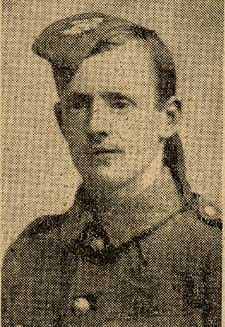
10th Cameronians, 13581
Richard Aspin, born in 1893, was the son of William and Eleanor Aspin. They lived at 20 Unity-street. Richard was an apprentice joiner and by the time he joined the army in 1914 was just finishing his time as an apprentice. He enlisted into the 10th Battalion of the Cameronions (Scottish Rifles) on the 6th September 1914, just as the Battalion was formed.
As part of Kitchener's Second New Army, the Battalion trained at Borden, and were finally moved to Salisbury Plain in April 1915. Richard landed in Boulogne in France on the 11th July 1915.
On 15th August 1915, Richard received a wound to his eye but was back on the front line a week later. Their first major engagement was at the Battle of Loos (25th September - 19th October 1915).
The Cameronions were at the Battle of the Somme and on the 15th September 1916 the 45th and 46th Brigade of the 15th Scottish Division attacked Martinpuich. The attack began at 6.20a.m. behind a creeping barrage going forward at fifty yards a minute. The outskirts of the village were quickly taken in the morning of the 15th, although the taking of the remainder of the village was nevertheless more difficult than this swift progress makes it appear as the village was full of dugouts and manned by troops of the Bavarian Division.
By early afternoon, the 15th Division was in possession of the village and at 3p.m. the troops had taken over the remaining ruins of the village which had been virtually flattened before the battle began. It was at this battle that Richard Aspin lost his life.
Richard is remembered on the Thiepval Memorial, Pier and Face 4 D.
Private Walter Astley
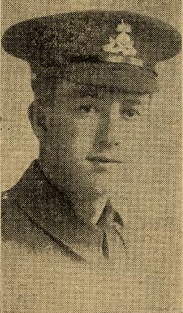
10th Lancashire Fusiliers, 5052
Walter was born in 1897, the son of James and Mary Ann Astley. He worked as a weaver at E. G. Hindle, Ltd., Bastfield Mill, and lived at 178 Whalley New Road, Blackburn with his parents and his brother William. The whole family worked at the Mill. Walter attended St. Stephen’s Church and Sunday School, in which district, he was well known and respected by all who enjoyed his friendship.
He joined the 10th Battalion Lancashire Fusiliers on the 25th August 1914 when he was just seventeen years old. He was part of Kitcheners New Army. The 10th Battalion formed part of 52nd Brigade, 17th Northern Division.
He embarked for France on the 15th of July 1915. The 17th Division spent time in familiarising themselves with the trenches and then they held the front lines in the Southern area of the Ypres Salient. In 1916, they were involved in fighting at the Bluff (South East of Ypres on the Comines Canal), and a number of engagements known as the “Actions of Spring” in 1916.
The Division was transferred to the Somme area in early June. Walter was killed on the 27th June 1916 just before the beginning of the battle of the Somme. His Platoon officer wrote: “For some time past now he has been with the Lewis Gun section and when killed he was near the gun of the team to which he belonged. He was killed by a shell which burst very close to him. He was buried at night behind the trenches. I am sorry your boy is dead. I always took an interest in him since for some time he was my servant. The Lewis gun officer speaks well of him. I can only end by saying he died a soldier’s death in a front-line trench at a time when we hope that we shall win a great victory.”
Walter is remembered on the Thiepval Memorial, Pier and Face 3 C and 3 D.
Letter B
Bailey Ernest | Bamber Richard | Barnes Jesse | Baron John | Baron Nehmiah
Battle James | Batty Alfred | Beattie Robert | Beggs Harry | Bell Benjamin
Blackshaw Charles | Blanchard Frank | Bleasdale James | Bolton Richard | Bolton Thomas
Bond Fred | Bond Pomfret | Bowers Walter | Bramley Richard | Brogden Herbert
Brooks Thomas | Brown Joseph | Brown George Irving | Burke Richard | Burton George
Rifleman Ernest Bailey
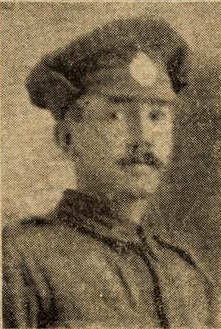
13th Rifle Brigade, S/10756
Ernest Bailey was born in 1885. He was married to Elizabeth Bailey and lived at 118, Infirmary-street, where they had two children. His job was an earthenware enameller at Messrs. Whittaker and Co. Ltd., Brickworks, Grimshaw Park, where he had worked for 16 years.
Ernest was prominently identified with Haslingden-road Wesleyan Church, where he was a member of the choir, and a teacher for the Sunday school. He was a well-known cricketer, playing with the Railway Clerks, whom he helped to win the championship of the Chorley and District League.
He enlisted into the army on the 17th May 1915 at the age of 30. He was invalided home in March 1916 and returned to the front the following June.
He fought in the Battle of Ancre 13th – 18th November 1916. The general assault at Ancre was launched amidst a tremendous artillery bombardment in darkness and thick fog at 5.45am on Monday 13th November.
The attackers had to contend with deep mud, heavy enemy fire and poor visibility. On the extreme left of V Corps, 3rd Division struggled through the mire at great cost towards Serre; isolated groups forced their way past barely cut wire but were gradually forced to retire.
As the attack resumed on the 14th, Ernest was killed in the ensuing fight. He was listed as missing at the time, and it was 6 months before he was officially listed as Killed in Action in April 1917.
Ernest is remembered on the Thiepval Memorial, Pier and Face 3 C and 3 D.
Private Richard Bamber
1st Loyal North Lancashire Regiment, 19435
Richard Bamber was born in Westhoughton, Lancashire and when world war one broke out in 1914, he enlisted at Bolton, Lancashire in the Loyal North Lancashire regiment and joined the 1st battalion. He was given the service number 19435.
There was a farewell concert performed by the band of the 4th Battalion Loyal North Lancashire Regiment at Preston Market Place on 12th August 1914. The 1st Battalion were leaving for Le Havre (France), they landed the next day. One of the first British formations to move to France, the 1st Division remained on the Western Front throughout the war.
They saw action at Troyon, Ypres, Aubers Ridge, Loos and the Battle of the Somme. In each battle the 1st battalion took heavy casualties, nearly depleting the whole regiment. The Loyal North’s somehow managed to carry on, even after unsuccessful attacks against the Germans, especially at the assault on Aubers Ridge (9th May 1915) which failed bloodily against strong German defences and well-sited machine guns.
The British bombardment, though ineffective against the enemy trenches, inflicted heavy losses on the East Lancashire’s, who had 449 casualties that day, while the Loyal’s losses amounted to 243.
Even at Loos, the final British offensive of 1915 which started on 25th September, the 1st Loyal North Lancashire’s made a gallant but unsuccessful assault in the face of uncut German wire, machine guns and gas. When, after a second attempt, the survivors rallied in the trenches, only three officers and 159 other ranks remained on their feet, sixteen officers and 489 men having fallen.
Then fighting of an even more intense character and larger scale opened on 1st July 1916 when, in order to take pressure off the French, the British Army began that immense and costly succession of attacks known collectively as the Battle of The Somme. Richard Bamber lost his life 15th July 1916, in the Battle of the Somme.
He can be remembered at Thiepval memorial. Memoriam: St Thomas, Pier & Face 11 A.
Private Jesse Barnes
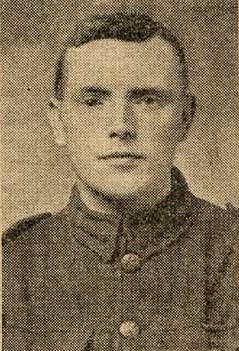
5th King’s Shropshire Light Infantry, 16058
Jesse Barnes was born in Blackburn in 1885. He was a cotton weaver and was connected with Furthergate Congregational Church, and he was well known in the district. By 1911, he was living with his older sister’s family at 22 Bennington Street.
Jesse joined the 5th Battalion King’s Shropshire Light Infantry in November 1914. He was part of Kitchener’s new Army and came under orders of 42nd Brigade, in the 14th Light Division.
He embarked to France on the 22nd of May 1915. In June 1915, the 14th Light Division took part in the battle at Hooge, Belgium; it was here that the Germans first used the flammenwerfer, or flamethrower. Later they took part in the failed attack at Bellewaarde.
In July 1916 the Light Division took part in the battle of Delville Wood. There was vicious fighting here involving the South Africans who suffered many casualties. On the 27th July the 2nd Division renewed the assault on the wood, and on the 4t August the 17th Division; managed to push the British line forward. An attack on 29th of August by the 14th (Light) Division forced out all but a small group of German defenders.
It was around this time that Jesse was killed, his body was never found. He was initially reported as missing. He was finally reported as “killed in action” in February 1917, leaving his sister and brother-in-law wondering about his fate.
Jesse is remembered on the Thiepval Memorial, Pier and Face 12 A and 12
Private John Baron
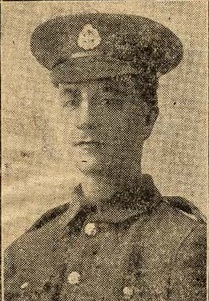 2nd/5th Lancashire Fusiliers, 204080
John was the eldest son of Sidney and Mary Alice Baron. He had six sisters and two younger brothers, Thomas and Sydney, who also served in the Army. All three brothers served in the East Lancashire Regiment. By trade, John was employed as a weaver at T. and R. Eccles Ltd., Lower Darwen. He was connected to St James’ Church, Lower Darwen and was a member of the Men’s Bible Class.
John Baron enlisted on the 23rd of March 1916; he was 32 years and 8 months.
In 1916 the 2nd/5th Battalion were part of 164th Brigade 51st (Highland) Division.
The 33rd Division attacked High Wood at dusk on the 19th of July. Two battalions of the 19th Brigade crept forward on 20th of July, during a bombardment and attacked when it lifted at 3:25 a.m. During the afternoon of the 21st July, another battalion went forward and managed to reach the northern fringe of the wood. Due to the number of British casualties, two more battalions were sent forward as reinforcements but as dark fell a German bombardment forced the British from the north end of the wood, which was retaken by German troops and both sides dug in
After the attacks on the 20th July ended the Germans reoccupied most of High Wood, until only the southern corner remained in British hands. They also dug a new defensive position, known as Intermediate trench, ahead of the Switch Line to the west of the wood. This meant that taking the wood, became an even harder for the British.
On the night of the 22nd/23rd of July, the 4th Gordon Highlanders attacked the eastern corner of the wood, whilst the 1st Royal West Kent’s attacked the south-eastern part of the wood and Wood Lane, there with the 14th Royal Warwickshire’s at their side.
There had been a preliminary bombardment, but this had not inflicted sufficient loss on the defenders, and they were able to hold High Wood. No significant gains were made, although the Royal West Kent’s suffered 420 casualties. The other battalions also suffered losses.
Units from the 51st Division fought here on the 23rd of July. The attacks On High Wood went on until the 15th of September.
John Baron was killed on the 9th of September during this battle. He was reported missing in September 1916 and presumed dead the following year. He has no known grave and is commemorated on the Memorial at Thiepval, Pier and Face 3 C 3 D.
It is thought that at least 8,000 British and German soldiers died in the wood in 1916
Sergeant Nehemiah Baron
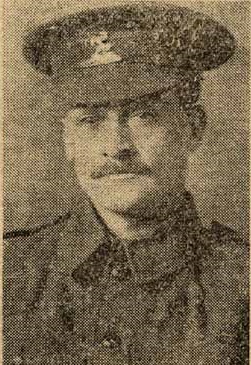
8th Queen’s Own (Royal West Kent Regiment), S/554
Nehemiah Baron was born in May 1878. He was married to Ann Elizabeth, and they had three children. The family lived at 65, Coddington-street, Blackburn. Before joining the army, Nehemiah was a weaver at Lewis Brother’s Springfield Mill.
He enlisted into the 8th Battalion Queen’s Own (Royal West Kent Regiment) on 7th September 1914, having previously fought in the Boer War.
On the 26th of September, 1915 the Battalion fought its first major action at the Battle of Loos, where the casualties were appalling. Of the twenty-five officers who went over the top, thirteen were killed and eleven wounded and, of the other ranks, over 550 out of about 800 became casualties.
In 1916 the Battalion took part in the battle of Delville Wood. There was vicious fighting here involving the South Africans who suffered many casualties. Over a period of 3 months, the wood would eventually be taken by brute force. Just as the final battle began, Nehemiah Baron was killed on the 1st September 1916.
Nehemiah is remembered on the Thiepval Memorial, Pier and Face 11 C.
Private James Battle
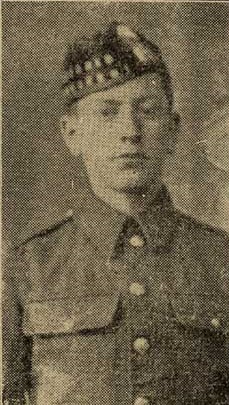
2nd Royal Scots Fusiliers, 17912
James Battle was the son of James and Mary Battle, of 12 Fort-street. He was born in 1897 and was the second youngest of seven children. He worked as a cotton Spinner at Imperial Mill, Blackburn, and was also connected to St. Alban’s Catholic Church.
James joined the army at the end on 1914, joining the 2nd Battalion Royal Scots Fusiliers. He left for France to join the Battalion 23rd August 1915. It was around this time that his brother, Owen was invalided out of the army. He was an old soldier, having joined in 1906 at the age of 18.
By 1916, the Battalion was part of 30th Division, who were to attack along the Albert-Bapaume road to Gommecourt on July 1st. The attack went ahead, but like most units on the Somme, the Battalion was bogged down by machine-gun fire and artillery. James was killed by a shell on the next day, July 2nd 1916.
James Battle is remembered on the Thiepval Memorial to the Missing on the Somme, Pier and Face 3 C, and has no known grave.
Private Alfred Batty
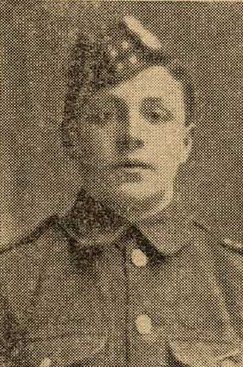
1st Royal Scots Fusiliers, 15754
Alfred Batty was the eldest son of Thomas and Sarah Batty. He had two older sisters and four younger sisters. By trade, he was a packer at Duxbury’s paper works.
Alfred enlisted at Blackburn into the 1st Battalion of the Royal Scots Fusiliers and embarked for France on the 21st of April 1915.
The Fourth Army planning for a major breakthrough attack on the German second position in the southern sector of the battlefield began as early as 8th July, when it was agreed that a dawn assault should be made on the line from Longueval to Bazentin-le-Petit.
Artillery bombardments began on 11th July and, based on XV Corps report on wire cutting requirements, the day of attack was set for 14th July. In massive contrast to operations on 1st July, great emphasis was placed on the element of surprise. To this end, the assaulting troops (Brigades of 9th and 3rd Divisions of XIII Corps, and 7th and 21st Divisions of XV Corps) were to assemble after midnight in the darkness of No Man's Land and form up within 500 yards of the German line.
With great skill, the undetected deployment of the attacking force was completed by 3am. An intense bombardment began at 3.20am which, precisely five minutes later, lifted as near 22,000 British infantry advanced through the light mist towards the enemy trenches. The German defenders, surprised by the shortness of the bombardment and proximity of the attacking waves, gave way and leading British Battalions quickly reached the front line and pressed on beyond.
The operation was a stunning success resulting in the capture of the German second position on a front of 6,000 yards. For a time the important position of High Wood remained open to occupation but delays in getting the cavalry forward meant that this opportunity was lost. Fighting for Longueval village continued after 17th July and was intimately connected with the long struggle for Delville Wood.
Alfred Batty was killed on the first day of this battle, the 14th of July and has no known grave. He is commemorated on the Memorial at Thiepval, Pier and Face 3 C.