
 Loading more
Page 4
Tinta Ali
From Ivory Coast to Blackburn:
The Remarkable Journey of Tinta Ali
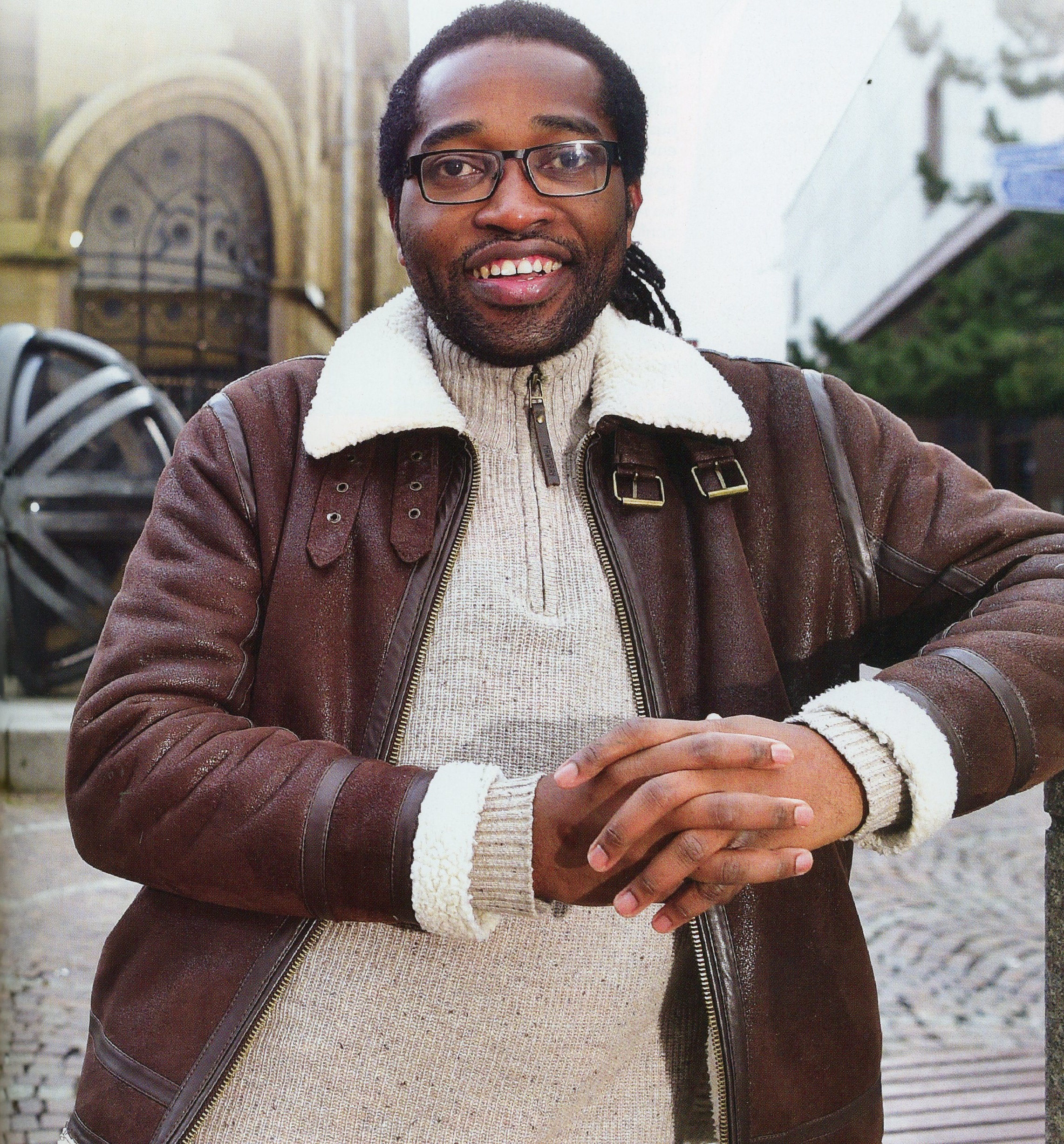
Tinta Ali
Born in the Ivory Coast in West Africa, Tinta Ali’s story is one of resilience, loss and an unwavering commitment to helping others. Raised in a Muslim family during what he describes as one of the country’s most stable and prosperous periods in the 1980s, his early life was shaped by his father’s influence – a successful businessman trading coffee, cocoa, vehicles and mechanical goods. His father’s international dealings, often with English-speaking partners from China, India and Taiwan, would later plant the seeds of a dream that changed the course of Tinta’s life.
Growing up, Tinta’s father often lamented the language barrier that limited his business ventures. “He used to say, ‘I wish we had someone who could speak English,” Tinta recalls. Recognising his eldest son’s potential, his father encouraged him to learn English, hoping one day he might study business in London and return to run the family enterprise. For young Tinta, it was an exciting vision. One filled with ambition and promise.
But life, as he would later learn, has a way of rewriting even the best laid plans. In 2002, civil war erupted in the Ivory Coast. The violence tore through communities, families and livelihoods. Amidst the chaos, Tinta’s father was targeted by the regime and executed. The loss was devastating. “It broke me,” he says quietly. “I lost not only my father but my entire world.”
The family’s business collapsed, their stability shattered. What had once been a future filled with opportunity was replaced by grief and uncertainty.
Years later, in 2010, Tinta arrived in the United Kingdom. A student with a dream to honour his father’s legacy. He initially came to study English and Business, just as his father had envisioned, but the trauma of war and displacement followed him. Eventually, he sought asylum, a process that tested his resilience yet again. “The system was confusing, and I didn’t know who to trust,” he recalls. “I just wanted to tell my story and prove what had happened.”
In 2011, the Home Office placed Tinta in Blackburn, a town he admits he hadn’t heard of before. “At first, I was disappointed,” he says with a laugh. “I thought it was too small. I wanted to be in London or Manchester.” But what he found in Blackburn would soon transform his perception of home. The warmth and support of the local community helped him rebuild his life from the ground up.
“I came here alone, but I’m not alone anymore,” he says proudly. “I found a new family in Blackburn.”
With limited work rights at first, Tinta turned to volunteering – something he had never imagined doing back home. Fluent in French and Arabic, he began interpreting for asylum seekers and refugees who couldn’t speak English. His skills quickly made him a valuable asset to local charities, police stations, councils and hospitals. Over time, his name became known across Blackburn’s community networks. “I had always been around business and money,” he reflects. “But volunteering taught me the true value of giving back. It changed me completely.”
Tinta’s work soon expanded to organisations like the British Red Cross and several refugee support groups. His empathy, linguistic skills and deep understanding of displacement made him an anchor for others navigating the same system he once struggled through. “Helping people who had stories like mine gave me purpose,” he says. “It reminded me that even after tragedy, you can still be useful.”
In recognition of his community impact, Tinta received a prestigious scholarship from the Open University to study Politics, Philosophy and Economics, a course perfectly aligned with growing interest in governance, justice and development. “When they asked why I deserved the scholarship, I just listed the charities I’d worked with,” he laughs. “They checked every single one and then called to say I’d got it. I couldn’t believe it.”
Studying part-time while continuing his community work, Tinta thrives on balancing academic challenge with service. “I study online in the evenings after work,” he explains. “It’s hard, but I’m doing it for free and that still feels like a miracle.”
In 2021, his efforts were formally recognised when he was named Man of the Year at the One Voice Awards, a celebration of community heroes across Blackburn and Lancashire. The moment was both surreal and affirming. “I never did any of this for recognition,” he says. “But when people tell me that my story inspired them, it makes me realise that my pain has produced something positive.”
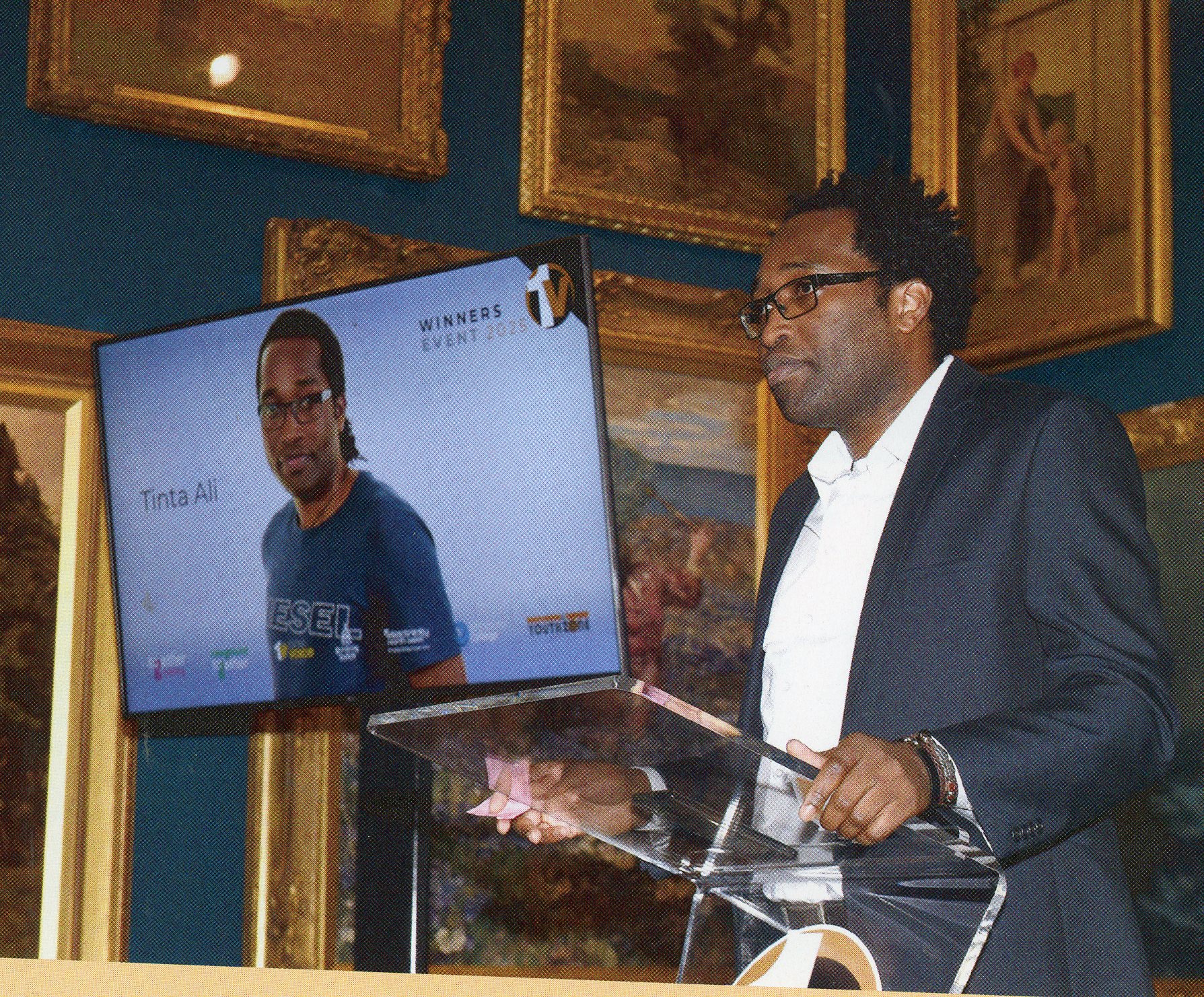
Tinta Ali receiving the 2021 One Voice Man of the Year Award
Despite his achievements, Tinta remains humble and grounded. He’s quick to credit Blackburn’s people for his success.
“From the white English community to the South Asian community – everyone has supported me. I’ve had moments when I wasn’t well and neighbours would show up with soup or food without me asking. Where else could you find that?”
He acknowledges that occasional racism or ignorance exists everywhere, but he refuses to let it define his experience. “I survived war. So if someone calls me names, it doesn’t hurt me,” he says with quiet strength. “Blackburn gave me friendship, belonging and peace, things I value more than anything.”
Today, Tinta is channelling his experiences into new creative pursuits. He is writing a book that explores the intersections of migration, identity and belonging, blending historical insights with fiction. “I’ve written about 20 to 30 pages,” he says smiling. “It’s about people’s journeys between Europe and Africa, about displacement and resilience. It’s my way of making sense of everything.”
When asked about the future, Tinta hesitates, not out of uncertainty, but gratitude. “I’ve had chances to move away from Blackburn,” he admits. “But every time I think about it, I realise my heart is here. God wanted me to be here.”
His family remains scattered. Some in Egypt, others elsewhere – but he stays in touch and visits when he can. While they may never all reunite in England, he hopes one day they’ll see what he’s built. “They think it’s too cold here,” he laughs. “But I tell them, the warmth isn’t in the weather, it’s in the people.”
Through war, exile and rebirth, Tinta Ali’s journey from the Ivory Coast to Blackburn stands as a testament to endurance and hope. What began as his father’s dream for him to learn English has grown into something far greater: a life dedicated to community, understanding and compassion.
“I lost everything once,” he says softly. “But Blackburn gave me back something even more important – a reason to keep going.”
Article published in One Voice Blackburn, issue 16 Spring 2026. Pages 41-43.
With thanks to One Voice Blackburn for permission to publish this article on Cotton Town.
Transcribed by Shazia Kasim.
Published August 2026
The Inspiring Story of Mariam Moosa
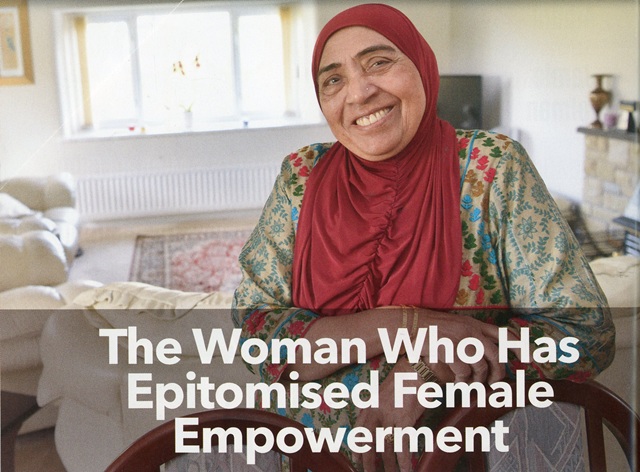
There are many successful businesswomen across Blackburn and East Lancashire, and in recent years, female-led start-ups have grown rapidly, matching, and in some cases surpassing their male counterparts. But long before this shift, one woman was already setting the standard. One Voice Blackburn speaks to Mariam Moosa, who began paving the way over 50 years ago.
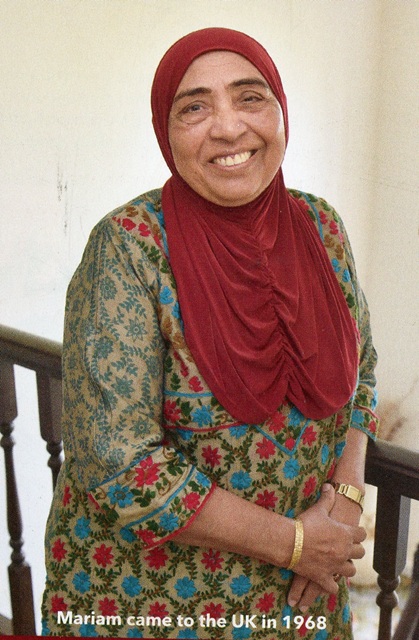
Mariam Moosa came from India to England in 1968 to get married, beginning a journey that would change the course of her entire life.
It was not just a journey across countries, but a journey away from everything she had ever known, her home, her family and the life that had shaped her.
Looking back, she remembers the emotions clearly. There was sadness in leaving but also hope for something better.
"I left behind my parents, my family and everything familiar," she reflects. "India was my home in every sense. I felt nervous, but also hopeful that England would give us a better future."
When she first arrived, everything felt unfamiliar. The cold weather, the language, the culture and even the rhythm of everyday life was all new. There were moments when the distance from home felt heavy and loneliness crept in. But she continued forward, learning to adjust little by little, step by step.
Her first home in England was in Dewsbury, where she began her married life. It was not an easy start. Opportunities for women were limited and building a sense of stability took time. Eventually she and her husband made the decision to move to Blacburn, a place that would become the foundation of their life together.
Primarily, they moved to Blackburn to seek work.
They settled on Inkerman Street, raising their two young children in a small and modest home. Money was tight and life was difficult, but it was there that they began to build something of their own.
"I still remember my first day in Blackburn. Everything felt strange. I didn't know anyone and I felt like an outsider."
Belonging did not come immediately. It took time, patience and effort. Slowly, as she worked, raised her children and became part of the community, Blackburn began to feel more like home.
Blackburn in those days was a working town, shaped by mills, factories long hours of labour. Life revolved around hard work, and everyone was trying to build a better future for themselves.
Yet in those early years, there were also moments of isolation. The language and culture were difficult at first.
"At times I felt misunderstood and alone. I coped by staying focused on my children, my work and the responsibilities that filled every hour of every day.
"There were times when life felt overwhelming. But I never gave up. My children gave me strength. I had to stay strong for them."
Becoming a mother changed everything for her. It gave her life direction and purpose. Her children became the centre of her world and everything she did was for their future. Education and opportunity were her greatest hope for them.
"Life left very little room for me. I worked long hours, raised children and managed the home. Holidays and personal time were really rare and life was entirely focused on responsibility and survival.
"It was all for my family. I didn't really enjoy life back then, it was work, children and responsibility."
Mariam began working at Newman's shoe factory, contributing to the household while her husband worked in the textile industry. When the mills later began to close and her husband lost his job, the family entered a very difficult period. Financial pressure and uncertainty became part of everyday life.
Despite this, she kept going. Alongside her factory work, she sewed clothes from home, doing whatever she could to support the family and keep things moving forward.
During this time, she also helped several of her relatives settle in Blackburn. When they arrived, she supported them in finding work at Newman's shoe factory and later in the family's own business.
"I wanted to help them the way others had helped us. It was important to give people a chance."
Eventually an opportunity came that would change everything. The family was able to buy a small newspaper shop on Limbrick, Preston New Road. It became the centre of their lives.
"The shop was more than a business. It was a place of connection and community. My husband and I worked together, selling newspapers, magazines and Indian/Pakistani publications that were especially meaningful to local families.
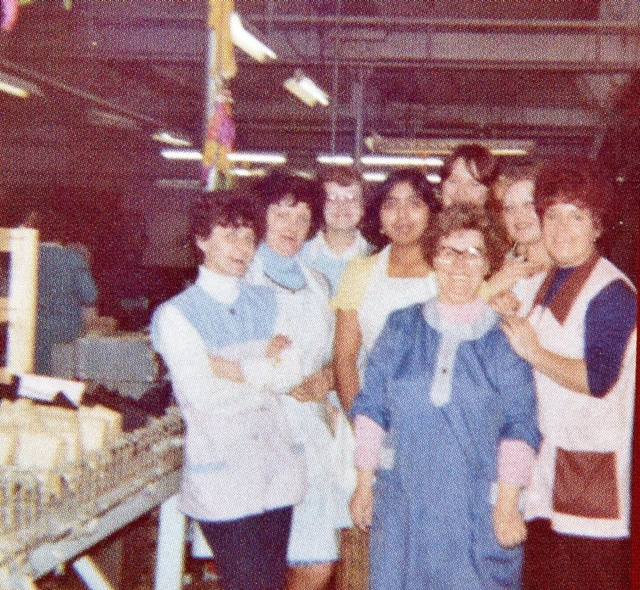
"It became part of the community. People didn't just come to buy papers. They came to talk, to share, to feel at home. It was also a hub for school children from various local schools."
Life revolved around the shop. They lived upstairs and worked downstairs. Early mornings began with deliveries and days were filled with customers and constant responsibility. It was hard work, but it was theirs.
Even while managing the shop and family life, Mariam continued to support others around her, helping relatives and newcomers settle into Blackburn, just as others had once supported her.
"One memory that still makes me smile is how the shop gradually became a familiar and trusted place in the community, somewhere people returned to not only for essentials, but for connection."
Even then, Mariam's determination did not stop there. When the takeaway next door (now Nile takeaway) became available, she saw another opportunity. It was a risk, and they had to take a loan, but she believed it was worth it.
There were moments when she felt underestimated, both as a woman and as someone building a new life in a new country, but instead of holding her back, it strengthened her determination.
"At the time there were very few takeaways in the area. I saw a gap and imagined something different, traditional fish and chips alongside Indian food, bringing together two cultures through food.
"I didn't think about whether it was unusual for a woman. I just thought about what needed to be done."
The 1970s and 1980s were years of relentless hard work. Life was centred around survival, responsibility and providing for the children. There was no time for rest. It was only work, family and perseverance.
Over time their efforts began to show results. By 1989, life slowly became more stable. They invested in property, strengthened their businesses and built a stronger foundation for the future. That same year, Mariam's work and achievement were formally recognised when she received the Asian Trader Award for Businesswoman of the Year, a moment she remembers with deep pride and gratitude.
"I was extremely proud of what I had achieved. I had a good life to that point and I felt that I had done well, considering where I had come from."
By the 1990s and 2000s, the life they had once only dreamed of had become reality. She retired early at the age of 53.
"Retiring was not a decision I took lightly, but it was one I had worked towards for many years. By then, I was in a secure financial position. I had rented out both the takeaway and the newspaper shop. I had accumulated properties in Blackburn, Liverpool and Manchester. I had a steady income that allowed me step away from work. After years of responsibility and long hours, I was finally able to let go of the daily pressures and focus on living."
That moment marked a real turning point in Mariam's life.
"For so long, everything had been about what needed to be done, running businesses, supporting family and making sure everything stayed afloat, even down to the early mornings and constant visits to the cash and carry at 5.00 am. Retirement gave me something I had never really experienced before – time for myself. I began to travel more, visiting India every year and exploring other parts of the world like South Africa, Canada and America. Those experiences brought me a great sense of joy and freedom."
Mariam felt that she still wanted to stay active and connected. That led her to start the Bastwell Buddies group, where she meets regularly with other women in Bangor Street Community Centre. It became a space for friendship and conversation in later life.
"It keeps me active and I really enjoy it. We meet and talk and we support each other."
Looking back, she is honest about the past. Life in those years was so focused on responsibility that she missed out on enjoying life as it was happening.
"I didn't really enjoy life when I was younger. I missed holidays and time for myself. But now, life is different. Now I enjoy myself. I go on holidays. I do things for myself and I finally have time that I didn't have before.
"Family has remained the centre of my life. Seeing my children married and settled, and watching my grandchildren grow up, has been one of my greatest blessings. We all live close to one another and meet regularly, which gives me a deep sense of comfort and happiness. I also spend time attending community events, staying connected and enjoying the simple things in everyday life."
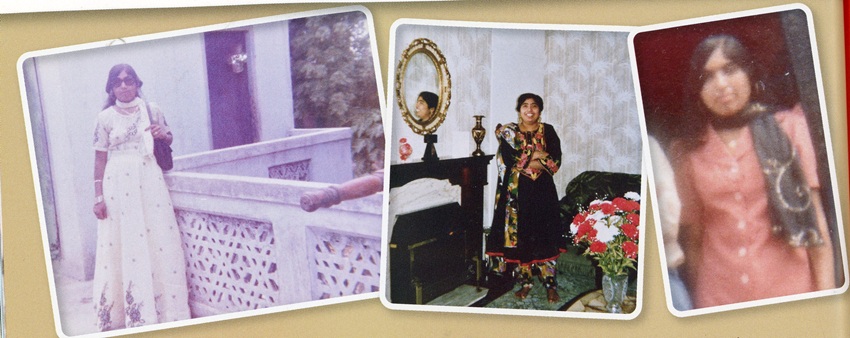
If she could speak to her younger self arriving in England, she would tell her to stay strong, be patient and never lose hope. Everything would make sense in time.
"Since retiring, I have not returned to work. Instead, I have focused on living fully, travelling, spending time with family and appreciating the life I worked so hard to create. I feel a deep sense of gratitude. It was not always easy, but every challenge and every risk have led me to where I am today.
"Looking back now, I don't just feel pride, but I have peace."
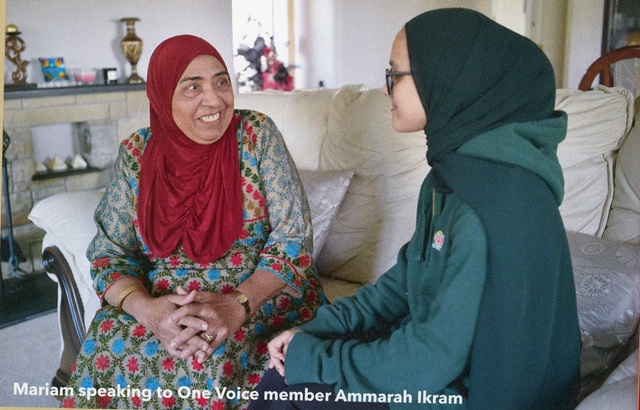
Interview conducted by 15-year-old Ammarah Ikram.
Article published in One Voice Blackburn, Issue 17 Summer 2026. Pages 26-28
Transcribed by Shazia Kasim
Published October 2026
Moonira Hinglotowala
A Recipe for Success
Moonira’s Ambition to Give Back to the Community
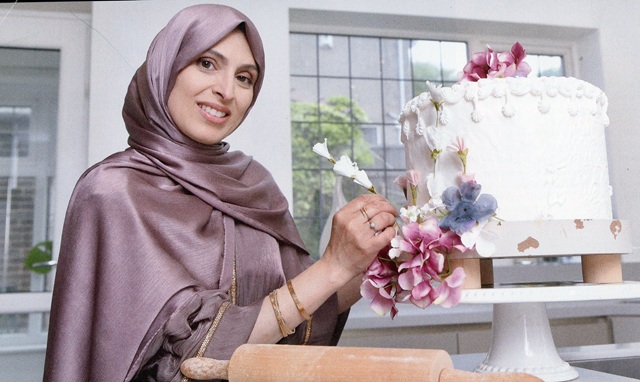
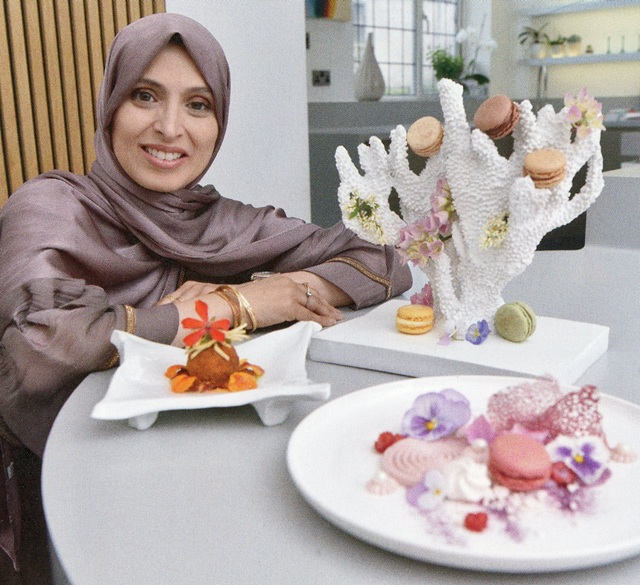
From MasterChef finalist to pharmacist, entrepreneur and mother of three, Blackburn’s Moonira Hinglotwala is embarking on a new mission, helping her community discover the joy of cooking.
By any measure, Moonira Hinglotwala has lived a remarkable life. A successful pharmacist, business owner, television personality and devoted mother of three, she has spent years balancing family, business and professional commitments. Yet despite her many achievements, one thing has remained constant throughout her journey, her deep-rooted love for Blackburn.
Now, the woman who captured the hearts of viewers during her memorable run on BBC MasterChef is preparing to give something back to the town that shaped her. Through a series of community-focused cooking classes, Moonira hopes to inspire people of all ages to gain confidence in the kitchen, develop healthier eating habits and reconnect with the simple pleasure of preparing food from scratch.
For Moonira, this new venture is about much more than recipes and cooking techniques. It is about community, heritage and creating opportunities for people to come together.
“I’ve always felt incredibly proud to be from Blackburn,” she says. “The support I have received from local people throughout my life and career has been overwhelming. These cooking classes are my way of giving something back.”
Born and raised in Blackburn, Moonira’s story is one of determination, ambition and resilience. She attended Beardwood High School before pursuing a career in pharmacy, eventually qualifying as a pharmacist and building a successful career alongside her husband. Over the years, the couple have established and operated several businesses, creating jobs and contributing to the local economy.
Yet food has always occupied a special place in her life.
“Growing up in a Gujrati household, I learned the importance of cooking for my family particularly from my mother and Grandmother,” admits Moonira. “The kitchen was more than a place to prepare meals, it was where stories were shared, traditions were passed down and family bonds were strengthened,”
Those early experiences would later shape her culinary identity.
When she appeared on MasterChef, Moonira brought those influences to a national audience. Drawing inspiration from traditional Gujrati cuisine while incorporating contemporary techniques, she quickly became one of the competition’s standout contestants. Her creativity, attention to detail and ability to balance complex flavours impressed both judges and viewers alike.
Her journey to the later stages of the competition earned her widespread admiration and transformed her into one of Blackburn’s most celebrated television personalities. Throughout the competition, she proudly represented her hometown, frequently highlighting the cultural richness and diversity that make Blackburn unique.
“The support I received from the local community during my MasterChef journey remains one of her most treasured memories,” says Moonira.
Residents followed every episode; social media buzzed with messages of encouragement and local businesses displayed their support. For many people in Blackburn, Moonira’s success felt personal.
Although several years have passed since her television appearance, Moonira has never forgotten the role Blackburn played in her success. In fact, her latest project stems directly from a desire to repay that loyalty and support.
Her upcoming cooking classes will focus on practical skills that people can use in everyday life. Rather than intimidating participants with complicated restaurant-style dishes, Moonira wants to empower people to cook nutritious, flavourful meals at home.
The initiative comes at a time when many families face increasing financial pressures and often struggle to find the time or confidence to prepare meals from scratch. Moonira believes cooking is a life skill that can improve health, strengthen family relationships and even support mental wellbeing.
The classes will draw upon the knowledge she has accumulated throughout her culinary journey, from traditional family recipes to the techniques she developed during her time on MasterChef. Participants can expect practical demonstrations, tips for meal planning, guidance on using spices and ingredients effectively, and inspiration for creating affordable yet delicious meals.
Importantly, the classes will be designed to be inclusive and accessible. Whether someone is a complete beginner or an experienced home cook looking to expand their repertoire, Moonira wants everyone to feel welcome.
That commitment to helping others reflects the same values that have guided her professional life.
“As a pharmacist, I spent decades supporting patients and improving health outcomes within the community. As a business owner, I have created opportunities for staff and invested in local services. Now, through food, I sincerely hope to make another positive contribution,” added Moonira.
The launch of the cooking programme follows her recent appearance on the Aleeza Isa Interviews show, where she spoke to Zaffer Khan about her journey, achievements and aspirations. The conversation offered audiences an opportunity to see the person behind the public profile.
As she prepares to launch this new chapter, Moonira’s focus remains firmly on the future. She is not interested simply looking back on her MasterChef success in 2019; instead, she wants to use the platform it provided to create something meaningful and lasting.
“In many ways, these cooking classes represent the perfect blend of everything that defines me: a love of food, a passion for education, a commitment to community and a desire to make a difference.”
And if her MasterChef experience taught the nation anything, it is that when Moonira Hinglotwala sets her mind to something, remarkable things tend to follow.
“Watch this space. The challenge is getting up and going which could take up to 12 months but once we get going, we will be unstoppable.”
Article published in One Voice Blackburn, Issue 17 Summer 2026. Pages 50-51.
Transcribed by Shazia Kasim
Published October 2026