
 Loading more
Page 3
Private Joseph Chadwick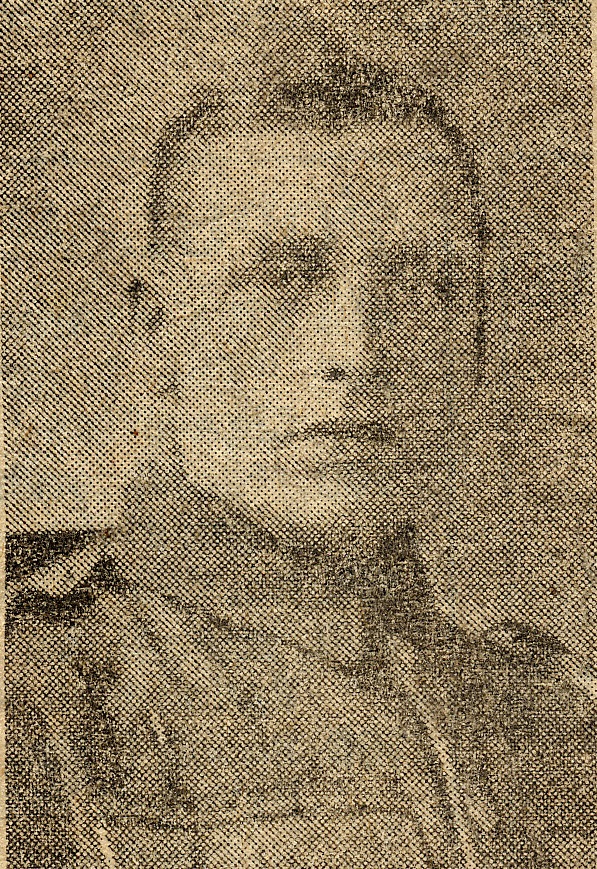
2nd/5th Lancashire Fusiliers, 204016
Joseph Chadwick was the son of Miles and Elenor Chadwick. He had an elder brother and sister and a younger brother and sister. By trade he was a weaver. He married Charlotte Hindle about 1904 and the couple emigrated to America in 1907, they lived at Bristol, Massachusetts.
On the outbreak of war, leaving his wife in America, Joseph returned to Blackburn to enlist into the 2nd/5th Battalion of the Lancashire Fusiliers.
In 1916 the 2nd/5th Battalion were part of 164th Brigade 51st (Highland) Division
The 33rd Division attacked High Wood at dusk on the 19th of July. Two battalions of the 19th Brigade crept forward on 20th of July, during a bombardment and attacked when it lifted at 3:25a.m. During the afternoon of the 21st July, another battalion went forward and managed to reach the northern fringe of the wood. Due to the number of British casualties, two more battalions were sent forward as reinforcements but as dark fell a German bombardment forced the British from the north end of the wood, which was retaken by German troops and both sides dug in
After the attacks on the 20th July ended the Germans reoccupied most of High Wood, until only the southern corner remained in British hands. They also dug a new defensive position, known as Intermediate trench, ahead of the Switch Line to the west of the wood. This meant that taking the wood, became an even harder for the British.
On the night of the 22nd/23rd of July, the 4th Gordon Highlanders attacked the eastern corner of the wood, whilst the 1st Royal West Kent’s attacked the south-eastern part of the wood and Wood Lane, there with the 14th Royal Warwickshire’s at their side.
There had been a preliminary bombardment, but this had not inflicted sufficient loss on the defenders, and they were able to hold High Wood. No significant gains were made, although the Royal West Kent’s suffered 420 casualties. The other battalions also suffered losses.
Units from the 51st Division fought here on the 23rd of July
The attacks On High Wood went on until the 15th of September.
Joseph Chadwick had been in hospital just seven days before he was killed. Whether he had been wounded or was ill it is not now possible to know. On the 9th of September during this battle Joseph was killed. He has no known grave and is commemorated on the Memorial at Thiepval, Pier and Face 3 C 3 D.
It is thought that at least 8,000 British and German soldiers died in the wood in 1916.
Private William Chew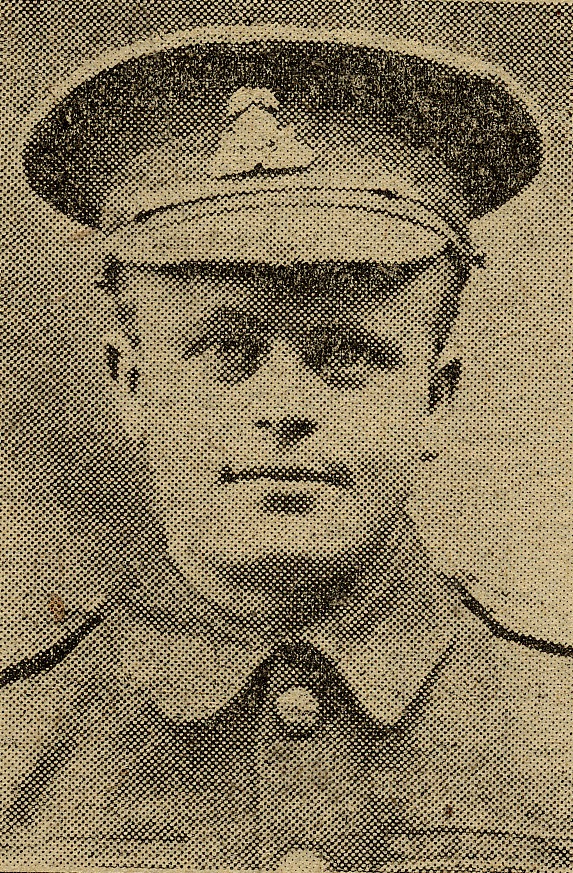 18th Lancashire Fusiliers, 31604
William was the eldest son of Arthur and Lucy Chew. He had two older sisters, three younger sisters and two younger brothers. By trade he was an apprentice pattern maker at Yates and Thoms, the same profession as his father. William enlisted at Blackburn into the 18th Battalion of the Lancashire Fusiliers which came under orders of 104th Brigade, 35th Division.
In July 1916, the 35th Division was deployed at Bazentin Ridge, Arrowhead Copse, Maltz Horn Farm and Faifmont Farm during the battles on the Somme. In the Guillemont area, overnight on the 29th/30th July 1916, the 30th Division's soldiers were again moved up to positions in Trones Wood - Maltz Horn Trench area.
The plan was that the 30th Division would attack through the 35th (Bantam) Division's men who were still garrisoning the front lines. Whilst the 30th Division was being brought forward in darkness, the German barrage on Trones Wood increased in intensity and a number of the units were badly affected by gas and high explosive shells.
The shelling in this area was ferocious. It was probably during this fierce shelling that William Chew was killed.
He has no known grave and is commemorated on the Memorial at Thiepval, Pier and Face 3 C and 3 D.
Private James Clarkson
2nd Coldstream Guards, 17381
James was born in Mellor to Thomas and Annie Jane. Thomas in 1901 was described as a farmer living at Shap Fold, Osbaldeston and had been born in Ilkley, Yorkshire. In 1911 Thomas was employed as a gardener and James worked as a warehouseman at the local mill in Mellor called Elswick Mill.
The address was now Brookfield Cottage, Mellor. James had two sisters and three younger brothers. James was not awarded the 14-15 Star so must not have served until 1916. He was killed in action on the second day of the Battle of Morval September 26th.
According to the obituary in both the Blackburn Times and the Weekly Telegraph dated the 14th October 1916 he had been a member of Osbaldeston Roman Catholic Church and had been home on leave only two months prior to his death. He has no known grave and is commemorated on the Memorial at Thiepval, Pier and Face 7 D and 8 D.
Signaller Joseph Clarkson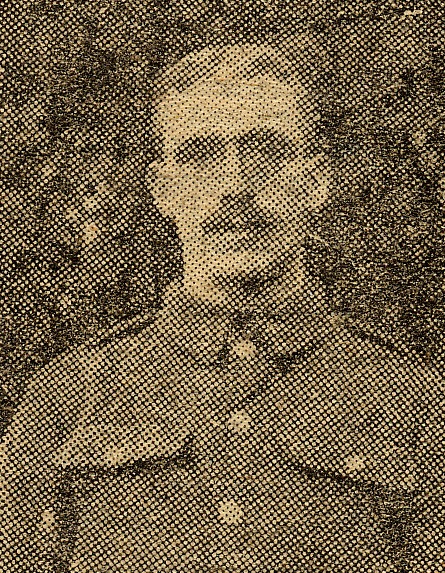
6th Connaught Rangers, 264
Joseph Clarkson was the husband of Eliza Clarkson with 4 children. By trade he was a labourer at Hodgson and Taylor’s Dye Works, Blackburn. He enlisted at Accrington into the 6th Battalion of the Connaught Rangers which was part of the 16th (Irish Division.) He Embarked for France on the 17th of December 1915, and served on the Western Front.
The Battle of Guillemont, was part of the Somme Campaign and was fought between the 3rd and 6th of September 1916
Throughout late July and August 1916, Guillemont (in the southern corner of the battlefield, a few hundred yards east of Trônes Wood) defied repeated British attacks. These bloody encounters led only to partial and temporary occupations of shattered ruins as determined German counter-attacks and continuous artillery fire forced later withdrawals.
Another major attack was planned for late August, though heavy rain delayed the operations until 3rd September. Preliminary bombardments began on Saturday 2nd September and, at 8.50 am on Sunday morning, 5th Division advanced towards the protective strongpoint of Falfemont Farm to the south-east of the village.
The main assault on Guillemont itself was made by 20th (Light) Division, two battalions of which crept forward before zero hour and took the Germans by surprise. At noon the main line, including a brigade of the 16th (Irish) Division, advanced and after much difficult fighting (especially near the quarry and station) Guillemont was secured and progress made several hundred yards eastwards.
Although 5th Division failed to take the Farm, units did break into the German second line position. Next day saw 5th Division attempt advances towards Leuze Wood including another attack on Falfemont Farm which was not captured until early the following morning allowing contact with French infantry on the right. Later reports of enemy disorganisation prompted renewed attacks on Leuze Wood and eventual occupation of its south-western edge.
The major portion of wood was secured on Wednesday 6th September, but further advances beyond Guillemont were hampered by fierce German fire from Ginchy and a stronghold called the 'Quadrilateral'. It was clear that capture of Ginchy was essential in order to exploit recent hard-won gains.
It was on the 3rd of September, first day of this battle, that Joseph Clarkson was killed.
He has no known grave and is commemorated on the Thiepval memorial, Pier and Face 15 A.
Private George Clayton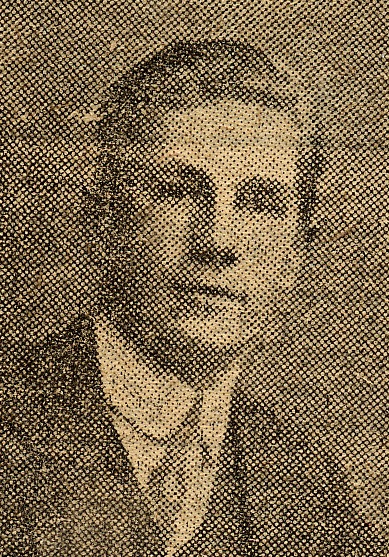
11th East Lancashire Regiment, 15077
George Clayton was the second eldest son of Thomas and Kate Ellen Clayton, there were 6 other children in the family, three boys and three girls.
Enlisted into the 11th Battalion of the East Lancashire Regiment (Accrington Pals) at Accrington. The 11th Battalion were involved in the battle of the Somme, positioned at Serre.
At 7.20a.m. on the 1st of July 1916, after a bombardment that lasted six days, the soldiers of the first wave left their trenches, passed through the British wire and lay down in No Man's Land to await the end of the bombardment.
This ceased at 7.30a.m., and in front of Serre men of the 12th York and Lancaster (Sheffield City Battalion) and the 11th East Lancashire’s (Accrington Pals) who were the first wave stood up and tried to cross No Man's Land. Just to the south, the attackers were of the 15th West York’s (Leeds Pals) and the 16th West York’s (1st Bradford Pals).
The Sheffield City battalion men had laid white tapes which led to gaps in the German wire the night before, but when they attacked these were gone. The attackers were mown down by machine gun fire, and there was an almost total lack of success here, although one company of the Accrington Pals did reach Serre, but were lost.
Reinforcements, men of the 13th and 14thYork and Lancaster’s (the 1st and 2nd Barnsley Pals) were sent in, but were also stopped with no success, and the attack here was then suspended, with no gains made whatsoever.
George Clayton was killed during this battle. He has no known grave and is commemorated on the Memorial at Thiepval, Pier and Face 6 C.
Private Harry Clinton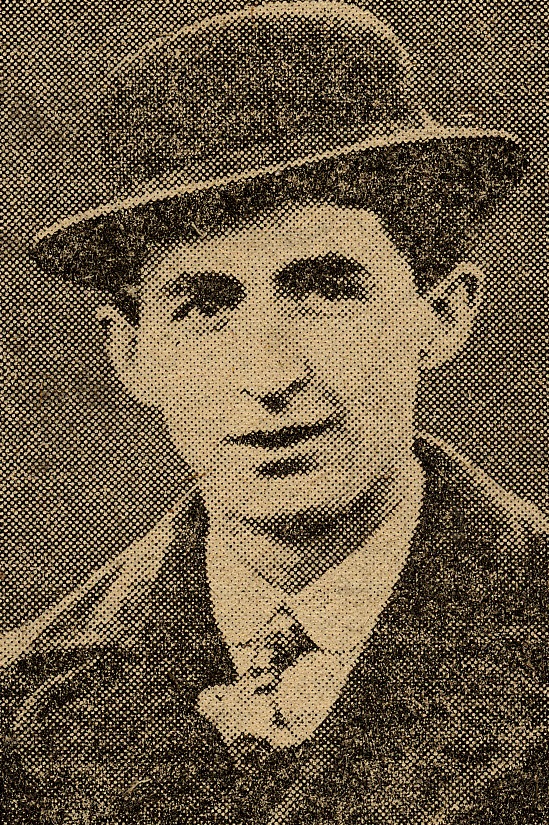
11th East Lancashire Regiment, 24176
Harry Clinton was the second son of three of Samuel and Amelia Clinton. He was born at Blackburn in 1893. His job was a Shop man at John Birkett, glass and china merchant, 122 Darwen-street. He was unmarried when he enlisted with The Accrington Pals in September 1914.
The 11th Battalion was involved in the battle of the Somme. They were positioned at Serre, and at 7.20a.m. on the 1st of July 1916, the soldiers of the first wave left their trenches, passed through the British wire and lay down in No Man's Land to await the end of the bombardment. This ceased at 7.30a.m., and in front of Serre men of the 12th York and Lancaster (Sheffield City Battalion) and the 11th East Lancashire’s (Accrington Pals) who were the first wave stood up and tried to cross No Man's Land.
Just to the south, the attackers were of the 15th West York’s (Leeds Pals) and the 16th West York’s (1st Bradford Pals). The Sheffield City Battalion men had laid white tapes which led to gaps in the German wire the night before, but when they attacked these were gone.
The attackers were mown down by machine gun fire, and there was an almost total lack of success here, although one company of the Accrington Pals did reach Serre, but were lost. Reinforcements, men of the 13th and 14th York & Lancaster’s (the 1st and 2nd Barnsley Pals) were sent in, but were also stopped with no success, and the attack here was then suspended, with no gains made whatsoever.
The newspaper obituary gives his date of death as the 1st of July 1916, while the Commonwealth War Grave says the 2nd of July.
Harry Clinton has no known grave and is commemorated on the Memorial at Thiepval, Pier and Face 6 C.
Private John Collum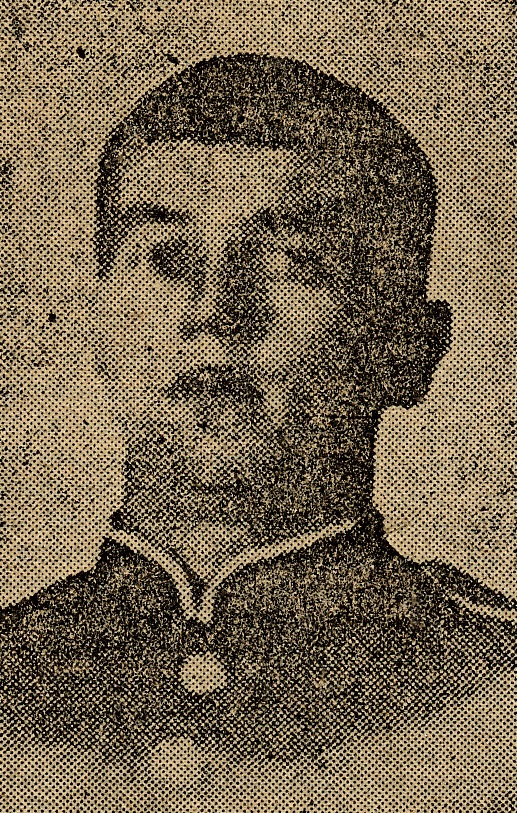
7th/8th King’s Own Scottish Borderers, 13588
John Collum was the fourth son of John and Maria Collum. He also had three younger sisters. By trade he was a boiler maker, Yates and Thom's.
John enlisted in Blackburn in September 1914 into the 7th/8th Battalion of the King's Own Scottish Borderers. By mid-1915 he was shipped out to France, and fought with the Borderers all the way to the Somme.
The battle of Pozières Ridge, 23rd July -- 3rd September 1916 was part of the first battle of the Somme. It was the official name given to fighting between the River Ancre and the village of Bazentin le Petit, with the village of Pozières in the centre of the line. The highest ground on the Somme battlefield was just to the north of the line between the two villages.
The battle was fought by elements from the Fourth Army (Rawlinson) and from the Reserve Army (Gough). In forty days of fighting the British advanced at most one mile, with most progress being made by the Reserve Army which quickly captured Pozières.
This was perhaps the most static period of the entire battle – at the same time as it was fighting on Pozières ridge the Fourth Army was also struggling to capture Delville Wood (15th July -- 8th August) and was making no progress east towards Guillemont.
Pozières itself was close to the front line on 23rd July, and during that day most of the village was captured by the 1st Australian Division. The north east and North West corners remained in German hands for a little longer, with the north west corner secured on 25th July and the north east in Australian hands by the end of July.
At the start of August Gough’s Reserve Army was ordered to capture the German Second Position as it ran around the north of Pozières. A key target was Mouquet Farm, north west of Pozières. The village of Thiepval, further to the North West, was a longer term target.
The 2nd Australian division was able to achieve part of its initial objectives. In an attack on 4th August they captured the German second line trenches north and north east of Pozières, and pushed them back a few hundred years north west of the village. The attack to the north east had actually captured the crest of Pozières Ridge, allowing the Australians to look downhill towards the village of Courcelette.
The remainder of August was spent attempting to expand the salient north of Pozières. The British front was slowly pushed out towards Mouquet Farm, but at the end of August it remained in German hands, while the attacks towards Thiepval failed to make any progress. The village would not be captured until the end of September.
John Collum was killed on the 31st of August 1916, His body was never found and he is commemorated on the Thiepval Memorial, Pier and Face 4 A and 4 D.
Private James Comaskey
2nd Duke of Wellington’s Regiment, 12539
James Comaskey, born 1871, was the son of John and Ann Comaskey of 11 William Hopwood-street, Blackburn, Lancashire. Originally born in Ireland, the family moved to Blackburn in 1875, where his father would help out on a local farm.
The son of the Farm Labourer, James was a Cotton Weaver before the war and embarked for France on 29th April 1915. He married Elizabeth A. Norton in 1899 and had two sons and two daughters.
James Comaskey, or James Kershaw while serving, was with the 2nd Battalion Duke of Wellingtons West Riding Regiment at Carnoy, Northern France when he died.
The war diary for the days before James died report that a German mine exploded inflicting “very little damage to 50 trench listening post” but cost James his life.
James Comaskey is remembered on the Thiepval Memorial to the Missing on the Somme Pier and face 6 A and 6 B.
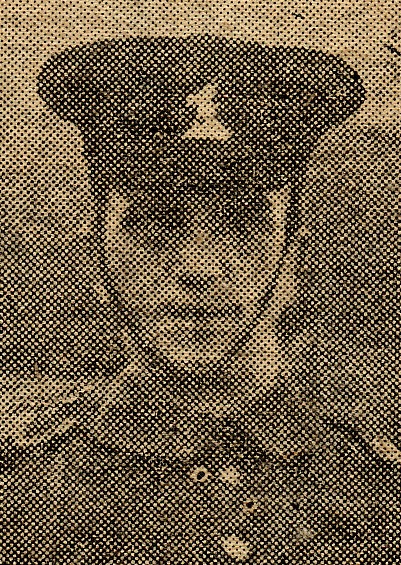
Conroy John Conroy
1st Queen’s Royal Surrey Regiment, G/24415
Lance Corporal John Conroy of the 1st Queens Royal West Surrey Regiment, son of James and Roseannah Conroy (nee Holmes) of 56 Ash-street, Blackburn Lancashire, was killed on 5th November 1916 at the village of Les Boeufs, a village 16 kilometres north-east of Albert, France.
John was formally with 7th Royal West Kent Regiment before being transferred to Queens Royal West Surrey Regiment.
The son of the Corporation Worker, John was a General Labourer at Livesey’s Green Bank Foundry before shipping out to France on 26th July 1915.
The attack on the village of Les Boeufs started at 11.10am and together with the 9th Highland Light Infantry, The Worcesters and the 16th Kings Royal Rifle Corps, The Queens attacked the village, capturing Ox Trench and Antelope Trench with few casualties, unfortunately John being one of the few.
By 4.10pm it was known that the whole brigade would be relieved.
Lance Corporal John Conroy is remembered on the Thiepval Memorial to the Missing on the Somme, Pier and face 5 D 6 D, and has no known grave.
Private James Cook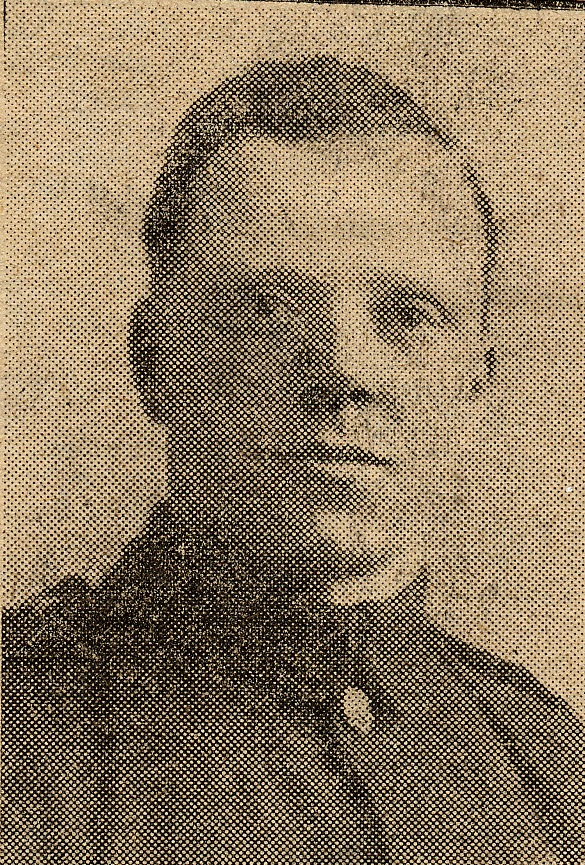
7th East Lancashire Regiment, 25130
James Cook was born in 1891 to Frank and Isabella Cook. The family were all cotton weavers, and James was one of six siblings. By 1914 James had become a dobby-tackler at Bright-street Mill.
James was enlisted into the 7th Battalion East Lancashire Regiment in February 1916, and following his initial training, was shipped out to France in the September. He was placed into the Machine-Gun Section.
By this time, the Battalion had seen action at Albert, High Wood and Pozieres Ridge, and would now tackle the Ancre Heights, a dominating feature of the landscape of the Somme.
The battle of the Ancre extended northwards across to the far side of the River Ancre. The British force attacked in fog and snow on 13th November from the very same front lines from which the attack had failed so badly on 1st July. Beaumont-Hamel was finally captured but Serre once again proved an objective too far.
Considerable casualties were sustained before the battle was called off. This had been the same place that the Accrington Pals had been decimated in July.
It was here, on 18th November 1916, that James was killed.
James is remembered on the Thiepval Memorial to the Missing on the Somme, Pier and Face 6 C.
Private Joseph Cooper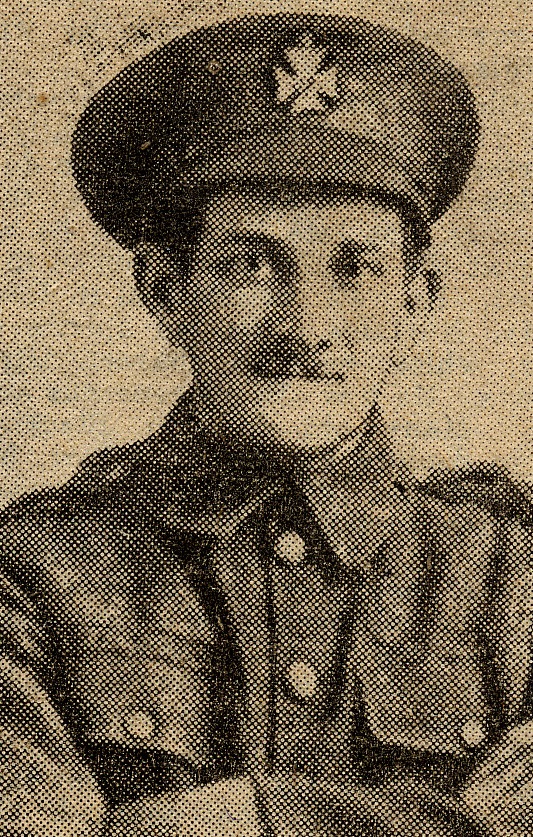 7th King’s Royal Rifle Corps, R/7999
Ford Cornall was born in 1891 and adopted by James and Annas Knowles. The couple had no children of their own. In 1911 they were boarding with John and Sarah Parker these were Annas’s sister and brother-in-law. Ford was a labourer in a cotton mill.
Ford enlisted in Blackburn but there is no information as to what date, nor is there a date as to when he went to France. The last Battle he was involved in with The East Lancashire‘s was at Ancre.
The Battle of Ancre Heights and Ancre were the two final phases of the battle of the Somme.
The general assault was launched amidst a tremendous artillery bombardment in darkness and thick fog at 5.45am on Monday 13th November. The attackers had to contend with deep mud, heavy enemy fire and poor visibility. On the extreme left of V Corps, 3rd Division struggled through the mire at great cost towards Serre; isolated groups forced their way past barely cut wire but were gradually forced to retire.
The 2nd Division’s advance on Redan Ridge fared little better. On the immediate right, 51st Division had more success and after difficult fighting secured Beaumont-Hamel (with many prisoners) by afternoon. Further south 63rd Division vigorously pushed on to the very outskirts of Beaucourt by evening.
South of the Ancre, 39th Division advanced with excellent artillery support to capture St. Pierre Division by 7.40am.
The first day was only partially successful and Lieutenant General Hubert Gough resumed the attack on the 14th, during which the 63rd Division’s occupied Beaucourt. The objectives of the battle were not achieved; only near the river were gains made, at great cost. On the 19th of November, with bad weather on the battlefield, the offensive was called off.
Due to bad weather the battle had been delayed. Ford was killed on the second day of this Battle. His body was never found, but he is still remembered on the Thiepval Memorial to the Missing on the Somme, Pier and Face 6 C
Private Ford Cornall
7th East Lancashire Regiment, 25120
Ford Cornall was born in 1891 and adopted by James and Annas Knowles. The couple had no children of their own. In 1911 they were boarding with John and Sarah Parker these were Annas’s sister and brother-in-law. Ford was a labourer in a cotton mill.
Ford enlisted in Blackburn but there is no information as to what date, nor is there a date as to when he went to France. The last Battle he was involved in with The East Lancashire‘s was at Ancre.
The Battle of Ancre Heights and Ancre were the two final phases of the battle of the Somme.
The general assault was launched amidst a tremendous artillery bombardment in darkness and thick fog at 5.45am on Monday 13th November. The attackers had to contend with deep mud, heavy enemy fire and poor visibility.
On the extreme left of V Corps, 3rd Division struggled through the mire at great cost towards Serre; isolated groups forced their way past barely cut wire but were gradually forced to retire. The 2nd Division’s advance on Redan Ridge fared little better. On the immediate right, 51st Division had more success and after difficult fighting secured Beaumont-Hamel (with many prisoners) by afternoon.
Further south 63rd Division vigorously pushed on to the very outskirts of Beaucourt by evening. South of the Ancre, 39th Division advanced with excellent artillery support to capture St. Pierre Division by 7.40am.
The first day was only partially successful and Lieutenant General Hubert Gough resumed the attack on the 14th, during which the 63rd Division’s occupied Beaucourt. The objectives of the battle were not achieved; only near the river were gains made, at great cost. On the 19th of November, with bad weather on the battlefield, the offensive was called off.
Due to bad weather the battle had been delayed. Ford was killed on the second day of this Battle. His body was never found, but he is still remembered on the Thiepval Memorial to the Missing on the Somme, Pier and Face 6 C
Private James Coupe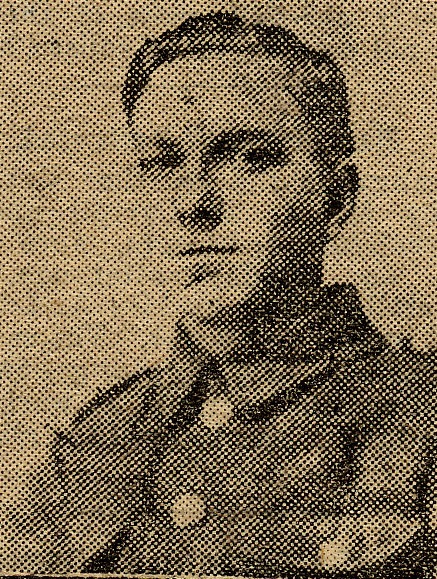 8th Devonshire Regiment 16446
James Coupe was the son of James and Ann Coupe. By trade he was a cotton Spinner at Waterfall Mill Blackburn
James enlisted in Blackburn in April 1915 into the 8th Battalion of the Devonshire Regiment which was part of the 20th Brigade, 7th division. He embarked for France on the 31st December 1915.
The Division took part in the initial assault north of the Vermelles-Hulluch road, (27th – 29th April 1916) facing the Quarries and a series of strongpoints. Suffering badly from British cloud gas - which was not moved sufficiently by the gentle breeze - and badly cut up by German machine gun fire and artillery, the Division nonetheless seized the Quarries and only failed to penetrate the third German line due to the relative weakness of the numbers of men that got through.
The Battle of Bazentin was started with an artillery bombardment which began on 11th of July; the day of the attack was to be the 14th of July. The element of surprise was to play a big part in the attack with the assaulting troops assembling after midnight in No Man's Land and forming up about 500 yards from the German line.
The troops went undetected and deployment of the attacking force was completed by 3am. At 3.20am a concentrated bombardment began which, precisely five minutes later, lifted as almost 22,000 British infantry advanced towards the German trenches.
The Germans, were taken utterly by surprise by the shortness of the bombardment and closeness of the attacking waves, and retreated the leading British battalions quickly reached the front line and carried on beyond.
The operation was a great success and resulted in the capture of the German second position on a front of 6,000 yards.
James Coupe was killed on the 14th of July first day, this assault. He has no known grave and is remembered on the Memorial at Thiepval, Pier and Face 1 C.
Private William Cowban
9th King’s Royal Rifle Corps, R/13607
William Cowban was born at Liverpool in 1887. He married Edith Lily Duxbury in 1907 and they had four children.
By trade he was a weighing machine maker. He enlisted into the 9th King’s Royal Rifle Corps at Liverpool on the 29th of May 1915, and embarked for France on the 30th September the same year.
The battle in which he lost his life was at Deville wood began on the 15th of July with an attack by the South Africans, they spent 6 days of solid fighting until they were relieved on the night of the 20th of July after suffering many casualties.
Vicious fighting continued and on 21st of August, a battalion of the 41st Brigade attacked the wood, but the German inflicted almost 200 British casualties.
On the 22nd, a battalion of the 42nd Brigade captured Edge Trench. The casualties of the 14th light Division were 3,615 one of which was William Cowban who was killed on the 24th of August.
He has no known grave and is remembered on Thiepval Memorial, Pier and Face 13 A and 13 B. There were five Victoria crosses won during this battle.
Private Frederick Harris Cross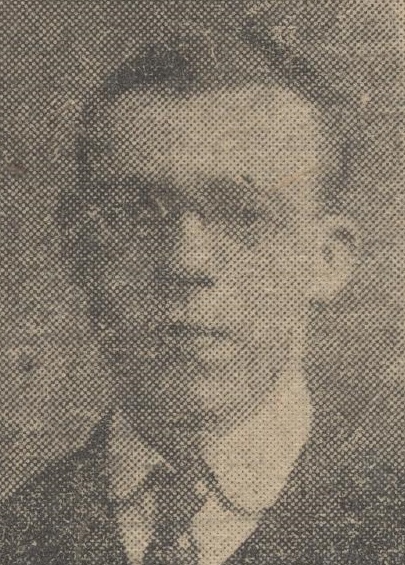 1st Border Regiment, 22321
Frederick was the son of Edward and Elizabeth Cross. Frederick worked at Spencer’s Coal dealers. He enlisted at Blackburn into the 1st Battalion of the Border Regiment.
On the 1st of July, after a seven day bombardment, the 29th Division attacked towards Beaumont Hamel. Part of the attack was filmed and showed the detonation of a 40,000-pound (18,000kg) mine, beneath Hawthorn Ridge Redoubt at 7:20a.m., ten minutes before the infantry attack began, which alerted the Germans.
British troops failed to occupy all of the mine crater before German troops arrived and took over the far lip. Many troops of both Brigades were shot down in no man's land, which was dominated by Redan Ridge and then caught by German artillery barrages.
German white signal rockets were seen and taken for British success flares, which led the Divisional Commander Major-General de Lisle, to order the 88th Brigade from Reserve, to exploit the success.The 88th Brigade included the 1st Newfoundland Regiment, which advanced on open ground from reserve trenches 200 yards (180m) back from the British front line, to avoid the congestion of dead and wounded in communication trenches.
Many of the Newfoundlanders became casualties to German small-arms fire while still behind the front line; some of the Newfoundlanders got across no man's land near Y Ravine but were held up by uncut wire. Most of the German shelters and Beaumont Hamel were demolished and shell-craters overlapped.
Reserve Infantry Regiment 119, who had been sheltering under the village in Stollen survived and with other units at Leiling Schlucht ("Y Ravine") and the Leiling and Bismarck dug-outs, engaged the British troops from the wreckage of the trenches.
The Newfoundland Battalion suffered 710 casualties, a 91% loss second only to that of the 10th Battalion, West Yorkshire Regiment, which lost 733 casualties at Fricourt, south of the Albert–Bapaume road. The 29th Division lost 5,240 casualties.
Frederick Harris Cross was killed on the first day of the battle of the Somme.
He is commemorated on the Thiepval Memorial, Pier and Face 6 A and 7 C.
His brother, Richard Alexander Cross served with the East Lancashire Regiment, and was killed on the 18th April 1917. Richard is commemorated on the Basra Memorial, Panel 19.
Rifleman Joseph Crossley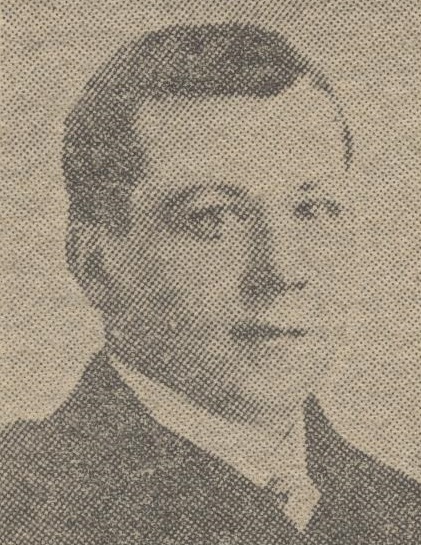
1st Rifle Brigade, S/9171
Joseph Crossley was the son of Jane Crossley. He had three brothers and three sisters. By trade he was a Blacksmith at Waring’s, Feniscowles.
He enlisted at Blackburn on the 1st of April 1915 and after training embarked for France on the 1st of June 1915.
The Battle of Albert (1st–13th July 1916), happened on the first day of the Battle of the Somme. The Allied preparatory artillery bombardment began on 24th June. It was hoped that the German front line would be destroyed and the wire between would be cut.
In the seven days bombardments over 1,700,000 shells were fired, it was not a success. Many of the deep dugouts of the Germans were left unscathed and most of the wire was not cut. There were also 19 mines placed beneath the German trenches the largest being Hawthorn Ridge, near Beaumont-Hamel, which was fired at 7.20am, 10 minutes before the attack it is thought that this explosion alerted the Germans to the imminent attack and gave them time to leave their dugouts and set up their machine Guns.
The attack on the 1st of July it was thought, would be walkover; the men would simply occupy the German trenches. When the men did go over the top it was to a Barrage of rifle and machine gun fire, they were cut down in their thousands. On that first day there were 19,240 Officers and men killed.
On that first day the German positions were occupied by the British troops but the German artillery cut off their support and counter-attacks forced the British to withdraw. The only real gains were made at the southernmost end of the battlefield, where in together with the French assault, Montauban and Mametz were captured.
By evening it became apparent that the day had been a disaster for the British Army.It was on this first day of this battle that Joseph Crossley was killed.
He has no known grave and is commemorated on the Thiepval Memorial Pier and face 16 B and 16 C.
Private Ephraim Crowther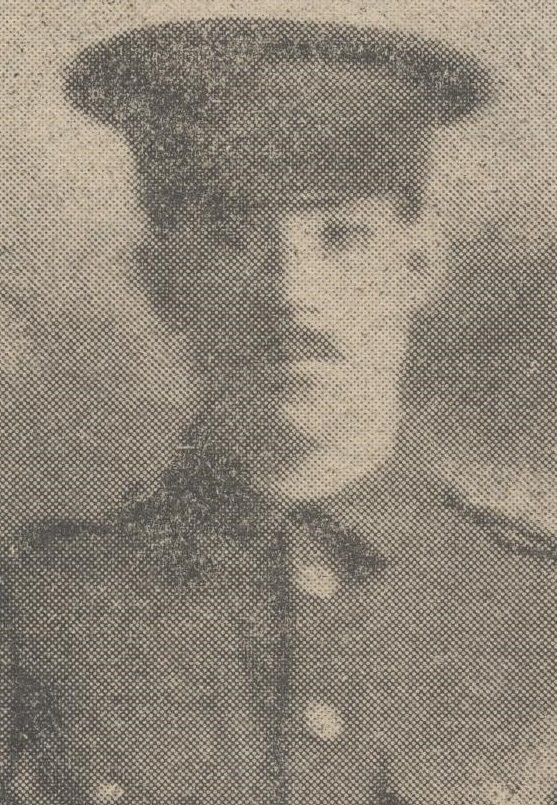 7th East Lancashire Regiment, 11176
Ephraim Crowther was the eldest son of Joseph Barritt and Betty Crowther, born in Blackburn in 1885. He was married to Mary Ann and had a daughter.
In 1911 Ephraim and Mary were living in the same house as his father and mother together with his younger brother and sister. Ephraim was a weaver at Crossfield Mill, Blackburn.
He enlisted at Burnley in 1914 and embarked to France on the 4th of October 1915.
The Battle of Ancre Heights and Ancre were the two final phases of the battle of the Somme. The general assault was launched amidst a tremendous artillery bombardment in darkness and thick fog at 5.45am on Monday 13th November.
The attackers had to contend with deep mud, heavy enemy fire and poor visibility. On the extreme left of V Corps, the 3rd Division struggled through the mire at great cost towards Serre; isolated groups forced their way past barely cut wire but were gradually forced to retire.
2nd Division’s advance on Redan Ridge fared little better. On the immediate right, 51st Division had more success and after difficult fighting secured Beaumont-Hamel (with many prisoners) by afternoon. Further south 63rd Division vigorously pushed on to the very outskirts of Beaucourt by evening.
South of the Ancre, 39th Division advanced with excellent artillery support to capture St. Pierre Division by 7.40am.The first day was only partially successful and Lieutenant General Hubert Gough resumed the attack on the 14th, during which the 63rd Division’s occupied Beaucourt.
The objectives of the battle were not achieved; only near the river were gains made, at great cost. On the 19th of November, with bad weather on the battlefield, the offensive was called off.Due to bad weather the battle had been delayed. Ephraim was killed on the second day of this offensive.
He is He has no known grave and is commemorated on the Thiepval Memorial Pier and Face 6 C. He is also commemorated on the Christ Church, Memorial, Haslingden-road.
Ephraim’s younger brother William who served in the 1st Battalion of the King’s Own (Royal Lancaster Regiment) was killed on the 1st of July 1916 and is also commemorated on the Memorial at Thiepval (See below).
Private William Crowther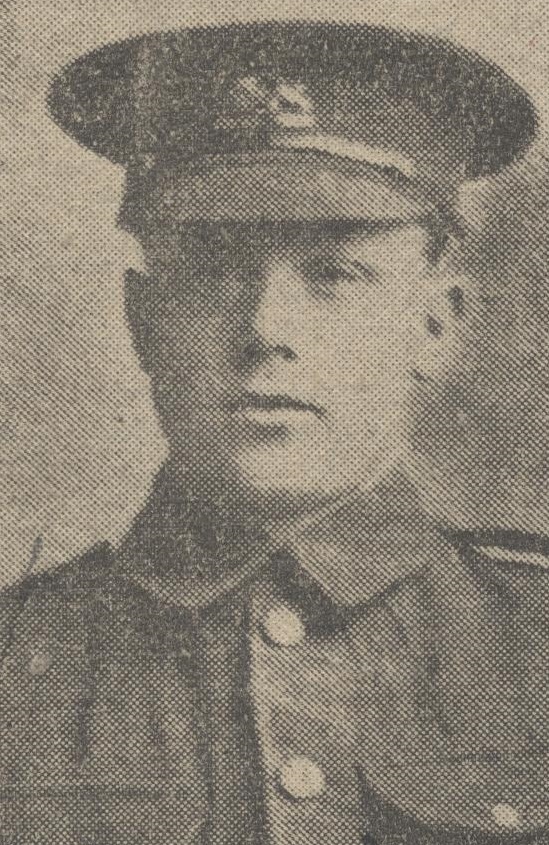 1st King’s Own (Royal Lancaster) Regiment, 17001
William Crowther was the son of Joseph Barritt and Betty Crowther. His wife, who resided at 135 Hancock-street, received a letter from a comrade stating that he “was both a good and steady lad and a heartier fellow I have never met.” His mother also received a letter from his Sergeant, saying he “was a nice, steady, hard-working lad.
He was very well liked by all his comrades, and he was cool and brave along with them in the great push on July 1st.” Corporal Crowther was 27 years of age. Prior to enlisting he was employed at Hollin Bank Mill, and was a member of Haslingden-road school. He had lost one brother in the war, and had a brother-in-law serving with the colours.
The Battle of Albert (1st–13th July 1916), happened on the first day of the Battle of the Somme. The Allied preparatory artillery bombardment began on 24th June. It was hoped that the German front line would be destroyed and the wire between would be cut.
In the 7 days bombardments, over 1,700,000 shells were fired. It was not a success. Many of the deep dugouts of the Germans were left unscathed and most of the wire was not cut. There were also 19 mines placed beneath the German trenches, the largest being Hawthorn Ridge, near Beaumont-Hamel, which was fired at 7.20am, 10 minutes before the attack.
It is thought that this explosion alerted the Germans to the imminent attack and gave them time to leave their dugouts and set up their machine Guns.
The attack on the 1st of July it was thought, would be walkover; the men would simply occupy the German trenches.
When the men did go over the top it
was to a barrage of rifle and machine gun fire and they were cut down in their thousands. During that first day of engagement, there were 19,240 officers and men killed.
He has no known grave and is commemorated on the Thiepval Memorial Pier and Face 5 D and 12 B.
William’s older brother Ephraim who served in the 7th Battalion of the East Lancashire Regiment was killed on the 1st of July 1916 and is also commemorated on the Memorial at Thiepval.
Letter D
Dawson Arthur | Dickinson George | Dixon John | Dyer John
Private Arthur Dawson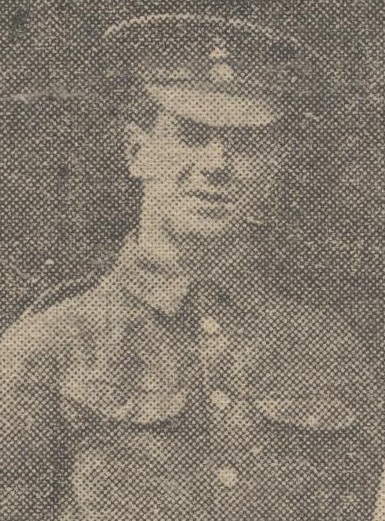
2nd Royal Welch Fusiliers, 31467
Private Arthur Dawson was reported as being killed in action on 7th November 1916.Arthur enlisted with the royal welsh fusiliers on 5/6/1915. His age was given as 20 years 4 months and his birth date as 1895. However his actual date of birth was 5th February 1897.
The 1901 census lists his age as 4 years which confirms he was only 18 on enlistment.Private Dawson was a single man, aged 20. He was the son of Ernest James and Elizabeth Dawson and lived at 107 Pendle-street, Blackburn. He had a brother, Herbert and a sister, Sarah.
He was employed at J. Cronshaw and son, contractors of Nab-lane, Blackburn, and he attended St. Thomas’ church.
His death was reported in the Blackburn weekly telegraph of 28th November 1916. The report said Arthur had enlisted shortly after the start of the war and had been at the front for 12 monthsHis brother was said to be serving in the navy and his father had only been discharged five weeks previously.
It is likely that Arthur died during the battle of ancre heights which took place between 1st October and 11th November 1916.
Private Dawson has no known grave and is remembered on the thievpal memorial to the missing on the Somme.
Private George Dickinson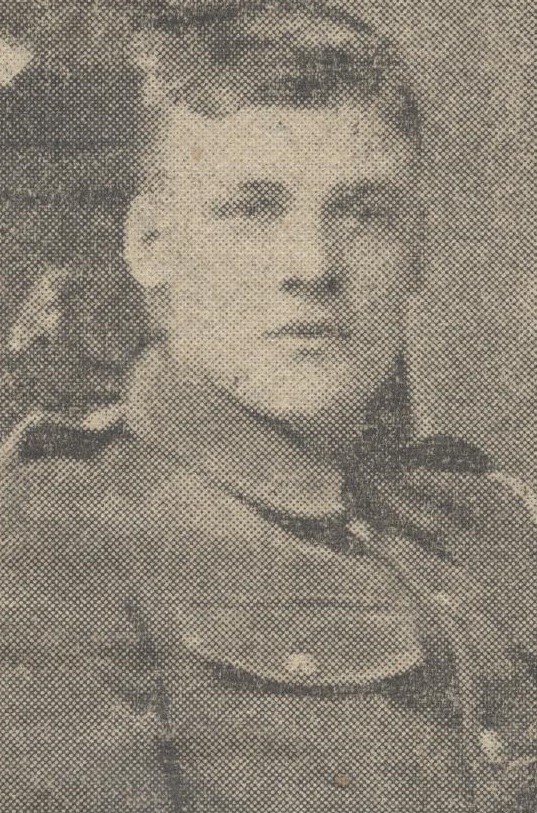
7th Queen’s Own (Royal West Kent) Regiment, G/1840
Private George Dickinson (some records list him as Dickenson) of The Queens Own( Royal West Kent’s) was originally reported as missing in action but was eventually confirmed as being killed in action on 13th July 1916.
His obituary notice appeared in the Blackburn times of 14th July 1917. The notice said he was one of the early volunteers who joined Kitchener’s army and had been at the front for 15 months prior to being reported missing in July 1916.
Private Dickinson was a single man aged 24 who lived with his parents, Thomas and Elizabeth Dickinson at 14 Byrom-street, Blackburn. He was one of twelve children born to Mr and Mrs Dickinson. George was born on 16th April 1893 and was baptised on 21st May 1893 at St. Peters Church, Blackburn.
Before enlisting he was employed at Robinson’s dye works in Canterbury-street, Blackburn. His obituary notice said he attended Blackburn ragged school in Bent-street. At the time of his death he had two brothers in the army, one in German East Africa, the other in Mesopotamia.
The memorial plaque from Blackburn Ragged School for past members who were killed in the war is now mounted on the wall in the reception area of the carers’ service in Greenhurst-close, Blackburn. George is listed on the plaque as George Dickenson.
Private Dickinson was in all probability killed in the battle for trones wood. The extract below is an abridged version from C.T. Atkinson’s book: The Queens Own Royal West Kent regiment 1914-1919.
When, on the evening 0f July 12th, the 18th Division took over the right of the British line considerable progress had been made in clearing the immediate area between the first and second German systems. As a preliminary to the great attack planned for 14th July it was highly desirable that Trones Wood should be completely cleared and accordingly orders were issued for the battalion to push through the wood from South to North, the 7th to attack its northern end and the buffs to seize a strong point at the south east corner where Maltzhorn trench joined the Guillemont-road.
It was a difficult task, the lie of the land and the conditions prevailing in that quarter of the battlefield where heavy fighting had been in progress for several days, were all against the attackers. The wood had been badly shot up and was a maze of shallow trenches, strong points and shattered trees.
Orders were received very late and there was scant time to prepare for the advance. The attack was launched at 7pm on July 13th after three hours bombardment. It was delivered in the face of a most effective German barrage which inflicted heavy casualties on the support companies as they crossed the open ground.
However the battalion made good progress and by 7.30pm part of B Company reached the southern branch of the light railway which runs through the wood only to find that the Germans had got between them and their starting point and had retaken a strong point in the interior of the wood. B Company with some detachments of A and C Companies dug in along the railway and maintained themselves throughout the night, unsupported and under constant attack.
Meanwhile little had been heard from C Company which had attacked on B Company’s right. Captain Anstruther made his way to the middle of the wood where he found 150 men of A, B, and C companies all mixed up and scattered about. He re-organised these men, posting about 100 with 6 Lewis guns along the eastern edge of the wood and pushed further north with the rest to make contact with the very few of the Queens who had managed to reach the wood in face of heavy shelling and machine gun fire.
About midnight the situation was that some 250 of The Royal West Kent’s and a few of the 7th Queens were established in Trones Wood north of the railway. These were cut off from support by the Germans who had reoccupied the portion south of the railway. The situation was precarious but the group in the woods held their ground, captain Anstruther reporting he was beating off all the German attacks. However the attacks increased in force and ammunition began to fail. About 6am just when the Germans were threatening to recover the woods an attack by the 12th Middlesex and 6th Northampton’s made contact with captain anstruther and cleared the Germans from the woods. The casualties totalled nearly 250, 34 dead, 23 missing and 179 wounded.
George Dickinson has no known grave and is remembered on the Thiepval Memorial to the missing on the Somme, Pier and Face 11C.
John Dixon
2nd East Lancashire Regiment, 23096
John Dixon, born 1889 in Blackburn, was the son of William Dixon of Back Union-street. William was a tailor by trade, something that John, his eldest son, would soon start to practice in. John had two brothers, William, an Apprentice Joiner, and William Fielding, a grocer’s assistant. He also had a sister, Florence. The family were wealthy enough to have a servant, Elizabeth Armstrong. As with so many love stories, Elizabeth fell in love with John, and the pair got married in 1913.
After war broke out, John did not instantly go to war, instead waiting to be conscripted in 1916. He joined the 2nd East Lancashire Regiment in March 1916, and was sent to the front line in September 1916. By this stage, the 2nd East Lancashire Regiment, as part of 8th Division, had gone through the Somme campaign and was in desperate need of replacements. Their losses, like most Battalions, were heavy. By October, the Battalion was sent to Le Transloy, to remove the Germans from the ridge there. The weather had started to turn foul and was causing a lot of problems, with the rain making the area exceptionally muddy.
“On the night of the 18th/19th October the 8th Division relieved the 6th Division, with all three brigades on the line, Les Bceufs-Guedecourt. This relief was preparatory to an attack to be made by the XIV Corps, in conjunction with a French Corps on its right, with the object of establishing a line from which the German position known as the Transloy ridges could be attacked from the south-west.The first objective of the battalion was "Mild" trench, from the 8th Division left boundary to the junction of "Cloudy" and "Sunray" trenches, where the existence of a "strong point" was suspected. This, thought to be a detached post, was afterwards found to be part of the main trench.
Neither the Division on the left of the battalion, nor the 2nd Northants on the right were to attack, but the latter was ordered to assist the right flank of the 2nd East Lancashire Regiment as much as possible, and with this object the greater number of the machine-guns of the brigade were attachedto the 2nd Northants.Zero hour was fixed for 11.30 a.m., but four minutes before that time a liaison officer from Brigade Headquarters arrived at Battalion Headquarters with orders to postpone the attack until 2.30 p.m. This was the second occasion within four months that zero had been postponed and postponed so late that the information did not reach those principally concerned—the men in the trenches—until after the original zero hour.
The adjutant of the battalion (Lieutenant W. E. Lowe), who was a noted sprinter, did record time to the trenches, but would have been too late to avert a catastrophe if an artillery observing officer in the front trenches had not got information of the change of time, and passed it on to the company commanders just in time to stop the advance. As it was the heavy artillery began to shell the enemy trenches at 11.30 a.m., and unfortunately included "Rainbow" trench in their targets.
The result was several casualties at Battalion Headquarters, and considerable damage to the trench and its only dug-out. The attack commenced at 2.30 p.m. under a moving barrage, with a fixed barrage on the objective. "A" and "D" Companies attacked in two waves with such dash that the first wave carried the first trench in one bound and captured the whole of the first objective, except the strong point already mentioned. The second wave passed through the first and over a low crest, where it came under very hot fire and suffered heavy casualties, which included all the officers, except one, killed or wounded; it was therefore withdrawn to "Mild" trench.
During the afternoon a block was built at the junction of "Mild" and "Stormy" trenches, and another close to the German strong point ; these were attacked by the enemy, who were easily repulsed, largely by the use of their own bombs, which had been found in large numbers in the captured trench. "A" and "D" Companies were relieved about 5 p.m., by "B" and "C" Companies, and a company from the brigade reserve was sent up to "Shine" trench.
On the two following days and nights the captured trench was consolidated, and communication trenches were dug from "Mild" to "Shine" trench, and from "Rainbow" trench to the sunken road. All this work was carried out under great difficulties, due to very bad weather, enemy artillery fire, and the shortage of rations.”
It was in this battle, on 23rd October, that John Dixon was killed.
His body was never found. He is remembered on the Thiepval Memorial to the Missing on the Somme, Pier and Face 6 C.
Private John Dyer
1st East Lancashire Regiment, 25127
He was a single man aged 28. He was the son of mark and Mary Dyer of 53 Earl-street, Blackburn and was one of 8 children. The 1911 census showed him as being employed as a driver for a coal merchant.
He is also listed on the roll of honour for the parish of st.albans. The plaque is in St. Albans Church, Larkhill, Blackburn.
Private Dyer was a member of the 1st battalion, East Lancashire Regiment and was killed during the battle of Le Transloy.
The following extract is from the website of the Commonwealth War Graves Commission:
“The failure to secure original battle objectives led to a renewed major assault on the afternoon of 12th October when infantry on 4th army’s right foundered towards German trench lines in front of Le Transloy while formations on the left slogged towards the Butte de Warlencourt. Despite the slightest of gains the operation was not successful.
Orders for a fresh attack, issued late on 13th October ignored the desperate conditions and physical state of the attacking troops. The subsequent early morning assault on 18th October (well before daylight) witnessed heroic efforts but minimal gains were made against resolute defenders well supported by accurate artillery fire.
The inauspicious beginnings of the 18th October attack were described with grim and brutal reality by the official historian:
In almost every brigade, forming-up positions had been taped out in front and careful compass bearings taken of the direction of the advance. When the moment of the assault arrived the British front positions and the approaches thereto were a maze of water-logged shell-holes and flooded trenches. As the troops struggled forward through the darkness (the moon being obscured by heavy rain clouds) officers and men stumbled and fell in the slippery ooze; rifles and lewis guns became clogged with it so that bomb and bayonet were soon the only weapons." 'Military operations France and Belgium, 1916 (vol. ii), Captain Wilfrid Miles, 1938 (p.444).
The Lancashire Infantry Museum website has the following description:
On the 18th October the 1st East Lancashire’s, who had only recently returned to the Somme, attacked at Le Transloy through “a vast lake of mud, pitted with shell-holes”, losing all the officers, warrant officers and senior NCO’s of the assaulting companies and a total of 362 other ranks.
Private John Dyer was killed on 18th October 1916.
John Dyer has no known grave and is remembered on the Thiepval Memorial to the missing on the Somme, Pier and Face 6C.