
 Loading more
Page 4
Eastham Fred | Eatough Harry | Eddleston Albert | Eddleston Plant | Entwistle Herbert
Entwistle William | Eskdale Robert | Evens Thomas | Evens William
Sergeant Fred Eastham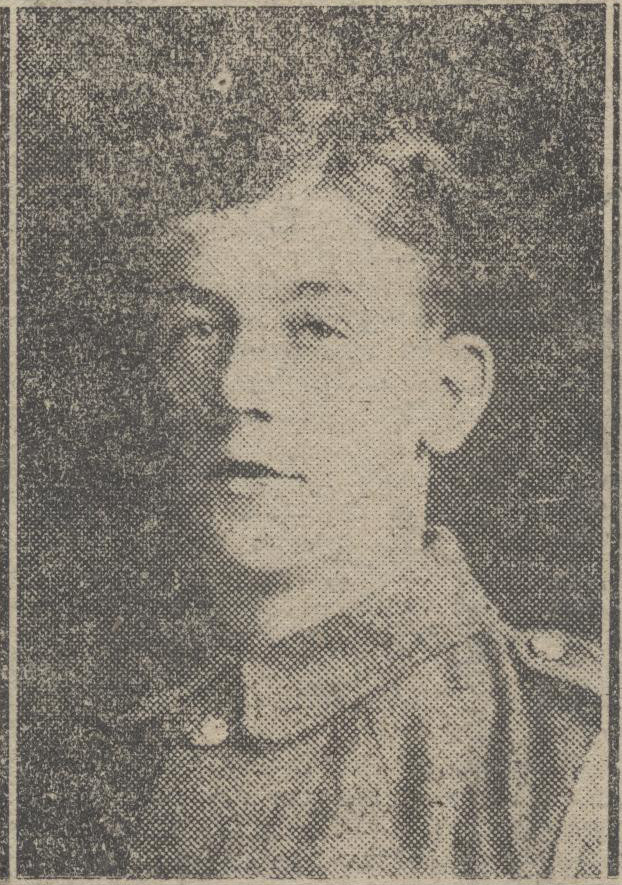
10th King’s Own Yorkshire Light Infantry, 14382
Fred Eastham was the youngest of 5 brothers. At the time of his death two other brothers were currently serving and another brother was a time-expired soldier who had fought in the Dardanelles campaign.
Prior to enlisting, Fred had been employed in his father’s business of a milk salesman. He was also a member of the Gospel Church in Victoria Street, Blackburn.
The 1911 Census records that Fred was a single man and lived with his father, William Henry Eastham at Wimberley Street, Blackburn. His mother had died some years earlier.
He enlisted on 9th September 1914 with the King’s Own Yorkshire Light Infantry and was posted to France in September 1915. He was already a Corporal when he went to France and received a battlefield promotion to Sergeant in July 1916.
Sergeant Fred Eastham was reported killed on 25th September 1916, at the Battle of Morval.
The Battle of Morval, 25th-28th September 1916, was a continuation of the battle of Flers-Courcelette (15th-23rd September), designed to capture those objectives of the earlier battle that had not been secured during the successful advances on its first two days.
It was carried out by the Fourth Army (Rawlinson), and involved XIV Corps, which attacked east towards Morval and Lesboeufs, and XV Corps, which attacked north towards Gueudecourt. The 10th KOYLI was in XV Corps.
The XV corps attack on Gueudecourt was not so successful.
Sergeant Eastham has no known grave and is remembered on the Thiepval memorial on the Somme, Pier and Face 11C and 12 A.
Private Harry Eatough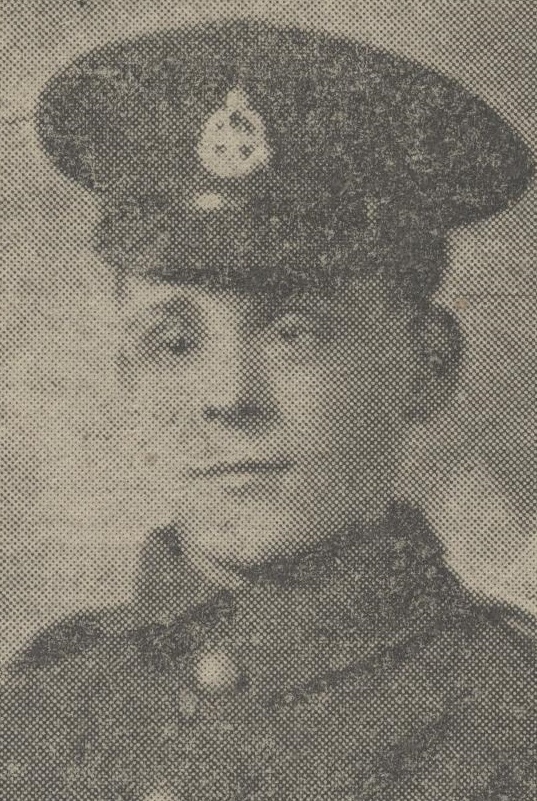 7th East Lancashire Regiment, 21853
Harry Eatough was born on 23rd August 1896. He was baptised on 17th September 1896 at St. Michael’s and All Angels church, Bastwell, Blackburn. He would later become a boy scout for St Michaels.
By 1911, he was a single man, and still living with his parents, John and Sarah Eatough of 10 Beech-street, Blackburn. He was one of 7 children.
Before enlisting he was employed as a warehouseman at Duckworth and Eddleston’s, Roe Lee Mill, Blackburn.
Harry was anxious to get to the front line when war began. He enlisted initially with 10th East Lancashire Regiment, but was so determined to get to the front that he transferred to the 7th Battalion, who were already in France. He was there within 8 weeks of enlisting.
He took part in the opening battle of the Somme on 1st July. Within a few hours the East Lancashire Regiment suffered more casualties than on any other day in its long history. Harry was admitted to hospital suffering from shellshock five days later. The newspaper report said he soon recovered and returned to the front line a few days later where he was subsequently killed. He wrote home on 5th July saying “this is not war, it is murder.”
His battalion was part of the 19th (Western) division which took part in the attacks on High Wood between 14th and 25th July and this is probably where he was killed, on 22nd July 1916.
The British 4th and the German 2nd and 1st armies fought for control of the wood from 14th July – 15th September 1916, during the battle of the Somme.
Private Harry Eatough has no known grave and is remembered on the Thiepval memorial to the missing on the Somme, Pier and Face 6C.
Private Albert Eddleston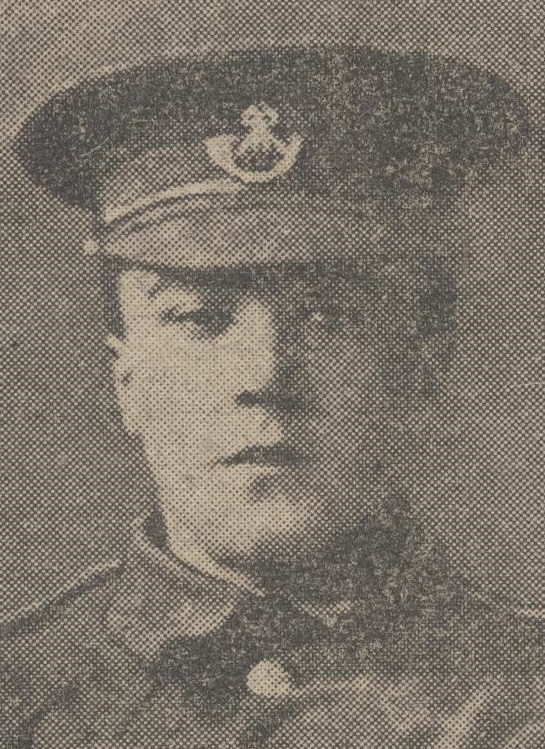 7th King’s Own Shropshire Light Infantry, 13294
Albert Eddleston was the only son of Robert and Jane who lived in the parish of St Luke, Blackburn, and was born a year after they married, in 1897.
When Albert was 4 their address was 87, Witton Parade and some time before 1911 they had moved to 47, Garden-street. They were weavers and at 14, Albert was also in the mill as a Tenter (apprentice). Albert later worked at Canton Mill on Higher Audley-street which was some distance from his home area.
Albert enlisted at the age of 17 in September 1914 and was in training with his Regiment until embarking for France on the 28th September 1915.
Albert was involved in the Battles of the Somme and died on the 14th July 1916 at the battle of Bazentin Ridge after 9 months in France. According to his obituary in the Blackburn Times he and his father had met the week before and his father also served in the Kings Shropshire Light Infantry.
Albert died at the Battle of Bazentin Ridge, which began with a heavy artillery bombardment on the night of 14th July, the day he is killed, most likely during the advance across no man’s land. He was one of 200 from his Battalion to be killed that day.
Private Albert Eddleston has no known grave and is remembered on the Thiepval memorial to the missing on the Somme, Pier and Face 12A and 12B.
Private Plant Eddleston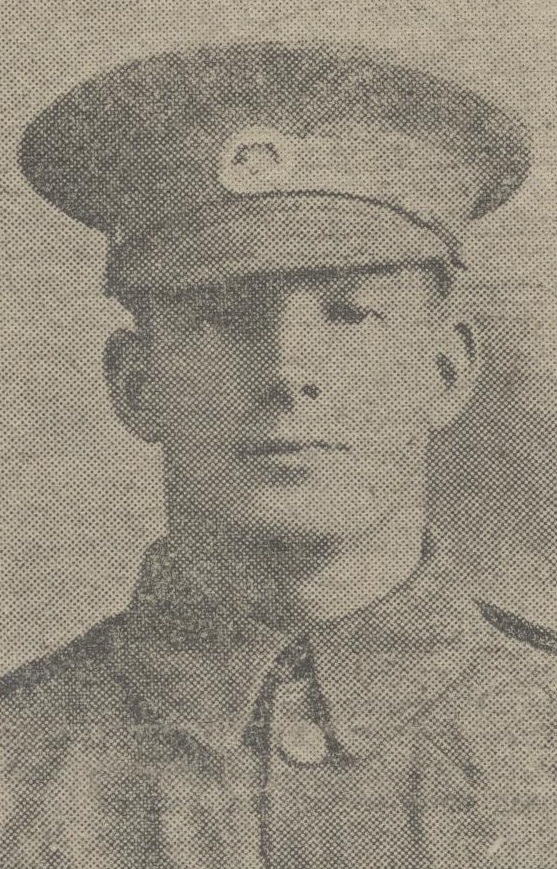 6th South Wales Borderers, 17237
Plant Eddleston, born 10th July 1891, was the son of Mr William H. Eddleston who, at the time of his son’s death, was a widower, and lived next door to his son at 15 Lomax Street, Great Harwood. Plant was connected with the Congregational Church & Sunday School, Great Harwood and was a member of the Young Men’s Class. For several years Plant was a Cotton Weaver at Victoria Mill.
Plant enlisted for service at Accrington in 1914 aged 23, joining the 6th Battalion South Wales Borderers. The 6th Battalion was formed at Brecon on 12th September 1914 as part of 76th Brigade, 25th Division.
The Battalion moved to Codford, but was in billets in Bournemouth by November 1914. By February 1915 they converted into a Pioneer Battalion and moved to Hursley Park, Winchester, in April 1915 but went on to Aldershot soon after.Plant had been home on leave earlier in the summer at Whitsuntide, which would have been the last time his father saw this fine young man, who was informed of the tragic news of his son’s death on Sunday morning, 16th July 1916.
He had been killed on 10th July, his 25th birthday. The Battalion had been fighting in the opening phase of the Battle of the Somme. 7th and 75th Brigades with some supporting units received orders on 2nd July to move to Aveluy Wood and Martinsart respectively, and came under orders of 32nd Division.
On 3rd July, 75th Brigade made a virtually unsupported and inevitably costly and unsuccessful attack in one of the awful, piecemeal, efforts to hold on to the minor gains made in the Thiepval area on 1st July. The rest of the Division relieved 32nd Division in the night of 3/4th July. More localised and equally ineffective attacks were made. On 5th July, 74th Brigade was detached for
duty with 12th (Eastern) Division at La Boisselle, where it took part in an attack on Ovillers. It was here that Plant would be killed.
Plant is commemorated on the Great Harwood Roll of Honour. He has no known grave and is remembered on the Thiepval memorial to the missing on the Somme, Pier and Face 4A.
Private Herbert Entwistle
8th Loyal North Lancashire Regiment, 15713
Herbert Entwistle was originally born in Disbury, Manchester in 1894. In 1912, Herbert moved to Blackburn and found work, as a gardener.
Herbert enlisted into the 8th Loyal North Lancashire Regiment in 1914, beginning intense training until September 1915, when he was finally sent to France. From their arrival to July 1916, the Battalion took part in frontline training and manned positions around Armentieres, followed by a short stint near Ypres.
The 25th Division spent the greater part of June training to the west of St. Pol, but in the last week of that month they moved south to join the Fourth Army; when the Battle of the Somme opened on the 1st July the Division was at Warloy, some four miles behind the front line. On the 1st July the Battalion was at Lealvillers, when orders were received to move to Forcevine, to make room for the 38th Division.
At about 2p.m. on the 7th July orders were received for the Battalion to move from Crucifix Corner up to the front line, "A" and "B" Companies going up first, while "D" company moved into trenches near Campbell Post in the support line in front of Aveluy village,"C" Company was placed at the disposal of the O.C. 3rd Worcestershire Regiment.
"A" "B" and "C" Company were later moved into the trenches of the Leipzic Salient, which had that morning been captured by the Wiltshire Regiment. At 8.30p.m. "D" Company was also sent into the Salient, and the defence of this position was taken over from the Worcestershire Regiment. This position was no easy one to hold, particularly as the Battalion had taken it over in the dark; no attack, however, transpired, and the night passed quietly except for some desultory shelling and sniping, and the Battalion was relieved in the early morning of the 8th, having had two officers and five men killed or died of wounds, thirty-four men wounded and two missing. Herbert was one of these men.
Herbert is commemorated on the Thiepval Memorial, Picardy, France Pier and Face 11 A, which is a war memorial to missing soldiers who died in the Battles of the Somme of the First World War and who have no known grave.
His name is also to be found on the Didsbury War Memorial, Manchester.
Private William Entwistle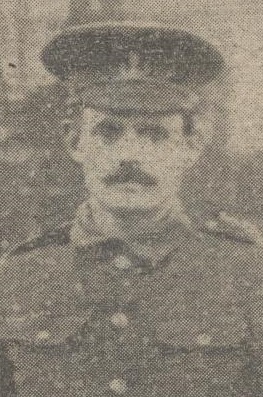
8th Loyal North Lancashire Regiment, 14013
William Entwistle was born in parish of Christ church in December 1884, and married at 20 years of age to Clara. He was a bricklayer employed by Blackburn Gas works which were purchased by Blackburn Corporation in 1877. He resided with his wife Clara, a weaver, and child Gerta at 49 Baines-street. Gerta was their first child to survive, having had two previous babies who died early.
William signed up September 1914 aged 30, joining the 8th Battalion Loyal North Lancashire Regiment. The 8th Battalion was formed at Preston in September 1914 as part of K3 and came under the command of 74th Brigade in 25th Division. It moved to billets in Boscombe in December 1914, Bournemouth in January 1915 and returned to Boscombe in March. The battalion landed at Boulogne 16th September 1915 and transferred to the 7th Brigade in the same division 26th October 1915.
William was wounded in action in the field 21st May 1916 with a gunshot wound to the left forearm. He was sent to Etaples, 27th June 1916. The town of Etaples was a vast Allied military camp and then a giant 'hospital city'. Wounded soldiers were consequently often sent to Etaples to recover and also for retraining before they were sent home, or back to the front. William was not sent home, but was then attached to the 20th Manchester Regiment on 8th July 1916 and sent back to the Somme.
William was reported as missing on 26th August 1916. At this time, the Division was fighting hard at Delville Wood. It would be 15 more arduous months for his wife, Clara, to be told that he was listed as killed in action.
Clara wrote in desperation to the War Office on 28th August 1917. She was asking for news of her husband and advising of her new address, having moved from 21 Dale-street.
William is commemorated on the Thiepval Memorial to the Missing on the Somme, Pier and Face 11 A.
Private Robert Eskdale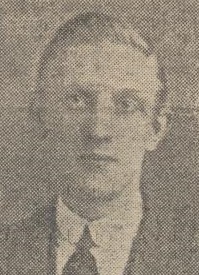 1st Queens Own Royal West Kent Regiment, G/4709
Robert Eskdale was born in 1892 at Town Green, Aughton, Ormskirk to John and Mary Eskdale who already had a son and daughter. The family moved to Blackburn where they went on to have three more children.
At the time of the 1911 Census, Robert lived at home, in June-street, Blackburn with his then widowed father, John, and with his five other siblings, two of whom were boys. Both his brothers enlisted and were serving with the Armed Forces at the time of Robert’s death.
Robert worked as a Cotton Weaver at Malvern Mill, Mill Hill and was an attendee of the Wesleyan Mission.
He was married at St. Philips Church 19th February 1914 to Lucy Jane Holt. By the November of that same year, Robert had enlisted and had left Blackburn.
He served with the 1st Battalion Queens Own Royal West Kent Regiment. It appears that he struggled with army life, twice going absent without leave and being deducted 10 days’ pay. By July 1916, however, he is on the front line with the Battalion, which is part of 5th Division.
It would be at the Battle of High Wood that Robert is listed as missing, presumed dead, on 22nd July 1916.
After the 20th July British attacks failed, the Germans reoccupied most of High Wood, until only the southern corner remained in British hands.
Efforts however continued, and on the night of the 22nd/23rd of July, the 4th Gordon Highlanders attacked the eastern corner of the wood, whilst the 1st Royal West Kent’s attacked the south-eastern part of the wood and Wood Lane, there with the 14th Royal Warwickshire’s at their side.
There had been a preliminary bombardment, but this had not inflicted sufficient loss on the defenders, and they were able to hold High Wood. No significant gains were made, although the Royal West Kent’s suffered 420 casualties. The other battalions also suffered losses.
Lucy Jane wrote to the Infantry Office in Hounslow, 30th January 1917 asking for information of any soldiers either wounded or taken prisoner on 22nd July 1916. She had been writing, without success, to Switzerland and to the Red Cross and had been asked to supply further information. Much correspondence took place between Lucy and the War Office. Not only did she have to wait for news of her husband Robert – not knowing of his fate, whether he was wounded, a prisoner of war, or missing in action, presumed dead, but she was passed from pillar to post with the authorities.
Lucy Jane, of 72 Shorrock Lane, was eventually awarded a widows pension of 10/- (10 shillings per week/now 50p) from 26th March 1917, just over 3 years after her marriage to Robert.
Robert is commemorated on the Thiepval Memorial to the Missing on the Somme, Pier and Face 11 C.
Private Thomas Evans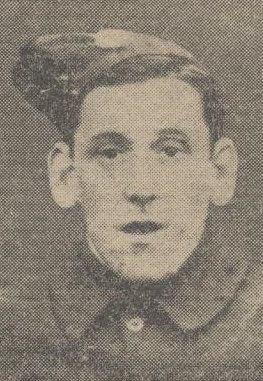 8th East Lancashire Regiment, 17065
Thomas Evans was the son of David and Sarah Evans and was the second son of nine children, the first three children, two boys and a girl, were born in Southport, and six more children were born in Blackburn, and at the time of the 1901 Census, the family were residing at Bonsall Street, Blackburn. Thomas was born in 1887 in Southport.
David, Thomas’s father, was a Bricklayers labourer.
Thomas married Margaret Ann in 1910, and both were Brushmakers. They had a child, Thomas who was 4 months old at the time of the 1911 Census, and all three were boarders with a family by the name of Dugdale, living at Matthew Street South, Bolton.Thomas enlisted with the 8th Battalion East Lancashire Regiment at some point in 1914. The 8th Battalion was formed at Preston in September 1914 as part of K3 and came under command of 74th Brigade in the 25th Division. It moved to Codford and was in billets in Bournemouth in November 1914.
In March 1915 the battalion transferred to 112th Brigade in the 37th Division at Ludgershall, Wiltshire. They landed at Boulogne late July 1915.In the early hours of 15th July 1916, Lieutenant-Colonel Mackay OC 85th East Lancashire received the specific orders that 112th Brigade would attack at 9.20am after an hour’s bombardment of the village of Pozieres, the key to the German 2nd line of defence.
The battalion lead the brigade in the assault on the village - the men's first experience of going 'over the top'. They were to lose over 350 casualties including almost 100 killed outright. The battalion would never be the same again.
It was here that Thomas was killed, aged 30. He left behind his wife, and his two new children.
An entry was made in the Blackburn Times 5th August 1916 announcing Thomas’s death, and he is commemorated on the Thiepval Memorial to the Missing on the Somme, Pier and Face 6 C.
Private William Evans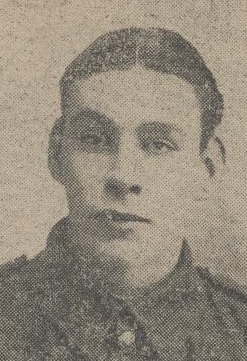
7th Seaforth Highlanders, S/17520
William Evans born in 1897 was the son of Elinor Holden of 5 Campbell Place, Witton. By 1911, William lived with his mother, aged 41 and his sister Irene aged 18. They are in the household of James Edward Holden who had married their mother Elinor, and there are also seven other children.
It would appear Elinor moved to Blackburn and re-married in October 1901. William went to the Church of England Higher Grade School in Blackburn. William had done well at school and was working for Messrs Woolley, Wholesale Chemists at Whalley Banks.
William enlisted into the 7th Seaforth Highlanders in August 1914. The 7th Seaforth Highlanders was formed at Fort George in August 1914 as part of K1 and under command of the 26th Brigade in the 9th (Scottish) Division. They moved to Aldershot and in January 1915 went into billets in Alton. They finally moved to Bordon, Salisbury for training in March 1915 and embarked for Bologne in May 1915.
The Battalion fought at the Battle of Loos in 1915, where William was wounded by gas. He recovered, and was sent back to the front line later that year.
The 9th (Scottish) Division took part in the Battles of the Somme including the Battle of Albert 1-13th July 1916, the Battle of Bazentin 14-17th July and they successfully took Longueval on the 18th July. They participated at Delville Wood 15th July -3rd September and finally at Le Transloy 1st – 18th October. The 9th Division served on the Western front throughout the war and was regarded by many as one of the best fighting formations of the war.
It was in the final battle, at Le Transloy, that William was killed, on 13th October 1916. He was killed by a shell taking part in a charge in the face of machine gun fire.
William Evans has no known grave, and is remembered on the Thiepval Memorial to the Missing on the Somme, Pier and Face 15 C.
Farnworth James | Farrelly John | Fawcett Arthur | Fecitt Fred | Fletcher William | Flynn Thomas
Private James Farnworth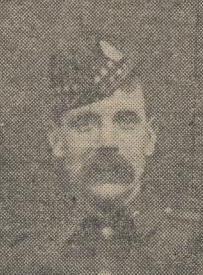
7th/8th King’s Own Scottish Borderers, 16404
James Farnworth was born in April 1875 in Blackburn. He spent his earlier life working as a railway inspector along the Blackburn line, but after 1911 he had moved on to Halstead’s bolt works, on Sharples-street.
James was a father of six by the time he joined the King’s Own Scottish Borderers in October 1914. By July 1915, his unit, the 7th Battalion, is ready for war, and embarked for France, arriving at Boulogne on 10th July.
From here, James would fight in the Battle of Loos, but the rest of 1915 would be considered ‘quiet’. In May 1916, his unit merged with the 8th Battalion to form 7/8th Battalion King’s Own Scottish Borderers.
It would not be long before James would be fighting again, as his unit, part of the 15th (Scottish) Division, was considered to be one of the best in the army, highly trained, quick and ready for action. In spring 1916, the Division was involved in German gas attacks near Hulluch (27th-29th April 1916) and in the defence of the Kink position (11th May 1916). These were tough actions, but would be child’s-play compared to the Battles of the Somme.
James would fight on at the Battle of Pozieres and the Battle of Flers-Courcelette, before his unit reached Le Transloy ridge. The 15th Division was tasked with the capture the Butte de Warlencourt.
The Butte de Warlencourt was the subject of a number of costly and unsuccessful attacks by the British Fourth Army. The Butte de Warlencourt earned an evil reputation because the Butte dominated the British lines and was used by the Germans for artillery observation. The Germans also constructed deep dugouts throughout the Butte, making it a formidable defensive position.
The first attack on the Butte was made on 1st October 1916 by the 141st Brigade of the British 47th (1st/2nd London) Division following their capture of the nearby village of Eaucourt L'Abbaye. Another failed attack was made by the 140th Brigade on 7th October.
It was here that James lost his life, on the 16th October 1916. James as no known grave and is remembered on the Thiepval Memorial, Pier and Face 4 A and 4 D.
Lance Corporal John Farrelly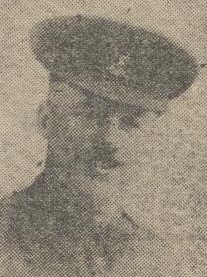
8th Queens Own (Royal West Kent) Regiment, G1266
John Farrelly was born in Blackburn in 1878 to a cotton weaving family. His father, mother and brother were all weavers. In 1901, John married Grace Kendall, and by 1914, they had two daughters, Alice and Catherine. John had also moved away from the looms to employment at W.H. Whalley & Sons, as a brush maker.
When war was declared, John was already a bit older than the rest of the men joining up. Nevertheless, he did not hesitate, and signed up 6th September 1914 in Blackburn Town Hall. He was sent to the Queen’s Own Royal West Kent Regiment, and joined the 8th Battalion.
By October 1915, after a year of training, John was sent to France. Within a week of arriving John was promoted to Lance-Corporal. His age and life experience probably played a part in taking on responsibility. He kept the men calm during the German Gas attack at Wulverghem, when anti-gas procedures were just being implemented for the first time, saving hundreds of lives.
By July 1916, the 8th Battalion, which formed part of the 24th Division, was moved to the Somme area, and would go on to fight at the Battle of Delville Wood. The area around this wood was particularly challenging, with open fields on the flanks and a dense forest in the centre on a hill, dominating the nearby skyline.
After 2 months of bitter fighting, Delville Wood was won by the British, and the decision was made to continue and clear out a small village called Guillemont, north-west of Delville Wood. It would be here that Lance Corporal Farrelly would pay the ultimate sacrifice. An officer recounted the story:
“The 8th Battalions’ first day inside Delville Wood (31st August) coincided with the Germans’ last and most formidable attempt to recover high ground between Guillemont and High Wood. Hardly a scanty breakfast had been finished than the enemy’s guns opened a terrific shelling, which they maintained for five hours, inflicting terrible casualties on the front line, so that two platoons of "D" Company had to reinforce.
At last the German guns lifted, and then, to the satisfaction of the defenders, infantry were seen coming forward and collecting for the assault in a trench about 500 yards away. So admirable was the fire discipline of the British troops that their fire was withheld for nearly another hour till the enemy’s advance in force began. Then, indeed, their rifles and machine-guns let them have it and with such good effect that on the right, where the field of fire was good and several machine guns from the 72nd MGC had escaped bombardment, "A" Company stopped the Germans in about 50 yards, inflicting very heavy losses.
On the left there was more cover and "B" company was very closely pressed, it’s commander, 2nd Lieutenant Flowers, being among the killed, but it also kept its immediate opponents out. The Germans lost heavily both in the advance and later on when the survivors of the attack tried to get back to cover, but in the evening they made a second attempt. As before they were beaten off both by "A" and "B" Companies, but the latter had to throw back its left flank as the Germans had effected a lodgement in the next battalion’s frontage at Orchard Trench.
This was successfully done by 2nd Lieutenant. E. G. Brown, who had succeeded to the command of "B" Company, and he was ably seconded by CSM Rankin; thanks largely to their efforts the enemy was prevented from improving his advantage and next day a counter-attack threw him out of Orchard Trench. The repulse of this attack was a great feather in the Battalion’s cap; its steadiness under a heavy bombardment had been equalled by the excellence of its musketry to which the losses inflicted on the Germans testified. The strength in which the Germans had attacked was some testimony to the value they attached to the position and to the served rendered by the 8th Battalion in repulsing such a determined attack.”
After the war, John’s wife Grace had moved with the children to New South Wales to begin a new life. She began to receive John’s pension, and also received money from the ‘Canteen Fund’, which was like a Co-operative for frontline soldiers. The soldiers paid towards the running of the canteen services, and in exchange, they got some of the profits.
John is remembered on the Thiepval Memorial to the missing in France, Pier and Face 11 C.
Private Arthur Fawcett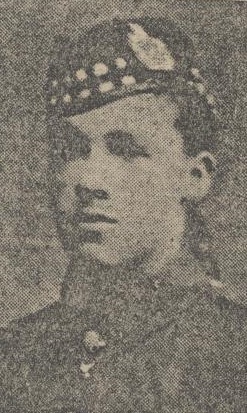 2nd King’s Own Scottish Borderers, 21066
Arthur Fawcett was one of eight children born to Richard and Johannah Fawcett; 5 girls and 3 boys. In 1911 he lived at 37, Feilden-street just off Montague-street and Arthur, aged 20, worked in Greaves-street Mill which was quite close by. His father was described as a cabinet maker and his mother helped in the business – ten years earlier his father had worked in a wood yard.
Arthur was 24 when he enlisted into the 2nd Battalion King’s Own Scottish Borderers, in August 1914. The 2nd Battalion Kings Own Scottish Borderers was in Dublin August 1914, part of the 13th Brigade of the 5th Division and embarked for France landing at Le Havre on the 15th August.
In 1915, when Arthur joined the Battalion, it was fighting at the second Battle of Ypres and the capture of Hill 60. In late 1915 many units were switched for those of the 32nd Division, a newly arrived volunteer formation. The idea was to strengthen the inexperienced division by mixing in some regular army troops even though by now many of the pre-war regulars had gone and the regular battalions themselves were often largely composed of raw recruits.
In March 1916 the 5th Division took over a section of the front line between St. Laurent Blangy and the southern edge of Vimy Ridge in front of Arras. This was a lively time with many trench raids, sniping and mining activities on the front lines. When the Franco/British offensive opened on the Somme on the 1st July the 5th Division was enjoying a period of rest and refit however this was not destined to last for long. They were then drawn into the attacks on High Wood and Delville Wood.
Arthur served in France for about t years and was slightly wounded in June 1916 returning to duty 3 days later. He was reported wounded on the 30th July, during the Battle of Deville Wood, and then listed as missing. He was never found.
Arthur is remembered on the Thiepval Memorial to the Missing on the Somme, Pier and Face 4a and 4D.
Sergeant Fred Fecitt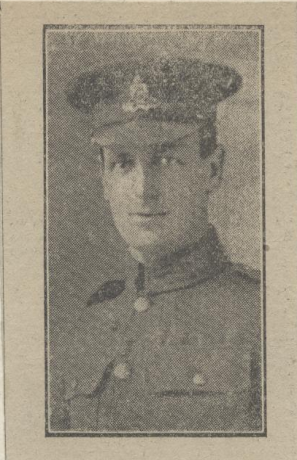
A Battery 150th Brigade Royal Field Artillery, L/16248
Fred Fecitt was one of three sons of John Fecitt, newsagent of 83, Havelock-street His mother Mary had died some time ago aged 39 in 1898. Fred was born in 1885.
Fred had married Jenny in 1908 and had a daughter Phyllis and a son also called Fred. They lived at 278, Livesey Branch-road Fred worked as an overlooker at Ewood Mill and had another child born in 1913. He had been a member of All Saints Day and Sunday Schools.
Upon joining the army in August 1914, Fred was assigned to the Royal Field Artillery. At this stage, Lord Derby helped in raising the Palatine 150th Brigade R.F.A. in February 1915. This was made up of local men from St Anne’s, Blackpool, Preston, and surrounding areas.
The 150th Brigade was attached to the 30th Division and fought in all the battles in which the Division took part up to January 1917.
The Manchester and Blackburn Brigades were drafted to Grantham and then to Aldershot. On 4th November the Division was inspected by Lord Derby, and entrainment began two days later. The Division sailed to Le Havre and Boulogne and all units concentrated near Ailly Le Haut Clocher (near Amiens) by 12th November 1915. The 30th Division subsequently remained in France and Flanders.
The Battle of Albert, 1st July 1916, was the opening Battle on the Somme, and included the Division's capture of Montauban and subsequent fighting in Trones Wood. In this opening phase, the British assault broke into and gradually moved beyond the first of the German defensive complexes on the Somme. Success on the first day in the area between Montauban and Mametz led to a redirection of effort to that area, for the initial attack was defeated with huge losses north of Mametz.
Fred had died at his post in command of his gun doing his duty on that first day of fierce fighting.
Fred has no known grave and is remembered on the Thiepval Memorial to the Missing on the Somme, Pier and Face 1 A and 8 A.
Rifleman William Fletcher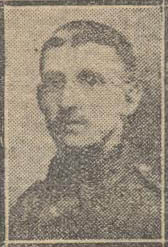
15th Royal Irish Rifles, 41651
William Fletcher was born in 1880 in Ireland, and moved to Blackburn at the turn of the century. Not much is known about William’s early life, other than that he married Rose Ann Kenyon and was a self-employed rag gatherer.
William joined the 15th Battalion Royal Irish Rifles in 1916. The 15th Battalion (North Belfast) was formed in Belfast in September 1914 from the Belfast Volunteers. It moved to Ballykinlar and came under orders of 107th Brigade in 36th (Ulster) Division. It then moved to Seaford July 1915 and landed in Boulogne, October 1915.
William Fletcher was killed in action on 22nd November 1917 at the Battle of Cambrai which opened on 20th November 1917 and is often identified as the first demonstration of the sophisticated techniques and technologies required to effect such a battle.
The attack was launched at 6.20am on the 20th November. The British Divisions in the front line were, from right to left, the 12th (Eastern), 20th (Light), 6th, 51st (Highland), 62nd (West Riding) and 36th (Ulster). In immediate support was the 29th, and ready to exploit the anticipated breakthrough and sweep round Cambrai were the 1st, 2nd and 5th Cavalry Divisions.
To the north, the 36th (Ulster) Division, planning to continue their advance beyond Moeuvres, waited for the success signal, signifying that the 62nd had captured Bourlon. It never came, for the 62nd could not penetrate beyond the sunken lane facing the wood. By the evening of the 21st, Haig was satisfied that 'no possibility any longer existed of enveloping Cambrai from the south'. The British were now in an exposed position in the lee of Bourlon Wood, the capture of which would still prove to be useful, in cutting German access to key light railway lines feeding their front. Haig and Byng decided to press on, even though it meant deepening the salient that had been created and throwing in even more troops into this northern sector of the battlefield.
William has no known grave and is remembered on the Thiepval Memorial to the Missing on the Somme, Pier and Face 15 A and 15 B.
Private Thomas Flynn
10th Lancashire Fusiliers, 31194
Thomas Flynn was the son of Thomas & Mary Flynn, 59 Montrose-street Bank Top, Blackburn. Born in 1890, his family consisted of 6 children (1 previously deceased) and lived at Maple-street, Gt Harwood. All of the children of working age were cotton weavers, whilst their father was a labourer in a stone quarry. Thomas had 3 sisters and 2 younger brothers.
Thomas enlisted into the 10th Battalion Lancashire Fusiliers in Newton Heath after the war started. The 10th Battalion was formed at Bury in September 1914 as part of the Second New Army and then moved to Bovington to join the 52nd Brigade of the 17th (Northern) Division, and then moved to Hursley. The battalion landed in Boulogne July 1915. They were involved in various actions on the Western front including the Battles of Albert and Delville Wood.
The 17th (Northern) Division captured Fricourt on 2nd July, as part of the Battle of Albert. This comprised the first two weeks of Anglo-French offensive operations in the Battle of the Somme. The Allied preparatory artillery bombardment commenced on 24th June and the Anglo-French infantry attacked on 1st July, on the south bank from Foucaucourt to the Somme and from the Somme north to Gommecourt, 2 miles (3.2 km) beyond Serre.
At the age of 26, on 7th July 1916 was killed on the attack on Albert. His body was never found.
Thomas has no known grave and is remembered on the Thiepval Memorial to the Missing on the Somme, Pier and Face 3 C and 3 D.