
 Loading more
S to Z
Men from the Blackburn area commemorated on the Thiepval Memorial
S T U V W X Y Z
Letter S
Salt William | Sanderson Joseph | Sanderson Robert | Savage Peter Edward
Schofield William | Scholes James Edward | Scott Fred | Scott William
Sharples Edward | Sharples James | Shaples James | Shaw Harold
Simpson Harry | Singleton Earl | Singleton Edgar | Singleton John Robert
Singleton Thomas | Slinger Ernest | Smith Alfred | Smith John
Smith Thomas | Smith Thomas | Spooner John |Stephenson Harry
Stevenson Arthur | Stonehouse Charles | Stott John | Sutton Arthur
Lance Corporal William Salt
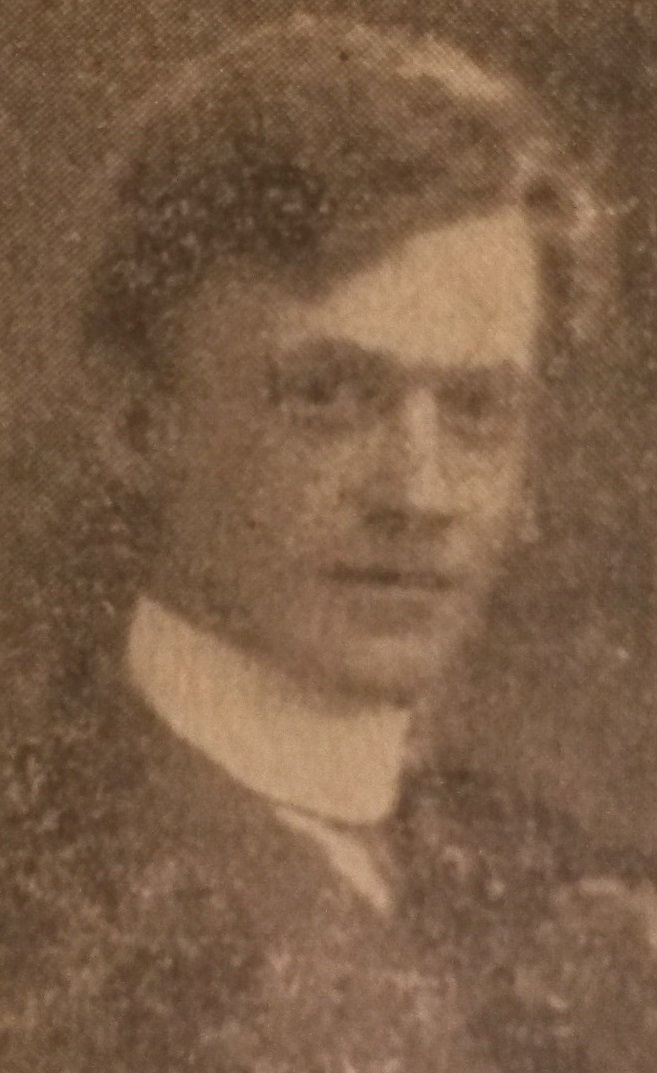
2nd East Lancashire Regiment, 26419
William Salt, born 1893, was a painter by trade, living with his wife Winifred F. Spencer at 23 Selborne-street, Witton. They had married on 24th June 1916, whilst William was on leave from the Regiment, and had a week’s honeymoon before he was sent to France in the July.
William had attested into 2nd Battalion East Lancashire Regiment under Lord Derby’s scheme, and was called up with his group in March 1916.
After being shipped out to France in July 1916, William saw action across the Somme, fighting at Albert and La Boiselle, culminating in an attack at Guadacourt on 23rd October 1916, where the German front line trench was captured.
The conditions under which the attack on the 23rd October 1916 was carried out were most trying; a difficult approach march to the attack positions, the worst of weather; deep poisonous mud everywhere, a postponement of the attack at the last minute—than which nothing is more trying to the nerves —and last, but not least, there was no attack by the troops on either flank.
On the two following days and nights the captured trench was consolidated, and communication trenches were dug from "Mild" to "Shine" trench, and from "Rainbow" trench to the sunken road. All this work was carried out under great difficulties, due to very bad weather, enemy artillery fire, and the shortage of rations.
On the night of the 25th/26th October 1916 the battalion was relieved by the 1st Worcestershire; two nights later it relieved the 2nd Northants on the right sector, where it was relieved by a battalion of the 17th Division on the night of the 30th/31st October 1916. This was a particularly difficult relief, carried out in pitch darkness and in pouring rain which turned trenches into torrents of water and the open country into a swamp. Relief was not completed until 3 a.m., and the rest camp at Montauban was not reached until 8 a.m. on the 31st 1October 1916.
It was during the night relief of the 2nd Northants, on 28th October 1916, that Lance Corporal William Salt was wounded, and died, aged 23. It is likely in those awful conditions that he was hit with shrapnel.
William has no known grave, but is remembered on the Thiepval Memorial to the Missing on the Somme, Pier and Face 6 C.
Sergeant Joseph Sanderson
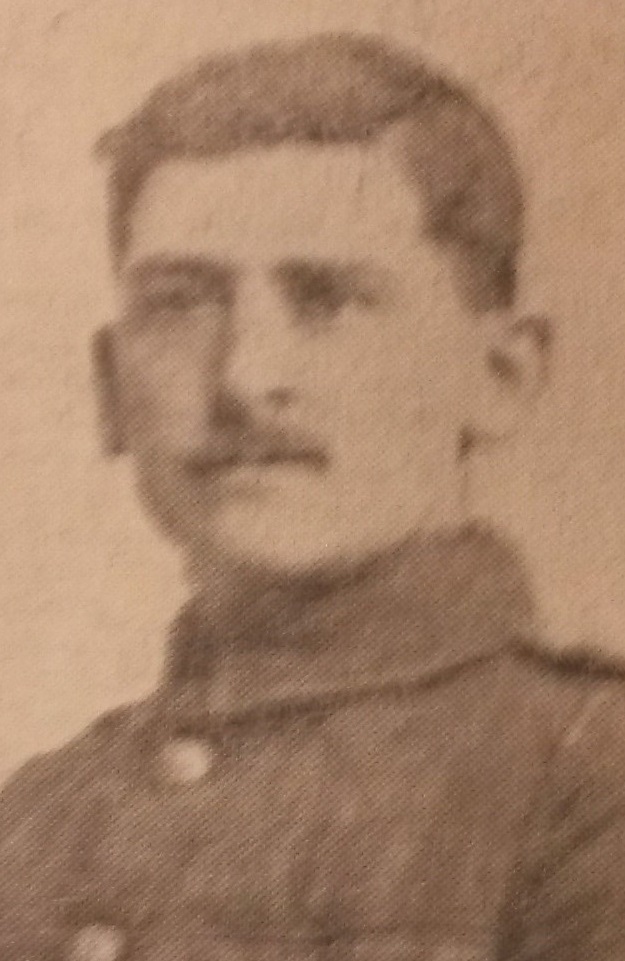
8thEast Lancashire Regiment, 17659
Joseph Sanderson was born in 1884 in Blackburn. Along with his wife Susannah, he worked in Cumpstey Cotton Mill as an over-looker. By 22 he had married Susannah and had two sons, and was teaching at the local Sunday school at Christ Church.
When war broke out, Joseph enlisted in December 1914, joining 8th Battalion East Lancashire Regiment. Following intensive training at Ludgershall in March 1915, Joseph finally reached France on 1st August 1915. The next year would be spent gaining experience in trench warfare.
On 1st July 1916, the 34th Division lost 6,380 men during the first day of the battle of the Somme, the highest of any division. As a result, 102 (Tyneside Scottish) and 103 (Tyneside Irish) Brigades were shattered. They were exchanged with 111 and 112 Brigades from 37th Division for rest and recuperation. The 8th East Lancashire Regiment was going into the heart of the battle.
In the early hours of 15th July 1916, Lieutenant-Colonel Mackay OC 8th East Lancashire received the specific orders that 112 Brigade would attack at 9.20am after an hour’s bombardment of the village of Pozieres, the key to the German 2nd line of defence. The battalion lead the brigade in the assault on the village - the men's first experience of going 'over the top'. They were to lose over 350 casualties including almost 100 killed outright. The battalion would never be the same again.
At 8.30am on 15th November 1916, after the preliminary bombardment of their objective Frankfurt Trench, the men advanced between Crater Lane and Lager Alley in two waves. In the fog they got to within 50 yards of Munich Trench, ‘A’ and ‘D’ Companies leading the way, followed by ‘B’ and ‘C’. Suddenly they were fired upon by machine guns and rifles at very short range. The men went to ground, before being forced to pull back. Ten of their officers were killed in this attack on the Redan Ridge between Serre and Beaumont Hamel. Allegations were made that many of the 150 casualties were caused by 'friendly-fire’. The battalion's second assault in the Somme battle had ended in failure.
Sergeant Joseph Edward Sanderson, of the East Lancashire’s was killed in action on the 15th ult. He leaves a wife and two sons, who live at 40, Addington-street. He was 32 years of age, and in civil life was an overlooker at Cumpstey Street Mill, and he was connected with Christ Church, being a teacher in the Sunday school. He answered his country’s call on December 5th 1914, and was drafted to the front in July 1915. In February of this year he was home on leave. He was only a Private when he went to the front, and he received all his promotions on the field of battle. His officer writing to Mrs Sanderson, expressing the deepest sympathy of the whole regiment with her in her loss says: “He was a true soldier and a noble comrade…… He was killed in action on November 15th by a bullet. Please accept this letter as our only means of sympathising with you and yours.”
Reported by: Blackburn Times, 9th December 1916
Verified by: His sister, Christ Church 15th June 1929
Sergeant Joseph Sanderson is remembered on the Theipval Memorial Pier and Face 6 C.
Private Robert Sanderson
1st/10th King’s Liverpool Regiment, 5171
Robert Sanderson was born at Withnell in 1898, and was the fourth child of Richard & Elizabeth Sanderson. His father Richard worked as “Under Conducts, Cotton Mill” and Robert was working as a junior clerk at a brick manufacturer, at 13 years of age. His mother, Elizabeth, was born in Dorset.
Robert enlisted into the 1st/10th Battalion King’s Liverpool Regiment as war broke out in August 1914. Following extensive training in Edinburgh and Tunbridge Wells, the Battalion was transferred to 9th Brigade, 3rd Division and sent to France, arriving 2nd November 1915.
The Battalion received orders to move, at short notice, at 8.00pm on the evening of 8th August 1916, to proceed to the trenches in front of Guillemont where they would attack. They arrived at 4.00am on the morning of Wednesday, 9th August and orders were received en route, that they were to attack at 4.20am. The Battalion attacked, as ordered, and four separate attacks were made and the Battalion ultimately occupied the original front line trench.
The casualties were heavy due to much hostile machine gun fire. It was here, on 9th August 1916, that Robert, aged just 18, was killed. He has no known grave.
Robert is remembered on the Thiepval Memorial to the Missing on the Somme, Pier and Face 1 D, 8 B and 8 C.
Private Peter Edward Savage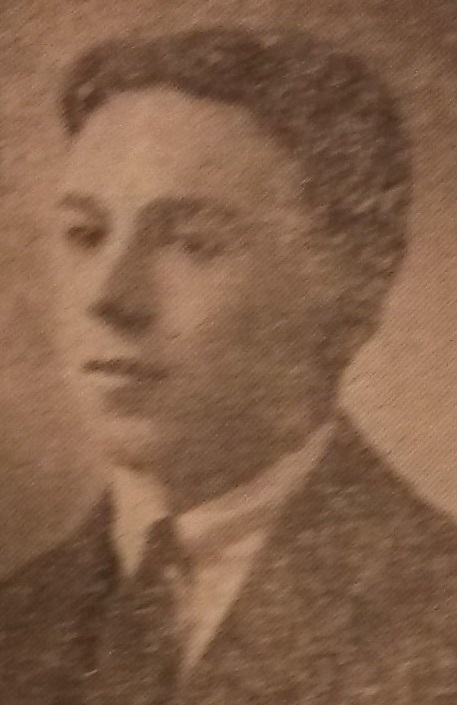
10th Royal Dublin Fusiliers, 27005
Peter Savage was born in 1894, the youngest child of a family of five brothers and one sister. His father Joseph Francis, and his mother Mary, were both born in Ireland. Joseph worked as a gardener, according to the 1911 census, and at that time, he was on his own, without Mary. Peter had gained employment from his brother Frank, who employed him as a tea merchant in Fleming Square, Blackburn.
With his Irish heritage, Peter enlisted into the 10th Battalion Royal Dublin Fusiliers in May 1916 in Preston. This was a newly formed unit, with more and more Irishmen joining the ranks to fight.
Peter would arrive on the Somme in August 1916, and would fight on until 13th November 1916, the beginning of the Battle of the Ancre. The Battle of the Ancre was the 63rd (Royal Naval) Division’s first major operation on the Western Front (it had previously served in Gallipoli). A prominent part in the Division’s success on 13th and 14th November was the inspirational leadership provided by Lieutenant-Colonel Freyberg of Hood Battalion who, by skill, courage and improvisation, kept the momentum of the advance going.
On the same day as Peter was killed, his brother, Patsy, (Patrick) was shot through the thigh and severely wounded. Both brothers served in the same company. Patsy recovered from his wound and was able to return to the depot of his regiment. Peter was not so fortunate.
Peter Savage is remembered on the Thiepval Memorial to the Missing on the Somme, Pier and Face 16 C.
Private William Schofield
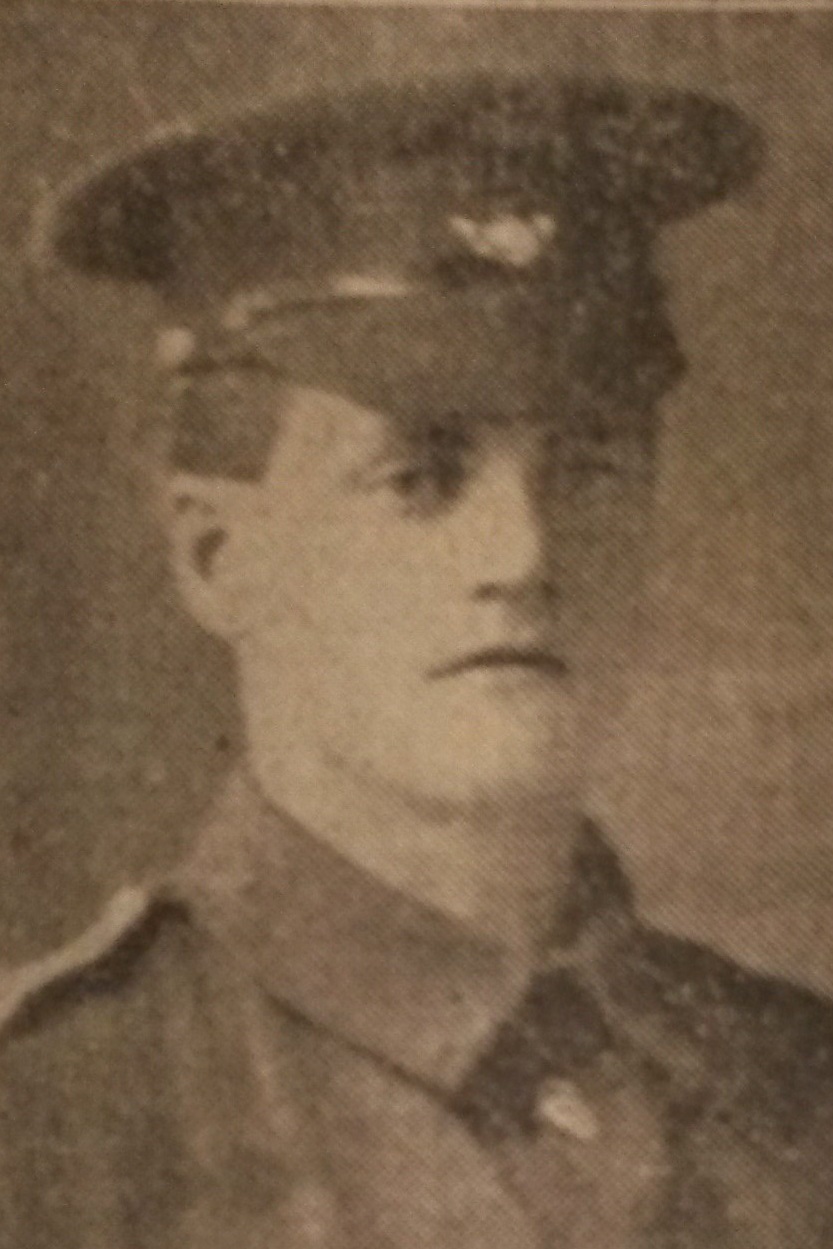
10th King’s Own Yorkshire Light Infantry, 14374
William Schofield was the youngest son of William and Mary Schofield, born in 1896. He was born and bred in Blackburn around the Shorrock-lane/Livesey area. He was the youngest son, and at the time of the 1911 census, he had a brother, Harry, seven years his senior and Edward, two years his senior. His mother had given birth to ten children in total but seven of these children had died by 1911. By the age of 14, William was a weaver in a cotton mill and, prior to his enlistment, he became a driver for a firm of Dyers. His father William’s occupation was said to be that of a Rag Gatherer at the time of the 1911 census, but he had been listed as a cotton spinner in the 1901 census. William’s brother, Harry, was described as an out-of-work journeyman and his other brother, Edward, a weaver.
William enlisted into the 10th Battalion King’s Own Yorkshire Light Infantry. The 10th was formed at Pontefract Barracks, West Yorkshire, in September 1914 and came under the command of 64th Brigade in 21st Division. They moved to Berkhamsted for training, and then to Halton Park (Tring) in October 1914, before going on to billets in Maidenhead during November. They returned to Halton Park in April 1915 and went on to Witley in August of that year. The Battalion, and William, finally landed on French soil in September 1915.
On 1st July 1916, the Division was tasked with capturing the small town of Fricourt. Following nine days of intense bombardment of the area, little was left to capture other than the ground itself. The Division managed to capture over 1000 yards of ground, and isolated Fricourt, which forced the German to abandon the following night. It was during this battle that William was killed.
William was posted as being “missing” from 1st July 1916 and his mother Mary, made an appeal in “The Blackburn Times”, for any news of her son (2nd September 1916). His mother had received a field postcard from William, 25th June 1916. Tragically, his brother, Private Edward Schofield, Lancashire Fusiliers, had been an earlier victim of a German gas attack, and although he was brought home to England, he did not survive; he died in hospital aged just 21 years old.
Mary was left on her own, having lost seven children plus two of her remaining sons as a result of War in very close proximity to each other aged 20 years and 21years.
William is remembered on the Thiepval Memorial to the Missing on the Somme, pier and Face 11 C and 12 A, also, in Blackburn Old Cemetery: NC C 1591.
Lance-Corporal James Edward Scholes
8th East Lancashire Regiment, 17139
Not much is known about James Edward Scholes, who is listed on the Roll of Honour and referenced in the Blackburn times. There is no census data about him. All that is known is that he was serving with 8th Battalion East Lancashire Regiment in 1916, when he was killed.
On 1st July 1916, the 34th Division lost 6,380 casualties during the first day of the battle of the Somme, the highest of any division. As a result, 102 (Tyneside Scottish) and 103 (Tyneside Irish) Brigades were shattered. They were exchanged with 111 and 112 Brigades from 37th Division for rest and recuperation. The 8th East Lancashire’s were going into the heart of the battle.
In the early hours of 15th July 1916, Lieutenant-Colonel Mackay Officer in Command 8th East Lancashire received the specific orders that 112 Brigade would attack at 9.20am after an hour’s bombardment of the village of Pozieres, the key to the German 2nd line of defence. The battalion lead the brigade in the assault on the village - the men's first experience of going 'over the top'. They were to lose over 350 casualties including almost 100 killed outright. Lance-Corporal James Edward Scholes was one of them. The battalion would never be the same again.
Lance Corporal James Edward Scholes is remembered on the Thiepval Memorial to the Missing on the Somme, Pier and Face 6 C.
Private Fred Scott
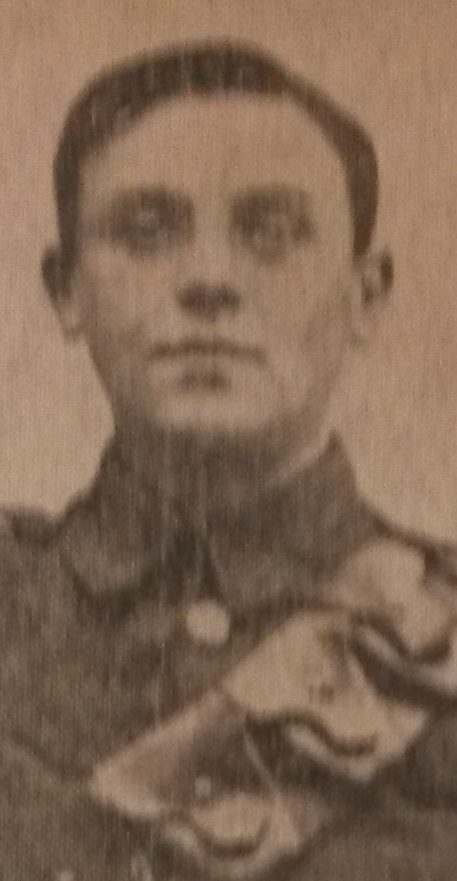
1st East Lancashire Regiment, 18299
Fred Scott, born in 1896 to Joseph and Sarah Scott, was a typical Blackburn lad, who would go on to work in the Cotton Mills as a reacher. He lived at 12 Wensley-street.
Fred joined the 1st Battalion East Lancashire Regiment as soon as war broke out, along with his brother Joseph. His other two brothers would join the army as well. Following intense trainingFred was sent to the front line, just in time for the Battle of the Somme, beginning with the assault on Albert.
At the Battle of Albert on 1st July 1916, the French and British assault broke into and gradually moved beyond the first of the German defensive systems. For the British, the attack on 1st July 1916 proved to be the worst day in the nation's military history in terms of casualties sustained. It is the aspect of the battle that is most remembered and most written about, and for good reason - but to concentrate on the failures is to entirely miss the point of the Somme and why the battle developed into an epic period of the Great War.
On the first day, British forces at the southern end of the British line made an impressive advance alongside the French Sixth Army, capturing the villages of Montauban and Mametz and breaking through the enemy's defensive system. North of Mametz the attack was an almost unmitigated failure. The situation led to a redirection of effort, with the offensive north of the River Ancre effectively being closed down and all future focus being on the line south of Thiepval.
There was a stiff fight for Trones Wood and costly, hastily planned and piecemeal attacks that eventually took La Boisselle, Contalmaison and Mametz Wood during the rest of the period up to 13th July 1916.
On the far left of the British attack the 11th East Lancashire’s (the famous ‘Accrington Pals’) assaulted the village of Serre, while a mile to their south the 1st Battalion (the old 30th Foot) attacked to the north of Beaumont Hamel. Despite rapidly mounting casualties, the East Lancashire Regiment moved steadily forward, as if on parade, until they melted away under the fire. Small parties of both battalions entered the German trenches, but they were never seen again.
Within a few hours The East Lancashire Regiment suffered more casualties than on any other day in its long history. Out of 700 officers and men of the 1st Battalion who went into action, only 237 were present to answer their names when the roll was called, whilst the 11th Battalion lost 594 killed, wounded and missing out of the 720 in the attack. This memorable devotion to duty is commemorated in the Regiment annually to this day, most notably by a Service in Blackburn Cathedral.
Fred’s Obituary reads:
Private Fred Scott, whose parents live at 12 Wensley-street, has died of wounds received in action in France; and his brother, Private Joseph Scott, is in hospital suffering from wounds to both legs, received the same day. Both brothers were in the East Lancashire’s. Two other brothers are also in the firing line. It was only at the latter end of May that Fred, writing on behalf of himself and his brother Joe, told his parents not to upset themselves but to “wave your colour because you have something to wave it for, having four sons in the firing line. Dad, I wish you were twenty years younger. I know you would enlist. You are ‘gam’ enough and we take after you. Are we downhearted? No. Never let it be said my father had a jibber. Keep your hearts up as we are doing.”
News of the young soldier’s death first came from a comrade who wrote: “I was with him when he died. He had a very quiet end. He went with a smile on his face. He was unconscious for two hours. Tell his mother that everything that could be done for him was done. He died more from shock that anything else. He was a brave young soldier”.
Private Fred Scott is remembered on the Thiepval Memorial Pier and Face 6 C.
Private William Scott
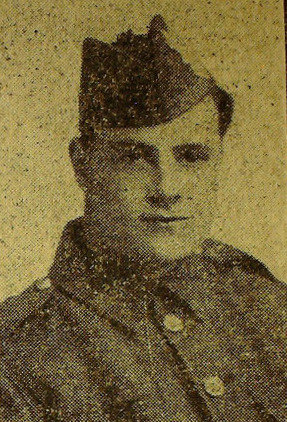
8th Black Watch, S/12184
William Scott was the son of Edward and Sarah Scott, born in 1895. He had two older sisters, Gertrude & Eva and a younger brother, Walter. There had been two other children born alive, but had died by the time of the 1911 census, and at that time, the family resided at Garnett-street, Blackburn. William was an apprentice house painter working for Messrs Clifton of King-street, following in the footsteps of his father, who was also in the same profession. In his spare time, William attended Chapel Street Congregational Sunday School.
When war broke out, William enlisted into the 8th Battalion The Black Watch. 8th (Service) Battalion was formed at Perth 21st August 1914 and came under command of the 26th Brigade in 9th (Scottish) Division. In January 1915 the Battalion went on to Alton and in March to Bordon. William finally landed at Boulogne on 10th March 1915.
On the Western Front, 1916 was dominated by the Battle of the Somme. Five battalions of the Regiment were involved with particularly fierce actions at Contalmaison, High Wood, Delville Wood and Longueval - the last named changing frequently as the Germans counter-attacked and further assaults were made to regain it. Eventually it was held but by then the 8th Battalion was reduced to just 171 men.
War Diaries on the day of 18th July 1916 reported that the enemy, at 8.00am, opened a bombardment of the greatest possible violence with every calibre of gun on Longueval Village, Delville Wood, which continued unabated until 7.00pm. The Black Watch sustained 24 Fatal casualties on that day, one of whom unfortunately, was William.
William was just 21 when he died on 18th July 1916. Such a bombardment also meant that William has no known grave. He is remembered on the Thiepval Memorial to the Missing on the Somme, Pier and Face 10 A.
Proceed to page 2 >