
 Loading more
Page 2
< Back to page 1Proceed to page 3>
Private Edward Sharples
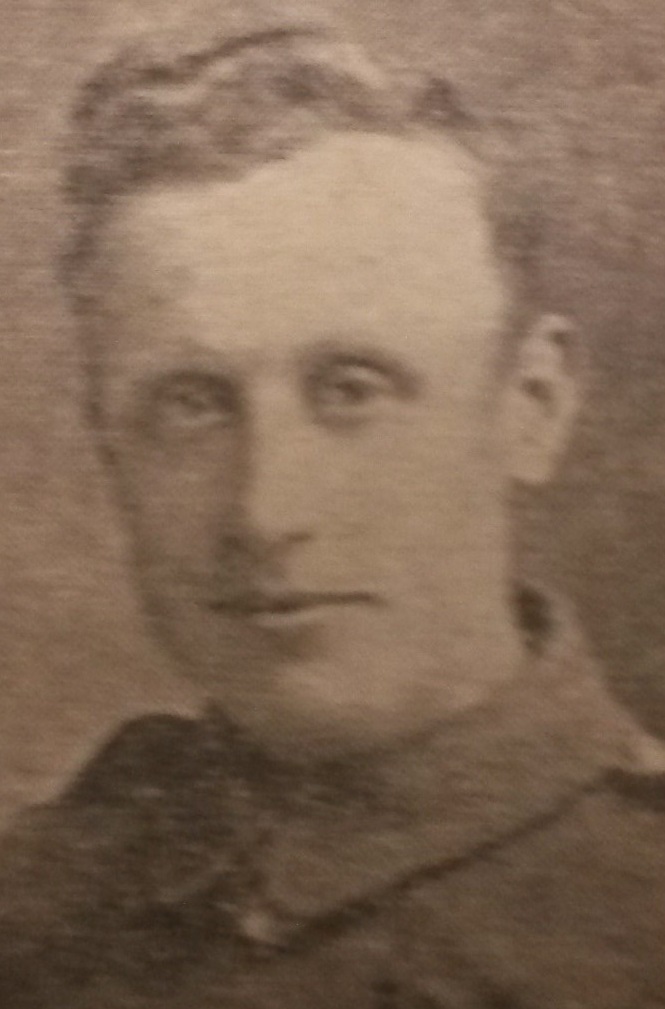
1st Loyal North Lancashire Regiment, 23128
Private Edward Sharples (twenty-five), of the Loyal North Regiment, who was posted as missing on July 15th, 1916, is now presumed dead by the War Office. Before enlisting he was a driver in the employment of Mr. Henry Shutt, corn miller. The deceased soldiers name is on the Roll of Honour at St Thomas’s. He leaves a widow and one child, who reside at 5, Kenyon-street. Private Sharples only brother, who has seen three years hard fighting, was killed in action in October.
Private Sharples was killed in the first stage of the battle of the Somme which lasted from 1st July to 17th July.
5th July the 1st Battalion Loyal North Lancashire Regiment moved back to Divion, and from here on the afternoon of the following day it marched to Lillers and proceeded by train to Flesseles, where the 1st Division now found itself attached to the III corps of the Fourth army. III Corp covered the front at Ovillers-la-Boisselle-Becourt.
By 7am on the 14th the battalion was occupying a position in trenches between the point O.B.I. and Becourt wood and at 11.30 orders were received for 'A' and 'B' companies to move up at once and take part in an attack which was to be made by the 1st Brigade on the German second line system immediately north west of Bazentin Le Petit Wood. This attack started at 14.30 at which time, 'C' company was sent forward to form a guard for 1st Brigade headquarters. The Battalion took 52 casulties all ranks on this day.
At 07.15 on the morning of the 15th, the Battalion received orders to attack again at 09.00 and bomb up to 1,200 yards of trench to a point just east of Pozieres. After earlier successes in which 150 yards of support trench and 400 front line trenches were captured, the attack was stopped by heavy enemy machine gun fire, 'D' Company was sent to support.
At noon a strong German counter attack was launched against the Battalion in the support line and it was forced to fall back for a hundred and fifty yards but almost immediately recovered the ground lost. The Battalion was then mistakenly shelled by British Artillery which forced a retreat from the captured trench. Casualties were caused due to this shelling.
At the end of day the Battalion was relieved and moved back to Brecourt wood.
Casualties on the 15th were 77 all ranks.
Private Sharples is remembered on the Thiepval Memorial Pier and Face 11 A.
Lance Corporal James Sharples
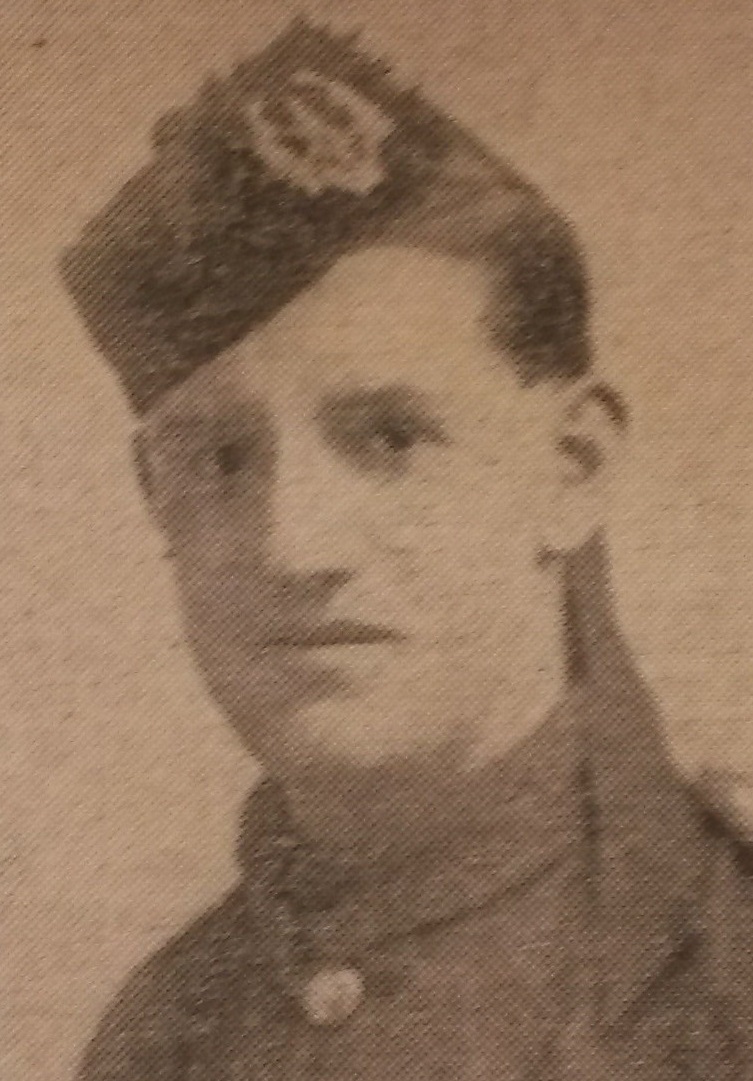
9th Cameronians, 17692
James Sharples, born 1892, was the son of Edward and Martha Sharples. A family of cotton weavers, James had two sisters, Polly and Edith, and was the first of the family to change careers, becoming a store-keeper in Greenbank foundry.
Prior to his enlistment in January 1915, he married Jane Griffin, and moved to 41 Brownhill-road. As a devout member of St. Albans Church, it is likely that they married there.
James enlisted into the 9th Battalion Cameronians (Scottish Rifles), and quickly got sent for training.
James arrived in France in 1916, just in time for the Battle of the Somme. On 3rd July, the 9th Battalion was ordered to capture Bernafay Wood as part of 9th Scottish Division.
The following is taken from their diary:
Patrols continued to report Bernafay Wood quite empty of enemy troops. Haig was now coming under pressure from the French, not to exploit the success and go on through Trines Wood toward the second line at Guillemont, but to push on towards Thiepval.
At 3.15pm, Walter Congreve (9th Division) could wait no more. It was evident to him that the enemy was in trouble on this front and an opportunity was slipping away. He gave orders to occupy Bernafay Wood and Caterpillar Wood. At 9pm, after a 20 minute bombardment, two battalions of 27th Brigade moved into Bernafay with the loss of only six men. 18th (Eastern) Division occupied Caterpillar without fuss at 4am next day.
4th July 1916:
By now, Haig was pressing Rawlinson to take Trones Wood, key to an attack on the enemy second line. Congreve and Horne (XV Corps, at Mametz) were also keen to move on, believing the enemy beaten.
5th July 1916:
GHQ reported ammunition state to Fourth Army: it was not good. There was only enough 18-pounder gun shells to maintain fire of 56,000 rounds per day; and only 5,000 6-inch shells per day. This had to be spread across the entire Fourth Army front, and represented a severe reduction in volume of fire in comparison with the opening bombardments.
On 5th July, as the positions around Bernafay were being consolidated, James Sharples was shot by a sniper, and killed instantly. His comrades informed his wife, who had been informed that he was missing.
James has no known grave, but is remembered on the Thiepval Memorial to the Missing on the Somme, Pier and Face 4 D.
Private James Sharples
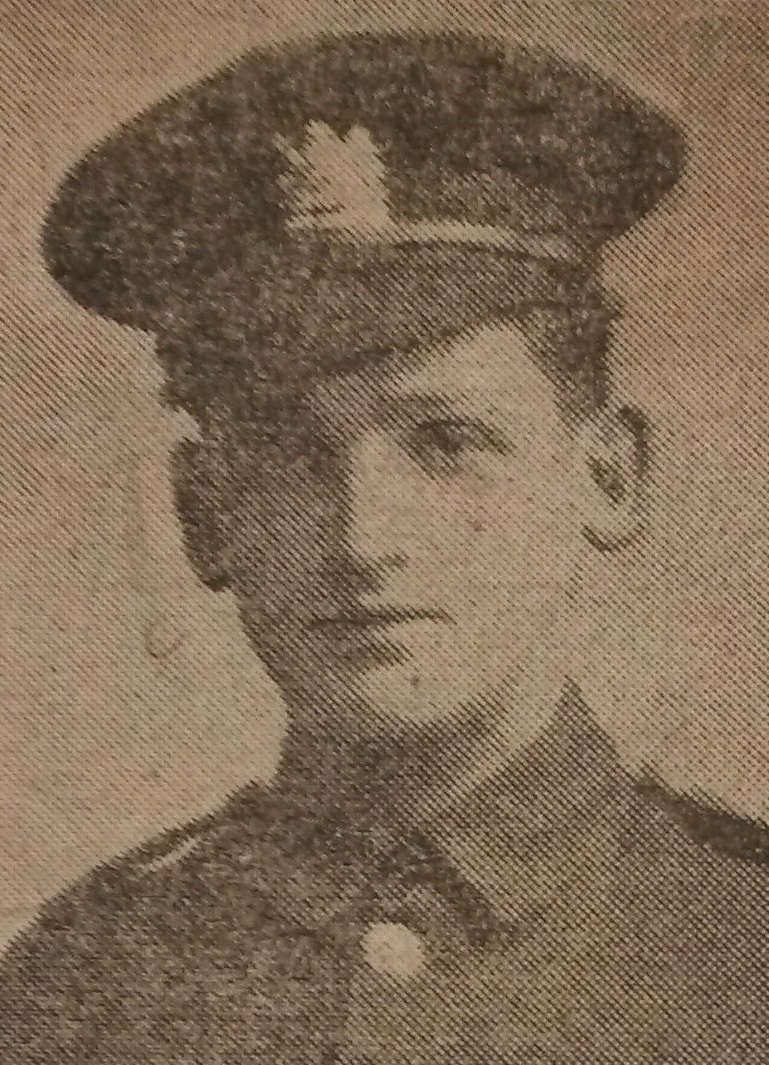
12th Durham Light Infantry, 19967
James Sharples joined the 12th Battalion Durham Light Infantry in 1915, and left for France on 25th August 1915.
The 12th Battalion DLI was formed at Newcastle in September 1914, joining the 68th Brigade in 23rd Division, alongside the 13th Battalion. The moved to Aldershot, Hampshire in November and then to Willesborough, Kent in February 1915, then to Bramshott in May.
They left from Folkstone for France (Boulogne) on the 25th August 1915. Along with 13th Battalion they “detrained at Watten and then moved by route march to the village of Moule where they went into billets” and they spent one week training. On the 5th of September 23rd Division became attached to III Corps, moving to the Merris-Vieux Berquin area.
During the Battle of Loos CIII and CV Brigades were in action attached to 8th Division.In Mid-April they returned to Bruay for rest until 20th May when they took over the front line in the Souchez sector just before the Vimy Ridge attack from the Germans on the 21st. A successful reconnaissance patrol on the 28th gathered information that resulted in the successful bombing of an enemy sentry post and trench. During the first week of June the Artillery supported 2nd Division in regaining lost ground but on 11th June the 23rd Division moved on to train for the Somme Offensive.
During the beginning of July 12th Division was involved in the Battle of Albert including the capture of Contalmaison. They suffered heavy casualties at the Battles of Bazentin Ridge where men were forced to hide in shell holes during bombardment from the enemy. During the Battles of Pozieres the 13th division were to hold Munster Alley but the British shells fell short and they had to evacuate the post. Meanwhile 12th Division marched to Shelter Wood on 1st August and received heavy barrage and casualties on the 3rd and the “same pattern continued on 4th August with the line again coming under enemy artillery fire which caused the death of 19967 Private James Sharples, a Lancashire lad from Blackburn.
”James has no known grave, and is remembered on the Thiepval Memorial to the Missing on the Somme, Pier and Face 14 A and 15 C.
Corporal Harold Shaw
86th Company Machine Gun Corps, 20979
Harold Shaw, born 1895, was the son of Eli and Margaret Shaw, of 5a Court Fold, Blackburn. Harold was the youngest of the family, having a brother Robert, and three sisters, Mary, Margaret and Ada. By 1911, he was living with Margaret and Ada in 48 Artillery-street, and Harold was working as a Reed Maker for Messrs Chew and Sons, Brookhouse.
Upon enlisting in 1914, Harold joined the 1st Lancashire Fusiliers as they began training for fighting in Gallipoli. Harold was sent to join them on 15th November 1915, just a few months prior to their evacuation to Egypt.
It was here, in February 1916, that Harold displayed his proficiency with heavy weapons, and was transferred to the Machine Gun Corps, and earning a promotion to Corporal. He had joined 86th Company, which was attached to 29th Division. The Division was shipped over to France to bolster numbers for the Battles of the Somme. Following the initial Battle of Albert, the Division was rested until October, where it was sent to fight in the Battle of Transloy Ridge.
It was here, on 22nd October 1916, that Harold was killed. According to the war diary, it was:
‘Another fine day. Switch Trench again shelled. Further work during the night in front line’. It is likely that he was killed during the shelling.
Harold has no known grave, but is remembered on the Thiepval Memorial to the Missing on the Somme, Pier and Face 5 C and 12 C.
Private Harry (Henry) Simpson
2nd Lancashire Fuilisers, 6456
Harry (Henry) Simpson, born 1894, was the son of Sina and Angelo William Robert Simpson. Harry was a middle child, with two sisters, Muriel and Elsie, and one brother, Kenneth Roy. By 1911, Harry was a Clerk with the Inland Revenue in Blackburn.
Harry enlisted in late 1914 into 2nd Lancashire Fusiliers. Following training, he joined the Battalion in France on 11th June 1915, in time to fight at the Second Battle of Ypres.
By 1916, Harry would have been considered a seasoned veteran. The Battalion would fight some of the initial battles around Albert in July 1916, but were then called upon in October 1916 at the Battle of Le Transloy.
The Lancashire Fusiliers assembled for the attack on Spectrum Trench. Four companies were in the front line, A, B, C, and D. The Battalion was to attack in 8 waves. The first 4 waves with a distance of 50 feet between each wave to take the objective; push patrols forward and dig in. The last 4 waves following at a distance of 200 feet behind the first four, each with a distance of 50 feet between them, were to dig a support trench 200 x in rear of objective.
10 minutes before zero hour 20 Germans approached from zenith trench with their hands up. 10 succeeded in reaching the line, 10 were killed. This was considered to be some sort of secret signal or ruse.
Two German Aircraft flew over their lines at that point, heading to the rear of the line. They must have seen how full the front trenches were. The 2 right-hand companies filed out of the trench at zero hour, suffering very few casualties. The 2 left companies left 20 minutes after, by which time German machine guns were set up. The whole Battalion was caught in the fire, causing many casualties.
Immediately in front it was noticed at the tail end of Zenith trench, 20 Germans had set up 2 machine guns, and were pouring fire into the Battalion. Small pockets managed to bypass this, and dig in, but were either captured or killed. 1 hour after zero, the attack was halted. The attack failed with heavy casualties. Killed 4 Officers, 62 Other Rank’s, Wounded 6 Officers, 162 Other Rank’s, Missing 1 Officer, 100 Other Rank’s.
Harry Simpson was killed 12th October 1916. He has no known grave, but is remembered on the Thiepval Memorial to the Missing on the Somme, Pier and Face 3 C and 3 D.
Corporal Earl Singleton
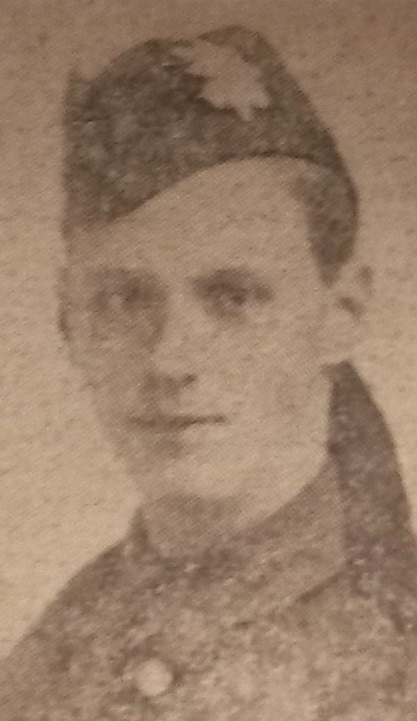
9th Black Watch, S/11252
Earl Singleton, born 1895, was the son of George William and Elizabeth Alice Singleton, of Victoria Villas, Shear Brow. His father was a Cotton Mill Manager and he had a brother, Gerald.
Earl was born at Holcombe Brook, near Bury, and attended Bury Grammar School. A bright and clever boy, he won two valuable scholarships. He passed the Junior Oxford with first class honours and distinction. He was particularly proud of the fact that he was chosen Prefect of the School. When seventeen year of age he joined a Liverpool firm of cotton brokers and business career promised to be as successful as his educational training had been.
It was from no love of war, but a sense of the country’s need for the services of young men that he enlisted in the famous Scottish Regiment, the 9th Black Watch, on August 16th 1915. He took his training seriously, and earned the good opinion and confidence of his officers, so that before he was drafted to France, about a fortnight previous to last Christmas, he was a lance-corporal. He was promoted to full corporal on the field of battle for good work.
Having moved to the Somme area, the Battalion was sent to attack Pozieres, which it achieved with great success. It was after this battle that Earl Singleton was killed, on 8th September 1916.
“The burden of writing to you lies very heavy upon me, for I have the very sorrowful duty of conveying to you news of the death of poor Earl. Immediately the battalion came out of the trenches I made inquiries, and learnt from reliable authorities that he had been killed. His company had to make an attack on the German trenches, which they captured all right, and it was whilst Earl was in one of the captured trenches that he along with his platoon sergeant was killed by two German shells. You may rest assured of this, that Earl died as he had lived, trying to do his duty. I count myself happy to have known him, for he has left behind an influence that makes for great good. His life was an example of the Master’s, and while I feel very, very sorry indeed, yet I cannot help but rejoice in the fact that he has left all that is best behind. My sympathy goes out to you, his mother, and the other members of the family.”
Confirmation of the news came in another letter, written a few days later, from a Lance-Corporal, who wrote:
“He was killed along with the sergeant whilst holding it (the captured trench) against a counter attack by the enemy. It will ease your mind to know that his death was instantaneous, and that he suffered no pain. He was properly buried behind the lines. He was most popular in the platoon, and his loss is felt very much. The platoon join with me in extending to you heartfelt sympathy with your sad bereavement.”
Corporal Singleton was on the Roll of Honour for both Montague-street and Leamington-road Baptist Churches.
The Rev. Joseph Farquhar, minister of the first named church, in the Church Magazine for November, says “Earl Singleton was the first member of the church to fall, and he was in every respect a fine Christian man as any home could rear or church desire to have on its roll. He was barely 21 when he fell, and it is the loss of noble young lives like this that brings home to every heart the pity and the sorrow of war.”
The Rev. Henry Cook, minister of Leamington-road Church, refers in the following terms in his Church Magazine to the young soldier: “He is the first of our ‘boys’ to fall in the actual fighting, Warren Kirkham and John Whyte having died in the course of training. He was a member of Montague-street Church, but was a regular attender of our men’s classes until he joined the colours. For such as he there is no “sting” in death, and it is good to realise that he died as nobly as he lived.”
Corporal Singleton’s name was also on the Roll of Honour for Bury Grammar School. Mr and Mrs. Singleton attended a special memorial service at Bury Parish Church for the “old boys” of the Grammar School who have fallen in the war in November 1916.
Corporal Singleton was a grandson of Mrs Butterworth, who for over forty years conducted a confectionary business in Church-street, in premises next to the White Bull, which was pulled down when the site was wanted for the new London, City and Midland Bank. His four cousins, sons of Mr and Mrs R. T. Singleton, of London-road, also served in the army.
Despite being buried by his comrades, Earl has no known grave, but is remembered on the Thiepval Memorial to the Missing on the Somme, Pier and Face 10 A.
Rifleman Edgar Singleton
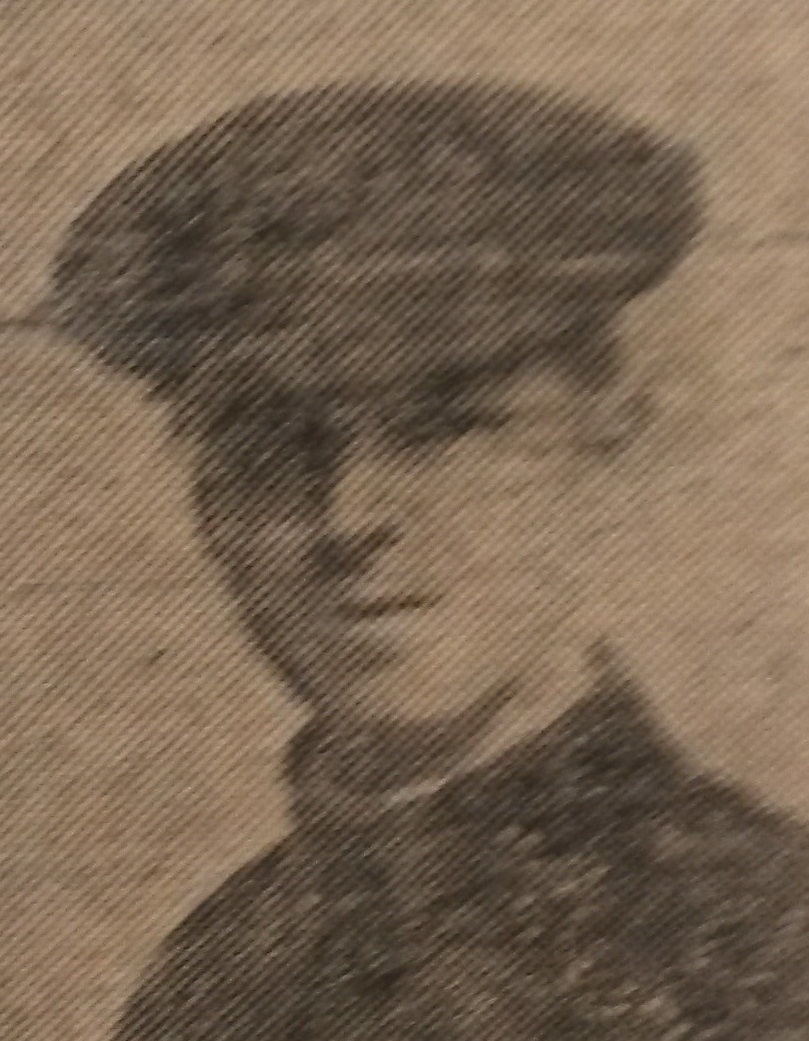
1st King’s Royal Rifle Corps, R/7711
Edgar was born 18th August 1898 and baptized 6th November 1898 at St. James Church, Blackburn. He was killed in action, aged 17, at the Battle of Delville Wood (Sometimes known as Devil’s Wood). His father, William, received the news of his death on what would have been his 18th birthday, 18th August 1916.
Edgar was the son of William & Selina, who had ten children in all, and at the time of the 1911 census, three of the siblings had died. His father William Robinson Singleton was a self-employed cabinet maker and the family, comprising of mother, father, Edgar and an older sister, Ethel, and a younger sister, Selina, resided at 25 Millham-street, Blackburn in 1911. Edgar worked part-time, whilst still a schoolboy, as a warehouse clerk in a cotton mill.
His mother, Selina, died in the spring of 1913 at 45 years of age and did not live to see war declared or Edgar go off to fight. Edgar enlisted in Blackburn, at the age of 16, but declared his age as 19 on the Attestation form. He was sent to Winchester the following day where he joined the King's Royal Rifle Corps. Whilst serving on the Western Front, he met his brother, Corporal Harry Singleton, also to be killed in action at a similar place in time. He also had two other brothers serving with the colours, one being a Petty Office in the Navy.
Edgar’s father, William, received his three medals 11th June 1921, 5 years after the death of his son.
Edgar Singleton is remembered on the Thiepval Memorial to the Missing, Pier and Face 13 A and 13 B which bears the names of over 72,000 officers and men of the United Kingdom and South
African forces who died in the Somme sector before 20 March 1918 and have no known grave. Over 90% of those commemorated died between July and November 1916.
Private John Robert Singleton
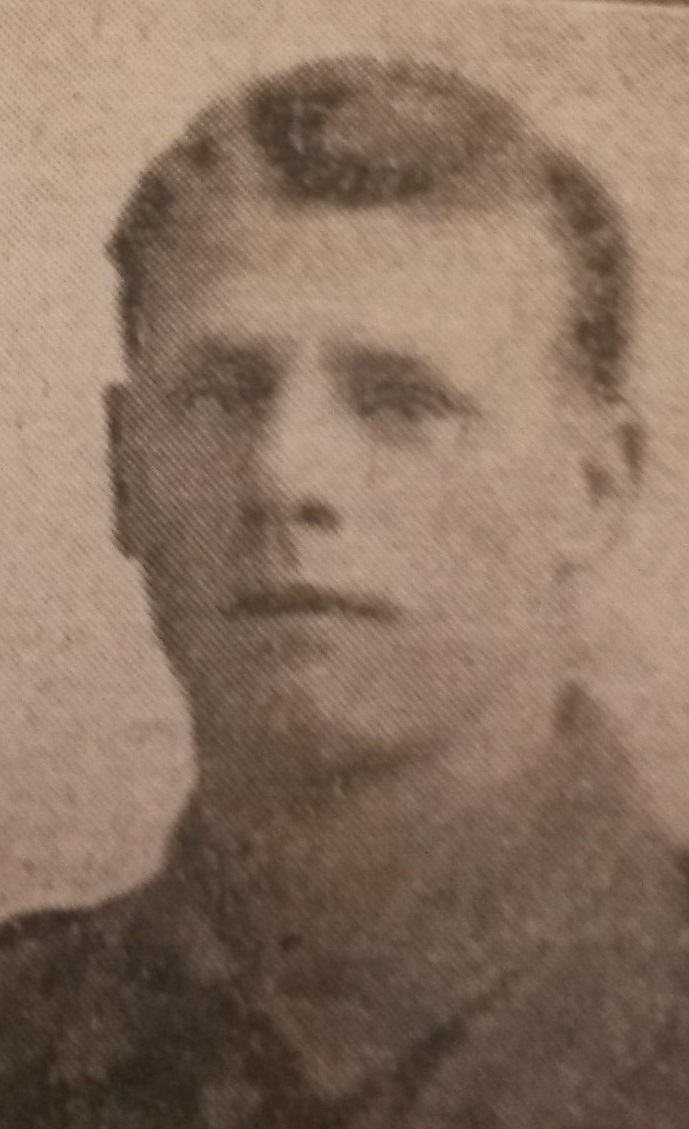
1st East Lancashire Regiment, 18630
John Robert Singleton, born 1894, was the son of John and Mary Jane Singleton of 170 Audley Range (later 58 Mary-street), Blackburn. His father was a tallow refiner at the local mill, where John also worked for a time, before finding work at Shaw’s Brick Works in Darwen before the war came.
John enlisted into the 1st Battalion East Lancashire Regiment in January 1915, and spent six months training to prepare himself for the onslaught of trench warfare. He joined the Battalion as a replacement in June 1915, in time to fight in the Second Battle of Ypres. By 1916, John would have been considered a veteran.
John survived the first day of the Battle of the Somme, one of only 150 unscathed (of 1000 in a battalion). It would be October 18th when John was finally killed, at the Battle of Le Transloy.
The battalion history reads:
The ground was in the most appalling condition ; heavy rain had fallen for weeks and continued throughout the attack, with the result that the terrain was a vast lake of mud, pitted with shell-holes. The night was pitch black and the enemy's line was extremely vague ; German trench maps had been issued, but they were of little use for the German line really consisted of detached machine-guns in shell-holes. At zero hour a barrage was put down on Dewdrop trench which lasted for 41 minutes. At the same time the battalion and the 1st Rifle Brigade floundered into the mud of "No-Man's land."
The men, wearing full equipment and carrying extra bombs, made slow progress; some were utterly exhausted and scarcely mobile, only to be shot down, drowned in shell-holes or rounded up at daybreak.
The advance was by the left. "C" Company on the left had the Les Boeufs—Le Transloy road to guide it. “A" Company on the right, in the darkness went too far to the right and got somewhat mixed up with the Rifle Brigade. Directly the first wave advanced it was met with heavy machinegun fire and casualties were numerous. Moreover, it was difficult to find Dewdrop and Rainy trenches, which had been heavily shelled by our artillery.
However, from the distance traversed by the two leading waves, the two trenches must have been passed.
No organized German line was found, but heavy rifle and machine-gun fire was directed on our waves from front and flanks, and owing to the darkness it was impossible for any officer, or non-commissioned officer, to organize the digging of advanced posts at the limit of the advance. The few remaining men who had reached Dewdrop, and beyond, withdrew to Rainy trench where "D" Company had arrived, having had many casualties. The Company Commander, then seeing that his two leading waves were practically wiped out, and that German machine-guns were trained on the trench, withdrew to the original front-line trenches.
The situation now, in the front trenches was very obscure. No officers or senior N.C.O.'s of "A" and "C" Companies had come back and the few men who did come back were clothed in mud from head to foot and completely exhausted.
There was no counter-attack by the enemy, though the front trenches were heavily shelled and swept with machine-gun fire until dawn.
The day (18th) was quiet, and after dark "B" Company relieved "D" Company. "A," "C" and "D" Companies then went into support in Shamrock. Patrols were sent out who were met by hot rifle-fire as they approached Rainy and Dewdrop. Wounded men were sought for and a few brought in, also wounded men in the trenches, unable to walk, were evacuated by special stretcher parties after dark.
The casualties of the action were heavy and included all the officers in the two leading companies. In "A" Company Lieutenants R. A. C. Matthews, W. F. Curran, T. A. Ritchie were killed, and the O.C. Company Captain A. N. Scott made prisoner of war. In "C" Company 2nd Lieutenant E. W. Graham was killed and Captain C. Waddington (O.C. Company), 2nd Lieutenants M. Quayle and J. M. Wilks were captured. Company Sergeant Major’s W. Ashcroft and J. Cunliffe were killed, Company Sergeant Major W. Vaughan made prisoner, and the total casualties in the other ranks were killed 12, wounded 58, missing 292.
John Robert Singleton has no known grave, but is remembered on the Thiepval Memorial to the Missing on the Somme, Pier and Face 6 C.
Bombardier/Signaller Thomas Singleton
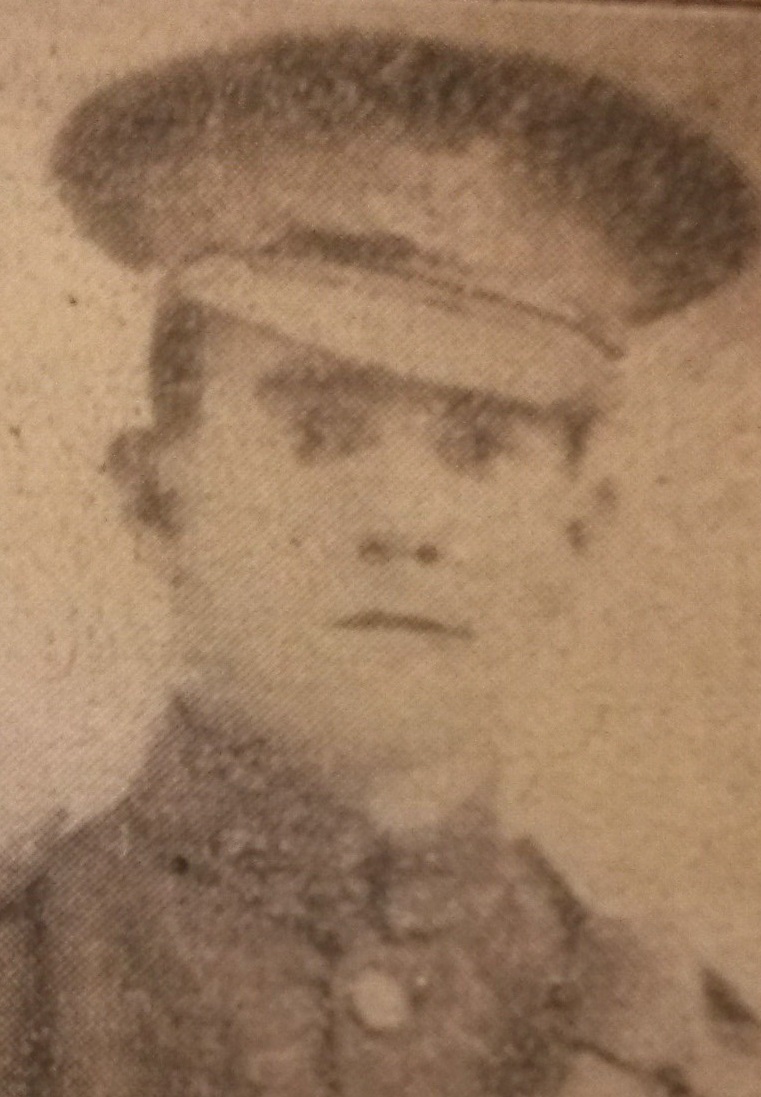
B Battery, 150th (Blackburn) Brigade, Royal Field Artillery, L/8715
Thomas Singleton, born 1894, was the son of Eliza Riches. Information on his father is vague and cannot be verified, however his mother had Thomas and Edward, Minnie and Emily. All of the family were cotton weaver, living at 58 Walter-street.
As war broke out, Thomas enlisted into the local Royal Field Artillery Unit that was established by Lord Derby – the Blackburn 150th Brigade. The 150th (Blackburn) Brigade was attached to the 30th Division and fought in all the battles in which the Division took part.
For the Division, in most cases commencing training near home, the units were moved to concentrate near Grantham in April 1915. There were severe shortages of arms, ammunition and much equipment - for example there was only one gun carriage available even by mid July and even that was for funerals! It was not until October that the artillery was in a position to commence firing practice, a few weeks after the Division had moved to the area of Larkhill on Salisbury Plain.
On 4th November the Division was inspected by Lord Derby, and entrainment began two days later. The Division sailed to Le Havre and Boulogne and all units concentrated near Ailly le Haut Clocher (near Amiens) by 12th November 1915. The 30th Division subsequently remained in France and Flanders and took part in the Battle of Albert, including the capture of Montauban and the subsequent fighting around Trones Wood.
In October, the Division was moved to fight in the Battle of Transloy Ridges. It was here that Thomas Singleton was killed, on 20th October. It was reported that he was killed instantly by shellfire whilst repairing a section of telephone line to the Forward Observation Officer. In fixing this cable, Thomas was ensuring that British artillery landed where it was supposed to.
Thomas has no known grave, but is remembered on the Thiepval Memorial to the Missing on the Somme, Pier and Face 1 A and 8 A.
Private Ernest Slinger
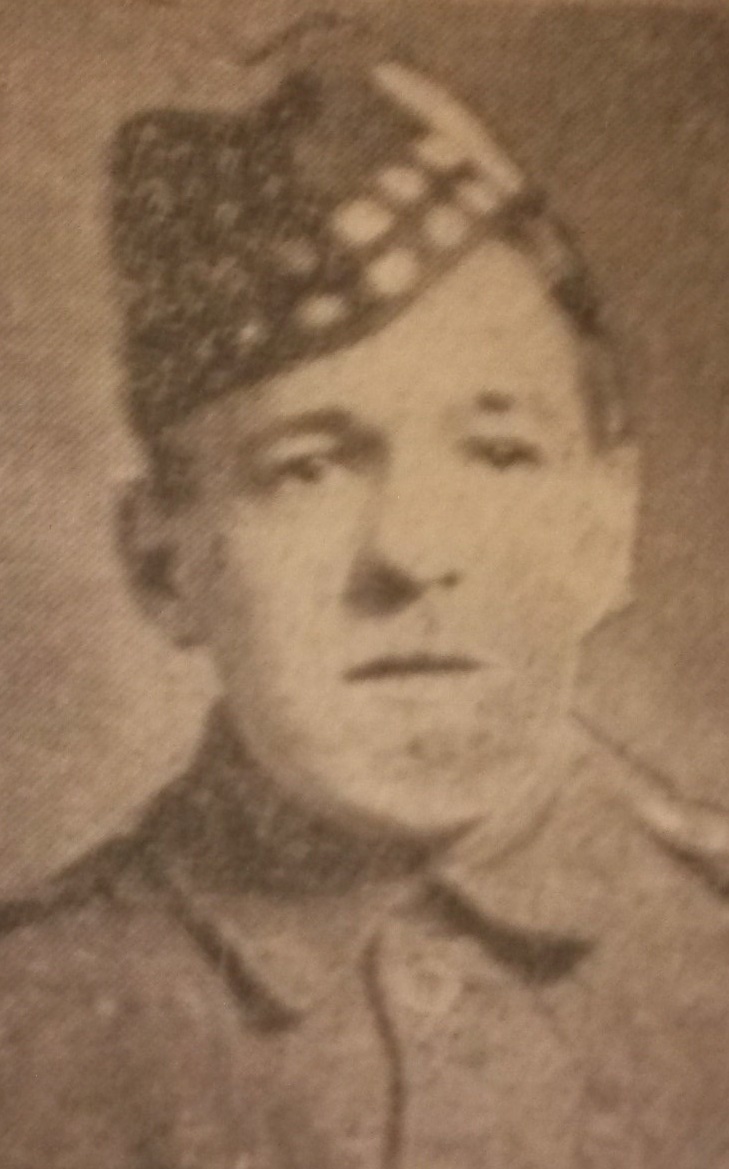
2nd King’s Own Scottish Borderers, 22008
Ernest Slinger, born 1897, was the son of William and Lucy Slinger of 84 Hancock-street, Blackburn. William was a Labourer whilst Lucy was a Weaver. Ernest, at 13, joined his mother at the mill, working as reacher, but by the time he was called for service he was working as a labourer at Messrs Ashton and Frost’s Bank Top Foundry.
Ernest enlisted into 2nd Battalion King’s Own Scottish Borderers, although no information is available to ascertain when this was. The 2nd Battalion had been fighting in France from 1914, so Ernest must have been a replacement after heavy fighting.
Ernest moved to the Somme in July 1916, in time for the summer offensive. The Battalion was moved around 20th July to an area called High Wood.High Wood is a wood near Bazentin le Petit in the Somme département of northern France. After the big British attack on 14th July (Battle of Bazentin Ridge), High Wood lay undefended for most of the day but delays in communication and orders and counter-orders from different British corps headquarters, led to the occupation of High Wood being forestalled by German reserves, which had moved forward to counter-attack the British in the villages of Bazentin-le-Grand and Bazentin-le-Petit.
Troops from the 7th Division managed to occupy the southern half of the wood and two cavalry squadrons advanced on the east side to Wood Lane, which connected the wood to Longueval. On 15th July, the wood was evacuated by the survivors and the cavalry retired. The British Fourth and the German 2nd and 1st armies fought for control of the wood from 14th July–15th September 1916, during the Battle of the Somme.
It was here, on 31st July 1916, that Ernest Slinger was killed.
He has no known grave, but is remembered on the Thiepval Memorial to the Missing on the Somme, Pier and Face 4 A and 4 D.
Private Alfred Smith
20th Manchester Regiment, 40249
Alfred Smith was a young soldier. Born in 1899, Alfred was technically too young to join the army, but managed at age 15 ½ to enlist initially into the East Lancashire Regiment, before transferring to 20th Manchesters.
He lived in Rockcliffe-street, Blackburn, with his father, James Henry Smith, and mother Isabella, and 8 other siblings. His father was a Boiler fireman, whilst his brothers were labourers. Alfred was still young enough to avoid work when the war broke out.
Alfred enlisted in June 1915, and immediately began training, before being sent to the Somme in 1916. He joined with the Battalion in 7th Division, and saw action at the following battles:
The Battle of Albert in which the Division captured Mametz
The Battle of Bazentin and the attacks on High Wood
The Battle of Delville Wood
The Battle of Guillemont
Operations on the Ancre:
In December 1916, the Manchester’s and 7th Division were holding the front line during the winter. In this period, action was sporadic and rare, but trench raids were common. Alfred was killed on such a raid, and his body was never found. He was killed on 22nd December 1916, aged just seventeen.
He is remembered on the Thiepval Memorial to the Missing on the Somme, Pier and Face 13 A and 14 C, and is also remembered at St Matthews Church, which he regularly attended.
Rifleman John Smith
Rifle Brigade, R/203040
Rifleman John Smith of the 7th Rifle Bridge (No. B/203040) was killed on 15th September 1916 at the Battle of Flers-Courcelette on the Somme.
John was born in Blackburn around 1882, the son of John Smith. It is unclear as to how he spent his early years but in 1907 he married Mary Jane Curran at Blackburn Register Office. They had two children – Ada, born in 1908 and Albert Edward, born 1911 (both were born in Blackburn Workhouse). When John married he was working as a carter for a coal merchant but after 1911 he commenced working at Darwen Paper Mill.
He enlisted at Blackburn and joined the 13th King’s Royal Rifle Corps (No. Y/539) and he later moved to the 12th Battalion. John arrived in France on 25th August 1915 and he later moved to the 7th Rifle Bridge (No. B/203040) but it is unclear as to when the transfer took place.
The 7th Rifle Brigade was part of the 14th (Light) Division and was involved at the Battle of Flers-Courcelette. This battle involved both French and British troops and was launched on 15th September 1916. The initial objective was to cut a hole in the German lines by using massed artillery and infantry attacks. This hole would then be exploited with the use of cavalry. The battle is significant for the first use of the tank in warfare.
It was on the opening day of this battle that John lost his life.John’s widow was informed of his death in December 1916 and the following year she remarried at Blackburn Register Office to John Edward Hodgson. She later received john’s war medals - Victory & British War Medals; 1914-1915 Star.
John Smith has no known grave and is remembered on the Thiepval Memorial to the Missing on the Somme, Pier and Face 16 B and 16.
Private Thomas Smith
1st/4th King’s Own Royal Lancaster Regiment, 4946
Thomas Smith, originally born in Southport in January 1898, was the son of John Benjamin and Annie Smith, of 8 Montague-street, Blackburn.
John was a General Cater, whilst Thomas, who had been educated at St. Paul’s in Southport, was employed at Blackburn Palace Theatre. He had moved, with the family, in 1912, along with his brothers John William, Joseph, Alfred and Robert.
Thomas enlisted late, in April 1916, into the 1st/4th King’s Own Royal Lancaster Regiment. Following only a short amount of training, Thomas was shipped off to join the Battalion as a replacement. The Battalion was part of 55th Division.
In this relatively "quiet" period before the Division moved into the Battle of the Somme, it nonetheless suffered casualties of 63 officers and 1047 men killed, wounded or missing. Relieved by 11th (Northern) Division on 25th July 1916, the 55th now moved south and took up a place in the front line opposite the village of Guillemont.
It was here, whilst holding the line, on 18th August 1916 that Thomas was killed. His body was never found. He is remembered on the Thiepval Memorial to the Missing on the Somme, Pier and Face 5 D and 12 B.
Lance Corporal Thomas Smith
King's Royal Rifle Corps, R/1528
Lance-Corporal Thomas Smith of the 7th Battalion the Rifle Brigade (Regimental Number R/1528) was killed on the 15th September 1916.
Thomas Smith was baptised on 28th January 1897 at St Michael and All Angels, Blackburn, the son of Robert and Permelia Smith. In 1911, the family lived at 119 Cobden Street, Blackburn, and Thomas is shown as a Weaver.
The Battle of Flers-Courcelette 15th– 22nd September 1916
A renewal of the offensive finally broke through the area that had proved to be so difficult since 14th July. Using a small number of tanks for the first time in history, the British Army finally captured High Wood and pressed on through Flers and up the Bapaume road to Courcelette.
“Tanks which were used for the first time came up on the battalion’s right flank. After a short time the tanks continued to advance and the 42nd Infantry Brigade passed through us but were unable to take their objective owing to heavy M.G. (machine gun) fire from both flanks.”
The total numbers of casualties for the two days were 13 Officers and 231 Other Ranks listed as killed, wounded or missing.
“Great gallantry was shown by all ranks”.
Thomas Smith has no known grave and is remembered on the Thiepval Memorial Pier and Face 13 A and 13 B. After the war his parents would receive his 1914-1915 Star and British War and Victory Medals
Rifleman John Spooner
9th Rifle Brigade, S/5327
John was born on 24th April 1891 at 10 Greenfield Terrace, Lower Darwen to John Spooner and Jane (nee Wall). His birth was registered under the name of Spooney. By the mid-1890s the family came to Blackburn, living first at 603 Bolton Road and, by the time the 1911 census was taken, they were at 558 Bolton Road and John was working as a cotton weaver. His mother had died in 1910 and was buried in Darwen Cemetery.
It is known that John enlisted in Blackburn and joined the 9th Rifle Brigade which was part of the 14th (Light) Division. John arrived in France on 21st May 1915 and he took part in the Action of Hooge, in which the Division had the misfortune to be the first to be attacked by the German flamethrower. He also saw action at the Second Attack on Bellewaarde. By 1916, the Battalion was on the fighting on the Somme at the Battle of Delville Wood.
John was then involved at the Battle of Flers-Courcelette. This battle involved both French and British troops and was launched on 15th September 1916. The initial objective was to cut a hole in the German lines by using massed artillery and infantry attacks. This hole would then be exploited with the use of cavalry. The battle is significant for the first use of the tank in warfare. It was on the opening day of this battle that John lost his life.
Rifleman John Spooner of the 9th Rifle Brigade (No. S/5327) was killed on 15th September 1916 at the Battle of Flers-Courcelette on the Somme.
John Spooner has no known grave and is remembered on the Thiepval Memorial to the Missing on the Somme, Pier and Face 16 B and 16 C.
At the end of the war his father received his war medals - Victory & British War Medals; 1914-1915 Star.
Private Harry Stephenson
8thKing’s Own Royal Lancaster Regiment, 18659
Harry Stephenson was born in 1891 in Blackburn to Alfred and Matilda Stephenson of 54 Plane-street, Blackburn. His father Alfred was an Insurance Agent, and his mother was a Cotton Weaver. He would follow in his mother’s footsteps, working as a Cotton Weaver at E.&G. Hindle Ltd.
As war began, Harry enlisted into 8th Battalion King’s Own Royal Lancaster Regiment. He trained with the Battalion, and was shipped to France with them on 27th September 1915.
The Battalion would see little action before the Battle of the Somme, with only minor operations at St. Eloi and Bluff craters.
As part of the 3rd Division, the Battalion took part in the Battle for Delville Wood.
The 3rd Division attacked Delville Wood and the north end of Longueval, from the west with the 9th Brigade from Pont Street, as the 95th Brigade of the 5th Division attacked German strong-points in the orchards to the north. The two battalions of the 3rd Division had only recently arrived and had received their orders at the last minute. The bombardment was considered poor but the attack began at 3:40 a.m. and the troops were quickly engaged by German machine-guns from the front and left flank.
The advance covered a considerable distance but was forced back to Piccadilly and then Pont Street, where the survivors were bombarded by German artillery. The two 95th Brigade battalions also had early success and threatened the German right flank. The Flers road was crossed and a strong point captured and consolidated but then a German counter-attack pushed both battalions back to Pont Street; a second attack was planned and then cancelled.
Relief of the 3rd Division began on the night of 25th July by the 2nd Division, ready for another attack on most of Delville Wood, when the west end of Longueval and the rest of the wood were attacked by the 5th Division, in a larger operation by XIII Corps and XV Corps due on 27th July.
There were no further actions for the division until September, but Harry died on 16th August 1916. It is likely that he was missing before that date, and was found later on.
Harry is remembered on the Thiepval Memorial to the Missing on the Somme, Pier and Face 5 B and 12 D.
Private Arthur Stevenson
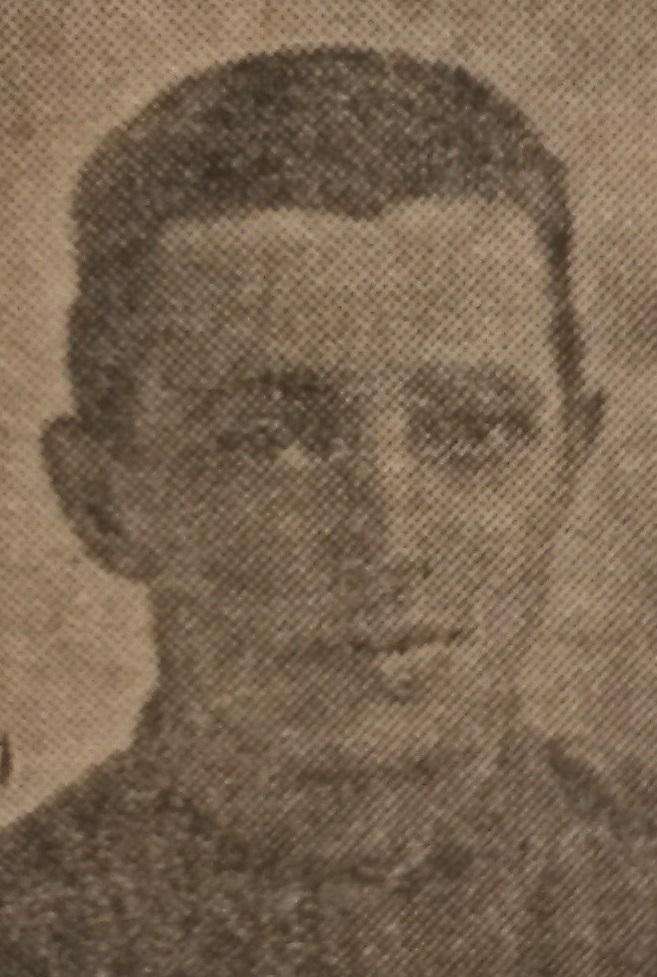
8thEast Surrey Regiment, 5096
Arthur Stevenson was born in 1892 to Elizabeth Martha Stevenson, a single woman aged 18. In 1901 he was living with his grandmother Mary, a widow aged 53 and his aunt Clara aged 21. In 1911 he was living at 143 Queens Park-road with his aunt Clara. This part of Blackburn was quite pleasant; the house had a small front garden and was situated almost opposite the park gates.
Arthur worked at Kent-street Mill, Lower Audley as a winding master, before the war broke out. He enlisted in August 1914 into the 8th Battalion East Surrey Regiment. Following extensive training on Salisbury plain in early 1915, the Battalion, and Arthur, were shipped to France, on 27th July 1915.
For the next year, the Battalion would gain experience in trench warfare, but generally had a quieter war than most. They were being saved for the major offensive on the Somme in 1916.
In this opening phase, the British assault broke into and gradually moved beyond the first of the German defensive complexes on the Somme. Success on the first day in the area between Montauban and Mametz led to a redirection of effort to that area, for the initial attack was defeated with huge losses north of Mametz. There was a stiff fight for Trones Wood and costly, hastily planned and piecemeal attacks that eventually took La Boisselle, Contalmaison and Mametz Wood.
It was here that Private Arthur Stevenson lost his life. He is commemorated at St. Thomas’s, (Church of England,) Lambeth-street although he attended the Gospel Hall, and is remembered on the Thiepval Memorial to the Missing on the Somme, Pier and Face 6 B and 6 C.
Lieutenant Charles Stonehouse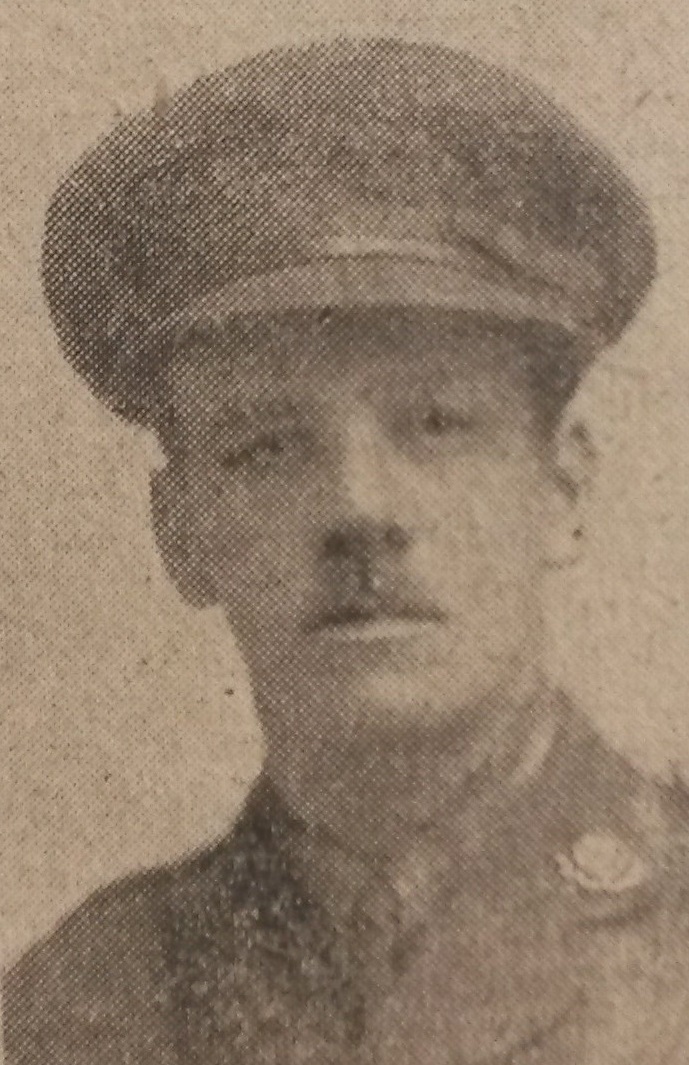 11th East Lancashire Regiment
Charles Stonehouse, born 1883, the son of Francis and Mary Ann Stonehouse, was one of three boys and a girl. They lived in a large house off Irving-place, Blackburn.
Charles gained an apprenticeship with Messrs. Briggs, Wolstenholme, and Thornely, in Manchester. He was training to become an Architect. In his spare time, he enjoyed playing for Crosshill Football Club, as well as Blackburn Hockey Club, and enjoyed the occasional round of Golf at Wilpshire Golf Club. He was also a regular attender Chapel-street Congregational Church.
When war broke out, Charles enlisted as a Private into the 11th Battalion of the East Lancashire Regiment at Blackburn. The 11th Battalion were the Accrington Pals, and they were initially shipped to Egypt. During his time here, Charles was quickly promoted through the ranks, and, seeing his potential, he was awarded a battlefield commission. He became a full Lieutenant just as the Battalion was sent to France to fight in the Battle of the Somme.
They were positioned at Serre, and at 7.20 a.m. on the 1st of July 1916, the soldiers of the first wave left their trenches, passed through the British wire and lay down in No Man's Land to await the end of the bombardment. This ceased at 7.30 a.m., and in front of Serre, men of the 12th York and Lancaster (Sheffield City Battalion) and the 11th East Lancashire’s (Accrington Pals) who were the first wave, stood up and tried to cross No Man's Land.
Just to the South, the attackers were comprised of the 15th West York’s (Leeds Pals) and the 16th West York’s (1st Bradford Pals). The Sheffield City battalion men had laid white tapes which led to gaps in the German wire the night before, but when they attacked these were gone. The attackers were mown down by machine gun fire, and there was an almost total lack of success here, although one company of the Accrington Pals did reach Serre, but were lost. Reinforcements, men of the 13th and 14th York & Lancaster's (the 1st and 2nd Barnsley Pals) were sent in, but were also stopped with no success, and the attack here was then suspended, with no gains made whatsoever.
Charles Stonehouse was killed in this battle, and is remembered on the Thiepval Memorial to the Missing on the Somme, Pier and Face 6 C, and also, in Blackburn Old Cemetery: NC C 2457.
Private John Stott
2nd South Lancashire Regiment, 29666
John Stott, born 1894, was the son of Timothy and Jane Stott, of 3 Minden-street, Blackburn. Like most Blackburn families, John, his parents and his three sisters worked at the local Cotton Mill.
John enlisted into the 2nd Battalion South Lancashire Regiment in late 1915, and following intense training, was sent to join the Battalion in France.
John was with the Battalion as it took part in the first major battles of the Somme offensive, including the Battles of Albert, Bazentin and Flers-Courcelette. After this, he fought at the Battle of Morval. Having broken through the prepared lines of German defence, the British force now faced a new set of challenges as it was now fighting in much flatter, open ground and approached the distant gentle slopes of the Transloy ridges. Fighting was, as before, severe but gradually the British chipped away and pushed forward. The weather began to turn autumnal, bringing rain, making the battlefield increasingly difficult and stretching men to limits of their physical endurance.
John would survive until 21st October 1916, when the battalion faced heavy fighting at Stuff and Regina Trenches. The following is taken from the war diary.
‘’Very fine day-cold wind, position of battalion unchanged. In connections with operations to take place today our artillery opened a barrage 12.06pm to which the Germans replied about 6 minutes later. The battalion moved forward at once under our barrage.
All companies moved forward in waves of half companies. The frontage of A and B companies was from Stump on right to Cable Trench. The frontage of D and C companies from Cable Trench exclusive to communications Trench running N.W. from point 35. The whole frontage covered a distance of about 400 yards. The actual advance was also about 400yards. Then the line moved forward the spirits of all ranks was wonderful and the men went over the parapet in very fine style. Arriving in enemy’s trench at about 12.15- the objective was easily gained although some trouble was given by enemy bombing parties. Casualties during the actual advance were slight and those sustained were mainly due to men getting under our own artillery barrage.
On arrival in the enemy trench a few Germans were found in occupation, many others emerging from dug outs after our entry – some of those put up a fight but were all accounted for- about 50 being killed-some were driven to communication trenches on the flanks when they surrendered, while about 400 surrendered to the battalion a number of officers being included in this number.
The trenches generally were found to be in a bad state in consequence of heavy artillery fire. The work of consolidating was at once commenced and continued during the reminder of the day and all night. After capture of the trench a considerable number of casualties were sustained by the battalion in consequence of enemy shell fire and sniping. During the forward movement and after arrival in enemy’s trench some excellent work was carried out by Lewis gunners and bombers who moved forward along cable trench in centre of Stump road on (unreadable) and communication trench on left – a German machine gun was captured and several others destroyed.’’
‘’Killed 1 officer and 27 other ranks: Wounded 2 Officers and 131 other ranks: Missing 1 Officer and 24 other ranks’’
Private John Stott is remembered on the Thiepval Memorial Panels 7 A and 7 B and St. Luke's and Montague Street Baptist Church.
Rifleman Arthur Sutton
1st Rifle Brigade, 11459 / RAMC 41882
Arthur Sutton, son of John and Eleanor Sutton of 75 Livesey-Branch-road, Livesey, was born in September 1893 into a weaving family. Indeed, in the 1911 census, Arthur, his brother and his sisters were all working at Messer John Baynes and Company’s Cicely Bridge Mill. Arthur had been a scholar of the Gospel Hall on New Wellington-street, Blackburn.
Arthur enlisted on 13th October 1914, leaving behind the Mill and joining the Royal Army Medical Corps, most likely as a stretcher bearer and field medic to bring wounded back to the doctors and surgeons operating behind the front line. From his record, this doesn’t appear to be what Arthur wanted, as twice he was confined to barracks for disobeying orders and leaving the various campsites he was stationed at. By June 1915 the Royal Army Medical Corps had had enough of his antics, and Arthur was transferred to the 1st Battalion Rifle Brigade. He shipped out to France on the 13th July with his new Battalion.
The Battalion was part of the 4th Division. Following a tour of duty on the Canal Bank Sector at Boesinghe, 4th Division was one of the first British formations to move down to the Somme, where it took over the line in front of Beaumont Hamel from French troops in July 1915.
On 1st July 1916, as part of VIII Corps, it assaulted the German lines from the Serre road at the Heidenkopf to just north of the Sunken Lane on Redan Ridge. This attack was a costly failure, with heavy casualties: some 5,752 officers and men. Arthur was part of this assault, fighting alongside the men of the 11th East Lancashires, the Accrington Pals.
After such heavy losses, the Battalion was withdrawn, but was soon needed again to fight at the Battle of Le Transloy Ridge in the October. The fighting took place during worsening weather and dreadful battlefield conditions. The fighting would continue in the area until 5th November, when British forces would eventually push the Germans far enough away to control the area, and begin the push towards the Ancre Heights.
It was in these dreadful conditions that Arthur lost his life. On 23rd October, as his Battalion was again ordered to hold the front line, the enemy pressed an attack and in the ensuing fight, Arthur was killed. It is unknown what killed him.
Arthur died aged just twenty-three, and is remembered on the Thiepval Memorial Pier and Face 16 B 16 C. He has no known grave.