
 Loading more
Page 4
Letter W
Walker Horace | Walmsley John | Walsh Robert | Walton Joseph
Ward Richard | Waring Herbert | Watson Douglas | Widdop Harold
Wilding Joshua | Wilkinson Nelson | Willock Fred | Wilson George
Wright Thomas | Wynne Arthur
Private Horace Walker
6th York and Lancaster Regiment, 20706
Horace Walker, born in 1895, was one of seven children born to William and Mary E. Walker. In 1901 there was John 23, William 16, Jane 14, Charles 11, Elizabeth 9, George 7 and Horace 5. They lived at that time at 22, Portsmouth-street.
Horace worked as a warehouseman in a local cotton mill before war broke out in 1914. Horace enlisted into the 6th Battalion York and Lancaster Regiment, and would spend many months in training before departing for Gallipoli with 11th Division.
Embarkation took place at Liverpool from 30th June, with much of the Division sailing on the Aquitania and Empress of Britain. Mudros was reached by Divisional HQ and 32nd Brigade on 10th July. On 6th-7th August 1915 the Division landed near Lala Baba at Suvla Bay.
On 19th/20th December 1915 the Division withdrew from Gallipoli and moved to Imbros.
On 26th January 1916 the Division began to move to Egypt, landing at Alexandria on 2nd February and concentrating at SidiBishr six days later.
19th February saw the Division take over a section of the Suez canal defences. The Division received orders on 17th June 1916 for a move to France.
Embarkation at Alexandria was completed on 3rd July and by 7th of that month Divisional HQ had been set up at Flesselles. By 27th July, the Division had taken over part of the front in Third Army sector. The Division then took part in the following operations:
The capture of the Wundt-Werk (Wonder Work):
The Battle of Flers-Courcelette 15th-22nd September 1916:
This was a large-scale general renewal of the offensive after the weeks of attritional fighting for the third German system at Pozieres, High Wood, Delville Wood, Guillemont and Ginchy. It is historically noteworthy for being the first time that tanks were used in battle. Few in number, mechanically unreliable and as yet without proven tactics for their best use, the small numbers of tanks that actually went into action had an important positive effect. High Wood and Delville Wood were finally cleared and a deep advance was made to Flers and towards Combles. The Canadian Corps entered the Somme fighting for the first time.
The Battle of Thiepval 26th – 28th September: Thiepval had been one of the strong points in the German first line that had proved so impossible for the British attack on 1st July. Now outflanked to the east, Thiepval and the heights on which it sat fell to an efficiently executed attack.
Horace was killed close to the end of the Battle of Thiepval. Horace is commemorated at Furthergate Congregational Church. He has no known grave, but is remembered on the Thiepval Memorial to the Missing on the Somme, Pier and Face 14 A and 14 B.
Private John Walmsley
18th Lancashire Fusiliers, 16559
John Walmsley, born in 1880, was the second youngest son of John and Martha Walmsley. He had four brothers who in 1891 were Seth aged 18, a grocer’s assistant, George 17, Charles 15 and Walter 7 (John being 10).
John and Walter had been born in Blackburn but the others were born in Leyland, their father’s birthplace. John would grow up to become a carter at a local mill, before war broke out.
John enlisted into the 18th Battalion Lancashire Fusiliers. This had been formed in Bury on 13th January 1915 by Lieutenant-Colonel G. E. Wike and a Committee as a Bantam Battalion. It moved on 8th April 1915 to Garswood Park (Ashton in Makerfield) and in June 1915 to Masham.
On 21st June 1915 it came under orders of 104th Brigade, 35th Division. The Battalion finally landed at Le Havre 29th January 1916. By early on 6th February all units were concentrated east of St Omer.
In March 1917, the German armies on the Somme carried out a strategic withdrawal known as Operation Alberich. They destroyed everything on the ground that they left: flattening villages, poisoning wells, cutting down trees, blowing craters on roads and crossroads, booby-trapping ruins and dugouts. The withdrawal was to an immensely powerful and shorter line, positioned to take every tactical advantage of ground. The construction of this line - or rather, series of lines - had been spotted by British and French aviators in late 1916. British patrols began to detect the withdrawal of German infantry from the Somme in mid February 1917 and a cautious pursuit began, halted only as the Hindenburg Line itself was approached.
John was killed on the 15th of April after Operation Alberich – the 35th. Division was not directly involved with the Arras offensive which followed but was at the front line.
John was commemorated at St. Thomas’s Church, Lambeth-street, and on the Thiepval Memorial, Pier and Face 3 C and 3 D
Private Robert Walsh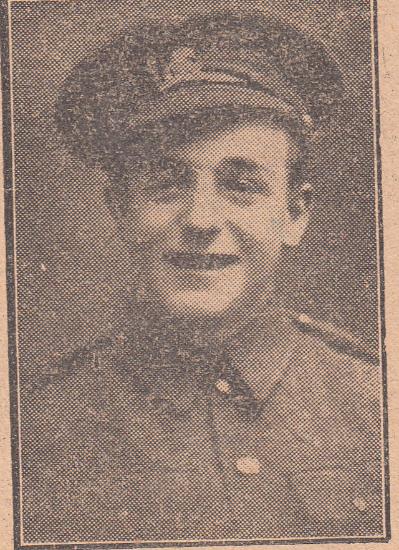 10th Lancashire Fusiliers, 5057
Robert Walsh was the son of Henry and Catherine Walsh. His father had died soon after his birth in 1888 and in 1901 his mother Catherine aged 33 looked after the family of Annie 14, Henry 7, George 6 and Robert 3. They lived at 21, Warwick-street but by 1911 had moved to 104 Whalley Old-road.
Robert worked as a porter on the Lancashire and Yorkshire Railway and was a member of St. Albans Church.
Robert enlisted early into the army, joining on 25th August 1914, into the 10th Battalion Lancashire Fusiliers, which formed part of 17th Division.
After receiving an order that the Division would be retained for home defence (subsequently cancelled), advance parties left for France on 6 July 1915. Main embarkation began on 12th July and units moved to concentrate near St Omer.
The Division served on the Western Front for the remainder of the war, taking part in many of the significant actions:
In 1915 the Division spent its initial period of trench familiarisation and then holding the front lines in the southern area of the Ypres salient.
The Division was involved in fighting at the Bluff (South East of Ypres on the Comines Canal), part of a number of engagements officially known as the Actions of Spring 1916.
The Battle of Albert 1st–13th July In this opening phase, the British assault broke into and gradually moved beyond the first of the German defensive complexes on the Somme. Success on the first day in the area between Montauban and Mametz led to a redirection of effort to that area, for the initial attack was defeated with huge losses north of Mametz. There was a stiff fight for Trones Wood and costly, hastily planned and piecemeal attacks that eventually took La Boisselle, Contalmaison and Mametz Wood.
It was during the assaults on Trones wood that Robert was killed. The family would suffer as Robert had no known grave. His brother George also served in France and Henry was in the Navy, but both survived. Robert is remembered on the Thiepval Memorial to the Missing on the Somme, Pier and Face 3 C and 3 D.
Private Joseph Walton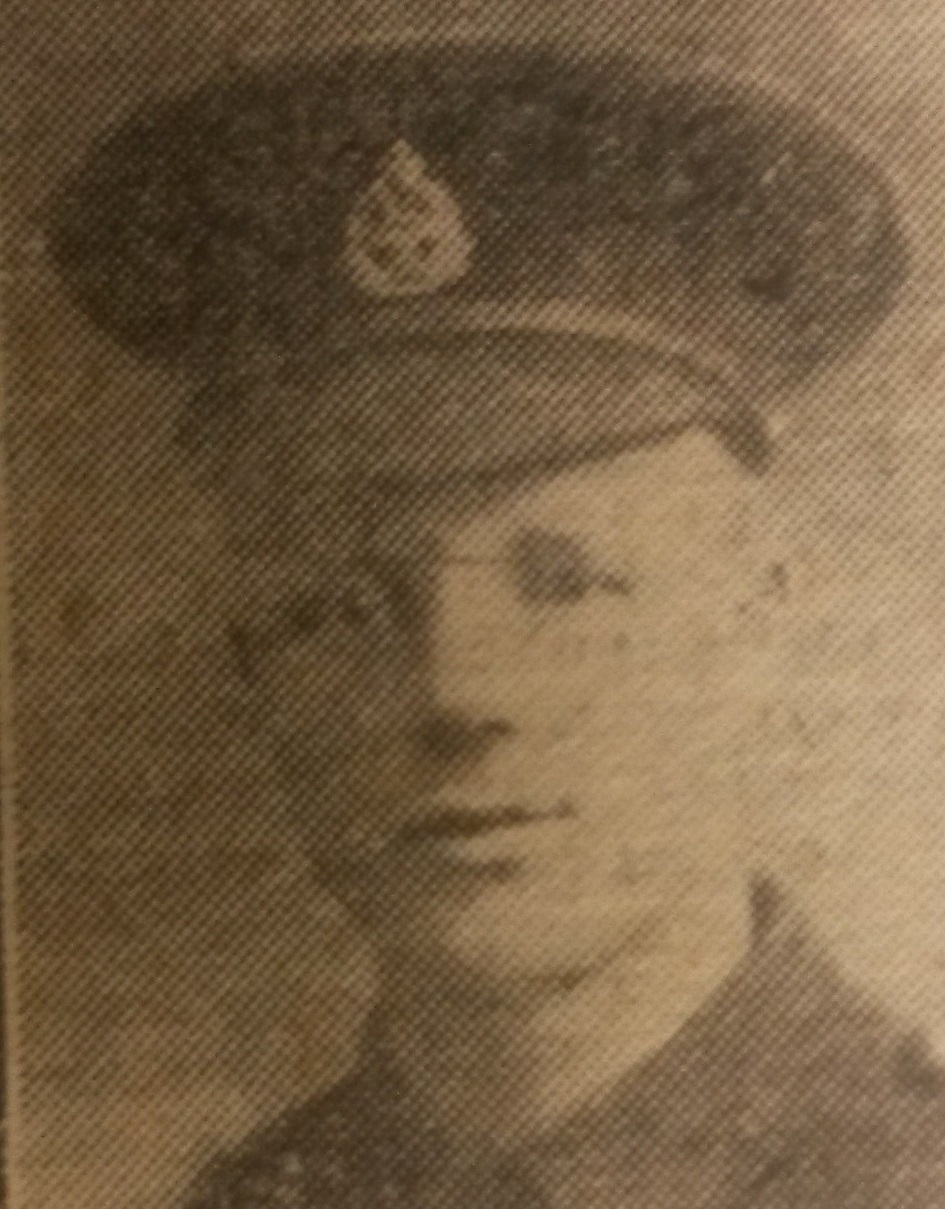
2nd/5th Lancashire Fusiliers, 7580
Joseph Walton, born 1895, was the son of Joseph and Alice Ann of 27, William-street, Blackburn.
In 1901, the family lived at 8, Vale-street Blackburn. The family comprised of Joseph (24), Alice Ann (26), Joseph (5) and Nancy, aged 2 years. By 1911, they are recorded as living at 72, Abraham-street and another child, called Albert, had been born.
They were all born in Blackburn and worked as Cotton Weavers.
By 1914, Joseph had joined the Territorial Army, enlisting into the 2nd/5th Battalion Lancashire Fusiliers. The Battalion had formed at Bury on 9th September, 1914 as a home service unit. They moved to Mossborough and then into billets in Southport.
After weeks of training, they finally landed at Boulogne on 4th May 1915, and were attached to the 51st Highland Division.
In early May 1915, the Highland Division was hurried to the defence of Ypres. The enemy had attacked on 22nd April 1915, using poison gas for the first time. All available reserves were deployed to stop the Germans taking advantage of the initial surprise. The Division remained in action until moved to the area of Estaires on the River Lys, on 19th May.
The Division then remained in France and Flanders and took part in the following engagements:
The Battle of Festubert 15th- 25th May 1915.
The Highlanders were still "practically untrained and very green in all field duties" before Festubert, according to First Army commander, Sir Douglas Haig.
The Second Action of Givenchy 15th-16th June 1915.
Shortly after this unsuccessful action, the Division moved South to the area North of the River Somme. They relieved a French Division near Hamel. At this time, the Highland Division, having gained considerable experience, found that various New Army units were attached to it for instruction. Indeed, it had begun to build a reputation as a hard, fighting formation.
The Battalion was then transferred to the 55th Division, to serve with other men from Lancashire.
The attacks on High Wood were part of the Battle of the Somme. Between the 14th July and 15th September, 1916 the British and Germans fought for control of the woods. The weather was atrocious; with the trenches water logged which restricted movement.
There were heavy casualties on both sides and Joseph was officially killed on the 9th of September, at the beginning of the Battle of Ginchy.
German-held Ginchy was attacked by the 16th (Irish) Division on 9th September 1916 during the Battle of the Somme. Although the preliminary bombardment made little impact on the defences, the attacking battalions succeeded in capturing the village despite sustaining heavy losses to machine-gun fire.
Joseph was killed in action on the 9th September 1916 and his mother collected his effects of £2-1s-4d at Preston in January 1917.
He is remembered on the Thiepval Memorial to the Missing on the Somme, Pier and Face 3 C and 3 D.
Private Richard Ward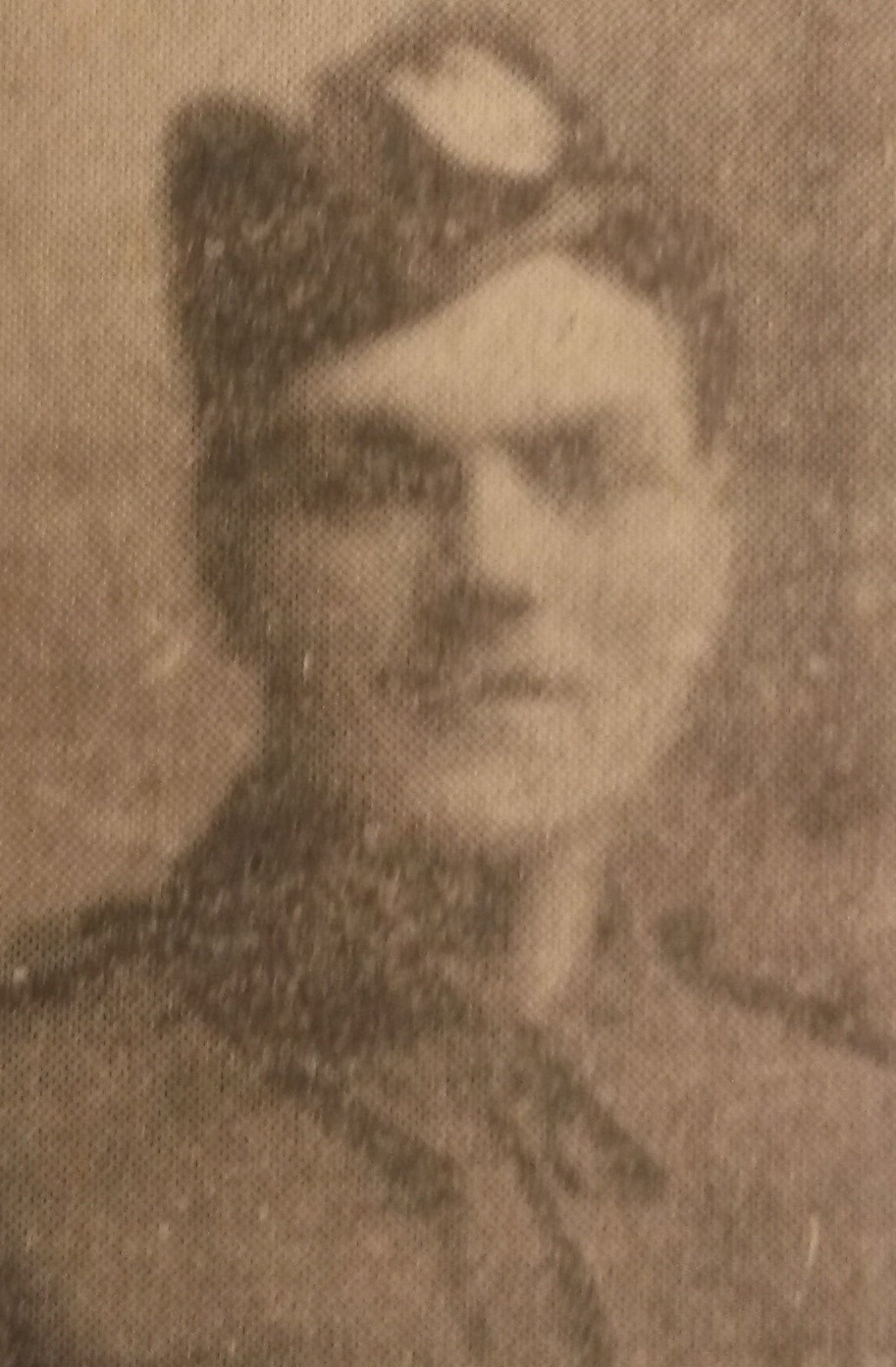 2nd Royal Scots Fusiliers, 18117
Private Richard Ward of the 2nd Battalion Royal Scots Fusiliers was killed in action on 30th July 1916.
His obituary notice did not appear in the Blackburn times until 24th March1917. The notice said it had now been accepted that he had been killed on the 30th July. The notice also described him as a machine gunner.
Private Ward was a married man aged 24. His parents were Thomas and Alice Ward and he had ten brothers and sisters.
He was born in 1893. On 13th September 1913 he married Cordelia Ellen Carr at St. Matthews’ Church, Blackburn. They had one child. They were living at 6 Alker-street, Blackburn at the time of their marriage.
Before enlisting he was employed as a Weaver at Kent-street Mill.
The official war diary for the 2nd battalion shows it was at Carnoy on 28th July but on 29th July moved up to Silesia trench. The entry for 30th July is very long. The following is an extract:
“12.15am to 4.45am: the batt moved out from Silesia trench to the assembly trenches.
4.45am: zero hour: A heavy mist at the time of advance. The enemy put up a barrage along Trones Wood but little rifle fire.
10.00am: mist had cleared. By this time the enemy had put up a very heavy barrage along the east face of Trones Wood. The road and intervening ground were swept by machine gun fire making communications practically impossible.”
Noon: battalion completely isolated. It was impossible to withdraw owing to the exposed nature of the ground."
It was later reported that 300 men of the brigade had surrendered on the left.
The diary notes the battalion went into action with 20 officers and 750 other ranks. At the end of the day 17 officers had been killed, wounded or were missing. The other ranks had 15 dead, 40 wounded and 578 missing although it was reported that about 100 of the other ranks re-joined later having made their way back through 89th brigade.
Private Ward has no known grave and is remembered on the Thiepval Memorial to the Missing on the Somme, Pier and Face 3 C.
Private Herbert Waring
2nd/5th Lancashire Fusiliers, 7699
Private Herbert Waring of the 2nd/5th Battalion Lancashire fusiliers was killed in action on 9th September 1916.
Herbert was a married man and left a widow, Ellen.
He was the son of William and Margaret Waring and was one of eight children born to the couple.
Before enlisting his profession in the 1911 census was a general carter working on his own account.
The Battle of Ginchy took place on the 9th September 1916. The Commonwealth War Graves Commission website described Ginchy village as a mass of shattered masonry and shell holes and which had repeatedly defied British assaults. A further assault was planned for 9th September and the village was eventually taken in what was described as an attack characterised by dash, turmoil and heavy casualties.
The war diary for the 2nd/5th Battalion shows that the battalion were ordered on the 7t to relieve 20th brigade. This was completed by 3.30am on 8th September.
The entry for 9th September shows there was an intense bombardment from 4.45pm to 5.30pm when an attack was launched. The Loyal North Lancashire Regiment was slow in leaving Pilsen trench forcing the first two companies of the Fusiliers to deploy behind Pilsen trench after leaving Stout trench during which time they were heavily shelled.
The leading lines mistook Haymarket for Hop Alley and halted there. This trench was just a series of shell holes where the remnants of the Battalion collected having been unable to advance due to heavy machine gun fire and shell fire.
By sunset troops had withdrawn to Pilsen trench. The diary shows 334 other ranks killed, wounded or missing.
Private Waring has no known grave and is remembered on the Thiepval Memorial to the Missing on the Somme, Pier and Face 3 C and 3 D.
Private Douglas Watson
11th Lancashire Fusiliers, 12280
Private Douglas Watson of the 11th Battalion, Lancashire fusiliers, was killed in action 9th July 1916, aged 18.
He was a single man and was living at 63 Inkerman-street, Blackburn, with his widowed mother, Isabella. His father John W. Watson had died some years previously. He was the youngest of four children born to Mr and Mrs Watson.
The period 1st July to 13th July 1916 is known as the Battle of Albert.
Ray Westlake (tracing British battalions) notes that the 11th Battalion between 7th and 10th July were involved in attacks and counterattacks at Ovilliers. He notes the number of casualties as 171 during this period.
The war diaries for the 11th Battalion shows that on 6th July, the Battalion moved to Usna Hill Redoubt via Albert and proceeded to the trenches at La Boiselle. The entry for 9th July shows enemy artillery was active. About 3pm the enemy launched a strong counter attack and the Battalion was forced to withdraw through being attacked on both flanks, neither flank being supported. Relief from the 8th Loyal North Lancashire Regiment started at about 11pm and was completed by 2am on the 10th following which the Battalion proceeded to Bouzincourt and then Senlis to reorganise.
At the end of the war diary for July 1916 there is a list of casualties. Douglas is listed among the missing for 9th July. He is listed as a member of "C" Company.
Private Watson has no known grave and is remembered on the Thiepval Memorial to the Missing on the Somme, Pier and Face 3 C and 3 D.
Private Harold Widdop
7th King’s Own (Royal Lancaster) Regiment, 18089
Harold Widdop, born in 1897, was the son of Thomas and Ada Widdop and brother of Hilda and Leslie. His parents worked in the textile industry but at thirteen Harold is an assistant in the tea trade. The family lived at 10, Randolph-street together with Ada’s mother Mary Ann Barwise.
Harold enlisted in September 1914 to the 7th Battalion King’s Own (Royal Lancaster) Regiment, which was part of 19th (Western) Division. After 9 months of training, Harold and the Battalion sailed for France, arriving in mid-July 1915.
The Division served on the Western Front for the remainder of the war, taking part in many of the significant actions:
The Action of Pietre:
A supporting/diversionary action during the Battle of Loos. Compared with the small-scale British efforts of spring 1915, this attack of six Divisions was a mighty offensive indeed - so much so that it was referred to at the time as 'The Big Push'. Taking place on ground not of their choosing and before stocks of ammunition and heavy artillery were sufficient, the opening of the battle was noteworthy for the first use of poison gas by the British Army. Despite heavy casualties, there was considerable success on the first day in breaking into the deep enemy positions near Loos and Hulluch. But the reserves had been held too far from the battle front to be able to exploit the successes and succeeding days bogged down into attritional warfare for minor gains.
The Battle of Albert:
in which the Division captured La Boisselle.
The Battle of Pozieres Ridge:
From 23rd July to 10th August 1916, the Division held a sector of the line north of the River Ancre. After the first attempt to capture the ridge was unsuccessful, the Division went back in on 29th July 1916.
The right of the line, consisting of 7th Royal Lancaster’s and 10th Royal Warwickshire’s, kept well under the barrage, and, taking the Germans by surprise, captured a length of the front line and a strong point. The left flank failed to advance however.
The 7th and 10th were stuck, making easy targets for continuous German shelling, but held their ground, and beat off counter-attacks during the night, holding the ground with great gallantry and tenacity. The Battalion was relieved on 31st July, but it was during the gallant defence in the night that Harold Widdop was killed.
Thomas collected the personal effects of Harold from Preston an amount of £8. Harold has no known grave, but is remembered on the Thiepval Memorial to the Missing on the Somme, Pier and Face 5d and 12 B.
Private Josiah Wilding
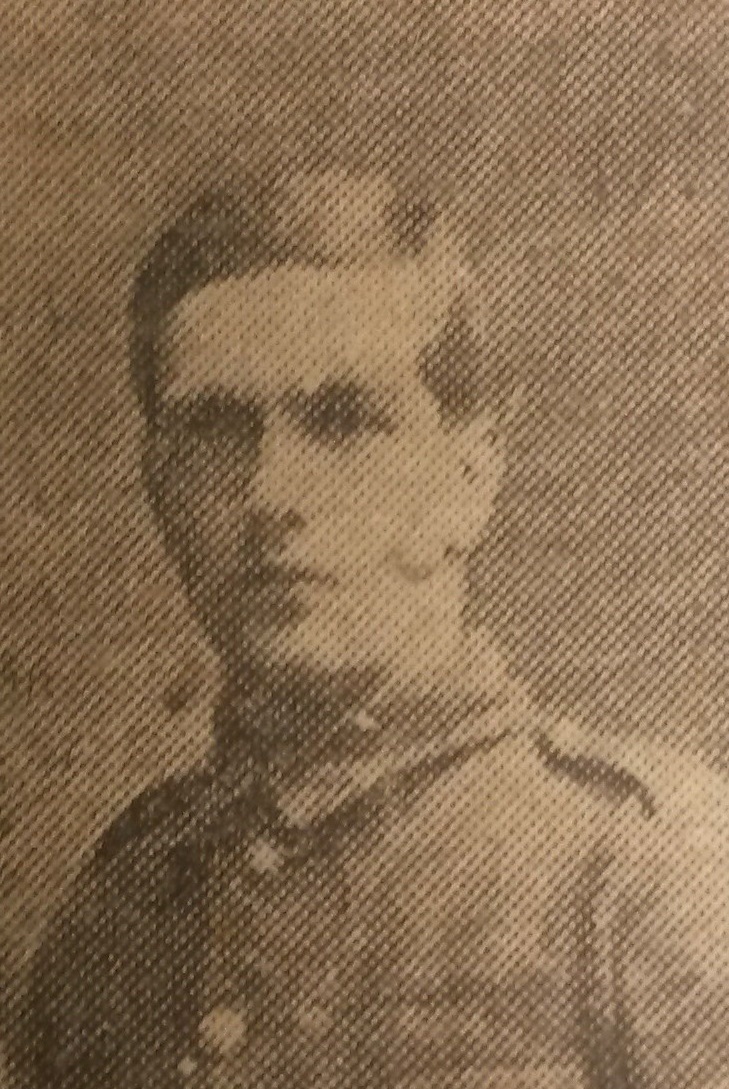
15th Cheshire Regiment, 19524
Josiah Wilding, born 1891, was the son of David and Alice Wilding, and was one of eight of their surviving children. Like many Blackburn families, his mother was a weaver, whilst his father was a farm labourer. By 1911, Josiah himself was working in Cherry Tree Foundry as a machine painter.
Josiah married Deborah and had a son, James, before war split them apart. They lived at 3 Turned-street, Blackburn.
Josiah enlisted into the 15th Battalion Cheshire Regiment in November 1914. It had been formed at the request of Alfred Bigland MP to be a Bantam Battalion, so smaller men were enlisted. The Battalion was part of 35th Division.
The Division was largely comprised of locally raised units known as "Bantams", manned by troops who were under the normal regulation minimum height of 5 feet 3 inches. On 28th January 1916 the Division began to cross the English Channel and by early on 6th February all units were concentrated east of St. Omer.
Following the first Battle of the Somme, around Albert, the Battalion fought at Arrow Head Copse. The 35th Division was to attack at 5:00 a.m. on 20th July, to take trenches between Maltz Horn Farm and Arrow Head Copse, preliminary to the general attack on Guillemont and on the rest of the German second position, after a thirty-minute bombardment to cover a French attack on the right, which was then cancelled.
The Battalion attacked against massed machine-gun and artillery-fire and were shelled out of the few parts of the German front line they reached.
The Battalion remained in the front line, holding these positions, for 10 days. It was in this period of intense shell fire that Josiah was killed.
Josiah Wilding has no known grave, and is remembered on the Thiepval Memorial to the Missing on the Somme, Pier and Face 3 C and 4 A. Josiah is also commemorated at St. Peters and the Ragged School.
Private Nelson Wilkinson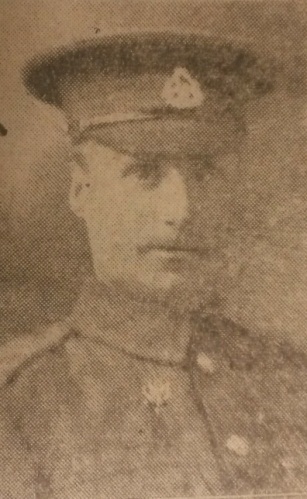 2nd/5th Lancashire Fusiliers, 203920
Private Nelson Wilkinson, aged 36 years, of the 2nd/5th Lancashire Fusiliers, son of James H Wilkinson and Ellen Wilkinson (nee Fish) of 38 Moorgate Street, Mill Hill, was killed on 12th September 1916 at the Battle of Ginchy on the Somme. Two of his brothers-in-law had also been killed during 1916.
Nelson’s father was a cotton weaver, and Nelson worked as a labourer for Mr. R. F. Hindle’s timber merchants on Weir-street. He had been in the job for many years, but, as the war started, Nelson signed up on 20th October, 1914. He had initially joined with friends into the 1/4th East Lancashire Regiment, departing to France with them on 27th July 1916, and seeing action on the Somme.
Possibly due to depleted numbers, Nelson was transferred on 9th September 1916 to 2nd/5th Lancashire Fusiliers, just as the Battle of Ginchy was about to start.Zero hour for the attack was set at 4.45pm on 9th September. At the last minute orders were dispatched delaying the attack for two minutes to allow for a final intense bombardment of the German lines, but only one Brigade received the order in time. The 48th Brigade launched its attack on time, and was hit by German counter battery fire.
Ginchy was part of the line held by the 19th Bavarian Infantry. The attack of the 48th Brigade rolled up one company in the middle of the Bavarian line, and allowed the Brigade to occupy Ginchy within an hour of zero-hour. On either side of the village the German lines held, and the British salient in Ginchy was subjected to an unsuccessful counterattack by 19th Bavarians.
Nelson Wilkinson was initially listed as wounded on 9th September, although was he later listed as missing. It would be a full year before the War Office deemed that Nelson was killed. It is likely that Nelson was killed in the counter-battery fire of the German artillery, as this quite often would bury men alive to never be found again.
Nelson Wilkinson is remembered on the Thiepval Memorial to the Missing on the Somme, Pier and Face 3 C and 3 D and has no known grave.
Lance Corporal Fred Willock
1st East Lancashire Regiment, 7289
Lance Corporal Fred Willock, of the East Lancashire Regiment, missing since July 1st 1916, is now officially presumed to be dead, an intimation to this effect having been received by his wife, Mrs Willock, 23, Kendal-street, this week. The deceased, who was well known locally, for many years being employed by Mr. Rakestraw, Lord-street. He volunteered for service on the outbreak of the present war. After he been at the front for six months he was wounded, and for some time was in hospital in England, after which he returned to the fighting line. A widow and three children are left to mourn their loss.
1st July 1st Battalion East Lancashire Diary:
Battalion in the line at Mailly-maillent
The plan of attack on the German lines detailed for the above date was as follows;
3 coys were placed in the front line, each coy on a front of 2 platoons taking up their positions thus; C coy under Captain Thomas on the right stretching from the junction of 10-11 to the junction of 13-14. A coy joined C on the right, holding the line to the junction 16/17. B coy thence to the junction 19/20. The 2nd line took their position in Minden trench- Green trench and Ludgate street. D coy were in battalion reserve in Chatham trench. During the previous night the wire In front of our trenches was systematically out in order to allow of the progress of the attacking force.
Throughout the night the bombardment was carried out in salvoes, and at 6am increased in intensity culminating in a bombardment which according to prisoners exceeded even that at Verdun. At 07.26 in accordance with the plan, the 6 leading platoons left the trenches and took up their position in ‘no man’s land’; this was accomplished almost without loss. At 07.30 all the guns lengthened and laid down a barrage on the enemies support lines and communication.
At the same time our front line pushed forward and the supporting platoons left our original front line trenches. They were met with very heavy artillery and machine gun fire, some of A and B coys did reach the German front line at 07.35 but were captured by the Germans who came out of their dugouts and surrounded them. Many officers were killed on the way across.
At 07.32 D coy and battalion headquarters left Chatham trench, but were hung up by reason of the intense machine gun fire. The battalion’s Lieutenant Colonel and Medical Officer were both wounded around 10.30. The battalion continued to hold the line of shell hole in front of the German barbed wire, but it was seen that the strongholds of the enemy lines were too strongly fortified to be taken. At 21.30 orders were given for the battalion to retire to Mailly-Maillent.
Fred Willock was born in Chorley, Lancashire 1876. He is listed as promoted to Lance Corporal 29th December 1915 and wounded 4th January 1916.
He is remembered on the Thiepval memorial Pier and Face 6 C.
Private George Wilson
16th Royal Welch Fusiliers, 18908
Not much is known about George Wilson or his connection to Blackburn, although he is referenced in the Roll of Honour and his death was verified in the Blackburn Times.
George had enlisted into the 16th Battalion Royal Welch Fusiliers. They were formed at Llandudno in November 1914 by the Welsh National Executive Committee from recruits surplus to 13th Battalion, and came under orders of 128th Brigade, 43rd Division at Llandudno, before changing to the 113th Brigade, 38th (Welsh) Division.
The Battalion underwent training, and moved to Winchester in August 1915 before shipping out to France in December 1915. For the next six months, the Battalion would undergo trench warfare and specialist training for the big assault in July on the Somme.
The Battalion’s job, in the first phase of the Battle, was to assault and clear Mametz Wood. Nearly a mile wide and over a mile deep, Mametz was made up of thick trees and dense undergrowth. The wood was heavily fortified with machine guns, trenches and mortars and was defended by the well-trained and elite Lehr Regiment of Prussian Guards.
The Battle of Mametz Wood began on 7th July 1916. The wood was intended to be taken in a matter of hours. In the event the battle lasted for five days as the Germans fiercely resisted the assaults of the Welsh Division.
On the first day alone over 400 casualties were sustained. Over the five days that the battle raged, Mametz Wood was devastated as artillery shells fell continuously on the area. Fighting was furious, with hand to hand combat in many instances, as men battled for every inch and yard of ground. The poet Robert Graves fought in the battle and, having gone back into the wood once the battle was finally over, wrote:
"It was full of dead Prussian Guards, big men, and dead Royal Welch Fusiliers and South Wales Borderers, little men. Not a single tree in the wood remained unbroken."
Casualty figures for the Welsh Division amounted to 46 officers and 556 other ranks killed. When the wounded and those listed as "missing" - men blown to pieces or buried alive by shell blasts - were counted the total number of casualties was 3,993.
George Wilson was one of the missing casualties, being officially listed as killed on 11th July 1916. He has no known grave, but is remembered on the Thiepval Memorial to the Missing on the Somme, Pier and Face 4 A.
Private Thomas Wright
20th Lancashire Fusiliers, 31548
Thomas Wright was one of Thomas and Martha Wright’s five children. At the time of the 1911 census, Thomas was 25 years old and living with the family at 171 Whalley Range, Blackburn. On the census he is identified as being employed as a “Cloth Bimbler”(?) in a cotton warehouse.
Records are limited directly relating to Thomas but in March 1915 when he was 28 years old he enlisted with the 20th Battalion of the Lancashire Fusiliers. This was a Bantam unit made up of men of under regulation height (5ft 3in).
Following enlistment with the Battalion, Thomas would have undertaken training before embarking for France. Once in France he would have gone through a rotation of training, manning the line and other duties in preparation for the Somme offensive.
The 35th Division were designated as a “Reserve” on 1st July but will quickly have been called into action. They went on to be involved in the Battle of Bazertin Ridge, the Battle of Arrow Head copse, Maltz House Farm and the Battle of Falfemont Farm.
Thomas Wright was killed on 21st August. He is described as being “killed in action”. Records show that he left his personal effects to his younger sister Minnie. He is remembered on the Thiepval Memorial Pier and Face 3 C and 3 D, also, in Blackburn Old Cemetery: CE 0 17051.
Private Arthur Wynne
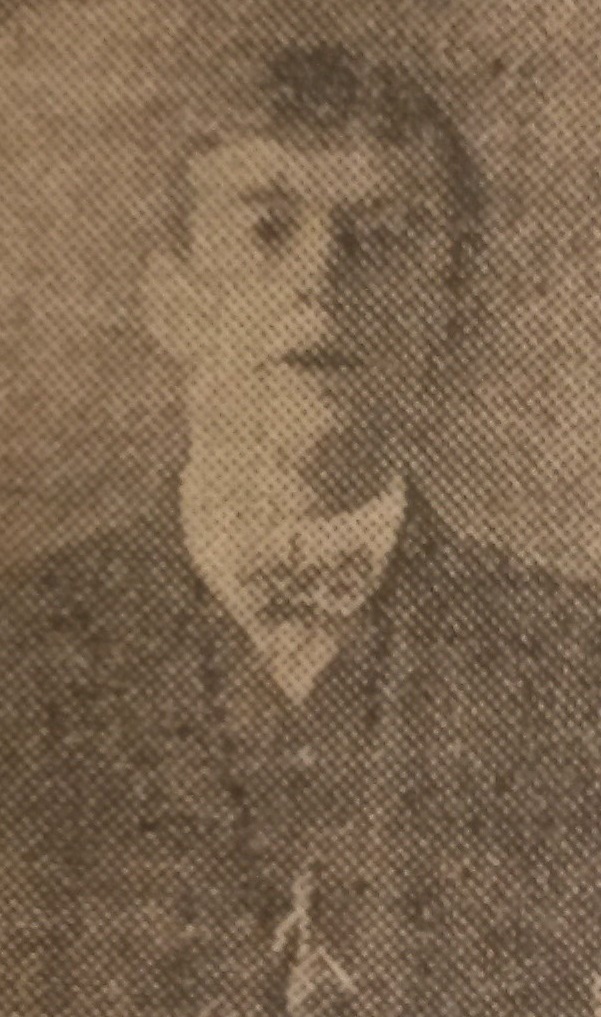
7th King’s Own Shropshire Light Infantry, 17916
Arthur Wynne was born and lived in Blackburn. He was one of 5 Children who in 1911 were all identified as working in the cotton industry. Arthur himself was a weaver at Britannia Mill.
It is possible that that he enlisted in 1916 and was allocated to the King’s Own Shropshire Light Infantry arriving with them prior to the Battle of the Somme.
The Battalion diaries do not place them in the front line on 1st July but they were they were involved in actions known as the Battle of Bazentin Ridge. These actions ran from 14th to 17th July and were the second phase of the Somme offensive.
Private Arthur Wynne was killed on 14th July, on the first day of the Battle. He has no known grave, but is remembered on the Thiepval Memorial to the Missing on the Somme, Pier and Face 12 A and 12 D.
Y
Private Thomas Yates
2nd Battalion Princess Charlotte of Wales (Royal Berkshire) Regiment 37485
Thomas Yates was born in 1892. He was the son of John and Ellen Ann Yates and he had four younger brothers and two elder sisters. In 1911, the family were living at 22 School-lane, Guide. Like his Father, John was a collier, but there is no information about the colliery where he worked.
When Thomas enlisted he was originally deployed in the Northants Regiment No. 15060, but he was later transferred to the 2nd Battalion Princess Charlotte of Wales (Royal Berkshire) Regiment, No. 37458.
The date of his enlistment is not recorded, but we know that his embarkation date was the 26th of July 1915.
The 2nd Battalion of the Royal Berkshire Regiment was part of the 25th Brigade in the 8th Division and first landed in le Harve on the 5th of November 1914.
In 1915 they were involved in the battles of Neuve Chapelle, Aubers and the action of Bois Grenier, which was a diversionary attack coinciding with the Battle of Loos.
In 1916 the Battalion fought on the Somme at Albert, Thomas managed to survive this carnage.
In March 1917 the Germans withdrew to a new position called the Hindenburg Line. This strategic withdrawal was known as Operation Alderich.
As the enemy forces withdrew they destroyed everything on the ground: flattening villages, poisoning wells, cutting down trees, blowing craters on roads and crossroads, booby-trapping ruins and dugouts. The German withdrawal was to an immensely powerful and shorter line, positioned to take every tactical advantage on the ground. The construction of this line, or rather, a series of lines, had been spotted by British and French aviators in late 1916.
British patrols began to detect the withdrawal of German infantry from the Somme in mid February 1917 and a cautious pursuit began, halted only as the Hindenburg Line itself was approached.
The war Diary says:
1st April: 1917 The 2nd Battalion was in the Main Line of Defence at Nurlu Equancort.
3rd April: the Battalion relieved the 2nd Battalion Lincolnshire Regiment in the left of the outpost line, “B” and “D” company in the outpost line and “A” and “C” Company in Fins and Battalion H.Q. in the Quarry Fins.
4th April: The Battalion co-operated with the 20th Division in an attack on Metz-en-Couture, the Battalion’s objectives being Goozeaucourt Wood and line Q. 29. A. 3.0 to Q. 21. D. 8.1.
It was probably during this Operation that Thomas Yates was killed. The Casualties the Royal Berkshire Regiment took on the 4th were 6 killed and 30 wounded.
Thomas Yates has no known grave and he is remembered on the Thiepval Memorial Pier and Face 11 D.