
 Loading more
Page 3
Fred Tatlow, born 1889, was one of eleven children born to Mary Alice and Thomas Tatlow.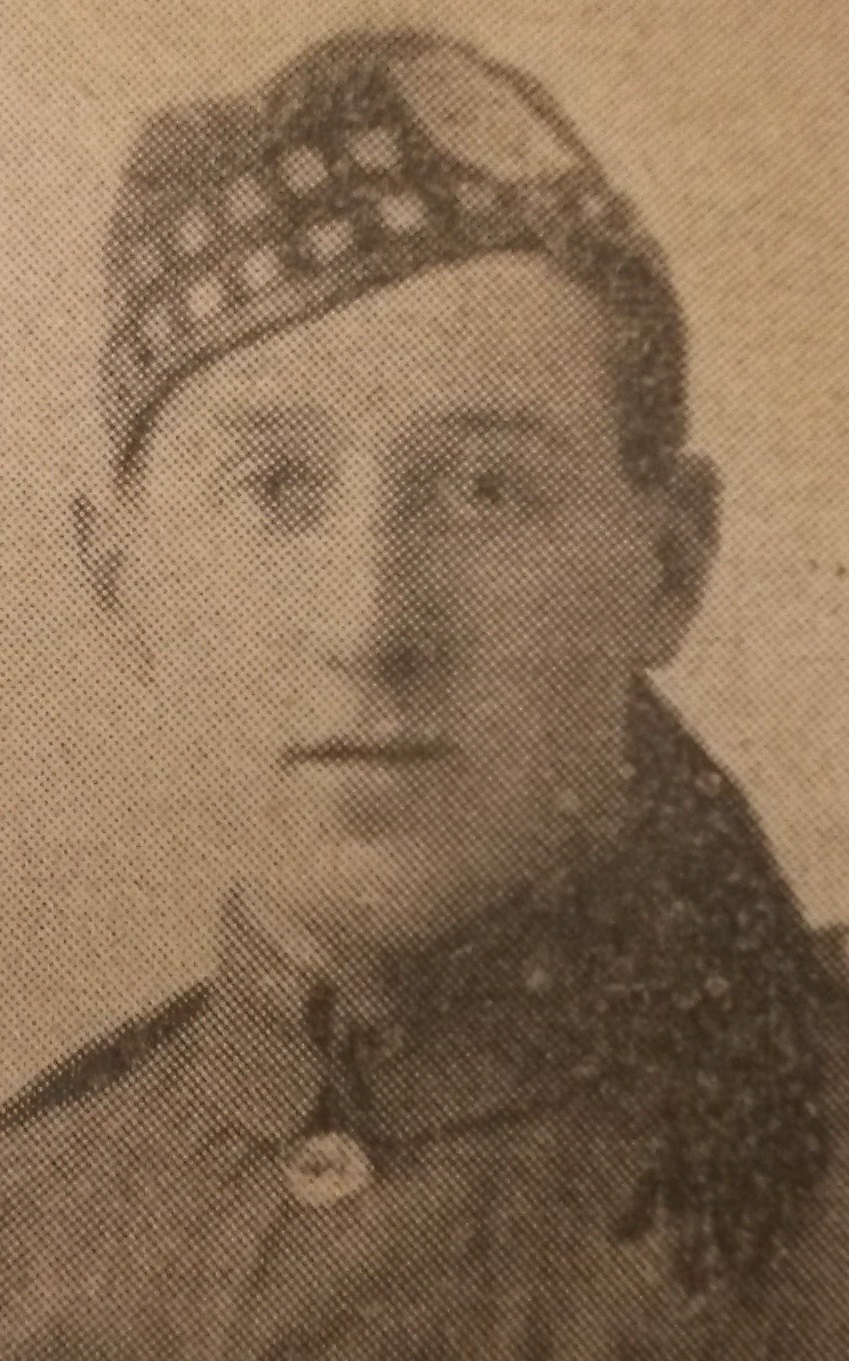
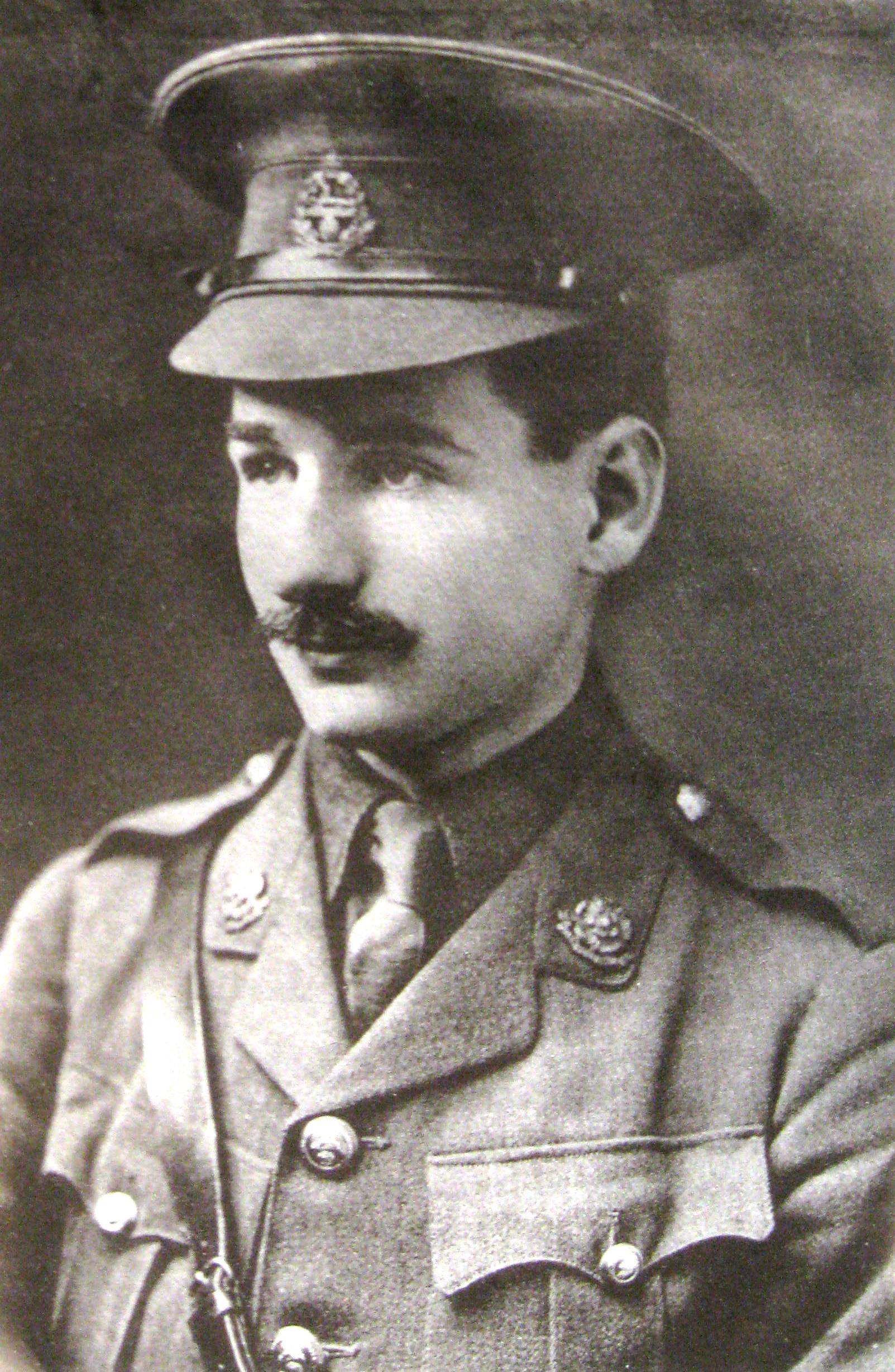
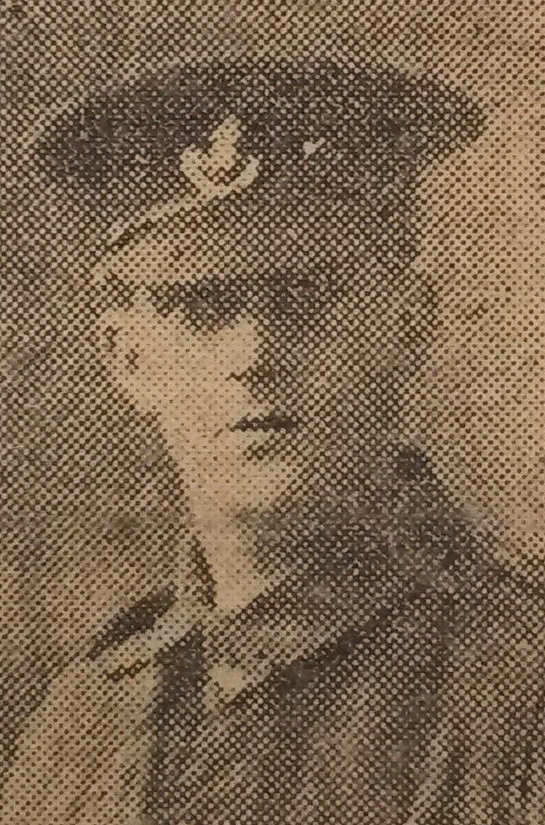
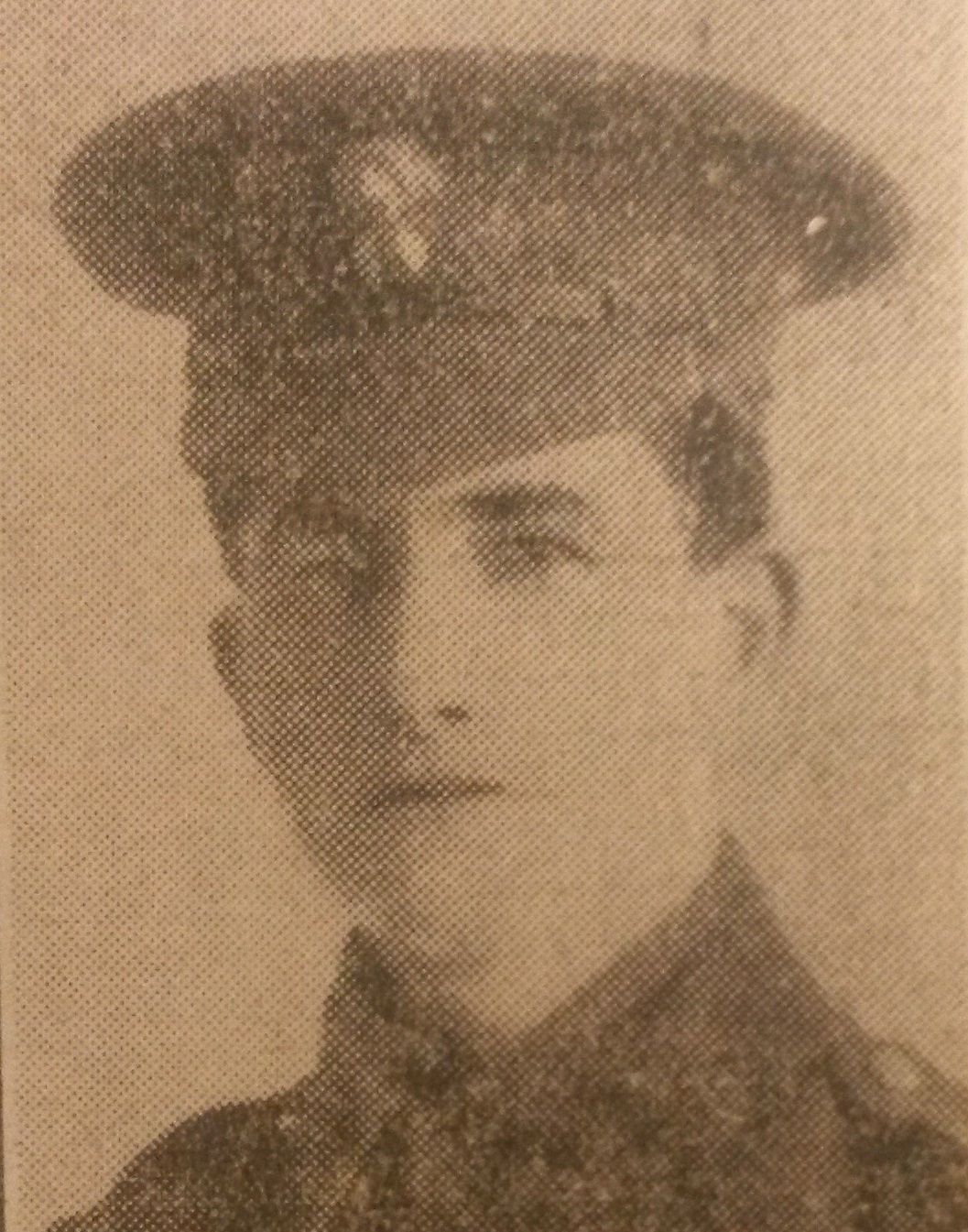
 10th Lancashire Fusiliers, 34841
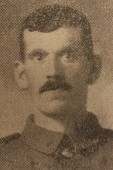 7th East Lancashire Regiment, 21267
In 1911 the family lived at 122, Redlam, and like most Blackburn families, they were all cotton weavers.
Fred enlisted in January 1915 into the 9th Battalion Lancashire Fusiliers, and would begin his service in the dreaded Gallipoli campaign, attached to 11th Division.
Embarkation took place at Liverpool from 30th June, with much of the Division sailing on the Aquitania and Empress of Britain. Mudros was reached by Divisional HQ and 32nd Brigade on 10th July. On 6th-7th August 1915 the Division landed near Lala Baba at Suvla Bay. On19th/20th December 1915 the Division withdrew from Gallipoli and moved to Imbros.
1916:
On 26th January the Division began to move to Egypt, landing at Alexandria on 2nd February and concentrating at Sidi Bishr six days later. 19th February saw the Division take over a section of the Suez Canal defences.
The Division received orders on 17th June 1916 for a move to France. Embarkation at Alexandria was completed on 3rd July and by 7th of that month Divisional HQ had been set up at Flesselles. By 27th July, the Division had taken over part of the front in Third Army sector.
On 26th January the Division began to move to Egypt, landing at Alexandria on 2nd February and concentrating at Sidi Bishr six days later. 19th February saw the Division take over a section of the Suez Canal defences.
The Division received orders on 17th June 1916 for a move to France. Embarkation at Alexandria was completed on 3rd July and by 7th of that month Divisional HQ had been set up at Flesselles. By 27th July, the Division had taken over part of the front in Third Army sector.
Fred was reported missing in September 1916 during the Battle for Thiepval. His younger brother George also in France was wounded and in hospital. Their mother received letters giving details of both the death of Fred aged 27 and the injury of George aged 23 at the same time. Mrs. Tatlow lived then at 75, Portland-street. owning a provisions shop where George was the manager. Both brothers were connected to St. Marks Church and Sunday School and were members of St. Marks Conservative Club. The flag was put at half mast when news of Fred’s death was received.
Fred Tatlow is remembered on the Thiepval Memorial to the Missing on the Somme, Pier and Face 3 C and 3 D.
1st/10thKing’s (Liverpool) Regiment, 6059
Christopher Tattersall was the youngest son of Jane and Christopher Tattersall, who had had six children - one of whom had died. They were all born in Haslingden apart from Chris who was born in Crawshaw Booth and the father had been a publican when they lived in Rawtenstall in 1901. In 1911 the family was living in Blackpool at 22, Cross-street Christopher was well known in Blackburn through his employment at Messrs Nichols Costumiers and went to France aged 22 in June 1916.
As part of the 55th Division, In 1916 the Battalion began to concentrate in the Hallencourt area on 3rd January and was completed by 27th January. The Division relieved the French 88th Division south of Arras - in the area Wailly - Bretencourt - by 16th February. Trench warfare commenced, with many raids and minor operations. On 17th April 1916, a large scale raid was undertaken by the 1st/8th (Irish) Battalion, the King's (Liverpool), in which 2nd Lieutenantt E. F. Baxter became the Division's first winner of the Victoria Cross. In this relatively "quiet" period before the Division moved into the Battle of the Somme, it nonetheless suffered casualties of 63 officers and 1047 men killed, wounded or missing. Relieved by 11th (Northern) Division on 25th July 1916, the 55th now moved south and took up a place in the front line opposite the village of Guillemont.
It was around this time, on 16th August 1916, that Christopher was killed. He was killed by a bursting shell.
Christopher has no known grave, but is remembered on the Thiepval Memorial to the Missing on the Somme, Pier and Face 1 D and 8 C.
Christopher has no known grave, but is remembered on the Thiepval Memorial to the Missing on the Somme, Pier and Face 1 D and 8 C.
9th King’s Royal Rifle Corps, R/456
John Bullough Taylor, born 11th March 1897, was the son of John William and Mary Ellen Taylor. He lived with them and his brother Harry, and sister Selina at 79 Whalley Range, Blackburn. His mother and father ran and Fish and Chip Shop in Blackburn. In 1911, John was an apprentice Plumber.
On 1st September 1914, John enlisted into the 9th Battalion King’s Royal Rifle Corps, which formed part of 14th Light Division. He was immediately sent to Aldershot for training, until 20th May 1915 when the entire Battalion was sent to France. John would gain experience of trench combat in 1915, fighting in the Action of Hooge and the Second Attack on Bellewaarde
By 1916, John had seen his fair share of action on the Somme, fighting at the bitter Battle of Delville Wood, and at Flers-Courcelette. Following a lull in the fighting, around Longueval, the Division was sent to relieve 17th Division. During the relief, there were several heavy bombardments by German artillery. John Bullough Taylor was killed during one of these bombardments.
John has no known grave, but is remembered on the Thiepval Memorial to the Missing on the Somme, Pier and Face 15 A and 15 B.
Private Silvester Thomas Taylor
7th Border Regiment, 16975
Sylvester Thomas Taylor was born in 1888 in Great Harwood. He moved to 22 Oxford-street with his Aunt and his sister at a young age, and became a Cotton Weaver at Alexandra Mill.
Sylvester enlisted into the 7th Border Regiment in November 1914.
Lord Kitchener's call to arms went out on the 8th August 1914 for 100,000 men to form the New Armies who were to fight in the Great War as he foresaw it. Thousand of recruits flocked to Regimental Depots, such as the Border Regiment Depot at Carlisle Castle, where thousands did congregate, and were formed into the 'Service Battalions', so named because they agreed to serve for the duration of the war.
In this way, the 7th (Service) Battalion, Border Regiment was formed on 7th September 1914 and 1,000 strong, was posted to Wool in Dorsetshire on 13th September 1914, for training.
At Wool, the Battalion became part of the 51st Brigade in the 17th (Northern) Division, along with fellow brigade battalions, the 7th Lincolnshire’s, the 8th South Staffordshire’s and the 10th Sherwood Forrester’s (Nottinghamshire and Derbyshire Regiment).
After training, the 7th Borders sailed for France in two batches, on the 12th and 14th July 1915, with 31 Officers and 932 Other Ranks on the 'Battalion strength'.
The Battalion marched to Rest Camp at Boulogne on the night of the 15th July and next day travelled to Reninghelst via St Omer, Wallon Kappel and Eecke, to join II Corps Reserve for instruction in Trench Warfare, which was done by Companies, under the guidance of more experienced battalions. They were in the dreaded Ypres Salient, of deadly repute and even deadlier reality.
In January 1916, the depleted 7th Border moved to rest at St Omer for a month, where rest and reinforcements were the order of the day. On 7th February 1916 they moved to Divisional reserve in Poperinghe, being involved in an attempt to dislodge the enemy on its section of front. They appear to have garnered at bit of a reputation for success in such ventures, on this occasion as before, at a price of 21 N.C.O.'s and men's lives.
They then moved to Dickebusch, on to Bailleul and Houplines and to a training camp at Eperlecques, where. As part of II Corps once more, they moved into billets at Merlancourt. It was June 1916 and the 'Big Push' loomed heavy on the horizon for the British Army.
On 24th June 1916, just prior to the massive bombardment of enemy lines by British Artillery, the front line was bombarded by German artillery, where 7th Borders were posted. They were badly hit, destroying dug outs and lines of communication, and killing several, with a few posted as missing, probably lost in the mud or killed outright.
It was here that Sylvester was killed. He has no known grave, but is remembered on the Thiepval Memorial to the Missing on the Somme, Pier and Face 6 A and 7 C. He is also remembered on the St Joseph’s Roll of Honour.
Private William Taylor
2nd South Wales Borderers, 24617
William Taylor, born 1896, was the son of William and Mary Taylor. William’s parents were living at 261, Audley Range. There were six children, three girls and three boys all born in Blackburn.
William worked at Audley Range Mill, known as the “Glory Hoyle” and eventually was used for weaving by the Castle Manufacturing Company of Clitheroe circa 1914-28. He would be a weaver there with his entire family.
William enlisted as a driver in the Royal Field Artillery on the 2nd January 1915 but was later transferred to the South Wales Borderers. He took his place in the trenches at the Dardanelles in August 1915, was evacuated to Egypt and then went on to France where he was killed on the first day of the Battle of Albert 1st July 1916.
The Battalion was attacking the south of the small village of Beaumont Hamel. In a few minutes it lost 11 officers and 235 men killed and missing, 4 officers and 149 wounded, all from machine-gun fire. Some gallant men reached the German wire 300 yards away, but the attack was unsuccessful.
William has no known grave, but is remembered on the Thiepval Memorial to the Missing on the Somme, Pier and Face 4 A. William was also commemorated at Audley Range Congregational Church.
Lieutenant Reginald Thompson
Reginald Thompson was born on the 2nd March 1886, the youngest son of John (born 1841) and Alice Thompson (born 1844). He had four brothers; Charles, Harold, Frank and John, and five sisters; Florence Helen, Mabel, Alice W. and Effie. The 1901 census records that the family lived at the very notable residence, "Beardwood Cliff" and John's profession was listed as a Cotton Spinner Manufacturer and a J.P. The family was very well known in Blackburn; Reginald's uncles, James and William had both attained the distinction of serving the town as Mayor. At the age of 14, he entered Rugby School and left two years later, aged sixteen, in 1902. Reginald then continued his studies at Heidelberg, Germany for eighteen months; returning to England, he studied for the Bar at Owen's College, Manchester, where he took and passed his LL. B. degree.
He practised as a Solicitor in London until September 1914 when he joined the Inns of Court Training Corps. Six weeks later, he received his Commission in the 7th Battalion of the East Lancashire Regiment. Reginald proceeded to France in July or September 1915 and he was gazetted first Lieutenant in January 1916 and exchanged into the 2nd Battalion of the East Lancashire Regiment in October of that year.
On the 23rd of October 1916, Reginald Thompson was killed by shell fire during a successful attack against the German trenches in the Somme Valley, he was 30 years old.
Reginald Thompson has no known grave and is remembered on the Thiepval Memorial Pier and Face 6 C.
Reginald Thompson has no known grave and is remembered on the Thiepval Memorial Pier and Face 6 C.
Machine Gun Corps, 8474
Charles Tilford can be found on the 1911 census living with his parents Frederick and Clara. Frederick Tilford was a railway foreman and he and Clara had four children. Charles was third child and he was born in 1894. He is identified on the census as a weaver and the family lived at 41, John Thomas-street, Blackburn (now renamed as Kirby-road).
Marriage records show that he married Mary Wignall in 1915, and, they had a daughter, Doris, born later in 1915.
Charles was 19 years old at the outbreak of the war and he initially enlisted with the King’s Shropshire Light Infantry before being transferred to the Machine Gun Corp. This was a specialist Corps.introduced in 1915 in order to concentrate the firepower and expertise of the Vickers Machine Gun teams. He was killed serving on the Somme battle front whilst serving in the Machine Gun Corps, on 22nd July 1916,
Charles Tilford has no known grave and he is commemorated on the Thiepval memorial Pier and Face 5 C and 12 C.
3rd Grenadier Guards, 23084
Edward Titley was the eldest son of Edward and Sarah Ellen Titley, born in 1893. He had a sister, Ellen and two step-brothers, Charles and John. Before enlisting he was working as a boy clerk for HM customs, having passed his civil service examination.
Edward enlisted into the 3rd Grenadier Guards on 3rd February 1915. Following a short time in training, he travelled with the Battalion in July 1915, landing at Le Harve on 27th July. The Battalion would spend the next year in and out of trenches, gaining experience before the Battles of the Somme the following year.
Edward was killed in the battle of FlersCourcelette in September 1916. This battle saw the use of tanks for the first time. It also saw the use of Canadian and New Zealand Divisions on the Somme for the first time.
The Grenadier Guards’ war diary for 3rd Battalion shows them in the area of Carnoy on 14th September and began its assault at 6.20am 15th September. It was immediately met with heavy machine gun fire. Fighting continued all day. The extract below is from the war diary:
On the evening of the 15th therefore this battalion held a small frontage on the right of the first objective. This flank was subjected to repeated bombing attacks and the Germans also attempted to work riflemen round it. Fire steps had to be dug in both sides of the trench and bombing parties organised to resist the enemy bombing down. Fighting on a small scale therefore continued throughout the night 15th/16th and resulted in all counter attacks being repulsed. The enemy drove us back at one time about 70 yards but his success was momentary only and the ground was immediately re-taken and 1 machine gun captured.
The battalion suffered severe shelling on the 16th September and was then relieved on the evening of 16th/17th September.
Private Titley has no known grave and is remembered on the Thiepval Memorial to the Missing on the Somme, Pier and Face 8 D.
10th Lancashire Fusiliers, 34841Norman Townend, born 1893, was the son of Robert Walter and Ellen Townend of 20 Granville-road, Blackburn. He was one of four children. He had been working as a dentist in Granville-road. Before the war began.
Norman was born in Yorkshire on 4th January 1893 and was baptised on 14th March 1894 at All Saints Church, Clayton-le-Moors. His brother, Gordon, was baptised the same day.
Norman enlisted into the 10th Battalion Lancashire Fusiliers in June 1915. Following training, he joined the Battalion in France and served with them during the early Battles of the Somme, including Delville Wood.
Norman was probably killed during the actions on the Ancre Heights. The official Lancashire Fusiliers’ war diary shows the 10th battalion at Carnoy on 1st November 1916 and at Geudecourt on the 2nd, where they relieved the 9th Duke of Wellington’s Regiment and occupied Mild, Shine and Needle trenches.
The entry states that:
“...an unsuccessful attempt was made by 2 squads of the battalion bombing platoon, supported by D Company and one platoon of C Company to carry an enemy strongpoint to the right of mild trench. Failure was due largely to the impossible state of the ground over which the advance had to be made. The enemy replied by attacking our bombing store on the left front of mild which was easily driven off.”
“...an unsuccessful attempt was made by 2 squads of the battalion bombing platoon, supported by D Company and one platoon of C Company to carry an enemy strongpoint to the right of mild trench. Failure was due largely to the impossible state of the ground over which the advance had to be made. The enemy replied by attacking our bombing store on the left front of mild which was easily driven off.”
Private Townend was killed on 3rd November 1916. He has no known grave and is remembered on the Thiepval Memorial to the Missing on the Somme, Pier and Face 3 C and 3 D. His name is also recorded on the Roll of Honour in St. Silas’ church, Blackburn.
7th East Lancashire Regiment, 21267Private John James Turner of the 7th East Lancashire Regiment, son of Edwin and Catherine Turner of 44 Wither-street, Blackburn, was killed on 5th July 1916 during the Battle of Albert on the Somme.
The son of the Carter for mineral water, Turner worked as a driver for a Brewer before the war began. He was formerly part of the 10th Battalion Royal Fusiliers but was transferred to the 7th Battalion.
John Turner was part of the infantry attack at the Battle of Albert (1st – 13th July), unfortunately killed in action on the 5th July when the division was attacking La Boisselle between 4th and 6th July. At 8:30 a.m. the 56th Brigade of the 19th Division attacked at La Boisselle with the 7th King's Own, which bombed up trenches with covering fire from machine-guns and Stokes mortars. Determined resistance by the German defenders held back the British until 2:30 p.m. when all but some ruins at the north end had been captured.The area between the 23rd Division on the right and the 19th Division around La Boisselle was attacked at 7:30 p.m. by bombing parties of the 7th East Lanc's, was repulsed but a second attack over the open succeeded, after which three German counter-attacks were defeated.
John James Turner is remembered on the Thiepval Memorial Pier and Face 6 C.