
 Loading more
Page 2
George Whiteley
Mayor of Blackburn 1884-85
George Whiteley was born on the 30th of August 1855, he was the eldest son of George Whiteley and Margaret Pickop who had come to Blackburn from Halifax, Yorkshire in 1852. He and his brother Herbert James were born at Witton Bank House and later moved to The Woodlands, Cherry Tree. George senior had taken on the lease of Mill Hill Cotton Works with about 450 employees in 1851. He left in 1856 following the construction of Albion Mill and in 1899 George Whiteley & Co. was formed with the principle shareholder being William Birtwistle. In 1881 at Milnthorpe, George married Alice, daughter of William Tattersall the owner of Dutton’s Brewery. George was selected to be the next mayor of Blackburn in 1884.
In 1889 William handed over the control of the brewery to George and on the death of William in 1896 his only daughter Alice inherited the business. In the census of 1891 George and Alice were living at Beechwood on Livesey Branch Road with daughter Muriel Cartmel aged 7, William Tattersall aged 4, Dorothy aged 2 and Ronald George aged 8 months - they had six servants and a coach house. In 1892 George had his portrait painted by Mr. Shawcross of Preston New Road.
George stood as a Conservative Parliamentary Candidate for Northwich in 1892 but was defeated by his opponent Mr. Brunner a Liberal who stated that “Blackburn was the most corrupt town in the north of England”. The following year George won the seat of Stockport which he held until 1900 when he then stood as a Liberal in Pudsey and was elected. He became Parliamentary Secretary to the Treasury, (Chief Whip), when the Liberals came to power in 1905 under the administration of Sir Henry Campbell-Bannerman and H. H. Asquith. He was made a Privy Councillor in December 1905. George resigned from Parliament on the 1st of June 1908 and accepted the appointment of Steward of the Manor of Northstead. It was thought that his retirement was due entirely to insomnia from which he had suffered for a long period. On the 3rd of July 1908 he was raised to the peerage as Baron Marchamley of Hawkstone in the County of Shropshire. George had bought Hawkstone Hall and its estates from the 4th Viscount Hill in 1907 selling them in 1923 – the title he had assumed of Marchamley was taken from a village near Hawkstone Hall. He contributed occasionally in the House of Lords making his last speech in 1919. The Complete Peerage summarised his oratory as “a ready speaker with a somewhat caustic humour, he was, on the platform, an effective asset to the Liberal Party”. George was a J.P. for the county of Hampshire in 1900 and for Shropshire in 1908.
Alice died in 1918 and George in 1925. After returning from Switzerland he had undergone an operation but died shortly after at his home, 29, Princess Gardens, Westminster. It was the 21st of October 1925 and he was aged 70. He was buried in the churchyard of St. Lukes, Weston-under-Redcastle, Shropshire, his eldest son William succeeded to the barony. Probate was granted to his daughter the honourable Muriel Cartmell Jamieson and Alfred Bakewell Howitt, physician and the Public Trustee - effects were £284,725-1s.-5d.
Janet Burke
Thomas Farrer Baynes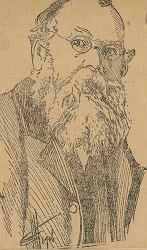
Mayor of Blackburn 1885-86
Thomas Farrer Baynes came from an old Lancaster family and according to the Blackburn Times was a Freeman of that town. He was born on the 5th April 1826 to Thomas and Isabella and was christened Thomas but appears to have adopted a middle name Farrer which was his mother’s maiden name – George Miller in his account of John Baynes spells this as Farrow. Thomas had three sisters and two brothers living at home according to the 1841 census and the family lived at 3, Moor Lane, Lancaster - his father had become a grocer. Thomas came to Blackburn sometime after 1851 and together with John C. Hutton built a weaving shed at India Mill, Greenbank. His brother was John Baynes and his nephews were Thomas Baynes Taylor and Fred a J.P. According to the census of 1881 Thomas was the employer of 121 men, 156 women, 46 boys and 56 girls. In the census reports the following information is given - 1861 aged 35 he was living with his wife Sophia aged 26 at 2, Brown Street. Thomas had married Sophia Taylor on the 15th November 1859 in Ashton-in-Makerfield. In 1871 they lived at Ash Villa, 18, Shear Bank Road with their children Harry 7, Percy 6 and Adeliza 5. The eldest boy Ernest was staying with Thomas’s sister Isabella in Bolton-le-Sands. The children were sent to boarding school – Harry and Percy to Repton and Adeliza to a school in Great Malvern. It isn’t clear whether Ernest went to boarding school but in 1881 aged 19 he was living with his father on Shear Bank Road and described as a solicitor’s clerk. The same year of 1881 Sophia was living at Spring Bank described as the wife of a cotton manufacturer and a lodger. From this time forward Thomas and Sophia did not live together. In 1901 Sophia was 63 living at 107, Preston New Road with her grand-daughter Wynn aged 16 who was born in London. Wynne was the daughter of Ernest who, aged 21 had married in London Emily Frances Hodges on the 23rd June 1883. Frances Wynn was born on the 23rd of June 1884 and Ernest is described as a law student living at 145, Elgin Crescent London. The middle son Harry became a vicar and the youngest son Percy worked in the cotton industry in Manchester. Percy died at the age of 45 and his widow Mary Agnes went to live with her two sons Eric and Kenneth at her widowed father’s house in Whalley. Thomas died aged 80 on the 31st of July 1906 and probate was granted to his son Harry, his estate being £9770-12s.-3d. Sophia died on the 8th of August 1910 leaving £2345-2.-8d and probate was granted to Richard Greenwood, cotton manufacturer.
The Blackburn Times of the 4th of August 1906 reported the death of Thomas Farrer Baynes and in his obituary stated that he had been a strong churchman and a staunch Conservative. He had been an Overseer of the Poor, a Warden of Blackburn Parish Church, Auditor of the Municipal Accounts and a member of the Blackburn School Board from January 1883 to 1884. In 1885 he had been returned to Council for Trinity Ward and that same year elected to the mayoralty. His name was placed on the Commission of the Peace for the Borough in August 1885 and the following year he was given a seat on the Aldermanic Bench where he proved to be the most regular attendant for a long time. Thomas presented his portrait to the Town Hall where it remains to this day.
He was interested in the Rifle Volunteers and gave a Challenge Cup for a competition for the Corps. One of his sons was well known for the successful breeding of Borzoi dogs. There was something of a sensation when one of the dogs, (Champion of the Land), was found dead and foul play was suspected! Thomas had enjoyed good health up to being 77 when he had had a slight accident in an electric tram car causing injuries to his ribs and internal organs. After a serious illness he had pulled through but was mostly confined to bed. The funeral was held in Lancaster.
Janet Burke
Edgar Appleby
Mayor of Blackburn 1886-88
Edgar Appleby was born at Enfield on the 7th September 1841. He was the eldest son of Joseph Appleby and Mary Ann Riley. There were three further sons, Arthur, b. September 1843, Walter, b. April 1845, d. March, 1846, Walter b. July 1849, d. September 1850, and two daughters Sarah Ann b. March 1847, Rhoda b. May 1851. Mary Ann died May 1865 and Joseph March 1878.
Edgar was educated for a while at a school in Accrington run by Dr. Bailey later moving to the Grange, Thorparch. At 17, he joined the family’s milling business, and on the death of his father in 1878, together with his brother Arthur he took over the running of the business. Over time the business was expanded until they ran one of the biggest milling firms in the country, having mills in Blackburn, Accrington, Liverpool and Bootle.
In 1866 he married Hannah Mary Tattersall of Kirkstall near Leeds, they had seven children, five sons, Joseph b. 10th January 1867, William b. 22nd July 1869 d. April 1870, Harold, b. 7th June 1870, Frederick, b. July 1872, Arthur, b. 1876, and two daughters, Eliza Marian, b. 14th October 1868, d. November 1874, Edith Mary b. March 1874, d. September 1881. The family moved into Whalley Abbey in 1878. In September 1881 the family suffered a sad loss. On their way home Hannah his wife and Edith Mary their young daughter were travelling in the family carriage when the horse bolted, both were severely injured, and after a few days both died of their injuries.
Edgar married Emily Ingham in 1884; there were two children from this marriage, a son, Edgar Ingham, b. 1885, and a daughter Alexandra May b.1888. In that same year they moved from Whalley Abbey to the Grange at Wilpshire. Two years later in 1890, when Wilpshire golf club was established Edgar was to be a founder member and President, although he played little golf himself, his main activity being the hunt. For a number of years he was treasurer of the Pendle Forest Hunt and rode to hounds with them.
In 1893 Edgar became the president of the National Association of the British and Irish millers, he was on the Board of Directors of the British and Irish Benevolent Society and Insurance Company and an examiner of the Flour Milling Class of the City and Guilds of London Institute.
Politically a staunch Conservative Edgar first entered into politics as a member of the Accrington Board in 1864. Then in 1876 he became a member of Blackburn Town Council when he was elected unopposed to Trinity Ward. At the end of his term of office he left the council and for the next six years concentrated on his businesses. In 1885, at the request of the Conservative party he again stood as a councillor for Trinity Ward, winning the seat. November 1886 saw Edgar, against his own wishes, being persuaded to take up the position of Mayor. 1887 was the year of Queen Victoria’s Jubilee, and the question arose as to what the town should do to celebrate the event. Being Mayor Edgar had a great deal of input into the project. After much deliberation it was proposed and accepted that a memorial in the shape of a Technical School should be built. Edgar donated £500 pound towards the project on condition that the school was built on Blakey Moor, and that cookery should be one of the subjects taught. A subscription fund of some £15,000 was raised. Edgar requested the Prince of Wales to come in that jubilee year and lay the foundation stone but without success. However when he was elected to serve a further term as Mayor asked the Prince to come, this time the request was accepted. On the 9th of May 1888 the Prince of Wales together with the Princess Alexander Came to Blackburn and with full Masonic honours laid the Prince laid foundation stone of the Technical School. This was a double celebration for Edgar, for not only had he got the Prince of Wales to lay the foundation stone but the Princess of Wales, Alexandra, had agreed to be the god mother of his daughter, who he named after her they were also presented with a silver cup to mark the occasion.
Edgar was the first Chairman of the Technical School Committee which he held for about three years. He was then made a perpetual member of the Committee.
In1899 Edgar became ill and never quite recovered his full health In July 1900 after attending a miller’s convention in Scarborough he became seriously ill, dying at his home, the Grange; on Sunday the 9th of September he was just 59 years old.
The funeral took place at Whalley Parish Church on Thursday 13th September where he was placed in his family vault.
Some other notable events in his life were;
1880, he became a JP for the Borough. A trustee of the Whalley Charities, life Governor of Whalley Grammar School
1886, when the Blackburn Chamber of Commerce was formed, he was made Hon. Treasurer and held that position until his death.
1888, he was made an Alderman; he resigned this position a year later.
John Rutherford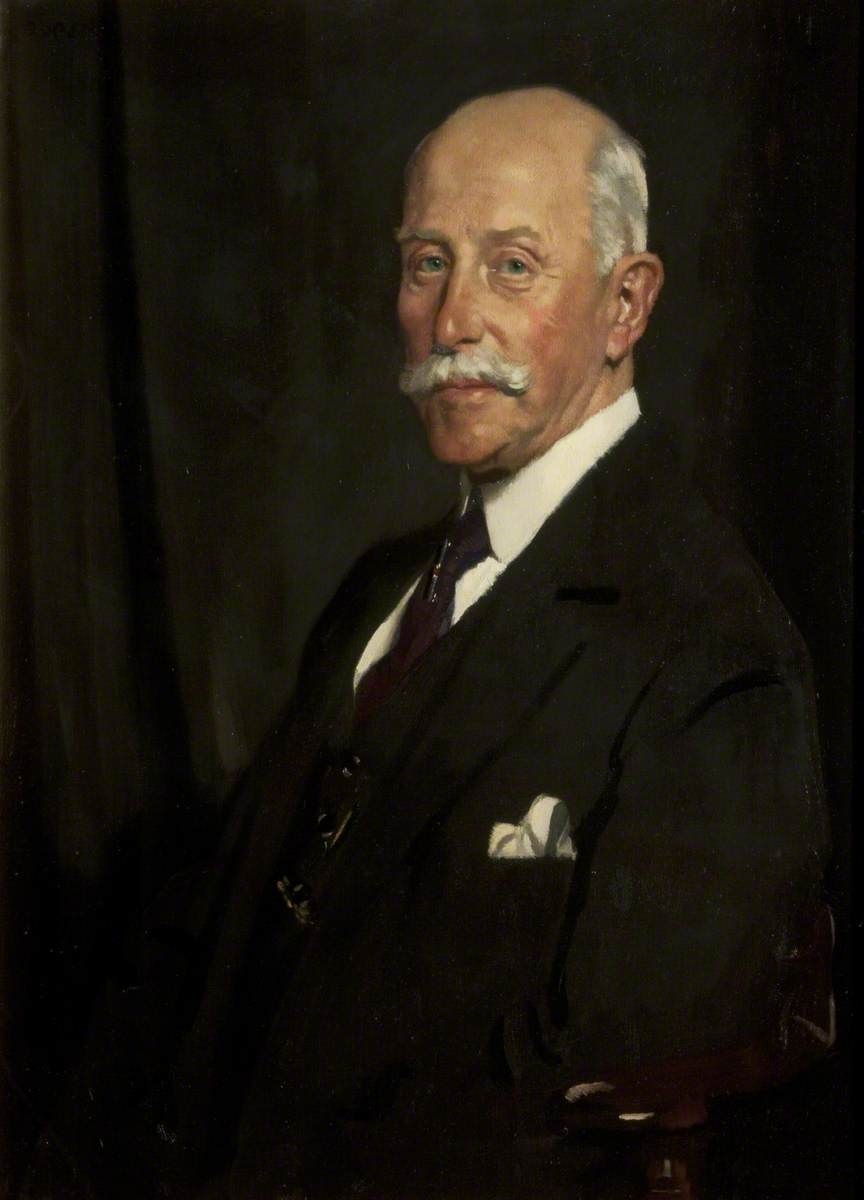
Mayor of Blackburn 1888-89
Of Scottish descent, Sir John was born in John-street, Blackburn, on September 16th, 1854. His father, a native of Rigg, near Gretna, set up as a draper, and after travelling with a pack for many years, entered into partnership with Henry Shaw at Salford Brewery.
Sir John was educated at Lower Bank Academy in Dukes Brow, from which local seminary he passed by way of Annan Academy and Lancaster Grammar School to Glasgow University. In 1878, on his father's death, he took over the management of the brewery, also succeeding to his father's estate in Annan. In 1888 he was elected mayor of Blackburn and for twenty-seven years represented Darwen in Parliament. He fought six hard elections, winning all except one when, to quote one of his ardent supporters, " he went in for a short rest cure," necessitated by his defeat at the hands of F. G. Hindle.
In 1895 boisterous scenes occurred at Darwen on the polling day and it is on record that, in touring the town afterwards, the newly-elected Member met with a particularly hostile reception in the Stoney Flatts district, a hotbed of Irish Radicalism. Here he was struck on the face and hands by stones, whilst a stick was thrown at a member of the fair sex who was occupying the carriage.
The "Book of Memory," now in the entrance of the Town Hall at Blackburn, owes its existence to Sir John, who at the opening of the War memorial wing of the Infirmary suggested its preparation.
It was as owner of the famous colt "Solario" that Sir John name became a household word on the turf, when with this brilliant three-year old he won his first classic race, the St. Leger of 1925. In the following year he declined to part with the animal for £100,000, a sum offered him by the Aga Khan. In that year the horse ran away from noted rivals in the Coronation Cup at Epsom, "defeating the lot as if they were mere platers."
A wonderfully realistic painting of "Solario" by A. F. Munnings, R.A., with Childs in the saddle and the beautiful Ascot racecourse in the background was exhibited in the Blackburn Art Gallery in 1929, together with a portrait of the owner in oils by Sir William Orpen.
A keen sportsman in his youth, Sir John was a playing member of the early Rovers Football Club, as well as a successful sprinter.
"I was almost as bald then as I am now (he once said) and at one meeting it was amusing to hear the spectators, as I carried off the prize is a number of events, shout, 'Why, the old chap's won again."
Sir John Rutherford died in London in February, 1932, aged 77 years.
By George C. Miller
Thomas Higson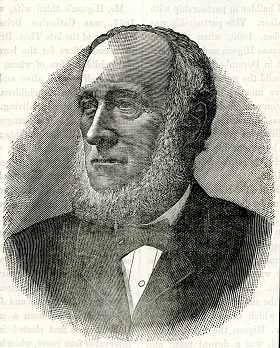
Mayor of Blackburn 1889-90
Thomas Higson was born in Freckleton-street, then known as Cross-street, in 1824, in a house nearly opposite the site of Chapel-street Independent Church. His parents removed to Yorkshire while he was yet a child and here he was apprenticed to the trade of a joiner. Lured by reports of Blackburn's prosperity, he returned to the town of his birth in 1845, but only remained a few months, working for Robert Baron, joiner and builder, of Clayton-street. In 1850 he returned yet again, this time to stay, bringing his wife and young family. Here he worked for a short time for Lawrence Livesey, but a year later set up in business with his uncle, George Walker, as a partner. No fewer than twelve cotton mills were built in Blackburn that year, together with row after row of cottage houses for the workers who flocked into the town.
In 1864, as the cotton famine came to an end, he entered the cotton trade, thereby emulating his grandfather, who, according to J. G. Shaw:
“came to Blackburn from Bolton in the year 1810, to join the little army of chapmen or putters-out, who were developing the great handloom weaving trade of the Blackburn district and sending Blackburn calico, grey, bleached or printed, to all parts of the world. There were two spinning mills in Blackburn at that date, and middlemen were needed to provide warps and weft for the weavers, whose homes were scattered far and wide, and to receive and distribute the cotton piece-goods which the weavers rought into town on their shoulders and in farmers' carts every week, taking back new warps for another week's work. The inter-mediate trade of warping and sizing became rapidly of increasing importance, and Mr. Higson, besides having a warehouse for his chapman's business in Cannon-street, set up a sizing business at Little Peel, on a site now occupied by Belle Vue Mill. His enterprise in the cotton trade was not rewarded by success."
Thomas, shrewdly suspecting that the end of the American Civil War would be followed by a boom, built Unity and Pearson-street Mills in partnership with James Edward Sharples. The firm prospered, extending its business by the purchase of Peel and Roe Lee Mills, whilst later still Canton Mill was added to the group.
In politics Thomas Higson was a Liberal, but his broadminded outlook on life made him many friends outside the party caucus. In 1889, after keeping the mayoralty to themselves for twenty years, the Conservative majority in the town council paid a tribute to his fine qualities by selecting him as mayor. His election was moved by Alderman Whitely (afterwards Lord Marchamley) and seconded by Councillor Gregson. He had served on the council for twenty years, succeeding Councillor Beads as the Liberal leader.
He died in 1891, at the age of 67 years. He was three times married and had fourteen children.
By George C. Miller
James Nuttall Boothman
Mayor of Blackburn 1890-92
James Nuttall Boothman was born at Brierfield in 1834. On his father’s side James was of Irish stock, his grandfather having fought against the English in the Irish rebellion of 1798.
The story is that James’s father was pressed into the navy, perhaps in Ireland, and served 8 years. On his release from the navy Thomas came to Lancashire and settled at Brierfield. Here he met and married a Miss Nutter who was reputedly a descendent of Alice Nutter, one of the Lancashire witches and James was the sixth child of this union. After his birth the family moved from Brierfield to Nuttall, near Ramsbottom - this is probably how James got the name Nuttall. At 8 years old he began to earn his living in a general dealers shop but soon left to learn weaving at Messrs. Grant Brothers. James said it was here that he also learnt the rudiments of farming because at that time the mill owners sent their workers to help bring in the harvest.
On the 3rd of December 1854, James married Jane Mossop at St. Mary the Virgin, Bury, Jane’s father was a printer living at Tottington. On their marriage the pair lived in Dundee Lane, Ramsbottom. Jane’s father also being a musician meant that both James and Jane had an interest in music, James was to become a cornet player with the Dundee band at Ramsbottom and subsequently with Whiteley’s band at Blackburn.
The couple came to Blackburn in 1859 when James was aged 25 and in 1861 were living with the Cotton family at 67, Great Bolton Street. He found employment at Messrs. R. Hopwood and Sons, who paid him 10s 6d per week and here he became an apprentice tackler. After six months his brother-in-Law John Cotton, who had bought King Street Mill, got James released from his apprenticeship with Hopwood and took him on as a tackler. Within twelve months John Cotton had appointed him mill manager at Albert Mill, Livesey. At the end of two years James managed both the Albert and King Street mills. In 1868 John Cotton acquired Hollin Bank mill with James being made manager of this mill as well. He was to buy Hollin Bank mill in 1873 and at that time he and Jane lived in Lower Hollin Bank Street. In that same year he leased New York Mill, Holcombe Brook, near Ramsbottom but when this lease ran out he did not renew it. James and Jane had no children and by 1881 were living at Hollin Bank House, Jane died shortly after this in October 1883.
During the strike of 1883, instead of supporting the other mill owners, he was on the side of the weavers, he publicly denounced attempts by the mill owners to reduce the weavers wages by any more than they already had been. He even went as far as chairing a large meeting of weavers at the Princess theatre and contributed to their strike fund.
The Blackburn times reported that in his younger days he had done a great deal of travelling and while in Alexandria, Egypt, he was arrested for spying and imprisoned for a time in the fortress at Mex and only released when he managed to contact the British consul. It was said that much of his commercial success was attributed to his knowledge of the foreign markets to which cotton goods were exported.
He first sat on the council in 1878 when he was returned unopposed as a Liberal in St. Peter’s Ward, which he held for the next six years. In 1885 Boothman stood as a Labour candidate for the seat of Blackburn but was defeated by William Coddington and Sir Robert Peel both Conservatives.
His election as mayor for the town came in 1890 and he served two terms until 1892. James was living in Brindle at that time with two of his nieces. It was during his Mayoralty that James remarried, his second wife being Jane Meadow the widow of Richard Meadow, a cotton Manufacturer. After handing over the position of Mayor in 1892 he was elected an Alderman a position he held until his retirement in 1907 due to old age. In the town he served on many committees including the Board of Guardians, and the Burial Board. He enjoyed both music and sport and helped financially many local cricket and football clubs including Blackburn Olympic and Blackburn Rovers where he served as Vice-President for several years. He also served as a J.P. and was a major in the 3rd Lancashire Volunteer Corps.
James died at his home “The Pines”, Clayton Green, near Chorley, on the 18th of July 1909 and was buried at Blackburn Cemetery, Whalley New Road. He was 75 years old.
Probate was granted to his widow Jane and his nephew Laurence Cotton of 3, Infirmary Road after the will had been disputed in court by his niece Mrs. Martha Clayton who claimed James had not been of sound mind when he made his will. The effects were £197,978.
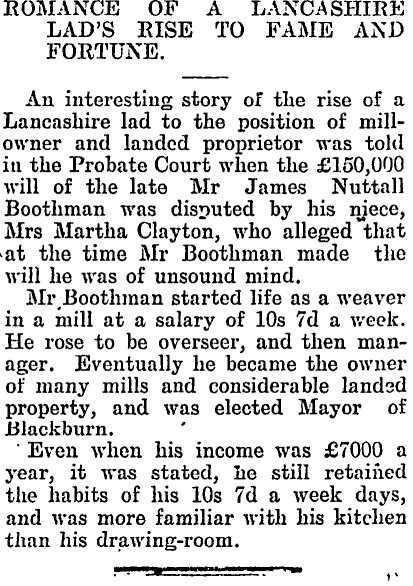
Hawera and Normanby Star 13th July 1910. Pg 6
Herbert James Whiteley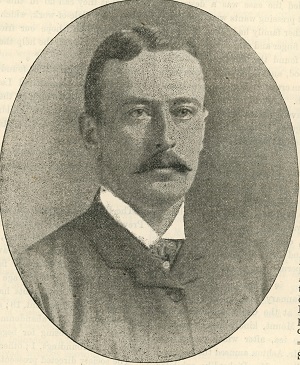
Mayor of Blackburn 1892-93
James Herbert was the son of George Whiteley and Margaret Pickop born at Witton House on 8 December 1857 his older brother was George Whiteley who was the Mayor of Blackburn in 1884 and later became the 1st Baron Marchamley.
Their father moved to Blackburn from Halifax, Yorkshire in 1852 and went into business as a cotton spinner and manufacturer in partnership with Joseph Eccles at Mill Hill, later building Albion Mill Livesey. The two sons then took on the running of Albion Mill.
James Herbert was educated in Hertfordshire and at one of the German University Schools. He travelled extensively in his youth.
His political career started 1887 when he became a Town Councillor for St. Marks Ward. In 1890 he became a JP for the Borough and in 1892, at 34 years old he became Mayor of the town. As a bachelor his mother performed the duties of Mayoress.
On the 25th of September 1895 at St. John’s church, Darwen, he married Florence Kate Huntington, the eldest daughter of William Belle Huntington of Woodlands, Darwen, who had been the High Sheriff of Lancashire. The couple had two sons, Sir Herbert Maurice Huntington-Whiteley, 2nd Baronet who was born on the 25th July 1896, and died on the 18th May 1975 - he married Margot Baldwin, the daughter of Stanley Baldwin, and Eric Arthur Huntington-Whiteley, born August 2nd 1903, and died 1st August 1972. For some time the family lived at The Woodlands, Preston Old Road, Cherry Tree.
In 1895 Herbert left local politics and became Conservative MP for Ashton-under-Lyne a seat he held until 1906. The Blackburn Times portrays him as the last survivor of a parliamentary group known as “the seven men from Blackburn,” the others being; Lord Morley, Sir William Coddington, Sir Harry Hornby, Mr. R. A. Yerburgh, Lord Marchamley and Sir John Rutherford.
The election of 1910 saw him adopted as Conservative candidate for Blackburn together with W. B. Boyed Carpenter but within 24 hours he retired from the field, blaming domestic issues for his withdrawal. He said that his mother who was 84 and in poor health did not like the idea of him standing as a candidate, and so he thought it best to withdraw.
In 1913 he endowed two “Margaret Whiteley Cots” at the Blackburn Royal Infirmary in memory of his mother.
He had at some point prior to 1913 removed to Worcestershire and in that year became the High Sheriff of that County and in 1916 he once more became a MP in the safe seat of Droitwich until 1918. In that year he retired from Parliament and on the 7th February 1918 his name was legally changed to Herbert James Huntington-Whiteley by Royal Licence and created 1st Baronet Huntington-Whiteley, of Grimley Worcester on the 8th February 1918.
Sir Herbert died at his home, Thorngrove, Worcester on Wednesday January 22nd 1936 aged 78. His burial took place at Grimley Church, Worcester.
His wife, Lady Florence Kate Huntington-Whiteley died on June 28th 1948 in a London nursing home aged 79 she was interred with her husband at Grimley.
Janet Burke
Thomas Mitchell Eccles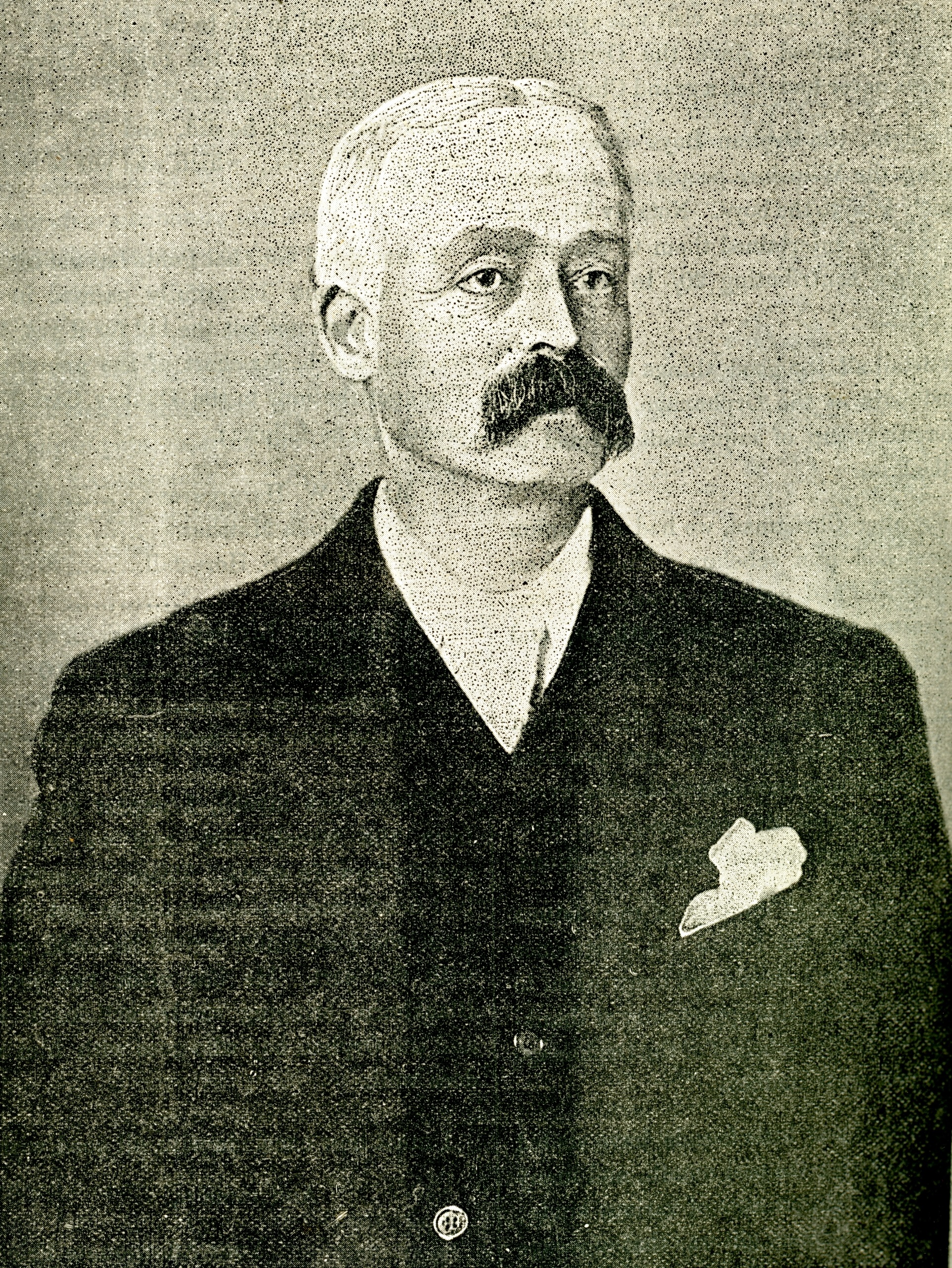
Mayor of Blackburn 1893-94
Thomas Mitchell Eccles was born on the 13th August 1835 the son of Thomas and Jane Eccles. They were an old established Darwen family long in the cotton trade - the mill, a water-powered carding mill was in Lower Darwen and built about 1774 by his great grandfather, also called Thomas. His mother’s maiden name was Mitchell from whom he took his second name - she had come from London. In 1865 he married Elizabeth Ann Ashton, the daughter of Thomas Ashton of Darwen. The 1871 census shows the family living at Westwood, East Park Road – Thomas was 36 and an employer of 600 hands, Elizabeth was 27 and they had a son Harold aged 4 and a daughter Mabel aged 4 months.
Thomas had begun on his own account in Bamber Bridge. He came to Blackburn and the company of T. Eccles. Sons and Co. took over Cardwell Mill, Stakes Hall, Livesey in 1875/6 – later becoming Thomas Mitchell Eccles & Co. A weaving shed was added in 1878 and spinning operation enlarged in 1883, eventually having 100,000 spindles and 1500 looms. The business passed to Thomas’s son Harold who had become a J.P. and lived at Balderstone and so the firm was carried on by five generations.
Elizabeth had died in 1881 and their daughter Mabel carried out the duties of Mayoress when Thomas became Mayor in 1893. Prior to becoming Mayor he had been Chief Magistrate but had not been conspicuous in town affairs. In 1894 he opened the new wing of the Library and museum. After his term of office he continued as a Councillor for St. Silas Ward until 1897. A churchman and a Liberal Unionist in politics, he was a founder of the Girl’s High School, the first President and a member of the Infirmary Board of Management. According to the papers he was a keen sportsman a follower of field sports and manly pursuits. In 1911 he was 75 and living at Quarry Bank, Billinge End Road with his daughter Mabel and four servants – on the census it showed that he and his wife Elizabeth had had five children but three had died.
Thomas lived to be over 83 years old but had been an invalid for some time. He died on the 26th of February 1919 and probate was granted on the 1st of May 1919 to his son Harold and a retired solicitor Charles Collins proceeds being £176,209 - 11s.-10d.
Robert Thomas Eastwood
Mayor of Blackburn 1894-96
Robert was born on the 13th of June 1850 to William and Rebecca. Rebecca died four years later and was buried at St. Peters, Blackburn. William remarried on the 17th. August 1854 to Mary Knowles and in 1861 they were living at 2, Primrose Bank. William was now a grocer as well as a cotton spinner and Robert from the age of eight had been set to work as a piecer. Four years later he entered the service of W. Forest, a flag and slate merchant, for five years. Robert then was appointed to a clerkship at Bastwell Mill owned by J. Astley J.P. which he held up to being 21. On the 22nd of December 1870 Robert married Martha Ann Rawcliffe and they started life living at 161, Whalley Range - Robert’s occupation being described as that of a book-keeper. He returned to W. Forest as manager and chief clerk and in 1875 after the death of Forest he went into business for himself. According to the census for 1881 Robert and Martha are both 30 years old and have children James 7, William 5, Margaret 4 and Robert not yet 1 year old. They lived at 7, Regent Street and Robert is described as a Master Flagger and Slater
He had a generous nature illustrated by his entertainment at Christmas of 500 of the poor and aged especially the widows of members of the Oddfellows. On the occasion of his son’s 21st birthday 70 friends and work people were invited to a picnic at Bolton-by-Boland. Robert accepted a second term of office and for his Silver Wedding 2000 invitations to their at home were issued.
In 1895 he blocked a leak on Alexandra Meadows to maintain the ice for skating and in the same year switched on the current for the new electrical installation. In 1896 he was placed on the Commission of Peace for the Borough and also accepted the position of deputy mayor.
Robert died on the 18th of July 1897 not long after his terms of office had ended.
Janet Burke
Frederick Baynes
Mayor of Blackburn 1896-97
The fourth son of John Baynes, Fred Baynes was born in 1848. His great-grandfather, Thomas Baynes, of Lancaster, had a son John who came to Blackburn in 1834 and was for seventeen years a partner in the firm of James Pilkington Bros and Co., of Park Place and Knuzden Brook Mills. The latter was destroyed in 1885 by fire, when two firemen and five other persons were killed.
After a dissolution of partnership he took over, first Cicely Bridge and then Furthergate Mills, employing over 1,500 operatives. He became Mayor of Blackburn in 1858 and died at sea in 1873, on a return voyage from America.
Fred, his fourth son, was educated at the Old Grammar School in Freckleton-street, he and another brother being the first to join when it was re-opened in 1855, on the appointment of Thomas Ainsworth as headmaster. Later he went to Rugby under Dr. Temple and then to Cambridge, where he was prizeman of his college and took his M.A. He began a scholastic career at Beaumaris Grammar School but soon entered his father's business, controlling it till 1905, when it became a limited company.
Elected mayor of Blackburn in 1896, his term of office coincided with the Diamond Jubilee of Queen Victoria and thanks to his initiative the local celebrations on June 22nd were well worthy of the town and the occasion. Whilst residing at Samlesbury Hall in 1900 he was made High Sheriff and Deputy Lieutenant of the County, a double honour. Here he entertained the pupils of the Royal Cross Deaf and Dumb School, Preston, and gave more than one memorable garden party.
A Conservative, had it not been for his advocacy of Protection and Colonial Preference as a remedy for bad trade, by which he found himself at variance with most other manufacturers, he might have represented the Borough in Parliament. When Joseph Chamberlain visited Preston in 1905 to deliver his famous speech on Tariff Reform and the Cotton Trade, Mr. Baynes supported him on the platform. He was also the first chairman of the Cotton Trade Tariff Reform Association.
He died in November, 1917.
By George C. Miller
Robert Carr Radcliffe
Mayor of Blackburn 1897-98
Born in 1831 Robert Carr Radcliffe was the fourth son of George Radcliffe, land and mining surveyor, who was for many years agent for Joseph Feilden, of Witton Park, and one of the first members of the Blackburn Board of Guardians. Robert was educated at Lower Bank Academy and Blackburn Grammar School. After studying surveying under his father he entered the legal profession, was admitted in 1856 and returning to Blackburn went in partnership with his brother Thomas. In 1878 he was appointed clerk to the Guardians, succeeding that quaint end lovable character, Peter Ellingthorp. Other posts he held included that of clerk to the governors of Leyland's Foundation, which supervised the affairs of the Girls' Charity school in Thunder Alley; governor of the Grammar School; a member of the council of the High School for Girls; manager of the Parish Church Higher Grade School and for more than thirty-five years churchwarden of St. Leonard's, Balderstone. He was mayor of the borough for 1879-8 and it was owing to his initiative that a convalescent home for soldiers invalided from South Africa was instituted in the area. This was a house on his estate at Balderstone, equipped to accommodate seven invalids, a matron and her assistant, and called, in his honour the Radcliffe Convalescent Home.
By George C. Miller
Eli Heyworth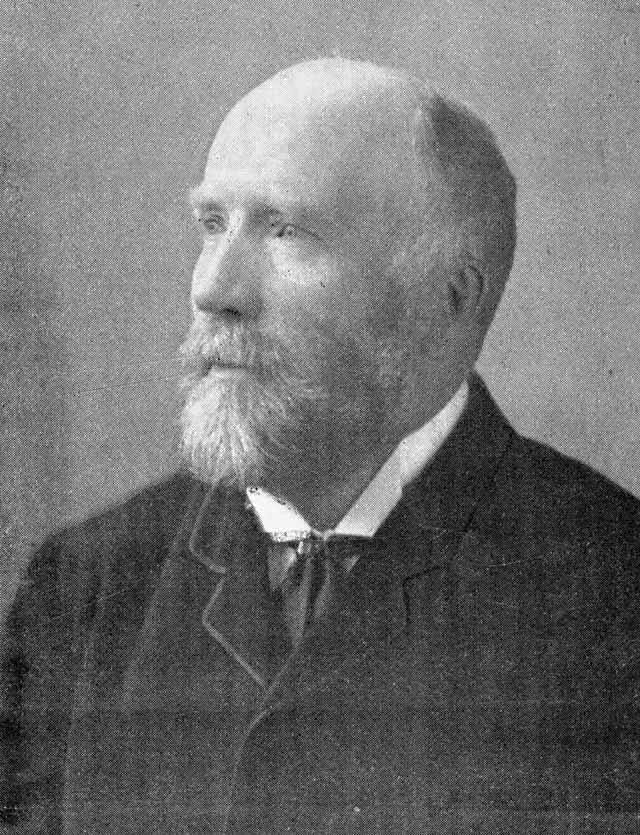
Mayor of Blackburn 1898-99
© BwD - terms and condition
It is largely due to the initiative of Eli Heyworth that Blackburn possesses Queen's Park with its fine boating lake. The latter, constructed as a reservoir by the old Blackburn Waterworks Company, was situated on land belonging to the Ecclesiastical Commissioners, and the whole was ultimately obtained as a free gift from this body and adapted to its present purpose. The lake itself is formed by impounding the waters of the Audley brook.
Eli Heyworth, son of James Heyworth, a Chorley cotton manufacturer, was born in that town on August 16th, 1389, and educated at Chorley Grammar School. He began his commercial career at Cross Hall Print Works, under a brother-in-law of Richard Cobden. In 1863 he came to Blackburn, purchasing Audley Hall Mill in 1871, and later erecting another large mill alongside, the whole having a capacity of 2,200 looms.
In many ways Mr. Heyworth was ahead of his time. He devoted much care to the health and well-being of his employees, establishing a creche for nursing. mothers employed in his mill as well as providing a spacious dining-room for their benefit. In business he successfully demonstrated the principle of direct supply as between producer and retailer, by which means he was enabled to keep his operatives at work during periods of prolonged trade depression.
As one of the founders of the Technical School, he took a practical interest in the work of its pupils, and one of the looms in his shed was always available to test or demonstrate new designs or improvements in textile machinery produced by young inventors. He entered the town council in 1874, representing Park Ward as a Liberal, and in 1898 was chosen unanimously for the mayoral office. Prior to this appointment he had the satisfaction of carrying through a scheme for erecting a statue to the late W. E. Gladstone, whose commanding figure, with its outstretched hand, was until recently such a familiar feature of the Boulevard, having been more than once the subject of good-humoured pranks on the part of youthful and less responsible members of the community.
In 1892 he made a bid for parliamentary honours, along with W. Taylor, after having been chairman of the Liberal executive and president of the council for some years. I also recall that he was a manager of my old school, the Public Higher Grade School in Preston New Road.
By George C. Miller
Select the following the link in order to read the following article : Eli Heyworth by Brian Houghton