
 Loading more
Late 19th Century
Thomas Bury | John Thompson | John Pickop | William Coddington | Robert Parkinson | William Henry Hornby Junior
James Dickinson | Adam Dugdale | Henry Harrison | John Lund | James Hoyle | George Whiteley | Thomas Farrer Baynes
Edgar Appleby | John Rutherford | Thomas Higson | James Nuttall Boothman | Herbert James Whiteley
Thomas Mitchell Eccles | Robert Thomas Eastwood | Frederick Baynes | Robert Carr Radcliffe | Eli Heyworth
Thomas Bury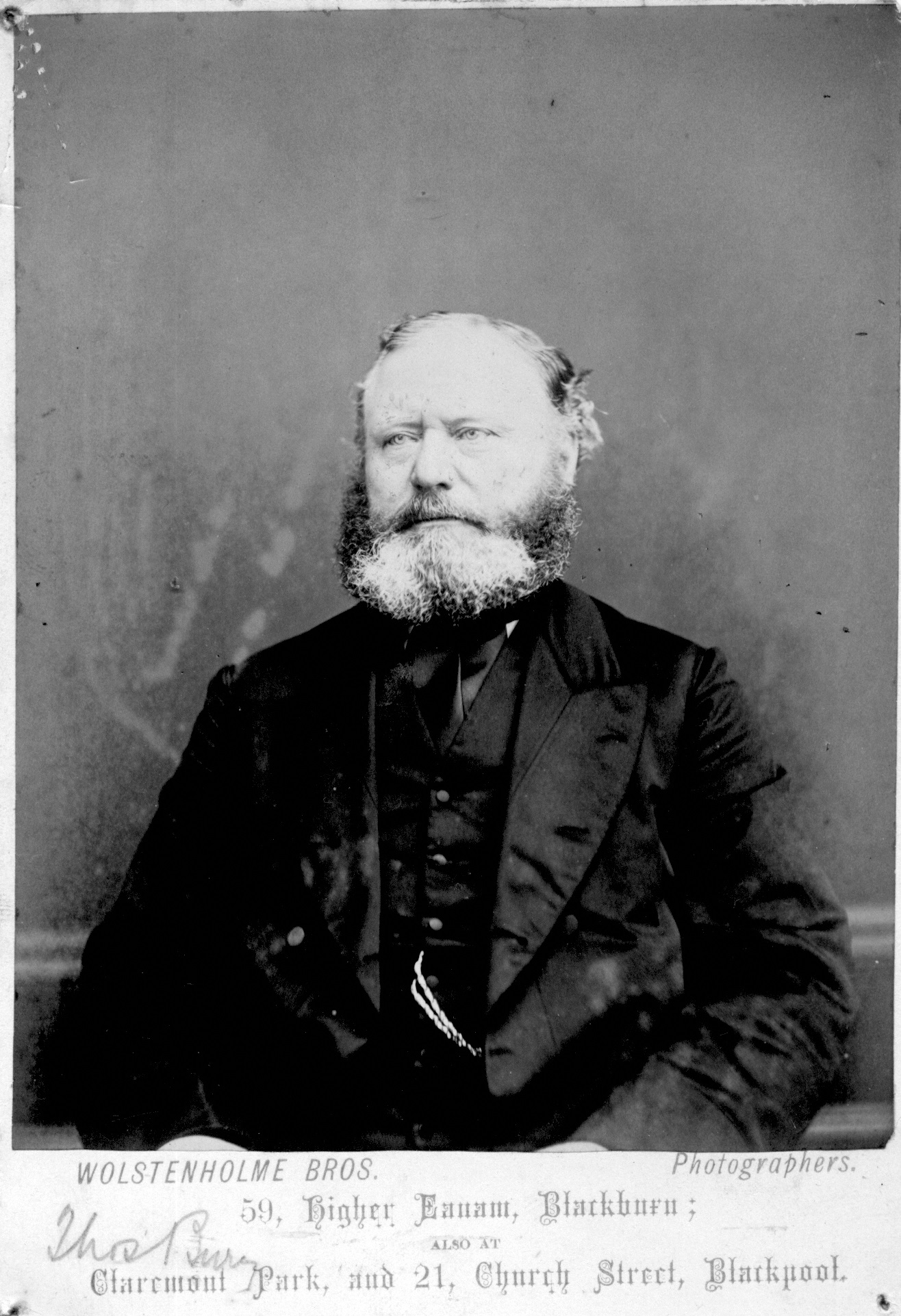
Mayor of Blackburn 1871-72
Thomas Bury was born on the 23rd of September 1814. He was the son of James who had been the surveyor of the Blackburn to Preston Turnpike Road. Thomas was educated at Mr. Ratcliffe’s school and afterwards went to Liverpool where he was apprenticed to a Mr. Thomasson, pawnbroker. On his return to Blackburn he set up his own business as a pawnbroker and clothier until his retirement in 1852. Thomas lived on Whalley Banks in 1851 and had two lodgers – both doctor’s apprentices. In 1861 he lived at Prospect Villa, Longshaw Road and his final address from 1871 onwards was Top o’th Coal Pits. Thomas’ health had deteriorated in the last twelve months of his life and he had been confined to the house for much of that time – it is strange for us to note that his death was said to be probably due to old age although he was not quite seventy years old. Thomas had been married to Mary Woollfall on the 28th March 1843 but they had no children. Thomas died in July 1884 and the funeral took place on the 22nd of September at St. Anne’s Church Turton and by express wish, was to be of a private nature. The flag was flown at half mast on the Town Hall and the presiding magistrate announced his death at the Borough Police Court. There was regret at the loss of such an impartial, fair and careful Justice as Mr. Bury.
Thomas became a member of the Town Council in 1865 representing St. Peter’s Ward and was elected Mayor in 1871, a position he held for two years. On the 3rd of July 1878 he was made an Alderman in succession to Mr. Dean, a previous Mayor, and finally he retired from the Council in November 1883. Thomas had attended meetings on a regular basis and was considered a valuable colleague on the committees on which he had sat. He had been a conservative in politics and accomplished much in the interests of his party and the public. He was considered a genial and good hearted man leaving behind pleasant memories. He had been a Justice of the Peace for the borough and at one time a director of the Blackburn Gas Company. Thomas laid the foundation stone for the Public Library, Museum and Art Gallery.
Janet Burke
John Thompson
Mayor of Blackburn 1872-73
John was one of four sons born to Richard and Ellen Thompson who lived at 42, Montague Street in 1841. Richard was a builder and surveyor who had worked on the construction of the Manchester Waterworks and a part of the Glasgow Waterworks. By 1861 the family lived at 9, Wellington Street - Richard had entered the cotton industry and John at twenty was a book-keeper. John got married on the 3rd June 1869 – his bride was Alice Whitworth, a gentlewoman, whose father Charles was a cheese factor. They married at All Saints, Clayton-le-Moors and John was now described as a merchant. John must have been successful in business as in 1871 he and Alice were living at 80, Preston Road with baby Florence and two servants. They go on to have ten children, one of whom does not survive, and they lived in a very grand house called Beardwood Cliff with seven servants. John purchased Audley Mill, Kent Street in about 1880 and was running Bank Mill at Great Harwood. He was well known in commercial circles and head of the company W. Thompson & Co. John was also a director of the local board of the London and Lancashire Fire Insurance Company.
He was a County magistrate – a position he had held for 32 years and was also a Borough magistrate. He attended court regularly and proved himself to be a man of sound judgement and judicial temperament.
At the council meeting in November 1872 for the election of a new mayor to follow Mr. Bury, it appeared there was some difficulty in finding a Conservative candidate. Mr. Thompson a strong Conservative, allowed his name to go forward and was duly elected. Alderman Baynes thought that the election of Mr. Thompson would be a stimulus to the apprentices and youths of the town when they saw a man so industrious it might influence them to serve their masters well and be prosperous.
Mr. Thompson after a long illness died in Bournemouth in February 1916. He had been staying there some time for his health. Flags were at half mast on the Town Hall and other public buildings and the interment took place at Mellor.
Janet Burke
John Pickop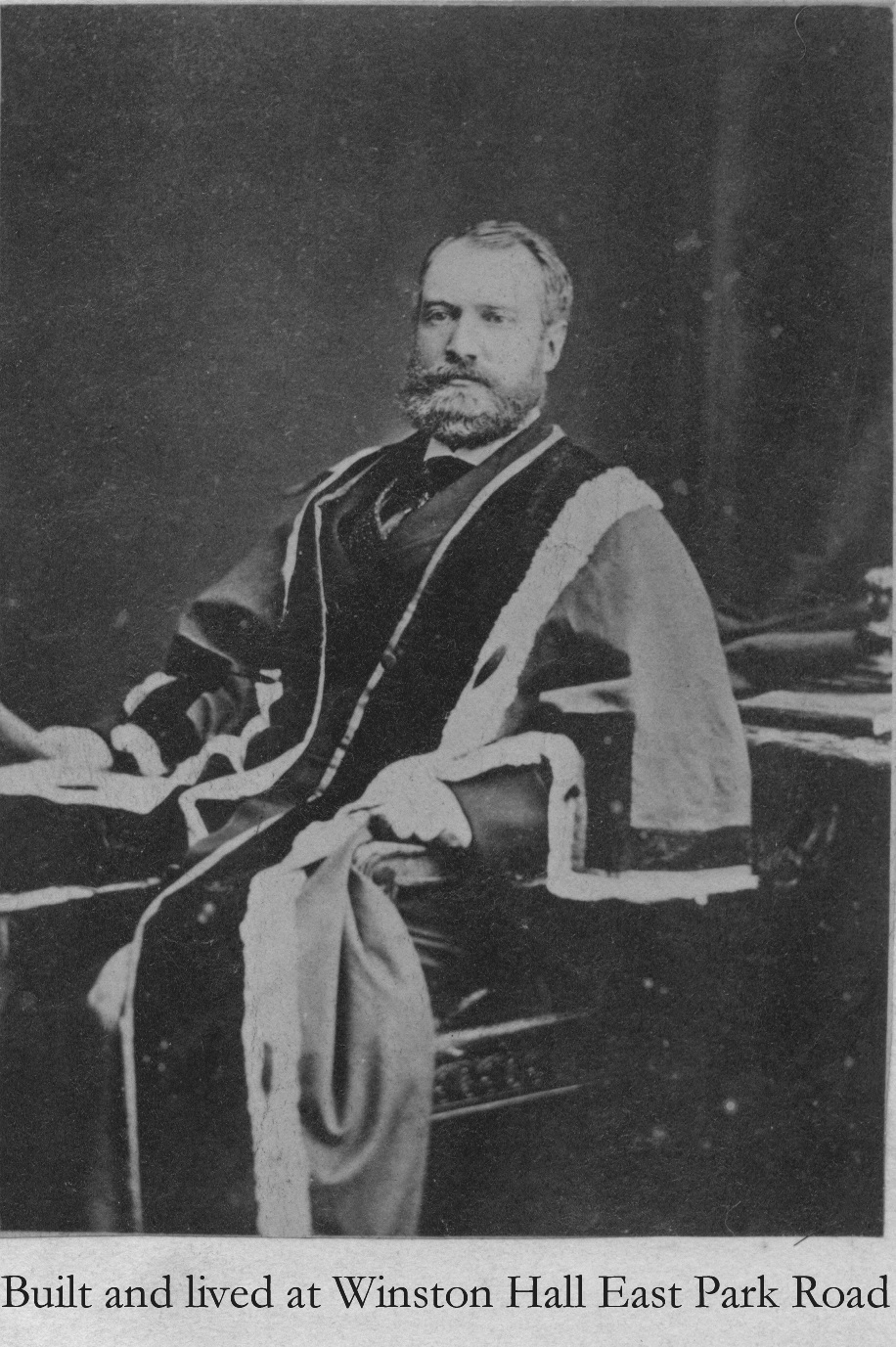 Mayor of Blackburn 1873-74
John, born on the 10th November 1832 was the son of Bannister and Esther who belonged to an old Tockholes family. Bannister was born on the 6th June 1803 and died on the 13th December 1834. John’s mother Esther nee Cocker was born 15th July 1794 and died on the 30th June 1865. John also had a sister Lucy Ann born in 1832. The Blackburn Standard of the 7th March published the following article on the news of John’s death on the 4th of March 1903.
It is with profound regret that we announce the death of Mr. John Pickop, J.P., which occurred at his residence, “Winston,” East Park Road, Blackburn, on Wednesday morning. Mr. Pickop enjoyed considerable popularity amongst all class of the local community, hence the news of his demise upon becoming generally known occasioned universal sorrow and regret. Blackburnians were also surprised to learn of his sudden end, for though it was known to a few that the deceased gentleman had not been well for about a week, anything in the nature of a serious result was never anticipated. Nor apparently did Mr. Pickop himself regard his indisposition as a cause for anxiety, for he refused to allow a doctor to be summoned. When Dr. Martin was called in, he found that Mr. Pickop had been dead some three hours, probably from heart failure. The flag flying at half mast over the Town Hall was the first intimation of the sorrowful event and very shortly afterwards the flags of the two Conservative and Literary Clubs, and the free Library, betokened the passing away of one who was a loyal and worthy citizen.
Although Mr. Pickop belonged to an old Tockholes family (his father was in his day a lord of the manor of that district), he spent practically the whole of his life in Blackburn. It was in the year 1840 that his parents came to reside in Montague Street, and when their son had completed his scholastic duties, he was articled to Messrs. Robinson and Purfit (now Messrs. Robinson and Sons), of King Street, thus entering the legal profession. Upon passing his final examination, Mr. Pickop commenced practice on his own accounting in Library Street, where he soon prospered, securing for himself a large private connection, and also winning his spurs as an advocate. Indeed he early won for himself a high opinion in legal circles and there is no doubt that had he remained in practice he would have attained a lofty position in his profession. But fortune smiling upon him in another direction, he did not find it necessary to pursue his duties as a solicitor for any great length of time.
Benefitting largely under the will of Miss Hargreaves, of Mellor, he began to make land purchases, which, as years went by, greatly increased in value, until he became possessed of considerable wealth. He retired from practice about thirty years ago and built himself a residence in East Park Road where he has since resided.
He was placed on the Commission of the Peace for the Borough on October 28th 1875, and for a great number of years was to be seen occupying his seat on the Bench with unfailing regularity. In his capacity of magistrate Mr. Pickop displayed wonderful tact, ability and astuteness, and was wont to be regarded, especially in his latter years as an ideal substitute for stipendiary. Not only a successful lawyer and magistrate he entered the Council on the 21st October 1873 representing St. John’s Ward in place of John Thompson the then Mayor. Twelve months later he was made an Alderman – a position he held until 1880 when he declined to be re-elected.
In 1873 he was elected to the position of Mayor and was Chairman of the Waterworks and Chief Magistrate for one year. During his Mayoralty the present Free Library and Museum were opened and he fittingly performed the opening ceremony as he had generously provided the site. John was an excellent public speaker. Although a staunch Conservative he never dabbled in politics and on leaving the council went into retirement. He was President of the Young Conservatives and a previous President of the Central Conservative Club. His sporting instincts led him to offer cups and prizes for billiards and he enjoyed bowling at Blackburn Subscription Bowling Club and at the East Lancashire Club. John was President of the Literary Club, Chairman of the Infirmary Board of Management and on many occasions acted as an arbiter in labour disputes since his fairness was respected by both sides. John was interested in the Volunteers and had been a Captain in the 5th Lancashire Artillery Volunteer Corps. He was disappointed at the lack of support for the Volunteers and the armed forces in general, by central government. So in the late South African War when the men of the VBEL Regiment responded John paid the cost of equipping an active service company. When a second contingent was ordered they were also fully equipped by him. John’s purse was always open to charitable causes. He had never married and at probate his effects were £174,354-2s.-9d.
Janet Burke
William Coddington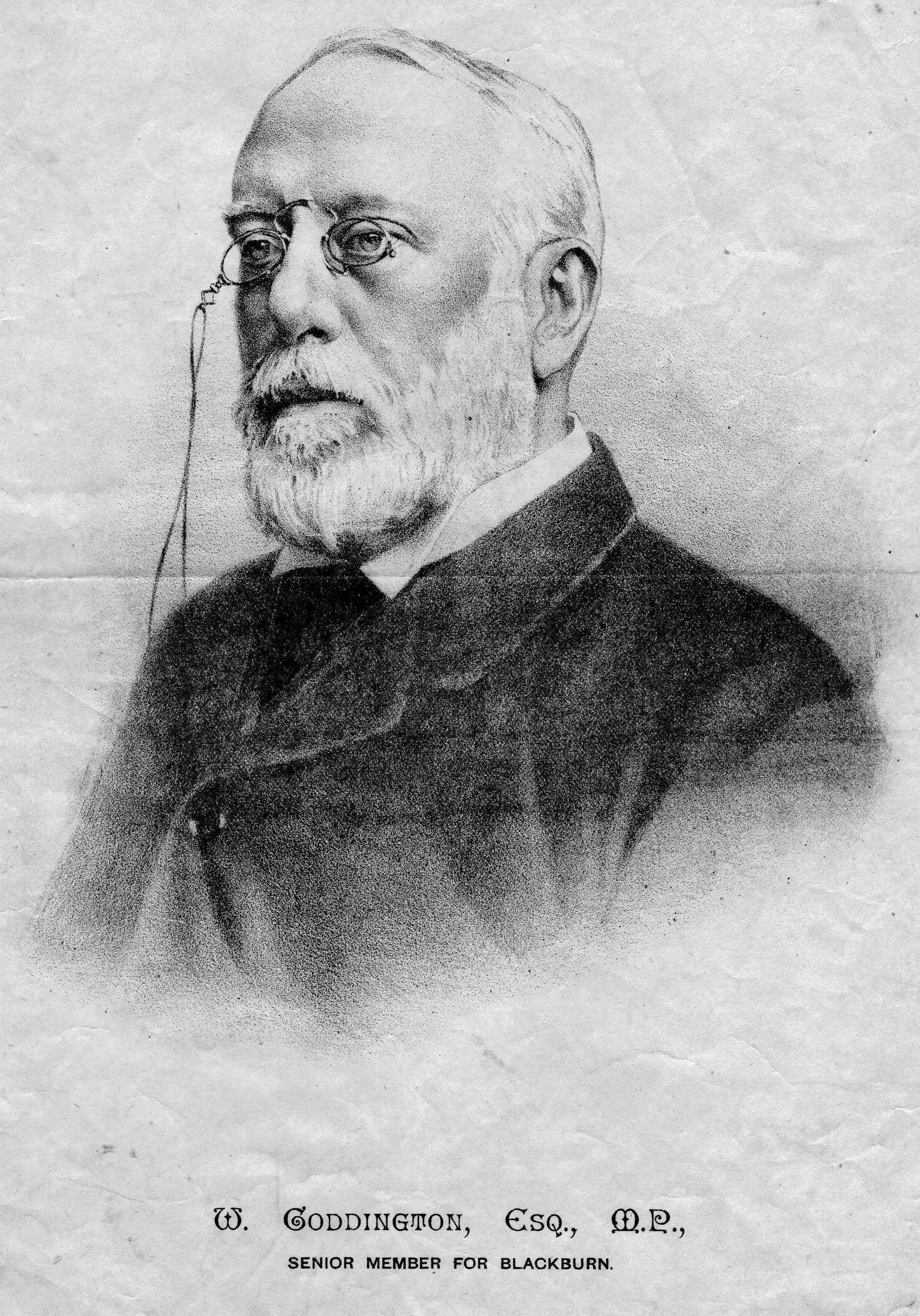
Mayor of Blackburn from 1874-75
Sir William Coddington, Bart., M.P., was born at Salford, Manchester, in 1830, the eldest son of William Dudley Coddington, a prominent Manchester merchant, who in 1822 had married Elizabeth, second daughter of Robert Hopwood, cotton spinner, of Blackburn. In 1842 his father settled in Blackburn as a cotton spinner and manufacturer, in partnership with his father-in-law, first residing in a handsome Georgian house in Penny-street, subsequently occupied by William Boyle, of Jap nougat fame. The firm controlled Nova Scotia, Crossfield and the old Wellington Mills until Robert Hopwood's death in 1860, when Nova Scotia passed to Robert Hopwood Hutchinson, and Crossfield and Wellington Mills became the property of William Dudley Coddington. In 1857 he added to his interests by erecting Ordnance Mill, carrying on his extensive business under the title of W. D. Coddington and Sons. He was a J. P. and a member of the town council, dying in 1867 at the age of 68. He left the management of his mills to his eldest son, the future baronet. At the time of his death he was residing in St. George's-place, and was actually engaged in building Wycollar, the spacious mansion at the top of Yew Tree Brow, later completed and occupied by his eldest son.
Sir William was pre-eminently a business man, and under his astute supervision the firm flourished. He took full advantage of the trade boom which followed hard upon the heels of the cotton famine, erecting two mills, Ordnance and Wellington New Mills. In 1864 he married Sarah Catherine, daughter of William Thomas Hall, of Wakefield, residing first at Spring Mount (now the High School for Girls) and later at Wycollar, which was his home for forty years.
He had one daughter, Beatrice, who in 1894 married Mr. Arthur Cayley.
"Many distinguished gatherings have met at Wycollar (writes J. G. Shaw), and none more so than those of 1905, when Sir William and Lady Coddington entertained Princess Louise and the Duke of Argyle, and arranged two dinner parties, to give their intimate friends in Blackburn an opportunity of meeting royalty."
Sir William had musical tastes and in 1875, the year of his mayoralty, he presented an organ to the Parish Church at a cost of £3,000. In 1912 his services to the town were recognised in fitting manner by presenting him with the Freedom of the Borough.
He had a long and distinguished political career, being first elected as member for Blackburn in 1880, in place of Mr. Daniel Thwaites. In 1885 he was re-elected, in company with Sir Robert Peel, and in the following year he was returned unopposed with W. H. Hornby, the pair being again elected in 1892. They fought one more election together as commoners, that of 1895, Sir William being elevated to the Baronetcy in 1896, and Sir Harry in 1899. In 1900 they fought and won once again, but six years later Sir William retired, at the age of 76, and his place was taken by a Socialist, Mr. Philip Snowden.
In Parliament Sir William is best remembered for his work as chairman of the Parliamentary Committee for widening the streets of London and removing various "bottle-necks," such as the historic Temple Bar, which formerly stood where the Strand embouches on Fleet-street. This ancient city gate, which only monarchs might enter by permission of the Lord Mayor, was removed in 1878, on the completion of the new Law Courts. Its site was marked by a griffin surmounting a narrow pedestal. Temple Bar has poignant memories for one Lancashire family, for it was here that the head of the unfortunate Francis Towneley was placed on a spike after his execution on Kennington Common, for the part he played in the "forty-five" rebellion. The original gate, designed by Sir Christopher Wren, was dismantled by the Committee and re-erected by Sir Henry Meux at the entrance to Theobald's Park, Hertfordshire.
In committee he was both brief and pointed in his speeches, a virtue he did not always carry with him in more intimate circles. There is a good story of him on one occasion "treating" his friends to a historical lecture in the Central Conservative Club at Blackburn, when he held forth "for three mortal hours" without notes or references, to a somewhat bored, not to say thirsty, audience.
Sir William married again in his 83rd year, his second lady being Miss Aimee Josephine Barber-Starkie. He died at Wycollar on February 15th, 1918, in his 87th year.
By George C. Miller
Robert Parkinson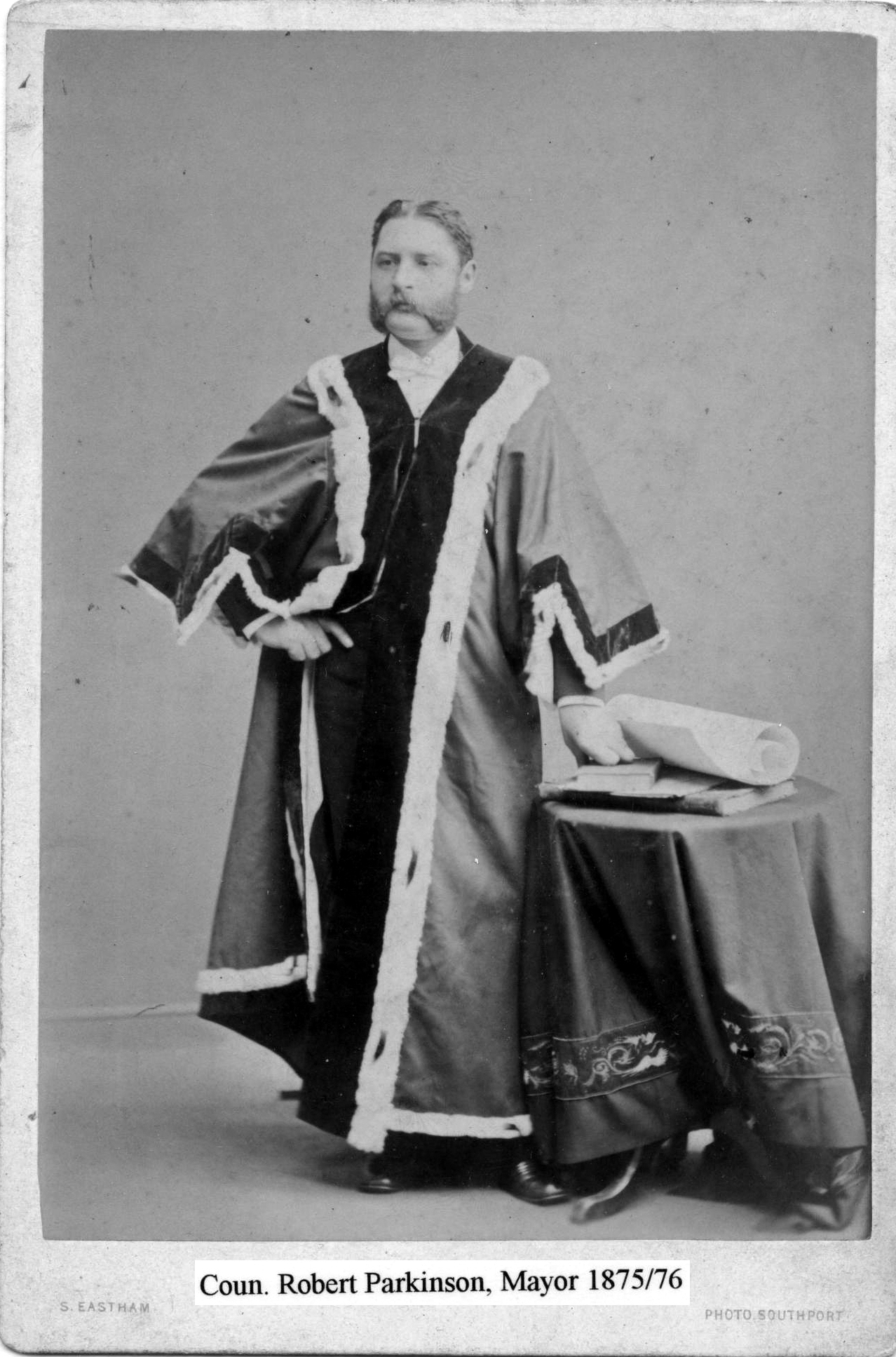
Mayor of Blackburn from 1875-76
Robert was born in 1838 the son of Christopher and Anne who lived on Richmond Terrace in 1841 and Christopher’s occupation was stated to be a grocer. Robert had an older brother William and sisters Mary and Jennet. At the next census in 1851 aged thirteen, Robert is boarding at Whalley Grammar School and in 1861 aged 23, he is listed at a boarding house called West Beach in Lytham and described as a cotton spinner and manufacturer. His brother William is also there and described as a cotton spinning manufacturer employing 600 hands. Looking at the number of people staying at this boarding house from the many different areas it is possible that this was a holiday venue. Robert married Mary Tomlinson Forest on the 1st of June 1865 – Mary’s father was Doctor William Forrest living at Limefield, Preston [New] Road described as a gentleman and a magistrate. Robert’s father Christopher is also described as a gentleman. In 1871 living at 88, Preston [New] Road Robert is now a cotton spinner and manufacturer employing 500 hands - Mary is 27 and they have a son William 9 months old. Robert was the last surviving son of the late Christopher Parkinson, he was an officer of the Rifle Volunteers holding His Majesty’s commission as Captain and had also been a magistrate for some years. On the 1st November 1874 he contested St. Paul’s ward as a conservative and was returned – the following year he was chosen to be mayor and was well remembered for his kindness, urbanity and liberality. Robert died suddenly at the age of 39 from pneumonia on the 4th March 1877 and various groups assembled at his residence and proceeded to St. John’s Church.
The spinning mill employing 500 people was the Navigation Mill at Eanam established by James Forrest of Roger Forrest and Co. and Robert had been the principle partner. In 1878 Forest & Co. failed and the mills were divided up into separate units.
Janet Burke
William Henry Hornby Junior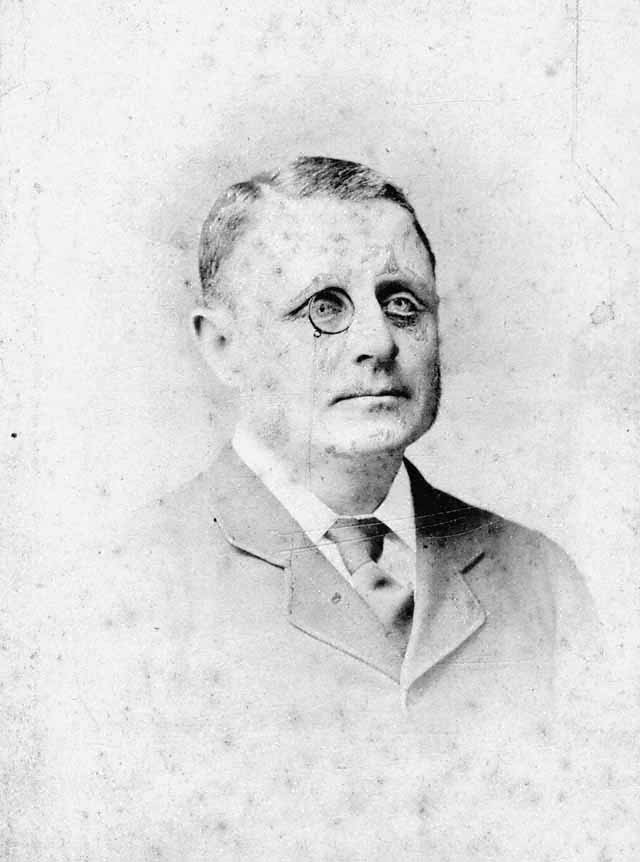
Mayor of Blackburn 1876-77
© BwD - terms and conditions
Sir William Henry Hornby, fourth son of William Henry Hornby, senior, was born in the Leyland House at the top of King-street on August 29th, 1841. His grandfather, John Hornby, died in the same year, and his uncle, another John, was elected by one vote to represent Blackburn in parliament some eight weeks before his birth. It was this event which led to the riot I have alluded to in the life of his father. The following is a summary of Sir Harry's public services, from the pen of the late J. G. Shaw:
"When he was 14, young Harry served during the Crimean War in the British Navy. Ten years later, having given up the Navy and chosen a commercial career, he helped to form the East Lancashire Cricket Club and became its first captain. . . In electioneering matters he had a rough start, but came out on top and never lost the confidence of either his party or the town. As part of the great political struggle of 1868 he offered himself as a candidate for the Town Council and was defeated in St. Paul's Ward. But the General Election was won, and that was what he, and all the Conservatives in the town were fighting for. Five years later, he offered himself again for a Liberal Ward, St. Mary's. By this time he had made his mark as chairman of the School Board, and he won the election by one vote. He sat in the town council as councillor or alderman for 19 years.
"The year 1876 was the 25th anniversary of the incorporation of the borough, and Mr. Hornby accepted the very cordial invitation of his fellow-townsmen to sit in the Mayoral chair first occupied by his father.
"Ten years after his first Mayoralty, his popularity was so great that he was sent to parliament unopposed, as the colleague of Mr. Coddington. He sat in parliament for a continuous period of 231 years, without ever catching the Speaker's eye, for he was a shy speaker. After his first election, he had always to fight for his seat and always came out at the head of the poll. In 1892 he and Mr. William Coddington beat Messrs. William Taylor and Eli Heyworth. In 1895 he beat Mr. T. P. Ritzema. In 1900 the redoubtable Philip Snowden fell before his prowess, but in 1896, when Sir William Coddington had retired and Mr. Hornby had Mr. Geoffrey Drage as his co-candidate, Mr. Snowden won the second seat, coming only nine votes behind Mr. Hornby. In 1910 Sir Harry (as he now was) retired from parliamentary contests, his party lost both seats and Mr. Snowden's star was not only m the ascendant, but approaching the height of its brilliance."
On November 23rd, 1887, Sir Harry married Letitia Grace, daughter of Captain W. R. Browne, living first at Whinfield, Preston New-road, and afterwards at Pleasington Hall. He had issue, two sons and three daughters. In 1901 he became mayor a second time, this being the Jubilee year of his father's first elevation to that office, as also of the town's incorporation, and two years later he was made a Freeman of the Borough. On that occasion Mr. William Tattersall said of him:
"There were people about whom little could be said except that they held certain political opinions, but it was much more when a man like Sir Henry Hornby, holding strong political opinions, was possessed also of a character and of a broad and generous sympathy which lifted him in public esteem far beyond any political partisanship could possibly do."
This fact was remarkably illustrated during a royal visit many years ago. The distinguished visitor was cordially welcomed by vast crowds lining the streets, but the occupants of a later carriage were received with one long roll of cheers. It was Sir Harry and his good lady.
For at least half a century that sturdy, well-made figure, urbane and somewhat old-fashioned in appearance, with the distinctive monocle and side-whiskers, was a familiar and well-loved figure in Blackburn's streets. It was seen there for the last time in 1928.
By George C. Miller
James Dickinson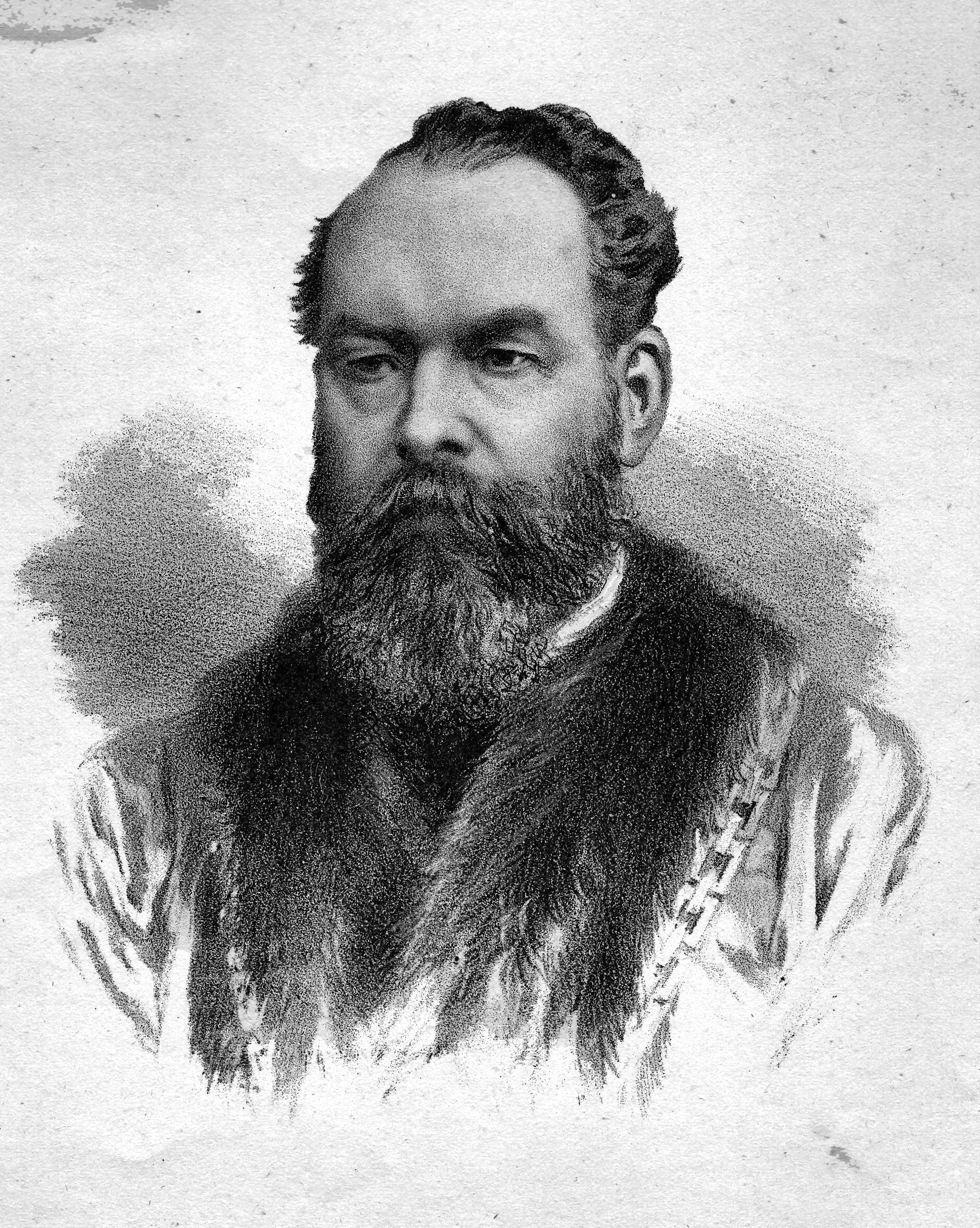
Mayor of Blackburn 1877-78
James the eldest son of William Dickinson, ironmaster, was born in 1830 and duly became partner in his father's foundry, but his chief interest always lay in cotton spinning and manufacturing. He was a town councillor for fifteen years and was elected mayor in November, 1877 and so was chief magistrate in the borough during the riot of the following year, when the weavers struck against a ten per cent decrease of wages, and Clayton Grange, the residence of Colonel Robert Raynsford Jackson was burnt down.
"It fell to James Dickinson's lot (wrote J. G. Shaw) to read the Riot Act and telegraph for dragoons to gallop over from Preston barracks and disperse the crowds. Everybody agreed that James Dickinson performed his duties as mayor under difficult circumstances, in a becoming manner. Several other incidents of note marked his year of office. The borough boundaries were enlarged by the inclusion of Witton and Livesey and Mr Dickinson was the first mayor to preside over the enlarged borough. The mayoral chain and badge presented to the borough by Joseph Harrison were first worn by James Dickinson, who was invested with these insignia of office on the 3rd of January, 1878."
It is interesting to recall that it was his brother John Charles Who brought to Blackburn a Russian artist of distinction who painted the town's historical picture. This was Mr. Vladimir Sherwood, whose pictorial record of the laying of the foundation stone of the Exchange building in 1863 formerly hung in the Technical College [it is now in the Museum]. He settled for some years in Princes Street.
"Two very curious handlooms are to be seen in Dickinson's showroom (wrote J. G. Shaw in 1930). One is a loom with a wooden frame with the three primary motions of the loom combined into one. The handloom weaver requires both hands and both feet to weave his cloth. The three motions are to be seen at Dickinson's combined. There is no crank to drive the slay, but as the weaver moves the slay by hand, automatic treadles depress and raise the healds, and automatic picking-sticks, on the under-pick principle, throw the shuttle. A still more curious loom in which these three motions are combined is a treadle loom. The weaver sits on a high stool, depresses the treadles with his feet, whereupon the picking-stick (underpick) throw the shuttle, and the slay moved automatically by means of a crank shaft, beats up the weft into cloth. These two were forms of automatic looms called for early in the last century for factories where there was no power available. They were not a success, for the manual or pedal labour they entailed was very heavy."
James Dickinson was a churchman and a conservative. He died at Southport on August 27th, 1887, being the last survivor of the four sons of William Dickinson.
George C. Miller.
Adam Dugdale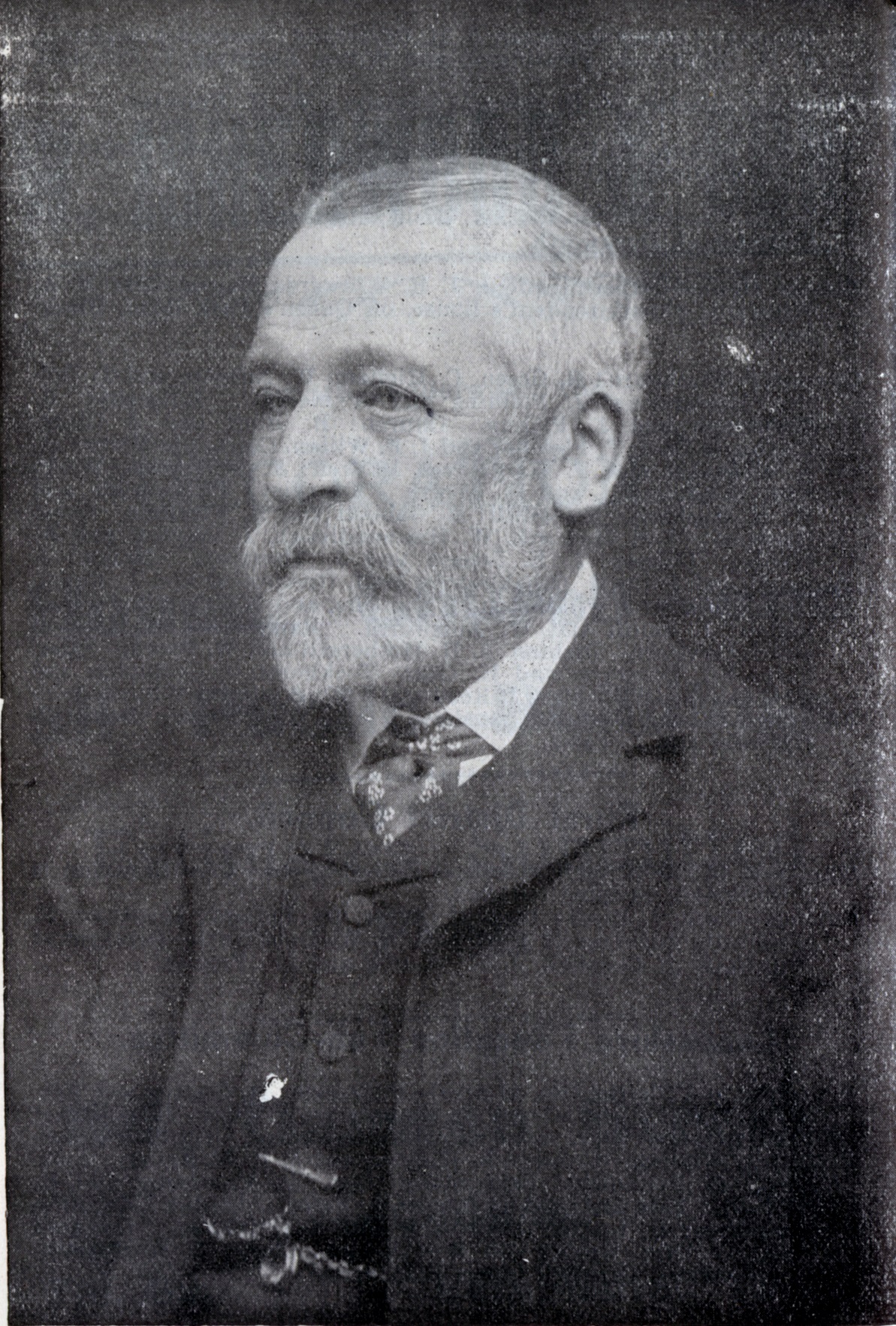
Mayor of Blackburn 1878-80
The name of Adam Dugdale will always be associated with the disappearance of the old property on Blakey Moor. During his mayoralty this area was taken over by the town council for clearance purposes, in connection with the scheme for the erection of the new Sessions House and Public Halls. The price paid altogether was over £80,000, and in reply to protests against this exorbitant price, he frankly admitted that, although he too, was staggered at the figure, the corporation had made the best of a bad job. How bad it was may be fudged from a report published in 1891.
"Here (says the writer) a triangular area of mean-looking tenements of different kinds, bounded by Blakey Moor, Queen-street and Northgate, and including with it the salubrious localities of Cannon-street and Engine-street, has long been an eyesore and a disgrace to the town. It may be described as an insanitary area. Morally and physically it is about one of the worst localities in Blackburn. A good portion of the property is in a dilapidated condition, it abounds in tramps' lodging-houses and houses of an even worse description, which are the resorts of thieves and other undesirable characters . . One fact alone will serve to stamp the locality with its true character. The average mortality of this particular spot during the last ten years shows the enormous rate of 64 deaths per thousand per annum, or nearly three times the average death rate of the borough . . If opened up, all the property, good and bad, would need to be cleared. But there are two circumstances which stand in the way of dealing with it in drastic fashion. One is the question of expense, always a bugbear when any public improvements are wanted in Blackburn;. the other is the problem of what to do with the wretched inhabitants."
Adam Dugdale could trace back his ancestry in Great Harwood for more than two centuries. His grandfather Nathaniel had three sons, the youngest, Thomas, settling in Blackburn in 1824, after having practiced successfully as a doctor far many years. He it was who built Griffin Lodge and later, in 1852, Griffin Mill. He was a capable business man, being chairman at one time of the Lancashire and Yorkshire Railway, the Manchester and County Bank and the Blackburn Waterworks Company. Returned for Park Ward as town councillor on the town's incorporation in 1851, he was the third mayor of the new borough, the Corporation Park being inaugurated during his term of office.
Adam, his second son, was born on October 19th, 1833, and educated at Hoole's Academy in King-street, whence he proceeded to Bruce Castle School, Tottenham. On completing his education he entered the business commenced by his father, which at one time controlled 92,396 spindles and 1,936 looms. A strong churchman, he took a firm stand against disestablishment, and insisted that religion should be taught in all day schools, making it a rule never to employ a half-timer who did not attend either Griffin Church of England School or St. Peter's Roman Catholic School. St. Philip's Church and School owe their existence to the Dugdale family. The first school was built in 1871 by Thomas Dugdale, his father and Mrs. R, B. Rodgett, his sister, and he himself gave the site of the church, together with £3,100, of which £1,000 went towards the endowment. He also gave the site of the Parochial Hall, which he opened in 1913.
Mr. Dugdale was leader of the local Conservative party for over twenty years, four elections being fought under his guidance. On the extension of the borough to include the township of Witton and Livesey in 1877, he represented the new ward of St. Mark's and was immediately made an alderman.
"In commercial circles (writes Henry Whittaker) he enjoyed a high reputation for business integrity, and took a personal interest in his workpeople, who appreciated the fact that, unlike so many of the cotton magnates of Lancashire, Mr. Dugdale continued to live in their midst.. Although he possessed the fine Gilmonby estate in Yorkshire, purchased in 1904 for £46,590, Griffin Lodge was home to him. He could leave the house at any time of the day by using a private door in the boundary wall, and be inside his mills in a few minutes.” A keen sportsman fond of hunting and shooting, at the time of his death on the 20 January 1917, he was oldest member of the Pendle Forest Hunt.
Henry Harrison![025 Harrison Henry Alderman Mayor of Blackburn 1880-1881 [1913] 02.jpg](https://pastview-assets.s3-eu-west-1.amazonaws.com/org/118/other/site-page-images\politics\mayors\025%20Harrison%20%20Henry%20Alderman%20Mayor%20of%20Blackburn%201880-1881%20[1913]%2002.jpg)
Mayor of Blackburn 1880-81
Henry Harrison, third and youngest son of Joseph Harrison, iron-master, was born in Darwen-street, under the shadow of the cathedral tower, on June 28th, 1834. Like his two brothers, he was educated at Lower Bank Academy, and like them he subsequently joined his father at Bank Foundry. At the early age of 17 he was in charge of the firm's exhibits at the great International Exhibition at Hyde Park in 1851, the year of the town's incorporation. In later years he travelled extensively abroad on the firm's business, visiting European countries, as well as Egypt and America.
"Joseph Harrison (wrote J. G. Shaw), who wished his sons to rise in the world, shrewdly decided to give each a separate trade. William was put in charge of the business of the firm, John was an iron-master, trained to the trade of a fitter and would soon be ready to take charge of the foundry. Henry was destined to become a cotton spinner and manufacturer, after a few years experience of foreign travel. So Joseph bought the old sawmill on the right-hand side of Highfield-road, just across the canal and in 1852 the name of Joseph Harrison and Co. appeared in the directory as cotton manufacturers at Highfield Mill. The spinning mill there was built later, together with the weaving shed in Chadwick-street, Novas, and the weaving shed called Witton Mill adjoining Dr. Dugdale's mill at Witton. When the foundry was broken up, about the time of Mr. Henry Harrison's marriage, these mills became the portion of the youngest son and it was success in the cotton business that raised Henry to eminence, just as the iron business raised his father."
In association with Edgar Appleby and Eli Heyworth, Henry Harrison founded the Blackburn Chamber of Commerce, of which he was president to the end of his life: in 1877 he entered the town council as representative of St. Mark's Ward, was at once made an alderman and took his seat as such for over 36 years. In 1880 he was made mayor and county Justice of the Peace, and valuable services to the community were fittingly awarded when in 1909 he was made Freeman of the Borough. He was Blackburn's third Freeman, his two predecessors being the Prince of Wales (later King Edward VII) and Sir Harry Hornby.
"When the Galligreaves estate was cut up for building purposes, the first thought of Mr. Harrison was to preserve open spaces for the use of the inhabitants. He set apart a large plot of land in Hollin Bridge-street as a playground for girls and young boys . . The Harrison gymnasium near Harrisons' crossing is an educational and recreational institution of the type that appeals to athletic young men better than school and libraries and certainly it is appreciated by the young men for whom it was intended. It was built in 1909 and in that year handed over to the Corporation as a gift. Side by side with the gymnasium is a not less important Institute for Girls and Women . . . opened on September 16th, 1911, by the Hon. Maude Stanley."
So wrote J. G. Shaw in 1930, and the two institutions still remain as tangible evidence of Henry Harrison's benevolence. In addition, it is recorded that in his will he left over £82,000 in specific legacies to thirty-five different charities, including the Blackburn Infirmary, the Grammar School and Manchester University.
In 1872 he married Miss H. S. Maude Bower, purchasing Oozehead House in Preston New-road from William Dickinson, and altering its name to " Stanley." Mrs. Harrison worked hand-in-hand with her husband in his many charitable enterprises, the long succession of private dinner parties at which she presided over many a gathering of brilliant and distinguished guests, long features of the town's social life.
Here Henry Harrison died on February 25th, 1914.
by George C. Miller
John Lund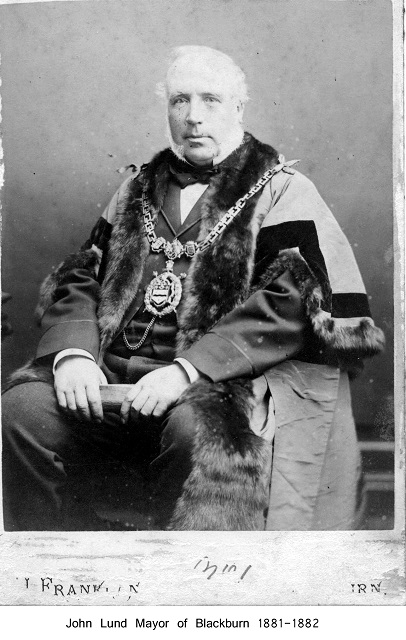
Mayor of Blackburn 1881-82
The Lund family originated from the Ribchester area and were yeomen. The first of the Lund’s to settle in Blackburn was Richard, he married Sarah Eccles of Sunnyhurst on 26th December 1752 at Blackburn Parish Church.
John Lund was born on October 29th 1823, the son of Richard Lund and Alice Holt. Other children of the couple were; James, born April 10th 1822, Mary Anne, born November 25th 1825, Alice, born 26th December 1827, Sarah Elizabeth, born 4th February 1831 and Thomas Henry, born 23rd September 1833. Richard had married Alice Holt on 17th September 1820 at Blackburn Parish Church and at the time of John’s birth the family lived on Garden Street. John was educated at the Lower Bank Academy under Mr. Edmundson leaving in 1836. He was an assistant in his father’s Pawnbroking business on King Street and in 1846 commenced in business as a Pawnbroker himself. John did not marry until the 16th of April 1863 when he and Maria Caughey were married at St. Peter’s Church Blackburn. Maria was the licensee of the Borough Arms and daughter of James Caughey, a grocer - John became the licensee in 1866. John was held in great esteem and was successful enough to be able to retire at fifty. In 1881 he and Maria lived on Richmond Terrace and John is described as an Alderman with income from land and houses, in 1891 they live at 125 Preston New Road. John and Maria did not have any children and Maria died some years before John.
John was one of the first to join the Volunteer Movement and in 1860 entered the local artillery corps as one of the first non-commissioned officers becoming the brigade Sergeant-Major. He entered the Town Council in 1872 as the representative for St. John’s Ward and in 1833 he was made an Alderman in succession to Alderman John Stones. He served on the Town Council up to November 1889 and as he had no business of his own to run, was one of the most assiduous members and figured amongst the highest in the annual return of attendances of meetings and committees. He was appointed a member of the Free Library and became the Chairman in 1875, he was associated with both the Grammar School and the Infirmary as a governor and in 1878 was elected a member of the School Board serving until 1883. On becoming Mayor in 1881 and also appointed Chief Magistrate, he gave £100 to the Infirmary and £10 to the Library. In 1884 he was placed on the Commission of the Peace for the Borough. A Conservative in politics and a Churchman, he was a good party man and an active worker in the Conservative cause winning a seat on the Executive and appointed Chairman of the Central Conservative Club. He attended St. John’s Church and was a zealous promoter of church work both at St. John’s and St. Silas’s. It became known that he would bequeath £2000 towards the cost of erecting a spire for St. Silas’s Church and an additional amount of £100 for a stained glass window. John was fond of bowls and a prominent figure on the Alexandra Meadows.
John bequeathed £10,000 in scholarships - £1000 specifically for John Lund Scholarships in connection with the Peel Foundation and a like sum was given to the Grammar School for founding a John Lund Exhibition to an English university. The residue of his estate was left to the Corporation for Technical School Scholarships and to the Grammar School for like purpose.
John had lived a healthy life and took regular exercise living to be just over eighty years old. He died on the 13th of June 1903 and messages of sympathy were given to his sister who had lived with him after the death of his wife in 1893. There were few mourners, as he had outlived his old friends and had few relatives, with no flowers by request, John was interred at St. Leonard’s Balderstone.
Janet Burke
James Hoyle
Mayor of Blackburn 1882-84
James Hoyle, son of the late Joseph Hoyle, Cotton Manufacturer of Blackburn, was born on May 23rd, 1822, and educated at Blackburn Grammar School. He was married to Miss Ann Rushton, daughter of Kenyon Rushton, of Greenbank House, Wiswell, at Whalley Parish Church on March 10th, 1864.
At the age of fifteen, he became a clerk at the offices of the Union Company of Carriers on the Leeds and Liverpool Canal. In 1850 he was appointed agent and three years later outside traffic manager, a position he held until 1874.
Those who have only known the canal in the years of its decline, its once populous waterways over-grown with weeds, its spacious warehouses ruinous and empty and its tow-paths fallen into decay, can hardly realise the excitement its coming roused among the people of Blackburn or the high hopes of increasing trade it brought to the merchants and manufacturers of the township. Yet it was not a thing of ephemeral growth.
Conceived in 1768 (when Brindley, the presiding genius of England's canals, made an independent, or, as he termed it, a "ochiler" survey, spelling not being his strong point), it was not finally completed until 1816, the final stage being that between Blackburn and Chorley. Its original cost was estimated at £259,777 and the canal as planned was to be 103 miles in length, 42 feet in width and 5 feet in depth. As intended in the original Act, the canal would have been cut through Colne, Marsden, Padiham, Whalley, Samlesbury and Leyland, by-passing both Burnley and Blackburn and it was not until 1794 that a deviation was sanctioned to include these townships.
When the Leeds and Liverpool Canal finally reached Blackburn in 1810, the auspicious event was made the subject of great rejoicing. This was something unique in the town's history, something that could never happen again-the inauguration of a new era.
" There is now (wrote the editor of the " Blackburn Mail") a direct communication between this town and Hull, and should the Corsican tyrant ever consent to peace and free trade with the Continent, Blackburn may with facility send her manufactures by water to most of the seaports in Germany."
The official opening ceremony took place on June 21, when a procession of twenty-seven vessels reached the Eanam wharf (where the head of the canal rested for a further six years) to be received by a vast concourse of townsfolk.
The fleet was led by a barge containing the Canal Committee and this was followed by a vessel belonging to the proprietors of the canal, with the Blackburn Band on board. Next came the Burnley pleasure boat, with ladies and gentlemen of that town, closely followed by Messrs. Peel's vessel, with two bands of music. All the vessels had flags and pendants flying and were so crowded with passengers that it was estimated not fever than 7,000 people were on the water. Their reception was in the nature of a triumph.
“Multitudes kept pace with the vessels all the way from Enfield, which, when joined to the great number of spectators assembled at Eanam, formed a concourse of at least 25,000 people, besides the crowds on board the different vessels. Cheers were constantly exchanged from the water and the land, the different bands played ` God save the King,' ` Rule, Britannia,' &. Such a happy occasion was never remembered in this trading and increasing town by the oldest inhabitant living.
As Blackburn was now regarded as coming under the category of an inland port, a list of arrivals and departures from the Eanam Dock was duly inserted in the " Mail," from which we may learn that the good ship " Hearts of Oak," laden with ten bales of yarn, nine puncheons of molasses, two hogsheads of tallow and other sundries, arrived safely on June 27, as did a number of others, including the " Ten Sisters," the " Defiance " and the " Nelson," to say nothing of 14 barges, laden with 380 tons of coal.
Alas, its glory has now departed and one may walk along its deserted banks from one end of the township to the other without seeing a single survival of England's wooden walls, either in dock or outward bound.
For many years James Hoyle was connected with the old Blackburn Gaslight Company (which had its first works and office in Jubilee-street) and from 1866 until its dissolution in 1877, when it was taken over by the Corporation, he was vicechairman. For 30 years he was a member of Blackburn Town Council, being first elected as a Conservative for St. John's Ward in 1878. In 1883, at the end of his first year of office as mayor, he was made an alderman.
His mayoralty was remarkable for two things: first, although his election m the first instance was not unanimous, the Liberals abstaining from voting, his conduct as chief magistrate was so exemplary that he was asked to assume a second term of office without a single dissenting voice: second, it was during his mayoralty that a public fund was opened on behalf of the widows and children of the men killed in the Altham Colliery disaster of 1883.
Among other offices held by him during his public life, he was Vice-chairman of the Gas Committee; Vice-chairman and subsequently Chairman of the Finance Committee and Vicechairman of the old School Board, which later became the Education Committee. He was created a Borough Magistrate in 1884.
Besides being for many years chairman of the Board of Guardians, he had along connection with the Royal Infirmary, being for two years chairman of the Board of Management. Identified all his life with Blackburn Parish Church, he held office under no fewer than four vicars. He was also interested in Wilpshire Orphanage, Bent-street Ragged School and other charitable institutions.
James Hoyle died on April 27th, 1909, and was buried at St. Mary's Church, Mellor. It was once said of him: " He never had anything but good to say of all, and if he could not say anything good, lie would not say anything at all."