
 Loading more
Page 2
< Back to page 1Proceed to page 3 >
College Life.
After some nine months, I made application to Nottingham Institute, now Paton College, and was admitted as a student in the autumn of 1873. I well remember meeting the committee, before being accepted, when one member asked if I done much preaching. I had to admit that I had had little opportunity of doing so. “How do you know that you can preach then?” Was the swift and somewhat stern question which I thought sealed my fate. He was one of the College lecturers, and in reality a kindly old man whom I afterwards learned greatly to respect; but the question was harsh and harshly put, and the situation was saved by Dr. Paton, who put in the plea for me on the ground that opportunities for preaching had been lacking. The course then extended to three years only, and it was intended for men who were either too old to take longer training or whose educational equipment was to imperfect to promise much success in a longer college course. The English tutor was the Rev. F.S. Williams, and very elementary was some of the work we did with him and, of course, it needed to be to meet the requirements of the men. Theology and New Testament Greek were taken by Dr. Paton and we had lectures on ecclesiastical history by the Rev. H.F. Ollard.
We lived in private house, and where I was were two others. The institute was then in a most flourishing condition and the number of students was about 50. With the exception of several Scotchmen there were few men from the north; mainly they were from the midlands and the south, and the two or three who, along with myself, came from Lancashire were always betrayed by their northern accent. On one occasion in the sermon class, which was exceedingly good, one of the seniors, a Lancashire man, gave his lecture and I was selected by the principle to write a critique on the words, style and pronunciation. This I did, and his Lancashirisms were singled out for special comment. Dr. Paton greatly enjoyed it and said how true it is; “Set a thief to catch a thief.” Once a month we had the communion service on Monday afternoon, when Dr. Paton gave a short address, and every other Monday afternoon there was a prayer meeting. Those were very sacred and helpful gatherings.
Vacation Experiences.
Connected to the institute were several mission stations, and every student was on one or more of these missions, which he attended once a week as well as Sunday if not preaching elsewhere. The afternoon was spent in visitation and in the evening a service was held. Thornwood Lane Hucknall and Arnold were the stations with which I was connected, and the training which those mission stations gave was in every way excellent. Then we had a supply list which some times took us long distances and provided us with most interesting experiences. One place which was quite a favourite with the students was Helpringham, in Lincolnshire, where I preached more than once. There was a kindly old man there who, when the holiday drew near, used to speak of the vacation as the “vocation.” He always wished us a good time during the “vocation” and said he would welcome our return. Long journeys on foot, a seat in a milk cart or a market cart were not uncommon experiences in order to reach the little villages which were often miles away from any town.
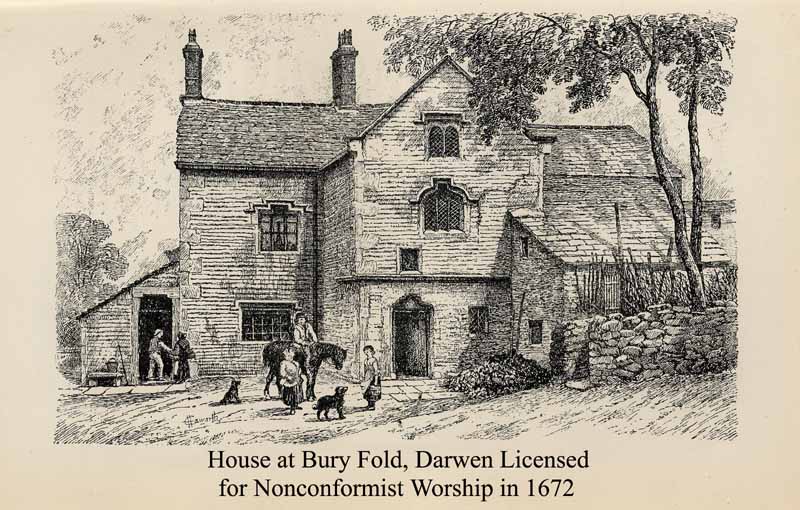
During the vacation I returned to Darwen and usually had several preaching appointments. Blacksnape, which recently celebrated its centenary, and Bolton Road School, now represented by the fine church somewhat lower down, both connected with Belgrave, were places where I frequently conducted services. It has already been stated that Mr. Robinson came to Tockholes from Tossside, a country district a little beyond Clitheroe in side the Yorkshire border, and by his kind ness I was able to spend a week there talking two Sundays and visiting the homes of the people during the week, besides conducting cottage meetings.
I had now been at Nottingham a little while and I thought I knew all the theology that was to be known, or at any rate that was necessary, but hear I was disillusioned. I had heard of antinomianism, but here I was brought face to face with it in its most pronounced form: At the cottage meeting on the Monday evening some of the leaders of the little church spoke to me about a good man who was of that way of thinking, and who had been at the services on the previous Sunday. In the midst of the conversation there walked quietly in a certain individual, and the conversation immediately dropped. I did not, of course, know him, but by a kind of instinct felt that that this must be the person in question. I went on with the service, gave a short address on “There remaineth therefore a rest to the people of God” (HEB. Iv 9), and at the close intimated that the heavenly rest was open to all who believed in Christ and accepted Him as Saviour.
Dr. Paton’s Influence.
I was advised to pay a visit to the person in question the following day, and we soon got on his favourite theme. I found that he knew his bible well; at least all those passages that were supposed to uphold his views were at his finger ends. He referred to the service of the previous evening, and said it was quite good until I got near the end, where I spoiled all by offering the heavenly rest to all. “What business have you to do that?” said he. “Only the elect and chosen few will enter there.” In further conversation he said that there were “infants in hell a span long.” It was perhaps a little presumptuous for a young man, but the only thing I could say that served to move him was; “Are you a married man and a parent?” He replied in the affirmative. “ I should shudder.” I said, “to be a parent if I knew that some of my children were doomed to perdition.” It was altogether a most interesting experience and quite a revelation of what strange things men may believe, and that with a faith that scarcely anything can shake.
It was Dr. Paton’s custom in those days to select men from his students who were sufficient young, and who gave promise of fitness for a longer and severer academic training than the institute offered, and to send them to some other college; and to my surprise, after I had been there almost 12 months, he made choice of me with one or two more. It was, of course, a distinct honour, but there were some difficulties in the way and I laid them before him. He was exceedingly kind and sympathetic, but he assured me that if it could be done it would be of immense service to my future career. I eventually gave my decision in favour of his suggestion. The choice of college was not easy, for there was considerable suspicion of heterodoxy in relation to most of them. Dr. Paton’s own preference would have been in favour of Spring Hill, but he was not sure of it. Being a Lancashire man I was anxious to go to a Lancashire college, but it also was suspect. My pleadings, however, eventually met with success and the rest of my time At Nottingham was occupied almost entirely with preparation for entering therein.
My Life at Nottingham extended to two years and they were exceedingly happy years. I have often thanked God that it was my great privilege to be under Dr. Paton for so long a time. He was in every way a great man, a distinguished scholar and a true Saint, and his influence upon his students was deep and lasting. He more than once visited me for special services after I entered the ministry, and those visits are a most precious memory, for whilst he was perfectly human he was like an angel in the home. It is interesting to remember that a brother of his, the Rev. R.B. Paton, BA was for some time minister at Park Road Blackburn.
Back To Lancashire.
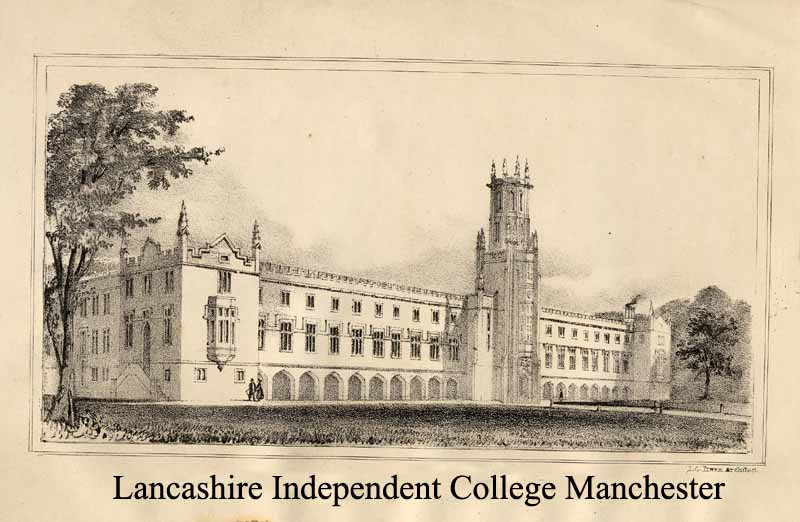
It was in the Autumn of 1875 that I entered Lancashire College, being one of 13 admitted at the time, the largest number known to have been admitted at once, and bringing the number of students in the college up to about 60, the largest number ever in college either before or since. The principle was the Rev. Caleb Scott, BA LLB (later Dr. Scott). He was most devoted to his work and no student in the college ever surpassed him in that respect. That indeed, was the one thing about him that always impressed the students. Whoever might be slack and indifferent the principal never was, and his lectures always indicated the most careful and through preparation. He took Theology and New Testament Greek. The arts were largely in the hands of Dr. Hodgson, a most genial kindly man whom the students greatly loved. Some times, I am afraid, his good nature led to liberties being taken with him. Dr. Thomson, minister of Rusholme road Congregational Church, gave assistance by taking the Hebrew class. He also was a dear soul, knew his Hebrew Bible from cover to cover but there few men whom he filled with the enthusiasm for the Hebrew language which was his own. During the arts course we went several times a week to Owens College. The University had not then come into existence, and among the men there of whom I treasure any sacred memories was Dr. Wilkins, Who took us in Latin. He knew his subject perfectly and had an interesting way of putting it before his students. Dr. Wilkins was a Congregationalist and attended Rusholme Congregational Church, then under the pastoral care of Dr. Finlayson. Later he was called to the chair of the Lancashire Congregational Union, and by a happy coincidence delivered his presidential address in Cannon Street Church, Preston, during my pastorate there.
Hard Study.
Life at Lancashire College was very different from what it had been at Nottingham. For one thing we all lived in the college and consequently saw sides of each other’s life and character which we had no opportunity of doing at Nottingham. Then there were games of various kinds: cricket and football in their respective seasons, and many a stiff game at “Rugger” come vividly before me as I write. I am free to confess that in my early days there, so different did the men seem from what I had been accustomed to see at Nottingham, that I was occasionally shocked, but I came eventually to see that nothing was lost by keeping alive the humorous side of life. Then I was thrown into contact with men whose educational advantages had been so much greater than my own, who all their life, almost, had been in training in good schools, which made work for me exceedingly hard, and often necessitated long hours of study. We had also quite a brilliant set of men in college at that time, among them Arthur N. Johnson MA, for many years Home Secretary of the London Missionary Society, whose father, Rev. G.B. Johnson was for some years minister at Belgrave, Darwen; W.H. Bennet. MA Litt. D, who subsequently became principle of the college and who stood in the forefront for his scholarship and learning; T.K. Higgs, MA, who for a time was minister at Greenacres, Oldham; and J.R. Murry, MA, who after long years secretary ship of the Church House, Manchester, is leaving for Church Stretton, in Shropshire. I entered college at a time when Dr. Scott was most anxious to do degree work, and whenever possible a man was sent in for matriculation. Almost the only degree open to us was that of London University, and at the end of the first year I sat for matric. With several others, but few of us got through. I tried again the following January, having to go up to London for the purpose, and this time managed to pass in the first division. The certificate is date February 13 1878. An interesting experience occurs to me as I write, which is worth relating. I had been brought up in a somewhat strict school, and among other things had been taught to shun novels as dangerous and wicked things. I must have read many a bit of fiction but I had never knowingly read a novel proper. One of my fellow students urged me to read Sir Walter Scott, but I refused. He urged me, however, again and again, and at last I yielded, taking by his advice “The Heart of Midlothian,” I was delighted with it and followed on with “Ivanhoe,” which completely fascinated me. I kept on until I had completed the whole series. One of my fellow students, whose study was beneath mine, used to tell how anxious he got about me when he heard me up late. Thinking it was Scott with whom I was occupied he said, “He used to pray for me.”
My course at Lancashire College was considerably shortened owing to my previous Nottingham training, and in the spring of 1878 I accepted an invitation to the pastorate of Townsfield Congregational Church Oldham. At Lancashire, as at Nottingham, my life was very happy and I often think with gratitude of the distinguished men at whose feet I was privileged to sit.
Transcribed by Stephen Smith
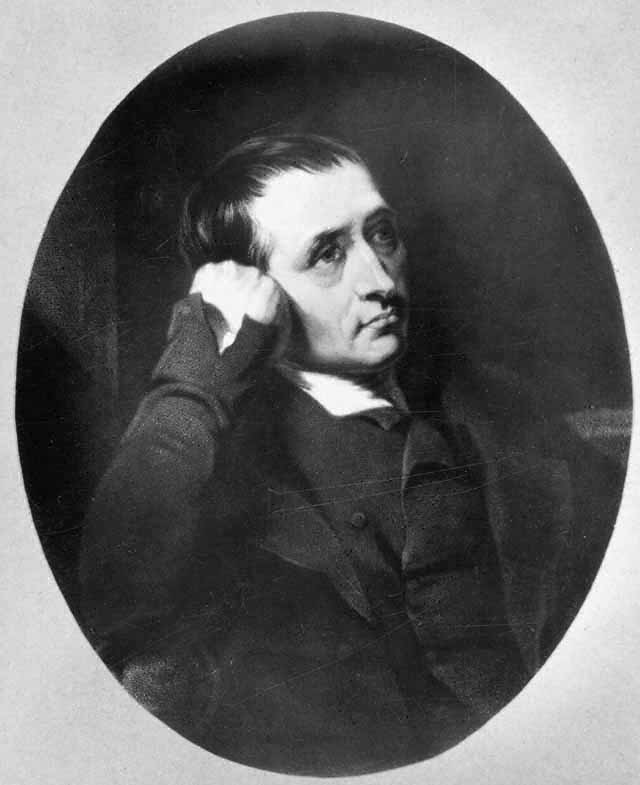
James Hargreaves
c1720-1778
 © LET - terms and conditions
James Hargreaves was born near Blackburn at a farm on the moors above Oswaldtwistle (the exact location is unknown). Relatively little is known about his early life, apart from the fact that he was a handloom weaver, unable to read or write, but with an interest in carpentry and engineering. Details of his marriage and the birth of his children have been gleaned from the Parish Registers of Church Kirk.
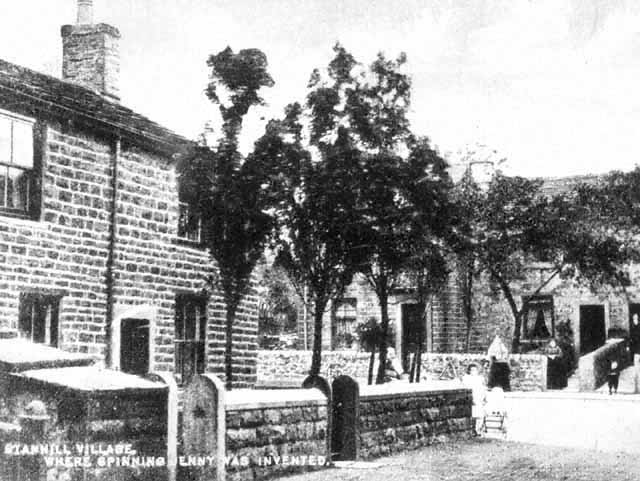
In the 1760s Hargreaves and his family lived at Stanhill where they spun on a spinning wheel and wove on a handloom. James had a keen interest in streamlining the various processes used in the production of cotton cloth - his first innovations improved the process of hand-carding, where the tangled fibres of cotton are teased out between two hand-held combs. Hargreaves' 'stock-card' featured a wooden bench or 'stock' covered with carding wires, which allowed far more cotton to be carded by one person at once.
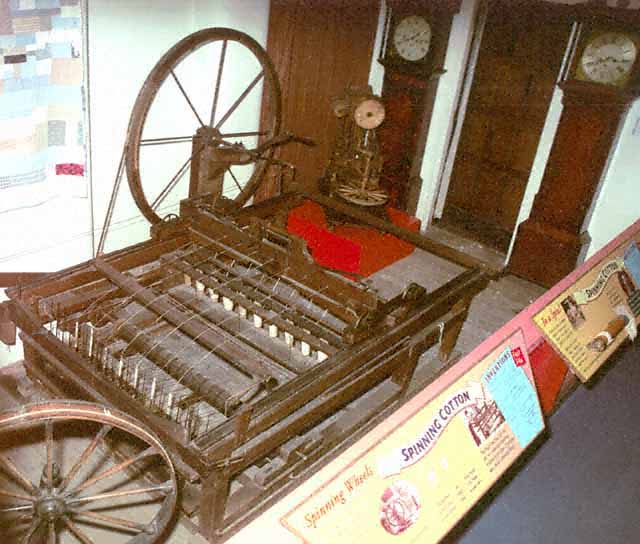
However, James Hargreaves' most famous invention was the Spinning Jenny, a machine which took the traditional spinning wheel and turned it 90 degrees to a horizontal position, allowing it to spin multiple spindles at once. Debate still rages as to the origin of the name 'jenny'. It is often claimed that Hargreaves' daughter Jenny knocked over an old spinning wheel one day, giving James the idea for his machine - sadly, this is just a romantic myth: the Registers of Church Kirk show that Hargreaves had several daughters, but none named Jenny (neither was his wife). The word 'jenny' is in fact an early abbreviation of 'engine', simply referring to a machine or device.
The original machine was produced some time between 1764 and 1767. It featured eight spindles onto which the cotton thread was spun from a corresponding set of rovings (roughly spun cotton). This had a dramatic effect on the amount of thread that could be spun by a single person, although the early machines produced thread that was coarse and broke easily, only really suitable for the weft of a handloom (that which travels horizontally in the shuttle).
Hargreaves may have been a talented inventor, but he was not a shrewd businessman. He didn't apply for a patent for his Spinning Jenny until 1770, by which time many others had copied his ideas, reaping the rewards that were rightly his.
Although Hargreaves originally produced the machine for family use, news of his invention gradually spread across the industrial North. In Lancashire, traditional hand spinners saw the Spinning Jenny as a threat to their livelihood. They realised that the machine could produce spun cotton thread far quicker and more cheaply than their traditional method. An angry mob marched to Hargreaves' workshop, destroying his equipment and forcing him to leave the county. He moved to Nottingham and built a small spinning-mill, using his Jennies. Although this venture was not particularly successful, Hargreaves continued to refine the Jenny increasing the number of threads from eight to eighty.
By the time of his death in 1778, over 20,000 of Hargreaves' Spinning-Jenny machines were being used in Britain, but despite being credited with the invention of this remarkable machine, James only received very modest financial returns and died in relative poverty.
© BwD - terms and conditions
by Nick Harling
Samuel Crompton
1753-1827
 © BwD - terms and conditions
Samuel Crompton was another great inventor from the north-west whose ideas revolutionized the cotton industry, but who received little personal gain for his efforts. Crompton was born at a Bolton farm called Firwood Fold, but within five years his parents rented part of Hall i'th' Wood, a Tudor mansion now preserved as a visitor attraction.
As a youth, Samuel undertook various jobs including farmer, spinner and weaver, but he also displayed a keen and inventive mind as an accomplished musician and mathematician. As a spinner, Samuel had encountered Hargreaves' Spinning Jenny and Arkwright's Water Frame and felt that by combining elements of both (the rollers of the Water Frame and the twisting action of the Jenny), he could produce a much more effective machine. His first, hand-operated prototype was nicknamed the Spinning Mule, as it was a hybrid of the two earlier machines.
Almost as soon as Crompton had completed his first machine, he found himself in trouble with the local hand-spinners and handloom weavers, who saw any mechanization of the cotton industry as a threat to their livelihoods. In 1779, Samuel had to dismantle his machine and hide it in the rafters of Hall i'th' Wood in order to avoid the unwanted attentions of the machine-breakers.
When the threat of physical harm had passed, it became clear that Crompton's Mule would make a huge difference to the spinning branch of the cotton industry. Not only did the Mule produce a strong and very fine yarn, but larger versions, powered by steam engines, could spin thousands of spindles at once. Indeed, many cotton magnates built factories especially to house these very long mules.
Sadly, Crompton's precarious financial position at the time of the Mule's invention meant that he could not afford to apply for a Patent for his machine. Instead, he sold to rights to a Bolton manufacturer in order to raise some ready cash. In the long run, this move must have cost Samuel thousands of pounds. Despite a House of Commons award of £5000 for his invention (as late as 1812), Samuel Crompton's own cotton factory was a failure, and this great inventor died a pauper in his home town of Bolton in 1827.
by Nick Harling
Richard Arkwright
1732-1792
Inventor of the Water Frame
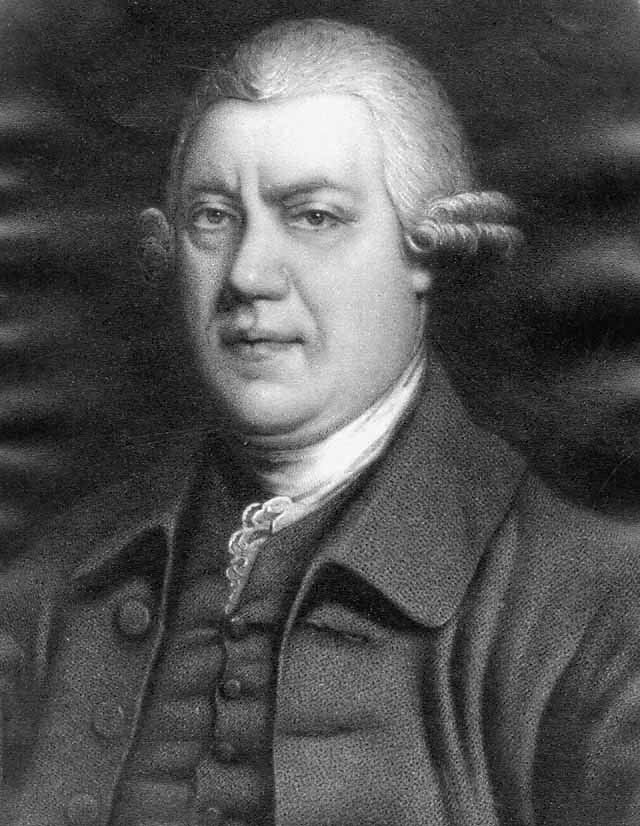 © BwD - terms and conditions
Rather than being an inventive genius, Richard Arkwright was a sharp-witted businessman who recognized the potential of other people's innovations, and made a very large personal fortune from developing them. Preston-born to a very poor family, Richard was taught to read and write by a cousin, as his parents could not afford schooling. His first job was as a barber's apprentice. By 1762, he has founded his own wig-making company.
His first contact with the textile industry came during a business trip when he met the Warrington watchmaker John Kay, who had spent some time trying to perfect a new spinning-machine, but had run out of funds. Arkwright was very interested by Kay and his machine, offering to employ him and other local craftsmen to develop the invention. The resulting Spinning Frame could produce stronger thread than the contemporary Spinning Jenny, but was far too large to be operated by hand.
Arkwright and his team tried various experiments using horse-power, but the reliability and cheapness of water-power won the day. In 1771, Arkwright and his colleagues established a spinning and weaving factory on the banks of the River Derwent at Cromford, Derbyshire. The new invention became known as the 'water-frame'.
Thus established, Arkwright's mill required a huge workforce. He built numerous cottages for his workforce and 'imported' factory operatives from all over Derbyshire, preferring weavers with large families who had plenty of children to work in the mill. Cromford Mill was only the first in Arkwright's large and profitable empire of factories, which spread from Derbyshire into Staffordshire, Lancashire and up into Scotland. Many of his mills took power from brand new developments in steam-engine technology. In fact, Arkwright's mills were so profitable that rival millowners sent in spies to discover the secret of his success.
A testament to Arkwright's sharp business acumen came on his death in 1792, when it was found that he was worth half a million pounds, a staggering amount of money in the 18th century.
by Nick Harling
John Kay
1704-1780
Inventor of the Flying Shuttle
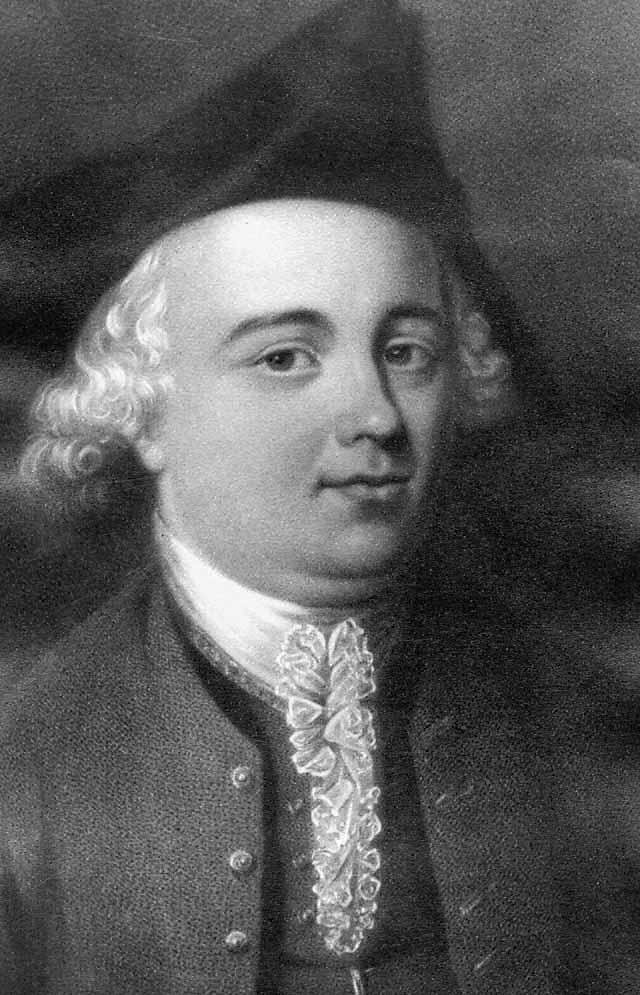
© BwD - terms and conditions
John Kay was born near the Lancashire town of Bury. Very little is known of his early life, but by 1730 he had already applied to patent a machine for cording and twisting worsted. However, it was a subsequent invention which really revolutionised the cotton weaving process and is now seen as one of the single most important inventions of the nascent industrial revolution.
Producing cloth on a simple handloom was a slow and labour-intensive process. Passing the shuttle containing the weft through the 'shed' formed by lifting alternate warp threads was an awkward business - it effectively limited the width of cloth that could be woven to the length of the weaver's arm as he passed the shuttle through.
Kay's great innovation was to increase the speed at which the shuttle passed across the loom, and to increase the distance that it travelled. He installed two 'shuttle boxes' at either side of the loom, connected by a wooden track or 'shuttle race'. The shuttle was propelled backwards and forwards along the race by means of a 'picking peg' which the weaver jerked from side to side. The speed at which a piece of cloth could be woven increased dramatically.
Kay's 'Flying Shuttle' was the first true mechanization of the textile weaving process. The success of Kay's invention greatly increased the demand for spun cotton, as weavers could now produce finished cloth far more quickly than they could be supplied with the spun thread. The knock-on effect of this shortfall was for other inventors such as James Hargreaves and Samuel Crompton to mechanize the spinning process later in the 18th century.
Sadly, as with many other innovative men, Kay was not recognised as a prophet in his own land. Greedy manufacturers refused to pay him royalties for his invention and machine-breakers raided his Bury home in 1753. He left England for France shortly afterwards and is thought to have died in poverty.
His son Robert continued the Kay family tradition by inventing the 'drop-box' in 1769, allowing rapid interchange of multiple shuttles with different coloured threads on one loom.
By Nick Harling
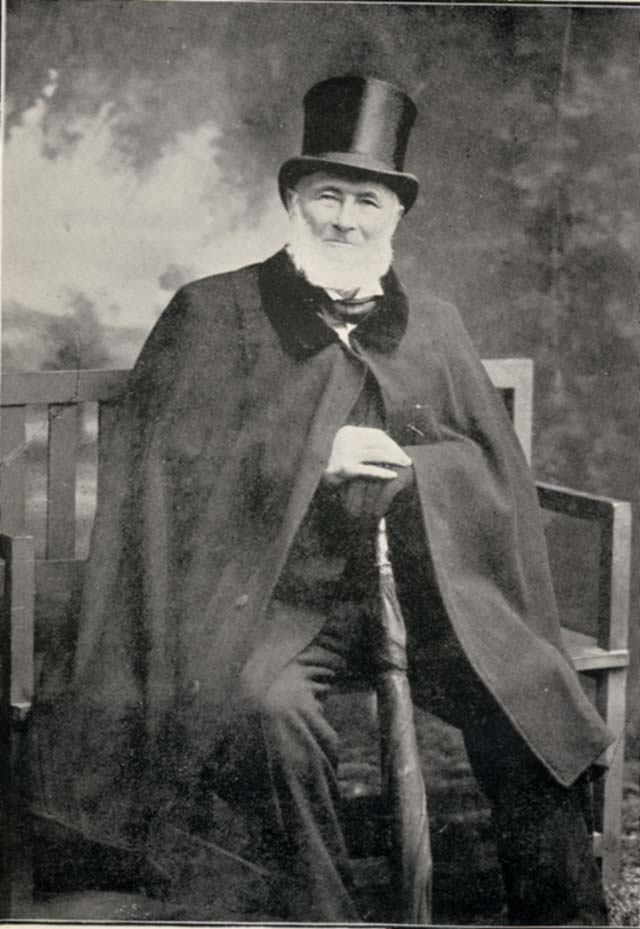
Roger Haydock was an ancestor of mine. He was referred to as "Uncle Roger" and this picture of him hung in my Aunts' house for many years.I often wonderd how we were related. I have now discovered that he was my Great, Great, Great,Great Uncle, with Roger's sister Ellen being my direct ancestor. She was the Grandmother of John Aspden Ormerod, JP and Mayor of Blackburn.He was my Great Grandfather.
A book was written about him in 1912 , by the Rev. John Whittle."Owd Roger":Bible Colporteur and Primitive Methodist Lay Preacher. The story of a Bible-Inspired Life.
"Owd Roger", as he was affectionately known, was born on 26th December 1809, or as he used to say " I am three days owder than Mester Gladstone".
Several other luminaries were born in this year - Tennyson, Darwin and Mendelssohn .
The Battle of Waterloo was won when he was only five years old, but he could remember the scenes of jubilation at Wellington's victory.
His father was George Haydock, a farmer and handloom weaver in Clayton-Le-Dale.Roger was the fourth of a family of twelve children. His father was well known in the district. He was singing master at Salesbury Church for 46 years.
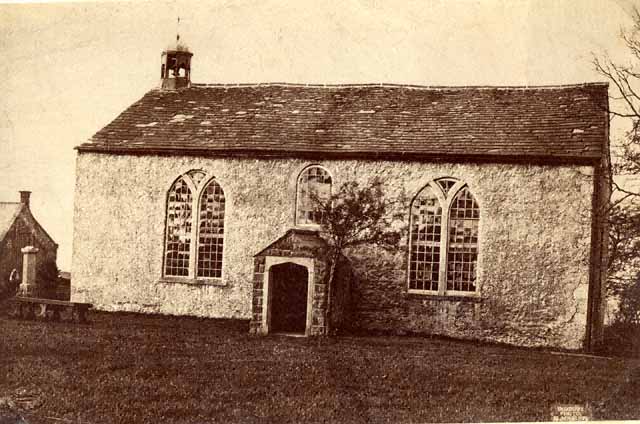 © BwD - terms and conditions
He began work at an early age. At four he was a bobbin-winder. By seven he was acting as a minder to a handloom weaver and soon after took charge of the handloom himself. He carried his finished pieces to the "Putter-out" in Blackburn. First to James Fisher of Ainsworth Street and then to James Briggs of New Water Street.When work was available he earned from 8s to 12s a week.
He said" Things in those days were very dear; we were hampered on all sides; poor pay and expensive food. Tea was only a luxury for grown ups, children were never allowed to partake of it. The youngster's drink consisted of cloves, pennyroyal and such like.. Flesh meat was a luxury to be dreamed of, but very rarely to be tasted. We had "hasty puddings" three times a day, and for our Sunday dinner, potatoes and bacon collops. A family that could boast of a red herring meal was considered as belonging to the higher classes."
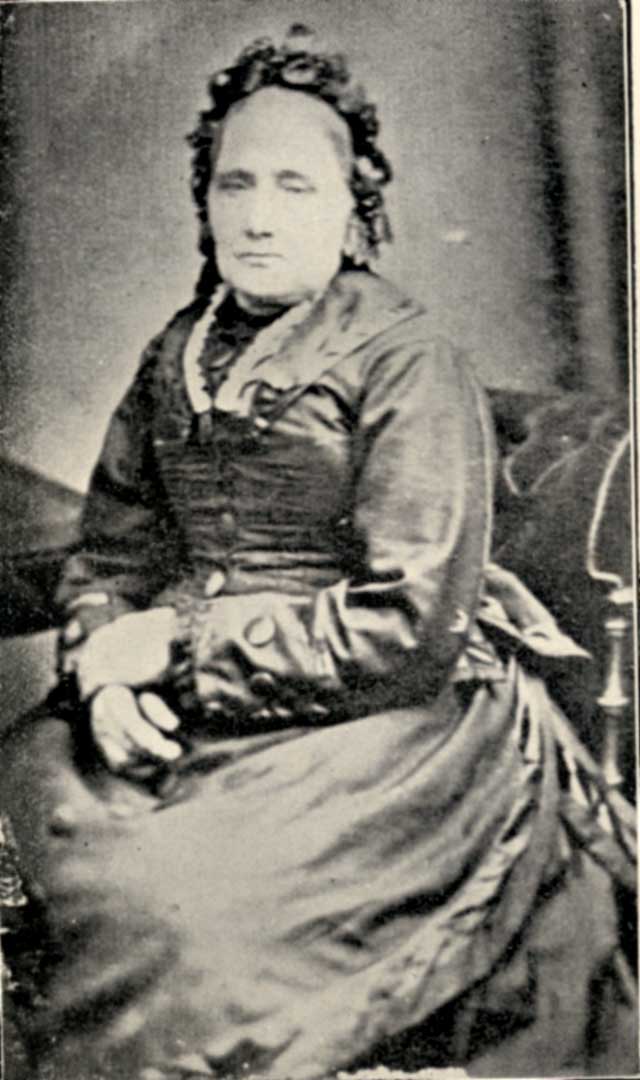
Roger lived through turbulent times in his youth. In his early days wheat stood at famine prices and salt was taxed at thirty times its ordinary value.Thus he became a keen supporter of Free Trade and the abolition of the Corn Laws. He remembered the loom breaking riots of 1826 and the attack on the Dandy Factory in Blackburn.
The nearest town with an MP was Preston, with the Preston Guardian the only paper circulating in his area of Lancashire. As the cost of the paper was generally beyond the reach of the ordinary people, it was arranged that a different family would purchase it each week and make it available for all. At least this gave them an insight into the Parliamentary news of the day.
The Preston Guardian presented a supplement to one of its issues containing a portrait of the great Chartist Fergus O'Connor. This was considered such a prize that the villagers threw dice to see who would carry off this great treasure. Roger was the lucky winner and returned home in high spirits.
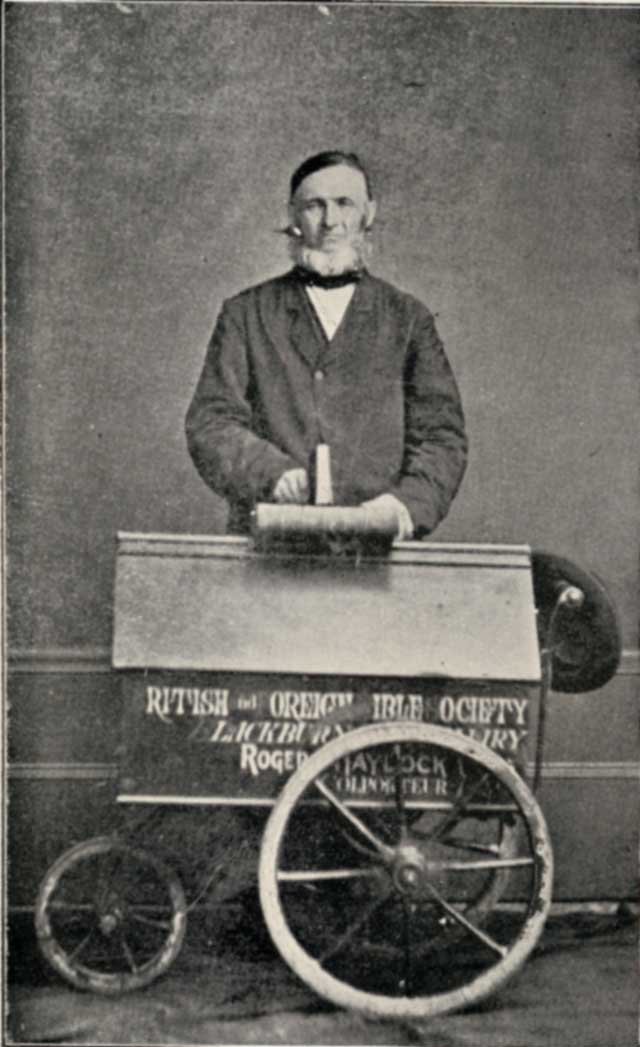
At twenty four Roger married Mary Howarth of Wilpshire at Blackburn Parish Church .The marriage produced nine children."Eawr Mary"(as Roger referred to her) had to teach her husband to read, as one of her first wifely duties.Soon after the marriage, Roger gave up weaving and changed his trade to quarryman, working at William Forrest's delph at Lower Cunliffe. In those days it was expected that quarrymen would consume large amounts of alcohol, and Roger was no exception.Indeed he was very popular with publicans for he was a good singer and dancer.He was persuaded to attend a temperance meeting in the old Music Hall off Mincing Lane, where Dr. Skinner, of Mount Street Chapel spoke eloquently about the evils of drink. This made such an impression on Roger that he signed the pledge that night. This was in 1841 and he remained faithful to the temperance cause for sixty three years.
He was to travel hundreds of miles, spreading the message of teetotalism.
He acted on impulse again when asked to become a seller of bibles known as a "bible colporteur". He was persuaded to give up his quarrying by John Baynes, local secretary to the British and Foreign Bible Society and Mayor of Blackburn in 1858-9.He promised him that he would earn £1 a week, whether he sold any bibles or not. Roger considered this to be a good amount of money, but was concerned that he wasn't suited to the task. However he agreed to take it on.
His fears were unfounded as he had great success and it was estimated that he sold more than 100,000 bibles and testaments to working people. He covered most of Lancashire and the West Riding of Yorkshire on foot, entering all the mills he passed on the way. For more than 20 years, he was to be found on Blackpool beach, during the summer season, where his wit and good humour made many converts.
Along with his Bible selling, Roger was a lay preacher for sixty one years on the Primitive Methodists' Blackburn First Circuit. The "Ranters" as they were known were very active in Blackburn. He preached in most of the villages and hamlets for many miles around Blackburn, as well as in the town itself.He and his wife were also Sunday School teachers, with Roger rising to the rank of Superintendent.
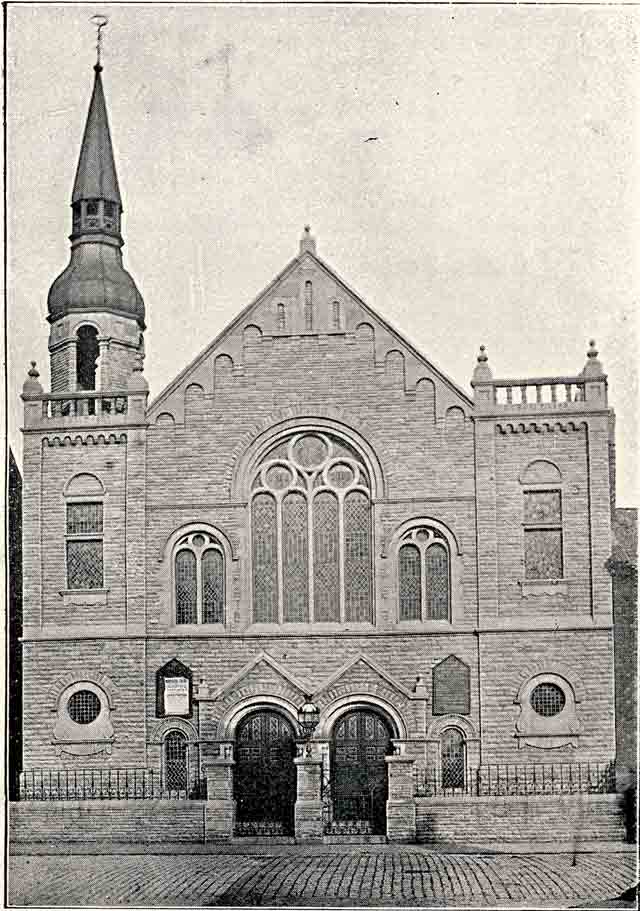
For many years, he spent his birthdays at Duxbury's Temperance Hotel on Railway Road, where he renewed old acquaintances.He attributed his longevity to "Temperance in all things, and the grace of God".
A stained glass window to his memory was erected in the Primitive Methodist Church, Montague Street. The inscription read "To call to remembrance the saintly character of Roger Haydock, Christian worker, Temperance reformer and worthy citizen, who entered into the reward of the pure and faithful, March 22nd 1904, aged 95. Blackburn had lost one of its most famous characters, who had outlived his contemporaries, his wife and even his own children. Only one daughter Ellen Walmsley,with whom he lived,remained.
His funeral, which was held at Montague Street Primitive Methodist Church was attended by family and a large contingent of religious, temperance and civic figures.
by Diana Rushton