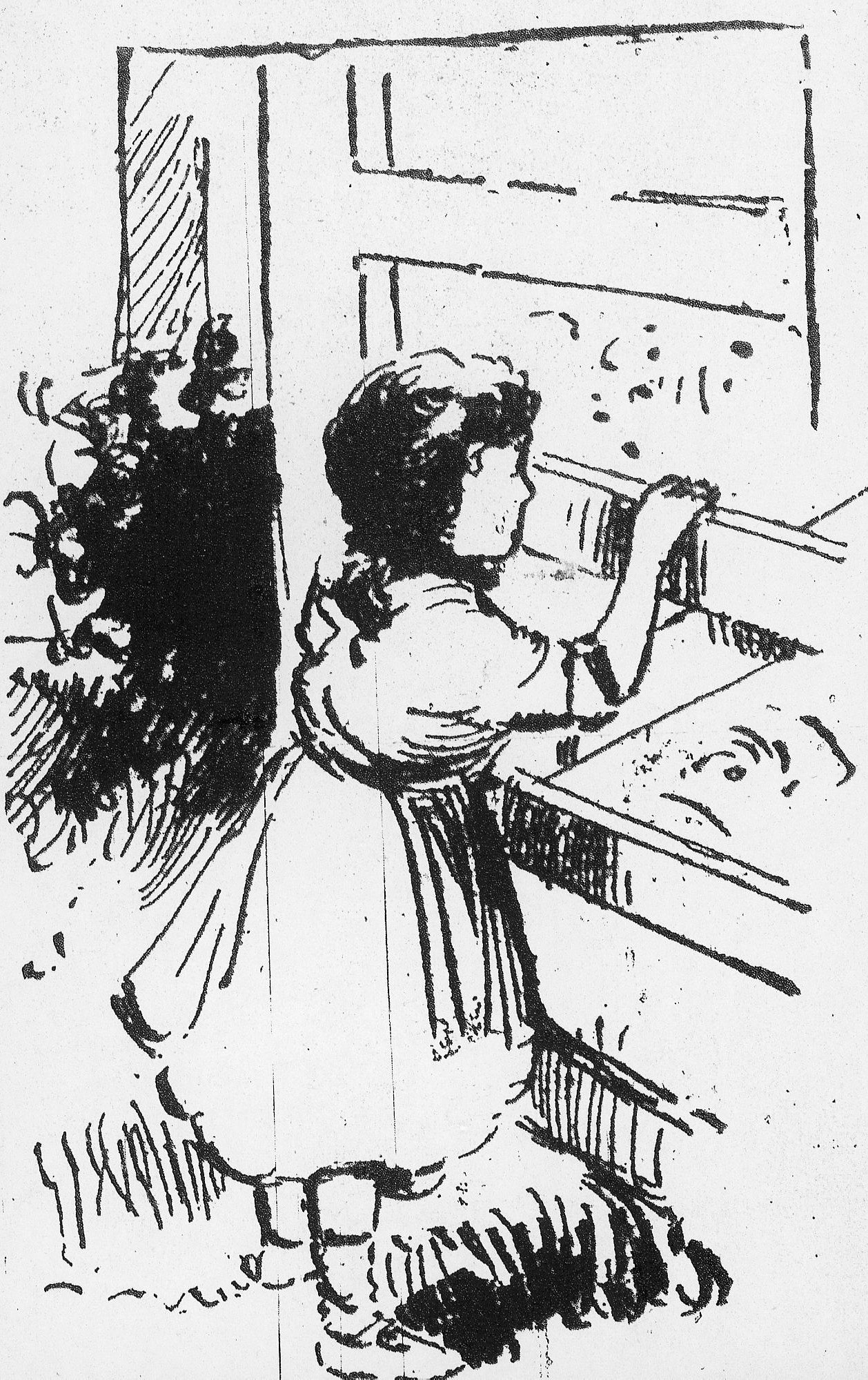
Soon the wind began to blow terribly, and still the Iris would not bend to him. The Forget-me-not bowed her head and hid it under her leaves. Suddenly she heard a sharp snap, and looking up saw the Iris’s tallest flower fall to the ground. “Oh! the poor Iris,” cried the Forget-me-not, “what will she do? Dear! dear!
The next day when the Queen came she found the Iris bent and broken and passed her by. As she was passing she saw the little Forget-me-not. Oh! this is the sweetest flower,” cried the Queen. “I will grant you any wish you ask.” Please, your Majesty, will you make the Iris tall and beautiful again,” said the Forget-me-not. “Are you sure you do not wish anything else?” asked the Queen. “No, thank you,” said the little flower. The Fairy Queen touched the fallen Iris with her wand, the Iris was as beautiful and tall as ever. “And now, because you have been so unselfish you may have love and beauty and this,” and placing a dew-drop on the Forget-me-not’s heart, she disappeared.
“Dear little Forget-me-not, how kind you are to me, said the Iris as the sun set; you shall be our Queen forever,” and the other flowers nodded their heads drowsily.
By Dorothy Stirrup Hawthorne, Dukes Brow, Blackburn
Blackburn Weekly Telegraph, 21st October 1905
Transcribed by Philip Crompton
The Lions
The hot African sun was shining on the calm waters of a narrow river, which flowed slowly through a dark jungle. In this jungle lived a family of lions – a huge lion, a fierce lioness, and seven little cubs. They had lived a very quiet life, and now lay basking quietly in the sun, while the cubs rolled in the grass or played around their mother. Suddenly the lion sprang up and gave a low growl, and pricked up his small ears, for coming down the river was a small boat, in which were four hunters, their guns ready. The lioness raised herself quickly, and, seeing the danger, carried her cubs off into the darkest depths of the jungle, and then bounded back to the side of her mate. And there together the noble beasts awaited the coming danger. Before long there came a flash of fire, and the lioness uttered a low moan, and fell to the ground. In a minute she was up again, but with a deep wound in her shoulder. Again a shot broke the stillness of the jungle, and this time the lion fell without a sound. They did not understand this sort of fighting. The lioness in great distress ran round her fallen lord. Then she ran to the bank, and sprang on the nearing boat. A shot went through her head, and with a thud she fell into the boat, half sinking it. The hunters rowed away, leaving the lion on the shore. As he lay dying on the banks of the river he thought, “I have never hurt any man; why should they kill my mate and leave me dying? If a deer or any animal on whom I feed had killed my mate and wounded me, it would have been fairly done; but one whom I have never hurt, it is not.” That night when the moon came out it shone on the noble lion lying dead; and the little cubs, having found their way back, were licking his wounds gently, wondering why their father did not wake, and thinking their mother would soon return. But he never woke again, and the lioness, who was no use to the hunters, was lying in the bed of the deep stream. All that night the poor little cubs yelped and ran about. Many days of hunger followed. One day the hunters returned, and captured two of the family, who are now caged up with nothing of the glorious jungle near, but a faint memory, and a strong instinct to burst the cage and wander off to the wilds again.
By Dorothy Stirrup – Hawthorne, Dukes Brow, Blackburn
Blackburn Weekly Telegraph, 25th November 1905
Transcribed by Philip Crompton
The Scarlet Chrysanthemum
In the middle of a large conservatory stood a tall white chrysanthemum surrounded by small ones of a similar kind. At the very end of the flower house, in a dark corner, leaning sadly against the glass, was a little scarlet chrysanthemum. Once she had been happy, even in this dark corner, for another yellow chrysanthemum had stood by her, and they lived happily together far from the queen of the conservatory, the white chrysanthemum. But that morning the yellow flower had been put in the group surrounding the beautiful queen and had forgotten all about her friend. The little scarlet flower looked wistfully across at the pretty group, but they turned their heads away proudly. The next day she was put among them, but they would not look at her, she was so much smaller than they. But the beautiful queen saw her, and bent graciously down and said, “I have often seen you in that corner over there, and I am very glad you have been put here. Don’t mind if the other flowers scorn you; I will love you always.” The little chrysanthemum murmured softly, “oh, dear queen, how kind you are to me.” She lived happily day after day, growing rapidly tall and beautiful. One day a careless gardener left the conservatory door open, and the bitter frost entered, biting the flowers’ slender petals and leaves. Quickly the scarlet chrysanthemum spread her broad leaves before the delicate queen, and all night sheltered her from the piercing cold. At last the door was shut, and a gardener came to examine the poor flowers. Many were seriously damaged. The queen had only one or two blighted leaves; but the poor scarlet flower had many injuries, and many leaves and petals were taken off. Then she was put back in her old place, but by and by she was brought out again, and placed, not on a level with the other flowers, but higher even than the queen. And the scarlet flower and the white one reigned happily together over all the smaller chrysanthemums.
By Dorothy Stirrup, Hawthorne, Dukes Brow, Blackburn
The Blackburn Weekly Telegraph, 9th December 1905
Transcribed by Philip Crompton
In Fire-Land
Through The Meadow Gate
The Roses and the Moonbeam
In The Land of the Water Lilies
The Adventures of Billie Blue-Bottle
In Fire-Land
T
he fire was very low and red, and Marjorie was watching the queer shapes lighten and darken. There were hills and valleys, caves and rocks, and even little houses, with trees and flowers growing round them. Marjorie had been sitting there for such a long time, until she fancied she saw little people running about in a great hurry. At last they gathered round a little man who stood on a rock above the others. He seemed to be speaking very excitedly about something. Marjorie leant forward to hear him, until her face nearly touched the bars. But the fire did not seem to burn at all. And this is what she heard: “Her Majesty the Queen of Fire-Land is giving a picnic in the castle grounds, to which all are invited, and ____” He stopped suddenly, for he had caught sight of Marjorie’s face. He screamed and jumped from the rock, and ran to a large castle near. The people immediately followed, and Marjorie saw their frightened faces peeping out of the castle windows.
Soon, however the door opened, and a pretty little fire lady walked down the steps. She wore a crown and royal robes. She came quite close to Marjorie, and then said, “Why will you frighten my people so, and just when we were going to enjoy ourselves?” “Oh, please your Majesty I did not mean to be rude; but may I come into your beautiful Fire-Land?” Marjorie asked. When she said this the people shouted. “No, no!” but a little old man came up and asked the Queen to grant her request. At last she consented, and touched Marjorie lightly on her shoulder. Marjorie felt herself growing less and less until she was small enough to creep through the large bars but she was much bigger than the others. The fire was not at all hot, and she walked up to the castle to the Queen.
Soon a bell rang, and everyone went to the farthest end of the castle grounds. There they danced and played games, and the Queen joined in. Afterwards, they had tea, but Marjorie could not eat anything, because the food was cinders. Suddenly a funny little man ran up, very much out of breath. “Oh, your Highness, a great giant is going to put great clumps of coal on our land, and we shall be killed!” he cried. Everybody rushed hither and thither in great confusion. At last Marjorie thought of something. Her handkerchief remained the same size as before, and, gathering all the people she could get hold of, she wrapped them up in it. Then she stepped out, grew to her ordinary size, and pulled the handkerchief out of the fire. “The giant,” was only Jane, the housemaid putting coal on the fire, and she was very much surprised to find Marjorie holding a handkerchief full of cinders. Marjorie tried to explain, but Jane only laughed at her.
By Dorothy Stirrup Duke’s Brow, Blackburn
The Blackburn Weekly Telegraph, 27th January 1906
Transcribed by Philip Crompton
Through the Meadow-Gate
Mary stood looking through the big white gate on to the long green grass, covered with cowslips, beyond. “How I wish I could get through, but I never can open this big gate,” she sighed, “Cowslips, pretty cowslips, let me in, do.” But still the pretty yellow flowers went on nodding their heavy heads gently. The little girl laid her curly head on the white bars, and watched them bend and quiver in the warm summer wind. For a long time she watched them, until they seemed to move slowly as if to silent music.
At last she heard the little bells chime. The cowslips swayed gently to and fro, and parted in the middle, forming a wide path down the meadow. Mary looked eagerly up it, but she could see nothing. “What is the matter?” she asked a cowslip standing near. Oh! the Flower Lady is coming! Hurrah! Hurrah!” and she shook her seven bells gaily, making merry music. Then Mary saw tiny golden horses galloping down the path, with sweet cowslip fairies on their backs, but no Flower Lady was to be seen. The horses stood in rows down the path. Soon some golden carriages came down, drawn by golden horses. In them were fairies, ladies-in-waiting to the Flower Lady.
Many more lovely fairies came, but it was a long time before the Lady came. At last, amidst loud cheers and fairy music, a lovely lady did make her appearance. She was dressed completely in cowslip silk, and her golden hair was crowned with the tiny flowers. She stepped daintily out of her carriage and called the cowslips to her. “My people,” she said in a silvery voice, “I have come back at last: the Goblin King has released me from my prison, and we will dance and be merry once again.” The cowslips danced and sang merrily, and Mary watched them eagerly. By-and-by the Lady stopped them. “Now we will play hide-and-seek,” she said, and at once the flowers ran helter-skelter through the long grass.
Suddenly a fearful noise floated over the meadow. “Moo-o, Moo-o,” and again “Moo-Moo-o-o-o,” and crashing through the hedge came Dolly, the big black cow. Instantly the flowers stood still, but Mary saw them shaking with fear. “Poor, dear flowers,” she said. “Shoo-Shoo! Bhoo!” she screamed at Dolly, and the terrified cow kicked up her heals and cleared the hedge with a bound. Soon after the Flower Lady ran up to Mary. “Oh, you good little girl!” she said gratefully. “It was so kind of you. Can I do anything for you now?”
“Give me permission to come into this lovely field, lovely lady.”
“Certainly,” she answered, but ran away quickly, for Dolly’s obstinate tail appeared above the hedge top. Ever after the gate has opened easily to the little girl, but Mary will not let the terrifying cow go near to the Lady’s little cowslips.
The Blackburn Weekly Telegraph, Saturday 14th April1906
Transcribed by Philip Crompton
The Roses and the Moonbeam
A pretty little cottage stood in a country lane, all alone. It was covered with the most beautiful red roses, which crept even over the thatched roof. In this cottage lived a little girl with her grandmother. Every evening when she went to bed she leaned out of her window to say good-night to the roses. One night she could not go to sleep, and she watched the moon shine on the nodding flowers. Marjorie (for that was her name) jumped out of her little bed and went to the open window. She looked out on to the moon-lit lane. Something seemed to be moving on the ground, and now and then she saw a bright gleam.
“What can it be?" she said wonderingly.
“Come and see," said a little voice in her ear, and turning round she saw a tiny fairy.
“Oh! oh!" gasped the astonished little girl, “Who are you, please?"
“I am only a little rose fairy, but I have watched you every day, and think you deserve to come to ____"
At this moment a whistle blew, and taking Marjorie's hand she said, “Step out on to the rose leaves, and don't be frightened." Marjorie did so, and immediately the flowers fluttered to the ground. Then the fairy stepped off the leaves, and the little girl followed. To her great surprise she saw coming down the lane a troop of dancing fairies. They stopped before here, and bowed low. “Welcome!" they said together.
The fairy who had brought her from her room asked her if she would dance with them. Of course, she said “Yes," and at once began to trip lightly with the other fairies down the lane. As she danced, she became smaller and smaller, until she was exactly fairy size. On, on the danced, singing as they went over hills, down valleys, until they reached a little green gate. It was opened at once, and Marjorie and the little people ran into a lovely rose garden. Trees and trees of red roses grew there. Each fairy jumped into a rose and played among them, covering themselves with yellow dust and eating honey. Marjorie did the same and enjoyed herself playing hide and seek among the petals of an enormous rose with three other little fairies. They all sat down on the leaves and ate honey out of the nearest flowers.
All this time the moon had been shining, and her straight silvery beams shone right into the rose in which Marjorie sat. The beam looked so firm and broad Marjorie put out her foot and touched it; it was quite hard. Then she stepped on to it, and walked slowly, a little way up the beam. Then she called to the other fairies, who crowded up the beams, right to the moon's smiling face at the top. All the fairies came down again, but poor little Marjorie, not being a real fairy, was very tired when she got to the top.
“Oh, Moon, I am tired," she sighed.
“Never mind," said the moon's voice kindly, “slide down on this."
Instantly a little sledge appeared on the beam. After thanking the moon the little girl got in, and away she went down the silvery streak. She got of at the rose garden, where the fairies were looking for her, and they were so glad to see her again. But as the day was beginning to dawn a fairy blew a whistle, and soon Marjorie heard “Buzz, buzz," and a big bee flew into the garden. “Carry her to her own room," said the fairy as she put Marjorie on his back, and away he flew, and the little girl resting in this velvety coat fell asleep. When she woke there, she was in her own pretty room, with the roses peeping in at her window.
The Blackburn Weekly Telegraph, Saturday 14th July, 1906
Transcribed by Philip Crompton
In The Land of the Water Lilies
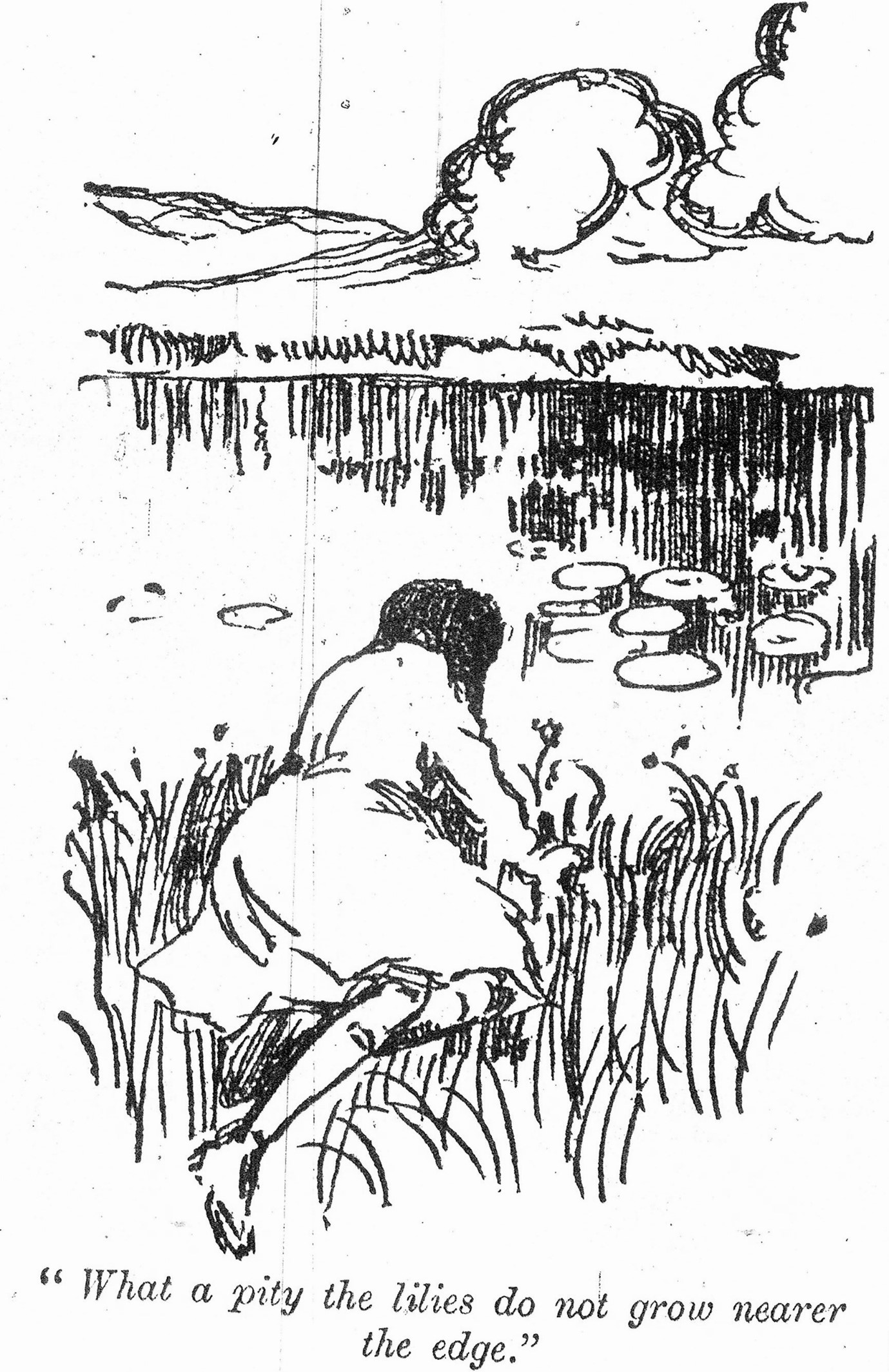
Mabel was lying on the banks of a wide river, looking at the pale-gold water lilies floating about among the broad green leaves and clear water. “What a pity those water lilies don’t grow near the edge,” she said. I’d get heaps and heaps and put them in a bowl, and take them to mother, and oh! wouldn’t she be pleased.” She lay there gazing at the fishes swimming about amongst the stones, until the peacefulness of everything and the warm sun made her sleepy, and soon she shut her eyes and dreamily thought how nice the water lilies would look on her mother’s table.
Lazily opening her eyes, she was astonished to see hundreds of golden flowers coming swiftly down the river. Mabel sat up quickly, rubbed her eyes, shook her curly head, and stared at the approaching flowers. She thought she heard a slight whistle, different from that of a bird, come from among the lilies. “How queer it is that they should come sailing down the river like this; perhaps I shall be able to get some now, for they are sure to stop by that big stone, till they reached the big stone.” On, on the flowers came till they reached the big stone in the middle of the river, and then stopped.
“I won’t pick them now,” she said, half aloud. “Then they won’t die.” She shut her eyes again, wondering at the sudden appearance of the flower. Soon she was fast asleep with her golden curls tumbled over her rosy little face. The moment she was asleep there was a stir among the flowers in the river, and out of every flower popped a little fairy with a golden and green dress on, and all gazed anxiously at the little sleeping figure on the green earth. “Is it safe?” one fairy asked of the other nearest to the bank. “Yes, I think so now,” was the answer. “I was so frightened she would see us, but I don’t think she has done.”
“Oh dear, what shall we do?” cried a little fairy in dismay. “We can’t get on, because this enormous stone is stopping up the way, and if that little mortal on the bank wakes up she will certainly get hold of us.”
“Oh, what shall we do?” they asked hopelessly of one another. “Oh, I know,” suddenly said one fairy. “We will wait till that little girl wakes up and ask her to move it for us. Do you all agree? We can ask her not to touch us, you know,” she added. “Oh yes, yes; what a good idea, “they cried, and sat down in their flowers to wait for Mabel waking.
Soon the little girl stirred, tossed her hand into the water, and woke with a start. She sat up and looked round her and saw the band of water lilies in the river. She got up and stepped on to a stone at the side of the river, and bent down to get a lily, when something moved among the golden petals, and a tiny fairy stepped out on to a green leaf. Mabel rubbed her eyes to see she were dreaming, but no, there really was a fairy standing on the leaf. “Little girl,” she said, softly “are you awake now?” Mabel did not answer, but just stared in surprise at the tiny person. “Are you awake?” the fairy repeated.
“I – I don’t know,” said Mabel, slowly. At least I think so, but what are all these little things and all the lovely lilies here for?”
“We are water-lily fairies,” answered the fairy, “and we were going down the river in our flower boats to the great dance of all the water-lily fairies, when this big stone stopped us, and we are going to be so late—”
“And we thought,” interrupted another little fairy,” that you would move it for us.”
“Oh, course I will, if I can,” cried Mabel, and she pulled off her shoes and stockings and stepped into the water. She pulled hard at the big stone, and at last managed to pull it to the side. “Oh, thank you so much,” said the fairy, gratefully. “Would you like to come with us to the dance, instead of lying here?” What? gasped Mabel. “Come to a real fairy dance? Oh, may I really? “Yes, really; come along. Step into this lily boat,” answered the fairy, taking her hand.
Mabel found she could sit quite comfortably in the lily boat, it was so nice and soft. They sped swiftly on for a little while down the river, until they came to a deep pool. The fairy took Mabel’s hand and stepped out on to a broad leaf, and blew the faint whistle Mabel had heard before, and all the fairies stepped on to the leaves of the flowers. Mabel looked at the water beneath her, and wondered what was going to happen. Again, the whistle blew, and immediately leaves and fairies sank below the water to the bed of the river. Strange to say, Mabel was not at all frightened, but delighted at the lovely flowers, grass, and stones at the bottom of the river. “Come dear,” said the fairy, as she jumped on a fish's back, “jump up behind me.” Mabel did so, and soon found herself flying through the water.
After a little they stopped at a lovely garden under the water, and Mabel and the fairies got off the fishes, and went into the garden. There were many more fairies in this garden, and all were dressed in green and gold, and even Mabel had a gold and green dress on and was quite as small as they were. Soon they began to dance, and Mabel danced too. In and out she whirled among the mass of green and gold, and oh, how she did enjoy it. They danced for a very long time, until the fairy by whom Mabel had been brought blew her whistle, and all sat down on the grass and drank honey dew out of lily cups.
Soon, however, the fishes came back, and all the fairies said good-bye to each other, and sped through the water, and all went home on the fishes. Soon the fish that Mabel and the fairy rode on came up to the top of the water by the tree under which Mabel had been lying.
“Good-bye now, dear; watch for me often. I will come to you again soon. Here are the lilies you wished for,” said the fairy.
“Oh, the lovely lilies. Oh, dear fairy, I have enjoyed myself so much. I don’t know how to thank you. But do come soon. Good-bye.”
Mabel watched the fairy disappear through the water. She picked up her hat and ran to the house. She burst into her mother’s room and told her about the fairies and the dance. “And I’ve got you these,” said the little girl, eagerly holding up the water lilies.” “Oh, aren’t they lovely,” said her mother. “But darling you mustn’t lie in the hot sun again; it has made you fanciful.” But Mabel was too excited to notice what her mother said.
Dorothy Stirrup, Hawthorn, Dukes Brow, Blackburn
The Blackburn Weekly Telegraph, 22nd September 1906
Transcribed by Philip Crompton
The Adventures of Billie Blue-Bottle
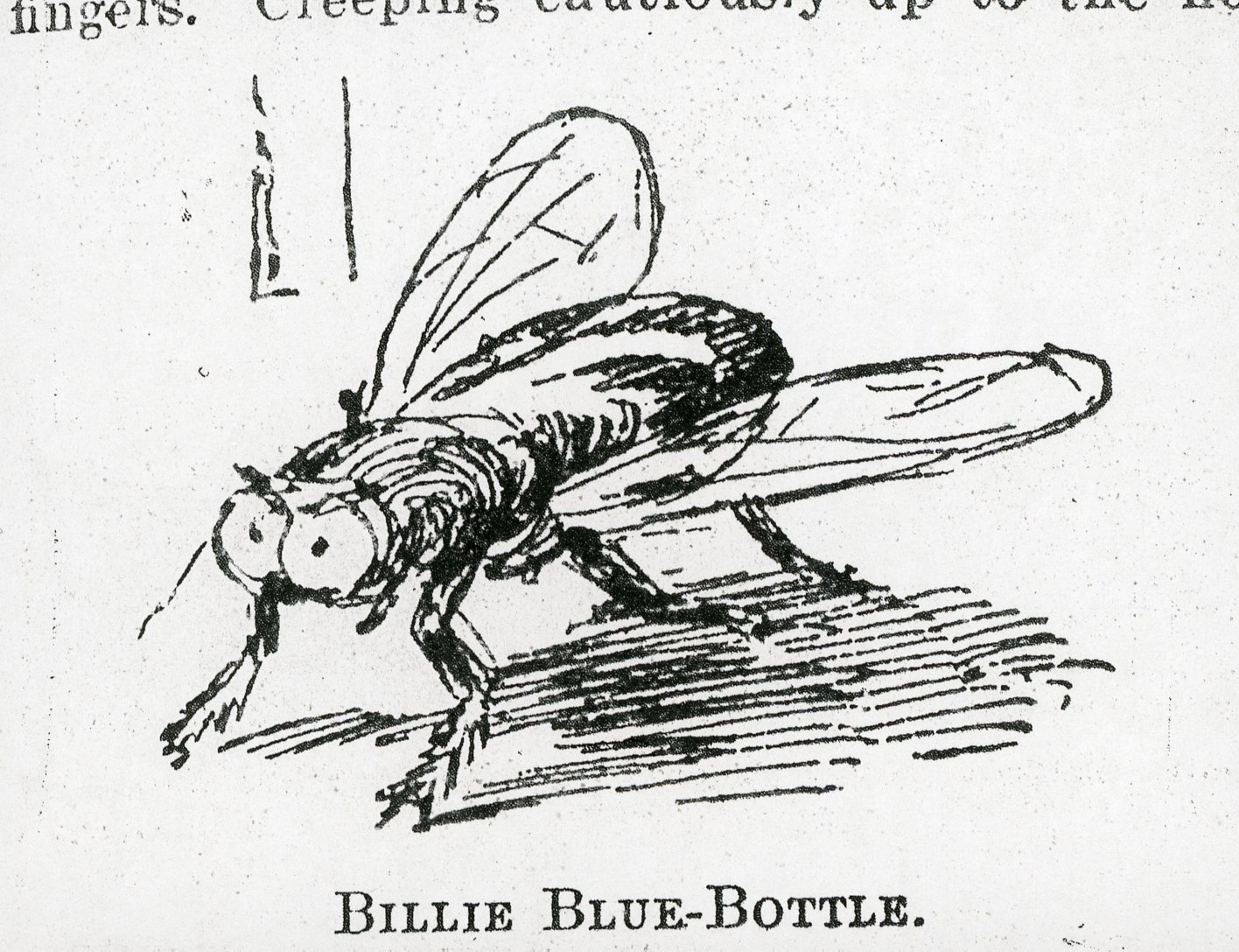
I don’t know why flies are so despised in the house where I first made my appearance., but every time we were seen flying about or singing you’d be sure to hear someone say, “Oh! those horrid flies.” We didn’t at all understand why we should be called “horrid,” for really we are quite as pretty as those huge animals called “men.”
One day I was taking a quiet view of the garden out of the cosy dining-room window, and humming as I crawled up and down, when I heard someone exclaim, “Flies again! little beasts!” and a hand was put over me. Oh! how dark it was in that huge hand. There was hardly any room to breathe, and I was so frightened. “I’ve got it alright,” said a voice.
I was getting hotter and hotter in my prison, when, hurrah! I saw a tiny stream of light coming through a space between the fingers. Creeping cautiously up to the hole, I managed to squeeze quietly through. How glad I was to find myself free. I flew straight up to where my friends were and told them about my capture. “Do come and help me to annoy him,” I cried, “It was so hot and horrid in that giant’s hand,” and they all came, for none of us loved the people in that house very much, for heaps of our race had been killed by them.
We flew down and went to the window to consult as to the best way to tease him. “I should think singing would make him angry,” I said. So we sat down on the window sill and began to sing. “Buzz,” I began. “Buzz-buzz,” sang a second. “Buzz-zz-z-z,” we all sang.
“Oh, dear, those horrid little beasts again, I can’t read because of their row,” said the angry voice. We looked towards the speaker, and there we saw sitting in front of the fire, a huge boy, reading, with one hand closed up as if unconscious of my escape. “Buzz-buzz-zzz,” we sang. The boy jumped up angrily, and rushed frantically up and down the room after us, but in vain, he could not catch us. “I just can’t catch them,” he panted, sitting down again.
“Come along, we’ll tease him now,” I cried, settling on his nose and tickling with my legs and wings. My brother crawled all over his face, and, oh! how we all tickled him. Then we had a concert on his ears. After that we had an obstacle race over his nose, eyes and mouth, and I won.
“Oh! good gracious! Aren’t they fearful!” he groaned, and he strode out of the room; in a few minutes he came back and sat down quietly. “Now for some more fun,” I cried, and immediately began to tickle him. Finding he did not mind, I sat down on his book to have a better look at him, when all at once a tremendous stream of water was received on my body. Oh! how cold it was, and how it hurt me, my new blue coat was complexly spoilt, my legs were helpless, my lovely wings hung limp by my dripping sides, and I was nearly blinded. At last I managed to totter on to the carpet where heaps of my friends lay in exactly the same state as I was. “Oh! those giants are cruel,” said one feebly, “I’m almost killed.
“Ha! Ha!” laughed the orgre. “It was fun.”
That night a council of flies was held, and we arranged that as soon as the invalids were better we would remove them from the house of such cruel people. I feel much better now. Good-bye. I’ll tell you some more some time.
Best love,--Billie Blue-Bottle.
The Blackburn Weekly Telegraph, Saturday 27th October 1906
Transcribed by Philip Crompton

A Tale Of A Camera
The Fairy of the Fir Forest
Master Mouse
The Haw and The Hip
A Tale of a Camera
Everybody was mad about cameras. Everybody had one, and everybody carted them about. In every nook of the school garden was a girl with a Brownie l, tucked under one arm, and a packet of “negs.” On a printing- frame under the other. Everybody “snapped” everybody else unawares and out of every book fluttered some photo or “neg.” The cameras, Brownie l.’s, were considered as “ducks,” “darlings,” pets,” &c. but a Brownie ll. Was looked upon with a sort of awe. No one had one; every one wanted one. At last a girl, Loreta (Laurie for short), did get one from her brother, who was getting a better one. She was delighted, but the others weren’t. The Brownie I.’s dropped off a wee bit, and the girls stared enviously after Laurie as she marched off alone with her Brownie ll. She was awfully proud of her ll., and wouldn’t let any one look at it. She took crowds upon crowds of photos, and the next week tied her “negs.” up in a bulky parcel, and despatched them to be printed and developed. The whole school waited in suspense for the arrival of the photos. Laurie was left to herself. She didn’t mind; she spent her time in studying photography and in the use of Brownie ll. She walked about with her head in the air, and regarded the girls with a lofty indifference. They had only l.’s, she had a ll. She had vague dreams of photo fame, and bought about ten Brownie ll. films. The photo shops grew accustomed to the schoolgirl with the dark hair and triumphant face who entered their shops and said loudly and in a still more triumphant voice: “A Brownie ll. film, please,” or “ A packet of Brownie ll. printing paper,” and the people stared and turned round to look at the dark head and the jaunty sailor hat, flaunting the school colours, with a camera strapped over her shoulder. At last a parcel came addressed to
Miss Loreta Manley,
Heydon House School,
“Hinchley.”
Laurie went proudly up to receive it, and hugged it close as she glanced witheringly round on the meek possessors of the Brownie l.’s. She rushed away to her own wee room, and eagerly tore open her parcel. The photos fluttered out, and she snatched them up and gazed at them. Alas! – alas! On the first photo was a face on the top of a tree, the next was a hand of about three feet, with the end of a skirt where the head should be. Laurie threw them from her. What had happened? The Brownie ll. must be mad. Never had she seen photos like that before. Hot tears rushed into her eyes, and she sobbed passionately. The tea-bell clanged three times before Laurie tip-toed in, with her hair tousled over her flushed face. The girls smiled as they saw Brownie l. strapped in the place of the ll. Laurie came back into favour again, but beware, never mention
a Brownie ll.
The Blackburn Weekly Telegraph,18th May 1907
Transcribed by Philip Crompton

 Loading more

 B
B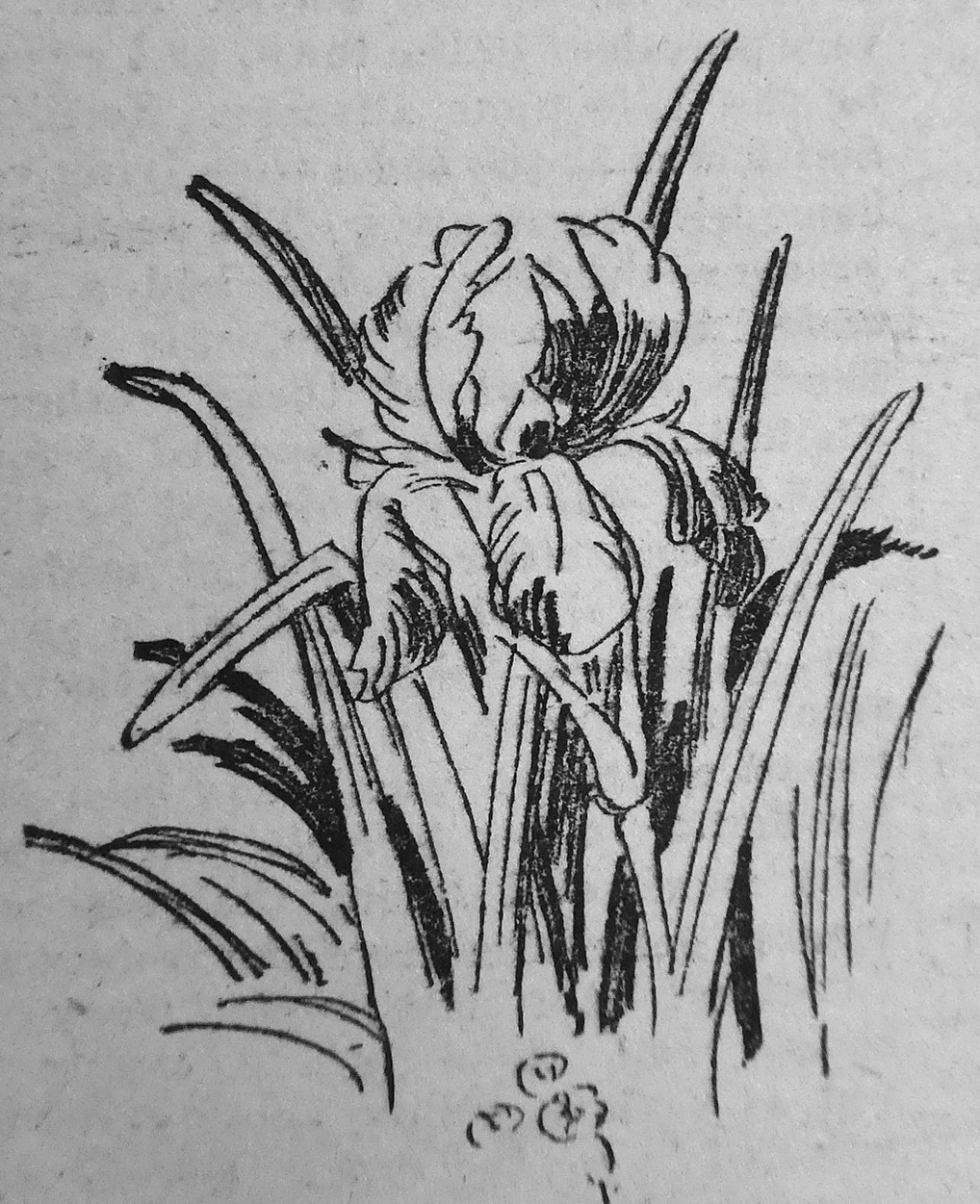 In a shady wood on the banks of a little pond grew a tall purple Iris surrounded by others of the same sort, only not so fine. At her feet grew one little Forget-me-not, half hidden by the long grass. The Fairy Queen was coming to grant any wish the sweetest flower could want. The Forget-me-not sighed and said, “Oh! dear, her Majesty will not even look at me. I hope the Iris is the sweetest flower.”The day before the Queen was coming a butterfly told the Forget-me-not the wind was going to blow very hard that night. The little flower trembled and drew her leaves closer around her. “Oh!, I must tell the Iris,” thought she, “the wind might break her stem,” so lifting her head she said,” “please dear Iris the butterfly said there was going to be a storm, I thought I had better tell you, because it might break your stem. ”Oh! nonsense,” said the Iris proudly, “I will not bend to the wind.”