
 Loading more
The People who Built Modern Blackburn
Iftikhar Ahmed | Mohammed Khaliq Choudhary | Aisha Jaffer | Mohammed Khan | Ashok and Jai Chudasama
Rabia Gulam Ismail | Police Constable Nikki Nabi | Ibn Masood; The Artistic Gentlemen
Tinta Ali | Mariam Moosa | Moonira Hinglotwala
Iftikhar Ahmed
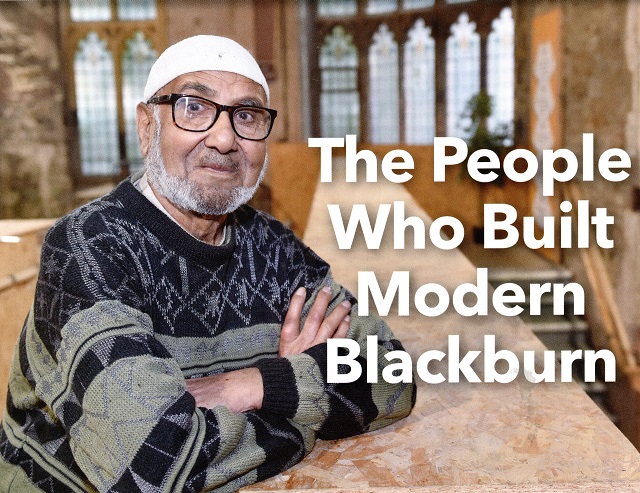
Immigrants are good for this country, and they have been great for Blackburn. The town can be rightfully proud of the accumulated success of the South Asian heritage community, but the foundation of the modern Blackburn rests in the hands of the men, and later women, who came over in the 1950s and 60s. One Voice Blackburn magazine celebrates these individuals who can never be forgotten.
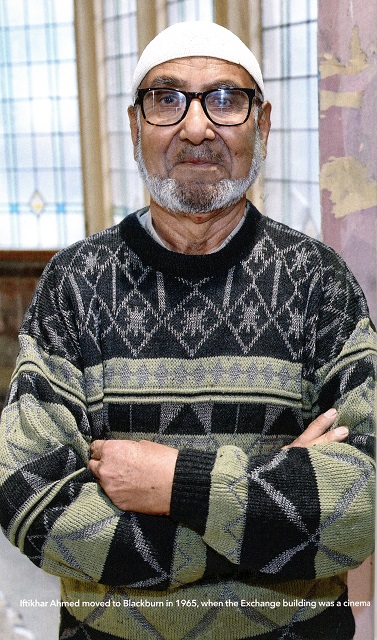
Iftikhar Ahmed, originally from Rakhrawanin, Jhelum, came from a family of ten. He spoke to One Voice Blackburn about his journey to England and the legacy created by so many of his friends who came to Blackburn in those times.
"I had four sisters and four brothers including myself. My life in Pakistan was great. My father was head clerk in the district army service. I had big shoes to fill but struggled with sticking to one job. I was young and immature at the time and wouldn't last in one workplace for longer than a month."
Iftikhar, now 84 lives in Brookhouse, Blackburn, but started his working life near his home village.
"I worked in a military textile mill as a weaver at one point. I earned around 90-120 rupees per month. That's equivalent to less than £1 in today's currency. Our family situation was good because of my father's job. I did take advantage of this and was very spoilt. My father became irritated with my lack of ambition.
"I wanted to turn my life around. This is when I decided I wanted to work in the UK. I thought to myself that I wanted to return everything my parents had ever done for me and I wanted to be financially independent."
In July 1965, Iftikhar Ahmed, aged 26, decided to move to Blackburn in hopes of finding work and making his family proud back in Pakistan.
"My parents were supportive but scared of the uncertainty of how I'd cope or how often they'd see me. The whole process took around three months. I didn't have to go through an interview stage because I was called on a 'recommendation'. All I had to do was get a passport made."
Iftikhar came to this country on a voucher scheme. It was essentially a visa that the British Government handed out to people from foreign countries, to come to work in factories and mills.
"At that time everyone in Pakistan had one wish which was to get to the UK to make money and work in a stable job. There was huge demand in the UK for people from foreign countries to do manual labour.
"Everyone moved to Blackburn to find a job at the time as there were hundreds of factories and mills. Blackburn was the place to be, I worked with people from all over the country."
"When the opportunity came up to travel to the UK for work, my parents were naturally very happy, but they wanted to make sure I was married first. I got married 15 days before I moved to the UK. Everything happened so quickly.
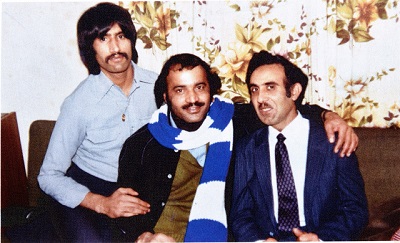
Iftikhar and friends took a keen interest in football
and supported Blackburn Rovers
"I promised myself that I would drown every single bad habit I ever had and lift my father's head up high. After some emotional goodbyes I finally left for a new beginning in Blackburn. I chose Blackburn because I knew family and friends that lived there. Blackburn had ample job opportunities due to all the mills and factories, so a job was inevitable."
As soon as Iftikhar Ahmed arrived in the UK he realised that everything was going to be very different from the place he had left behind.
"When I first stepped outside Heathrow Airport, I noticed that the air was fresh. It was all so overwhelming it was like stepping into a whole new world. When I reached Blackburn, I was amazed with the amount of vehicles on the road.
"Compared to today there weren't many at all, but in Pakistan cars were virtually non-existent especially where I was born and raised. The roads smooth and a lot wider than in Pakistan.
"I was surprised at how people were following rules based on colours at traffic lights. This may sound silly but there were no rules on the road in Pakistan. There was a huge difference in the temperature too. It was July so it wasn't too cold, but it wasn't anything like summer in Punjab.
Like many people Iftikhar Ahmed misses some of the very best spots in 1960s Blackburn.
"I remember my first trip to the Blackburn Market. I was in awe of the building and all the things that I could buy. Everyone was thoroughly nice here, but I didn't care about that initially.
"Cleanliness was something I noticed right away. The streets were clean, shops were well kept, and items were displayed neatly. I lived in a village in Pakistan so everyone would just pile their rubbish up on some empty land. There was no bin service or litter pickers out on the streets.
"Houses were also very different. In Pakistan we had gates and a huge garden in front of our house but here its literally a front door and then straight into your house."
Iftikhar's first home was in St. Andrew's Street, near Shear Brow. At the time it was a three-story house and 11 people stayed at the property together. He still lives nearby in the Shear Brow area.
"We each paid £1 a week for rent and everyday essentials like beds, bedding and kitchen appliances were included. The house was decent in size even with 11 of us living under one roof. We had a front room, a living room, a kitchen, a bathroom, an outdoor washroom and five bedrooms. Two people shared each bedroom so there was enough space. The house was clean and well decorated.
"Our bathroom situation wasn't the easiest. You can imagine how difficult it would be with 11 men sharing one bathroom. We didn't have central heating or proper carpets. We would heat the home with coal fires. We would all gather in one room whilst the fire would be burning."
There are lots of halal food stores in Blackburn nowadays, and even the main superstores stock halal produce, but it was very different when Iftikhar and his friends arrived in the UK.
"We all shared expenses, and all of us had different duties. There were three of us including myself who oversaw the cooking. Master Rasheed was responsible for sorting out the food shop. There were only two or three halal shops when we moved to Blackburn.
"We would go down to the local shop and order the things we needed. They would write this down in a book with our address next to it. Our order would then be delivered to our house in a few days.
"The only day that we would all sit and eat together was a Sunday. We all had different jobs and rotas, so our days off never matched up. If the weather was nice, we would all go to the cinema to watch a Bollywood (Indian) or Lollywood (Pakistani) film. There was a cinema on Bolton Road that we would go to."
Although people came to Blackburn for economic reasons there was always just enough time to enjoy themselves, as Iftikhar continues to explain.
"I would go down to the cinema every week regardless of the weather. I would go with my only nephew at the time. I would come home after a night shift and attempt to sleep but he would come and knock on my door and wouldn't leave until I agreed to take him. I didn't need to do much convincing as I secretly loved going. My nephew lived on Bicknell Street with his family, so it wasn't far at all.
Work was easily available in the 1960s and many people from the south Asian continent flocked to take up occupation in factories as the textile trade still thrived, and the employment aftermath after the second world war was still endured
"My first job was at Roe Lee Mill. I worked on the machines as a weaver. We were all determined to work hard and make money. We would all say that we were going to work for five years straight and then go back to Pakistan. Little did we know that we'd be here for the rest of our lives.
"I worked five days a week, eight hours each day. I earned around £17 a week working on night shifts. You would get paid extra for doing these shifts. Sometimes I did overtime which would bump my wage up to £20 a week. That was a fantastic wage as I only paid £1 rent and £1 towards expenses. The rest I would use for things like clothes and leisure and then send the rest to Pakistan.
"I would send the money to my father's or wife's account every two or three months. We would save up and send a lump sum. I would send around 1000 Pakistani Rupees. We sent money to Pakistan through Habib Bank that was situated on Victoria Street. There was a Habib Bank branch near our village in Pakistan, so it was a straight-forward process.
"Initially, we would communicate through writing letters. It took weeks to get there. After a few years a village near our house in Pakistan set up a telephone box. We would call the telephone box where a worker would answer the phone, we would tell them to go and call so and so from our village. We would then call back in 15 minutes where our family member would be present to receive the call from the other end. I would ask my wife how the family was and tell her how much money I had sent and who she needed to give it to.
"Young people now are very
privileged even though they may
not think that. The older generation
sacrificed a lot to get you to the
position you are in today. Make
them a part of your journey."
I went back to Pakistan for a visit five years after I came to Blackburn. I couldn't wait to see my family and friends. I remember my father giving me a hug and telling me how proud he was of me, My mother couldn't stop crying, happy tears of course."
Iftikhar was also impressed with the people of Blackburn, and they were very welcoming to the new workers.
"They were well dressed, well-educated and did anything to help you. There was a great level of respect between everyone living here regardless of your heritage.
"Blackburn has changed immensely. Everyone moved to Blackburn to find a job at the time as there were hundreds of factories and mills. Blackburn was the place to be, I worked with people from all over the country. Now you find people moving to the cities to work as there's a lot more opportunities there.
"Halal takeaways and restaurants were very rare and almost non-existent. Now they are everywhere. People have embedded our culture and heritage here in Blackburn. I knew of only one Islamic shop on London Road.
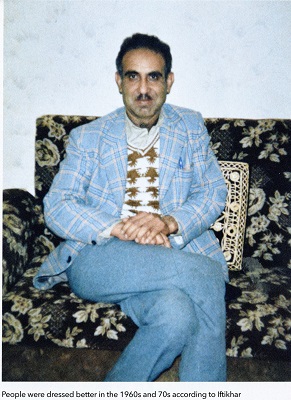
"When we initially moved to Blackburn, if we saw someone of South Asian heritage driving a car in the 1960s and even the early 1970s we would all be very impressed and couldn't stop staring. My first car cost £25.
"After leaving my first job I began to work at J. A. Porters. The salary was a lot better. As well as being a machinist, I also worked as a mechanic. I was self-taught after watching my friend work at his garage. It was a hobby, but I would fix my friend's cars when they encountered a small fault.
"One of the managers at work came to me and told me that his car wasn't functioning properly. He ended up selling his car to me for £25. The car was in pristine condition, I knew right away what was wrong with it. It cost me absolutely nothing to fix.
"I have had opportunities to work all around the world, but fate has always brought me back to Blackburn. I worked briefly in Germany but jobs weren't as secure as they were in Blackburn, so I decided to come back and continue working here.
"We would all say that we were
going to work for five years straight
and then go back to Pakistan. Little
did we know that we'd be here for
the rest of our lives."
going to work for five years straight
and then go back to Pakistan. Little
did we know that we'd be here for
the rest of our lives."
In the late 1960s and early 1970s families started to arrive from the sub-continent to join the men, and as children started to be born in this country the landscape started changing very quickly, according to Iftikhar.
"We all had got our own homes and our responsibilities began to increase. We would have to do the school pick up and drop off, buy food and necessities from town or the shops and on top of that, work. Women who came from Pakistan couldn't speak English and didn't have an interest in learning it.
"Young people now are very privileged even though they may not think that. The older generation sacrificed a lot to get you to the position you are in today. Make them a part of your journey. They are the ones who got you here".
Transcribed by Shazia Kasim from;
OneVoice Blackburn, Issue 8, Spring 2024, page 26
With grateful thanks to the team at OnceVoice Blackburn for allowing Cotton Town to publish this article.
Published on Cotton Town, June 2024
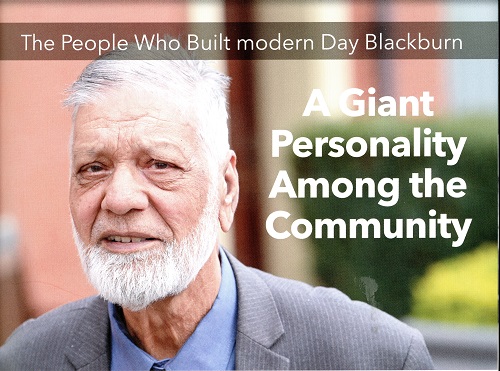
Mohammed Khaliq Choudhary was born in February 1941 in the Jhelum district of Pakistan, which was then part of British India. He was born and raised in a village which he greatly enjoyed. He has been interviewed for the One Voice magazine by his grandson, aged 15.
"I have lots of memories of growing up in Pakistan, enjoying the outdoors and rural life. Village life was fun, safe and there were always lots of places to play in the fields."
In Pakistan Mohammed Khaliq lived with his parents and siblings and was surrounded by extended family and a close village community.
"Every day was fun, and we were free to go play, it was a great environment to explore and grow up in. In winter though we would need to be home early as it would get dark and not to mention very cold."
He went to school in Jhelum and thoroughly enjoyed his time studying.
"School was a bit of a walk from my village, but I enjoyed going with my brother and friends. We played lots of games including wrestling, running races and tug of war and we would improvise and create our own games too.
"Village life was heavily focused on farming and agriculture. There was always lots to do.
I would help with farming duties and household chores when I had time away from my studies."
On completion of his studies Mohammed Khaliq began working as a clerk in his city.
"Later, I moved to Karachi, this was a huge city so a massive change from our picturesque village of Jahangir in Jhelum. I joined my brother, working in a factory where I became a supervisor."
Mohammed Khaliq Choudhary decided to move to the UK in hopes of finding a stable job and improving his family life both in Pakistan and in the UK. He moved to the UK in May of 1960. He had lived in many cities before deciding to settle in Blackburn.
"Initially I moved to Bedford where I stayed there for a few nights with family friends, but I didn't find the kind of work I was looking for."
Mohammed Khaliq then decided to move to London as he was keen to find a job that he enjoyed, and London seemed like the city to be in.
"Blackburn is a lot better now. In the 1960s
the town centre was small with no large
stores. The bus station has improved
massively, we now have a mall and
market where previously there was a
three-day market and an open market."
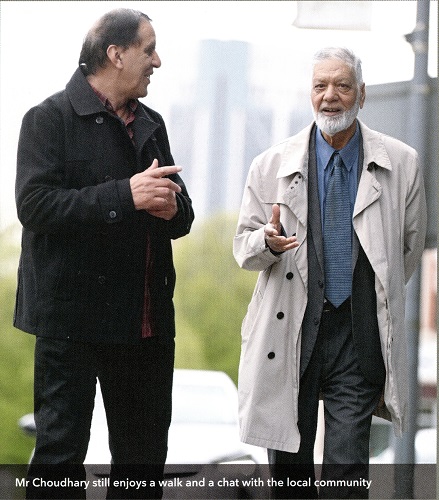
"I stayed in London for about six months where I worked in a plastic factory. Later I moved to Bradford where I worked in a wool mill and then some time in Accrington working in a cotton mill".
1962 was the year when Mohammed Khaliq Choudhary came to Blackburn. For a short time, Mohammed worked in a small factory in Blackburn.
In the 60s and 70s Blackburn and Bradford were much more comparable than London according to Mohammed Khaliq Choudhary.
"They both had a local community feel and a diverse population. This meant that facilities with both offered halal food, masjid, shopping etc. so were good places to settle in".
He states how London was very different. It was always really busy, more expensive and didn't have much of a local community feel.
"Though I had contacts, people were based all over London and therefore networks of support were sometimes further away. Remember, this was way before mobile phones and so close contacts and networks were a great help".
Mohammed Khaliq Choudhary explains how London had good transport links, better job opportunities, and nice to see as it is the capital city. However, he found the place was far too busy for him.
When speaking about moving to Blackburn he says, "The town was ok; it was like all other northern towns. I did have some contacts already in the town which was good, and the people were generally quite friendly too."
Mohammed lived on New Park Street, which was very close to the town centre, part of this street still remains today but some of it was demolished and that is where we now have a dual carriageway, known as Barbara Castle Way.
"I bought my first house in 1962, it was on New Park Street. It was a three-bedroom house. The house was bought jointly by a group of us for a grand total of £925. In 1964 I went to Pakistan to visit family and I sold my share of this house. On my return I bought another property on Warwick Street, this was eventually demolished in 1979 to make way for 'Waves' swimming baths. I then bought property on Norwich Street."
Communicating was not an issue for Mohammed Khaliq Choudhary as he had learnt how to speak, read and write English whilst he was in Pakistan.
"English wasn't a challenge for me. I could also speak Punjabi and Urdu. Being able to read and write meant that people who were not very literate would often ask me for support, and I suppose that is how I got involved in community work.
"My main purpose for coming to the UK was to work. I already completed my education in Pakistan so that wasn't something I was looking to do once I got here. Working life was rewarding but difficult due to the long hours. It was different to my time working in Pakistan and took time getting used to."
After a brief period working in the textile industry, he began working on the buses as a conductor.
"I preferred working as a conductor opposed to working in mills and factories."
Mohammed Khaliq didn't buy a car for many years after arriving to the UK.
"I used to get around on public transport, there was generally a good service, and it was economical to travel by public transport."
"I bought my first house in 1962.
It was a three-bedroom house.
It was bought jointly by a group
of us for a grand total of £925!"
It was a three-bedroom house.
It was bought jointly by a group
of us for a grand total of £925!"
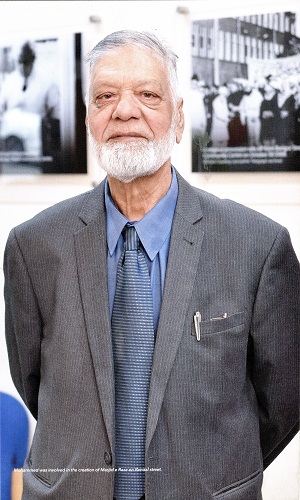
Mohammed was involved in the creation of Masjid e Raza on Randal Street
At his first job after moving to the UK Mohammed Khaliq was paid around £11 a week. As years passed and his roles changed this did eventually increase to a few hundred pounds a week.
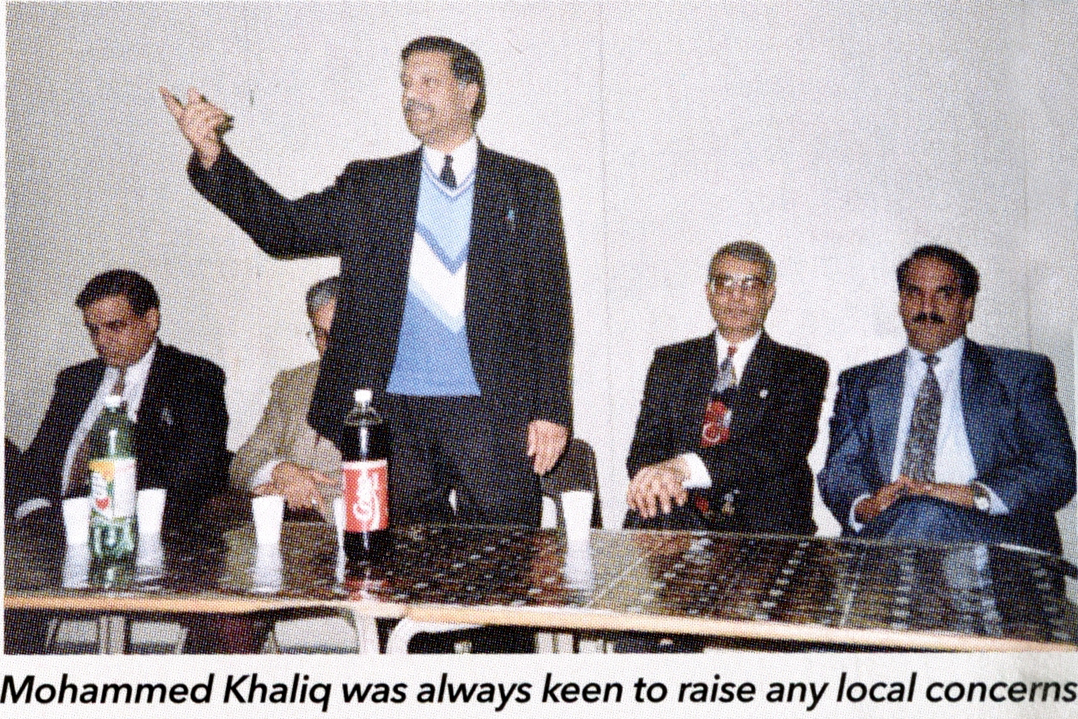
"I would usually split my income in two; half for myself and my family in the UK and the rest I would send to my family in Pakistan."
Mohammed states how we are now very lucky to have shops where halal meat and food is readily available. When he first arrived in the UK and specifically Blackburn there weren't any shops where you could go into and pick up whatever you wanted.
"In the beginning we made links with some local farms, where we could buy meat and arrange slaughter. Later on, in the 1960s, a halal meat shop was set up in Preston, so we were able to organise deliveries to Blackburn.
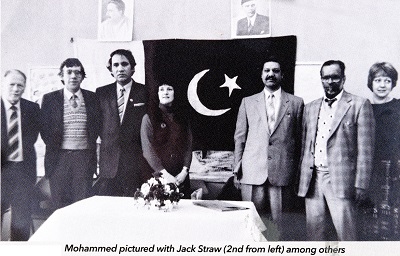 People would usually cook themselves at home opposed to getting food from takeaways and restaurants. Eating out was a rare occasion for most people who had come to the country to work. If we wanted to treat ourselves, we would usually get some fish and chips. There was not much in the option of halal restaurants and takeaways in those days.
When we first came to the UK, we didn't have a lot of free time due to work commitments. When I had some time off, I would socialise with friends and family, organise get togethers, visit social venues and of course shopping."
Being able to practice your religion is very easy with mosques and religious centres in every area. This wasn't the case when Mohammed Khaliq first moved to Blackburn.
"There was no mosque initially, prayers would be performed at home, venues would have to be booked for prayers like Eid namaz."
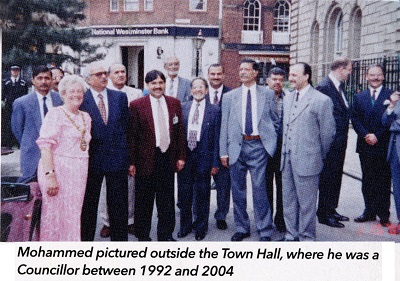
Mohammed recalls mosques started to be established in the 60s and 70s. Millham Street and Bicknell Street were the locations of the first mosques in Blackburn.
"I was involved with Randal Street, Masjid e Raza since its creation in the early 1970s and still remain a part of it today."
The community would get together and dig deep to purchase the early mosques in Blackburn as money was tight and many people had financial responsibilities abroad as well as here in the UK. However, though facilities were basic, the mosque would be a place where people came together.
"When I first came to Blackburn in July 1961 I didn't initially register to vote because we didn't know we needed to. Barbara Castle, who was the MP of Blackburn, came canavssing one day and introduced herself and her role. She introduced me to political activity. There was a number of challenges in them days including frequent attacks from the far-right so I became involved in local politics as an activist."
Mohammed Khaliq has been involved in supporting local democracy since the 1960s. In 1992 he stood as a local councillor. He remained a councillor for 12 years. Community members were his main drive as they would constantly ask him to stand for the elections.
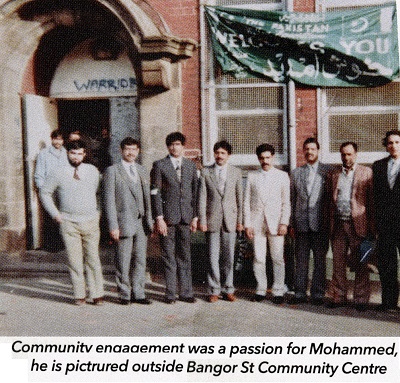
He was also involved in various civic roles, community and voluntary roles.
"I sat on an appeal tribunal for several years since the 1980s, I also was involved in setting up the Pakistan Welfare Association as well as supporting other community and faith organisations like the Lancashire Council of Mosques. I also served the community as a local councillor for the Bastwell ward for several terms."
When talking about how Blackburn has evolved, Mohammed states how the town has changed for the better
"Blackburn is a lot better now. In the 1960s the town centre was small, with no large stores. The bus station has improved massively, we now have a mall and market where previously there was a three-day market and an open market."
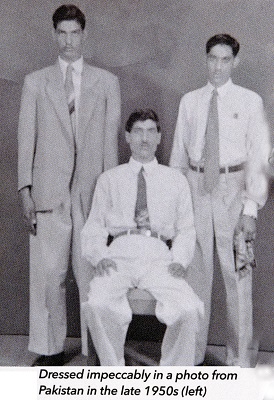
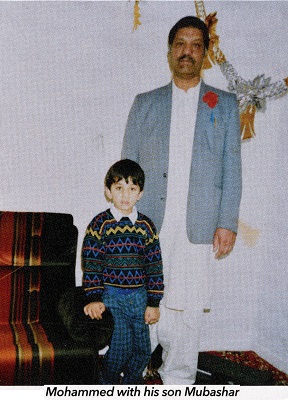
Mohammed Khaliq Choudhary has witnessed the many stages of the town and mentions the positive development in terms of infrastructure, housing and education.
"Overall, though things may not be perfect here, I feel there is more choice, variety and I feel we have a great diverse community."
Mohammed Khaliq Choudhary died on the 11th February 2025.
Transcribed by Shazia Kasim from;
OneVoice Blackburn, Issue 9, Summer 2024, page 13
With grateful thanks to the team at OnceVoice Blackburn for allowing Cotton Town to publish this article.
Published on Cotton Town, August 2024
Please select the following link to find out more about One Voice BlackburnAisha Jaffer
From Nairobi Colony to 50 years in Holland Street
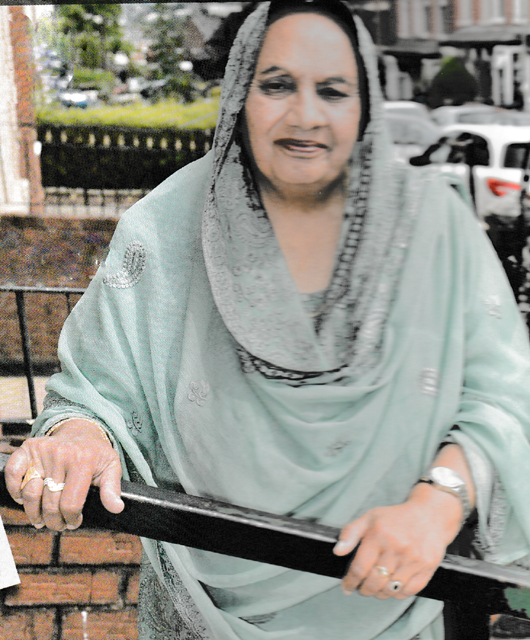
"It was winter when I arrived, so I was
forced to wear a coat, gloves and scarfs,
something which was not me."
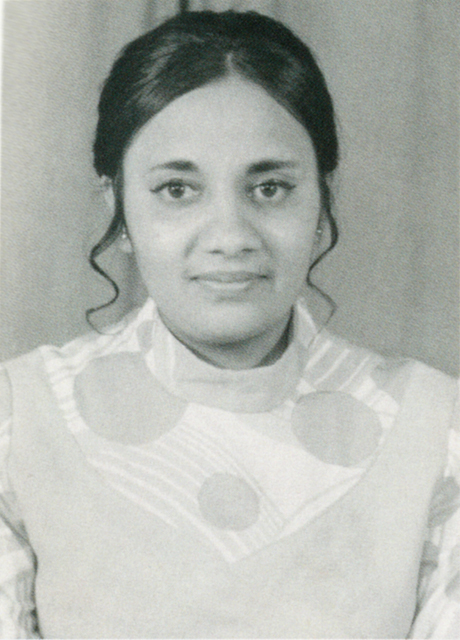
Aisha Jaffer was born in Nairobi in Kenya in January 1950. Her parents arrived in Africa from India in the 1930s for work. Her dad opened his own business, and they lived in a colony area. She came to Blackburn in the early 1970s. She has been interviewed by Ammarah Ikram, aged 13.