
 Loading more
Page 3
Rabia Gulam Ismail was born in Zambia, central Africa, in 1950. The 75-year-old is one of thirteen siblings and had a very happy childhood. Rabia and her family were extremely close and enjoyed each other’s company.
“Life in Zambia was absolutely amazing. The weather was always nice, and we had a huge garden growing up. We would spend our time climbing trees as kids, picking fruits like mangoes, peaches and figs from our trees. You don’t hear that often in the UK.
“I had many friends in school. We had a lot of European teachers, so English wasn’t new to me. When I first came to the UK, everyone would ask me how my English was so good and that was because of everything I had learnt from school.”
Rabia got married in 1969 at the age of twenty. Her husband had a British passport so after the British ruling of Africa ended, and Zambia became independent; he couldn’t work in Africa. He lost his business, meaning the family had no income. At the time they had two daughters, so they needed a new start.
“We decided to move to the UK in 1974. I was sad to leave my family and siblings behind, but this was something we really had to do if we wanted to make a decent life for ourselves.
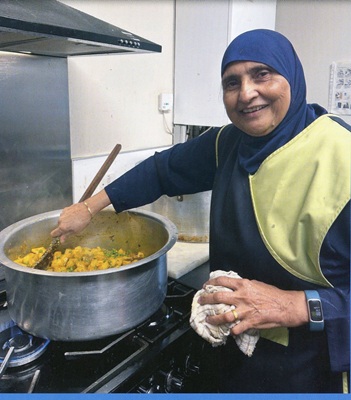
“On arrival to the UK, we spent one night in London in a bed and breakfast and then moved straight to Blackburn. My husband already had a job on the radar because he had some relatives in Blackburn who had sorted things out for him. He was a hard worker from the beginning. I remember he rested for two days and then went straight to work.”
Rabia arrived in the UK in April of 1974. Her first impressions of the UK were not great. She recalls the weather vividly as well as the housing conditions.
“I can remember it was so cold and dull. It was raining heavily. We got up the next day and the day after it was the same. That took a while for me to get used to.
“I was surprised at the number of houses that were on one street. They were all in a line so close to each other. This was a stark difference to Zambia as houses were far apart, there were maybe six to ten houses stretching over a very big street.
“My husband had relatives here in Blackburn, so we stayed with them for about three weeks initially. We then found a place of our own that we rented. I say our own, but we jointly rented with two other families. It was a three-bedroom house. Each family had one bedroom each and shared the living space downstairs. We would all use one kitchen. People didn’t have a lot of money back then, so this was the norm in many households.”
Two years later in 1976 the family purchased their own house on Hodder Street in Blackburn for £900!
“The street doesn’t exist anymore but every time I walk past that area the memories come flooding back. The house needed a lot of work, but it was our home, so it was all worth it.
“We had no idea on how to decorate. We picked up a brush and some paint and started painting the walls. Everything would just be black with soot as there was no heating systems and we used a fireplace.
“My neighbours were very nice people, and they came to the rescue. They said you’ll never get this done and recommended that we wash all the walls and start again. We did exactly that with cold water. We painted the walls and then put wallpaper on top of it to make everything look neat and tidy.”
One of the main differences that Rabia has noticed over the years is that people were genuinely helpful and supportive of each other in those early days. Everyone was inclusive and opened their doors to the community. Houses were full of life and joy. She believes now people like to keep themselves to themselves.
“You meet people by appointment now, you have to call them up to arrange a time and date to come over, but it was never like that.
“You see a lot of cars on the road now but in the 1970s and 1980s people would either walk to places or catch the bus. 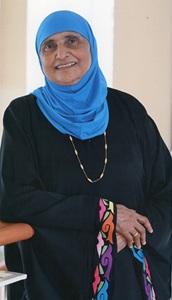 I would stroll around with a buggy with my two children. Idid a lot of walking because I enjoyed it too. It gave me space to relax and let go.”
I would stroll around with a buggy with my two children. Idid a lot of walking because I enjoyed it too. It gave me space to relax and let go.”Rabia eventually bought her first car for £250 which her husband fixed up. Those days there were not many south Asian females with vehicles.
“It was very convenient, but I still continued with my walking. Making friends was easier as people were more open and friendly than they are today. My neighbours were lovely and really made the process of decorating our new house easy and enjoyable. We didn’t have the fire on regularly as it was spring/summertime but still cold. I remember we used blankets to keep the kids warm.”
Rabia had a passion for cooking and has passed that onto others she meets. But at the time there were no modern devices to support.
“I still enjoy cooking but back then I found myself doing it more as I didn’t have much else to do. As I settled into the UK, I became used to the lifestyle. I still however found doing the laundry a difficult task.
“We couldn’t afford washing machines, so we had to wash by hand and trust me when I say this, it was a mammoth task. I had seven children in total so you can just imagine the amount of laundry I had to do.”
Blackburn has seen some huge changes throughout the years according to Rabia. While she reminisces about the past, she acknowledges that some change was for the better.
“It has become very modern. You don’t see many cobbled streets but back then every street was cobbled. It created character. The market and the town centre have also seen some great changes. We used to have the three- and five-day market which I loved.
“The town was more peaceful in a sense. There was structure and a homely feel in every household. I really got to know what a work life balance was throughout the years more so in the last few years.
“I find myself always wanting to do something and staying active. I love to set goals for myself; it keeps me going. I like having the feeling of having something to do the next day, and the day after that.”
Rabia was sadly widowed at the age of forty-seven so she threw herself into helping others in the community. She began her community work when her children had grown up and she had time to do things as a hobby.
“I went through such a huge ordeal in life, but I wanted to give back to my community. Perhaps it was my way of coping with such a tragedy, but I always think that there are other people who are far more worse off than me.”
Rabia is very passionate about health, so she decided to start up and run her own groups to integrate and encourage women to be adventurous and stay active. Some of these groups are based in Bangor Street Community Centre.
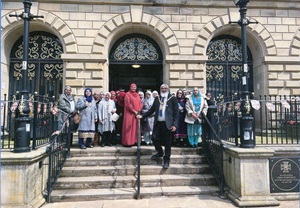
Rabia on the Town Hall steps with the Mayor of Blackburn Suleman Khonat
“I wanted them to meet other ladies and improve their quality of life both physically and mentally. I really want people to feel happy and healthy. Zambia was a place where I could be adventurous, and I wanted to bring that to women here.”
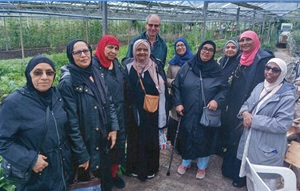
Rabia has organised trips, taking women to Manchester, Birmingham and Bradford. We also provide them with new experiences. She has introduced them to the Lake District and getting them to learn about wildlife and other outdoor spaces. She also runs projects, educating women about key health subjects like cancer awareness.
“I never in my wildest dreams expected my life in the UK to be like it is now. I have been through hardships but I’m in a very happy and content place right now. I help and support others and to me there’s no better feeling in the world.”
Having a strong foundation in life is key for the life Rabia has created for herself, her family and her community. She is a massive asset to Blackburn, and she holds the town very dearly to her heart.
“Growing up in Zambia helped me immensely in the work I do today. I want to give back because I had a good upbringing. I came from a large family and now I have a large group of friends that I can create experiences for through the groups that I support.
“I will always love and miss Zambia because that’s where a lot of my family still are. I love travelling there regularly to see everyone and connect with my siblings again. We can sit with each other for hours and just talk the night away. But I am glad that I have the community by my side here in Blackburn. The people of Blackburn are my family.”
Article published in One Voice Blackburn, Issue 14 Autumn 2025. Pages 20-23.
Transcribed by Shazia Kasim
With grateful thanks to the team at One Voice Blackburn for allowing Cotton Town to publish this article
Published November 2025
Police Pioneer Celebrates 25 Years in the Force
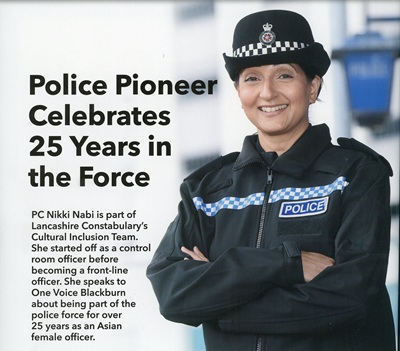
Nikhat Nabi was born in Blackburn and grew up in the town, studying at Notre Dame School which doesn’t exist anymore. The school merged with John Rigby and is now known as Our Lady and Saint John’s.
“I had a wonderful time in school. It was quite strict at the time, but I enjoyed being there. I then went on to do my A Levels at St. Mary’s Sixth Form College which has also closed down now. I completed my A levels in chemistry, maths and biology which was challenging as you can imagine.”
Nikki’s university journey started in 1993 at the University of Leicester reading chemistry. She found it difficult being so far from home. She moved to Manchester after two years from the East Midlands.
“I lived away from home because it was just easier. My parents were very encouraging; they were incredibly supportive of girls being in education and studying for as long as they wanted to. They wanted me to go to university and stand on my own two feet.
“I really enjoyed my time at university. Initially I was homesick because I was a home girl through and through. We didn’t have mobile phones then, so we had to use a payphone to call home. I felt a slight disconnect from my family. All in all, the experience was different but in the best possible way. I met my husband at university which was a plus.”
Blackburn was quite sheltered for Nikki. Her parents were strict in highlighting boundaries.
“I had a lot more freedom at university. My parents were firm but fair, so it was the perfect mix. My father unfortunately passed away in my final year of university just as I had completed my exams, so I decided to move back to Blackburn. His death was a huge shock for everyone because it was very sudden. I wanted to be there for my mum and look after her.”
Nikki struggled to find a job in Blackburn as most of the graduate jobs were in the bigger cities at the time.
“I couldn’t move away because of my responsibilities at home. Shortly afterwards, I came across a job advertisement in the newspaper. There was no internet back then so we would get our entertainment and information from reading newspapers.
“The job was for a control room operator with Lancashire Constabulary. I knew nothing about policing and had never been interested in it, but I decided to apply because it was local. The application process was lengthy, but I was successful throughout each of the stages.”
In 1999 Nikki officially joined Lancashire Police. She expected it would be a large organisation that would be extremely high tech but to her surprise they didn’t even have computers. This was a real eye opener for her.
“My role was taking non-emergency 999 calls and then dispatching an officer to the scene. We had to write everything down by hand and then tell the officers about the issue.”
Shortly afterwards the systems started to change, and things became more advanced. In 2000 there was a large intake of workers at Lancashire Police as they were expecting a crash out and chaos. So, they wanted to ensure the police department was secure.
“We were referred to as the ‘Millennial Team’ because we were from the generation of the force that experienced rapid change in operations and facilities.
“I worked in the calls department for about five years and then I started to get a bit bored of it. Alongside working, I was applying for jobs related to my degree. I wanted to work in a pharmaceutical company.
“I ended up joining the police because I found that my values aligned very closely with the work that they were doing. It made me happy knowing that I could help people and make a real difference to the community. When I started working on calls, I thought it was restricted because I couldn’t do much whilst just talking to someone. People were vulnerable and I couldn’t really connect with them.”
Nikki wanted to attend to issues first hand so in 2004, and after extensive training, she became a police officer. She had got married a year earlier so life was really moving forward for her. Nikki worked in the frontline for the next 17 years, predominantly in Blackburn and Accrington.
“During that time, I was able to use my language skills and my cultural awareness in our communities, so I felt like I did make a difference because there was nobody else on my team that looked like me. I was the only Asian female officer on my team.”
After having her first daughter in 2006 she began working part time.
“I did consider leaving but because my job made the process of starting a family and working very manageable, I decided to stay on. I have been blessed with three daughters and each time I was given the time to enjoy family life and work part time. Lancashire Police are great employers.”
In 2021 Nikki decided to come off frontline and do a different role which was part of the workforce representation team. The Prime Minister at the time wanted an uplift of 20,000 police officers so they created a team to help push the initiative.
“Being part of the team made me feel like I gave something back to our communities. We started off with increasing female representation within the policing department. We were really successful as we were able to increase the numbers by 5 percent. Ethnic minority representation was at approximately 3.5 percent but increased to around 6 percent.
“We really did do some good work;
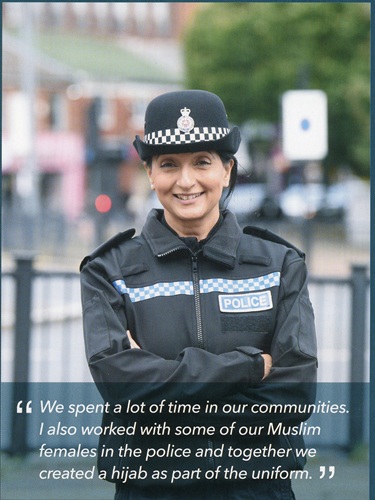
Nikki, now fifty, is part of the Cultural Inclusion Team.
“I’ve been fortunate enough to really get out there in our communities and build trust and confidence with them. I have been able to engage with them and go on to recruit women into the police.”
Nikki was recently the recipient of the Outstanding Contribution to Women in Policing Award that is in memory of the two Greater Manchester Police officers, Nicola Hughes and Fiona Bone, who sadly lost their lives ten years ago.
“The award was a great honour to me. To remember them by honouring somebody else in their names is an absolute privilege. The award was a national award, and I was selected from amongst forty-three police forces.”
Nikki has also received an award from the British Association of Women in Policing for her work in increasing female representation within policing.
“I have also been put forward for an international award that I will be collecting soon.”
Nikki believes that there are so many misconceptions when it comes to the police.
“People seem to think that you must be of a particular build or be a certain height but that’s not the case at all. I have also heard that you can’t work part time and that’s also a myth.
“There are many different roles within policing. It’s not just about being an officer on the frontline. You will need to do an initial two years of being a police officer and then go onto other things like becoming a detective, becoming a traffic officer, work in the control room, become a mechanic or a lawyer and so on. There are many different opportunities.”
Nikki’s current role allows her to really understand the communities in Lancashire and pass the information on to their command team so they can really get to the bottom of any issues that exist in the local towns.
“People see me beyond my uniform. They see me as a south Asian female who is approachable. During the time of potential riots in Blackburn last year, we made a conscious decision to speak to our communities and tried to end the misinformation that was being passed around.
Policing is definitely not all rainbows and butterflies, but I honestly feel like there is nothing quite as rewarding as making the community better for future generations. That’s one of the main reasons why I want to work with young people to learn about their thoughts and opinions so we can work towards creating the next generation of a supportive and understanding police force.”
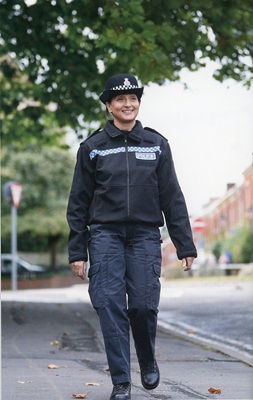
Nikki isn’t done just yet. She hopes to inspire young people to come forward and want a profession in policing.
“I want more young people to join the police force. Once I have completed that mission, I can hopefully put my feet up.”
Article published in One Voice Blackburn Issue 14, Autum 2025. Pages 40-42.
Transcribed by Shazia Kasim
With grateful thanks to the team at One Voice Blackburn for allowing Cotton Town to publish this article
Ibn Masood; The Artistic Gentlemen
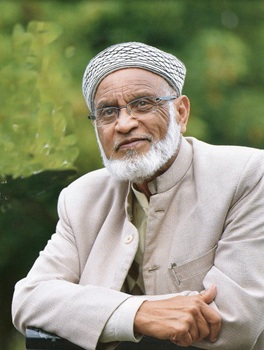
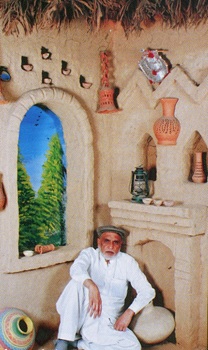
Many people wouldn’t associate art with early south Asian residents in Blackburn. In the latest in our heritage series
One Voice Blackburn spoke to Ibn Masood about his artistic flair which set him apart from some of his friends and colleagues who arrived in the UK in the 1960s.
Ibn Masood, known by many as Rahi was born in a village called Khaniyara Sharif in the Mirpur district of Azad Kashmir in 1941. He acknowledges he had a great life growing up surrounded by his family, especially a strong bond with his grandparents.
Masood completed his education up to metric, but he always had a passion for art and calligraphy.
In 1957 Ibn Masood was part of a film shoot in Rohtas where he saw a tape recorder in Pakistan for the first time.
“I was shocked with how it all worked. I kept thinking how does this device record what people are saying and then rewind so you can hear it again. I went to my uncle who was in the navy at the time and asked him how was this possible.
“It may seem silly but that was the first time I had ever seen anything like that. That’s where I fell in love with photography and videography.”
Masood arrived in England in 1962, specifically to Bradford, to support his family.
“I had never worked in Pakistan, so my first ever job was in the UK. I chose Bradford because my entire family who had moved to the UK were all in Bradford, including my father and grandfather. I knew nothing about the UK but was called here by my father.
“There weren’t any halal food options when I first moved to the UK. There were very selective shops, and you would have to use one or two contacts that you had if you wanted halal meat.”
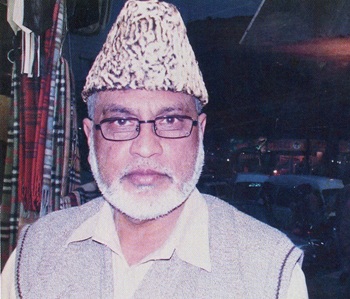
Ibn on a vist to Pakistan
On his very first day, Ibn Masood was astonished by the strange environment he had arrived to.
“At four in the morning, I saw the milkman’s cart coming with a jingling sound; he was leaving milk, eggs and butter at people’s doorsteps.” Ibn Masood was very impressed with people’s honesty and trust.
“The next day I went to the market with my father, where everything had a price tag. People would pick up items and take them to the counter to pay: this was something that didn’t happen in Pakistan.”
Masood soon started working in a factory with his father. On the weekends and his days off they would go to the cinema as a way of catching up outside of work and having fun. They also had two aunts living in Bradford, whom they would visit regularly. There was only one mosque in Bradford at that time.
“There was no sectarianism in people those days. The identity of a Muslim was only Pakistani, Indian or Bengali, and there was great love and affection among people.”
He ended up moving to London and continued working in a factory for a short period. However, this wasn’t something he wanted to do long term. Following his short stint working in a factory, Ibn Masood began working as a photographer for the newspaper ‘Mashriq Weekly’ which was based in London and was one of the first Urdu newspapers in the UK.
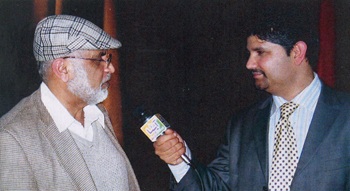
Ibn Being interviewe for Apna Channel
“I used to meet many prominent people; all the political leaders, film stars and singers who came to the UK. I covered them all. I also worked for the newspaper Watan in London. It was something I really enjoyed doing.”
Living away from his loved ones was one of the hardest things for Masood when he was living in London.
“I started getting tired of missing things and always being late for occasions like weddings and funerals.”
Four years later and Masood found himself moving out of London and into Blackburn. His uncle who was also living in London at the time wanted to move to Blackburn as his family had newly arrived from Pakistan and London was just too expensive for them to reside in.
“He wanted to move to Blackburn because he had heard house prices were very reasonable. I didn’t have anyone that I knew left in London, so my uncle told me to move with him. I left everything to help him settle. He didn’t end up moving to Blackburn, but I was adamant to make a good life for myself and my family, so I saw it through.
“I bought my first house in Blackburn for £800. After that as soon as I was offered a house, I would either buy it myself or tell my family to buy it instead of wasting their money on renting.”
When he first came to Blackburn, Masood worked at a Phillips’ factory and alongside that continued with his photography work.
“I was one of the first people who could write Urdu calligraphy in Blackburn. People from all over the country including Burnley and Stoke on Trent would come to me to get work done in calligraphy.
“I did a lot of mosque decorative work in Islamic calligraphy when mosques first started to be built.”
Since house prices were considerably cheaper in Blackburn compared to London, Ibn Masood and his family bought three houses in Grey Street just off Whalley Range.
“Things in Blackburn were very different to London. There weren’t many facilities in those days. Fireplaces would only be used on the weekend. There was no hot water and toilets were situated outside.”
Eventually Masood decided to open his own takeaway called Nasib Tikka Way in Blackburn. Two years later, he opened Royal Kebab House in the area of Whalley Range, which exists to this day.
“After a while, I met Imtiaz Patel, who was in charge of the museum in Blackburn. He was very impressed by my photography work and organised an exhibition of my pictures at the museum.
“Alongside that, I continued with Urdu calligraphy, creating advertisements for many mosques and designing Ramadan timetables. I then went on to have an exhibition both in Preston and Darwen library.”
Ibn Masood along with his friends and colleagues formed the Islamic Welfare Society, which included prominent names like Noor Hussain Jafari, Naimir Akhtar, Muhammad Hussain Ghulam, Haji Mansab Dad and Ghulam Fareed.
“I served as a commissioner and continued to serve my people. The people honoured me greatly, for which I consider myself very fortunate.
“In 1987 my friend Chaudhry Zulfikar (who has now moved to London) and I opened Sangit Radio in Blackburn. We would play Bollywood and Lollywood songs on weekly transmission.
“People really took to the radio show, so they created another radio show called Radio Ramadan. It was something new for people and people absolutely loved it.
“Following that, the Lancashire Telegraph contacted us to say that they wanted to create a radio station called Burns Radio and wanted our team to officially have a slot a week. We would play qawwalis.”
Along with his professional life, Ibn Masood made an effort to enjoy his personal life to the fullest.
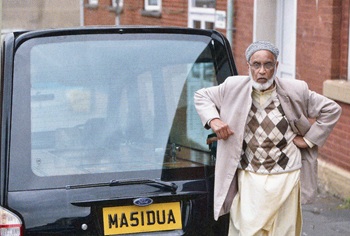
Funeral car Donated by Mr.Rahi
“I organised an exhibition of my pictures at the Blackburn Museum. I also went on to have an exhibition both at Darwen and Preston libraries.”
“The Pakistani community would support each other greatly in those days because we were all going through the same situations. Mohammad Khaliq who has sadly passed away did a lot for our community. It was a joyous occasion when he became a councillor.”
Masood has always made it a priority to give back to the community. He regularly supports his local mosques through various charitable actions.
“I still support Masjid-e-Raza and Jamia Madina Masjid to this day. My family and I raised funds for the mosque’s funeral car and we will continue to fund it for as long as we are alive.”
Admittedly things are different now to when Mr. Masood first moved to Blackburn.
“Our town has evolved immensely in the best way possible, but I will say that there was a lot more honesty and loyalty among different communities before. Everyone keeps themselves to themselves now, we are lacking in that community spirit.”
When asked about how he feels about his birthplace Pakistan, Ibn Masood with a longing in his eyes referred to a sher (quote) – “Hazaron manzilain hongi, hazaron Karwan honge, nighain hum ko dhondein gi na jane hum kahan honge”. Which translates to “There will be thousands of destinations, thousands of ways to get there, the eyes will look for me, but I don’t know where I will be”.
“I still love and remember Pakistan all the time. I can’t go now because of my old age. I find it difficult travelling for such a long period of time. The last time I went to Pakistan was three years ago.
Ibn Masood believes that young people aren’t to blame for the lack of pride for their culture, but it is in fact the older generations.
“We have either left them behind or let them get too far ahead. We haven’t taught them to walk with us.”
Article published in One Voice Blackburn, Winter 2025/26. Pages 25-27
Transcribed by Shazia Kasim
With grateful thanks to the team at One Voice Blackburn for allowing Cotton Town to publish this article
Published February 2026