
 Loading more
Page 4
The big advertisement given to recruiting last week by the reduction of the standard height measurement, also by the Government’s announcement of more liberal allowances to the soldiers dependents, is still influencing the returns at the Blackburn recruiting office. Last week, which was the best for some time produced 123 recruits, and the previous week 92, but up to noon yesterday the number for this week was 145, whilst there have been more “rejects” than usual. The figures are as follows:
Recruits Rejects
Saturday................. 30 11
Sunday................... 5 2
Monday.................. 43 21
Tuesday................. 31 9
Wednesday........... 18 5
Thursday................ 15 3
Friday..................... 3 7
Total....................... 145 58
In the majority of instances the cause of rejection was defective sight and deficient chest measurement. The number of recruits since the beginning of the war is 3,465—412 have enlisted during the past 4 weeks—whilst the number of rejects now totals 814.
Whether it will be necessary to continue recruiting in Blackburn for the Territorial Force is not known, but there should be no lack of men if it is desired to form another reserve battalion. The 4th (Reserve) Battalion will, it is anticipated, be used to fill any vacancy that may occur in the 4th Battalion stationed at Cairo. Surgeon-Capt. Wilson, of the 4 Battalion, who personally examined the recruits for the Reserve Battalion remains at Canterbury-street, in charge of the depot staff. Dr. Wilson spoke highly of the physique of the men.
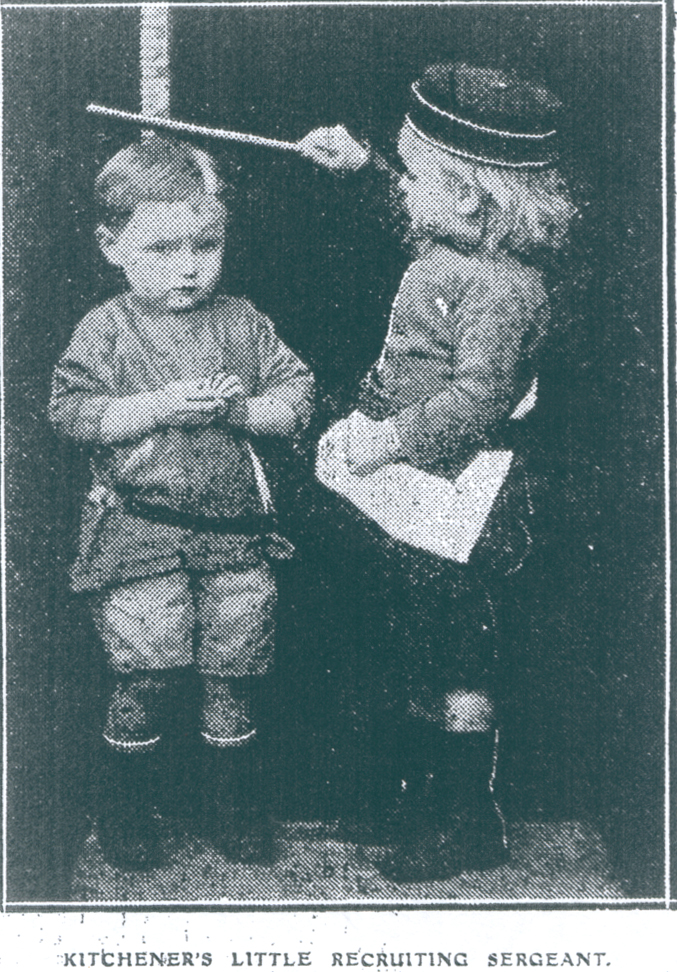
Blackburn Weekly Telegraph 7th November 1914
Blackburn Harriers
The weekly run was held on Saturday, eight members turning out. It was decided not to lay a trail. The pack in charge of H. Ames, captain with J. C. Haslam, whipper-in, went down Pleckgate, behind the laundry, across Whalley New-road, over Wilpshire Golf Links, past the Orphanage to Lovely Hall (Salesbury), through Ramsgreave, past the Hare and hounds, and home, a distance of about ten miles. The country was very heavy after the rain of the previous week, and footholds, especially down the steep parts, was bad to obtain. On one part of the run the harriers had rather a startling experience, a farmer urging his dog to attack them. During the time the club has been in existence they have never been seriously interfered with by the farmers over whose land they are obliged to cross. It is a point with all clubs to do no damage whatever to fences etc. If the pack had not kept the dog off it would most certainly have inflicted injury on one or more of the members. It was decided at the annual meeting, held before the war, to enter a team for the junior cross-country championship, but we hear the fixture has been abandoned. In any case it would hardly have been possible to raise a strong enough team. Providing nothing unexpected turns up the local club entertain Burnley Harriers to-day [Saturday]. It is hoped to get a trail away by 2.30. The route is over Wilpshire Moors and Mellor. The members will finish up by the side of the reservoir on Revidge. It is not known yet how the count will be, but it probably will be the first four in each team, the fewest number of points winning. A good race is anticipated as Burnley are a sporting side.
Blackburn Times 14th November 1914
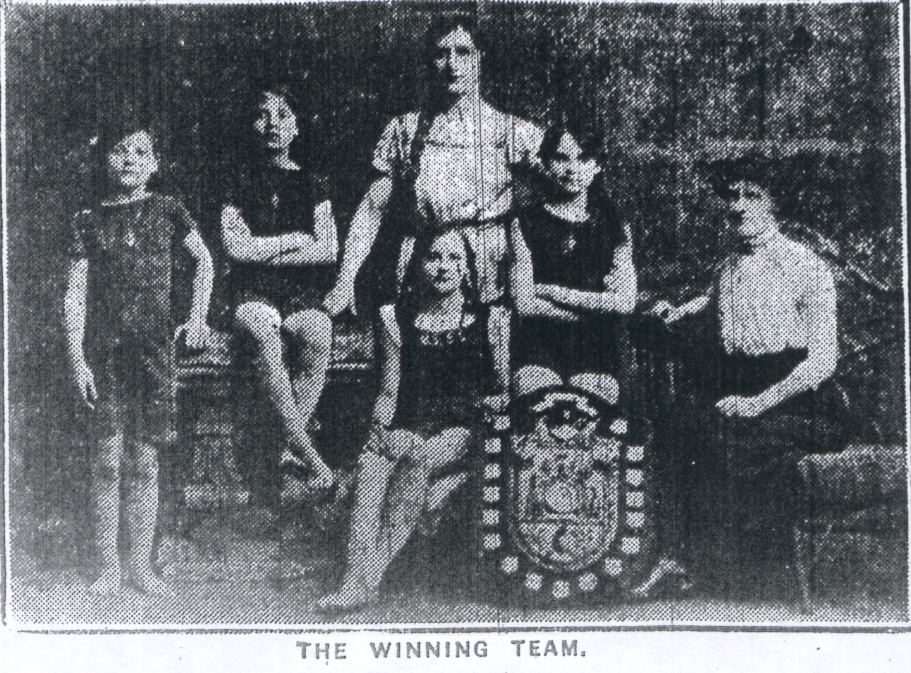
School Girls and Swimming
Winners of Bottomley Challenge Shield
For the seventh year in succession the children from Bank Top Council School have won the Bottomley Challenge Shield, in connection with the Blackburn School Children’s Swimming Competition. This year the race was of exceptional interest, as it was known that several of the Schools competing had children who are exceptionally good swimmers. The race, as was anticipated, was a closely contested one, Bank Top winning by about half a yard. The names of the winners, reading from left to right are: Edith Singleton, Alice Ford, Agnes Bennett, and Alice Jackson. The others are Miss Hodgson (swimming instructress to the Education Committee) and Miss Horsefall (the mistress in charge of the girls).
Blackburn Weekly Telegraph 14th November 1914
War Pensions
A Greatly Improved Rate
The Government this week issued a new scale of pensions for seamen, marines and soldiers, and their wives, widows, and dependents for the period of the present war. No change is made in the separation allowances, but considerable increase in the amount of pensions to widows and disabled or partially disabled soldiers are to be given. The news of the death of a husband is no longer to mean to the childless widow the reduction to 5s of the amount she has been receiving as separation allowance. For 26 weeks the old payment will be continued, and then a pension of 7s 6d is to be paid. The following statement shows the improvement in the minimum pensions for the widows of privates:
New Rate Old Rate
Widow with one child 12s 6d 6s 6d
Widow with two Children 15s 8s
Widow with three Children 17s 6d 9s 6d
Widow with four Children 20s 11s
Widow with two Children 15s 8s
Widow with three Children 17s 6d 9s 6d
Widow with four Children 20s 11s
The scales of pensions for partially or totally disabled soldiers and sailors also show considerable increase.
The following will be the minimum weekly scale of pensions for widows and children of seamen, marines and soldiers who in the present war are killed in the performance of naval or military duty, who die of wounds or injuries within seven years after the receipt of the wound or injury, or die of disease medically certified as contracted or commencing while on active service, within seven years of their removal from duty, on account of such disease:
A B C D E
With four Children 20s 20s 6d 21s 21s 6d 22s 6d
With three Children 17s 6d 18s 18s 6d 19s 20s
With two Children 15s 15s 6d 16s 16s 6d 17s 6d
With one Child 12s 6d 13s 13s 6d 14s 14s 6d
Without Children 7s 6d 8s 8s 6d 9s 10s
With four Children 20s 20s 6d 21s 21s 6d 22s 6d
With three Children 17s 6d 18s 18s 6d 19s 20s
With two Children 15s 15s 6d 16s 16s 6d 17s 6d
With one Child 12s 6d 13s 13s 6d 14s 14s 6d
Without Children 7s 6d 8s 8s 6d 9s 10s
A—Army private, marines below corporals and all navel ratings below those described in B, C, D and E
B—Army corporal, corporal of marines, and navel 2nd class petty officers leading rates with over three years’ service as such and passed as petty officers
C—Army sergeant, sergeants of marines, and 1st class petty officers and petty officers (N.S.) of the Navy.
D—Army colour-sergeants, colour and staff sergeants of marines, and chief petty officers of the Navy.
E—Army quartermaster-sergeant.
In every class there will be an additional allowance of 2s for each child in excess of four. The payment for children will be continued in the in the case of girls until the age of 16, and in the case of boys until the age of 14. If the boys attends at a State-aided school (not being an evening school) the pensions will be continued until he leaves school up to the age of 16. In the case of any child unable to maintain himself or herself owing to mental or physical infirmity, the payment may be continued up to the age of 21. In the case of motherless children payment will be 5s a week for each of the first three children and 4s a week for each child in excess of three.
The pension of a window will census upon her marriage, but she will receive a gratuity of an amount equal to two years’ payment of the pension. The payments in respect of children will continue irrespective of remarriage of the mother.
Additional allowances to the necessitous windows and a scale of pensions for partial or total disablement are provided for.
Blackburn Weekly Telegraph 14th November 1914
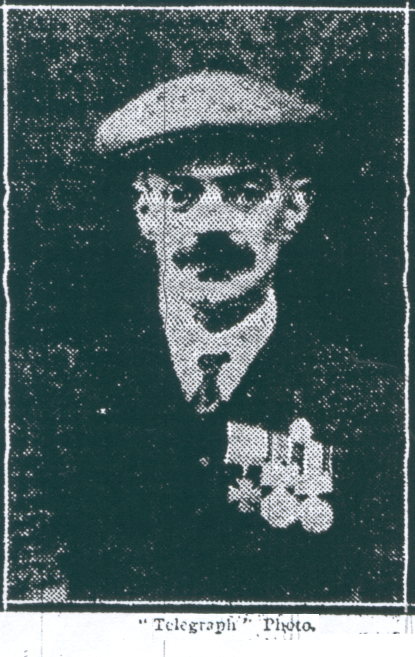
Blackburn V.C. Returns to the Ranks
Private James Pitts V.C., Water-street, Blackburn, has enlisted in Kitchener’s Army, having joined his old regiment, the 1st Battalion, Manchester’s. During the South African war fourteen years ago, Pitt was awarded the Victoria Cross for bravery at Caesar’s Camp, on the outskirts of Ladysmith, where a small number of the Manchester’s kept at bay a large force of Boers. When all their comrades had been killed, Pitts and Private Stott, of Haslingden, alone held the position till dark. In the photograph Private Pitts is shown wearing the Victoria Cross and south African medals.
ADVERT
THE War—For two weeks only we will Sole and Heel F.W.S. Ladies’ Boots for 1s 9d, and Gents’ 2s 9d per pair. Usual quality and promptitude guaranteed. Save money by wearing F.W.S. Laces and using F.W.S. Polish. Fred William Sutcliffe, 8 Lord-street Blackburn, and all branches.
A Haven of Rest
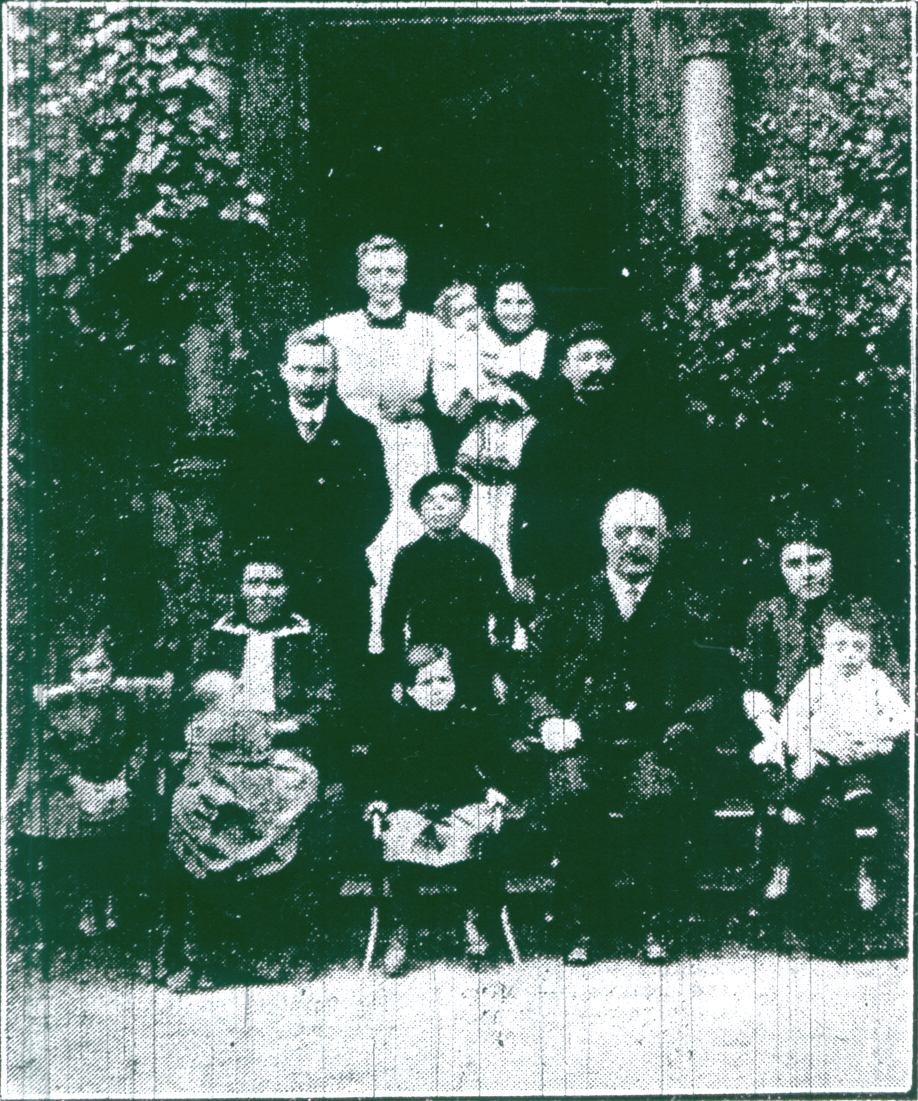
Belgian Refugees at Blackburn
A warm welcome was extended to Blackburn’s first batch of Belgian refugees, who arrived in the town on Monday evening. The local committee had offered to provide accommodation for 50 persons, but on Monday only two families arrived, consisting of a dozen persons. They came from Ostend. They were met at the railway station by members of the committee, and their arrival was a signal for much applause. They made the journey from London alone and in conversation all agreed that they had had a pleasant time. Among those who extended a welcome were the Rev. Canon Lonsdale, rector of St. Alban’s; the Rev T. R. Sale, vicar of Blackburn; J. P. Wilson, pastor of James-street Congregational Church; Mr. J. P. Bonney, secretary of the committee; Mr. James Sharples, Mr. C. Etherington, Mr, Philip Smalley and Mr. John Wells.
On arrival they were conveyed in motor-cars to the headquarters of the Blackburn Co-operative Society in Northgate, where the latter had provided a tea. On entering the building the Belgians were given a hearty reception by a large concourse of people, and judging by their pleasant countenances the refugees were more than pleased with the arrangements made for their comfort. “Long live Belgian” cried an onlooker, and a male member of the party, on hearing the name of his country, made a suitable acknowledgment.
After tea had been served a pianist rendered the national anthem of the Allies, and a chorus joined in the singing of “It’s a Long Way to Tipperary.” The Belgians were afterwards taken in motors to Ivy Bank, the residence of the late colonel H. J. Robinson, where Mrs. Cressy is officiating matron. The party consisted of a Belgian fisherman, his wife and five children, and a lady and two children. In an interview the fisherman explained that he and his family left Ostend the day previous to the Germans entering. They were members of a company of refugees who were conveyed across the Channel in a fishing smack, and they considered themselves very lucky in making their escape. Devoid of all belongings the refugees were in a terrible plight, and so hurriedly had they to make their exit that the families were separated, and the scenes on the boat would never be forgotten. The roar of cannon was constantly heard, and they were thankful to reach Dover, from which place they were taken to London where they had been in residence for the last fortnight. They thoroughly appreciated the kindness of the English.
The refugees apparently belong to the poorer class, and the only personal property they were able to bring away with them were contained in two small boxes. One of the women carried a little one on her arm and led another by the hand, and a lad, who seemed not more than ten struggled with a child almost as big as himself. Both woman and boy were eventually relieved by the station constable and other officials. The man being lame and walking by the aid of a crutch gave the erroneous impression that he was a wounded soldier. When the party were being put into separate taxis in which they were to be driven to Ivy Bank for the night, some of them displayed anxiety about being parted. They were reassured, however, and drove away amid a chorus of Cheering.
Our representative paid a visit to “Ivy Bank” on Tuesday and found the party thoroughly enjoying their new surroundings. One little fellow perched himself amid the shrubberies and made gleeful exclamations in his native tongue as the electric cars passed up and down Preston New-road. Later he went for his little sister and his mother, and insisted on their witnessing the same interesting spectacle.
In the house was M. Edgard Duchateau who spoke English quite excellently, and who is acting as interpreter at “Ivy Bank,” “Ellerslie,” and Moss Bridge Hospital, Darwen. He appears in the group photo given above. He told our representative that the refugees left Ostend just when the German cannonading became manifest, and they came to England on board the Royal Belgian yacht. This bad weather prevailed, and they were two days and two nights on the water.
Relating his personal experiences, M. Duchateau said he was employed by a Belgian Congo firm In Brussels, being a bookkeeper in the office. He was the son of a Belgian colonel, and his mother resided in Bruges. On August 1st he left work to visit his home, and the following day was warned that he must not return, because his services would be required as one of the Bruges Civilian Guard. He had left all his private belongings at Brussels, and was unable to go back for them. In the course of his duties ha had two or three slight skirmishes with the German outposts and on one occasion a bullet just glided of his knee. One day he set out on his duties to post notices on the official boards of the town and returned at 5.45 pm. He was then warned to leave the town because the enemy were near at hand, and they paid scant courtesy to the civilian guard. He had just 15 minutes in which to get ready and catch the last train that night. The Belgians had found by experience that houses which were locked were not respected by the Germans, but that they generally allowed dwellings occupied by people to escape. Therefore his mother remained at home, whilst he and hundreds of others took part in the general flight. The Germans were expected at six o’clock the following morning, and he and his friend considered it wise to wait the final train the following morning. They slept at the railway depot, and steamed into West Cappelle at 8am. The train was going no further, and they therefore had to continue their journey of 25 miles on foot. They took the boat to Flushing and sailed to this country.
The Belgian people would never forget the kindness of their English comrades, and they looked to this country to save them even more so than France. Asked if he had been cognisant of any acts of cruelty by the Germans, the interpreter said the Civilian Guard arrested one German officer, and in his possession was found a ladies hand. It had evidently been cut off in order to gain possession of the rings. The officer was brought to Bruges as a Prisoner. He also came across a girl of five at the same place whose hands had been cut off by the Uhlans. Whilst Belgium mourned the loss of many brave sons and the destruction of valuable buildings nevertheless she did not regret the action she had taken in defence of the homeland. With the valuable help of the British and the French particularly the former the Belgian people were confident of ultimate success.
M. Duchateau had had the honour of shaking hands with the Belgian King, whose bravery and steadfast courage everyone so greatly admires. He paid a striking tribute to the fighting qualities of the Turcos, and said they never considered a German dead unless he was beheaded. One brave fellow carried a German head in his haversack for seven days and proudly displayed it in head quarters of his French and Belgian colleagues.
Another party of 11 refugees arrived in the town on Tuesday and were taken to the Parish Rooms of St. Silas’s Church, which had been offered for their accommodation. They are all men of the tradesman and artisan class, with ages ranging from 15 to 50 years, and they come from different parts of Belgian, though most of their homes are at Brussels. One man is a Greek. They spent some days at Folkestone and London before coming to Blackburn. The Parish Rooms are admirably adapted for the purpose to which they have now been put. About a dozen beds have been lent by local people, and whilst the front room will be used for sleeping purposes the second room will be available as a sitting room. There are also splendid kitchens arrangements. Several people have expressed some surprise that these men are not serving in the Belgian Army. It is explained, however, that compulsory service has not been part of the general policy of Belgian, and owing to the swift advance of the Germans these men had to fly before they had any opportunity to train, just as men in this country would have to take a similar course in the event of our being invaded. The men seem quite happy in their new surroundings, and they are assisting to clean their own rooms and to prepare meals.
Efforts are being made to obtain regular and systematic contributions of money or food each week to provide for the refugees. Mrs. Smith, wife of the Vicar of St. Silas’s, has already received some offers of bread each week and others are hoped for. The cooking arrangements are under the superintendence of a Belgian lady, who with her daughter and two boys is residing with Mr. Stansfield of Billinge-avenue.
There are hopes that those of the party who are physically fit will participate in military training with the local Territorial’s after a short time.
Poets and The War
On and O’er
I gaze on the earth this Autumn morn,
And see flowers here and there,
And tangles of grasses, and trees, now shorn,
Of their garment, stark and bare.
But I know that a Springtime again will come,
Then a Summer with everything gay,
For these tangles of grasses and naked trees,
By new life must be hidden away.
And see flowers here and there,
And tangles of grasses, and trees, now shorn,
Of their garment, stark and bare.
But I know that a Springtime again will come,
Then a Summer with everything gay,
For these tangles of grasses and naked trees,
By new life must be hidden away.
I gaze o’er the earth this Autumn morn,
And see Kindness here and there,
And tangles of nations, and friendships torn,
By a blast disguised in prayer.
But I know that a Springtime again will come,
Then Summer with everything gay,
For those tangles of nations and friendship torn,
By new life shall be hidden away.
J.P. Howe, 21, Park Avenue Blackburn.
And see Kindness here and there,
And tangles of nations, and friendships torn,
By a blast disguised in prayer.
But I know that a Springtime again will come,
Then Summer with everything gay,
For those tangles of nations and friendship torn,
By new life shall be hidden away.
J.P. Howe, 21, Park Avenue Blackburn.
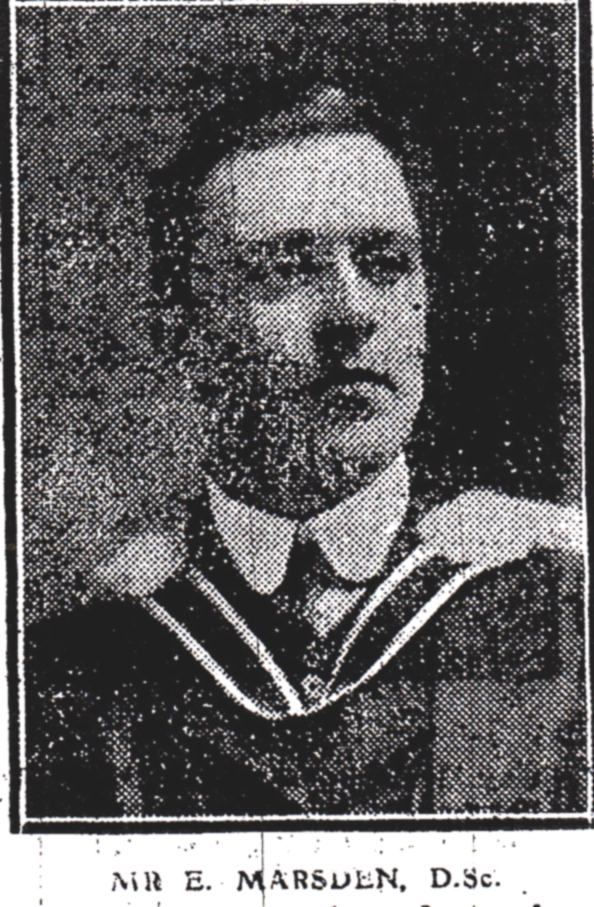
£700 A YEAR: A BLACKBURN SCIENTISTS CALL TO NEW ZEALAND
Dr. Ernest Marsden, whose home is in Lynwood-road, Blackburn, and whose father carries on business as a draper at Rishton, as accepted the Professorship in Science at Wellington University, New Zealand, at a salary of £700 a year.
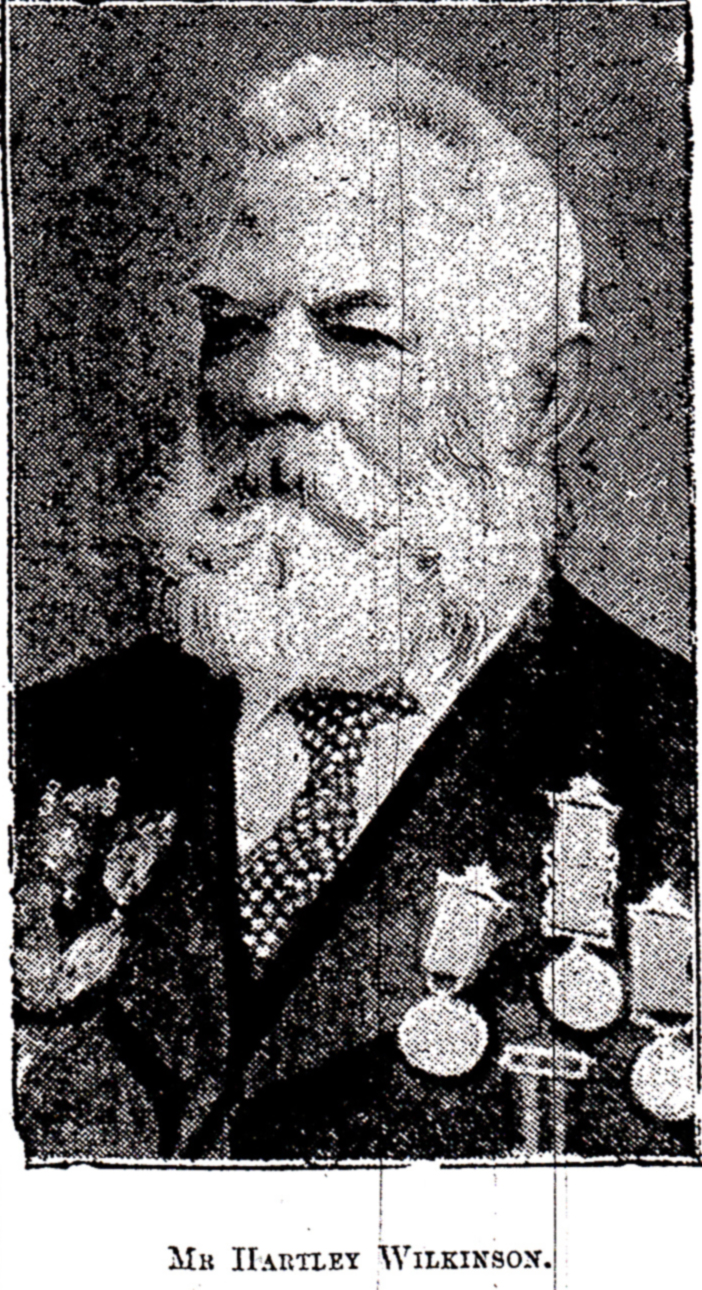
CRIMEA VETERAN DEAD
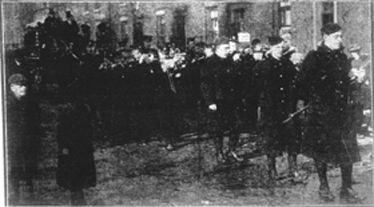
IMPRESSIVE SCENES AT A SOLDIERS FUNERAL
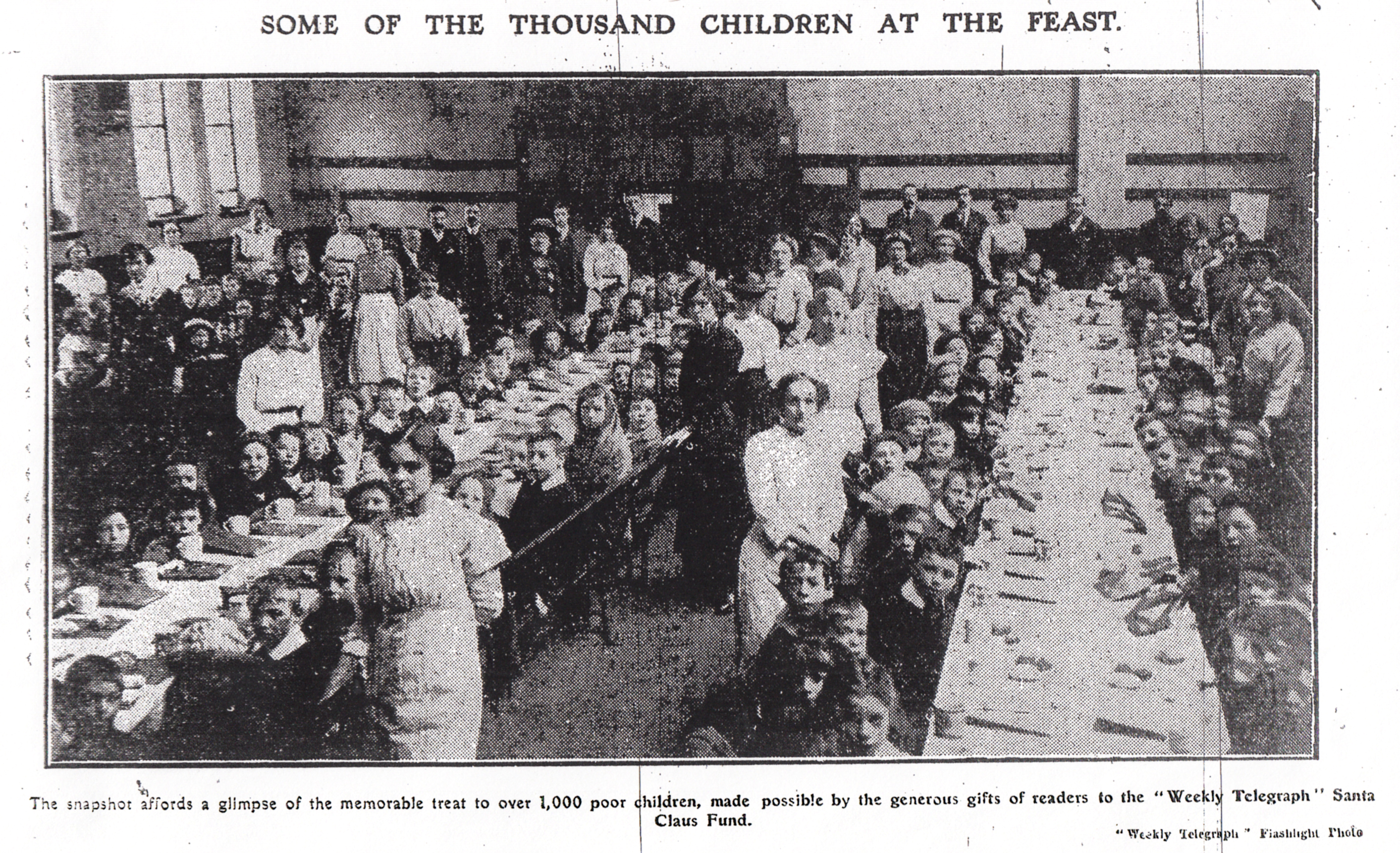
WEAKLY TELEGRAPH SANTA CLAUS TREAT
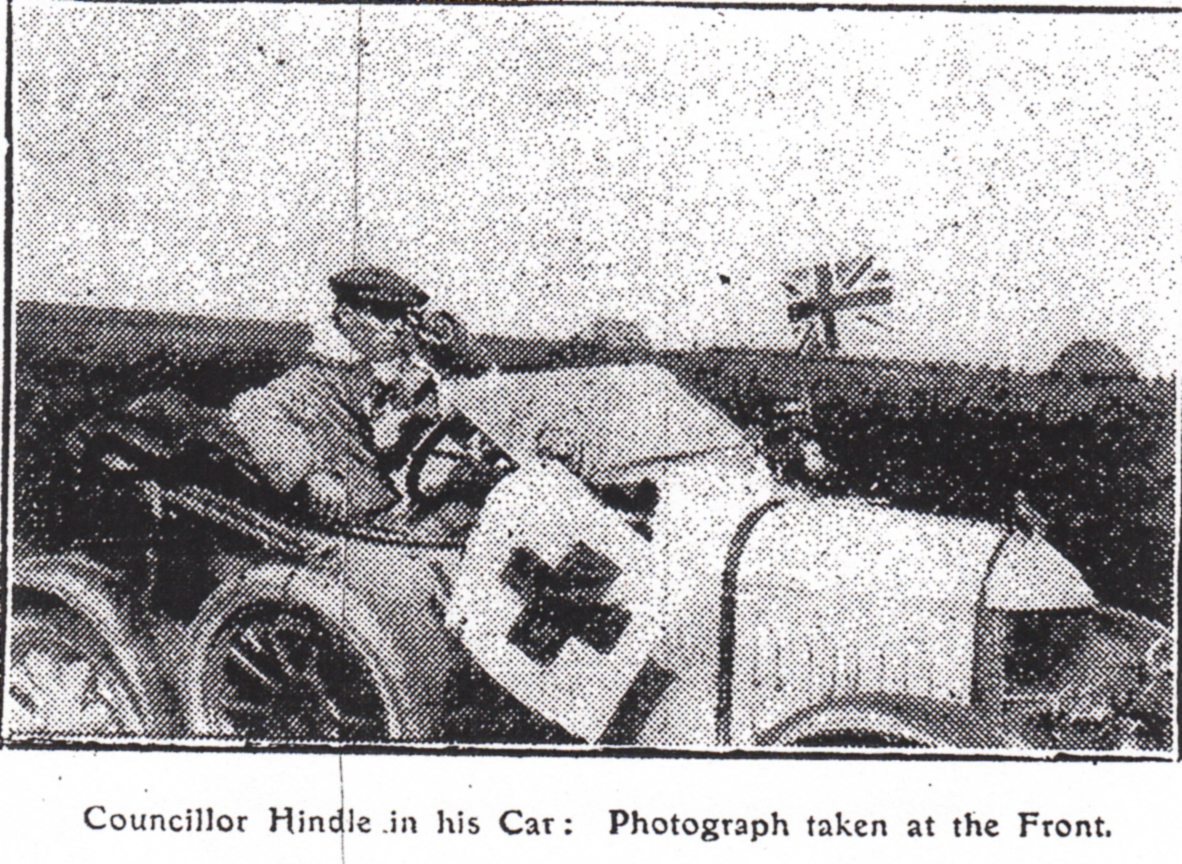
COUNCILLOR FRITZ HINDLE ON SHORT FURLOUGH
AT THE WORKHOUSE
Blackburn Weekly Telegraph December 5th 1914
£700 A YEAR: A BLACKBURN SCIENTISTS CALL TO NEW ZEALAND
Dr. Ernest Marsden, whose home is in Lynwood-road, Blackburn, and whose father carries on business as a draper at Rishton, as accepted the Professorship in Science at Wellington University, New Zealand, at a salary of £700 a year.
Only twenty-five years of age, Dr. Marsden has had a brilliant scholastic career. He attended the Rishton Wesleyan Day School, afterwards the Blackburn Public Higher Grade School, where he obtained a County Council scholarship for the Blackburn Grammar School. While there he won another County Council scholarship of £60 a year for three years at the Victoria University, Manchester, and after taking his B.Sc. degree he accepted an appointment as lecturer at London University. When he had been there about twelve months he returned to Manchester and joined the Fellowship in Science at the University. This year he gained his D.Sc. degree.
Dr. Marsden is an enthusiastic Territorial, and recently he has varied his ordinary duties at the University by drilling the members of the Officers Training Corps.
Dr. Marsden’s success draws attention to the fact that a number of scholars from Rishton Wesleyan Day School have entered upon professional careers in Blackburn. Among them are Mr. T. Holden, solicitor, who is with Mr J. W. Carter; Mr William Slater, solicitor, who gained several distinctions on passing his final last year, and who is now in partnership with Mr Little; Mr Harold H. Marsden (a brother of Dr. Marsden), who is with Mr H. Crellin, and who will sit for his final as solicitor next year. Another old scholar is Mr George Knowles, solicitor, Rishton. All were at school while Mr Marshall was head master.
For a biography of Ernest Marsden go to http://en.wikipedia.org/wiki/Ernest_Marsden
Blackburn Weekly Telegraph 12th December 1914
CRIMEA VETERAN DEAD
Blackburn has lost one of the few Crimean war veterans in the person of Mr. Hartley Wilkinson, of Joseph-street, whose death is announced, at the age of 77. He joined the 55th Regiment in 1853, and was at the battles of the Alma, Balaclava, Inkerman, and Sebastopol, and of his twenty-one years’ army service twelve were spent in India. When the King and Queen visited Blackburn last year the veteran wearing his medals and clasps, had a special place outside the Town Hall which enabled him to see the King, who re turned his salute. In his early soldiering days Mr. Wikinson was a proficient in high jumping and other athletics, and when he settled down in Blackburn he became a publican, and was chairman for several years of the old Blackburn Victuallers’ Association.
Blackburn Weekly Telegraph 12th December 1914
IMPRESSIVE SCENES AT A SOLDIERS FUNERAL
All Darwen turned out on Monday afternoon to do honour to the late Private Alec Done, of the Loyal North Lancashire Regiment, whose remains have been brought from the Cambridge Hospital, Aldershot—where he had died from wounds received in Action—for interment at the Local cemetery. The dead soldier was married on the 2nd of June last, and two months later he was called upon to rejoin his regiment. Throughout the closing days of his life he reportedly said that “More men are wanted yonder,” and his thoughts seemed to be constantly with the lads at the front who are risking their lives to defend air country’s honour. When he died it was decided he should be interred in the cemetery of his own town.
The funeral was of a civic and military character. The procession was formed at the residence of his sister, Mrs Scholes, in Richmond-terrace, and the chief mourners were Mrs Done (widow), Mrs Done (senior), Mr And Mrs Scholes, Mr R. Done Mr and Mrs Harry Done, Mr H. Turner, Miss Hannah Turner, Mr and Mrs Hodkinson, Mr and Mrs J. Turner, Mr and Mrs T. Turner, Mrs R. C. Done, Mrs Walton, Mr R. E. Done (Manchester), R.A.M.C., Mr A. Walton (R.F.A.), Mr S. Done (Manchester), and Miss Bertha Done (Manchester). The coffin had a Union Jack for a pall, and on the top of the hearse were a number of wreaths, and amongst them one composed of red, white, and blue flowers.
Blinds were drawn at houses along the route to the Cemetery, and there was evidence everywhere of the anxiety of all to do tribute to the dead hero. The streets were simply packed with people all the way, and many had climbed buildings to get a view of the cortege. By the hearse were employees of the Railway Company, who acted as bearers.
When the procession reached the centre of the town it was joined by the Mayor and many members of the Town Council, Who were accompanied by the head officials of the Corporation. In addition there were a number of Belgian and British wounded soldiers, a detachment of soldiers from Preston, along with men who were in the town on Furlough, Belgian refugees, representatives of the Athletes Volunteer Force, National Service men, Army veterans, and of various departments of public life.
The service at the Cemetery was conducted by the Rev J. Blackburn Brown, M.A., vicar of St. James’s Church, who was assisted by the Rev. J. W. Taylor.
Blackburn Weekly Telegraph 19th December 1914
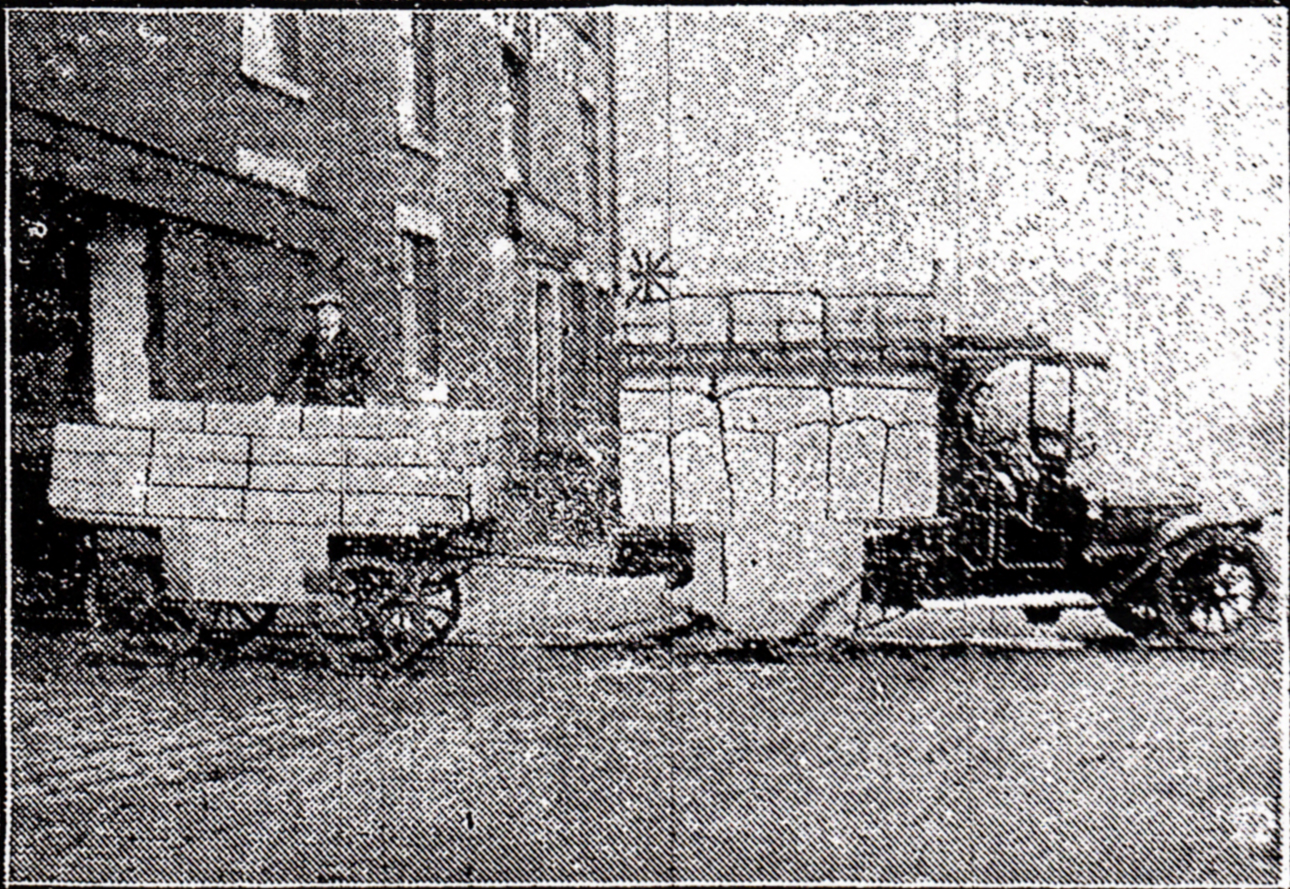
ANOTHER LOAD OF COLONIAL GIFTS FOR BLACKBURN
The accompanying photo shows one of the motor-lorries of Messrs. T. Bolton, Ltd., leaving the warehouse to distribute Blackburn’s share of the Colonial gifts of food to grocers in the town. Applicants are supplied with a ticket by the relief committee and obtain a share of the gift by presenting it at any of the grocers’ shops named on it. Messrs. T. Bolton, Ltd., are kindly making the distributions free of charge. The load in the photo consists of sacks of flour, bags of potatoes, and tins of salmon. On the lorry are the words; “The Colonies’ gift to Blackburn”; and the motor: “Canada, 1,000 sacks flour, 100 bags potatoes, 100 tins salmon.”
Blackburn Weekly Telegraph 26th December 1914
WEAKLY TELEGRAPH SANTA CLAUS TREAT
A THOUSAND CHILDREN ENTERTAINED
However much the elders may have found the bed pull yesterday morning, the children were astir, seeking if possible to probe the mystery of Father Christmas, and finding him again excel even in Scarlet Pimpernel in the quality of cleverness. However, the youngsters more favourably circumstanced found that the “Father” had left pleasant traces of his visit, and so they were well satisfied with works, and content to live in faith as his personality.
Up to comparatively recent years Santa Claus was the intimate friend only of those with purses fairly well lined. The poor knew him only as a mythical sort of person who never visited their humble dwellings. The older he grows, however the more active the old gentleman becomes, and he now not only makes his lengthy journeys in the small hours of the morning but is astir during the hours of daylight, with the happy result that there were few children in Blackburn who did not benefit by the genial spirit and disposition. One of the best of his good works centred in the Barton-street School, where, under the auspices of the “Blackburn Weekly Telegraph” Santa Clause Fund, over a thousand children enjoyed a substantial breakfast, and the majority received a useful gift to remind them for many days of the treat they had had. It is safe to say that but for the beneficent operation of the fund the youngsters invited to Barton-street would have had little by which to remember Christmas. They were selected by the masters and mistresses of the day school, who were careful to pick out the very poorest of their scholars, so that the object of the movement might be fully realised. The delight of the children who received the coveted ticket was unbounded, and they needed no calling to be in time. The first section were due at the school at a quarter past eight, but many were patiently waiting at half-past seven. Fortunately the weather, though cold, was dry. The children breakfasted in four batches of 250 each, two tables being arranges down the room. Opposite each child was a mug of steaming hot tea, meat sandwiches, raspberry and rock buns, and mince pies. After grace had been said the youngsters set to work with a will, and were long not long in making the good things vanish. There was an unlimited supply, and if any child found it too great for his present need he popped the surplus into a brown paper bag, into which also was dropped an orange and an apple as the children left the room. While they were assembling, and during the progress of the breakfast, ladies and gentlemen who have had experience in administering poor relief selected the most thinly clad and shod, and these were taken into an adjoining room and furnished with suitable garments and boots and shoes, while orders were given for one hundred children to be specially fitted with clogs by various tradesmen in the town. Altogether 750 articles of clothing, 120 pairs of stockings and 130pairs of clogs, boots and shoes were distributed. The Children were overjoyed by their presents, and there were many excited little groups on the homeward journey discussing the good fortune that had come to them. There were several evidences that many of the children were badly in need of a good meal, three or four of them fainting before their turn came to take their places at the table. A touching sight too, was the carrying in to the room of several cripples. Lady Coddington, the president of the fund (Lady Hamer is the vice-president), visited the school during the morning, and was very deeply interested by what she saw, being impressed too, by the admirable order and organisation of the scheme. Everything worked smoothly, and the gathering came to a conclusion at half-past eleven. The preparing of the breakfast was no light task; over 1,000 sandwiches being cut up and, in addition to the bread used in this way, there were 140 two pound loaves.
Fifty of these were distributed by Boy Scouts during the morning to poor families, and the remainder were handed out to the needy applicants at the close of the breakfast. The fund has been splendidly supported this year, and had the accommodation been greater five hundred more children could have been fed. Amongst those who assisted the preparation of the treat were Mr and Mrs W. Boothman, Miss M. Boothman , Mr and Mrs Gregson, Mr and Mrs J. H. Cronshaw, Mr and Mrs Kenyon, Mrs Embley, Mrs Simpson, Mrs Yates, Miss Yates, Mrs J. Leaver, Mr Lee, Mr L. Duxbury, Miss Ruth Duxbury, Mr and Mrs Widdop, Mrs Sizer, Mis L. Aspden, Mr Cunliffe, Mr W. Hoyle, and Mr T. Sharples, and there was a willing band of about fifty workers at the school yesterday morning looking after the children. The proceedings were presided over by Mr H. Mann to whom much of the success of the movement is due.
Blackburn Weekly Telegraph 26th December 1914
COUNCILLOR FRITZ HINDLE ON SHORT FURLOUGH
Councillor Fritz Hindle, a former Mayor of [Darwen], arrived from the front, where he is doing good work with the \red Cross.
In letters which were received at his home previous to his return he says:
“We are now close up to the front, but quite comfortable, as we are quite used to sleeping on straw. We have just returned from clearing a hospital to an ambulance train—250 wounded men—a very pitiful sight, though most of them are extremely cheerful. One poor chap we had was put rather too low down on the stretcher and the bearer caught his bad foot. The yells were heartrending. The weather is wet and the road awful—one mass of slush nearly a foot deep and very narrow. Things do hum when we meet or pass a transport convoy. We had the finest exhibition of language I have ever had the pleasure of hearing when our coming suddenly round a corner sent a big motor-waggon into the ditch. We had to back for a mile and wait and wait an hour and a half, although we had four badly wounded on board. The cannonading outside here has been very heavy indeed during the last 24 hours. A new division has come up , and is evidently in full action. “The King and the prince of Wales have been here. They visited our hospital, and the Colonel-in-Command told me soon after that they had gone all through the wards and been most affable. The King saw a wounded Grenadier and sent the Prince to talk to him, it being his own regiment. The Prince drove the first car, a big open Daimler, and looked very well indeed. The King and President Poincare were in the second open car and general Joffre in the next car. They got a rousing reception. They are staying here tonight. I couldn’t, help reflecting how much had passed under the bridge since I last saw the King in Darwen in July last year! He looked very well in his Field Marshal’s Khaki uniform. Immediately after he had gone we were called to take the wounded men from the hospital to the train, and soon cleared 800 men It is rather wearisome and trying work carrying the frost bitten chaps “pick-a-back” from the cars to the train, but everything is worked at express speed, and it is a case of all hands to the pump! The general impression here is that military matters are at a standstill for some time. Both sides are said to be entrenching themselves very strongly.
“About two miles from here is a town absolutely deserted. The church and all round is smashed up, and you can go into any of the houses or shops and see the food, cups, etc., exactly as the inhabitants hurriedly left them when the firing began. The town is still being shelled by the Germans. We went into it the other afternoon, and were most interested. We saw the big holes made by the *“Jack Johnsons.” We also picked up a kitten and intended to bring it back as a B2 “mascot,” but it had a bad fit en route, so we dropped it hurriedly!”
We had this afternoon off so walked to --. A very few of the inhabitants are just beginning to come back again, but we walked in and out of dozens of houses. Some had been shelled while the occupants were at meals, and all the food, etc., was on the table exactly as they left it. The church is very damaged by “Jack Johnsons” shell, which makes a hole big enough to bury a motor-waggon. It is just like a city of the dead, and very weird.
*German shell bursting with black smoke. After the boxer Jack (John Arthur) Johnson (1878-1946), the first black American world heavyweight champion (1908-1915).
Below are some reports how various institutions celebrated Christmas.
AT THE WORKHOUSE
The Workhouse inmates thoroughly enjoyed the special provision made for their comfort. The premises were lavishly decorated, and the festivities commenced on Christmas Eve, when the officials went round the wards and visited the Cottage Homes singing carols. On Christmas Day the menu was considerably extended, there being for dinner a plentiful supply of roast beef, potatoes, plum pudding, and coffee. Each adult male received an ou8nce of tobacco, and the women six ounces of sugar and three ounces of tea. The children were not forgotten, an official dressing up as Father Christmas and distributing gifts and sweets. In the evening the Rev. E. G. Wales, chaplain, conducted a Christmas service. The concert usually given on Christmas night will be given tonight [Boxing Day], when a party organised by Mr Bleasdale, organist of St. Michael’s Church, will entertain the inmates. At dinner time, the Mayor (Alderman Thompson0 and Alderman Nuttall went through the wards, wishing the inmates a happy Christmas, and the afternoon visitors included the Rev. T. R. and Mrs Sale, and Mr C. E. Kenyon, J. P. chairman of the Board of Guardians. Mr Kenyon distributed tobacco to the men and mince pies to the women.
AT THE ORPHANAGE
All the children at the Orphanage, Wilpshire, look forward with keen interest, mingled with expectant hope, to Christmas tide and they have not been disappointed. The two orphan homes, for boys and girls, had been decorated for Christmas with evergreen and flags etc. On Christmas Eve Santa Clause filled the orphans’ stockings with suitable gifts, and for the Christmas dinner the youngsters were provided with roast beef and plum pudding. Mr Charles E. Kenyon, J.P. had provided the Christmas tree, and this was laden with toys, given by many friends, for all the boys and girls. In the evening a reunion party for old scholars now in situations was held. A substantial meal was given, and the present scholars provided an entertainment. The arrangements also included the usual religious devotional services.
Mr Dixon, the superintendent, informs us that during the past year the children have been in excellent health, and the boys and girls are all well and happy.
The Mayor sent a letter and two guineas towards the expenses. Mrs Wilkinson of Warren Holt Wilpshire, gave £1 for Christmas fare; Mr James Boyle [Blackburn toffee manufacturer] 144 toffee-sticks; Mr Scholes Rostron, [Mineral water manufacturer Artillery-street] 144 bottles of mineral water Mr Archibald Shaw Oranges and Apples; Mrs J. W. Stones 56lb Jam; Mr Middleton, a football; Mr Barnes, two baskets of apples; Mr Ingham, bananas; Mr Parr and several friends sent toys, Christmas cards; and Messrs Butterworth and Gregson, confectionary, toys.
CRIPPLED CHILDREN’S CHRISTMAS
Excitement runs high amongst the children of the Blackburn and district Crippled Children’s Aid Society (Ragged School) at the approach of Christmas, and all the youngsters eagerly look forward with joy to the pleasures of the festival. On Christmas Eve 200 of the little cripples on the list received a special hamper containing garments, oranges, apples, chocolates, Christmas loaf, toys, etc. Mrs Yerburgh had kindly provided 100 rabbits which were distributed to the most needy of the cripples. In addition many received packets of tea, kindly presented by an anonymous donor. Oranges and apples had been given by local friends for the children’s hamper.
at the Livesey Home 20 little cripples were entertained to dinner, tea, and Christmas tree. Thanks to the kindness of friends, a very happy time was provided for the youngsters, who received gifts of clothing, toys, etc. Mr Chilman, of the ragged School, was dressed to represent “Santa Claus.” The President, Mr F. G. Briggs, and Mrs Briggs were also present.
BUSY TIME AT THE POST OFFICE
This year were new factors in the work at the Post Office, and possibly the staff have never had a busier Christmas. The payment of allowances to soldiers, their wives and other dependents, has reached tremendous proportions. In the early part of the war the sum distributed was about £300, and this has gradually increased until it now amounts to over £3,000. Again, the parcels traffic was greatly in excess of previous years. Parcels to men on foreign service or in training camps were despatched during the last few weeks, but every day this week there was a tremendous number of parcels to deal with. The inference to be drawn from the latter fact is that the wives and children of soldiers have been well looked after in the matter of presents. The Post Office staff itself sent suitable gifts to its men with the colours, and it also forwarded presents to those left behind. This seems to have been done in a good many cases, and prior to every delivery one might have seen at rooms in the Parish School (used because of alterations at the Post Office in connection with the automatic telephones) a large pile of parcels. To make the work increasingly heavy the staff was minus eight of its clerks and thirty-two of its postmen, all on military duty, and while temporary assistance was requisitioned the loss of experienced men was greatly felt, especially seeing that so far as could be judged the ordinary business showed no diminution compared with previous years. All these elements resulted in work at high pressure, and if there was delay in delivery the public should remember the exceptional circumstances. Moreover, the public might reasonably share the blame, inasmuch as this year the exhortation to “post early” was less heeded than for some years past.
A CALL TO ARMS
Come let us give our men a lift,
And fight like Britons till we shift
The German Army out of France.
And let us wield both sword and lance
For what is right and just and true,
It a Britons duty to.
For little Belgium, in her plight
Appeals to us to swell her might.
that she may stem this man from Hell,
Against whose rule they now rebel.
Then let us all go forth to War
And quell this mighty Emperor.
Our country needs us, one and all—
Let us respond unto its call:
Put joy away, along with greed,
and serve our country in its need.
To fight for what is right and true,
It is a Britons duty to.
Come let us give our men a lift,
And fight like Britons till we shift
The German Army out of France.
And let us wield both sword and lance
For what is right and just and true,
It a Britons duty to.
For little Belgium, in her plight
Appeals to us to swell her might.
that she may stem this man from Hell,
Against whose rule they now rebel.
Then let us all go forth to War
And quell this mighty Emperor.
Our country needs us, one and all—
Let us respond unto its call:
Put joy away, along with greed,
and serve our country in its need.
To fight for what is right and true,
It is a Britons duty to.
Harold Sharratt, 313 Accrington-road, Blackburn