
 Loading more
Page 2
There was a butcher’s shop at the corner called Jack Gregson; my granny called him “Jack Butcher.” Across the way from this shop was Dan Bolton’s cycle shop, he was always very busy. He sold new and second-hand bicycles. Cycling was very popular in those days and there were quite a lot of cycling clubs throughout Blackburn. At the weekend it was not unusual to see thirty or forty riders setting off for Blackpool, the Ribble Valley or the Lakes. Bicycles were bought on a pound deposit with a further shilling a week payments, a brand new bike was a luxury.
Nearby was a little shop called Ramesden’s Confectioners, and milliners owned by Mrs. Hill. Going further along, on the other side of the street, was Shorrock's bedding shop and Field’s Ruby Lamp Drapers who had a chain of shops throughout Blackburn, all painted red and white with a big gas lamp mounted above the door (these shops were sited at Audley, Eanam, and Bank Top.) They were all dark and mysterious inside; the assistants all wore black coveralls. Union shirts, and ladies and gents overalls hung from the ceiling, you needed a long pole to get them down. The shops were lit by gaslight adding to the strangeness. Apart from workfare, they sold ladies and children’s clothing; white dresses for field days or church anniversaries, children’s hats, which you wore to church on Sundays, ribbons, laces and petticoats. They stayed open late on Fridays, as did most shops then, Friday being payday.
Nearby was a newsagent called Denton’s, and across from there was Appleton’s pork butchers, Laura’s gown shop and Turton’s shoe shop.
At the corner of Randal-street and Victoria-street was a confectioners who would make special small cakes in an assortment of cream and jam to order for parties, boxed at one shilling the dozen. Across the other side, at the corner of Ward-street, was Wilkinson’s pork butchers, and across from them was a sweet shop which had tall glass jars, two feet high or more, with fancy glass lids. These contained Benson’s sweets, bonbons, cachous and other delights.
All these shops did really well from the nearby Ward-street mill. The mill was owned by E. & G. Hindle and was also known as “Swallow-street mill: workers here would do their shopping on the way home after a shift.
Next there was Loynd’s tripe shop, Tower's milliners, and Abbot’s drapers, along with an assortment of shops that carried on to Bastwell. This area of the town was a community of its own; most shopkeepers lived on the premises and stayed open until late in the evening.
© BwD - terms and conditions
Chapter 8
Preston New-road starts at Sudell Cross. It is a wide and splendid road and most of the shops have remained the same. The butcher's shop was called Biltcliffes; Kenyon’s cake Shop is still there, but with a different proprietor. Miss Isherwood’s wool shop too has changed; she had a little window which was entirely taken up with dolls house furniture and we would gaze for ages at the display, especially on Sunday. All the furniture was fretted out of wood and the doll’s dresses were up to date and sewn perfectly—no one would go to such trouble these days, they would mutter “not available".
The Chemist's shop was then owned by Mr. Aspinall, a small man with glasses, white moustache and a very smart line in suits, mostly blue-grey. My mother at this time was very ill and had to walk with a stick. I had to go for her prescription, so I became a regular at this shop. I would ask for empty boxes, French soap and perfume, erasmic soap which was purple and transparent with a strong smell of violets. Sometimes he would give me a scent card impregnated with perfume in the shape of a bouquet of flowers; I was the envy of my friends. Make-up was a growing industry then, with Yardley, Coty and Atkinson’s as the brand leaders. Houbiguant, Molyneux, and Pivers were the leading French ones.
My mother used a cream called Icelma—two perfumes, Magnolia and Bouquet, sold in a lovely dark, matt green glass jar for six pence or one and sixpence. There was also Potter and Moore’s powder cream, sold for one shilling, with a mirror at the base of the jar. Face powder was sold loose, and a Yardley’s Compact, with the famous lavender lady, was only something that your father bought for your mother on her birthday at a cost of two shillings and sixpence. DuBarry produced a book of powder leaves along with perfumes such as Morning Glory, Blue Lagoon, and Garden of Roses, all with a talk to match. Other perfumes included: Californian Poppy, Evening in Paris, Top Hat, Seventh Heaven, Mischief, Ashes of Roses, Ashes of Violets, June, Phulnana, Shemelessin, Jockey Club, these being a few.
Across from the chemist, on Preston New-road, stood a sweet shop of great renown that sold very good ice cream. The shop also had a place where you could sit in and drink iced minerals in the summer months. In winter they sold hot Vimto, Bovril, and Oxo. Next door was a fruit shop with a figure of a black boy in the window, advertising Fyffe’s Bananas. This shop was run by the Walmsley family for many years before it became an Estate Agent as it is now.
When I was very small I can remember going with my grandma to little mission on Blakey-street which was off Winter-street. A Mr. Simmons was the minister, and on Sunday nights my gran would chat to her friends on the corner by the fruiterers and then leave them for another week, to meet again at the mission the following Sunday night.
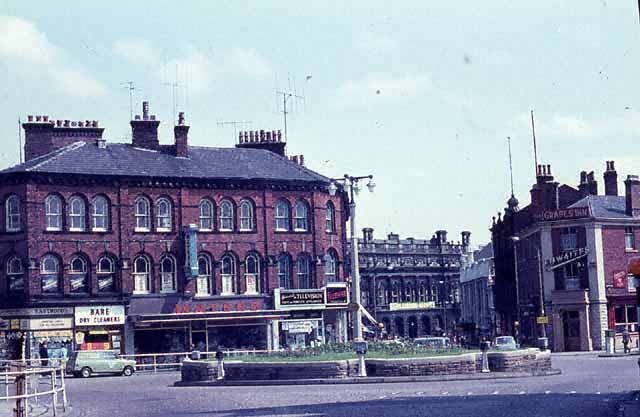
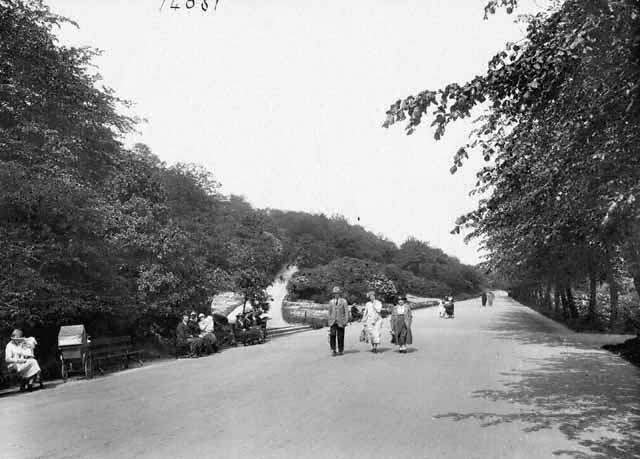
Corporation Park is a lovely place to visit both summer and winter. After school, children would go there to play cricket or have fun on the playground. The park had putting greens, bowling greens, tennis courts, two play grounds, an open air school, and of course a band stand The latter being a fine piece of Victoriana that many would have liked to have preserved. Below the big lake was a waterfall and standing in a green beside it was a statue of Flora. We used to say that she had real eyes and we would stand for ages waiting for her to blink.
Below the tennis courts is a wide avenue of limes. This is a magnificent walk, but to us kids the main attraction it held was the “Potted Meat Stone”, a huge pebble of granite the we as children would slide down, and when we would get bored of this we would walk up to “The Cannons.” The cannons were relics of the First World War, and to scamper up them was a real feat of daring for the boys. We girls would place rhododendron petals that had fallen from nearby bushes upon the cannon barrels.
Some of the areas of grass you could not walk on and a park keeper was employed then to make sure that you kept in order.
The Conservatory is another fine piece of Victoriana. It is a cool and pleasant place and always very well maintained, displaying plants from all over the world. By the Conservatory was an Aviary, full of chirping, many coloured birds that provided joy for many people.
Between the Conservatory and the big lake was a duck pond that was home to some Chinese geese. In the surrounding trees American squirrels would dart and play. All in all it is a very beautiful spot.
The Top- most park gates bring one out on Revidge-road, being the highest point in Blackburn, and no stroll through the park was complete without a visit to the “Water Tank” upon Revidge, to view the surrounding district. Once when I was very small, I was taken to Revidge Tank to see a total eclipse of the sun. All that I can remember is that it became very dark and there seemed to be a lot of people about and everyone was very excited. History will have recorded the exact date. There was, and still is the “Sixty Steps” that bring you down from Revidge to the east gate of the park. We used to approach the park on the east side from Shear Brow, along a road that we called the “Twirly Back.” This back road really did twist and twirl and brought you out on Lilford-road where there was a very large tree. We would pick a leaf from the tree, make a wish, then bury the leaf. It became known as the “Wishing Tree.”
© BwD - terms and conditions
Pot Mansions and Iron Swans - Part 3
Chapter 9
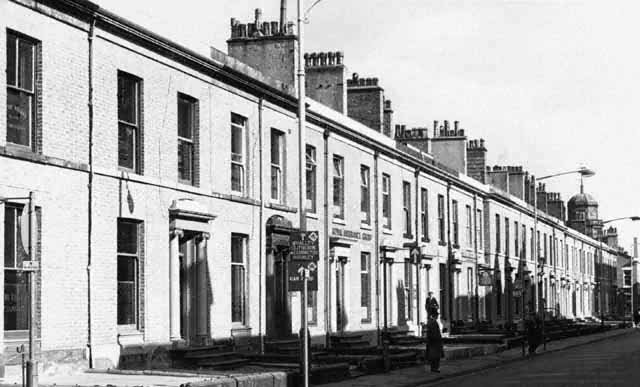
Richmond Terrace is a street of preserved buildings which have changed little over the years. It is a rather splendid street of Georgian houses that also houses another splendid building, the Blackburn Museum and Art Gallery; it is a glorious place to spend a wet afternoon, or any afternoon come to that. You would never believe that the Museum was once burgled, and the town was robbed of a gold cup. The cup had been won by Sir John Rutherford in some kind of gentleman’s derby. The cup was on display for all to see along with a portrait of Sir John Rutherford attired in red and white striped racing colours and seated upon the winning mount. Well someone must have had the idea to steal this cup, and during the hours of darkness the cup went. Down we went, granddad and I, to see the fingerprints the thieves had left behind. They seemed to be everywhere, and yet nothing was taken, only the cup. The portrait is still there.
I have been a patron of this museum since I was about three years old and have many fond memories of it. My grandfather was a retired moulder and must have spent many hours with me in this place, and in my turn I have taken many children, including my own, to show them the culture we have there.
There are many bigger museums, but how many people realize what a fine display we have in all the fields of art, craft and industry. Many of the paintings are no longer on display. One particular one was Hetty Sorrel, the lady running from the woods with stark terror in her eyes, covering her ears after abandoning her baby, so my granddad told me, “Tell me again granddad, what is she doing?” the explanation was always the same.
One of the best pictures that depicts Blackburn of this era is a water colour of the Easter Fair when it came to the old market square. The “Flying Pigs” are on it, I can only remember them coming once, they were very fast. The picture shows Tattersall’s and Tomlinson’s Hat Market too. I am sure that a reproduction of this would sell, as it would have special appeal to all Blackburnians the world over, especially like myself who remembers this period with fond affection. More about the fair later
© BwD - terms and conditions
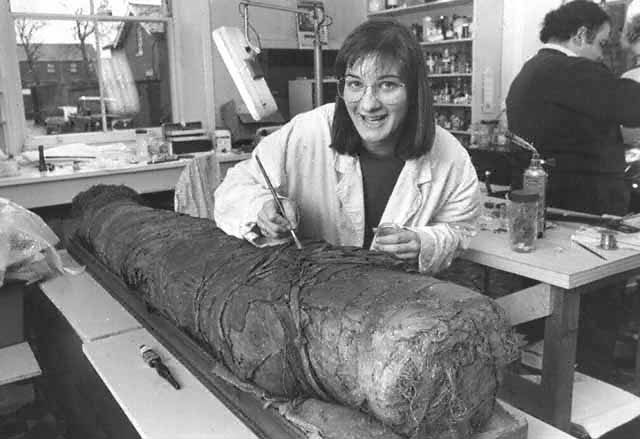
There is an Egyptian mummy in the Museum that has been there for many years. It is the body of a woman and quite recently the poor dear was given an X-ray. The Witch Doctor's outfit can be rather frightening to small children and I never asked granddad about that one, I just averted my gaze to a white marble effigy in a glass case. It was of a beautiful mother with her two children and a kitten. I did wonder where the rest of her body was as only the upper half was displayed, but there was a limit to granddad's patience.
There is a fine bronze statue to the greatest Roman of them all and I see it now graces the Town Hall rents and rates collecting department—a master stroke, “Render to Caesar.”
The display of animals, birds and insects from all over the world are a very fine collection as are the fossils. Glass, pottery and other Roman remains found at Ribchester are also on display, and there is a splendid specimen of a whippet or greyhound called “The Bed of Stone” which had been quite famous in its day.
© LET - terms and conditions
Chapter 10
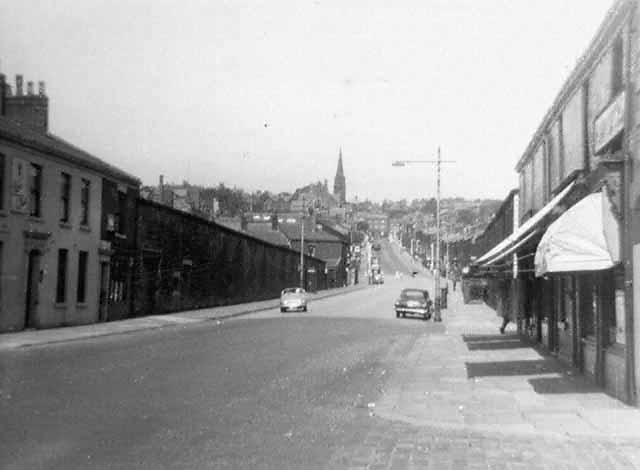
King-street starts at the crossroads of Astley Gate, Northgate and Mincing Lane. The same road, through many names, ends up in Preston.
Here we have another community all of its own, some people called it the “branch” as Montague-street ran off it right the way up to Preston New-road, and there was a wide variety of shops on both roads. The shops were all gas-lit and very quaint.
The clog shop, Pickups I think it was called, had clogs of all kinds hung outside the door. Mr. Wright's the optician had a very large shop frontage and his window was full of spectacle frames of all kinds. But the centre of the window display was given over to a display of glass eyes, all staring balefully at you, all sizes, and all colours. Mr Wright repaired glasses on the spot, he was cheaper than most opticians, and so he had a brisk and busy trade being a very obliging person.
There were quite a few opticians in the town then, the leaders being Charlie Dean, “See Dean and see Better” was his motto;Blackhams on King William-street and Caffins on the corner of Salford. The thing about glasses was when you were at school you had to have a medical at least once a year. You had to go to the clinic accompanied by a parent and have a strip medical and eye test. If you failed the eye test you were given a card to take to the optician of your choice. You had to pay for the glasses and if your parents could not afford them you had to have metal frames—clink specification.
I had horn rimmed or Harold Lloyds as they were called; they cost nineteen and sixpence at Caffins. The choice was very limited even for grown ups. My aunt wore pince-nez, which were frameless, they clipped onto your nose and had a chain and gold wire shaped to your ear. Come to think of it one of my teachers at junior school wore the same type. Glasses had to be functional not fancy.
The shops in the “Branch” area were many and varied: Palmerton’s Isle of Man House had three shops selling ladies and children’s wear. They later moved to Market-street and took over from Pamphlets leaving another fine building to be demolished. The Palatine, confectioners, were famed for their cherry buns and funeral biscuits, the latter being made like a Savoy sponge, but without the cream, and a funeral was not held to be proper without the funeral biscuit. In those days you went into mourning for twelve months at least for a close relative, or six months for someone more distant.
For the funeral, if you did not buy new clothes you wore a black armband, and you ate these biscuits with a glass of port before setting off. The drivers of the hearse and cars were offered tea or coffee. Cars had not been long in use for funerals, horses drew the hearses when I was very small, but taxis came into use and drivers were all very solemn on those occasions. I knew more than one child who went to a bereaved neighbour and asked: “Please can I see your body lady?” or man as the case may be. Must have been very morbid kids in those days.
© BwD - terms and conditions
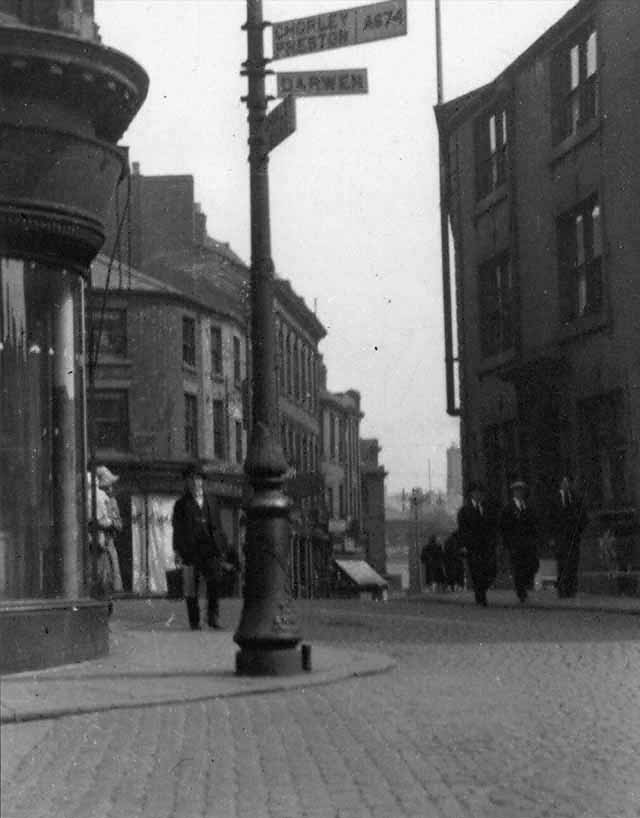
A wool shop called Friend's stood on King-street, as did the Palace stores, which was a furniture shop, along with a small drapers, called Slater’s. Slater’s had wooden stands in their window, being of various kinds and heights, upon which perched ladies hats. The shop assistants wore the standard black satin overall, lisle stockings of a nondescript beige and black bar type shoes with Cuban heel. Looking back, clothes were as drab as the times.
There were various second-hand furniture shops, newsagents, fish and chip shops leading down to the Regent Cinema, later renamed the Roxy, now empty. Arnold and Clarke’s was a children’s out fitters and as most children went to Sunday school they did a very good trade in summer with white dresses for anniversaries and field days. St. Anne’s, St. Paul's and the Ragged School, which is incidentally one hundred years old this year, being three schools that spring to mind. There were others of different denominations in this vicinity and all had field days.
In summer at least one church each week had a field day. This was the day that the school banners came out. The men carried the banners and held the strong ropes that supported them. The children held on to colourful ribbons that hung from the banners. To walk in front and lead the banner was a great honour. One year I was chosen, I was only seven. I wore a pale blue satin dress and a garland of pink carnations. When the field day was over my parents came to meet me and we went to the market shopping. Would I take off that garland? No, I wanted to savour every minute of my big day.
Older children walked behind the banner with shepherds' crooks painted gold and silver and decorated with flowers and ribbons. The girls wore white dresses, gloves hat and socks, all of which your parents had to pay for. The town florists did good business on such days.
Photographs were taken of course, black and white in those days. I had a Brownie Box camera, bought for eight and sixpence. Others had Ensign Box cameras that came as free gifts from magazines, provided you collected sixty tokens. These magazines were John Bull, Passing Show and later Picture Post. I still have a dictionary that was a free gift from John Bull.
© BwD - terms and conditions
Chapter 11
Montague street had many shops in its day the like of which have gone forever. I remember a little shop at the bottom of the street that sold various items of groceries, sewing threads and general goods. The man who ran the shop was entirely self taught and spoke in many languages including Chinese. He was also very quick on the typewriter.
At Browns Newsagents you could pay so much a week as a down payment for things you wanted for Christmas, these being put aside for Santa Claus. The shop was used by my mother for such purpose. It was here that she bought a lovely calf leather bag with a note pad and purse on a chain. The bag cost twelve shillings and sixpence, and years later my eighteen years old niece would say: “Why did you not save it for me?”
I remember a draper’s shop that was also a pawnbroker. They had Victorian type jewellery, gold watches and gent’s pocket watches in the window. At that time most men wore pocket watches on a chain or Albert as they were called. A silver chain with a silver watch and a gold chain with a gold watch. A gold Hunter watch was quite something and would probably have been handed down from a grandfather. Boys usually got a pocket watch for their twelfth birthday or Christmas. The general one-upmanship was whether yours had a second finger or not. I know this because my brother had a watch for school that he wore with a leather Albert and at the weekend he wore my grandfather's silver one.
Girls had a wrist watch if they were lucky, which had a silk wrist strap. The watch itself was probably chrome, but that did not matter, as a watch was a watch and the height of luxury. A gold watch was unattainable, you may get one for your twenty first birthday, or so you thought. Like most girls of my age my twenty-first birthday came during the war years, bread and cakes were rationed, so parties were restricted, and gold, then as now was going through the roof.
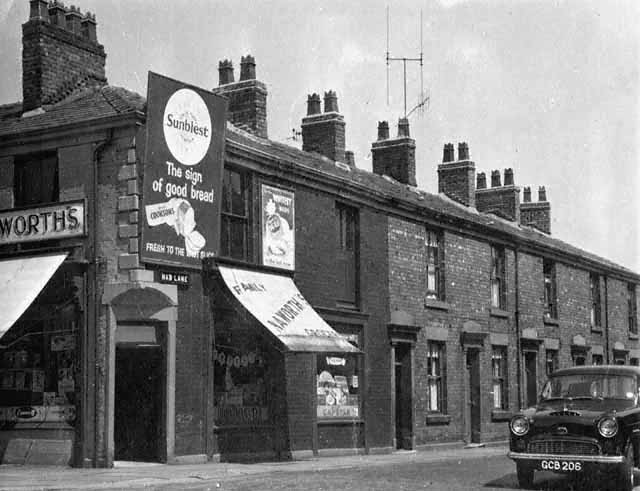
On a corner with Nab Lane was a very large draper, M.C. Dunn’s, where you could buy lace curtains by the yard in calico and cotton. There were many home sewers in those days. Across the road was Haworth’s ladies and children’s gowns and mantles. They had two shops together. Lower down was a shoe shop, ladies and children’s in one window, men and boys in anther, all set up on a backdrop of crepe paper. Next-door was Bert Brett’s record shop. Gramophones then were cabinet types with some portable ones that you wound by hand. Records cost from sixpence to two shillings. The pop tunes cost sixpence; the operas would cost one or two shillings.
© BwD - terms and conditions
Woolworth’s, in the centre of town sold most records, and the latest tunes were played all day long, even dogs could bark out some of the songs: The Isle of Capri”, “Roll Along Covered Wagon Roll Along”, “Eleven More Months and Ten More Days”, “Home on the Range”, “Red Sails in the Sunset”, “See you in My dreams”, “Have you ever seen a Dream Walking”, “Alice Blue Gown”, “Horsey Horsey”, to name but a few.
The tunes were great but the records were breakable. By melting the old records on a low oven heat you could mould them into a sort of bulb bowl. The hole in the middle made a very good drainage system.
Getting back to the Montague-street area, somewhere round about here was Hanson-street, where there was a butcher's. The butcher was called Calbb Foot, funny unusual names stick in your mind.
Feilden-street, where the Technical College now stands, had quite a few shops, including a chemist, and overall shop, dairy and confectioners.
At the corner of Princess-street was the City Dairy. They had lightweight milk floats drawn by small horses and even in those days, employed mostly women. The carts were primrose yellow with red stripes and most of the customers saved a carrot for the horse.
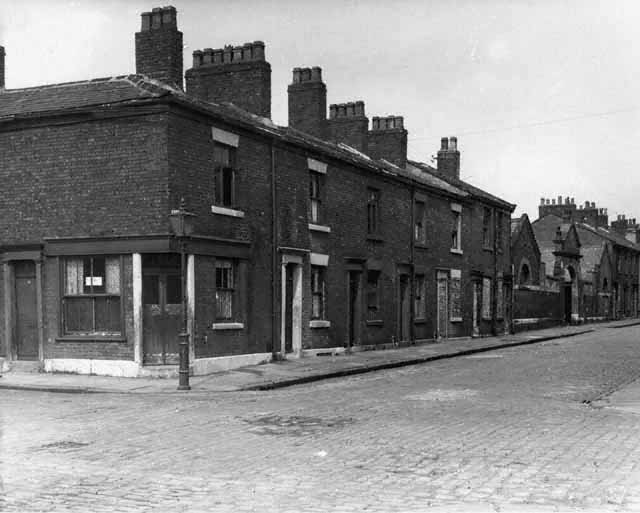
Some people made a living taking a flat cart and pony around selling fresh fruit, vegetables and fish. The horses were well fed by the customers. On Friday night a man would come round selling crumpets, milk scones and muffins. These would be toasted on an open fire and most houses had a long toasting fork, which hung by the fire. One family member would do the toasting, another the buttering, the rest noshing! There was also a saddlers at the bottom of Montague-street, called Edgar Brown.
© BwD - terms and conditions
Chapter 12
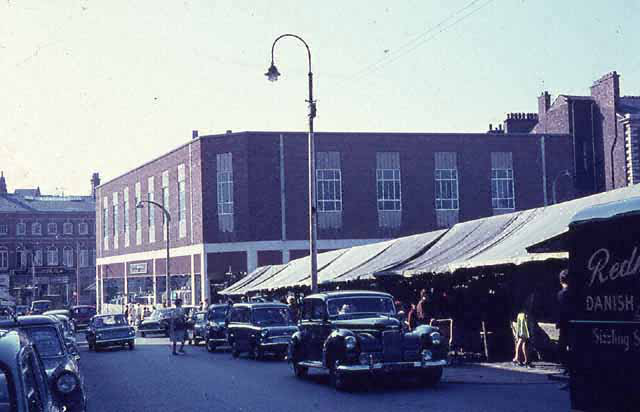
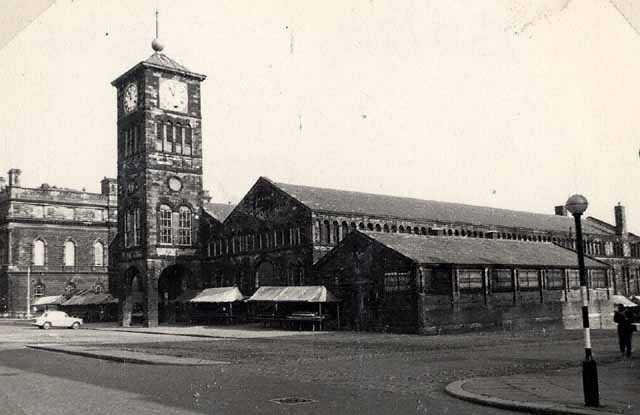
The Market Hall has seen many changes over my life time. It was a stone fronted building which was later gutted inside and redone out. Then it was demolished and the market moved to its present site. The original building was quite something, with every kind of stall you could imagine, with cafes at the far end. The cafe I remember the most was Mellor’s where you could have a cup of tea and watch the shoppers passing by.
Of the stalls inside these, included: Read's grocers stall, Coar's butchers, Stoker's drapers, two fruit stalls, Kelly’s and Aneley's, both high class fruiterers, Gleeson’s tailors, a spectacle shop, gents outfitters, a second-hand book shop that also sold sheet music for sixpence and two shillings, Munroe’s confectioners, the Palatine cafe and cheese stall, Rushton's shoes, Kirkup’s dress material, Lamb’s curtains, Baxter’s library, Littler’s butchers and a baby linen and children’s outfitters that I think was called Haydock’s. Some stalls had big copper tills, very ornate with a high pitched bell that rang the money up. Most shops had a small drawer for the money and some stall holders wore a black waist apron with deep pockets. When the old Market Hall was remodelled some of the former proprietors retired.
When the town centre was rebuilt these stalls moved into the New Market Hall. One of the changes was the cafes. They had been on the ground floor in the old building and are now on the balcony above the stalls.
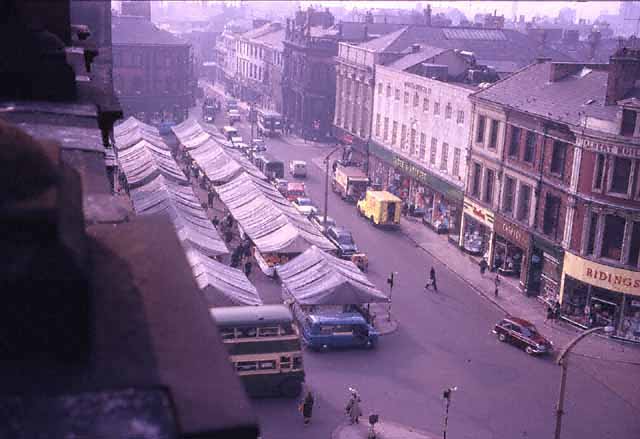
The three day market surrounded the old Market Hall and had to be erected every Tuesday and Thursday in readiness for the following days. The Market Square on Sunday nights was like speakers corner. There, various groups of people gathered around speakers who expounded their views on politics and the state of the world in general. Now of course we have a local radio station where you can air your views, however odd.
The three day market was gas lit as some stalls kept open till seven or eight o’clock in the evening. The stalls were set out in blocks: the block on King William-street was mostly food stalls; the lower block was dresses, coats, fancy goods and gents clothing. I cannot name every one, but some do stick in my mind. Corbride's candy stall sold homemade cough candy, mint humbugs and coffee. Fletcher's pot stall, who had a warehouse in Tontine-street, specialised in Royal Doulton and lustre glass. They also had a pony and trap that was always well turned out. The driver wore a Billy Cock hat and had a blue travelling rug across his knees. Wilkinson’s pork butchers I remember best form Christmas time when they would have two pigs heads hung up on the stall each with an orange in its mouth.
There was one stall called Jacobs, and I still have a morocco leather purse that my mother bought there in a sale for one and eleven pence. Jacobs also had a shop in Town Hall-street (it is the Army and Navy Stores) that sold hand bags, fancy light fittings, silver candelabra, glassware, oriental china and leather goods. It was a fascinating shop, and for that special occasion it was the place everyone went. Their sales were well attended and at such times a continuous queue would form on those days, especially the New Year Sale.
You could buy a fox fur coat on the market in those days. There were quite a few stocking stalls; artificial silk stockings were just coming out then, fully fashioned of course, with a pattern up the side that was called “acloque” I think. I do not know if I have got the spelling right, but it was a fancy pattern from the ankle, about eight inches long.
There were of course lots of “seconds” sold on the market and Fanny’s Bargain Stall was famous for Ballito, Bear Brand and Aristoc to name a few, at sixpence a pair. Woolworth’s also had stockings at sixpence a leg. In those days Woolworth’s was the original three pence and sixpence store. The “Stocking King” specialised in men’s socks, and Baxter’s was mainly children’s socks, stockings and handkerchiefs.
© Wally and Howard Talbot - terms and conditions
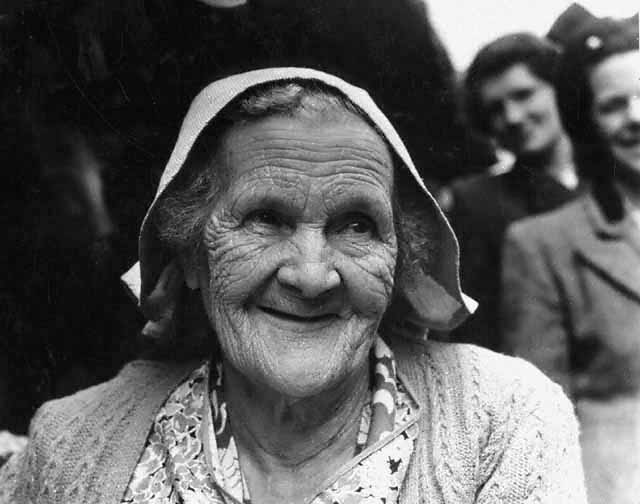
A road ran between the markets from King William-street to Victoria-street. It had shops on either side and the other side was given up on Market Days to the “Shrimp Ladies”. These women came from Southport and wore pretty floral cotton bonnets, clean white clothes, black shiny shoes and black wool stockings. There is still one stall on the New Market that sells shrimps, Wallbank's. The Fish Market was in a building next door to the Market Hall. It was lovely and cool in summer, but in winter it was very cold. The stalls all sold fresh fish and names I remember are; Tomlinson’s, Schahill, Myers and Hargreaves.
Opposite the shrimp stalls stood Booths, Italian Cafe and oriental food purveyors. Then came Simpsons carpet galleries, the Nottingham Lace shop, then on the corner was Wallbank's corn chandlers being a lofty shop with sacks of provender, dog biscuits and other animal food stuff. They were wholesale and retail and from here I would get one or two of Kit-E- Ration and two tins of Ken-L-Ration for the family cat and dog. The shop smelled delicious, a mixture of oats, barley, chaff, straw, hay and flour with cats sitting everywhere on the sacks. There was also Sowerbutts in Market-street, which was a smaller provender but smelt just as good, more so because they sold home cured bacon and groceries as well as animal foods.
Where Marks and Spencer’s now stands was the Frances Furness department store, no less than two floors of lovely dresses and frilly laces, buttons, etc. to tempt any lady. The top floor was a cafe. The nearest Marks and Spencer’s at that time was in Blackpool and so when a store opened in Blackburn it was very exciting as they sold nothing over five shillings. You could buy a watch for five shillings, and shoes or clothes. They even had a credit club whereby so many people in a group joined and every week one member in turn purchased five shillings worth of goods. The rest of the building was let to Great Universal Stores and later to Montague Burton, gent’s outfitter.
On the same block was a tobacconist called Hargreaves; Cash’s gent’s outfitters, now Roy Marlor, and on the corner a dress material shop called Ellwood's that was previously Glossop and Hawkins Lancashire Prints. There was another gent's outfitters on the opposite corner called Hayhurst, very exclusive—gent’s evening dress, white tie, tails, top hat, gloves, white silk scarves, initialled and linen handkerchiefs initialled in black on white. [They sold] everything but the white gardenia that went with all this. The dress shirts had to be laundered and starched and the starch had to be a certain strength to make the front stiff and the cuff also whilst leaving the rest of the shirt less stiff for the comfort of the wearer. Haydock's Laundry, Rosehill Laundry and the Co-Op all excelled in doing dress shirts as occasions were very formal in those days.
© BwD - terms and conditions
Pot Mansions and Iron Swans - Part 4
Chapter 13.
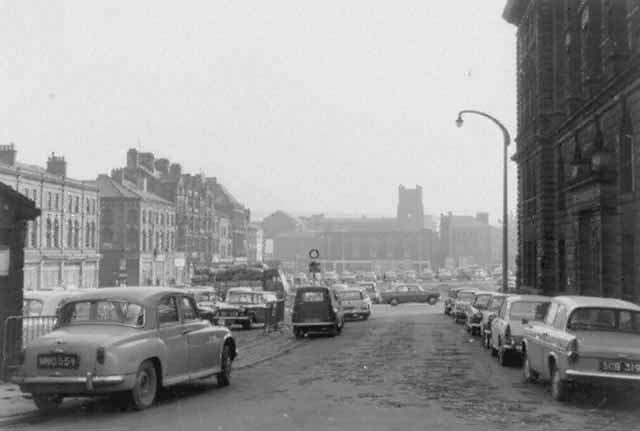
At one time you could buy animals, mice and hens etc. on what was known as the Hen Market, which was held in Tacketts-street. It is now part of the parking complex in the new precinct; here you could buy hens, bantams, White Wyndotts, Light Sussex and all kinds of poultry.
Many people who then lived in terraced houses would make a small garden in their back yard or would tend a nearby allotment. In such places hens, rabbits or pigeons were [sometimes] kept and in this way the Hen Market was kept very busy. Pigeons were very popular and racing pigeons across the English Channel was a hobby, sport for many men. In the Aqueduct area of Blackburn you could find quite a lot of pigeon lofts, it being one of the centres for this sport. On Sundays the fanciers would all turn out to await the homeward flight of the birds and each bird would be timed.
For myself, as a child, Sunday afternoons were sort of peculiar days. After Sunday school you could not go very far as you had to go to church again on Sunday night. After Sunday school, weather permitting, you went for a walk sometimes with your doll in her pram. Ours was a walk in Blackburn Cemetery! Felling very sanctimonious we would walk up past the lodge along a path lined with geraniums, French marigolds, alyssum and forget-me-nots to then wander around the graves. A visit to the “Blackburn Giants” grave was always a must. You would read the gravestones and weep, never thinking that any of your family would ever die, and we told ourselves that we would never be naughty again, till Monday of course, and then we would be back to normal.
© BwD - terms and conditions
A visit to the Priory at Pleasington was another walk out on a Sunday afternoon. After crossing the playing fields a sandy path led to the Priory. The church is very beautiful, yet I have not been there for some time now. I remember that my father would take us to visit Father Shine’s grave, a priest who had been at St. Anne’s Presbytery and was much respected by many people. I remember one grave in particular; it had a white marble surround and on the reverse of the headstone was carved a violin with a broken string. I also recall a yew hedge with convolvulus growing with in profusely.
A Bank Holiday in those days was not for watching sport on the T.V.; it was for getting away from it all to the countryside. The Yellow Hills, so called because of the gorse that grew a plenty there, was a popular spot with its fine views of Blackburn and the surrounding hills. On a clear day you could see Blackpool Tower, the Lakeland and Welsh Mountains. As a family we would walk across passing Butler's Delph and on down to the Butler's Arms at Pleasington where dad would have a quick one, then we would walk down the sandy path to the playing fields for a game of cricket. There was a little hut by the playing fields were you could get a cup of tea, sponge cake, biscuits or pop.
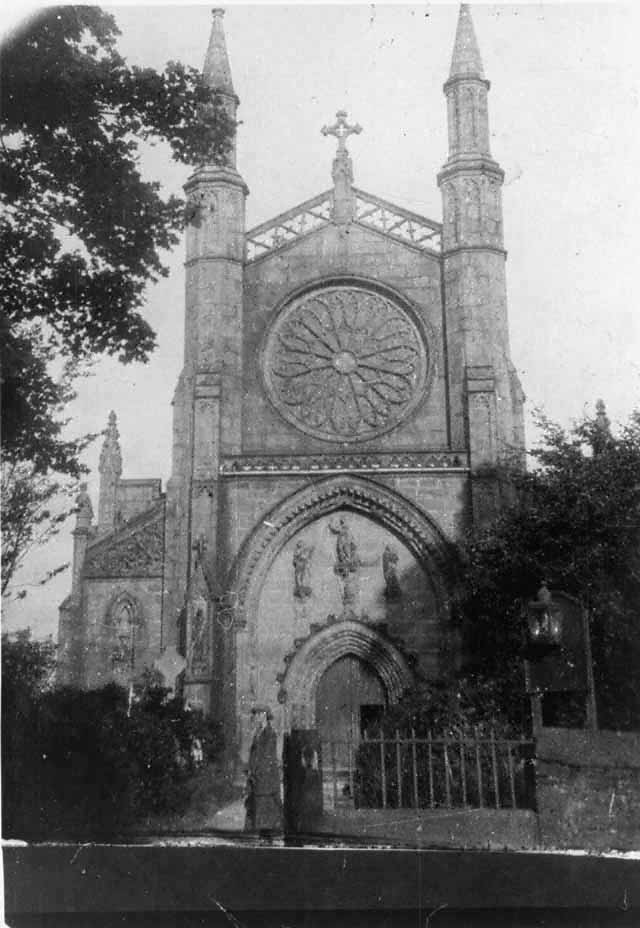
If you did not go to the Yellow Hills on a Bank Holiday then you went to Copster Green—known as “Goosemuck Hillock”. You would walk down from Wilpshire, having alighted from the tram there and walk through Wilpshire Bottoms, cross over to Salesbury and across fields to Copster Green. Here there were many cottages all selling jugs of tea and home made cakes, lemonade and toffee. Wild roses, buttercups and marsh marigolds seemed to grow everywhere in great profusion.
If you did not visit these two famous picnic spots you went to Balderstone. Here were shady lanes, bluebells, primroses, ragged robin, violets and a very fine church. By the river was Jackson’s Bank—one of the finest beauty spots in the world, but then I am prejudiced of course.
© BwD - terms and conditions
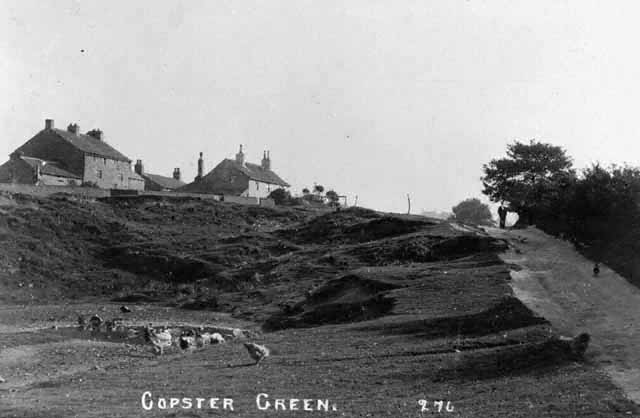
A very special Bank Holiday treat was a day trip to Blackpool either by train or charabanc. There was a booking place on Darwen-street for KCR Coaches. KCR stood for Kenyon, Coleman and Robinson and their coaches were white with red trim. The cost of the trip was one and sixpence with children travelling at half fare. Whether you travelled by coach or train it was very exciting—a whole day at Blackpool—the sands, fairyland, the Tower. Of course you took your own sandwiches and bought jugs of tea on the sands. Later in the day you would buy fish and chips for about one shilling. Where the coaches parked there were wooden trestles and forms where you could eat your own food and buy cups of tea and of course you would come home with a stick of rock.
When you had wound your way by chara or train, footsore, tired, yet happy, the first thing that father would do was to switch on the wireless. Radio in those days was very basic, I do remember headphones but later they had a speaker and were powered by a wet battery. This was called an accumulator and had a red and a black knob for the connections. It looked like a glass brick and it contained acid. You could get it charged up yourself or a man on a motorbike would call. He had a sidecar like a coffin in which he delivered the accumulators every week.
In the wintertime you would dash home from school for toast round the fire and listened to Auntie Muriel, Uncle Mac and Grey Owl and the Beavers. Grey Owl was a Red Indian who talked about his nation territory and adventures. There was Romany and Raq. This was country life as seen by this gypsy and his dog Raq. Children’s Hour; happy days! The news bulletin would follow Children’s Hour and then various programmes for grown ups.
The weekends on radio were something special. Saturday night was “In Town Tonight” and you could listen to all the interesting people who were in town that night. Later was dance music with Henry Hall, who was the resident dance band leader [for the BBC]. There was also Geraldo, Harry Roy, Roy Fox, Joe Loss and many others. Two male singers who were popular at the time were “The Street Singer” [Arthur Tracy] and Cavan O’Connor. Trois and his Mandoliers, the Palm Court Orchestra and Ambrose Big Band were all very popular personalities. The newsreaders were many and varied; Alver Lidell was one that I remember.
Jessie Mathews was doing great things on stage and screen. Anna Neagle too was dancing in the London shows, Peter Dawson was singing “I Travel the Road Who Cares,” and Paul Robeson was packing them in with “Ole Man River.
Fieldman’s, the music publishers, had a place in Blackpool where anyone could go for a singsong. You could sing along with the music of “Carolina Moon” all by yourself in the moonlight. Feldman’s sold sheet music for sixpence and brooches for sixpence. A popular brooch was Amy Johnson’s Aeroplane with Amy [written] across the wings.
© A. E. Shaw - terms and conditions
Chapter 14.
Funerals were, I suppose, as expensive as they are today. Not wishing to be too morbid, everyone seemed to be buried at that time with not as many cremations as there are nowadays. Then there was not a Chapel of Rest and the coffin had to remain in the front parlour until the day of burial. The whole family would go into full mourning, even the children, for twelve months at least. Aunts, uncles and cousins would go in mourning for six months. This involved ladies in the family wearing a navy coat and black accessories. Men wore grey with black armband. My mother refused to put me in black so I wore a grey coat and a panama with a black hatband for my grandma in 1936, the same week King George the V died. For King George there was public mourning and the shops were all closed on the day of his funeral. The shops remained draped in purple or black for the following week.
We had the funeral tea at Furness's café with a fish course and dessert—what a feast. The undertakers had a special contraption to lower the coffin into the ground and as it was a recent invention they had to ask my parents permission for its use.
Apart from watching weddings, funerals, playing in the park and getting into mischief in general, children had to think up games of their own.
© BwD - terms and conditions
Spending money in those days was a penny, given on Friday night and if you wanted any more money you had to run errands for your mum, gran or neighbours.
The cost of going to the pictures on Saturday afternoons was twopence at least, threepence in the best seats. The Majestic (Classic/Essoldo) was my favourite. The films would finish at five o’clock, when hundreds of screaming, happy kids would be let loose onto King William-street. Boys would fire imaginary guns at one another; just like the cowboys they had seen on the silver screen. This cinema ran a serial for about six weeks at a time and the talk in the schoolyard was of what had happened and what would happen next.
As young children, we were not allowed to go to the cinema on Saturday afternoon and only allowed to go at night accompanied by a parent. My mother said that the cinema was no place for children, only if it was educational. We were not allowed to read newspapers either; the horrors of the day were not for children to dwell on. Goodness only knows what she would say today! We did of course have the children’s newspaper, which was edited by Arthur Mee, who also did the Children’s Encyclopaedia, 10 volumes, which I still have to this day and which my granddaughters greatly enjoy.
© BwD - terms and conditions
Chapter 15.
A Man used to walk around the town that we knew only as “Billy Buttons”. He wore a khaki hat with brass buttons on it; he asked no one for anything but people gave him food and cups of tea anyway. Of course children gathered round when he sat on the kerbstone, but he never spoke to them. We said he did not need anything given to him as he lived in a mansion and that he had a gold piano. I ask you, what would anyone do with a gold piano? Wet, the stories would build up around him but your mother or gran still gave him the benefit of the doubt. Of course we were very young then.
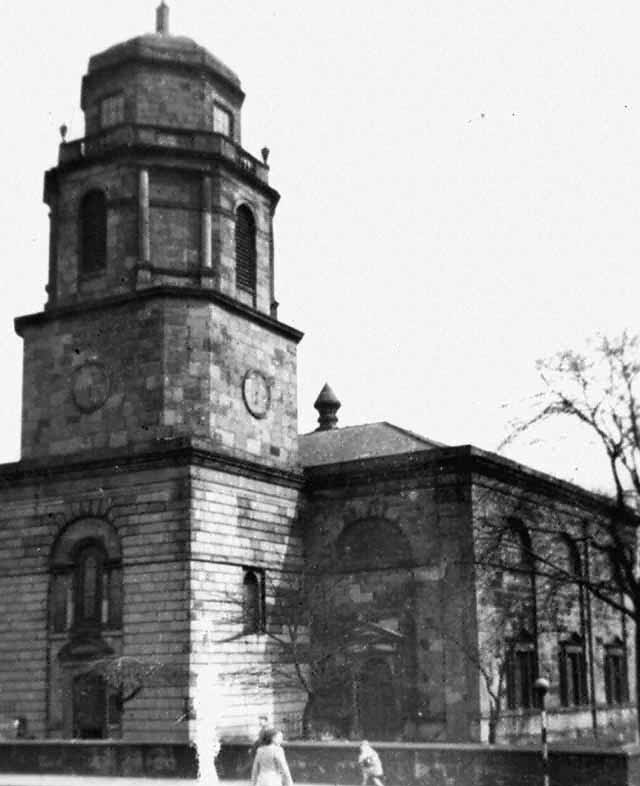
Sunday school was a must for all of us. I attended St. John’s and many devoted people helped there. There was Mr. Kellett, who was the superintendent and he had a very large roll of hymns which were placed on an easel. He would turn the sheet to a chosen hymn and stand by the side of the easel and point to each word with a very long stick and at the same time look round to see that everyone was giving voice, of course we could all read. Looking back on my school life I don’t remember anyone not being able to read or write.
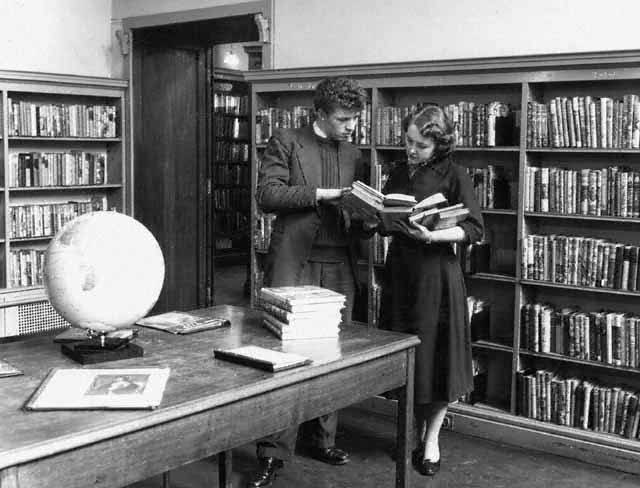
I joined the public library when I was seven and read such books as “Milly Molly Mandy”, “What Katy Did”, “Wind in the Willows”, and “Ann of Green Gables”, which still has pride of place on my book shelf. The library had many schoolgirl stories and the “Priory League” is one I remember. The boys had their specialities too, such as “Teddy Lester, Captain of Cricket”. I should think that these books were very widely read as boys liked to dream of playing cricket for East Lancs or football for Blackburn Rovers. The Rovers at this time were always in the first division and keenly supported.
Sunday school leagues both in football and cricket were very well supported. My father played in the Sunday school league for many years at football. Looking back on the heavy footwear they wore and the weight of the ball, it seems a much easier game now in my opinion.
© BwD - terms and conditions
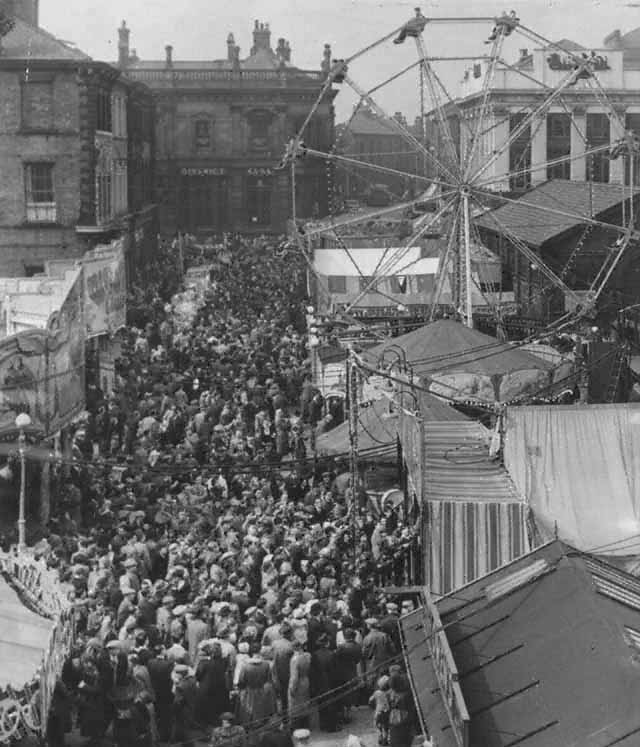
The Easter fair was an exciting time for us kids. During Easter week the three-day market was absent as the town centre was taken over by the pot and pleasure fairs. The area extended to Woolworth’s from the [market] clock tower across from Marks and Spencer. The pot fair was here and for many years the same people came with their wares. The most notable being Carters Mathews, Baileys and of course Fletchers who were local people and specialised in Royal Dolton. Mr Bailey was a tall man with black bushy eyebrows and a line in patter that kept the crowd around his stall. On his stall he had statuettes of a shy looking girl, and he would get one down from the rear of the stall and would say to one and all; “the only shy girl in Blackburn”. I have seen him since that time on local flea markets.
There was one merry-go-round that took up a great deal of space; it was the “Wall of Death”. Motorcyclists rode round and round the sheer wall, often with a lady on the back. You could buy post cards with a resume of the daring deeds of the people involved. The riders were not local; they came from foreign parts like Germany and France and shone with all the glamour of show business. One boy said “don’t be daft they live in Bolton or Accrington, they are only kidding on that they are foreign”. And so speculation would go on until the fair closed.
The dragons were the highlight of the merry-go-rounds; they were enormous monsters with seating for about twelve [people] in each dragon. The cars had red plush seats, a gold painted organ pumped out music and coloured flashing lights were all around, and each go on the dragons would cost sixpence.
On Easter Sunday the Salvation Army Band would play from the steps of the dragons and a lot of people would gather for the open-air service. The swing boats were another popular feature of the fair and they were really as large as canal boats. They would swing high into the air holding many excited people. Sadly, they stopped coming before I was old enough to go on them. I still don’t think that I would have dared though.
Older people often say that summers and winters are not like they used to be, yet I think that they are better these days. Hot was very hot then and cold was very cold. In summer we did not have fridges and freezers and food did not keep very well, iced drinks were only obtainable at the small shops that had freezing facilities. Many shop made their own ice cream; Ashworth’s on Manor-road, Entwistle on Whalley New-road and Smiths on Preston New-road being three of the most notable. There was also Bogganios of Trinity-street who had ice cream pony carts that would travel around the streets of greater Blackburn. The family were Italian, so they really knew about ice cream. Around 1937, Walls started selling ice cream and recruited many young men on bicycles to sell the ices. They wore blue and white striped jackets and the bike had a freezer box over the front wheel, with the slogan; “Stop me and buy one”. They sold what I suppose were the first lolly ices. These were called Snowfruits and were wrapped in a triangular piece of cardboard, price one penny.
Snow in winter was a problem, but not for us children. It stayed for days because no one shifted it. You cleared your own pavement and left it in the gutter and there it stayed, so the snow lasted until the thaw. There was not the same urgency to clear the roads as the traffic was minimal.
Most homes had a coal fire and a kitchen range which had an oven and a boiler which you kept stoked up for hot water and baking. Casseroles and stews were cooked long and slow. The shelf above [the range] was used by my mother to warm blankets before they were put on our beds in the winter. We did not have electric blankets, but used hot water bottles. These were made of stone, copper or aluminium and filled from the range boiler that had been keeping hot all day.
© LET - terms and conditions
A day would come when your parents would decide to beautify and have a parlour range put in the front room. What a performance that would be! After you had had the range put in you had to redecorate the room. What a to do, it’s a wonder that you or the dog or cat did not end up behind the paper on the wall! Wallpaper was not trimmed then, you had to do this yourself. I think that my mother did most of the trimming sat on a stool, cutting a half inch margin off the side of the roll. It seemed a laborious job, with father saying to her; “are you cutting it straight?” The paste was made of flour and water, once you had finished papering you had to put a boarder round the wall, one about ten inch deep was very fashionable. Then you would have to put up new curtains and lace. Lace curtains were white or dolly cream, then came a new shade, biscuit, so everyone had biscuit curtains. Thing caught on quickly in those days.
You would then decide that your front door needed a new coat of paint. Your door may have had a knob or a sneck, usually made of brass which needed polishing every week. The door step was cleaned and donkey stoned every week. You may have had a plant table under the front window with an aspidistra on top. Some [people] would display china tulips in the window and if you were very avant garde you placed the statuette of the “Shy Girl” on the table so that passersby could see how you set your stall out.
You would then decide that your front door needed a new coat of paint. Your door may have had a knob or a sneck, usually made of brass which needed polishing every week. The door step was cleaned and donkey stoned every week. You may have had a plant table under the front window with an aspidistra on top. Some [people] would display china tulips in the window and if you were very avant garde you placed the statuette of the “Shy Girl” on the table so that passersby could see how you set your stall out.
© BwD - terms and conditions
Chapter 16.
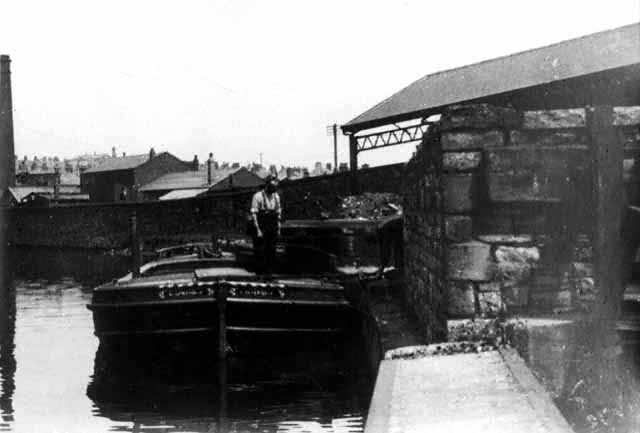
The Leeds and Liverpool canal played a big part in the growth of the town's industry, as coal was first transported by this method. Coal barges were often seen at Eanam Wharfe, and the local lock keepers knew just what would be coming through at any time. Looking back, I rather think that the canals at this period could have been losing money and trade. I remember my mother telling me of the days when folk would go down to the canal for day trips. This was not so in my day and I can only recall the canal being used commercially. We would wave to the bargees as they passed by, and you know, it still seems a good way of transporting heavy goods, it would take the strain off our overcrowded roads.
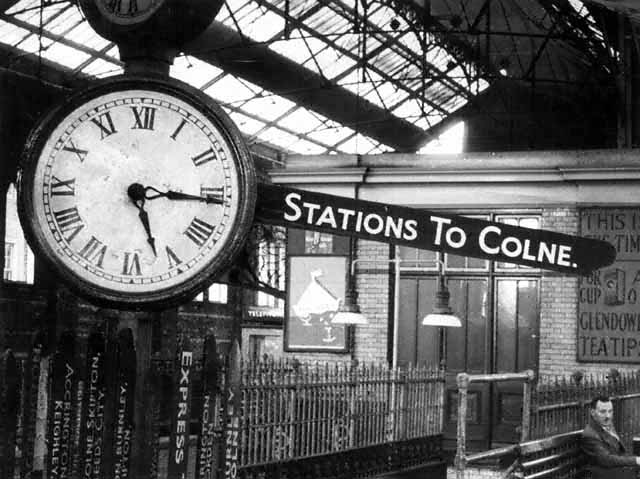
The steam trains were a joy to behold; it was the start of a great adventure as soon as you entered the railway station. The hustle and bustle of the porters, drivers and guards all going about their business add to the excitement. When you boarded the train you sat in compartments on seats of velvet or uncut moquette facing each other. In our hands would be a bar of chocolate bought from a slot machine on the platform. The guard would wave his green flag and along with much smoke and clatter we were off. You gazed above the heads of the people sat opposite at the pictures mounted there; a picture of the “Monarch of the Glen” with the words “Come to Bonny Scotland”, or a plea for you to visit Brighton or some other place. Then you would strain your neck to see the three pictures above your own head. The window is slightly open, someone gets up to close it as we are coming to Sough Tunnel, otherwise we would all be covered in soot. The fireman puts more coal on to get up steam to speed us on to our destination, Manchester, London or where ever, what do they mean by the term “Inter city?”
© LET - terms and conditions
We had to get used to more traffic using the roads. We had to look both ways before crossing the roads. This was a must, even now my sons say; “Mum, why do you look both ways crossing this road, it’s only one way”, but I smile and say; “Force of habit!” You see, you accept the traffic today, we had to get used to it, and we were going to school in the last days of the horse and cart era.
The Thirty mile an hour limit, crowded trams and trains. The War came and all these forms of transport were in heavy demand. It took World War Two to produce the speed we now attain, as I said at the beginning, my generation was caught up in this change and we were privileged to remember the remains of the old and to be able to embrace and accept the new.
A peace of sorts has remained for thirty years; let us hope that it will stay that way, and that my generation are the last to be caught up in wars. This history could be said of any town in the country, the places would be different of course but the events and human nature being what it is remains the same.
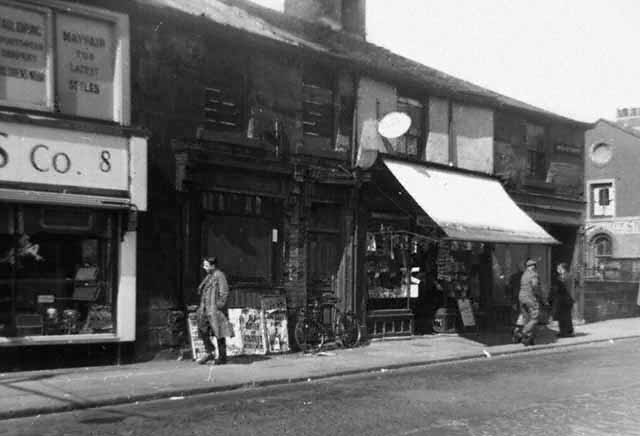
All towns and villages have their own characters and if you delved into their past it would be the same or similar. We all, deep down, cherish a little corner for the place of our birth and first beginnings, even though we know that we will never go back to them. I can only hope that this little attempt will remind Blackburnians everywhere of a time and place that was.
© BwD - terms and conditions
I could not conclude without saying whichever road you travel in this town you will never be far from green fields and flowers, varied wildlife, beauty spots of renown, abbeys, churches and castles steeped in history, stately homes, Roman remains, historic colleges, superb views, salmon fishing and horse shows. We have everything within a few miles of the town, so please open your eyes, you young ones who can. Never say “it’s a dump and there is nothing to do”. There is plenty to do to preserve the town and keep a mix of old and the new.
There are many things that I could have written about and could go on forever but will leave you to remember the things that I have left out, not forgetting the black pudding kiosk in King-street and Butterworth’s wholesale sweet shop on Tontine-street. Two ladies who came into the store where I worked after the war used to wear very old fashioned hats and we called them, “This happy breed!” What a note to finish on.
About the Author
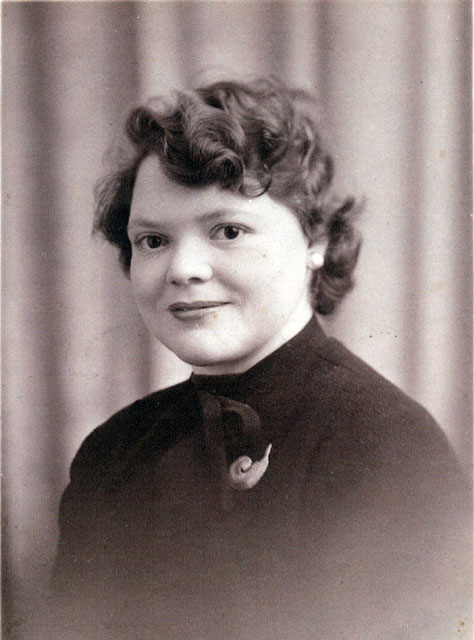
Joyce Tennant was born in 1922 to a family of Lancashire cotton workers. Her early school years were at St. John’s girl’s school and Blakey Moor Central Girls School. On leaving school, at a very early age, she started work as an assistant at Rosehill Laundry, which was at Eanam. She was also employed by Marks and Spencers and Hocking’s stall on Blackburn’s three day market. Her keen interests were tailoring and arts and crafts. Her craft work was quite unique.
She was married to Herbert Wignall and had two children.
Coming from a very strong community, Joyce was a big part of the Ragged School, where she helped raise funds on many occasions.
She was passionate about the people of Blackburn, and also a keen local historian, which in turn inspired her to write about her town for the future generation.
If you want to contact us about Joyce's story and share your memories, you can email library@blackburn.gov.uk