
 Loading more
All Our Yesterdays
Pot Mansions and Iron Swans Part 1 Pot Mansions and Iron Swans - Part 2
Pot Mansions and Iron Swans - Part 3 | Pot Mansions and Iron Swans - Part 4
© BwD - terms and conditions
Chapter 1
t is not my intention to write of the years of the depression, but rather to reflect on the thirties as I remember them and of a town in which I grew up. These years hold a very special place in history because during them, events evolved which were to change the entire world, a sweeping statement but a true one. My generation had more than a front row seat. In 1939 they were called upon to fight for King and country, just as their parents had been some twenty-five years earlier.
We were born some five to seven years after the Armistice was signed, and brought up in the uneasy peace that followed. The rumblings of war were everywhere. China was in conflict with Japan, Mussolini had invaded Abyssinia, Haile Selassie, the Lion of Judah, had stood firm against the invader, to no avail Germany was fast re-arming and calling on the youth of the country to prepare for war. News bulletins came by way of radio, as television was in its infancy. We may have had the delights sooner, but we had to do something about the little man in Germany, “Hitler”. In the event, many of my friends from mixed infant days were never to return from war.
Childhood is such a marvellous time it is a pity we can’t wait to grow up. Every generation is the same; we do not value it until it is too late. My memories are of Blackburn as a cotton town, as it had little to offer in the way of other industries. Lancashire’s climate is just right for cotton weaving; it is said we weave the finest in the world. All my family were involved in the trade, my father being a tape sizer, his brother a mill manager, and his brother-in-law a mill owner. When Wall Street collapsed, we felt the backlash. Cotton was all we had, and it was our lifeline; money was tight, jobs were scarce, and the shopkeepers felt it too. In spite of this people were friendly and always willing to lend a hand. In every street there was some good woman who could help the Midwife or the Undertaker as the case might be, or look after a neighbour’s children in an emergency. It was safe to walk the streets at night, dimly lit though they were. Even the longer streets had just a few gaslights, but petty crime and housebreaking were rare; how could you rob somebody who was no better off than yourself- perhaps even worse off. Everyone accepted the situation as the aftermath of the Great War, and the Depression was worldwide.
© LET - terms and conditions
Chapter 2
Anyone asking weavers, spinners and winders of this Town why the Mills had to close would have given many different answers. As technology advanced, suitable conditions for cotton could be reproduced on the spot, so transport costs were reduced. This is only my opinion, gleaned from conversations at home. My Mother said we were letting too many textile students in from overseas, and telling them all we knew. We were also exporting machinery and letting skilled men go abroad to train others; in view of the recession here there were many who were glad to go. I do remember people going on strike after having their wages cut, and they were locked out. Anyone going to work for less money was called a “knobsticker”. As I said, my father was a Tape-Sizer, and at one time my mother was a Weaver, so a lot of odd phrases came my way via the tea table conversation.
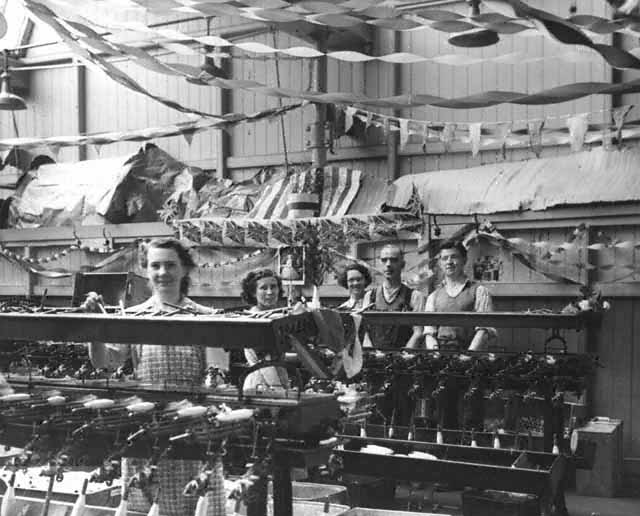
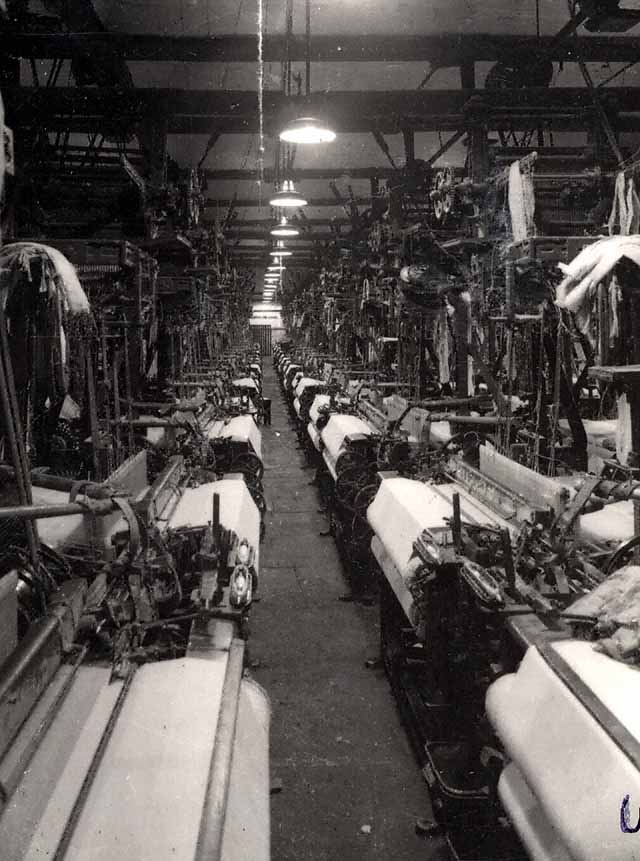
Some mills wove special kinds of cloth which required great skill; “ Double Umbrellas” (special cloth woven for umbrellas) were very tricky, being very closely woven, Jacquards were difficult too, and Egyptian Cotton was a nightmare, it was also very expensive, as was Sea Island Cotton. Tacklers, who maintained a set of looms, were very important men; if a loom was not just right a lot of cotton could be spoiled. Conditions were appalling; no canteens-I gather you ate your breakfast at your looms. The old weavers speak with nostalgia of former times, and of having to provide a repair kit consisting of scissors, reed hook, a fine steel comb, and a small penknife. Sometimes a mistake could be put right with these, if not, the Tackler was told, resulting in a fine [for the weaver]
© LET - terms and conditions
Saturday morning was part of the working week, and there was a one-week holiday without pay in summer. There was no rest room, and toilet facilities left much to be desired. The managers were only interested in results, and heaven help you if you had to stay off work. Not only did someone come round to see if you were ill (this was because you would get a few shillings from the weavers club), but you had to try to find someone to work your looms. On your return you had to see if your own looms were available, if not, you had the choice of going on any that you could, or be out of work. If you turned down looms you would not qualify for dole money. The looms were like sewing machines-they came to know the operator, and no one liked to change looms. In spite of all this there was a comradeship between weavers, and they enjoyed their work, starting at seven in the morning and working till five-thirty, with an hour off for dinner.
The Second World War brought about some changes. The back-room boys started experimenting with man-made fibres, which had been used most successfully for parachutes, rope, and other things. When these were no longer needed, the yarns were to become part of our everyday lives. The textile technicians had long sought a universal fabric, one that could be used for all kinds of clothing, household furnishings and every other thing they could dream up, and preferably one that needed minimum of ironing. These things were to win the housewife over, thus turning another page in the history of cotton.
To produce these man-made fibres, some machines had to be scrapped, some converted. Firms had to adapt and expand, or close down altogether. Some were reluctant to change or plan far ahead, and many small friendly firms began to close at an alarming rate, never to open again.
I could not close this chapter without making a reference to clogs. Most weavers wore these, and they did make a clatter on the cobblestones, which paved most of the streets and roads. In the late thirties the trend was to wear shoes to go to work in, and change into clogs for standing on stone floors. Black woollen Stockings were also worn, with beige lisle for Sundays. During the war they brought out a rubber clog sole, which did not clatter like the iron ones- the music-hall comedians had to rewrite their scripts. I also remember the knocker-up, usually a man; he would tap on your window with a stick. How he got up in the mornings I will never know.
The old weavers could tell you lots more about their industry and its conditions of work. It must have been terrible in summer, with no fresh air; that was why most of them went home for lunch if they could. No doubt the first thing they did on leaving work was to take a deep breath- no pollution from car fumes then, only the mill owners could afford cars.
© BwD - terms and conditions
Chapter 3
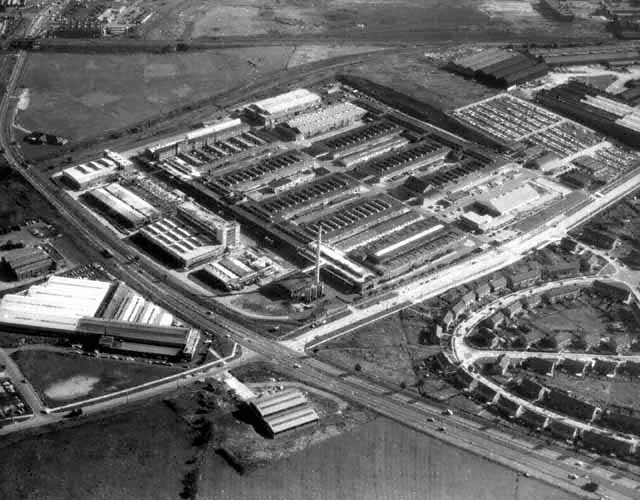
The picture in those days was pretty glum for a town of this size, but things were slowly moving. Mullards and Phillips moved here from Eindhoven in Holland, having first built a large factory in Mitcham in Surrey. They built a larger factory on the outskirts of Blackburn, bringing new life to the town. Soon afterwards the Royal Ordinance Factory was built at Lower Darwen, contributing greatly to the war effort. Eindhoven was one of the first towns in Holland to be over-run by the Germans, and remained in enemy hands until liberated by the allied troops some four years later. The factory of Phillips Road absorbed a large part of the working populace of this town, and still does. Many of their new employees were weavers willing to try a new way of life, and when the Mills came into their own again, many stayed in their newfound employment.
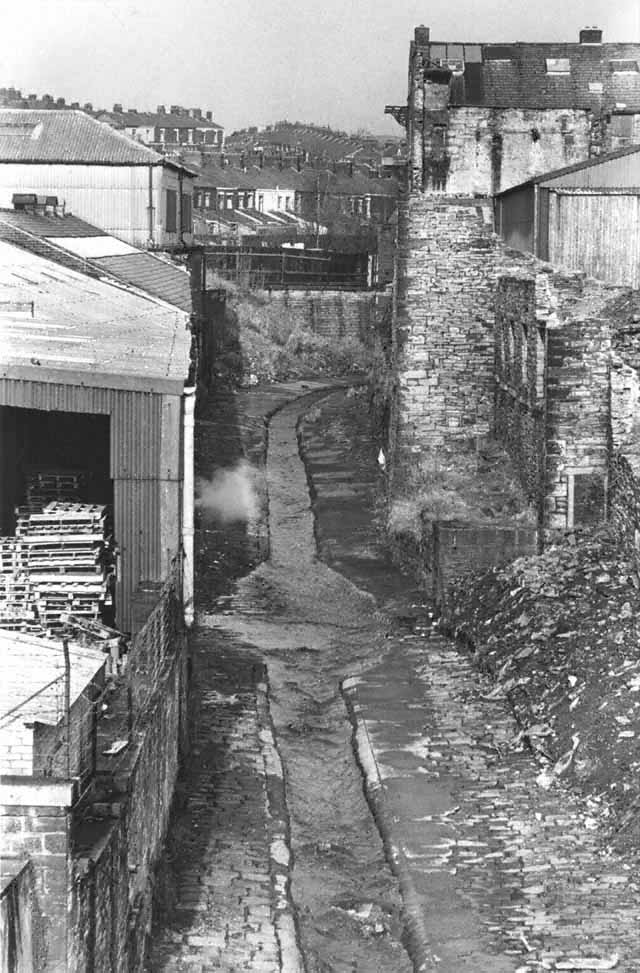
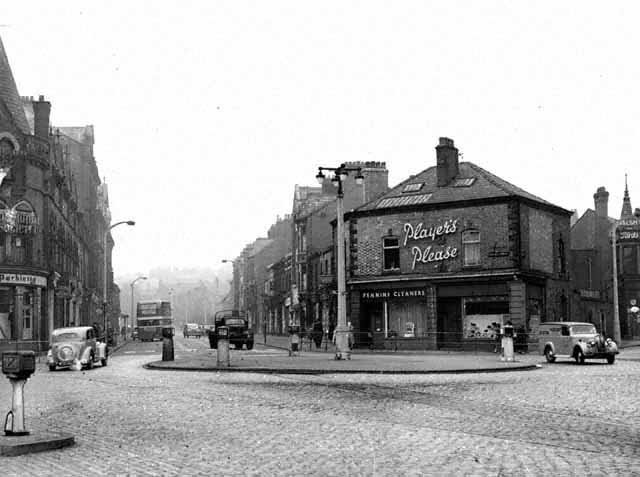
The city fathers of this town, irrespective of party, have done much to provide employment. No doubt some people will disagree, but everyone has his own opinion. Rates have shot up, but this is still a good town to live in. Then the powers that planned a new city centre, though not to everyone’s liking I agree. First of all they dealt with the river Blakewater, from which the town derives its name. How do you get rid of a mucky brook bang in the middle of the town centre? Well, they did. It was a mammoth task to divert it, and it had to be done before work could start on anything else. Always a smelly stream, you could never picnic on its banks, or even follow its course on a summer’s day. At low tide it was just a trickle, but when the monsoons came it was a torrent of dirty, evil smelling water. I knew the district, Salford was quaint and many of the stone buildings had character, but surely it is much better now than the way it was? I can’t help thinking what might have happened when the polio scare hit town in the 1960’s, and what a public outcry there would have been. I digress forgive me. Recollections must start somewhere, and where better than at Sudell Cross, the place that has seen all the changes yet remains to this day very much the way it was. To people coming back after some years, this must have been one of the few landmarks they could identify with. I remember when I was small; it was like going on safari trying to get across. The sprawling cobbled road, with the tram tracks running through, had to be policed every day. The bobby directed traffic and saw the very young and elderly safely across. Cars and such seemed to be everywhere with the policeman standing amid it all. One very bad winter, during a foggy spell, someone hit on the idea of putting large galvanised bins in a circle, painted black and white. The policeman stood on a box in the middle of the ring, but wide of the tram track. Of course [Leslie] Hore-Belisha had yet to dream up his famous beacons, like traffic lights they were still in the pipeline. We now have lights, but I still get butterflies when I have to cross here, the, I am getting old.
People were becoming car minded, but the war delayed the day of the family car with its traffic jams, motorways, getting to the coast before anyone else, and all the things that make motoring the hazard it now is. Walsh Bros., the main Ford dealers in this town, was just off the corner of Sudell Cross. Fords must have had a sales promotion in the north. I remember going to Blackpool one day to see a parade of cars driving down the promenade. Henry must have had a change of mind about the colour; these were all cream with red trim, red upholstery and two doors. We even went to the top floor restaurant to get a better view. No doubt someone will remember going to that display.
At the corner of Sudell Cross and Limbrick was a tailor’s shop. The window display was a large photo of a man in tweeds, Donegal of course, Burberry raincoat and walking stick. A moustache completed this picture of sartorial elegance by Smith & Ibbotson. Draped across the floor of the window was an assortment of Harris Tweeds, Prince of Wales checks and Tattersall Checks, all in pure wool, bespoke tailoring was a must, but the day of the fifty-shilling tailor was coming. Another window display was plus fours, if you’ve never heard of them, ask your Granddad, he probably wore them, gathered at the calf and worn with argyle socks. Black and white buckskin shoes, then making a come back completed the picture.
Next door to the tailors was a fancy goods shop and post office, Wilson’s who turned their large upstairs room into a Christmas showroom each year. The post office later moved to Seed and Gabbutt’s bookshop, where Miss Newby and her staff carried out its affairs. No family allowance, no T.V. licences, just old age pensions, registered envelopes and stamps at five pence, one penny and a half.
Birthday cards come to mind as I write. They were mostly like a post card, all red roses, pussycats, and puppies in baskets. Painted on the reverse side was “ This is a real photograph by Rotary”, and if you remember them then you must be as old as I am.
© Aerofilms - terms and conditions
Seed & Gabbutt had a large circulating library, as had Baxters, Parker & Boots, to name but a few. For two pence you could borrow a book for a week, and for another penny you could reserve a book in advance. Westerns were very popular, my father enjoyed a good western, and there was always a Max Brand on the bookshelf at home.
Next door to Seed & Gabbutt was Porrits, selling Irish linen in pastel shades by the yard. They were also agents for Tootall dresses. These were quite dear but were never outworn, being quite different from the mass-produced ones that came later.
Further up Preston New Road was Pierre Stultiens; French models were the order of the day in this establishment at this time; Paris ruled the fashion world and this shop had the very latest Parisian gowns. Across the road was Miss McMasters little shop, she made children’s dresses, and never have I seen such delicate work- French knots, smocking, featherstitch, on georgette of all things. They really had to be seen to be believed.
There was Hipkins high-class grocers, where they wrapped your purchase in brown paper and tied it with string, not forgetting a loop for your finger, a far cry from a supermarket checkout. Then there was Burton & Garland’s photographic studio, one of many in the area; another popular one was Elsie Ames. Her studio was a large house further up the road; it had a small garden where weddings could be photographed. Mr Duckworth had a little studio at the bottom of Limbrick known as Sharples. Come Easter Saturday we would dash down to see the weddings, no one ever got married in Lent, and we would Ooh & Ah at the bridal groups. Looking back they all seemed much the same, satin dresses in pastel shade of blue peach or green, whit too of course, all cut on the bias. The bouquets looked more like wreaths of carnations. Mr Duckworth was also an industrial photographer, and specialised in trick photography, I remember when an airman was awarded a medal posthumously; he superimposed a photograph of the dead airman’s head onto a photograph of an airman with the same decoration, and came up with a picture that greatly pleased the grieving family. He also photographed the Rialto Cinema when it was first built on Penny Street, it was seen as a wonder of the age, cinema, theatre and entertainment centre all in one- another good idea that was to fall by the wayside. I digress, which often happens when you wander down memory lane. Some of the buildings on Preston New Road are three stories high, and over Burton & Garland’s was a ballroom known as the Palais de Dance, it was here that my friend’s sister tripped the light fantastic. I can’t remember when it closed its doors, but it was in use as dance hall during the Second World War.
Lower down there was Thompson’s garage with its large frontage and show room, they were agents for Armstrong Siddeley, these large saloons must have consumed a great deal of petrol. Second hand car sales were not the thing they are today, mass production was in its infancy and new models were just beginning to roll off the line. Motor mechanics were teaching themselves, and lorry drivers could name their own terms, some of the heavy duty lorries were steam powered, I think they were called “Pierce Arrows”, and they seemed very hot and steamy-not the air-conditioned pantechnicons of today.
Round the corner of Simmons Street was Fry’s Sports Outfitters, they sold Slazenger racquets, and I thought if I had one I could be a Wimbledon champion, alas I had to use my cousins old one and let Dorothy Round carry off the laurels, so much for childhood dreams. Also in Simmons street were the tram repair sheds, later used for maintaining fleets of Police Panda cars. Across from Fry’s was a mixed business selling Almond’s tripe: their advert showed a little man in a pin stripe suit, pince-nez and spats, I thought this was Mr Almond. Next-door was Gladys Graham’s millinery shop; this really did have style, all the summer hats seemed to be black or cream straw, with yards of net and flowers adorning them. Winter hats were of felt, fur felt or velour such as you rarely see today, in shade of peacock blue or mulberry, masses of feathers-ostrich, pheasant and cock. They were expensive, but oh what style. Even if you could not afford a new coat, a new hat would do wonders for your morale. Gladys Graham later moved across the road to premises vacated by Smith & Ibbotson. Steads the sweetshop had been there as long as I could remember, and used to have a café in the basement. The little tobacconist across the road is an old established shop too.
© LET - terms and conditions
Chapter 4
Mr McMynns Chemist shop was on the other corner of Sudell Cross, and next door was Miss Stephenson’s wool shop, where you could buy Clarks silks a penny a skein, and an ounce of wool would cost two pence, a book of transfers cost one penny, and Irish linen tray cloth about sixpence. When television came in embroidery went out like Miss Stephenson’s shop.
On the opposite corner of Sudell Cross was Richmond Hairdressing Salon, and a very small shop known as the Powder Bowl:here they sold all kinds of trinkets mainly in barbola work (ornamentation with small flowers, fruits etc, made of plastic paste and coloured), this too is a dying craft. Next door to the powder bowl was a draper's shop called Fielding's, and even to me in those days it seemed very antiquated with a display of wool panties or directoire knickers using the polite term–later known as “ passion killers”. They were displayed on brass ‘T’ shaped rods with a heavy circular base, and adjusted at different heights. Wool combinations were also on display, and this was an all in one garment which combined vest and panties in wool-much loved by elderly ladies, because they kept you warm. Corsets defied description;they were heavy drill and looked more like armour plating, and enough steel to help the war effort in one pair. You did not wear a brassiere; you wore a bust bodice in a mucky shade of pink or peach. Night dresses were of heavy flannel and most men wore union shirts (a mixture of cotton and worsted, very warm and hard wearing) for work, but at weekends they wore shirts with separate collars for which you needed a back stud and a front stud, and of course cuff-links, and arm bands. The finest shirts were made of poplin, again difficult to weave, but a joy to iron. Next door to Fielding’s was a pottery shop called “ Cat looking back”, the floor space was massive. In these days of order and method the sales assistants would be worn out walking across the floor, they probably were then but no one seemed to care about it. This shop sold very large earthenware bowls for baking bread, most people made their own bread then, they also sold stone hot water bottles, and very large pudding dishes.
Most people at this time had a roast for Sunday lunch, followed by a rice pudding, and for tea it would be meat sandwiches followed by home made cakes and trifle. Monday lunch would be the left over joint somehow turned into stew, and the left over rice pudding would be put in the oven by the fire to re cook itself. Monday was washing day, and the kitchen smelled of steam and hot soapy water. Possers and a dolly tub, or maybe you had a boiler, but the atmosphere was still the same, hot and steamy. You used Mother Shipton's soap or Blue Windsor, which was mottled blue and white, or sunlight soap, all sold in long bars. I think Rinso was one of the first washing powders, and you always used Robin Starch or Dolly Blue.
© BwD - terms and conditions
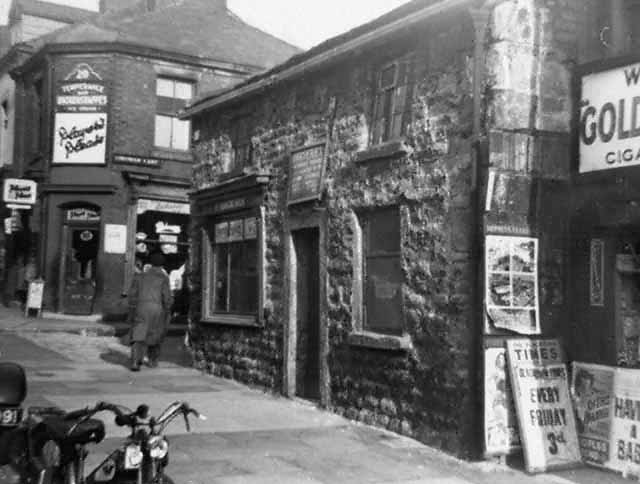
In Limbrick was a series of stone built shops, one was a veterinary surgeon, and lower down was Harrison's Newsagents where I bought my school-girls weekly.Sometimes I had a change and went to Mr Murray's on Blakey Moor. At that time there were quite a few schoolgirl magazines, what girl did not dream of going to boarding school. Babs & Co, when Pam made Morecove wonder, Bessie Bunter the loveable duffer of the fifth, a page showed you how to renovate things, a comb case your friend would be proud to own-not mine, it was a disaster as all I could do with a needle was thread it. Later a magazine came out called Girls Crystal; this must have been aimed at the teenage market as it had a “boy meets girl” theme. You see boys and girls were segregated at school after mixed infants, at the age of seven or eight, and girls were taught separately right through until you left school.
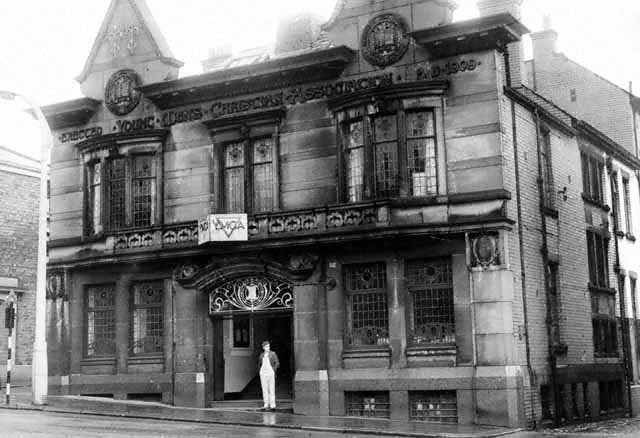
The Boys magazines were much the same theme as girls, Hotspur, Wizard, Boys Own, Sports Budget, to name but a few. Red Circle School, Morgan the Mighty, one was a story of a school in the 1970’s. In this story the boys were taught by closed-circuit television, they used typewriters and it seemed like something out of the “ March of Time” (this was a feature shown in cinemas, something like today’s “Tomorrows World”.) We had comics too:Chicks Own, Tiny Tots, Tiger Tim, all in colour. Then Chips, Joker, Butterfly, Film Fun, and a little later Dandy, Beano, and many more. Swapping comics was a pastime in its own right. Here I must mention cigarette cards; in most packets you would get a card, depicting roses, do-it-yourself household hints, radio stars, film stars, wild flowers, and dogs to name a few. We children did quite a trade in these cards. The cigarettes were varied-Players twenty for eleven pence halfpenny, Woodbines five for two pence, Star Robin, De Reske Minors, Du Maurier, Ardath cork tipped, Black Cat, Club Kensitas, Three Castles, Passing Cloud, and some like Kensitas gave free gifts with coupons. Further on down Limbrick is The Sir Charles Napier hotel, but in those days it was the Y.M.C.A. We would go on a Friday night for a penny entrance to watch a film.You could see Charlie Chaplin, Laurel & Hardy, and a documentary. Talkies had arrived, and cinemas were being built to be visited by everyone once a week. There were also magazines for avid filmgoers- Picture Show, Picture goer, movie magazines which came straight from America. A shop in Victoria Street specialised in these magazines, and to a film struck girl they were the bible of the film industry. I can remember at school we had film stars photos pinned to the inside of desk lids, Robert Taylor, Nelson Eddy, Franchot Tone, Clark Gable to name but a few. Clark Gable actually appealed to our older sisters who had started work and therefore on a different planet to us.They could wear high heels and silk stockings, and choose their own clothes. We had to wear school uniform, which included long black stockings, panama hats, velour in winter, gymslips and a white blouse.
As I said, Walsh's were the main Ford dealers, and it was there that I first saw a fully streamlined car–a Chrysler. Boys and girls came from miles around to view the wonder of the age. It was navy blue, and all they talked about was mileage, tyres, engines:the Motor Trade was on the brink of taking off.
Malcolm Campbell came to Blackburn with his famous Blue Bird, I think it must have been at Loxhams. I remember him giving signed photos away of his record breaking car, and it was running on “Wakefield Castrol”.
Just off Limbrick was Kirkham Lane. And at Limbrick end was a toffee boilers, Thompson by name,. Here Mr Thompson and his son made a variety of boiled sweets. For a penny you could be sick.Sarsaparilla tablets, pear drops, humbugs, mints- you name them they made them;your Saturday penny bought a lot of sweets. It was a fascinating place, when you went inside they would be in the process of throwing the boiled glutinous mass, and you had to wait to be served. Sometimes they would let you stay and watch if you didn’t get into mischief, then you came away with a big bag of sweets for your penny. The next stop the Clinic Dentist, Oh dear!
© LET - terms and conditions
Pot Mansions and Iron Swans - Part 2
Chapter 5
Northgate has quite a character all of its own, and now that the new shopping phase is near completion, it could be busier than it has ever been.
There was at one time a drinking trough for horses at the side entrance to the Grapes Hotel. A few shops were unique in having steps going up to them and steps going down to the basement to different shops. One went up some steps to a chip shop owned by the Caton family for many years, before they moved to Blackpool to open one by the Coliseum. Another was a hardware shop, and in the basement a shoe repairer's. The Police Station, the Law Courts and the Public Halls still stand sentinel overall.
In those days the cars parked vertical to the road outside the public buildings, can you imagine that today? Oh, but the cars in those days : Bull Nosed Morris, Baby Austin, Lanchester, Hillman, Standard, Alvis, Riley, Morgan, Singer, M.G. Sunbeam Talbot, and Trojans, the last being aptly named. I seem to remember that the Brooke Bond Company had these monsters, they chugged along like a tank.
I must also add here that Amy Johnson and Jim Mollinson were doing great things and daring deeds in the air, flying to Australia and America knocking minutes off each other's records. The Schneider Trophy was a race to Australia and competitors entered from all over the world, so there was great excitement when the news came through on the radio. Campbell Black, Scott and Guthrie and many more entered the race in planes that looked like oversized match-boxes. These truly were the pioneers of early flight.
Alan Cobham was another pioneer, the Freddie Laker of his day you could say. He hired a field at Guide every year to put on an air display. You could take to the skies for only five shillings, a fortune when you only had sixpence pocket money.
Air ships were also flying around at this time and were competing with the Germans in this field. I remember the maiden flight of the R101 and the disaster that followed. I think only three people came out alive, one was the radio operator, this would have been about 1933.
We were wandering down Northgate at the beginning of this chapter; however we will get round the Town centre eventually.
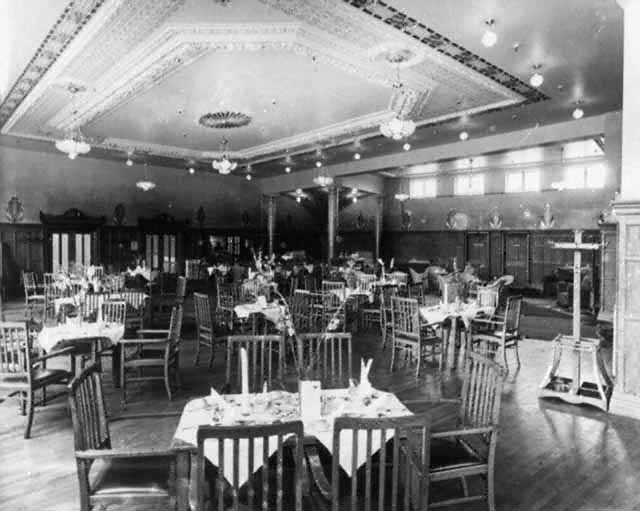
Across from the Public Halls was the Co-op Emporium. This was the “Golden Age” of the Co-op, there were people who lived and died by the Co-op, that is they purchased everything from the Co-op even their funeral. The Emporium had a café, a Ballroom and a caged lift to its many floors. The Grocery department was all white tiled and very clean.
There were of course other Co-op shops in various parts of the town. They all had long counters and very wide shelves in dark red, highly polished wood. Service was one person at a time. Here you purchased Van Huton cocoa, Panshine, Silver Seal Margarine, Brasso, Zebra Black Lead, Dolly Blue, and Dolly Cream for lace curtains and Robin Starch for the Miss Muffet print dresses that most of us girls wore in summertime, if your Mum was handy with a needle.
Dress material was six pence a yard from Hawkins on King William Street. We had to get three yards to take to school for sewing lessons. With only one machine in the class, we had to take turns, otherwise we had to tack, learn the art of pocket openings, flat facing and run and fell seams, but first you had to draught your own pattern. Mind you it took a whole term to do this, and when the finished garment was ready we had a sort of fashion parade. My dress was a disaster so I never entered as a budding model.
© BwD - terms and conditions
The magazines for ladies at this time were Woman’s Weekly, the main story writer for which was Ruby M. Ayers, then there was Home Notes, Woman’s Journal, and I remember the first edition of Woman. It was heralded as the leading weekly for women, price two pence. But no home was complete without Weldon’s Ladies Journal; this was a monthly magazine costing sixpence and was handed round to relatives and friends. Weldon’s also made paper dress patterns, as did Leach and Maudella. Somewhere I still have old catalogues.
Mitchell’s toy shop was a great delight, and still is. It is now known as Mercers. They had dolls prams, dresses for dolls, and most small girls had to keep up with the Joneses. If you went walking on a Sunday you took your dolly in the pram and everything had to be perfect because we would stop to admire one another’s prams. It was many years after that time that Cindy Dolls, Action Men and Strength Armstrong appeared on the scene.
We played Cowboys and Indians, Cops and Robbers, Hide and Seek, Hopscotch, Top and Whip, Foot Cycles- homemade with wood and two iron wheels, it was quicker than walking when you had to do your Mum’s errands. See how we were motivating to speed.
Another pastime for girls was swapping scraps. You bought these for a penny a sheet, flowers, butterflies, ladies in crinolines, all very pretty, but the premium was one of angels, and one angel was equal to six others. A large angel was worth half your collection.
Clarkson’s pawn shop was next to the Ribblesdale Hotel, and in the window was an assortment of watches and jewellery. Some items had fortified pledge tickets on them. This meant that the owner could not pay back the money that had been borrowed. I wonder what stories of hardship some of the articles could tell? It was all good quality jewellery and most of it Victorian.
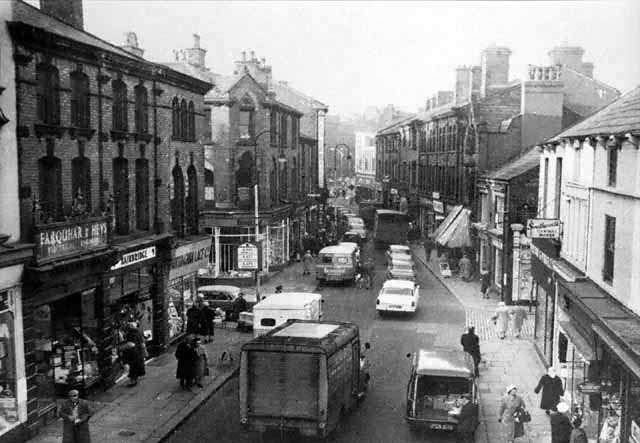
Across the road was Bradleys Gents and Boys Outfitters, coats and suits hung outside the door, best quality wool of course. The “fifty Shilling Tailors” were coming into their own, the suits of course were all three piece, and it was unthinkable not to wear a tie. Most men wore Bowler Hats, Velour Trilbies, and for casual wear a cap very much like “Andy Cap” style of today.
The Band Leader of the day was Harry Roy. He was then at the height of his fame, having written Tiger Rag, and was going to marry a princess from Sarawack. A trilby was brought out namedafter him; it was silver grey with a black band, the youth of the day flocked to buy them.
Northgate is still a very narrow thoroughfare and always a very busy one. In my young days deliveries to shops were made by horse and cart. Price’s confectioners, Haydocks Laundry, milk carts from farms and dairies, and the Railway delivered parcels in all sorts of covered wagons. A man called Charlie was on the Town run using a horse and cart even up to 1949.
There was on Northgate a Pork Butcher called Fairbrothers. The shop had a long grey marble counter, brass scales about two foot high. They made their own potted meat, pork pies, pork sausages and other tasties that used to torment me as we could ill afford them.
Across from the pork butchers was Yates Teetotal Tavern. You could get a cup of tea, a wholemeal buttered scone or an oatmeal cake, all baked on the premises of course.
Across the way from Yates was Bainbridge’s Shoe shop. I remember getting a pair of ankle strap shoes, they were brown Startrite. I thought I was the cat’s whiskers as my friends had black patent, mine were very different.
Shoes on display in the shop at that time always had crepe paper in them, orange and yellow for ladies and girls, red and green for men and boys, but always leather.
There again changes were taking place. Catalogues from clubs were making their mark with cheaper and mass produced goods. You could get a pair of shoes for four shillings and eleven pence and for twelve shillings and eleven pence they would put the Red carpet out for you to try them on approval.
Next door to Bainbridge’s was a high class children’s outfitters. Most children got a new outfit for Easter Sunday. I had seen this cream straw hat in this shop, it had poppies, daisies, corn flowers and a yellow ribbon. My mother said that I could have it, my coat was home made and a pair of cotton gloves completed the picture. I was sure I wasn’t the only girl to pray for fine weather on Easter Sunday to show off our new clothes.
In those days everyone wore gloves, you were not dressed without them. To get a pair of leather gauntlet gloves for Christmas was the ultimate, fur backed ones even better. You wore knitted wool ones for school, done on four needles, and your Gran would help you with the fingers. Men wore suede or chamois, ladies gloves had fur linings and very fine leather outers, the finer the skin the more expensive the glove.
© LET - terms and conditions
Chapter 6
At the end of Northgate was Higher Church Street. There was a shop called Denham’s, it was very much like Seed and Gabbuts, and was one of the shops recommended by local schools for the purchase of pens, pencils and paints. We had to buy our own Reeves paints, rulers, and protractors and set squares. Pitman manuals had also to be bought by our parents. I can remember the “closing down sale”; there were some very good book bargains. The district was also noted for its public houses in an area known as “Barbary Coast”. There were many public houses on the coast then: The Old Bank, The Dunn Horse, The Swan, Sames Vault, and down Church Street itself, The New Inn and the Golden Lion. If you were not legless by the time you had called in these hostelries then you had not had a real drink. The Police were very busy on Saturday nights, all on foot patrol in night duty uniform, all black and truncheon at the ready. The only vehicle around was the Black Maria.
Church Street was a very busy shopping centre. On the corner stood the Old Bull Hotel with potted palms at its entrance. The doors cut glass and engraved with brass handles. Many notable people stayed there. With the outbreak of war it became an Air Raid Shelter, and later it was demolished for road widening.
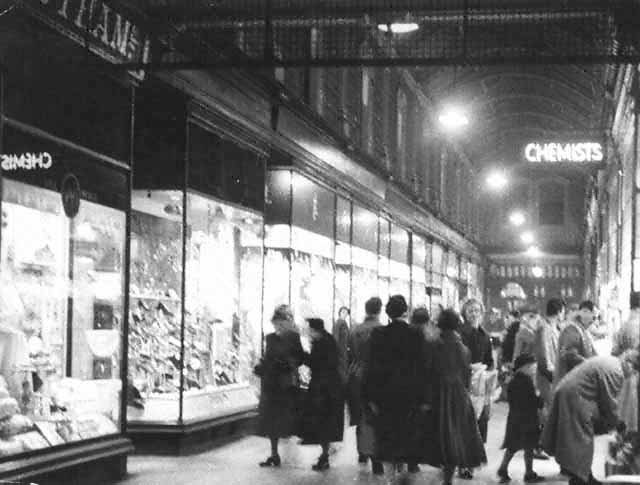
Thwaites Arcade in Church Street was one of the few shopping areas in which you did not get wet when it rained. On rainy days it was very busy indeed. At the Church Street end of the Arcade was Eastham’s florist and a sweet shop was inside Timothy White's chemist. Lewis Gowns & Mantles on one side and a Millinery shop on the other. There was a little trinket shop owned by Sally Waters, Worswick's jewellers, D.P. opticians, a tobacconist and Hadfield's for ladies coats, dresses, stockings, pure silk scarves and leather belts – even real crocodile at fifty nine shillings and eleven pence. I liked Hadfield’s but could not afford to buy there, not on one and sixpence spending money a week.
I must say that at this time most of the shops were lit by gaslight as were most homes. Cables were still being laid for electricity. I may be wrong but I think Haslingden Road was the first main road to have electric lighting in its modern form.
There was a shop called Clifton’s in Church Street that made and sold chocolates in quarter and half pound blocks. You could choose your own centres, nuts, crispy mint and other flavours, all beautifully wrapped. Later, during the war, when sweets were rationed my Mum spent all our sweet coupons here, saying “well if we are to be rationed then at least we are going to have the best” and joined the queue that formed outside.
There were a number of shops on Church Street who sold cheaper dresses, aimed at I suppose at the younger (teenage) market. Then as now the young ones wanted choice and change. It was no use saying to them “buy the best and make it last”
My teenage years, as |I have said, were the war years, and then clothes were rationed, but that is another story.
Buses were in operation on some routes, but there was still a labyrinth of tram tracks through the town. The Wilpshire Tram was a double decker, the Preston New Road tram was a single one with two very low seats facing each other. In a quiet period you all had a seat, in a busy period you had to stand holding a leather strap that with others hung down the centre of the tram. Some double-decker trams had open tops, lovely to ride in on a fine day. It cost two pence from Blackburn centre to Billinge or Wilpshire. It was great to travel on the trams.In Church Street was a news agents and greeting card shop called Astleys. Next door was Sellers; they sold cockles and mussels, oysters, crabs, winkles, lobsters and all kinds of fresh sea food. Mr Sellars was a friend of Charlie Chaplin who always called in his shop when he visited Blackburn. Across from the newsagents stood the White Bull, another landmark that has seen many changes around it. Though much has changed the news vendor is still there through hail, rain, snow or blow, and the wars have not stopped the news, good or bad, from reaching the people of Blackburn.
Around the corner, on Railway Road, was another sea-food shop, Chesterton’s. They did a very good trade in winkles at a penny a bag- the pin was free.
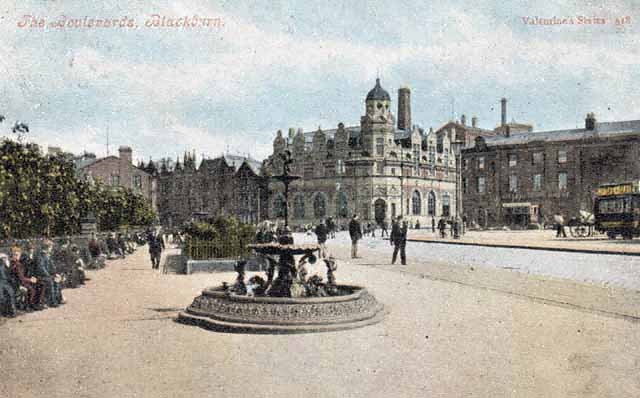
A walk up the Boulevard brings you to the Cathedral, which did not have an open walk through like it has now, to the best of my knowledge it was inaccessible from the Boulevard as the railings came right up to the side of Chesterton’s shop. On the Boulevard the statue of Gladstone stood sentinel along with the statue of Queen Victoria. Queen Victoria still stands but I do not think that she would be amused at all the graffiti around her. No one in my day did anything like that to public monuments.
© LET - terms and conditions
The compartments held about twelve people facing each other so corner seats were very popular with kids who could count horses and cows in the fields. of which there were many on the ride to Blackpool.
As you went up the ramp to the station platforms there was a poster depicting the Ancient Britons with lovely umbrellas. This was an advert for Stanworths Defiance Umbrellas. Stanworths had two shops in Blackburn both selling fancy goods of a very high standard. Stanworths also made umbrellas and in those days you could have the frame recovered. A fox frame was one to cherish.
Talking of posters reminds me of some of the best ones. Bovril had a man sat on a bottle of Bovril in the middle of the ocean dressed in cosy stripped pyjamas waving to all and sundry and all at sea. Another had an Oxo cube and a bull’s head with the apt phraseology “Beef in Brief”. But Guinness topped the lot, especially the Zoo keeper running after the ostrich with a glass of Guinness stuck in its throat. “My Goodness My Guinness”, each one of their adverts seemed better than the last.
The Iron Swans, why did they move them? They were such a delight. Each huge Iron Swan stood in the centre of a foot high circle of ironwork and was placed there in Victorian times. I do not think I am the only one that mourns their passing.
The seating forms are still there of course. There was always an assortment of seated people, young and old, probably unemployed, chatting and watching the trams go by.
My family have long worshipped here, and my grandfather was a sidesman. On Sunday night they had a full congregation. Downstairs there were rows and rows of pews. Upstairs the seats were boxed off along two long balconies above the North and South side of the Altar. All the woodwork was very dark and everything had an air of solemn occasion.
The transformation is truly amazing, including the controversial figure of Christ which many people do not like. But a lot of people never went there in the first place to even remember the inside layout.
Going to Night Service was something I shall never forget. We had to go through the Church Yard from Church Street; the grave stones were like huge stone tables with carved legs, no lighting and an eerie silence everywhere. I clutched my mother's hand tightly, yet what I was scared of I do not recall, but scared I was until we reached the sanctity of the church, then I knew I was safe.
The Minister then was Canon John Sinker, and the format for Watch Night service was always the same in his day: he would order the doors of the church to be opened at midnight letting in the New Year to the peal of church bells-it was lovely.
The hymns were the same every year; “Oh God our help in ages past”, “Abide with me”, “A few more years shall roll”-it was a moving service, and the memory remains with me still.
After the service came the eerie walk home to take the New Year into the house, and have a small sip of sherry, a biscuit ,and so to bed.
The Palace Theatre on the corner of Jubilee Street has hosted many events in its time including live theatre, so live that a lion once walked from the stage towards the audience, everyone gasped and the front rows soon emptied. They had Pantomimes there at Christmas, and my Granddad would meet me after school to queue up for the show. He would bring a sandwich and some cake to eat as we waited for the first house to open.
I remember one of the songs that year was “chick, chick, chicken lay a little egg for me”. Later The Palace closed its doors to live theatre and opened as a cinema, still with a double balcony- the higher one called “The Gods.”
By that time the only live theatre was The Grand Theatre, owned by the Murray family, who I seem to recall were also friends with Charlie Chaplin too. Many well known stars performed at The Grand, even though it was small as theatres go. Around the balcony were gilded cherubs holding torches. The theatre was well seated so that wherever you sat you could always see the stage, and there was a little bar where one could imbibe at the interval. The Grand was a grand theatre; oh I wish it could have been saved.
During the war years the Grand came into its own, as many stars came to Blackburn to rest from the strain of entertaining in larger and more vulnerable cities. Blackburn was a reasonably safe town during the war.
A night at the Grand was like a Gala night for us kids. It was mostly variety and afterwards we would go to a little chippy on Eanam where Whitbread’s Brewery now stands empty. The chippy must have been a very old property: till the day it closed its doors it was lit by gas light. The fish and chips were delicious, and it was the only shop that served mint sauce. You could eat inside with seating for about twelve people and it must have had the most antiquated chip range in town. I have a mind to think that it was called Kennedys. A night out at the Grand was not complete without this ritual. The chippy was demolished about 1952 to make way for an extension at Dutton’s Brewery.
The Railway Station in those days was a true delight, it was gas lit of course, but oh how exiting with the steam trains thundering along. On the Station was a sweet shop, a newsagents and a tea room. You visited all three if going to Blackpool, to buy buckets and spades, sandwiches, flasks and rain coats. The Blackpool trains would be packed and grown ups would bustle the children inside the carriages for safety.
Chapter 7
Going down Salford from the Boulevard shops on the right are still there. The Parcels Office was not always there, I think that it was once a piano shop. The chip shop is still there but with a difference—in those days there was a dining room upstairs as well as downstairs, and on Saturday nights after the cinemas closed they were very busy. Where Woolworth’s stands was the Parcels Office then, left luggage, tram and bus information. The outside of this building had dark red glazed tiles and parcel boys would dash in and out all day. In those days you had to serve a period as a parcel boy before you became a tram or bus conductor. Goodness only knows how long you had to wait to become a driver.
Wilpshire Tram Terminus was where the Yin-Kin Chinese Restaurant now stands. There was a pub on the corner called the Bay Horse, and a little shop called the Yankee Bar, which never seemed to close. The Transport Department acquired premises on Railway-road and Woolworth’s acquired that corner for their extensions.
Outside the old Parcels Office stood the ladies and gent’s toilets, which were underground; the area is now part of the subway.
The Golden Lion public house was next door to Ashley’s, and by some quirk of architecture came diagonally to the back entrance of Woolworth’s, which was the beginning of Victoria-street. Hiltons shoe shop is still on the corner, sort of defying change, with shoes strung up outside for you to see before making a purchase. The tobacconist is still there and above these shops was a local branch of the Tape Sizers Union to which I took father's dues on many occasions. On the other corner was the Home and Colonial and Isaac Talbot’s fruit shop, then the back of the Golden Lion.
The only thing missing today is the hot potato cart, bright and shining with its polished brass fittings. A little donkey trimmed with rosettes and plaited mane pulled the cart, indeed the whole outfit was very well maintained and belonged, I think, to the Rossi family. You could buy a bag of hot potatoes for a penny and on Friday and Saturday nights they were very busy indeed. In those days people did not get paid till Friday night and Saturday afternoons were like a Roman holiday.
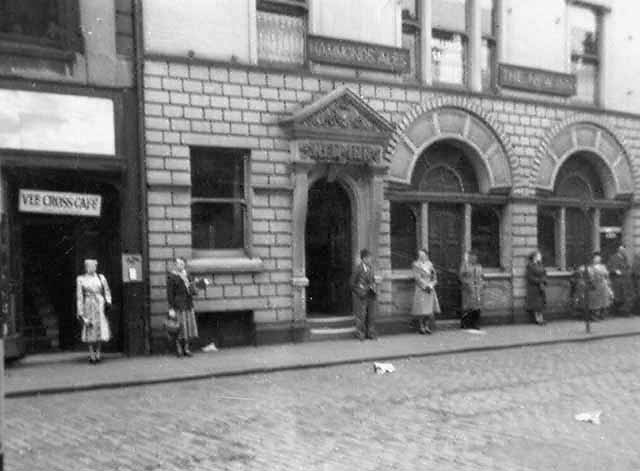
Victoria-street was a long and winding street part of which been swallowed by the new shopping precinct. Millets store was on the corner where the new Wine Lodge now stands and over the top was the Vee Cross Café. Next door was the New Inn, being the last pub on the Barbary Coast. Next-door was Greenwood's dress material shop, then John Forbes school outfitters and men’s wear. Then a little fancy goods newsagents shop called Ridings. Round the corner was Parker's Library, Slater’s Cycle Shop, Kennedy’s Oyster Bar, the Grosvenor Hotel, Hadfields, the market entrance to Thwaites Arcade and a Billiard Hall.
Across the way was the Clarence Hotel, Rakestraw's Carpet Galleries and in the basement was Andersons who sold household equipment –dolly tubs, dusters, pegs, etc. The lower part of the street was the market square for textiles. There was also a very smart dress shop, which had moved from Sudell Cross, Jack Waring, and next door to him was Wordens the Jeweller, which now is located in the complex occupied by the Co-Op near the market crossing.
© BwD - terms and conditions
To continue along Victoria-street, the topside of which was part of the Market Square, we come to the Crown Hotel. All sorts of functions took place here including the 330th Royal Artillery Regiment Local Brigade Annual Dinner. My father, like many in Blackburn, was a member, having served in the said regiment during the war. At the side of this hotel was a covered yard where an assortment of barrow boys sold their wares.
On the next corner was Hunters Stores with the Maypole Store next door, and then came various butchers shops, Bradley’s gent’s outfitters, a milliner's shop and the rest being taken up by wholesale fruiterers. Further along the Law Courts still remain, and across the way stands St. John's Church, now a preserved building.
Across from St. John's was a doctor’s residence, I think he was called Dr. Payne; his premises have now been landscaped.
Before we proceed along Victoria-street I should like to halt awhile at Bolton’s Court. Here was an assortment of property. On one side were old cottages, later to be rented to market wholesalers, and an antique shop called Marshall’s. Across the way was a little entrance that led to another yard where some houses stood in a little square. The Richmond Paper Mill was around the corner so the square may have housed the workers. There was also a yard similar to this one in Brown-street with two cottages in the yard.
On the corner with Regent-street was Ben Holden’s chemist that prescribed for many ailments. You only went to the doctor for serious ailments in those days as you had to pay—even children had to pay. Some doctors collected their fees at so much a week; even so this was a great burden on those with large families. As I said, many went to Ben Holden and the like, who would help you if they could. He was very busy all week and would even open on Sunday. On Friday many of his customers were buying perfume at two penny worth a time, in a little phial: Lily of the Valley, Jockey Club, Jasmine, Californian Poppy, all dispensed from large bottles.
Saturday night was still something special even in the days of the depression, you might meet your own true love at the Palias, Alec Marsden, (Mirabelle), Academy, or Tony Belington’s (Tony’s Empress Ballroom), and if you really wanted to learn strict tempo, you went to the Park Gates private academy or the academy of Miss Bourderke.
To continue along Victoria-street: across from the Royal Hotel was a confectioners called Kim’s, later known as Knellers, they were famous for the vanilla slices. There was a butcher's shop, a grocer's on the corner, Jack Axford by name, Wilkinson’s Newsagents, a linoleum shop, Bickerstaffe's Fruiterers, (later Drummonds), chip shop, Mr Bennett’s Jewellers was next to Ben Holden the chemist.
There was also a wool shop, Gregsons; they had a machine that would wind wool. The proprietor had a goatee beard and always wore a stiff collar and black bow tie. The cheapest wool that he would wind on his machine was two pence an ounce.
We had to learn to knit at school, with rusty steel needles if you got to the box last, and an awful string type of dish cloth cotton of dirty white, red, a garish blue or horrible pink. If you had a granny who could teach you to knit on four needles you were very lucky: in, over, through, off, and if you could turn a heel then you were very clever. You could also end up knitting socks for the rest of the family. You could buy a penny ball of Dolly Varden wool which was of many shades of the same colour with your Friday or Saturday penny.
There was a confectioner's shop on the corner of Victoria-street and Watson’s buildings as it was then known, some people called it “the roundabout shop” and in my day it was owned by the Holden family. At this point, Victoria-street was known as Folly Well-street, leading onto Whalley Range. I hope this name is not lost as it has a lovely ring to it.