
 Loading more
Page 3
John Tomlinson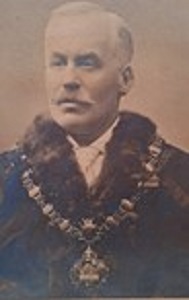
Mayor of Darwen 1900–1902
1915–1917
John Tomlinson was born in Oswaldtwistle on 25th July 1846, the eldest child of John and Elizabeth (Betty) Tomlinson. He was baptised at Hippings Wesleyan Chapel in the town. His father, John senior was a sizer in a cotton mill.
In 1850 the family moved to Blackburn where John senior continued working in the cotton trade, eventually working his way up to becoming a partner in the company.
John junior left school whilst still in his teens and was apprenticed to Mr. Nathaniel Walsh of Orchard Mill, with whom he learned the business of cotton manufacturing.
Shortly after turning twenty-one, he left the cotton business to enter the coal trade, starting in Bolton with one horse and a wagon, but he soon saw his business grow rapidly. His younger brother, William joined him as a partner, the business then being known as Messrs. J. and W. Tomlinson. They gradually opened depots in Darwen, Blackburn, Burnley, Horwich, Rochdale and St. Annes, thus becoming one of the largest coal merchants in Lancashire.
Later John served as chairman of the Manchester Coal Exchange for several years. He also became joint owner of the Oswaldtwistle Colliery and sole owner of Stanhope Colliery in the Barnsley district of Yorkshire.
His previous work experience at Orchard Mills led to his continued interest in the cotton industry, and he was actively concerned with the Darwen Manufacturing Company and subsequently became chairman of this successful company.
In 1867 John married Miss Alice Newman, the daughter of Mr. Richard Newman who was a director of Darwen Paper Mills Company. The couple had two daughters, Betsy Jane (born 1868) and Florence (born 1870), and the family settled at Nancy Terrace in Darwen.
In politics Mr Tomlinson was actively connected to the Liberal party in Darwen, becoming chairman of the Executive Committee of Darwen Borough Liberal Association, a position he held for about 20 years.
In 1887 he was elected as representative for Darwen Central Ward serving for many years until becoming Alderman of the Borough in 1901. During his long service he held several posts, including member of the Corporation Committee, member of the School Board and chairman of the Health and Education Committees.
1901 saw him elected a County Councillor and in 1908 he became Justice of the Peace for Lancashire County Council.
The South Africa War (2nd Boer War) had ended in 1902 and there were 14 Darwen men who lost their lives during the war. Their names, along with those who volunteered are recorded on the War Memorial situated in Belgrave Square. The memorial was unveiled on 18 April 1903 and was a personal gift from Alderman Tomlinson.
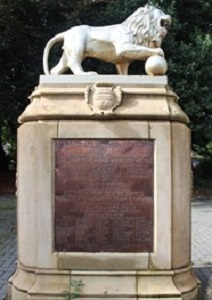
Boer War Memorial, Belgrave Square Darwen
There was a scheme to make Sunnyhurst Woods a public park and in 1900, Mr Tomlinson adopted the idea as a means to celebrate the coronation of King Edward VII. The funds necessary to buy the estate (£2,600) were raised by public subscription. The park was formally opened in July 1903. Many of the trees and bushes planted along the main walk were a gift from Alderman Tomlinson through a trust fund set up to ensure further planting.
In religion he was a Wesleyan, being a regular attendee at Railway Road Chapel to which organisation he gave £500 to enable them to settle an outstanding debt.
He was Circuit Treasurer for the Wesleyan Million Guineas Fund which had been set up in 1898. This was a nationwide scheme which asked families to donate one guinea towards the fund which would then be used for evangelical work. There was provision for Sunday School children to donate one shilling, for which they received a Wesley Medallion (90,000 of these were presented) and all adult contributors of at least one guinea received a printed certificate.
In July 1919 Alderman Tomlinson was created a freeman of the borough of Darwen in recognition of his long service to the town. His wife, Alice suffered from ill health in later life which led them to live in Blackpool South Shore for a number of years. By 1921 the couple were again resident at their home, Earnsdale House in Darwen, which is where Mr Tomlinson passed away on 2 June 1922 after a short illness. He left more than £91,000 in his estate. Probate was granted shortly after his death to his sons-in-law, William Henry Haworth, and Henry Tomlinson, both coal merchants.
Compiled by Joyce Calder April 2025
Sources:
War Memorial image courtesy of Darwen Heritage Centre
Darwen News
Lancashire Evening Post
findmypast.co.uk
gov.uk Wills and Administrations
Published May 2025
Robert Shorrock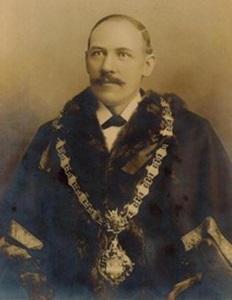
Mayor of Darwen 1902 – 1903
Robert Shorrock was born 22nd October 1855 at Mill Farm Darwen, the son of Ralph Shorrock and his wife, Grace. He was one of 15 children in the family, his parents having both been married previously. Ralph Shorrock had worked as an engineer in the farming business, but by 1861 was listed as a beer seller, living at The King’s Arms, 196 Bolton Road, Darwen.
The first school Robert attended was at the top of Astley Street, conducted by Squire Ratcliffe. He then attended Belgrave School for a short time and at nine years of age began to earn money by selling newspapers for Mr. Robert Nightingale. He then went into the foundry of Messrs. J. & R. Shorrocks and at eleven years of age was working full time.
As a young man Robert worked at the engineering shop at Lea Foundry in the town, but later took up carpentry, becoming an apprentice joiner with his elder brother, William who was already in partnership with Mr. Thomas Hindle at Union Street Sawmills.
In 1874 he married Miss Mary Ann Ellison, the daughter of Mr. William Ellison, a local quarryman of Thorncroft, and they went on to have seven children, living firstly in Ellison Terrace and then for many years in Belgrave Road, Darwen.
In 1877 he founded the firm of Shorrock and Sons Ltd., Contractors and Timber Merchants at Union Street Sawmills, Darwen. The firm quickly became known throughout Lancashire and carried out many important local building contracts, notably the Public Library, the Post Office, Hollins Grove Congregational Church and Avondale Girls’ School. It was also noted that a new organ had been ordered for Lower Chapel and that Mr. Shorrock was making the necessary alterations in the organ loft for its installation.
In 1897 he was invited to serve as councillor for the town, and only five years later was elected as Mayor. During his mayoralty the formal opening of Sunnyhurst Woods took place, the site having been purchased earlier with the proviso that it remain open for public use in perpetuity. It was due to Mr. Shorrock that the Victoria Tower was erected on the moors above Darwen in commemoration of the Diamond Jubilee of Queen Victoria. He also donated the drinking fountain in Bold Venture Park.
The published list of committee members for Darwen Council in 1898 shows Mr. Shorrock as a member of the Waterworks, Cemetery, Markets, Parks and Recreation, Highways, Building and Technical Instruction committees. He also served as Justice of the Peace for the town.
He was a staunch Liberal throughout his life and was for many years the president of William Street Reform Club. He was a past Worshipful Master of Sunnyhurst Freemasons Lodge (4631) and was one of the oldest members of Harmony and Industry Lodge (381)
His recreations included art and music, bowling and motoring in the summer, and occasional billiards in the winter. He was president of the Central Subscription Bowling Club, and chairman of Darwen Band Contest Committee.
He was a loyal Congregationalist throughout his life, worshipping at Belgrave Chapel and it was there that a service was held upon his death before his burial at Darwen Cemetery in September 1932. Probate was granted shortly afterwards at London to his son, William, and his two sons-in-law Walter Henry Watson and Albert Riding. His effects totalled more than £21,000.
Compiled by Joyce Calder July 2025
Sources:
The Blackburn Times
The Blackburn Standard
Lancashire Evening Post
findmypast.co.uk
gov.uk Wills and Administrations
Published August 2025
Ralph Yates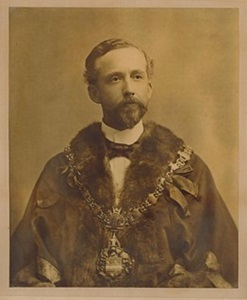
Mayor of Darwen 1903–1904
Ralph Yates was born in Lower Darwen in 1857, the son of Henry Yates and his wife Ellen (nee Marsden), and the family lived in Victoria Street for many years. His father was an overlooker in the cotton trade.
Ralph received his early education at Belgrave and Duckworth Street day schools. At the age of fifteen he became a clerk at the Belgrave Mills, but for five years was also an evening student specialising in English, French and German. Whilst still in his teens he became secretary of Duckworth Street Literary Class and became an early member of Darwen Literary Society, later becoming secretary and then President of the same.
At the age of 18 he commenced a cotton waste business with his brother, Edward, later expanding the operation with his brother, Leonard at a depot in Preston and the business soon became well known throughout the north-west of England and abroad.
In 1885 he married Eliza Barton, the adopted daughter of Thomas Eccles, a well-respected cotton manufacturer from Darwen. By 1891 the Yates family were living at Earnsdale Cottage, Darwen with their three children Anna Elisa (b 1885), Helena (1887) and Thomas Cecil (1890). They were later to have three more children – Ralph Eric (1893), and twins Lorna and Rudolph Barton (1900).
In 1893 he became a member of Darwen Town Council and was for many years the chairman of the Library Committee. As chairman he was mainly instrumental in persuading Mr. Andrew Carnegie to provide funds for a new library building in the town. He had previously approached Mr. Carnegie for a gift towards the purchase of books for the existing library, but the gentlemen refused the request, indicating that he may instead be willing to make a grant towards a completely new building.
In 1904 Ralph visited Mr. Carnegie at his home, Skibo Castle in the Scottish Highlands for an interview at which he agreed to donate £10,000 for a new library and requested that there should be a dedicated children’s section there. Two years later the Town Council accepted the tender of Messrs. R. Shorrock and Son at an agreed cost of £9,200 - the remaining £800 would be for any contingencies which might arise.
In September 1906 Mr. Yates laid the foundation stone for the new building, and the library was officially opened on 27th May 1908 by Mr. Carnegie who was made a Freeman of the Borough at the same ceremony.
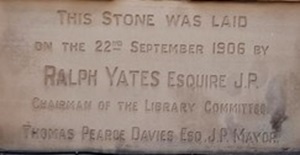
Foundation Stone at Darwen Library
In politics he was a Liberal, proving to be a fair but tough opponent to those who challenged his views. He was a staunch Nonconformist, worshipping at Duckworth Street Congregational Church where he held many of their important offices. His wife, Eliza took an active part in the religious and social life of Darwen, being connected with Congregationalism, the London Missionary Society and the promotion of Cafe Chantant performances in Sunnyhurst Woods.
When not working Mr. Yates was initially a keen cricketer, holding the position of Captain of the town’s second team, but soon took up cycling as a hobby. He cycled over most parts of the British Isles and explored various continental countries. In turn golf became his passion and he joined Darwen Golf Club whose Annual Report for 1912–1913 showed that he paid 1 guinea subscription for the year, alongside his youngest children, Rudolph and Lorna who each paid 10s 6d.
Ralph Yates died on 30th September 1934 aged 77 years, some three years after the death of his wife. He left effects of more than £31,000 and probate was granted to his son, Rudolph Barton Yates, cotton waste dealer and Leonard Smith Gillow, accountant. He was interred at Darwen Cemetery.
Compiled by Joyce Calder, September 2025
Sources:
The Blackburn Times
Manchester Evening News
ancestry.co.uk
findmypast.co.uk
gov.uk Index to Wills and Administrations
Published September 2025
James Tomlinson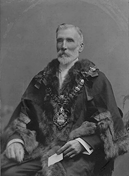
Mayor of Darwen 1904–1905
James Tomlinson was born at Lower Chapel on 4th January 1838, the son of Thomas Tomlinson and Annas (nee Walmsley). He had three older brothers – Gabriel, Thomas and Laurence and one younger sister, Bridget. Sadly, his father died in 1840 aged only 32 years after an asthma attack at the bleach factory where he worked. His mother, Annas then married George Brandwood in 1844 at Blackburn St. Mary’s church and there were four more children born to them.
At the age of eight James began working half-time at Dob Meadows Dyeing and Bleaching Works, often from 5am to 10pm for a wage of three shillings per week. When it did not interfere with his work requirements he was able to attend Mr. Eccles Shorrock’s half-time school in William Street, where he was given a rudimentary education by Thomas Holden, the schoolmaster. When reminiscing about these times later in life he noted that "One week we might go to school half-time and then for 3 or 4 weeks we would never see the place at all. When we missed in this way all we did was to take the attendance book to the schoolmaster, and he would mark it up just as if we had been regularly present."
As a young man he worked as a cotton weaver but soon left that trade to take up employment at Willowfield Ropery in the town. In December 1862 he married Margaret Whittaker at Duckworth Street Congregational Chapel and by 1871 they were living in Queen Street with the first four of their children.
By 1877 he was working as caretaker at Belgrave Independent Chapel, a post which he fulfilled for the next 12 years. By 1881 James and Margaret were living at Belgrave View, now with eight children in the family. Upon leaving his caretaker’s position he set up business on his own account at Willowfield Ropery as a rope and twine maker. He later also took over the Spring Vale Ropery, conducting the business under the title of Messrs. James Tomlinson and Sons. He remained very much involved with this business until ill health curtailed his activities in later life.
It was in 1895 that James came into public life in Darwen when he became representative for Central Ward on the town council. His first chairmanship was at the Building Department at a time when Darwen had entered upon a development scheme which resulted in the erection of a considerable amount of new property in Belgrave Road, Sudellside, Sunnyhurst and Blackburn Road districts.
James was elected to the position of Mayor of Darwen for 1904 and as such was invited to lay the foundation stone of Cobden Mill Darwen, receiving an engraved trowel and mallet as a memento of the occasion.
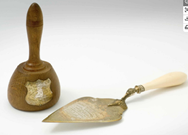
The engraved trowel and mallet used to lay the
foundation stone of Cobden Mill
In 1906 he was appointed Justice of the Peace for the borough and upon the death of Alderman Timothy Lightbown four years later he was unanimously elected an Alderman. In politics he was a Liberal, being at one time president of the William Street Reform Club. He was also a member of the Market Street Liberal Club, and vice-president of the Borough Liberal Association.
He was a member of the local Harmony and Industry Masonic Lodge and in 1909 was elected Grand Master of the Darwen district of the Manchester Unity of Oddfellows, having by then been a member of that order for 53 years.
A Nonconformist, he attended Belgrave Congregational Church holding many positions there, including that of Chapel Committee member.
He was an accomplished musician and for fourteen years played the solo soprano instrument in the old Temperance Band. For many years he was the treasurer for the Darwen Brass Band Committee which was responsible for organising contests and concerts in Bold Venture Park.
Later in life he suffered with ill health and died at his home in Church Terrace on 27th May 1917. His funeral service was at Belgrave Independent Chapel and was attended by many local dignitaries who then formed a procession to the cemetery for his burial alongside his wife. Probate was then granted to two of his sons – John Thomas, a caretaker and Joseph, a rope manufacturer.
Compiled by Joyce Calder, October 2025
Sources:
ancestry.co.uk
findmypast. co.uk
Blackburn Weekly Telegraph
gov.uk Index to Wills and Administrations
Published October 2025
Thomas Pearce Davies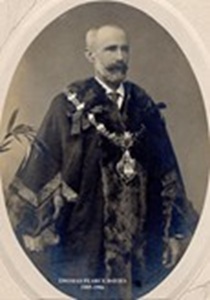
Mayor of Darwen 1905 – 1906
Thomas Pearce Davies was invited to become Mayor of Darwen in 1905, a position which his older brother, Ernest Morgan Davies had held some fifteen years earlier. Their father was the pastor at Duckworth Street Chapel for more than twenty years, having begun his ministry in Maidenhead, Berkshire which is where Thomas was born in 1852. He was one of nine children and received his early education as a boarder at Ealing School.
Reverend Thomas Davies and associates bought Greenfield Mill in Darwen with the intention of giving his sons a start in business. The mill was run as a small operation at first, containing 246 looms but when he died the business transferred to Ernest and Thomas, who carried it on with great success, increasing the number of looms to 1180.
In April 1882 Thomas married Lucy Dora Webb at St. John the Evangelist church in Darwen and the couple had eight children, three of whom died in infancy. They lived at Heatherfield, Darwen for many years and Thomas was greatly involved in the running of Duckworth Street Church. He was a teacher in the Sunday School and later became church secretary and treasurer. His great interest in foreign missionary work led to his appointment as the first secretary of the Darwen district of the London Missionary Society.
In 1898 the two brothers, Thomas and Ernest, expanded their company by building Waterfield Mill in Watery Lane, and when Ernest retired the business was carried on by Thomas who remained head of the firm until his death. In later life he did not take an active part, that was taken on by two of his sons and a grandson. This meant that the company originally formed by Rev. Thomas Davies had associations with four generations of the Davies family.
In politics 1901 saw Thomas elected as representative for the Darwen South-West Ward. He became a member of the Borough Council, being appointed chairman of the Finance Committee, a position which he held for many years. He was also chairman of the Education Committee of the council.
In 1905 he was invited to become Mayor, and during the year that he held office became noted for his hospitality and generosity. It was during his time in the position that the foundation stone for the new Carnegie Library was laid by his colleague, Ralph Yates J. P.
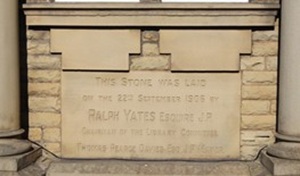
The foundation stone of Darwen Library. it reads:
"This Stone was Laid
On the 22nd September 1906 by
Ralph Yates J.P.
Chairman of the Library Committee
Thomas Pearce Davies J.P. Mayor"
The following year he was appointed a magistrate for the Borough, continuing in that role until he left Darwen to live in Grange-over-Sands.
He was one of the early members of the Darwen Literary Society, later becoming its chairman, and was the first Darwen resident to become chairman of the Blackburn Chamber of Commerce. He was closely connected to the work of the Nursing Association and was a strong supporter of the Young Men’s Christian Association.
Despite moving to live at Grange-over-Sands he still kept his close connections to Darwen, and shortly before the war began the company started building a garden village at Spring Vale on land owned by them. The houses were planned with gardens around them and were to be let at the lowest possible rents. Unfortunately, the war interfered with much of the scheme, which had to be postponed.
In 1924 his wife Lucy died, and some two years later he married Miss Constance Thorp at Tottlebank Baptist Church, Greenodd, Ulverston. He died in April 1934 at his home, Pengarth, Grange-over-Sands and he left more than £37,000, probate being granted to his sons John Percival Davies and William Russell Davies, both cotton manufacturers and Stanley Webb Davies, artist craftsman.
Compiled by Joyce Calder, December 2025
Sources:
ancestry.co.uk
findmypast. co.uk
Blackburn Times
gov.uk Index to Wills and Administrations
Published December 2025
Ralph Shorrock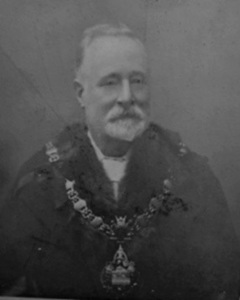
Mayor of Darwen 1906 – 1907
Ralph Shorrock was born in 1836 at Spring Vale Darwen, the son of Bernard Shorrock and his wife Mary, who was the daughter of James Snape of Blacksnape. When he was still a young child the family moved to Union Street in Darwen, his father having obtained an appointment as an engineer at New Mill. At the age of eight Ralph worked part-time in the throstle room at the mill and he was sent to William Street School, which had been established by Messrs. Eccles Shorrock & Company for the benefit of their work people and families. Ralph remained there until he was thirteen when he became a full timer at work, but continued his studies in the evenings.
At the age of 17 he left the mill and became apprenticed for four years to his cousin, Mr. Richard Shorrock to learn the business of a chemist and druggist. At about the time that Ralph finished his apprenticeship his master died, leaving a widow and two young sons, whereupon Ralph took charge of the business on behalf of Mrs. Shorrock. Some 18 months later the couple were married at Blackburn Cathedral and the business continued to flourish, so that they were able to open a second shop in Duckworth Street.
In addition to the chemist and druggist side Mr. Shorrock determined to add dentistry to the business. He had for several years been friendly with Mr. Thomas Deane, a well-established dentist who had a large practice in Oxford Street Manchester. Ralph intimated to Mr. Deane his desire to become a dentist and the gentleman readily assisted him in this venture. Ralph took advantage of his friend’s generous offer, remaining with him for about three years until his knowledge of dentistry was sufficiently advanced to justify him in beginning a practice of his own.
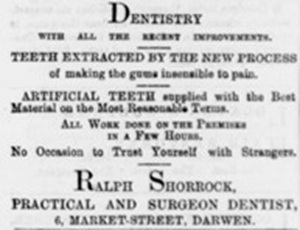
Advertisement in the "Darwen News"
Ralph’s wife, Mary Ann had had two sons with her first husband, John William (born 1855) and Richard (1857), the younger of whom died in infancy. After their marriage in 1858 the couple went on to have four daughters, Rebecca (born 1859, died 1861), Georgina (1861), Constance Rebecca (1862) and Clara (1864). Sadly, Mary Ann died shortly after this last birth and was buried in Darwen Cemetery.
Early in 1871 Ralph married Nancy Isherwood, eldest daughter of John Isherwood. The census shows them living at 40 Railway Road, Darwen and Ralph’s stepson John William had by then joined the business as an apprentice chemist and druggist. Ralph and Nancy had two children, John Isherwood (born 1873) and Mary (born 1876) but Nancy died in 1877, aged only 35 years.
Two years later Ralph remarried, this time to Mary Ann Bell, the only daughter of Edward Sale Bell of Burland House, Howden Yorkshire.
Ralph had been connected with Belgrave Sunday School from childhood. In addition to being a scholar and teacher there, he performed the duties of secretary for six years and those of superintendent for eleven years.
He and Alderman Thomas Davies were joint secretaries of the Nonconformist Sunday School Union, which flourished in Darwen in the 1860s. In 1866 they organised a Sunday School demonstration which was held in India Mill before it was filled with machinery. It was preceded by a procession in which it is estimated that more than 3,000 children took part. A little while before, there had been a Sunday School Festival of Song in the Manchester Free Trade Hall. Mr. Shorrock had the idea of giving a similar festival at Darwen, and with that in mind he bought all the surplus copies of books of music and words used for the training of the children in Manchester. The resulting concert was so popular that it was repeated a second time for those who were not able to attend the first performance.
Alderman Shorrock was a senior deacon of Belgrave Church and was manager of the Belgrave, Bolton Road and Blacksnape day schools for over 30 years. It was in connection with his religious and educational work at Blacksnape that he became known amongst his friends as acquaintances as the "Bishop of Blacksnape." On most Sunday afternoons Mr. Shorrock went to Blacksnape to act as superintendent of the Sunday school, and often also conducted an evening service there. He taught and preached to the people, but he also visited them in their own homes and took an interest in their secular affairs.
In addition, he performed many public duties in Darwen, being a member of the Town Council for more than 28 years, chairman of the Slaughter and Lodging Houses committee and chairman of the Health Committee. He represented Central Ward on the Council for almost seventeen years and in 1904 he was made Alderman in succession to the late Alderman Duxbury. He was President of the Darwen Tradesmen Association from the time it was established and was very much in favour of total Sunday observance.
Mr. Shorrock had several hobbies and was a practical horticulturalist, assisting with the setting up of horticultural shows in Darwen during the 1870’s. Before that he established an athletic club at Darwen which had the most completely equipped gymnasium in the area. He was also a keen amateur photographer and one of the earliest members of the Darwen Literary Society.
Mr. Shorrock had considerable musical skills, was a member of the local Choral Society and took part as an amateur flautist in Mr. James Eccles’s orchestral band. He had a great respect for the ancient rites and ceremonies of Freemasonry and was a member of the Harmony and Industry Lodge 381, which he had joined in 1866 at the age of 30 years.
In later life he suffered ill health and died at his home at Longmarsh Darwen on 25 February 1916 at the age of 79. After a funeral service at Belgrave Chapel, which was attended by his family and friends, the Mayor and several Aldermen of the town, and representatives from many of the societies he had been involved with, he was taken to Darwen Cemetery to be buried in the same grave as his daughter, Rebecca and his first wife, Mary Ann.
Compiled by Joyce Calder, February 2026
Sources:
ancestry.co.uk
findmypast. co.uk
Blackburn Times
Darwen News
Published Febuary 2026
George Pickup Holden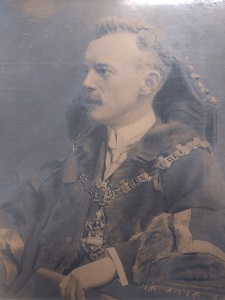
Mayor of Darwen 1907 - 1908
Mr George Pickup Holden was born in 1863 and he was the only child of James and Hannah Holden. George was educated at Blackburn Grammar school and left in 1878, going into the cotton trade with his father at Bank Top Mill.
Mr Holden's father, James Holden, died when George was only 17 years of age. In 1891, thirteen years after leaving school, George took over his father’s cotton business and continued until about 1924. At one period, he was also in business at Atlas Mill. In 1895, he was one of the original members of Darwen’s School Board. He served on Darwen Municipal Borough Council from 1902 until he retired in 1926. In 1905, he was appointed Borough Magistrate (August) and was created a Justice of Peace.
He was elected Mayor of the Borough of Darwen (1907/08) and during his year of office every child born in Darwen received a silver cup. Please select the following link in order to listen to Tony Foster's talk via Zoom/Youtube in order to find out more about the: Silver Cups
Mr George Pickup Holden died on Wednesday the 3rd October 1934, aged 71 years of age. His funeral was held on the 6th October 1934 followed by an interment at Darwen Cemetery at 1:30pm.
At the time of his death, he resided at Ambleside, Skelgyll Woods, he had been mildly ill but his condition was not regarded as anything serious.
It was reported that he was a keen musician, just like his father, and received his training from the late Mr Handel Thornley. Mr Pickup Holden played the organ at Holy Trinity Church for Queen Victoria’s Diamond Jubilee commemoration service, and he also played organ at St. James’ Church
He was also a past president of Darwen Literary Society. Mr George Pickup Holden was a very well-travelled man, he visited Finland, Russia, Italy, and South Africa. He had been married twice. His first wife, Annie, was the daughter of Mr & Mrs John Brown, of Dumfries. Sadly Annie died in 1924 as the result of a motor accident. Their daughters were Jeanie Rose (born 1892), Winifred (date of birth unknown) and Gertrude Beatrice (born 1894). His second wife was the widow of Mrs G.G. Sames, architect, of Lower Darwen.
In his will he left £24,354 which in 2017 would have approximately equalled £1,233,836.96.
Written & compiled by Connie Alvarez and Scarlet Kennedy, March 2024.
Sources:
The Citizen, September 23,1925
Darwen Weekly Advertiser, October 5th, 1934
The Darwen News, Saturday October 6th, 1934
The Northern Daily Telegraph, Thursday October 4th, 1934
The Liverpool Echo, September 22, 1925
The Lancashire Daily Post, November 13th, 1934
Ancestry.co.uk
Lancashirebmd.org.uk
freebmd.org.uk
lan-opc.org.uk
Walmsley Preston Kay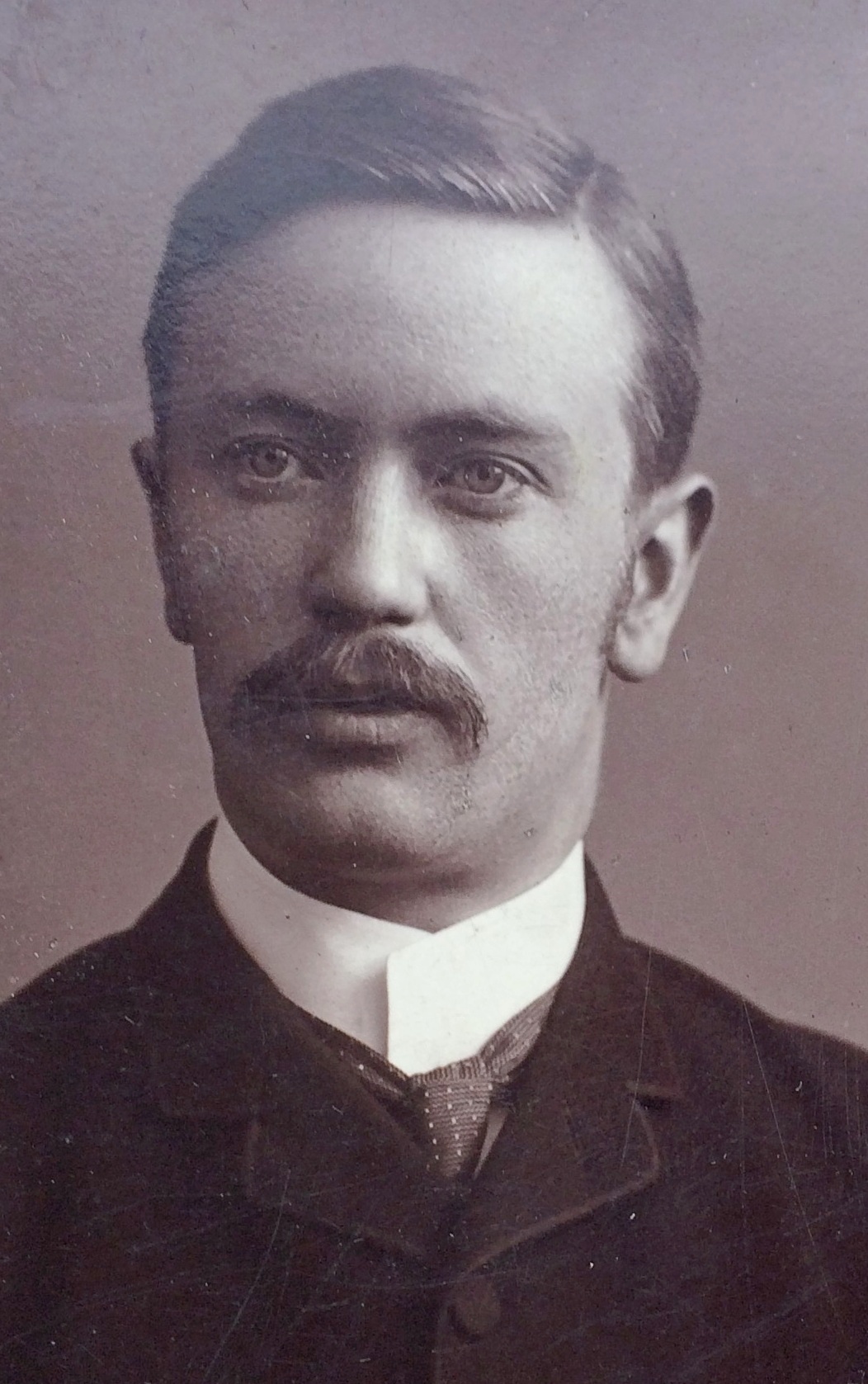
Mayor of Darwen 1909 – 1911
Walmsley Preston Kay was born in 1861, the eldest son of Mr Andrew Kay and his wife Elizabeth (née Walmsley). Mr Kay senior was for thirty-six years the manager at Messrs C. & J. G. Potter of Belgrave Paper and Staining Works in Darwen, although Walmsley chose not to follow in his father’s profession, choosing instead that of a solicitor.
He began his education under the tuition of Mr James Hargreaves in Darwen. He then went to a private school owned by Messrs Pringle and Stewart, firstly at Ravenswing, Mellor, and subsequently at Mintholme College, Hoghton. An advertisement for Ravenswing at the time describes it as “a Boarding School, quite in the country in a district noted for healthiness and country beauty. The grounds are open to the west, and the sea-breeze is prevalent more than nine months of the year. On this account the atmosphere is pure and strengthening, and delicate boys soon derive great benefit.”
By 1877 the school at Ravenswing was becoming too small, so Messrs Pringle and Stewart purchased Mintholme College at Hoghton near Preston and ran the two establishments together. The new acquisition was described as being “designed entirely for school purposes, with spacious schoolrooms, a dining room, music rooms and well-ventilated dormitories.” In the grounds there were two gymnasiums and a cricket field of seven or eight acres.
Whilst a pupil at Ravenswing, Walmsley was a successful candidate in the Oxford University examinations. Besides the usual preliminary subjects he passed in faith and religion, mathematics, advanced English and mechanics. Later at Mintholme he passed the senior exams, gaining the title of Associate in Arts (A.A.), and passed in Latin, French, mathematics, mechanics, hydrostatics and English, as well as the preliminary subjects.
He was educated with a view to the law, and upon reaching the age of sixteen was articled to Mr J. H. F. Hulton of the firm of Fullager and Hulton of Bolton. He spent the last year of his articles with Messrs W. Gregory & Company at Bedford Row, London.
In November 1882 Mr Kay qualified as a solicitor but continued with Messrs Fullager & Hulton as a salaried clerk for a year, after which he entered into a partnership with Mr G. D. Walmsley, beginning a practice in Blackburn and Darwen. The firm dissolved the partnership in 1891, when Mr Walmsley took over the practice at Blackburn and Mr Kay the Darwen practice.
Walmsley Kay came from a religious family, three generations of whom held an official position at the United Methodist Church in Darwen. His grandfather was for more than forty years Superintendent of the Sunday school, his father was for many years Secretary of the Sunday school, and Walmsley also performed the duties of Secretary there. When a scheme for the building of a new chapel upon the site of the old one was organised, Mr Kay accepted the office of Secretary to the Financial Committee, and during his time the entire cost of the chapel, which was considerably over £5000, was raised.
In August 1886 he married Miss Jeanie Ross Brown at Drumsleet School House, Troqueer, Kincardineshire, where her father was the headmaster. Shortly afterwards he bought Highercroft in Lower Darwen, which had formerly been owned by Mr Richard Eccles. The house was in the Elizabethan style of architecture, having been built in 1634 by Peter Howarth, whose family had owned the property for more than three centuries. The estate was about three acres in extent, with views of the Darwen and Hoddlesden moors.
There were three children born to the couple – Annie Lizzie in 1893 (died 1893), Alice Lewis in 1894, and George Leonard in 1899.
In politics Mr Kay was a Liberal, though not an active member of the party for business reasons. In 1903 he was invited to stand for the North East Ward seat on the council, which he continued to hold unopposed for twelve years. He was elected chairman of the Finance Committee and tried to keep the rates at a low figure, and he was known for his detailed attention to all of the town’s finances.
Another of his important positions was that of chairman of the Waterworks Committee. He entered into protracted negotiations with Bolton Council for the supply of water to Darwen, which included parliamentary arbitration favouring Darwen. It was then agreed that Bolton would supply water at a cost of 7d per thousand gallons, thus ensuring a good water supply for generations to come.
On 21 December 1910, during his mayoralty, the Westhoughton Pretoria Pit disaster occurred when 344 men and boys lost their lives after an explosion. Mr Kay issued an appeal to all the townspeople of Darwen, saying: “On behalf of the whole of the town I have written to the Mayor of Bolton with the expression of our great sorrow and sympathy with those who have been so grievously afflicted, and have promised a contribution from Darwen towards their relief. I desire to suggest that collections should be made as early as possible at mills and workshops, and also at Christmas gatherings both public and private.”
After the declaration of war in 1914 he became involved in recruitment in the town, and this led to him beginning the task of compiling a roll of honour of all the Darwen men who enlisted. This work was recognised and appreciated, and he was officially appointed the military representative for the War Office at Darwen.
It was his proud boast to have been a lifelong teetotaller, and to have in his possession a certificate which was awarded to him for temperance work when only ten years of age. He was president of Darwen and District Band of Hope and Temperance Union, and vice-president of the Lancashire and Cheshire Band of Hope and Temperance Union.
For many years he was actively connected to the Nursing Association, and in recognition of his work towards the finances of the association he was elected a life member. He also took a leading part in the formation of the Darwen Literary Society, and for several years he held the position of honorary secretary, later becoming its president.
It was at the end of 1915 that Mr Kay and his family travelled to visit family in Scotland, during which stay he was taken ill. A telegram was read out at the monthly meeting of the town council stating that he was suffering from pneumonia, and despite his medical adviser’s (Dr J. T. Ballantyne) swift arrival in Scotland, Mr Kay did not recover from the illness and died on 5 January 1916.
His body arrived at Blackburn railway station and was taken directly to Highercroft. The funeral took place three days later at Darwen Cemetery following a private service at his home and a public service at the United Methodist Chapel on Duckworth Street. The latter was attended by the Mayor and members of the corporation, who then preceded the cortège to the cemetery. One of the several tributes paid to Mr Kay was that many publicans along the route closed their premises at the time that the funeral was passing, in recognition of his years of dedication to the work of the Temperance Societies.
Probate was granted to his widow, Jeanie Ross Kay, and the total of his effects was more than £47,000. Mrs Kay continued to live at Highercroft but later moved to Kenya, where she died in 1941.
Compiled by Joyce Calder, April 2026
Sources:
ancestry.co.uk
findmypast.co.uk
Darwen News
Blackburn Times
gov.uk Index to Wills and Administrations
John Pickup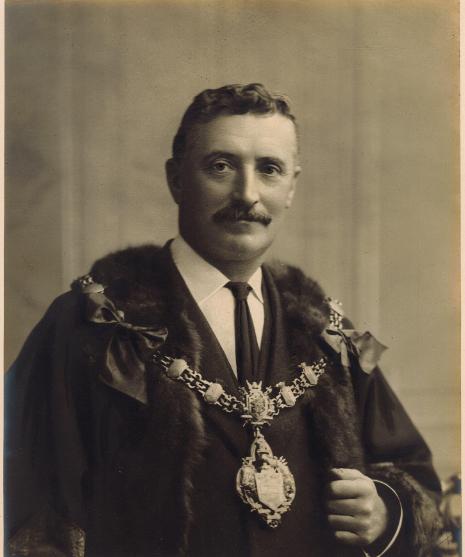
Mayor of Darwen 1911 – 1912
Alderman John Pickup was a descendant of one of Darwen’s oldest families and one of the area’s oldest landowners in the district. He was the son of Alderman William Pickup who was a member of the town council for a period of 27 years, and was Mayor of the borough in 1894–1895.
John Pickup had, throughout his life, been associated with the farming industry and he first entered public life in the year 1899 when he was elected a member of the council for South-East ward, a position which he held until his death. He was a most active alderman and councillor and his expert knowledge was of great value to the town in connection with Highways, Waterworks, Land Purchases and Building Schemes. When in 1911 the council elected him Mayor of the borough the appointment was hailed with great popularity.
John was born in 1864, the son of William, a noted cotton manufacturer in the town, and Hannah his wife. In 1885 John married Ann Doig in Blackburn and shortly after this moved into Higher Marsh House in Darwen. The couple went on to have three children, William (born 1895), Ellen (born 1887), and George (born 1889).
John was closely associated with Darwen and District Agricultural Association and in 1910 was appointed chairman of the executive committee, a post which held until shortly before his death. On the occasion of his 60th birthday, February 29th 1924, he was the recipient of presents from the members in recognition of his long and valued service. He also took over Progress Mill which was later run by his son William, whilst at one period he spent much time reworking the coal pits situated on his estate.
He was a loyal supporter of Duckworth Street Congregational Church and was also a staunch Liberal, being particularly associated with Hoddlesden Liberal Club. He was created a borough magistrate in May 1910 and for many years was an overseer of the poor.
His sudden death took place on 27th February 1926 and at the inquest which followed, a verdict of suicide was registered by the coroner. His son explained that he had been a healthy man until he had an accident involving lime which left him blind in one eye. A little time after this incident he had another accident when he fell from the loft of a barn attached to his farm sustaining serious injuries. It was after this fall he began to suffer from depression. His funeral took place at Darwen Cemetery, and the Mayor and members of the council attended informally, and the Agricultural Association and the Liberal Association were also represented.
Probate was granted to his son, William and to his daughter, Mrs George Pickup and his effects totalled £26,949.
Compiled by Joyce Calder August 2026
Sources:
findmypast.co.uk
Blackburn Times
gov.uk Index to Wills and Administrations
Frederick Hindle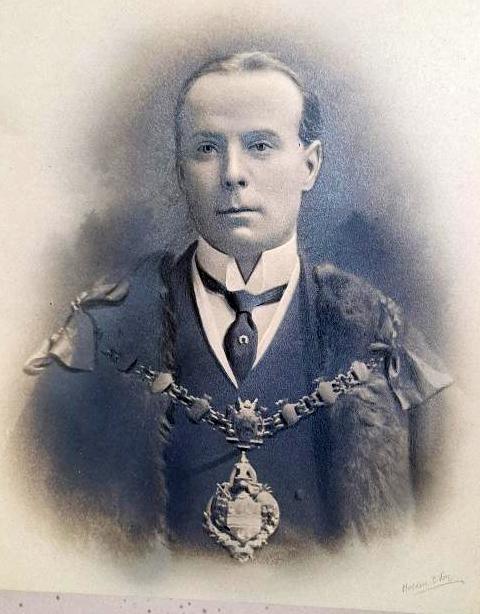
Mayor of Darwen 1912 – 1913
Frederick Hindle was born on 28th July 1877 to Frederick George Hindle, a solicitor in Darwen and his wife Helen. He was educated at Charterhouse School and Owen’s College Manchester and in 1898 he won the Senior Prizeman award in his final solicitor examinations, repeating the standard set by his father in 1870. He then joined his father’s business which was renamed Hindle and Son, and later still formed a partnership with Mr. James and Mr. John Cooper, when the firm became Hindle, Son and Cooper.
In 1901 he entered public life and was elected to Darwen Town Council on which he served as councillor and alderman until 1925, when he resigned upon being appointed Magistrate’s Clerk. Politics played a large part in his life, as from his early days he was an active speaker throughout the Darwen Division during his father’s campaigns, and four times he was the Liberal candidate. Only once was he successful – in 1923 he won the seat with a then record majority of 2,810 over Sir Frank Sanderson, the Conservative candidate.
In 1913 during his mayoralty King George V and Queen Mary visited Darwen on their tour of Lancashire.
He served his country in both world wars. He went to France with two cars fitted as ambulances within a few weeks of the 1914-1918 war breaking out, and after 18 months was transferred to the French army, given a commission, and was in the thick of severe fighting. After being mentioned in dispatches he was invested on the battlefield with the Croix de Guerre for the gallant part he took in several months’ operations. In 1917 he was again mentioned in dispatches and awarded a bar to the Croix de Guerre for rescuing, under heavy fire, a French flying officer whose plane had been shot down.
During the last war he was deputy Regional Commissioner for Civil Defence for the North-West. In 1943 he was knighted in the King’s Birthday Honours.
Among his public offices were chairmanship of Blackburn and District Hospital Management Committee and Darwen District Nursing Association. He had been captain and secretary of Darwen Golf Club, president of Darwen Cricket League and president of Darwen Literary Society. He was chairman of the governors of Darwen Grammar School and on his 70th birthday he gave £1,000 to Darwen Corporation to assist the further education of needy students – "in appreciation of the seventy happy years I have spent in Darwen"
In 1928 he married Miss Alys Lawrence who later entered politics, becoming an alderman on Darwen Council and also Mayor of the borough in 1937.
Mr Hindle died on 23rd April 1953, shortly after celebrating his silver wedding anniversary. There was a service at St. John’s Church in Darwen after which his remains were cremated.
The probate entry shows that he died at Blackburn Royal Infirmary, leaving £40,326, with probate being granted to Lady Alys Hindle, widow, Thomas Percival Gillibrand, cotton manufacturer and Norman Lees and James Cooper Holden solicitors.
Compiled by Joyce Calder, September 2026
Sources:
Blackburn Times Newspaper
ancestry.co.uk
findmypast.co.uk
gov.uk Index to Wills and Administrations