
 Loading more
Page 2
James Stanworth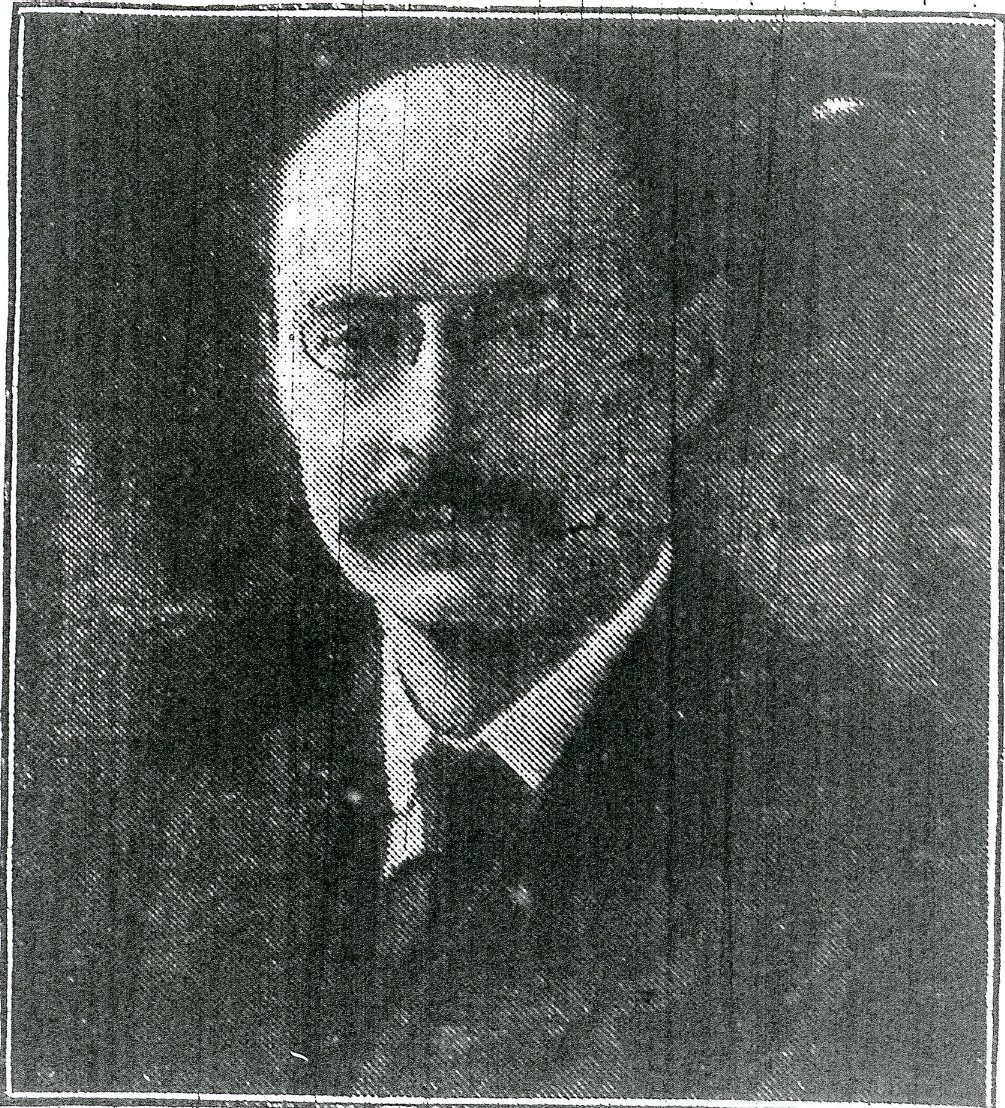 Mayor of Blackburn 1924-26
James Stanworth was a native of Burnley, he came from a family of five girls and two boys. His parents died when they were quite young. At the age of 22 James started the business of umbrella manufacturing, J. Stanworth & Co. wholesale and retail which launched in Darwen Street, Blackburn in the year 1900. James was a great believer in intensive and persistent press advertising which greatly enhanced his business. In 1912 he was the President of Blackburn Chamber of Trade taking a leading part in the organisation of shopping weeks. He was also Vice-President of Blackburn Chamber of Commerce for three years and elected Chairman in 1918. During this time he represented the Chamber at the British Empire Meeting of the associated Chambers of Commerce in Toronto.
In 1920 he represented St. Mary’s Ward as a Liberal and four years later accepted the office of Mayor serving for two years.
Before entering the Town Council he was a member of the Education Committee and a Borough Magistrate from 1917. During the war he served on the Advisory Committee of the Military Tribunal and was Chairman of the War Savings and War Economy Committee. In connection with this work, two and a half million pounds was raised in Blackburn for the Victory War Loan. He was the Hon. Secretary of the National Service Committee, a former member of the Board of Hon. Trustees and Managers of Blackburn Savings Bank and a founder President of Blackburn Rotary Club.
One of his interests was photography and he was a life member of Blackburn Camera Club. James was also a Freemason and attended St. Georges Presbyterian Church on Preston New Road. He married Emily Howarth in 1891and they had three children – Gertrude, Elsie and Walter. In 1911 the family lived at Fernbank, East Park Road, later they moved to Sherwood, Gorse Road. Emily died in 1934 and James in 1941 aged 72. They were interred in the family grave at Mellor Methodist Church.
Janet Burke
Sir William Forrest O. B. E. 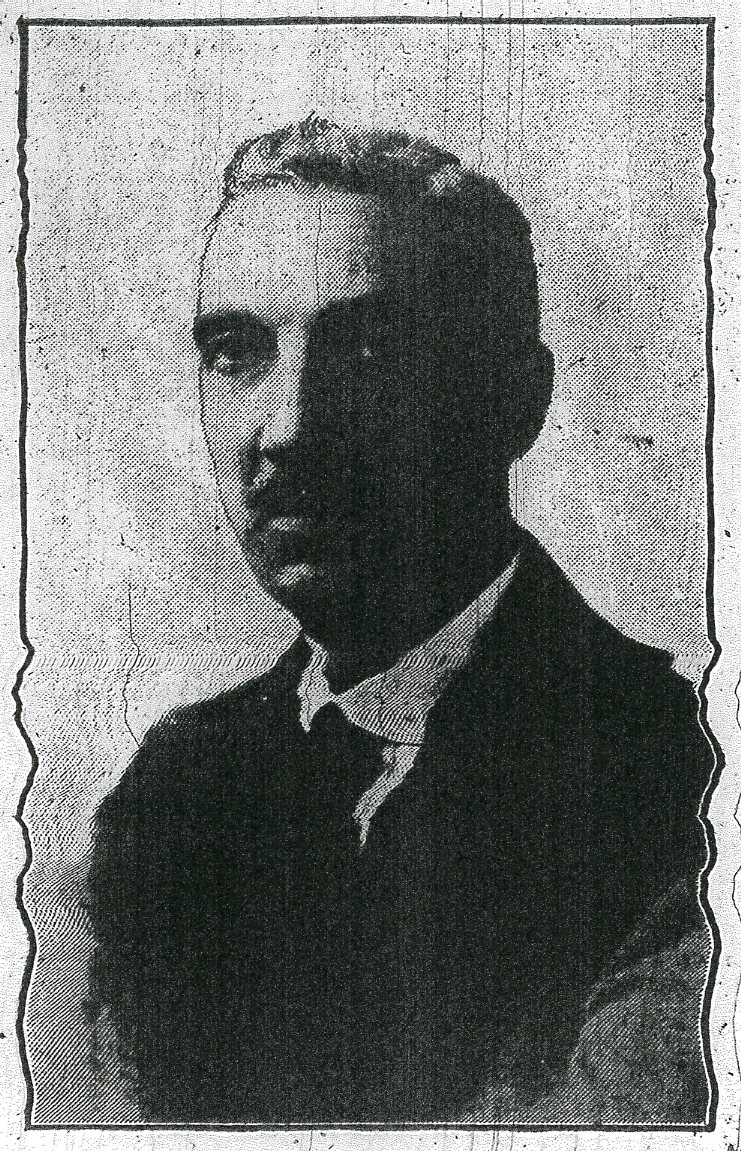
Mayor of Blackburn 1926-27
One of the foremost among the men whose industry and enterprise made Blackburn what it is to-day was William Forrest.
He is mentioned in Baines' History of Lancashire, published in 1824, as a calico manufacturer with a house and warehouse at 36, Queen-street, a site now covered by the Sessions House. He was a native of Mellor, and began in business in Blackburn as a "putter-out" in the days of handloom weaving. He married Hannah, daughter of James Pemberton, yeoman, who farmed Pemberton Clough, a holding now occupied by Corporation Park and the Grammar School.
William Forrest was one of the first to recognise that the new parish of St. John was an excellent residential suburb. He built a house in Richmond-terrace (the line of which is marked on Gillies' map as West-street), next door to the present Chamber of Commerce. It is the third from the Northgate end and his initial "F" may still be seen on the head of the downspout. According to Whittle, Richmond-terrace was completed in 1838, and consisted of " twenty respectable dwellings of brick." Here he died in 1841 and was buried in the parish churchyard.
Sir J. W. Forrest was his grandson, the eldest-born of his son John. He was educated at the old Grammar School in Freckleton-street, under Thomas Ainsworth. At that time there were not the facilities for technical education now available, but the Blackburn School of Art and Technical Training (the forerunner of the Technical School) was conducted in rooms belonging to Luke S. Walmsley at Sudell Cross. Sir William was one of the first pupils, his teachers being George Whewell and C. P. Brooks. The latter wrote an excellent textbook on the subject of weaving, of which I possess a treasured copy.
In 1883 Sir William entered his father's business at Albert Mill, where for many years he proved himself a shrewd and farsighted administrator.
"In 1916 (says Shaw) he was chosen leader of the Conservative Party in the borough, both in and out of the council chamber, and he held both offices till 192, when pressure of business caused him to retire from the major post, but not till he had conducted the town through three strenuous parliamentary elections. Next to finance and the interests of the party, he has exerted himself in the cause of education, having been chairman of the Education Committee from 1919 to the present day (1931). In 1916 he became chairman of the War Pensions Committee, on its formation and it was for his war work, as a financier and organiser, that he was awarded the O.B.E. in 1920. This distinction was followed by a greater one when he was knighted in 1925. . . He had married in 1898, Alice Dugdale, daughter of William Carr and granddaughter of John Carr, who built Garden-street Mill. She gets her second name from her maternal grandfather, John Dugdale, the iron-founder."
Among other positions he was governor of the Grammar School, Girls' High School and Convent of Notre Dame, and a trustee under the Peel and Leyland foundations. His portrait, painted by a Blackburn artist, Thomas Cantrell Dugdale, A.R.A., was unveiled at the Grammar School and presented to him by his fellow-governors on April 17th, 1941. It was afterwards hung in "big school."
He died on May 6th, 1951, aged 84, and his tombstone is among those which were removed from the Cathedral Close when it was converted into a Garden of Rest and are now carefully preserved in the transepts.
By George C. Miller
John Aspden Ormerod 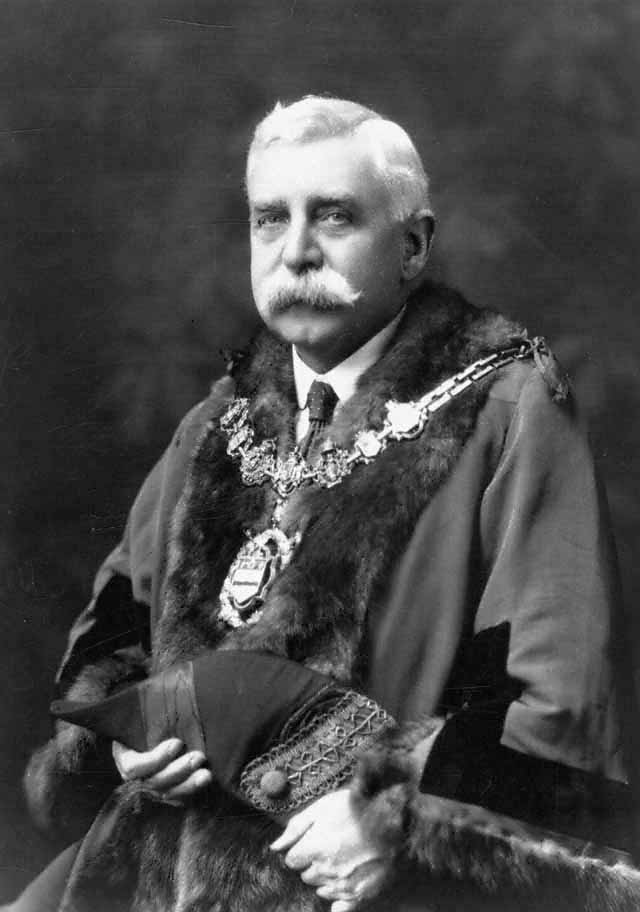
Mayor of Blackburn 1927-29
© BwD - terms and conditions
An ex-mayor of his native town, an industrial and political leader, church worker, musical enthusiast and sportsman, these are some of the attributes of John A. Ormerod, only son of Benjamin Ormerod, who was born at Blackburn in 1863. A Liberal of the old school, he succeeded the late Sir Edwin Hamer as president of the Blackburn Liberal Association in 1816, holding the office for a quarter of a century. His father was a radical and took him to a husting on the Wrangling in 1876, where he received his political baptism of fire, for the proceedings ended in a riot and cavalry from Preston had to quell the disorder.
As a boy of nine he went to work for the firm of John Dugdale and Sons, but three years later left the mill to go to school, his father realising that he had a son of no mean capacity, and entitled to the best education the family budget could afford. For five years he attended Dr. Isherwood's school of science, thereafter returning to factory life, his father being manager of Dugdale's Cherry Tree Mills. When the latter retired in 1892 he was succeeded by his son, who later became managing director of all the firm's interests.
He entered the town council in 1921 for St. Silas' Ward and was mayor of the borough from 1927 to 1929. In his first year of office he had the satisfaction of seeing Blackburn Rovers win the F.A. Cup at Wembley, sitting with the present Queen Mother, then Duchess of York, in the Royal box. A Presbyterian, he was associated first with Mount-street and later with St. George's Churches, having the distinction in 1926 of attending the historic conference at Oxford to discuss the question of the federation of the Free Churches. The formation of the Blackburn Amateur Operatic Society, later merged with the Meister Singers, was one of his earlier exploits.
"One feature of his early life (says J. G. Shaw), may be recalled, for all musical men in Blackburn who are old enough will remember how he organised an amateur performance of Gilbert and Sullivan's - Patience' at the age of 21, himself taking one of the leading parts."
He was also a member of the Vocal Union and was never tired of urging that Blackburn should have a Little Theatre of its own, for the benefit of amateurs.
Mr. Ormerod died at his home, North Bank, Wellingtonstreet St. John's, in April, 1947, aged 83.
By George C. Miller
Luke Bates, O.B.E.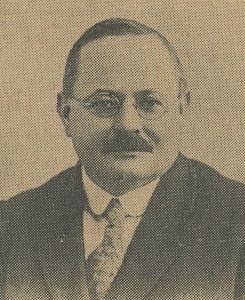
Mayor of Blackburn 1929-31
Luke was born in April 1873; the son of William and Ellen and he had two sisters and six brothers. William was a loom fitter and Ellen worked as a "drawer in". They lived in the Union Building in 1881, and, by 1901, they were at 56, Peter Street. Luke was a weaver at Brookhouse Mill, said to be one of the most famous textile sites in Blackburn, established in 1828, by Hornby and Birley, calico merchants and manufacturers of Clayton Street. On the 1911 census Luke is 37, still living at home, and described as the assistant secretary of the Weavers Association.
He married Sarah Howarth that same year, and, on the 17th May, 1915, a son, Fred, was born. Sarah died two years later and Luke remarried in July 1918 to a Sarah Parkinson. They also had a son, Harold, born in April 1919.It was at an early age that Luke had joined the Weavers Association. He was the mill representative and served on a committee to revise the society's rules - for two terms he was elected vice-president and only resigned to take up the position of Collector.
In 1907, he was appointed secretary - a position he held for 30 years. From May 1913, he was a member of the Central Committee of the Weaver's Amalgamation, on the Legislative Council of the United Textile Factory Workers Association, and, from 1918, Secretary of the Northern Counties Textile Federation. He was also a former President of Blackburn Textile Society, secretary of Blackburn Labour Party and editor of the Labour Journal.Luke entered the Town Council in 1914 as the representative for St. Matthew's Ward, and, in 1939, was elected as one of the first new Labour Aldermen.
He and his wife were presented to the King and Queen when they visited Blackburn in May 1938. As an illustration of the high regard in which he was held, he was retained as a member of the Aldermanic Bench when other members of his party were deposed on the return of a Conservative Council.He was Chief Magistrate and a County Magistrate serving on the Magistrate's Advisory Committee and he was the first member of the Labour Party to be elected to the Mayoralty.
Luke had risen to a commanding position not only within the Trade Union Movement but also in the civic life of Blackburn. He had been awarded the OBE for services to the Assistant Board being Chairman of the Blackburn and District Advisory Committee. He was recognised for his hard work, being a skilful organiser, an expert negotiator and a fluent speaker. Additionally, Luke was on the Board of Management of the Royal Infirmary, on the Executive of the Charity Organisation Society in connection with the convalescent home at St. Annes and a Governor of Blackburn Grammar School.
Sarah, his wife, had been on the committee of the Blackburn Weaver's Association before their marriage and a teacher at the Ragged School. During the war she had been a member of the Food Committee and also a Committee whose purpose was to find employment for girls. Sarah had taken a keen interest in the Co-operative Women's Guild and the women's section of the Labour Party.Luke aged 69, died suddenly from a heart attack at his home on Heyes Lane, Blackburn, Sarah lived to be 82 dying in 1960.
Compiled by Janet Burke, Community History Volunteer, August 2020
William Kenyon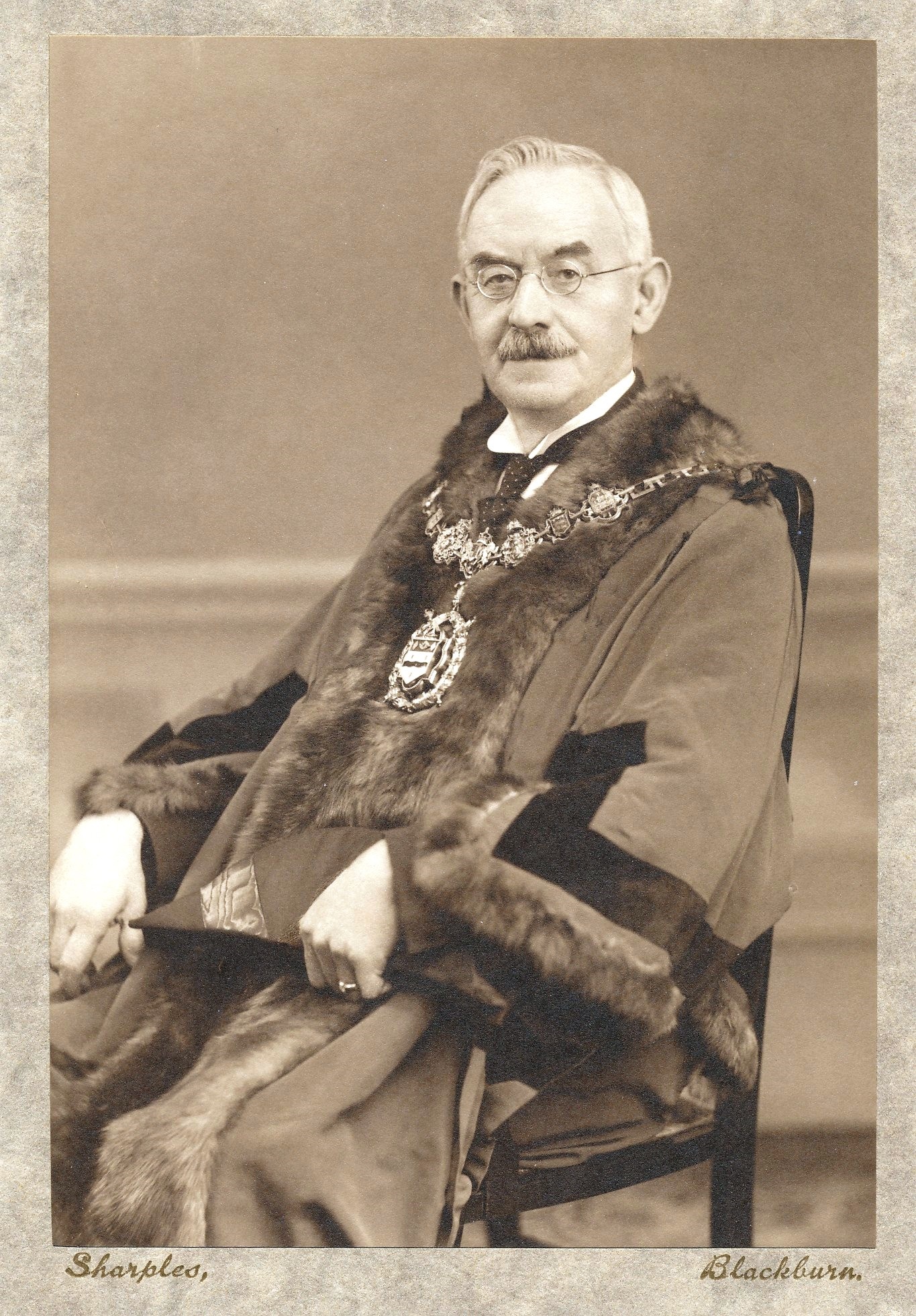
Mayor of Blackburn 1931-33
William was born on the 30th of April 1864 to William and Jane Kenyon, he had five sisters and two brothers. Like most children of the time he went to work as a weaver in the cotton industry. Being keen to improve himself he learnt shorthand, before becoming a shorthand clerk and teacher, later he became a freelance journalist and then the manager of a skating rink. After this he managed a comedy theatre at Manchester and spent some nine years working in Grimsby at a billposting company. Returning to Blackburn in 1899, he became the manager, of Blackburn and District Billposting Company Limited, located on Dandy Walk, he was later made secretary and then the managing director. For eight years William was the lessee of the old Exchange Hall and brought the Carl Ross Opera Company to the town. This almost turned into a disaster but matters improved and the Company came for three consecutive years, 1904 to 1906. He had a keen interest in theatre and was the manager of the Theatre Royal from 1914 to 19616. For thirty years he was actively associated with the Chamber of Trade, he was the Secretary, and then its President for two years.
William married Elizabeth Ellen Hargreaves on the 31st of May 1884 at St. Thomas's, at that time they both lived at separate houses on Monk Street. They had three children - a daughter, called Elizabeth Ellen and two sons William and Harry.
William was a regular attender at Ewood Park and Alexandra Meadows and was the Vice-president of Blackburn Subscription Bowling Club. He became a member of the Oddfellows Society in 1886 and joined the Freemasons in 1902. He was a chorister at St. John's Church and also the Parish Church. In 1934 William and Elizabeth celebrated their golden wedding.
In 1904 William was returned as a Conservative Councillor for St. Mary's Ward and served for thirty six years, including twenty years as an Alderman; he was second only to Alderman Greaves in length of service. He was elected to the office Mayor and Chief Magistrate in 1931. His first mayoral was so successful he was unanimously asked to serve another year. During his term there were 18,000 people out of work and he did his utmost to lighten their burden. As Mayor he received many letters from lonely bachelors for wives and elderly spinsters for husbands but he declined to be converted into a matrimonial agency. Whilst he was on the Highways Committee the arterial road was built at a cost of £170,000. In May 1938 he was presented to King George VI on his visit to Lancashire. William decided in 1940, it was time for a more active man to take his place and thus retired; unfortunately he died on the 29th of October 1941 aged 77, not long after his retirement. He was interred at St. Mary's Church, Mellor, after a service at St. Johns.
Janet Burke
Charles Albert Critchley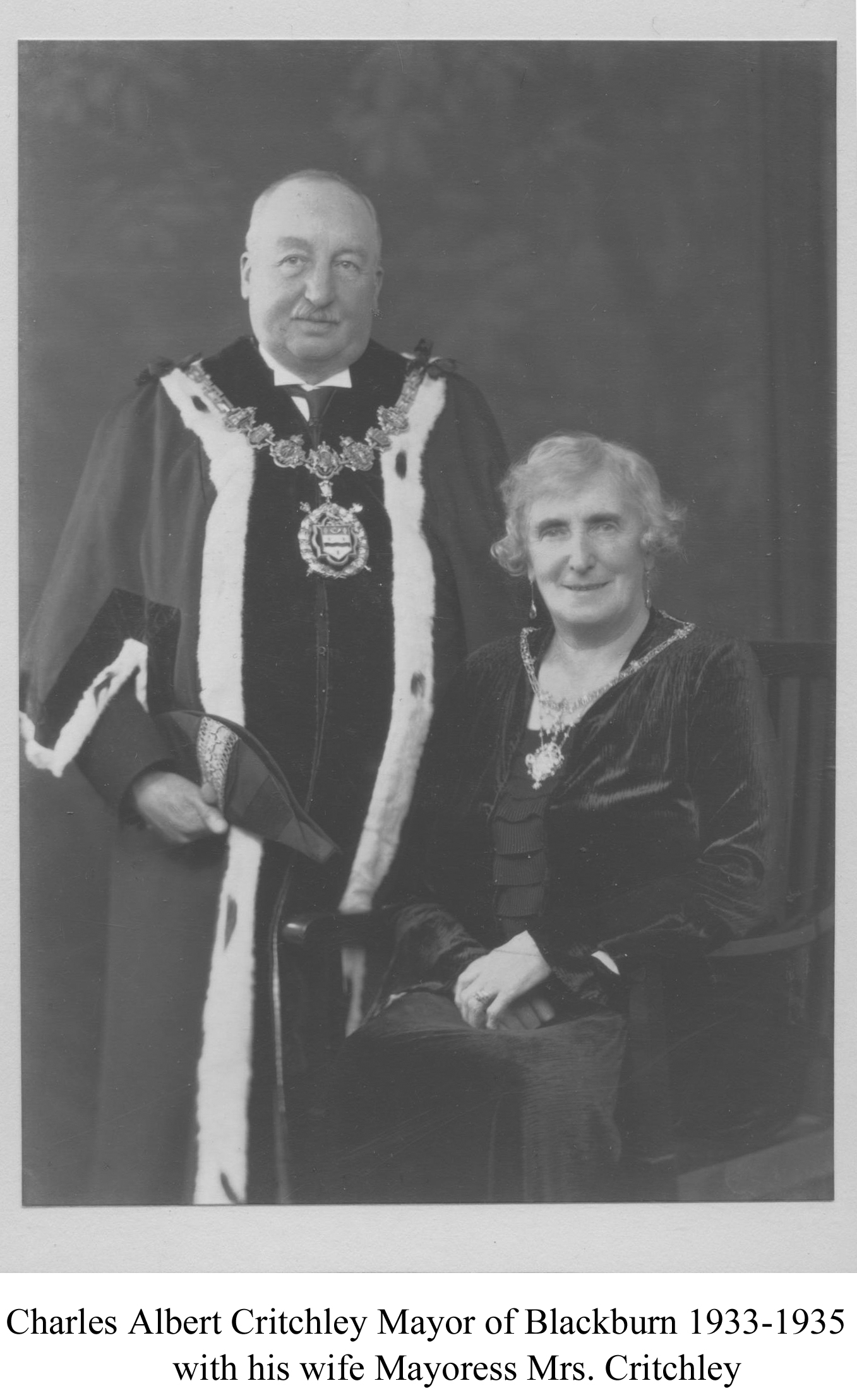
Mayor of Blackburn 1933-35
Charles born on the 28th. of April 1875 was the son of Thomas and Margery and had an older brother Walter. His father Thomas was born in Alston near Longridge and had come to Blackburn to work for his uncle, a chemist and druggist on King William street. Thomas opened his own business in 1865 and Charles joined the family firm. He completed his schooling at Mount St. Mary's College, Chesterfield and then became apprenticed to his father. Charles continued his studies at Blackburn Technical School and was awarded a silver medal, he also won prizes in analytical chemistry. At Manchester College of Pharmacy he passed the minor examination in 1896 and the major in January 1897. Charles elected the secretary of the North-East Lancashire Chemists Association in 1893 and was later appointed President on two different occasions. He was also Treasurer for some years of the North Western Federation of Pharmacutical Associations. On September the 12th.1900 he married Ellen Buckle at Stourton Castle, West Yorkshire and in 1901 they lived on Azalea Road in Blackburn. By 1911 they had moved to Adelaide Terrace and had two children, Francis George aged 9 and Dorothy Mary aged 7 - another son Wilfred George was born that same year.
Charles was elected to the town council in 1919 representing St. John's Ward, his father Thomas had also been a town councillor but had represented St. Peter's Ward. Charles played a large and varied role in the life of the town and in 1933 was appointed the first Roman Catholic Mayor of Blackburn. Charles presided at the meeting when Lord Derby launched the appeal for the Blackburn Cathedral Fund, he welcomed visiters to the Methodist Synod and attended functions in the schools of various denominations. During his office there was the visit of Princess Helene Victoria, the King George V Jubilee celebrations and the admission to the freedom of the borough of Mrs Yerburgh. Charles had an unbroken record of 31 years on the council and was elected an Alderman in 1933.
Charles was a keen motorist and he and his wife covered many miles not only in Europe but also in Canada and the United States. He was chairman of the Lancashire Automobile Club and then President. Charles and Ellen celebrated their golden wedding in 1950 but Ellen died in 1956. Charles lived to be over 91 years old dying in December 1966. Probate was granted to Francis George Critchley, his eldest son also a chemist, and the proceeds were £165,024.
Janet Burke
William Coupe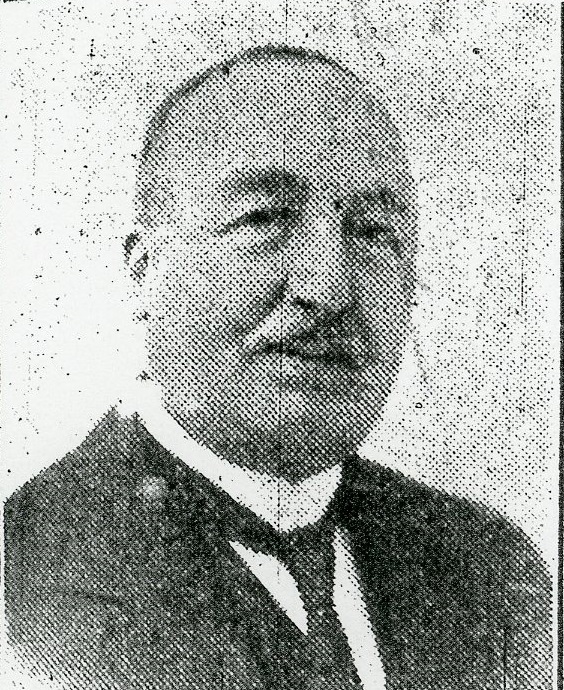
Mayor of Blackburn 1935-36
William was born on the 17th of May 1864 to Thomas, a tea-dealer, and his wife Mary Ann. He had one sister and three brothers. In 1871 the family lived at 11, Inkerman Street. At the next census they are living on Oswald Street. On the 23rd of September 1886 William married Sarah Wilson. William was first described as a grocer's assistant then a tea-dealer's assistant and lived at 158, Dukes Brow. By the time he was 46 years old he was a wholesale tea and coffee dealer with eight children still living on Dukes Brow but at a house called Cliff Mount. In 1939 William and Sarah lived on Meins Road at a house called Netherton.
William, when elected to the office of Mayor, was not a member of the town council but it was unanimously agreed that his name should be put forward by the Liberal Party. William had served as a member of the Blackburn Liberal Executive for over 40 years. He had on two occasions stood in the council elections but had not been successful. In December 1936 he was elected a member of the board of management of the Royal Infirmary. He was the Hon Trustee and Manager of Blackburn Savings Bank and a member of the Savings Committee. He identified with Chapel Street Congregational Church and later was associated with Leamington Road Baptist Church being Chairman of the Finance Committee for thirty years and Superintendent of the Sunday school for six years.
In his year of office, William and Sarah celebrated their Golden Wedding by entertaining the Councillors and Officers at the Town Hall. They also gave a gift of £250 to be divided between the King George Memorial Fund and other local causes. William officiated at an Industrial Exhibition which was opened by Lord Derby and he was also presented to the Duke of Kent on his visit to East Lancashire. As mayor he played a leading part in "Help Lancashire" and his efforts were said to have helped to bring new industry to Lancashire. William also represented Blackburn in Brussels at an International Peace Conference. As well as the successful tea business, William had many other industrial interests - one of which was to be part of a company to erect Sunnyhurst Mill at Darwen where he remained a director for many years.
Sarah supported William and was President of the Women's Liberal Association. She was the Lady President of the bowling section of the East Lancashire Club and a representative on the Employer's Panel (women's section) of Blackburn and District Court of Referees. They sadly lost their son Thomas Harold who was killed in a flying accident in 1917 - he is buried along with his parents at Mellor Methodist Church. The surviving sons helped their father in the tea business on Ainsworth Street, T. Coupe & Co. established in 1876. At the time of William's death he was in his third term as President of the Chamber of Commerce and had been Treasurer of the Liberal Party for ten years. William, aged 77 in 1941, was setting out for work on the Preston New Road tram, when he suffered a serious heart attack. Probate was granted to his two sons, William Wilson Coupe and Harry Wilson Coupe -the proceeds were £42,267 7s. 2d.
Janet Burke
William Hammond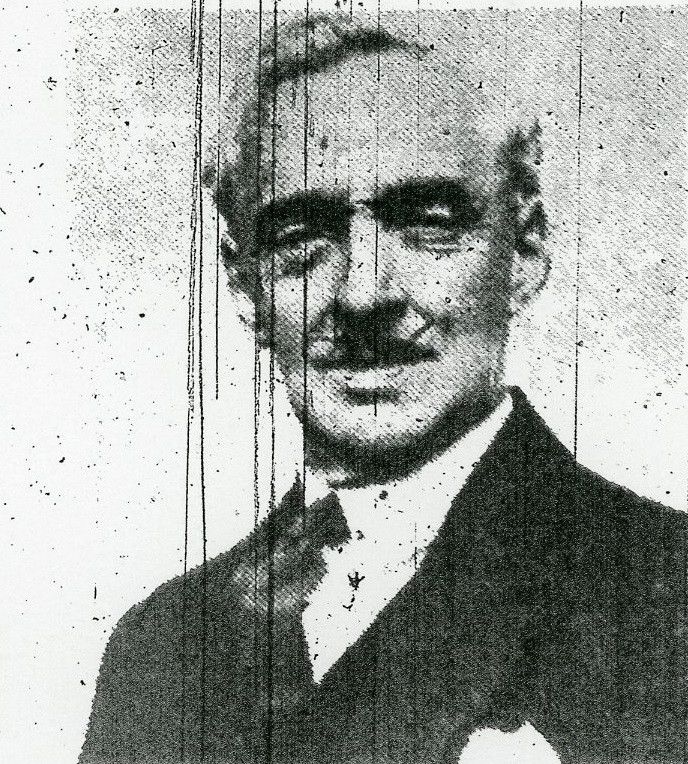
Mayor of Blackburn 1936-37
William was the son of James and Ellen - James was from Derbyshire and had become a well known policeman in Blackburn. Ellen was from Coventry and together they had seven children - William being the eldest. They lived mostly in the Grimshaw Park area of Blackburn and William was educated at Christ Church School. In 1891 the family lived at 26, Oldham Street with William 22 years old working as a weaver. William became an overlooker and in July 1896 married Elizabeth Chatburn. By 1901 they were living on Bolton Road with William described as a fried fish shopkeeper and his youngest brother Percy as an assistant. At the next census William had progressed to being a tea and fancy goods dealer on Whalley Range and he and Elizabeth now had three children, Helen 9, Mabel 6 and William 4. As a young man William identified with the Bible Christian Mission on Barton Street where he was a teacher of the men's class and a preacher for some 20 years. He was also one of the first Band of Hope boys in the movement started by Mrs. Lewis. William joined the Free Masons and was a past master of Perseverance Lodge. At the outbreak of war he was one of the first to join the Athlete Volunteer Force which merged into the 16th. Battalion East Lancashire Volunteer Regiment. He was a drill instructor and took a very active part in the recruiting campaign, At his instigation a Cadet Corps was formed in connection with the East Lancs Regiment and he was gazetted a Major. In 1923 William was presented with a sword in recognition of his services to the battalion.
When William was working in the cotton industry, wages and conditions were of a poor standard in spite of there being regular employment. Both he and Elizabeth were long time supporters of the Labour movement and William had a seat on the executive of the old Trades Council. William, in 1904, was elected a representative of St. Thomas's Ward on the old Blackburn Board of Guardians where he served as leader of the Labour group. That same year he became a councillor for Trinity Ward but was defeated at the conclusion of his first term.William then put up in St. Matthews Ward which he represented from 1908 to 1921. He stayed out of public life until 1928 when he was returned for St. Mary's Ward. Defeated in 1932 he was re-elected in 1934 and altogether had 22 years service as a councillor. On one occasion William stood as the Parliamenary Labour candidate for the Accrington division as the representative of the British Workers League but he was unsuccessful. In 1908 William was appointed one of the first governors of the Girl's High School and also that year was co-opted onto the Public Library Committee. Throughout his career in politics he served on many important bodies and committees and in 1917 he was appointed a member of the Magisterial Bench.
Elizabeth, not only an early member of the Women's Labour Group was also devoted to the Methodist Church. She was President of the Blackburn branch of the Lifeboat Guild and her grandfather and two other family members have their names inscribed on a memorial in Southport to the gallant crew who perished when the ship Mexico was wrecked. During the mayoralty of William, Elizabeth did a great amount of work in connection with the Mayoress's Ladies Committee. Elizabeth died in July 1938 having suffered a seizure some ten days earlier when collecting parcels for the orphanage. William lived to be 86 years old and died in 1955.
Janet Burke
James Fryers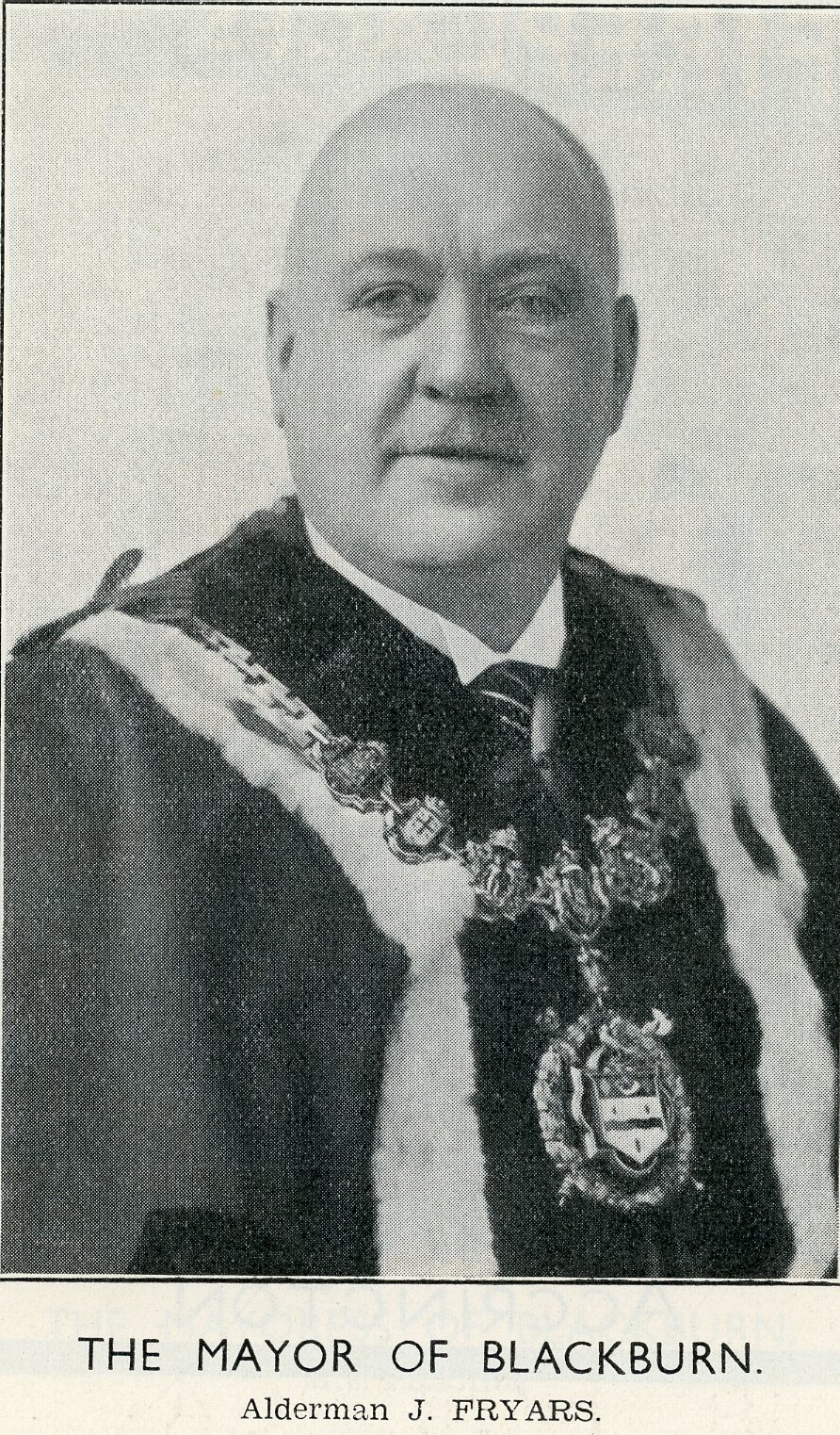
Mayor of Blackburn 1937-38
James was born in October 1881 to Reuben and Bertha. Reuben was a railway inspector. When James was born the family lived in Ormskirk, moving to 115, Baines Street, Blackburn when James was six. In 1901 Reuben is also described as a local preacher, they now lived at 29, Queens Road, In July 1904 James married Alice Ann Sagar and according to the 1911 census he, aged 29, was a brickworks manager living at 45, Queens Road with Alice 28, a daughter Beatrice 5 and a son Arthur Langdale 2. James became a director of Blackburn Philanthropic Assurance Company in 1913.
In May 1916 James was co-opted onto the Council for Park Ward. He was a Conservative like his father and the Vice-president of Grimshaw Park Ward. He was a stalwart supporter of Methodism and society steward at Clayton Street Wesleyan Church. For two years he was President of the Grimshaw Park Co-operative Society and during the war Chairman of the Profiteering Committee. In 1923 he was appointed secretary of the Blackburn Workshops for the blind but would not accept the due remuneration of £250. James was especially interested in the Highways and General Drainage Committee, the Watch Committee and the Visiting Committee of the County Mental Hospital at Whittingham. Since 1920 the Highways Department had carried out a number of important schemes with the expenditure of £430,000 for roads, sewers and bridges. This was also for the relief of unemployment for which grants from the government were obtained. Schemes to be commenced were the improvements to the arterial road, a new road at Little Harwood in connection with Philips Lamps Ltd. and the new cemetery at Pleasington. 1937 was an important year for the Cathedral when the Princess Royal came to lay the foundation stone of the extension. The King and Queen visited Blackburn during his mayoral year and there were many visits by leaders of religious thought, commerce and industry - even Gracie Fields was a visitor that year. There was a material reduction in unemployment mainly due to an improvement in the textile industry. In 1948 James was appointed Chairman of Whittingham Hospital Management Committee - this was the largest mental hospital in the country with 3167 beds. He was also a senior member of Lancashire County Mental Hospital Board. He was appointed an Alderman in 1928 and Borough Magistrate in 1935. In 1951 aged 70 James retired after 35 years continuous public service.
James was a keen sportsman in his younger days playing cricket for the Railway Clerks, he became Vice-president at the East Lancashire Cricket Club and was an avid supporter of Blackburn Rovers also being a shareholder for fifty years. He was an honourable member of the Loyal Green Bank Lodge of Oddfellows and had held every possible office open to a layman at Clayton Street Wesleyan Church. Alice Ann supported him in every way but in 1949 unfortunately passed away at their home, Cranleigh, Gorse Road having contracted influenza - she was 66, they had been married for 45 years. James died on the 10th of June 1954 aged 73 and was interred at Mellor Methodist graveyard. Probate was granted to his son Arthur, the proceeds being £19,252 18 9d.
Janet Burke
Francis John Greeves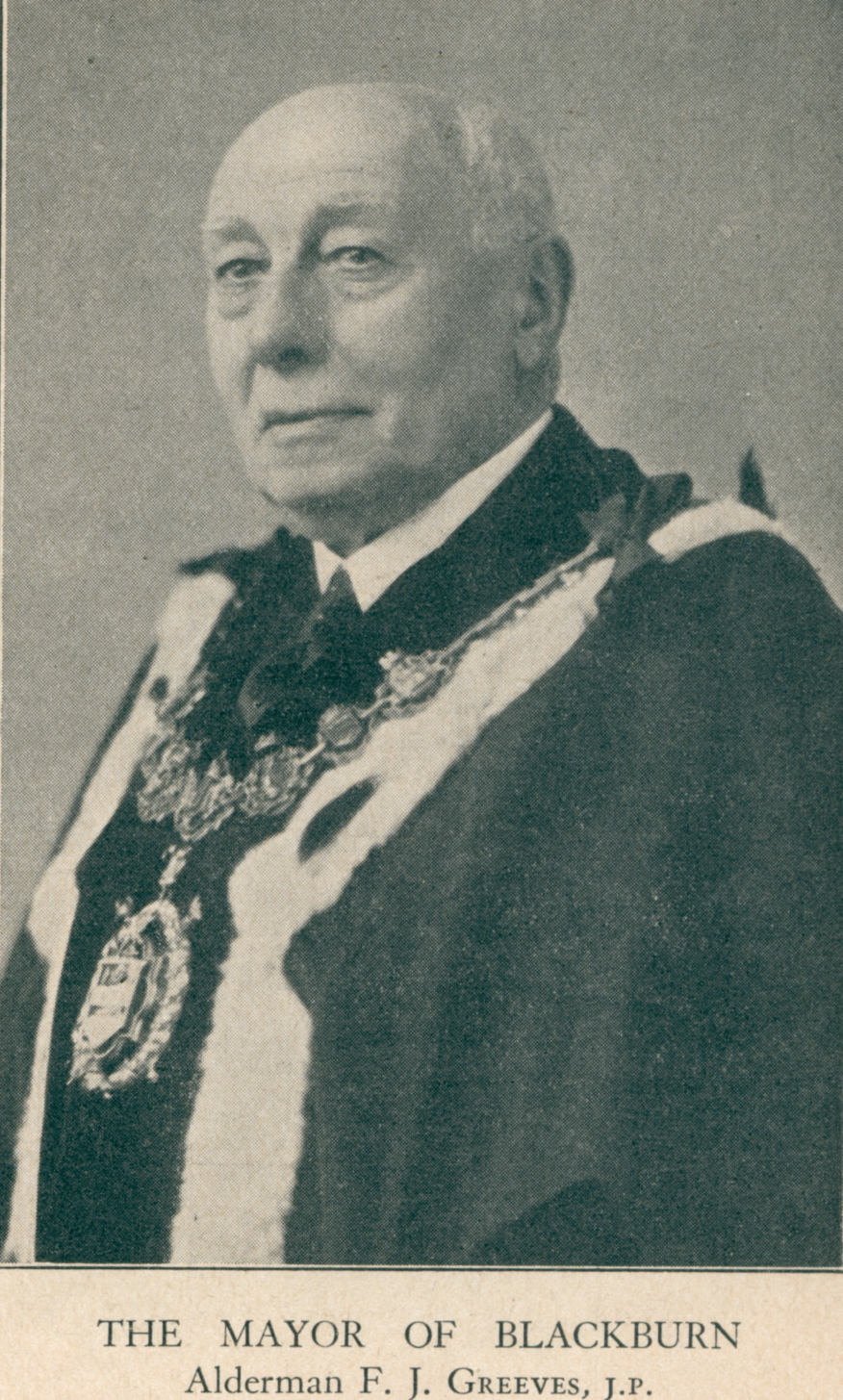
Mayor of Blackburn 1938-39
Native of Galway, F. J. Greeves was educated in Dublin, qualifying as a doctor in 1892. Coming to Blackburn three years later, he succeeded to the practice of Dr. Bastable in Larkhill and soon acquired a reputation for brilliant diagnosis.
Politically minded, although attached to no particular party, in 1900 he was returned as Independent councillor for Trinity Ward and continued on the town council until his death, being appointed alderman in 1922 and mayor in 1938. As chairman of the Health Committee he rendered outstanding service based on his own practical experience and he took over the chairmanship of the Public Libraries Committee in July, 1927, on the death of R. J. Howard. In 1935 his portrait, the gift, of a local artist, Hubert Wilkinson, then resident in Luton, was unveiled in the Art Gallery.
Throughout his whole career he never lost his love for sport and was keenly interested in both football and cricket. He was also an honorary member of the Rechabite Order and an ardent supporter of the Camera Club. His religious associations were with St. Peter's Church, and it was largely owing to his agitation that Belper-street Baths were erected.
He died in February, 1945, on his 75th birthday.
By George C. Miller
Edward Porter
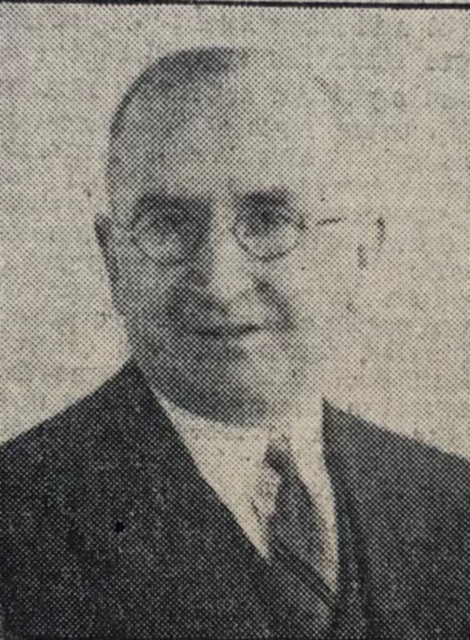
Mayor of Blackburn 1939-40
Edward was born on the 28th of July 1880 to Richard and Elizabeth who lived on Lansdowne Street in the Witton area of Blackburn. He had one brother and five sisters one of whom died at the young age of two. At the time of the 1901 census the family lived on Belgrave Street - Richard was a joiner and his two sons Edward 21 and Walter 18 were described as masonry labourers. In July 1909 Edward married Mary Edith Hindle and in 1911 they have a young son Norman and lived on Duckworth Street. Edward was a Trade Union Secretary and Mary a sweets and greengrocer dealer. In 1918 he was appointed the Organising Secretary of the General Workers Union previously known as the Gasworkers and General Workers Union. In his early days as a Trade Union official he led a six week strike for labourers in the engineering industry to have a wage of twenty shillings a week and for machine men twenty two shillings - a working week then was fifty three hours.
Edward was first elected to the town council in 1913 as Labour representative for St.Peter's Ward. He served continuously until 1929 when he was made an Alderman. In 1935 he was deposed from the Aldermanic Bench but twelve months later returned as a councillor in his old ward. Also in 1935 he was made a Justice of the Peace for the borough, he served on the Board of Guardians and as leader of the opposition sat on many committees where his expertise and knowledge was most valuable. He was chairman of Blackburn Electricity Department until nationalisation. For twenty five years he agitated for the acquisition of Witton Park and was involved with the establishment of an airfield at Samlesbury. Edward served his term as mayor but also took over again the following June after the death of Walter Tempest. In May 1955 he was awarded a civic medal for meritorious service to the town.
Edward had had ambition to be a member of parliament and contested Blackburn at the elections of 1922 and 1923 - he was unsuccessful and tried at Warrington in 1935. Again unsuccessful but he finally was elected Labour M.P. for Warrington in 1945 serving until he reached the age of 70 in 1950. In 1954 the then Minister of Transport Mr Alan Lennox-Boyd asked Edward to continue his membership of the Transport Users Consultative Committee.Mary had always shown a keen interest in Labour politics and was an old member of the Womens Labour Movement, but due to health reasons had not taken a very active part. She identified with the Baptist Church on Montague Street for a long period. Mary died on the 3rd. of July 1948. Edward, aged 80, died in Queens Park Hospital some twelve years later on the 31st. of August 1960. Probate was granted to the only son Norman proceeds being £5774-13-3d.
Janet Burke
Walter Tempest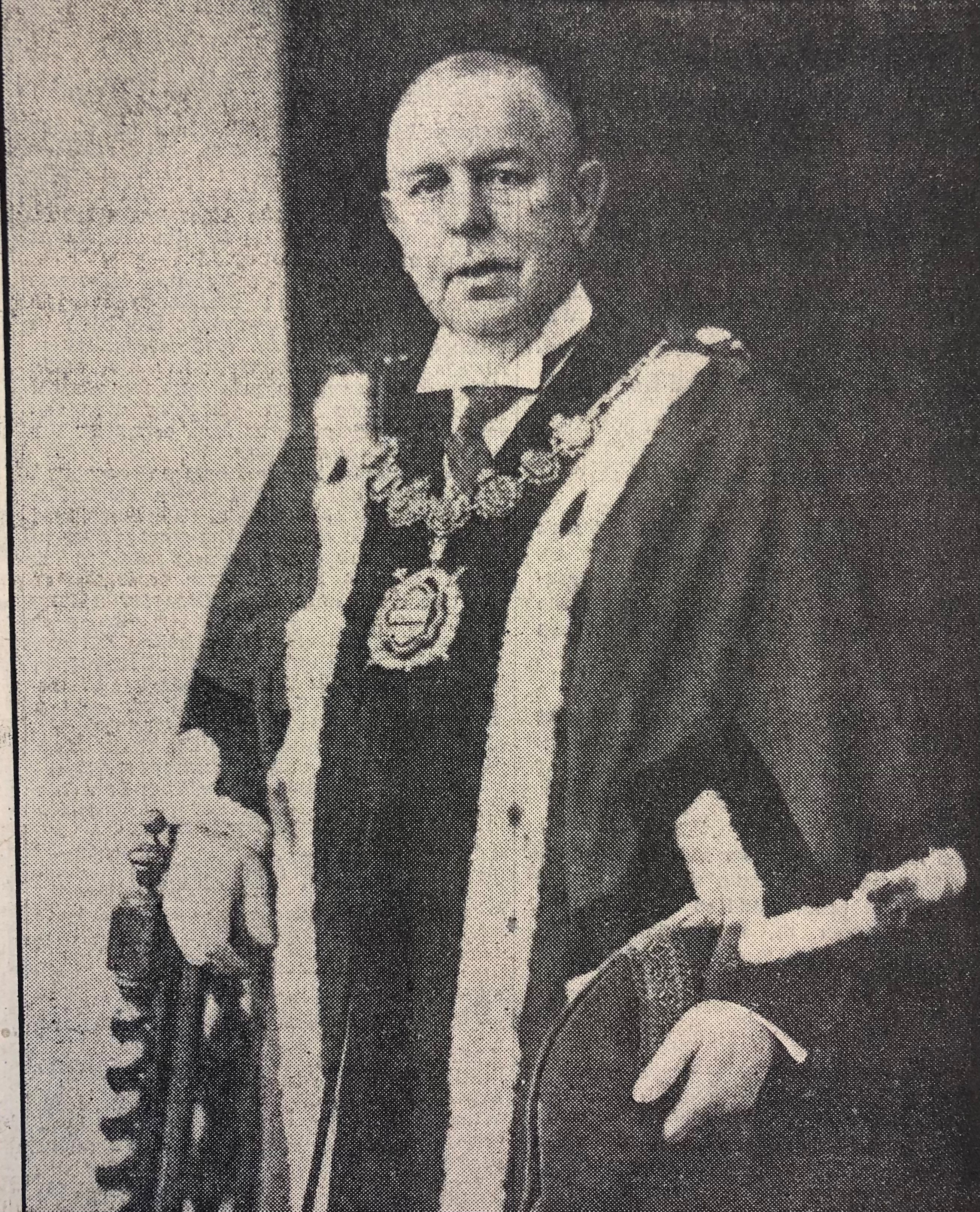
Mayor of Blackburn 1940-41
Walter was born on the 18th of February 1883 to William and Mary Ann. The family lived at 35, Cherry Tree Terrace, William was an engineer and mechanic working in a cotton mill. At the census of 1901 the family were still living on Cherry Tree Terrace. Now being 18 years old, Walter was working as the assistant secretary at a paper merchants. Walter married Annie Walmsley in 1906 in 1911 they lived at Prospect Place, Cherry Tree. They had a daughter Gladys aged 4 with Walter's aunt Elizabeth also lived with them - Walter was now a paper blind manufacturer and director at J.W. Pickles & Co. Blind Manufacturers. For two seasons Walter played football for the reserve team of Blackburn Rovers and earned ten shillings a week so that when he was appointed Chairman of the Rovers in 1933 the F.A. had to give their permission as he had been a professional footballer. Later he became a member of the League Management Committee, a member of the F.A. and represented the Blackburn division on the Lancashire Football Association Council. He was President and Vice-President of Cherry Tree Bowling Club, Chairman of the Infirmary bowling tournament and a past Captain of Pleasington Golf Club. Walter was a Congregationalist and had a life-long association with the church at Cherry Tree. He was also a Free Mason and a past master of Victory Lodge.
Walter had been unsuccessful in his bid to be the Liberal candidate for St. Luke's ward in 1917 but was elected as the Conservative candidate for St. Thomas' Ward in 1920 and became President of St. Thomas' Conservative Club. His greatest interest was in parks and recreation grounds. In 1931 he was appointed the Vice-Chairman of the Parks and Cemetery Committee - he made special efforts to develop the bowling greens and tennis courts and was most interested in the provision of a new cemetery at Pleasington, which would have been much more advanced had it not been for the war. Food production in the parks as a result of the war was also encouraged and Walter gave a silver cup for a competition amongst the allotment holders. He was also on the Electricity and Transport Committees. In 1938 he was appointed a magistrate for the Borough and in April 1941 elected to the Aldermanic Bench.
Councillor Tempest died on the 26th of May 1941 becoming the fourth mayor to pass away during their term of office; he was 59 and had been unwell for some months. He left a widow Annie who lived on Preston Old Road and three married daughters. Probate was granted to Annie, Arthur Robert Tempest, his brother, and Thomas Martin, his sons-in-law. The proceeds were £7512-17-4d. Annie died some five years later aged 61.
Some papers have been found by Mrs. Freda Walmsley which relate to the wedding of Gladys Tempest to Thomas Martin in September 1930. There are details of the furniture and floor coverings purchased from Rakestraws for the young couple and the dresses for the bride and presumably the bridesmaids from Mabel Stephenson's. There is the bill for invitations and wedding cards from Davenport & King, the wedding cake which cost £5-15s. the wedding breakfast at Furness's on King William Street costing £73-1s. and the symphonic orchestra costing two guineas.
Gladys died in 1993 aged eighty five and there were no known children. Elsie married Edward Crompton Jones, managing director of Blackburn Corrugated Paper, and died in April 1980 aged sixty nine. They had three children - Elizabeth, Helen and David. Annie married Norman Porter and they had two daughters. They lived in London and Annie died in July
Janet Burke
Doctor Bernard Worden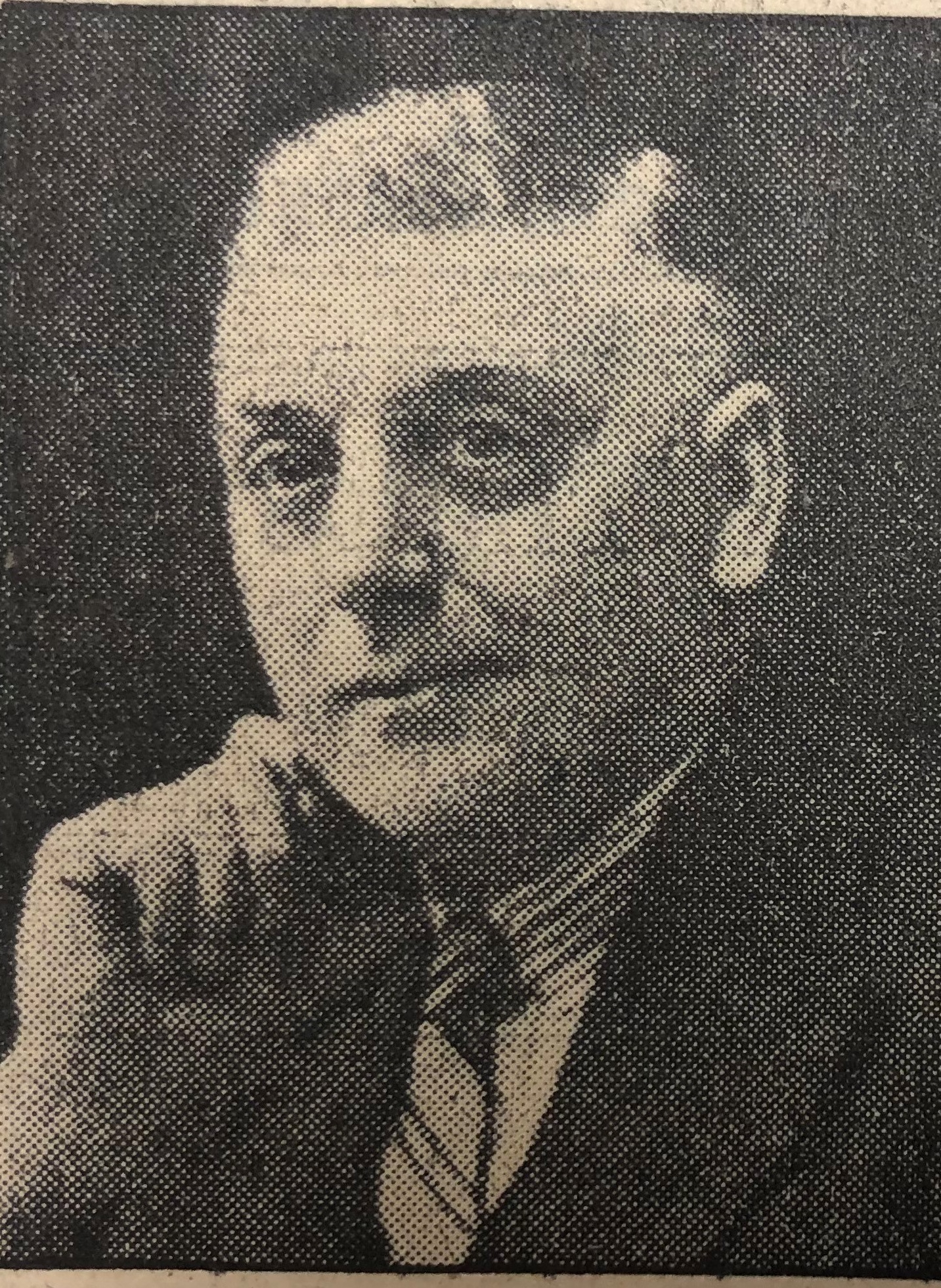
Mayor of Blackburn 1941-42.
Doctor Bernard Worden was born in Accrington on the 11th. of June 1885 to Herbert and Nancy. He was christened Doctor Bernard and he and his siblings John Edgar and Martha Ann lived in Accrington with their parents until 1891. In the census of 1901 the family were living in Morecambe at 2, Melrose Avenue - Bernard was 15 and described as a joiner's apprentice. In 1909 Bernard married Edith Gillbanks and in 1911 they lived at 91a, Scotland Road. He was now working as a baker and confectioner as his father had done before him and in 1914 their son Herbert Vincent was born. Bernard served in the Army Service Corps and was awarded the British War and Victory medals. Edith died shortly after the war in 1921 and Bernard remarried in 1922, his new wife was Lily Noble with whom he had two daughters Dorothy Jean in 1925 and Myra Joyce in 1928. In 1939 they lived at 22, Lambeth Street and he still worked as a baker and confectioner at Lambeth Street and also Scotland Road. Bernard had been President of the Bakers Association and secretary for ten years - he also was the Hon. Organiser of the National Association, He was elected to the Council of the National Association in 1941 and made a life member in 1951. Bernard was a bakery judge at the Royal Lancashire Show and other shows and took an active interest in the Bakery Students Society of which he was Vice-President.
Since 1922 Bernard was an elected member of the old Board of Guardians, becoming Chairman of the Public Assistance Committee and Chairman of the Cottage Homes Committee. In 1929 he was elected to the Town Council as the representative for St. Thomas' ward. Bernard was only the second Roman Catholic Mayor for Blackburn and was also the President of Blackburn Catholic Club. He was the manager of St. Joseph's and St. Thomas' schools, a governor of Notre Dame Convent, St. Mary's College and the girls High School. Bernard served on the Education Committee and was a life governor of the Infirmary, he made the Poor Law his chief interest. It was mainly due to his influence that the bakery school on Mayson Street was inaugurated without any cost to the ratepayer as machinery and ovens were subscribed for by manufacturing firms at his suggestion. Bernard took a keen interest in the Air Training Corps and the Sea Cadets. In 1940 he was elected to the Aldermanic Bench.
Bernard's wife Lily died in 1947 aged 51 and Bernard died in 1954 aged 69 at the address 169, Shorrock Lane. When probate was granted the proceeds were £4539-12-2d.
Janet Burke
James Fish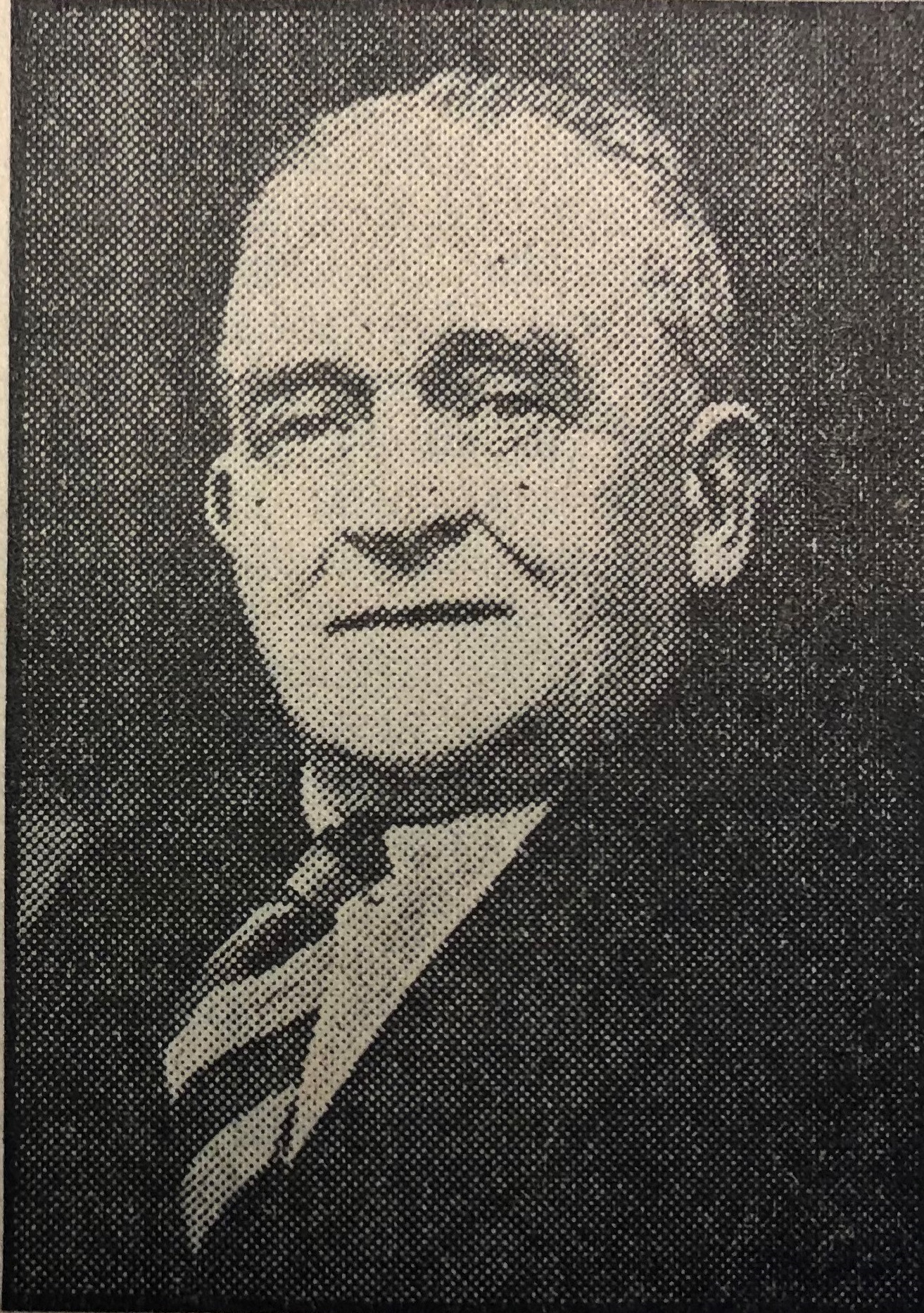
Mayor of Blackburn 1942-43
James was born on the 27th of April 1879 to John and Jane. Jane had four children but only James and his sister Alice survived. The family lived in the parish of St. Philips where James went to school and on the census of 1891 when James was 11 he was already working at Chadwick Street mill as a part-timer. He worked there until 1916 when he joined the Accrington Pals and went to war where he was wounded and lost a leg. In July 1928 James married Edith May Whittle the daughter of Robert Whittle formerly a quarter master in the East Lancashire Regiment. During his mayoralty James was an orderly room sergeant and store keeper in the Home Guard. James and Edith had one daughter Jane E. born in January 1930. James was described as a draper in 1939 and they lived on Saunders Road at number 51.
James Fish had been a stalwart of the Labour Party and associated with public life for over thirty years. He was a member of the old Board of Guardians and entered the Town Council in 1919 as the representative for St. Luke's ward. He became the Chairman of the Ward Labour Committee. James was the first Chairman of the Blackburn Public Assistance Committee which had superceded the Board of Guardians and was also the representative of the Corporation on the Blackburn Juvenile Employment Committee. He was also a member of the Blackburn and Clitheroe War Pensions Committee. James was appointed an Alderman in 1929 but was deposed six years later when the Conservatives came to power. In 1935 James was the Chairman of the committee for Brockhall Mental Institution, also serving on the Lancaster, Prestwich and Whittingham Visiting Committee and for a short time on the management committee of Calderstones Hospital. In 1936 there was a break in his membership of the Council when he had been unsuccessful in St. John's Ward but in 1938 he became the representative for Trinity Ward. James was very much involved with the post war planning for Blackburn but unfortunately died soon after at 129, Haslingden Road in January 1945. Probate was granted to Edith May his widow and Annie Yates - the proceeds were £1599-12-0d.
Janet Burke
George Hindle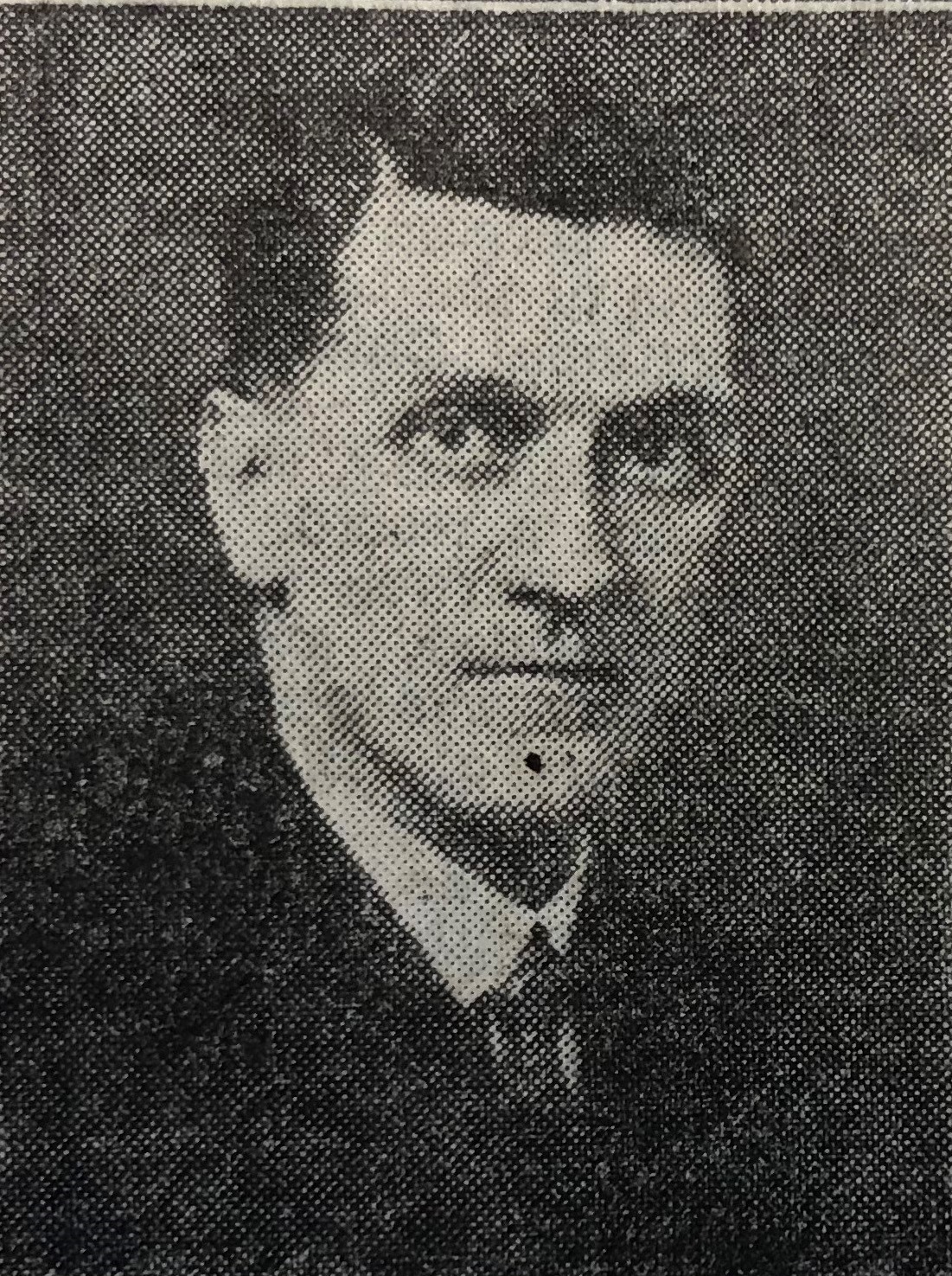
Mayor of Blackburn 1943-44
The life of George Hindle, co-founder with his brother Ephraim of the great firm of E and G. Hindle, is moulded in much the same pattern as that of the senior partner. Born in 1858, he had, like his brother, a life-long connection with Furthergate Congregational Church, where for 54 years he was actively engaged in some official capacity, being either deacon, superintendent of the Sunday School, secretary or teacher. He laid the foundation?stone for the new institute in 1927.
"For fifty years (says J. G. Shaw) he was a partner with his brother in the cotton trade, starting in the capacity of mill manager at the age of 20, while his brother attended to the business side of the partnership. As a practical workman and mill manager he took a large personal responsibility in introducing new looms and new textiles to meet the evergrowing requirements of the trade in the course of half a century. . . About trade revival he was somewhat pessimistic, and in 1928 warned the public not to accept at their face value the statements that were being made about improvement. An address he gave to the mill managers of Blackburn in March of that year created a profound impression, but it was not till after his death that the departure of England from the gold standard justified his pessimistic outlook and revolutionised the financial basis of the trade of the world."
He died in 1929, leaving a widow, three sons and four daughters.
By George C. Miller
Ernest Holden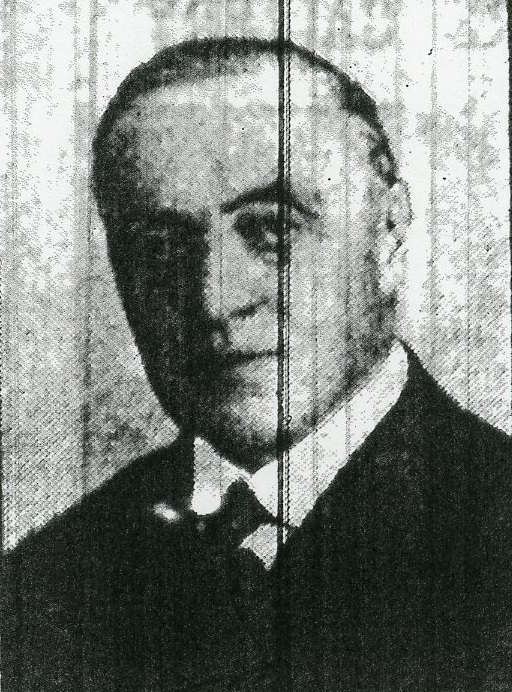
Mayor of Blackburn 1944-45
Ernest was born in Preston in the year 1877 - his father was William, a gas meter inspector and his mother Anne - there were two other boys Richard and Arthur and a sister Mary. In 1881 the family lived at 128, Audley Range but at the next census in 1891 they had moved to Revidge Road. Ernest aged 14 is described as a law solicitor’s clerk. On the 17th of June 1897 aged 21 Ernest married Margaret Rushton - his occupation was then a hairdresser and newsagent. He became the sub-postmaster on Dukes Brow which he kept for some 27 years retiring in 1944. Ernest served with the Home Guard during the war and with a keen interest in homing pigeons started the first pigeon section. He was a nature lover, a keen angler and photographer and became a well-known dog judge. He took part in many international dog shows both here and abroad including Crufts International Show in London and won over 1000 prizes himself. Ernest received the unique distinction from the English Kennel Club of being permitted to award championship certificates to all breeds of gun dogs and various other breeds. He was Vice-president and a Trustee of East Lancashire Cricket Club and played for 35 years for Blackburn Amateur Nomads.
Ernest joined the town council as the Conservative member for St. Silas' Ward which he represented for over 14 years - he was President, Chairman and Secretary of St. Silas' Conservative Club. He took great interest in the Parks Committee of which he was Chairman and was Vice-chairman of the waterworks. He was also a Governor of the Grammar School, the High School and the Technical College and was on the Holidays at Home Committee - a successful initiative of war time.
Ernest and Margaret lived on Alexandra Road and celebrated their golden wedding in 1947. Ernest retired from the Council in 1952 and he died aged 80 on the 7th of May 1957. He was buried at Pleasington Cemetery on the spot where he had actually opened this new cemetery. Probate was granted to Margaret his widow, the proceeds being £1109-19-2d.
Janet Burke
John Charnley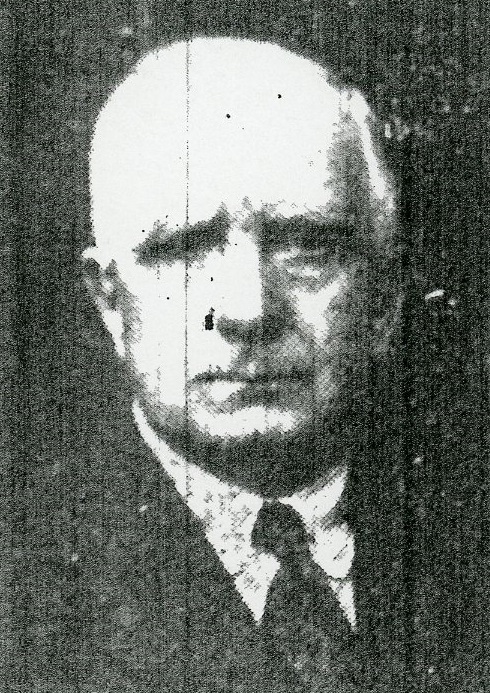
Mayor of Blackburn 1945-46
John was the only son of Thomas and Alice Ann who lived on Harrison Street in 1891. He had two sisters and at first they all worked in the textile industry. When John was 15 he became an apprentice engineer iron turner at Ashton, Frost & Co. and the family lived on Clifton Street. Then when John was 27 he married Annie Mayson at Christ Church on the 17th of November 1911 and they went to live at number 74 Carlisle Street. John finally worked for Clayton, Goodfellow & Co. leaving there in 1921 to take up his appointment as Trade Union Secretary of the Blackburn branch of the Amalgamated Engineering Union - a post which he held for 27 years. John was very interested in sport and a keen Rovers fan. He enjoyed bowling and in particular football where, for four seasons, he played full back for the old Crosshill Team and twice he assisted Lancashire against London County. Later he officiated as a referee in Blackburn amateur Sunday School Leagues.
John was an old boy of St. Peter's school and became a Labour member of the Town Council in 1923 representing St. Peter's ward. This he held for some 22 years until 1945 when he was then elected an Alderman. For ten years he was Chairman of the Watch Committee and took great interest in the Fire Brigade - in fact a fire engine was named after him. John was on the old board of management at the Infirmary, a J.P. for thirty years and in his fifth year as Chairman of Blackburn Magistrates.
John retired as secretary of the union in 1948 after having been a member for 46 years and still living on Byrom Street. He died in January 1959 aged 76 leaving his widow Annie, their two married daughters Alice and Edith and their son Jack an accountant at the corporation. Probate was granted to Jack and the proceeds were £9070-17-3d.
Janet Burke