
 Loading more
20th Century 1899 1950
Edwin Hamer | William Tatersall | Walter Farnworth | John Henry Hartley | James Kay | Franklin Talbot Thomas
Samuel Crossley | John Higginson | William Thompson | Afred Nuttall | Lawrence Cotton | Joseph Fielding
Thomas Ramsey | James Stanworth | Sir William Forrest | John Aspden Ormerod | Luke Bates
William Kenyon | Charles Albert Critchley | William Coupe | William Hammond | James Fryars
Francis John Greaves | Edward Porter | Walter Tempest | Doctor Bernard Worden | James Fish
George Hindle | Earnest Holden | John Charnley | Sarah Buckley | Robert Sugden | Ronald Henry George Horne
Edwin Hamer 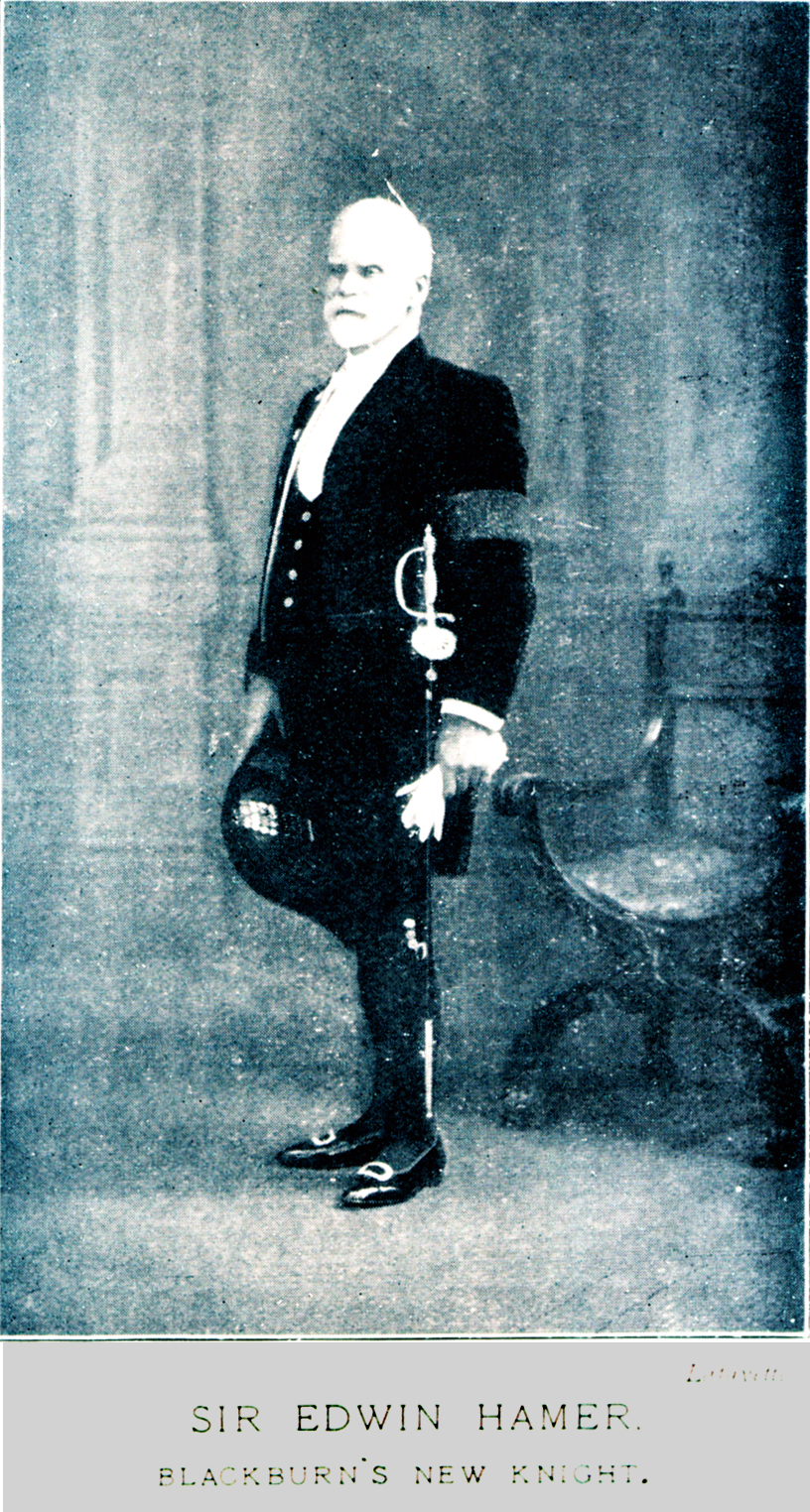
Mayor of Blackburn 1899-1900
"What I am I owe to Blackburn" was a favourite saying of Edwin Hamer's, and admirably sums up his intimate connection with the town, in which he had resided since 1859. Born at the village of War Office, near Heywood, on July 18th, 1838, he received his early education at a local dame school and when still very young worked as a tear boy at Bolholt Print Works. Coming to Blackburn at the age of twenty-one, he was first employed by William Stones, joiner and builder, who was one of the contractors for the erection of the town hall. He commenced in business on his own account in 1863, taking premises in Clayton-street, from which he removed to Back-lane. His partnership with William Salisbury as auctioneer and valuer began in 1871 and nine years later he entered the town council as representative of St. Mary's Ward. In later years he became chairman of Henry Livesey Ltd., Greenbank Works, and head of Edwin Hamer Ltd., Moorgate Mill, Livesey.
Known affectionately as the Grand Old Man of Liberalism in Blackburn, he splintered many a lance against his Tory opponents and though often worsted in the fray, never lowered his colours. A Gladstonian Liberal of the old school, he set himself the task of breaking the Conservative monopoly of representation in parliament, which dated back to 1886. Ultimately, in 1906, he achieved his object. I have vivid recollections of this notable election, when the Tory element sported colours of orange and blue against the pink and green of their adversaries. Hamer and Snowden were the progressive candidates and, though the veteran Liberal leader suffered defeat, his colleague, later to achieve fame as the "Iron Chancellor" of the Labour Party, was returned, together with Sir W. H. Hornby.
When Sir Edwin attained his jubilee as a member of the Blackburn Liberal Party, he was presented with an illuminated address, together with his portrait in oils, Lady Norman performing the unveiling ceremony at the town hall in the presence of some 1,200 supporters. He became a J.P. in 1892 and in 1899 attained the mayoral office at the request of a deputation representing all parties.
"Among the schemes favourable to municipal progress that have been forwarded by him during his mayoralty (writes his biographer) were the demolition of insanitary property between Blakey Moor and Duke-street, and the erection of new Court-houses, Police and Fire Brigade stations. In connection with the benevolent movement excited in Lancashire towns by the Indian famine, he opened a relief fund in Blackburn, which elicited wide support from employers and employed, the gratifying result of his personal endeavours, which entailed a large amount of work and time. The Transvaal war, which has recently imposed another demand upon public generosity by taking away many residents from Blackburn, and leaving wives and dependents without support, necessitated the opening of a fund which, at the time of writing, has been almost gathered. £10,000 was asked for and is nearly subscribed. To this object he contributed £150, instead of giving the customary dinner to the Corporation and townsmen."
In 1860 he married Rachael the daughter of Joseph and Alice Berry, of Tottington, by whom he had six children, five boys and a girl.
A pillar of nonconformity, being a staunch Wesleyan, Sir Edwin died at Braeside, Revidge-road, in November, 1915, aged 77 years. His knighthood had only been conferred upon him in the previous year.
By George C. Miller
Tattersall William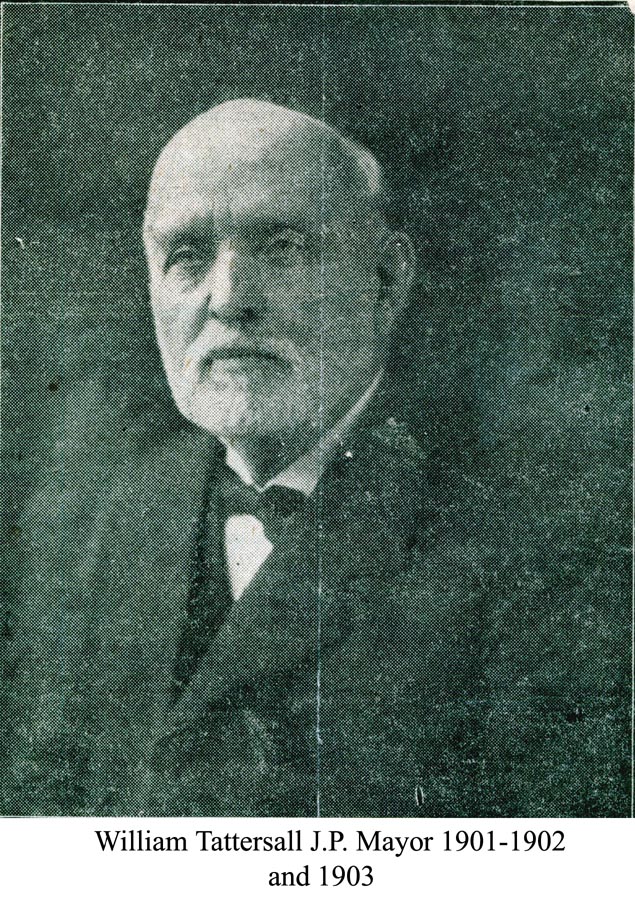
Mayor of Blackburn 1900-01
William Tattersall was born at Burnley on the 8th December 1839. His father was John Tattersall b.1809 and his Mother Betty Foulds, b.1809. They were married in 1831. Other children were; Benjamin, b. 1833, Rebecca, b. 1835, Susan b. 1837. John Tattersall died when William was about 2 years old. He was educated at Burnley until the age of 13, but not liking the idea of working in a factory, with the help of his old school master he managed to get a position in a Corn mill run by Messrs. J. Greenwood and Son’s, Burnley. At 18 he was sent to the work at the Blackburn branch on Mill-lane, later being transferred to their offices at Canal Wharf, Eanam.
When James Whitworth opened a wholesale province warehouse in New Market-street William went working for him. He remained with this firm until Whitworth moved to Liverpool in 1863. That year William went into partnership as a provision dealer with L. Hartley at 34 King William-street. This partnership continued until Hartley retired and moved to Southport in 1878 when William became the sole owner. William continued the business which was to become one of the biggest in the North of England. He was one of the original members of the Tradesmen’s Association this was succeeded by the Chamber of Trade of which he was their first president. On his 80th birthday in 1919 his employees presented him with a inscribed engraving.
William Tattersall was a staunch Liberal first becoming a Councillor in 1891 when he was elected unopposed as a representative for St. Mary’s holding this ward for three successive years. He was elected Mayor of Blackburn in 1900 and in 1901 as Mayor, he read the Royal Proclamation from the Town Hall steps when Edward VII became King. In the year of his Mayoralty the Boar War was being fought in South Africa and William started a war relief fund, in that same year he also started an Indian Famine Relief Fund. In 1902 William Farnworth was elected Mayor with William as his deputy, Farnworth unfortunately died on the 16th of April 1904, just five months into his Mayoralty, William, being deputy Mayor was re-elected and completed the Mayoral year. During this session as Mayor he started a movement for the early closing of shops on Saturday night, which eventually came to fruition. William was appointed a Borough Magistrate in April 1895, and was for over 25 years a member of the Borough Licensing Committee
William Tattersall was a devout Methodist and lay preacher, attending Clayton-street Church. He was for 50 years a worker at that churches Sunday school and at one time or another held every office within the church that a layman could. He was also an active member of the temperance movement. William married Emily Walton in 1874, she was the daughter of Ralph Walton a Sunderland chemist. They had five children, four sons Walton b. 1876, William b.1884, Norman b. 1886, John b.1889, and two daughters Edith Mary b. 1882 d. 1888, Emily b. 1892. His wife, Emily who also took an active part in Williams’s social and religious life, died in 1916.
William died on the 12th November 1929, just short of his 90th birthday, and was buried in the family vault at Blackburn Whalley New-road cemetery.
On the 23rd of June 1930 during a service at Queen’s Hall a bronze tablet was unveiled to his memory.
Walter Farnworth
Mayor of Blackburn 1902-16th April 1903
Walter was born in Blackburn on the 27th August 1865, the son of William Farnworth and Mary Ann Sefton. Before her marriage Mary had lived at Pemberton Clough, now part of Corporation Park. There had been two other children, William Sefton, died 1855, aged four and James Thomas also died 1855 aged one. William Farnworth, by profession, was a Chemist with premises on King William Street.
Walter was educated at Blackburn before moving to Giggleswick Grammar school, and then London University and later Owens College, Manchester. He entered his father’s business in 1884 and on his father’s death ran it until his retirement in 1896
In December 1897 he married Emily Agnes Lancaster, the daughter of Dr. Lancaster, of Grindleton, they lived at Beechwood house, Livesey. Walter was a keen gardener and Beechwood had plenty of land and greenhouses for him to carry out his hobby. He won a number of prizes in various categories for his flowers and in 1902 was the president of the Horticultural Society. In 1894 he gave an oil painting to Blackburn Corporation by the renowned cat painter, Madam Henrietta Ronner called “The Merry Party”, now in Blackburn Museum.
Politically he was a Conservative and was first elected a councillor for St. Stephen’s Ward in November 1893. Three years later he lost the ward to John Holt, but in the same month in a bye-election he was returned as a councillor for St. Michael’s Ward.
Sir Harry Hornby Mayor in 1901-1902 was invited to continue in the office for a second term but refused. On Hornby’s refusal Walter was asked to accept the office, which he did, taking the Mayoral office in November 1902.
On Thursday 16th of April 1903 Walter was being driven by his coachman John Venables from his home, at Beechwood, Livesey in a dogcart (a light horse-drawn vehicle) to Blackburn where, as Mayor, he was to take charge at the Borough Police court. When they reached All Saints Church on Bolton-road the horse, which he had only bought a few days previous, took fright and began to careering down the slope onto Darwen-street, Walter an experienced horseman took the reins from the coachman. Passing under Darwen-street Railway Bridge, the cart collided with a youth on a bike. The boy, 14 year old Arnold Brierley, was thrown some way into the road and was badly injured, needing six stitches in a head wound. The horse carried on and further up Church-street a wheel of the cart got caught in a tram line making it swerve and hit a parked cart. Walter Farnworth and John Venables, was thrown out, Venables fortunately landed on the horse which broke his fall. Walter landed badly on the road. He was lifted, unconscious, and carried into a shop. Two doctors who were in the area at the time went to attend to him. His wife was sent for and together with her brother came to the scene. Unfortunately Walter never regained consciousness and died an hour later. His body was removed to his house in the Horse Ambulance which, perhaps rather ironically, was a new one and only the previous week had been inspected by Walter who had said that it looked quite comfortable to ride in for any injured party.
On Friday morning an inquest into his death was held at the town Hall with a verdict of “accidental death.” The funeral was arranged for Monday 20th of April in the family vault in the Parish Churchyard—the parish churchyard, (now the Cathedral) had been shut for new burials since 1857, but vaults could still be used. It was the same grave where his father, mother and two brothers were buried.
John Henry Hartley
Mayor of Blackburn 1903-04
The eldest son of George Pickup Hartley, provision merchant, John Henry Hartley was educated at Blackburn Grammar School. After being connected with his father's business for some time he and his brother acquired Alma Mill, Audley, under the name of Hartley Bros. Other mills at Preston and Darwen were taken over later.
In 1902 Mr. Hartley entered the town council as a Conservative for Park Ward, and he held the seat until he retired in 1914. At the time of his election Alderman William Thompson, the leader of his party, was having difficulty in finding a chairman for the gas undertaking, the management of which was giving concern. He at once accepted that position and held it throughout the whole of his council career, including the period of the gas strike in 1914.
After he had been on the council twelve months, he was elected mayor, declaring that it was every man's duty to devote some of his time to public service.
A generous supporter of the Church of England, Mr. Hartley died at his home, Beardwood Bank, Preston New-road, in August, 1942.
by George C. Miller
James Kay 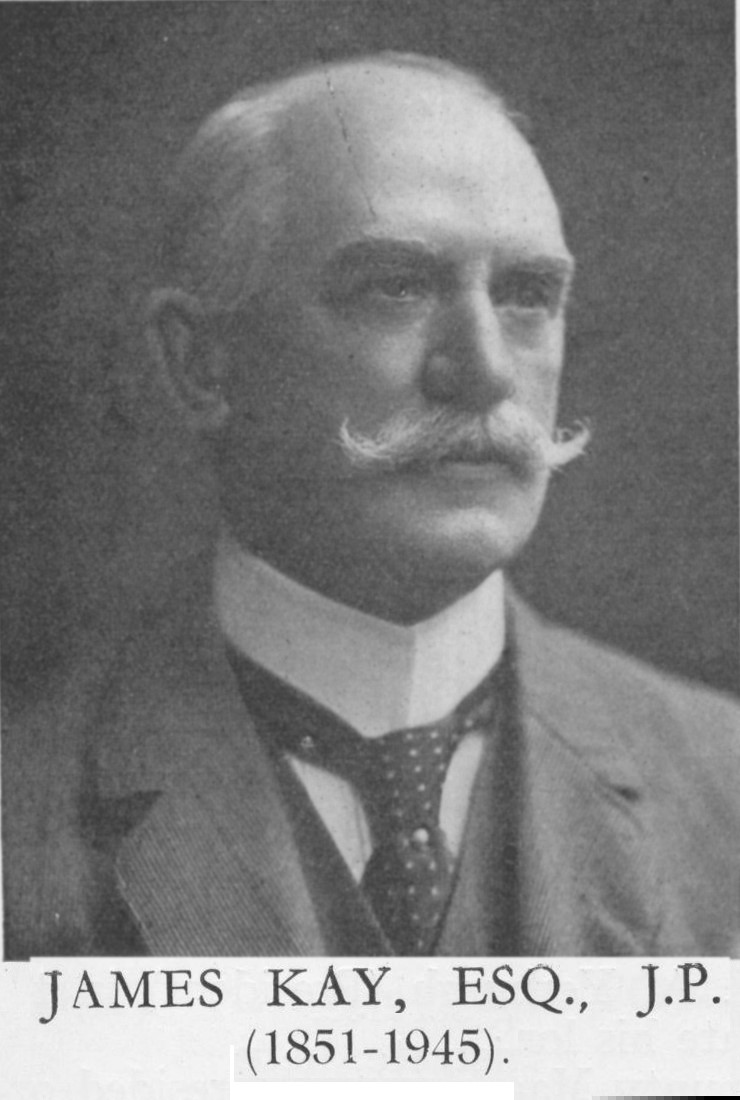
Mayor of Blackburn 1904-05
James Kay was born in Preston on the 5th September 1851. Together with his father, William, and his two elder brothers they came to live in Blackburn in 1855. The young James was for a short time a scholar at Cheethams Academy, Bank top, and later John Garstang’s school in Paradise Street. He started his working life at Dickinson’s foundry where his father and both his brothers were employed.
His father then started a cotton waste business on his own account - it was located in a room on Clayton Street. Later he built the Johnston Street Waste Works, then he purchased Oxford Mill and started the business of engine waste manufacturer with the three sons being taken into partnership. When William senior retired, James and his brother William took over the business - the two brothers also had two cotton mills one in Chadwick Street, Blackburn and Kem Mills Whittle-le-woods. James was to become Chairman of Messrs. Dickinson and Sons, and also Messrs Willan and Mills’s Loom makers.
His wife was Mary Jane Kay, nee Parkinson, who was born in 1857- she was the daughter of T. R. Parkinson. James and Jane were married at Chapel Street congregational Church on the 8th of April 1880 were one of the first couples to be married in the new church. They had three children, all girls; Florence Parkinson, born 1882, Hilda, born 1884, and Ethel Brindle born 1891.
On the occasion of their Golden wedding in April 1930, they distributed £3,000 to various charities, £2,000 of which was an endowment for two beds at the Royal Infirmary.
The family were Congregationalist and attended Chapel Street Church, Living at 76, Preston New Road before moving to Heathfield, on Meins Road, Blackburn. James was a governor at Blackburn Grammar School, a manager of the Savings Bank for 25 years, a Commissioner of taxes also for 25 years and a former chairman of Blackburn Liberal Party. He enjoyed shooting, playing golf and was fond of music. He had been, at one time, a mentor of the old St. Cecilia Society.
James was first elected a Liberal councillor to St. Paul’s ward in 1889, serving three years. In 1904 he was re-elected for St. Paul’s ward resigning in 1915 and in October of that same year he was made an Alderman. He was made a J.P. for Blackburn in December 1900 and also held the same post for the county. In 1903 he entertained Lloyd George at his home when he visited the town to speak at a Liberal demonstration.
In 1904 he was unanimously elected the Mayor of Blackburn and as Mayor in September 1905, he entertained Princess Louise the Duchess of Argyll when she came to Blackburn to unveil the statue of her mother Queen Victoria on the Boulevard. In 1910 he was the deputy mayor and in May proclaimed George V the King.
The work which gave him the most pleasure right up to the end of his life was to do with the Royal Infirmary and for 40 years he was a member of the Board of Management - 23 years of which he held the office of chairman. In 1935 a ward at Blackburn Royal Infirmary was opened by Mrs. Yerburgh and named The “James Kay ward” He offered his house, Heathfield to be used after his death as a convalescent home for patients who had been treated at the Infirmary however it is not clear whether this actually happened. Heathfield did become a private catholic school for young children.
His wife died on Monday 13th January 1936 at their home, Heathfield, Meins Road Blackburn aged 77. A stained glass window to the memory of his wife was unveiled at Chapel Street Congregational church in July 1936 by James. He died on Monday 21st May 1945 aged 93 at his home Heathfield, Meins Road.
Janet Burke
Franklin Talbot Thomas 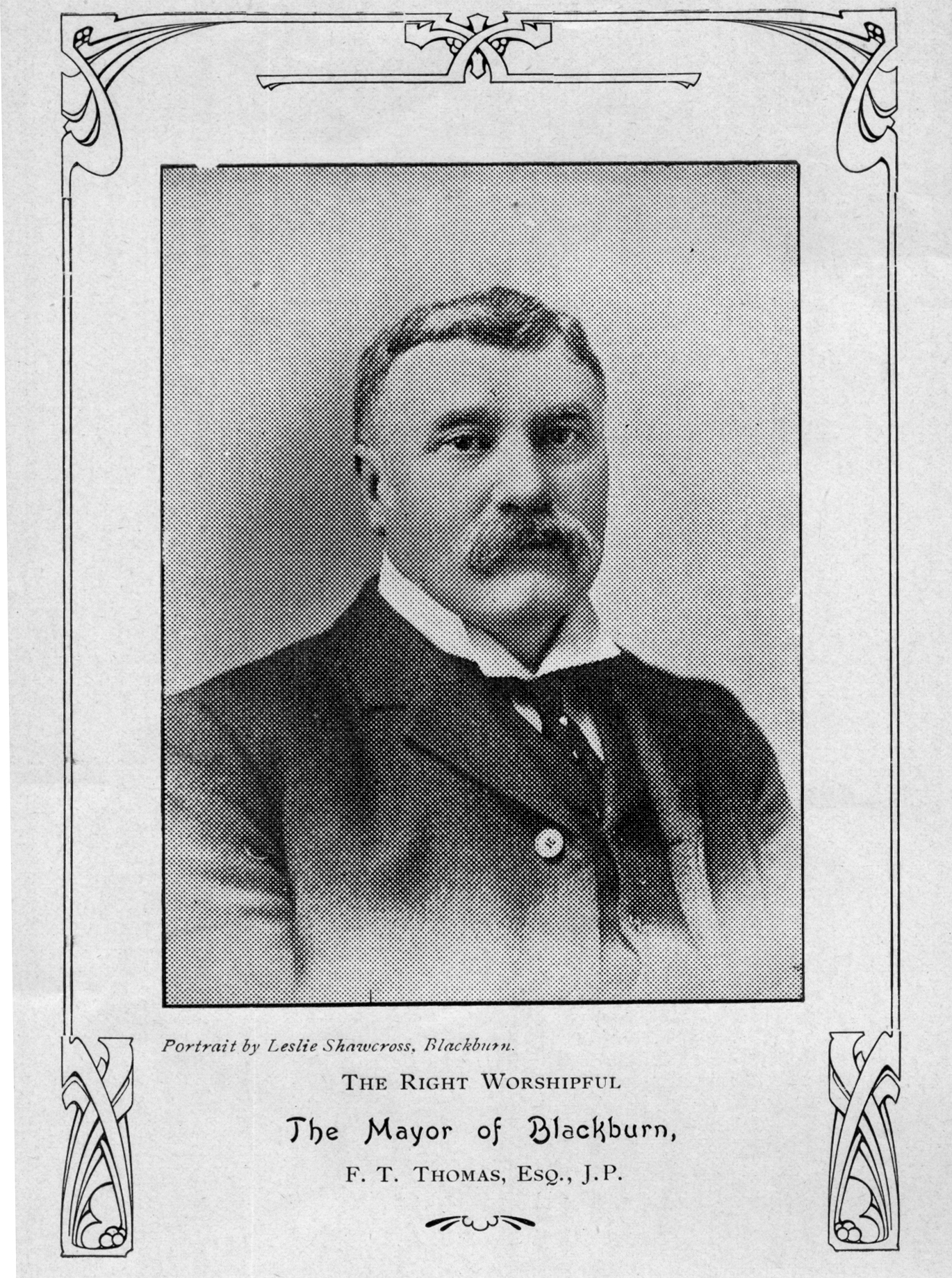
Mayor of Blackburn 1905-11
As I write, the question of town-planning is again very to the fore, and in this connection it is interesting to recall that a select committee of Blackburn town council proposed to sell the town hall. This was in furtherance of a scheme advocated by that forthright old Blackburnian Luke Slater Walmsley, writing under the pen-name of "Civicus." proposed, on the area bounded by King William-street, Northgate and Town Hall-street, to erect a new town hall, public hall and municipal offices, and in 1899 he went so far as to produce number of imposing architectural drawings showing the prop edifice, surmounted by a massive gothic tower, presenting a pinnacled facade towards Northgate.
It is now a matter of history how negotiations for the dispel of the present civic headquarters to the government as a General Post Office were begun. The two parties failed to reach a went, however, and subsequently the Darwen-street site was chosen by the postal authorities. Thus, to use the words of a contemporary chronicler:
"a building which makes no pretensions to architectural beauty erected, without the convenience of the public or the wishes of the corporation being considered at all."
This somewhat high-handed government action had a startling sequal. When the new G.P.O. was ready for opening, intimation was given that Mr. Sidney Buxton, the Postman General, was willing, if asked, to perform the opening ceremony. But he had reckoned without Blackburn's leading citizen. His worship the mayor, Alderman F. T. Thomas, firmly declined to offer any such invitation or to take part in the proceedings, which consequently were of a very perfunctory nature.
Born at Oxford, Mr. Thomas joined his father in the business of a cabinet-maker, which the latter established in the market place, when he came to Blackburn in 1861. Eventually his son suceeded him and carried on the business for over 20 years. He entered public life at a time when most men would prefer to shake off the burden of office, being sixty years of age when he took his seat as mayor in 1905. Energetic and businesslike, during his six years tenure of the mayoral chair he established several records. Besides being the only citizen ever to hold the office so long, a precedent was created by electing him as mayor before he had ever been on council, and then making him an alderman. He also had distinction of being nominated in his absence, owing to illness and he actually took the oath in his own home.
The Blakey Moor controversy was then at its acutest, and there were strong differences of opinion within the council, which only a firm and impartial chairman could control. When the late General Booth visited the town in July, 1907, the question of giving him a civic welcome was mooted. Apprehending that this would cause critical comment, Mr. Thomas steadfastly refused to yield to pressure and insisted that the visit would have to be purely a private ceremony. The affair created quite a sensation, and the mayor received many letters of congratulations on the stand he made.
As Blackburn's leading citizen, he attended the coronation when King George was crowned in Westminster Abbey in 1911.
Mr. Thomas died in October, 1913, aged 68.
by George C. Miller
Samuel Crossley 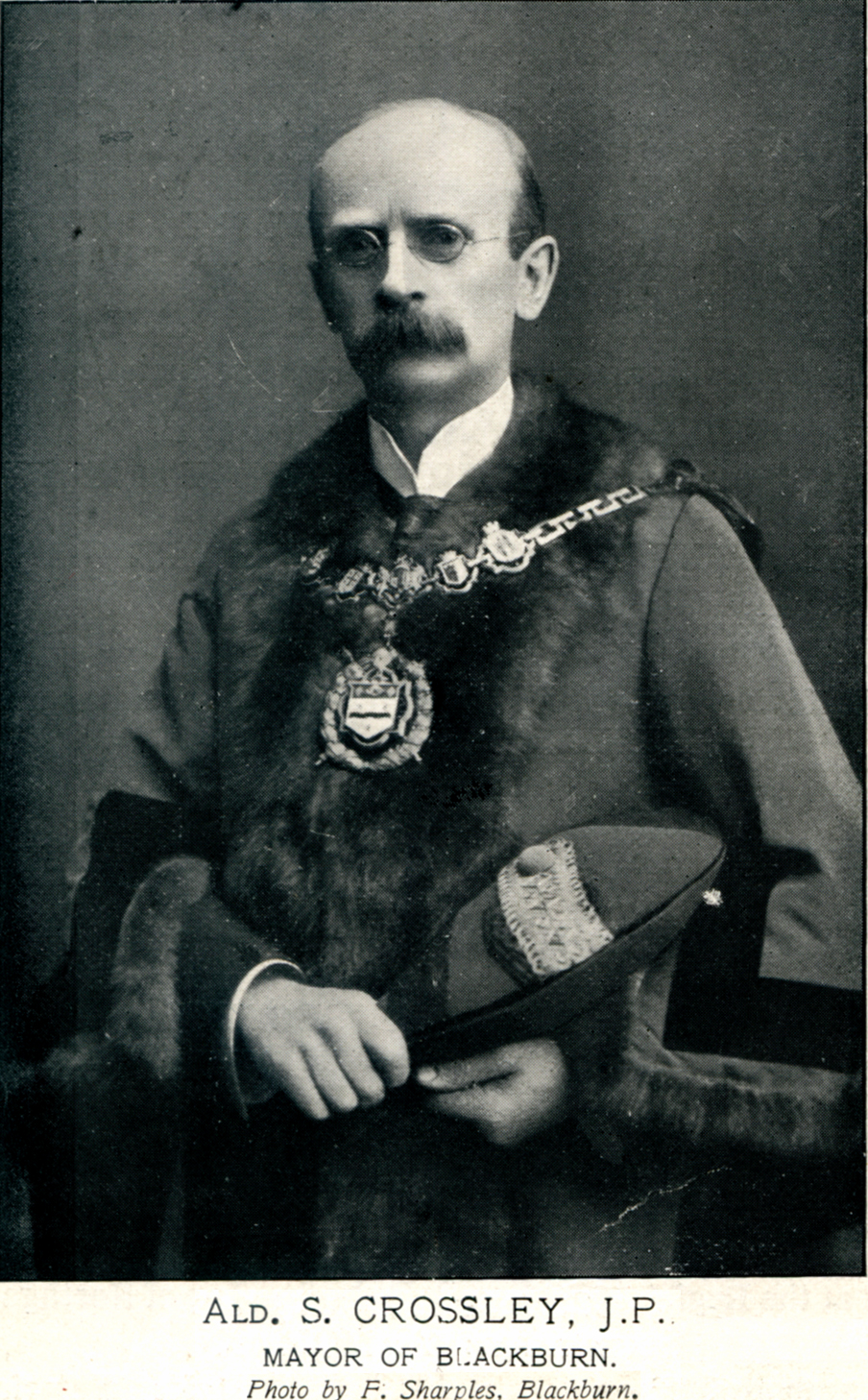
Mayor of Blackburn 1911-13
Samuel Crossley was a self-made man, who was admitted as a solicitor in 1884 and chose to practice in his native town. Whilst still a young lawyer he achieved considerable fame in connection with the dreadful gas explosion at the Crown Hotel in 1891, when he was called upon to defend the two brothers Robinson whose alleged culpable negligence was said to be the cause of the catastrophe. His magnificent pleading and the way in which he had prepared his case won the admiration of all, and had he desired, he could have been included among the leading advocates of that day. If, however, his renunciation deprived the bar of a brilliant member, it gained for the borough bench of magistrates a judicial mind.
On the town council his first appointment was as a member of the Free Library Committee, of which he was made chairman in 1894. He was elected alderman in 1907, and held two periods in office as mayor, from 1911 to 1913.
"All he has done during his mayoralty (writes a contemporary), is stamped with thoroughness. Like Kingsley he takes extraordinary pains to be accurate in detail, and thus in the public ceremonials, for which he is responsible, leaves nothing to chance. The success of Lord Morley's visit was due in large measure to this characteristic. The proceedings m the Town Hall (where Lord Money was presented with the freedom of the borough), worked with the precision of the stage, and his worship's references to his lordship were in book-like phrase, giving the just estimate of the visitor in the world of letters and to statesmanship without the fulsome word. The same perfection of arrangement was seen also at the opening of the Sessions house."
Alderman Crossley was a Conservative and did yeoman service for his party but, although trenchant in speech, he was always scrupulously fair to his opponents. His leader, Alderman William Thompson, had many admirable qualities but he was no speaker. Nevertheless, there were times when a set speech was an absolute necessity in defence of the policy of the dominant party, and on such occasions Mr. Crossley was indeed a friend in need. It is the business of a lawyer to talk, and he could speak both well and to some purpose whenever the need arose.
Among other offices he held that of governor of the Grammar School and of the Asylums Board, as well as a member of the local committee of the Navy League formed in February, 1908.
A bachelor, Mr. Crossley died on October 31st, 1915.
By George C. Miller
John Higginson 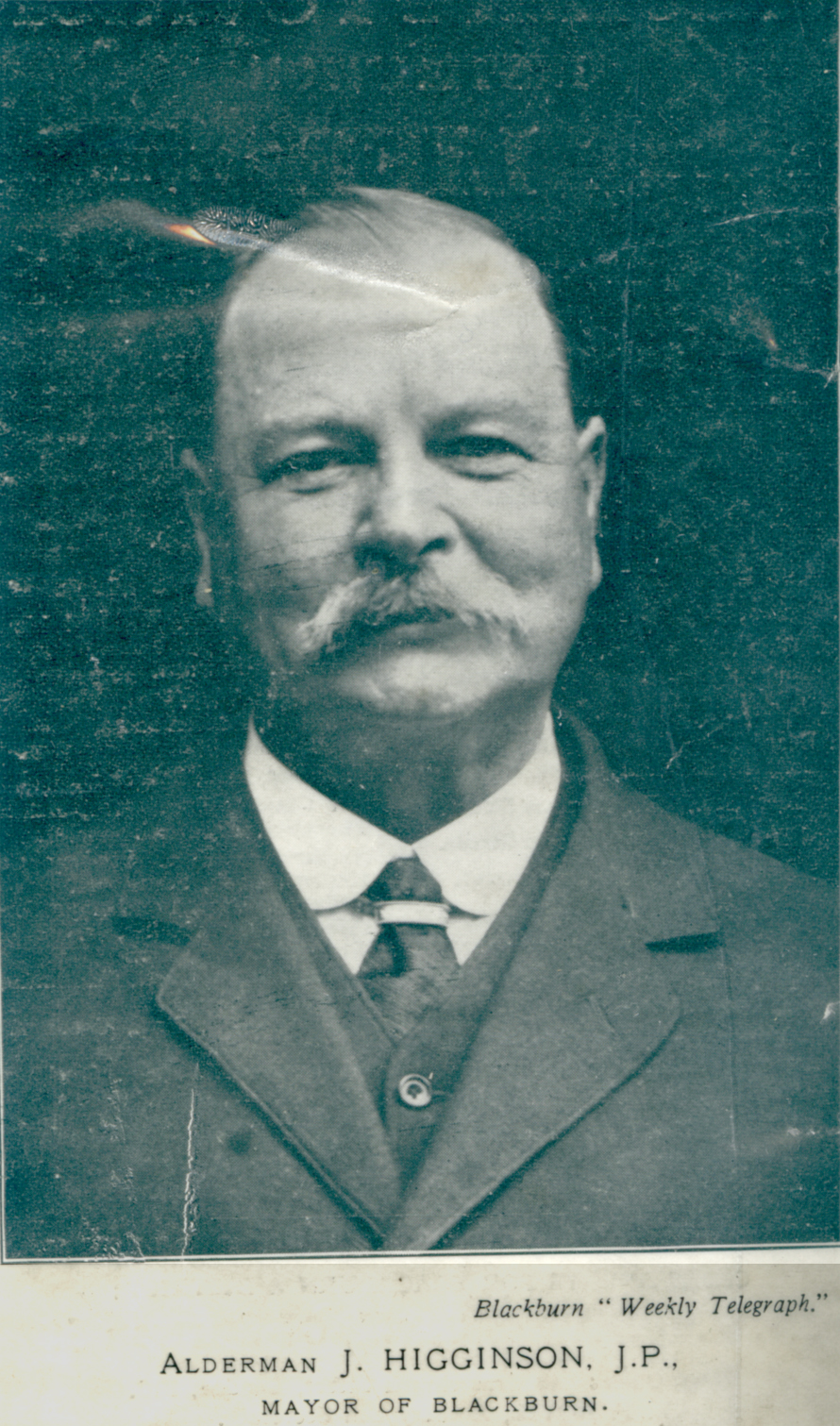
Mayor of Blackburn 1913-14
The son of a soldier, Major John Higginson will long be remembered in Blackburn for his association with local music, for he was one of the founders of the Meistersingers and took part in several of their operas. In addition, he joined the St. Cecilia Society in 1882, was a member of the Parish Church choir and in June, 1893, was appointed local representative of the Associated Board of the Royal Academy of Music and the Royal College of Music.
He was born in County Waterford, Ireland, in 1850, and choosing law for a profession, served his articles in Barrow-in-Furness, being admitted a solicitor in 1880. Two years later he came to Blackburn as managing clerk for Messrs. T. and R. C. Radcliffe, of which firm he became a partner in 1890. A lieutenant in the 3rd Lancashire Artillery Volunteers (later to become the 1st East Lancashire Brigade, R.F.A., T.F.), by the time of his resignation in 1907 he had reached the rank of honorary major.
Major Higginson entered the town council as representative of St. Silas' Ward in 1898, serving in that capacity until 1913, when he was elevated to the aldermanic bench. In 1910 he was made chairman of the Finance Committee, and in 1914 as mayor he presided over the last council meeting to be held in the old council chamber in the Town Hall. One of the highlights of his period in office was a children's fancy dress ball.
He died on July 14th, 1924.
By George C. Miller
William Thompson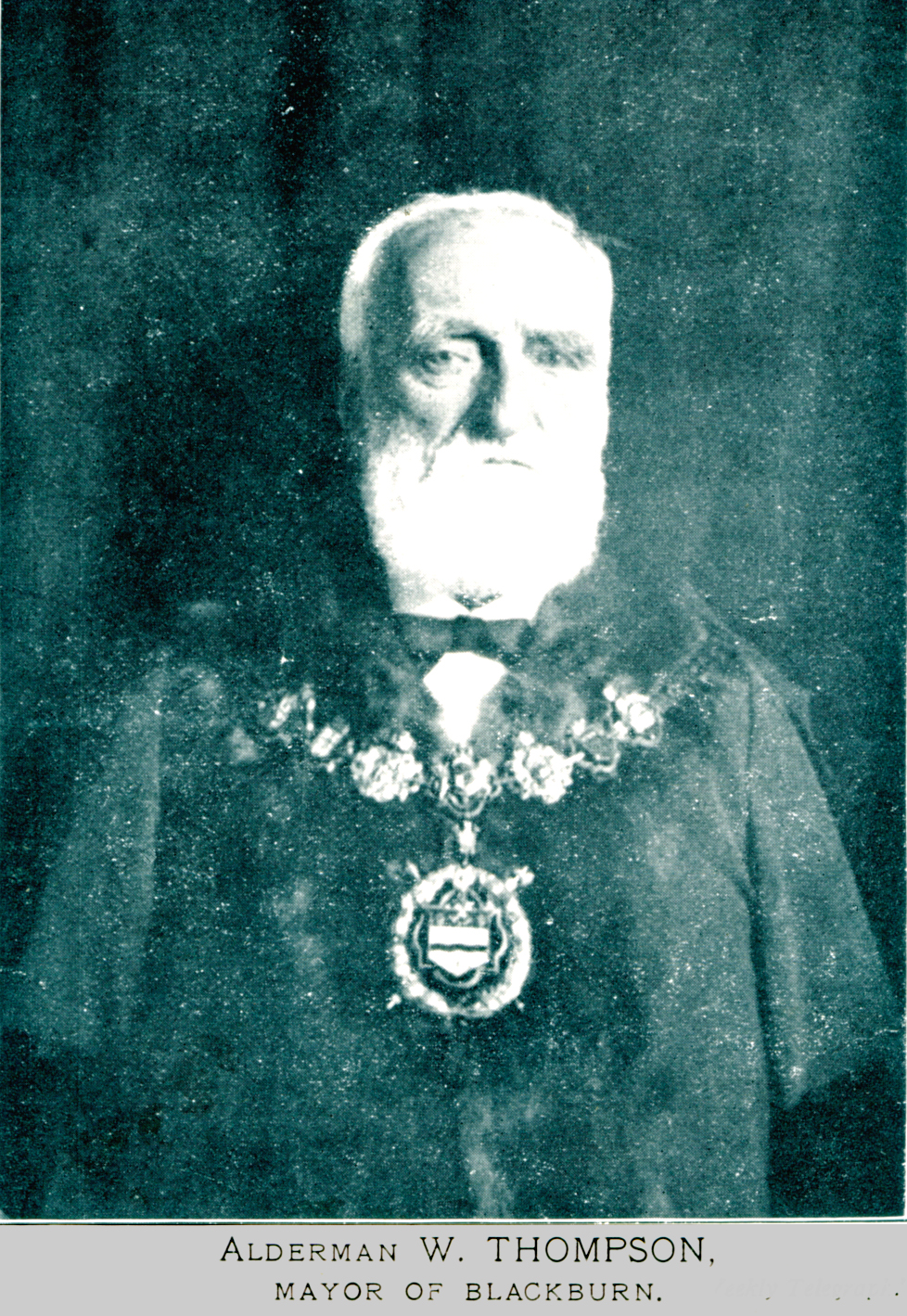
Mayor of Blackburn 1914-15 & 17
William Thompson was born on January 4th 1834, the third son of Richard Thompson, Esq., of Wellington Street St. John. William’s father was a builder and contractor who constructed the Manchester Waterworks at Woodhead and supervised the building of the Blackburn Daisyfield railway tunnel, as well as erecting a number of cotton mills in Blackburn.
He was educated at an establishment run by George Edmondson and when it removed to Preston, William also went there. He finished his education under the same tutor at Queenwood College, Hampshire. On finishing his education he served an apprenticeship as a chemist until 1856, when he left to work for his father, who at this time was occupied in building the Glasgow Waterworks. Later he went into partnership with his brother, Richard Thompson of Whalley as a cotton manufacturer. They had mills located in Padiham, Blackburn and Great Harwood. He built Park Bridge Mill, Grimshaw Park, in 1878-79 which was nicknamed “Heaven’s gate” due to its proximity to Christ Church.
On the 4th of December 1878 when William was 44, he married, at St. Paul’s church, Clara Roylance a 32 year old widow, the daughter of John Charles Forest. They had no children and lived on Wellington Street before moving finally to East Park Road. Clara, in later years was an invalid, but was heavily involved with St. Peter’s church and took a great interest in the sewing classes held there. William had been christened at St. Peter’s and kept a life- long interest in this church. He was fond of bowling and was a member at Blackburn Subscription Bowling Club on Shear Bank Road.
Politically William was a Conservative and his political life took off in 1880 when in November of that year he was made an Alderman in place of John Pickop - without being elected as a councillor. His elder brother James was a councillor who was elected an Alderman in 1866 and during the early 1860’s was leader of the local Conservative party, a role which William took on later in his political life. In his obituary the Blackburn Times say’s of him; “He never bore ill will and political feuds never interfered with personal friendships. He had a keen eye and a caustic tongue for the weakness of friend and foe alike.” For twenty years he served as the chairman of the Gas Committee, he also served on the tramways and electricity committees. William was once described as “the only dictator Blackburn ever had ” and to cross swords with him was dangerous as the opponent was often crushed. However, although an autocrat, his judgement was respected and he kept the friendship of even his fiercest opponent.
William was known as “The Mayor Maker” but would not accept the offer of taking up that position himself. It was not until 1914 when he was 81 years old that he finally accepted the Mayoralty. Again in 1917 on the death of the then Mayor Alfred Nuttall in August, William took on the office. He was also the deputy Mayor throughout the Mayoralty of Lawrence Cotton.
For his 80th birthday he was presented with a portrait in oils of himself, painted by Frank T. Copnall, of Liverpool and Sir W. H. Hornby Junior made the presentation. In 1906, when he retired from the party leadership he was presented with a canteen of silver cutlery and his wife was given a gold and diamond He finally retired from business altogether in 1909.
William died at his home, Rockwood, East Park-road on February 17th 1928 aged 93. He was interred in Blackburn Cemetery on Whalley New Road.
Janet Burke
Alfred Nuttall 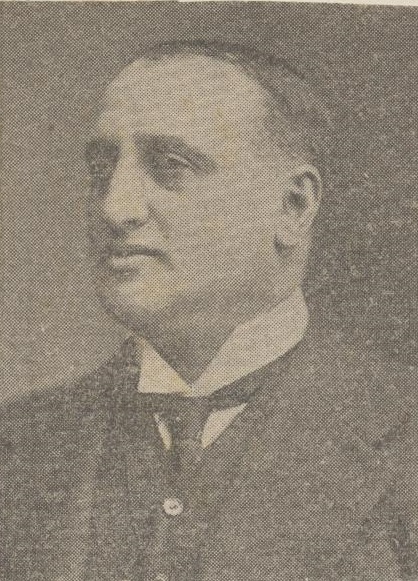
Mayor of Blackburn 1915-17
© Blackburn Times
Alfred Nuttall was born on the 28th of May 1863 to Ellis and Ellen – he was the eldest child and had three younger sisters. Ellis Nuttall was a draper in linen and wool, running an old established firm called Dickson and Nuttall which was situated on Church St. where they also lived. On the 1891 census report it also states that Ellis is a farmer. When the Thwaites Arcade was built Dickson and Nuttall moved to King William St.
Alfred was educated at Queen Elizabeth's Grammar School and later became one of the Governors. He started his working life as an apprentice draper in the family firm. Alfred married Sarah Troop in 1888 at the Parish Church and in 1891 at the age of twenty seven Alfred had become a draper and was now living on Dukes Brow. His parents had both died and his sisters Ann and Amy were living with the family which now included his young son Ellis, four months old.
Alfred must have had a good head for business for he speculated on some property in Little Harwood which included a brewery. The property was probably reasonably priced as it had come onto the market as a result of something called the “Whalley Frauds" The brewery had been failing but Alfred re-named it Lion Brewery and invested capital in the company, this proved to be a shrewd move and the business prospered. Shortly after in 1901 he bought for a figure said to be £200,000, Spring Vale Brewery in Darwen with 65 tied houses. He closed the Darwen brewery and invested a further £10,000 in the Lion Brewery to keep up with demand. Eventually the brewery became a limited company with Alfred a director. He was now living in a substantial property called Northwood on Billinge End Rd. Mr. Nuttall always upheld the legitimacy of the licensed trade as would be expected of the proprietor of a brewery and on one occasion at least, entered into the ranks of the controversialists. The passage of the Conservative Licensing Bill of 1904 sparked some heated correspondence for several weeks but Sir Robert Peel was not able to accept an invitation to attend a public meeting in Blackburn and Mr. Nuttall did not enter into a public debate.
Just before the acquisition of the Darwen brewery Mr. Nuttall managed to purchase land in Blackburn town centre known as the Exchange block of buildings. The cost was said to be £20,000 and having engaged an architect he proposed a big improvement scheme featuring a grand shopping arcade. For whatever reason this did not happen although the old Exchange was opened as a theatre of varieties but had limited success. In spite of this Alfred wanted Blackburn to be the premier shopping centre of East Lancashire and put forward to the Highway Committee of the Town Council a bold and comprehensive scheme to provide a series of wide and interlinked thoroughfares on the outskirts of the borough which would give facilities for inter-town road traffic without the need to come near the shopping centre. How far this would have gone is impossible to say as the outbreak of war stopped all public expenditure for some years to come. Surprisingly a similar scheme has now been adopted some ninety years later which demonstrates the foresight of this man, Alfred Nuttall.
Alfred Nuttall's public life began in 1893 when he was elected to the Town Council for St. Stephen's Ward. The election of 1896, three years later was memorable as the voting was tied and according to procedure the current mayor, Alderman R. T. Eastwood cast his vote in favour of Alfred. He retired after his second term but came back as a councillor for St. Michael's Ward in a by-election but was defeated after five years. Alfred was finally chosen to represent St. Silas' Ward which he held as long as he remained an elected member of the council. After the death of Alderman F. T. Thomas, Alfred was elected to fill the vacancy on the Aldermanic Bench. He was a very active member of the dominant party, the Conservatives, and placed on several of the most important corporation committees. He was Vice Chairman of the Highways, Health, Electricity and Tramways Committees and Chairman of the Parliamentary Committee, also, at the time of his death he was Chairman of the Gas Committee. The latter was in a very difficult position and Alfred was thought to be capable of putting this department on a firm footing being elected Chairman in November 1914. There had been problems for some time and on New Year's Eve the workers came out on strike. This dispute went on for seven weeks and Alfred as Leader of the Conservative Party was held responsible for the strike policy of the Town Council. They were determined not to give in to the strikers and imported free labour - Alfred was blamed for this. Feelings were so high that on two occasions demonstrators marched up Preston New Rd threatening vengeance. This type of action had not happened in Blackburn since the historic cotton riots of 1878 when Colonel Raynford Jackson's house was burnt down; fortunately the police were able to keep the demonstrators from Mr. Nuttall's house. In order to settle the strike the Town Council re-organised the apparently appalling state of affairs of the gasworks and Alfred was elected as Chairman. A scheme was planned which would have put Blackburn in the forefront of municipalities who owned their own gasworks but this required expenditure of some £85,000 and a loan from the Board of Trade was applied for. Although it appeared that this loan would be looked on favourably, the Treasury eventually refused and a good scheme was then not possible.
Mr. Nuttall had been made the Leader of the Conservative Party in 1911 but had not sought this, preferring to be a member of the executive. He also had no wish to represent the town in parliament. It was a difficult time as the party was divided on the subject of fiscal reform. Alfred took firm control re-organising as best he could so that they were ready for the next general election and also was able to bring Sir W. H. Hornby back on to the Advisory Committee. What would have happened had the war not intervened and a truce in party politics declared could only be a matter for conjecture. Alfred was now Chairman of the Central Conservative Club and a representative for Blackburn on the Central Council of the Lancashire Division of the National Union of Conservative Associations.
When war broke out in August 1914, Alfred was one of the original members of the War Relief Committee. Together with Colonel W. Sandeman of Church they scoured the areas around Blackburn in search of horses for the army - in the first fortnight more than 500 were brought in with about 50 wagons and motor lorries. Alfred was also part of the recruiting campaign and became chairman of the Military Tribunal. This was not a pleasant task and he admitted this however he was always conscientious in making his decisions
Mr. Nuttall was elected as Mayor in November 1915 following Alderman William Thompson and was also able to accept the office of Chief Magistrate in spite of his being the Leader of the Conservative Party. The truce between the parties allowed him to be considered neutral and relinquish temporarily the Tory Leadership. This was not unanimously accepted and three labour councillors opposed his election on temperance and trade union grounds. Their objections were easily defeated. At his re-election twelve months later the decision was unanimous and cordially agreed – the Council paying tribute to the excellent way he had carried out his duties. The Mayor and Mayoress were thanked for their time, effort and generosity. In 1915, as first citizen of Blackburn, Alfred Nuttall was followed to the Parish Church by his two sons, both officers in the British Army. The elder son Captain Ellis Nuttall was invalided home but the younger, his namesake Lieutenant Alfred Nuttall would soon be mourned when he died on service in Egypt. Ellis a MA from Oxford became a barrister. The elder daughter Kathleen trained at Guy's Hospital and became a nurse – her fiancé Mr. A. Morton Fyffe, a gas engineer was also killed in the war.
Alfred and his wife were very active in their civic duties and also fundraising. The new public halls on Northgate were the venue for two “at homes" in the first month of their first year of office – Alfred felt this was a good way of introducing himself and his wife and also the new halls, everyone was welcome. It was a great success as 2,300 people came and viewed the halls and enjoyed the hospitality of the Mayor and Mayoress. The Mayor's diary was full and he worked tirelessly for the war effort and the town. An organ was needed to complete the new halls and Alfred had made provision in his will for £3,000 to be given for this. It was to be a permanent memorial to the Blackburn men who had died in the war – Alfred's youngest son being one of these.
In his personal life Alfred was a great lover of horses and had a stud farm at Billington where he was a most successful breeder particularly with shire and hackney horses. His horses won prizes at some of the most noted shows and in 1913 he was President of Great Harwood Agricultural Show. He and other gentlemen invited the Royal Lancashire Agricultural Society to Witton Park in 1915 and this proved to be the most successful event in their history. Alfred was a director of Messrs R. And T. Clayton, cotton manufacturers of Rishton, a director of the Blackburn and District Incorporated Chamber of Commerce, a member of the Board of Management of the Blackburn and East Lancashire Royal Infirmary, a Manager of the Blackburn Savings Bank, a Governor of the Queen Elizabeth's Grammar School, a manager of St. Stephen's C.E. School and a trustee of the church, President of the Blackburn Property Owners Association and a borough magistrate being placed on the commission of the Peace in July 1902.
Alfred and his wife loved to travel and had visited most countries. They had been round the world four times, each trip taking about twelve months – the first one being in 1889/90. He was impressed by the advances made by the Germans with regard to business in our colonies and other parts of the world and felt that England could suffer from such keen competition unless they applied themselves. Pre-war Alfred many times entertained the old folk of Blackburn at Christmas and although it was his business, would never allow alcoholic drinks. Alfred had a rather abrupt manner which concealed a generous nature; his workpeople would sadly miss him as a very considerate employer. On the visit of the King and Queen in July 1913 Mr. and Mrs. Nuttall had the honour of being presented to them – Alfred also lent two gilt chairs, once the property of Louis Philippe of France for their Majesties but their visit was so brief they did not sit down!
Alfred Nuttall had been ill for some time and had gone to a nursing home in Harrogate where he became seriously ill. The news of his death was received with great sadness - flags were at half mast on numerous buildings. The Mayoress and her two daughters were with him at the end – his son Captain Ellis Nuttall on active service in France was unable to reach England in time. Alfred was the second Chief Magistrate of Blackburn to die whilst in office, the other being Mr. Walter Farnworth in 1903. So many people expressed their sympathy to the Mayoress and her family as Alfred had been greatly admired and appreciated throughout all sections of the town. Alfred Nuttall in his rather short life was the perfect example of an energetic and very successful man who shared his good fortune with the town and its people.
Lawrence Cotton 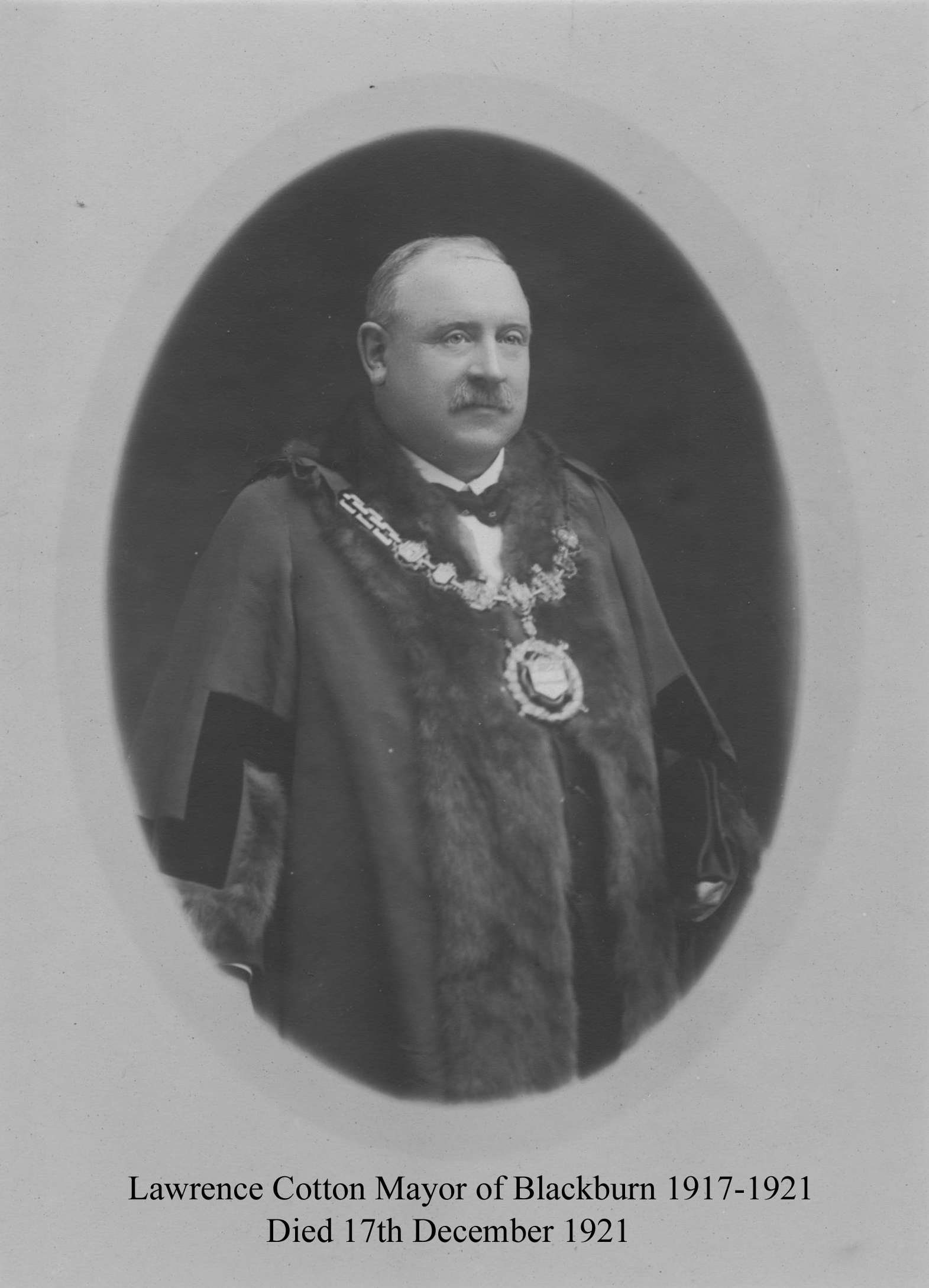
Mayor of Blackburn 1917-21
Although it was the old Blackburn Olympic Football Team, formed in January, 1878, some three years after the Blackburn Rovers came into existence, that first brought the Football Association Challenge Cup to the provinces, on no fewer than six occasions has the name of the latter been engraved upon it as a token of victory. The club was formed as the result of a meeting of two old boys of Blackburn Grammar School, John Lewis and Arthur Constantine in 1874, and their first ground was at Oozehead, near St. Silas' School. In 1877 they moved to Alexandra Meadows and ultimately, in 1891, to Ewood Park.
"The Olympic Team (writes their historian) was composed mainly of working men who had banded together as a kind of opposition to the Rovers, who were regarded as the gentleman's club. They defeated Old Etonians in the 1883 Final by 2-1, and in the next three successive seasons the Rovers repeated their performance, defeating Queen's Park twice and West Bromwich Albion. In the 1890 Final under the captaincy of Johnnie Forbes, the Rovers ran riot and defeated Sheffield Wednesday by 6-1 and in the following year the cup came to Blackburn again when the Rovers defeated Notts County by 3-1 at the Oval. The town had then to wait 37 years before it saw the F.A. Cup carried through its streets again and on this occasion in 1928, led by a Blackburn-born captain, Harry Healless, the Rovers won the first Wembley Final by defeating Huddersfield Town 3-1.
In 1891 Lawrence Cotton was appointed to the committee of the Blackburn Rovers and during his thirty years of active association this keen sportsman became successively director, chairman and president, in which several capacities he did much to further the interests of the team.
The son of John Cotton, he was educated at Blackburn Grammar School, entering the cotton trade in 1875. He commenced in business on his own account as a partner of the firm of L. and C. Cotton Ltd., Armenia Mill, and by 1899 the undertaking had also taken over Lower Hollin Bank Mill. He had a thorough knowledge of the trade and was for many years a large employer of labour in the town. In 1917 he accepted the invitation to become the borough's chief magistrate and for the ceremonial mayoral visit to the Parish Church in November the procession was the longest on record, a striking tribute to his popularity.
Generous to a degree, the objects of his bounty included Blackburn and East Lancashire Royal Infirmary, of which he was a life governor; Workshops of the Blind; Crippled Children's Home; Deaf and Dumb Society: Bent-street Ragged School; Wilpshire Orphanage; All Saints' Ragged School and Blackburn Convalescent Home at St. Annes. As one who spent a month in the latter recuperating from a serious illness, I can speak with feeling as to the admirable organisation and administration to which so many owe the recovery of health and well-being in that bracing resort.
Mr. Cotton supported the adoption by Blackburn of the ruined villages of Peronne and Maricourt after the first world war and wounded and disabled servicemen found him a generous friend. One outstanding incident in his term of office as mayor was when he auctioned a bale of cotton in the town hall for a sum of no less than £1,544. He was a churchman and had a long association with Christ Church, being at the age of nine a member of the junior Band of Hope, as well as a chorister.
By George C. Miller
Joseph Fielding
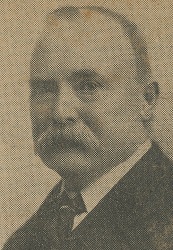
Mayor of Blackburn 1921-1922
(c) The Blackburn Times
Joseph was born on the 9th of October 1858 to Robert aged 24, a stonemason, and Elizabeth who was 21 years old. The family lived on Havelock Street and had two other sons; William a year older and Thomas a year younger. Sadly, Thomas died, aged only one, and Elizabeth died in June 1865, aged 28. Shortly afterwards, in 1866, Robert married again to Jane. In 1871, they lived at 4, Ciceley Street and Robert had become a Pawnbroker employing two men and two boys. At this point in time Joseph was employed as an apprentice stonemason. Ten years later the family were living at a pawnbroker’s shop 79-81, Riley Street; Robert had died and Joseph was now a Pawnbroker employing one boy. On the 6th of September 1881, aged 23, Joseph married Martha Ann Brooks, aged 25, and, by 1891, they were living at 1, Burlington Street with two sons Robert Randal and Frederick Cecil. The next census of 1901 records the family living at 42, Adelaide Terrace and have another son also called Joseph.
Joseph from an early age had first worked in a cotton mill, then become an apprentice stonemason before becoming a Pawnbroker. In those days many poor people had no way to borrow money and relied on pawning their belongings to get by and it was a lucrative business. It was reported in the Blackburn Times of the 14th May 1921 that he acquired several shops in Blackburn, Darwen, Preston and Blackpool including the store Neville’s on Darwen Street, Blackburn. He was the President of Blackburn Pawnbrokers Association for twenty five years, an old member of Blackburn Chamber of Trade and keen on the welfare of businessmen and assistants. Joseph was a prominent Freemason having been a past master of two lodges, honoured in East Lancashire, a member of the Royal Arch Chapter and the Knights Templar Preceptory, a member of the Greenbank Lodge of Oddfellows and he served on the Board of management of the Royal Cross School for the Deaf, Preston. He was also on the honorary board of Blackburn Savings Bank.
Joseph was a staunch Conservative, and, in 1899, became the representative for St. Stephen’s Ward. He was defeated at the next election but stood again and won. However, he lost his seat again and then put up in St. Mark's Ward which he represented from 1908 until 1914 when he was elected an Alderman. Joseph held many positions; he had been Vice-chairman of the Cleansing Committee on two occasions, Chairman of the Highways Committee - the largest spending department of the Corporation, and, after relinquishing that post he became Chairman of the Health Committee, Housing Committee, Unemployment Committee, Blind Persons Act Committee and Publicity Committee as well as being a member of several other committees. He was also a Borough Magistrate from 1917. Joseph had resisted many invitations to become the Mayor until 1921 when Lawrence Cotton, the Mayor at that time, died whilst in office. Joseph became the first Chief Magistrate to occupy the chair in the new Council Chamber. During his mayoralty Joseph’s distinguished service to the devastated towns of Peronne and Maricourt which were adopted by Blackburn after the war was recognised by the French Government who conferred upon him a Knighthood of the French Legion of Honour.
Joseph was forthright in all he did and a former Medical Officer of Health for Blackburn said Joseph had stated that “we appoint in Blackburn the best officials we can get. We leave it to them to run their departments, and if they don’t do it properly we sack them”. He worked closely with Sir Lewis Beard, one of the greatest Town Clerks this country has ever known and together they brought Blackburn to the forefront of British Municipalities. Joseph was a kindly man but no orator; his shrewd common sense was more than sufficient to win conviction. He was a great supporter of the maternity and child welfare movement and the Springfield Maternity Home was established during his chairmanship of the Public Health Committee. The efficiency of the Blackburn Public Health Department was a fitting tribute to his many years of active membership of the Town Council.
Martha, Joseph’s wife died in 1929, their two sons, Robert and Frederick, were involved in the family business. Joseph had retired from the Council after twenty nine years of service and was still active in his business. He died in October 1940, shortly after his eighty second birthday, The funeral took place in Lytham St. Anne’s where he had lived for some time and there were many representatives from the Council and the organisations to which he belonged.
Compiled by Janet Burke, June 2020 with reference to the newspaper obituaries held in Blackburn Library.
James Taylor Thomas Ramsey 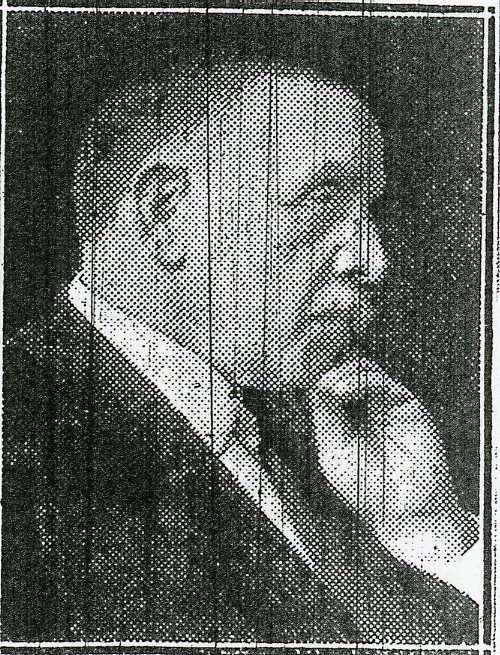
Mayor of Blackburn 1922-24
Born in Dundee, James Taylor Thomas Ramsey began work before he was ten years of age and many years of toil in the weaving shed, the mechanic's shop and the newspaper office lay between him and his goal, that of becoming a family doctor. Finally, however, he won a scholarship at Dundee High School and subsequently entered the Royal College of Surgeons at Edinburgh.
When he came to Blackburn in 1881, it was as assistant to Dr. Grime, whose surgery was in Water-street, and who was well-known as the local "Factory doctor," a duty he had inherited from the eccentric Dr. Skaife. At that time all prospective full-timers at the mill had first to be passed as medically fit by "th'owd Doctor," hence his name became a household word.
Here is a contemporary description of Dr. Ramsey as he appeared towards the end of last century. There were few townspeople who did not recognise the short, sturdy, frock-coated and top-hatted figure with the slow, stiff gait. He was a keen observer of men and affairs, often quick with incisive comment. That he was a strict disciplinarian many a defendant in the police court knew and his passion for accuracy and method was exemplified in the same sphere by the certain censure of witnesses who carelessly and wrongly read the oath. A prolific reader, he was never at a loss for an apt quotation. In some respects he was like the late Dr. H, A. Grime, known to a former generation as "Th'owd Doctor."
Dr. Ramsey was first elected as Conservative representative of St. Mark's Ward in 1896, he became alderman in 1908, was mayor in 1922-24 and retired from the Town Council in 1930. Both the Blackburn Scottish Society and the Dickens Fellowship knew him as their first president.
He died in May, 1937, aged 82.
By George C. Miller