
 Loading more
Page 5
< Back to page 4Proceed to page 6 >
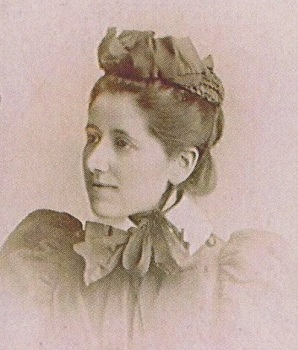
From Lancashire to China: A weaver’s tale
The story of Lucy Mellodey, a cotton weaver from Lancashire who, in 1899, swapped work in the mills for 28 years in China as a missionary with the Church Mission Society (CMS).
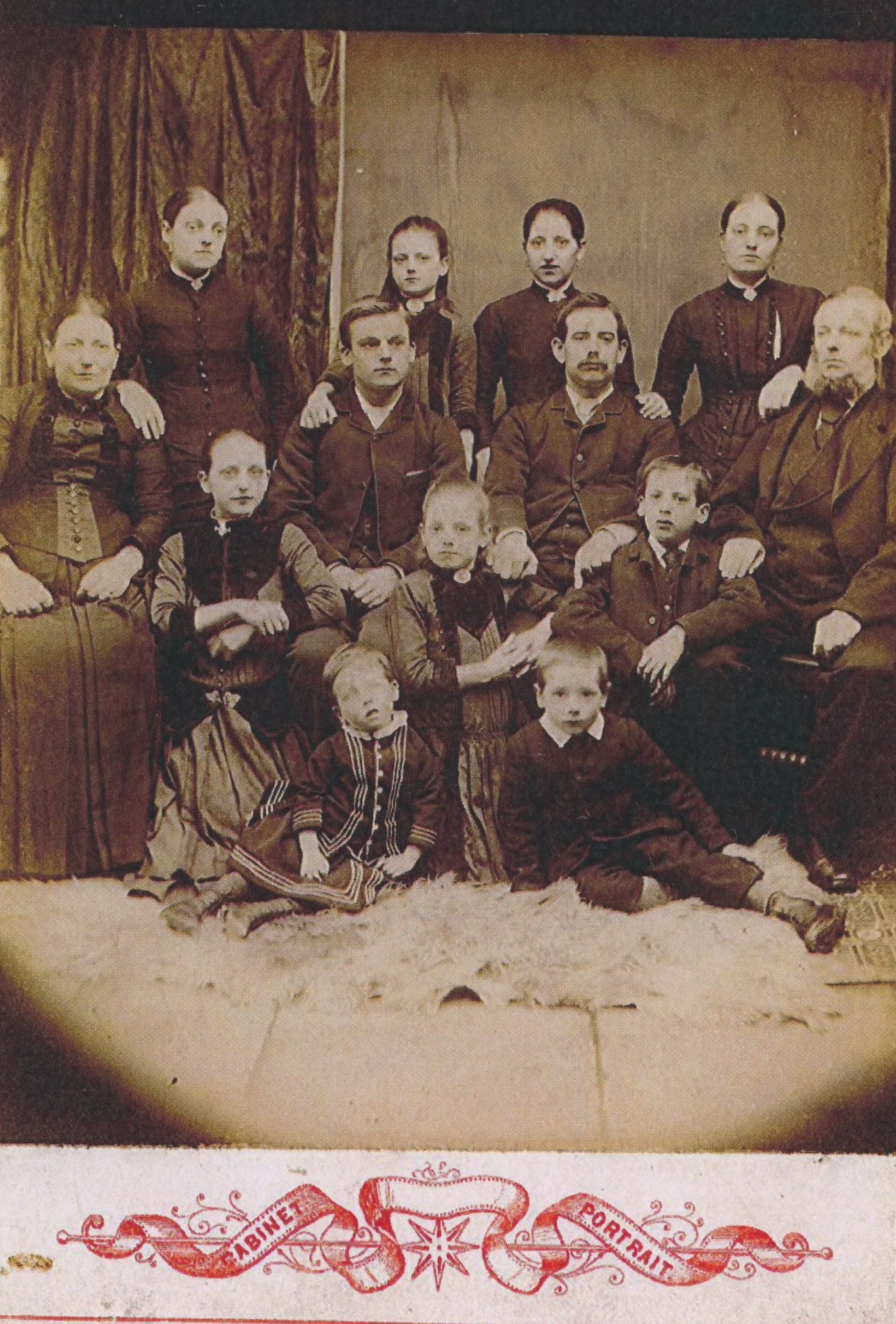
Lucy was born in Blackburn, 5 February 1870, the fourth of 12 children of Joseph and Jane Mellodey. From the age of 11, she worked long hours in the loud, steamy conditions of the mill and lived through the wage cuts, job losses, strikes and protests of the late 1870s and 1890s when soup kitchens were opened on the streets of Blackburn before the boom years of the early 20th century. She was also engaged as a Sunday school teacher.
In April 1896, the CMS launched a huge, three-year campaign in the run up to its centenary. High profile events and exhibitions were organised around the UK and overseas, and printed literature and artefacts used to promote interest in mission work and attract recruits. Lucy was one of 221 candidates accepted for missionary training during this period. In September 1896, she entered the first missionary training college for women in the UK, the ‘YWCA Testing and Training Home’, Chelsea ( now Redcliffe College ). In 1898, she went on to complete her studies at the recently established CMS ‘Highbury’ training home.
When Lucy sailed for China in October 1899, she embarked on a life of travel and experiences which few working-class women of the time had opportunity to pursue.
Adopting Chinese dress and language (as can be seen in the photograph below), her time was largely divided between city work and outreach in the beautiful countryside of Sichuan Province.
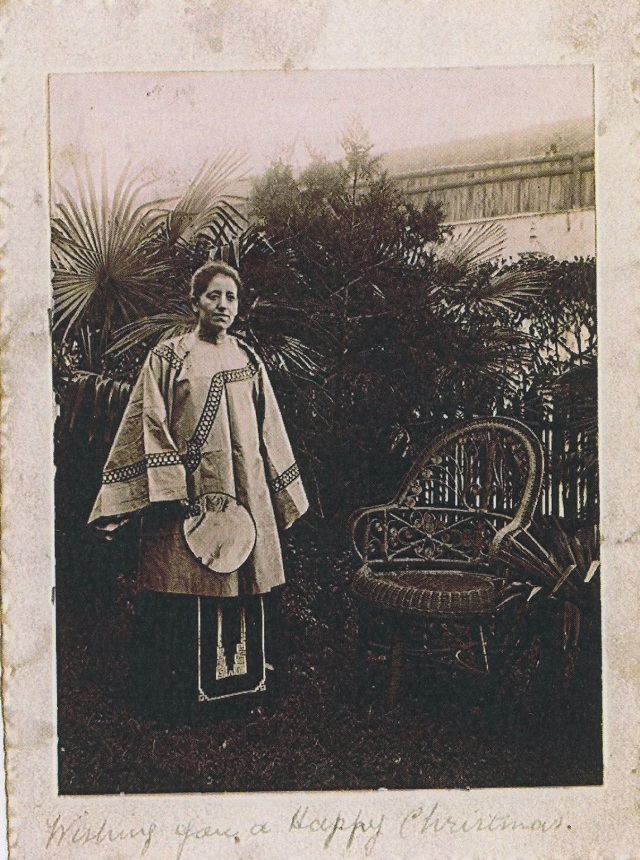
Although contrasting markedly to her routine-bound, Blackburn life, surrounded by family and the familiar, threads of similarity can be seen running through into Lucy’s life in China where she is immersed in teaching, welfare and evangelical work.
She arrived in China at a time of growing international and domestic tension. The Sino-Japanese War ( 1894-1895 ) was followed by drought, flooding and harvest failure alongside continuing concessions to foreign trade and property ownership.
Distrust and hardship helped foster the growth of the so- called ‘Boxer’ movement: anti-foreign protests led by the ‘Society of Righteous and Harmonious Fists’ resulted in the deaths of a number of missionaries and many thousands of Chinese Christians. The uprising was met with devastatingly punitive reprisals by foreign powers. Lucy saw the end of imperial rule, the establishment of the Republic of China in 1912 and the ‘warlord’ era of 1916-1928.
When, in 1927, she departed for England for the fourth time, she passed through Shanghai a month before the Massacre or (’Incident‘) of 12 April which marked the start of the Chinese Civil War. Prevented from returning to China by ill health, Lucy died in Lancashire 26 October 1930.
Text by kind permission of University of Birmingham Cadbury Research Centre which holds the Church Missionary Society Archive.
A major exhibition about Lucy and her work for the Church Missionary Society was held at the Cadbury Research Centre, July to October 2014.
Family photographs kindly supplied by family member Anne Wright.
Lucy's family donated a skirt to Blackburn Museum which she brought back from her travels to China.
William was born on the 26th June 1920 - he married and had a daughter before joining the RAF as a driver in the second World War. Bill was evacuated from Singapore to Java where, in 1942, he became a prisoner of war held by the Japanese. He and others were ordered to uncover a booby trapped ammunition dump which exploded; at the age of twenty one Bill was left blind, with no hands and a severely injured leg. Fortunately, at the Allied Bandung General Hospital run by Commonwealth and Dutch staff, a very talented Australian surgeon, Lieutenant Colonel Edward "weary" Dunlop, was able to save his leg and treat his other injuries and after four years in the prison camp in Java he returned home to Blackburn. It was not a happy homecoming as his wife had left leaving their daughter with her sister and the family haulage business had been sold. When his widowed mother was unable to look after him, Bill entered the St. Dunstan’s unit at Stoke Mandeville Hospital where he was re-united with a friend from the prison camp and others with similar disabilities. Finally, at Ian Fraser House on the South Downs the director, Air Commodore G. B. Dacre suggested that he should set up a new haulage contracting business and St. Dunstan’s provided him with an expert to teach him business management and book-keeping. Bill learnt to type and dial the telephone with his tongue and St. Dunstan’s offered a loan to buy the first lorry which brought his two younger brothers to join him in the business. The lorry was inscribed with the name "Wm. Griffiths" and ceremonially handed over to him by the Mayors of Blackburn and Preston in February 1947. The business ran until 1949 when haulage was nationalised.
Bill met a pre-war friend called Alice Jolly who encouraged him to attend club concerts and he had lessons to train his voice. Together they travelled all over the country entertaining people with their singing. He won his first competition - the Clifton Trophy for baritone solo, at the Southport Festival and first sang professionally at The Dome, Brighton in 1964. Bill also had become a leading light for the St. Dunstan's Charity and as a public speaker helped other ex-servicemen who had suffered similar difficulties. He also wrote books and as he became more well known a lot of servicemen often telephoned to talk over their problems and learn from his experiences. Bill's interest in sport began on the electronic rifle range at Ovingdean where he competed in the tournaments at the re-unions of handless St. Dunstaners and he won the trophy in 1963. In 1964, his name appears on the records as third in rifle shooting, he won the doubly handicapped swimming race, clocked 13.2 seconds in the 70 yard sprint and jumped 5' 9" in the standing long jump. In the 1969, St. Dunstan's sports week-end at Ovingdean, Bill came second in the doubly handicapped rifle shooting, clocked 12.7 seconds in the 75 yard sprint and jumped 6' 8" in the standing long jump and was named Disabled Sportsman of the Year. On December the 8th. 1969, Bill received his trophy from Denis Howell, M.P., Minister with special responsibility for sport at a dinner dance held at the Bloomsbury Centre Hotel in London. He was in good company with seven top sportsmen and seven top sportswomen headed by Tony Jacklin and Ann Haydon Jones.
In 1972, Bill appeared on the television programme "This is your life" presented by Eamonn Andrews, and, in 1977, Bill was awarded the M.B.E. for his tireless work and service to the community. Back in Blackburn. before more than a thousand guests, Bill unveiled a Royal British Legion sheltered housing scheme in Mill Hill named in his honour as a tribute for the work he has given to the British Legion over the years. As part of the celebrations for fifty years of peace Bill was honoured by his home town with the award of the Civic Medal. This was presented by the Mayor, Councillor Maureen Bateson, in 1995 and Bill said how grateful he had been for the people of Blackburn who had given him such warmth and security on his return home from the war.
The above information can be found in articles in the St. Dunstan's Review of January 1970, the Lancashire Evening Telegraph dated the 12th. and 16th. June 1980, the 6th. March 1981, the 13th. September and 3rd. November 1995 and in the Times dated July 27th. 2012.
Compiled by Community History Volunteer, Janet Burke, published January 2022.
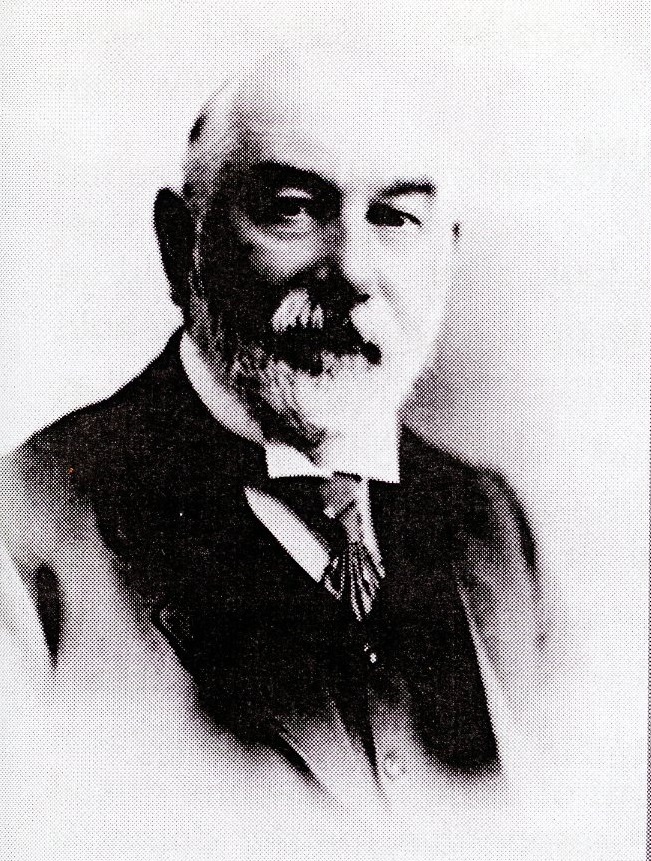
James Dixon
James was born in Annan, Scotland in 1855. At sixteen he was an apprentice in his father's joinery business and, like his family, was a committed Christian and a keen Sunday School teacher. James moved to Carlisle for work where he continued his Sunday School teaching and then at the age of twenty two he came to Blackburn. Although a Scottish Presbyterian he visited as many churches as possible before deciding to attend St George's on Mount Street. Again he became a dedicated Sunday School teacher where he saw the poverty of many children. The Band of Hope was also an organisation close to his heart - it was a temperance organisation aimed at poor working class children who were required to take the pledge of abstinence but were rewarded with a variety of enjoyable activities and days out at the seaside. When James came to Blackburn there was no Band of Hope in the town so he suggested one should be set up and was then appointed the secretary. He spent some time out of work but eventually was again employed by Marshall & Dent Joiners and Builders, of Limbrick where he had worked when first coming to Blackburn. James also continued his own education with courses and examinations in building construction, geometry, mathematics and strangely animal physiology. He finally was able to bring his mother to live in Blackburn having found a suitable house at 23, Blackburn Street.
James was his church's representative at a Sunday School conference held at Bury and took his role seriously. He was becoming most concerned about the levels of poverty and deprivation in a densely populated town like Blackburn. Before 1834 the poor had been supported through Parish Relief Funds paid for by taxing the wealthier residents of the town but with the introduction of the 1834 Poor Law Amendment Act poor people could only get assistance by abandoning their homes and entering the workhouse. It was an old attitude that the poor were poor through their own fault and in the workhouse families were separated, poorly fed and worked very hard. It was so unpleasant that people would do anything to avoid being sent there. In 1880 there was a formal meeting of Sunday School teachers where it was decided to set up a Ragged School where basic education could be provided as well as practical skills. There were over two hundred such schools throughout the country. With his friend John Thomas Walkden they helped to raise enough money to set up the school in a plumbers shop on Leyland Street. When the school opened on the 22nd October 1881 one hundred and fifty children turned up to be served with coffee and buns - even more came the next day. Fund raising had to be started in earnest so that hot soup, bread, coffee and treats could be provided as well as clothing, education and religious instruction. From a hundred and ninety eight children on the first evening to three hundred and sixty just three months later it was clear that larger premises would be needed. Eventually sufficient funds were raised for the needs of the four hundred and fifty children who wanted to come to school.
It soon became obvious that some of the children were not just poor but in fact homeless so although James and his colleagues were doing good work they needed to consider providing more permanent accommodation for these children. James also realised that what he wanted to achieve would mean he needed to work at it full time and so gave up his job as a joiner. Early in 1884 a meeting was held at the Town Hall to discuss establishing a home for boys to be known as a Boy's Rest. A house at 53 Feilden Street was set up as a Boy's Rest which opened in April and in September a similar house was opened as a Girl's Refuge at 1, Paradise Terrace. Now that the two homes were open there was a need for larger amounts of funding so, to add to the donations of more wealthy patrons, the Ragged School boys raised money on the street by shoe blacking and selling Christian magazines. At an annual meeting James reported that over eight thousand free meals had been given to hungry children, five hundred and twenty garments, one hundred and sixty pairs of clogs, one hundred and eighty two tickets for food given to the sick and the poor, four hundred and eighty eight tickets for lodgings, a Christmas dinner for two hundred and fifty children, breakfast on New Year's Day for eight hundred children, one thousand Ragged Scholars had a holiday in the country, four hundred and fifty poor children had a day's trip to the seaside and one hundred and thirty two boys and girls had passed through the Boys Home and Girls Refuge.
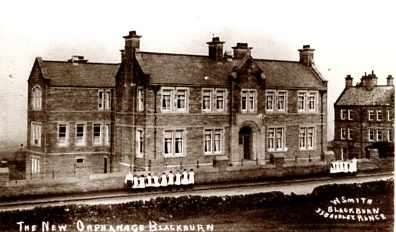 Blackburn Orphanage
In 1889 a site at Wilpshire was finally chosen as the site of the new orphanage and a group of fifteen trustees set up. They included successful businessmen as well as James Dixon, John Thomas Walkden, Thomas Hart and Doctor William Pollard. The members of the orphanage had to be Protestant, living within ten miles of Blackburn Town Hall and to have donated twenty five pounds or more. There had been questions about Catholic children and it was resolved that they would be referred to the relevant Catholic priest before agreeing to admission.
After much deliberation regarding the design of the building on August the 31st 1889 the foundation stone was officially laid by the Mayor John Rutherford. The total building cost had been estimated at three thousand pounds but this had risen to nearer five thousand pounds and of course there would be the additional costs of furnishing. James never lost heart and important Blackburn people gave their support. Early in 1891 an eight page pamphlet was published detailing an impressive catalogue of the work achieved and designed to encourage readers to give donations of their own accord. By this time a date was being planned for the opening of the orphanage but also as the friendship of James and Jane McLellan had grown during their shared work and ambitions for the orphanage, they married on the 17th March 1891. They were officially appointed to be superintendent and matron of the orphanage with James also the general secretary - their remuneration was a joint £75 and board. Staff were also appointed and a long list of rules and regulations drawn up for the welfare and life of the children. On August the 5th.the orphanage was officially opened with twenty three boys and ten girls.
James kept very detailed records of events, inspections and all the relevant needs of the orphanage and Jane was responsible for the smooth running of this extended family. During the thirty five years that James was superintendent there had been around one hundred and sixty cooks, laundresses, seamstresses, yardsmen and other assistants who had ensured that the children were properly cared for. Two years after the orphanage building was opened James was keen to provide another building of the same size and extent for the girls - there was plenty of available land but no money. In November 1893 Isabella the first daughter of James and Jane was born. Else Muriel their second daughter came in March 1895 followed by Gertrude in 1898.
The newly extended building was opened in 1896 but it was soon clear that the new building was needed and in 1902 it was decided to go ahead with this project. After two years of fund raising the foundations of the girl's building were dug and on July the 27th 1905 it was formally opened. A lack of money had never held James back and he had long seen the need for more help for disabled children so in 1906 a Cripple Committee was formed as part of the Ragged School work. It became clear that home visits and day trips were not enough so in 1907 a house on Heys Lane was purchased and used as a full scale convalescent and respite home.
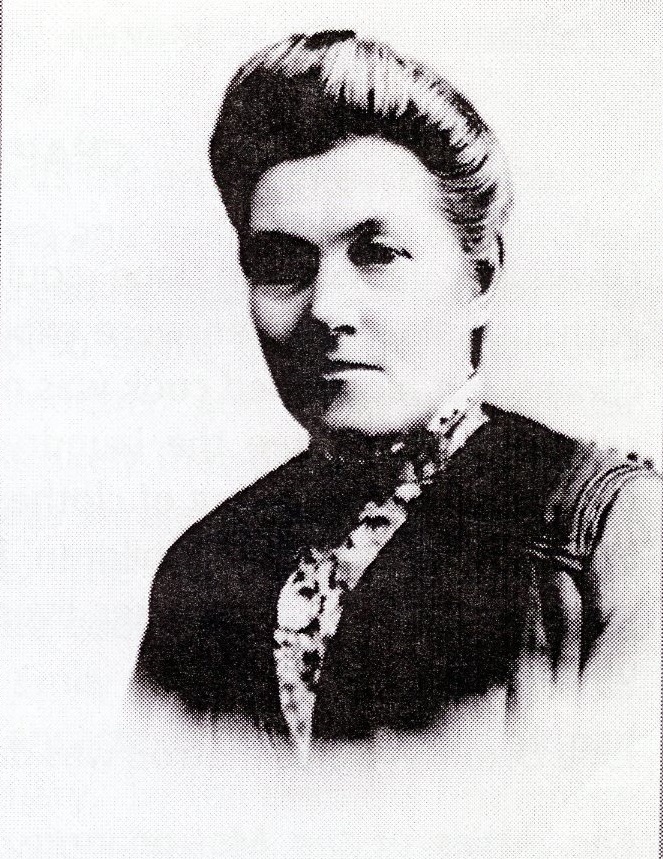
Jane Dixon
1916 saw the celebration of James Dixon's sixtieth birthday and his and Jane's silver wedding when they were presented with their portraits and acclaimed for the thirty years of dedicated work for children. In 1919 James's daughter Elsie Muriel married and gave birth to a boy in 1921 but tragically, at the age of twenty five, she died three weeks later. Elsie Muriel had been a great help as assistant matron at the orphanage. In 1926 Jane's health deteriorated and in 1928 James decided that they should move from the orphanage to a smaller house on Walden Road where Jane passed away six months later. James continued his work where ever he could and finally his youngest daughter Gertrude and her husband came to live with him, In 1935 James celebrated his eightieth birthday and was presented with a clock from the children and staff of the Orphanage and a wireless set from the Orphanage Committee. In reply James told the story of how the orphanage was founded in 1886. "His whole dream had not yet been fulfilled, but much had been done and the orphanage had done a noble and wonderful work"
In 1936 James passed away in the Jubilee year of the Orphanage which he had founded and cared for since 1886. An oak tablet was unveiled by Mrs. Yerburgh with the text "His energies were devoted to any duty in which he could serve God and his fellow men" The following year two beautiful stained glass windows were unveiled at the Ragged School dedicated to the memory of James and his friend and colleague John T. Walkden.
Much of the above information is from articles in the Blackburn Times dated October the 21st. 1931 and July the 25th 1941 and from the book "James Dixon's Children" by Melanie Warren.
Images of James and Jane from the book "James Dixon's Children" by Melanie Warren.
Image of the Orphanage from CottonTown.
Janet Burke
Toafiq was born in April 1975 and educated at St. Wilfrid's School, Blackburn. On leaving in 1992 he worked firstly for Blackburn Council and then H.M. Customs and Excise. However in 1997 whilst working in the customer relations department of the Halifax Building Society in Blackburn, he saw an advert for a job in the Foreign Office and having applied was accepted. In 1998 Toafiq was invited to Buckingham Palace by the Queen to be presented with an award to mark his outstanding achievements at work as part of a scheme to reward promising young adults in various fields. He initially served as a diplomatic service officer concerned with the Middle East peace process dealing with public queries, ministerial letters and explaining government policies. He was working in Pakistan in 2001 where he met many of the important cricketers of the day including Imran Khan, now a politician. By the end of that year he and his family were set to go to Lagos, Nigeria, for his next posting. At that time Jack Straw was the Foreign Secretary and also Blackburn's Member of Parliament and Toafiq had got to know him quite well. He had to learn the Yoruba language from scratch before arriving in Lagos and was also able to speak French, Gujarati, Hindi, Kutchi, Memon and Urdu with a basic understanding of Arabic and Bangla. In 2008 Toafiq was the Head of Consular Services in Bangladesh.
From September 2015 to 2017 Toafiq was the Deputy High Commissioner to Cameroon based in Yaounde with responsibilities covering Chad. Equatorial Guineau and Gabon. As a career diplomat Toafiq dealt with a full range of UK objectives and as in his previous postings led in crisis management and managed a range of portfolios covering aviation security, counter terrorism and immigration with consular and visa management. He became Private Secretary to the UK Trade and Investment (UKTI) Chief Executive where he worked with senior stakeholders to ensure success for UK businesses in international markets. Toafiq has been Chair for the FCO's Minority Action Group (1998) and continues to take a leading role with the FCO's diversity agenda to the present date. In October 2017 he became 1st. Secretary (Head of the political section) - British Embassy in Doha and from 2018 is a member of the Qatar-UK Alumni Network Board.
Toafiq known as Toff is married with three sons and there is no doubt that there will be more to tell about his career in the future.
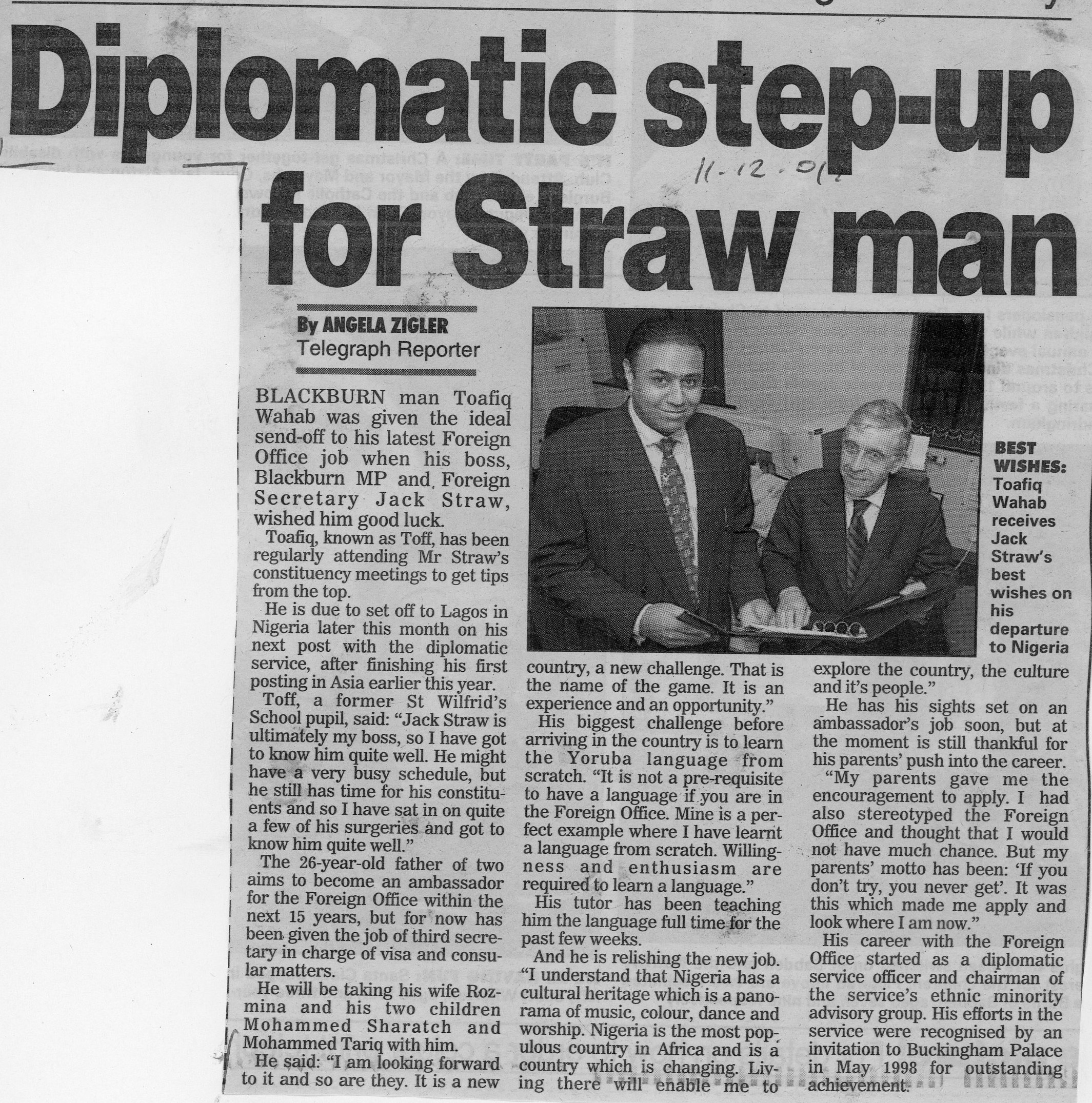
Article from the Lancashire Evening Telegraph of January 11th 2001
Much of the above information is from articles in the Lancashire Evening Telegraph dated the 6th of January and the 11th of December 2002 and from a Government website.
Added 5th June 2023.
Janet Burke
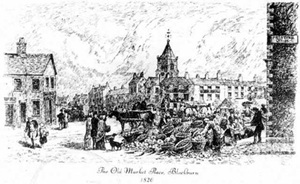
A sketch of the Old Blackburn Market Place in 1820
by Charles Haworth
Charles had a sense of duty in spite of his studies being curtailed but had things been different he might possibly have achieved more in the world of art. However, he had a long and useful life and spent time on long walks returning with memories of the places visited which he was able to sketch or draw. He was encouraged by Mr. and Mrs. Rimmer, close friends of the family, and Mr. Rimmer often accompanied Charles on his walks. He began to realise that his hobby might also be profitable and the first picture he sold was that of the "Furze burners” working at the top of Corporation Park. His favourite pastime was of painting landscapes in water-colour but also did a good deal of pen and ink work. Three of his pictures demonstrating his strong empathy with nature were in the Corporation Art Gallery - Tantallon Castle, Hoghton Tower and Harlech Castle.
As an illustrator he co-operated with a Mr. Thomas Johnson in his book - Pictorial handbook to the valley of the Ribble dated 1882. His sketches have also preserved much of old Blackburn and his illustrations can be seen in the books of J.G. Shaw - Bits of old Blackburn dated 1889 and Blackburn Waterworks dated 1891. Charles was a member of Blackburn Literary Club where he met Herbert Railton, who became a well-known artist, and Charles was able to pass on to him many tips about black and white work.
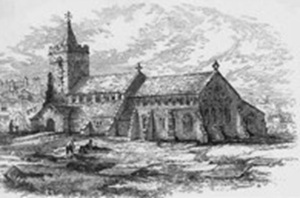
A sketch of the old Parish Church by Charles Haworth
Charles married Miss Sagar the sister of the jeweller on Church Street, and they went on to have four sons and one daughter. As the drapery business extended Charle moved their premises from Church Street to King William Street where he remained until 1873, then moving to St. John's Terrace. Charles was not in good health at that time but now was able to devote more time to his art and soon recovered. He was fascinated by the area of Wilpshire and like many artists spent time in North Wales where he met many known artists. He was quite popular not only for his art but also for his musical talent. In his youth it had been difficult to decide which hobby to pursue, music or art. Charles had been taught by Henry Smart, organist at the parish church, where he sang alto in the choir.
Charles spent time in the Lake District, the East Coast and Alnwick where one of his brothers lived and many of his paintings found a ready and profitable market in the cities. He knew many distinguished men and his name was respected by all who knew him.
Charles died on October the 25th. 1895 aged seventy nine.
The above information is from the Blackburn Standard dated January 19th 1889 page 32.
Janet Burke
Published July 2024
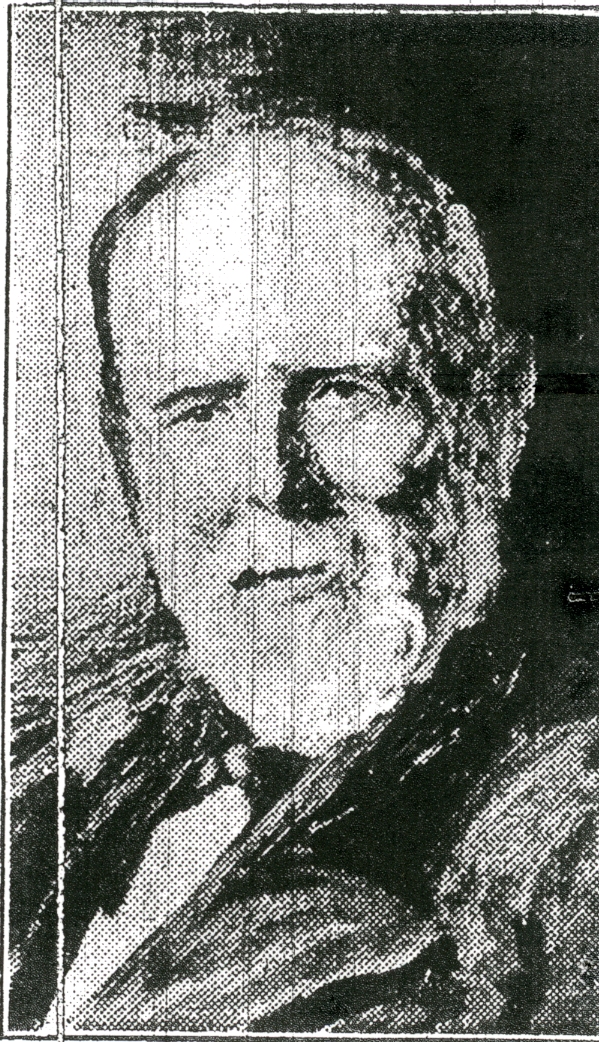
Thomas was born on the 12th August 1823 at 17, Darwen Street, his father was a brush maker. It was a time when water was brought from a well in the fields where the railway station now stands and also from All Hallows Springs. There were stepping stones over the brook in Dandy Walk leading to open countryside, Church Street was so narrow at one point that two carts could not pass one another and where the Market Hall and Town Hall stood were fields. Thomas went to Mrs. Durham's school in a court on Darwen Street and later to Mr. Sedgewick's school on Moor Street.
He was keen to see the world he had learnt about and went to sea as a cabin boy when he was about fifteen. His first voyage was on a sailing ship from Liverpool bound for Cadiz and then on to New York where he joined a coastal vessel plying between New York, New Orleans, Charleston and other American ports. During a gale this ship was wrecked on the Bahama Banks but the crew were rescued. Returning to New York, Thomas joined the Catherine, a three masted vessel with Captain Bury, bound for London. His brother George and several friends paid him a surprise visit whilst in London and then Thomas returned to New York on the Catherine. He changed to another ship bound for South America and a dangerous voyage round Cape Horn. Thomas became anxious to leave this boat and by chance in Valparaiso a British war ship entered the bay. After coming to anchor Thomas seized his opportunity and ran up the rigging, hoisting his shirt as a blue flag signal. This was understood and the commander sent a boat's crew to ascertain the problem. Thomas was readily accepted as a member of their crew and stayed for some time on the American station. When he returned to Portsmouth Thomas bought his discharge and learnt that the boat he had left at Valparaiso had foundered with all hands. Thomas then heard about the Franklin expedition to find the north-west passage and volunteered for service but was disappointed not to be accepted. This was fortunate for him as the expedition of Sir John Franklin with the Erebus and the Terror did not return and one hundred and twenty-four officers and men were lost.
Thomas had been six years before the mast but then returned to Blackburn where he entered the employment of Messrs Yates and Thom becoming an engine-tenter in which capacity he worked in various places including an old corn mill in Weir Street run partly by a water wheel and partly by a steam boiler and engine. In 1846 Thomas married Isabella Slater whose grandmother was the daughter of Edward Ainsworth of Pleasington Hall. They had one son George and lived on Chapel Street. Thomas remembered clearly the industrial unrest when rioters attacked the Dandy factory and in 1886 was close to the man killed in front of the Old Bull - he heard the then famous mayor "Jack" Smith, read out the Riot Act. He also remembered prisoners taken to the old lock-up on Darwen Street and the horse soldiers stationed at barracks on King Street. For a long period Thomas was the engine-tenter at the packing place in Chapel Street and after Isabella died Thomas lived with his son George who had become an analytical chemist and had been a councillor for over five years representing St. Peter's Ward. Thomas was then a well-known brewer of a special vinegar travelling in Blackburn, Darwen and Accrington until he was about eighty-five. Thomas died on the 19th December 1917 at the age of ninety-four and his son George died only two years later in 1919.
Much of the above is from Ancestry and an article in the Blackburn Times dated the 4th July 1914.
Janet Burke
Published July 2024
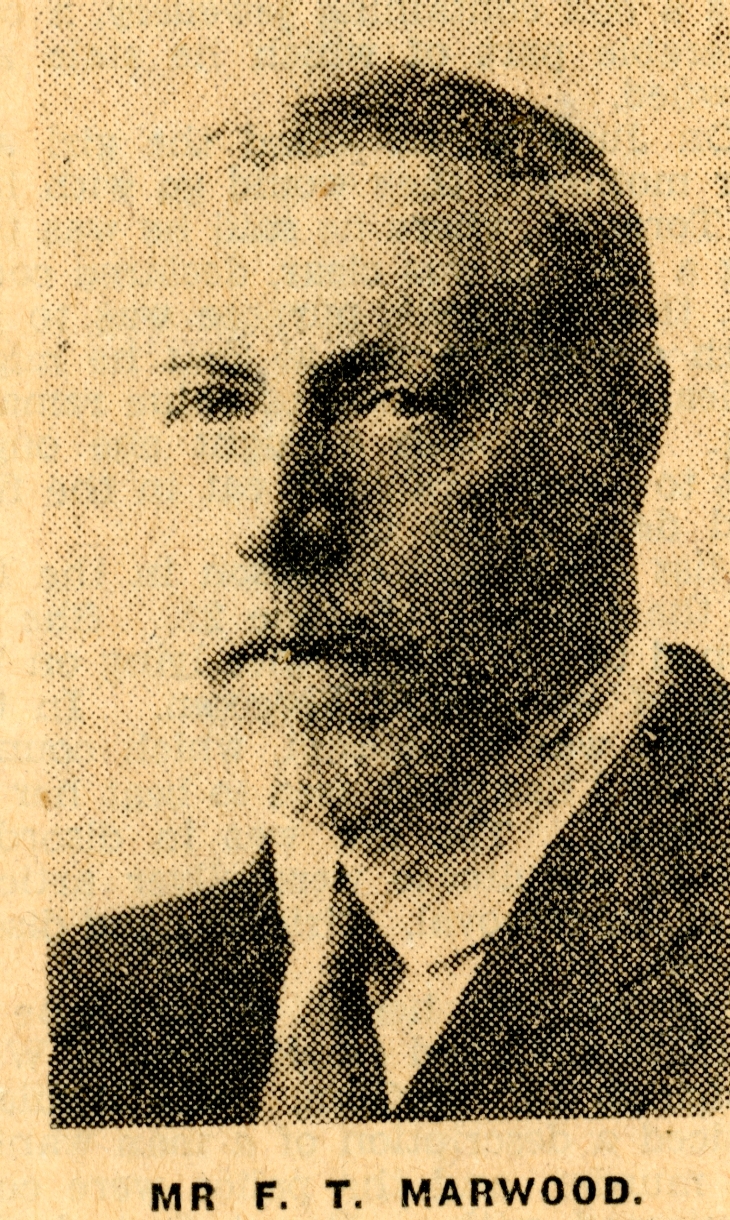
Frederick was born in Blackburn in the year 1858 and went firstly to Old Sedgeley Park School and then to the Xaverian College in Bruges, Belgium according to the newspaper article. However, it seems that although the order was founded in Bruges in 1839 and named after St Francis Xavier, it was dedicated to Roman Catholic education in the United Kingdom, United States of America and many other countries. Such a college was founded in Manchester in 1862 and may have been the college Frederick attended.
Frederick became the senior partner in Marwood and Company, cork manufacturers of King Street, Blackburn, where he remained in business for some sixty years. In 1890 Frederick was returned as Town Councillor for St. Peter's Ward and served on the council for three years. He was made a borough magistrate in 1892 until his resignation in 1930. Frederick had been asked on three occasions to be the mayor but could not accept due to his other obligations. A keen motorist, Frederick travelled from home to Lands-End and back in 1903 which was quite a feat in those days. He was a staunch Conservative and a life-long advocate of Tariff Control and Empire Free Trade, writing a pamphlet on the subject in 1909. As an inventor he had several useful patents and for some years had investigated the origin of cancer. His brochure on that subject and his theory received considerable attention from medical and scientific authorities from all parts of the world.
As a young man Frederick was prominent in local amateur theatricals and was associated with the East Lancashire Cricket Club. The game of golf was becoming popular and at Wilpshire a club and course had already been created. Frederick and his friend John Wilding decided that a course should be made in Pleasington and searched for suitable land locally. They had great difficulties with the farmers and the poor state of the land but finally were granted a lease. In 1891 the professional from St. Annes, George Lowe, was asked to lay out a nine-hole course. It was some time before the course was cleared of all the rushes and weeds but eventually it became a very fine course. Many prominent business-men from Blackburn were among the first members.
Frederick married Miss Mary Agnes Walker from Preston in April 1885 and they had four sons and three daughters. Three of his sons went into the business and the fourth is the Rev. R. S. Marwood O.S.B. M.A. of Ampleforth College. The family lived at Pleasington Lodge which is sited behind the Railway Hotel in Pleasington. Mary died in May 1898 and Frederick died in September 1935. He was interred at Pleasington Priory on Sunday 22nd September 1935.
Much of the above information is from articles in the Blackburn Times
July 11th 1931;
September 17th 1935;
September 21st 1935.
Janet Burke
Published August 2024
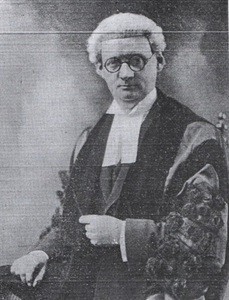
Blackburn Town Clerk 1930-1935
Briggs Holden Marsden was born in Withnell on 13th October 1887 to Nancy and Michael Marsden. He later moved to Blackburn, living for a period of time at 121 Witton Parade with his mother, father, three Brothers and four Sisters. He later became a choirboy at Mellor Methodist Church.
After leaving school in 1904 he worked with Mr Robert Ferguson Solicitor, then in 1909 he entered the Town Clerks Office at the Town Hall acting as assistant committee and law clerk, he stayed in that position until October 1913.That month the assistant Solicitor left the Corporation and Mr Marsden was appointed in his place.
He passed his final examinations in 1922 and was admitted as a Solicitor a year later.
In 1930 he became Town Clerk. He was always very keen to bring new industries to Blackburn and always had the welfare of the town at heart.
Mr Marsden lived with his wife and three children at “Brentor” on Billinge Avenue. He was a Freemason, being a member of the Morning Star Lodge and a member of Perseverance Lodge. In February 1931 he was initiated an honorary member of the Manchester Unity of Oddfellows. He was awarded the Kings Jubilee medal for Community contribution on 6th May 1935.
He took a lively interest in sport; and was a member of the Lancashire Cricket and Bowling club, a member of Pleasington golf club and a faithful supporter of Blackburn Rovers.
He also took an active part in the opening of Samlesbury Aerodrome.
In 1935, just five years into his office as Town Clerk Mr Marsden was taken ill whilst playing golf in Morecambe and a week later he became very sick with pneumonia and on Saturday 21st September he passed away at his home. Flags were flown at half-mast on the Town Hall and other public buildings as a mark of respect. His funeral took place the following Wednesday.
Floral tributes were borne in five open motor cars at the head of the cortege and a public service took place in St George’ Presbyterian Church, followed by interment at Mellor Methodist Church. Mrs Marsden and her daughters did not attend the funeral, but a short private service was held at their home conducted by the Rev. A. J. Cull of Witton Methodist Church, who also officiated at Mellor. His death came as a terrible shock to all his family, friends and also to the town he loved.
He left effects of value £3305 7s, probate was granted to his Wife Eda.
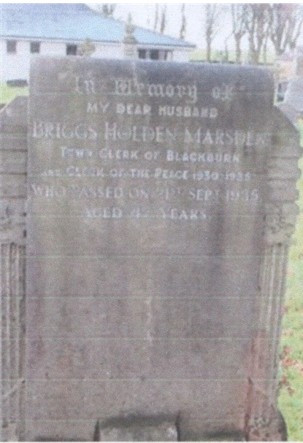
The Memorial Stone Reads:
In Memory of
My Dear Husband
Briggs Holden Marsden
The Clerk of Blackburn
and Clerk of the Peace 1930-1935
Who passed on 21st September 1935
Aged 48 years .
Some of the information taken from
Blackburn Times September 1935
Researched and written by
Jeffrey Booth (Library Volunteer)
Published October 2025