
 Loading more
Page 2
© Gordon Hartley - terms and conditions
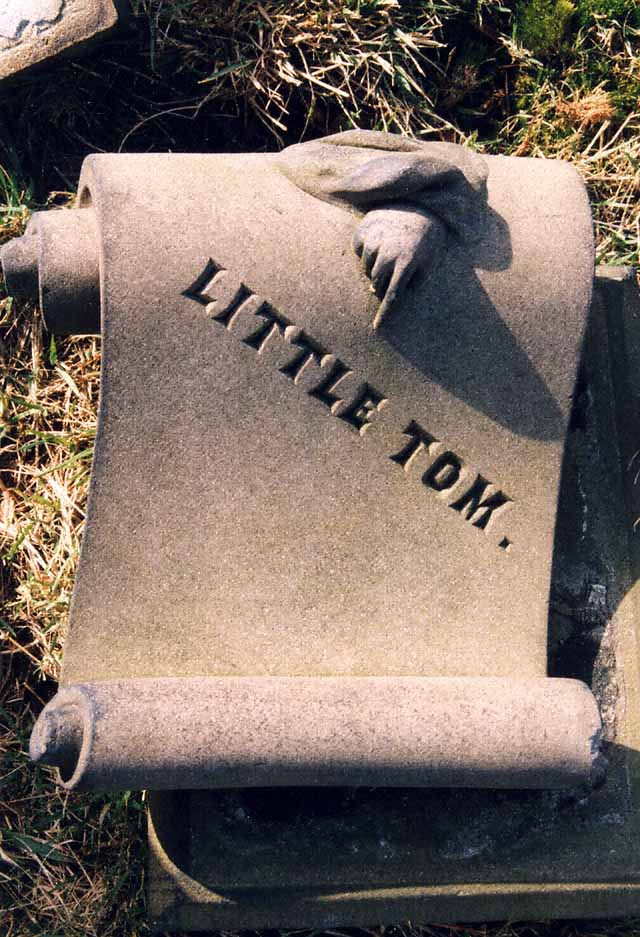
The grave of Little Tom, no further details are known about this grave.
© Gordon Hartley - terms and conditions
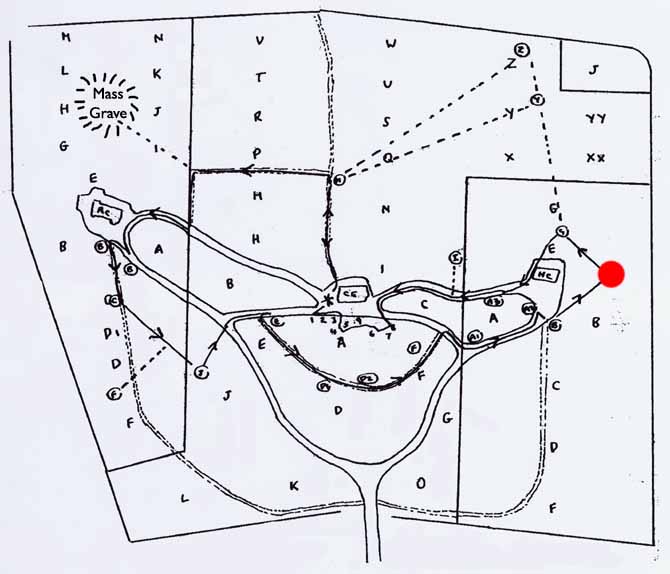
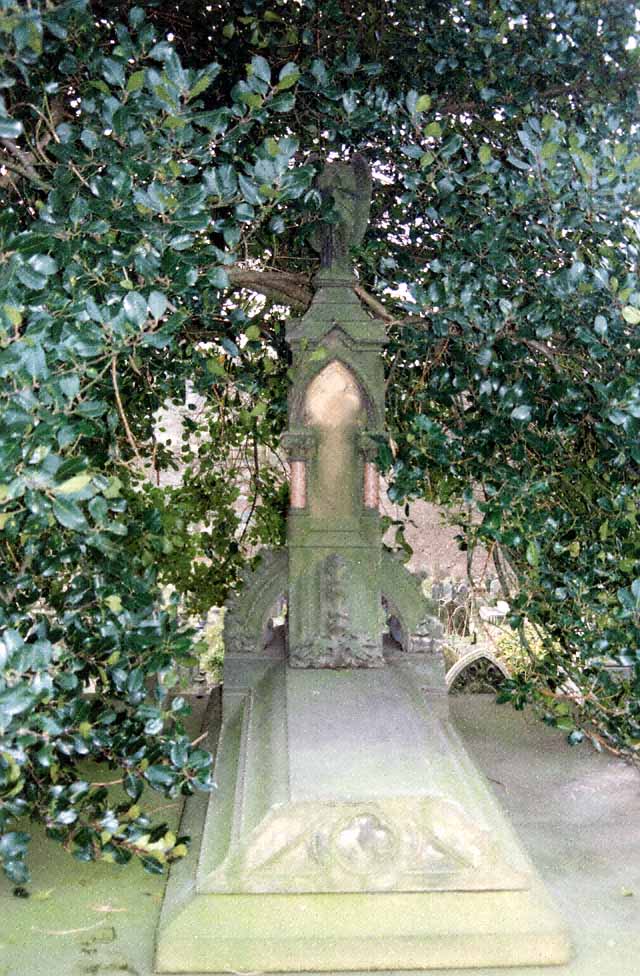
The grave of Joseph Eccles. It is a cross on a square pillar at the head of a slab set in holly. He died on the 3rd May 1861. He was a Cotton Spinner, and, with his brother Bannister erected the Jubilee Factory in 1820. He purchased the Mill Hill estate in 1844 and left under £45,000 in his will.
 © Gordon Hartley - terms and conditions
CE I
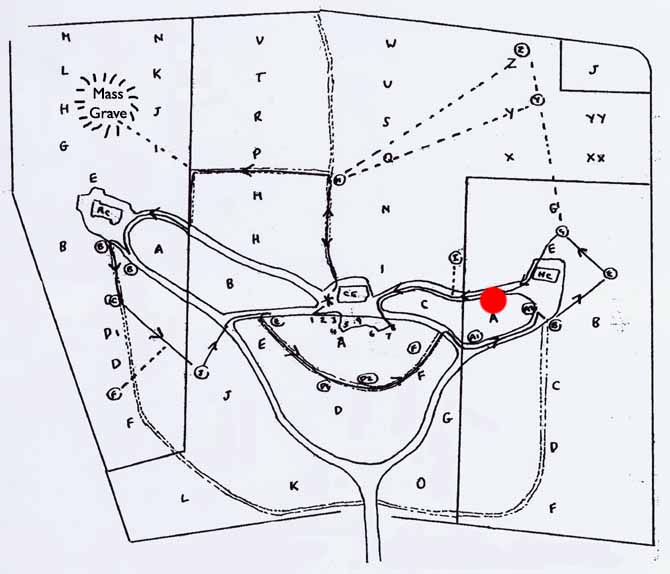
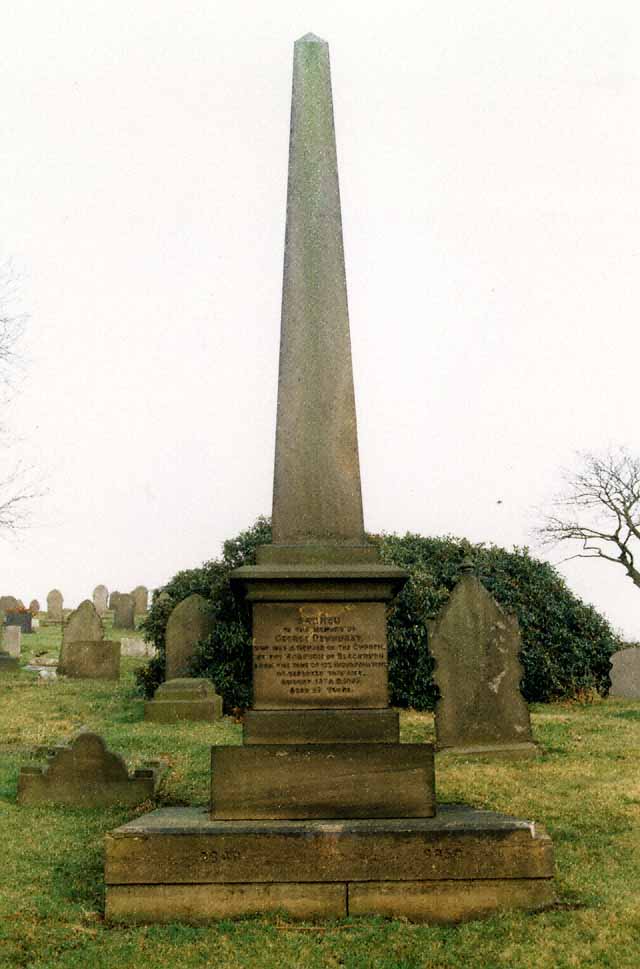
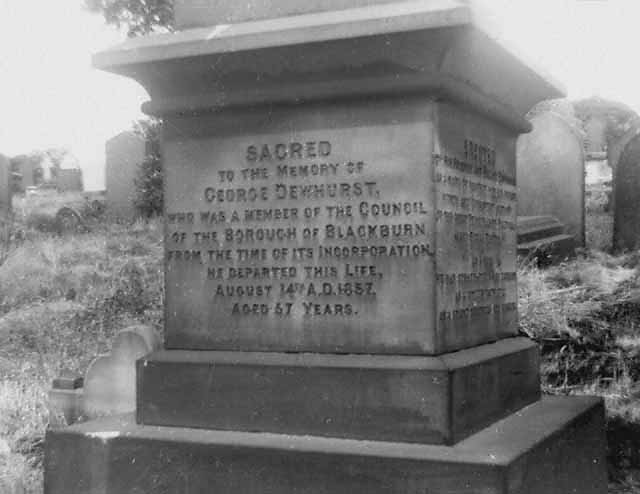
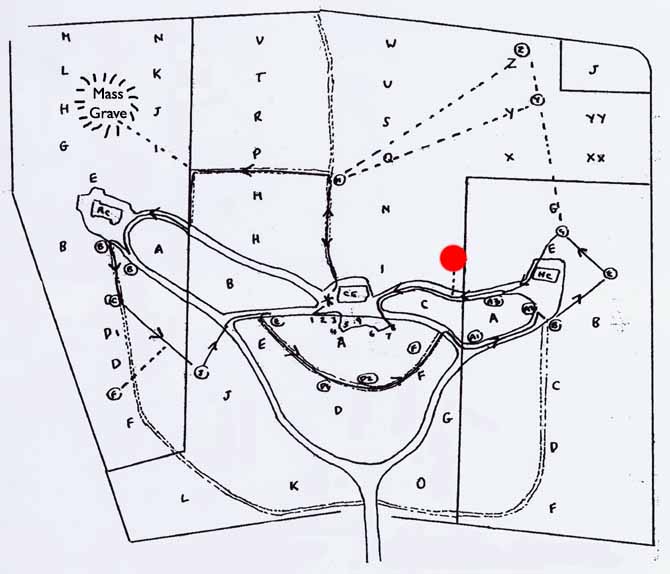
The grave of George Dewhurst. He died on the 14th August 1857 and his grave is a stone needle on a base. He was an inaugural councillor and took a part in Blackburn's first reform election of 1832 as "Fugleman of the Masses". He was apprenticed as a reedmaker and addressed an early meeting of handloom weavers in Burnley which resulted in him being charged with traitorous conspiracy and sentenced to 2 years in Lancaster Castle. His return found him still addressing large crowds with fervour. In 1851 he was a veteran reformer and elected to the council. At the time of his death six years later, he was highly regarded by most of his fellow citizens. A fountain which is now under Darwen Street bridge was erected by his friends in a wall of the market house.
© BwD - terms and conditions
© Gordon Hartley - terms and conditions
CE A9
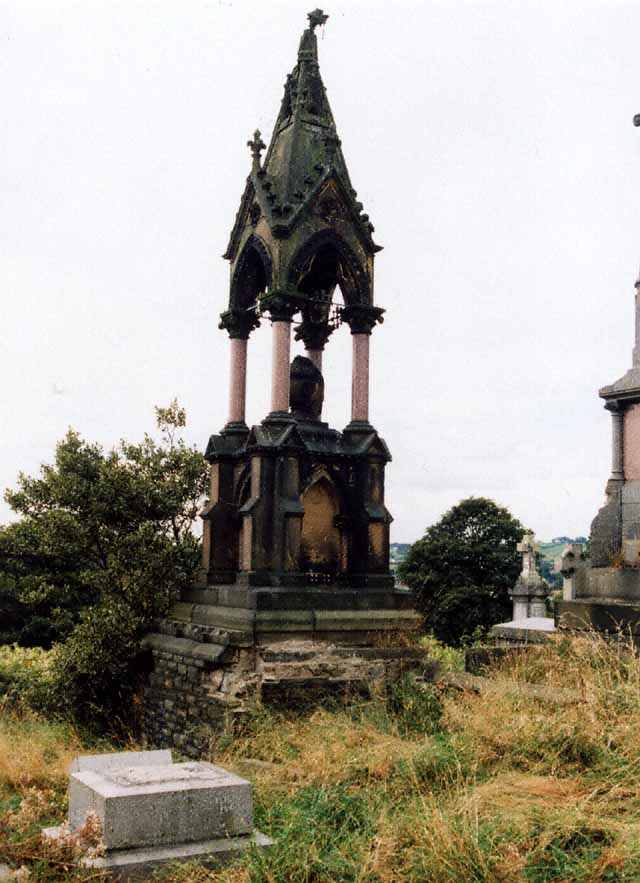
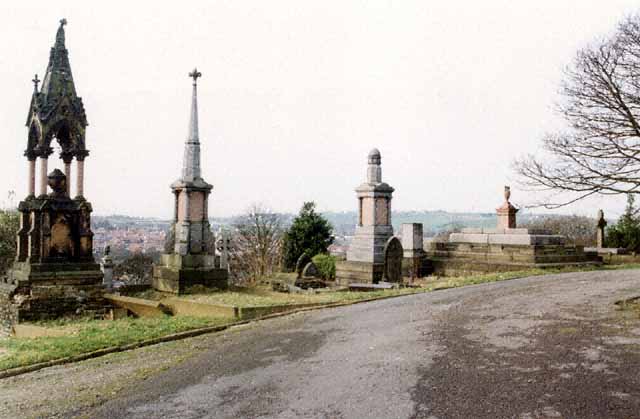
The grave of John Baynes which is a covered urn surmounted by a spire held by four pillars from a massive base. John Baynes died on 2nd October 1873. He was born in Lancaster and erected the Cicely Bridge Mills at Audley. Also buried here is John Bannister Eccles Baynes, aged 15, Hilda Margaret Baynes, aged 4 months, Thomas Hutton Baynes, aged 38 and Doctor Charles Baynes, aged 82.
© Gordon Hartley - terms and conditions
CE A8
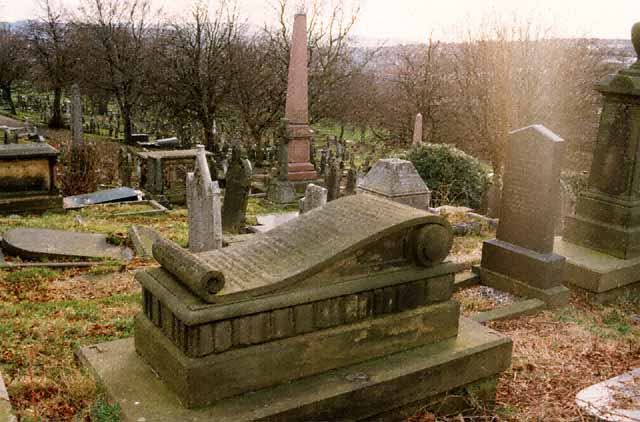
The grave of Orlando Brothers who died on the 17th April 1870. The grave is in the shape of a scroll on an oblong base. He was an engineer and the General Manager of Blackburn Gas Light Company from 1845 to his death in 1870. He took out a patent in 1835 for fire clay retorts. Clay was extratced from the pits in Meadowhead and fired in canalside kilns. Business continued until 1894 when William Brothers went bankrupt.
© Gordon Hartley - terms and conditions
CE A7
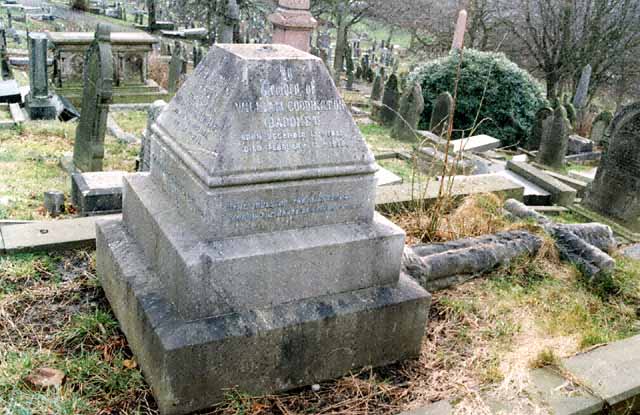
The grave of William Coddington who died on the 5th February 1918. The grave is a weight-shaped base with a cross lying separately. He wwas born in Salford, and was the son of a cotton spinner and manufacturer. The business included Nova Scotia, Crossfield and Wellington Mills. He built Ordnance Mill in 1857. His house 'Wycollar' was started by his father and completed by him. He was the Mayor of Blackburn in 1874-5 and an MP for Blackburn between 1880 and 1906. He presented the new organ to the Parish Church in 1875. He was elevated to a Baronet in 1896. He was almost the last through the toll gate on Preston New Road. His public speeches were brief and pointed but on at least one occasion he "treated" his friends at the Central Conservative Club to "three mortal hours" without notes, on history, to a bored and thirsty audience. After the death of his first wife, Lady Coddington he married again in 1913 at the age of 82.
© Gordon Hartley - terms and conditions
CE A6
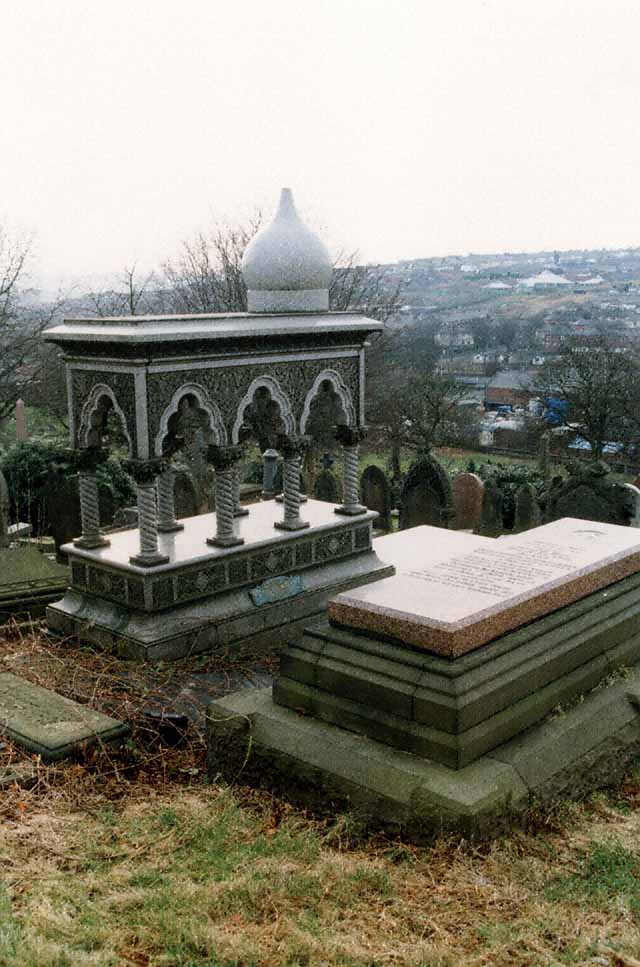
The grave of William Whewell which is of an oriental style. Not much is known about this grave which is shown in Dr. Beattie's book on Blackburn. There ia a memorial to his wife Mary who died in 1913.
© Gordon Hartley - terms and conditions
CE A5
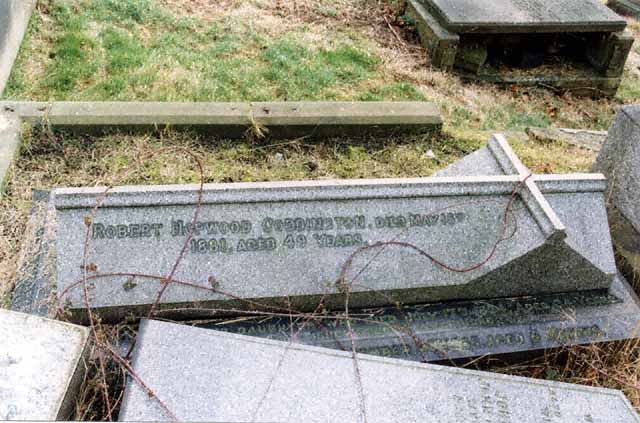
The grave of Robert Hopwood Coddington. The grave is a cross with a carved garland on a square pillar is a slab surmounted by a lying cross. He died on the 15th May 1881. He was the second son of Sir William Coddington and took up residence in Liverpool early in life. He was a cotton broker and the proprietor of T. and W. Thwaites, Fine Wine Merchants.
 © Gordon Hartley - terms and conditions
CE A4
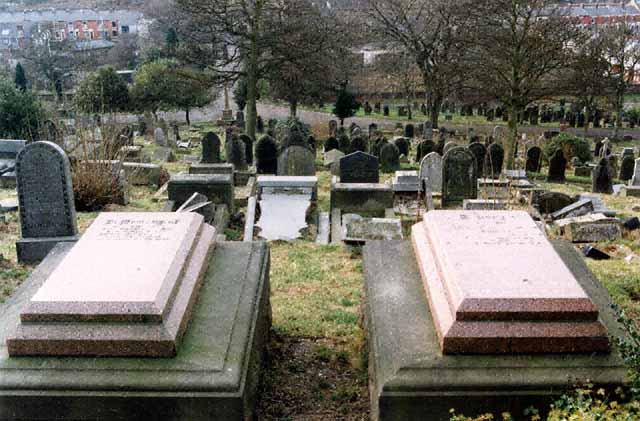
The grave of William Lewis who died on the 19th March 1874. The grave is a red granite slab, the left of three looking downhill.
CE A4
The grave of Thomas Lewis who died on the 28th November 1884. The grave is a red granite slab in the centre of three others. He was born at Church Street in 1820 at his fathers grocery. He built Springfield Mills at Daisyfield in 1851-2. He was the governor of the Old Grammar School and was an Alderman and J.P. He lived in Richmond Terrace until he built Billinge House in 1865 on Preston New Road. He was the father of Henry Lewis who succeeded him.
CE A4
The grave of Henry Lewis who is buried in the centre grave with his father and died on the 28th January 1915. He was the eldest son of Thomas Lewis who was an Alderman and J.P. He graduated from Christ Church College, Oxford with a B.A. It was much later in his life when he achieved an M.A. He took a considerable interest in the education of the town. He was generally supported by all parties in his chairmanship of Education.
CE A4
The grave of George Lewis which is a red granite slab lying on his massive stone slab to the right of three looking downhill. He died on the 9th August 1892.
© Gordon Hartley - terms and conditions
CE A3
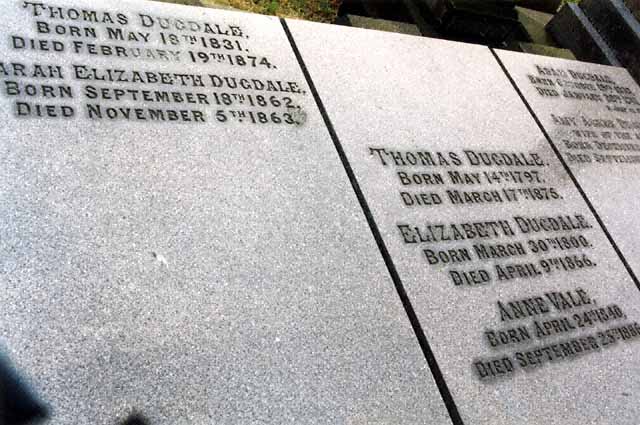
The grave of Thomas Dugdale who died on the 17th March 1875. The grave is a massive three tier slab close to the path. He was an inaugural councillor, later an Alderman and the third Mayor of the town after incorporation in 1853-4. His family came from Great Harwood and he was a medical practitioner and built Griffin Mill spinning mill in 1852. He built Griffin Lodge mansion in 1853. He was chairman of the Yorkshire Railway and other companies and was Deputy-Lieutenant of Lancashire.
CE A3
The grave of Thomas Dugdale who was buried with is father and died on the 19th February in 1874. He became a partner in the family business before he came of age. He left under £40,000 in his will.
CE A3
The grave of Adam Dugdale who is buried with his father and died on the 20th January 1917. He was the youngest son of Thomas I and became a partner in the family business before he came of age. Like his father he became an Alderman and Mayor in 1878-9. He took over Griffin Mills on the death of his father Thomas I. He was a popular employer who took a close interest in the affairs of his employees. He served for 30 years on the Council and headed the Conservative party in Darwen and could have stood for Parliament there but preferred to support others. He was involved with the Royal Infirmary and many other companies. He became Deputy-Lieutenant of the County.
CE A3
The grave of Amy Agnes Dugdale who died on the 24th September 1936. She was the wife of Adam and became one of the third generation of J.P.s. She remained in Griffin Lodge after the death of the rest of her family. In 1936 she had a gas and bomb proof in the basement. It had its own telephone, electricity and water supply and emergency food rations.
© Gordon Hartley - terms and conditions
© Gordon Hartley - terms and conditions
CE A2
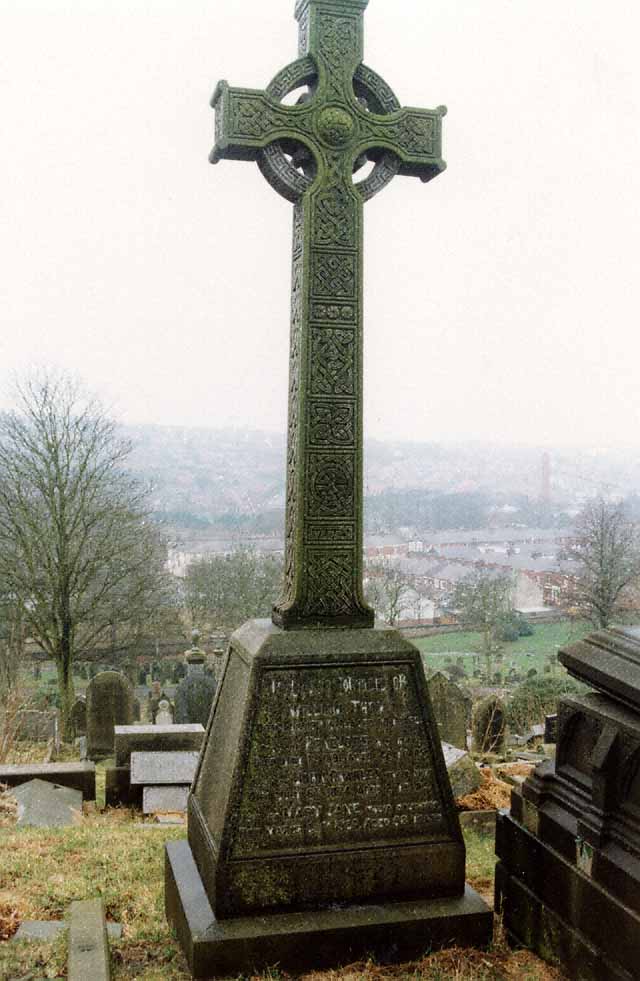
The grave of William Thom who died on the 13th August 1913. The grave is a celtic cross surmounting a weight shaped base. He resided at Dutton Manor at Ribchester and was born in John Street at his fathers drapers shop. He became an apprentice at Yates' Foundry which was then only a small company. He quickly became a trusted advisor and finally a partner. The company of Yates & Thom expanded considerably with 1000 employees and had world-wide business
Dutton, Thomas and Pickup, John
© Gordon Hartley - terms and conditions
CE AI
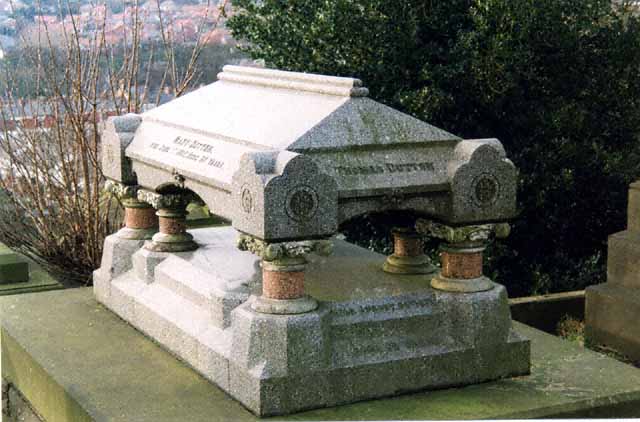
The grave of Thomas Dutton who died on the 26th August 1877. The grave is two slabs separated by six short pillars. He was an inaugural councillor and the grandson of Thomas who was the founder of a brewery and came from Clitheroe. It was one of fourteen breweries in Blackburn.
CE AI
The grave of John Pickup who is buried in the grave of Thomas Dutton and who died on the 18th October 1882 and was Mayor in 1873-74