
 Loading more
Page 3
Private Jonathan Walkden
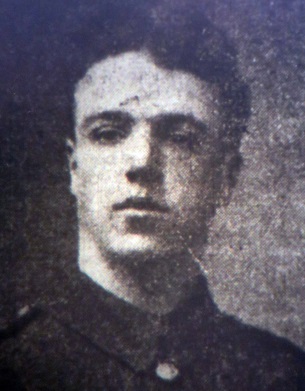
17th Lancashire Fusiliers, 14120
Private Jonathan Walkden of the 17th Lancashire Fusiliers (No. 14120) was killed 22nd July 1916 at Guillemont on the Somme.
Jonathan was born 5th May 1896 at 42 Heys Lane, Darwen. He was the son of Jonathan Walkden and Ada Elizabeth (nee Nelson). The couple had twelve children (three died in infancy).
The 1901 census shows that the family were living at 3 Punstock and ten years later they had moved to 2 Redearth Mount, Darwen and Jonathan is shown to be working in a cotton mill as a warehouse lad. By 1914 they had moved again to 5 Back Noble Street at which time he was working at Darwen Paper Mill. The family were connected to Duckworth Street Congregational Church (now Central United Reformed Church) and he was a member of the Church Boy Scouts.
Soon after the outbreak of war he enlisted and joined the 11th Lancashire Fusiliers which was a Bantam Battalion so Jonathan was no more than 5ft 3ins tall. His brother, Thomas, also joined the same Battalion and his father the 2nd Cheshire Regiment.
The 11th Lancashire Fusiliers was part of the 104th Brigade, 35th Division. After early training near home, the units concentrated in June 1915 in North Yorkshire. Divisional HQ was at Masham and units were at Roomer Common, Marfield, Fearby and Masham. In August 1915 the Division moved to Salisbury Plain, HQ being set up at Marlborough.
Over the next few weeks moves were made to Chiseldon and Cholderton. In late 1915, orders were received to kit for a move to Egypt but this was soon rescinded. On 28th January 1916 the Division began to cross the English Channel and by early on 6th February all units were concentrated east of St Omer.
The Division then remained on the Western Front for the remainder of the war and took part in the The Battle of Bazentin Ridge which was part of the Battle of the Somme. Following this on 20th July the 35th Division was to attack and take trenches between Maltz Horn Farm and Arrow Head Copse, preliminary to the general attack on Guillemont and on the rest of the German second position. After a thirty-minute bombardment to cover a French attack on the right, which was then cancelled.
Two companies of the 105th Brigade, attacked against massed machine-gun and artillery-fire and were shelled out of the few parts of the German front line they reached; an attack at 11:35am by a battalion of the 104th Brigade also failed. The Fourth Army artillery began to register targets (firing ranging shots) on 21st July but poor visibility, made aircraft observation impossible at times.
Co-ordination of the combined attack, proved impossible for the three armies and the 35th Division and 3rd Division attacked Guillemont early on 22nd July and were repulsed. The bombardment for the series of attacks due on 22nd /23rd July, began at 7:00pm on 22nd July, which alerted the Germans but the non-moon period was expected to protect the British infantry. It was during this action that Jonathan lost his life.
Jonathan Walkden has no known grave and is remembered on the Thiepval Memorial to the Missing on the Somme, Pier and Face 3 C and 3 D.
Private William Walker
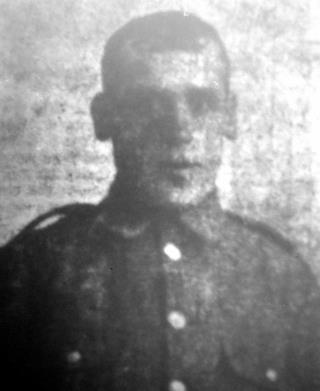
11th Lancashire Fusiliers, 6493
Private William Walker of the 11th Lancashire Fusiliers (No. 6493) was killed on 16th July 1916 at the Battle of Bazentin Ridge on the Somme.
William was born on 28th August, 1881 at 9 Albert Street, Darwen, the son of William Walker and Betsy (nee Kirkham). The family later moved to Watery Lane and, by 1901, they had settled at 28 Woodville Terrace.
The 1901 census shows William working as a labourer at a pipe works and by 1914 he was employed by Messrs. Place and Sons at their Eccleshill Pipe Works as a kiln carrier. He attended St. Barnabas Church.
On the outbreak of war he enlisted at Darwen in September 1914 and joined the 11th Lancashire Fusiliers. The 11th Lancashire Fusiliers joined 74th Brigade, 25th Division. The Division assembled for training in the area around Salisbury. They proceeded to France on the 25th of September 1915, landing at Boulogne and the Division concentrated in the area of Nieppe.
In January 1916, William was wounded but he rejoined his regiment in May and was involved in the defence of the German attack on Vimy Ridge in May 1916.
The Division then moved to The Somme and joined the Battle just after the main attack, with 75th Brigade making a costly attack near Thiepval on the 3rd of July. The Division was in action at The Battle of Bazentin.
The Battle of Bazentin was a subsidiary attack of the Somme Offensive, and having captured Mametz Wood on 12th July, the British moved onwards toward High Wood in a continuation of the push through German lines. The Battle of Bazentin Ridge, ran from 14th–17th July 1916 and comprised part of the second phase of the Somme Offensive. It was during this action that William lost his life during a bayonet charge.
William Walker has no known grave and is remembered on the Thiepval Memorial to the Missing on the Somme, Pier and Face 3 C and 3 D.
Private John Walmsley
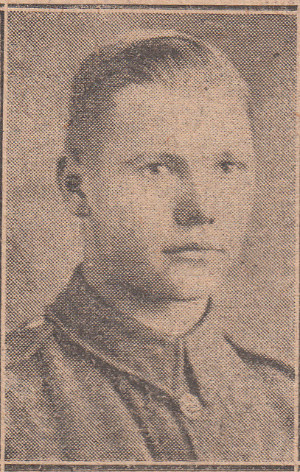
1st/4th King’s Own Royal Lancaster Regiment, 5027
John Walmsley, born in 1896, was the Son of Thomas and Ellen Walmsley and he had one sister, Sarah Elizabeth. In 1901, the family lived in Lower Darwen at 18, Rakes Bridge and his father occupation is listed as an inn-keeper. There is still a public house on this site called the Hindle Arms but it is no longer open for business. By 1911, the family lived at 20, Dover Street also in Lower Darwen but his father worked as a labourer in a cleaning department. At the age of fourteen John was working as a weaver.
Prior to enlisting, he was employed by T. & R. Eccles in Lower Darwen and attended St. Edward’s RC Church Darwen. Lower Darwen Mills had been in the Eccles family since 1774 but failed in 1897. William Birtwistle formed T. & R Eccles which became the first member company of William Birtwistle Allied Mills. Spinning ceased by 1904 and by 1912 there were 1122 looms producing fancies and India trade goods.
John was drafted into the army, joining the Territorials of the King’s Own Royal Lancaster Regiment in April 1916. He would not spend a long time in training, as he arrived in France in early August.
John died on the last day of the Battle of Morval on his twentieth birthday. Having broken through the prepared lines of German defence, the British force now faced a new set of challenges as it was now fighting in much flatter, open ground and approached the distant gentle slopes of the Transloy ridges. Fighting was, as before, severe but gradually the British chipped away and pushed forward. The weather began to turn autumnal, bringing rain, making the battlefield increasingly difficult and stretching men to limits of their physical endurance.
Private John Walmsley is remembered on the Thiepval Memorial to the Missing on the Somme, Pier and Face 5 D and 12 D.
Rifleman George Walsh
9th Rifle Brigade, S/9906
Rifleman George Walsh of the 9th Rifle Brigade (No. S/9906) was killed on 15th September 1916 at the Battle of Flers-Courcelette on the Somme.
George was born on 28th September 1899 at 4 Catlow Fold, Darwen, the son of Moses Walsh and Jane Babington. By the time the 1901 census was taken, the family had moved to 140 Todmorden Road, Bacup and his sister, Emma, died aged two years whilst the family were still at Bacup. The family have not been found on the 1911 census but his brother, Frederick John was a border in Middleton, Lancashire.
According to his army record he attested at Blackburn on 20th April 1915 when he gave his address as 4 Audley Range, Blackburn. George gave his age as nineteen years and seven months, but he was not yet sixteen years old and he was working as a labourer. He joined the 9th Rifle Brigade and arrived in France on 9th September 1915. He received a gunshot wound to his leg on 25th September 1915 and was hospitalised at Etaples, France. He re-joined his Battalion on 16th October 1915 and whilst on the Western France he suffered from Trench Fever on 4th May 1916 and thirteen days later he re-joined the Battalion.George was with his Battalion and saw action on the Somme at the Battle of Delville Wood.
He was then involved at the Battle of Flers-Courcelette. This battle involved both French and British troops and was launched on 15th September 1916. The initial objective was to cut a hole in the German lines by using massed artillery and infantry attacks. This hole would then be exploited with the use of cavalry. The battle is significant for the first use of the tank in warfare. It was on the opening day of this battle that George lost his life. He was not yet seventeen years old.
George has no known grave and is remembered on the Thiepval Memorial to the Missing on the Somme, Pier and Face 16 B and 16 C.
At the end of the war his Aunt, Harriet Holden of 29 Everton Street, Darwen, received his war medals - Victory & British War Medals; 1914-1915 Star.
In 1919 his father, Moses, gave his address as 2 Alma Cottages, Birchington, Kent. This corresponds to the information contain in the Soldiers Died in the Great War 1914-19.
Private James Warburton
2nd South Lancashire Regiment, 29660
Private James Warburton of the 2nd South Lancashire Regiment (No. 29660) was killed on 21st October 1916 at Le Transloy on the Somme.
James was born at Edgworth in 1897. He was the son of John William Warburton and Mary Jane (nee Young). By 1901 the family had moved to 62 Cranberry Lane, Darwen and later to 1 Phillip Street. He attended St. Barnabas School and was employed by the Provident Co-operative Society as a blacksmith.
James enlisted at Darwen and was first attached to the Royal Field Artillery (No. 2547) and later he was transferred to the 2nd South Lancashire Regiment (No. 29660). It is unclear as to when James transferred Regiments but it is known that he was on the Somme by September 1916 and saw action at The Battle of Le Transloy.
The battle began in good weather and Le Sars was captured on 7th October. Pauses were made from 8th-11th October due to rain and 13th-18th October to allow time for a methodical bombardment, when it became clear that the German defence had recovered from earlier defeats. Haig consulted with the Army Commanders and on 17th October reduced the scope of operations by cancelling the Third Army plans and reducing the Reserve Army and Fourth Army attacks to limited operations, in co-operation with the French Sixth Army. It was during this action that James lost his life.
James Warburton has no known grave and is remembered on the Thiepval Memorial to the Missing on the Somme, Pier and Face 7 A and 7 B.
Private Harry Watson
11th East Lancashire Regiment, 24887
Harry Watson, born 1887, was the son of Charles and Mary Ann Watson, of 221, Olive Lane, Darwen. Harry lived with his siblings – Elizabeth, Dora and Leonard. The family were all cotton weavers, but Harry became a shopkeeper’s assistant.
Harry joined the 11th Battalion the East Lancashire Regiment in 1915, otherwise known as “The Accrington Pals”.
The Accrington Pals is probably the best remembered of the Battalions raised in the early months of the First World War in response to Kitchener's call for a volunteer army. Groups of friends from all walks of life in Accrington and its neighbouring towns enlisted together to form a battalion with a distinctively local identity.
In its first major action, the Battalion suffered devastating losses in the attack on Serre on 1st July 1916, the opening day of the Battle of the Somme. The losses were hard to bear in a community where nearly everyone had a relative or friend who had been killed or wounded.
Although the Battalion was to fight again, its “Pals” character had been irretrievably lost.It was in this battle that Harry was killed, July 1st 1916, along with over 500 others.
He has no known grave, but is remembered on the Thiepval Memorial to the Missing on the Somme Pier and Face 6 C.
Lance Corporal James Irving Whalley
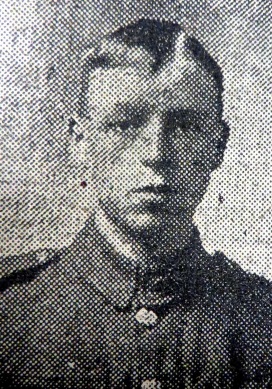
7th East Lancashire Regiment, 6476
Lance-Corporal James Irving Whalley of the 7th East Lancashire Regiment (No. 6476) was killed on 25th July 1916 on the Somme.
James was the son of James Whalley and Elizabeth Tonks and he was born on 4th September 1897 at 17 Sunnybank Street. At birth he was named “James Irving” but later he seems to have just used the name “Irving”. At the time of the 1901 census he was living with his parents at 17 Sunnybank Street, Darwen. His younger brother, Jack, was born in 1905 and following this birth his mother was admitted to Whittingham Hospital and his father died three years later.
Prior to the war James worked as a weaver at Messrs. Ward’s Mill. In 1915, he enlisted into the East Lancashire Regiment 3rd Battalion and later he transferred to the 10th Battalion and finally the 7th Battalion. He was promoted to Lance-Corporal. The East Lancashire 7th Battalion was involved in the Battle of Pozieres Ridge which was a two week struggle, 23rd July–7th August 1916, for the French village of Pozieres and the ridge on which it stands, during the middle stages of the 1916 Battle of the Somme. It was during this conflict that James lost his life, “killed in action” on 25th July 1916. His brother, who lived at 4a Harwood Street, was informed of the death.
James has no known grave and is remembered on the Thiepval Memorial to the Missing on the Somme, 6 C.
He is also remembered on the Redearth Road Primitive Methodist Church memorial.
Private Percy Jester Noble Whiteside
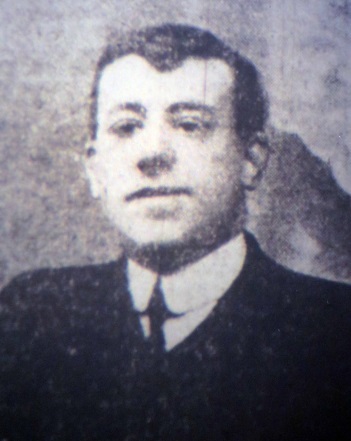
8th Border Regiment, 16181
Private Percy Noble Jester Whiteside of the 8th Border Regiment (No. 16181) was killed 5th July 1916 at Aveluy Wood, part of The Battle of Albert.
Percy was born on 6th January 1888 at 21 Lower Cross Street, Darwen. He was the son of Nicholas Porter Whiteside and Jane Alice (nee Hill). The family later moved to 30 Sarah Street, Darwen and, by 1911, Percy was living at 51 Newton Street, Darwen. He was a keen cricketer and well-known in the Darwen Cricket League and worked as a weaver at Union Street Mill. In 1912, he married Lily (Nee Eccles), the widow of Robert Bond at St John’s, Darwen and they lived at 2 Gadfield Street. They did not have any children but Lily had two children from her previous marriage; Ada, born 1903, and Robert, born two years later.When war was declared Percy attested on 28th October 1914 and joined the 8th Border Regiment at Carlisle on the following day. His medical record gives his height as 5ft 4ins, weight 138 lbs, complexion fresh; eyes green, hair: black.
In early 1915, the Battalion moved to Aldershot for Brigade training, where the men learned the arts of soldiering in large formations. Having completed this training it was time for the 8th Border to move for service overseas in the war zone, after a spell of leave at home they gathered at Codford Camp and prepared to travel to the Western Front.
They left Aldershot on the 25th September 1915, arriving in France on the 27th, at the Port of Boulogne. On arrival in France, they travelled by train to Hazebrouck, marched to Strazeele and took lorries to Nieppe then marched on to Le Bizet where they were billeted. From here they went into the line at Ploegsteert for the first three months of "acclimatisation", as they learned the 'arts and tricks' of Trench Warfare under the guidance of the 48th Canadian Highlander Battalion.
Once they were trench ready they commenced trench warfare's cycles of front line, reserve line, rest and fatigues, as and when needed. The Battalion started a period of turn and turnabout with the 10th Cheshire’s in line at East of Ploegsteert.
The nights of 4th – 9th October were full of sniping and machine gun fire from the enemy as the 8th Border tried to repair and reinforce the trenches in their sector. On the 9th they were relieved to billets at Ploeagsteert, exchanging places with the 10th Cheshire’s who went into line, in their place. The 10th -15th October were spent in the second line, doing fatigues and physical drills, followed by bathing. On the 15th October they went back into the front line to relieve the Cheshire’s again. The front line was as active as the first tour and the following gives a flavour of the action.
November and December 1915 were spent in poor weather in this area, Most of the Battalion activity concerned trench repairs and sniping duels. On as lighter note one of the British snipers bagged a pheasant! Christmas this year was most definitely not a time for fraternisation and although the 8th Border were out of line and had Christmas Eve bath and a service on Christmas Day.
During the early part of 1916, the 8th Border were in training for the upcoming Offensive of the summer months, with which the British and French planned to break the German lines and win the war. Periods of training were alternated with periods in line and a gradual progression to be in the area of attack in time for the 'Big Push' (The Battle of the Somme). On 26th January 1916 the 8th Border, part of the 75th Brigade, 25th Division moved via La Creche, to Strazeele, where the men had Company Training. General Plumer and Lord Kitchener inspected the Brigade during route marches and some men attended a demo of the new German weapon, the Flammenwerfer.
On the 10th March 1916 they left Strazeele and moved to Nedon and Bryas for more training, all in preparation for the upcoming summer offensive. Sir Julian Byng inspected the men on 20th March 1916 and Sir Douglas Haig on the 31st, all while the men were on route marches. Things were beginning to ramp up now, as “Wood Fighting” in defence and attack, night fighting, bombing, training against the German Flammenwerfer and musketry and Lewis Gun firing was practised.
In early April, training continued for preparation to go in line north of Neuville St Vaast on the 21st April 1916. Whilst in line early in their stint, in the pouring rain, struggling to maintain the trenches, the Germans decided to test the 'new boys'. On 25th and 26th April 1916 the front line was subjected to a set of bombing raids which cost the lives of two men. May 1916 was spent in and out of line in the Neuville area and it was here the 8th Border got its first real taste of two notorious facets of Western Front warfare; mining and gas.
The 8th Border went out of line on the 20th May 1916, but they were harassed in Neuville by gas shells and heavy calibre shelling during the time in billets. They returned to the front line in late May saw a spate of casualties, due to mining bombing and shelling as the enemy sought to make the area as uncomfortable for the troops as they could. Rumours of the build up to the “Big Push” must have been rife on both sides of the line. June 1916 saw the Battalion moving towards the Somme Area, training and exercising as they went. The training was aimed at getting the men into a peak of battle readiness for the Battalions part in the Somme Offensive, set for the end of June or early July. During part of this training Percy was off sick from 17th to 30th June with influenza.
When the Battle of the Somme commenced, the 8th Battalion was stationed at Forceville, some four miles behind the front lines, but ordered to be ready to move up at short notice, if events required. On the 2nd July 1916, they were marched to Martinsart Wood and the front lines south of Thiepval, to take part in an attack at 6 a.m. on July 3rd, in an area which had resisted attackers the previous day. With no attack taking place either side and severe enfilade fire from these flanks, the attack was costly to the 8th Border. The German trench was only captured for 200 yards in the centre of the attack and this was too badly damaged by shellfire to hold against counter attack. The men had to hold the line for another night as the battered 32nd Division who had attacked on the 1st July in this area, were in greater need of relief due to their higher casualties.
The 8th Border was relieved on the night of the 4th July and bivouaced in Aveluy Wood as they and other Division battalions recovered from the failed attack. It was here that Percy lost his life. He left a Will.
Percy Noble Jester Whiteside has no known grave and is remembered on the Thiepval Memorial to the Missing on the Somme, Pier and Face 6 A and 7 C.
Letter Y
Yates, George W. | Yates, James | Yates, Robert N.
Private George William Yates
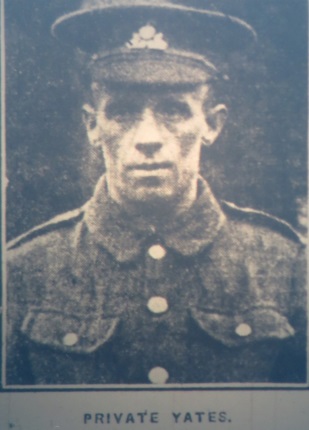
10th Lancashire Fusiliers, 13063
George William Yates was born in 1883 in Darwen. Little is known about his life before he married Edith Birtwistle in 1906. By then, George was a labourer at South Belgrave Mill Darwen. He had a son, also George William, and spent his time at the Lower Chapel.
George enlisted in November 1914 into the 10th Battalion Lancashire Fusiliers. Following extensive training in Dorset, the Battalion was sent to France in July 1915 as part of 17th Division.
The Division spent its initial period of trench familiarisation and then holding the front lines in the southern area of the Ypres salient. The Division was then involved in fighting at the Bluff (south east of Ypres on the Comines canal), part of a number of engagements officially known as the Actions of Spring 1916.In July 1916, as part of the Somme Offensive, George’s Battalion fought at the Battle of Albert, and attempted to capture Fricourt. It was in this action that George was killed, on 7th July.
He has no known grave, but is remembered on the Thiepval Memorial to the Missing on the Somme, Pier and Face 3 C and 3 D.
Private James Yates
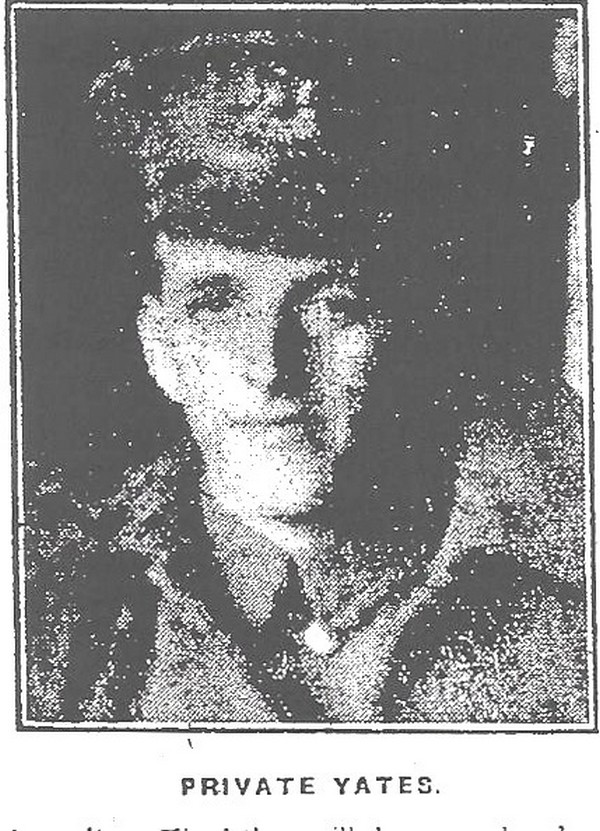
16th Manchester Regiment, 6709
James Yates, born 1892, was the son of Richard Entwistle Yates and Amy Bury. Originally from Cheetham, Manchester, his father was a journalist in Darwen, whilst James was an apprentice artist on a paper by 1911.
James spent time at Duckworth Street Congregational Church and Sunday School, and he was a prominent member of the school cricket club.
James had enlisted with 16th Battalion Manchester Regiment (The Manchester Pals), and was immediately sent for training to Heaton Park. James travelled with the Battalion to France in November 1915, and where they were familiarised with trench warfare in preparation for the Somme Offensive.
The 16th Battalion would lead the advance towards Montauban. It was here, in the bloodbath of the 1st July attacks, that James was killed.
Concerning the death of Private Yates, a friend writes:
“Another brave Darwen lad has been lost in the war. I refer to James Yates, son of Richard E. Yates, who has been resident in Manchester for some years. The young fellow was well-known as a promising cricketer and lacrosse player in Manchester and was one of a number of young fellows who held a council at the beginning of the war and decided for themselves that it was the duty of all eligible single men who had not mothers dependent upon them to enlist. And by 7 o’clock one morning in August 1914, all enlisted in a body. Young Yates had seven months hard experience in the trenches before he was killed. He was recognised by his superior officer as a very fine bomber, as well as a cheery and efficient soldier. He was killed in the famous attack on July 1st”
James has no known grave, but is remembered on the Thiepval Memorial to the Missing on the Somme Pier and Face 13 A and 14 C.
Robert Norman Yates
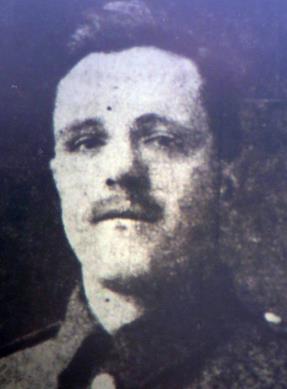
7th East Lancashire Regiment, 25009
Robert Norman Yates was baptised in January 1891 at St. John’s Church, Darwen. He was the son of John Yates and Ellen nee Thorpe who had married at Blackburn Christ Church in 1883. The family lived at 26 Cranberry Lane. Robert’s father was a “Pointsman”.
By the 1911 census John Yates had married Sarah Jane Thorpe (1908) and the address for the family was Cranfield View.
Private Robert Norman Yates was possibly killed during the fight for High Wood which took place between 20th- 25th July, 1916.
The War diaries record:
“Total casualties for the period 19th–31st July: Officers 1 wounded, O.Rs. 37 killed, 88 wounded, 1 died of wounds, 1 missing believed killed, 3 gassed, 1 shell shock.
An obituary in “The Darwen News, 12th August 1916 noted that Robert was formerly employed by the Darwen Paper Mill Company and had spent some time in Canada. He was twenty-five years of age and unmarried.
Private Yates (Regimental Number 25009) is recorded as being killed on 22nd July 1916 and has no known grave.
He is commemorated on the Thiepval Memorial Pier and Face 6 C.He was awarded the British War and Victory Medals.