
 Loading more
Page 3
Sergeant George Howard
7th King’s Own Royal Lancaster Regiment, 18639
George Howard, born in 1893 in Blackburn, was son of Edwin and Martha Howard. George lived with his sisters Martha and Edith at 12 Joseph-street.
By 1911, George had worked hard to earn a position as a Chemist’s apprentice at the Gas works on Wensley-street. During this time, George was associated with St Barnabas Church on Johnstone-street.
George enlisted in the 7th Battalion King’s Own Royal Lancaster Regiment in September 1914. After over nine months of training, George finally arrived in France on 17th July 1915. The Battalion would see small scale actions in 1915, but all preparations were being made for the Somme offensive in 1916.
At the opening phases of the Somme, George’s Battalion captured the vital hamlet of La Boiselle. George would go on to fight the following:
The attacks on High Wood – at the Battle of Flers-Courcelette 15th – 22nd Sept 1916, a renewal of the offensive finally broke through the area that had proved so difficult since 14th July. Using a small number of tanks for the first time in history the British Army finally captured High Wood and pressed on through Flers and up the Bapaume Road to Courcelette.
The Battle of Pozieres Ridge from 23rd July to 10th August 1916, the Division held a sector of the line north of the River Ancre. Left alone since the failure of 1st July, the slopes of the area on either side of the River Ancre were attacked once again, in foggy and wintry conditions, with Beaumont Hamel finally falling into British hands. A local attack by 7th Brigade on 21st August was carried out successfully, using for the first time a device known as a "push pipe mine" to destroy enemy defences before the infantry were deployed. Further attacks were made on 23rd, 25th and 26th August. On 3rd September, a larger scale attack was made in support of the 4th Australian Division which was assaulting Mouquet Farm.
The Battle of the Ancre Heights - The River Ancre gave its name to two of the final phases of the 1916 Battles of the Somme, designated as the Battle of the Ancre Heights and the Battle of the Ancre (both in November 1916). The latter on the 13th to 19th of November made gains to the north of the river and included the taking of Beaumont Hamel.
The battle was originally planned to go ahead on 15th October but was repeatedly postponed due to bad weather. The original aim was to push the Germans back five miles but by the time the offensive went ahead the aims were reduced to capture the Beacourt and push the Germans back two-miles. Due to snow, sleet and ultimately mud the tanks were prevented from moving as effectively as required and communication was made difficult, British forces were taken prisoner after being cut off in Frankfurt Trench and other forces were met by heavy machine gun fire that they couldn’t push through.
It was in this last battle on 15th November 1916, that George was killed. George has no known grave, but is remembered on the Thiepval Memorial to the Missing on the Somme, Pier and Face 5 D and 12 B.
Private John Howarth
11th Border Regiment, 21429
There is little known about John Howarth’s life prior to his enlistment into the 11th Border Regiment. This Battalion was sent to France in November 1915, and would fight on the Somme extensively in 1916. It remained on the Western Front for the remainder of the war and took part in the following engagements:
The Battle of Albert. In this opening phase the British assault broke into and gradually moved beyond the first of the German defensive complexes of the Somme. Success on the first day in the area between Montauban and Mametz led to a redirection of effort to that area for the initial attack had been defeated with huge losses north of Mametz. There was a stiff fight for Troms Wood and costly, hastily planned and piecemeal attacks eventually took La Boiselle, Contalmaison and Mametz Wood.
The Battle of Bazentin - Launched by the British Fourth Army at dawn on 14th July 1916, marked the start of the second phase of the Battle of the Somme. Dismissed beforehand by a commander as "an attack organized for amateurs by amateurs", it turned out to be "hugely successful" for the British, in contrast to the disaster of the first day on the Somme However, like the first day, the British failed to exploit their advantage in the wake of the victory and as German resistance gained force, a period of bloody attrition commenced. They now ran into stiffening enemy defence at Guillemont, Delville Wood and Longueval, High Wood and Pozieres. Attack and counter attack ground relentlessly on as the British edged forward.
The Battle of the Ancre Heights - The River Ancre gave its name to two of the final phases of the 1916 Battles of the Somme, designated as the Battle of the Ancre Heights and the Battle of the Ancre (both in November 1916). The latter on the 13th to 19th of November made gains to the north of the river and included the taking of Beaumont Hamel.
John Howarth was killed on 18th November 1916 at the Battle of the Ancre Heights. His death was verified by his widow after the war, and his commemorated at Holy Trinity, Little Harwood and on the Thiepval Memorial to the Missing on the Somme, Pier and Face 6 A and 7 C.
Private Jesse Hull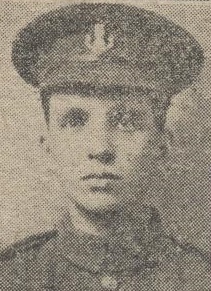
7th King’s Own Shropshire Light Infantry, 13639
Jesse Hull, born in Blackburn in 1896 was the son of James and Sarah Ann Hull. He had four brothers, William, John, Walter and Harold, and a sister, Elsie.
Before war broke out, Jesse was employed at Eli Heyworth’s—a prominent Blackburn textile manufacturer on Pringle Street. Jesse was also associated with St. Matthews Church.
Enlisting as war broke out, Jesse joined the 7th Battalion King’s Own Shropshire Light Infantry.
The 7th Regiment of the King’s (Shropshire Light Infantry) was formed in Shrewsbury in September 1914 and came under the command of the 76th Brigade 25th Division. The Regiment moved to Cockford on the Salisbury Plain, then to billets in Bournemouth. By May 1915 they had moved to Romsey, and then in June, to Aldershot. They landed in Boulogne 28th September 1915 and by 15th October the Brigade moved to the 3rd Division and on the 19th October they were transferred to the 8th Brigade in the same Division.
They were at the first attack on Bellewaarde, the actions at Hooge and the second attack on Bellewaarde in 1915.
In 1916, the Battalion took part in The Battle of Albert, 1st-3rd July 1916 where it took La Boiselle, Contalmaison and Mametz Wood. From the 3rd to the 13th of July the 4th Army carried out 46 “actions” in preparation for the next push, resulting in 25000 casualties.
This was followed by the Battle of Bazentin, (or the Bazentin Ridge) in which the Division helped to capture Longueval. Heavy artillery preceded a well-planned and novel night attack on the 14th July which was to enable the British troops to move into “No Mans” land close to the German barbed wire ready to rush into their trenches when the barrage lifted. In the centre of the attack, events did not go well for the 3rd Division; the German wire was uncut and the defenders were alerted.
Typical of the Division’s misfortunes was the 7th Battalion King’s Shropshires which lost 8 officers and 200 other ranks.
The 7th suffered more casualties than any other with 1048 killed in action and earned more battle honours. Edging through the second German defensive complex they ran into stiffening enemy defence at Guillemont, Delville Wood and Longueval, High Wood and Pozieres. Attack and counter-attack ground relentlessly on as the British crept forward. The 3rd Division captured Longueval. The Division held a sector of the line north of the River Ancre, and again, just as in the Bazentin battle, the Division is recognised as having been in action during the Battle of Pozieres, 23rd July to 10th August 1916 - a two-week struggle for the French village and the ridge on which it stands. Though British Divisions were involved in most phases of the fighting, Pozières is primarily remembered as an Australian battle. The fighting ended with the Allied forces in possession of the plateau north and east of the village, in a position to menace the German bastion of Thiepval from the rear.
As the fighting continued around Pozieres; Jesse Hull was killed. Jesse has no known grave, but is remembered on the Thiepval Memorial to the Missing on the Somme, Pier and Face 12 A and 12 D.
Letter I
Isherwood William Albert
Corporal William Albert Isherwood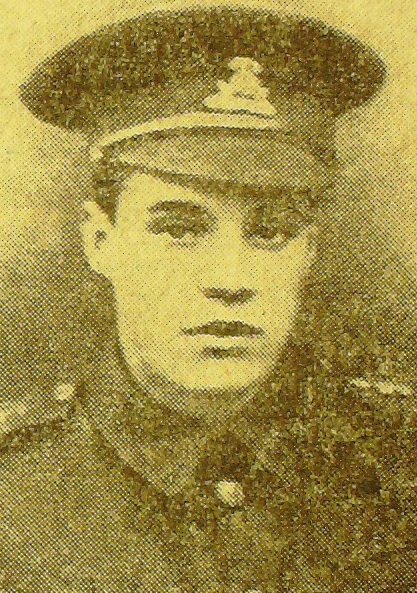
1st Lancashire Fusiliers, 5206
William Albert was the sixth son of a family of eight (five girls and three boys). His father, William, was a cotton spinner. It would appear that William Albert was living as a boarder at Bowness-on-Windemere, at the time of the 1911 Census, whilst serving his hairdressing apprenticeship in the employment of Mr William Astley, who was also listed as a boarder and employer of the same address. He had previously been employed as a hairdresser employed by Mr Hacking of Accrington.
William Albert enlisted into the Lancashire Fusiliers early in September 1914 and entered the “Theatre of War”, 4th August 1915. He was present at the famous Lancashire landing at Gallipoli in Turkey, where he was wounded. He was sent to Egypt to recover, and from there, was drafted to France.
Another brother, Fred Isherwood, five years younger than William Albert was lost on HMS Hampshire whilst serving as a “boy”. The ship went down 5th June 1916 with Lord Kitchener on board whose body was never recovered. Fred was just 17 years of age. A sister was reported as serving as a nurse in a military hospital.
It was on 1st July 1916, as the Battalion formed up to fight in the Battle of Albert, that William was killed. He was 24 years old.
An announcement confirming that William Albert had been killed in action was published in “The Blackburn Times”, 28th April 1917, nine months after he was previously posted as “missing”.
William Albert is commemorated on the Thiepval Memorial, France, Pier and Face 3 C and 3 D.
Private William Jackson
Private,25018, Royal Inniskilling Fusiliers, 10th Bn.
1st July 1916
Thiepval Memorial, Pier and Face 4D, 5B
Letter K
Kelly James | Kenyon Richard
Private James Kelly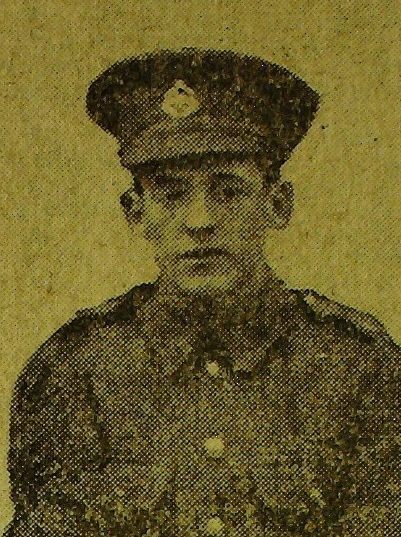
2nd East Lancashire Regiment, 10529
James Kelly, of 14 Oldham-street, Blackburn, was born in 1893. He was the son of Peter and Mary Ann Kelly, one of six children, nearly all of whom would end up working in a Cotton Mill.
James decided that life as a cotton weaver was not for him and he joined the Army, in 1911. He enlisted into the 2nd Battalion East Lancashire Regiment, and was with them in Wijnberg, South Africa in 1914 when war was declared.
The Battalion received orders to return to Europe. James arrived in France by the end of 1914. He would fight with the 2nd Battalion through the next two years, fighting at the Battles of Neuve Chappelle, Loos and Aubers Ridge.
After months of fighting on the Somme, the Battalion was taking the strain of work towards Le Transloy. Apart from the constant bickering between trenches, the work in this area was very strenuous. Battalions spent sixteen consecutive days in each tour of duty in trenches, of which eight days were spent in front-line trenches and the remainder either in support or reserve trenches. The whole system was continually shelled, and large working parties were required daily from the companies in support and reserve.
The last tour in these trenches was more than usually strenuous: it lasted for twenty-four days, and was marked by a considerable increase of hostile trench-mortar and artillery fire, the result of abnormal raiding activity on other parts of the line.
The Battalion moved from Fouquereuil on October 14th, and travelled by train to Pont Remy. From this pointthe Battalion went in buses to Meaulte (2 miles south of Albert) and thence to Montauban, where the 8th Division was assembled as part of the XIVth Corps.
On the night of the 18th/19th the 8th Division relieved the 6th Division, with all three brigades on the line, Les Bceufs-Guedecourt. This relief was preparatory to an attack to be made by the XIV Corps, in conjunction with a French Corps on its right, with the object of establishing a line from which the German position known as the Transloy ridges could be attacked from the south-west.
On 23rd October, as part of this operation, James Kelly was killed. Here is the official war diary for that day:
23rd A dull misty morning - the C.O. saw all Coy. Commdrs.at 6 a,m, and arranged final details, "A" and “D” to carry out the attack assault “B” in support and “C” in reserve.
C.O. went round the front line at 8 a.m. Zero hour fixed for
11.30 a.m.
11.34 Capt. Graham attached to 24th Infty. Bde.as liaison officer arrived at Battn. Head Qtrs to say that zero hour had been postponed until 2.30 p.m. Luckily the coys. in the front line had heard something from an Artillery F.O.O, and the two Coy, Commdrs concerned - "A and "D" - Capt. EB.H. Delmege and Lieut.W,Y, Paton respectively - were in consultation as to whether they should attack, when 2/Lieut W.E.B Lowe arrived with a message to them from Battn. Head.Qrs.
A disaster to the Battn.was narrowly arrested.
At 11,46 a.m. our heavies commenced to drop very short - one 8” shell falling in Battn. Head qrs. and others along RAINBOW TRENCH doing much damage to our trenches and
burying four Battn. Lewis Gunners, and three gunners of the Bde, Machine Gun Coy.
In spite of repeated appeals, shells continued to drop short until 2.10 p.m.
Battn.HQ.was forced to evacuate the only dug-out in the trench and move about, to avoid being blown up.
At 2.30 p.m., the assault was delivered under cover of our artillery barrage, 'fixed." and
creeping". The men advanced with the greatest gallantry and were at once in the German
trenches. No precise news of what occurred, reached battn. HQ. before 4.15 p,m. when it became clear from the somewhat conflicting reports that the attack had succeeded in carrying the enemy trenches with the exception of the point at junction of SUNRAY and CLOUDY trenches, which turned out to be not all isolated enemy post, but part of their main front line, which was not shown in the air photo of 21.10.16. but had evidently been
dug between that date and 23rd Oct. Between 5 and 6 p,m, the enemy barrage was intense specially along the RAINBOW Trench line. HQ.had again to evacuate the dug-out as it was frequently struck and the single entrance faced towards the enemy – it consisted only of 8 steps. Orders were given to consolidate the trenches captured, MILD Trench, and place blocks in STORMY Trench and trench leading to the point referred to above.
"A" and “D” Coys.were withdrawn to SHINE Trench from where they had attacked and "C" & "D" sent up to garrison MILD Trench. The1/Worc. also sent up one coy. to act as a reserve which was also placed in SHINE trench.
Rain came on about 7 p.m. which rendered the work very difficult, the night was particularly dark which also hindered matters and the communications, always bad, had been rendered much worse by the enemy's heavy shelling. Rations and water failed to reach us. The collection and evacuation of the wounded was very difficult.
Casualties during the action, 7 officers killed, 5 wounded - (2 at duty), Other ranks killed
30. Wounded 125 Missing believed killed.
Private James Kelly fell, along with 154 other ranks that day. He has no known grave, but he is remembered on the Thiepval Memorial to the Missing on the Somme, Pier and Face 6 C.
Private Richard Kenyon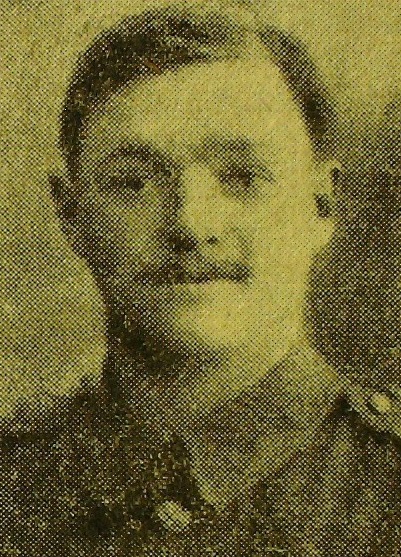
7th Loyal North Lancashire Regiment, 13769
Richard Kenyon, born 1889 in Blackburn, was the son of Margaret and Richard Thomas Kenyon. According to the 1911 census both his parents were cotton weavers, although this was not what Richard Kenyon would move on to, unlike so many of his contemporaries. Richard was originally employed as a “drawer-in” at a mill in Dewhurst Street but at some point during 1913 he moved to Manchester in order to work as a boatman. At 5 feet 11 ½ inches Richard was considered tall at the time.
When war came, Richard enlisted into the 7th Loyal North Lancashire Regiment, “The Preston Pals”. He served with them at the Battle of Loos in 1915, although after this he was evacuated to hospital for two weeks suffering from impetigo.
By July 1916, the Battalion has gained some battle experience, but was still waiting to be called upon for the Battle of the Somme.
A good many days in the middle of the month of July were spent by the Battalion in camp in Henencourt Wood near Albert, but on the 19th they received orders to be ready to move to bivouacs near Fricourt ; that evening the Brigade marched off.
"7 p.m. our Lewis guns," so the War Diary tells us, "brought down a German aeroplane just in front of our front line. It burst into flames and both men were burnt to death."
At this time the central British position was not by any means a favourable one, since it formed a long salient bending from High Wood through Delville Wood to Guillemont, and it was everywhere exposed to direct observation from the German position.
Since the 15th July several attempts had been made to drive the enemy from High Wood, mainly by the 33rd Division, and in one of these a brigade of the 19th Division, the 56th, had taken part: the Battalion was not, however, engaged. None of these attempts had met with the wished-for success, and now, on the morning of the 23rd July, the Pals would go into battle.
"B" and "C" Companies of the Battalion moved forward to the attack at 12.20 on the morning of the 23rd and reached their objective, having suffered very heavy casualties, and "C"—now only forty-five strong—then advanced up a road on the left, but was held up by machine gun fire on passing over the crest of the hill. "A" Company was then ordered to prepare to renew the attack, but at this moment, Lieutenant Porter, the commander of " C " Company, came back and reported that his company had incurred heavy losses, that his men had advanced to within two yards of the German trench and could get no further by reason of the opposing machine-gun fire. "A" Company's attack orders were now cancelled and its commander was directed to consolidate the front line and endeavour to hold it against any counter-attack.
A report now came in from 2nd Lieutenant Tovani that Captain Thompson and 2nd Lieutenant H. Hoyle of his company had been killed, and that the company had been held up by German machine-gun fire only a few yards short of the enemy front line; and 2nd Lieutenant Tovani then withdrew the small remnant of the company—some fifty men only—to the front line. Companies of the East Lancashire and Cameron Highlanders now came up to strengthen the position. A Field Company R.E. was also sent up and helped to consolidate the captured first objective, to wire the front and help to dig communication trenches back from the right towards Crucifix Corner.
At 8.5o p.m. the Battalion was relieved and went back to dug-outs in Mametz Wood, having during the last four days had eleven officers and 290 other ranks killed, wounded and missing.
Private Richard Kenyon was one of the 290 other ranks killed that day. He has no known grave, but is remembered on the Thiepval Memorial to the Missing on the Somme, Pier and Face 11 A.
Letter L
Lang George | Lang James Randolph | Livesey Harry | Livesey Ralph
Longworth Fred | Lowther Arthur | Lowther William | Lund Thomas Edward
Lyons John
Private George Henry Lang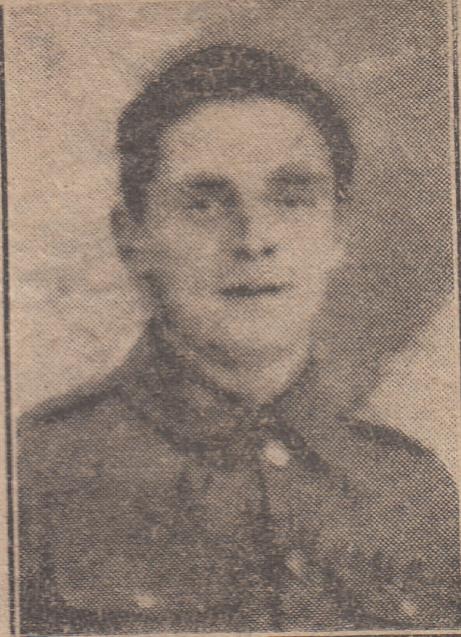
18th Lancashire Fusiliers, 16585/24860
George Henry Lang was the son of Robert and Jane Ellen – they had had twelve children but eight had died, his three surviving brothers were Herbert, Seth and Thomas Elliott. The family, like so many in Blackburn worked in the cotton industry. George was married in 1908 to Jane Ellen Bleasdale but lived at home with his parents and brothers at 13, Salisbury-street. His wife Jane Ellen and their son Leslie George aged one and a half, lived with her brother and sisters at 540, Whalley New-road.
George had originally joined the Border regiment, number 16865, but had had an accident and on recovery been transferred to the Fusiliers. He went out to the front in 1917 and was killed on 15th April. In March 1917, the German armies on the Somme carried out a strategic withdrawal known as Operation Alberich. They destroyed everything on the ground that they left: flattening villages, poisoning wells, cutting down trees, blowing craters on roads and crossroads, booby-trapping ruins and dugouts. The withdrawal was to an immensely powerful and shorter line, positioned to take every tactical advantage of ground.
It was as the British advanced to this line that George was killed. George is remembered on the Thiepval Memorial, Pier and Face 3 C and 3 D.
Private James Randolph Lang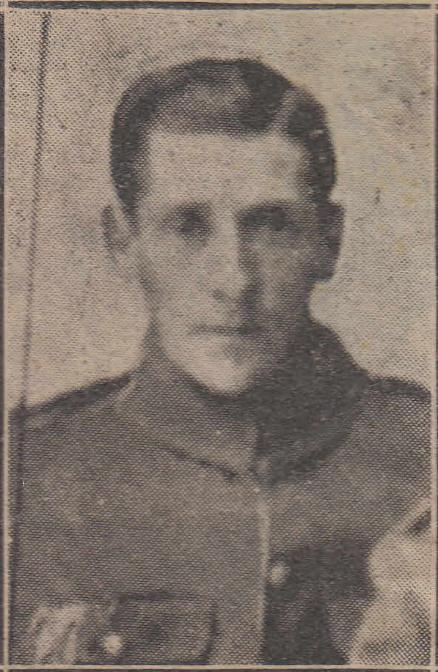
2nd/5th Lancashire Fusiliers, 203746
James Randolph Lang was born in 1887 and he was the son of William and Alice Lang. James had a brother and sister, William and Margaret. The family lived at 6, Hardman-street which is in the parish of St. Luke’s. According to the 1891 census all the family were born in Blackburn, apart from Alice, who came from Hoghton.
The family worked in the cotton industry. After Alice died in 1899, the family were separated. James’ records show that he had become a game, fish and poultry dealer living at 82, Newbold St. Rochdale when he enlisted, but he had formerly resided with his sister Mrs. Blackburn, and her husband Robert, at 308, Livesey Branch- road in Blackburn.
James enlisted into the 2nd/5th Lancashire Fusiliers. After initial training, he was sent to France, where the Fusiliers joined the Highland Division. In early May 1915, the Highland Division was hurried to the defence of Ypres. The enemy had attacked on 22nd April 1915, using poison gas for the first time. All available reserves were deployed to stop the Germans taking advantage of the initial surprise. The Division remained in action until moved to the area of Estaires on the River Lys, on 19th May.
After fighting in the Battle of the Somme in July 1916, the Fusiliers went on to fight in Ypres in 1917.
The Battle of Menin Road Ridge [After two less eventful tours in the Ypres area, the Division took part in this attack on 20th September 1917. This was a successful assault in the area of Pheasant Trench, but strong resistance at the fortified Malta, Rose and Delta Houses caused many casualties. The Division was relieved again on 25th September.
The capture of Bourlon Wood. The Division attacked in the area of Cantaing and Flesquieres on 20th November 1917. The first day's assault was an overwhelming success, new tactics having proved decisive. The reserve units, deployed to continue the assault next day, moved into action at 10am, halting on the Premy Chapel - Graincourt road for the arrival of the tanks, now depleted after the main assault. But the tanks were late in arriving, and the infantry attacked without their assistance, being halted by a storm of machine gun fire. After suffering heavy losses the Division made several more fruitless attacks in the direction of Fontaine-Notre-Dame.
It was reported that James, aged 30 years, was killed outright probably in the action around Cantaing and Flesquieres on 20th November 1917.
James is remembered at St. Andrews, (was on Livesey Branch Rd.) and also on the Thiepval Memorial, Pier and Face 3 C and 3 D.
Captain Harry Livesey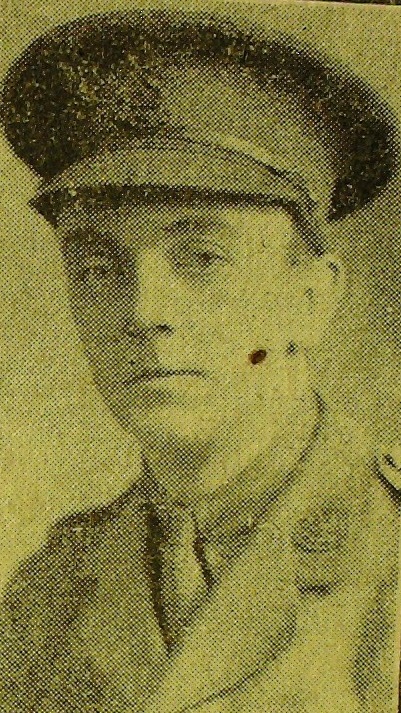
11th East Lancashire Regiment
Harry was the only son of Robert and Corrinna, who also had 2 daughters, Amy & Daisy who were 2 years and 4 years junior to Harry. His father, Robert, was a Justice of the Peace, and Harry was obviously born into a very wealthy and privileged family. He was educated privately at Rossall School, Fleetwood and then on the Continent. He travelled extensively throughout Europe and twice around the world on company business in his capacity of Director of Henry Livesey, Greenbank Ironworks.
Joined up immediately at the outbreak of war, aged 32 and was gazetted to the Accrington battalion of the East Lancashire Regiment with the rank of Lieutenant on 17th September 1914, and was promoted to Captain as early as 20th October 1914. He served in Egypt before moving to the Front in January 1916.
For the attack on Serre, on the opening day of the Somme offensive, Harry led the second wave of the battalion, comprising of 2 platoons each of W and X Companies. In the early hours of Saturday, 1st July 1916, the four platoons deployed in Copse Trench, some 50-70 yds behind the front line. At 7.22am, Harry, walking stick in one hand, revolver in the other, led his men into No Man's Land where they lay down on the ground 50 yds behind the first wave. At 7.30am, as the British artillery bombardment lifted from the German front line, Harry and his men clambered to their feet and followed the first wave forward. Machine gun and artillery fire quickly wrought havoc throughout the advancing lines of men. Capt. Arnold Tough, leading the first wave, was killed within minutes leaving Harry to lead the shattered remnants of the first two waves. Along with a handful of men, Harry found a way through the wire entanglements and into the German front line. Exactly what happened in the following minutes is largely unknown.
Harry’s orderly, Private Clarence Glover, described how the group was faced by five Germans coming round a corner, the first of whom threw a bomb which grazed Harry’s face bur he returned fire with his revolver, killing all five of the enemy. The group held on desperately, bombing the Germans back until their bombs were exhausted. The last he saw of Harry was when, while attempting to return to the British lines, the pair made for a shell hole as another shell exploded nearby. Private Glover was one of the few of Harry’s men who managed to escape with his life. He was reported in a local newspaper as saying that Captain Livesey had killed five of the enemy with his revolver. Despite this, Captain Livesey received no gallantry award.
A commonly held belief is that the entire battalion died in no man's land, yet as many as 100 men, led by Captain Harry Livesey, broke through the barbed wire and into the enemy front line. Hardly any of those men returned to tell their story.
Another letter came to light, describing the Pals' advance, from Harry’s 2nd in command, Lieutenant Gorst who wrote: "We did our job and did it well (the regiment fought simply magnificently), but every officer who went into the attack is in hospital or in his grave. Captain Harry Livesey, who commanded my Company, will I believe be recommended for the VC. A very gallant officer, he was hit in the arm getting over the parapet, hit in the chest half way across, hit in the head on the German wire, and he got into the German trench, cleared a part of it and held it till he was hit in the face by a rifle-grenade, and died."
His bravery in which he led his few remaining troops into enemy trenches, in spite of being seriously wounded himself, has to be commended. A chivalrous and well beloved man, by his many friends and by the men who served under his command. His heroic actions should have received recognition.
An announcement of Harry’s death, a photograph and a resume of his career, was made in the Blackburn Times, 13th July 1916, his family having been informed of the sad news the previous Saturday
His name is commemorated in Blackburn Cathedral, with an inscription on a metal plaque. He is also commemorated on the Thiepval Memorial, Pier and Face 6 C.
Private Ralph Livesey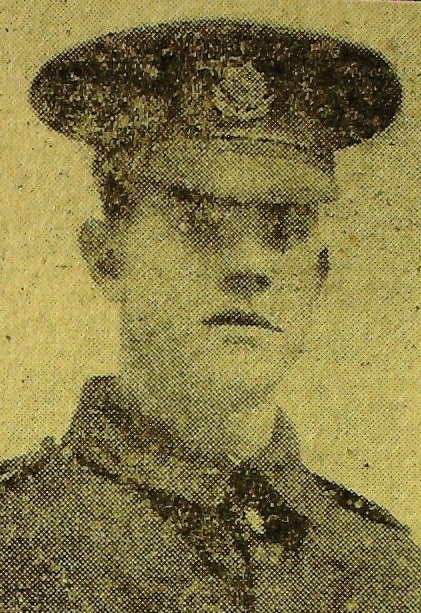
13th East Yorkshire Regiment, 28742
Ralph was the son of William B. and Hannah. In 1911 he was living at home, 46, Oxford-street aged 17 with his brother Thomas aged 27, a fruit hawker and his sister Lucy aged 21, a weaver.
His father, aged 56, was an engineer working with iron and steel and from Ralph’s obituary Ralph is described as a foundry worker for Willan & Mills, Rosehill Foundry, Blackburn.
Ralph enlisted in Blackburn to the 13th East Yorkshire Regiment, which had formed in Hull on 11 August 1914 by Lord Nunburnholme and the East Riding TF Association. Commonly known as the T'Others!
Ralph was sent to France on New Year's Day 1917. There is a record of Newby marrying a Ralph Livesey in September 1916 and Caroline Ann Newby is shown as resident at 26, Woolwich-street in 1919.
After the Battle of Ancre (13th–18th November 1916), British attacks on the Somme front were stopped by the weather. During the rest of 1916 and early January 1917, military operations by both sides were mostly restricted to survival in the rain, snow, fog, mud fields, waterlogged trenches and shell-holes. As preparations for the offensive at Arras continued, the British attempted to keep German attention on the Somme front. The Fifth Army was instructed by Field Marshal Sir Douglas Haig to prepare systematic attacks to capture portions of the German defences. Short advances could progressively uncover the remaining German positions in the Ancre valley, threaten the German hold on the village of Serre to the north and expose German positions beyond to ground observation. Artillery-fire could be directed with greater accuracy by ground observers and make overlooked German defences untenable.
Ralph was posted as missing in March 1917 and his wife, living at 26, Woolwich-street anxiously awaited news, as a comrade had stated he had seen Ralph taken prisoner.
There was no official confirmation of this and Ralph was deemed to have been killed in action on the 8th March 1917 having served just three months in France. Ralph is remembered on the Thiepval Memorial Pier and Face 2 C and at St. Matthews Church and was a member also of St. Matthews Conservative Club.
Private Fred Longworth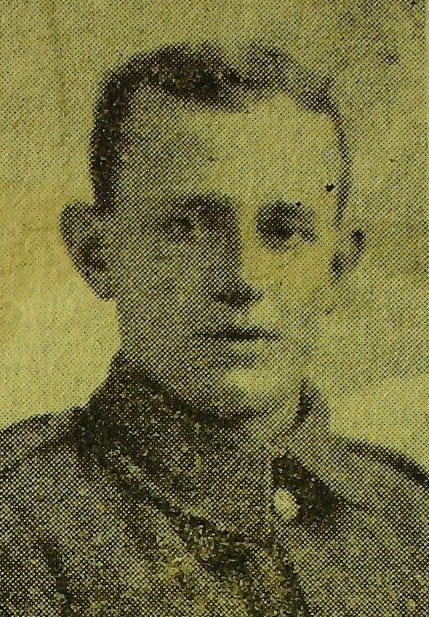
1st King’s Own Royal Lancaster Regiment, 21765
Fred Longworth was born in 1897, son of Solomon and Mary Ann, who were both weavers at the time of the 1901 Census, and were Licensees of the Lamb & Lion Hotel, Grimshaw Park at the time of Fred’s death in 1916. They also had a daughter, Polly, but Fred was their only son.
Fred was in the mill as a weaver at 14 years of age and left his looms to enlist in November 1915. He had only been in France 11 weeks, when he was killed at just 19 years of age.
The 1st Battalion of the King's Own Royal Lancaster Regiment was in Dover serving with the 12th Brigade, 4th Division when war broke out in August 1914. The 4th Division was held back from the original British Expeditionary Force by a last minute decision to defend England against a possible German landing. The fate of the BEF in France and the lack of any move by the Enemy to cross the channel, reversed this decision and they proceeded to France, landing at Boulogne on the 23rd of August 1914, arriving in time to provide infantry reinforcements at the Battle of Le Cateau, the Divisional Artillery, Engineers, Field Ambulances and mounted troops being still en-route at this time. They were in action at the the Battle of the Marne, the Battle of the Aisne and at the Battle of Messines in 1914. In 1915 they fought in the Second Battle of Ypres and moved south to The Somme. Between the 5th of November 1915 and 3rd February 1916, the 12th Brigade was attached to the 36th (Ulster) Division, providing instruction to the newly arrived Division. The 1st Kings Own were in action during the Battles of the Somme in 1916.
An announcement and photograph were published in Blackburn Times 29th July 1916. Fred is commemorated on the Thiepval Memorial, Picardy, France pier and Face 5 D and 12 B.
Private Arthur Lowther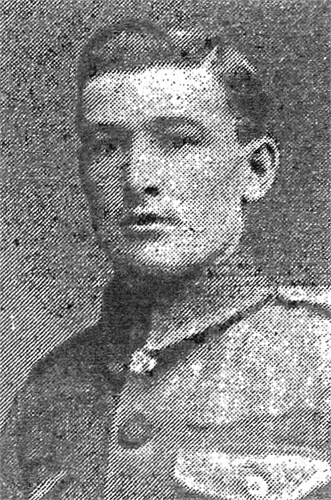
1st East Lancashire Regiment, 7334
Arthur Lowther was the son of Charles Henry and Sarah Hannah Lowther. Born in 1888, Arthur would grow up with 9 other siblings – George, William, Fred, Robert, Charles, Ellen, James, Nancy and Henry.
By 1911, Arthur was a Collier, like his father, and married Bridget Bulger. But being a Collier wasn’t for him. In 1912, Arthur joined the Army, enlisting into the 1st Battalion East Lancashire Regiment, no. 7334.
As war broke out, Arthur was on the reserve list, having just finished 2 years’ service. He was immediately recalled, and would join the Battalion in the first wave of replacements after their devastation at Mons, arriving in France on 18th December 1914. In less than a week, he was wounded.
In late June 1916, word was passed that the major offensive was coming, on the Somme. The 1st East Lancashire’s were to support the main attack on Beaumont Hamel.
On the morning of July 1st the bombardment of the enemy trenches became intense, but German machine-guns continued to fire from Beaumont-Hamel throughout the bombardment.
At 7.26a.m., the leading platoons of the assaulting companies moved out to a line taped-out in "no-man's-land," so as to be in line with the 1st Lancashire Fusiliers, of the 29th Division, who were to attack Beaumont-Hamel.
At 7.32a.m. "D" Company and Battalion Headquarters followed the attacking companies and established themselves in shell-holes.
A signaller accompanied the leading platoon of "A" Company, carrying a telephone and wire with orders to open communication from German front line, where Battalion Headquarters were to be established.
The personnel of the Headquarters followed up the wire and found the signaller in a large shell-hole just outside the German wire. Of course the wire was cut before it could be used, but the Headquarters remained in the shell-hole until 6p.m.
Immediately the guns lifted from the German front-line trenches, heavy machine-gun fire was opened from the German front line. Simultaneously the German artillery barrage came down some 200-230 yards in front of the front line and on all assembly trenches.
In spite of this terrific fire, the battalion advanced as steadily as if on manoeuvres until practically the whole battalion became casualties. Actually a few of the leading troops entered and passed the German front-line, but on the front of the right and centre companies the wire was found intact and no way through it could be found. Many men were killed on the wire while attempting to force a way through; among them was Sergeant Redmayne who was shot through the head just as he got out of the trench in front of Colonel Green. Many sought cover in the shell-holes close to the wire which they had vainly attempted to pass.
The survivors of the battalion occupied shell-holes in "no-man's-land" until they were able to retire to our trenches at dusk. All wounded capable of crawling were sent back first, followed by a rear-guard of unwounded men.
About 7 p.m. the battalion was relieved by the 1st Royal Warwickshire Regiment of the 10th Brigade which, with the 12th Brigade, was relieving the 11th Brigade. On relief the Brigade went into billet at Mailly-Maillet.
The strength of the battalion on July 1st was twenty-two officers and seven hundred other ranks.
In this onslaught, Arthur Lowther was killed. With bitter irony, his brother William was also killed, not 500 yards away, at Serre with the Accrington Pals. Along with his brother William, he has no known grave, but is remembered on the Thiepval Memorial to the Missing on the Somme Pier and Face 6 C. Their brother Robert was also killed, at Gallipoli in 1915. He too has no known grave, but is remembered on the Helles Memorial.
Private William Lowther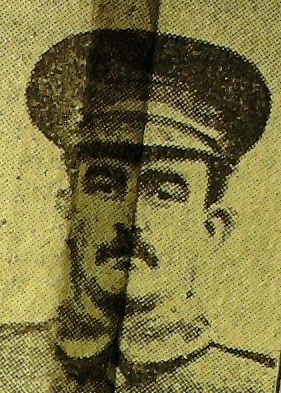
11th East Lancashire Regiment, 22125
William Lowther was the son of Charles Henry and Sarah Hannah Lowther. Born in 1882, William would grow up with 9 other siblings – George, Arthur, Fred, Robert, Charles, Ellen, James, Nancy and Henry.
By 1911, William was a Coal Miner at Lower Darwen Colliery, and had married Clara Smith in 1906. But being a Collier wasn’t for him.
As war broke out, William was on the reserve list, having just finished 2 years’ service. He was recalled, and would join the 11th Battalion East Lancashire Regiment, the Accrington Pals.
The war would become a family affair. His father Charles rejoined the Loyal North Lancashire Regiment, having formerly been a reservist. George had also been a reservist, and joined the 8th Border Regiment. Arthur had joined the 1st East Lancashire Regiment. Robert was also a reservist, and joined the 6th East Lancashire’s at Gallipoli. Charles also joined the East Lancashire Regiment.
In June 1916 the 11th Battalion—to which were attached details of the 94th Machine-gun Company and digging parties from the Pioneer Battalion (12th K.O.Y.L.I.)— left Warnimont Wood for the assembly trenches on the evening of June 30th, the last time it was seen as the original battalion, as almost every officer and man had enrolled during the formation of the unit.
The day was hot and dusty, but although the march was not like those which exist in the imaginations of war correspondents it was a march of well trained men, and of resolute minds and bodies, and, as at no other time, of one unit, welded together by one commanding officer over a period of eighteen months.
The assembly in trenches was considerably delayed by the congestion of other units, and it was further delayed by the fact that the trenches had been badly damaged by the German retaliation to the preliminary bombardment. However, about 2a.m., July 1st, the battalion was disposed as follows: the first wave, two platoons of "W" Company and two of "X" Company under Captain H. Livesey, occupied some of the bays of the front trench and the traffic trench between Matthew and Mark Copses ; the second wave, the two remaining platoons of "W" and "X" Companies under Captain A. Tough, in Copse trench ; the third wave, two platoons of "Y" Company and two of "Z" Company under Lieutenant G. G. Williams, occupied Campion trench ; and the fourth wave, the two remaining platoons of "Y" and "Z" Companies under Captain H. Riley, occupied Mark trench.
At 5a.m. the artillery opened a heavy bombardment of the enemy trenches, which lasted until 7.30a.m. and drew considerable retaliation. At 7.20a.m. trench mortars in forward saps opened intense fire on the German front line, under cover of which the first wave advanced in extended order as far as the British barrage permitted. Five minutes later the second wave advanced and lay down 50 yards behind the first.
At this time the German front line was seen to be heavily manned, about a man a yard. In spite of the barrage these men opened heavy machine-gun and rifle fire on the first two waves, causing many casualties.
At the same time the German artillery fire was also intense. No-man's land, the British front trench and 50 yards behind it, were deluged with H.E. shells and a shrapnel barrage swept the ground up to 500 yards behind the front line, causing many casualties in the advancing third and fourth waves, which, however, moved steadily forward.
At 7.30a.m. the artillery barrage lifted from the German front line, and the remnants of the first two waves, followed at some distance by the third and fourth waves—already much reduced—advanced to the attack. Soon after 8a.m. two companies of the 13th York and Lancaster were ordered to reinforce the battalion, but they suffered very heavy casualties in moving forward and were unable to get further than the British front-line trench.
Observation of the attacking troops was much hampered by mist and by a smoke barrage on the German third line. However, small parties of men on both flanks of the battalion front were seen to enter the German front line, and later they were seen between the first and second lines, and about
8a.m. they were seen to enter the third line.
About 8.20a.m. the Artillery observing officer attached to the 94th Brigade reported that British troops were passing through Serre. The Intelligence Officer of the 92nd Brigade also reported that he had seen about a hundred men of the nth East Lancashire just west of Serre.
At 8.30a.m. fighting was still going on in the German first line and continued for some time until the enemy shelled both their first and second lines. About 10.15a.m., when the shelling stopped, German bombing parties were seen fighting their way up to their second and first lines where they remained for the rest of the day. Some of the men were seen standing on the fire-step shooting at any of the wounded lying in No-man's-land who showed signs of life.
From 10.15a.m. onwards there was little change in the situation, and about noon Lieut.-Colonel Rickman set to work to put his front line into a state of defence with what men he had with him, i.e. 1 officer, 55 other ranks, most of them wounded, and two Lewis guns.
At 1 a.m., July 2nd, the remnant of the battalion was relieved and withdrawn to Rolland trench, where it was reinforced by 4 officers and 60 other ranks.
In this onslaught, William Lowther was killed. With bitter irony, his brother Arthur was also killed, not 500 yards away, at Beaumont Hamel with the 1st Battalion. Along with his brother Arthur, he has no known grave, but is remembered on the Thiepval Memorial to the Missing on the Somme, Addenda Panel 8.
Their brother Robert was also killed, at Gallipoli in 1915, and he too has no known grave, being remembered on the Helles Memorial
Private Thomas Edward Lund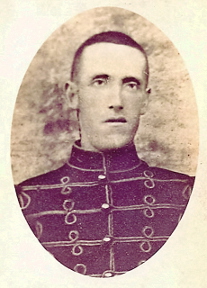 8th East Lancashire Regiment, 5971
Thomas Edward Lund was born in 1877, in Stanley-street, Blackburn. Thomas was part of 3rd Battalion East Lancashire Regiment, spending 7 years in the Regiment from 1898 before leaving to become a labourer and re-join his family at 154 Bottomgate.
He re-enlisted at the outbreak of war in the 2nd Battalion East Lancashire Regiment and a diary of his adventures during the first 10 months of the war was eagerly read when published in two successive issues of ‘’The Blackburn Times’’. He had been in France for about 9 months when he was wounded.
After his return to England, he recovered from his wounds and was sent back to France, but this time to join the 8th Battalion. Given his age and experience, it is likely he was transferred to bolster the ranks with experienced men.
In the early hours of 15th July 1916, Lieutenant-Colonel Mackay OC 8th East Lancashire received the specific orders that 112th Brigade would attack at 9.20am, after an hour’s bombardment of the village of Pozieres, the key to the German 2nd line of defence.
"A" and "B" companies in the front line "C" and "D" companies in support. Owing to artillery barrage and machine gun fire the battalion was unable to achieve its objective but was gained by other units of the brigade and consolidated existing trenches to east and south east of Pozieres.
At 5:30pm a further bombardment of Pozieres was carried out and the battalion with remainder of brigade attempt another assault on Pozieres at 6-8pm, this assault was again held up by machine guns and the wire not being cut in the villages surrounding the village.
The battalion lead the brigade in the assault on the village - the men's first experience of going 'over the top'. They were to lose over 350 casualties including almost 100 killed outright. The battalion would never be the same again.
The battalion handed over the trenches to 10th Battalion Loyal North Lancashire Regiment at 2:30am and proceeded to trenches in close support. 56 other ranks were killed 276, wounded and 33 missing.
Private Thomas Edward Lund was killed in this action. He never married. He is remembered on the Thiepval Memorial Pier and Face 6 C.
Corporal John Lyons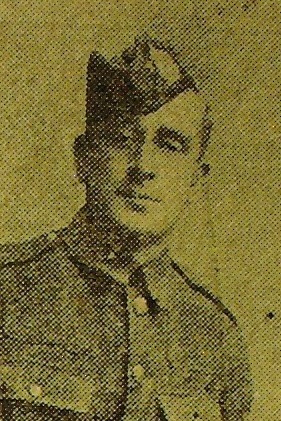
7th King’s Own Scottish Borderers, 13598
John Lyons was born in 1891 to John, an overlooker, and Mary Jane Lyons, grocer’s shop owner, and lived at 9 Lark Hill along with his brothers Austin and James, and his sister Ellen.
John married Mary Wilson in 1912, and worked with his father as a weaver in the local mill. In his free time he was a keen playing member of the St. Chad’s football team.
John was a private when he enlisted into the King’s Own Scottish Borderers, but was promoted to Corporal sometime during his service. He was gassed at the Battle of Loos in the autumn of 1915.
John was killed in action on the 18th August 1916 at the Battle for Pozieres. The Battle of Pozières 23rd July – 3rd September 1916 was a two-week struggle for the village of Pozieres and the ridge on which it stands, during the middle stages of the 1916 Battle of the Somme. Though British Divisions were involved in most phases of the fighting, Pozières is primarily remembered as an Australian battle. The fighting ended with the Allied forces in possession of the plateau north and east of the village, in a position to menace the German bastion of Thiepval from the rear. The cost had been enormous for both sides and in the words of Australian official historian Charles Bean, the Pozières ridge "is more densely sown with Australian sacrifice than any other place on earth."
John is remembered on the Thiepval Memorial to the Missing on the Somme, Pier and Face 4 A and 4 D.