
 Loading more
Page 2
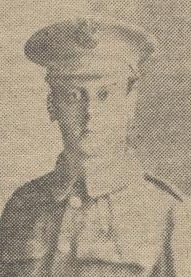
1st King’s Royal Rifle Corps, R/14599
Wilfred married Annie on the 23rd December, 1905. The army records show that they had two children, Alexander and Henry. Wilfred had previously been employed as a taper in a cotton mill.
Rifleman Wilfred Henry Hargreaves, of 1st Battalion King’s Royal Rifle Corps, was reported missing on 27th July, 1916 but his wife had to wait until 12th July, 1917 before the army decided to accept that he had died.
The records show a letter from his wife dated 2nd August 1917, in which she acknowledges receipt of the form from the army informing her that the army had official news to certify Wilfred’s death. The letter goes on to say Annie cannot draw her death money until the army send her a death certificate and asking for this to be done.
Wilfred’s Battalion was attached to the 2nd Division. In July 1916, the 2ndDivision were part of the 4th army and, it is likely therefore, that Wilfred was killed during the Battle of Delville Wood.
The Battle of Delville Wood was fought between 15th July and 3rd September 1916. Following the successful dawn attack of 14th July, the newly won British line formed a salient, the right side of which was threatened by Delville Wood. Before any eastwards attack on the German second position could be made it was vital that the whole of Longueval and Delville Wood was captured.
The South African Brigade was tasked with clearing the wood; and on 15th July they cleared the southern sector and then made a further advance before digging into their position.
The Germans retaliated with ceaseless shelling, machine gun fire and a succession of aggressive counter attacks. Fighting continued day and night as renewed South African assaults wore themselves out against German defences. The South Africans were eventually relieved after six days of continuous fighting, on 20th July, 1916.
Vicious fighting for the wood continued for another 6 weeks, the advantage continuously changing. The 27th July saw the 2nd division renew the assault, followed by the 17th division.
The wood was only completely cleared of Germans following the fall of Ginchy on 9th September, 1916.
Delville Wood remained the most costly action the South African Brigade fought on the Western Front.
Wilfred has no known grave and is remembered on the Thiepval Memorial to the missing on the Somme, Pier and Face 13 A and 13 B.
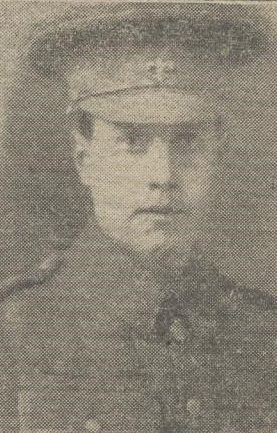
9th King’s Royal Rifle Corps, R/13285
Private joseph Hartley of the 9th battalion, king’s royal rifle corps was reported killed on 24th Agust 1916. He was 32 years of age.
Joseph was a single man, one of several brothers and sisters born to James and Mary Hartley. Joseph was living at 11 Frederick-street, Blackburn when he enlisted on 25th May 1915. He gave his age as 30 years 5 months and his occupation as a labourer. He was 5’ 4” tall and weighed 148 pounds. He gave his next of kin as his sister Ada.
Before enlisting he was employed by Whittaker and Co. Ltd., at Grimshaw Park, Blackburn.
By 1916, Joseph had been serving for nearly 2 years, and found himself about to embark on the Battle of the Somme, around Delville Wood.
Delville wood was a tract of woodland, nearly 1 kilometre square, the western edge of which touched the village of longueval in the Somme. On 14th July 1916 the greater part of longueval village was taken by the 9th (Scottish) division and on the 15th, the South African brigade of that division captured most of delville wood. The wood now formed a salient in the line, with waterlot farm and mons wood on the south flank still in German hands, and, owing to the height of the trees, no close artillery support was possible for defence.
The three South African battalions fought continuously for six days and suffered heavy casualties. On 18th July, they were forced back and on the evening of the 20th the survivors, a mere handful of men, were relieved. On 27th July, the 2nd Division retook the wood and held it until 4th August when the 17th division took it over. On 18th and 25th August it was finally cleared of all German resistance by the 14th (light) division.
Private Hartley was killed in this action. He has no known grave and is remembered on the Thiepval memorial to the missing on the Somme, pier and face 13 A and 13 B.
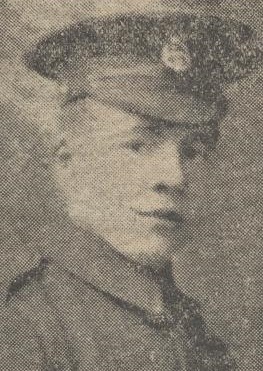
2nd East Lancashire Regiment, 19489
Sergeant William Hartley of the 2nd Battalion, East Lancashire Regiment was reported killed on 7th July 1916. He was 20 years of age.
He was initially reported as missing and a report in “The Blackburn Times” in July 1917 said a Lieutenant in his company had written to William’s mother expressing hope that he had been taken prisoner. The Lieutenant went on to say that William was always cheerful and a good soldier and that he was sorry to lose him.
The same article said William had been with the East Lancashire Territorials when war broke out and had proceeded to Egypt with the regiment, and from there, to the Dardanelles where he was wounded three times.
Sergeant Hartley was a single man who was born in Stalybridge. He was one of four children born to Mary Ann and John Thomas Hartley. The family lived at 29 Kay-street, Blackburn.
Before enlisting, he was employed as a weaver at Britannia Mill. He was also connected with Christ Church, Blackburn.
The 2nd Battalion took part in the battle of Albert from 1st July 1916 to 13th July 1916. The Battle of Albert is the official name for the British efforts during the first two weeks of the first Battle of the Somme. As such, it includes the first day of the Somme, the most costly day in British military history. The 2nd Battalion were in action near Contalmaison on 7th July and it is probable that this is where Sergeant Hartley was killed.
Sergeant Hartley has no known grave and is remembered on the Thiepval memorial to the missing on the Somme, pier and face 6
7th Queen’s Own (Royal West Kent) Regiment, G/2260
Absalom Haworth was born in 1891, the son of William and Janet Haworth. Born a twin with John Haworth, he had two older brothers, Walter and Edwin. Janet and the children are said to have been born in Turton, a village outside of Darwen, but in later census returns they are listed as born in Blackburn. As usual the family work in the textile industry but in 1901, living at 59, Bolton-road, Edwin is described as a postman.
In 1911 they moved back to Rockcliffe-street, number 93, with just the twins and Margaret at home with their parents.
Absalom enlisted in September 1914 into the 7th Queen’s Own Royal West Kent Regiment, which formed part of 18th Division. The units of the Division initially concentrated in the Colchester area but moved in May 1915 to Salisbury Plain. King George V inspected the Division on 24th June. Embarkation for France began on 24th July and units moved to assemble near Flesselles, completing concentration there five days later.
For the next year, the Battalion would get to grips with trench warfare, but in 1916 were to get their first big assault, at the Battle of Albert, the first Battle of the Somme.
On the first day, British forces at the southern end of the British line made an impressive advance alongside the French Sixth Army, capturing the villages of Montauban and Mametz and breaking through the enemy's defensive system. North of Mametz the attack was an almost unmitigated failure. The situation led to a redirection of effort, with the offensive north of the River Ancre effectively being closed down and all future focus being on the line south of Thiepval.
The loss of 60,000 British casualties on 1st July was not repeated and in the fighting from 2nd–13th July the British lost another 25,000 men.
It was on 2nd July, the second day of the assault, that Absalom was killed. In the records of soldier’s effects Janet is named as the sole legatee claiming an amount of £2-1s-11d.
Absalom has no known grave, but is remembered on the Thiepval Memorial to the Missing on the Somme, Pier and Face 11C.
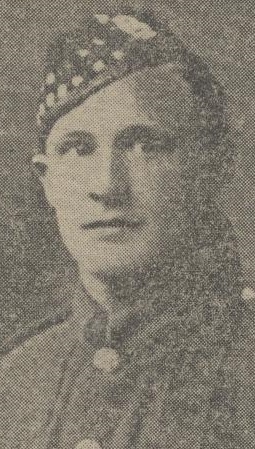
1st King’s Own Scottish Borderers, 13481
Phillip Haworth was the son of Margaret and Edmund Haworth. The 1911 census places Phillip living with his parents at 59 Nuttall-street, Blackburn. He was one of 7 children and he was unmarried. He and his brothers and sisters were weavers at Albion Mill.
Phillip enlisted shortly after the outbreak of war, on 29th August 1914, and joined the Kings Own Scottish Borderers (KOSB’s). He was allocated to the 1st Battalion which was a professional Army Unit.
As part of the 29th Division, the battalion was sent to Gallipoli. The HMT Royal Edward sailed form Avonmouth on 28th July 1915 with reinforcements for the 29th Division. Phillip Haworth was one of these men. On 13th August 1915 the ship was torpedoed by the UB-14, she sank in 6 minutes with significant loss of life. Phillip was one of the survivors, and re-joined the Battalion at Cape Helles.
The Battalion was evacuated from Cape Helles and, after a period in Egypt, they moved to France. They took part in the Somme offensive, before moving to the Ypres sector then taking part in the Battle of Cambrai.
On 1st July the Battalion were in action near Beaumont Hamel adjacent in the line to the Newfoundland Regiment. The 1st Battalion KOSB’S suffered 558 casualties in this action but Phillip Haworth managed to escape this unscathed. He remained with the Battalion in the Somme area until January 1917, when the Battalion was heavily shelled on 22nd January. Phillip was killed in the bombardment.
Phillip Haworth has no known grave, but is remembered on the Thiepval Memorial to the Missing on the Somme, Pier and Face 4 A and 4 B. His elder brother William was also in the army and was badly wounded in July 1916.
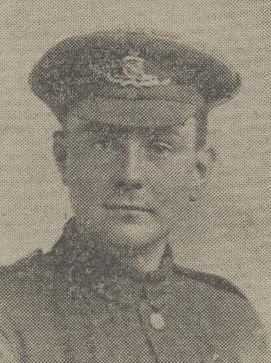
104th Brigade Royal Field Artillery, 56729
Gunner Robert William Haworth of “A” Battery, 104th Brigade, Royal Field Artillery was killed in action on the 12th July 1916. He was 24 years of age.
He was a single man, one of 5 children, and lived with his parents, Mr Robert Livesey Haworth and Mrs Jane Haworth at 17 Fore-street, Lower Darwen.
In a letter to his parents advising them of Robert’s death, Major J. C. Walford, who was in charge of his battery wrote:
“With the deepest regret I have to tell you of the death of your son. He was killed in action this morning, painlessly and instantaneously.
I hardly dare to intrude on your grief further except just to add the true sympathy of every soul in the battery. He was a fine soldier in the best sense of the word and no one was more popular with us all. I will give all particulars when he is buried at a later date.”
Gunner Haworth enlisted on 14th December 1914 and was drafted to France on 12th August 1915. He had been home on leave in April before returning to his unit.
The obituary notice which appeared in “The Blackburn Times”, 29th July 1916 reported that Robert attended the United Methodist Free Church, was a member of the choir and Treasurer of the Band of Hope Society.
A memorial was held in the church on Sunday evening (23rd July) and was conducted by the Reverend J. W. Tagg. There was a large attendance from relatives and friends of the deceased. At the close of the service the organist played the dead march in “Saul”; the congregation standing.
Prior to enlisting Gunner Haworth was employed by T. & R. Eccles, Lower Darwen. The 1911 census recorded him as a weaver.
Gunner Haworth’s battery was attached to the 23rd Division which took part in the Battle of Albert from 1st July 1916 to 13th July 1916. The Battle of Albert is the official name for the British efforts during the first two weeks of the first battle of the Somme. As such, it includes the first day of the Somme, the most costly day in British military history.
The 23rd Division captured Contalmaison on 9th July and Robert was killed a few days later.
Gunner Haworth has no known grave and is remembered on the Thiepval memorial to the missing on the Somme, pier and face 1 A and 3 A.
He is also listed on the war memorial in the grounds of St. James’ Church, Stopes Brow, Lower Darwen.
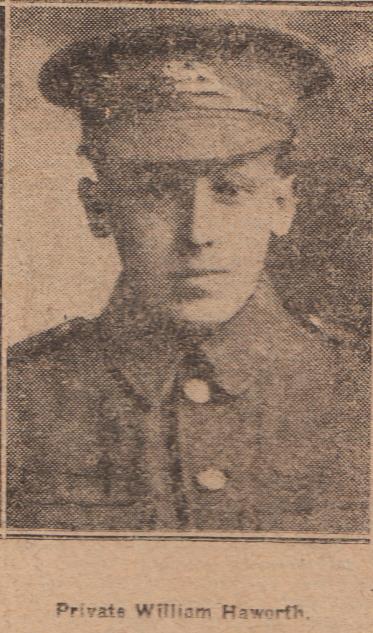
7th King’s Own (Royal Lancaster) Regiment, 18152
William Haworth, born 1883, was the son of William and Eliza Haworth, living at 7 St. James-street. His father was a spinner, and young William had two sisters – Alice and Susannah.
By 1911, William was married to Mary nee Cavavan. They had one child and lived at 61, Coddington-street which was between the railway line, the canal and Bottomgate. Mary’s mother Elizabeth, born in Bolton, lived with them. William worked as a weaver at Alexandra Mill on Audley Range just east of St. Joseph’s Church.
William enlisted originally into the Border Regiment in October 1914, but was transferred to the King’s Own (Royal Lancaster Regiment) shortly after. Following extensive training with 7th Battalion, William was sent to France in July 1915.
The Battalion served on the Western Front for the remainder of the war, taking part in many of the significant actions:
The Action of Pietre, a supporting/diversionary action during the Battle of Loos
Compared with the small-scale British efforts of spring 1915, this attack of six Divisions was a mighty offensive indeed - so much so that it was referred to at the time as 'The Big Push'. Taking place on ground not of their choosing and before stocks of ammunition and heavy artillery were sufficient, the opening of the battle was noteworthy for the first use of poison gas by the British Army. Despite heavy casualties, there was considerable success on the first day in breaking into the deep enemy positions near Loos and Hulluch. But the reserves had been held too far from the battle front to be able to exploit the successes and succeeding days bogged down into attritional warfare for minor gains.
The Battle of Albert in which the Battalion assisted in the capture of La Boisselle.
The Battle of Pozieres Ridge represented an attempt to exert renewed pressure on the strategically important central uplands, notably around the vital positions of Thiepval and Pozières. The job of securing the ridge was given to I Anzac Corps, with 7th Battalion King’s Own (Royal Lancaster) assisting.
At 12.30am on 23rd July infantry of the 1st Australian Division dashed towards the village, screened by an intense hurricane bombardment. Assisted by British 1st Division on the right and the 48th Division on the left, the Australians quickly secured their first objectives. Subsequent consolidation of the village encountered violent German counter-attacks and continuous enemy shellfire. The 1st Division held on amidst intense fighting until relieved by the 2nd Australian Division on 27th July. Repeated efforts were then made to move up the ridge beyond the village towards the 'windmill' and the German second line positions on the crest, which, after a series of costly local assaults, was in Australian hands by 5th August.
In was in this fight that William was killed. William Haworth has no known grave, but is remembered on the Thiepval Memorial to the Missing on the Somme, Pier and Face 5 D and 12 B.
2nd Coldstream Guards, 15791
Arthur Haydock was the son of Mathias and Ellen who lived at 36, Plane-street, Blackburn Arthur had an older brother and two sisters and his mother’s brother lodged with the family.
In 1911, Mathias, aged 61, worked as a collector for a doctor but twenty years earlier he was described as a musician and cloth overlooker and Ellen was a weaver.
Arthur was employed as a brewer’s labourer and the family lived on Plane Street. It is likely that he worked for Lion Brewery which was close to his home.
Arthur joined the Coldstream Guards just after war broke out in August 1914, but would spend the first year of war training, joining the 2nd Battalion as it moved to the newly created Guards Division in August 1915.
Arthur would go on to fight in the following battles:
The Battle of Loos 25th September – 18th October 1915
Compared with the small-scale British efforts of spring 1915, this attack of six Divisions was a mighty offensive indeed - so much so that it was referred to at the time as 'The Big Push'. Taking place on ground not of their choosing and before stocks of ammunition and heavy artillery were sufficient, the opening of the battle was noteworthy for the first use of poison gas by the British Army. Despite heavy casualties, there was considerable success on the first day in breaking into the deep enemy positions near Loos and Hulluch. But the reserves had been held too far from the battle front to be able to exploit the successes and succeeding days bogged down into attritional warfare for minor gains.
The Battle of Albert 1st -13th July 1916
In this opening phase, the British assault broke into and gradually moved beyond the first of the German defensive complexes on the Somme. Success on the first day in the area between Montauban and Mametz led to a redirection of effort to that area, for the initial attack was defeated with huge losses north of Mametz. There was a stiff fight for Trones Wood and costly, hastily planned and piecemeal attacks that eventually took La Boisselle, Contalmaison and Mametz Wood.
The Battle of Flers-Courcelette 15th- 22nd Sept 1916
A renewal of the offensive finally broke through the area that had proved so difficult since 14th July. Using a small number of tanks for the first time in history the British Army finally captured High Wood and pressed on through Flers and up the Bapaume Rd to Courcelette.
Arthur was killed on the first day of the Battle of Flers-Courcelette. He has no known grave, but is remembered on the Thiepval Memorial to the Missing on the Somme, Pier and Face 7 D and 8 D.
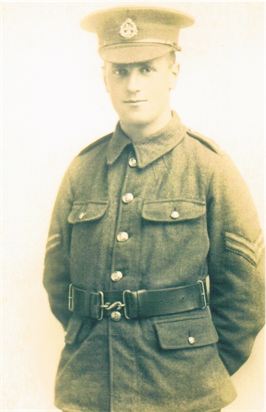
11th East Lancashire Regiment, 15283
Corporal Edgar Brindle Haydock was killed in action 1st July 1916. He was a member of the 11th Battalion, East Lancashire Regiment (the Accrington Pals). He was 24 years of age.
He was a single man, one of ten children born to James Henry and Mary Haydock and he was living at Spring Mount, Pleasington at the time of his death.
Edgar was born on 28th March, 1891 and he was baptised on 13th May, 1891 at St. Michael’s and all Angels’ Church, Blackburn. At this time he family were living at 152 Whalley New-road, Blackburn.
He took part in the Battle of Albert which is the official name for the British efforts from 1st July 1916 to 13th July, 1916. As such, it includes the first day of the Somme, the most costly day in British military history. Out of approximately 700 men, 585 were killed or wounded in about 30 minutes.
The objective of the Pals’ Battalions of 94th Brigade was to capture the hilltop fortress of Serre and form a defensive flank facing North-East and North. The attack was to be led by the 11th East Lancashire’s on the right and the 12th York and Lancaster’s (Sheffield City Battalion) on the left. The 13th and 14th York and Lancaster’s (1st and 2nd Barnsley Pals) were to support the two leading battalions. Against them, Serre was held by the 169th (8th Baden) Infantry Regiment.
In the early evening of 30th June, the 11th East Lancashire’s left their camp at Warnimont Wood for an arduous 7 mile trek to the trenches in front of Serre. At 2.40am on Saturday 1st July, the leading companies of the battalion reached the front line trenches to find them already heavily shell-damaged. The build-up had not gone unnoticed and, as daylight broke, the forward lines were again pounded by enemy shellfire.
At 6.30am, the British artillery commenced its final furious bombardment of the German front line. At 7.20am, Captain Tough led the first of the Battalion's four waves, 100 yds. into the nightmare of no man's land under the cover of artillery and mortar fire. A few minutes later, the second wave followed led by Captain Livesey.
As shells continued to burst on the German front trench, the men of the 3rd and 4th companies IR169 scrambled from their underground shelters bringing machine guns, rifles and grenades to bear on the attacking troops.
At 7.30am, the bombardment was lifted from the German front line and the leading waves rose and walked in line towards the German positions. Machine gun and rifle fire immediately tore into the advancing lines of infantry. One British observer likened the lines of dead to "swathes of cut corn at harvest time". Incredible, as it now seems, groups of pals defied the machine gun fire, and threaded their way through the barbed wire and dropped into the German front line.
On their left, some of the 12th York and Lancaster’s also fought their way through. All was in vain. Behind, the third and fourth waves suffered dreadful losses before even reaching no man's land. The leading companies of the 13th York and Lancaster’s were cut down in turn. Some of the pals - their officers killed or wounded - pressed on towards Serre, never to be seen again. The remaining survivors in the German front line - bereft of reinforcements - were forced to withdraw. By 8am, the battle for Serre was effectively over.
Corporal Haydock has no known grave and is remembered on the Thiepval memorial to the missing on the Somme, Pier and Face 6 C.
He is also remembered on the Cenotaph at Immanuel church, Feniscowles.
On 4th August 2014 a birdbath for the church garden was commemorated in his memory donated by his relatives.
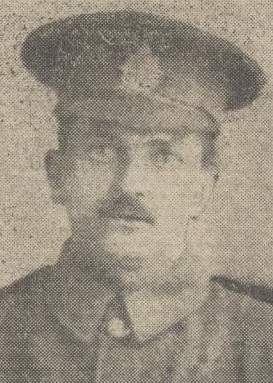
8th Border Regiment, 16478
William Hayhurst was one of six surviving children and had five siblings who had died. The family lived at various addresses on the west side of Blackburn and were all employed in the cotton trade. 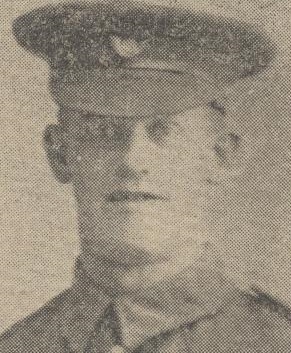
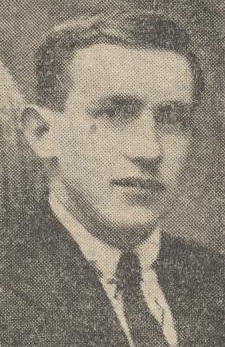
In 1911 William’s parents William aged 58 and Elizabeth aged 55 lived at 6, Lancaster-street, with William 23, Christopher 19 and Abram Nightingale a widower – probably Elizabeth’s brother.
He had been a weaver at Primrose Mill, Livesey, a mill of 300 or so employees with 804 looms run by John Fish Ltd. in the 19th and early 20th centuries. In 1907 the mill became part of the Birtwistle Group.
William joined the 8th Battalion Border Regiment in early 1915, and, after initial training at Codford and into billets in Boscombe in November 1914, they moved to Romsey in May 1915 and on to Aldershot the following month.
The Battalion landed at Boulogne 27th September 1915, and were put attached to the 25th Division. The Division would go on to fight the following actions:
German attack on Vimy Ridge:
During this defensive fight, the Division's first Victoria Cross was won by Lieutenant Richard Jones of the 8th Loyal North Lancs. It was a posthumous award, for this officer was killed in action on 21 May 1916.
Withdrawn for rest and training, west of St. Pol. then moved to the area behind the Somme front in the third week of June 1916, in the area around Warloy. They were with the Fourth Army Reserve at the opening of the offensive.
The Battle of Albert 1st – 13th July 1916
7th and 75th Brigades with some supporting units received orders on 2nd July to move to Aveluy Wood and Martinsart respectively, and came under orders of 32nd Division. On 3rd July, 75th Brigade made a virtually unsupported and inevitably costly and unsuccessful attack in one of the awful, piecemeal, efforts to hold on to the minor gains made in the Thiepval area on 1st July. The rest of the Division relieved 32nd Division in the night of 3rd/4th July. More localised and equally ineffective attacks were made. On 5th July, 74th Brigade was detached for duty with 12th (Eastern) Division at La Boisselle, where it took part in an attack on Ovillers.
William was reported missing on the 5th July 1916 aged 29 and single. William’s brother Christopher was also serving in France.
William has no known grave, but is remembered on the Thiepval Memorial to the Missing on the Somme, Pier and Face 6 A and 7 C.
8th King’s Own Yorkshire Light Infantry, 13106
William Heskethwas born in Birkdale near Southport and the year would be about 1893. His mother was Mary Jane aged 54, born in Southport, who had nine children – two of whom died, born either Southport or Birkdale except for the youngest two who were born in Blackburn. His father was John worked as a carter and was aged 54 in 1911.
In the 1911 census William is shown as an 18 year old working at the Star Paper mill and living at 13, Gladstone Terrace, Cherry Tree, Blackburn. It would not have been far to walk to work from Cherry Tree to Feniscowles, where the Mill was based. The rest of the family worked in the cotton mills.
William joined up at the start of war, joining the 8th King’s Own Yorkshire Light Infantry. The Battalion was formed at Pontefract September 14th and came under command of 70th Brigade in the 23rd Division. They landed at Bologne August 1915.
On September 5th the Division was moved to Merris-Vieux Berquin area where trench familiarisation began. The Division took responsibility for a front line sector for the first time nine days later taking over between Ferme Grande Flamengrie to the Armentieres-Wez Macquart-road.
It remained in this area for some time and was finally relieved after a five month spell on the front line. After numerous engagements in the very north of France, the Division was ordered to the Somme, where it played a part in the capture of Contalmaison.
It was here, on 1st July 1916, that William was killed. He has no known grave, and is remembered on the Thiepval Memorial to the Missing on the Somme, Pier and Face 11 C and 12 A.
9th King’s Own Yorkshire Light Infantry, 13753
James William Hindlewas the only son of Robert and Mary Ann. He had an older sister Alice Ann whose husband was also serving in France and had been for two years. The family home was at 30, Greaves-street just off Montague-street and his name is commemorated at Montague-street Primitive Methodist Church.
The family worked in the cotton industry but James was employed at Altom Coal Pit Clayton-le-Moors. This was theAltham Colliery known as Dickie Brig Pit.
James enlisted into 9th Battalion King’s Own Yorkshire Light Infantry in September 1915, spending several months training before being shipped to France.
James got his first real combat experience late that year, when on 19th December 1915, the Germans first used Phosphine Gas on the sector he was covering.
Throughout the winter and spring of 1916, the Battalion fought small attacks around Ypres before being moved to the Somme Region, for the Battle of Albert on 1st July.
In this opening phase, the British assault broke into and gradually moved beyond the first of the German defensive complexes on the Somme. Success on the first day in the area between Montauban and Mametz led to a redirection of effort to that area, for the initial attack was defeated with huge losses north of Mametz. There was a stiff fight for Trones Wood and costly, hastily planned and piecemeal attacks that eventually took La Boisselle, Contalmaison and Mametz Wood.
James was killed on 1st July 1916. He has no known grave, but is commemorated on the Thiepval Memorial to the Missing of the Somme, Pier and face 11 C and 12 A
Lance-Sergeant John Crook Hindle
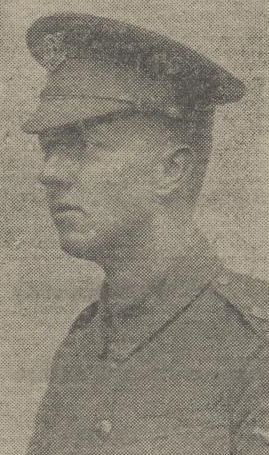 12th Middlesex Regiment, G/6800
Sergeant Hindle, aged 24 years, was a well-known local journalist who had joined the 11th Hussars soon after the outbreak of war. In order to get to the front more quickly he had transferred to the 12th Middlesex Regiment with whom he had been on active service for nearly a year.
A young giant standing over 6’ 2’’, the ideal of a soldier and very popular with his officers and comrades. If he had so elected he might have had a commission after the long winter campaign; the rigours of which he endured stoically, but he preferred to remain in the ranks.
According to his obituary which appeared in “The Blackburn Times” July 22nd, 1916, John had seen much fighting and, from time to time,he sent home interesting descriptions of the great conflict. An old boy of the Public Higher Grade School and Blackburn Grammar School, he was the youngest son of the late Mr. John Hindle and his wife Sarah. John took an interest in all forms of sport, particularly cricket and football and he was a prominent member of the press eleven that had flourished a few years ago. In every walk of life Jack Hindle had played the game and “The Blackburn Times” noted that his memory will be held in affectionate remembrance by all who were intimately associated with him. Ellen, his sister had married a William David Ritzema, the manager of a newspaper office and whose father was a newspaper proprietor living at Quarry Glen, near the top of Buncer Lane.
John was killed on 14th July 1916 as his Battalion were sent in to capture Trones Wood along the Bazentin Ridge. Efforts were made to find him after he was reported missing, and his body was found. Unfortunately due to the severe artillery barrages by the enemy, his grave disappeared along with hundreds of others, and he has no known grave. He is remembered on the Thiepval Memorial to the Missing on the Somme, Pier and Face 12 D and13 B.
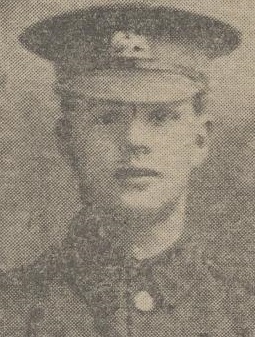
1st King’s Own Royal Lancaster Regiment, 16652
According to the 1911 Census, Robert, aged 18 years, was the second son of James and Mary Hindle who resided at Wals-street, Blackburn, along with his three brothers and four sisters. His parents were both cotton weavers and, at that time, Robert was employed as an engine cleaner.
Robert was connected with Bank Top Congregational School and he married Elizabeth E. Anderton early 1914. He joined the army at Christmas 1915 and only lived for another six months. The family, consisting of Robert, Elizabeth and their only child, were residing at Addison-street at the time of his death. He also had a brother and brother-in-law serving In France.
Robert’s Regiment was known to have been fighting at The Battle of Albert (1st–13th July 1916). This comprised the first two weeks of Anglo-French offensive operations in the Battle of the Somme. The Allied preparatory artillery bombardment commenced on 24th June and the Anglo-French infantry attacked on 1st July, on the south bank from Foucaucourt to the Somme and from the Somme north to Gommecourt, 2 miles (3.2 km) beyond Serre. The French Sixth Army and the right wing of the British Fourth Army inflicted a considerable defeat on the German Second Army but from the Albert-Bapaume road to Gommecourt the British attack was a disaster, where most of the c. 60,000 British casualties of the day were incurred.
Robert was killed on 1st July 1916, the opening day of the battle of the Somme. He is commemorated on the Thiepval Memorial Pier and Face 5 D and 12 B, a photograph and brief announcement was made in the Blackburn Times, 24th March 1917, almost nine months after his death.
1st/10th King’s Liverpool Regiment, 5966
Reginald Hodgson was born in January 1894, the son of George and Sarah Hodgson. Reginald was an apprentice joiner and worked for his father George, a joiner and builder. He had a brother Harry who was five years younger. In 1901, the family lived at 82, Revidge-road. By 1911, they had moved to a house called “Kinross” on Mavis-road. This was a prosperous part of Blackburn so presumably the business was doing well.
On 13th December 1915, Reginald enlisted into the 1st/10th Battalion King’s Liverpool Regiment. By 1916, the Battalion was attached to 55th Division.
On 3rd January 1916, the Division began to assemble in the Hallencourt area which was completed by 27 January. The Division relieved the French 88th Division south of Arras - in the area Wailly - Bretencourt - by 16th February. Trench warfare commenced, with many raids and minor operations. On 17th April 1916, a large scale raid was undertaken by the 1st/8th (Irish) Battalion, the King's (Liverpool), in which second Lieutenant E. F. Baxter became the Division's first winner of the Victoria Cross. In this relatively "quiet" period before the Division moved into the Battle of the Somme, it nonetheless suffered casualties of 63 officers and 1047 men killed, wounded or missing. Relieved by 11th (Northern) Division on 25thJuly 1916, the 55th now moved South and took up a place in the front line opposite the village of Guillemont. It then remained in France and Flanders and took part in the Battle of Guillemont (4th-6th September).
The successful attack on Guillemont was made by XIV Corps, and was led by the 20th Division, with the 5th Division to their right. Their target was Leuze Wood, 1,500 yards beyond the village, on a ridge overlooking the village of Combles.
The southern part of the attack on 3rd September suffered the most heavily. There the 13th Brigade had been relying on the French for a final bombardment of their objective, Falfemont Farm, but the French became stuck in Combles Ravine, and were unable to make and progress. The leading waves of the first Battalion to attack were wiped out by German fire. To their left the 95th Brigade (5th Division) captured its first three objectives, and reached a line east of Guillemont.
The 20th Division attack on Guillemont began from a series of trenches very close to the German front line. The village itself had been destroyed by repeated artillery bombardments, but underneath it was a maze of German strongpoints. Despite this the 20th Division attack succeeded, captured its three objectives and reaching the Ginchy-Wedge Wood road, east of Guillemont. Elsewhere British attacks on Ginchy and further west around the front met with little or no success on 3rd September.
The advance east of Guillemont continued over the next three days. By the end of 6th September the British had reached their target line, around Leuze Wood, and were ready to turn north to deal with Ginchy. Everything would soon be in place for the next big attack, at Flers-Courcelette.
In was in the attacks on Guillemont, on 8th September 1916 that Reginald was killed. Reginald has no known grave, and is remembered on the Thiepval Memorial to the Missing on the Somme, Pier and Face 1 D, 8 B and 8 C.
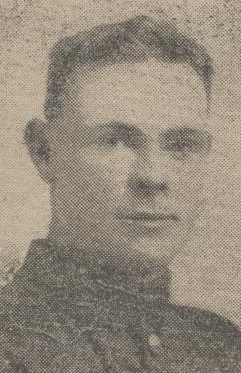
9th Loyal North Lancashire Regiment, 29638
John Hodson, born in 1891, was the son of Robert and Hannah Sophia, who had ten children, two of whom died. The family lived at 12, Vale-street, a house with five rooms. Robert was a bricklayer as was the eldest son Edward and the rest of the family worked as weavers. In 1911, Robert was 53 years old and Hannah Sophia 52 years and there was also was a grandson recorded as living with them called Robert Bottomly. John was a weaver at Longshaw Mill, well within walking distance of Vale-street.
After initialling enlisting into the East Kent Regiment early in 1916, John was quickly transferred to bolster the ranks of the 9th Loyal North Lancashire Regiment. John would fight with the 9th Battalion, which was in 74th Brigade, 25th Division, across the Somme:
The Battle of Albert:
7th and 75th Brigades with some supporting units received orders on 2nd July to move to Aveluy Wood and Martinsart respectively, and came under orders of 32nd Division. On 3rd July, 75th Brigade made a virtually unsupported and inevitably costly and unsuccessful attack in one of the awful, piecemeal, efforts to hold on to the minor gains made in the Thiepval area on 1st July. The rest of the Division relieved 32nd Division in the night of 3rd/4th July. More localised and equally ineffective attacks were made. On 5th July, 74th Brigade was detached for duty with 12th (Eastern) Division at La Boisselle, where it took part in an attack on Ovillers. Divisional H.Q. moved to Henencourt on 8th July and the following day, 25th Division took over the front held by 12th (Eastern) Division.
The Battle of Bazentin:
As the Somme offensive moved from its early phase (designated the Battle of Albert) to the next major push (the Battle of Bazentin), the 25th Division continued to carry out operations on a small scale in the Ovillers area. Casualties were heavy, with no gains of any significance being made. Relieved by 48th (South Midland) Division during the night 16th/17th July, the Division moved to Beauval.
The Battle of Pozieres:
From 23rd July to 10th August 1916, the Division held a sector of the line north of the River Ancre. Once again, just as in the Bazentin battle, the Division is recognised as having been in action during the Battle of Pozieres, without being in the area of most attention during the fighting. Relieved by units of 6th and Guards Divisions between 7th and 14th August, the Division moved to Bus les Artois for rest and training. Divisional HQ moved up to Hedauville on 18th August and the infantry moved into the trenches of the Leipzig Salient. A local attack by 7th Brigade on 21st August was carried out successfully, using for the first time a device known as a "push pipe mine" to destroy enemy defences before the Infantry went in. Further attacks were made on 23rd, 25th and 26th August. On 3rd September, a larger scale attack was made in support of the 4th Australian Division which was assaulting Mouquet Farm. The Division was relieved on 11th September by 11th (Northern) Division and moved by bus to Abbeville.
From 23rd July to 10th August 1916, the Division held a sector of the line north of the River Ancre. Once again, just as in the Bazentin battle, the Division is recognised as having been in action during the Battle of Pozieres, without being in the area of most attention during the fighting. Relieved by units of 6th and Guards Divisions between 7th and 14th August, the Division moved to Bus les Artois for rest and training. Divisional HQ moved up to Hedauville on 18th August and the infantry moved into the trenches of the Leipzig Salient. A local attack by 7th Brigade on 21st August was carried out successfully, using for the first time a device known as a "push pipe mine" to destroy enemy defences before the Infantry went in. Further attacks were made on 23rd, 25th and 26th August. On 3rd September, a larger scale attack was made in support of the 4th Australian Division which was assaulting Mouquet Farm. The Division was relieved on 11th September by 11th (Northern) Division and moved by bus to Abbeville.
The Battle of the Ancre Heights:
On 26th September, 74th Brigade took over a sector of line immediately south of the River Ancre. The rest of the Division followed. After a series of small scale raids and operations, a major attack was made by the Division on 9th October - in appalling ground conditions - that captured the northern face of Stuff Redoubt. German counter attacks were beaten off, before another attack went in to capture "The Mounds" just north of Stuff Redoubt.
On 26th September, 74th Brigade took over a sector of line immediately south of the River Ancre. The rest of the Division followed. After a series of small scale raids and operations, a major attack was made by the Division on 9th October - in appalling ground conditions - that captured the northern face of Stuff Redoubt. German counter attacks were beaten off, before another attack went in to capture "The Mounds" just north of Stuff Redoubt.
It was in this final action that Lance-Corporal John Hodson was killed, on 19th October 1916. Even worse for the family is that one of John’s brothers was killed just 3 days later, fighting in the Royal Field Artillery.
John has no known grave, but is remembered on the Thiepval Memorial to the Missing on the Somme, Pier and Face 11 A.
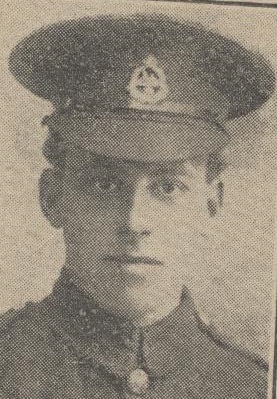
11th East Lancashire Regiment, 24209
Joseph Holden was born in Leigh in 1893. At the time of the 1901 census, the Holden family, consisting of father Edward (journeyman – butcher), mother Mary Jane, his sister Alice and younger brother, Henry, were living in Everton, Liverpool. Joseph’s father, Edward, was born in Ribchester, and his mother in Blackburn, as was their first child, Alice.
Edward and Mary had 6 children altogether, but sadly, only the three named children survived. Ten years later, by the time of 1911 Census, the same family members were livingat 21 Palm-street in Blackburn. Edward’s occupation was described as that of Cornmill Labourer.
Joseph joined the 11th East Lancashire Regiment, the Accrington Pals, on February 1st 1916 and was sent to the front 9 weeks later. Along with over 500 others from his unit, Joseph would be killed on 1st July 1916 on the attack on Serre.
On 24th June, the British artillery opened a bombardment that was to continue until the morning of the attack. The bombardment was intended to destroy the German defences completely, but failed to penetrate through to many of the underground shelters and left much of the barbed wire intact.
In the early evening of 30th June, the 11th East Lancashires left their camp at Warnimont Wood for an arduous 7 mile trek to the trenches in front of Serre. At 2.40am on Saturday 1st July, the leading companies of the Battalion reached the front line trenches to find them already heavily shell-damaged. The build-up had not gone unnoticed and, as daylight broke, the forward lines were again pounded by enemy shellfire.
The objective of the Pals battalions of 94th Brigade was to capture the hilltop fortress of Serre and form a defensive flank facing north-east and north. The attack was to be led by the 11th East Lancashire’s on the right and the 12th York & Lancaster’s (Sheffield City Battalion) on the left. The 13th and 14th York & Lancaster’s (1st and 2nd Barnsley Pals) were to support the two leading battalions. Against them, Serre was held by the 169th (8th Baden) Infantry Regiment.
A comrade saw Joseph lying wounded near to the German lines, and he was posted as wounded and missing from 1st July 1916. His parents were then notified of his death at their home in Primrose Bank, Blackburn.
Joseph’s younger brother, Henry, was serving with the RAF, also in France at the time of Joseph’s death.
Joseph is commemorated on the Thiepval Memorial, Pier and Face 6 C, and an announcement and photograph were published in the Blackburn Times, 21st October 1916. It would appear that Joseph was associated with St. Albans Church, Blackburn.
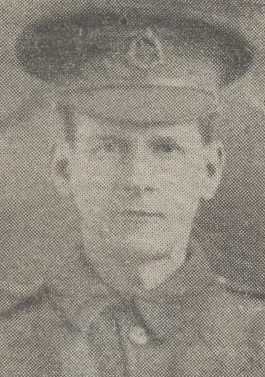
1st East Lancashire Regiment, 36571
The son of William and Emma Hook, William Henry Hook was born in 1881 in Blackburn. William was one of six siblings, and the family lived at 44 Roney-street. William, like most Blackburn men, was a weaver, as was his mother, although his father was a carter. He worked at Bank Top Mill, whilst his brother Robert was a cabinet maker.
Enlisting in November 1916, William was sent to the front line only a month later, serving with 1st Battalion East Lancashire Regiment. He would only see action for one month before he was listed as “missing in action”. It would be another twelve months of agonising waitbefore his family received confirmation of his death.
William was listed as killed in action on 30th January 1917. During this period, the 1st East Lancashire’s were in the midst of chasing the Germans as they retreated several miles to much stronger defensive lines, known as the Hindenburg line. The retreat came about following the Somme campaign came to a close, and the Germans had realised that the British may try to advance again. These winter days were treacherous, with uneven, sodden ground, and little respite from shelling and sniping.
William has no known grave, but is remembered on the Thiepval Memorial to the Missing on the Somme, Pier and Face 6 C.