
 Loading more
Page 2
Private Robert Beattie
1st Queen’s Own (Royal West Kent) Regiment, G/8782
Robert Beattie was born at Aldershot in 1885 to Robert and Alice Ann Beattie. His family were mostly cotton winders, whilst his father, originally from Glasgow, was a Stationary Engineman.
As war breaks out, Robert enlists in Blackburn into the 1st Battalion of the Royal West Kent Regiment. By 1916, the Battalion was assigned to the 33rd Division, and was posted to the Somme as part of preparations for the second large battle to take place, around High Wood.
The 33rd Division attacked High Wood at dusk on the 19th of July. Two battalions of the 19th Brigade crept forward on 20th of July, during a bombardment and attacked when it lifted at 3:25a.m. After the attacks on the 20th July ended the Germans reoccupied most of High Wood, until only the southern corner remained in British hands. They also dug a new defensive position, known as Intermediate trench, ahead of the Switch Line to the west of the wood. This meant that taking the wood became an even harder for the British.
On the night of the 22nd-23rd of July, the 4th Gordon Highlanders attacked the eastern corner of the wood, whilst the 1st Royal West Kent’s attacked the south-eastern part of the wood and Wood Lane, there with the 14th Royal Warwickshire’s at their side.
There had been a preliminary bombardment, but this had not inflicted sufficient loss on the defenders, and they were able to hold High Wood. No significant gains were made, although the Royal West Kent’s suffered 420 casualties. The other battalions also suffered heavy losses.
Robert Beattie was killed on the 22nd of July in the attack on the south-eastern Part of the wood. It is thought that at least 8,000 British and German soldiers died in the wood in 1916.
Robert Beattie is remembered on the Thiepval Memorial to the Missing on the Somme, Pier and Face 11 C, and has no known grave.
Private Harry Beggs
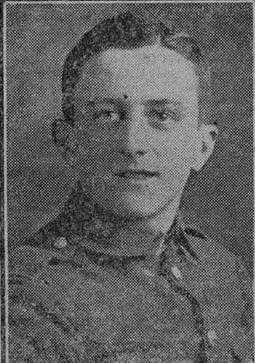
1st East Lancashire Regiment, 19994
Harry Beggs was the son of Thomas and Margaret Beggs. He had a sister called Annie. Harry was born in 1898 and lived at 21, Isherwood Street.
By trade, he was a weaver at H. Smalley’s Elswick Mill, alongside his father, who manned the boilers. Harry also attended Mellor Wesleyan Church and Sunday school.
He enlisted at Southport into the 1st Battalion of the East Lancashire Regiment, which was part of the 11th Brigade in the 4th Division. In 1915, Harry was at the battles of Marne, Aisne, Messines and Ypres.
1st of July 1916, on the Somme, the 4th Division attacked between Serre and Beaumont Hamel and managed to reach a strongpoint known as the Quadrilateral but could not exploit the success, because of the repulse by the Germans of the attacks by the flanking divisions.
Cross-fire from Beaumont Hamel and Serre and determined counter-attacks held up the Division. No other gains were made and German counter-attacks recovered the position early on 2nd July, by which time, the Division had suffered 4,700 casualties.
Harry Beggs was one of those casualties. His friend Private Joseph Brown was also killed on that day.
Harry Beggs is remembered on the Thiepval Memorial to the Missing on the Somme, Pier and Face 6 C, and has no known grave. Harry is also commemorated in Blackburn Old Cemetery, Non-Conformist, Section J, 1553.
Private Benjamin Bell
17th Lancashire Fusiliers, 32400
Benjamin Bell was a Lancashire man, born in Oswaldtwistle and lived at 54, Bottomgate, Salesbury Lancashire.
Not much is known about his family, as by 1911, at the age of 28, he is living in 28 Newton Street as a boarder, with a widow and two other boarders. At this time, he was an outdoor founder. Benjamin Bell enlisted as a private in the Lancashire Fusiliers regiment aged thirty three and joined the 17th battalion (1st South-East Lancashire) at Preston, Lancashire.
This battalion was known as a bantam unit, created especially for men who were considered too small to be in other units.However, these men were fit for duty so these units were made so they could help and fight in the war effort. After a couple of months of rigorous training close to home, the 17th battalion was moved to Cholderton, Salisbury Plain for final training. Then the battalion was taken over by the War office and was ready to join the World War.
The 17th battalion did have order to go to Egypt but these were quickly cancelled as they were needed in France. On the 29th of January 1916, the battalion quickly mobilised for war and landed at Le Havre, France. The battalion saw action at several points on the Western Front such as The Battle of Bazentin Ridge, The fighting for Arrow Head Copse, Maltz Horn Farm, and Falfemont Farm.Benjamin Bell’s date of death is recorded has 25th August 1916.
His battalion at the time of his death was fighting one of the numerous battles of the Somme. Heavy casualties took place in these battles.
Benjamin Bell has no known grave and is remembered at Pier and Face 3 C and 3 D, at the Thiepval memorial, France.
Rifleman Charles Blackshaw
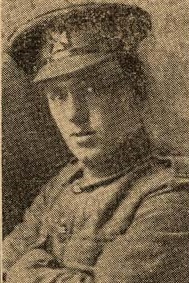
8th King’s Royal Rifle Corps, R/9151
Charles Blackshaw was the Husband of Mary Ann Blackshaw and the son of George and Ellen Blackshaw, and lived at 223 Whalley Old-Road.
Along with the rest of his family, Charles was a weaver. He was also a regular worshipper at the parish church, until January 1916, when he enlisted in Blackburn. Charles joined the King’s Royal Rifle Corps, and was shipped to France. He would not have much time in training until he was in the thick of it at the Battle of Deville Wood, in July 1916.
After hard fighting in July by the South African Brigade, it would be Charles’ turn to try and turf out the Germans from the strategically important wood. 27th July saw the 2nd Division renew the assault, followed on 4th August by the 17th Division; bloody encounters in mid-August pushed the line forward and an attack by the 14th (Light) Division on 29th August forced out all but a remnant of defiant German defenders.
The wood was only completely cleared of Germans following the fall of Ginchy on 9th September 1916.It was on the 24th of August that Charles was wounded in the head.
He continued to fight, but later died of his wounds. His name was sent in for recommendation for gallant conduct and bravery.
Charles Blackshaw has no known grave and is commemorated on the Thiepval Memorial Pier and Face 13 A and 13 B.
Gunner Frank Blanchard
24th Siege Battery, Royal Garrison Artillery, 61265
Frank Blanchard joined the war effort at the young age of eighteen. He enlisted in Blackburn and joined the Royal Garrison Artillery, in the 24th Siege Battery Battalion as a gunner. His service number was 61265.
Frank was a local lad who was born in Blackburn, Lancashire. He lived at number 16, Ice Street, Blackburn. Before he joined the war effort, Frank Blanchard worked as an apprentice printer.
Frank first went overseas with the 24th Siege Battery on 20th August 1915. This was when the Battalion first landed in France.
Frank and his Battalion were responsible for destroying enemy artillery, supply routes, railways and stores. The batteries were equipped with heavy Howitzer guns firing large calibre 4, 6, 8 or 9.2 inch shells in a high trajectory.
Artillery played a huge role in the First World War and helped to shape how it was fought. Guns were used for a range of vital work – during battles and quiet periods; offensively and defensively.
As Frank was a Gunner in his battalion, he would have worked with these big guns in a crew of eight. However, as Leonard Ounsworth describes, this wasn’t always the case:
“There was a sergeant in charge, he was regarded as No 1 – he was generally called No 1, you see. There was the limber gunner who opened and closed the breech when you were in action, and in normal times he serviced the gun, you know, he was in charge of cleaning it and all that sort of thing.
Then there was the gun layer who of course he aimed the gun every time, and then the rest were ammunition numbers. There’s supposed to be a total of eight in the crew, but of course that was in theory because very often we didn’t have sufficient people on hand.
”Also, there was also the very real threat of when of these big guns shells going off too early and killing the men working behind it.
Almost after a year after the 24th Siege Battalion landed in France, Frank Blanchard was killed in action, on 18th August 1916.
Frank Blanchard is remembered at the Thiepval memorial, Pier and Face 8 A, and at St. John's Church.
Private James Bleasdale
1st/4th East Lancashire Regiment, 201818
James Bleasdale was the eldest son of Alban and Annie Bleasdale. He was born in 1895 and had three younger sisters, Agnes, Anne and Veronica. His mother Annie died in 1910. By profession James was a Clerk in a Cotton Mill. There is no information as to when he enlisted, but he did enlist in Blackburn. It is not known if James served at Gallipoli in 1915 but it is likely that he was in Egypt and moved to France in 1917.
On arrival in France the 1st/4th East Lancashire Regiment was re-equipped for trench warfare. The Division entered the line at Epehy, as part of III Corps in Fourth Army. They remained in this area, moving to Havrincourt where they remained until 8th July. These positions faced the formidable German Hindenburg Line in front of Cambrai.
It was here, around Havrincourt, that James was killed on the on the 25th April 1917.
His name is one of the thousands with no known grave, and is remembered on the Thiepval Memorial to the Missing on the Somme, Pier and Face 6 C.
Private Richard Bolton
1st East Lancashire Regiment, 10862
Richard Bolton was born in 1895, the son of Mark and Jane Alice; he had an older brother, Fred, born 1893. Richard was a weaver before joining the regular army before war broke out.
He was in the 1st Battalion of the East Lancashire Regiment part of the 11th Brigade in the 4th division. He first saw action at the battle of Le Cateau on the 26th of August 1914, after the British and French retreat
“I am sorry that I cannot give you any information as to how he was killed... I can assure you that he was very much thought of out here, and I always found him a very good soldier. I sympathise very much with you in your great bereavement.”
His brother, Fred survived the war, after serving in the King’s Regiment.
Richard Bolton is remembered on the Thiepval Memorial to the Missing on the Somme on Pier and Face 6 C. He has no known grave. Richard is also commemorated in Blackburn Old Cemetery, Church of England, Section L, 14966.
Rifleman Thomas Bolton
10th Kings Royal Rifle Corps, R/3021
Thomas Bolton was one of nine children, born to John Henry and Emily Mary Bolton. Thomas was actually the youngest of the four remaining sons, after the first four children had died young.
His father, John Henry Bolton, was a foundry labourer but like so many Blackburn people Thomas became a weaver working at Grange Mill, Witton. The mill had been built in 1905 by Birtwistle & Fielding Ltd. housing 880 looms and employing 250 people.In 1911, the Bolton’s lived at 45, Selous-street which was very near to Grange-street.
They probably attended St. Peter’s Roman Catholic Church, Mill Hill, as Thomas’s name is commemorated there.
On 8th September 1914, at the tender age of 20, Thomas enlisted in Blackburn, joining the 10th Battalion King’s Royal Rifle Corps. He would spend the next 9 months in training, before being shipped over to France in July 1915, but not before an inspection by the King, whilst training in Stonehenge!In 1916, at the Battle of Mount Sorrell the Battalion re-captured the height with the Canadians.
Thomas’ unit took part in the Battles of the Somme throughout the summer of 1916. Thomas managed to get home on leave for New Year’s 1917, when he got married.
In March 1917, the German armies on the Somme carried out a strategic withdrawal known as Operation Alberich. On 2nd April an operation to test the German positions north of the Bapaume-Cambrai Road was carried out. The enemy here occupied in considerable strength a series of villages and well wired trenches forming an advanced line of resistance to the Hindenburg Line.
Fighting continued on the 4th and 5th of April in the neighbourhood of Epehy and Havrin Court Wood. Ronssoy, Lempire and Metz-en-Couture were captured together with 100 prisoners, 2 trench mortars and 11 machine guns. It was in this action that Thomas was killed, on 5th April 1917.
Thomas was a popular man and his friend wrote to the family about his death. Thomas had first been wounded when attacking a village and was on his way to the dressing station when the Germans opened up heavy machine gun fire which killed him instantly.
Thomas is remembered on the Thiepval Memorial to the Missing on the Somme Pier and Face 13 A and 13 B. He has no known grave.
Private Fred Bond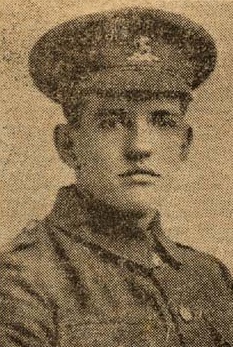
1st Queen’s Own (Royal West Kent Regiment), G/5505
Fred Bond was the youngest son of William and Eliza Bond, of 30 Palatine-road, Blackburn. There were two other children, an elder son and Daughter. By trade Fred was a Weaver at Peel Mill Blackburn. He was also connected to Trinity Wesleyan Church and Sunday school.
He enlisted at Darwen in January 1915 into the 1st Battalion of the Royal West Kent’s, and embarked for France on the 1st May 1915. Before the attacks at High Wood, Fred had been wounded.
Fred’s Division attacked High Wood at dusk on the 19th of July. Two battalions of the 19th Brigade crept forward on 20th of July, during a bombardment and attacked when it lifted at 3:25a.m. During the afternoon of the 21st July, another battalion went forward and managed to reach the northern fringe of the wood. Due to the number of British casualties, two more battalions were sent forward as reinforcements but as dark fell a German bombardment forced the British from the north end of the wood, which was retaken by German troops and both sides dug in.
After the attacks on the 20th July ended the Germans reoccupied most of High Wood, until only the southern corner remained in British hands. They also dug a new defensive position, known as Intermediate trench, ahead of the Switch Line to the west of the wood. This meant that taking the wood, became an even harder for the British.On the night of the 22nd-23rd of July, the 4th Gordon Highlanders attacked the eastern corner of the wood, whilst the 1st Royal West Kent’s attacked the south-eastern part of the wood and Wood Lane, there with the 14th Royal Warwickshire’s at their side.
There had been a preliminary bombardment, but this had not inflicted sufficient loss on the defenders, and they were able to hold High Wood. No significant gains were made, although the Royal West Kent’s suffered 420 casualties.
Fred Bond was killed on the 22nd of July in the attack on the south-eastern Part of the wood.
He has no known Grave and is commemorated in the Thiepval Memorial Pier and Face 11 C.
Fred’s elder brother Gilbert served in three different regiments during the war. He was a Sergeant in the Scottish Rifles and Machine Gun Corps He was promoted to 2nd Lieutenant in the Tank Corp
Private Thomas Pomfret Bond
11th Border Regiment, 26633
Private Thomas Pomfret Bond of the 11th Border Regiment was killed on 15th April 1917 when the Battalion was North of Fayet, France. Not much is known about Thomas prior to his military service, other than that he lived at 5 Cranbourne Terrace, Blackburn, and was 34 when he was killed.
According to the 11th Border Regiment war diary, the Battalion on this day remained in line, strengthening their objectives until they were relieved. The Battalion then marched to Germaine the next day.
Private Thomas Pomfret Bond is remembered on the Thiepval Memorial to the Missing on the Somme, Pier and Face 6 A 7 C and has no known grave.
Private Walter Bowers
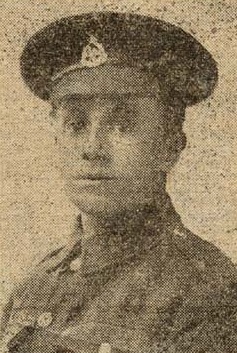
11th East Lancashire Regiment, 24430
Walter Bowers was the eldest son of Samuel and Hannah Bowers, he had a younger sister Edith a step brother, Thomas Lawson and two younger step sisters, Nancy and Ada Lawson.
He worked as a Clerk at the Blackburn Philanthropic Offices, and attended St. Philip’s Church.
Walter enlisted into the 11th Battalion of the East Lancashire Regiment at Blackburn on the 18th of February 1916. The 11th Battalion was the infamous Accrington Pals, and was shipped to France to fight in the Battle of the Somme.
They were positioned at Serre, and at 7.20a.m. on the 1st of July 1916, the soldiers of the first wave left their trenches, passed through the British wire and lay down in No Man's Land to await the end of the bombardment.
This ceased at 7.30 a.m., and in front of Serre men of the 12th York and Lancaster (Sheffield City Battalion) and the 11th East Lancashire’s (Accrington Pals) who were the first wave stood up and tried to cross No Man's Land.
Just to the south, the attackers were of the 15th West York’s (Leeds Pals) and the 16th West York’s (1st Bradford Pals).
The Sheffield City battalion men had laid white tapes which led to gaps in the German wire the night before, but when they attacked these were gone. The attackers were mown down by machine gun fire, and there was an almost total lack of success here, although one company of the Accrington Pals did reach Serre, but were lost.
Reinforcements, men of the 13th and 14thYork & Lancaster’s (the 1st and 2nd Barnsley Pals) were sent in, but were also stopped with no success, and the attack here was then suspended, with no gains made whatsoever.
Walter Bowers was killed during this battle, and is remembered on the Thiepval Memorial to the Missing on the Somme, Pier and Face 6 C. He has no known grave.
Rifleman Richard Bramley
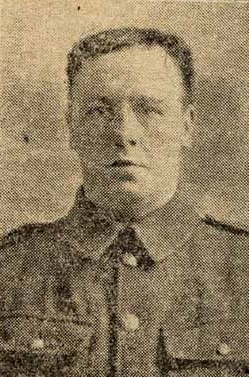
7th King’s Royal Rifle Corps, R/11347
Richard Bramley was the son of Richard and Ann. He was born in November 1880. His father Richard died in 1913. He married Mary Margaret Kay in 1905 and they had three children. By profession, Richard was a Spinner at Cardwell Mill, Blackburn.
He enlisted at Blackburn on the 28th March 1915, and after basic training, left for France on the 21st of July 1915. When Richard landed in France the Battle of Hooge was taking place, and on the 30th of July, during this battle the Germans first used the Flame thrower. He was also involved in the second Battle of Bellewaarde which took place on the 25th of September 1915.
In July 1916, Richard was on the Somme, at Delville Wood. The battle took place between the 15th of July and the 3rd of September. The first attack on the wood was on the 15th of July, when the South African Brigade, part of the 9th Division, captured all but the North West corner of the woods, and then fought off German counter attacks from the North and East. An attack on 17th July failed to take that last corner. Overnight on 17th - 18th of July a heavy German bombardment set the woods on fire, and a German counterattack on 18th July recaptured all but the very southern edge of the wood.
For the rest of July no-one had full control of the wood. The most important attack came on 27th July. After a heavy bombardment the 15th Brigade of the 5th Division and the 99th Brigade of the 2nd Division advanced into the shattered remains of the wood, and captured the majority of the area. Only the northern and eastern edges remained in German hands.
They were slowly pushed out of those positions during August, and on 30th August the British front line had been pushed North and East of the woods. On 31st August the Germans made yet another counterattack, recapturing a narrow band in the north east corner of the wood.
A British counterattack failed to retake this narrow band of the wood on 3rd September.Rather inexplicably, the official battle of Delville Wood ends on 3rd September. It actually took until 8th September for the last part of Delville Wood to be cleared for the final time, during the preliminary operations before the attack on Ginchy. The wood remained on the front line until the battle of Flers-Courcelette (15th-22nd September, 1916), which saw the Germans pushed back 2,000 yards.
It was on the 18th of August, during this battle that Richard Bramley was killed.
He has no Known Grave and is commemorated on the Memorial at Thiepval Pier and Face 13 A and 13 B.
Private Herbert Brogden
149th Machine Gun Corps, 57696
Private Herbert Brogden of the 149th Machine Gun Corps, son of Moses Brogden and Esther Brogden (nee Whittaker) of 142 Alker-street, Blackburn Lancashire, was killed on 13th November 1916, a few days before the end of the Battle of the Somme.
Originally born in Burnley in 1898, Herbert and his family had moved to Blackburn by 1901. He had just finished school and was unemployed when war broke out. Herbert enlisted almost immediately, joining the Army Cyclist Corps, before transferring to the Machine Gun Corps.
On 13th November 1916, the 149th MGC Company received verbal orders for one section consisting of four guns to take part in an assault on enemy positions of the Snag Trench, at the Battle of Transloy Ridge, in which Herbert Brogden was killed in action.
Private Herbert Brogden is remembered on the Thiepval Memorial to the Missing on the Somme, Pier and Face 5 C and 12 C and has no known grave
Private Thomas Brooks
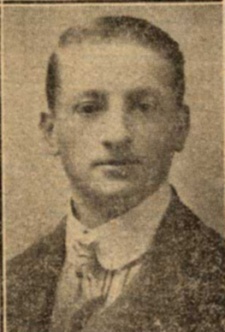
2nd East Lancashire Regiment, 28622
Thomas Brooks was the son of William and Mary Ann Brooks and the husband of Isabella. He was born about 1879 and by trade a joiner for Waring, Joiners and Undertakers, Grimshaw Park. He enlisted into the 2nd Battalion of the East Lancashire Regiment at Blackburn in August 1916 and embarked for France in November of that year.
In March 1917, a strategic withdrawal by the German armies on the Somme was carried out; it was known as Operation Alberich. The German destroyed everything in their path, flattening villages, poisoning wells, cutting down trees, blowing up roads, booby-trapping ruined houses and dugouts.
They were withdrawing to a stronger and shorter line, positioned to take advantage of ground. The building of this line had been spotted by British and French airmen in late 1916. The British began to notice the withdrawal of German infantry from the Somme in mid February 1917 and a careful pursuit began, which was halted close to the Hindenburg Line. On the 12th of April 1917 Thomas Brooks was killed.
Thomas has no known grave, but is remembered on the Thiepval Memorial to the Missing, Pier and Face 6 C.
Private Joseph Brown
1st East Lancashire Regiment, 19993
Aged 32, cotton weaver, Joseph Brown lived with his two aunts, his uncle and brother and attended St Mary’s Roman Catholic Church, Mellor. The family lived at Lane Ends, Osbaldeseton. According to “The Blackburn Times”, 26th August, 1916 Joseph joined the 2nd/4th Battalion of the East Lancashire Regiment at Blackburn upon its formation and undertook his training in Southport.
In May 1915, he volunteered to go to France with the 1st Battalion of the East Lancashire Regiment and left on the 27th of that month. The “Times” article noted that Joseph had been at the Front for about 17 months and had been slightly wounded once. The report added that Joseph had spent some time at home on leave and was reported to have told his friends that he would never be taken alive by the Germans.
The East Lancashire Regiment was part of the 11th Brigade in the 4th Division. In 1915, Joseph was at the battles of Marne, Aisne, Messines and Ypres.
On the 1st of July 1916, the 4th Division based on the Somme, attacked between Serre and Beaumont Hamel and managed to reach a strongpoint known as the Quadrilateral but could not exploit the success, because of the repulse by the Germans of the attacks by the flanking divisions.
Cross-fire from Beaumont Hamel and Serre and determined counter-attacks held up the division. No other gains were made and German counter-attacks recovered the position early on 2nd July, by which time the division had suffered 4,700 casualties. Joseph Brown was one of those casualties.
His friend, Private Harry Beggs, also from Mellor and with whom he had fought side by side for over twelve months was also killed on that day.
Joseph Brown has no known grave and is remembered on the Thiepval Memorial to the Missing on the Somme, Pier and Face 6 C.
Private George Irving Brown
6th King’s Shropshire Light Infantry, 11967
George Irvin Brown was the son of the late James and Mary Jane Brown. He was born in Blackburn in 1891 and was one of seven sons. By profession, he was a Carter Salesman in the mineral department of D. Thwaites & Co. Ltd. Brewers. He enlisted in Blackburn during August 1914 into the 6th Battalion of the King’s Shropshire Light Infantry which became part of the 60th Brigade in 20th (Light) Division.
They landed at Boulogne, France on the 24th July 1915, and began training in trench warfare in the Fleurbaix area. Between the 2nd and 13th June, the 20th (Light) Division was involved in the Battle of Mount Sorrel, a local operation in which, together with the Canadians, recaptured the height.Later George took part in the battles at Delville Wood, Guillemont and between the 15th and 22nd September the Battle of Flers-Courcelette.
This battle is conspicuous because it was the first time the tank was used in battle. Launched on 15th September 1916, the battle went on for one week. Flers–Courcelette began with the objective of cutting a hole in the German line by using massed artillery and infantry attacks.
This hole would then be exploited with the use of cavalry. It was the third and final general offensive mounted by the British Army during the Battle of the Somme.
By its conclusion on 22nd September, the strategic objective of a breakthrough had not been achieved; however tactical gains were made in the capture of the villages of Courcelette, Martinpuich and Flers. In some places, the front lines were advanced by over 2,500 yards by the Allied attacks.
On the 21st September 1916 during this battle George Irvin Brown was killed.Three of his brothers also lost their lives during the war. They were:James Irvin Brown, Border Regiment 6th Battalion, killed Dardanelles 9th August 1915.Arthur Irvin Brown, 1st/4th East Lancashire Regiment killed Dardanelles 16th August 1915.
Herbert Brown, 1st/4th King’s Own Yorkshire Light Infantry killed 14th April 1918.George is remembered on the Thiepval Memorial to the Missing on the Somme, Pier and Face 12 A and 12 B
Private Richard Burke
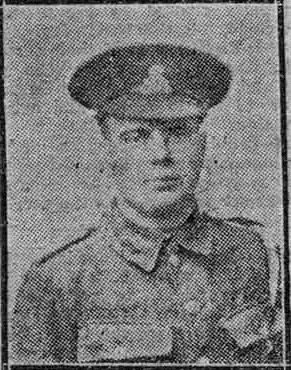
1st Lancashire Fusiliers, 13666
Richard Burke was the eldest son of Richard and Johanna. He was born in 1892 and had two brothers and a sister. By trade Richard worked at Paradise Mill as a tapers labourer. Richard enlisted into the 1st Battalion of the Lancashire Fusiliers just after the outbreak of the war. The 1st Battalion was part of 86th Brigade, 29th Division.
Passing through the Mediterranean port of Marseilles, the 29th Division arrived at the rear of the Somme battle front from 15th to 2929th March 1916. From this time, the Division was put into the British Front in the area north of the Ancre River, near to the German-held village of Beaumont Hamel.
For the following three months the Battalions in the Division spent their time doing tours of trenches and training behind the lines to prepare for the large British offensive against the German position planned for the end of June. Following a seven day artillery bombardment of the German Front and Rear areas, the Battalions of the 29th Division were in position in their Assembly Trenches in the early hours of Saturday 1st July.
At 07.20 hours the huge Hawthorn mine was blown on the left of the Division's position. The leading Battalions in the attack left the British Front Line trench at 07.30 hours.
The British casualties were very heavy, with many men never reaching the German Front Line. The men of the Newfoundland Regiment moved forward at about 09.00 hours to follow on behind the leading battalion in the advance of 88th Brigade.
Many of them were shot down trying to clamber over-ground to cover the few yards from where they were in the rear of the British Front Line to start their advance down the hill. It was here that Richard Burke was killed, late on 1st July 1916.
Richard is remembered on the Thiepval Memorial to the Missing on the Somme Pier and face 3 C and 3 D.
Sergeant George Burton
1st/8th King’s Liverpool Regiment, 305572
Sergeant George Burton of the 1/8th Kings Liverpool Regiment, son of John Burton and Sarah Jane Burton of 326 Bolton Road, Blackburn Lancashire, was killed on 20th November 1917. Son of the Insurance Agent, George previously worked on the railways before the war. He married Alice Fletcher on 18th September 1917 in Liverpool.
George enlisted into the 1st/8th King’s Liverpool Regiment in September 1914, and spent the first 9 months in intensive training before landing in France on 3rd May 1915. George would spend two grueling years fighting with the King’s, across the Somme and Flanders battlefields.
The war diary for the day George was killed reports that there were attacks launched undercover of artillery barrage throughout the day. Objectives were gained in parts of the enemy line but eventually troops had to withdraw back to their own line. Along with these attacks, a dummy tank and figures were put out which drew much hostile fire.
The Kings Liverpool Regiment were eventually moved to Villers Faucon, a large village in the Department of the Somme, about 17 kilometres north-east of Peronne.
Sergeant George Burton is remembered on the Thiepval Memorial to the Missing on the Somme, Pier and Face 1 D, 8 B and 8 C and has no known grave.
Letter C
Carr William | Catlow Robert | Catterall Fred | Chadwick Joseph | Chew William | Clarkson James
Clarkson Joseph | Clayton George | Clinton Harry | Collum John | James Comaskey
Conyoy John | Cook James | Cooper Joseph | Cornall Ford | Coupe James
Cowban William | Cross Fredrick | Crossley Joseph | Crowther Ephraim | Crowther William
Private William Carr
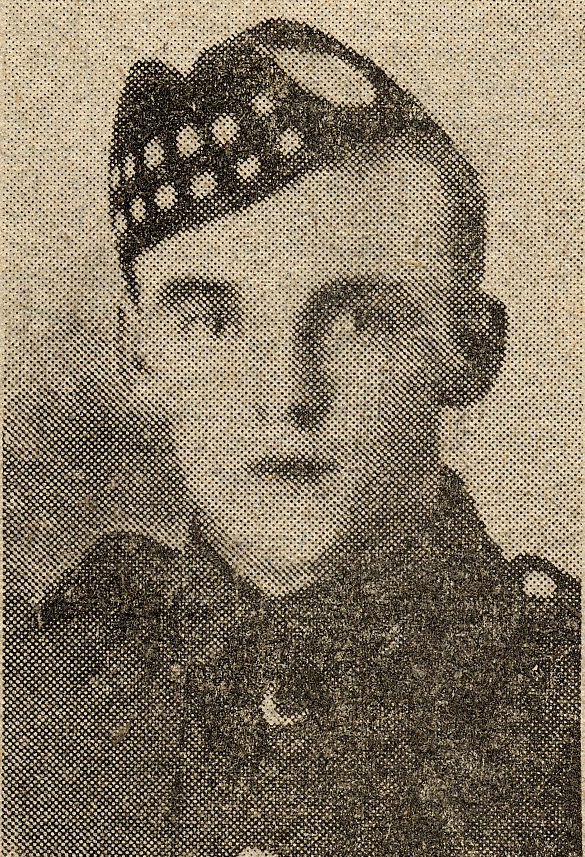
1st King’s Own Scottish Borderers, 13210
William Carr was the eldest son of Silvester and Catherine Carr. He had one younger brother and a younger sister. By trade he was a weaver at Livesey’s Mill Ewood. He was twice wounded at Gallipoli, and suffered an attack of dysentery at Egypt.
William enlisted into the 1st Battalion of the King’s Own Scottish Borderers at Blackburn. He was quickly trained and sent to Gallipoli, and then finally sent to France, where his Battalion would take part in the Battle of the Somme.
The Battle of Albert (1st–13th July 1916), happened on the first day of the Battle of the Somme. The Allied preparatory artillery bombardment began on 24th June. It was hoped that the German front line would be destroyed and the wire between would be cut. In the seven days bombardments over 1,700,000 shells were fired It was not a success. Many of the deep dugouts of the Germans were left unscathed and most of the wire was not cut.
There were also 19 mines placed beneath the German trenches the largest being Hawthorn Ridge, near Beaumont-Hamel, which was fired at 7.20am, 10 minutes before the attack it is thought that this explosion alerted the Germans to the imminent attack and gave them time to leave their dugouts and set up their machine Guns.
The attack on the 1st of July it was thought, would be walkover; the men would simply occupy the German trenches. When the men did go over the top it was to a Barrage of rifle and machine gun fire, they were cut down in their thousands.
On that first day there were 19,240 Officers and men killed.On that first day the German positions were occupied by the British troops but the German artillery cut off their support and counter-attacks forced the British to withdraw.
The only real gains were made at the southernmost end of the battlefield, where in together with the French assault, Montauban and Mametz were captured. By evening it became apparent that the day had been a disaster for the British Army.It was on the 1st of July that William Carr was killed.
He has no known grave and is commemorated on the Memorial at Thiepval Pier and Face 4 A and 4 D.
Private Robert Catlow
2nd/5th Lancashire Fusiliers, 7697
Robert Catlow was one of the many soldiers whose information has gone missing over the years. From the few records found, it has been possible to determine that he enlisted at Blackburn into the East Lancashire Regiment No. 4760, and then transferred to the 2nd/5th Battalion of the Lancashire Fusiliers, but no date is given for this.
In 1916 the 2nd/5th Battalion were part of 164th Brigade 51st (Highland) Division.
The 33rd Division attacked High Wood at dusk on the 19th of July. Two battalions of the 19th Brigade crept forward on 20th of July, during a bombardment and attacked when it lifted at 3:25 a.m. During the afternoon of the 21st July, another battalion went forward and managed to reach the northern fringe of the wood. Due to the number of British casualties, two more battalions were sent forward as reinforcements but as dark fell a German bombardment forced the British from the north end of the wood, which was retaken by German troops and both sides dug in
After the attacks on the 20th July ended the Germans reoccupied most of High Wood, until only the southern corner remained in British hands. They also dug a new defensive position, known as Intermediate trench, ahead of the Switch Line to the west of the wood. This meant that taking the wood, became an even harder for the British.
On the night of the 22nd/23rd of July, the 4th Gordon Highlanders attacked the eastern corner of the wood, whilst the 1st Royal West Kent’s attacked the south-eastern part of the wood and Wood Lane, there with the 14th Royal Warwickshire’s at their side.
There had been a preliminary bombardment, but this had not inflicted sufficient loss on the defenders, and they were able to hold High Wood. No significant gains were made, although the Royal West Kent’s suffered 420 casualties. The other battalions also suffered losses.
Units from the 51st Division fought here on the 23rd of July. The attacks On High Wood went on until the 15th of September.
Robert Catlow was killed on the 9th of September during this battle. He has no known grave and is commemorated on the Memorial at Thiepval, Pier and Face 3 C 3 D.
It is thought that at least 8,000 British and German soldiers died in the wood in 1916.
Private Fred Catterall
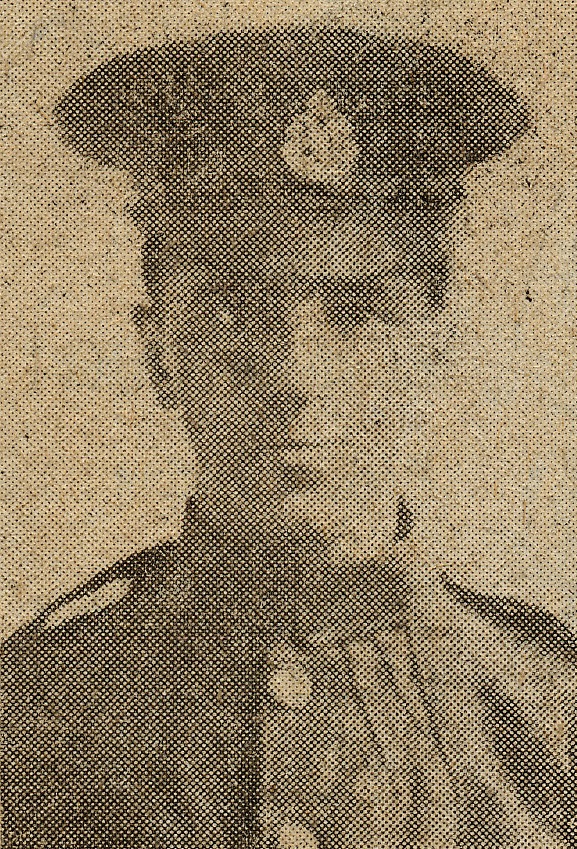
1st East Lancashire Regiment, 21824
Fred Catterall was the only son of Thomas and Esther - an older sister Annie had died after only three hours of life. They lived at various addresses in Lower Darwen, St. James Parish but in 1911 were at 8, Sandy Lane. John Thomas was a fire-beater at a paper mill and Frederick was only 14 at this time. He had been a regular attender at St. James Sunday School and also a prominent member of St. Bartholomew’s Boy Scouts. He was a weaver, like so many from Blackburn.
Fred joined up at the beginning of 1916 and had previously been rejected by the army six times. He enlisted into the 1st Battalion East Lancashire Regiment, which had been fighting since August 1914. Like many young men, he was to serve as a replacement.
The Battles of the Somme then commenced. The 1st of July saw the start of the Battle of Albert. In this opening phase the British assault broke into and gradually moved beyond the first of the German defensive complexes of the Somme. Success on the first day in the area between Montauban and Mametz led to a redirection of effort to that area for the initial attack had been defeated with huge losses north of Mametz. There was a stiff fight for Troms Wood and costly, hastily planned and piecemeal attacks eventually took La Boiselle, Contalmaison and Mametz Wood.
He had been reported missing on the 1st July and later was presumed dead on that date. Frederick had been in the army for just less than six months.
Fred has no known grave, but is remembered on the Thiepval Memorial to the Missing on the Somme, Pier and Face 6 C.