
 Loading more
Page 2
POOR CHILDREN’S TREAT
The seventh annual poor children’s treat by the brethren of the R.A.O.B., at the Bent-street Ragged School, took place on Thursday last when 750 of the poorest children of the borough were feed and entertained, Bro. W. H. Price K.O.M., K.G.H, P.P.G.P., presided and was ably assisted by the organising secretary of the poor children’s treats (Bro. Harry Riding, C.P.K.G.H.) and 30 members of the various lodges in the Blackburn Provence in conducting the event. Bent-street Ragged School was kindly lent by the superintendent (Mr Chilman) and the trustees and their action was highly appreciated by the Order in general. The children thoroughly enjoyed their repast, and showed their happiness by the hearty way they cheered when the chairman announced that bags of sweets and oranges and free tickets to the Exchange pictures would be presented to each one when leaving the school. The proprietors of the R.A.O.B. generously gave the secretary 1,000 free tickets for to-day. A good entertainment was provided by local ladies and gentlemen who kindly gave their services.
Blackburn Times 13th March 1915
BLACKBURN BY NIGHT
THE ESSENTIAL GLOOM GRADUALLY DEVELOPING
The local arrangement for carrying out the order for the restriction of lighting have been advanced considerably in Blackburn during the week, and the town is gradually taking the gloomy appearance at night to which we shall have to accustom ourselves until Nature renders such an order ineffective. Perhaps by that time the need for such restrictive measures will not be so great. On Tuesday many of the lamps in the town were in use, and it is possible that even the incandescent lamps will be reduced before long. The lighting of the Market clock has been discontinued and many lamps are out in the outskirts of the town. When the arrangements are completed, a still further reduction in the illuminations may be expected, as the shop lights are not yet so low as they will have to be. Tramcars are being adapted to the new requirements under the system arranged by Mr J. H. Cowell, manager, and a number of them have been put into service. There will be no curtailment of the lighting inside cars, but green curtains are provided. The dash light in front is painted from the top and bottom leaving a slit in the middle. The destination indicators will not be lit, and the lamps on the top of the car have been partially painted over. All cars will be similarly treated as rapidly as possible.
Blackburn Times 20th March 1915
ANOTHER DCM FOR BLACKBURN SOLDIER
TO BE PERSONALLY DECORATED BY THE KING
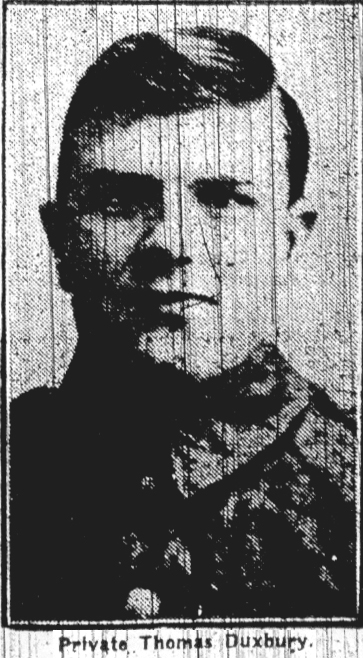
The much coveted Distinguished Conduct Medal has been awarded to another Blackburn Soldier in the person of Private Thomas Duxbury, 1st East Lancashire Regiment, who is not yet 20 years of age, and whose home is in Hannah-street. He joined the Army shortly before the war broke out, and was drafted to the front about the end of September. His younger brother, Private James Duxbury, who enlisted about two months before him, was a member of the same trench in the firing line. Thomas has been wounded on three occasions. In the first case he was fetching water for his brother and comrades when he was hit in the thigh, the wound necessitating his removal to hospital. During the stay, the hospital was shelled by the Germans and he was again wounded. In fact, he was fortunate to escape with his life, for out of twenty inmates sixteen were killed.
The act for which he has been awarded the D. C. M. Was a particularly gallant one. He was returning with water when he met the commanding officer, who said it was imperative that a certain despatch should reach the next company, situated seven miles away. Private Duxbury at once volunteered his services and quietly set out on his hazardous errand. His path lay across the firing line, and shells and bullets came thickly. He was shot in both legs. He dropped to the ground, but determined to fulfil his mission, if possible, he crawled the remaining mile and a half. He suffered intense pain and after delivering the despatch he was at once placed in hospital. When fit to travel he was brought to England and taken to hospital in Manchester. He is at present an inmate of a convalescent home in Ashton-under-lyne. His injuries are to be subjected to X-ray examination and an operation will probably be necessary before he fully recovers. Private Duxbury has been summoned to appear before the King in the latter part of April, when his Majesty will personally decorate him with the D. C. M. In recognition of his heroic act.
The other D. C. M. Was gained by Corporal C. Knowles of Daisyfield for gallantry in fetching water for wounded comrades.
Blackburn Times 20th March 1915
NEW EARLY CLOSING
The Town Clerk has been notified that the closing order made by the town council with respect to the boot and shoe and clog dealers shops, by which shops are to close at 8pm on Monday, Tuesday and Wednesday; 1pm on Thursday; 9pm on Friday and 10pm on Saturday, has been confirmed by the Secretary of State and will now come into operation.
Blackburn Times 20th March 1915
MOTOR AMBULANCE FOR FRANCE
GIFT OF THE LANCASHIRE AUTOMOBILE CLUB
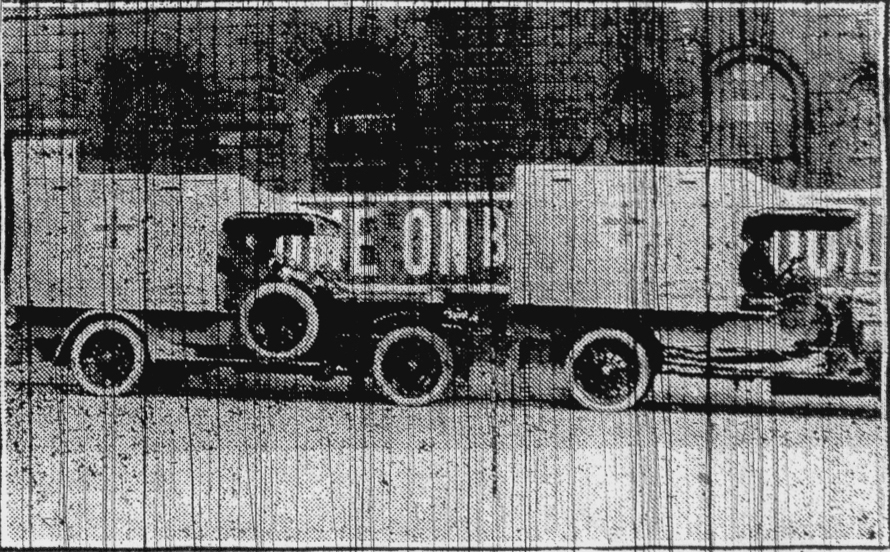
The committee of the Lancashire Automobile Club met at the headquarters in New Market-street on Monday afternoon and formally inspected the two new motor-ambulances which the club has presented to the war office for home service. These were drawn up outside the offices and were admired by quite a large crowd. One is a 30-h.p. Humber, the chassis of which was presented by Mr A. E. Higham of Lovely Hall; of which was the gift of Mr W. R. Allen, of Prestwich. The cost of fitting up the Ambulances has been defrayed by subscription received from members and friends, the work being carried out by Mr J. Lewis, Old Grammar School. The framework of the bodies is of ash, covered with waterproof khaki cloth, and on each side is a large Red Cross. The ambulances which bear the name of the club are each fitted with four stretchers. Should the patient be able to sit up, seats are provided for ten and an attendant, two of the stretchers being utilised in this case as supports for the back. The club has selected drivers, who have been approved by 5the authorities. The Humber will be driven by Mr R. C. Hardman of Haslingdon and the Daimler by Mr A. Dobson of Accrington. The club as also presented to the authorities a 16-h.p. Sunbeam ambulance, fitted with four stretchers for the service at the front. This has been supplied through Messrs J. Walsh and Co., and is now in London. The driver of this ambulance is Mr A. Hodkinson, formerly manager of West End Garage, and he is accompanied by Mr C. Pilling, a former employee of Messrs J. Walsh and Co. The home service ambulances left Blackburn on Monday evening for London, where they will be formally handed over to the authorities.
Blackburn Weekly Telegraph 27th March 1915
CHILDREN’S OPERETTA
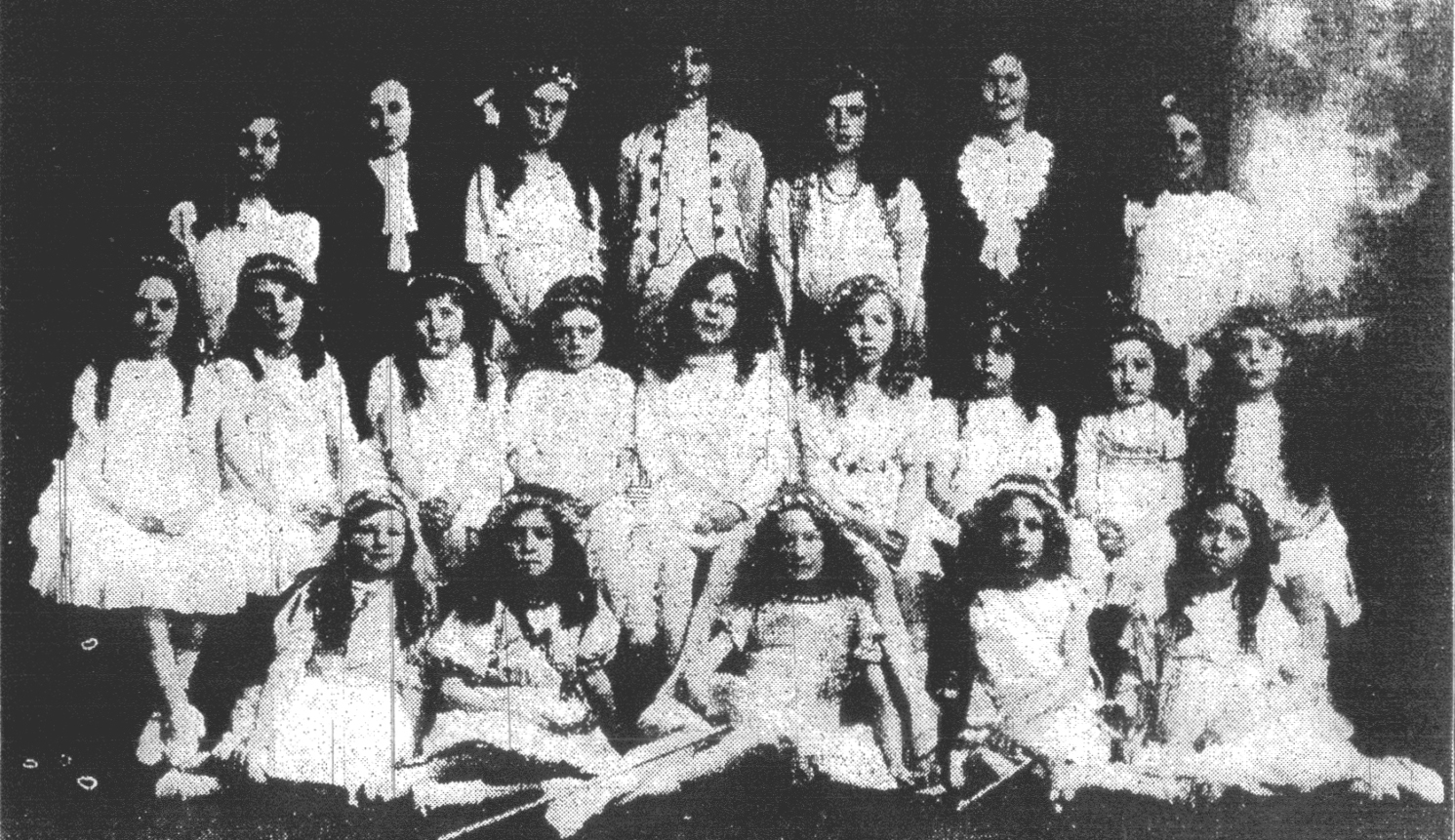
In order to raise £100 to provide a bed to be called “The Cinderella Bed” in the new Field hospital of the St. John Ambulance Brigade, The Musical operetta “Cinderella,” which proved so successful a few weeks ago at the trinity Wesleyan Church, and was the means of raising £14 for this charitable object, was repeated in the James-street School room on Thursday evening, Mr Richard Thompson, J.P., presiding over a good attendance.
As on previous occasions, the piece was admirably rendered. The arrangements were in charge of Miss Speak and Miss Booth, assisted by Miss Clegg and Miss A. Speak, and the charming manner in which the whole operetta was carried out fully rewarded their efforts. The parts taken entirely by children, and the manner in which they acted various characters reflected great credit both on themselves and those who had trained them. The pretty dresses and scenery contributed in no small measure to the success of the production, the electric lighting effects being arranged by Mr T. Speak. The songs throughout the story were prettily rendered by the fairies and others.
The characters were: “Cinderella,” Doris Clegg; “Prudie,” Nora Pickup; “Crosspatch,” Mary Pollard; “Fairy Godmother,” Annie Milnes; “Sir Hector’” Ida Simpson; “Sir Holiday,” Mildred Wilson; “Herald,” Annie Beesley; “Prince Charming,” Margery Booth. The chorus of Fairies consisted of; Mary Knight, Ann Sager, Edith Edmundson, Isabel Walker, Gladys Oldcocrn, Doris Barton, Madge Knight, Jenny Booth, Ella Ormerod, Edna Dawson, and Nellie Simpson. The Gift Fairies were; Freda Dawson, Dorothy Pollard, and Ivy Robinson. Songs also rendered by Nellie Hayhurst.
LETTERS FROM THE FRONT
BLACKBURN SOLDIERS DESCRIBE THEIR EXPERIENCES
“Have You Got Your Clogs?”
Private Thomas Gregson of the 2nd East Lancashire regiment, whose home is in Accrington-road, prior to returning to the front on Tuesday, narrated an interesting story of his adventures to a representative of the “The Blackburn Times,” in the course of which he described how he was wounded in the back at La Bassee on the 9thinst, In his battalion was another Blackburn man named harry Edmundson. Gregson and Edmundson, who had previously kept together, got separated in a communication trench and did not see each other again until reaching Blackburn. The trench private Gregson was in was nicknamed Port Arthur, and was only 50 yards from the German Lines. When the enemy discovered that Lancashire men were opposing them they frequently called out, “have you got your clogs?” One of the German aeroplanes mistook a disposed traction engine for acannon, and over 200 shells were dropped near it before the enemy found their mistake.
“Rovers Thanked For Football”
A member of No. 4 troop, “C” Squadron, of the Army Remount Corps stationed at Shirehampton, near Bristol, writes as follows-; “Would you kindly put in your paper a vote of thanks to the directors of the Blackburn Rovers. We got a football sent free from them. We have had a good few matches since it came, and we have beaten every team in our Squadron except the Nottingham boys. We made a draw with them twice and we are going to play the final in Berlin. P.S. We are going to France soon.” The team referred to was composed of the following Blackburn Recruits; W. Grundy, W Garstang, and A. Pomfret; T Holden, F. Clark and W. Tranter, H. Kelly, J. Ward, A. Tunstall (captain), B. Whiteside, and P. Macabe.
April 1915
Blackburn Times 3rd April 1915
IN THE EVENT OF BOMBARDMENT
HOME OFFICE INSTRUCTIONS TO BLACKBURNThe Chief Constable (Mr C. Hodgson) has sent out to the quarter’s concerned copies of the following circular received from the Home Office in regard to the placing of distinguishing signs on certain buildings “in the event of bombardment or hostile landing”—“The Secretary of State having received inquiries as to whether, in the event of a bombardment or hostile landing, civil hospitals, and asylums, etc., should fly the Red Cross flag or display any other distinguishing sign, he thinks it well to state that Article 27 of the Annex to the Hague Convention of 1907 provides that hospitals and places where the sick and wounded are collected, buildings dedicated to public Worship, art, sciences or charitable purposes, and historic monuments, provided that they are not being used at the time for military purposes. It is necessary that they should be clearly indicated by distinctive and visible signs which have been notified to the enemy beforehand; and the sign which it is proper to use for this purpose in the event of bombardment is not the Red Cross flag but the sign which is specified in the portion of the Hague Convention dealing with bombardments by naval forces and which has also been notified by the British Government for protection in the event of bombardment by land and air, viz. a large stiff rectangular panel divided diagonally into two painted Triangular portions, the upper portion black and the lower portion white. The only hospitals which are entitled to use the Red Cross emblem are those which are exclusively under military or naval control, or have been granted special authority by the Army Council. The fact that a hospital or other building is used for the accommodation of wounded soldiers or sailors does not in itself justify the use of the Red Cross.
Blackburn Times 3rd April 1915
VICTIM OF THE GERMANS
DARWEN LADY ON THE TORPEDOED AGULA
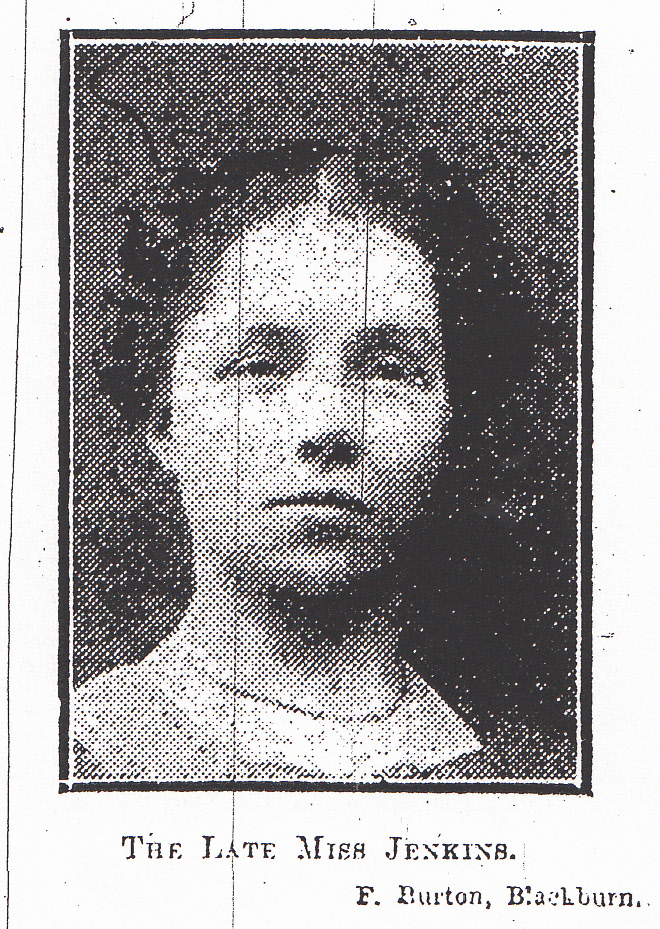
Miss Emily Jenkins of Punstock road, Darwen, was stewardess on the British S.S. Agula which was torpedoed of Pembroke last Saturday night. In reply to the telegram sent from Darwen the steamship company said Miss Jenkins was not reported saved. She is believed to have perished. One of the survivors told an interviewer:--" I saw a boat with ten men, the stewardess, and her woman friend, who was a passenger, come to grief. The woman passenger cried out, "I'm shot." The next moment heavy seas capsized the boat, and neither of the women were seen again." It is believed that both were killed by shrapnel. Miss Jenkins had been one of the voluntary workers at Moss Bridge Hospital, and it was probably in consequence of the training she received there that a few weeks ago she secured a position as stewardess on the Yeoward Line. She left home on Thursday last to join the Agula, to which she was attached, at Liverpool, this being only her second voyage out. A married sister of Miss Jenkins is also engaged on the Yeward Steamship Line, whilst strange to say a brother who is a carpenter, should have sailed on the ill-fated Titanic when that vessel went to the bottom in April 1912. At the last minute, however, he was not included amongst the crew and thus avoided a watery grave.
TEMORARY USE OF HARRISON GYMNASIUM AS A HOSPITALThe Harrison Gymnasium Sub-Committee re commended the General purpose Committee to place the Harrison Gymnasium at the disposal of the authorities for thee the use of as a temporary hospital, if the same be found necessary, and to appoint the Chairman and Vice-Chairman of the Gymnasium Sub-Committee to deal with any matters of detail—The recommendation was agreed to.
Blackburn Times 10th April 1915
ACCIDENTS AT THE FAIR
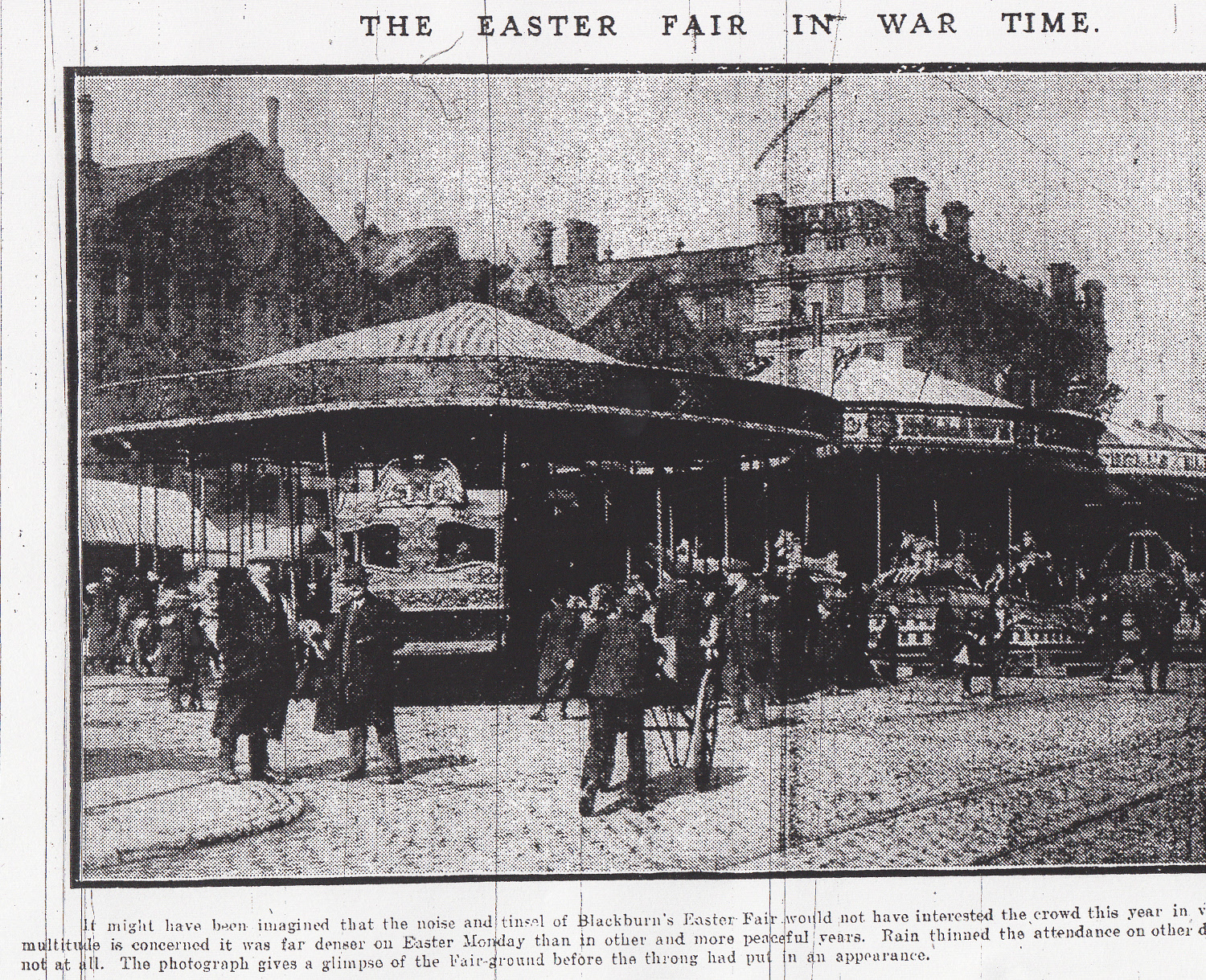
The Easter pleasure fair which was held as usual on the market ground from Saturday till Wednesday night differed from that of previous years in two respects. Restrictions were imposed by the military authorities as to lighting, and the fair closed every night at ten o’clock instead of midnight. The weather was only good on one day of the four days the fair lasted and that was Monday. There was the usual crop of accidents, all happily of a minor character. Most of these were dealt with by members of the St. John Ambulance Brigade and the Nursing Division, who were on duty on the fair ground and who had a temporary station at the War Relief Office, 17 Victoria-street. There were three accidents on Monday. During the forenoon Nellie Corbett, servant at 88, Granville-road, was riding a horse on one of Benjamin Mitchell’s roundabouts when she fell off. She was fortunately escaped with slight bruises to the back and after receiving attention at the ambulance station, was able to proceed home;--In the afternoon of the same day Stanley James Wilding, aged 6, of 16, Grace-street, was knocked down by a roundabout and bruised on the left shin. The injury was dressed by members of the St. Johns Ambulance Brigade he was taken home;--On Monday night John Thomas Hill of 8, Mount Pleasant, a labourer was walking down the steps of one of Mr Mitchell’s roundabouts, when he slipped and fell into the street. He sustained a severe cut about an inch long on the centre of the forehead. First-aid was rendered at the ambulance station.—On Tuesday there was one accident and this was late in the evening when William Moran, a barman, of 58 Mary Ann-street, was getting off a roundabout and slipped and fell, sustaining a contused wound on the back of the head. A member of the St. John’s Ambulance Brigade rendered first aid.—On Wednesday there were two accidents. In the afternoon Mrs Margaret Holden, of 40 Artillery-street, an elderly lady was walking across the market ground when she stumbled against the electric cable laid on the ground, with the result that she fell and bruised her left knee.—About 9.10pm Mrs Susannah Hal, of 14, lord Derby-street, was standing on the platform of P. Callins’ scenic railway roundabout when some youth pushed against her and she was knocked down the half-dozen steps to the ground, injuring her head.
Blackburn Times 10th April 1915
BLACKBURN NEW MILL
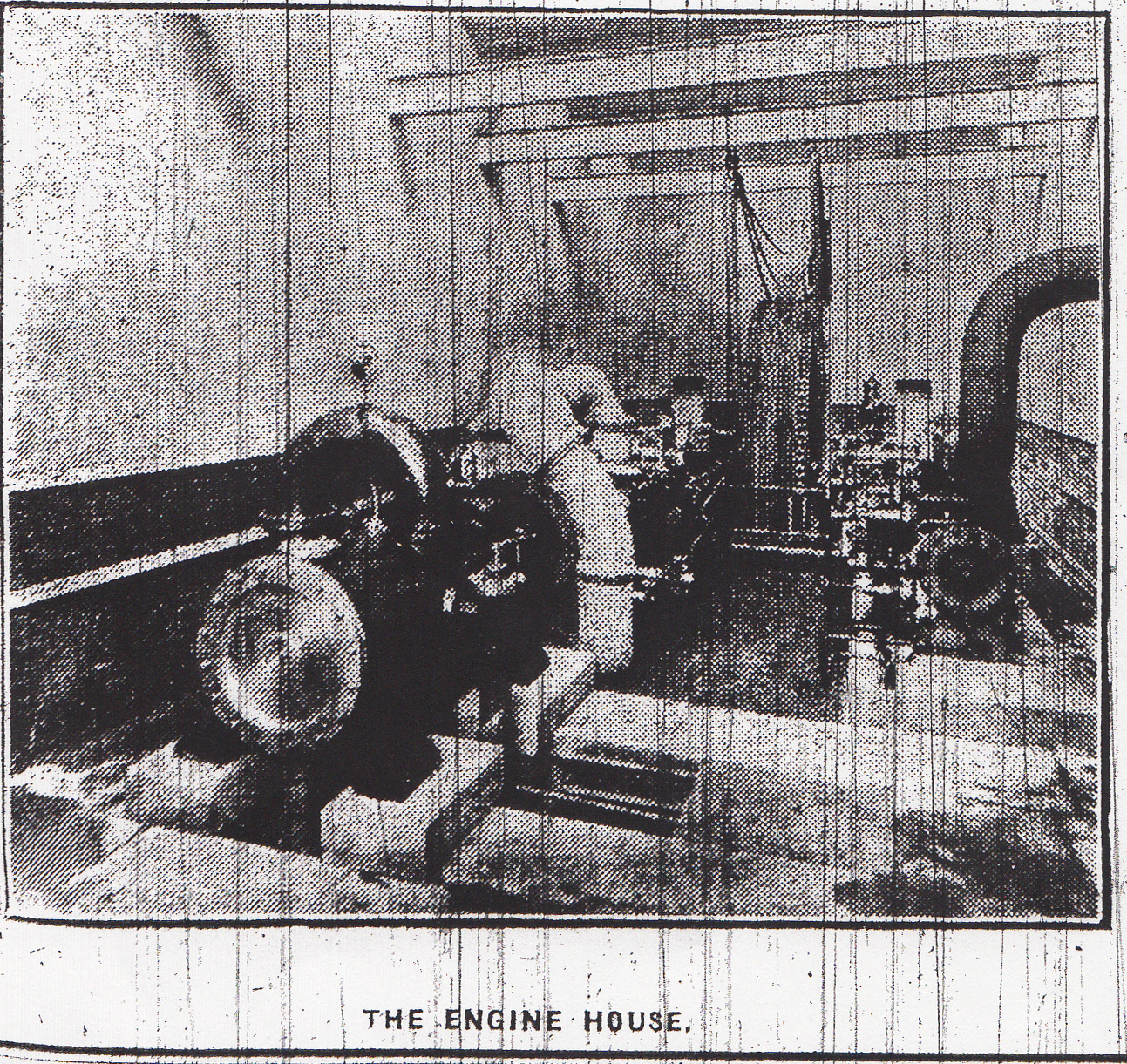
The new weaving shed situated in Highfield-road, Blackburn, belonging to the Longshaw Mill Co., Ltd., commenced to run on March 22nd. The shed which contains 644 looms and preparation machinery, has been built and equipped by Messrs. Ashton, Frost and Co., Ltd., Bank top Foundry, Blackburn. The engines are of the horizontal, side-by-side compound, Corliss, jet condensing type. The looms were supplied by Messrs. Willan and Mills, of Blackburn, and the preparation machinery by Messrs. William Dickinson and Sons, Blackburn.
The mill may be said to be of the most modern construction in every detail, fully equipped with all the latest improvements. It is the first to have installed a special plant for removing fluff and small lumps from the yarn as it passes through the preparation machinery. The various departments will find employment for 250 work people, whose wages bill will aggregate £340 weekly.
The mill may be said to be of the most modern construction in every detail, fully equipped with all the latest improvements. It is the first to have installed a special plant for removing fluff and small lumps from the yarn as it passes through the preparation machinery. The various departments will find employment for 250 work people, whose wages bill will aggregate £340 weekly.
Blackburn Times 17th April 1915
JUVENILE EMPLOYMENT AT BLACKBURN
The monthly meeting of the Advisory Committee for Juvenile Employment was held at the Labour Exchange on Monday, Mr J. Aspin in the chair.
The monthly meeting of the Advisory Committee for Juvenile Employment was held at the Labour Exchange on Monday, Mr J. Aspin in the chair.
It was reported that several children who are half-timers are known to be working also in spare employment such as the delivering of newspapers. It was agreed that a member of the committee should draw the attention of the employers to Section 3 (3) of the Employment of Children Act, 1903, which states that "No child who is employed half-time under the Factory and Employment Act, 1901, shall be employed in any other occupation." The committee decided to draw the attention of the committees of the local Co-operative Societies to the commencing age of boys in their employ.
It was reported that the Chief Constable has agreed that all boys between the ages of 14 and 16 who make application for licenses to trade in the streets as their sole occupation should be given a form and directed to register at the Labour Exchange before a street trading licence would be given. It is hoped that this arrangement will help to minimise the number of boys following street trading as an occupation and will ensure to each applicant an offer of permanent and more beneficial employment.
The statistical report of the secretary, which follows, was adopted:--School cards received, boys 32, girls 39, total 72; fresh applications, boys 30, girls 12, total 42; vacancies notified, boys 40, girls 20, total 60; vacancies filled, boys 21, girls 9, total 30, cases dealt with at rota meeting, 6; Attendance at Care Committee meeting,21; re reports of visits, 25,; fresh cases undertaken, 32; visits by secretary, 14; parents interviewed by secretary, 18.
Two meetings were addressed during the month. At the request of the Head Teachers Association Miss Marshall, the organising officer addressed the members at the Education Office on "The need for and the use of leaving card" At the request of the Blackburn woman's Co-operative Guild, the secretary addressed the members on "The Juvenile Labour Exchange and other case work."
It was reported that the Chief Constable has agreed that all boys between the ages of 14 and 16 who make application for licenses to trade in the streets as their sole occupation should be given a form and directed to register at the Labour Exchange before a street trading licence would be given. It is hoped that this arrangement will help to minimise the number of boys following street trading as an occupation and will ensure to each applicant an offer of permanent and more beneficial employment.
The statistical report of the secretary, which follows, was adopted:--School cards received, boys 32, girls 39, total 72; fresh applications, boys 30, girls 12, total 42; vacancies notified, boys 40, girls 20, total 60; vacancies filled, boys 21, girls 9, total 30, cases dealt with at rota meeting, 6; Attendance at Care Committee meeting,21; re reports of visits, 25,; fresh cases undertaken, 32; visits by secretary, 14; parents interviewed by secretary, 18.
Two meetings were addressed during the month. At the request of the Head Teachers Association Miss Marshall, the organising officer addressed the members at the Education Office on "The need for and the use of leaving card" At the request of the Blackburn woman's Co-operative Guild, the secretary addressed the members on "The Juvenile Labour Exchange and other case work."
Blackburn Weekly Telegraph 24th April 1915
IN CASE OF AN AERIAL ATTACK
The Chief Constable (Mr C. Hodson) has issued new regulations regarding the action to be taken by the civil population in case of an attack by a foreign enemy. The Military Authorises wish it to distinctly understood that whilst there is always the possibility of such an attack they do not consider the public have any cause for anxiety or fear. In the event of any hostile attack, whether by raid, bombardment, or by aircraft:
The Chief Constable (Mr C. Hodson) has issued new regulations regarding the action to be taken by the civil population in case of an attack by a foreign enemy. The Military Authorises wish it to distinctly understood that whilst there is always the possibility of such an attack they do not consider the public have any cause for anxiety or fear. In the event of any hostile attack, whether by raid, bombardment, or by aircraft:
All persons are requested to remain indoors or to return to their houses or shops;
Doctors and surgeons are requested to remain at their houses or surgeries until summoned by the authorities, who will advise them where their services are required; and householder's and occupiers of business premises should at once turn off gas at the meter and taps, and also electricity as a preventative
Doctors and surgeons are requested to remain at their houses or surgeries until summoned by the authorities, who will advise them where their services are required; and householder's and occupiers of business premises should at once turn off gas at the meter and taps, and also electricity as a preventative
against fire outbreak and explosions.
The public are strongly advised to shelter in basements and cellars, and remain there until the danger is over. Householders who have such basements or cellars should admit their neighbours whose habitations do not afford such accommodation, and also passers-by in the street.
School teachers should take all possible steps to secure the safety of the children in the schools and parents are particularly requested not to leave their homes to go to the schools to seek their children.
Arrangements have been made that on receipt of a notice from the Chief Constable or any other person delegated by him of the anticipated approach of hostile aircraft, a preconcerted signal shall be given by special hooter at the Corporation Electricity Works, Jubilee-street, to war all citizens of their danger.
The preconcerted signal will be as follows: One long blast (about ten seconds), then three short ones in quick succession, followed at short intervals by similar signals, which will continue to be repeated for five minutes.
On the approach of hostile aircraft, the electricity supply will be cut off until all danger is passed. Householders are advised to meet any emergency by obtaining candles, oil lamps, etc., for temporary use.
The instructions of the military and of the police must be implicitly observed. Special constables and ambulance men are requested, on hearing the hooter, to at once parade at the police station. These emergency regulations have been thoroughly tested by Mr. Hodson, and there is not much chance of an airman seeing Blackburn at night when they are in operation. In addition to posters, 20,000 copies of the regulations are being distributed to school children to take home.
The public are strongly advised to shelter in basements and cellars, and remain there until the danger is over. Householders who have such basements or cellars should admit their neighbours whose habitations do not afford such accommodation, and also passers-by in the street.
School teachers should take all possible steps to secure the safety of the children in the schools and parents are particularly requested not to leave their homes to go to the schools to seek their children.
Arrangements have been made that on receipt of a notice from the Chief Constable or any other person delegated by him of the anticipated approach of hostile aircraft, a preconcerted signal shall be given by special hooter at the Corporation Electricity Works, Jubilee-street, to war all citizens of their danger.
The preconcerted signal will be as follows: One long blast (about ten seconds), then three short ones in quick succession, followed at short intervals by similar signals, which will continue to be repeated for five minutes.
On the approach of hostile aircraft, the electricity supply will be cut off until all danger is passed. Householders are advised to meet any emergency by obtaining candles, oil lamps, etc., for temporary use.
The instructions of the military and of the police must be implicitly observed. Special constables and ambulance men are requested, on hearing the hooter, to at once parade at the police station. These emergency regulations have been thoroughly tested by Mr. Hodson, and there is not much chance of an airman seeing Blackburn at night when they are in operation. In addition to posters, 20,000 copies of the regulations are being distributed to school children to take home.
May1915
Blackburn Weekly Telegraph 1st May 1915
DEATH OF A FAMOUS RACING CYCLIST
DEATH OF A FAMOUS RACING CYCLIST
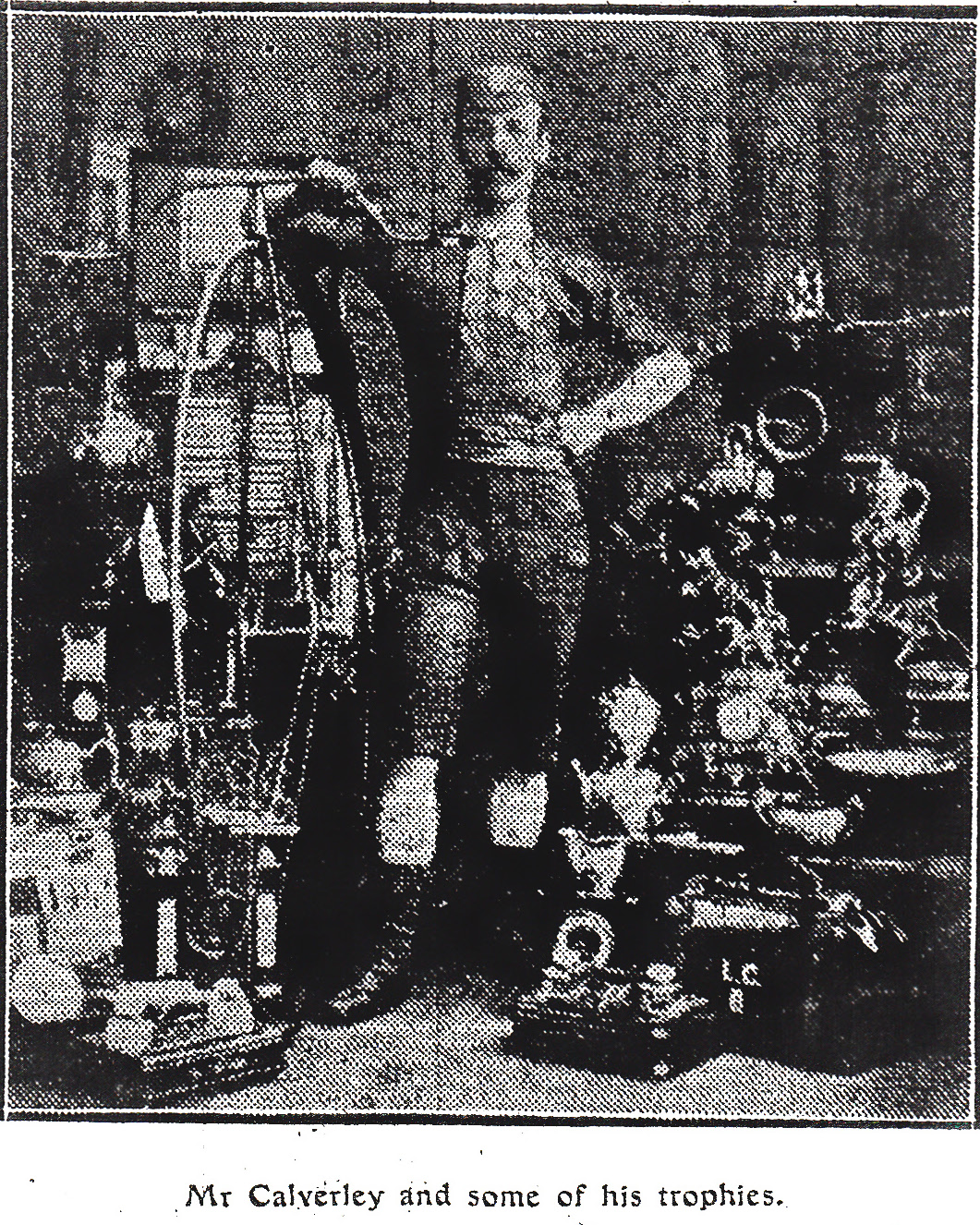
In the 1880s, when Athletic meetings were more popular than they are to-day, Mr Louis Calverley, whose death recently occurred at Blackburn was exceedingly well known as one of the fastest amateur cyclists in East Lancashire. This was the time of the big wheel, and on his 52in diameter bicycle he won innumerable trophies in competition with the most famous speedmen in the country. He was always a popular favourite with the crowd, for he invariably rode a straight race, a line of conduct which, even in those far away days, was far from easy. The desires for favourable starts, and the opportunity of the bookmaker, have ruined the reputation of many athletes, who did not possess that determination to win or lose only by fair means, which was so characteristic of Calverley in his racing career. Retiring from the track, he entered the cycle dealing trade at Burnley for some years, afterwards he removed to Accrington, but for the last four or five years he had lived in Blackburn.
OPEN AIR SCHOOL AT BLACKBURN
MARKED IMPROVEMENT IN THE HEALTH OF SCHOLARS
The open-air classes instituted by the Blackburn Education Committee demonstrate the immense advantage of the system for scholars whose health gives cause for anxiety. Highly beneficial results continue to be recorded. During the school year 1914-15 three such classes have been held—at Bangor-street, at Accrington-road, and on the Corporation Park; the two former were opened last May and the one in the Corporation Park in June. The classes in each of which there is accommodation for 24 to 26 pupils have been open continuously, with the exception of the usual elementary school holidays. At Bangor-street the scholars were taken into the main school on six occasions, for a total length of time of 6¾ hours. At the Corporation Park the room has been used for a still shorter period. At Accrington-road they have made use of a classroom in the school on 25 occasions only. Twenty nine have been admitted to the Corporation Park class, 31 to Accrington-road and 44 to Bangor-street, giving a total of 104 children. The diseases from which these children have been suffering include general debility, anaemia, tuberculous glands, rickets, rheumatism, St. Vitus dance, weak chest, and asthma. Their ages have varied from 6 to 12 years.
As their health improved several children were sent back to their former schools, and others were admitted. The experiment of admitting fresh children in January was tried. It was found that there was no disadvantage from this practice. In fact, the children showed marked improvement in a very short space of time, several making 100 per cent of attendances, ant the attendances of all being much better than at their former schools. The average attendance of the children at Corporation Park was 89 per cent, and that at Bangor-street 84 per cent. The effects on the pupils have been most marked. At first most of them were weak, languid, had very weak voices for singing, and poor appetites. The improvement has been shown by increase in weight and height, good appetites, stronger voices, general brightness at work and play, and an all-round increase in energy and interest in everything connected with school work. All the parents who have visited the classes have expressed their great appreciation of improvement in the children's health. At the Accrington-road class the average increase in weight per month was 6½ ozs; at the Corporation Park, 9¼ ozs; and at Bangor-street 7½ ozs. The subjects taken have been the ordinary subjects of elementary schools, but special stress has been laid on nature study, physical exercises, and practical geography. School gardens are worked in connection with each class. Each child on being admitted was supplied with a separate chair, rug, and towels and retained the use of them throughout his or her stay in the class. The children are examined by the School Medical Officer once every three months, and arrangements have now been made to take records of increase in height and chest measurements.
As examples of marked improvements the following cases may be cited. Three children who frequently fainted when attending an ordinary elementary school have never fainted since attending the open-air class. One girl who has been unable to read aloud in class for some years owing to stammering, as quite recovered without any special treatment. Another girl, aged 12, who when admitted could scarcely read now reads a Standard III book easily. One boy who had never attended school before is now the best in drawing in his class, writes very clearly and well, is good at handwork, and is working at a Standard I Reading.
Blackburn Times 8th May 1915
SUFFRAGETTES AND THE WAR
"GENERAL" FLORA DRUMMOND'S VISIT TO BLACKBURN
Mrs Flora Drummond, known to the members of the Woman's Social and Political Union as "The General," because of the leading part she has taken in organising all the great demonstrations and pageants of the militant section of the Woman's movement, is the principal speaker at the recruiting meeting in Blackburn Town Hall, on Tuesday night, under the auspices of the W.S.P.U., to be presided over by the Deputy Mayor, Alderman Crossley, J.P. Among others who have promised to be present are Sir Edwin Hamer, J.P., Alderman Nuttall, J.P., and other members of the Recruiting Committee.
"General" Drummond has been a member of the W.S.P.U. almost from the beginning. It was the first militant protest, at Manchester free Trade hall. in October 1905, that caused her to come into the ranks. One of her first services to the cause was to make a protest at a meeting addressed by Mr Winston Churchill then candidate for North West Manchester. In the beginning of 1906, the W.S.P.U. established its head quarters in London, and "General" Drummond then took a share in organising the London campaign. She soon became famous as a speaker. She is possessed not only of great natural eloquence, but of an unrivalled gift of swift repartee which in itself delights and wins over her audience. In 1908 the W.S.P.U. organised in Hyde Park a great demonstration, and "General" Drummond took a large share in the work. A suffrage procession organised by the W.S.P.U. in 1910 was headed by the "General" mounted on horseback. Mrs Drummond has been five times in prison. In October 1908 she and Mrs Pankhurst an Miss Christabell Pankhurst were charged with inciting the public to rush the House of Commons. On that occasion Mrs Drummond was sentenced to three months imprisonment. She again stood in the dock in the summer of 1913 with Miss Annie Kenney and others. The charge was one of conspiracy, but owing to her grave illness, the charge was subsequently dropped, but not until she had carried through a hunger strike.
Since the outbreak of the war "General" Drummond has taken an active part in the recruiting meetings organised by the W.S.P.U. throughout the country.
Since the outbreak of the war "General" Drummond has taken an active part in the recruiting meetings organised by the W.S.P.U. throughout the country.
Blackburn Times 8th May 1915
LUSITANIA TORPEDOED
SUNK OF THE COAST OF IRELAND
NEARLY 2,000 PEOPLE ON BOARD
The Germans have carried out their openly-avowed intention, and torpedoed the giant Cunard liner Lusitania. This dastardly act was committed without warning at 2.23 yesterday [Friday] afternoon when the vessel was off the South of Ireland; but the loss of the liner was not known in London until about 5 o'clock, and up to a late hour last night nothing very definite was known as to the fate of the passengers and crew. There were over 1,900 souls on board. The vessel was eight miles, North by West, off Kinsale when sunk. She was on her passage from New York, and it will be remembered that before she sailed Germany warned American passengers of the risk they were taking.
SANK IN 20 MINUTES
It was ascertained at the Cunard offices in London, last night that the 1,978 souls on board were made up as follows:--Passengers – 1st class, 290; 2nd class, 662; 3rd class, 361; crew, 665. Among the passengers were Sir Hugh Percy Lane, and others who had booked passages and were supposed to be on board were Mr Charles Frohman, Mr A. Vanderbilt, and Lady Allen (wife of Sir A. Allen, of Montreal).
The Lusitania was torpedoed without warning, and sank in 20 minutes. Twenty of the Lusitania's boats and 16 other boats were on the spot after the great liner went down. Other boats were proceeding from Liverpool to the scene of the disaster. Information had also been received that a boat had load of survivors was being towed to Kinsale by a Greek steamer.
A Queenstown correspondent telegraphs; All the vessels in the harbour have gone to the scene. The Lusitania has gone down, but efforts are being made to save the lives of the passengers.
WIRELESS CALL FOR HELP
A telegram from Lands End says:--A Wireless message received here this afternoon from the Lusitania ran; "Come at once; big risk"
LOCAL PEOPLE AMONG THE PASSENGERS
Among the passengers on the Lusitania was Mr William Bolton, formerly a newsagent of Accrington, who has two married sisters and a brother resident in Blackburn, a married sister in Darwen, and another in Rishton, Mr Bolton, who is about 30 years of age, went to Canada about two years ago, and was returning from New York to rejoin his wife in Accrington. His brother is Mr James Bolton of Redcap farm, and his sisters in Blackburn are Mrs Barnes, Willow House, Whitebirk-road, and Mrs Duckworth, Intack Farm, Whitebirk.
Mrs Duckworth a Blackburn lady whose home is in New York, was one of the survivors; Mr John Almond of 66 Cherry-street, a steward on the vessel, who was last seen struggling in the water and is believed to have been drowned.
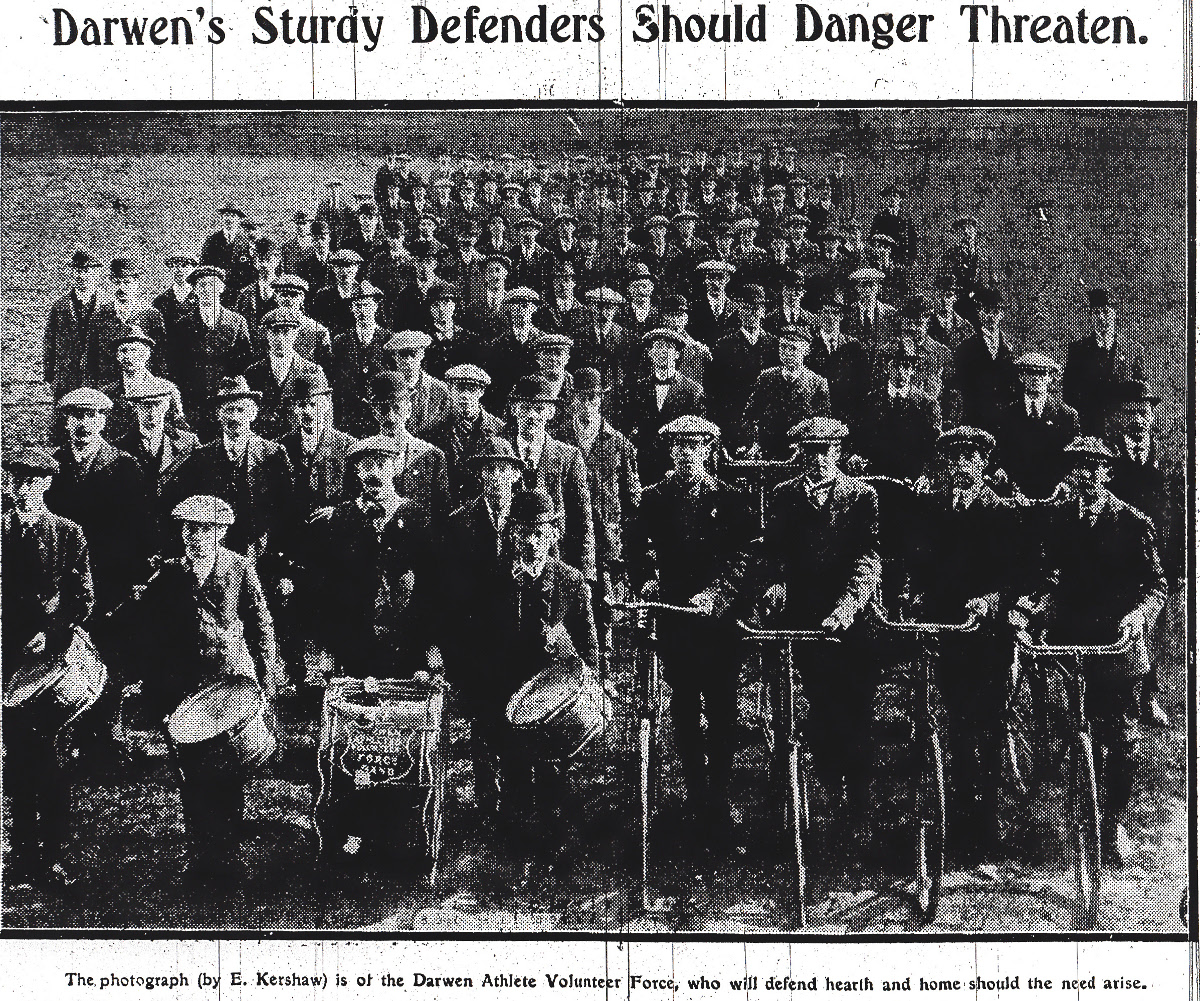
ATHLETES VOLUNTEER FORCE
BLACKBURN UNIT
REGIMENTAL ORDERS FOR THE WEEKENDING MAY 8 BY J. E. FARR
Saturday: No Parade
Sunday: The Battalion will parade at Billinge End. Fall in at 11 am. Each man should bring his own rations, which should securely labled, with his name and number of Platoon. The Cyclists, Signallers, and Ambulance Sections will parade as such. Return to Billinge End about 5 pm. Overcoats will be taken charge of by the Transport Section.
Monday: 7.30 pm., Recruits Squad.
Tuesday: 7.50 pm., "D" and "C" Companies will parade at Headquarters.
Wednesday: 7.30 pm., Recruiting Parade.
Thursday: 3.0 pm., The Battalion will parade at the Market Square for route march with the band of the Lancashire Fusiliers. 7.30 pm., "B" and "A" Companies will parade at Headquarters.
Friday: 7.30 pm., Class for Promotion at Headquarters.
Saturday: 2.30 pm., The Battalion will parade. Fall in at the Recreation Ground, Ewood,
The following promotions have been made—Section Commander H. Ginger to be Platoon Sergeant; T. Field to be Sub-Section Commander.
For the Battalion Commander,
J. Isherwood, Acting Adjutant.
Sunday: The Battalion will parade at Billinge End. Fall in at 11 am. Each man should bring his own rations, which should securely labled, with his name and number of Platoon. The Cyclists, Signallers, and Ambulance Sections will parade as such. Return to Billinge End about 5 pm. Overcoats will be taken charge of by the Transport Section.
Monday: 7.30 pm., Recruits Squad.
Tuesday: 7.50 pm., "D" and "C" Companies will parade at Headquarters.
Wednesday: 7.30 pm., Recruiting Parade.
Thursday: 3.0 pm., The Battalion will parade at the Market Square for route march with the band of the Lancashire Fusiliers. 7.30 pm., "B" and "A" Companies will parade at Headquarters.
Friday: 7.30 pm., Class for Promotion at Headquarters.
Saturday: 2.30 pm., The Battalion will parade. Fall in at the Recreation Ground, Ewood,
The following promotions have been made—Section Commander H. Ginger to be Platoon Sergeant; T. Field to be Sub-Section Commander.
For the Battalion Commander,
J. Isherwood, Acting Adjutant.
Blackburn Times 15th May 1915
A £10,000 LEGACY SCHEME FOR DARWEN
The disposition of the legacy of £10,000 left to Darwen by Alderman T. Lightbown has been satisfactorily settled after a good deal of contention. A scheme for the erection of cottage homes was sanctioned in Chancery, and we reproduce a photograph, by Mr Kershaw of the plans of Mr G. J. Sames J.P, which have been accepted by the Trustees. It will be five years in September since the death of Alderman Lightbown, and in that time many schemes have been under consideration. The cottage homes will be built in the Sunnyhurst district, on a site acquired by the Trustees at the corner of Owlet Hall-road and Earnsdale-road. There will be a block of eight houses set diagonally in the centre of the two-acre estate, the last buildings canting at each end. There will be open an garden in front, with a central sundial and seats, and accommodation at the rear for cottage gardening. A feature of the accepted plan is that the setting of the houses is such that the windows will receive the maximum amount of light. Another matter which influenced the assessor, Mr G. H. Willoughby, of Manchester, to select Mr Sames's plans, is that the living-room extends from front to back, and is well lighted on both sides. In addition, each house will have two bedrooms and a scullery. each house is self contained. They will be built of stone and as befitting homes for aged people there are to be no steps on the estate.
Blackburn Times 22nd May 1915
RECUED FROM THE CANAL
GALLANTRY REWARD AT BLACKBURN
At the Blackburn Borough Police Court, on Wednesday, the Royal Humane Society's parchment and a special reward of £1, were presented by the Chairman of the Bench (Mr James Kay) to Mr Thomas Tattersall, aged 50, a foundry labourer of Esther-street in recognition of conspicuous bravery in rescuing a lad named Thomas Finch aged 11 of 4 maple-street, from the Leeds and Liverpool canal.
GALLANTRY REWARD AT BLACKBURN
At the Blackburn Borough Police Court, on Wednesday, the Royal Humane Society's parchment and a special reward of £1, were presented by the Chairman of the Bench (Mr James Kay) to Mr Thomas Tattersall, aged 50, a foundry labourer of Esther-street in recognition of conspicuous bravery in rescuing a lad named Thomas Finch aged 11 of 4 maple-street, from the Leeds and Liverpool canal.
Narrating the circumstances Mr C. Hodson (Chief constable) said on Sunday, April 25th, the boy Finch was playing on a turn bridge at Whitebirk with another lad. The bridge was turned to far from the towing path, and Finch attempted to jump from it to the towing path. In doing so he fell into the water. He struggled for some time and drifted to the middle of the canal. He had sank for the third time when Mr Tattersall, who was walking along the path, noticed his condition. He divested himself of his jacket and immediately jumped into the water. He succeeded in bringing the boy who was unconscious, to the side, and by means of artificial respiration undoubtedly saved his life. Mr Tattersall had risked his life in making the rescue, and it was some time before he himself recovered for he was not well at the time. He (Mr Hodson) communicated the facts to the Royal Humane Society, and they had forwarded their parchment and a reward of £1.
The Chairman handed over the certificate and the reward, and said many a man of the age of Mr Tattersall would not have risked his life in this way. Not only did Mr Tatersall bring the lad to the side but his knowledge of first aid enabled him to bring the boy round. Thus this was a double honour, and the Bench hoped that his example would prove beneficial to others.
Mr Tattersall acknowledged the gifts.
The Chairman handed over the certificate and the reward, and said many a man of the age of Mr Tattersall would not have risked his life in this way. Not only did Mr Tatersall bring the lad to the side but his knowledge of first aid enabled him to bring the boy round. Thus this was a double honour, and the Bench hoped that his example would prove beneficial to others.
Mr Tattersall acknowledged the gifts.
Blackburn Weekly Telegraph 29th May 1915
BOY SCOUTS AND GIRL GUIDES
A rally in connection with the troops of Boy Scouts and Girl Guides of St. Peter’s School was held on Monday, and was attended by troops from St. Michael’s, Christ Church, St. Francis’, Oswaldtwistle, and Feniscowles. The Scouts and Guides walked in procession by way of King-street, Darwen-street, and Livesey Branch-road to a field in Livesey, where they had a march past, and gave an exhibition of Scout craft, etc.
BOY SCOUTS AND GIRL GUIDES
A rally in connection with the troops of Boy Scouts and Girl Guides of St. Peter’s School was held on Monday, and was attended by troops from St. Michael’s, Christ Church, St. Francis’, Oswaldtwistle, and Feniscowles. The Scouts and Guides walked in procession by way of King-street, Darwen-street, and Livesey Branch-road to a field in Livesey, where they had a march past, and gave an exhibition of Scout craft, etc.