
 Loading more
1915
Januuary | February | March | April | May
January 1915
Blackburn Weekly Telegraph 2nd 1915
SUNNYHURST WOOD UNDER SNOW
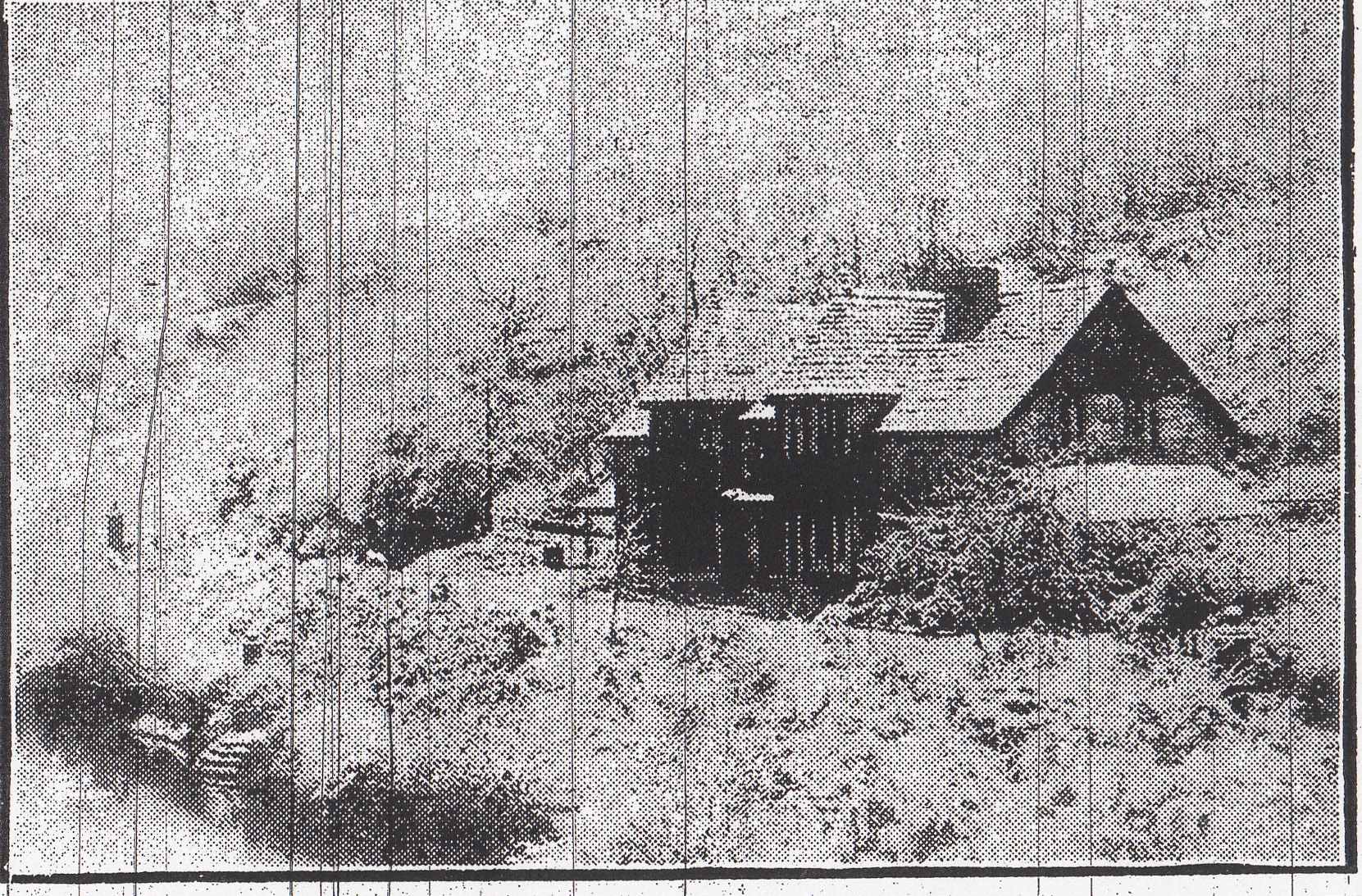
The photograph affords a suggestion of the beauty of Sunnyhurst Wood, as it appeared immediately after the snowfall at the beginning of the week. Always attractive the wood in a white and spotless garb seemed like a stretch of fairyland, with the kiosk, the building in the photograph, as the enchanted castle. Sunnyhurst wood is Darwen’s proud possession, and is lovely in all moods.
Blackburn Weekly Telegraph 2nd 1915
CHRISTENING OF ENGINES AT EWOOD
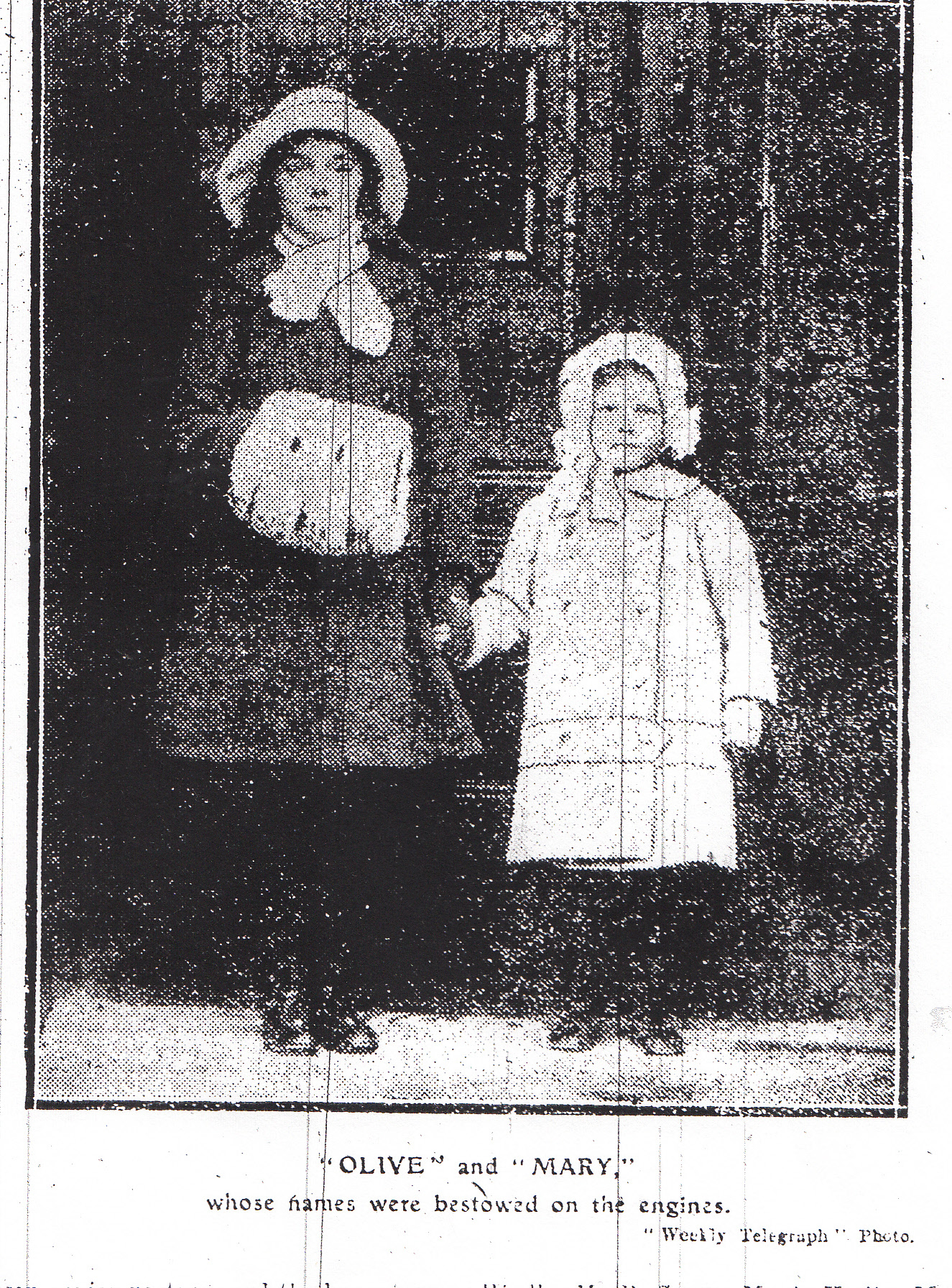
The newly installed 700 h.p. engines at Ewood Mills Blackburn Messrs. J. Livesey, Ltd., were christened at noon on Saturday. The high-pressure engine was christened “Olive “by Miss Olive Livesey, daughter of Mr H. Livesey, senior, and the low pressure engine was named “Mary” by Miss Mary Livesey, daughter of Mr W. Livesey, junior partner. Afterwards luncheon was served in the engine-room, those present being Mr and Mrs H. Livesey and Miss Oliver Livesey, Mr and Mrs W. Livesey, Miss Mary and master Tom Livesey, Mr J. B. Livesey, Miss Lois Nevilley, Miss J. I. Rawes, Mrs J. Sisson (Southport), Mr E. Geldart (Southport) Mr and Mrs E. Cunliffe, Mr G. G. Sames, Mr T. Frost, Mr W. Grundy, Mr H. P. Willson, Mr E. Officer, Mr H. Thom MR P. Leach, Mr J. Sandiford, Mr J. Hindle, Mr R. D. Hindle, Mr R. Snape, Mr A Verity, Mr T. Woolfall, Mr and Mrs F. Hindle. The loyal toasts were proposed by Mr H. Livesey, that of Miss Olive and Miss Mary Livesey, by Mr H. Thom, and the toast of the hosts was given by Mr H. P. Willson. Miss Olive and Miss Mary Livesey were each presented with a gold replica of the starting wheel.
Blackburn Weekly Telegraph 2nd 1915
BUSINESS A USUAL
Trades-men were naturally anxious as to how the results of the Christmas shopping, in view of the extreme circumstances attending this important season this year. Many depend upon the Christmas trade to make the year’s returns show a balance on the right side, so that anything likely to interfere with the volume of business is a matter of serious concern to the shopkeeper. Fortunately the public realised the duty to support the tradesmen as much as possible, and the result has been a very gratifying one. Taking trade as a whole, excellent business has been done, and expectations have been considerable exceeded. Naturally the returns have varied in different trades, and a few have been hit rather severely. Drapers, for instance, have found that people have preferred to mend their things rather than buy new ones, and similar stories are told by other shopkeepers. On the other hand, tradesmen who deal in luxuries pure and simple report a very good trade, and others state that their returns have been higher than during a normal Christmas. It is difficult to account for such a bright state of affairs as that, for those concerned have not all been selling goods suitable for sending as presents to our soldiers and sailors.
The opinions of a few prominent tradesmen will be interesting. Mr J. Stanworth, president of the Chamber of Trade, states that while trade has not been normal, it has been much better than anybody expected. Wednesday of last week was a very good day, and the seasonable weather on Christmas Eve also brought the shoppers out in large numbers. The trade during the month of December was not as good as in former years, but the purely Christmas trade was almost normal. Mr H. Le-Moine, president-elect of the Chamber, expressed the opinion that everybody was well satisfied with the Christmas trade, and states that he has heard several say it has been the best Christmas they have ever had. Mr Garland, while agreeing that the trade done was no better than they anticipated, noted a great falling-off of country customers. He thinks all the tradesmen have passed through an anxious time very well indeed. Mr A. E. Brown, too, thinks that trade has been better than they dared to hope for.
Blackburn Weekly Telegraph 9th January 1915
BURIED IN EGYPT; MEMORIAL TO A BLACKBURN SOLDIER
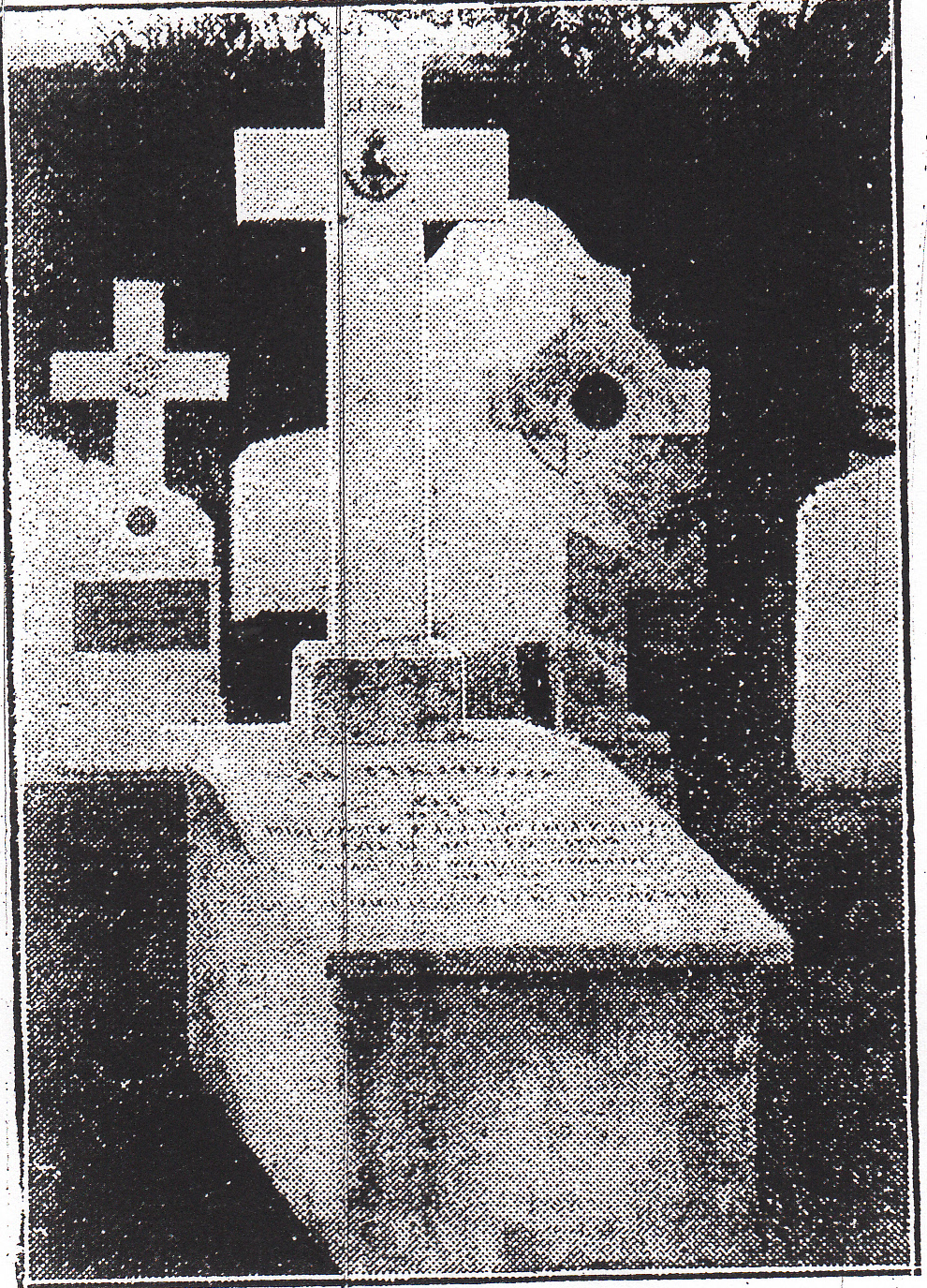
Quartermaster J. H. Rowland, of the 4th Battalion East Lancashire regiment, stationed at Cairo, says; “All the troops are well here, and we send greetings to the Telegraph.” He forwards the accompanying photograph of the grave of the late Private Jackson who died of dysentery. The cost of the monument of white marble—one of the highest and most beautiful in the cemetery—has been defrayed by voluntary contributions by his comrades, who responded generously to the appeal. It stands in the portion of Old Cairo Cemetery reserved badge, is carved in the design of the stone and its lettering. “We had a difficulty,” says Sergeant Rowland, “as we could find no sculptor who could form the letters and crest, though they could cut the stone if sketched, so that was done by myself. We have kept our promise to a departed comrade, and I am sure it will console his parents to know their lad was buried with honours, and that this stone stands to his memory.”
Blackburn Weekly Telegraph 9th January 1915
THE INTERNED WORKMEN
The suggestion that a number of German workmen now interned at the Lancaster concentration camp should be released and allowed to return to work at the Darwen Gasworks was referred to at the meeting of the Darwen Town Council on Monday afternoon.
In reply to Mr Duxbury the Mayor said it was proposed to hold a meeting at the General Purposes Committee on the subject after the Council meeting.
Mr Thornley asked if a letter from a public body in the town was not referred at the last meeting of the Town Council to the Gas Committee.
The Town Clerk: The letter is before the Council.
Mr Duxbury: It was not read then, but was referred to the committee, and was not read at any committee meeting at which I was present.
The question was further discussed at a meeting of the General Purposes Committee subsequently held, and a strong letter of protest against the release of the men and their return to the gasworks was read from the Property Owners Association.
In the course of the discussion which followed it was explained that the initiative for securing the release of the men was not taken by the Corporation, but by Messrs. Dempster, of Manchester, the contractors who were responsible for handing the installation over to the town in working order. It was also pointed out that the non-starting of the works was likely to involve the town in an annual loss of £3,000, and, further, that under present conditions a continued supply of gas could not be guaranteed.
Mr Parkington asked a question in regard to conditions which might arise should the men return to the gasworks, and it was stated that nothing had been heard of the matter.
Mr Thornley declared that there was a very strong feeling in the town, and that he had received a number of letters on the subject.
A member replied that no notice should be taken of anonymous letters.
Mr Thornley replied that some of the letters he had received were signed.
After further discussion it was decided that further action should be postponed for a period of three months.
Blackburn Times, 16th January 1915
BLACKBURN GIRLS WHO WANT TO FIGHT
Interesting letters from all Quarters
The resolution of the Misses Cowan, four Blackburn sisters to assist their King and country by taking up arms with the soldiers in the trenches has brought them letters of delightful appreciation from naval and military men both in the fighting line and in home training centres. Indeed, some of the men in khaki have requested to be supplied with photos of the Amazons in the order that it “might be an inspiration to them in their darkest hour in the fighting ranks.” Not only so, but ladies of prominence in different parts of the country are sending the girls letters of encouragement in their desire to be real soldiers. The girls are hoping to co-operate with the Women’s Volunteer Movement which has been started by a number of titled ladies, and to provide East Lancashire with a large body of well-trained and useful women, able to use the rifle. Even the Blackburn authorities acknowledge the plucky stand of the maidens for this week they have been invited to co-operate with the towns, recruiting committee.
Mr Thomas Hamlett, of R.A.M.C., has written congratulating the girls on their fine spirit and pluck in desiring to fight for the Old Country, which he describes as truly British, and adds “I have often thought since I read of your case in the paper, what do those young men who have not yet offered themselves for their country and its people think after reading that noble act of yours. I hope your splendid courage may be the means of enlisting a goodly number of eligible men and so assist in establishing peace once more. I am afraid there are thousands who have no thought for the lads who are risking their lives for their country’s safety.” The writer condemned the general consolation which many seem to have that there are plenty of soldiers to do the work and that they would be ready to go when their turn came. That was a false position considering the elaborate training which men had to undergo for modern warfare. As one of Kitchener’s Army he meant to stick to it to the bitter end and he appreciated the desire of his Lancashire sisters to do the same. Private Horne, of the Royal Warwickshire Regiment, sent the thanks of “A” Company to the girls for their splendid pluck, and in their name he wished them every success in their venture. Another soldier at the front suggested that the Woman’s Corps would do a good service by writing personal letters of encouragement to the men now championing their country’s cause. The Army Council expressed appreciation of the girl’s kind thought for the troops in collecting suitable gifts for them. Miss Winifred Stevens of Old Windsor, wrote stating that she would never satisfied in this war-time unless she was doing something in the military line. She added “I must say I quite agree with you in wanting to go to the front—nothing would please me better. I am a girl of 16 years and take a great interest in military affairs, so I hope you will grant me the favour of belonging to your force. I am certain I could get quite a large number of girls in the Old Windsor and Windsor as recruits.” A young lady from a suburb of London stated, “I see you are wanting to go and enlist. I have been simply mad to hear of someone else besides myself with this desire. At last I have seen your names. How I should like to join you. Do you think you will succeed? Do please try your hardest and let me know if you would care for me to join. I am 5ft 5in in height, never had a day’s illness in my life, am very strong and am willing to part with my chestnut curly hair. We must try our uttermost to get on the field. I am so excited; I know we could do far more than people think if only we could get out there. Shall we try to get out with a staff of nurses to start with?” Another girl of 19 years “weighing 11stone and being 5ft 9in in height,” also offered her services as a lady soldier. Still another epistle from Wigan stated, I admire your pluck, and I am sure women can serve their King and country just like my brother who is on the battlefield.”
Writing on Thursday, “On Behalf of the Canadian boys,” Sergeant Main of the Field Battery, Royal Artillery (Canadian Contingent) stated that the Canadian soldiers had read with interest of the girl’s determined effort to take part in the defence of their country. “We unite;” they added, “wishing you good luck, and hope your efforts will be crowned with success. We feel certain that you girls would make a better stand than all those cold-footed able bodied young men who are still to be seen in all parts and who should be wearing the King’s uniform, but who are lacking the proper spirit for good soldiers. Well, girls, we admire you and are proud to think the old country has such daughters. Good luck to every one of you.”
Lance-Corporal Clarke of the King’s Scottish Borderers wrote form Portland:—“I write on behalf of a number of Blackburn men serving with the King’s Own Scottish Borderers at Portland to express our admiration of your action in setting an example to the young men of the same town who have failed to respond to their country’s call. During the time I was on leave week ago I was disgusted to see so many young men strolling up and down the main thoroughfare, with apparently not a care in the world. Taking into account the honour due to those who have responded to the call I must say I along with my comrades from the same town feel ashamed to think that a town of Blackburn’s magnitude and reputation should be so pleasure-loving as not to grasp the present serious situation. I conclude by saying that if this letter is instrumental in bringing a few recruits to the colours I shall be amply rewarded for my humble efforts.
“It has been a real pleasure to read of your brave efforts,” remarked Miss Matilda Edwards of Long Stratton, Norfolk in her letter which she signed “A would be soldier of the King.” She added, “It ought to go a long way to prevail upon the young men of England to enlist. I only wish I were a man. I can’t understand young men hanging back when their country’s honour is in the balance. Can I join as one of your recruits?” I have got plenty of pluck and good health and I am sure I could do my part with the rest of them. I am sure there are thousands of young women in England, if given a chance would join to help their country. And why should a woman left at home not be given the chance to help as well as wall as a man? I have thought many a time the same as you have—If I could only enlist without discovery I would have done so months ago.”
A sailor on H.M.S. “Defiance” wrote “Just a line to congratulate you on your enterprise. Wish you the best of luck and success.”
Blackburn Times, 16th January 1915
BLACKBURN MEN FOR ROSYTH
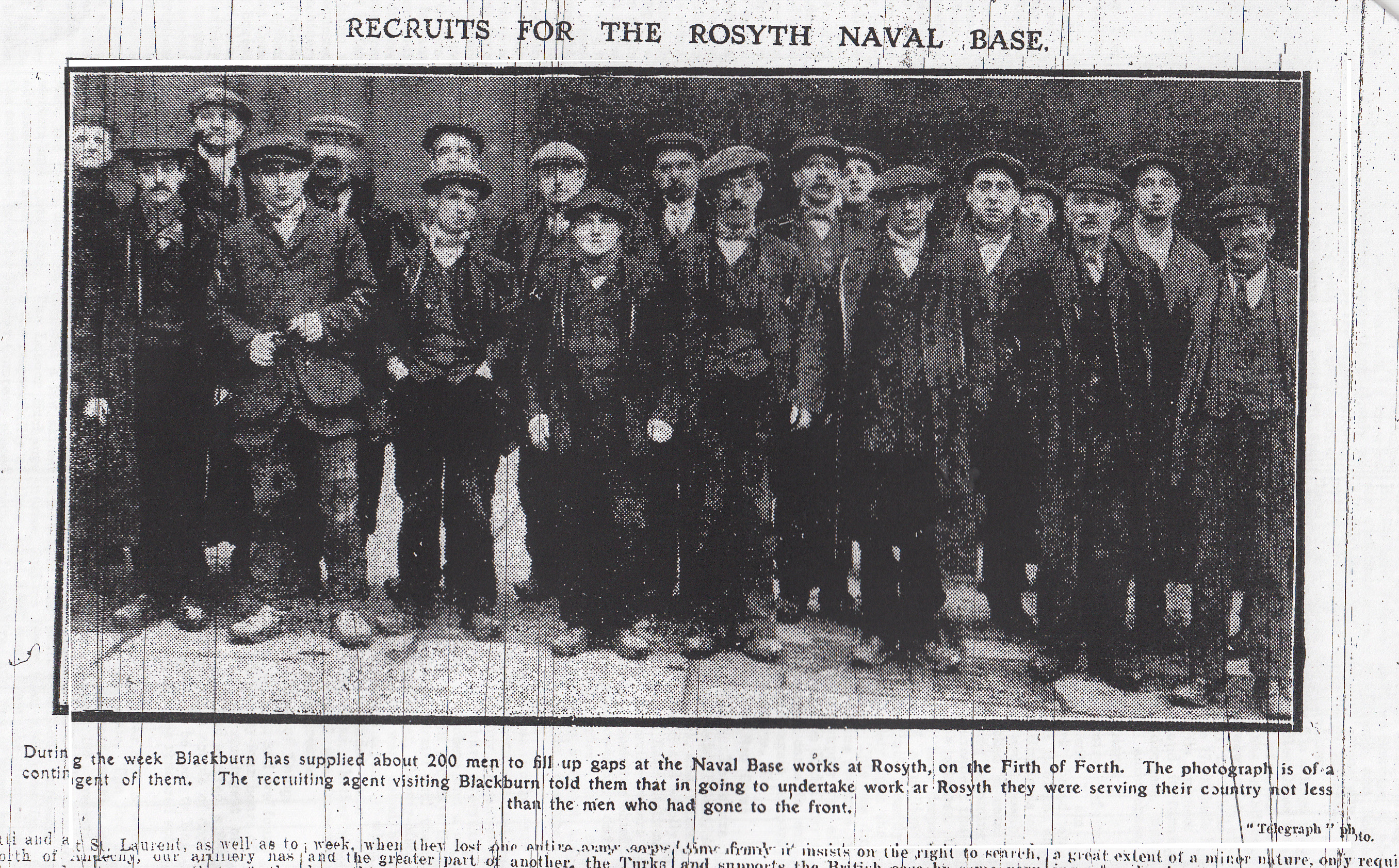
A party of 80 Blackburn workmen left the town on Monday by the Midland express for Scotland to, to be engaged in the construction of the new naval base at Rosyth. They have been got together by the Labour Exchange and have been selected by a representative of the firm of Messrs. Easton, Gibb and Co. contractors for the naval work. Most of the party were “pick and shovel” men and, there were also included a few skilled workers and there were also included a few skilled workers and quarrymen. The Labour Exchange advanced the men’s fares on the responsibility of the contractors, and the Railway Company placed four reserved coaches at their disposal. The men, who appeared to be in the best of spirits marched through the streets in processional order one of their number carrying a large Union Jack on a pole. The contractor’s representative interviewed a fresh batch of 50 men on Monday afternoon. Mr Robinson, the Labour Exchange manager, said, “We have appeled to these men on patriotic grounds. It is quite necessary for them to do this class of work for the defence of our shores, as it is for them to fight at the front.” Another body of 50 men left Blackburn, on Tuesday, for the same destination.
Blackburn Times, 30th January 1915
‘DEAD’ MAN RETURNS.
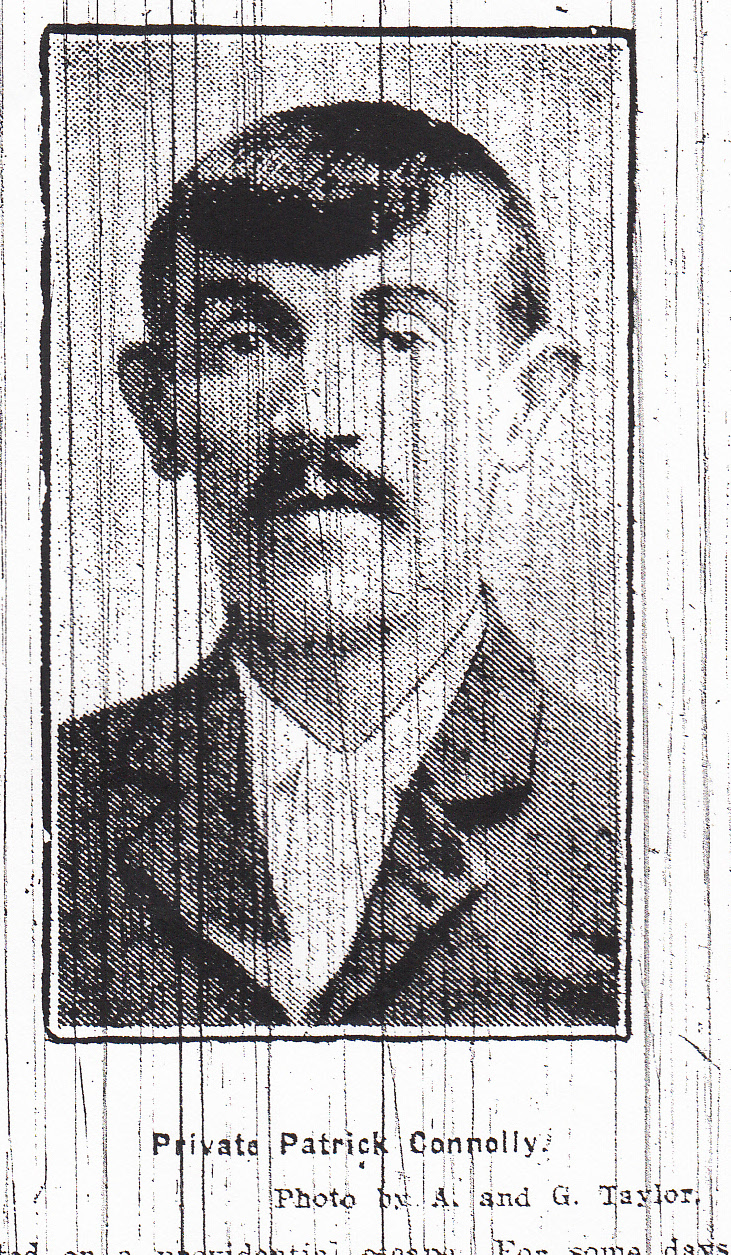
Blackburn soldier surprises his friends.
Officially reported to be killed and his photo and career having been published in the press, Private Patrick Connolly, of the second Battalion East Lancashire Regiment, a reservist, employed with the railway company when war broke out, caused amazement when he greeted old comrades at the station on his arrival home a few days ago. He was warmly welcomed and congratulated on a providential escape. For some days the soldier was busily occupied contradicting the false report and conjecturing as to how the war came to announce his death. He told our representative on Tuesday that he had had some trying experiences at the front. Arriving at Merville, he went straight into the trenches and participated in the fighting around Armentieres and La Bassee. He accounted for his name appearing in the casualty list in this way. In the early hours of the morning his company held an advanced position which was being hotly shelled by the Germans and a number of men were killed. He deemed it wise to seek proper shelter some distance away. Probably he would be found to be missing, and would be reported as dead, though subsequently he rejoined his battalion and took part in other fighting. Afterwards he was struck by shrapnel on the back and shoulder, he was deafened by the roar of cannon, and he suffered from frostbite. He passed through various hospitals in France, and was afterwards sent to England. He added that he felt quite at home when he saw several Blackburn motor-lurries driving right up to the firing line.
The Old Year
Farewell? Why should we weep for the?
We are not loth to part,
Since thou hast brought such misery
To many an aching heart
We are not loth to part,
Since thou hast brought such misery
To many an aching heart
We will not weep beside the bier
that holds thy naked shroud;
We’ll pass thee by, as though thou wert
A stranger in the crowd.
that holds thy naked shroud;
We’ll pass thee by, as though thou wert
A stranger in the crowd.
For what thou wert and might have been
we do not care to dwell;
To some thou might have proved a friend,
we do not care to dwell;
To some thou might have proved a friend,
And kindly been as well.
But thou hast spoiled my life’s young dream,
And cast my hopes aside.
And cast my hopes aside.
Nothing but battered wrecks I see,
Now washed up by the side.
Mrs W. Livesey, Billington, near Whalley
February 1915
Blackburn Times 6th February 1915
TO ENCOURAGE SHOOTING
CHALLENGE SHIELD PRESENTED TO BLACKBURN V.A.F.
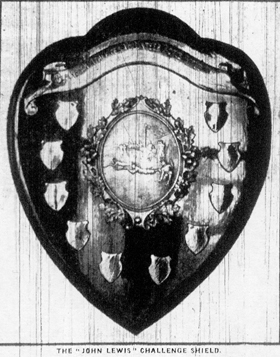
There is now on view in the window of Mr J. Forbes, Victoria-street, the silver challenge shield which Mr John Lewis has presented to the Blackburn Unit of the Volunteer Athlete Force. It is to be competed for at the shooting range by the companies. The conditions of the Competition will be drawn up by the committee at an early date. As will be seen by the by the reproduction of the photograph given here, the shield, of beaten silver, is a very handsome one, mounted on oak, and shows a number of soldiers at target practice. It has a beautiful floral boarder. At the top is a scroll bearing the inscription, “Blackburn Volunteer athlete Force Rifle Range, Presented by john Lewis, Esq.” The unit have a church parade tomorrow (Sunday) afternoon. Assembling at the headquarters at 2.30 they will proceed to the Parish Church where the sermon will be preached by the Vicar of Blackburn, the Rev. T. H. sale M.A., the Chaplain, Dr. M. O. Forster, one of vice-presidents has intimated his intention of taking part in the parade. The War Office armlets have been applied for and are expected this week-end. There are vacancies for about 30 members who must be over the age of 38. Applications should be made at the headquarters any Monday between 7 and 8 o’clock.
Blackburn Weekly Telegraph 6th February 1915
BLACKBURN’S BRIEF SNAP OF WINTER
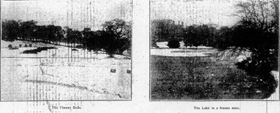
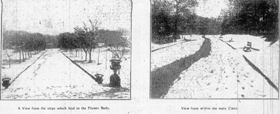
It was so genial and pleasant yesterday [Friday] afternoon that it is difficult to imagine than less than a week ago—Sunday morning, to be precise—Blackburn was under snow to the extent of two or more inches. The photographs, taken in the Corporation Park, bear witness to the fact, and it will be seen, also, that the large lake is covered with ice.
Blackburn Weekly Telegraph 6th February 1915
A CHILDREN PAGEANT
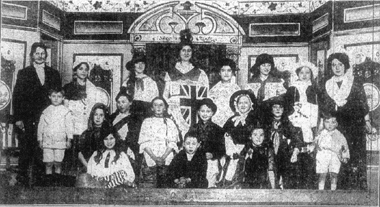
In their latest efforts to help the soldiers, the members of the Blackburn Women’s Liberal Association enlisted, as they have done on previous occasions, the services of the “younger generation.” Miss Gifford and others trained Children from all Parts of the town to sing, recite, and also to act in a topical pageant, “Little Master Jack.” The result of their efforts was seen at Barton-street School on Thursday evening, when a concert was give, the proceeds to be devoted to buying material for making garments for soldiers. None seemed too young to take part in the entertainment, and one who took a most conspicuous part was only in his third year. This was “Baby Riley,” son of Mr. Riley, Liberal agent, who was put on the platform to give a nursery rhyme. He had only uttered a sentence or two, when he became conscious that something was happening behind the scenes. His innocent surprise and his uncontrollable desire to view the unseen created an agreeable diversion. This was not the only part of the proceedings in which Master Riley figured, for at the outset he toddled on to the platform dressed in a suit of satin, and handed to Mrs T. P. Ritzema, who presided, a beautiful bouquet of tulips and narcissi in return for which he received a kiss.
The other entertainers were a little older, Bessie and Nellie Coupe, sang about Geishas gaily serving tea; Alice Coupe about the merry life of the squirrel; grace Witton, dressed in khaki, put dash into her singing of “Tommy Atkins”; Jim Higson very pleasingly sang of what children ought not to forget, and of the virtue of being “well-mannered, contented and kind”; Rene Wilding sang of the joys of that pleasant land “of I dunno Where”; Elsie Revill, a very pretty ditty about “The Sandman,” and Allie Wall and Nellie Holt about the happiness of bygone days. “Johnny’s” fidelity and sacrifice were the themes of the recital by Consie Brown; while the wonder of a little boy at the days when youngsters never made a noise and always did as they were told were the ideas of a recitation “Long Ago” given by Lena Ridsale, and a tale of Bagdad was told by Nellie Wilson. Frank Scholick in Bright and amusing way told of the wonderful variety of things a lads pocket may contain; while Elsie Ianson, in quite an accomplished way, recited the story of the running away and return of “The Imp.” Both carrying dolls Minnie and Bertha Haworth showed what jealousy there may be in the nursery over the naming of dolls; while Ronald Riley and Norman Gibson caused merriment by the sketch, “A Bashful Lover.” Piano and violin duets by Winnie and Harold Ibbotson were much appreciated.
In a Few remarks Mrs Ritzema commented upon the brightness and cheerfulness of children, who she said, helped to keep the older people young. She also alluded to the fact that the Liberal women, in arranging such gatherings were working not for their own ends, but in the interest of the soldiers at the front.
Blackburn Times 20th February 1915
A BLACKBURN HERO
MENTIONED IN DESPATCHES
RECOMMENDED FOR DISTINGUISHED CONDUCT MEDAL
Honour has been conferred upon Blackburn by the fact that one of its residents, Corporal C. Knowles, whose home is at 15 Polly-street, has been recommended by Sir John French for the Distinguished Conduct Medal. Corporal Knowles, who was employed by Messrs. W. Meadowcroft and Son, fruit essence manufactures and soda water engineers, Regent-street, is in the South Lancashires. He was a reservist and had spent eight years in India. Upon the completion of service in June last [1914] he signed on in the second-class reserve. He was called up on August 4th, and has seen a good deal of fighting in the present campaign. On one occasion he was wounded in the head and arm but he afterwards went back to the trenches.
The brave action for which the D.C.M. is recommended is as follows. Water was urgently needed for some wounded comrades, and the only available supply was some distance away across a shell-swept area. The captain called for volunteers and Private Knowles—as he then was—at once offered his services. Another member of the company proffered to go with him, and together the two set out. They had to run the gauntlet of a perfect hurricane of shells and bullets, but they returned in safety with the water, their companions heartily cheering them for their gallant action.
Corporal Knowles has two brothers serving with the colours. Private Robert Knowles (North Lancashires) has been in the fighting line and his now in a London Hospital suffering from wounds: while Private Thomas Knowles, a time expired soldier who served in the Boer war, joined the East Lancashire (Kitchener’s Army) shortly after the outbreak of hostilities. Two more brothers, Private James Knowles (Liverpool Regiment) and Private William Knowles (King’s Own Royal Lancashires) also took part in the South African Campaign. The firs named succumbing to an attack of fever.
Corporal Knowles is of a modest disposition and when home on a three days furlough a fortnight ago he was very reticent concerning his heroic action, remarking that he only did his duty. He has since written to say that he has returned to the trenches, and that he is back amongst his former comrades, who were very pleased to see him. He took back with him a parcel containing various articles of food and comforts, and he states that for breakfast the men had ham and eggs.
The Mother of Corporal Knowles yesterday received the following letter from Mr J. Meadowcroft;—I was very glad to see from the newspapers that Chis has been mentioned in Sir John French’s despatches. I am sure you will be proud of him, and I am sending him and his company a lot of “smokes” to celebrate the event.”
Blackburn Weekly Telegraph 27th February 1915
SOLDIERS FUNERAL: AN IMPRESSIVE SPECTACLE

Touching scenes were witnessed in Blackburn on Saturday afternoon when the funeral took place of Private James Foley, of The Loyal North Lancashire Regiment, Who died last week from Dysentery after returning home from the front. The ceremony was of a military character. Crowds lined the route, and the coffin was borne from the house by four relatives of the deceased soldier, al; of Whom have returned from the firing line, and was covered with the Union Jack, upon which was the equipment of deceased. Members of the Accrington Pals Battalion marched at the head of the procession with rifles reversed. Members of the same battalion formed a firing party at the Cemetery, where the “Last Post” was sounded and three volleys fired at the grave side. The firing party was under Sergeant Woods, and the whole were under the command of Colour-Sergeant Fielden. Twenty-six picked men of the 2nd Company of the 4th Reserves Battalion East Lancashire Regiment walked in the procession. The National Reserve Band was in attendance. Among the Floral tributes were a wreath from the Blackburn Packing Co., where Private Foley was formerly employed. The photograph shows the cortege passing down Montague-street.
Silenced
Where have you gone to, happy birds?
I hear no songs from you;
I Wonder can it be that you
Like me are weary, to0.
With this fair world, so red with blood,
Made by my brother man.
My voice is hushed, my muse is sad
Allbroken is my plan.
I cannot sing of killing men-
My nature's not that way
My reason never tells me that
'Tis right to fight and slay
Yet I'm a Briton, staunch and true-
How shall I play my part?
To-day in many a patriot's home
there's many a broken heart
With all my human sympathy
I'll wend my way to thee;
some service I'll have done if I
One one aching heart can ease.
To those who suffer through the war-
Oh, God' my footsteps lead-
Help me to do some deed of love
Just in the time of need.
Sarah Robinson Poulton, Keith-street Burnley.
March 1915
Blackburn Weekly Telegraph 6th March 1915
A DISAPPEARING LANDMARK
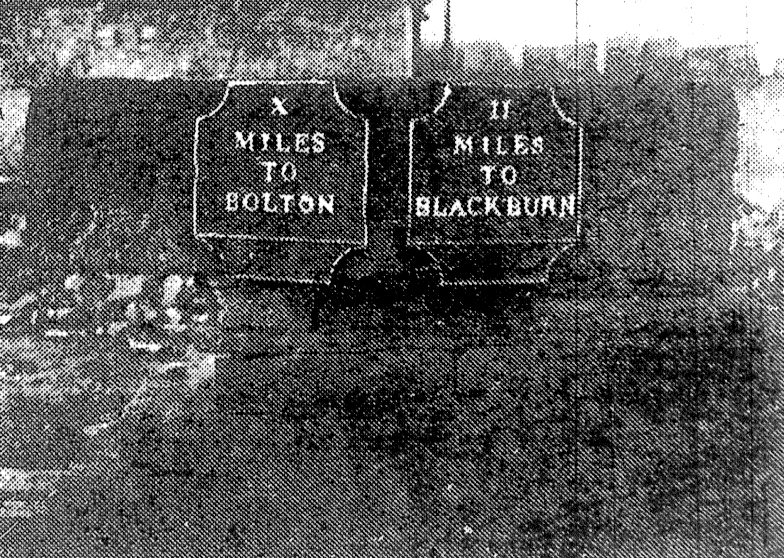
Many a traveller by road from Bolton to Blackburn and vice-versa (writes Mr R. E. Preston, Darwen) has read the notice displayed on these tablets which are perhaps the last of their kind in Darwen. If this old landmark could but tell the story of the thousands of weary and footsore pedestrians who have gazed on its face, what a thrilling narrative of the seamy side of life it would make. A few more weeks, perhaps and then the work of the builder will remove all traces of this relic so useful when houses on the road were few and far between.
Blackburn Weekly Telegraph 6th March 1915