
 Loading more
Tiplady's Blackburn
Charles Tiplady | Arrival of the Iron Road | Railway Viaduct | Bolton Road Railway Station
Blood on the Cobbles | Portrait of John Fowden Hindle | Glimpses of Early Victorian Blackburn
View of Blackburn | Great Distress | Unemployed Weavers during the Cotton Famine
Unemployed Weavers Selecting Clothing | Blackburn Soup Kitchen Voucher | Proud Town
New Market Place | Blackburn Cotton Exchange | The Men who Made Blackburn | Portrait of John Hornby
Portrait of James Cunningham | Blackburn Election 1832 | Spring Hill Mill
Charles Tiplady
Tiplady - an unusual name with a less than desirable derivation! It is believed to be a nickname for a lecherous man or libertine. However, as we shall see, the subject of his sketch does not really fit this description, being an upstanding member of the community and a family man.
Charles Tiplady is probably most famous for the diary which he kept from 1839 until his death in 1873. It covers the history of Blackburn during that time with details about his own life, such as observations on the weather, his health and excursions that he had undertaken. W. A. Abram the well-known local historian transcribed extracts from the diary after its author's death, which were then published in the Blackburn Times, but he did not include Tiplady's more personal recollections.
Charles Tiplady was born in Blackburn on 23rd June 1808. He was the fourth child of Thomas and Elizabeth Tiplady. His father's family originated from the Bingley area of West Yorkshire and his mother's, the Lomaxes, were a long established family in Blackburn. The Lomax family business was clock and watchmaking, founded by Samuel Lomax whose son James was Elizabeth's father. The Tipladys preserved the name Lomax by using it as a second name for several of their children. Charles had two elder brothers, James Lomax and William, along with a younger brother named. His sisters were Mary, Margaret and Ann.
Very little detail exists about Charles' early life in Blackburn. He lived in the St. John's area and attended St. John's Church where he was later to become a churchwarden and sidesman. He was educated at the National School in Thunder Alley (now Town Hall Street).
In 1830 he went into partnership with his brother William as printers, a relationship which lasted fourteen years. In the later years William suffered ill health, so it was due to Charles' efforts that the business survived. Their shop was situated on Church Street next to Salford Bridge.
In 1834 the Tipladys began printing and publishing a local almanac, containing events that had occurred in the previous year and descriptions of improvements to the town and new buildings that had been constructed. It was issued for many years, Charles continuing to publish it after | William's death. The business also produced books of an official nature such as the Register of Electors, publications of local companies and other notices and pamphlets. Charles came to be known as an authority on local and national matters and was frequently consulted for his opinion when disputes arose.
Charles married twice, both ladies being called Mary. The first was Mary Heaton who he married in 1834. They had two children, Maria Anne who only lived from 1835-7 and a son named Thomas. Mary herself died the year after her daughter, in her 28th year. Both are buried at St. John's Church.
Charles' second wife was Mary Callis. They married in 1839 at the Parish Church of St. Mary (now the Cathedral). Her father William had a grocer's shop at Salford, close to the Tiplady business. Charles and Mary spent most of their married life on Mount Street, moving to St. Alban's Place in later years. They had several sons and daughters, not all of whom survived into adulthood. Elizabeth Mary died at 13 months in 1845, and a son Lomax died at only 15 weeks in 1848. These two infants are buried with Charles' first wife and daughter. Their other children were Charles Lomax, William Callis, Richard, Frances Louisa and Esther. Charles Lomax Tiplady was an accountant and was killed in a railway collision at Blackburn Station in 1881. Richard spent many years in Brazil where he was an engineer involved in railway construction. Henry was at one time a book-keeper. William carried on his father's printing business with his half-brother Thomas (from Charles' first marriage).
In addition to his activities as a diarist, Charles was also a poet and satirist. In 1848 he composed a verse entitled 'On the Opening of the Market House, Blackburn', which was well received. He was active in public life for 35 years. His public service began as one of the town's Improvement Commissioners. He sat on the committee named in the 1851 Charter of Incorporation, but was not a member of the first Town Council.
Politically, Charles was an active Conservative, assisting the elder W. H. Hornby in organising the working men of the party into the Blackburn Operative Conservative Association - he later became its president. He stood himself for council elections, firstly in St. Mary's Ward where he was defeated by 72 votes in 1857. He stood again in St. Mary's the following year, but suffered another defeat. In 1860 he gained the safe seat of St. John's Ward, which he represented until becoming an Alderman in 1865. A principal spokeman for the Conservative Party on the Council, he delivered a great many speeches on wide-ranging topics, but these were often very long-winded and wordy. He retired from political life in 1871.
Like many of his contemporary businessmen, Tiplady was a Mason, and had also joined the Oddfellows Friendly Society at a young age - many passages in his diary are concerned with the numerous Oddfellows gatherings that he attended. He was also a founder member of the Philanthropic Burial Society and was chairman at some of its earliest meetings, defying the attempts of local Chartists to snatch the Society's funds for Feargus O'Connor's Land Scheme.
His financial investments in local schemes and companies, such as railways, gasworks and waterworks, gave him the right to be a speaker at shareholders' meetings and in time he became the director of some profitable local undertakings. The cynical view was that this involvement gave him many opportunities to increase his printing business!
Naturally, as a bookseller and printer, Charles had an interest in the Blackburn Subscription Library where he took on the role of part-time Librarian. He was elected as Chairman of the governing body in 1841 and was concerned with seeking ways of improving the library. The following year he was narrowly defeated (by one vote) in his attempt to secure the post of Principal Librarian. However, the library always suffered from a lack of funds. By 1851 it had closed and the premises and all its contents were sold off.
Throughout his life Charles suffered from bouts of ill-health. In 1828 he narrowly escaped a violent death, but tantalisingly leaves no details as to the nature of this near-fatal incident. In 1864 he underwent a serious operation for the removal of a gall stone which left him very close to death, his recovery taking many months.
His last diary entries record the deaths of many old Blackburn townsfolk. His own demise came on 15th October 1873 at the age of 65 and he was buried three days later at Blackburn Cemetery. The day was very wet, but that did not deter a large number of people from attending the service, including the Mayor and Corporation, the Chief Constable and a detachment of the Borough Police Force. Charles' wife, who had been disabled by a stroke some time previously, followed her husband to the grave in the following year. His son Henry was also buried in the family plot in 1909.
Unfortunately, no pictures exist of Charles Tiplady, but we do have Abram's description of him from 'Blackburn Characters of a Past Generation':
"In person 'Charlie' Tiplady was thin and rather below middle height. His face was pale, his head somewhat square-shaped, and his hair, which he did not lose in old age, was iron-grey. His features were regular and expressed intelligence and dogged determination. His gait was characteristic; he walked with his head forward and eyes bent downward, as if intent on the business he was upon; his walk was plodding and marked at each step by a slight nod of the head. 'He had his weaknesses as a man and his prejudices, but withal 'Charlie' was a capable, useful, public citizen, whom all respected, and not least those who on occasion had been engaged in opposition to him, or in controversy with him, and knew by experience his ability, tenacity, and resources in disputation."
Although not himself directly involved with the cotton industry, Tiplady lived in the town when cotton was beginning to boom and Blackburn was growing into its role as the world centre for cotton weaving. He observed at first hand the many changes this caused socially, politically and economically.
By Diana Rushton & Blackburn Museum
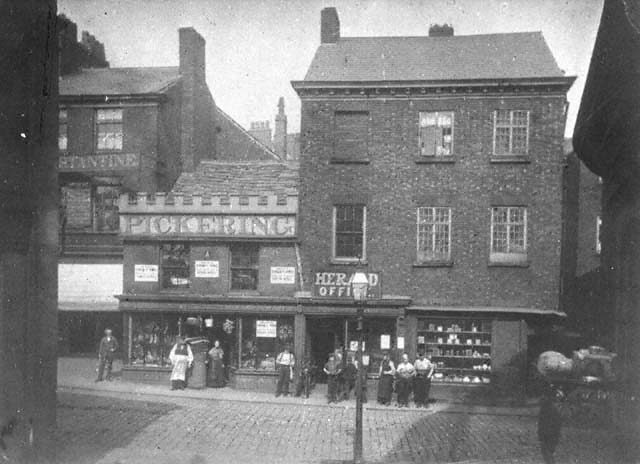
© BwD - terms and conditions
The Railway Reaches Blackburn
Blackburn's development as an industrial centre brought about many improvements in its communications with other regional, national and even international markets. The boom in cotton manufacture saw a huge increase in raw materials and finished goods being moved in and out of the town. Transport improvements were a product of this commercial growth, going on to help sustain it.
In the mid 18th century, the turnpike roads had been adequate for transporting the relatively small amounts of material produced by local handloom weavers. By the turn of the 19th century, Blackburn's first cotton factories could despatch bulk loads on the Leeds and Liverpool Canal (completed in 1810), and were receiving raw cotton along with coal for their steam engines by the same means. Indeed, the canal influenced the location of many new mills along its banks.
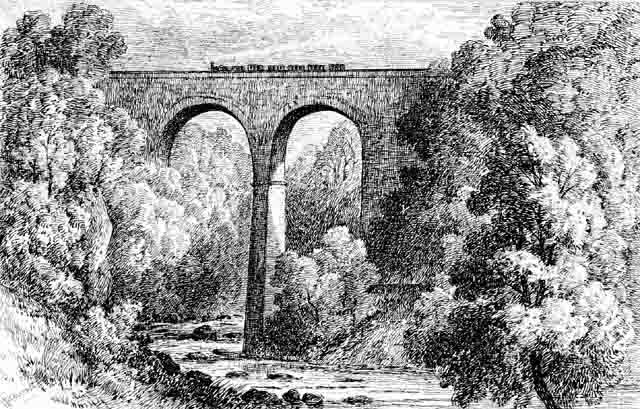
However, the opening of the Liverpool & Manchester Railway in 1830 ushered in a new period of growth for industrial Britain. Towns all across the country were caught up in the 'Railway Mania' of the 1840s - it was only a matter of time before Blackburn was swept along with it. As early as 1840, a meeting was held by local landowners and industrialists on the possibility of building a railway to Preston, but it was dismissed as being 'impracticable'. The idea was revived in 1844, this time leading to the formation of the Blackburn and Preston Railway Company. The line was planned to link with the North Union Railway at Farington Junction, and included the immense 116 feet high, three-arched viaduct at Hoghton Bottoms.
As an active member of Blackburn's business community, Charles Tiplady was keen to be involved in the promotion and development of the railway from the very beginning, recognising the great benefits that improved communications with the outside world would bring to the town. He also had an eye on his own personal prosperity, purchasing shares in local railway companies. Tiplady's first experience of railway travel was in May 1844 when he travelled to London from Chester:
'SOME PARTICULARS OF A JOURNEY TO LONDON' - 24th May to 3rd June 1844
The Proprietor of the London & Birmingham Railway having agreed to allow a Holiday Trip at a low rate, I availed myself of the opportunity of once more visiting London in company with Thos. Whittaker and John Ball, Glazier. The fare up and down was £2.'
'Refreshments were provided at the Queen's Hotel, Birmingham and at a place named Wolverton. The first was a dear place, the other modest, but dear or cheap the travellers, amounting to some hundreds, 'ere too glad to obtain any refreshment after the fatigue of an 150 mile journey to dispute the price of the viands.'
No doubt impressed by the Herculean Labour of the Great Steam Engine, Tiplady was eager to see the new Blackburn to Preston line opened. From the cutting of the first sod in August 1844, the line took less than two years to complete, being officially opened on June 1st 1846 at the cost of £160,000. According to the Blackburn Standard, the first departure was witnessed by 'thousands who crowded round the station, lined the road for a considerable distance, filled the windows and doors of adjoining houses, topped the walls and nearest bridges from which a view of the train could be obtained', going on to describe the opening as 'one of the most important events for Blackburn that has ever happened'. Tiplady agreed, and being lucky enough to travel on the first train he wrote that
It was with evident delight that he noted 'My first parcel by the above Railway came to me on Tuesday 2nd June 1846'. Proof indeed that the speed of communications had been irreversibly improved.
The new railway station was seen as a great asset to the town, being built in the Italian style by local contractors Stones & Hacking. Its site on wasteland at Stoneybutts led to the development of the Boulevard. The Blackburn & Preston Company was soon absorbed by the larger East Lancashire Railway, whose headquarters were at Bury. However, it was not long before a rival company arrived to steal the ELR's thunder - and their railway station, the grandly titled Bolton, Blackburn, Clitheroe & West Yorkshire Railway (known as the 'Bolton Company') planned to connect Blackburn to Manchester via Darwen and Bolton. An extension of the line would continue north-east to Clitheroe and Hellifield.
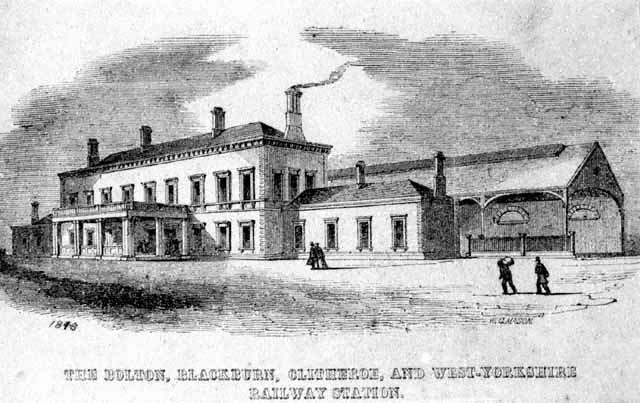
Tiplady was a prominent (and vocal) shareholder of the Bolton Company and quickly became entangled in a mud-slinging contest with the East Lancashire Railway in the pages of the local press. The ELR, jealously guarding its status as Blackburn's 'first' railway, was reluctant to allow the Bolton Company use of its lines and station, except on the payment of an exorbitant toll. They claimed that their station was too small for two companies. Inevitably, the Bolton Company proposed building their own independent station on Bolton Road, prompting the East Lancashire to change their tune and offer to share their accommodation - they wanted to have their cake and eat it. In the pages of the Preston Guardian Tiplady railed against the ELR's awkwardness:
'the strong determination of the [Bolton Company] shareholders is that rather than submit to be crushed by the heel of the East Lancashire Railway, they would have an independent station. If the present station house is too small for one company, by what process of reasoning can these simple people persuade themselves or the public that it is sufficient for two lines, one of which will be a direct line from Manchester, the commercial metropolis of the north?'
So, within three years of a railway being first mooted in the town, Blackburn found itself with two competing stations. Ironically both companies were absorbed by the Lancashire & Yorkshire Railway in 1859, the first chairman of which was Blackburn's inaugural mayor, William Henry Hornby Esq.
Part of the novelty of these early railways was the opportunity they gave local people to make grand journeys to hitherto remote holiday destinations. The railway companies capitalised on this by introducing seasonal 'cheap trips'. The following extract from Tiplady's diary describes a journey he made to York and is particularly notable for the number of carriages that were added to the train as it progressed on its way, a practice that was later banned on the grounds of safety:
'Journey to York, Leeds & Harrogate, May 13th, 14th & 15th 1851`
Having a strong desire to visit York I took advantage of a cheap trip (11s.6d. 2nd Class there and back) from Blackburn on Tuesday 13th. There was a great Race to take place that day between the 'Flying Dutchman' and 'Voltiguer' for 1000 Guineas - I cared little for the race but thought it would add something to my experience by going on the journey.
We started from Blackburn at half past 8 with about 12 carriages (E.L.Line) and had a pleasant trip to Colne. The morning was delightfully fine with occasional cloudiness. At Colne about 13 other carriages joined the train and thus we proceeded up to Skipton. Mr.W. Hirst, pawnbroker, was in the same carriage with myself and we agreed to stop at the same place [in York]. We went on from Skipton at 10am taking up passengers all the way until we reached Shipley, Keighley and Bingley, and about 30 or 35 more carriages well-laden were added to the train making about 60 in the whole. We had here a stoppage of about ¾ of an hour and it was thought at one time we could not well proceed without more strength however, with 2 powerful Locomotives in front and one in the rear, we went on at an easy pace to Leeds, where we stopped about 10 minutes and the line being very level from Leeds to York, one Engine was detached from us. From hence we passed onward through a most delightful country to York, where we arrived at 1.30pm.'
Of course, passengers were not the only source of revenue for the railways. The movement of goods, from individual parcels to bulk loads, gave a real stimulus to industry in the town. Extensive sidings adjacent to King Street served the cotton mills around Wensley Fold and Whalley Banks with coal for their mill engines. The huge goods warehouses on Bolton Road and next to the East Lancashire station handled a bewildering variety of commodities, enhancing the town's status as a market and providing an outlet for export materials. The arrival of the 'iron road' ensured that Blackburn did not falter in its journey to becoming one of Lancashire's most prosperous industrial towns.
By Nick Harling & Blackburn Museum
Railway Viaduct
© BwD - terms and conditions
Railway Viaduct, Hoghton Bottoms. Pen and ink sketch by C. Haworth, c1880.
© BwD - terms and conditions
Blackburn’s second railway station was short lived, having only been built when two rival companies could not agree to share the existing station at Stoneybutts. Closed in 1858 and demolished in 1880, parts of the fabric were used to rebuild Lower Darwen station.
The 'Plug-drawing' Riots of 1842
Like many other rapidly growing towns of the mid-nineteenth century, Tiplady's Blackburn created its own prosperity and problems in equal measure. There was a price to be paid for the yearly increase in population and the domination of the cotton industry with its 'crest and slump' economy. Social unrest and distress amongst the dissatisfied or poverty-stricken factory hands often spilled out onto the streets in the form of rioting.
Since the end of the Napoleonic Wars in 1815, discontent had been seething in the industrial belt across Northern England and the Midlands. The oppressive Corn Laws, introduced by the Government to prevent cheap foreign imports from undercutting British grown corn, kept the price of bread artificially high, forcing many working class families below the 'bread line'. Even middle class factory owners opposed the Laws, as they subsidised large agricultural landowners at the expense of industrial enterprise. By the 1840s many local elections were fought on this issue, with Whig (Liberal) politicians pledging the abolition of the Laws and the Tories fighting to keep them.
Blackburn's first riots of the decade were sparked off by such a contest. In the General Election of July 1841, three candidates stood for the two seats allotted to the town by parliament. Two of the candidates, Feilden and Hornby, were Conservatives. The third, Turner, was a liberal Whig who supported the abolition of the Corn Laws and so was the popular choice of the working people. However, most of the working class did not have the right to vote at this time, so relied on the votes of sympathetic businessmen and manufacturers to have their candidate elected. The result of the polling was: Feilden 441 votes, Hornby 427 votes, Turner 426 votes - Turner was defeated by one vote.
Tiplady (a staunch Tory) was with the Conservatives in the Old Bull Inn when the news broke. He takes up the tale:
'This announcement exasperated the Liberal mob to such a degree that they instantly resolved to attack-and demolish the Old Bull Inn where the Conservative Committee sat during the election. An immense multitude rushed for this purpose into the Market Place and commenced throwing heavy paving stones-at the windows, which they speedily demolished. They then proceeded to sack the interior, commencing with the Old Traveller's Room adjacent to the street, from which they tossed tables, chairs, sofas, glasses and every other description of furniture. Not satisfied, they hurled huge stones at the front door which ultimately gave way and the mob rushed tumultuously inside, threatening death to all opposition.`
In the meantime, by the exertions of James Neville Esq., the military was called and the Riot Act read, and the Police Constables marshalled in the Market Place, whence they commenced a vigorous attack on the infuriated populous and in a brief space of time put them to rout.
`It was my lot to be stationed in the Bull Inn during the whole fury. In an instant men of the most undoubted courage fled panic-struck into holes and corners, over roofs and buildings, into cellars, attics, stables etc.
I remained with a few until the riot was quelled - this is the third time the Bull has been stormed after an election.'
Tiplady's last comment suggests that such outbursts were a regular occurrence, which highlights the fact that the whole system was weighted against the views of the working class. But Blackburn was not unique in this respect, and a countrywide dissatisfaction led to the rise of the Chartists, a working class political group who wanted to reform parliament. Their 'People's Charter', which demanded voting rights for all men and the introduction of a secret ballot, found favour with many of Lancashire's factory hands. Chartism was seen as an opportunity to improve the status of the industrial worker and to secure his future prosperity. The seeds were sown for the most turbulent summer in Blackburn's history.
Dorothy Thompson in her book, 'The Chartists', described 1842 as 'the year in which more energy was hurled against the authorities than in any other of the nineteenth century…more people were out on the streets during August 1842 than at any other time'. The spark that lit the 1842 powder-keg came at Ashton-under-Lyne where mill owners had attempted to cut the worker's pay by 25%. The Chartists acted quickly to whip up popular anger and discontent in support of their cause (their petition had failed to sway parliament). Huge open-air meetings were held, one of the largest taking place on Enfield Moor between Blackburn and Accrington on June 5th. The decision was made to start a general strike, 'turning-out' all of the factory workers until their demands were met by government.
Blackburn had already suffered riots in May when Turner's attempt to contest the previous year's election failed. Again, the Old Bull Inn was smashed up by the 'Liberal mob'. Tiplady notes that 'John Astley [a local bookseller] was thrown down and killed on the spot. Such is the end of their wild and reckless conduct'. It was into this tense atmosphere that the Chartists and strikers arrived on August 15th.
According to the Blackburn Standard, their arrival 'was not unexpected, and as far as was possible the magistrate had made the most energetic and judicious arrangements'. In other words, the local police had been busy enlisting Special Constables and had arranged for a detachment of the 72nd Highlanders to assist in keeping order. The support of the military could always be counted upon in such circumstances - indeed, many large northern towns had permanent garrisons.
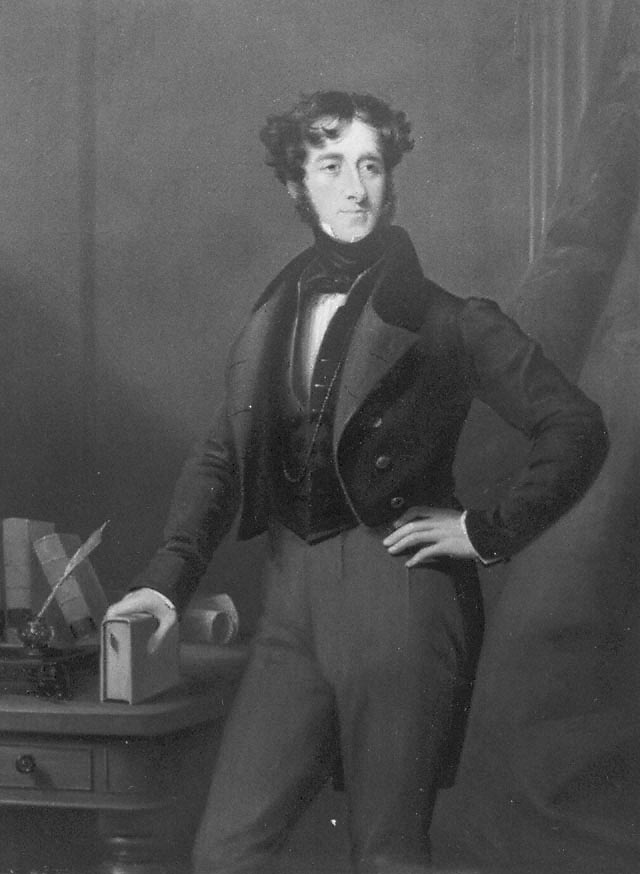
At about 11 o'clock, the first mob approached Blackburn along the Accrington Road, their intention being to 'turn out the hands' and pull the plugs out from the steam engine boilers that powered the mills, causing them to stop (hence the name 'Plug Plot' or 'Plug-drawing' riots). At Furthergate Mill, they broke into the yard, but were confronted by the magistrate Mr. J .Fowden Hindle. He read out the Riot Act and then directed the police and military to take the ringleaders prisoner. However, they failed to prevent the mob from moving into the town as Tiplady notes that,
'In the meantime, straggling gangs of ten or twelve took the advantage of surprising different Mills in the Town and with the exception of about four, the whole were closed before night.'
These 'straggling gangs' reformed on Blakeley Moor from where, after a number of rousing speeches by the ringleaders, they marched systematically from mill to mill, turning out the operatives. From Whalley Banks and Wensley Fold, they crossed to Nova Scotia and then back into town along Darwen Street. At some of the mills, such as those owned by Feilden & Townley and William Eccles & Co., the hands were 'immediately, and without the slightest resistance, turned out', suggesting that there was plenty of sympathy for the popular cause. At others however, such as the Nova Scotia Mill of Messrs.Hopwood & Son, the mill owners resisted and refused admittance to the assailants 'until the arrival of the military'.
The turning point of the disturbances took place on Darwen Street at about 5 o'clock, as the mob attacked the 'Dandy Factory' mill of Mr. Eccles. Many of the prisoners taken earlier in the day had been put into custody at the Infantry Barracks on King Street, and the police now attempted to do the same with those captured at the Dandy Factory. A stagecoach, surrounded by soldiers, had been backed into the mill yard for this purpose but was pelted with cobbles ripped up from the road. As the coach departed it was again showered with missiles and the crowd surged forward to free the prisoners. Tiplady writes that,
'the soldiers were obliged to fire on the mob and several persons were severely wounded, but happily not mortally. The most serious case was that of a young woman living in Penny Street who happened to be returning home from the Mill at the time the discharge of fire arms took [place] and unfortunately two balls struck her, and it was thought that there was little chance of [her] recovery. It is highly to the credit of the Regimental Surgeon and officers of the Regiment, as well as the Surgeons resident in the Town that this poor innocent victim was promptly and gratuitously attended. Up to this time (Aug 28th) the woman survives and is doing extremely well.'
The rioters gradually dispersed at about 10 o'clock, after 40 of their number had been taken into custody. The police and infantry were soon reinforced from Wigan by a detachment of the Lancashire Yeomanry Cavalry, a volunteer regiment consisting almost entirely of wealthy landowners and businessmen, who were no doubt looking forward to stamping their authority on the 'upstart strikers' with the flats of their sabres.
In Blackburn, the strike had failed. It was a story that repeated itself throughout the north west. Two days before the Blackburn riot, soldiers of the 72nd Highlanders had shot dead six protestors at Preston. Tragically, such sacrifices achieved very little.
'In the course of a few days the Mills resumed employment and our population, without exception, returned peaceably to their employment which many of them would never have left but by compulsion.'
Tiplady's attitude towards the riots is typical of his class - he ignores the fact that large numbers of the factory hands turned out eagerly when the opportunity arose. However, Chartism was doomed to failure in Blackburn. In the General Election of 1847, a year after the abolition of the Corn Laws, the Chartist candidate Mr. Roberts polled only 68 votes compared to the returned members Hornby (Tory, 649 votes) and Pilkington (Liberal, 602 votes). Never a hotbed of political agitation, the main desire of the town's operatives was 'a fair day's wage for a fair day's work'. Fair and honest employers commanded greater loyalty and respect than the inflammatory speeches of the political activists.
Nick Harling & Blackburn Museum
© BwD - terms and conditions
Oil on canvas by Sir Thomas Lawrence. John Fowden Hindle was a County Magistrate who became High Sheriff of Lancashire in 1844. During the ‘plug-drawing’ disturbances Hindle was in overall command of the military and police forces who attempted to suppress the mob, and had to read the Riot Act several times. He lived in the splendid mansion at Woodfold Park.
Daily life in a busy town
For any student of industrial history, Blackburn's physical growth from the mid 18th century onwards is a classic case study. The story of the town's astonishing expansion is literally mapped out in a series of surveys that began with Lang's map of 1737. At that time Blackburn was little more than a 'one horse town', a single street with buildings clustered around the parish church and surrounded by fields. Moving on half a century to Yates' 1786 survey of Lancashire, Blackburn appears as a hub of several turnpike roads, reflecting its growing status as a market. We also see the beginnings of handloom weaver's colonies at places like Copy Nook, Grimshaw Park and Pleckgate.
In the early 1820s, when James Gillies made his wonderfully detailed map of the town, the Leeds and Liverpool canal had been opened, and some of the first cotton factories were built along its banks, heralding a new age of the centralized mass-production of cotton goods. We also see the development of iron foundries, making power looms and steam engines for the mills. By 1846 when the Ordnance Survey made their first map of the area, Blackburn had become a thriving industrial centre. The first railway, opened in that year (see following chapter), gave further stimulus to industry, making the period of Tiplady's Diary a boom time for mill building.
But what was it actually like to live in early Victorian Blackburn? When compared with modern life, some major differences are immediately obvious. For instance, life expectancy was a great deal shorter than it is today, especially amongst infants. Even for a fairly well-off family like the Tipladys, the death of new born children could often not be avoided; births invariably took place in the home with only a very basic level of post-natal care available to the mother. It was a very grateful Tiplady who, on August 27th 1840, wrote:
'At about 10 before eleven this evening, my son Charles Lomax was born, and for safe delivery of my Wife I return my humble and sincere thanks to Almighty God'.
Anybody reading Tiplady's diary will be struck by his preoccupation with death. He recorded the demise of many Blackburn folk, either through natural causes, disease, accident or violence. His concerns about his own mortality are understandable however, when one considers that he was in almost weekly contact with death in one form or another. Tiplady was for many years a Sunday School teacher at Grimshaw Park and Thunder Alley schools, and was treasurer of the Children's Sick Society. During one Sunday class he
'spoke to the children on the death of three scholars belonging to the Sick Society, viz. Ralph Shorrock, Martin Lawe and Joseph Eastwood…I then visited some of the sick scholars [including] Henry Barnes who died on the following day.'
Some of Tiplady's pupils would have been 'half-time' scholars, poor children whose parents sent them to work as young as nine years old. The Factory Act of 1844 was the first to ensure that children gained half a day of schooling: previously they had only been expected to attend classes for 2 hours daily. But despite improvements in their education, the hard regime of factory work still claimed many children's lives, either through exhaustion, malnutrition or accidents caused by unguarded machinery.
Fever was the greatest killer in the early Victorian period, being especially rife where sanitary conditions were poor. The people of Blackburn dreaded long periods of either summer drought or mild winter weather, as these brought the twin terrors of typhus and cholera. The absence of effective drainage systems, treated water supply, or flushing toilets provided an ideal breeding ground for these diseases. In 1849, Tiplady railed against the polluted condition of the River Blakewater (see later chapter), but in November 1854 he was more concerned about a sudden outbreak of typhus fever:
'Nov. 12th - SICKNESS OF THE TOWN: up to the above date the Town had continued in a very healthy state, but the dark, damp weather then set in and brought Fever of the worst kind. Amongst the victims of sudden death were…Mr. Richard Backhouse, Solicitor, Mr. Gillies, Land Surveyor, William Ashcroft, shoemaker,…W.H. Taylor, greengrocer, Mr. Thomas Bennett, innkeeper,…and many others. As many as 1000 cases were said to be in the Town at any one time…myself and family, though we have had colds, have been mercifully preserved.'
As can be seen from Tiplady's list, the fever did not respect class or wealth, but must have caused dreadful mortality amongst the poor.
In modern Britain we are accustomed to worrying about the weather and often blame man's interference with the environment for extremes of heat, rain, frost or snow. Yet the diary shows that, even in the mid 19th century, such extremes were not uncommon. The following extracts give a taste of Charles Tiplady's favourite subject:
'Sept 14th 1841 - About 10 o'clock this Evening there commenced an awful and tremendous thunderstorm, the lightning was exceedingly vivid and almost continuous – the rain descending in torrents quickly flooded the lower parts of the Town. Poor Salford came in for a large share of the mud as the river was very high and many of the houses were much inundated.'
'Jan 18th 1855 - There was a sort of fair held upon the Great Reservoir at Rishton where from 8 to 10,000 people visited…the ice was 2 feet thick and thousands of skaters were upon it…Feb 23rd - the water froze close to my bedside and split the water jug.'
'Dec 29th 1860 – The snow which fell on the 18th remained until this night, when a tremendous fall took place making the roads and rails impassable. I have not seen so long a fall for many years - at the front door in Mount Street it was ¾ of a yard deep.'
Beside his observations on the weather, Tiplady often recorded events that took place at home with great detail. These bring a wonderful human element to the journal and make the reader realise that, although 150 years separate us, the emotions and feelings of the Victorians were just the same as ours. For instance, Tiplady's relationship with his second wife could be described as turbulent. In 1858, having returned home late from a meeting in Haslingden, he records:
'got a severe lecture, though [I was] neither cross, drunk nor disorderly - gave immense offence to Mrs. T. by purchasing a white neck-tie in Haslingden. Wouldn't quarrel, so the consequence was that she got out of bed and stayed downstairs until 2 o'clock. What have I done to deserve perverseness equal to this?.'
Sometimes his temper got the better of him:
'Dec 14th 1839 - Up to this day I have lived in great peace and love with my second wife except in three instances which she greatly provoked me. On this day, having let fall some unjust expressions…I felt myself aggrieved and insulted, the consequence was that in the heat of passion to which I am much subject, I struck her and in the evening slept apart. After mature reflection she confessed her faults and forgiveness on both sides ensued.'
Both partners seem to have been prone to fits of temper and the diary is punctuated with incidents of 'domestic strife'. Although Tiplady seems to have been a faithful husband, his wife suspected otherwise and accused him of having affairs with their housemaids on more than one occasion. He always denied it, but admits being tempted:
'May 30th 1843 - I have of late suffered great temptation in regard to one female servant in consequence of having to call her up in the morning - I pray God Almighty for Jesus Christ to give me grace to resist the…unlawful desires and to keep my soul alive to the awful and eternal condemnation [of] fornication, adultery and all uncleanness.'
Tiplady's appeal to God is typical of the man. Like most Victorians, he was deeply religious and attended the churches of St. Mary (parish church), St. John and the Holy Trinity on a regular basis. This made him acutely aware of his own failing morals, particularly in regard to drinking, gambling and travelling by railway on a Sunday. On July 20th 1856, he wrote down seven resolutions which he intended to keep for 12 months 'by the assistance of God'. The list gives us a fascinating insight into Victorian middle-class morals:
'1. To drink no more spirits - unless unwell or find my health impaired
2. Ale and other liquors in extreme moderation
3. Discontinue Sunday travelling by rail unless for Divine Worship
4. Attend two services on Sunday
5. Put by one shilling per day for the children's school
6. Not to 'bet' the most trifling wagers
7. To inculcate Truth and Integrity at home.'
Shortly afterwards he wrote “kept the above Seven Resolutions - one week”, and we hear no more about it! On the whole Tiplady was a responsible family man who had the same concerns about his children's welfare as most modern parents, being beside himself with worry when they were ill or had stayed out all night. Family reunions and weddings were celebrated with great joy, but it is the scarcely mentioned moments of affection between Charles and Mary that are amongst the most touching entries, as on his 52nd birthday:
'On opening my eyes I discovered the following note attached to a new pair of trousers and waistcoat: 'For my dear Old Man wishing him many happy returns of the day and the health to wear these', from which I inferred it was a present from my Old Woman, whom Heaven preserve.'
Tiplady was a busy man in a busy town, his many commitments and meetings reflecting the bustling nature of Blackburn in the mid 19th century. Yet he rarely writes about his own printing business, preferring to record the seemingly endless round of Masonic gatherings, Gas Company meetings and church services. Neither does he make great mention of Blackburn's principal trade, cotton, although many of the characters he knew personally were directly involved in the manufacture of cotton goods. Nevertheless, as a barometer of life in an early Victorian industrial town, Charles Tiplady's diary does a great service in providing us with those little anecdotal snippets that bring history to life.
By Nick Harling & Blackburn Museum
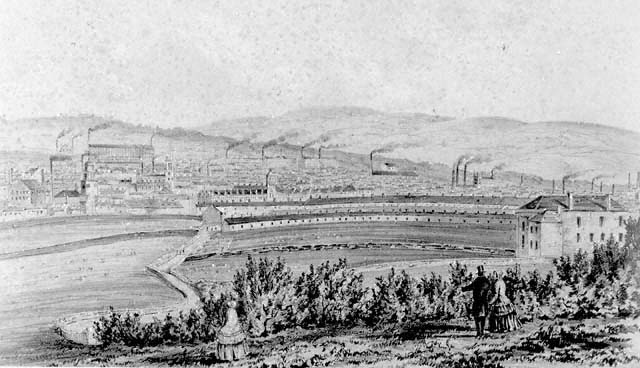
© BwD - terms and conditions
An interesting distant view of the town, looking south from Shear Brow. Blackburn is already dominated by smoking mill chimneys and rows of terraced cottages. On the left, the churches of St. John and St. Mary can be seen, as can the newly built Market Hall. The large building to the right is St. John’s school, built in 1845.
The Cotton Famine of 1861 - 1865
The turmoil of the 1840s was followed by a period of relative calm for the cotton industry. The Chartist movement had fizzled out in 1848 - after the repeal of the Corn Laws in 1846 and the gradual strengthening of trade union power amongst cotton operatives, there seemed to be little need for direct militant action. Working hours and conditions began to be improved by the first Factory Acts and Blackburn's manufacturers looked forward to an ever-increasing share in the domestic and world markets for cotton goods.