
 Loading more
Page 3
Another Sudell Stone!
By Barbara Riding
Those of you who attended my lecture "More History on my Doorstep" in the Fielden Room in November 1994, or read my article in the June 1993 Newsletter Issue 18 [see above], will perhaps remember the saga of the Sudell stone.
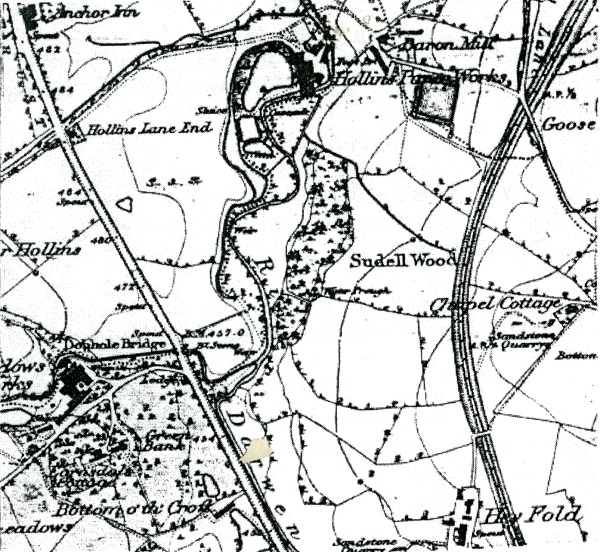
1847 Ordnance Map
This was a stone which, with the aid of a friend, I discovered in Woodfold Park. I went to great lengths to discover who the I or J Sudell might be. I talked to Ernest Kenyon who wrote a play about Henry Sudell. I corresponded with and visited a family of Sudell's in Leeds. I obtained copies of the Sudells' wills from the Preston Record Office. Because John Sudell (the uncle of Henry Sudell who built and and lived in Woodfold Hall 1799-1827) owned the land in Pleasington, which is where the stone is, I came to the conclusion that the words on the stone must refer to him.
With the help of Mr. Jack Aspin of Darwen, I have now discovered that there used to be another similar stone.
According to John Sudell's will he owned land in Blackburn, Livesey, Pleasington and Darwen which he left to his nephew Henry Sudell. When Henry Sudell became bankrupt in 1827, all his land and property was put up for sale. According to the catalogue in the Reference Library, in Darwen he owned land and property at Hey Fold, Ellison Fold, Plane Trees, Darwen Chapels, Sunnybank and coal mines in Over Darwen. The 1847 map shows that there was a wood named after the family: Sudell Wood.
According to John Aspin, when the houses in the Hollins Grove district of Darwen were being built a stone was discovered. A photograph was taken of it, and made into a lantern slide by members of Darwen Camera Club, sometime between 1894 and 1913. The inscription on the stone reads "This wood was Planted and sown by John Richmond for Mr. John Sudell 1760".
What happened to the stone is not known. Mr. Aspin says there is no mention of its whereabouts in the original script of the Camera Club. I have spoken to members of Darwen's Historical Society and the Library, and they have not heard of it. Fortunately Mr. Aspin has a copy of the lantern slide which he has let me borrow, so I have been able to reproduce a print of it.
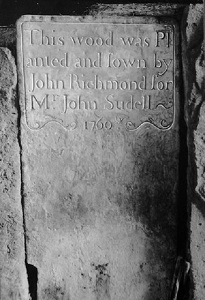
Image of the Darwen Sudell Stone
This image is held by Darwen Library and Says
"Item found in Garden in 1935"
Sudell Wood contained many holly trees, from which, says Mr. Aspin the Hollins Grove district is supposed to have derived its name. John Sudell seems to have been a man who liked leaving his mark. Perhaps there are some more stones, lying about, somewhere.
There is an Image of a third stone. This is also held by Darwen Library. Barbara Riding does not mention this stone in her articles. It reads similarly to the stone above; “This wood was planted for Mr John Sudell by Thomas Walton 1762”.
At present there is no further information.
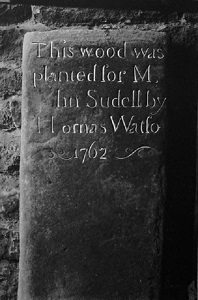
A Third Sudell Stone Date 1762
A Third Sudell Stone Date 1762
Transcribed by Shazia Kasim
Articles published in Blackburn Local History Society 20th Anniversary Issue 2008-2009
History On My Doorstep
By Barbara Riding
I first became interested in local history about ten years ago. A book came into my hands written by Sarah Eddleston, who was born in Mellor in 1864, telling the story of her life there. I found it so interesting that I began to research into the history of her family. Following on from this, and using some of the information I had discovered, I started to write a series of local history articles for my church magazine which I called 'Stories from Stones'. When I gave this talk to the Local History Society I used some of these stories, and as they are all about the area where I live I called it 'History on my Doorstep'.
A few years ago, I found a plan of the area in the Reference Library. It was part of a pamphlet published in 1882 when some of the estates of Sir William L. Fielden of Feniscowles were being put up for auction at the Old Bull in Church Street. This particular plan concerned the New Bank Estate which included a house with barn, yard and garden, a pasture and meadow.
Several of the present streets are marked on the plan - Revidge Lane, Preston New Road, Dukes Brow, Limefield, Burlington Street, Cheltenham Street, Leamington Street, Granville Terrace and Gibraltar Street. The rest of the area is made up of fields, and it is interesting to notice that when the roads came to be made up they more or less followed the lines of the field boundaries.
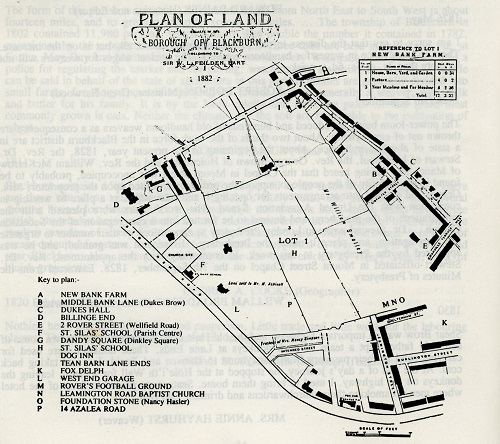
The New Bank Estate 1882
Having been born in this area and living in New Bank Road for the first seventeen years of my life I was very interested in the whereabouts of NEW BANK FARM (A). On some maps it is simply called Bank. I was talking about local history to a friend one day when she suddenly said, "I've discovered the foundations of New Bank Farm". She sent me up Leamington Road to turn down the back opposite Higher Bank Street, and there, under the house on the right, 163 Leamington Road, are the foundations. You can see the large pieces of sandstone under the brickwork, and several of the back yard walls are also built of sandstone, presumably from the demolished farm buildings.
On the plan there is a path leading from the farm up to Revidge Lane. At the top of the back between New Bank Road and Leamington Road are the remains of two old gateposts.
In "Bits of Old Blackburn", published in 1889, J. G. Shaw writes that New Bank Farm is in the process of demolition, being a very old building. He tells us that half a century ago it was farmed by the Hindle brothers and was also a beerhouse. Some wild characters in the dog-racing, cock-fighting and race-running line held their revels there at weekends.
As a child I lived at 120 New Bank Road. My back door opened out onto 163 Leamington Road. I did not realise it at the time, but I must have been living within the area of the old farm-yard - history on my back doorstep!
A few years ago, a picture appeared in the Citizen Newspaper. It was not a very clear picture, and the caption underneath was very blurred. However, an explanation said it was from the Illustrated London News, January 1864 showing the construction of Corporation Park. I went to the Reference Library to look at that issue and was able to make a much better copy of the picture. The main part of the Park was opened in 1857, but this picture shows crowds of men breaking up and removing stone, landscaping the top of the Park below Revidge.
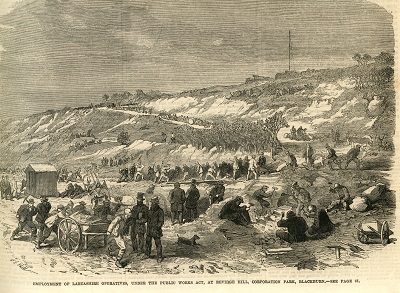
Laying out Corporation Park from the Illustrated London News January 1864
In the days before the development of photography, artists were sent out with journalists to illustrate the news. When a particular situation had been sketched it would be sent back, with notes attached to the printing office. Another artist would complete the picture, filling in the details ready for printing.
In the Illustrated London News for January 1864 the special correspondent had reported "I found 115 men engaged in the Corporation Park. They were at work 400 feet above the level of the Preston Road upon the face of the rock to which the Park rises. Terraces are being cut and the picturesque escarpment is characteristic of Alpine scenery. It is from this fine standpoint that our artist has made the sketch. Below is the Park, opened in 1857, embracing 50 acres, surrounded by pretty villas - a perfect gem."
In 1863 the Public Works Act had come into force. Over £1,000,000 was provided to enable local authorities to give employment to the Labouring and Manufacturing Classes. The construction of the top of the park was the second scheme by which the Blackburn authority had tried to help the unemployed. In 1826, McAdam, the famous road maker visited Blackburn and helped to draw up a scheme to alleviate distress and find employment for the starving weavers. Under his direction Revidge Road between Dukes Brow and Four Lane Ends was constructed. This event is commemorated by the inscription carved into the semi-circular stone set into the wall at the top of the park.
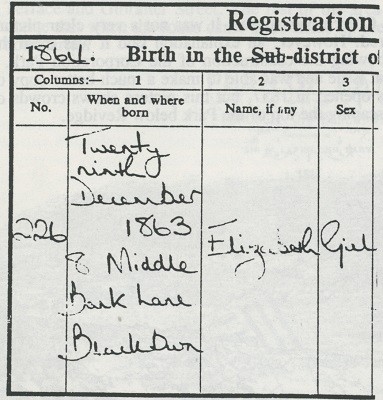
Partial Birth Certificate of Elizabeth Gill Middle Bank Lane
Behind the Quarryman's Public House in Dukes Brow are three small cottages. What were they called I wondered? Someone said they were known as Wagtail. Another resident of the area said that they had always been part of Dukes Brow as far as they knew.
A friend of mine informed me one day that her grandmother had been born and brought up in one of the cottages and she said she "wer born dean't back side". When my friend decided to research her family history she sent for a copy of her grand-mother's birth certificate. It informed her that her grand-mother, Elizabeth Butterworth was born in 1863 at 8 Middle Bank Lane (B). As my friend no longer lives in Blackburn she asked me if I could find out anything about it.
The only census return that mentioned Middle Bank Lane was that of 1841. In those days the area between what is now Higher Bank Street and Gibraltar Street was known as Wagtail. This was because across the road, off what is now Leopold Road, was Wagtail Quarry. On the census return I found three families living in Wagtail, three families living in Middle Bank Lane and then several more families living in Wagtail. From this information I concluded that the three cottages behind the Quarryman's were once known as Middle Bank Lane. They have had a few names in their time - Dukes Brow, Middle Bank Lane and 'dean't back side!'
Across the road from the Quarryman's at the corner of Dukes Brow and Alexandra Road is an old building with the names Dukes Hall (C) carved on the stone lintel over the door. Rather an impressive name I thought for a building, which houses a shoe repairer, a dress agency and a shop that is sometimes a second hand furniture shop, but frequently empty. However, upon making enquiries I discovered that the building used to be a Sunday School. Most of the windows have been modernised, but over the shoe repairers two of the original lancet windows remain intact.
In 1874 this building was opened as a Preaching Room and Sunday School by the Methodists in the area. My friend's grandmother attended this Sunday School and one of her prizes has survived. "Pretty Poems" it is called and on the flyleaf is written "Presented to Elizabeth Butterworth for good attendance. Wesleyan S. School, Dukes Brow, Blackburn, Dec 1878".
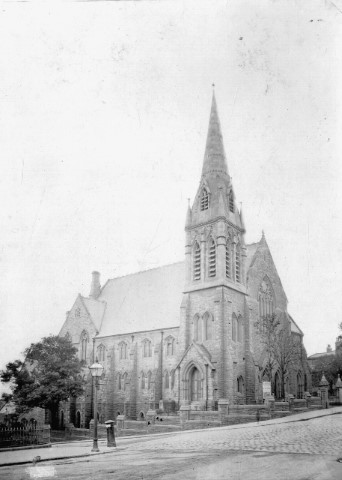
Picture of Trinity Wesleyan Church
After about twelve months it was found that the Preaching Room was not big enough, due to the growing number of Methodists in the district.
Eventually a piece of land was purchased from the Trustees of the late Mr. James Barlow Stewardson Strurdy, an ex-Mayor of the Borough. The Trustees were Dr. Irving (who gave his name to Irving Place) and Mr. Daniel Thwaites. The land was on the corner of Preston New Road and Branch Road (or Montague Street as we know it today). There the Trinity Methodist Church was built and opened in December 1878. On the Sunday morning of January 5th, 1879, the teachers and scholars met at the Dukes Brow Sunday School for the last time. They walked in procession down Dukes Brow and up Preston New Road to Trinity Methodist Church - "T' t' top o't' Branch" as Elizabeth Butterworth used to say.
As with many Victorian Churches, Trinity Methodist is no more. The shell of the church houses a garage and pine and cane shop, and you can keep fit at "Montagues", a gymnasium in the schoolroom below.
In May 1878, Sarah Eddleston, a fourteen-year-old farmer's daughter from Mellor had an unusual experience, which she wrote about many years later. She used to help her uncle to deliver milk in Blackburn and then sometimes go to the brewery and get "draff" which was good feeding for the cows, it made them give rich milk.
"One day I went as usual, got my load and sat on the front of the 'shandry' (a Lancashire word for the milk vehicle). Going up Montague Street which was wide and rather steep I saw a huge crowd of people which completely filled the street coming down, also a cab with a man inside. He had a paper in his hand, he was looking very worried; then I realised it was a 'riot!' Angry men and soldiers were round the cab. One man shouted to me saying, "It’s the Mayor, he is reading the Riot Act, then we will fire on the mob". It was the beginning of the terrible cotton riots. The next morning when we went to deliver milk all the windows of the houses in Preston Road were broken, and the manufacturer's house at Wilpshire was burned down...."
Sarah exaggerates when she says the house (Clayton Grange) was burned down, but not about the windows. In the Blackburn Times for May 1878, over fifty householders from East Park Road to Billinge End (D) are claiming compensation for broken windows and conservatory roofs.
In 1891 the area was hit by a scandal. "The Romantic Abduction from Clitheroe" was the headline in the Northern Daily Telegraph. Edmund Haughton Jackson, the brother of Robert Raynsford Jackson whose house Clayton Grange was set on fire during the 1878 riots, lived with his sister at 2 ROVER STREET (E). In 1887 he had married Miss Emily Hall, but she refused to live with him. After the wedding at St. Paul's Church and the wedding breakfast at Rover Street she returned home to Clitheroe and refused to return.
In March 1891, Mr. Jackson decided to take the law into his own hands. With the help of a friend, he abducted his wife as she left Clitheroe Parish Church one Sunday morning. He had set off on several Sunday mornings only to be turned back at Whalley by a friend who informed him that his wife had not gone to church that day. On this particular morning, she was bundled into his carriage, carried off to Rover Street and was imprisoned upstairs in the charge of his sister and a nurse.
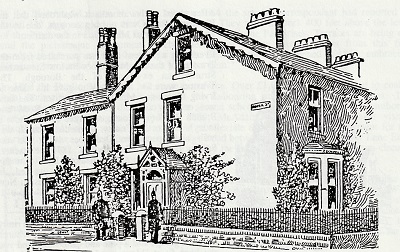
House on Rover Street Blackburn where Mrs Jackson was Imprisoned by her Husband
For the next few days the house was besieged by sightseers and reporters. The press had a field day. The general consensus, they said, was that Mr. Jackson had acted solely within his rights. "Granville Terrace and the street off it, Rover Street is a neighbourhood, which by this time has been quite famous, and all through yesterday the number of people who walked up the steep declivity of Dukes Brow to gaze upon the house containing the modern 'young Lochinvar' and his wife, was to say the least of it, remarkable. Last night hundreds of persons wended their way thither from all parts of the town."
One lady interviewed in Granville terrace told a reporter, "It was nine days talk and a ten days wonder!" Mrs. Jackson's sister took rooms in Granville Terrace opposite the house, so that she could watch what was going on. Among the comings and goings she saw supplies of provisions and a box of cigars for the gentlemen, being hoisted up, and a white-haired fox terrier being let down.
Emily's friends applied for a writ of 'habeas corpus' and Edmund Haughton Jackson had to take his wife to London to appear at the Court of Appeal. The Lord Chancellor freed her making the statement that "A husband has no right, where his wife refuses to live with him, to take her person by force and restrain her of liberty..."
The newspapers recorded that there was the wildest excitement in Clitheroe, the bells of the Parish Church rang merry peals after the result was made known. They were exaggerating as usual. Several gentlemen called in at the newspaper offices the next day to say that there was no truth in the statement. The bell ringers were having their weekly practice which commenced hours after the trial had finished.
Edmund Haughton Jackson afterwards wrote and published a pamphlet to exonerate himself. He called it "The true story of the Clitheroe Abduction or Why I ran away with my wife". 2 Rover Street is still there, but the name has changed. Sometime about 1903 it became 2 Wellfield Road.
One of the oldest buildings on the plan is that marked ST. SILAS SCHOOL (F), on Preston New Road, now the Parish Centre. The stone over one of the windows gives the date as 1834. The Sunday School was previously held in the upper room of an old cottage in Dandy Square (G) at Mile End. It had been set up by the vicar and congregation of St. Paul's Church for the benefit of the children of Long Row and the scattered farmsteads. The rate book for 1834, in the Record Office at Preston, informs us that one cottage is a Sunday School, but it is now empty.
In 1833 the Vicar of Blackburn, Revd. J. W. Whitaker made an application to the Secretary of the National Society in London for a grant towards a schoolroom for boys and girls at Billinge End near Blackburn. The school was built on land given by Mr. Joseph Fielden of Witton. Although the date stone says 1834 a bricklayers' strike for increased wages delayed the opening until April 1835.
In 1838, during Queen Victoria's Coronation celebrations, the children of Billinge Sunday School were tenth in order of precedence in the procession to celebrate the event.
In 1874 there was a slight decrease in the number of pupils due to the opening of a new Methodist school in Dukes Brow - Dukes Hall. In 1881 the school was opened as a day school with a head teacher, an assistant teacher and two monitors.
After a few years it was rumoured that the School Board was contemplating erecting a new school in the area. The Curate-in-charge together with a few gentlemen including Mr. W.H. Hornby formed a building committee. They secured a site and notified the School Board that there would be a school, but that it would be a church school. ST. SILAS' SCHOOL (H) was built between what is now St. Silas' Road and Clematis Street and opened in 1885.
At the time of the school's Centenary celebrations, I borrowed the school's old log books, and very interesting reading they made. The entry for April 1896 was particularly interesting - "Scarlet fever and measles have broken out in the district. The families at the following addresses have been excluded". The following addresses would be unrecognisable today, because they have all changed -
Long Row has become Manor Road,
Broom Street has become Woodfold Place,
Rover Street has become Wellfield Road,
Dandy Row has become Mile End Row,
Dandy Square is now Dinkley Square,
Double Street is now West View Place,
Banana Street is now Brighton Terrace,
Tean Barn Road is now Lynwood Road.
One name in the area that has proved rather elusive to me is that of TEAN BARN. I have found it on the Census returns, the Electoral Roll, in Barrett's directory and other documents, but it is not marked on any map I have come across. The only map on which I have found the name is one of 1891 on which Lynwood Road is marked as Tean Barn Road.
On the plan, the land between Revidge Lane and Cheltenham Street, alongside the New Bank Estate belonged to William Smalley. I found William Smalley on the census returns -
1871 William Smalley, 34 yrs, farmer and beerseller, 1 Tean Barn
1881 William Smalley, 44 yrs, farmer and beerseller, The Dog (I)
So sometime between 1871 and 1881 William Smalley moved from 1 Tean Barn to the Dog Inn (which is on the corner of Lynwood Road and Revidge Road) or did 1 Tean Barn become the Dog Inn? I do not know. The deeds of the Dog Inn only go back as far as 1908 when Alice Smalley (William's widow) conveyed the property to the Fountain Free Brewery Company.
When I was a child there were some old stone cottages beside the Dog Inn on Revidge Road. A friend of mine lived in one, number 104. Her father had a sweet shop there and sold ice cream. Just before the Second World War Blackburn Borough Council decided that they wanted to widen the top of Dukes Brow and they put a compulsory purchase order on the cottages, and after the war they were pulled down.
Surmising that the Council would have the deeds of the cottages I wrote to the appropriate department and they sent me a photocopy. I found it quite difficult to read and understand, but the information it contained was quite interesting. The description of the property, 104 Revidge Road was - "a cottage or dwelling house, occupied as a beer house with stable or shippon and cottage or dwelling house adjoining situate(d) at Tean Barn, Lane Ends." (J)
Dukes Brow is now in a Conservation Area. Beside the Dog Inn we have a piece of spare land with a modern telephone kiosk, where we might have had a row of 18th century cottages.
In "Bits of Old Blackburn" J. G. Shaw writes "just beside Fox Delph (K) is the Rovers' Football ground, the flat part of the Tean Barn Estate. It is a curious fact that this field was used as far back as the beginning of this century (19th) for the same purpose, but the games at that time generally ended in a free fight as they played a rougher game then". And so my next piece of history concerns BLACKBURN ROVERS and much of this information I found in Joseph Baron's books in the Reference Library.
Jospeh Baron was one of Blackburn's Victorian dialect poets, better known as "Tum o' Dick o' Bobs". As well as writing poetry he was also something of a local historian. He wrote a short history of Blackburn, a book about Jimmy Forrest, one of the Rovers' players and "A history of Blackburn Rovers Football Club".
From Joseph Baron I learnt that during the 1875-6 season the Rovers had no home ground so they had to play all their matches away. Then they "rented a field abutting upon Preston New Road near St. Silas' School". (This is where the West End Garage is now) (L). There was a water hole for cows in the middle of the field which had to be boarded over with timber begged from Mr. Duckworth, the father of one of the players, who had a timber importing business. The boards were then covered with turf.
In 1877 the football team moved to the Alexandra Meadows. In 1881 the Rovers moved to "the famous Leamington Street enclosure". (M) £500 was spent on building a refreshment pavilion and a stand for 600 people which were painted in the club colours. 6,000 spectators saw the Rovers beat Blackburn Olympic 4-1 in the opening match on 15th October.
In 1886 Club funds were running rather low so it was decided to hold a big prize draw. Thousands of tickets were sold at sixpence each. Six colleagues bought a ticket between them and then drew lots as to who should have the prize if the ticket won. Thirty prizes were given including a cottage piano, valued at £20, a brass Tudor bed-stead (£7), a washing and wringing machine (£3) and a perambulator (£4).
The main prize however was the Rover's cottage valued at £140. A picture of the cottage appeared on the ticket with the explanation - "The cottage is newly built, palisaded in front and situate on New Bank Road near the Rovers' Football Ground. The land is freehold (subject to a yearly rent of 35 shillings) and will entitle the winner to a county vote".
In the Blackburn Times for March 1886 there is an account of the draw. The draw took place in the Circus on Blakey Moor at 7.30 pm on Wednesday 17th March. All the counterfoils were placed in a large box having a hole in the centre to admit a man's hand. A smaller box some distance away contained thirty pieces of paper on which were written the various prizes. Two persons simultaneously inserted their hands into the respective boxes and drew forth a paper. The person owning the ticket with the corresponding number on the counterfoil was entitled to the prize which had been drawn from the other box.
The winner of the cottage was Mr. J. T. Barker, 51 Johnston Street. He was twenty-four years of age, married and employed in the Corporation Gas Department as a meter reader. At the time of the draw he was residing with his father-in-law. Whether or not he took up residence in the Rovers' cottage is not recorded, and which of the houses in New Bank Road was the cottage, I do not know, nor have I been able to find out. I wrote to the football club at Ewood to see if they had any more information. They had nothing more than the books that are already in the Reference Library.
In the 1887 Rate Book for St. John's Ward it states that the Rovers' Football Club paid £4 17s 6d in rates to the Trustees of William Smalley for the football ground on Leamington Street. In 1891 the Rovers moved to Ewood Park leaving the flat part of the Tean Barn Estate vacant, but not for long.
Near to the bottom of Montague Street there used to be a Baptist Church - Branch Road Tabernacle it was known as when it was built in 1839. It became Montague Street Baptist Church when the name of the road was changed. The site is now a car park for the Technical College.
In 1892 it was decided that there was room for two Baptist Churches in Blackburn. After some enquiries a site was secured on the land formerly used by Blackburn Rovers Football Club. It was purchased for £251 11s 3d. When I looked at the deeds of the church I expected the land to have been bought from the trustees of William Smalley, as the Rovers had paid him rates, but no, the conveyance was made between the Baptist Union and Blakey Moor Industrial Co-operative Society for the land on Tean Barn Road.
Four foundation stones for the new church were laid on Easter Monday, April 3rd, 1893. The inevitable builders' strike followed and it was May 1895 before LEAMINGTON STREET BAPTIST CHURCH (N) was completed and opened. The name was changed to Leamington Road at the turn of the century.
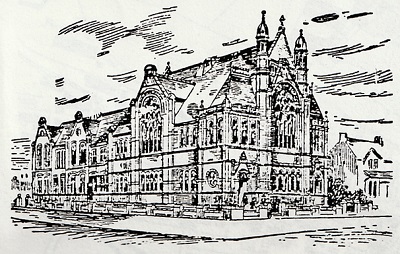
Lemington Road Baptist Chapel
In 1903 the officials at the Church decided that the Sunday School premises were no longer large enough. Events were organised and money was raised to build an extension. This was completed and opened in 1911. At the corner of the building near to Lynwood Road there is a foundation stone (O). It is dedicated to a Mrs. Nancy Hasler - "This stone was laid in grateful recognition of the generosity of Mrs. Nancy Hasler. January 28th. 1911."
I had been going to the church all my life, but I had never heard of Mrs. Hasler. When I re-read the church's history book "The Book of the Jubilee 1895-1945" I found out that Mrs. Hasler bequeathed a sum of money towards the enlargement of the Sunday School.
I've spent several hours in the Reference Library over the years dipping into the book "Blackburn Worthies of Yesterday" by George C. Miller. It is a fascinating book and gives accounts of the lives of old Blackburn worthies, beginning with Thomas Ainsworth, who was born at Pleasington Old Hall. Also included is Kathleen Ferrier, the contralto singer, who died in 1953. The house where she lived for twenty years, 57 Lynwood Road, is now marked by a plaque. Another chapter is headed NANCY COCKER, bonesetter and healer.
Nancy Cocker was the daughter of Moses Cocker, also a bonesetter and a descendant of an old Tockholes family. Luke Walmsley, an art dealer and local historian, wrote of an event which must have happened to him during the 1850s. As a boy he had been taking part in a jumping match and put out his ankle. "My father took me on his back to old Moses Cocker past the old workhouse. There was a twist, a scream, and the ankle was righted. As a bone setter, in my youth, Blackburn folk seemed to credit him with the power of wizardry". Undoubtedly, he possessed a natural gift, and he passed this on to his daughter Nancy.
Nancy set her first damaged limb at 17, and when she was past eighty she had as many as twenty patients a day. She boasted that she never made a business out of her gift, and Blackburn Rovers players were among her best clients.
Nancy Cocker was the maiden name of Mrs. Nancy Hasler. When she died in 1911 at the age of eighty-nine she lived at 14 Azalea Road (P). I live at 16 Azalea Road, so that was history on my doorstep.
Acknowledgements and Sources: -
Bits of Old Blackburn, J.G Shaw
What God hath Wrought, Sarah E. Brodie
Blackburn Worthies of Yesterday, George C. Miller
The True Story of the Clitheroe Abduction, Edmund H. Jackson
A History of the Blackburn Football Club, Joseph Baron
Mr John Duckworth for access to the log books at St. Silas School
Blackburn Reference Library for access to the local archives, old newspapers and census returns.
Transcribed by Shazia Kasim
Article published in The Blackburn Local History Society Journal 1992. Pages 36-44
Published March 2025
Published March 2025
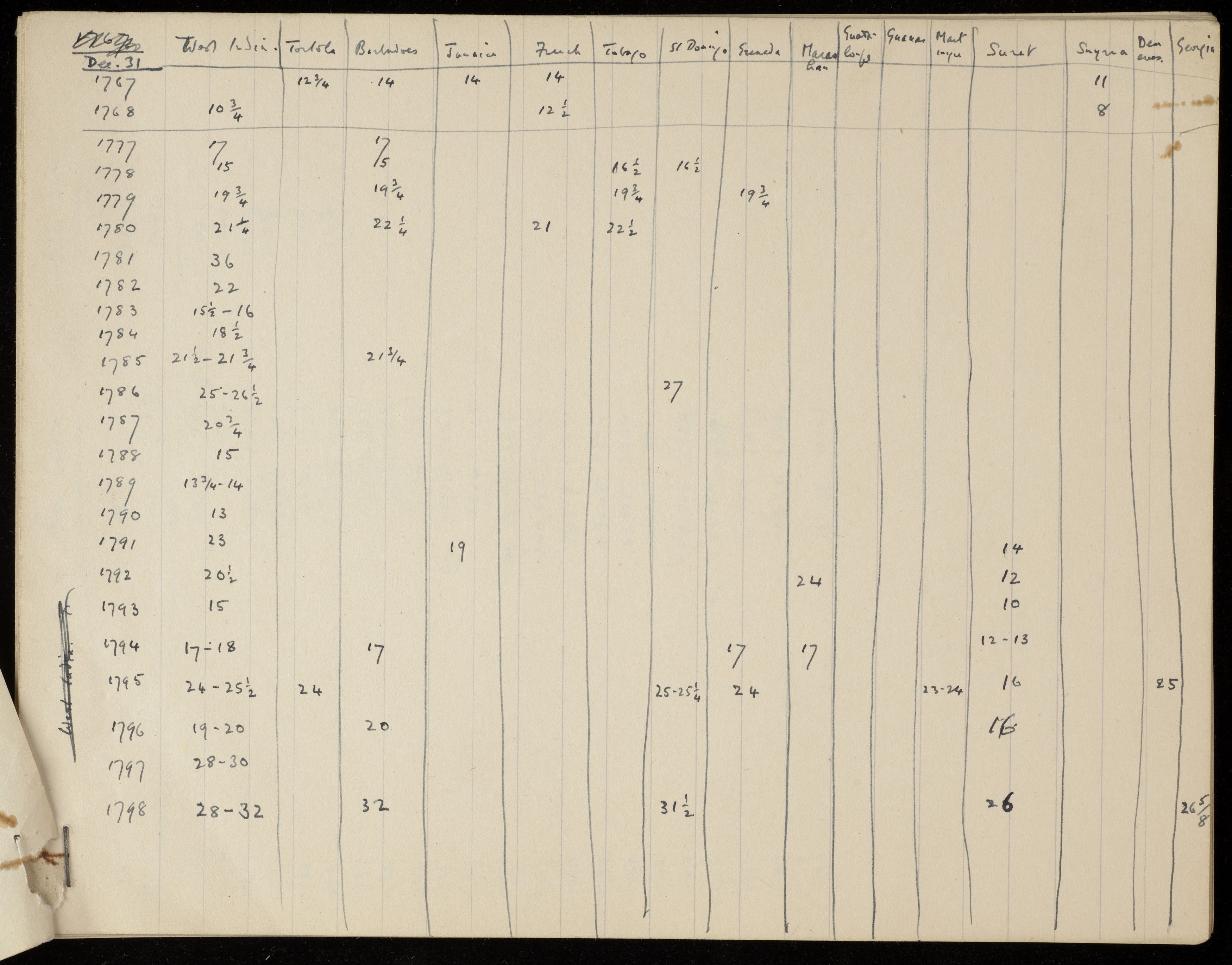
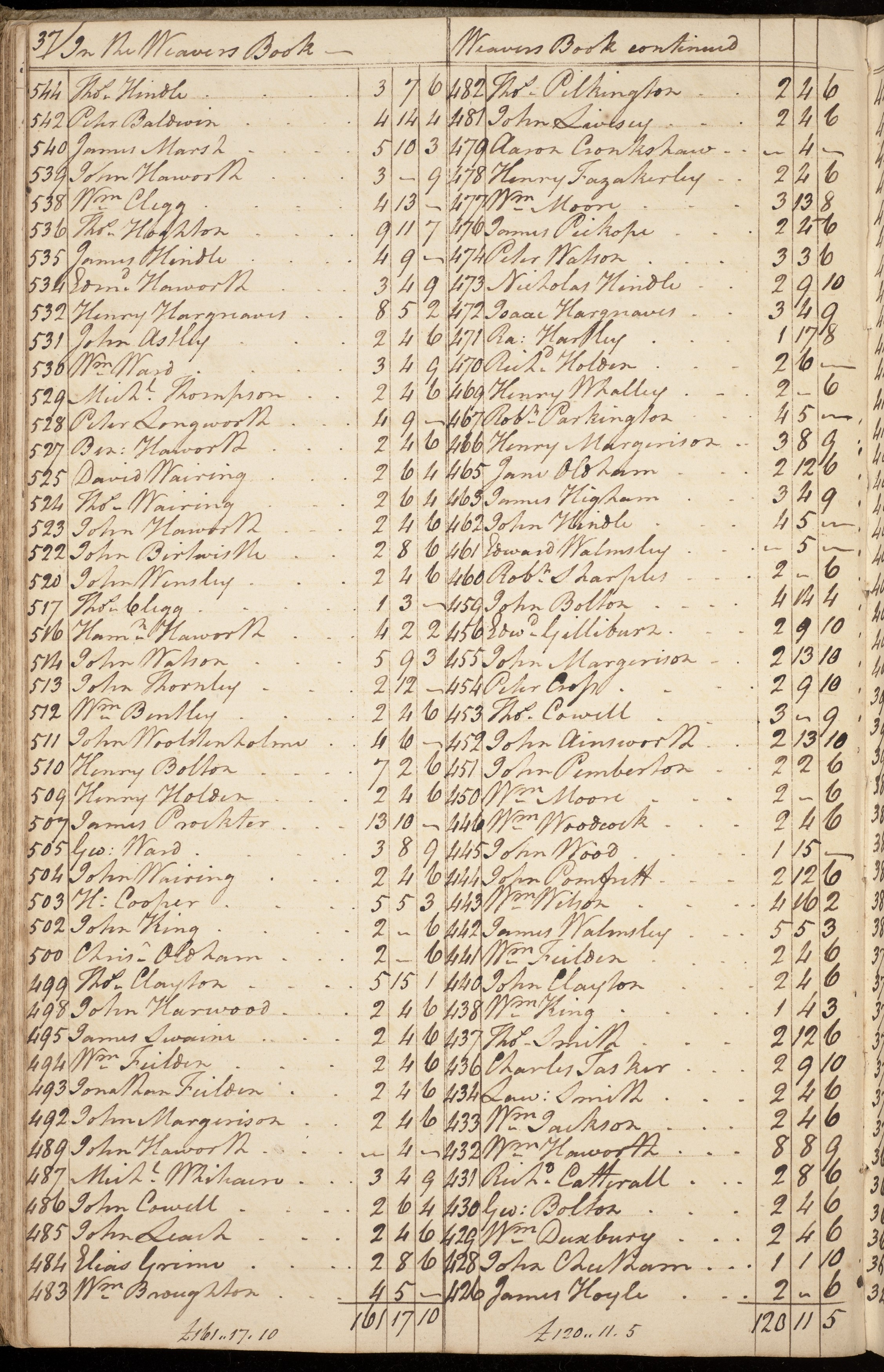
Image provided by The John Rylands Research Institute and Library, The University of Manchester
List of Blackburn handloom weavers supplied by/working for Cardwell, Hornby & Birley with their pay given
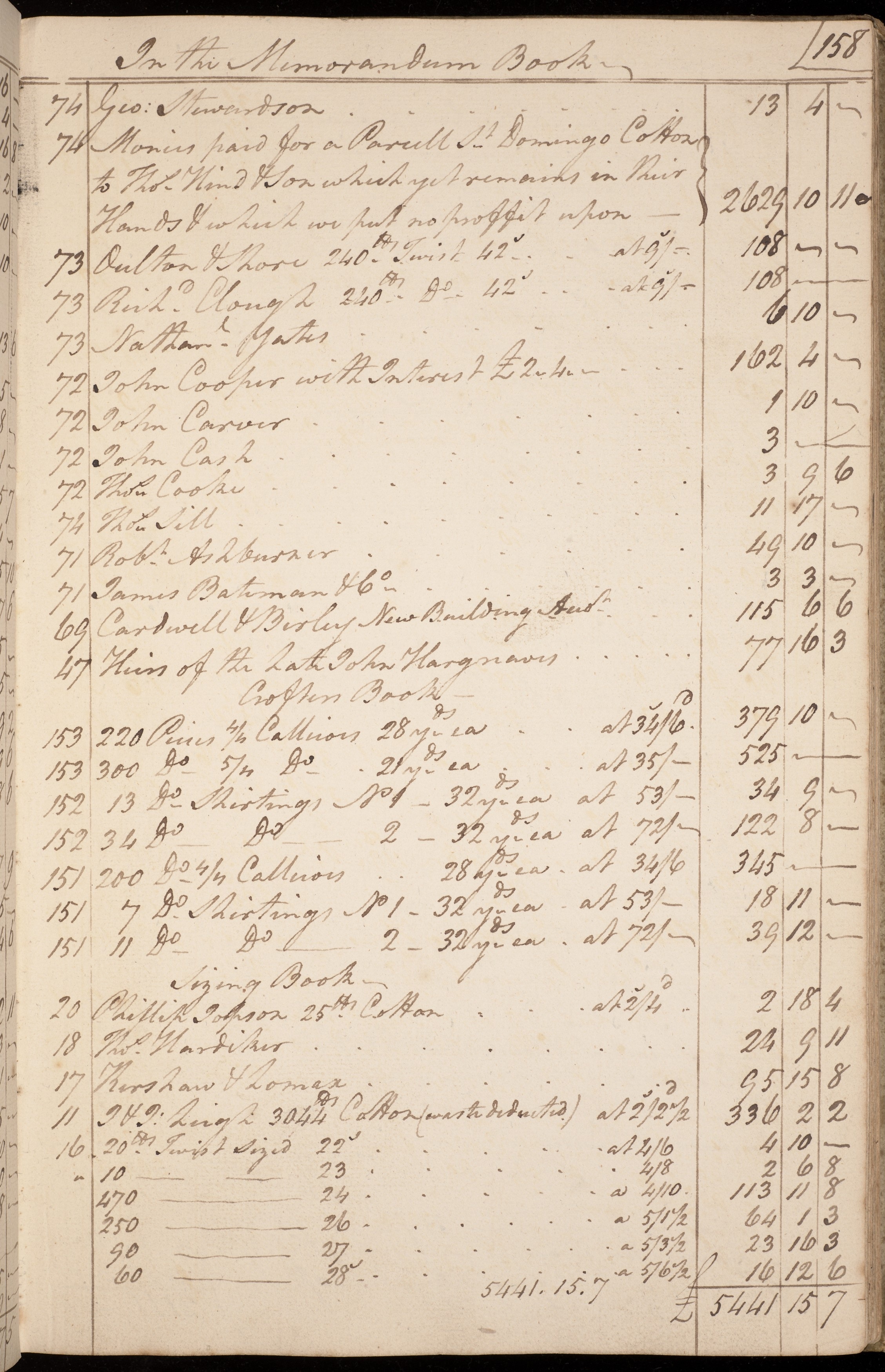
Image provided by The John Rylands Research Institute and Library, The University of Manchester
This photograph shows the page with the reference to the Thomas Hinde trade (see below) to trace the triangular slave trade journey from Liverpool with the cotton returning to Blackburn.
By
Bruce Wilkinson
Bruce Wilkinson
This article is based on research using English Ms 1199 - the stock and ledger books of Blackburn cotton merchants and manufacturers Cardwell, Birley & Hornby – held at the University of Manchester’s John Rylands Library. I have also used the research notes (English Ms 1208) of the historian AP Wadsworth (who donated the ledgers to the university) in conjunction with various online and printed resources listed at the end. Within Eng Ms 1199 there are six large ledger books, each holding hundreds of individual and company names alongside relevant transactions and annual warehouse inventories. Due to this scale, I have focused largely on the first ledger, which runs from 1767 to 1792, and which also has the most detail of the six books. In this period the company operated initially as a cotton merchants, acquiring and selling on cotton to manufacturers around Lancashire and beyond. They also acted as ‘putters out’ – supplying material to dozens of handloom weavers around Blackburn and, as a local history resource, the names and pay given to each weaver in the ledger is potentially very useful.
Image provided by The John Rylands Research Institute and Library, The University of Manchester
Wadsworth's notes with his handwritten graph of where Cardwell, Hornby & Birley sourced their cotton.
Wadsworth's notes with his handwritten graph of where Cardwell, Hornby & Birley sourced their cotton.
The books also contain the details of cotton importers and the financial details of transactions; with some information about the origins of from where that cotton originated and was then sold on to. Although not outlined in the ledgers, in 1782 Richard Cardwell, Richard Birley and Joseph Feilden constructed a cotton spinning mill in the village of Scorton (just south of Lancaster), run for the company by another business partner William Cooper – whose financial details (and those of the mill) appear throughout.
Their customers included some notable local companies such as Blackburn cotton manufacturers and calico printers Robert Turner & Sons, Henry Sudell, Haworth, Peel, Yates & Co (started by Robert Peel, William Yates and Jonathan Haworth), Henry Walmsley, James Briggs & Co, and Thomas Smalley a calico manufacturer in New Water St. Although the town would later become an enormous centre of cotton manufacture, the relative lack of Blackburn companies in the early part of the first ledger illustrates how the industry was slow to begin in the town. There are many more from wider Lancashire, Manchester and beyond, with several in Ireland, Scotland and London. Some of the names are of well-known Manchester textile entrepreneurs and include the president of the Cotton Manufacturers Company Josiah Birch, and Salford cotton manufacturer William Hutton.
There are details of several local and national bankers who financed the company, the most prominent being Bolton’s Thomas Marsden who is known to have invested large sums in the textile industry. It also includes Samuel Daniell & Co, William Brocklehurst of Manchester and Richard Gravatt, a London banker who died leaving Cardwell, Hornby and Birley with large losses. The Blackburn solicitors John Hayhurst and Robert Ashburner are also paid substantial amounts although it is not clear specifically for what.
The ledgers also show transactions with businesses and individuals related to the import of cotton and its transportation over land and by canal. Henry Astley appears to have been a key figure in arranging the movement of cotton for the company – he and his employees regularly appear. Timothy Maude, who was involved in the construction of the Leeds-Liverpool Canal, is listed as are Blackburn carter James Hacking, a Mr Higham for canal freight, ‘Burnley carrier’ John Livesey, John Belsey the Port of Lancaster Collector of Excise and J Myerscough, clerk to the Lancaster Canal Company.
Image provided by The John Rylands Research Institute and Library, The University of Manchester
List of Blackburn handloom weavers supplied by/working for Cardwell, Hornby & Birley with their pay given
Companies both local and from further afield which supplied machinery and services feature throughout, signposting the technological advances made during the late Eighteenth, early Nineteenth centuries. Blackburn tallow chandler James Tiplady supplied candles, Hart & Co and John France the rope and reeds needed to drive machinery while James Bateman & Co’s Manchester foundries supplied metal used for cotton machinery. Miles Aspinall, a Blackburn brazier, worked on pipework while Sketchley & Co, a company based in distant Weymouth, supplied textile machinery – presumably by shipping it around the coast. As mills moved from water to steam power, an increasing amount of coal is paid for in the ledgers, Blackburn and surrounding areas then still mining the mineral locally, James Sagar one of the suppliers.
Richard Arkwright is paid regularly as are his technological collaborators Peter Atherton, John Smalley, John Kay and the clock maker William Harrison. Perhaps most interestingly, William Pollard who some believe to have worked closely with Arkwright on the development of the water frame, also appears. In 1763 Pollard emigrated to the US where in 1790 he submitted the first US patent for a cotton spinning machine. Pollard also acted as an agent, importing goods from England into the US and exporting goods in return, which is why he appears in the ledgers.
Several church ministers also appear. Blackburn vicar John Holme, whose daughter Martha married Richard Cardwell, invested substantial funds into the company and, after he passed away, his executors received thousands of pounds in profit payments. The Rev T Parkinson is also listed as is the better-known, Thomas Starkie, who became Vicar of Blackburn from 1780.
Wadsworth’s notes contain a hand-drawn graph of from where the cotton originated during this period, broken down by date and country. Initially from ‘Smyrna’, an area of what is now modern Turkey, and then the Caribbean islands of Barbados, Tortola (British Virgin Islands), Barbados, Jamaica and St Domingo (then French controlled Haiti). Cotton also came from Brazil and India but largely it originated from the West Indies until 1798, the final year of Wadsworth’s graph, when it began to be imported from plantations in the US state of Georgia. In 1774 a group of Blackburn cotton manufacturers (including Cardwell, Birley, Hornby and Feilden) took out a newspaper ad stating that they would now only use better-quality West Indian cotton, offering to replace any from Smyrna currently being used by local spinners - which provides us with a definitive date by which the town’s mill owners had changed supplies.
Although the port of Lancaster is now less known, in the Eighteenth century it was extremely busy, with ships bringing in cotton and other goods from the Caribbean and transporting enslaved African people across the Atlantic. In fact, it was at this point the fourth busiest slave port - only behind Liverpool, London and Bristol in terms of numbers. Surprisingly, much of this trade was carried out by Lancaster’s Quaker families who had earlier invested in the shipping business; experienced at moving cargo around the world. In the early part of the first ledger, businesses using Lancaster to import cotton and others moving it south from the port are most prominent.
The stock book contains several references to ‘Rawlinson of Lancaster’ and to ‘Rawlinsons’. The Rawlinson family of Lancaster were prominent Quaker slave traders, Abraham Rawlinson, the city’s MP, opposing the abolition of slavery in Parliament. The Legacies of British Slavery (LOBS) website, which lists reparations to slave owners paid by the British government after abolition, has Abraham as the owner of Gouyave and Maran cotton plantations in Grenada on which he used enslaved people as pickers. Abraham’s son Henry Rawlinson of the company Rawlinsons & Chorley (which also appears in the ledger), described as ‘Lancaster West India merchants’ in directories, is also listed on LOBS as a Grenada slave owner. Abraham, Abraham Jr, John and Thomas Rawlinson are listed as co-investors in slave trading vessels which sailed from the 1740s to the 1800s, registered in Liverpool, one of which (Sarah) unloaded enslaved people in Grenada. There is also a reference to: ‘Rawlinson Sons & Lindow’ - partner William Lindow (who married into the Rawlinson family) listed as co-investor in Sarah with John Rawlinson.
So, for what were the Blackburn company paying the Rawlinsons? There are several references in the annual stock inventories to cotton which had come from or through the Lancaster company while Grenada is listed in Wadsworth’s graph of cotton suppliers as a substantial source during this period. As with many of the companies listed in the ledgers, the triangular nature of the business – the shipping and trading of enslaved Africans across the Atlantic and the return journeys with cotton - makes pinning down the exact nature of the transactions difficult. Did the cotton held in the Clayton Street warehouse that Cardwell, Hornby and Birley rented from Joseph Feilden originate from the Rawlinson’s plantations in Grenada or was it cotton which the Lancaster family had shipped from other estates or islands? What we can say is that the Blackburn merchants were dealing with numerous companies involved in the trading of enslaved people, their enforced labour on plantations and in the shipping of product picked by those enslaved people in the Caribbean back to Britain.
The name of Lancaster Quaker Thomas Satterthwaite and the Satterthwaites [company] also appear in the ledgers. Thomas ran a transatlantic shipping business with his brother Benjamin who also acted as a representative in Barbados to the Rawlinsons (and others). John Satterthwaite (son of Benjamin) co-invested in Lancaster and Liverpool slave ships while John’s brother Henry is listed on LOBS as being paid reparations for enslaved people in St Mary Jamaica. The Satterthwaite Letter Books 1737-1782, held at Lancaster University Archives, contain letters from Benjamin to his brother Thomas detailing both their family business and Benjamin’s activities as a factor in the West Indies. In October 1773, the Liverpool Plantation Registers confirm that along with several members of the Rawlinson family, Thomas co-invested in the ship Lively in Jamaica. A vessel of this name is listed as making several slave trading journeys during this period from Liverpool to Jamaica on the Slave Voyages website. Thomas is not mentioned as investor in these references, but some have no ship owner’s names listed - so although not definitive, it seems likely that these journeys were made by the same vessel. John Satterthwaite, the son of Benjamin is listed as co-investor in transatlantic ship Stag transporting enslaved people while the website lists a Satterthwaite (without first name) as the co-owner of several slave trading ships sailing from Lancaster and Liverpool in the 1750s and 60s – almost certainly Thomas, Benjamin or perhaps both brothers.
As the ledger progresses chronologically, it is people and companies which used the port of Liverpool which gradually form the largest element, with numerous cotton brokers and merchants from the city trading with the Blackburn business. Travel from East Lancashire to Liverpool was then difficult so companies employed brokers based in the port who sifted through the newly arrived cotton to find the best quality material and then negotiated a price on their behalf. Alongside the numerous names of brokers are several shipping and import/export companies involved in transporting enslaved people to the Caribbean and returning with goods including cotton to Liverpool. In fact, some inserted themselves into every part of this process – the trading and transportation of enslaved people, the ownership of Caribbean plantations on which they picked cotton, the transportation, brokering and sale of cotton and even, in some cases, the manufacture of goods using that material back in Lancashire.
According to research on the Slave Voyages website, William Aspinall (who appears in the ledgers) invested in ships sailing from Liverpool in the 1790s, selling enslaved African people to plantation owners on the islands of Jamaica, Barbados, Antigua and Grenada. John, James & William traded as J & J Aspinall and between 1766 and 1807 the Aspinall family were involved in more than 190 slave voyages. This includes one of the most notorious episodes of that time, when hundreds were thrown into the Atlantic from Aspinall’s slave ship Zong as drinking water ran short, the owners then claiming on the ship’s insurance for ‘loss of cargo’. LOBS also confirms that the later mayor of Liverpool, John Bridge Aspinall and Thomas Aspinall, the sons of James, claimed post-abolition slave reparations from the UK government for the loss of enslaved people on plantations in Jamaica. It is therefore likely that William, John and James both traded in enslaved Africans and used them to pick cotton on Caribbean plantations which William then supplied to the Blackburn company.
Daniel Backhouse was a major Liverpool slave trader who is also connected through marriage to the Hornby family. Backhouse was responsible for more than 100 slave voyages from the port of Liverpool selling thousands of enslaved African people to Caribbean estate owners. From the ledgers, it is unclear for what service the Blackburn company owed Backhouse £784 (over £57,000 in today’s money), but such a substantial amount would certainly have equated to a great deal of cotton, if that’s what the cash was for.
Image provided by The John Rylands Research Institute and Library, The University of Manchester
This photograph shows the page with the reference to the Thomas Hinde trade (see below) to trace the triangular slave trade journey from Liverpool with the cotton returning to Blackburn.
Originally based in Lancaster and described as the city’s leading slave trader, Thomas Hinde (1720-1798) moved his growing operations to Liverpool, later joined in the business by his sons Samuel and Thomas junior. According to the Slave Voyages website, their ships made around 70 such triangular journeys, visiting Barbados, Charleston South Carolina, Jamaica, Dominica, Antigua, Guiana, St Kitts, Nevis, Guadeloupe, St Vincent, Tortola and the Dutch Caribbean Island of Saba. There are two major references to the company in the ledgers. One confirms the purchase of 19 bags of cotton at a cost of £283 from Thomas Hinde but does not say from where the material originated or when it arrived. However, the other in the 1786 section of the ledger confirms: ‘monies paid…for St Domingo cotton to Thomas Hind & Son which yet remains in their hands and which we put no profit upon’ - the stock book confirming that the Blackburn company had paid £2629 in advance. St Domingo is the port capital of the Dominican Republic and so triangulating this with the information on the Slave Voyages website confirms that this journey took place in 1786 and that the major investor was Thomas Hind[e] junior. There are no other sailings invested in by the Hinde family which visited Dominica in that year. Captained by William Jackson, The Golden Age set off from Liverpool 25th June 1786 and visited Bonny, an island off what is now part of Nigeria, where it picked up 731 enslaved people, landing with 670 survivors at St Domingo. However, a newspaper report of January 1787 contradicts that information, claiming that the ship arrived in Dominica with just 573 survivors which, if correct, would equate to a loss of 158 Africans on the voyage. The ship arrived back at Liverpool on the 27th February 1787 – which is why the Blackburn merchants were still awaiting delivery of the cotton in the inventory of 1786. The Manchester Mercury newspaper of 6th March 1787 confirms that The Golden Age had arrived at Liverpool from Dominica carrying: ‘66 bales and packets of cotton, 23 tons of fustic, ten elephants’ teeth and Madeira Wine for Thomas Hinde & Co’.
The above are just a few examples of around 25 identified as being part of what has been called ‘the nefarious trade’ in the ledgers with about the same number again of those who probably were but are yet to be definitively confirmed. Alongside evidence of business with companies which were clearly involved in the triangular Atlantic trade, there are indications that Cardwell, Birley and Hornby might also have dealt more directly with cotton plantation owners. In his notes Wadsworth picked up on a reference to: ‘4 bags Barbados cotton Hobbs’ and ‘5 bags Barbados cotton Hobbs’. LOBS lists John Peter and John William Hobbs as cotton plantation owners in St Josephs, Barbados. Harriet Pearce, Librarian at Barbados Museum & Historical Society has confirmed from island records that a John P Hobbes was a plantation/slave owner in St Josephs and, although the spelling of the name is different, it seems likely to be the same person.
So, these are some of the people that the Cardwell, Hornby and Birley company dealt with, but the partners were also involved more directly in the trading in and use of enslaved Africans. John Hornby is listed on LOBS as later receiving almost £1300 in reparations for enslaved people on the Rabot Estate of St Lucia. Joseph Feilden, who had invested in their Scorton mill and who owned the warehouse used by the company, is listed on LOBS as being paid almost £3500 in abolition reparations. William Shepherd, the brother of John Shepherd – a partner before John Hornby joined, was a co-owner of the shipping company Langton, Shepherd & Co which, according to a history of Kirkham, was involved in the trading of enslaved peoples. John Birley, Richard’s father was owner of the slave ship Hothersall and the company that he was a partner of - Langton, Birley & Co were triangular importers through Liverpool in the 1780s used by the Blackburn company. Thomas & William Langton were Liverpool merchants, and their sister Ceciley married into the Hornby family and brother John’s daughter married into the Birley family. LOBS has William Langton as being paid £182 for enslaved peoples in Trinidad while Edward Cardwell (1st Viscount Cardwell 1813-1886), son of Richard, married into the Parker family which received tens of thousands of pounds in reparations. So, the Hornby, Birley, Feilden, Cardwell and Shepherd families are all recorded as profiting from enslaved people.
At the end of each year in the ledger, there is an agreement signed by Cardwell, Hornby & Birley outlining what should happen to the business in the event of one of them dying or the partnership being dissolved. In his notes, Wadsworth was intrigued by one passage within these agreements: ‘There is one astonishing sentence, which occurs 3 times, about the division of the work people at a death or end of partnership; they might be slaves on a cotton plantation’. Certainly, the number of ‘employees’ outlined in these agreements bears no relation to the amount of people working for the company in Lancashire, so Wadsworth seems valid to question to whom they referred.
Although I have so far been unable to find evidence that the Cardwell, Hornby and Birley business owned plantations on which enslaved peoples worked, we can see from the evidence above that three men (and their families) were happy to profit both directly and indirectly from their ownership and work in the Caribbean – so it would be unsurprising if true. With the vast amount of money they were making they built themselves huge mansions in the Lancashire and Cheshire countryside – away from the increasing pollution created by cotton industrialisation. Newspaper reports from the time alongside payments in the ledgers show that Hornby, Birley and the Feildens invested in the infrastructure of Blackburn, building railways and canals and improving roads to assist the movement of raw cotton into the town and the finished goods away for sale in the UK and overseas. Joseph Feilden used substantial amounts of his income to fund the construction of many of the town’s Church of England schools and chapels while his children used the wealth to buy up much of the land on which the town stood, again purchased from the Church of England. Together with the heirs of John Hornby, they also supported the building of an ornate town hall, grammar school, cotton exchange, hospital, technical college and a library (now museum) with business profits derived both directly and indirectly from the exploitation of enslaved African people.
With thanks to:
Dr Elizabeth Gow (curator of Eng Ms 1199 & 1208)
Dr Grant Collier
Resources:
University of Manchester Library Special Collections – English Ms 1199 & 1208
Historical directories of Blackburn, Lancaster, Liverpool and London
William Abram – A History of Blackburn, Town and Parish (1877)
William Abram – Blackburn Characters of a Past Generation (1894)
John Baynes – The Cotton Trade Lectures (1857)
Sven Beckert - Empire of Cotton: A Global History (2014)
Melinda Elder – Slave Trade and the Economic Development of 18th Century Lancaster (1992)
A Phelps, R Gregory, I Miller & C Wild – The Textile Mills of Lancashire – Undated
D Richardson, S Schwarz & A Tibbles (Eds) – Liverpool & Transatlantic Slavery (2007)
Steven Toms – Financing Cotton: British Industrial Growth and Decline 1780-2000 – in particular the chapter Industrialization and Capital Formation (2020)
AP Wadsworth & Julia de Lacy Mann - The Cotton Trade and Industrial Lancashire, 1600-1780 (1931)
Lancashire Archives – DDX 2261/23 Scorton Mill: An interim historical and archaeological record – Nigel Morgan
Lancaster University Special Collections – The Satterthwaite Letter Books
The Historic Society of Lancashire & Cheshire website holds several useful articles:
The Letter Book of Benjamin Satterthwaite - MM Schofield
The Slave Trade from Lancashire and Cheshire Ports – MM Schofield
The Flax Merchants of Kirkham – FJ Singleton (which holds details about the interconnected businesses of the Birley, Hornby and Cardwell families
C KNick Harley: Prices and Profits in Cotton Textiles During the Industrial Revolution – University of Oxford Discussion Paper (2010)
FE Hyde, BB Parkinson & S Marriner – The Cotton Broker and the Rise of Liverpool Cotton Market – The Economic History Review Vol 8 No 1 1955
A number of digitised newspapers were used in this research which include The Barbadian, Blackburn Times, Blackburn Standard, Jamaica Royal Gazette, Manchester Courier, Manchester Guardian, The Pilot.