
 Loading more
Page 2
ST. SILAS'S SCHOOL
The origins of this school emanate from Billinge Sunday School, later the parish rooms. By 1885, the School Board in Blackburn had agreed the need for a new Church School to be built between St. Silas Road and Clematis Street in order to meet the needs of a growing population and, when completed, could accommodate far more children. The School was designed by Mr. Bentley of Kendal with the construction being undertaken by Kenyon and Moulding. This led to the closure of the old Billinge School and the transfer of pupils with a new Head Master in charge, Mr. Mark Russell. Overcrowding however soon occurred and, in 1886, Billinge School was reopened to accommodate an Infants Department and, after changes were made to the building, Mrs. Croasdale appointed Head Mistress. When the new church was built, the old Billinge School had a dual purpose as a busy school and holding church functions including a central meeting place for all parochial organisations; its name was changed to the Parish rooms. In 1904, St. Silas School was enlarged when a new two storey wing was added to accommodate the Infants and provide a large assembly room for 600 pupils. This occurred because the accommodation at the old Billinge School was deemed unsuitable. The cost of this project was £3000; it was opened by Sir Henry Hibbert of Chorley and meant the school accommodation rose from 480 to 678 with 220 Infants, 220 Junior Mixed and 226 Senior Mixed.
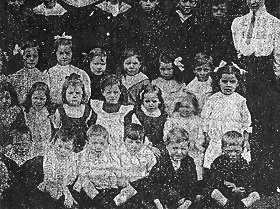
VIEW OF ST SILAS SCHOOL STANDARD
3 CLASS IN APPROXIMATELY 1910
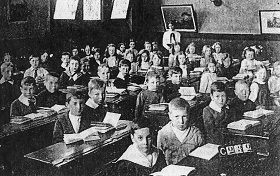
VIEW OF ST. SILAS SCHOOL PUPILS AGED 10 AND 11
AND TEACHER MISS HARPER IN 1914
The early photographs shown above clearly show the standard of dress of the pupils was very good with the pupils and the school room appearing very neat, tidy and well organised, although class sizes were large, no doubt, this well orderded environment was also down to the teacher e.g. Miss Harper, shown above, was a stickler for tidiness of her pupils. The school had large playgrounds on the St. Silas Road side which could accommodate its various pupils, well protected by brick walls and railings.
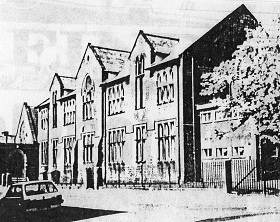
VIEW OF ST. SILAS SCHOOL FROM CLEMATIS STREET SIDE AT A LATER DATE
SACRED HEART SCHOOL
Sacred Heart opened 14th January 1901 in order to accommodate the growing number of Catholic children in the district. The school was situated on the corner of St. Silas Road and Leamington Road after the foundation stone was laid in 1900 by the Bishop of Salford. This development had strong links to the Catholic Church of St. Anne which had been in existence for 50 years in Blackburn and saw the need for school facilities in the West End. When it opened as a school, it had 28 pupils on its register and was run by the sisters of Notre Dame. At a later date Mass was held on Sunday and Holy Days at the school with the priests of St. Anne's. On the last Sunday of October 1905 the infant mission here was separated from the mother church to begin an independent existence and a new parish priest adopted with a house on St. Silas Road obtained for him in 1906. During the 1st World War many Belgian Refugees came to Blackburn and lived in the West End increasing the growing school population considerably. Eventually, a plot of land was purchased adjoining Preston New Road and Billinge End Road which would lead to the building of a new Church (see later notes).
BILLINGE WATERWORKS
Due to the height of the area around Mile End, Revidge and Gawthorpe the water supply had at best been intermittent/ fitful for the increased population of the area. As a result work started in the late 1880's by Messrs. Brierly and Holt (civil engineers) in a field just above Old Billinge School where evidence of water was discovered. After trial borings, a permanent shaft was sunk to a depth of 30 feet into the rock below and then further borings which showed it was capable of yielding an extensive supply of water which had been filtered as it passed through grit rock making it very pure. A large shaft was created by using gunpowder to blast away the rock and a special machine for boring through rock using a cutting bar/drill operated by steam power. When completed, water rose to the surface level from a depth of about 215 feet and overflowed into a water course close by, then powerful steam pumps forced the water up newly laid pipes to a newly built reservoir at a height of 722 feet close to the Corporation Park Hotel on Revidge and, from here, it could be distributed by gravity through service pipes to the elevated residential housing areas nearby. It was estimated that 90,000 gallons of water per day could be raised from the new well to be transferred to the reservoir with the cost of the scheme being £11,500. Later in the 1890's, the Mile End Pumping Station received water direct from Guide reservoir to pump up to the Revidge Reservoir which then sent water via mains down Revidge Road to all properties including the gentlemen's mansions at the very top of Preston New Road. During the 1890's, further developments at Guide which increased the reservoir's capacity meant the Mile End Pumping Station was closed and water pumped direct from Guide to all parts of the town.
LANCASHIRE AUTOMOBILE CLUB
This was founded in 1902 and was the second oldest in the country. At that time, there were 24 motorists in Blackburn (mostly from wealthy families) and 20 of these got together to form a club called the North East Lancashire Automobile Club whose first run in June 1902 was to Clitheroe. Among those taking part was its first president Sir Harry Hornby (cotton magnate), along with William Birtwistle, also a cotton magnate, and G. Walmsley who later became Judge Walmsley. Also present was Tom Burton who had a garage on Simmons Street and police surgeon D. Bannister took part on his motorised scooter. The photograph below shows a 1904 club meeting at one of the Billinge/Beardwood Mansion grounds. In 1903 the club held a reliability car trial to Kendal, starting the 100 mile journey over poor roads from Billinge End Road. 12 cars made the journey out of 18 that started and, all arrived within 10 minutes of their target time, taking an average of two and a half hours. In 1905 the club held its first hill climb on a main road in Settle.
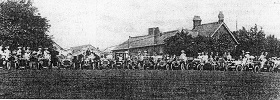
NORTH- EAST LANCASHIRE AUTOMOBILE CLUB MEETING IN 1904
BLACKBURN GOLF CLUB
On February 12, 1894, W. Carmichael and W. Hamer sent out a circular letter to a number of gentlemen who they thought might be interested in forming a golf club. As a result, a meeting was held at the Old Bull Hotel on the 16th February 1894 which attracted a good attendance where Mr. Richard Greenwood (COTTON MAGNATE) was appointed chairman who was also influential. He was also elected as the club's first captain and held the position for three years and elected as club secretary for 4 years during which time the club became fully established. By now it had 300 members drawn from all social classes although in the early days gentlemen wishing to play golf had to own a horse and trap or catch the train to visit Wilpshire and Pleasington courses for inter- competitions. When the club was first formed it raised £300 by £5 loans and annual subscriptions were set at £2/2/- with there not being more than 70 members. It was also decided to ask R. A. Yerburgh M.P. to be club president. During further meetings at the captains house “THE GABLES" on Preston New Road rents for farmland off Beardwood Brow, the rent for a house on Revidge road and procuring the services of a golf professional called D. Herd were agreed along with a discussion to allow lady members, with an annual subscription of 10/6, as they could only play Mondays, Tuesdays, Wednesdays and Fridays. After a further meeting at the local Gibraltar Hotel on August 9, 1894, agreements were made to erect a club house and tenders were accepted. The clubhouse was then erected at a cost of £665 and £166 was spent on developing the golf course and to help increase the membership. In April 1895, it was agreed to terminate the professional services and take on a man and wife to look after the clubhouse. Mr. and Mrs Price were appointed as the groundsman and caretaker at a rate of 20/- per week with house, coal and gas free. They were therefore the clubs first steward and stewardess. Over time and various meetings, new trophies were donated including the Yerburgh Cup and Greenwood Cup, together with the development of various competitions. The turnover of members was quite large in the early years with arrears of subscriptions being common. By late 1900, the state of the links had deteriorated because the tenant farmer had taken his cattle off the course for a number of weeks so some of the members subscribed together to have the whole course mowed. Caddies at this time were the order of the day and had their own hut built in 1899. At a meeting in 1906, the tenancy of the Corporation Park Hotel Farm (also called SOD HALL) land was taken over which was the first step towards developing an 18 hole course from the original 9 hole course as it was increased to 13 holes with those playing the full 13 holes having priority on the course. By 1907, Blackburn Golf Club had joined the newly formed East Lancashire Golf Association and, by 1909, had increased the course to 18 holes by renting more land from Hargreaves Farm. During 1908, additional land was acquired from CUCKOO HALL for rent to build a club house (see 1912 O.S. Map). At this time, lady members argued they should be able to play on more days and, in 1911/12, the clubhouse was extended including a balcony. A man called Pemberton was engaged to police the course and keep trespassers away at weekends.
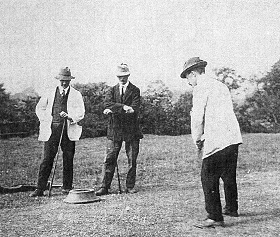
A GROUP OF MEN PLAYING
COURSE IN THE EARLY 1900'S
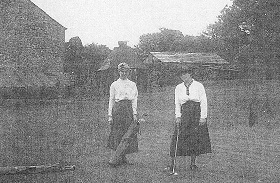
THE LADY MEMBERS AT PLAY ON THE
COURSE IN THE EARLY 1900'S
The 1893/1912 O.S.Maps show that the original stone quarries evident in 1848 had now disappeared or were unused as by now the main building material was brick, very much favoured in the Victorian Era and supplied by various Blackburn brick works. Another significant change in more rural areas of the maps from 1848 is field boundaries which have considerably reduced in number, as fields have been combined to create larger areas due to farm machinery ( initially steam powered) now being used in areas where fields has not been lost to building developments.
In the early 1900's public phone boxes started to make an appearance and, by 1907, the privately owned National Telephone Company had 7800 call boxes around Britain but none were more unusual than the one built at Billinge End at the junction of Preston New Road and Billinge End Road near the tram terminus. So much so, it was mentioned in the National Telephone Companies Journal as being not only picturesque but an excellent revenue earner and educator of the public in the use of the still new telephone system. It also served the police as an unofficial police box and kept the trams running on time. In return for the police keeping an eye on the call box they could keep in touch with the central police station without having to pay the one penny admission fee into the coin operated door mechanism. The phone box was made of rustic wood of an unusual design, had stained glass windows, had a clock housed over the doorway and was owned by Blackburn Corporation. Apparently, the summerhouse style kiosk was part of a legacy from Blackburn Cotton Manufacturer, Eli Heyworth, who died in 1900, and, who was an original director of the National Telephone Company. During the same period, Mrs. J. Rutherford of Preston New Road had an old gentlemen's rustic shelter built on the opposite corner to the telephone box where they could meet and have a natter.
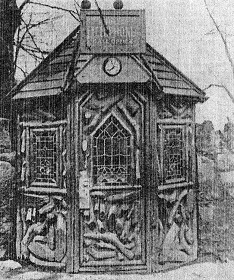
RUSTIC TELEPHONE BOX
BUILT AT BILLINGE END
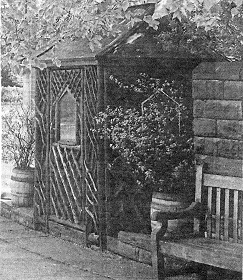
OLD GENTLEMENS SHELTER
AT BILLINGE END
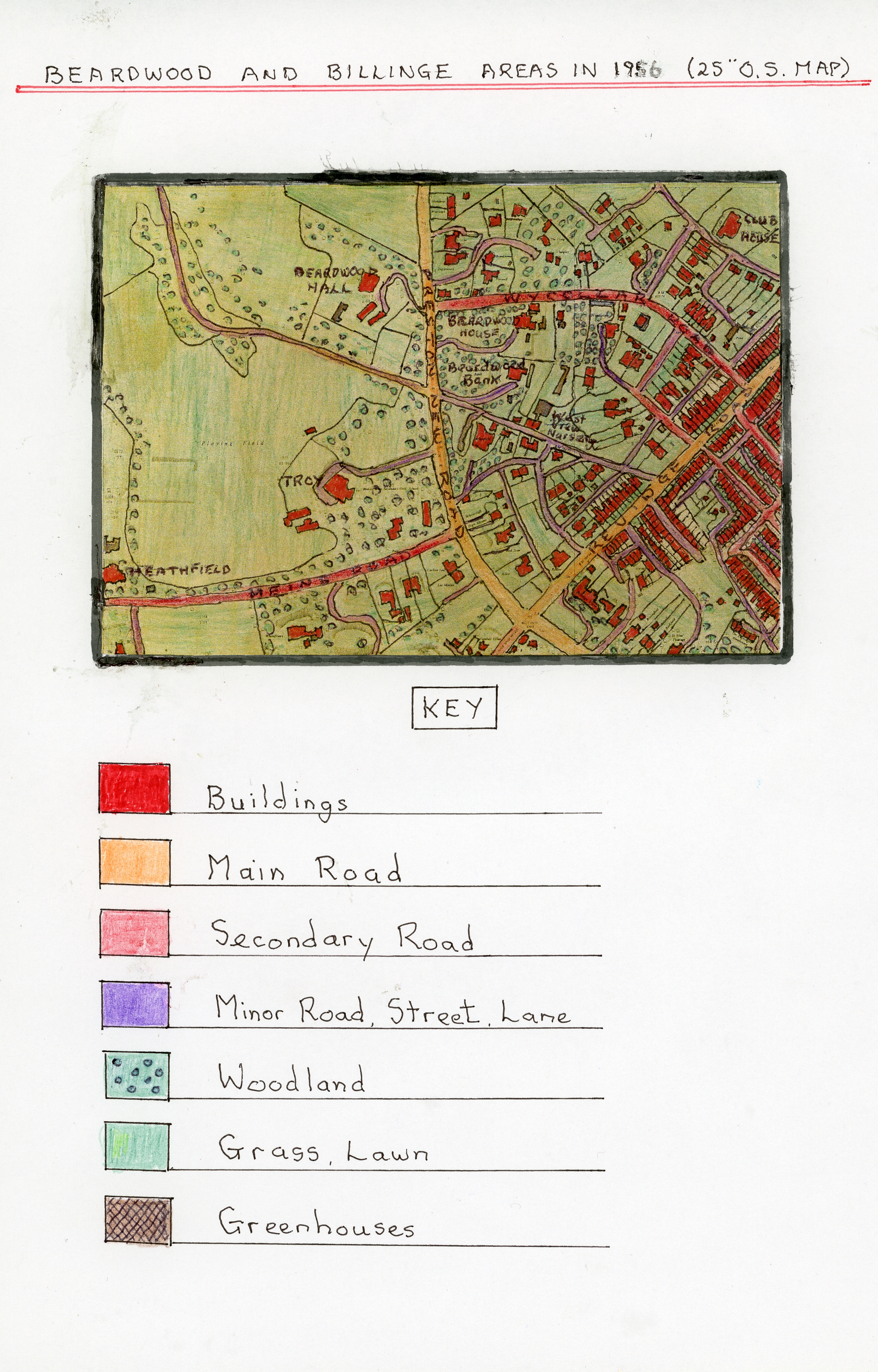
BEARDWOOD AND BILLINGE AREAS
IN 1956 (25 INCH O.S. MAP)
During the past 44 years there had been two World Wars which had a big effect on the growth of all areas including Billinge and Beardwood and new building was fragmented but with growth spurts occurring in the late 1920's and 1930's. The largest growth area of housing in the area was between Beardwood Brow/Golf Club and Wycollar Road and between West View Nurseries and Billinge End infilling previously open grass areas. In the 1920's, as road transport increased and more commuting to work took place there were more vehicles using the roads.
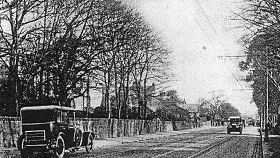
EARLY VIEW OF CARS USING PRESTON NEW ROAD
AT THE WEST END
In the 1920's, a new major road was built off Preston New Road, close to where the old Shackerley Toll House used to stand; this was called Yew Tree Drive which ran into Ramsgreave Drive and then Whitebirk Drive to form a ring road round Blackburn's western areas. This meant Beardwood now had links to other areas and therefore increased traffic.
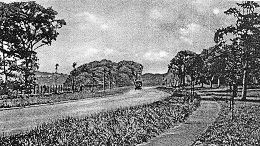
THE NEW YEW TREE DRIVE ROAD WITH AN EARLY VEHICLE
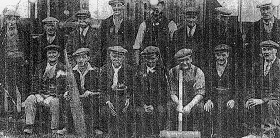
BLACKBURN CORPORATION WORKMEN ON A BREAK
FROM BUILDING THE NEW RING ROAD
Up to the mid 1920's, the Beardwood and Billinge areas had little changed since the early 1900's due to the 1st. World War. By 1929, work began on Wyfordby Avenue, initiated by Elma Yerburgh, Daniel Thwaites' daughter, in order to keep her employees occupied during the 1920's depression; these were new smaller detached houses rather than the earlier grand mansions but still with attractive garden areas. The only exception was the large mansion built to the south of Meins Road on a previously open field area. During the next ten years new developments within the 1930's were underway both along Preston New Road (infilling spaces) on Beardwood Brow, Wycollar Drive, Beardwood Drive, White Road and Ryeburn Avenue. By 1938, most of the houses now along this western area of Preston New Road had been completed. These new houses were either smaller detached or larger semi-detached properties built in brick (see below).
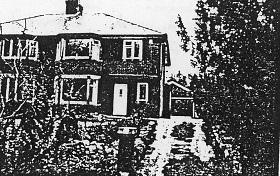
AN EXAMPLE OF THE NEW LARGER SEMI-DETACHED
HOUSES (5, BEARDWOOD DRIVE)
Due to the increased use of traffic on the roads throughout the area, the roads themselves had to be upgraded especially with the outer relief /arterial road (Yew Tree/Ramsgreave Drives) bringing in traffic to this area. As a result, another change required was traffic control first with the police directing traffic at the major road junction at Billinge End (see below) which eventually led to the introduction of Black and White Traffic Lights in 1935, when a control box was built at the side of the road with detector pads set 30 yards on Preston New Road, Revidge Road and Billinge End Road to monitor traffic and set lights in motion.
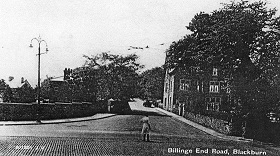
A LONE POLICEMAN CONTROLS TRAFFIC AT BILLINGE END
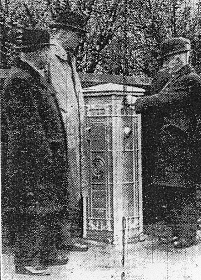
MR C.G. LOOMS (CHIEF CONSTABLE) SWITCHES ON NEW TRAFFIC LIGHT
CONTROLS IN 1935 AT BILLINGE END
Other changes shown on the 1956 map extract are the extended Blackburn Golf Club and the greater use of greenhouses in the area. By now, there is the new West View Nursery based round a large greenhouse probably because the increased properties in the area, all with gardens, meant there was a greater demand for plants and shrubs. Another new development was the re-use of the former TROY MANSION with its 21 acres into a new secondary school, after it was purchased by Blackburn Education Committee in 1929; called Blakey Moor Girls School with some new buildings appearing round it together with playing fields. In 1957, the former BEARDWOOD HALL, now owned by the charity “Our Lady of Compassion" run by St. Augustine Benedictine Sisters whose roots went back to their formation in France in 1824, decided to open a Private Nursing Home and appealed for donations to help develop the home. The new home would have 35 beds for surgical, medical and maternity patients with single, double and 4/5 bedroomed rooms available each priced accordingly. The operating unit was to incorporate the most modern ideas in operating theatre construction including a surgeon's room, an anaesthetic room, a nurse's room and sterilising room with the latest theatre lighting. There was also an X-Ray unit in a new wing by the Operating Unit and a modern labour ward, a nursery and 12 beds in the maternity wing.
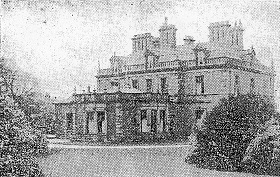
FORMER TROY BUILDING THAT BECAME
BLAKEY MOOR GIRLS SCHOOL
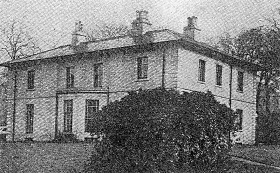
FORMER BEARDWOOD HALL
NOW A NURSING HOME
WESTHOLME SCHOOL- This private school was founded by Miss E.H.Singleton in 1923 as a Pre- School for girls and young boys. Its aim was to provide a liberal and sound education based on Christian principles. As the school grew it was able to move into BILLINGE HOUSE. By 1953, the school had outgrown the accommodation at Billinge House and a separate Senior Girls School was established first at GARTH and later at BEARDWOOD BANK. By 1956, the senior school received Ministry recommendation. In 1953, Coronation Hall was added to Billinge House.
HEATHFIELD
In 1945, this well- built detached house (see earlier photograph) was purchased by Notre Dame Convent Grammar School who required more accommodation for Lower School pupils. It was opened in 1947 and inspected in 1949 by His Majesty's Inspectors. The school accepted boys and girls from the age of 21/2 – 11 years. The school's aim was to promote educational excellence against a background of traditional standards and values.
SACRED HEART CHURCH
As mentioned earlier, this church was originally operated as a Mass Centre from its school to meet the need of Catholicism in the growing population between Dukes brow, Revidge and Preston New Road. However, by the 1930's, it was felt necessary to establish a new church at the corner of Preston New Road and Billinge Avenue. The church was designed by H. Greenhalgh of Bolton and built of brick together with a vicarage and the first Mass in the completed church was held in September 1938 and conducted by Father Carton.
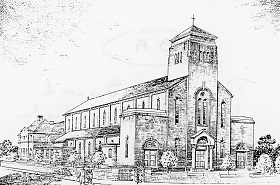
THE NEW SACRED HEART CHURCH
ON PRESTON NEW ROAD
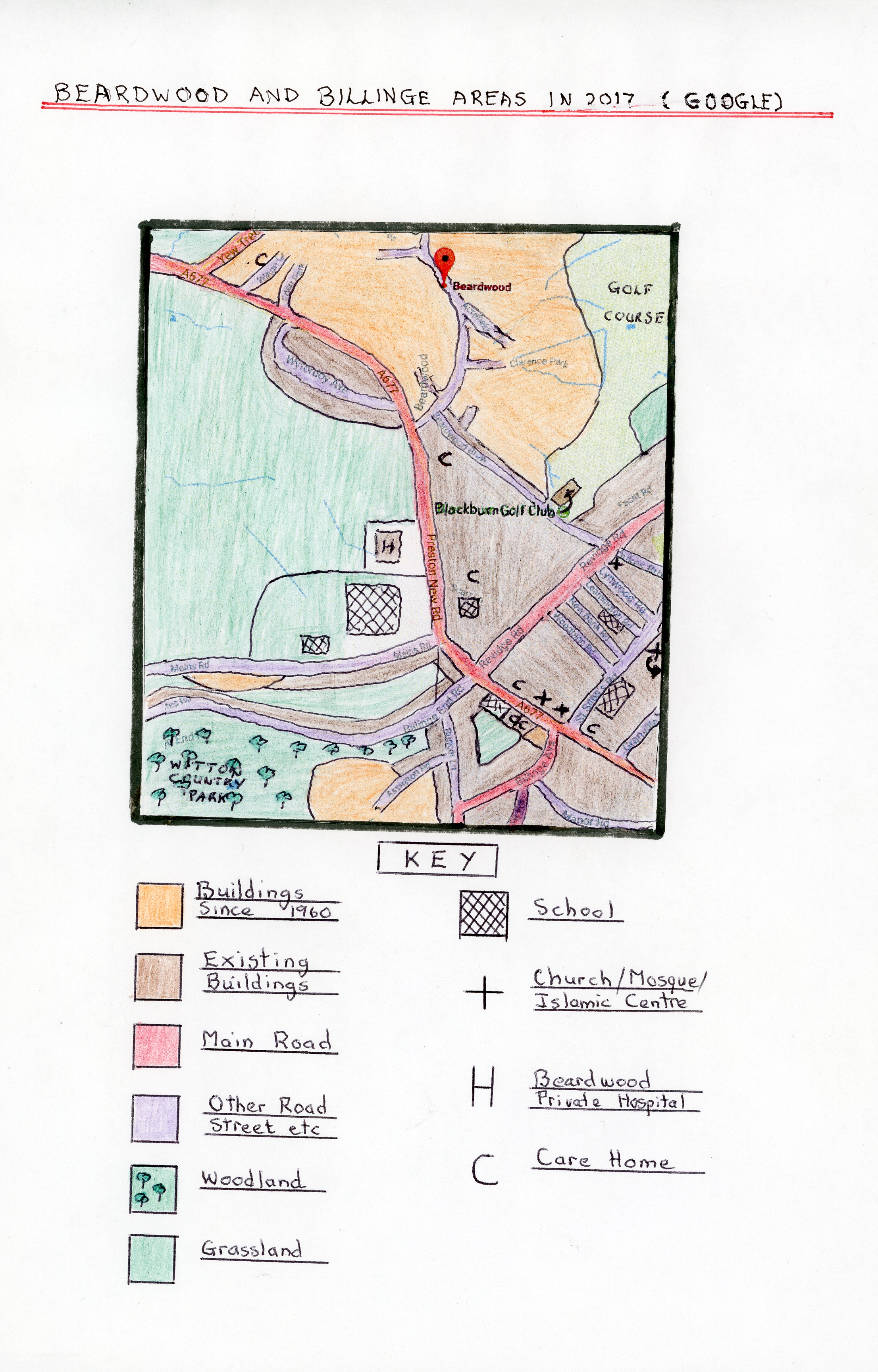
BEARDWOOD AND BILLINGE AREAS IN 2017 (GOOGLE MAP EXTRACT)
NEW HOUSING – In 1980, a plan to build 400 luxury homes on a 72 acres site in Beardwood the most select residential area was revealed. Blackburn Policy and Resources Committee gave the go-ahead for the sale of the council site at Beardwood to McLean North West. In 1981, McLean started building 3-5 bedroomed, high quality houses providing the Council with a £2 million profit. The huge development would not be like typical modern housing estates and had houses ranging from £25000 to £65000 with all having specialist features. This housing development had access via Fergusons Nursery to Preston New Road and links to Lammack and Revidge.
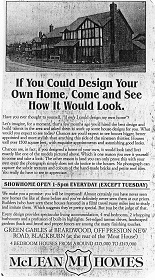
McLEAN HOMES HOUSING ADVERT OF THE EARLY 1980's
Since the 1980's further housing has been added in the same Beardwood area particularly another large estate of varied housing types between Preston New Road and Yew Tree Drive to create one continual urban area. Other private housing developments have seen a small estate built at the top of Billinge Avenue opposite Sacred Heart Church and an estate off Asheton Road, at the top end of Buncer Lane, extending towards Witton Country Park. Other than this, many of the original mansions in the West End Area have been demolished to make way for new housing or had varied extensions to help change the premises to meet modern needs. In the mainly terraced housing areas off Revidge Road many modern upgrades to extend or upgrade external or internal parts of the homes have been encouraged via Local Government Housing Grants or by private funding.
OTHER NEW DEVELOPMENTS
Schools
- BILLINGE GRAMMAR SCHOOL/TAUHEEDAL SCHOOL-- Billinge Grammar School opened in 1966 on the site of the former Blakey Moor Girls School at Troy and later when Comprehensive Education was introduced it became one large new building to accommodate 1200 pupils and offer a wide curriculum with all the relevant facilities in a new school along with new playing fields. In very recent times Billinge School closed and became Tauheedal Girls School for secondary aged pupils using the existing facilities and run by Tauheedal Trust. Even more recently, a new primary school for boys and girls has opened in its grounds namely the Olive Free School.
- WESTHOLME SCHOOL-- has expanded since 1956 and, in 1968, the parents formed a company called Westholme School Ltd to take over and develop the school to 6th Form level. New accommodation at WILMER LODGE at the end of Meins Road was acquired and developed into a Senior Upper School for secondary pupils to 6th Form level and over the years extensive additions have been added including a large performance hall. The site also has extensive sports facilities with playing fields and a swimming pool. The Middle School for primary pupils is based at Beardwood Bank off Preston New Road which has two acres of grounds for both sport and play. The Lower School is sited further up Preston New road next to Springfield and has 2 acres of grounds some of which have been taken up for new extensions for the young pupils.
- ST SILAS SCHOOL-- In 1987, the old school had become worn out therefore had a £300,000 upgrade with money spent on removing asbestos and dry rot which required a new roof and new classroom partitions installing. The school was also re-painted and had additional facilities added including the use of computers.
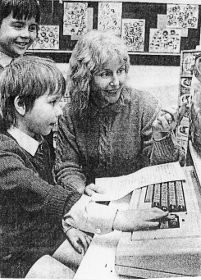
TEACHER AND PUPILS MAKE USE OF THE NEW COMPUTERS
B. CARE HOMES – A number of the larger original houses in the area have now been converted into modern Care homes to meet the growing need for elderly care especially as people are generally living longer and problems such as dementia created problems for extended families or spouses left alone when their partners die. A large new care home was developed in a new building on the former SPRINGFIELD site and, next door, another was created at Springfield Cottage (see below) and, the old Nazareth House, home of the Sisters of Nazareth was demolished and a new care home complex built in its place. The Sisters of Nazareth first came to Blackburn in 1912 and moved to BEARDWOOD CLIFF mansion in 1917.
C. ETHNIC CULTURE – Since the 1990's large sections of the area have been adopted by Asian people especially in the large terraced housing areas but, more recently, in the new housing estates and older larger detached properties, attracted by the larger space available for expanding/extended families. As a consequence, they have required facilities to meet their cultural needs, the largest to date being Tauheedal Girls School but they have also converted existing buildings e.g. the former MAY HOUSE on Preston New Road, the DOG INN on Revidge and LEAMINGTON ROAD BAPTIST CHURCH into Islamic Centres/Mosques.
D. OTHERS – Blackburn Golf Club and course has been upgraded along with a Professional Shop and a practice field developed. Parts of the course previously leased have been bought and a new communication tower built on the Revidge Road edge of the course. The original Cronshaw's garage off Preston New Road has been re-built with modernised facilities with car valeting services and an extensive shop now on offer. As in other areas of Blackburn, extensive vehicle control measures have been installed with speed bumps, yellow lines speed cameras etc. now as standard. A number of older larger properties have been redeveloped and sub-divided into flats or in some locations new buildings created to house flats/ apartments in order to meet the increasing housing needs in the area e.g. at the bottom of Beardwood Brow at the entrance to the new housing estate on the site of the former Fergusons Nursery. The area now offers an attractive if busy entrance for vehicles coming into Blackburn from the Preston area or via Yew Tree Drive from the Ribble Valley areas or the M65 traffic.
Article by Community History Volunteer, Michael Sumner, January 2018.
Back to page 1