
 Loading more
M to R
Men from the Blackburn area commemorated on the Thiepval Memorial
M N O P Q R
Letter M
Maden Harold | Marsden Frank | Marsden James | Mayor Charles
McDonald John William | McGowan Robert | McManus John James | Mercer Alexander | Metcalf Thomas
Samuel Morris
Private Harold Maden
2nd/5th Lancashire Fusiliers, 204060
Harold Maden was born in Burnley to James and Constance. They lived at 13, Smith-street Burnley – James was a wheelwright, Constance a dressmaker and Harold in 1911 aged 18 was a pattern machinist. Harold’s address was 52, Baines-street, Lower Audley at the time of his death. His parents James and Constance Prudence are resident there in 1919. Harold is also commemorated in Burnley. Harold was killed on 11th September 1916 at the Battle of High Wood.
This was a renewal of the offensive finally broke through the area that had proved so difficult since 14th July. Using a small number of tanks for the first time in history the British Army finally captured High Wood and pressed on through Flers and up the Bapaume Road to Courcelette.
Harold is remembered on the Thiepval Memorial to the Missing on the Somme, Pier and Face 3 C and 3 D.
Sergeant Frank Marsden
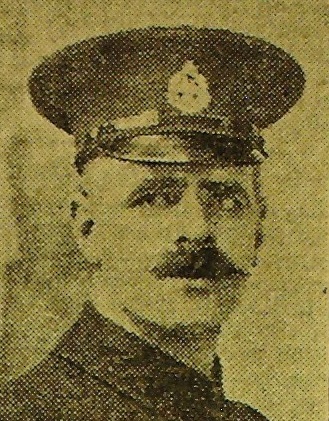
11th East Lancashire Regiment, 15938
Frank Marsden, born 1879, was originally born in Chorley, but moved to Blackburn at an early age. At 18, he joined the East Lancashire Regiment, seeing service in the Boer War before leaving to become a cinematographer operator. He got married to Jane, a tailoress, and they lived at 14 Union-street. Before the war started, he was also a painter.When war broke out, Frank re-enlisted into the 11th Battalion of the East Lancashire Regiment at Blackburn on the 18th of February 1916.
The 11th Battalion were the infamous Accrington Pals, and were shipped to France to fight in the Battle of the Somme. They were positioned at Serre, and at 7.20 a.m. on the 1st of July 1916, the soldiers of the first wave left their trenches, passed through the British wire and lay down in No Man's Land to await the end of the bombardment. This ceased at 7.30 a.m., and in front of Serre men of the 12th York and Lancaster (Sheffield City Battalion) and the 11th East Lancashire's (Accrington Pals) who were the first wave stood up and tried to cross No Man's Land. Just to the south, the attackers were of the 15th West Yorks (Leeds Pals) and the 16th West Yorks (1st Bradford Pals).
The Sheffield City battalion men had laid white tapes which led to gaps in the German wire the night before, but when they attacked these were gone. The attackers were mown down by machine gun fire, and there was an almost total lack of success here, although one company of the Accrington Pals did reach Serre, but were lost. Reinforcements, men of the 13th and 14th York &Lancaster's (the 1st and 2nd Barnsley Pals) were sent in, but were also stopped with no success, and the attack here was then suspended, with no gains made whatsoever.
Frank Marsden was killed in the night following this battle, and is remembered on the Thiepval Memorial to the Missing on the Somme, Pier and Face 6 C. He has no known grave.
Private James Marsden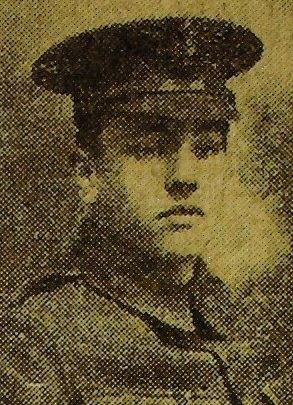
2nd South Lancashire Regiment, 27162
James Marsden volunteered for service and went through Attestation on 1st Dec 1914 where he is described as a bachelor and working as stationer, having presumably having joined his father. His designated Battalion was a regular unit and James would have joined them in France in March 1915.
James served in the Somme battles and he will have had an involvement in incidents referred to in the Battalion diaries including the fighting on 5th July in which the Battalion lost 251 men killed, this would represent about a quarter on the Battalions full strength.It is likely that he was killed in a German artillery attack on 27th August 1916 when the Battalion was not serving in the line.
James has no known grave and is remembered on the Thiepval Memorial Pier and Face 7 A and 7 B.
Private Charles Mayor
6th Border Regiment, 6559
Charles Mayor was born in Southport and the brother of Richard Mayor of 102, Ingham-street, Blackburn (NB I’ve checked the 1911 census and there is a record for Richard Mayor who is Southport-born and has a 9 year old named after brother Charles. Richard is a railway labourer.) He enlisted in Blackburn. His last battle was at Thiepval where he lost his life.
The preliminary bombardment began on 23rd September in poor visibility and mist rose morning and evening for the next few days. II Corps fired 60,000 field artillery and 45,000 heavy artillery rounds. On the afternoon of 24th September a detachment of the Special Brigade fired 500 lacrymatory (gas) shells into Thiepval, which silenced German trench mortars by 5:00p.m. A preliminary operation to capture Mouquet Farm began on the evening of 24th September, when a company from the 11th Division reached the farm, before a German bombardment and a bombing attack covered by accurate machine-gun fire, forced the British back. The creeping barrage began prompt at 12:35p.m. on 26th September and the infantry began their advance.
On the right flank, the Canadian Corps attacked with the 6th Brigade of the 2nd Canadian Division on the right, as flank guard and the 1st Canadian Division on the left. At 12:35p.m., the 6th Brigade advanced behind a creeping barrage with three battalions and two attached tanks, though a German counter-barrage kept the right-hand battalion in its trenches. Both tanks were lost early but the 29th Battalion in the centre reached the German front line in ten minutes, while the left battalion was stopped by machine-gun fire from ahead and the left flank, except for a few troops on the right. At 10:50p.m. the objective was captured from Twenty Road, westwards to the east end of Miraumont Road and held against two counter-attacks during the night. The 1st Canadian Division attacked with two brigades. The right brigade with two battalions advanced 400 yards (370 m) to Sudbury Trench and resumed the advance at 1:00 p.m., reaching Kenora Trench on the right which ran north-west back to Regina/Stuff Trench by 2:40p.m.
The battalion on the left had been delayed and German bombers counter-attacked the flank and were repulsed. The left battalion had formed up in no man's land, to escape the German counter-barrage but had a harder fight to reach their objectives, taking until mid-afternoon to reach the second objective, which was just short of the ridge crest, linking with the left brigade later. The left brigade advanced with two reinforced battalions, which received machine-gun fire from the left flank but reached Zollern Trench, taking the western part after a delay.
At 1:00p.m., the advance resumed towards Hessian Trench, which was taken easily. Touch was gained with the right brigade but troops from the 11th Division on the left were not found. The Canadians bombed down Zollern Trench and built a barricade, as machine-gun fire forced a slight withdrawal from the left part of Hessian Trench, a defensive flank being thrown back from Hessian to Zollern Trench and dug in by 10:30p.m. West of the Canadian Corps, II Corps attacked with the 11th and 18th divisions. The 11th Division advanced with two brigades. The 34th Brigade on the right attacked with two battalions; a bombing party attacking Mouquet Farm just before zero and then guarding the dug-out exits.
Both battalions got to the German support trench (first objective) although one of the supporting battalions was caught by the German counter-barrage at the British front-line. The right-hand battalion became bogged down fighting through Zollern Redoubt and most of the moppers-up were killed. About 50 survivors dug in on the right facing Zollern Trench, while others sheltered to the west of the redoubt. The left battalion was caught by machine-gun fire from Zollern Redoubt and Midway Line, which ran from Mouquet Farm to Schwaben Redoubt, North of Thiepval.
A few troops reached Zollern Trench and the remnants of the support battalion advanced to reinforce them. The battle for Mouquet Farm continued; two attached tanks ditched nearby but the guns from one were removed and the crew carried on. Reinforcements were sent forward (including a pioneer battalion) and at 5:30 p.m. the last 56 Germans surrendered, after being attacked with smoke bombs. The 33rd Brigade on the left attacked from Nab Valley with two battalions, reached Joseph Trench at 12:45 p.m. and advanced to Schwaben Trench between Mouquet Farm and the east end of Thiepval where they dug in. Zollern Trench was reached by 1:30 p.m. and Hessian Trench by 4:00 p.m. except for the 250 yards (230 m) on the right. Touch was gained on the left with the 18th Division at Zollern Trench and Midway Line was mopped up by a reserve battalion which also reinforced Hessian Trench, repelling a German counter-attack on the right. The 18th Division attacked with two battalions of the 53rd Brigade on the right from Nab Valley with a battalion following-on. The plan to avoid the German counter-barrage worked and the first objective, at Schwaben Trench on the right and the Pozières–St.b Pierre Divion road on the left, was reached in 12 minutes.
Two tanks advanced in support but quickly ditched as the battalions advanced again, reaching Zollern Trench by 1:15p.m. against slight resistance, before being stopped by German machine-gun fire after another 250 yards (230 m) and then falling back to Zollern Trench at dark, when an attempt to bomb forward was made. The 54th Brigade attacked on a narrow 300 yards (270 m) front, with one battalion going through the village, a company advancing along the original German front line, with the other two battalions in support and reserve following on. The advanced troops moved forward before zero hour to avoid the German artillery and two tanks advanced from Caterpillar Copse. The advance through Thiepval went slowly, being held up by machine-gun fire from the Château ruins, until a tank came up and suppressed the German machine-guns, before ditching a short time later. The infantry lost the barrage but fought on through the village until by 2:30p.m., all but the north-west corner was captured.
27th September:
After a German artillery bombardment on the 6th Brigade, 2nd Canadian Division all night and the morning of 27th September, patrols found that the Germans had withdrawn and the brigade advanced to the German practice trenches up Dyke Road, running north-east from Courcelette and occupied the rest of the first objective. The 1st Canadian Division was counter-attacked at Kenora Trench in the early hours and was forced back until an attack re-occupied the trench. Around 6:00 p.m. a German bombing attack nearly retook the trench, until repulsed at the last moment; later the Canadians withdrew to the support trench and then made a counter-attack at 2:00a.m. which failed. [16] In the II Corps area, the 11th Division found the Zollern Redoubt empty.
Zollern Trench was occupied westwards to the junction with Midway Line and eastwards to link with the Canadians. An advance due at 10:00a.m. was stopped by machine-gun fire from Stuff Redoubt and Hessian Trench. The 32nd Brigade in reserve was ordered to continue the attack at 3:00p.m.; the attack was postponed but one of the two battalions attacked and reached the south side of Stuff Redoubt. An hour later Hessian Trench to the west was captured and at 9:00p.m. a battalion began bombing forward from Zollern Redoubt to the north-west. The left brigade attacked eastwards during the morning, linked with the 34th Brigade and at 3:00p.m., the rest of Hessian Trench was occupied. [17] The 53rd Brigade on the right of the 18th Division consolidated Zollern Trench, then took part of Bulgaren Trench behind a Stokes mortar barrage. Unit reliefs were completed quickly in the 54th Brigade on the left and the attack through Thiepval resumed at 5:45a.m., in company with a 146th Brigade battalion of the 49th Division, in the original British front line west of Thiepval. All of Thiepval had been captured by 11:00a.m. and touch gained with the 53rd Brigade, 146th Brigade being relieved by a 25th Division brigade overnight.
On the 28th September, a cavalry patrol moved forward on the right of the 6th Brigade, 2nd Canadian Division at dawn but was quickly stopped by machine-gun fire. The brigade dug in facing north-east beyond the German practice trenches and a battalion advanced North up Courcelette Trench, meeting much German machine-gun fire from Regina Trench. Two more attempts were made in the afternoon and another in the evening at 8:30p.m. which failed. During the night, the four Canadian brigades engaged were relieved by the 4th and 8th brigades.
In II Corps the 32nd Brigade took over on the right of the 11th Division, ready to take Stuff Redoubt and Hessian Trench at 6:00p.m. but the attack was delayed. A bombing attack into the rest of Stuff Redoubt gained ground but this was later abandoned. The 18th Division was to attack Schwaben Redoubt at 1:00p.m., the right brigade along Zollern Trench to Midway Line, while an extra battalion attacked the redoubt and a battalion from the 54th Brigade attacked on the left, down to the original front line. Bulgar Trench was taken quickly but the Germans in Midway Line held out longer. By 2:30p.m., the east end of Schwaben Redoubt was approached and touch was gained on the right with the 11th Division. T
roops later reached the South-West corner of the redoubt and by 5:00p.m., the south side of the redoubt had been captured and linked with the troops in Midway Line to the right, as the left gained touch with mixed groups from the 54th Brigade. The west of the redoubt was taken by 8:00p.m. and patrols from the 49th Division occupied parts of the German front line, then met the troops on the left of the 54th Brigade. Grenade skirmishes occurred intermittently during the night and a battalion from the 55th Brigade took over the front of the 54th Brigade.
On 29th September, the 8th Brigade from the 3rd Canadian Division attacked at noon, with the 11th Division on the left and reached Hessian Trench in places, which were lost and then regained during heavy German shelling and counter-attacks. In the II Corps area, the 11th Division attacked Stuff Redoubt and Hessian Trench to the right, most of which was captured and touch gained with the Canadians, while the attack on the redoubt failed. After battalion reliefs in the 18th Division, a bombing fight began around 7:30a.m. along the western edge of Schwaben Redoubt, which lasted all day; the ground gained could not be held and the battalion later relieved troops in the captured German front system.
On 30th September, the 11th Division resumed the attack on Stuff Redoubt at 4:00p.m., with bombing parties advancing west along Hessian Trench and along Zollern Trench, which by nightfall had taken the southern half of the redoubt. Canadian bombers assisted the capture of Hessian Trench and the division was relieved by the 25th Division overnight. A dawn counter-attack drove the 18th Division from the South and West sides of Schwaben Redoubt; the south side was recaptured and the north side of the redoubt was taken at 4:00p.m. Another German attack at 9:00p.m. retook the north face, up to the entrance to Stuff Trench on the right. Charles Mayor was killed on the 27th of September 1916.
He commemorated on the Thiepval Memorial, Pier and face 6 A and 7 C.
Private John William McDonald
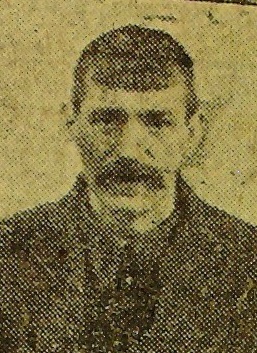
2nd Lancashire Fusiliers, 5225
Private John William Mcdonald of the 2nd Lancashire Fusiliers, son of James Mcdonald and Mary Elizabeth Mcdonald (nee McCann) of 21 Syke-street, Blackburn Lancashire, was killed on 23rd October 1916 at the Battle of Le Transloy, the final offensive mounted by the British Fourth Army during the 1916 Battle of the Somme.
Before enlisting, John, who was born in July 1881, worked at Livesey’s Green Bank Foundry. He married Bridget Mulcrone in 1906 and had a son James in 1912.
John had enlisted into the 2nd Battalion Lancashire Fusiliers in 1915, and joined them in France in early 1916. The Battalion was part of 4th Division, and saw action in Flanders before heading to the Somme region, where John took part in the Battle of Albert in July 1916. On October 1st, the Battle of Le Transloy began, with the Third and Fourth Armies seeking to seize the German Transloy Line, which ran from Le Transloy to Le Sars.
Poor weather caused the battlefield to become very muddy and slowed British progress, but they were still able to capture Le Sars on October 7th. The British suffered many casualties and made no other progress.
Private John William Mcdonald is remembered on the Thiepval Memorial to the Missing on the Somme Pier and Face 3 C and 3 D, and has no known grave.
Private Robert McGowan
2nd/5th Battalion Lancashire Fusiliers, 3944 (7586)
Born in Blackburn, Robert left a widow, Agnes and two children, Robert and Terence.
Died 12th August, 1916 and has no known grave but Robert is commemorated at Thiepval, Panel 3D.
Private John James Mcmanus
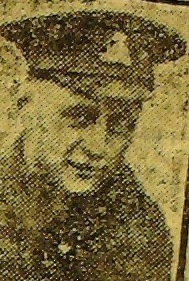
16th Lancashire Fusiliers, 33905
Private John James Mcmanus of the 16th Lancashire Fusiliers, 5 Smith-street, Blackburn Lancashire, was killed on 23rd November 1916, a few days after the Battle of Ancre. John, who was born in 1891, previously worked as a cab driver at Messrs Eastwoods before the war, and was married.John enlisted into the 16th Battalion Lancashire Fusiliers, which were part of 32nd Division, in 1915. The Battalion had been formed by Montague Barlow MP to become the 2nd Salford Pals.
The 32nd Division was to attack Munich and Frankfort trenches, between Leave Avenue and Lager Alley. On the right the 97th Brigade advanced with all four battalions at 6:10 a.m., through sleet and the right-hand battalion was soon stopped by machine-gun fire. The right flank of the centre right battalion was also stopped but further left the advance reached Munich and Frankfort trenches, where the British were cut off and captured.
Troops on the left were stopped at a strong-point in Munich Trench and held on in no-man's-land until dark. Further left the junction of Lager Alley was captured and down the hill, touch was gained with the 14th Brigade. Casualties in the 32nd Division from 18th–24th November, were 2,524, more than 50 percent being "missing".
Private John James Mcmanus is remembered on the Thiepval Memorial to the Missing on the Somme, Pier and Face 3 C and 3 D. He has no known grave.
Private Alexander Mercer
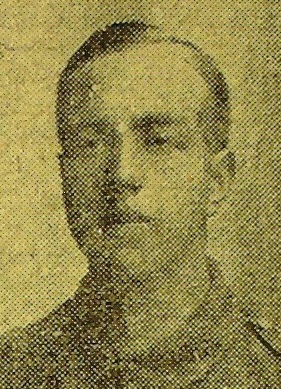
7th East Lancashire Regiment, 24848
Alexander Mercer was born in 1895 in Blackburn. Son of Alexander and Emma, Alex was one of three, and would begin working as a Bottler with his father. Before he enlisted on 29th February 1916, he was working at Hodgson and Taylor’s Dyeworks.
Alexander joined the 7th Battalion East Lancashire Regiment, and was not in training for very long, as he was wounded on July 6th at the Battle of Albert, and again on August 27th, at the Battle of Pozieres Ridge.
By October, the Battles had moved northwards, towards the Ancreriver. As a necessary preliminary to the Reserve Army’s part in Haig’s projected large-scale autumn offensive, General Gough sought to secure the whole of the Thiepval Ridge, and thereby obtain observation over the upper Ancre. Canadian troops returning from the trenches pass pack mules loaded with ammunition on a muddy road to the forward area. This necessitated the capture, in full, of those intricate defensive positions which had repeatedly blocked the way to the vital high ground during the September fighting: Schwaben Redoubt, Stuff Redoubt and Regina trench.
Between 1st and 8th October the Canadian Corps assaults on Regina Trench witnessed brutal fighting, heavy casualties and temporary limited occupation of the objective. Meanwhile, in a confusing succession of attacks, 18th and 39th Divisions struggled unremittingly to clear the Schwaben Redoubt of its last defenders. Stuff Redoubt was stormed just after midday on 9th October, and following vicious actions Schwaben Redoubt finally succumbed to the 39th Division in the afternoon of 14th October. The weather and appalling battlefield conditions delayed further operations; it was not until 21st October that renewed efforts against Regina trench (and the adjoining Stuff trench) were possible. II Corps infantry attacked on a 5,000 yard front at 12.06pm, well supported by artillery, and after sharp fighting took all their objectives in just over 30 minutes. The whole of the crest of the ridge was now in British hands.
It was here, at the Battle of the Ancre Heights, that Alexander was killed, on 2nd October 1916. He has no known grave, but is remembered on the Thiepval Memorial to the Missing on the Somme, Pier and Face 6 C.
He left behind 2 pounds, 11 shillings and 7 pence to his father, and is also remembered on the Little Harwood Memorial.
Rifleman Thomas Metcalf
1st Kings Royal Rifle Corps, R/7903
Rifleman Thomas Metcalf of the 1st Kings Royal Rifle Corps, son of Isiah and Maria Metcalf of 139 Dill Hall Lane, Blackburn Lancashire, was killed on 27th July1916 at the Battle of Delville Wood on the Somme.
The objective of the Battle of Delville Wood was to attack the wood and to hold at all costs, establishing a line on the North, North East and South East faces of the wood, 150 yards from the edges and to establish and consolidate a line on Princes Street. The attack consisted of 23rd Royal Fusiliers on the left or West half of the wood and 1st Battalion Kings Royal Rifle Corps on the right or East of the wood.
Orders to the 1st Kings Royal Rifle Corps were on the barrage lift at 7.10am to advance and take Princes Street line. The German trench was taken with few casualties and consolidated but was full of wounded prisoners and dead bodies and three machine guns smashed up by shell fire.
Other objectives in battle consisted of a mixture of attacking and counter attacking from both sides with heavy losses due to bomb attacks from the Germans which continued through till dark, making reinforcing difficult. By the end of the day, Deville Wood had been captured but with heavy losses.
Rifleman Thomas Metcalf is remembered on the Thiepval Memorial to the Missing on the Somme, Pier and Face 13 A and 13 B and has no known grave.
*The CWGC spells his name MetCalfe
Sergeant James Samuel Morris
9th Loyal North Lancashire Regiment, 15785
Not a great deal is known about James Samuel Morris, who was born in 1877 in Blackburn. Much of his life seems to have been spent as a Cotton weaver, and was married to a girl called Teresa. They lived with Elizabeth, also a cotton weaver.
In September 1914, James enlists with the 9th Battalion Loyal North Lancashire Regiment. This battalion was formed at Preston as part of K3 and came under command of 74th Brigade in 25th Division. It moved to billets in Christchurch in December 1914 and Southbourne in January 1915. It then went on in May 1915 to Romsey and then Aldershot next month.
James shipped out with the Battalion to France on 24th September 1915. From here on, the Battalion would gain experience in Trench warfare, and fended off a German attack at Vimy Ridge in May 1916.
On 5th July, 74th Brigade was detached for duty with 12th (Eastern) Division at La Boisselle, where it took part in an attack on Ovillers. Divisional HQ moved to Henencourt on 8th July and the following day, 25th Division took over the front held by 12th (Eastern) Division.
It was in this action, on Ovillers, that James was killed, on 7th July 1916. He has no known grave, but is remembered at Elim Hall and on the Thiepval Memorial to the Missing on the Somme, Pier and Face 11 A.
Letter N
Nield Alfred | Noone Thomas | Norman Harry | Nuttall Wilson
Lance Corporal Alfred Nield
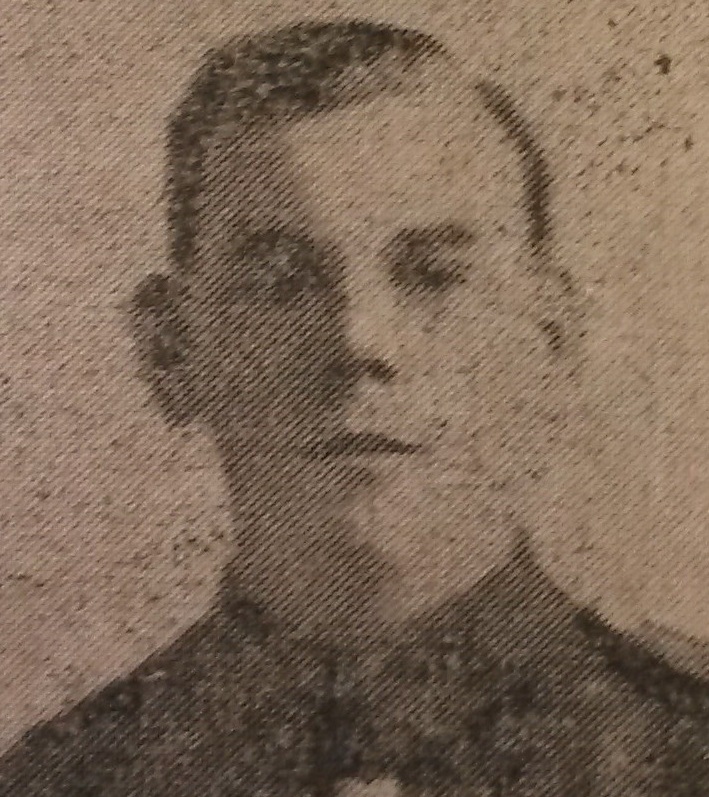
1st Royal Welsh Fusiliers, 4984
Lance Corporal Alfred Nield of the 1st Royal Welsh Fusiliers, 94 Francis-street, Blackburn Lancashire, was killed on 3rd September 1916 at the Battle of Guillemont on the Somme. Before the war, Alfred worked as a Brass Finisher before enlisting on 2nd November 1914. Albert lived with his Aunty Sarah and Uncle Albert Nield, who worked as a Carpenter.
Launched at midday on 3rd September 1916 under the protection of a creeping barrage (of 25 yards per minute) as part of a wider attack, the Battle of Guillemont was primarily intended to distract German attention away from the Romanian front where the Romanians were coming under increasing pressure.
Assembly trenches were dug north of Guillemont Station to aid the northern attack, and at 6 a.m. a bombardment commenced. The infantry attacked here at noon. The attack also employed 'push-pipes', and liquid fire, innovations which were also employed by the British elsewhere on the Somme battlefields in 1916. The attack went well, although there were casualties, and the second objective (the eastern side of the village) was taken by 1.30 p.m., although there was fierce hand to hand fighting within the village of Guillemont itself.From 23rd August – 7th September
the 7th Division lost 3,800 men.
Lance Corporal Alfred Nield is remembered on the Thiepval Memorial to the Missing on the Somme Pier and Face 4 A. He has no known grave
Private Thomas Noone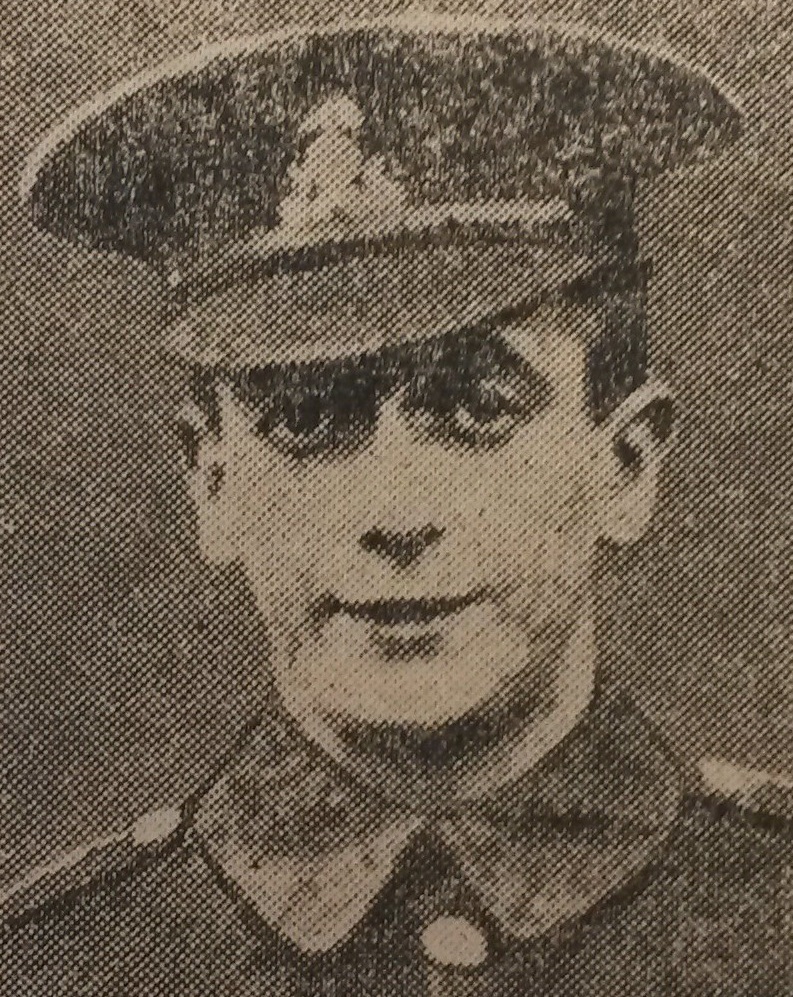 20th Lancashire Fusiliers, 29041
Private Thomas Noone was the eldest son of Martin and Margaret Noone. His younger siblings were brothers Martin Junior. and John and Sister Mary Anne. His uncle Patrick Noone was also reported to be living with the family in 1911. Before Thomas enlisted in the army he was by trade a weaver’s tenter.
Thomas joined the Lancashire Fusiliers 20th Battalion. His service number was 29041. The 20th Service Battalion was originally formed as a bantam unit (which was a unit for men who were under the regulation height but otherwise fit for duty) at Salford by Mr. Montague Barlow M.P. and the Salford Brigade Committee.
In July 1915, the Battalion moved to Conway, North Wales and then to Cholderton, Salisbury and joined the 104th Brigade of the Bantam Battalion. By 30th January 1916 they had landed in France.
The Battalion would fight its first battle on the Somme at The Battle of Bazentin Ridge, which resulted in severe casualties. Following this, the Battalion fought for Arrow Head Copse in mid July 1916.
The 35th Division was to attack at 5:00a.m. on 20th July, to take trenches between Maltz Horn Farm and Arrow Head Copse, preliminary to the general attack on Guillemont and on the rest of the German second position, after a thirty-minute bombardment to cover a French attack on the right, which was then cancelled. Two companies of the 105th Brigade, attacked against massed machine-gun and artillery-fire and were shelled out of the few parts of the German front line they reached; an attack at 11:35 a.m. by a battalion of the 104th Brigade also failed. It was during this attack that Thomas Noone was killed.
Thomas Noone’s date of death is recorded as the 24th July 1916 and he was 21 years old. He is remembered on the Thiepval Memorial, Pier and Face 3 C and 3 D and at St. Joseph's in Blackburn.
Rifleman Harry Norman
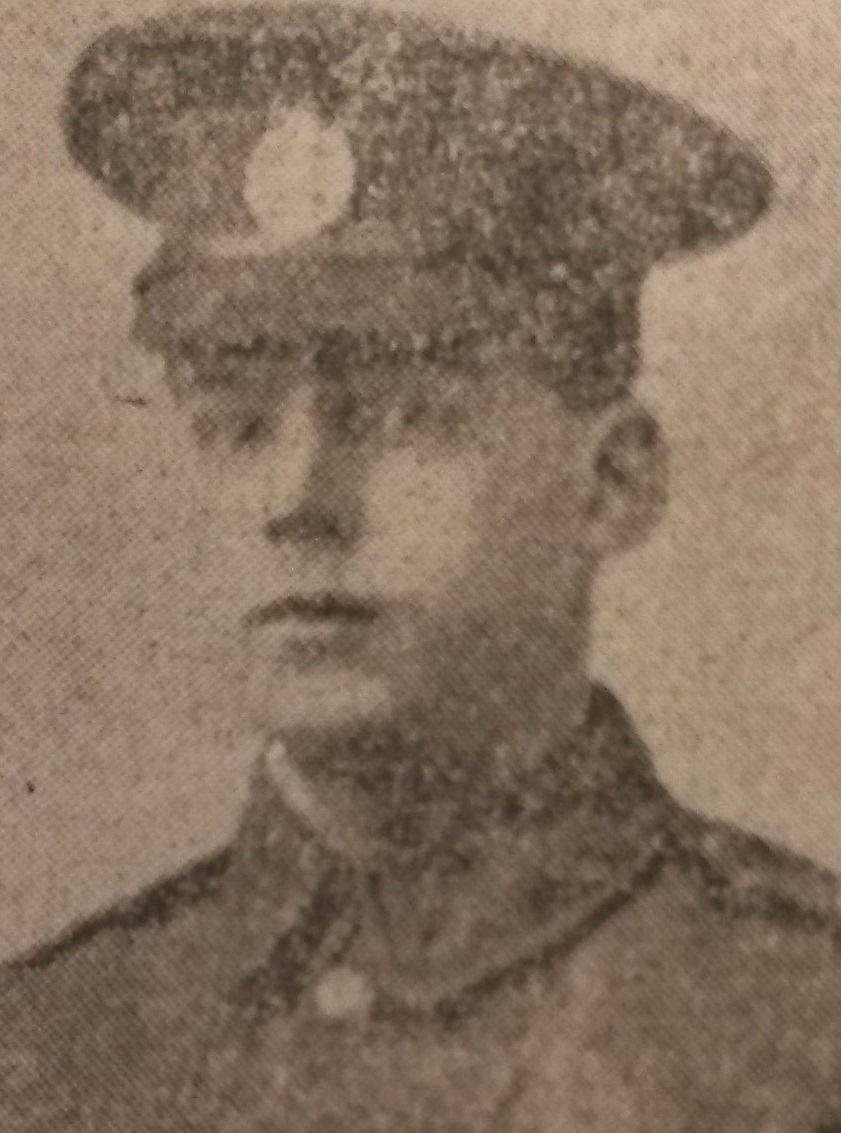
11th Rifle Brigade, S/7911
Harry Norman, born 1887, was a young church-going Lancashire lad, from Lower Darwen who lived with his parents, Thomas and Ellen, and his four brothers. The family were all weavers, including Harry.
He joined the war effort as a Rifleman in the Rifle Brigade, in the 11th Battalion January 12th, 1915. After initial training in the Winchester area the Battalion moved to Blackdown, and then in February 1915, to Witley and then in April 1915 to Hamilton Camp, near Stonehenge for final training.
They moved to France on the 21st of July 1915, landing at Boulogne, the Division concentrating in the Saint-Omer area. In 1916, they were in action at the Battle of Mount Sorrel, in which the Division, along with the Canadians, recaptured the heights.
They were in action on the Somme in The Battle of Delville Wood, The Battle of Guillemont, The Battle of Flers-Courcelette, The Battle of Morval and The Battle of Le Transloy.
Harry Norman lost his life on the third of September in 1916 and judging from hisBattalions movements, he was killed in the Battle of Guillemont.
Harry is remembered on the Thiepval Memorial, Pier and Face 16 B and 16 C and on the St. James and Lower Darwen Congregational Church.
Lance Corporal Wilson Nuttall
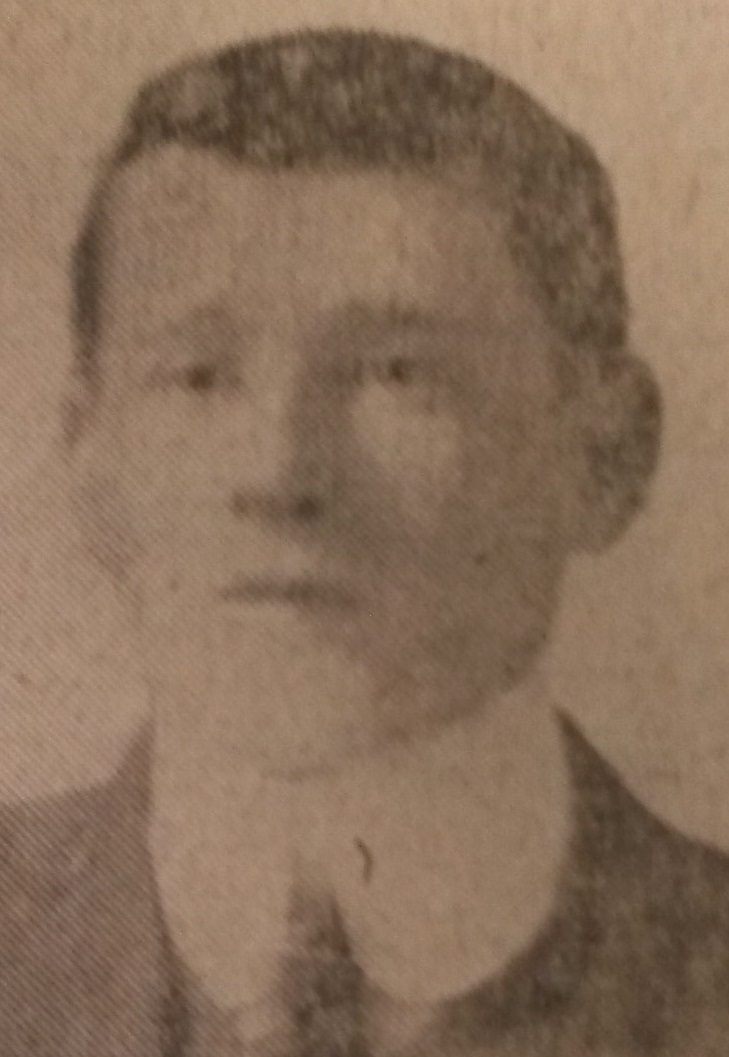
8th King’s Own Yorkshire Light Infantry, 3/2277
Wilson Nuttall, born 1887, was the son of Sarah Jane Nuttall of 114, Daisy-street, Blackburn and the late John Thomas Nuttall. His father had died when Wilson was quite young. Wilson would go on to become a core maker at Green Bank Foundry. He then married Ellen and, before the war started, he had a son.
He enlisted in September 1914 at Blackburn into the King’s own Yorkshire light infantry in the 8th Battalion. His service number was 3/2277. In August 1915, his Battalion mobilised for war and landed in Boulogne, France.
They were in action in The Battle of Albert including the capture of Contalmaison. In this action, the Battalion was tasked with capturing the left flank of the village. But owing to heavy casualties from shelling and machine-gun fire, the Battalion were forced to withdraw. It was in this action that Wilson was killed.
He is remembered on the Thiepval Memorial, Pier and Face 11 C and 12 A, and Holy Trinity and St. Michael in Blackburn.
Letter O
O'conner Edward | Ogden Gillet Nicholas | Ogden William H | Ormerod John
Osbaldeston, Robert | Owen Robert
Private Edward O’Connor
8th East Lancashire Regiment, 16128
Edward O’Connor was born in Blackburn and his parents lived at 38 Mill Hill-street, Blackburn. By the 1911 Census he is identified as living at 93 Lord-street, Blackpool. He was married to Amelia Francis O’Connor who was also born in Blackburn. They had a son called John Mason O’Connor who was also born in Blackburn in 1910.
Edward O’Connor appears to have volunteered early in the war and possibly he was attracted to the East Lancashire Regiment as it has close links to Blackburn where he came from.
It is likely that Edward embarked with the 8th Battalion landing on 1st August 1915. He was with the Battalion during periods in the front line and during the training preparations for the Somme Offensive.
Battalion diaries describe this period in the front line in the winter of 1915 where the water in the trenches was waist deep. In April 1916 they were clearly preparing for an offensive and engaged in training which included advancing in Artillery Formations and Bombing attacks.
Edward was not directly involved in the opening day of the Battle of the Somme but moved forward on 6th July. The 8th Battalion was involved in an attack on Pozieres on 15th July.
At 8a.m. July 15th, the battalion received orders to attack Pozieres. The 112th Brigade was, after an hour's preliminary bombardment, to advance and capture the village and dig themselves in on the other side.
At 9.20a.m. the battalion, now much below strength, owing to their losses of the previous few days, advanced with "A" and "B" Companies leading and "C" and "D" Companies in support; the right flank kept to the Contalmaison-Pozieres road. The distance to the objective was roughly 1,200 yards, over broken ground.
Assembling on the La Boisselle-Contalmaison road, the companies advanced in artillery formation as far as the low ground behind Contalmaison Wood, where they deployed. Then breasting the rise they came under heavy machine-gun and shell fire, before which men dropped like ninepins, and the companies rapidly dwindled away until the remnant, reinforced by other units of the brigade, managed to dig in around the chalk-pit.
Elated by their success, a large number of the enemy began to emerge from the village, but they were driven back by machine-gun fire. The occupants of the chalk-pit were now suffering severely from the enemy's gun fire; however, they hung on until 5p.m., when orders came for another advance at 6p.m.
Pozieres again was bombarded between 5 and 6p.m. and at 6p.m. the second assault began, only to meet a devastating fire. The hedges surrounding the village were reached in some places, but they were thick with uncut wire, and the few who managed to get as far as them were rapidly shot down. What remained of the battalion dug themselves in half-way across. Lieutenant MacQueen was killed; 8 officers, including Bell, Peake, Youlle, Holland, Humphreys, Briggs, Piggott, were wounded; of the other ranks 56 were killed, 276 wounded and 33 missing. Edward was one of the 56 killed.
An entry can be found in the Army Register of Soldiers Effects 1901 to 1921. He left his effects to his wife Amelia. Edward O’Connor has no known grave, but is remembered on the Thiepval Memorial to the Missing on the Somme, Pier and Face 6 C.
Private Nicholas Gillet Ogden
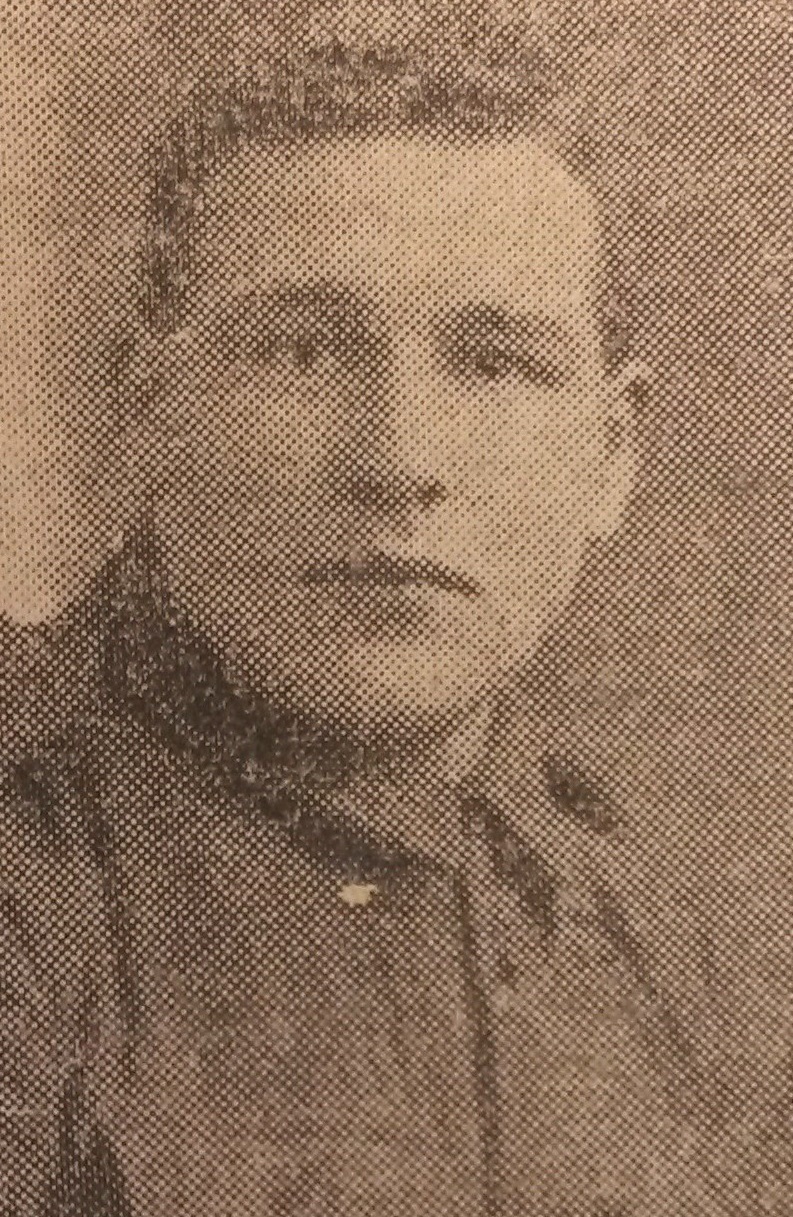
28th Company Machine Gun Corps, 10584
Nicholas Ogden, born 1895, was the youngest son of his family, with three brothers born to William and Isabella Ogden. Like most Blackburn families, the household worked as weavers, although by 1914 Nicholas was a Lapper up warehouseman at Messrs. Dugdale’s Griffin Mills.
Nicholas started off as a Private in the Kings Royal Rifle) Corps with the service number 7768 and then joined the Machine Gun Corps in the 28th company with the new service number of 10584 as a private.
Nicholas Ogden’s company formed from the Machine Gun Sections of 28th Brigade, 9th (Scottish) Division on the 3rd of January 1916. After initial successes at the Battle of Albert, the Division was charged with the capture of Longueval, along with the South Africans at Delville Wood.
In this horrific action, the South Africans and remnants of the 9th Division held the wood for 6 days. 3144 men entered the wood, 144 would leave. It was in this action that Nicholas Ogden died, on the 16th of July 1916. He was 21 years of age.
Nicholas Ogden can be remembered at the Thiepval cemetery at Pier & Face 5 C and 12 C.
Private William H Ogden
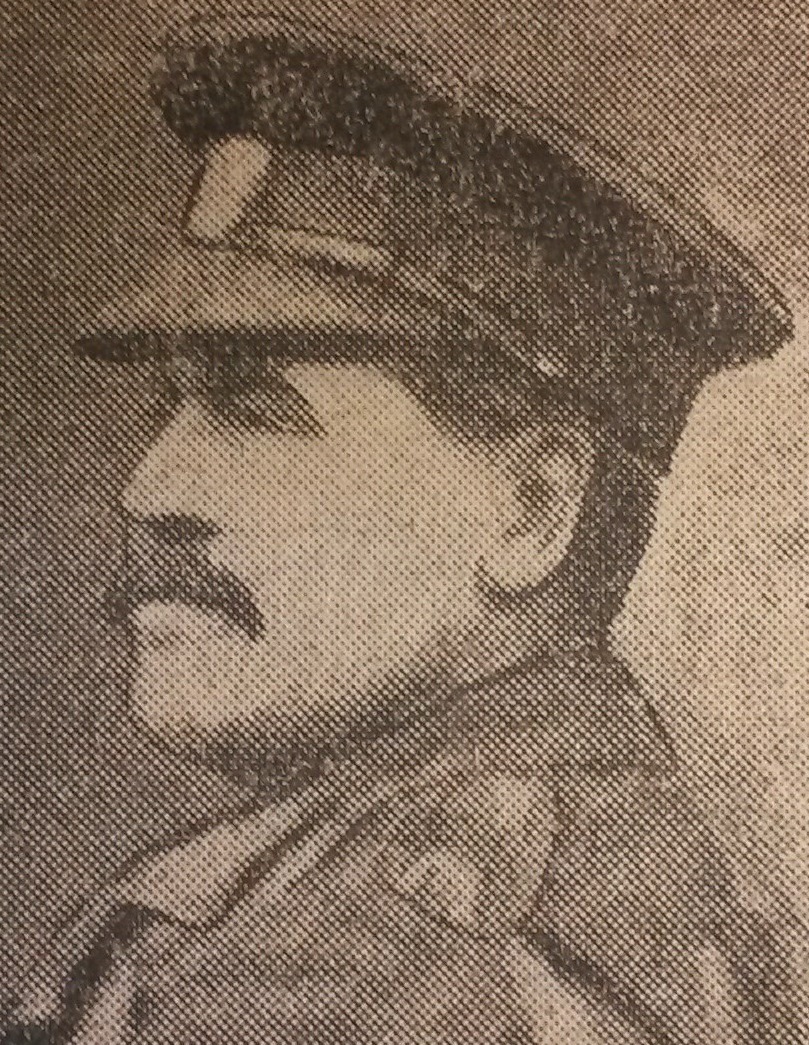
1st Royal Munster Rifles, 5887
William Ogden was one of four brothers who joined the War, his other, younger brother Nicholas Ogden sadly was also killed in action on the 16th July 1916.
Before William enlisted he was employed by Mr. William Harrison, coal merchant, Galligreaves-street as a Carter. This was probably the same place as his father and other brother David who also were Carter’s.
William Ogden joined the Royal Munster Fusiliers, in the first battalion and was given the service number 5887.
At the outbreak of war the 1st Battalion of the Royal Munster Fusiliers was acting as a regular garrison in Rangoon, Burma. Their last home station had been Fermoy in 1899. They arrived back at Avonmouth, UK in January 1915, and were entrained for Coventry where it was assigned to the 86th Brigade of the 29th Division (United Kingdom). In March it sailed for the Dardanelles, Turkey, when it numbered 28 officers and 1,002 other ranks.
Into the middle of July, taking trenches, losing and retaking them again, continued on both sides. More new drafts arrived to replace casualties, but this did not relieve the intense hunger, thirst and exhaustion suffered much of the time. A month’s rest was promised on 15th July, but by 22nd July they were back in action, their strength around 500 of whom only 3 officers and 314 men remained from those who first landed on 25th April.
There was little further action other than holding front lines from September through November, when the weather worsened. The battalion was evacuated as it arrived, on the River Clyde sailing 2nd January 1916 for Alexandria. From there it sailed with the rest of the 29th Division arriving in France on 22nd March. Three years of warfare still remained for the battalion in France and Flanders on the Western Front.
William Ogden at the time of his death was fighting on the Somme with his battalion, which was taking part in the capture of the Ginchy but at a high cost for its battalions, the 1st Royal Munster Fusiliers reduced to 5 officers and 305 other ranks.
He is remembered at Thiepval memorial at Pier and Face 16 C.
Private John Ormerod
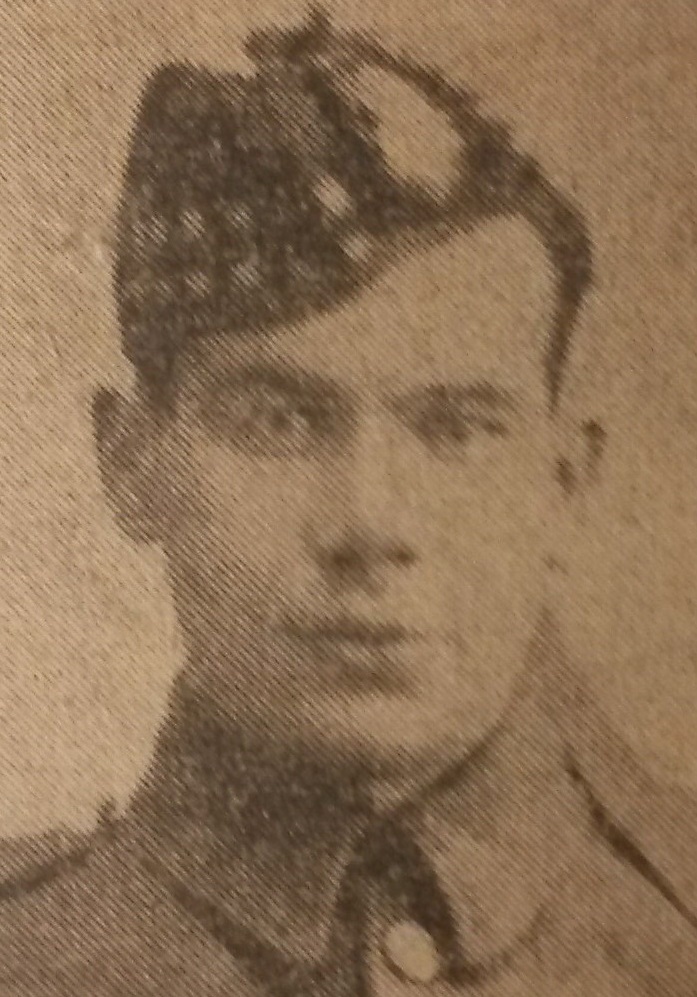
16th Highland Light Infantry, 18043
John Ormerod, born 1887 to Robert and Ellen Ormerod of 66 Ingham-street, Blackburn. Born into a family of cotton weavers, John would follow the family trail, working at Ward’s Mill. John had a brother, William, and three sisters: Ellen, Annie and Emily Ormerod.
John Ormerod was 29 years of age when he was killed, and had a child. He played for St. Matthew’s Football Club, and was connected with the church and Sunday school.
John enlisted in the Army in September 1914, joining the 16th Battalion Highland Light Infantry. He was severely wounded in the Battle of Loos, September 25th 1915, and was in various hospitals and convalescent homes for the next 12 months.
By September 1916 he made a sufficiently good recovery to be able to re-join his regiment, and he was sent out again to France. He was soon in the Front line, and after some heavy fighting on November 18th he was missing, during the Battle of the Ancre.
The battle extended northwards across to the far side of the River Ancre. The British force attacked in fog and snow on 13th November from the very same front lines from which the attack had failed so badly on 1 July. Beaumont-Hamel was finally captured but Serre once again proved an objective too far. Considerable casualties were sustained before the battle was called off.
Seemingly, the Battle of the Ancre was the last battle that Private Ormerod would have served fighting in. He is remembered at St. Alban’s memorial, and on the Thiepval Memorial to the Missing on the Somme, Pier and Face 16 C.
Private Robert Osbaldeston
Private, 20720, The King's (Liverpool Regiment), 12th Bn.
October 3rd, 1916, 28 Years
Thiepval Memorial, Pier and Face 1D, 8B and 8.
Private Robert Owen
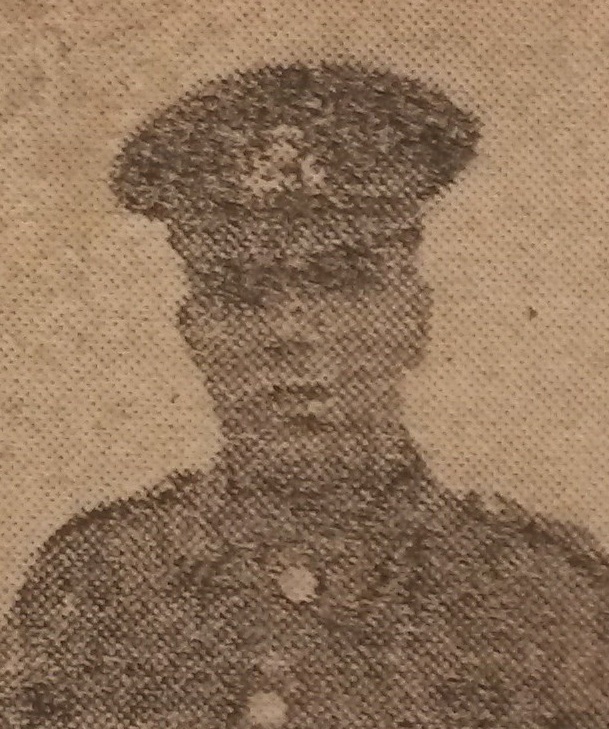
17th Lancashire Fusiliers, 14397
Private Owen was born in Northwich, Cheshire in 1890 and duringsummer 1912 he married Alice Pickup, from Blackburn. He moved to Blackburn, and became a boatman. When war broke out he enlisted in the Lancashire Fusiliers.
His death, reported in “The Blackburn Weekly Telegraph”, 16th September, 1916 noted that his wife who lived at 5, Troop-street, Blackburn had received a letter from his friend, in which he stated that Robert was brave and cheerful to the last. It was also reported that Robert had two brothers serving with the forces.
By 13th July 2016, the British advance had taken it to a point where it was now facing the second German defensive system. A well planned and novel night attack on 14th July took British troops through that system in the area of Bazentin. There was a fleeting but lost opportunity to capture High Wood beyond it.
The fighting for Arrow Head Copse and Maltz Horn Farm and for Falfemont Farm were also phases of the Battles of the Somme in which the 35th Division fought, and it was here, on 24th August 1916, Robert was killed in action in France.
Robert is remembered on the Thiepval Memorial to the Missing on the Somme, Pier and Face 3 C and 3 D.