
 Loading more
Page 2
“BUCK” AND OTHER GAMES
Let me here take you on to “Bonny Inn Moor.” The present Salesbury Church was not there then. It was here that the most famous of the “Buck Matches” were played. The Players were “Put” Reynolds, a publican from Furthergate, and a young man whose name, I think, was Pemberton. There were no trams then and what a day it was to walk to Wilpshire to see this fine old Lancashire game, which is not known to-day.
The matches were for a stake of £25 a side. The amount on Reynolds’ side was made up of shillings and half-crowns from supporters. The competitors went into training, and were examples of fitness on the day of the match. Then we had “knur and spell.”
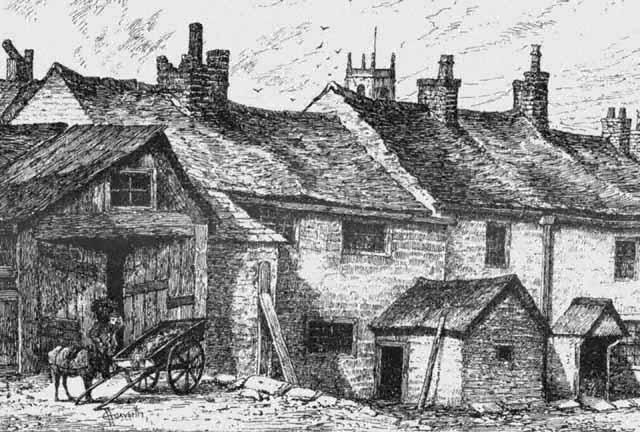
Whilst on the subject of sport, I think it will surprise the boys of to-day to tell them we had six really good football teams, namely, Blackburn Rovers, Blackburn Olympic, Crosshill Etrurians, Witton and Park Road. And what “Derby “ days—Rovers v Olympic, Rovers v Darwen, Rovers v Accrington, etc. I could fill pages on football of that period. The Rovers on Leamington Ground, Olympic on Hole I’ th’Wall, Witton at Redlam Brow (after-wards opposite the old Witton Conservative Club,) Park Road on Audley Fields (now Queens Park,) and Later Audley Hall adjoining Eli Heyworth’s Mill.
The Etrurians and Crosshill were two very excellent amateur teams. I think I am right in motioning the two Garstangs, one annex-director of the Rovers. They are both living to-day in Blackburn. When I hear the present day supporters mention all the stars of the past few years, and I reply with Jimmy Brown, “Skimmy” Southworth, “Doc” Greenwood, “Herby” Arthur, Hugh McIntyre, Johnny Forbes, Tom Brandon, Al. Warburton, Alf. Astley, Jack Yates, etc., they tell me to “waken up.” My reply is for them to apply that remark as I had never been asleep. All honour to the football pioneers of those days. I am not forgetting Bob Crompton and others but they came at a later period, and I don’t mean to say there is no good football to-day, far from it. I am still a regular attender.
© BwD - terms and conditions
A TRYSTING PLACE
Well now, I will leave that subject and ask you to retrace your steps to Sudell cross, where you found:
“There was a lamp at the bottom of Preston New-road,
And it stands in the midst of the street.
It was placed there by a comical mayor,
And it’s there where the young couples meet.
Any night in the week, if you’ve only the cheek,
You may go and behold a good view.
Why they meet after dark, and stroll of towards the park,
I can’t make it out, can you?"
I think it was our Blackburn poet who wrote the above, and it was sung by L.F. Eddleston, the comedian in the local pantomime at the Theatre Royal. In Ainsworth-street, when the proprietor was Mrs. Duval.
Proceeding along Preston New-road on the left, before you reach Alma-street, there was a timber yard owned by the Aspden family. From here to Billinge End-road is much the same with one exception, the new Sacred Heart Church and the rest of the Harrison Estate developed as a residential area.
Turning down Alma-street you will come to Blakey Moor from Snig Brook to North-gate. Do any of my readers remember the character of this area, Queen-street, Cannon-street, Engine-street, where it was considered dangerous to go down after dark? If you do, then in the light of to-day, you must agree that the transformation is the finest town development ever made. Costly? Yes, but out of it has arisen the Sessions house, Police Court, King George’s Hall, Blakey Moor School, the Technical College, and the new St. Paul’s-avenue.
At the time critics said that the character of the district would establish itself in another part of the town. To my knowledge that has not happened. Present-day rate-payers cannot imagine a cattle market opposite the Technical College. Yet there it was, together with Railton’s Foundry.
Crossing through Barton-street you will ultimately arrive at the Employment Exchange, a building which was formerly called “Oddfellows’ Hall,” and in its day was a well known music-hall. Mitchell’s garage was the Artillery Barracks, and across the way in Freckleton-street was the Parish Church vicarage.
From here to Lyon-street, Bank Top, there is only one real alteration, and that is the Roxy Cinema Block. From Lyon-street to Griffin-street there was no access to Galligreaves-street. A very beautiful sand delph barred the way, rising about forty feet high. To-day we have Stansfeld-street, etc., also St. Luke’s Church, on perfectly level ground. Galligreaves Hall was behind the delph.
Turning back to George-street corner in Darwen-street was another timber yard, and adjoining, a very famous gathering place for boys, known as “Pey Andry’s.” Pey is Lancashire for pea.
EWOOD TROTTING TRACK
On through the bridge, along Great Bolton-street we arrive at Ewood Bridge. It was where that a tramcar overturned, resulting in death and injury to passengers. The Aqueduct Hotel stood further in the road than at present and, together with a blacksmith’s shop, owned by Mr. Derbyshire, father of the now famous Bengal Court judge Sir Harold Derbyshire, was acquired by the Corporation for street widening and new bridge.
From Ewood Bridge to the St Bartholomew’s Church was a fine stretch of land. This was acquired by a few Blackburn sportsmen, who formed a company to run a “trotting track.” This did not last very long. The racing was really interesting to watch, and the track was so level the horses were never out of sight.
Now I come to a most interesting period when it was acquired for the Blackburn Rovers Football club. I always understood that amongst others, the late Mr. John Lewis, the famous referee took a prominent part. The ground is still regarded as one of the best in the Football League.
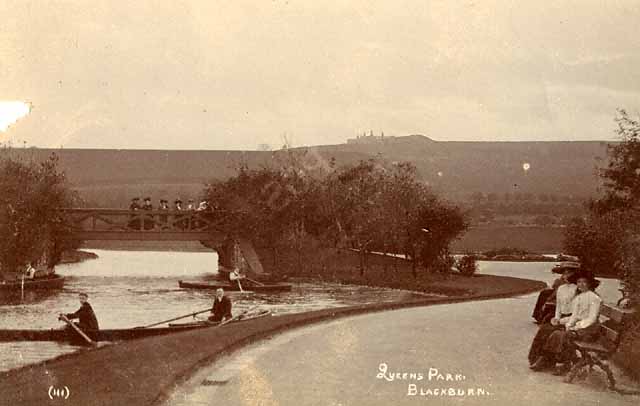
From Park-road, up Lower Audley, there is nothing new until we arrive at Queen’s Park. Part of this magnificent park was once Joe Nightingale’s farm, the remainder being known as Audley Fields.
© BwD - terms and conditions
NATIVE PRIDE
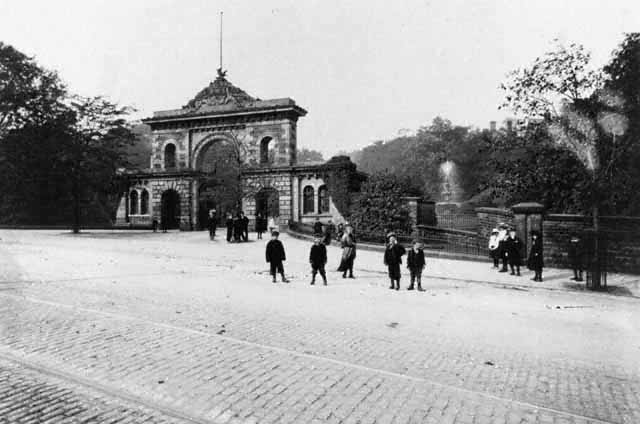
Sixty years ago there was no Cherry Tree housing estate, no Pleasington fields as now laid out, no Queens Park district nor Intack housing. Brownhill, Skew bridge area, Leamington-road to Revidge area, no Arterial-road and Lammack, no Revidge-road nor Pleckgate as they exist to-day, no bowling greens, tennis courts, nor putting greens. But we had the Corporation Park, which will still bear comparison with any other park of the same area in England or the Continent.
In this somewhat scrappy review I may have left out many things that my readers will remember. As I said at the beginning, it is those things you observe that you speak about. I have no doubt that if certain places were mentioned, I should recall them quite easily. I was born in Blackburn and have taken an intelligent interest in the development of the town. In some of the changes I have been at the head of the department that made them, and, above all, I still have a excellent memory. I should be delighted to hear from any reader comment on any item I have mentioned. I love my native place and think that as a commercial town there is none to beat it.
© BwD - terms and conditions
A Talk With Blackburns Oldest Inhabitant
Alexander Sharples was the son of George and Ellen Sharples of Ramsgreave. He was born on the 19th of April 1806 and baptised in the Parish Church on June the 1st of that year. He married Sarah Walsh in the Parish Church on the 9th of November 1828. Alexander Sharples died at his daughter’s house, 1 Whalley-street, on the 5th of June 1901, just a few months after giving this interview. He was 95 years old. He was buried in the Blackburn Cemetery, Whalley New-road on Saturday 8th of June.
Taken from the Blackburn Times of February 2nd 1901.
A TALK WITH BLACKBURN'S OLDEST INHABITANT
WHEN QUEEN VICTORIA WAS BORN
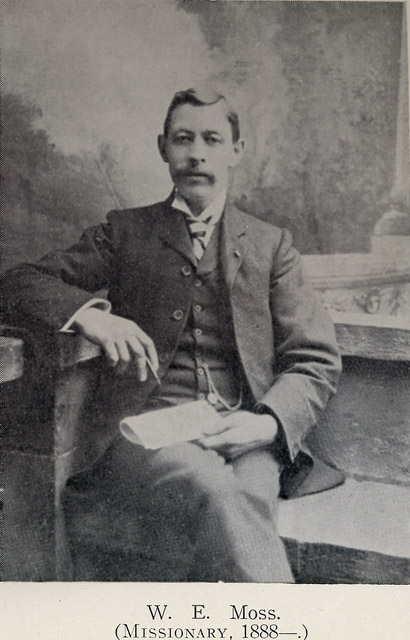
BY MR. W.E. MOSS
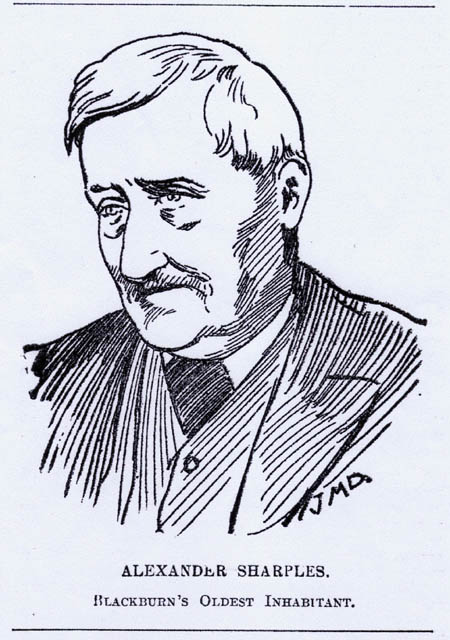
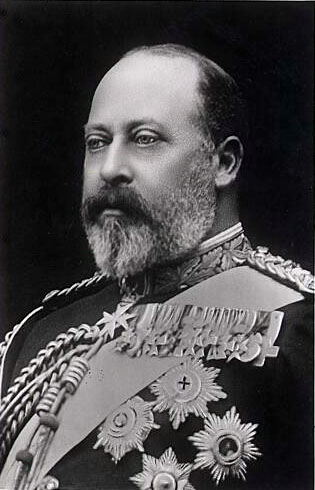
“God Save the King,” cried Blackburn’s Chief Magistrate to the assembled thousands in front of the Town Hall on Monday morning last, and from the lips of the oldest man in Blackburn, standing across the way, on steps of the District Bank, came the echo, “God Save the King.” His form was a little bent with age, but a smile lit up his features, as he raised his hat above his snow white head and waved it, as a token of loyalty and allegiance to Edward the Seventh, who had just been proclaimed King. For a good many years I have watched him walking about the streets or standing on the Market Place and Boulevard listening to little groups of debaters and it is a pleasure to me to count “Old Alic,” as he is familiarly called amongst my acquaintances. His presence at the proclaiming of the new King suggested the idea that the old man who has lived an honest and respectable life in our town for nearly 95 years, deserved to have the fact chronicled in the local Press. So slipping my arm through his I said, “Come with me, Alic, my landlady will lay dinner for two, and over a cup of tea afterwards we’ll have a chat about old times.” “I’m noan partic’ler,” was his reply. “It’s not long since I had breakfast, but I can always relish a good cup of tea.” Long before he had finished his tea I had my pencils sharpened in readiness for taking down some of his experiences for the readers of the “Blackburn Times.”
“You seem to like your tea sweet, Alic,” I said, as three lumps disappeared in the cup, and a glance at the sugar bowl indicated he doubted if that was sufficient.
“Aye, aye, sir, I’m making up for lost time; when I wur wed in 1828 sugar wur 14d a pound. We only got four ounces and four ounces of butter then to last two of us a week. Now it’s cheap enough, and poor folk ought to be thankful they live in such grand times. I cannot tell how they can find in their heart to complain as they do to-day, they know nowt to what I do.”
“Then you don’t long for the good old days to come over again?” I enquired.
He shook his head and said, “No, I’m gradely pleased that flour is cheap, folks are weel of if they’d nobbut think so. However they can say times wur good when flour wur 4d. a pound, and that was only poor stuff, puzzles me. There is plenty for everybody now, but it weren’t so when I wur born.”
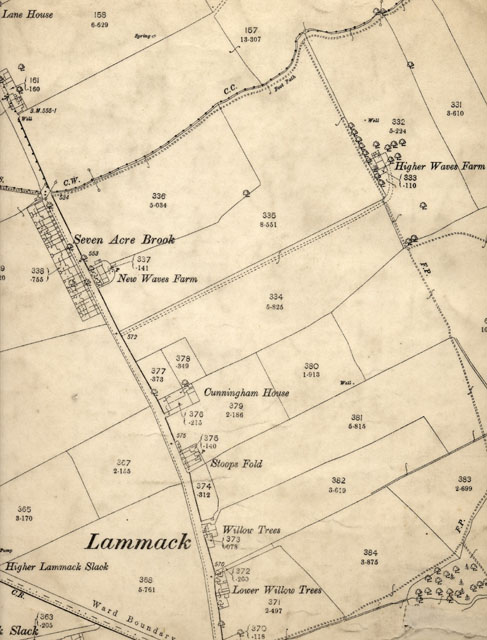
And when and where did that interesting event take place?” I asked.
“I was born at Sevenacre Brook—we allus called it Sennaker Brook—on April 19th 1806, so you see, I’ve lived in the reign of four kings and the grandest woman that ever was made into a Queen. I wur sorry when I heard she was dead, for she was a good woman. I can just remember my father being poorly and lying in the house dead, and that’s 92 years ago. My grandfather was Overseer for Ramsgreave and had a farm, so my mother went home with her three children when my father died. We had to start work very early in them days, and I had to fetch t’ beeast from t’ fields before I was four year old, and I did that and odd jobs about shippon and farm until I was nine. I wore lasses’ until I was quite a big lad, then when I was seven my mother made me a suit out of my grandfather’s. I shall never forget that first suit, for it was a lap coat of velvet, with four big metal buttons on it, and a pair of breeches. I never had a pair of boots until I was 14, then I bought them out of my weaving brass.”
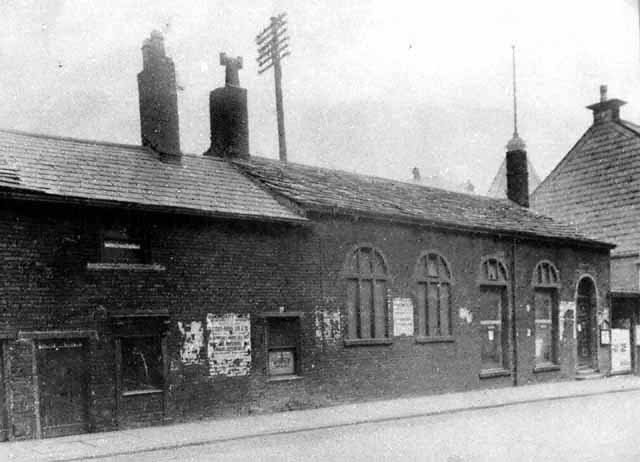
@ North Western Newspaper Co. Ltd - terms and condition
“Then you’ve been a weaver?”
“I have that and all. My grandfather sent me to learn weaving with my uncle, who lived in Red Rake, Revidge. When I was nine years old I used to wind bobbins and do odd jobs half a day, and went to the Free School in Thunder Alley t’other half till I was big enough to reach the troddles, then I had to wire in to weyving.”
“What did you do on Sunday?”
“I went to church on Sunday. I had to walk down Revidge to the school, and then we processioned at 10.30 to the old Parish Church, where I heard mony a good sermon. Mr. Starkie was the vicar there, and he was a good un, for he never preyched long sermons. I used to sit near Mr. Radcliffe, the Clerk, who said Amen. He wore a gold pen behind his ear, and wur t’ best writer in Blackburn. I could write a bit, and was fond of copying a proverb that the schoolmaster wrote, “Do nothing of which thou hast not first considered the end.” It would have been well if the next Clerk had learnt to write that, for he hanged hissel, and the landlord of the Mason’s Arms did the same thing. They were both lying dead at the same time. I think there never wur such talk as about them two—Hargreaves and Southworth. Now folks take no notice if anybody takes their own life, but I think it’s a fearful thing, you see that’s how I wur brought up.”
I restrained my smile as much as I could, and he proceeded in his quaint manner with the narrative.
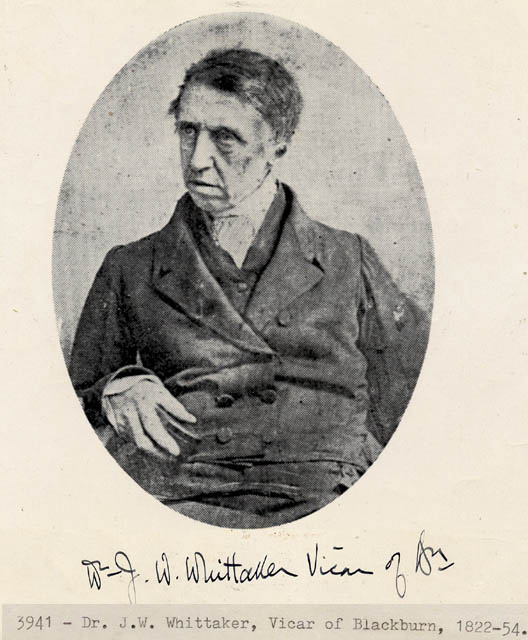
“The old church was propped up with a tree at one end and we were a bit afraid it might fall when there was a high wind, but when Dr. Whittaker came (he was great man, had a lot o’ `larnin`). The old place was pulled down and it took ‘em six years to build the new church. There was once a torchlight procession to the old building. That was in 1819, when George the Third was buried. I followed it down Northgate and King-street to the church, where they had a service at midnight. The precisionists wur handloom weavers, and one or two Doctors and ‘Torneys; we had no gentlemen in Blackburn then. I don’t know where they’ve all come from now, but there’s a bonny lot of ‘em, by all accounts. Then there came the crowning of George the IV. I remember that rare and weel, because we got such a dinner given us that day as I never see afore. There were rows of forms placed on t’ Shuedill, and we’d beef, pratoes and plum pudding. We could have done with a new King being crowned every week.”
“Were beef and pudding an extra good meal in those days then?” I asked.
“What done you say? `Extra good, ` I should think it wor, for folk’s who only got porridge 21 times a week and sometimes a little rice done in `chauvin` dish. Aye, aye, it was a treat to have a treacle buttery cake. Then we used to have pratoes and point.”
I pleaded ignorance as to the composition of this dish so he explained.
“We used to eat pratoes with one hand and point with the other to a bit of bacon or ham that hung from the ceiling.”
“Did you not get any eggs?”
“No we didn’t so. Eggs wornt for lads, and I never saw my mother get one either, but I can eat an egg now,” he added with a laugh, “or a bit of flesh either. They say that old folks ‘bout teeth shouldn’t eat meat, but it never disagrees with me. I’ve a very good appetite, and I’ve done better since I got wed than ever I did afore.”
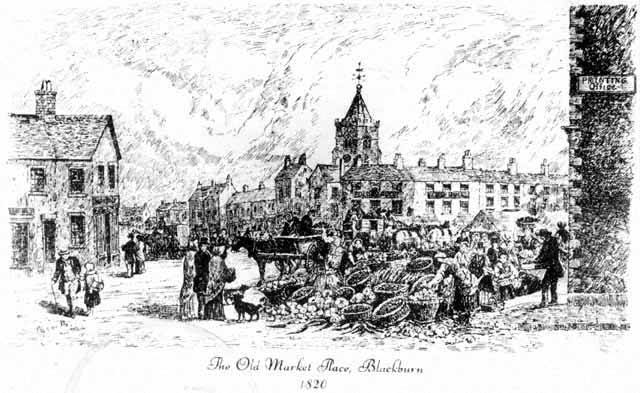
© LET - terms and conditions
“You married then?
“Aye, to be sure. All sensible people do; I don’t know what you’re doing that you haven’t popped question yet. It’s time you did, or else when you get as old as me you’ll be hobbish.”
I was intensely amused, but the last word was Dutch.
“No it isn’t Dutch,” chimed in my landlady. “It’s a good old Lancashire word. Ask `Jack o’ Ann’s, ` he’ll tell you.”
I wanted to know there and then, so old Alec said it meant I should not have any children to nurse and care for me when my hair was white and all my teeth decayed. I pushed the story back a line or two, and said: “How came you to be married?” He gave me such a look, then answered. “Why, I fell in love to be sure; what else think you” I coarted a great while, and wornt in a hurry to be wed, but I did it at last. We should have been married on the 5th of November, but it meant losing half a day’s work so we put it off until Sunday the 9th 1828. I shall never forget that morning, I was about very soon, and a neighbour said, “Why are you stirring so soon?” “Aw’m bound to be wed,” I said. “Eh, lad, you’ve a good heart to be wed these bad times.” “Well,” I said, “It’s for better or worse,” and at nine o’clock we were made man and wife in the new Parish Church.” And with a touch of sadness in his voice, he added, “She was a good wife to me and a good mother to the children. We started housekeeping on 9 shilling a week. That was all I could earn then; stuff wur so bad to weyve; but we pulled thro’. We hadn’t a clock, and we used to take our cloth in on a Monday, and I often wanted to start work when Sunday was o’er, so I used to light a candle at dark, and when it had burnt so low I knew it was Monday morning, and the shuttle used to fly. Candles were a penny each and soap was 8d. a pound. We didn’t trouble about overtime, and after a while I got work with a better firm in Shorrock Fold and could earn 17s. 6d. Then we mended up rapidly, and at weekends I used to take home a pound or two of flesh, which was a lot better than going home drunk as lots of ‘em used to do. I liked my money too well to spend it in drink, and thus I wur able to save a bit and go in business. Some folks on t’ Merkut says it’s wrong to save brass, but I think they durn’d know what they’re talking about. A sovereign is a grand thing to go buying in with, and a man has to look a long while for friends if he has nowt. The young people might save a deal if they liked, they get so much spending brass, but they all want to gallivant about the country
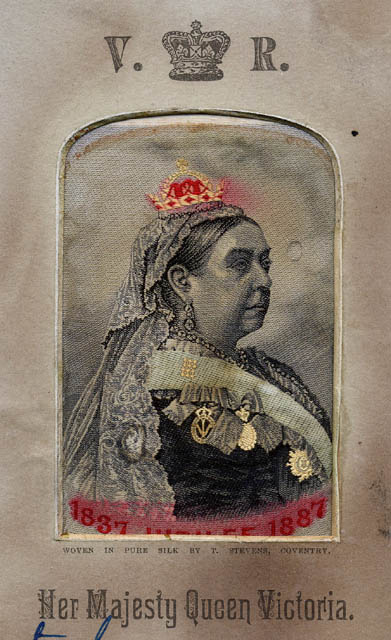
I went to Leeds some 40 years ago to see the Queen and her husband open the Town Hall. It was a grand sight; it cost 2s. 6d. to go by excursion, but I’ve always been glad I went, and saw them riding slowly by. I’ve seen a great deal in my time—rough and smooth. There’s been many a rough do in Blackburn, especially at election times. I was always fond of politics and a great friend John Booth—a wise fella. He used to canvas for the Liberals, and he made me into a Radical, but I never cared to make bother; because, say or do what you will, most folks will vote as they’ve been brought up. We used to have a lot more processions than we do now. We’d wonderful doings at the Queen’s coronation, and when the new King was married in 1863 there was a bonfire on Revidge nearly as big as a factory. I shan’t live to see another King, but I should like to see the next Preston Guild. I walked there in 1822 and I’ve walked to each Guild since.”
“And,” said I, “If all is well, I’ll take you to see it in 1902.” He thanked me with the energy of a much younger man, and in reply to my enquiries about his health he said he did not ail anything. He had one or two nasty falls last year, but as long as he could he should knock about, for he considered this was a grand world, and he enjoined attending Mrs. Lewis’s meetings. He had been going for ten years and liked them better every time he went, and hoped she’d live to be as old as he was to carry on her good work. He further remarked that his eldest daughter was still living, aged 73, and his youngest child is 60. Much more that was interesting and instructive was jotted down in my notebook, but for the present the above will suffice. Before we parted I laid down my pencil and took up the camera, and when the sunlight had printed his features on glass, I grasped the hand of Alexander Sharples, and said, “Heaven bless and spare you to shout in 1906—
“GOD SAVE THE KING”
My acquaintances also included Roger Haydock, 91, and Miss Haworth, the oldest woman in Blackburn, who was 92 last September. Like Mr. Sharples, Miss Haworth was born in the Revidge district and has never lived out of the Blackburn Township. In a conversation with her on Tuesday she told me that she was winding bobbins when a man came to say the bells were “shot ringing” because of the birth of a little girl who was heir to the throne of England. “I was eleven year old then,” she said, “and when she was crowned there was such a Blackburn as never was. I’m sorry she’s dead, but the new King ought to be a good one, for he had such a good mother. I cannot get to St. George’s Church now, where I’m a member, but I’m thankful to Almighty God that I’ve lived a happy life and hope the new King will have a long reign.”
More Blackburn Memories
BY
LIVINGSTONE ECCLES
Taken from the Blackburn Times of September 21 1929
When I think of the days of my boyhood in Blackburn, I am utterly amazed at the profusion of my memories. It cannot be that I, myself, am in any way exceptional, for I know I am not; then how is it that after all these years, I have such vivid recollections of people, places and events? In answer, I have been forced to the conclusion that the town itself is responsible. It was comparatively small in those days, with a large residential population in its centre; everybody knew everybody else, and nearly everybody else’s business; there was no hustle, but a social life that was placid and agreeable; people had time to talk; anybody’s trouble was everybody’s trouble, and if there were rejoicings they were gladly shared. Family life was sacrosanct and harmonious: evenings were spent at home, or at the home of a neighbour, and friendships were sincere and lasting. I am not for a moment going to suggest that these do not exist to-day; they may and I hope they do: but there have been changes; the times have changed; the place has changed; and it is inevitable that the social amenities that the times and place alone made possible should have changed too.
© BwD - terms and conditions
TRANSFORMING A MOOR
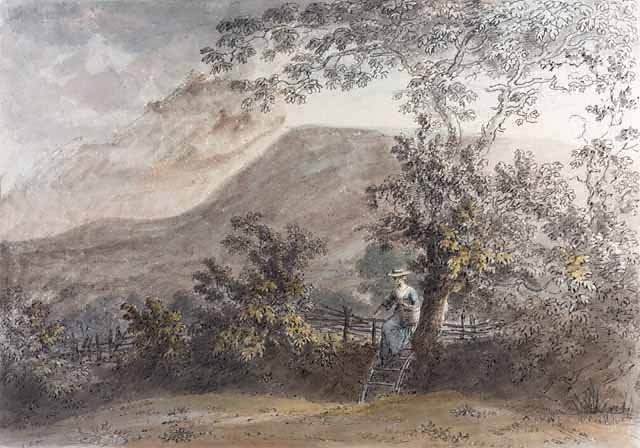
No wonder I sometimes feel like a modern Rip Van Winkle, who has just been awakened from a long sleep, on the top of Pendle Hill; for in all my dreams of Blackburn I see Pendle. What a wonderful old hill he is; there is no change there, never has been, never will be. Since the waters under the heaven were gathered together unto one place, and the dry land appeared, Pendle has been just the same; the most immutable monument the world can show. For centuries he stood in utter solitude, in sterile grandeur: he remembers the ancient Briton, with his woad-dyed skin, making his savage home in the fruitful valley below: he watched the Roman legions, as they built their ford on the bank of the babbling river, and pushed their roads to the North; he looked on whilst toiling Monks erected their Abbey at his feet; and he heard the clatter of Cromwell’s mighty army as it tramped beneath. Pendle has seen a wonderful panorama of change; but the savage, the Romans, the priest and the “Roundhead,” who gazed at him, saw only what the passing motorist sees to-day. Pendle cannot change. There is something more than lovable about the old hill; there is a power in him that demands affection.
The highest hill in the County Palatine! I know Coniston Old Man is higher, but he is a mountain. Pendle is a hill, and I have always been glad that when he pushed his long whale-like back through the waters, he refused to go the other 69 feet, that would have transformed him into a mountain. There is a homely sound about “Pendle Hill,” and neither “Mount Pendle” or “Pendle Mountain” could have created the same intimate friendly feeling.
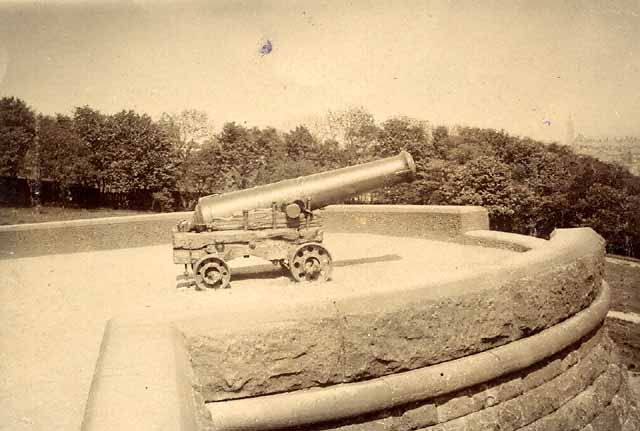
Now the imagination that sent me to the top of Pendle Hill for a “Rip Van Winkle” sleep of 50 years is quite capable of bringing me back again; so let me “imagine” I have returned to the old town. Picture me standing at the top of the Park [Corporation Park,] looking down, and you will see me get my first shock. I have not been there, of course, but in “The Blackburn Times,” a few weeks ago, there was a photograph of “the guns,” and one of the Old Russian cannon was without a carriage and lying prone in the dust. Does nobody care to-day what happens to those two old cannon? Let me tell you how I feel about them. To begin with, I am an Inghamite, and that means that to me “all war is wrong,” and if those cannon simply commemorated a victory in Russia, I would have been glad to see them scrapped long ago: but they meant more than that. Scores of towns in England had Russians guns, but none made such good use of them as Blackburn did. Whilst those two cannon were belching thunder in the Crimea, Blackburn was suffering a daily bombardment that was blasting a barren moor into shape, and making a park of it; and when the two victories were won those guns were mounted.
© BwD - terms and conditions
WHEN THE CANNON WERE FIRED
They were there when the Park was opened; they were part of it; they were to the Park what the Foundation Stone was to the Town Hall. “The Cannons” were better known than the Market House; they dominated the town; they could be seen from every part of it; they were a landmark for miles around. The natives talked about them; they made them the objectives of their walks, and everybody was proud of them. Boys entering the Park by the main gate, would race to them, and sit astride them, while they studied the map of the town below. One of them, I remember was dented, evidently by a ball of a much bigger calibre than that of the gun itself; and thousands of children have passed their tiny hands over that wound, feeling sure that it had been made by an “English cannon-ball.” Then, what about them as an object lesson in the world progress? They represent the type of weapon used within living memory, which is almost unbelievable when they are compared to the engines employed in the last war.
Five generations of Blackburnians have known “The Cannons” I hope you miss them and it is not too late to put back “the ancient landmark that your fathers set up.” In 1872, when the whole country was rejoicing that the Prince of Wales—afterwards King Edward—had been restored to health, after a long and serious illness, our old town entered heartily into the festivities, and among other attractions, it was announced that “The Cannons” would be fired by the local Artillery. The volunteer movement was new in those days, but we had a Rifle Brigade as well as an Artillery Corps. The whole town was “en fete.” And when the Artillery Company left the Town Hall Square, headed by a band, the populace followed in thousands. The first gun boomed forth its message, and the town re-echoed with delighted cheers; but the second one backfired and fizzed up through the touch-hole. The crowds waited in an anxious silence, whilst the “piece” was hastily re-loaded. Amid a stillness that “could be felt,” the firing sergeant applied his fuse and the officer commanding bellowed “Now, put your thumb on the touch-hole!” The sergeant looked up reproachfully and said, “Go to—.” The last word was not heard, for at that moment the cannon said “Hush-sh-sh!” and again fizzed through the touch-hole. As far as I know that was the last occasion on which either of these guns spoke.
AN ARCHERY CLUB
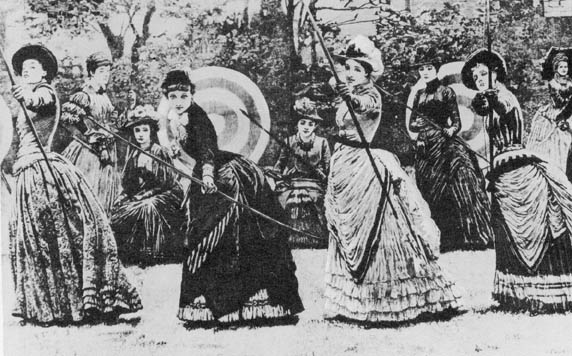
In Victorian days, apart from the game of croquet, there were very few forms of sport in which “ladies and gentlemen” could compete; but in 1844 the “grand National Archery Society” was formed, and though the pastime never became popular, it continued in favour with an “exclusive set” for many years, and a club was started in Blackburn in the late [eighteen] sixties. It must have had a short life, and I should have known nothing about it, but for one circumstance. There was a hairdresser’s shop in King William-street, which for many years had one window stocked with all the paraphernalia connected with archery. There were bows, arrows quivers, targets and gauntlets, all beautifully made and of most expensive quality. One day whilst having a hair-cut, the proprietor told me that when an archery club was first mooted he felt so sure of its success that he laid himself out to cater for its needs. Unfortunately, however, the idea did not “catch on,” and he was left “high and dry.”
It was early in 1878, when the same gentleman was again trimming my ebon crop—a crop that I still possess, though alas, the dark pigment has evaporated,—he barked a “stage aside” into my ear, so loudly, that all the other customers in the salon were made aware that he was going to “cut his losses,” and clear out “all that bow and arrow stuff, lock, stock and barrel.” He was a good barber, if he did mix his metaphors; what he ought to have said was of course, “feather, tip and string.” The result was, that “for a song” I became the proud possessor of a bow and six arrows: they were not toys, but the real thing, and just about the most dangerous weapons that could have been put in the hands of a lad of 15. I took them to school, and in the playground at Lower Bank made my one and only shot. After having fixed a home-made target on the Dukes Brow wall, I stood with my back to the gooseberry garden, and let fly; but before that arrow had gone five yards, I had changed my mind about a lot of things; in the first place I had ceased to believe the story of William Tell, for nobody could possibly hit an apple with a shaft that squirmed like that; then what about poets? I had always understood that they were people who were allowed to talk nonsense, because they had a “poetic licence,” but Longfellow must have known all about archery when he wrote “The Arrow and the Song,” and said:
“I shot an arrow in the air,
It fell to earth, I know not where.”
That is just what happened to my arrow, for it missed the target, missed the wall, flew across the road, and landed somewhere in the garden of a house opposite.
© BwD - terms and conditions
“JIM” BEADS
I went round to retrieve it, and had got to the gate when it was flung open by an old gentleman who stamped with rage and waved my arrow above his head. It was Councillor James Beads, but everybody called him “Jim Beads.” They always did that with town councillors: when a man had once been round hawking votes he lost his title for ever. If you had said to a Blackburn, “Do you know Mr. Beads?” He would have replied, “No: but ‘owd on, ah reckon tha meeans Jim Beads, oh ay, ah know Jim, ee’s an, owd pal o’ mine.” It was the same with the M.P.’s: who ever heard of Mr. Thwaites? He was mostly “Daniel,” though some folks never got beyond “Dan.”
Jim Beads was very deaf, and had the curious habit of placing a finger and a thumb over his nostrils and silently snorting—a habit that was really responsible for his deafness; he knew it but could not break it off. Well, there he stood with my arrow, glaring, too overcome for words: but at last he snorted and said, “Is this yours?”
“Yes, sir.”
“What? Speak up!”
“Yes, sir!”
“What do you mean by shooting at my window?”
“Please sir I didn’t.”
“You didn’t? Go and look at that window!”
I went and there near the left hand bottom corner of the front room window was a perfect little hole, through which my missile had sped, without cracking the glass. Wonderingly I returned to the gate to find that a small crowd had collected. That crowd was my undoing, for when “Jim” saw it, he remembered he was a Town Councillor, and rose to the occasion magnificently. How he talked! For five minutes I was the subject of his lecture, being constantly prodded with what he called “this deadly weapon,” by way of emphasis, after which he wound up with a crushing peroration on boys in general. When at last he paused, I thought he had finished, and so did he; but some fool in the audience said “Hear, hear!” and that set him off again. I had been learning French from “Froggie” Mercier for years and used to wonder what he meant when he talked of a “mauvais quart d’heure,”[bad time]” but I never wondered again, for that quarter of an hour with Jim Beads was the worst I had ever known.
But the incident was not closed then, for on the following evening I was pottering about the garden, which was opposite my home in Richmond-terrace, when in walked a tall military looking gentleman, in a grey suit, and a felt hat with a flat top. It was very nearly the kind of hat to which a daily paper awarded a prize some years ago, and which nobody, except Mr. Winston Churchill, had the pluck to wear. My visitor was the Chief Constable, Joseph Potts, who lived in the Town Hall. I knew him well, for his daughter, Eleanor, was chumming with one of my sisters.
He said, “Hello Willie, have you a bow and arrow?”
“No, sir.”
“What?”
“I had yesterday.”
“Where are they?”
“Burnt.”
“Who burnt them?”
“Mother.”
“Why?”
“Because I broke Jim Beads window.”
“Your sure they’re burnt?”
“Oh yes, sir.”
“Will you promise me not to buy any more?”
“Yes, sir, I’ve already promised mother.”
“That’s all right. Good-night, boy.”
“Good-night, sir.”
That was the end of it; and I fancy it was the end of archery in Blackburn: if it was, then I fired the last shot!
© LET - terms and conditions
MEMORABLE EXIBITION
One of my happiest memories of old Blackburn is the one connected with “the Exhibition” of 1873 in commemoration of the opening of the New Library. We had not many notable buildings in those days, so we were inordinately proud of our latest acquisition, and celebrated its inauguration by turning it temporarily into the most perfect little exhibition that was ever seen. It was small, of course, but a complete model of what such a show should be, and wonderfully well carried through. I am not going to attempt a description of it: that would be impossible, but I should like to name one or two features that left a lasting impression on my young mind. First in juvenile importance came the cellars, for the whole of the basement had been transformed into a vast underground cavern; the programme called it “A Fairy Grotto,” but to us boys it was “The Smugglers Cave.” Visitors moved along in single file, down a narrow path that undulated and twisted round rugged rocks and ghostly stalagmites; the roof was domed with jagged stone, from which hung glistening stalactites; there was a meandering stream, a waterfall and dripping springs. The cave had two mouths, through which sunny scenes of the outer world could be seen: one a rural landscape; the other the open sea, with a lugger in the offing. It was that lugger that made us think of smugglers. O, it was a grand show!
My other interests were in the “Machinery Section,” which was not in the main building, but in a large annexe thrown out behind. The motive power was supplied by a smart little beam engine, that operated a network of shafting. Most of the machines were connected with the cotton trade; from an old fashioned hand-loom to the latest devices for the weaving of plain and fancies. The most conspicuous thing in the place, however, was a silk loom from Coventry, weaving book markers in rows. These were ribbon affairs, about eight inches by two inches, with fringed ends, which depicted some Biblical scene, with a text printed beneath in “old English” characters. The whole appeared to be a most complicated mass of mechanism, when compared with cotton looms; but perhaps the contrast made it all the more interesting. Book-marks were popular as presents in those days, much as were birthday-cards at a later date.
BOYLE’S TOFFEE PAN
To me, as to every other youngster in the town, the most exciting part of the whole exhibition was Boyle’s revolving toffee pan, in which the “Rainbow Balls” were made. This was copper receptacle, about a yard in diameter, all curves and no corners: it was tip-tilted, and rotated almost vertically, so that the contents appeared to be constantly running up one side and slipping down again; the idea being to keep them on the move. The attendant used to throw in a few thousand caraway-seeds on to which he poured liquid sugar of various hues, at short intervals. And as we watched, those seeds became pellets, then bullets and finally balls; whilst all the time they were changing colour. Later on of course the process was reversed for all those balls were destined to find their way into youthful mouths, where they were sucked and sucked, though periodically hauled out by sticky fingers, whose owners played the game of guessing what colour would turn up next. Yes, I have very happy recollections of that wonderful little exhibition!
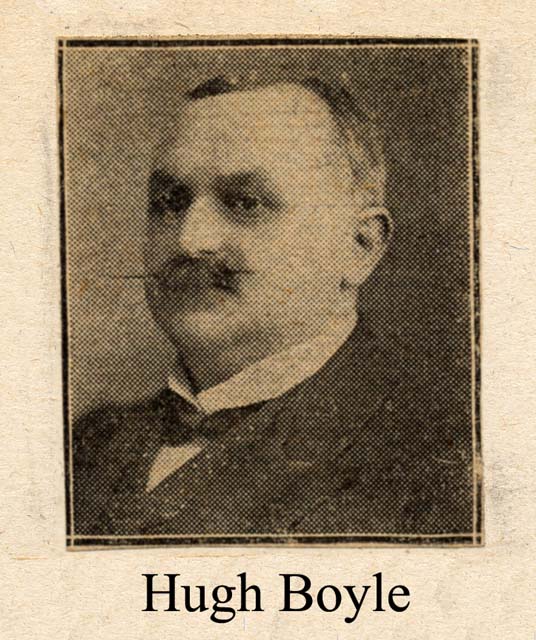
The Boyles—I never knew the style of the firm, though three sons, Jim, Hugh and Harry, were school friends of mine—had a shop in Victoria-street, in the window of which they used to display a tableau at Christmas time. The first one was a scene in the Arctic regions, with Sir John Franklin’s ill-fated ships, the “Erebus” and “Terror,” lying wrecked amid the snow and ice: there were floes and bergs, dogs and sledges, explorers, polar bears and seals; illuminated by the Northern twilight of the Auroras Borealis. All made of sugar and cleverly carried out: very pretty, but very sad!
Blackburn was quite a nice place to live in those days, and I can only hope that those of you who dwell there to-day have recollections as pleasant as mine.