I spent the first eleven years of my life living in the Mill Hill area of Livesey at 131, Shorrock Lane, adjacent to the cross-roads with Brothers Street. I was the son of Walter Sumner, the last of a three generation family of plumbers with their businesses in Mill Hill starting in the 1860/70’s with Robert Sumner who lived in the Zebudah Street area and later next to a work shop at 21, Stephen Street. Along with my brother I was the first son in the family not to train as a plumber. Robert’s son Thomas carried on the business as Tom Sumner using the workshop at 21, Stephen Street and living at 50, New Chapel Street which acted as both a home and a display shop at the front. Tom became quite an entrepreneur of his time and expanded the business, buying terraced properties to rent out and was an early owner of a motor bike and sidecar and one of the first to own a motor car. He spent a lot of time at Mill Hill Hotel and its bowling green where he generated business especially with the local textile mills where he was required to repair weaving shed roofs and water systems along with his other domestic trade. He was married to Hilda Crossley and had two sons both of whom trained as plumbers namely Walter and George and surprisingly in time both became meat inspectors before then deciding to take up the plumbing business with my father Walter taking over Tom’s business in Mill Hill and George developing a business in Leamington Road. My mother Ellen Sumner (nee Eddleston) was a school teacher first at St Luke’s later at various primary schools including Mill Hill County Primary. Both myself and my brother Philip attended Mill Hill County Primary School which was an imposing two storey brick built building fronting New Chapel Street.
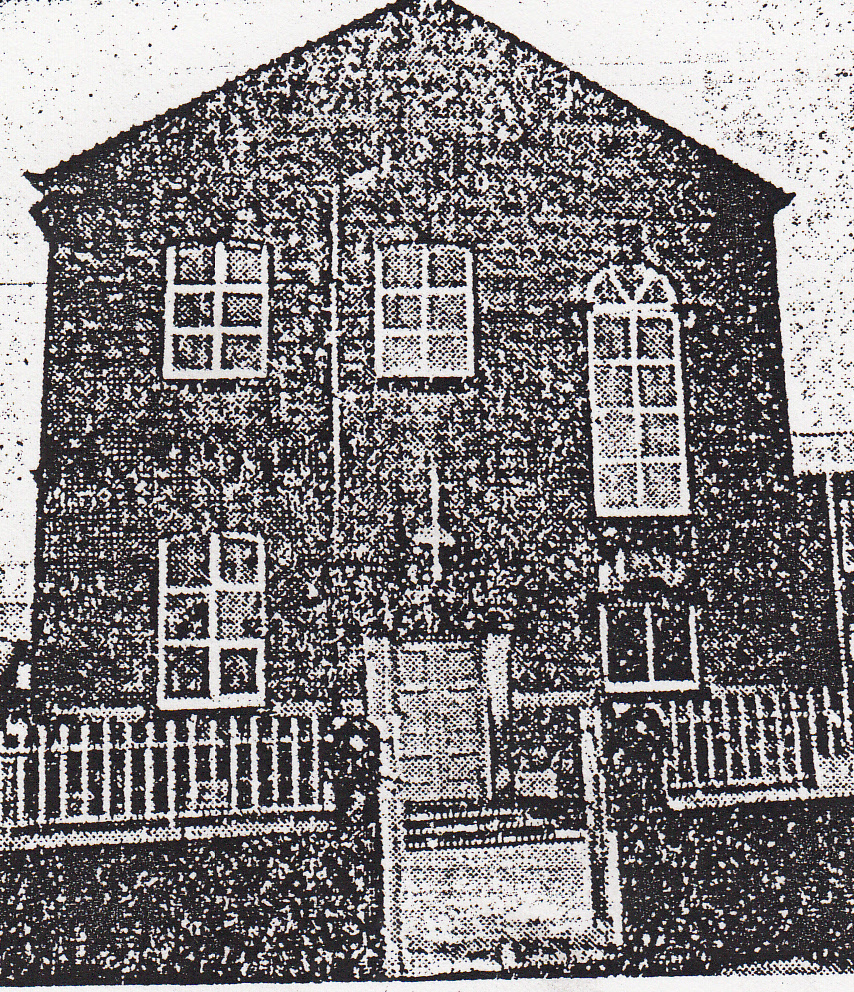 Mill Hill County Primary School
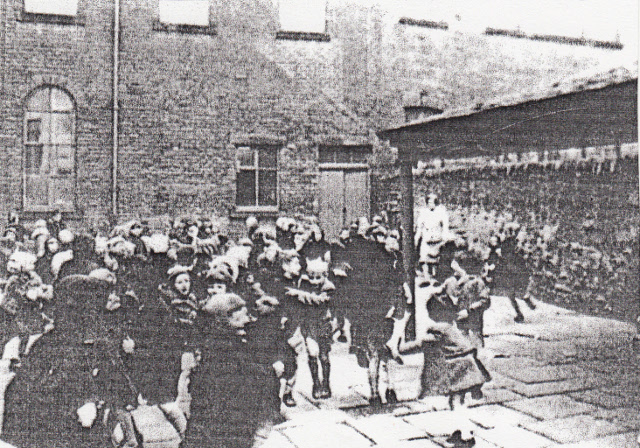
I remember the classrooms had wood and glass panelled walls/dividers that could be opened to enlarge the teaching space.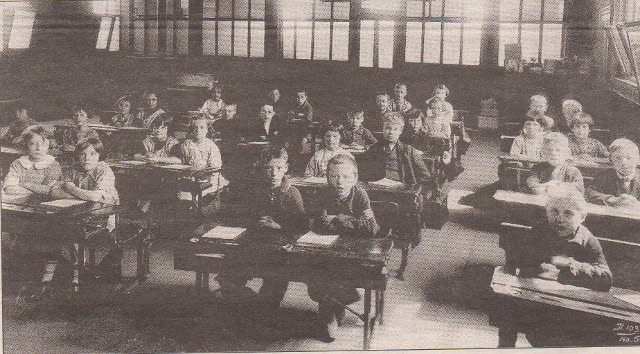 An early 1900’s Photograph of one of the classrooms with double desksAt the front of the school alongside New Chapel Street there was a small narrow stone flagged playground for the use of infants (See photo below)
To the rear of the school were two large playgrounds, one for the boys and one for the girls each having their own toilet block although without a complete roof. On the playgrounds were played a variety of games by both sexes within secure high railed walls. I also remember the large infant classroom where I first went with its sand pit and large wooden climbing frame providing a warm secure first educational experience, see photo below.
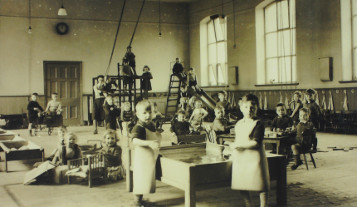 Mill Hill Infants School in The 1950's
The History of Mill Hill
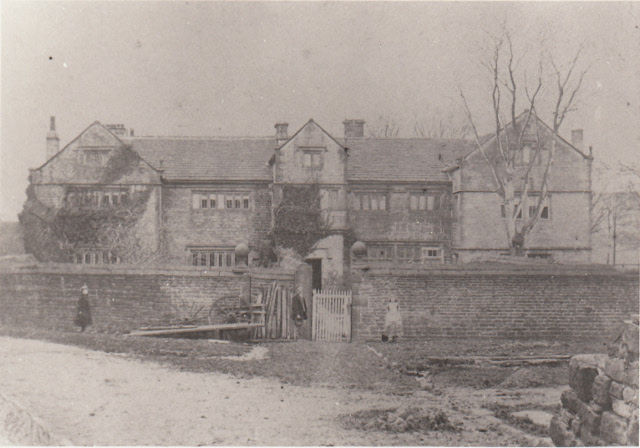
The history of Mill Hill is to be found in the Township of Livesey when originally along with Mill Hill it contained numerous other small hamlets including Bower House Fold, Stakes Hall, Overlockshaw, Moorgate Fold, Waterloo and parts of Ewood (see 1848 map). The landscape of Livesey spreads down the slopes of Bunkers Hill (700feet) to the lower River Darwen Valley and the flatter land offered pasture and meadow where some crops could be grown with the river separating it from the Townships of Blackburn, Witton, Cherry Tree and Pleasington. In early times coal was discovered in parts of Mill Hill and on the slopes of Bunker’s Hill and was extracted by open pits and small mines. The lower parts of Livesey near to Blackburn have shared its manufacturing industries since the 1700’s. Livesey Manor had ancient landowners at a time when the main occupation would have been farming via isolated communities. In the 13th Century Adam de Buri had lands in Livesey including Astley land and at Ewod including Fernihirst. Then during the 14th Centuary various members of the Ewode family conveyed or bought lands off the Livesey family whose earliest family members can be traced to Galfrid and Henry de Levesaye (1220). Various members of the family of Levesaye/Levesay/Levesey held lands in the area and by 1339 John de Livesey was Lord of Livesey Manor followed by Galfred (Geoffrey) and another John Livesey (1504). When James Livesey died in 1548 the estate had 10 messuages and 200 acres of arable land together with 40 acres of meadow, 100 acres of pasture and 200 acres of moorland with annual rents of lands and tenements being 24shillings.The manor then passed through various members of the Livesey family to Ralph Livesey in 1654 who built a new wing on Livesey Hall (1668) and became a governor of Blackburn Grammar School to be followed later by other members of the family. Ralph’s son Porter took over the manor in 1725 followed by a Ralph who died in 1760 leaving the manor and the Townships of Pleasington, Studlehurst and Balderston to Robert Livesey in trust. Eventually the Livesey manor was sold in 1805 to Henry and William Feilden. During the period 1840-1930’s the Parkers leased and occupied the Old Hall which operated as a dairy farm. Livesey Hall was situated off Preston Old Road near the present day Crescent and had long building with wings. Over the doorway in the central porch were the arms of the Livesey family with the initials J.L.A.L. (James and Alice Livesey) and dated 1608.
When the Feilden family acquired the property, the brothers divided the house in two and the part owned by Henry Feilden of Witton Park eventually became ruinous while that of William Feilden of Feniscowles was repaired and made into a farm house.
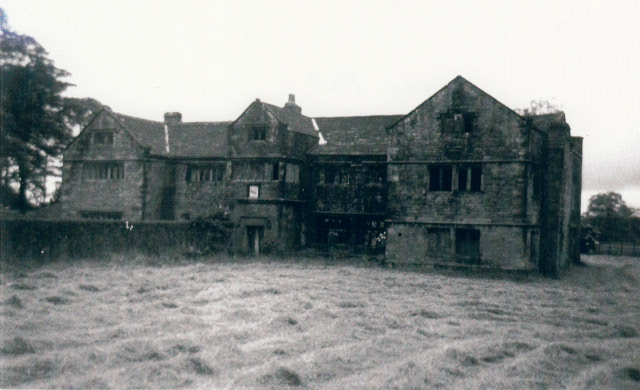 Livesey Old Hall in 1963
Another ancient family associated with the Livesey Township is that of the Astley’s who originated from the House of Astley in the Chorley area. They were seated from the 1500’s at Ewood and Stakes Hall in the Mill Hill area starting with William Astley in 1513 whose son George took over the estate followed by Thomas who married Mary daughter of Richard Livesey in 1574. The Astley family were also in the 16th and 17th centuries the chief proprietors in Witton and some of the family lived in Witton Old Hall which they built close to Preston Old Road. When Thomas died in 1623 Stakes hall had 20 acres of land, with 8acres of meadow and 12 acres of pasture with another 6 messuages and a further 20 acres of land improved from the waste land of Livesey together with lands in Witton and Mellor. Close to Stakes Hall the Astley’s built a 17th century farmhouse at Overlockshaw another hamlet in Livesey and over the porch doorway were the initials T.A. & R.A. 1691 (possibly Thomas and Richard Astley).
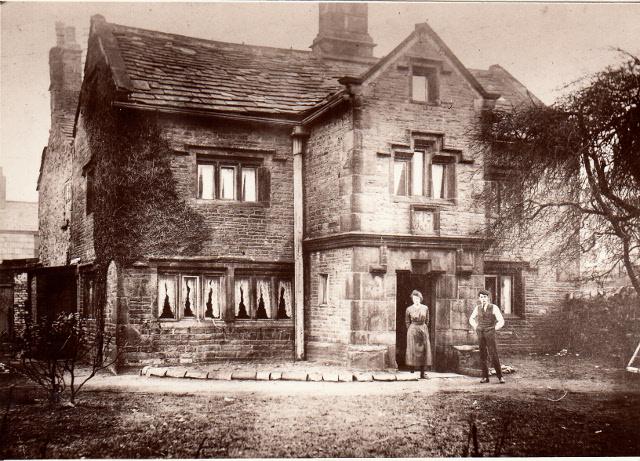 Overlockshaw Farmhouse built in 1691
At a later date the Turners’ occupied the farmhouse and by then it had land stretching from Overlockshaw up to Livesey Branch Road covering 25 acres with mostly meadow land consisting of a farmhouse, barn, shippon and other out-buildings together with a workers cottage and garden. It also had a carriageway which ran from the farm to Stakes Hall built by the Astley’s who had owned both properties. The farmhouse itself survived till 1921 when it was demolished and the Palladium Cinema built which in turn was replaced by the later Co-Operative supermarket which is now a Spar, At a later date two further members of the Astley family took over the Stakes Hall estate when Richard Astley died, both called Thomas, then George Astley whose son Hammerton Astley, who died in 1763 then ran the estate and became a governor of Blackburn Grammar School with the Astley family also living in the Preston area at Fishwick. George Astley was the last member of the family to live and run the Stakes Hall estate and he was employed as an apothecary, he had to sell the estate because he was in debt. The estate consisted of the old Hall which had parkland and a carriageway alongside the River Darwen stretching to Ewood, together with lands stretching to Bower House Fold and beyond. The hall also had a farmhouse and outbuildings close by, most of which is still standing between the Stakes Hotel and Spring Bank Mill on Albert Street and are now divided into units including motor vehicle repair (see photo below).
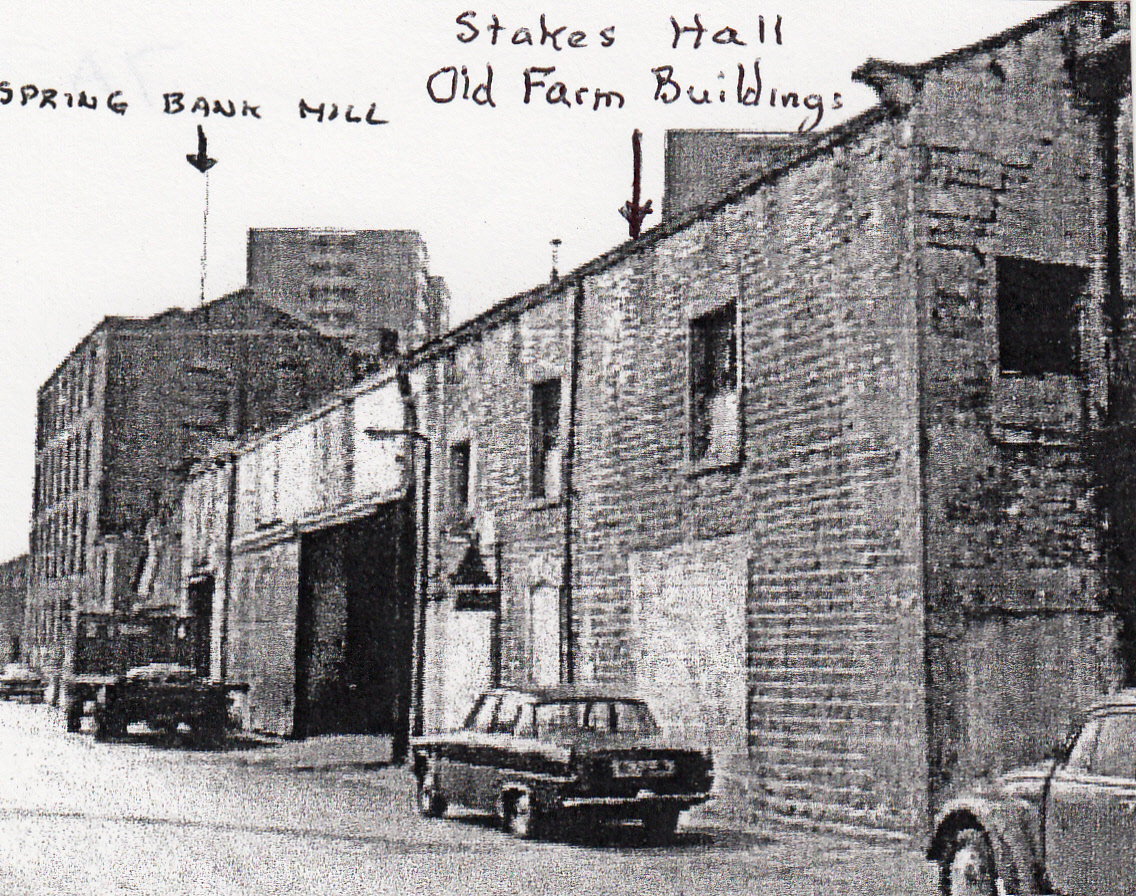 Stakes Hall showing Spring Bank Mill
The entrance to the hall’s drive was in what is now Albert Street opposite the Stakes Hotel where the Waterloo and Cardwell Textile Mills were sited this century and built on the estate land after an earlier Print Works. The hall itself was demolished in the early 1800’s when the site was used for textile printing. Prior to this it had passed first to the Haworths’ and then Robert Turner who built the print works where an early type of calico printing took place when the textile industry was in its infancy. Within the Livesey Township the first textile industry development was by a Thomas Yates who in 1748 was a dyer and calico printer at Moorgate Fold, probably of Blackburn Checks. Later the Haworth’s who became connected by marriage to the Peels had established a printworks on the side of the river at Stakes Hall and in turn were taken over by Robert, William and John Turner in 1812 who had a warehouse at 92, Darwen Street. They had earlier established valuable print and bleach works at Ewood in the eighteenth century using water diverted from the River Darwen via a mill race which originally had been used by a corn mill and the Turners extended the mill race all the way to Mill Hill’s Stakes Hall site (see 1848 map) and beyond returning the water back into the River Darwen close to Bower House Fold.
Another old house in the Bower House Fold area close to Mill Hill and the River Darwen was Mill Hill House. The house was built on raised land overlooking the River Darwen where later Mill Hill St. Peters Roman Catholic Church was built and whose school occupied land that was previously the house’s garden. The house and estate were sold in 1843 when the Turners moved to Shrigley Hall in Cheshire, at this time the house was referred to as Mill Hill Mansion. William Turner had lived in the house with his wife when he was in Blackburn and became a town member of parliament between 1835 and 1837 as a Whig. His wife Jane funded the building of the Turner Alms Houses at Bank Top, which were opened in February 1834. The Turner’s calico printing works extended from Stakes Hall to Bower House Fold. It is said that Mill Hill House had an underground strong room and dungeon with barred windows which was common at the time to protect inventions of the day when they were developing new textile machinery/processes. There was also a small well in the cellar because calico printing needed an almost limitless supply of water hence why print works were sited next to rivers/mill races. Remains of broken printing presses and slabs of stone used in the process of calico printing were apparently dumped in the cellar after the trade declined and left the district when cotton spinning/weaving mills developed including those owned by Joseph Eccles who was an important textile manufacturer from Darwen. Joseph Eccles bought out the Turners printing business in1843 and eventually demolished the old print works to develop Mill Hill Cotton Mill a large spinning mill (see 1848 map). When Joseph Eccles died in 1861 his trustees had difficulty letting out Mill Hill House where he had lived because it was affected by pollution from the River Darwen as textile mills used its water. In its heyday Mill Hill House was the focal point of village life at Mill Hill as Joseph Eccles and his family from the manor house along with village people often attended garden parties, field days either at the house or elsewhere. Later after he built Mill Hill Congregational Church and School on New Chapel Street more of these were transferred to the school room. From 1861 the house was offered for let when it was described as having a dining room, library, two drawing rooms, seven bedrooms, kitchen, stables, coach house and extensive gardens/orchards and a greenhouse. It was leased by Doctor Thomas Dugdale before he built Griffin Lodge near his textile mills at Griffin and the Mr. Whalley who was involved in the textile trade at various locations. Close to Mill Hill House was a weaving shed built in 1871 called Primrose Mill nick-named “Smut Factory”. Below Mill Hill House was the old stone bridge over the River Darwen on Mill Hill Bridge Street later replace with a wider more modern concrete bridge. Mill Hill House was demolished in 1881 by the trustees of Joseph Eccles to develop terraced houses needed for the nearby textile factory workers and Mill Hill St. Peters Roman Catholic Church and Church school built in its gardens.
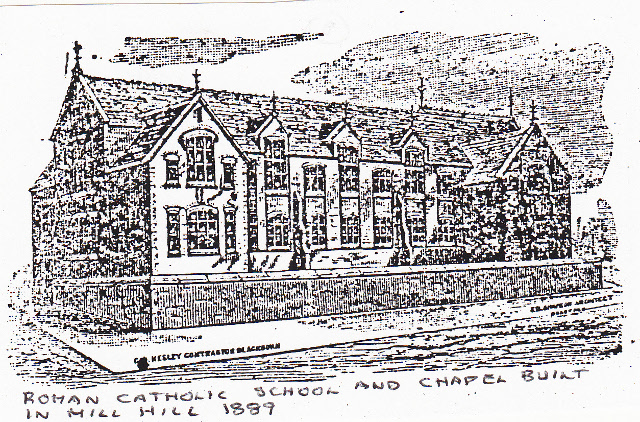 Mill Hill St. Peter’s Roman Catholic Church
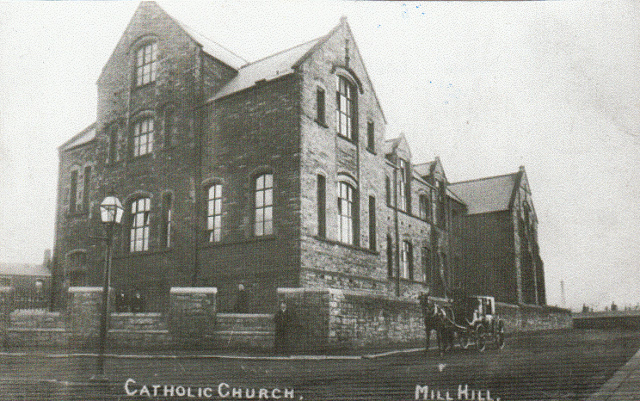 Mill Hill St. Peter’s Roman Catholic School
At this time the earliest spinning textile mills in the Mill Hill area namely Mill Hill and Moorgate Fold Cotton Mills had become huge developments in Livesey and over the next thirty years encourage further textile developments in the area increasing to a total of twelve spinning/weaving mills. The largest of the these mills were Mill Hill Cotton Mill which in 1880 had 40,000 spindles and 900 looms owned by Hodgson Swan and Co. and Waterfall Mill owned by John Fish.
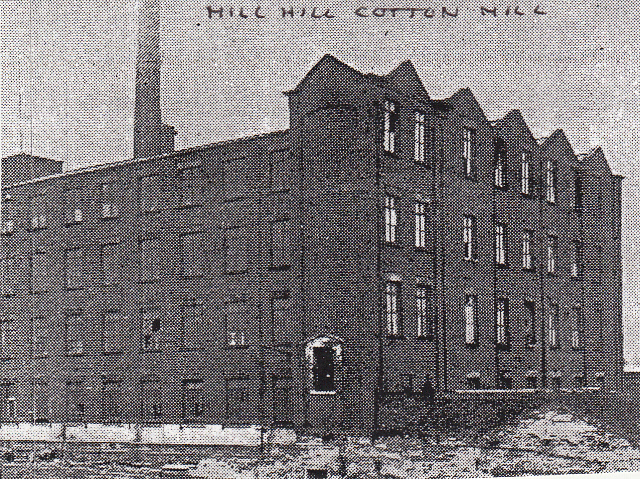 Mill Hill Cotton Mill
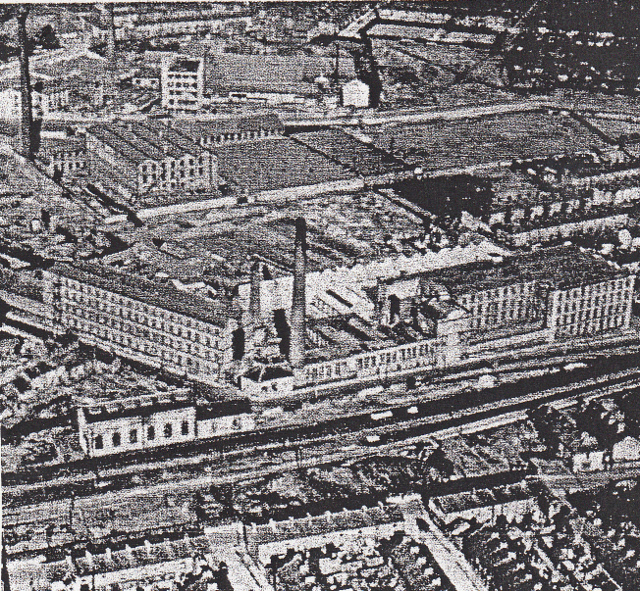 Waterfall Mill
In 1880 the industry employed 6000 people and led to a huge growth in the population of Livesey 1801–1184 people, 1841–1996 people and in 1876–4500 people.
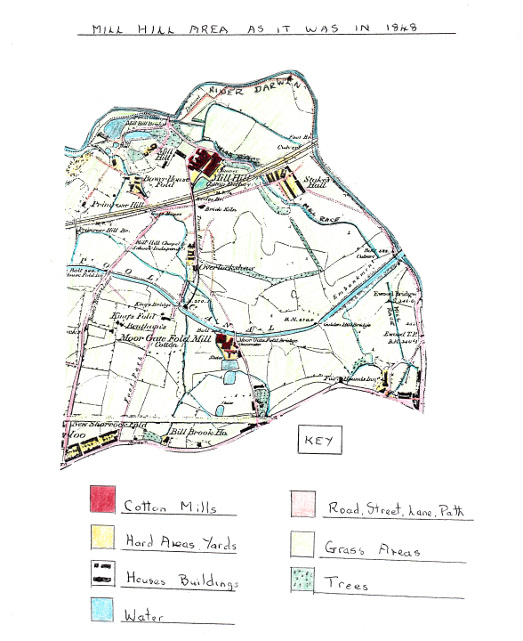 Map of Mill Hill and Livesey in 1848
 The 1848 Ordnance Survey Map shows the newly created railway between Preston and Blackburn which along with the earlier Leeds Liverpool Canal had huge embankments to take them across the River Darwen valley to provide essential transport for the textile industry to develop, carrying coal needed for steam power to run mill machinery and raw cotton brought from Liverpool or Manchester needed for fibres. At this time however there were no railway sidings or station built in Mill Hill therefore Mill Hill Cotton Mill relied on a single line track from the canal with waggons running down to the mill using the gradient to bring in raw cotton and coal and used horses to pull them back up to the canal with finished goods. At this time the mill had also constructed a large mill pond for its water supply to create steam power. The canal built in 1816 provided work for the smithy at Overlockshaw with horses used to pull barges along the canal and pull trucks up the tramway from Mill Hill Mill. Bower House Fold was a sizeable hamlet at this time whose occupants would probably have been working in hand loom weaving, cotton spinning at Mill Hill Cotton Mill or as farm labourers near Primrose Hill. Moorgate Fold Mill was built as many mills were alongside the canal with a direct loading bay from it to receive and dispatch materials by barge and receive water from it in addition to the two large mill ponds for creating steam power.
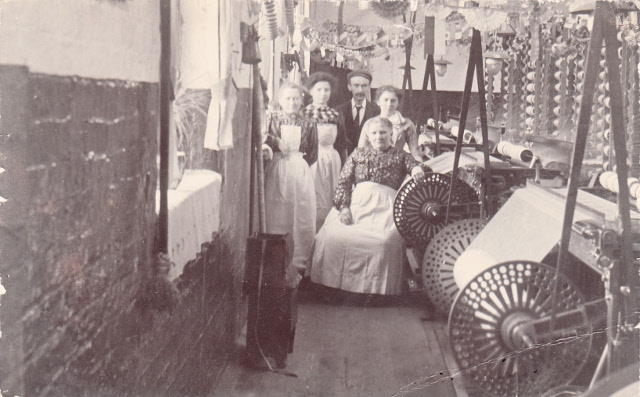 Moorgate Fold Mill Operatives
 In the lower Mill Hill area close to the River Darwen are two large ponds whose water was probably used for the earlier textile print works of the Turners. Stakes Hall can be seen as a fairly large hamlet with the buildings closest to the river being the print works (the old Hall had by now been demolished) with most of the houses being clustered on the lower banks of the new railway at the bottom of what is now Parkinson Street. At this time the mill race can be seen running from Ewood past Stakes and on to Mill Hill Mill where former print works were sited and then on to re-join the River Darwen. Another large hamlet called Waterloo in the north of Mill Hill alongside Livesey Branch Road consisted of rows of cottages presumably built from the time of the Battle of Waterloo for farm workers as the map shows the landscape around is still dominated by fields of meadow/pasture with numerous isolated farm buildings and hand loom weavers as they display classic styles used by weavers of this date.
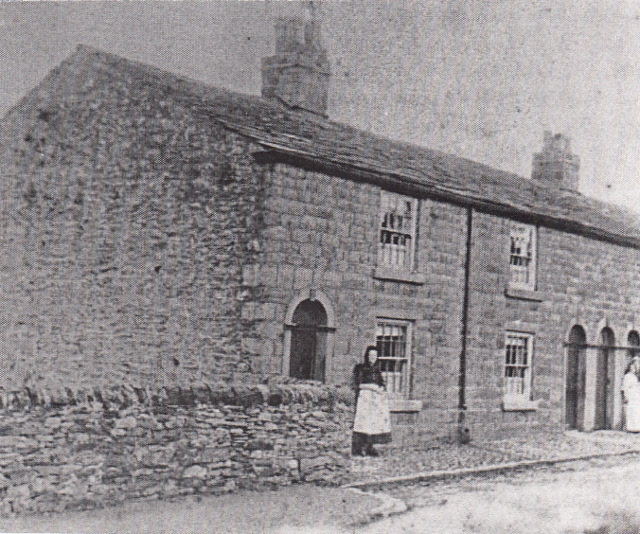 Stone Cottages On Livesey Branch Road at Waterloo c.1900
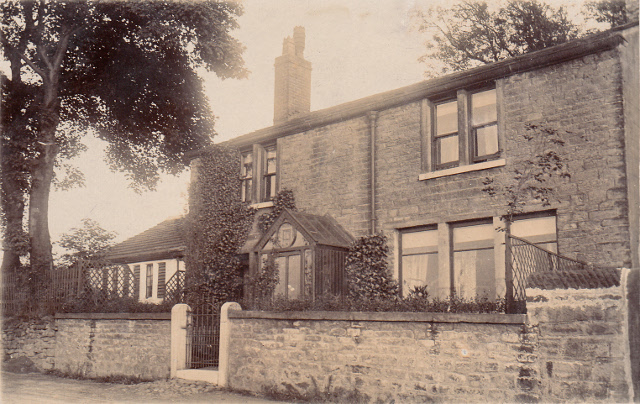 Aspin’s Farm Off Shorrock Lane With lands in Livesey
At the end of the row of cottages on Livesey Branch Road at its junction with Shorrock Lane was Waterloo Tavern which was probably a coaching inn. An 1827 plan of this area shows there was a workhouse situated close to Waterloo on the other side of Livesey Branch Road a common feature of those days.
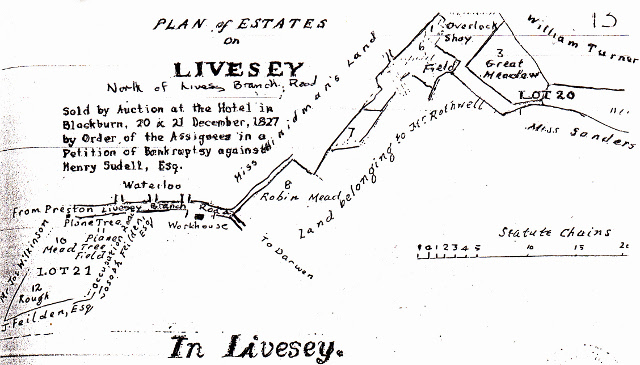 Plan of Estates in the North Livesey Area
This workhouse was later transformed into the Factory Arms Inn by 1849 which later changed its name to the Livesey New Inn.
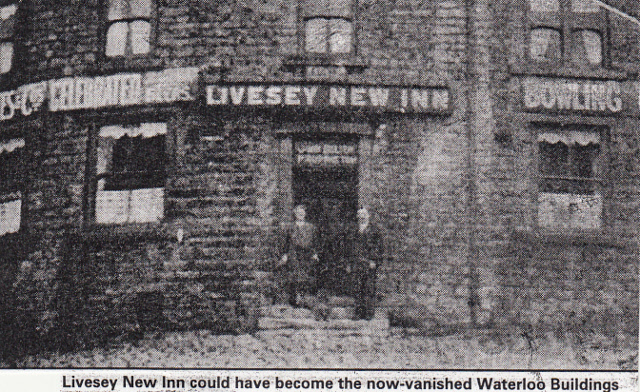 Livesey New Inn
By the 1940’s this inn ceased trading and the building was converted into flats known as Waterloo Mansions and was eventually knocked down to make way for new housing at Parklands Way. To the north of Mill Hill and the railway is a brick kiln where clay was cut into brick shapes and then fired in the kilns. This indicated the growing need of bricks for mills and their terraced houses, a change from the earlier use of stone. To the south of Mill Hill across the River Darwen in Witton there was a large brick field near to what is now called Redlam where even earlier brick works dried the cut clay outside. Mill Hill House (see earlier notes) can be seen on the map
to the left of the words Mill Hill next to a woodland copse and garden. Interestingly todays Mill Hill Bridge over the railway is called Eccles Bridge indicating the closeness and importance of Joseph Eccles Textile Printing. The name Moor Gate Bridge (separate words) indicates that north of that point towards Bunkers Hill was at one time moorland and had mostly been improved for pasture of late. Bower House Lane leading down from Waterloo to Bower House Fold and Mill Hill (today called Shorrock Lane) was an important route especially for the isolated farms on lands stretching on both sides of it some whose farms have names that were carried forward when the area was later developed e.g. Bentham’s (Bentham Road) and King’s Fold (King’s Road). Also Wellington Road/Livesey Branch Road was important for connecting Ewood to Preston Old Road and Preston and had a Toll House called White cottage at its junction with Gib Lane. There was also a road from Witton crossing the River Darwen into Mill Hill but other than these the map shows the area is dominated by paths and tracks for communication as most people walked or used horses or horse and cart. Mill Hill Independence Chapel School is shown in Overlockshaw, this was one of the earliest schools in the area although it first started in 1844 as a Sunday school inside a farm house at Stakes Hall with public worship also conducted in the same room. This school was built by Joseph Eccles of Mill Hill House at a cost of £1,500 and was also used as a church. However this was inadequate for the church needs and in 1860 Mill Hill Congregational Church was opened with its Italian styled architecture which had a square clock tower facing New Chapel Street and lent its name to it. In 1848 New Chapel Street was merely a track through this central area. The churches tower clock was installed in 1913 for the communities use with four six foot diameter clock faces and a Cambridge chime for its bells.
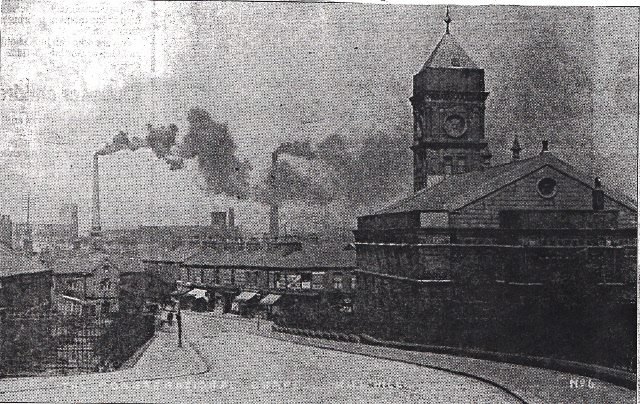 Rear View of the Mill Hill Congregational Church and Tower From Kings Road Before The Clock Dials Were Installed
The cost of building the church was £6000 raised by local subscriptions with the former chapel at Overlockshaw now devoted to day and Sunday school use with added classrooms built in1876.
The 1895 Ordnance Survey map shows vast changes have occurred over the 47 years since 1848 with the most significant being the huge rise in cotton textile mills reflecting the full effects of the Industrial Revolution, as textiles moved totally from the earlier domestic home based activities to huge textile mills powered by steam engines. Alongside their development can be seen a large increase in housing as row upon row of mill workers terraced houses had sprung up around the mills often built by their owners for rent to cater for the large growth in population as people moved from rural areas to this new source of work both in the cotton mills and the associated industries that fed them. By now Mill Hill Cotton Mill had grown larger and now had large railway sidings alongside it which solved its earlier transport problems and it had also developed a further large pond off New Chapel Street to feed its needs (this later became Mill Hill Park when it was filled in after steam power was replaced), the mill now had weaving in addition to spinning sections. Moorgate Mill had also enlarged as it now combined weaving with spinning as automated looms had now been developed as a result it now had more extensive mill ponds. By 1895 nine new mills had been built in the area for cotton textiles along with a mill producing bobbins, shuttles etc. on Moorgate street. The new mills included the large Waterfall Mills which had a huge steam engine room and was owned by John Fish. It included red bricked four storey spinning mills with weaving sheds added to the rear near the mill race and had a long frontage on Queen Victoria Street. John Fish had started cotton manufacturing on a small scale in Ainsworth Street and built up capital to build waterfall Mills. In 1860 Waterfall Mills had 900 looms and 75,564 spindles with John Fish later buying Primrose Mill in the Bower House Fold area another new mill which had access to the mill race and a large mill pond (see map) John Fish and his three sons ran the two mill complexes till 1874 when a limited company was formed. Primrose Mill was nicknamed “Smuts” and had both spinning and weaving sections and a large mill housing area around it including Primrose Terrace. Griffin Mills on the edge of Mill Hill were part of a huge mill development of stone and red bricked spinning and weaving mills sited on both sides of Stancliffe Street. The first spinning mill was built in 1852 by Thomas Dugdale who was a doctor but was drawn into cotton manufacturing during the boom times of the early 1850’s so his early profession gave the mill its nickname of “Physic”. This mill on the right bank of the River Darwen was enlarged several times with the last occasion being in 1884 and the first weaving shed built in 1872 with a second shed built in 1887. Thomas Dugdale built a large mansion close to his mills in 1853 called Griffin Lodge where he lived for the remainder of his working life and was followed by his son Adam Dugdale.
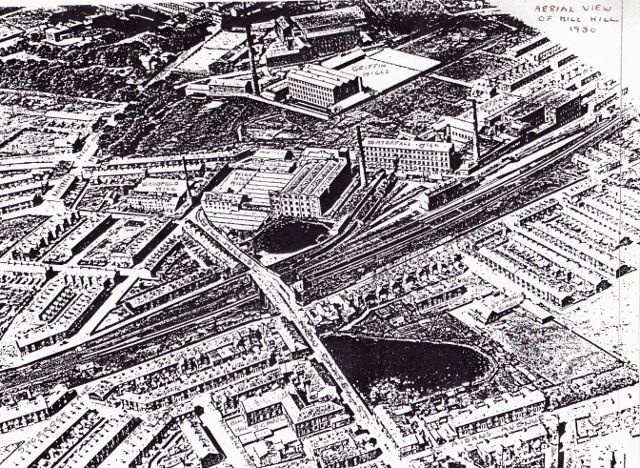 Aerial View of the Mill Hill Area and its Mills and Mill Housing
Woodfall Mill was small in comparison to the others being a weaving shed built opposite Mill Hill Cotton Mill on Mill Hill Street in 1860 by David Mercer and surrounded by trees earning it the nickname “Th’ out o’ Seight Mill”. After 1870 this mill passed to Marsden Brothers when it had 312 looms and later was run by Hodgkinson and Codling along with their Mill Hill Cotton Mill. Bridge Mill was an old stone built mill sited alongside the Leeds and Liverpool Canal with its own loading bay and was both a spinning and weaving mill with a mill housing area around it in the Moorgate/New Wellington Street areas (see map). Spring Bank Mill at Stakes (see Photograph above)Hall was a stone and brick built spinning mill with weaving sheds added later. It was sited alongside the mill race running from Ewood and was erected in the 1860’s first as a small stone built mill and later as a much larger brick built four storey building on Albert Street adjoining Stakes Hall farm buildings. In the 1870’s David and William Whalley ran the mill along with their other mill at Greenbank in Blackburn.
Cardwell Mill also on Albert Street was a large red bricked Spinning Mill with weaving sheds attached on the banks of the River Darwen where the original Stakes Hall had been sited. It was first built as a spinning mill in1855 and enlarged to 30,320 spindles in 1882 by Thomas Eccles who had bought the mill in1875 and added weaving sheds in1887 with 516 looms.
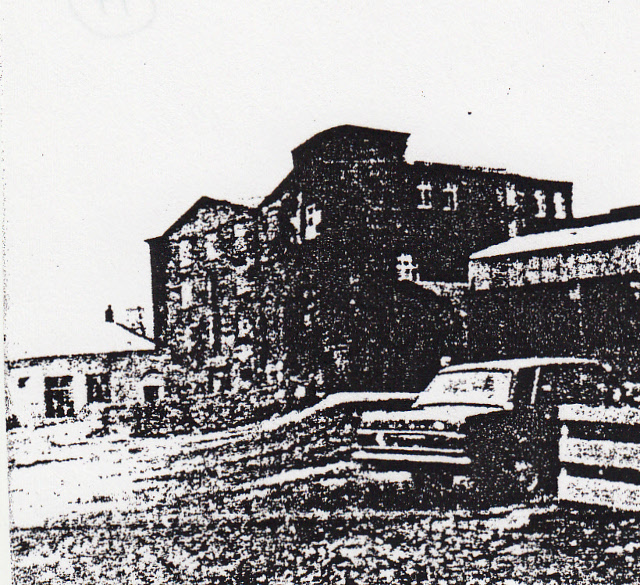 Cardwell Mill Sited on Albert Street
Albert Mill was a medium sized weaving shed built of stone on Albert Street in the 1850’s with 133 looms and later enlarged to take 411looms. It was nicknamed “The Mushroom” because it was said to have been built overnight and in 1885 had 140 employees and specialized in making handkerchiefs. A fourth cotton mill on Albert Street was Waterloo Mill built alongside Cardwell mill, the River Darwen and the side of the railway in 1853 by H. Graham and Co. as a weaving mill with 400 looms with 80 more looms added later with an extension. By 1887 the Porter brothers ran the firm along with their other mills at Greenbank. A large cotton mill on the edge of Livesey close to Ewood was Albion Mill built in the 1850’s by George Whitely as a spinning mill with weaving sheds added later. This mill had a dominant position by the Leeds Liverpool Canal with its own loading bays and could easily be seen from Ewood and Bolton Road with its distinctive clock face.
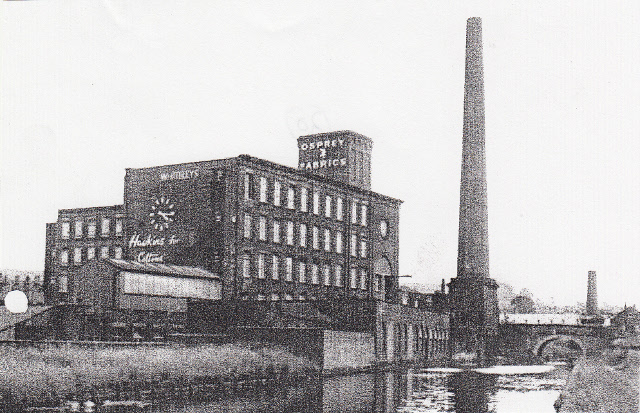 Albion Mill alongside the Leeds Liverpool Canal
The photo below shows the large fly-wheel (50 tons) that operated the steam engine which turned 18,600 revolutions a day to operate the mill machinery and was broken up for scrap in 1951.
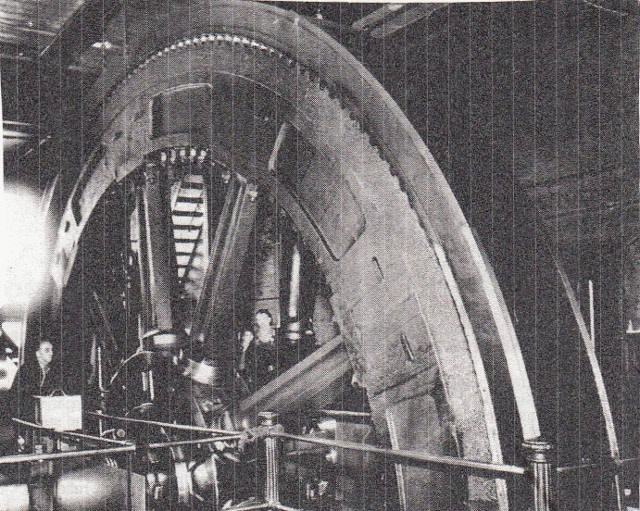 Albion Mill’s huge fly-wheel for operating machinery
Victoria Mill built by the Leeds Liverpool Canal close to Bonsall Street had mill housing built around it (see map) and its own small mill pond for steam power to operate its many looms. The last mill built in Mill Hill was Pioneer Mill built by Blackburn Pioneer Mill company at the turn of the century on the site of a former coal yard (see map). It is not shown on the 1895 map and was sited on the banks of the Leeds Liverpool Canal close to king’s Bridge/kings Road by Mill Hill Church. It was an up-to date mill with a weaving shed with 620 looms and a winding room on its upper floor and employed 230 people manufacturing dhooties (for the Indian/Asian market) along with fine cloths. The mill’s engine was made by Clayton and Goodfellow of Blackburn and the machinery by W. Dickinson and Sons also of Blackburn with its boiler created by Yates and Thomas another Blackburn firm.
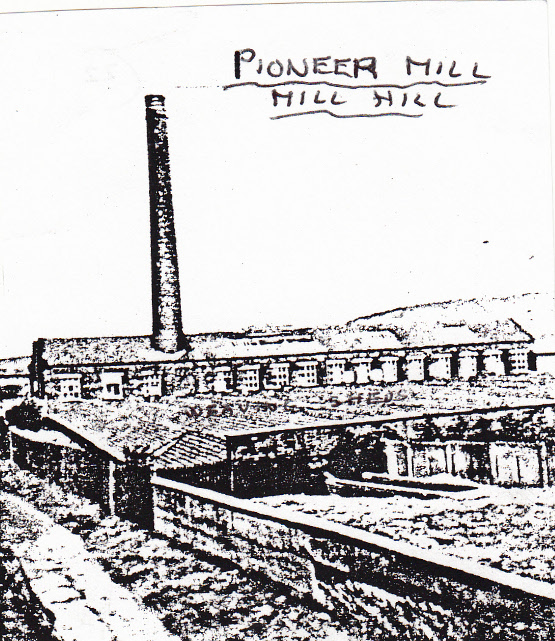 Pioneer Mill Alongside the Leeds Liverpool Canal
Apart from cotton mills William Moss had a large bobbin/shuttle works at the top of Moorgate Street (see map).The only other significant industry in the area at this time was brick and tile making because of the demand from mill and mill house building indicated by the huge growth in the earlier brick works to the east of New Chapel Street where Mill Hill Brick and Tile Works were situated. Here can be seen clay pits where local clay was used (see the 1895 map). Another large brick works was built by the Orlando Brothers about 1847 alongside the Leeds Liverpool Canal close to Brothers Street whose owner also had a colliery at Livesey in 1874 and had previously been an engineer at Blackburn Gas Works. Originally clay for the brick works was extracted from pits in the Meadowhead area off Shorrock Lane and transported by a tramway down to the canal side kilns (see map) and by 1871 37 workers were employed until 1886 when Livesey Brick and Tile Works was formed. The Orlando Brothers made a large variety of bricks including fire bricks and fire clay gas retorts, salt glazed sewage pipes, bends and junction pieces. Bricks from here were used to build Mill Hill Congregational church but later it had to be relined with Accrington Bricks as the old bricks had weathered. The photo below taken in 1891 of the brick work’s workers shows that even at work in those days headgear was always worn and provides a telling glimpse of social conditions of the day through the employment of child labour as they were essential bread- winners in many households despite the Factory Act of 1891 raising the minimum working age from 10 to 11 years.
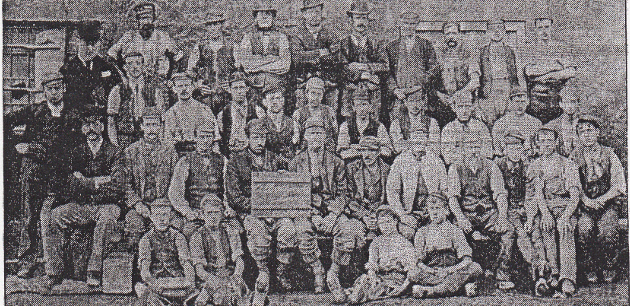 Brick Workers at the Orlando’s Works in1891
Next to the Orlando Brothers works was a chemical works owned by the Mallibeu
Bothers with obvious signs of workings (see map).
By 1895 Mill Hill had its own railway station (opened in 1884), railway sidings where raw materials could be unloaded and finished goods dispatched to markets and its own engine shed for the Liverpool, Blackburn and Accrington Line (see the 1895 map). This indicated the growing importance of rail transport and the decline of the canals as rail speeded up travel especially as rail connections had by now considerably grown.

 Loading more