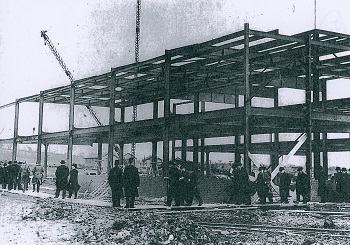
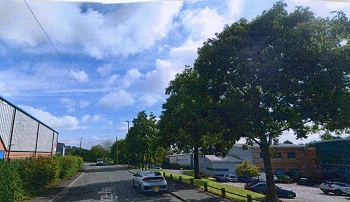
Banner image
Back to History of Whitebirk and Intack

Page 2

A photograph of a completed barge called Alice about to be launched with James Hodson stood on the right of the picture.
This was the last boat to be launched on the third slipway.

Also visible on the 1893 map is a Tramway Depot built alongside Whitebirk Road at Intack. It is close to Accrington Road on land that had previously been farmland which was owned by Blackburn Tramways Co Ltd. By 1898, Blackburn Corporation decided to take the enterprise over in the interests of the Borough's public, and, by 1899, had taken over Blackburn and Over Darwen's Tramway track within the Borough which covered two and half miles. The total cost of both operations was £109,000. Once purchased they began to equip each section of the existing tramway with electricity at a cost of £150,000. The systems route now extended to 14½ miles. At the same time, 48 double-decker open topped trams and 12 single deck trams were purchased, but, it was not until 1907, that all the trams were housed at the Intack Depot. Previously some trams were housed at the Simmons Street, Jubilee Street and Intack Depots. Earlier trams had first been pulled by horses and then by steam engines. The new electric system required overhead electric wires built along the routes supported by posts with arms stretching out to hold the wires. Electric tram services first started in 1899 on Preston New Road and Witton Stocks, followed in 1900, by the Bolton Road to Darwen Borough Boundary. Initially, for the first six years until 1905, the system ran at a loss, but thereafter, it proved to be a financial success for the Corporation. The 48 open topped double decker trams also had an open platform therefore drivers and conductors were subjected to all weathers.
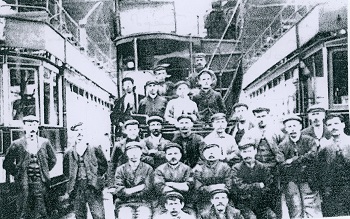
11 Intack Tram works 008.jpg
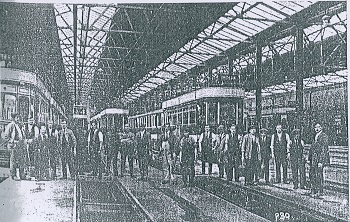
Intack Tram Depot mechanics shown in oil-stained working clothes and obligatory hats
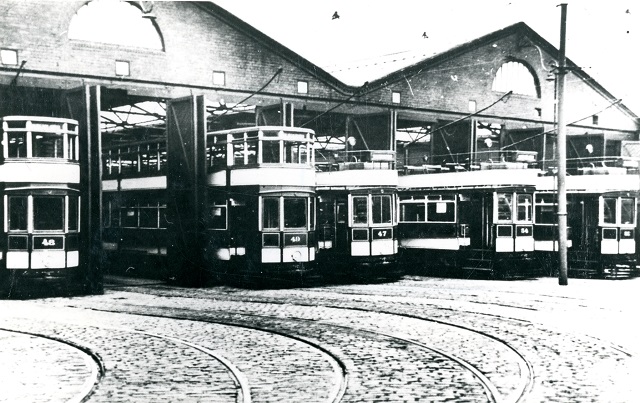
A picture showing both open and closed topped double deck trams at the Depot
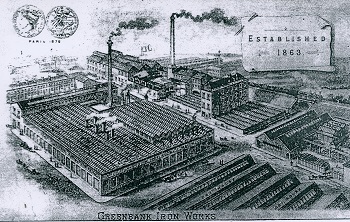
On the edge of Whitebirk and Intack was the Greenbank area of Blackburn where, in 1863, Henry Livesey established a foundry producing general mill furnishings and winding machines for the growing cotton industry. Henry Livesey learnt his trade in textile mills with Joseph Harrison & Sons and he developed ideas for new machinery. The foundry soon became known as the Greenbank Foundry and Iron Works; bobbin and shuttle making was added to its operations in 1871. By 1876, it was producing warping and sizing machines, and, in 1879, a new moulding and finishing shop was added. Further extensions to the by now large works were made in 1905 to manufacture Northrop Looms. Henry Livesey textile looms and other machinery were exported to many countries around the world.​
15 Greenbank Iron Works 009.jpg
 Henry Livesey, Greenbank Iron Works in 1863 
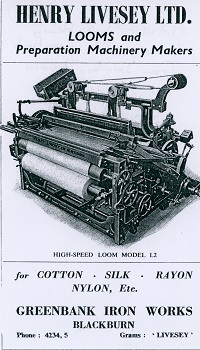
Henry Livesey’s sons Robert, William and Frank took over the company which was headed by Robert. The site now had huge timber stores including ash and sycamore for the manufacture of bobbins, birch used for making spools and yellow pine, cherrywood and mahogany used for parts of the machinery. Large amounts of bar iron and steel were used to make the looms and other machinery much of which the company designed themselves. At its height, the company could equip a weaving shed of 600 looms within four weeks and employed 800 workers. The quality of the machinery produced was of the highest standard which the firm prided itself on and led to a large demand for its products both at home and abroad.
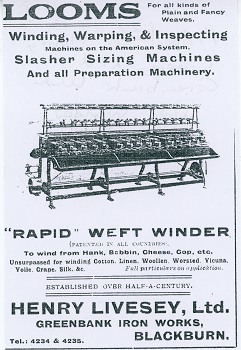
17 Advert Greenbank Iron Works 010.jpg         18 Advert Henry Livesey  011.jpg
Adverts for Henry Livesey Limited Looms and Weft Winder in the 1920’s
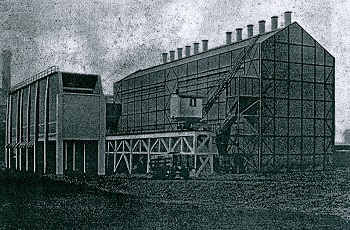
Another Greenbank development during this period was the new Gas Works which opened in 1900 when the company took over Blackburn Gas Light Company that had originally been based in Gorse Street. It was developed due to the great increased demand for gas at this time and the new site provided ample room for an extensive gas making plant to be built. It was also near the railway that ran alongside; therefore, it was easy to transport the coal needed to produce gas and it was also not far from the canal which was the cheapest transport form to bring heavy goods in by barge from the Burnley coalfield. The Greenbank site was eventually taken over by the North- West Gas Board.
20 New Gas works 012.jpg
New Gas Works built at the Greenbank site
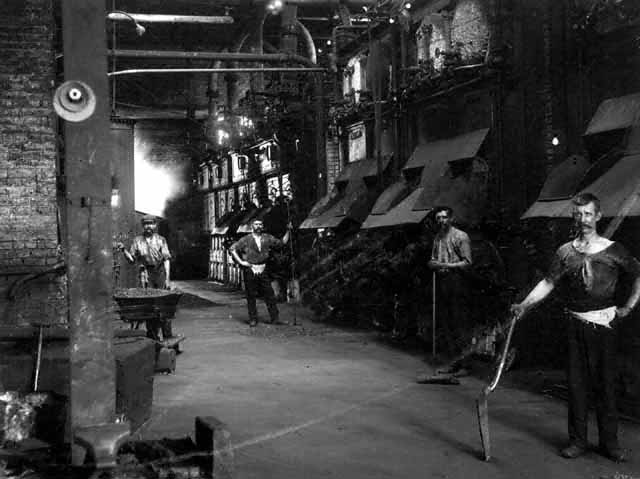
               A view inside the Retort Room showing the workers at the Greenbank site​

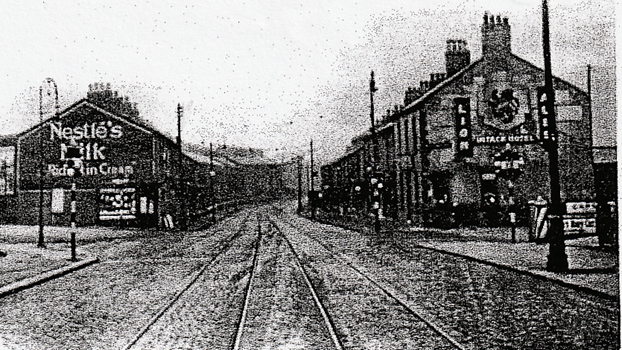
Junction Whiteberrk road at Intack Image 27.jpg
​This early 1900’s view of Whitebirk Drive’s junction with Accrington Road shows the Intack Hotel

 on the right owned by Lion Brewery and tram lines leading into Blackburn centre from Accrington lined by terraced houses
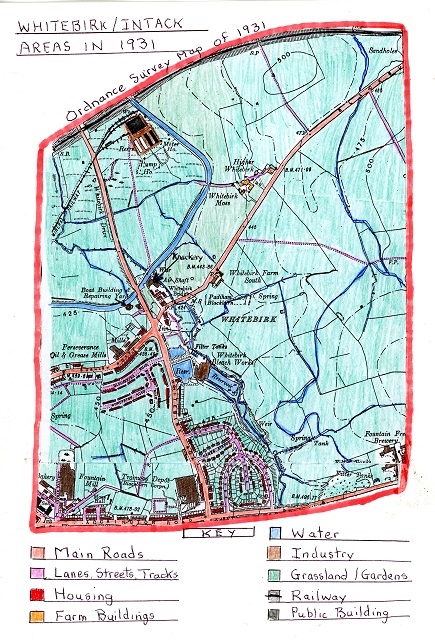
1931 Map of Whieberk 001.jpg
The 1931 Ordnance Survey Map of the Whitebirk and Intack Areas
 
The first major change that is visible on the map over the period of 38 years since 1893 is the loss of farmland. The south and south-eastern areas of Intack were especially affected due to new housing areas. In the north, the building of the new Electric Power Station and its mineral tracks, together with the construction of the new Whitebirk Drive took place. Industrial coverage in the area remains almost the same as in 1893 except for the new Fountain Free Brewery on Accrington Road in the extreme south-east.
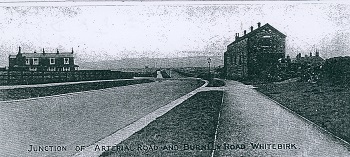
One of the major changes was the construction of Whitebirk Drive across existing farmland to link with the existing Whitebirk Road. This new road was part of the new Arterial Road system designed to take the increased motorised traffic round Blackburn centre rather than through it. Work on this new road system started in 1921 with the aim of relieving the high unemployment in Blackburn following WW1. All the work, including building bridges, was completed by unemployed men of Blackburn Borough and Rishton. This new ring road round the northern part of Blackburn started at Preston New Road and led to Brownhill. Here, it crossed the Blackburn to Whalley Road and continued to Sunny Bower. Finally, at Whitebirk, it met the road from Blackburn to Burnley. Originally, the new road was bordered by fences and measured 120 feet wide between the fences. For most of its journey it was a single carriageway apart for a section from Whalley New Road at Whitebirk to Roe Lee just before Brownhill when it was a dual carriageway. Later, the whole route was made into a dual carriageway. The total length of this new road was 4 1/2 miles. After it was completed Whitebirk Road leading to Accrington Road was also widened. In total, it became the largest road making scheme of the century and the section in Blackburn Borough cost £155,150 with half the costs paid for by the Department of Transport, it was finally completed in 1928.​

24 Junction Whitebirk Road Burnley Road 013.jpg
​​​​​​​​​​​​​A view of the junction of Whitebirk Drive (Arterial Road) and Burnley Road at Whitebirk
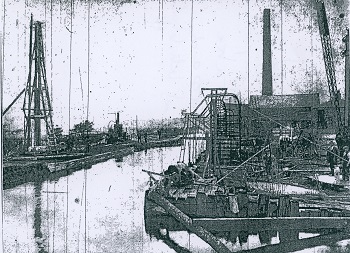
 
26 Bridge being built over canal Whitebirk 014.jpg
The position of a new bridge built over the Leeds Liverpool Canal taking the new road over it at Whitebirk.​
Another major development in the Whitebirk area was the construction of Blackburn’s new Electric Power Station which was opened on 21st October 1921 by Lord Derby. It was the first power station built under the supervision of the Electric Commissioners and owned by Blackburn Corporation. The building scheme, costing £1.25 million, started 20 years earlier but building difficulties due to the First World War delayed the work with the land purchase in 1914. Once completed, it could supply not only Blackburn’s electrical needs but also neighbouring towns and districts. The station was built on open moss land in the north of Whitebirk close to the main railway on a 14,700 square yard site. The two turbines were powered by coal and water and had seven 50,000 steam generating units and four wooden cooling towers. The site had a 20-ton crane for unloading coal barges on the nearby Leeds Liverpool Canal from specially built wharfs and a track (see map) on which to transport coal up to the station and another mineral railway track direct to the station (see map). Previously, electricity had been produced at the Jubilee Street site off the Boulevard area. Water to create the steam power was obtained from wells bored at the site and much of the coal it used came from the nearby Hapton Colliery . Ash from the burnt coal was removed by an electric battery- operated locomotive to a conveyor belt that took it to be distributed on the surrounding land where there was enough room to dump it for many years. The station was built to form part of the National Scheme and the electricity Act of 1919. The building work contract was undertaken by the English Electric Company. Once a new electric sub-station was built in 1933 and transmission lines fitted the electric current could be taken to that of other stations and become part of a new National Electric Grid System and the central Electric Board took control of Whitebirk Power Station.
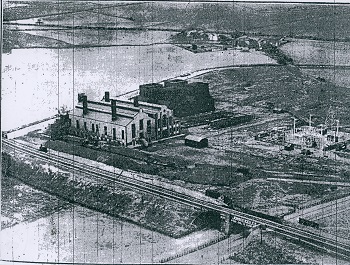
28 Whitebirk Power Station 015.jpg
An aerial view of the new Whitebirk Electric Power Station site and its four wooden cooling towers
 when it was run by the Central Electric Board with a partly constructed sub-station on the right. 

An internal view of the Whitebirk Power Station’s Turbine House
 
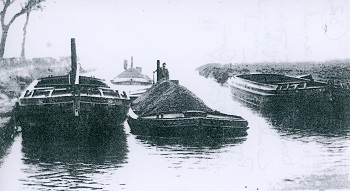
32 Coal Barge 016.jpg
Coal barges bringing coal from nearby Hapton Colliery
 to Whitebirk Power Station and Greenbank gas works. Canal transport of heavy products
 such as coal was very economical e.g. one barge with two trailers could bring 140 tons of coal from Burnley to Whitebirk.
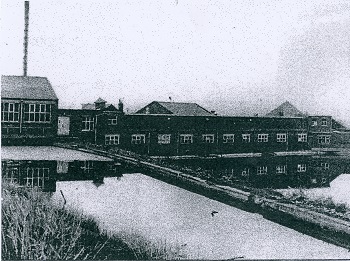
​Of the existing industrial sites T.& J. Hodson boat building yard continued to build a few canal barges but now relied more on boat repairs. The Davies Slaughter-House continued and further refined the business as fewer horses were now used. By 1931, Whitebirk Bleach works had expanded their premises to meet the needs of local textile businesses including now bleaching gauze surgical cloth and piece textile goods.

33 Bleach Works 017.jpg
A picture showing the increased premises at Whitebirk bleach works and their reservoirs.
 
The Perseverance Oil and Grease Mills were now known as Eccles (Oils) Ltd. With the works having been completely re-built since W.W.1. Their products were now sent all over the world and the company was now run by John James Eccles. Adjoining the works was Mostyn house where the Eccles family lived. Intack Tram depot continued as some trams were still in daily use but now all double deck trams were enclosed. By 1929, however, Blackburn Corporation had purchased 12 omnibuses powered by diesel fuel and operated them on the Little Harwood, Wensley Fold, Whitebirk, London Road and Arterial Road routes. In 1930, buses were also used on the Darwen route in conjunction with Darwen Corporation. In 1931, buses took over East and West Park routes, Pleckgate, Guide, Lower Darwen, Mill Hill and Mosley Street routes, and, by now, required 27 more buses and all the buses were now operated from a new omnibus garage at the Intack site. In 1926, Intack depot opened an employees' bowling green adjoining the depot site where previously the land was used for tipping. The opening game was played by Blackburn Councillors. By 1931, the Tramway company had merged into Blackburn Bus company which itself was then taken over by Blackburn Corporation. 
36 Intack Tram Works 018.jpg
​A view of the employed mechanics at Intack Tram Depot.
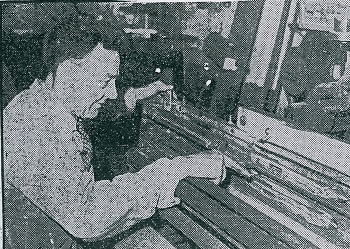
The W. H. Shaw glazed brick works at Whitebirk on the site where the original coal pit was sited continued to 1908 before the business was transferred to Waterside. Later, the site would be developed into allotments. The Greenbank Gas Works had expanded by 1931 to meet the increased demand for gas by both industry and the local population which had grown considerably resulting in gas output doubling. By the end of  W.W.1 an extra carbonising plant had been installed followed by the installation of a new coke and coal handling plant in 1919-1920. Further new plant had to be installed in 1924 as most of the coal was now delivered by railway.
 
Other new businesses in the area included George Broughton & Co. Ltd.; a family business formed in the late 1800’s which became more important as mechanisation developed, and especially, after the arrival of the motor vehicle. It first started in Cook Street Copy Nook where lubricants were blended and then supplied to local industries but as the business expanded it required new premises. The firm re-located in 1928 into a building situated off Whitebirk Road that once housed horses used by Whitebirk Colliery, and later, used the offices of the former brickworks sited there. Eventually, the business would distribute fuels to a wide variety of industry across the country. Another new business in Whitebirk was run by Mr. Peter Bolton, who, in 1919, took over the premises next to Davies Slaughter-House. His business was that of a Slay-Maker and Textile machinist. A slay being a part of a weaving loom that carries the shuttle. He also developed a slay with two shuttles that could weave two pieces of cloth simultaneously and he was soon in operation at Brookside Textile Mill in Oswaldtwistle.
 
38 Man 019.jpg
A view of Mr. Peter Bolton and his two-shuttle slay machine he had invented.

A further new business in the Intack area was the St. Ives Road Shuttle Works, built in 1911, by the British Stationary Co. which changed hands in 1928 when it was sold to William Bancroft Co. who manufactured bobkins, shuttles, picking sticks and other textile related products. The firm was sited alongside Accrington Road, Intack and soon greatly expanded to meet the demand for its products both in the U.K. and abroad. At the same time, during this period, there was a development on the edge of the Intack area also alongside Accrington Road with the Fountain Free Brewery which had a number of works premises (see the south-east corner of the 1931 map). This would have developed to meet the growing need for beer related products due to the increased population in the Blackburn and surrounding areas in the north-west.
Other small businesses in the Whitebirk and Intack areas during this period included the following:
Broughton and Walker Ltd. – Motor Coach Proprietors and Haulage Contractors.
T. & J. Hodson – Wooden Constructions of Whitebirk.
H. Brindle – Decorative Painter of Gorlan House in Whitebirk Road.
Duckworth Brothers of Boundary Garage Intack for Motor Car Repairs.
The other major change to the area shown on the 1931 map was the large increase in housing in the southern Intack area and south of Burnley Road in the Whitebirk area. Moss Hall shown on the map in the south near Accrington Road was soon to be demolished to make way for a second new housing estate off Whitebirk Road.  Blackburn Corporation following direction from the government to build Council Houses to a certain size with gardens chose this site in Intack to build them. In June 1923, Blackburn Corporation Housing Committee asked the Minister of Health for help and approval for the new housing scheme at Intack. By then, the Corporation had purchased 13 1\4  acres of former farmland and had built 40 houses with 20 more being erected the completed scheme to have 97 council houses. These houses consisted of 2 and 3 bedroomed semis and 7 blocks of flats providing 4 self-contained flats in each block. The estimated cost of building 3 bedroomed houses was £400, the 2 bedroomed houses £370 and the individual flats £335. All these properties formed the start of a much larger Council Housing Estate to come with the properties rented out. The new housing was laid out in crescent form along Haricourt Avenue and others to form a compact estate. Although providing better housing there was initially problems getting new tenants to work in Blackburn centre. The development of the new ring road round Blackburn helped but none of the estate areas had shops, public houses or other amenities other than a recreation area. Later, the start was made on a second council housing estate off the other side of Whitebirk Drive, after the demolition of Moss Hall up to Burnley Road, alongside more linear roads such as Worcester, Gloucester and Dorset roads with similar council houses to the first estate but also with more modern terraced and quazi-semi housing blocks. All properties were for rent at a time when Blackburn had begun to clear large areas of old slum housing in the Borough and moving people out to better areas on the Borough’s outskirts and suburbs using former farmland sites.

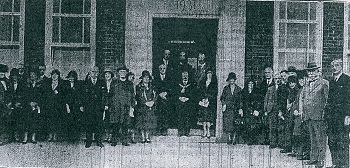
Due to the increased housing in the area a new primary school was required to provide education. In 1931, Intack Junior Council School was officially opened by Alderman W.H. Grimshaw and the Mayor, Alderman Luke Bates. Apart from meeting the needs of the council estates it was also linked closely to Accrington Road senior school. It started with 450 pupils between the ages of 3 and 11 years and the accommodation included an Assembly Hall, eight classrooms and two special rooms for craft work and an open-air one for infant children. The classrooms and Assembly Hall opened out on to two quadrangles with glazed verandas to enable access under cover for moving about the school. The school was built to a design under the supervision of the Borough Engineer, Borough Clerk of Works and borough Architects.
43 Intack School 020.jpg
The School Openin​g Day in September 1931 with the Mayor and other dignitaries.
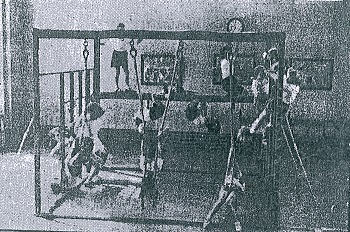
46 Intack School 021.jpg
Pupils at the school enjoy the use of the gymnasium.

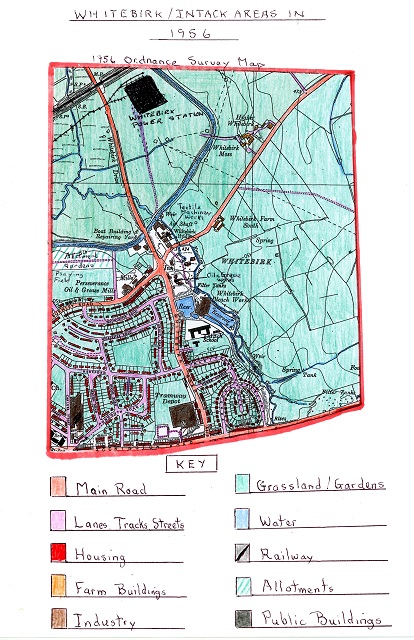
In 1928, the Society of Friends formed an Allotment Committee in Blackburn working with the National Society of Allotments to encourage people without gardens to grow their own fruit and vegetables to improve diets. Blackburn Council made land available at 11 sites with the largest being at Whitebirk which covered 50 acres. Its other aim was to aid unemployment to create the plots with lucky applicants being able to rent them. The Councils Social Services erected huts on the new sites and provided cheap seeds, fertilizers and tools for use on the allotments. In 1935, a Jubilee Club encouraged boys aged 14-18 years to get involved in horticulture and used the sites. The allotments show up on the 1956 O.S. Map just south of the Leeds Liverpool canal on former farmland in Whitebirk.
1956 Map of Whieberk 001.jpg
The 1956 Ordnance Survey Map of Whitebirk and Intack Areas​
 
When comparing the 1956 map to that of 1931, the intervening twenty-five years show the Council has completed its huge housing estate between Burnley Road and Accrington Road on a large area of former farmland. Between 1945 and 1951, 557 council houses were built in the Intack area up to Accrington Road. Some open areas were left for recreation. Allotment gardens and playing fields to provide facilities for the huge increase in the population in the area. As a result of the new council house building, Intack Primary School required increased accommodation. Mrs Higham took over from Miss Bolton as headmistress in 1936. By 1952, the school had 469 pupils with an added classroom attached to the school. Where pupils once ate in the Main Assembly-Hall they now had their own canteen with the hall now used as a gymnasium as well as assemblies, and, for other events.
Of the existing businesses, T.J. Hodson Boat Yard continued under family ownership. By now, however, the canal traffic was lower in volume and they only operated one slip which now had a Belfast Roof over it. By the mid 1950’s, the yard had stopped building new boats and relied on boat repairs. The business continued to 1960 when traffic on the canal ended due to road transport development. Additionally, boats were now built of steel which the yard could not adapt to or manufacture. Whitebirk Bleachworks was now run by Barnes Brothers Ltd. It had 90 employees by 1956 including some long service workers bleaching gauze, surgical cloth and piece goods. At Davies Slaughterhouse all carcasses had to be transported on ventilated closed waggons. The works had also been instructed to lower the smells coming from their premises because, at times, the smell had been invasive. Mr. Bolton continued with his textile machinery parts business next to the Slaughterhouse. His main products being slays and warp tensions but with the decline in textile production, he now relied on export business.
The Eccles Perseverance Oil Works sited on Burnley Road had now expanded after the works were redeveloped. In 1946, Mr. Eccles was 80 years old, he had been associated with the works for 70 years and he still got up at 5am to oversee the work; he lived next to the works at Mostyn House. The George Broughton & Co. lubricant’s business was still on Whitebirk Road although during the WW2, oil supplies were commandeered for the war effort. In 1948, George and Edgar Broughton were joined by George’s son Rex by which time lubricants for the textile industry had dried up due to its decline. The company diversified into fuel oils to meet the growing market for motorised vehicles plus a growing domestic market for agricultural machinery. Vans were first used for deliveries but with increased trade they bought their first bulk tanker and shortly after introduced the brand name “Gebrol” a short version of the company name.
During the 1950’s the Bancroft’s Shuttle and Bobbin Works on St Ives Road expanded again now focusing on automatic shuttles for home and export markets used by automatic and semi-automatic textile looms. They also produced bobbins, picking sticks and other textile related products via nine factories in the Bancroft group.
The largest new industrial development in the area since 1931 was in northern Whitebirk. At the top of the map, on Philips Road, Blackburn’s first industrial estate was developed and opened in 1938, attracting new industry to the town because of the decline in the textile industry and the need to develop a diversified industrial base. The first firm established on the estate just off Whitebirk Drive was Mullards. It was first known as the Philips Works but later was named after its founder Stanley Mullard who first set up a radio valve company in Surrey. This new business was developed to manufacture wireless and domestic radio components. The business experienced an upturn with the outbreak of World War 2 with the huge demand for valves for radio communications and radar. Major production from its Mitchum works was transferred to Blackburn. In the first year it produced 60,000 valves, and, by 1940, within its 12 mills it was producing over a million. After the War, during the 1950’s, production and employee numbers rocketed. With the end of austerity millions of families obtained their first televisions all filled with valves. By 1954, the factory site had grown to 45 acres with 3000 employees, many of whom, were female. At the time, it was Europe’s biggest valve producer, and, by 1959, the number of valves produced rose to 57 million with a workforce of 4,500. Mullards had to farm out work to seven feeder factories in Lancashire which employed a further 1,500. As a result of this enormous growth Mullard, Blackburn became a vital industry for Blackburn’s economy.

49 Philips Factory 023.jpg
 The new Philip’s factory being constructed.
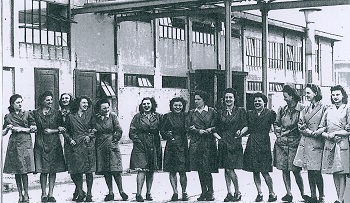
51 Mullard Factory Girls 022.jpg
Mullard factory girls pose for a picture showing the growth of female labour force in the early 1950’s.
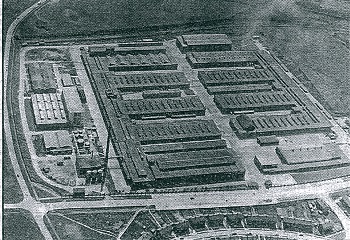
54 Philips Factory 024.jpg
A 1954 aerial view of the vast Mullard site which had grown swiftly.
 
Another major firm attracted to the new Greenbank Industrial Estate below the Mullards site was British Northrop Ltd. The company started making automated textile looms in 1902 having evolved from Henry Livesey’s Greenbank foundry (see 1893 notes earlier). By 1956, this important Blackburn company exported looms to all cloth producing countries in the world. At the same time, the company constantly researched new designs for their weaving machines to advance their efficiency, creating a new range of single and multi-width machines. By 1956, all the Northrop operations were now taking place in one building on the industrial estate.

A view of the Northrop building on the industrial estate.
By 1936, Intack Tram Depot had become Intack Bus Depot, all trams having ceased service in 1949. The depot was extended and re-modelled to handle buses which were assembled and bought in from bodybuilders. They were maintained by a team of mechanics. Both double decker and single decker buses now operated Blackburn and Darwen routes.
At Whitebirk power station, the original wooden cooling towers had been replaced with concrete towers built between 1942 and 1954. The station continued to increase its electrical output both for the local market and for the National Grid using coal to operate its turbines. Most coal now arrived at the site from both road and rail routes. In 1947, two new giant alternators were fitted at a cost of £2 million, and, in 1948, the station passed from Blackburn Corporation to the North-West Electricity Board (NORWEB).

At the Greenbank Gas Works, the site continued to be extended to meet the increased demand for gas. Coal was still used to produce the gas. The site also had a large gasometer to store gas before it was moved locally into the now established National Gas Grid system.
Other changes in the area included women being trained to take men’s jobs during W.W. 2 including operating coal barges on the canal and helping at the Electric and Gas sites. In 1940, two German bombs fell harmlessly on land at Whitebirk between the electric power station and the gas works. By 1956, Whitebirk drive had been upgraded and made into a dual carriageway to meet the needs of increased road transport especially lorries being used to deliver goods directly to company premises and operating out of the same. After war time limitations,  private ownership of cars had grown significantly. As prosperity levels rose, car and commercial vehicle manufacturers moved forward with more automation and new assembly line production to increase output and keep down prices.
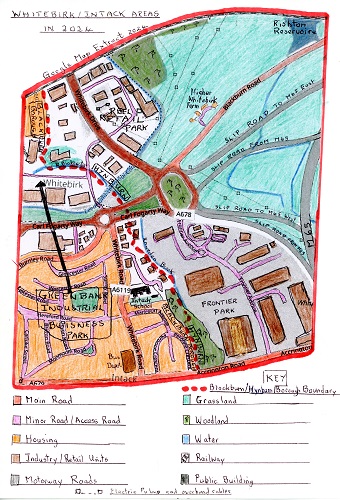
2024 Map of Whieberk 001.jpg
The 2024 Google Extract Map of Whitebirk and Intack Areas
 
The Whitebirk and Intack areas experienced a huge transformation from1956. Now, three-quarters of the once rural outskirts of Blackburn and Hynburn are now built up. Blackburn Council had to act after the demise of the textile industry, and, from 1956, actively encouraged a more diversified industrial base. On areas of open land or cleared land new industries and new housing were established. The pace of change started slowly and accelerated in the 2000’s, businesses were attracted to the new Retail, Industrial, Business and Technology Parks set up by the Blackburn and Hynburn Councils. Large areas of former farmland in the north-west and south-east and land, cleared from the former Electric Power station, were taken up by these new sites. Now, the area is dominated by a myriad of service industries, with the only manufacturing industry surviving being the Engineering Industry. All these new developments are almost exclusively housed in modern units of various sizes. Increasingly, as seen in the recent Frontier Park, becoming used for distribution centres relying on the proximity of the motorway, as road transport now dominates. Today, huge lorries and a wide variety of trucks and vans provide transport in and out of the area. 
The M65 motorway was first proposed in 1969 as a means of direct transport from the Burnley and Colne areas to Blackburn and on to Preston. It was not until 1984 that the Hynburn to Burnley section was completed after many changes. The continuing section to Preston was formed by-passing Blackburn on its way to Preston. It was completed at the end of 1989 with its major interchange, junction six, at Whitebirk roundabout allowing access on and off it via four main slip roads from Whitebirk (Blackburn north) area. During 2007/8, Whitebirk roundabout itself was enlarged to four lanes and given full time traffic lights to help cope with the huge volume of traffic now using the system and to aid congestion at peak times.
At the same time, Whitebirk Drive, part of the orbital route round Blackburn, was further upgraded with more lanes and slip roads to link with the new industrial, retail and housing developments prior to its link-up with Whitebirk Roundabout.​

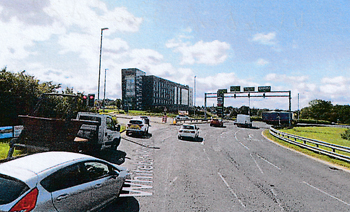
Modern view of Whiteberk Roundabout Image 60.jpg
​A modern view of Whitebirk Roundabout and traffic with the new Frontier Park

Industrial Park off to the right and the new Hilton Hotel

A large percentage of the increased volume of traffic at Whitebirk can be attributed to the huge increase service industries on the four designated Industrial/Retail/Business Parks and the huge increase of private ownership of motorised transport vehicles today. 
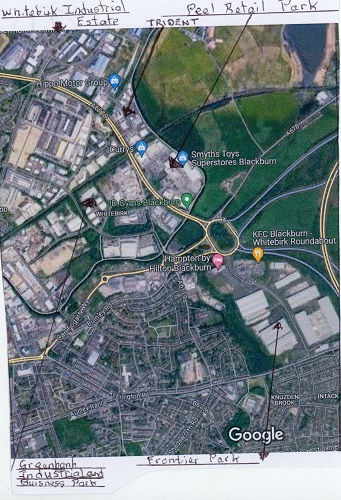
61 Whitebirk estate 025.jpg
An modern aerial view of Whitebirk and Intack annotated to point out key places of the areas today.
The development of the new industrial, business and retail areas, the motorway its slip roads and Whitebirk roundabout have taken up large tracks of former open farmland. A new access link road developed through the Greenbank area was created to link up with Whitebirk roundabout called Carl Fogerty Way creating a junction with Burnley and Whitebirk Roads along which new service industry units will be developed.
Little new housing has been added to the areas and Lower Whitebirk Farm was lost with the development of the roundabout and motorway junction. The Intack council houses on the two estates were upgraded in the 1970’s, and again, in more re
3. Eccles Oil Works off Burnley Road closed in 1970, and the site is now used by various industrial units.
4. Whitebirk Bleachworks was first taken over by Staflex in 1972, but, by the late 1970’s was struggling and eventually closed. The site now houses by a variety of industrial units off Whitebirk Road. 
5. Geoff Broughton’s oil business continued to more recent times but with competition from various sources the site was closed and demolished.
6. Bancrofts Shuttle works off Accrington Road closed in 1981 due to severe foreign competition and the site is now covered with new business premises.
7. Mullard’s site part of the Dutch Philips Group continued, and, in the 1970’s was still turning out 55 million valves a year. Production continued until 1982 whecent times by Blackburn Council.
The existing industry shown on the 1956 Ordnance Survey Map has all gone due to modern developments in both areas e.g -
1. The Boat yard closed in the 1970’s and the site was taken over by Carkes Caravan sales, which, in turn, closed with the modern road works at Whitebirk
2. Davies Slaughterhouse also closed along with Bolton’s Textile Works and the site developed by a Pet Food Firm but in turn these moved with Whitebirk transport developments.n it was the last valve factory in the Western world but eventually closed with the site redeveloped removing most of its buildings off Philips Road. It is now a modern industrial estate within the giant Greenbank Industrial Estate.
8. At the same time, the American Northrop Company, also sited on Philips Road, closed, killed off by fall of the textile industry due to the loss of foreign markets. A​ll the buildings were demolished and recently site is being developed with giant industrial units for new company distribution centres (probably) again within the huge Greenbank Industrial Estate.
9. Blackburn Council’s Intack Bus Depot remains, and, in the 1980’s, a £1 million scheme was started with Phase 1 involving upgrading the offices, fuel depot and open bus parking area. The original tram depot was demolished to make way for a modern building. Phase 2 was completed in the 1980’s.
10. During 1963, there was a time when the weather became very cold and the Leeds Liverpool Canal froze over for 13 weeks, as a result, some of the coal still brought by barge was further moved by lorry which ended the canal’s use. By 1976, the Whitebirk Power station stopped generating power from the site, and, by 1983, the station had been demolished with the first two huge 4000 tonne concrete cooling towers demolished in 1983 followed later by the removal of the other two.
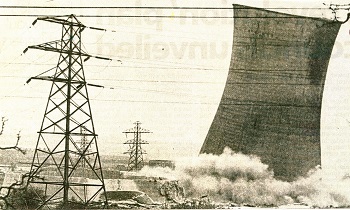
65 cooling tower demolition001.jpg
A picture showing one of the cooling towers of the former Power station being demolished
i
n May 1983. On the left you can see the base of a
 second tower which had already been brought down
 
After the Power station site was cleared, Blackburn’s first retail Park was developed called Peel Park which is now known as Hynburn Retail Park, managed by Peel Holdings. All that remains of the old site is an Electric Sub-Station linked to the National Grid by pylons and still visible in the retail Park.
11. The Greenbank gas station was also demolished as gas supplies now came via the Gas National grid as gas supplies now came from Natural Gas Sites in the North and Irish Seas from off-shore Gas Rigs, or, is imported in liquified form.
​As mentioned earlier, the largest change to the area was the creation of four industrial, business, technology, and retail parks in Whitebirk which are as follows -
(A) WHITEBIRK INDUSTRIAL ESTATE – the first to be created by Blackburn Council based off the top of Philips Road with crescent shaped access roads off it to the numerous companies based on the site next to Whitebirk Drive and its connection to the M65 Motorway network. In total, it houses over 35 companies with the largest including Blackburn Chemicals, Achme Refrigeration, Premier Steel, H & T Pressparts, Pets Choice, Promethian and Auto Choice. The majority are service industries with some engineering and one sewn products firm.

066 Entrance to Whitbirk002.jpg
The entrance to Whitebirk Industrial Estate off
Whitebirk Drive which is shown in the foreground
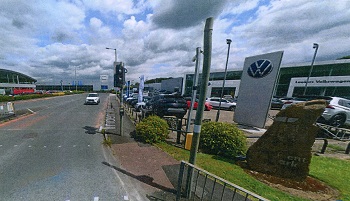
(B) TRIDENT PARK – this estate is sited next to Whitebirk Industrial Estate also off Whitebirk Drive and was developed to house the motor vehicle sales business with Thompsons Audi, Lookers V.W., Bowker’s BMW and Vantage Toyota sites together with repair services. Other sites involve the sale of used cars including Lister and Hippo. Within the park, is the Trident Office Park which houses smaller service industries, solicitors, accountants and finance companies.
​​070 Trident way005.jpg
A view of Trident Way, the central access road in the park with Lookers VW car sales centre
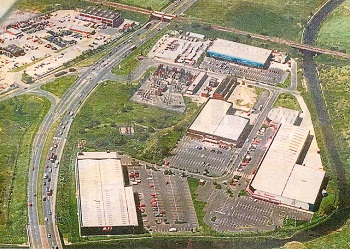
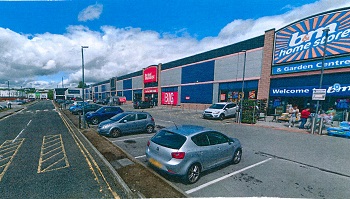
(C) HYNBURN RETAIL PARK – formerly Peel Park and now managed by Peel Holdings who own the site which is also off Whitebirk Drive. This site was developed on the site of the former Whitebirk Power Station and still contains an electric sub-station. It was first developed in the 1980’s although many of the original occupants of the newly built units are no longer there including MFI and Payless shown on the aerial photo below. At present, the main retail businesses on the site are Curry’s (Electrical), SCS (Home Furniture), Prestige Beds, Howdens (Joinery and home improvements), Dreams (Beds), Wren (Kitchen and Bedroom Furniture) Smyths (Toys), J.D. Sports, Iceland Warehouse (Food), B&M Bargains (Food & Household Goods), Aldi (Supermarket), Home Bargains (Supermarket) JD Gym’s, Costa Coffee and Sofology (Home Furnishings) . Peel have tried unsuccessfully to persuade Hynburn Council to allow them to expand the park without success as they felt it would affect Accrington shops and stores.

72 Whitebirk estate 026.jpg
An aerial view of the original Peel Retail Park in the 1980’s with MFI (DIY) store on the bottom left,
Payless in the centre (now Aldi) and Queensway Carpets on the right by the canal
 and the electric sub-station near Whitebirk Drive. On the left side of Whitebirk Drive
 can be seen North-West Electrics depot in the Greenbank Industrial Estate.
74 Whitebirk estate 027.jpg
A modern view of the B & M and Iceland warehouse stores within the park.

(D) GREENBANK INDUSTRIAL and BUSINESS PARK – this is by far the largest park extending from Whitebirk Roundabout to the north of the 2024 Google Map to Philips Road. It has main access roads namely Blakewater, Greenbank and Philips and Challenge Way, off which are numerous crescent shaped minor access roads to the commercial units. The park was developed by Blackburn Council to offer more diversified industries to Blackburn and contains many companies mostly housed in modern units apart from a few on the old Mullards site. Some of the largest industrial business and retail sites include Mercedes (Marshall’s). Ford Centre, The Range, Khanjra International (Food Supplies), Silicone Engineering, The Police Headquarters and the Electricity North-West Distribution Centre that covers the largest site together with its own Training Centre. Other large sites include EMR Recycling, MK Transport (Heavy Haulage) with large new units being created near the old Imperial mill and on the old Northrop site. Within this large park are other specialist areas:
(1) Blackburn Technology Centre where 14 offices are occupied with the larger units taken by Greenbank technology Centre, Blackburn College, Saturn, Whitebirk Sink Co., Technology Management Centre and some large units under construction.
(2) Atlas Park (Adnam’s) which houses Sage, C&B- commercial vehicle supplies, BEC, Direct Sips (Wood supplies) and accountant/finance offices.
(3) Mullards old site – the largest units include Graphix (printed signs), Europapers, Crown optical and Ribble Business Park which houses the Artificial Grass Co., Ribble House Business Centre

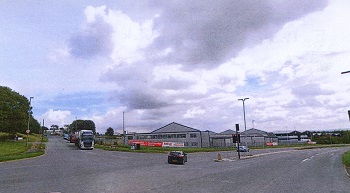
078 Charnley Way 001.jpg
  A view down the main access road in Greenbank Industrial Park called Challenge Way
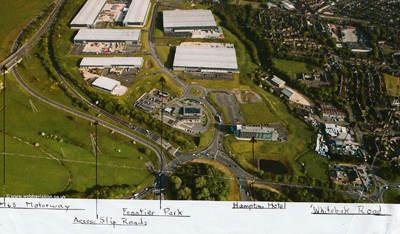
(E) FRONTIER PARK – the most recent industrial development owned by the Issa Brothers stretching from Whitebirk Roundabout to Intack and Accrington Road with a main through road called Frontier Avenue off which are access roads to the new site’s units. This is a mixed development with retail units for food outlets including Greggs, Subway, Starbucks and KFC. It also has the new Hampton Hotel owned by the Hilton Group on a large prominent site off the Whitebirk roundabout and entrance to the park. Other large modern units on the site are operated by distribution firms including E.G. Garages, Staci, Alufold, Tec Dry, Science in Sport, Fagan and Whalley Freight Depot, Frontier Park Depot and Taziker.
aerial view frontier Park 80.jpg
An annotated aerial picture of Frontier Park’s location.
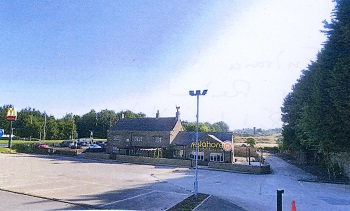
(F) Whitebirk Road Developments in the Intack area shown below are-
085 Entrance to Whitebirk 004.jpg
The Mylahore Indian Restaurant in the old Red Lion Hotel and the sign for the
McDonalds Restaurant behind both sited by the link road leading off from Whitebirk Roundabout
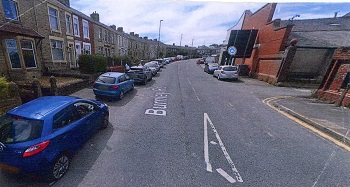
 
087 Burnley Road 003.jpg
An old industrial building shown on the right which is now divided into units for motor
 vehicle repairs with the original Burnley Road terraced houses shown on the left of the picture
Blackburn is to develop a new muti-million-pound estate of affordable homes for rent on a new Whitebirk Park Estate in partnership with Social Housing provider Together Housing and the Place Capital Group. The new estate will have 152 homes including 46 one-bed apartments, 45 two-bed houses and apartments, 54 three-bed houses and seven four-bed houses. The new estate will be based on the existing Hereford Road, Worcester, Brecon, Devon and Gloucester Roads of the existing post war council estate mentioned earlier in this article with the existing houses being demolished to make way for the new ones. The proposals, following consultation with the local residents, will include millions of pounds of investment in the wider Whitebirk and Intack community, including upgrades to green spaces such as the park off Hereford Road. It is intended that the new housing will have solar panels and source heat pumps to keep bills low and meet energy efficient guidelines.
The updated developments displayed by the 2024 map show just how much the Whitebirk and Intack areas have changed in modern times leaving little evidence of their historical past.
Resources

The author's own local history collection

Barrett’s Trade Directories – various years held in Blackburn Library
Beattie, Derek, Blackburn: A History, Carnegie Publishing, 2007
Notes on Whitebirk, E02 Whi (Bound Newscuttings, Blackburn Central Library) plus a range of general news cuttings held in Blackburn Central Library
Ordnance Survey Maps (Blackburn Central Library) plus Google Maps
Rothwell, Mike, Industrial Heritage: A Guide to The Industrial Archaeology of Blackburn. Part One: The Textile Industry, Hyndburn Local History Society, 1985
Rothwell, Mike, Industrial Heritage: A Guide to The Industrial Archaeology of Blackburn. Part Two: Other Industries, Hyndburn Local History Society, 1968 
Timmins, J.G. Handloom weaver’s cottages in central Lancashire (Occasional Paper), Centre for North West Regional Studies, University of Lancaster, 1977
The Victoria County History of Lancashire​


​​