
 Loading more
Page 2
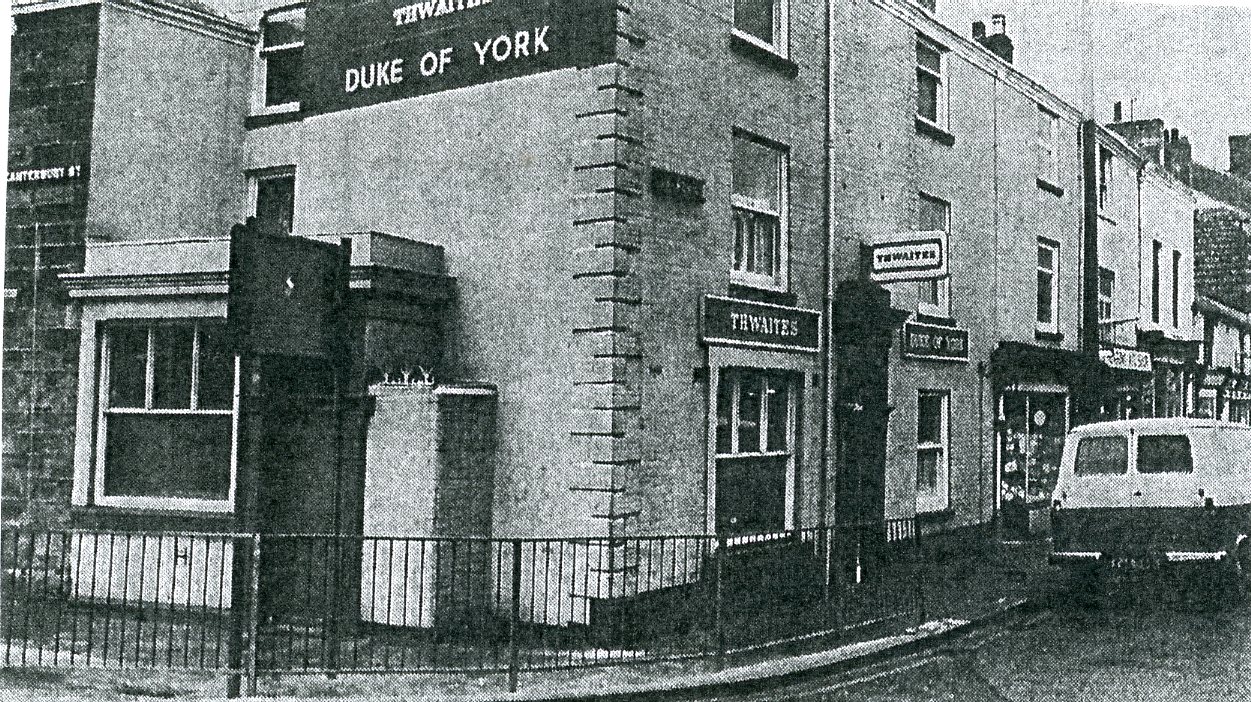
The Duke of York Inn on the corner of Darwen Street and Canterbury Street.
OTHER IMPORTANT BUILDINGS ON DARWEN STREET
1. LANCASHIRE AND YORKSHIRE BANK – This was opened in September 1903 by Mr. Henry Whitehead the High Sheriff of Lancashire together with the directors of the bank. It is situated just beyond the Old Bank on the corner of Market Street Lane on the west side of Darwen Street . The architects Messrs. Stones and Stones presented Mr. Whitehead with a gold key on which the arms of the Borough were engraved. The new bank buildings were part of an architectural regeneration of Darwen Street. On the top two floors of the building were suites of well lighted offices and the bank manager’s office all with open fires for heating. There was also an extract ventilation system using electric fans via the buildings tower. On the ground floor there was a large telling room with a public entrance through mahogany vestibule doors. Also, on the ground floor there is a client’s room, manager’s room and a telephone room and toilets in the basement where there was also a strong room.
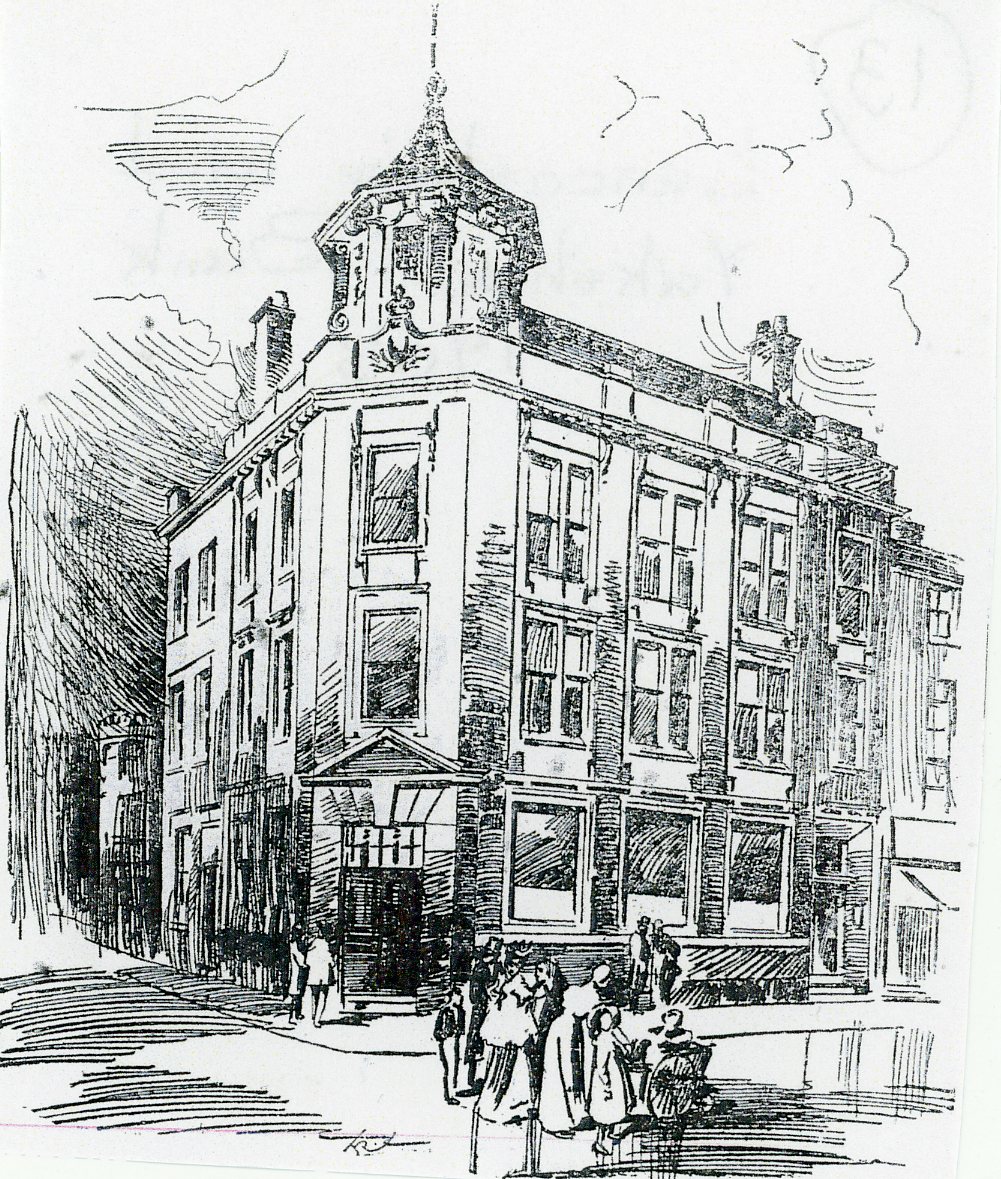
Lancashire and Yorkshire Bank 1903.
2. THE OLD SMITHY ON DANDY WALK JUST OFF DARWEN STREET – So far, as is known, this building of antiquity was always called the” old smithy” and looked old, being made substantially of stone. It is thought that it was originally the smithy of the old cotton mill nicknamed the “Dandy Factory” or, officially called, Jubilee Mill, therefore the building would date back to the 1820’s. This factory gave its name to Dandy Walk, a footpath leading down from Darwen Street to “The Boulevard”. The factory was well known for introducing an improved hand-loom in a light iron frame much different from the heavy wooden frame of the old loom and was christened the “dandy” loom. At the time of the sketch of the smithy shown below, in 1891, the tenant of the business was William Stott, who was also the caretaker of the Parish Church Schools. The last tenant before the building was demolished in 1908 was Tom Livesey. The owners allowed the building be demolished in order to make way for a large yard needed for the new Post Office on Darwen Street. The floor of the smithy was several feet below the level of the public footpath and was reached by a flight of steps all of which had to be levelled up when the building was demolished. The smithy produced hand- made items such as chains and other metal objects. The upstairs room shown in the sketch was a stock room and, occasionally, when demand was high, it became a horse shoeing forge. One notable worker at the forge was Joseph Harrison when he became a blacksmith and set up business there before moving to Darwen where he specialized in wrought-iron work and manufacturing gates. He later founded Bank Foundry at Nova Scotia and created cast iron lamp posts for the Gas Company, and later, his firm Joseph Harrison and Son created a power loom that was displayed at the 1851 Great Exhibition in London. The loom was made of cast and wrought iron with only a little wood which was quickly adopted by textile mills of the time and brought his family great wealth.
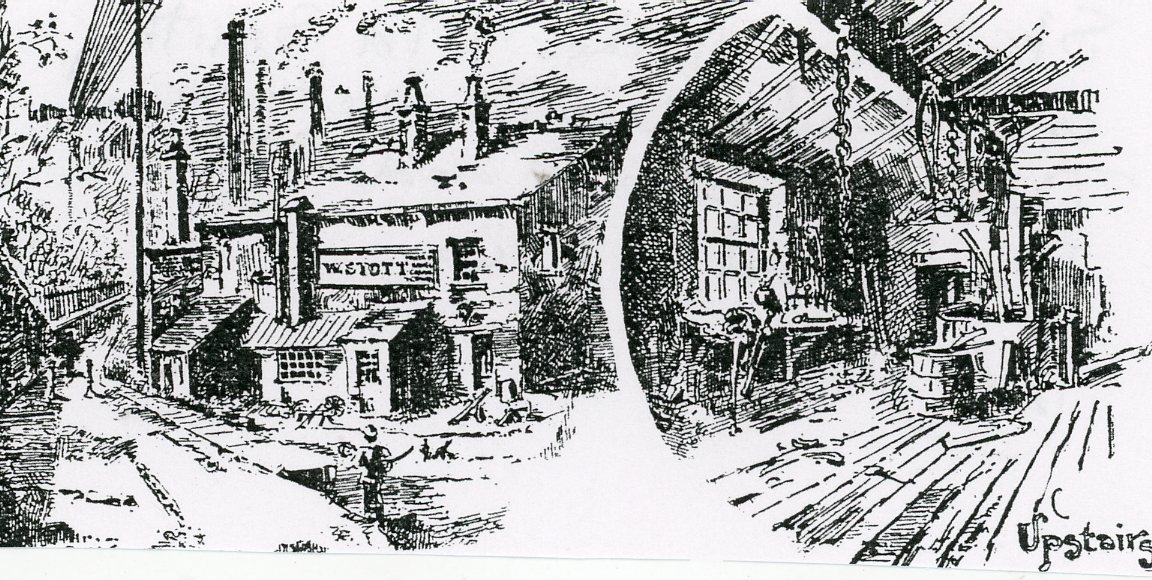
Sketches of the Old Smithy on Dandy Walk between Darwen Street
and the Boulevard 1890’s.
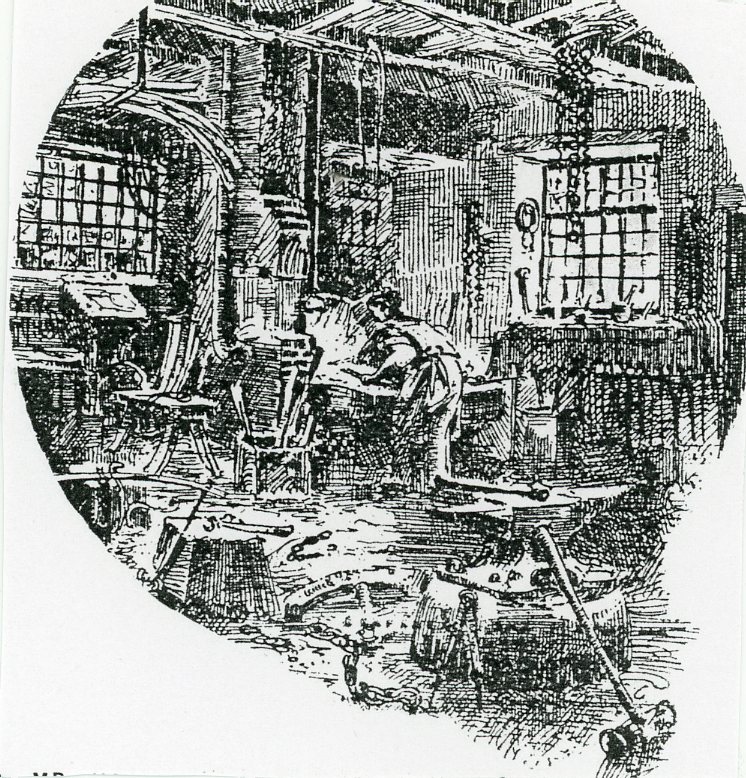
Sketch of the smithy at work on Dandy Walk in 1890s.
3. BLACKBURN PHILANTHROPIC MUTUAL ASSURANCE SOCIETY – This Victorian building was situated on the corner of Darwen Street and St. Peters Street and was one of the earliest insurance businesses in Blackburn.
4. THE NEW GENERAL POST OFFICE – This was created when the business was moved from its old premises on Lord Street West, just above the entrance to the Thwaites Arcade, to a new building on Darwen Street, on the lower side of the entrance to Dandy Walk, on the site of a number of ancient shops, on 9th November, 1907. The move of the General Post office was made over night in order to ensure business was not disrupted. The new building offered more modern facilities from the cramped former premises as postal and telegraphic/telephonic business expanded. The new premises offered a basement for heating and a passenger/luggage lift to upper floors as well as an underground chamber for every telegraphic/telephonic connection and cable boxes linked to the first floor telegraphic machines and telephone exchange. On the ground floor, used mainly by the public, the counters extended along the whole length of the office and the room had a mosaic floor and was walled walled with green and cream tiles with a decorative fresco in which are shown the Royal Arms and the Arms of the Borough of Blackburn. Behind this, on the ground floor, was a sorting room with access on Dandy Walk for the postmen and a loading platform for heavy dispatches. There was also a telegraph messenger’s room. On the first floor was the postmaster’s room, correspondence room, the telegraphic instrument-room and telephone exchange which was five times larger than the one in the old premises. The top floor was used as the engineers’ quarters, mechanics’ room and store rooms.
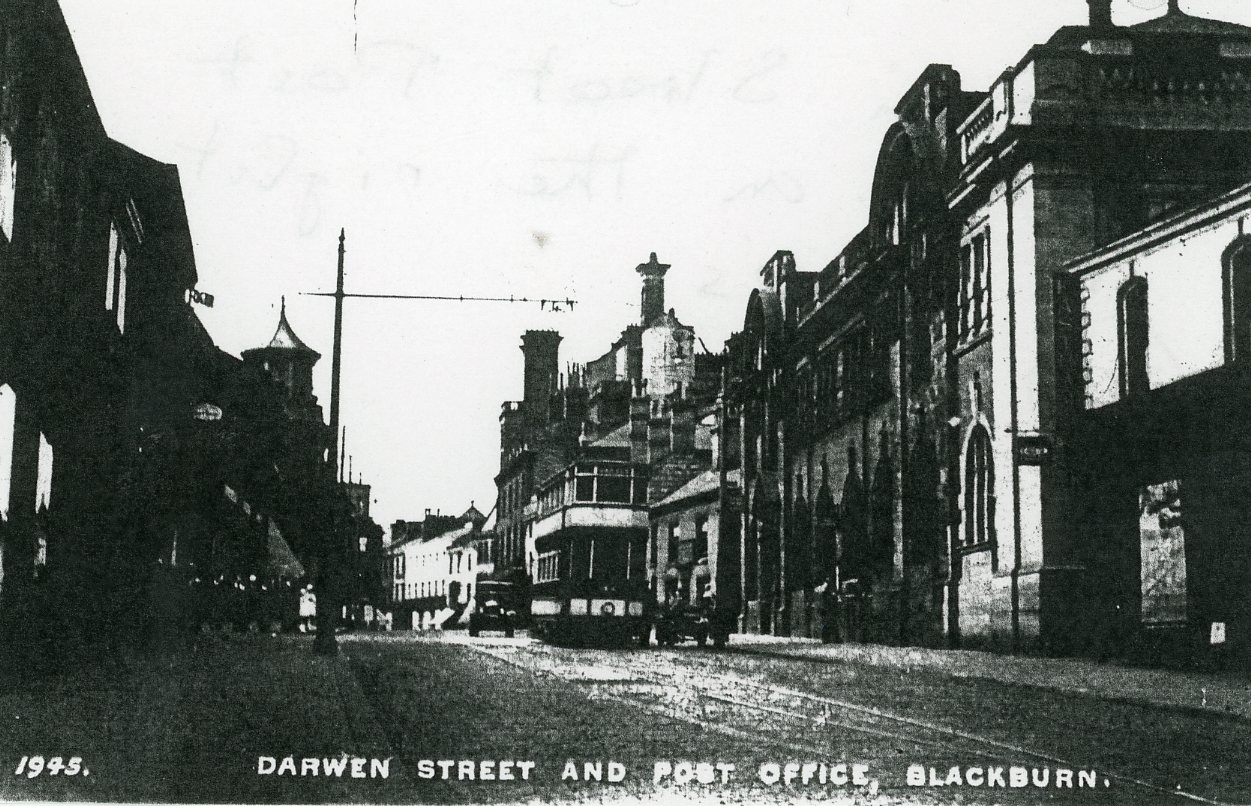
Darwen Street Post Office on the right 1910s.
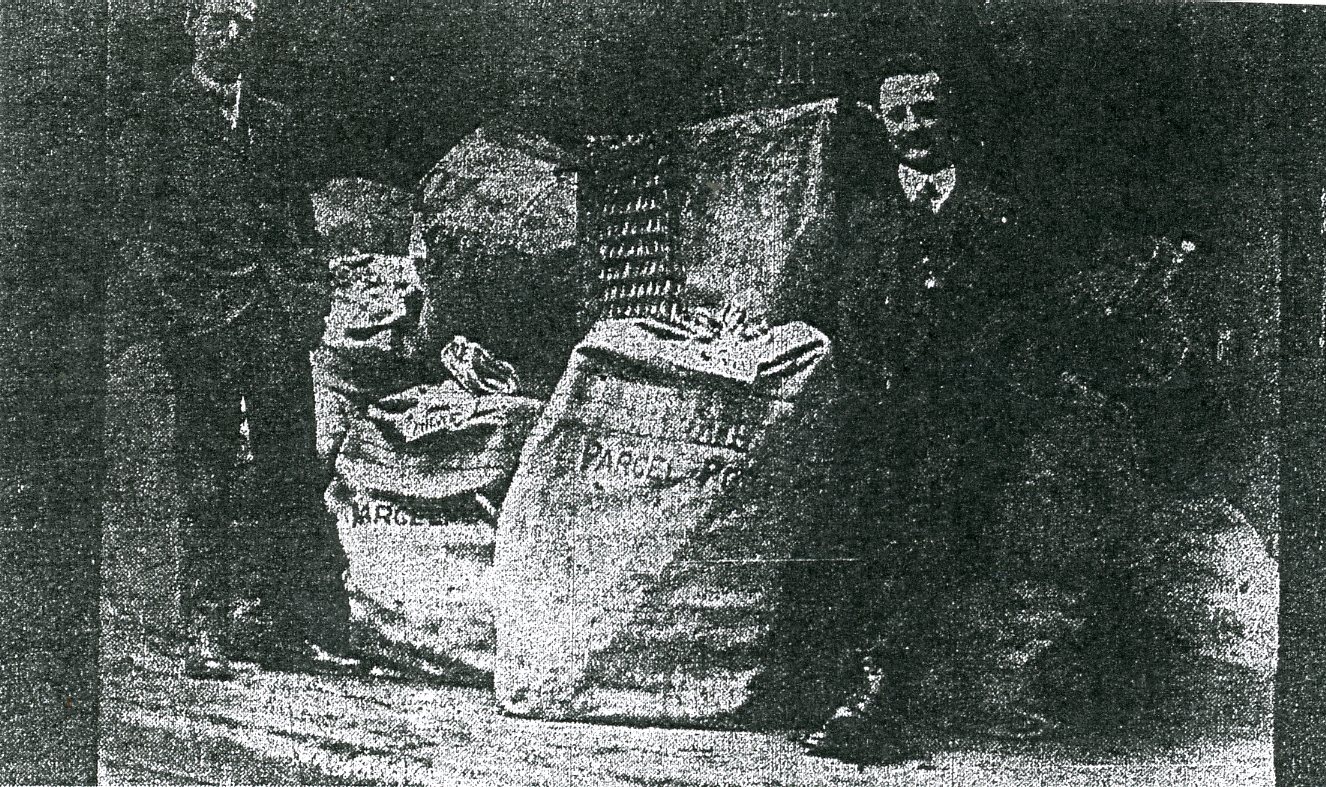
Postal workers with parcels ready for dispatch at the General Post Office
on Darwen Street 1913.
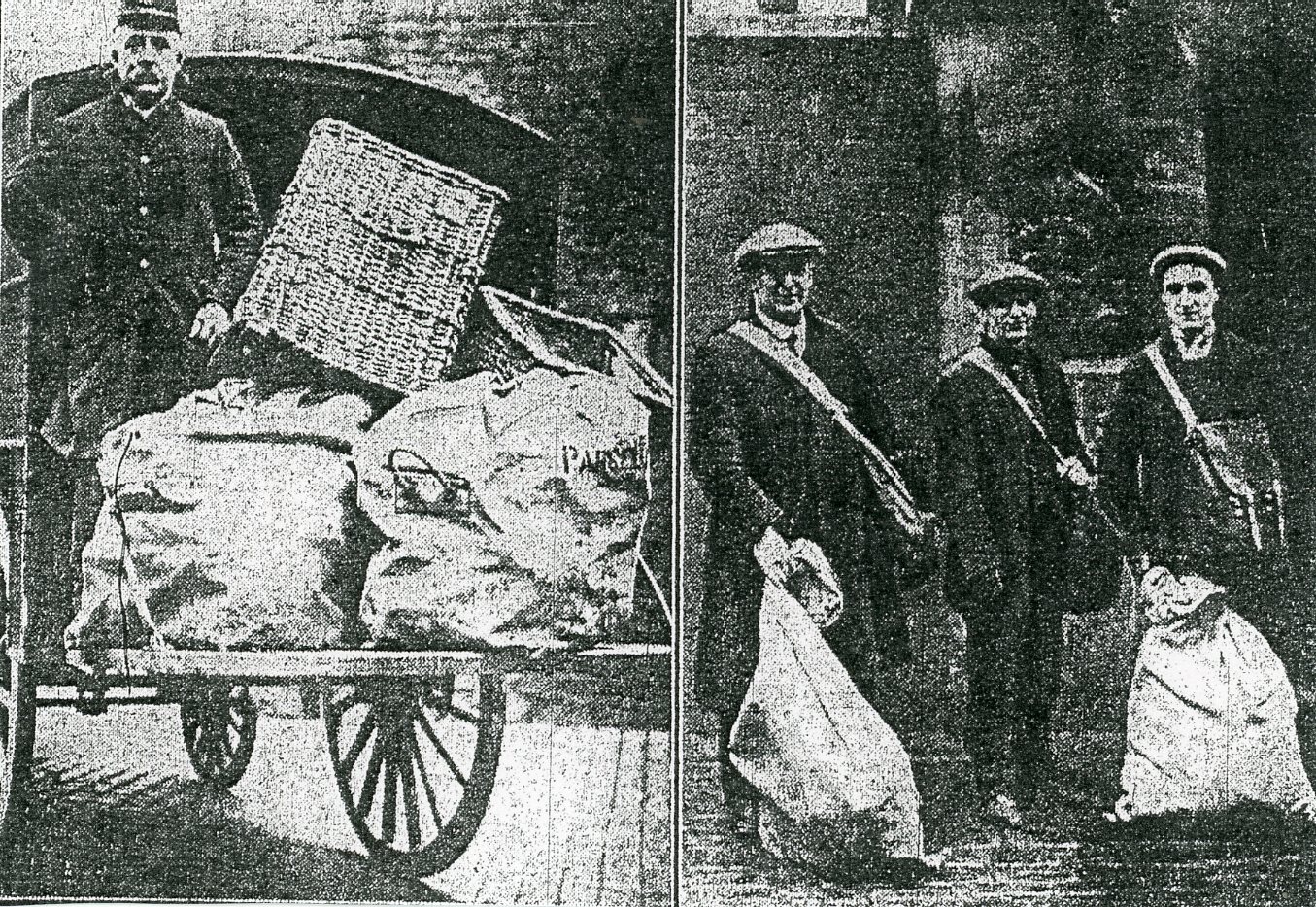
View of early Post Office workers dealing with outgoing mail at Christmas
with early Postmen in 1913.
5. BLACKBURN CENTRAL MISSION - QUEEN’S HALL – Work began to construct the foundations of the Queen’s Hall in the winter of 1921 and, during the digging, they came across the remains of a dead lion. This it transpired had come from a former menagerie/wild beast show which had been held in a large marquee on land off Darwen Street where the hall was built. The show apparently consisted of camels, dromedaries with two humps, monkeys and a lion which were all in cages apart from the dromedaries with a stall selling biscuits to feed the monkeys. Blackburn mission had started in 1906 when they rented the nearby Palace Theatre for rousing Sunday afternoon and evening services with as many as 4,000 people in the congregation when there was a full house on both sessions. The mission congregations at this time sang to an orchestra. Queen’s Hall cost £42,000 to build and the grand building had a vaulted ceiling with balconies and ground floor pews in the centre and sides with 1,750 chairs, with all seats being free. The external fabric of the building had an art deco look with a large central dome. The building itself was demolished in 1972 with the site presently occupied by a British Heart Foundation Furniture Shop.
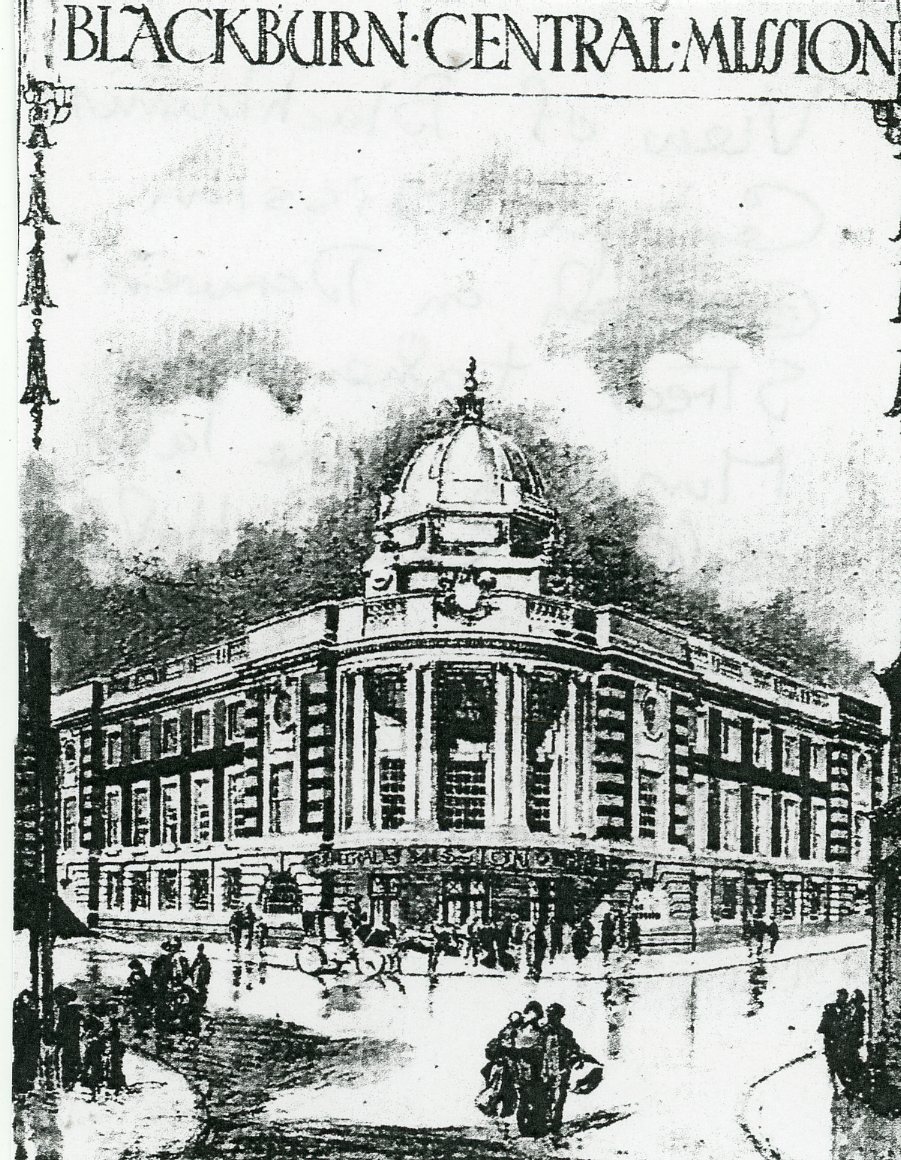
View of Blackburn’s Central mission on Darwen Street taken from Mincing Lane
later called Queens Hall.
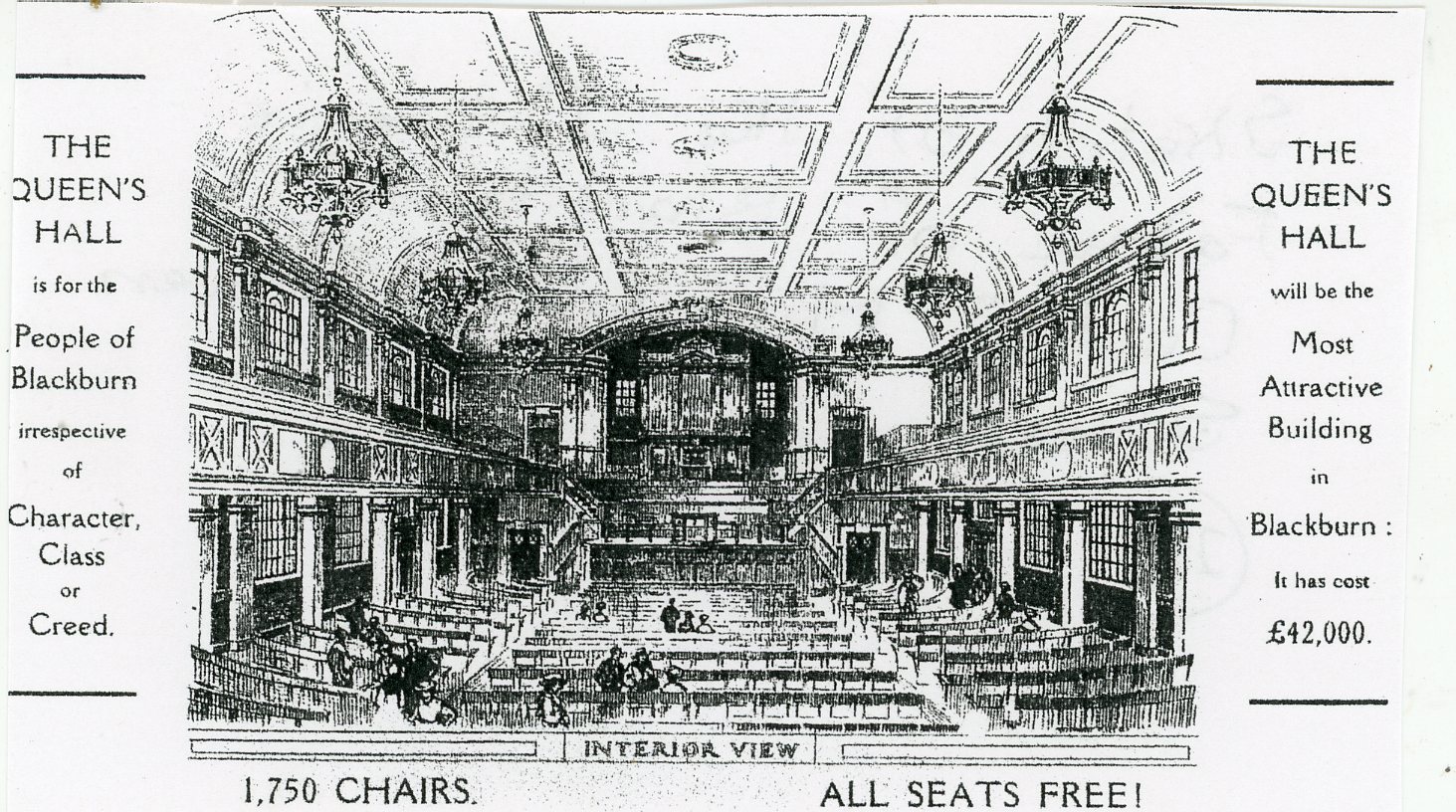
Sketch of the interior fabric of Blackburn’s Central Mission on Darwen Street.
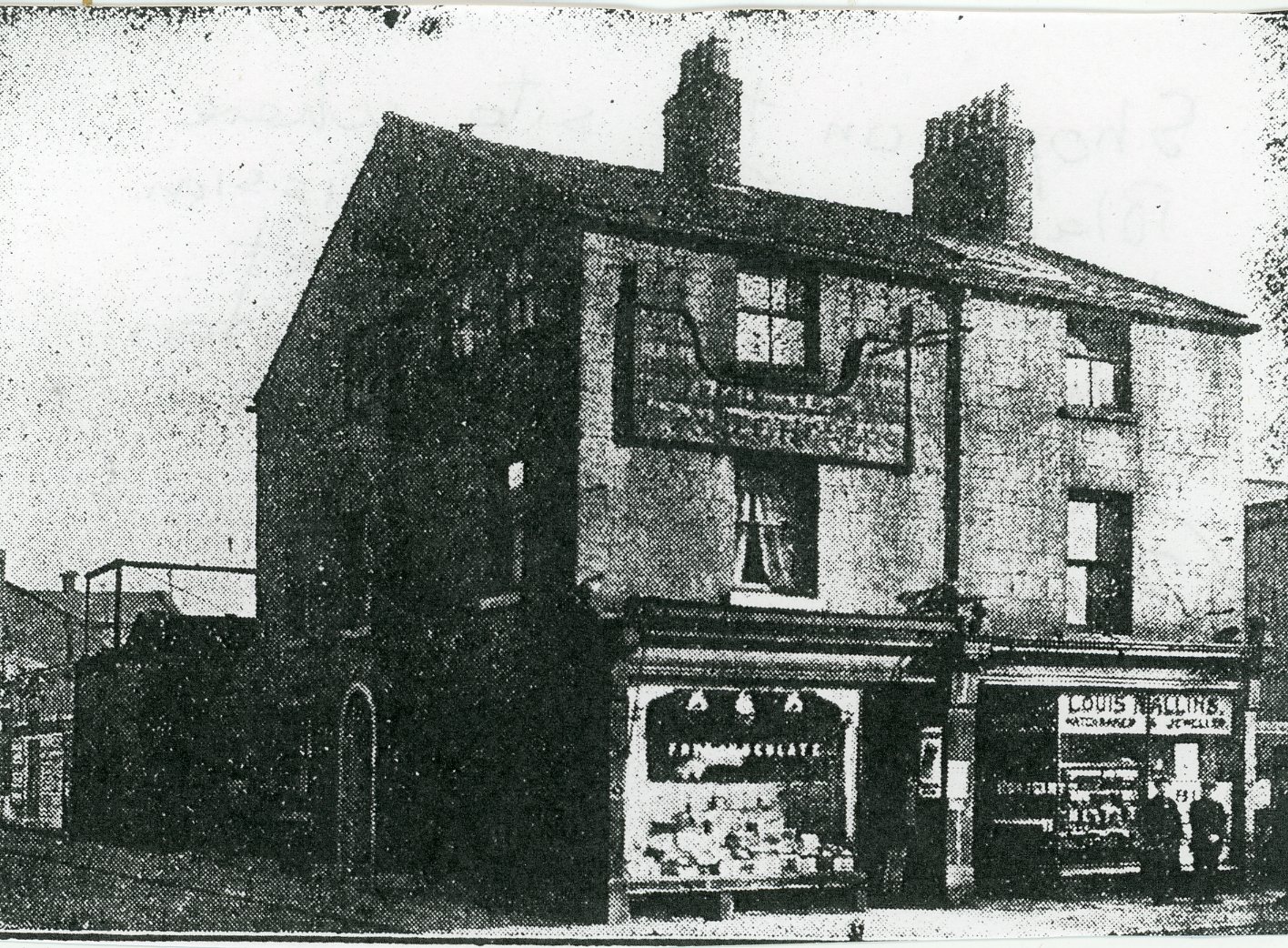
Shops on the site where Blackburn Central mission was later built where
George Street enters Darwen Street 1921.
6. BLACKBURN BOARD OF TRADE LABOUR EXCHANGE – following Winston Churchill’s Act to establish State Labour Exchanges in towns and cities, Blackburn's opened in premises obtained at 100, Darwen Street, next to “Neville’s” hardware/toy store, in 1910. The interior was divided into compartments and had separate entrances for male and females. The Labour Exchanges were established to provide a place for the unemployed to have a central place where they could register for their preferred work, and hopefully, be linked to a job vacancy locally, nationally or even abroad. The idea was to stop the unemployed having to tramp from town to town looking for work and depended on the close co-operation between the national networks of Exchanges. The workpeople were dispatched with a card of reference to the workplace with a vacancy for their interview, and, if not local, could claim travel expenses and even help moving so that when established in a new job they could repay the Board of Trade by easy instalments. Employers wanting workers in a hurry, as they often do, would now appreciate being able to get them by telephone. The Blackburn Exchange, once open, was swamped with men, women, boys and girls arriving to register from its district which included Blackburn, Accrington, Darwen and Rishton.
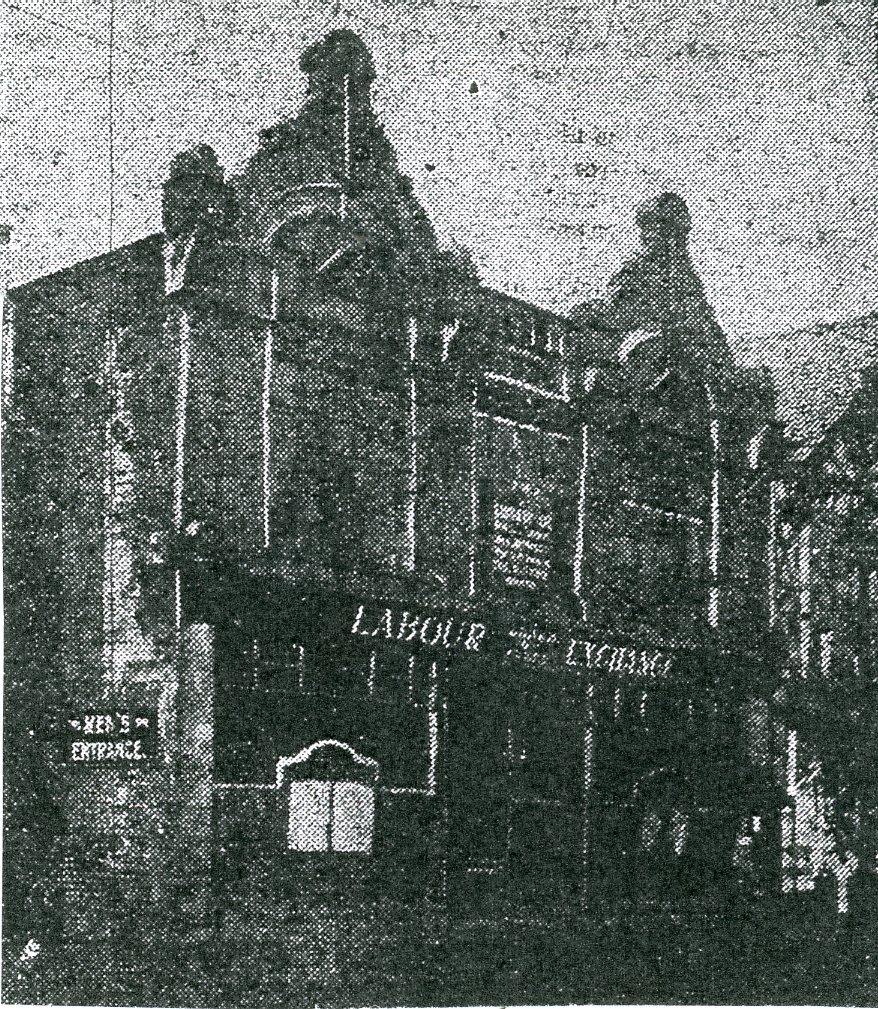
Blackburn’s Labour Exchange 1920 sited next to
Neville’s Hardware and Toy Store, lower Darwen Street.
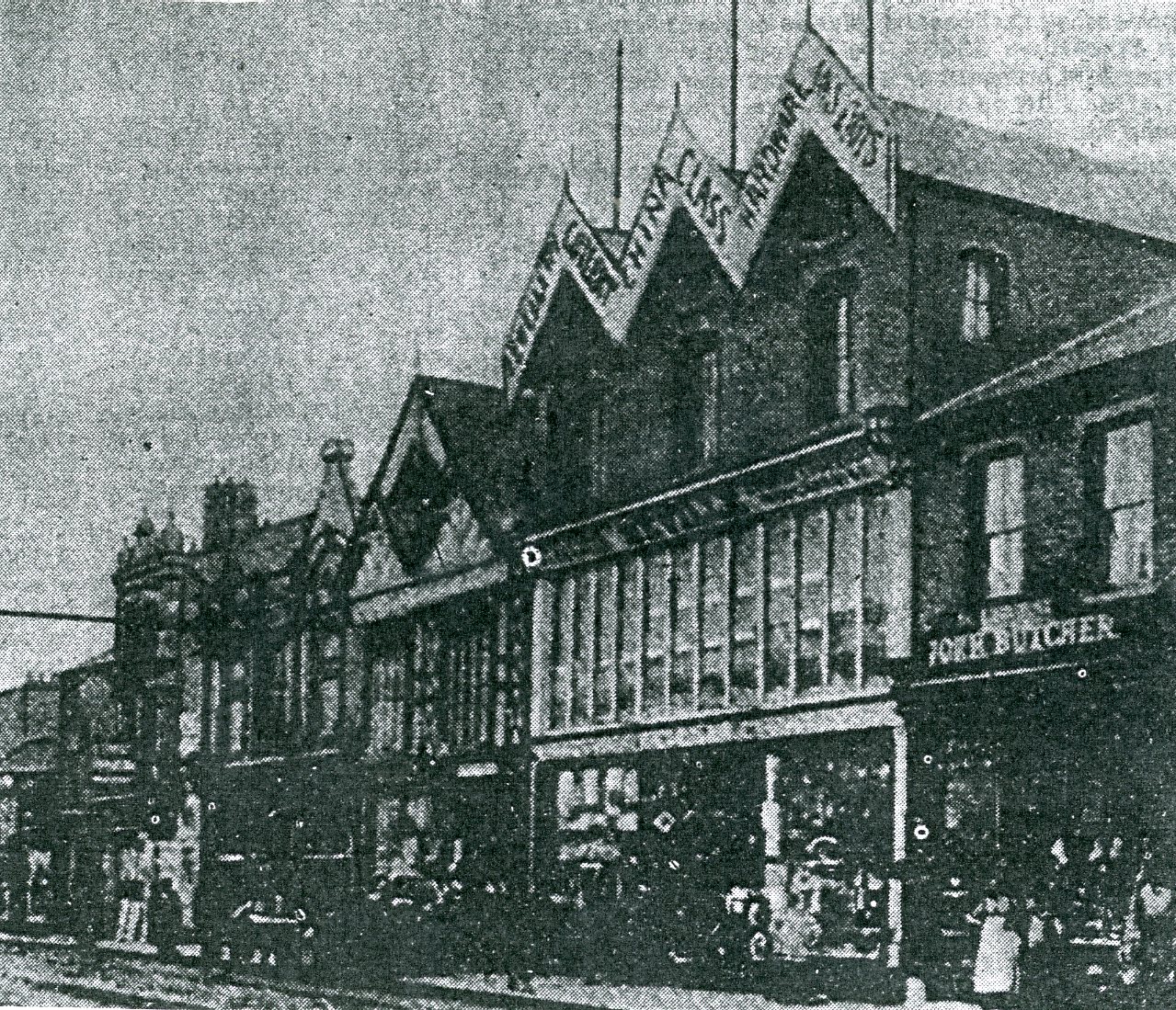
1905 view of Neville’s Hardware and Toy store on lower Darwen Street.
7. THE HOUSE OF CORRECTION/PRISON – This was situated close to the old Darwen Street Bridge over the River Blakewater. It was a lock-up established probably by the Lord of the Manor and was used as far back as 1701 however it ceased to be used around 1830. The bridge is not to be confused with the present day Darwen Street Railway Bridge which is further down the street. At the time, the old bridge marked the limit of Blackburn’s settlement short of the Town Moor. The sketch shown below shows the building just beyond the bridge and, at that time, in 1852, it was used as a barbers shop and umbrella repair shop with the proprietor Mr. Croasdale at the door. He had a large family of thirteen who somehow managed to live in this tiny accommodation. Originally, it was used as the town lock-up as it had a cellar/dungeon below at the level of the bed of River Blakewater and was infested with rats. Into this hole the police authorities used to thrust offenders until they could be brought before the magistrates. John Kay, constable of Blackburn lived at this Darwen Street prison in the early part of the 19th century. He and his two runners (Tom Morton and Tom Woodhall used to keep the town in order using the dungeon which was under the shop and, at one time, was used to store gunpowder (a massive health and safety issue as prisoners were also below in the dungeon!). The last tenant of the old prison before its demolition was a cobbler named Billy Tucker who later died in the Union Workhouse. The last tenant of the shop adjoining was Old Billy Croasdale, the barber, shown in Charles Haworth’s sketch of the House of Correction below.
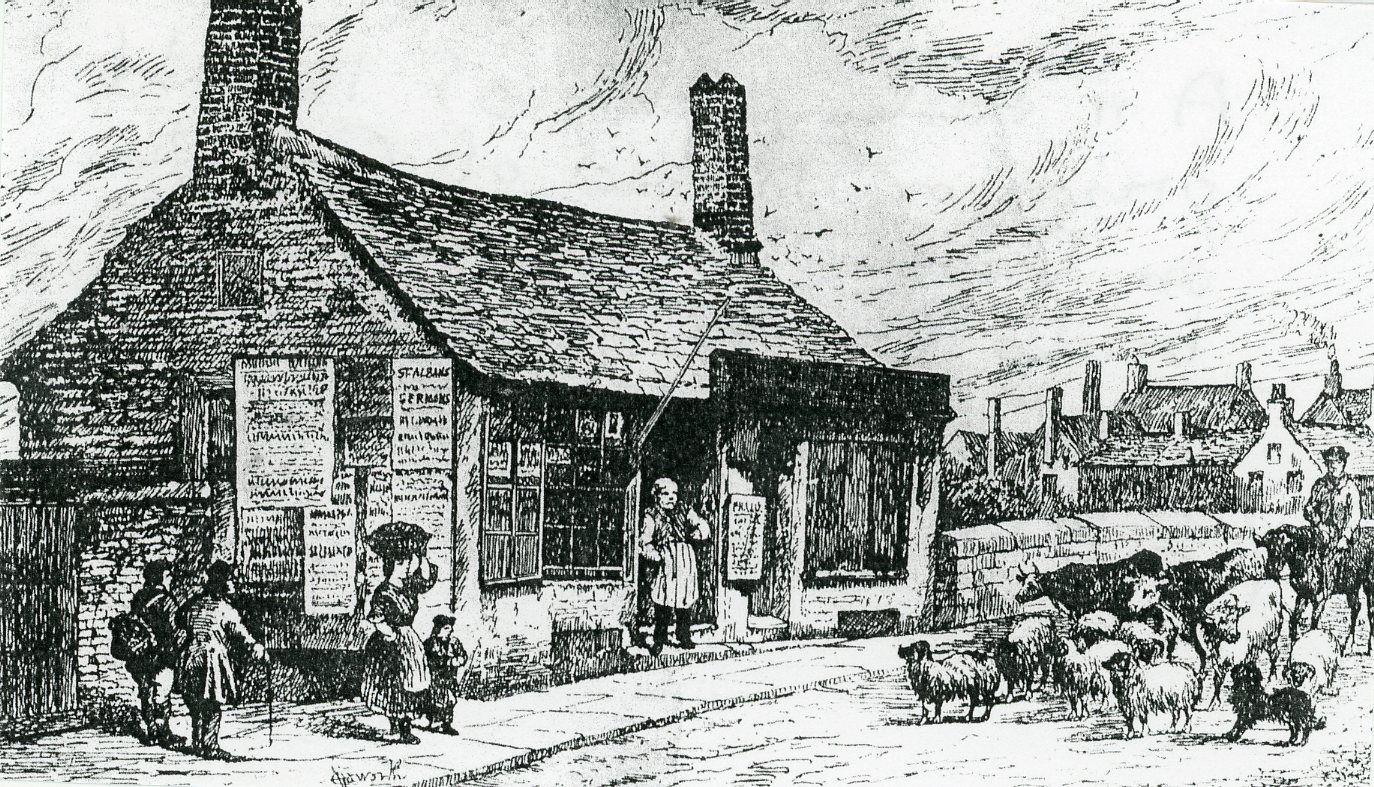
An early print of the old prison or house of correction on Darwen Street
next to the bridge over the River Blakewater 1870.
8. DARWEN STREET RAILWAY BRIDGE – In 1884, the work on widening the old Darwen Street Railway Bridge commenced and continued into 1885; it was a massive undertaking and involved the virtual demolition of the old bridge which first brought the railway to Blackburn in 1846. The date stone opposite the Duke of York Hotel was in place by January 1884 and, not long after, tenders were offered to the Lancashire and Yorkshire Railway Company for the reconstruction of the bridge. The contractors for the work were Messrs. W. and J. Yates of Blackburn Canal Foundry (later the Company became the famous Foster Yates and Thom) who had to make, transport and erect one of the bridge’s wrought iron girders weighing some 300 tons and 150 feet in length! The regulars of the Castle Hotel on the Bolton Road side of the bridge however were not happy that their watering hole had to be demolished for the bridge widening project. During the same period of time, the town’s railway station was being remodelled.
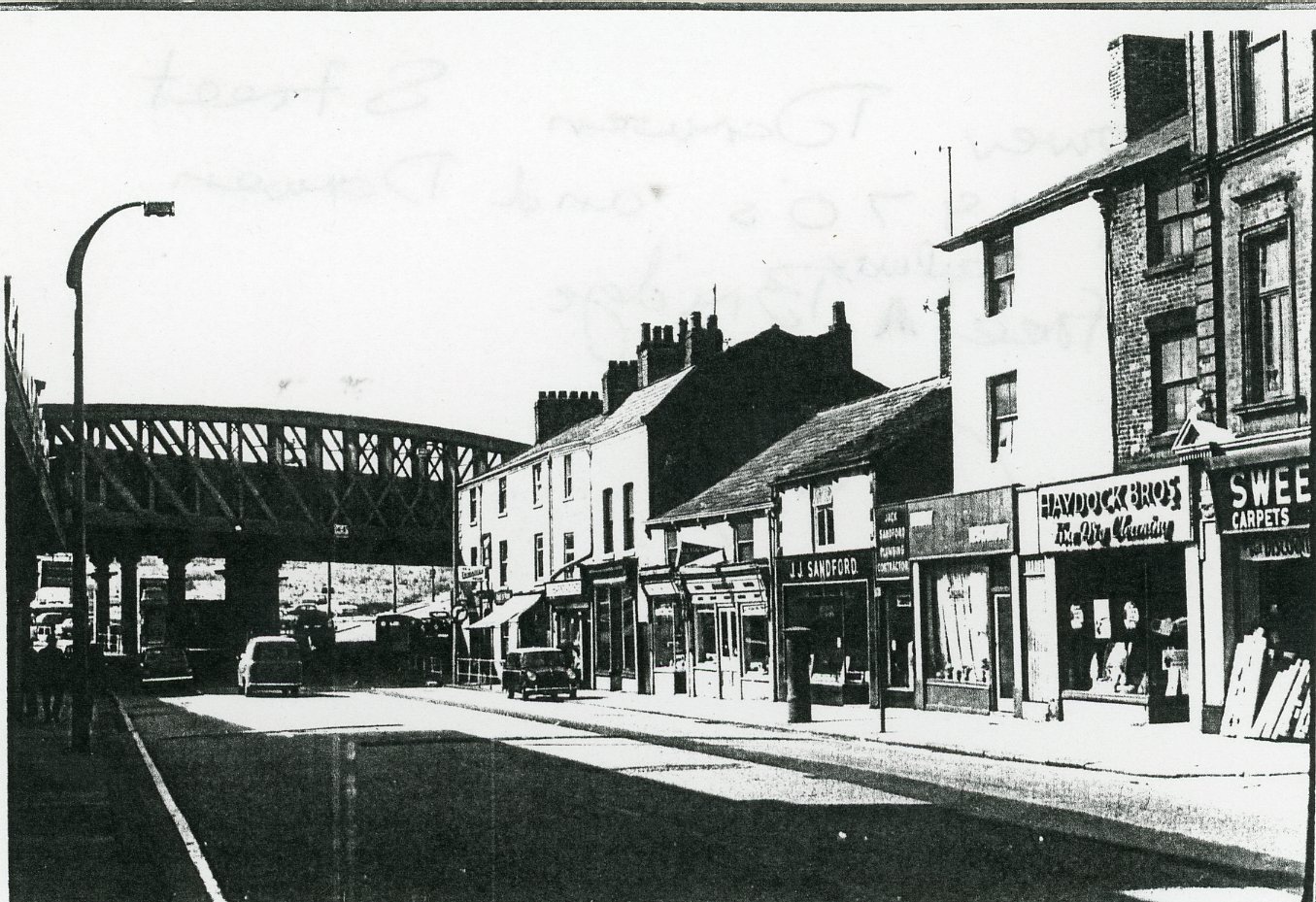
Lower Darwen Street in the 1970s and Darwen Street Railway Bridge.
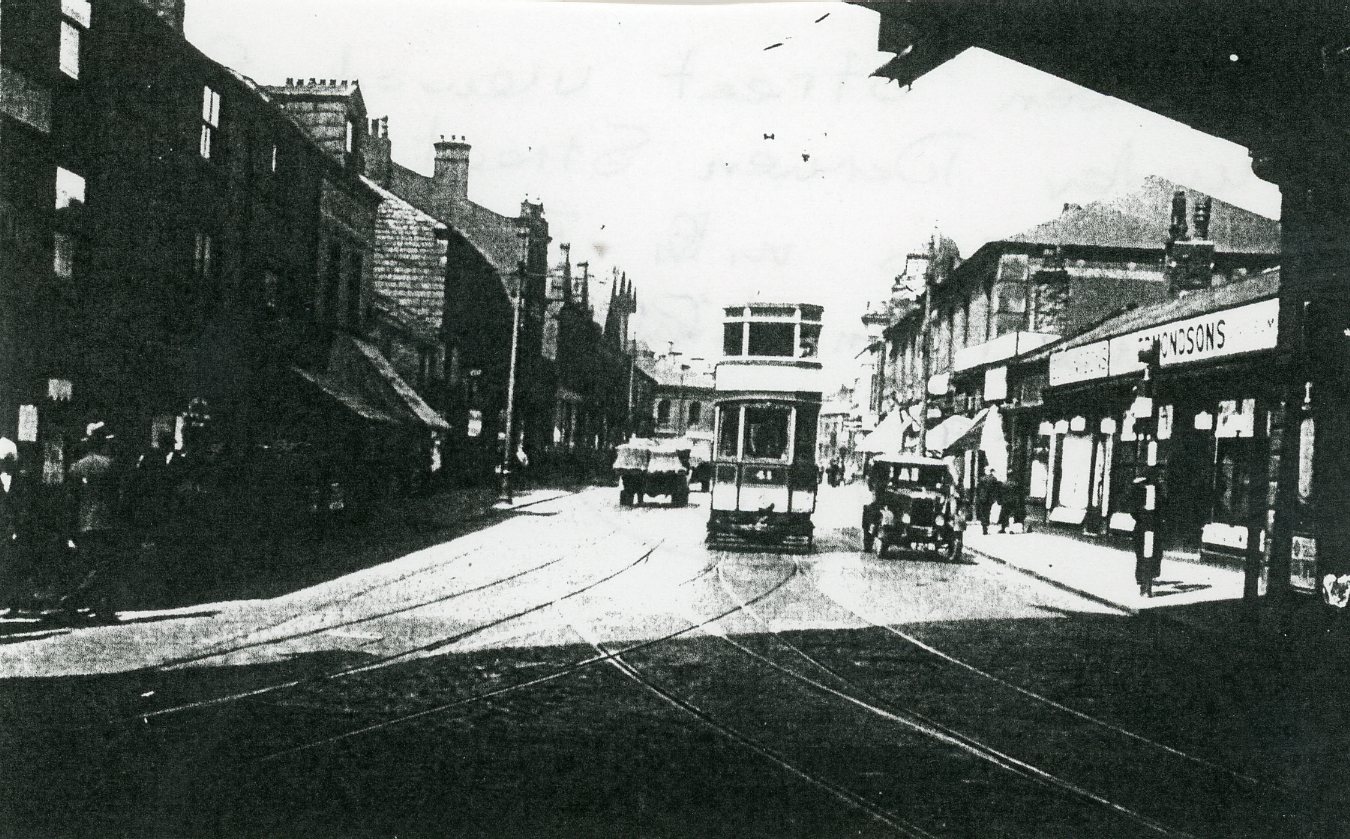
Darwen Street viewed from under Darwen Street Bridge in 1920s
with Edmondson’s house furnishings shop on the right.
9. JUBILEE STREET GAS WORKS – The Gas Works was established in 1819, close to the railway station at the end of Jubilee Street and had 100 shareholders. The town was lighted by means of gasometers which held 83,000 feet of carburetted hydrogen gas. By 1851, consumption had risen enormously and 800.000,000 additional cubic feet had been supplied to the town. The Orlando Brothers were the gas works engineers who had taken out a patent for clay retorts that improved performance.
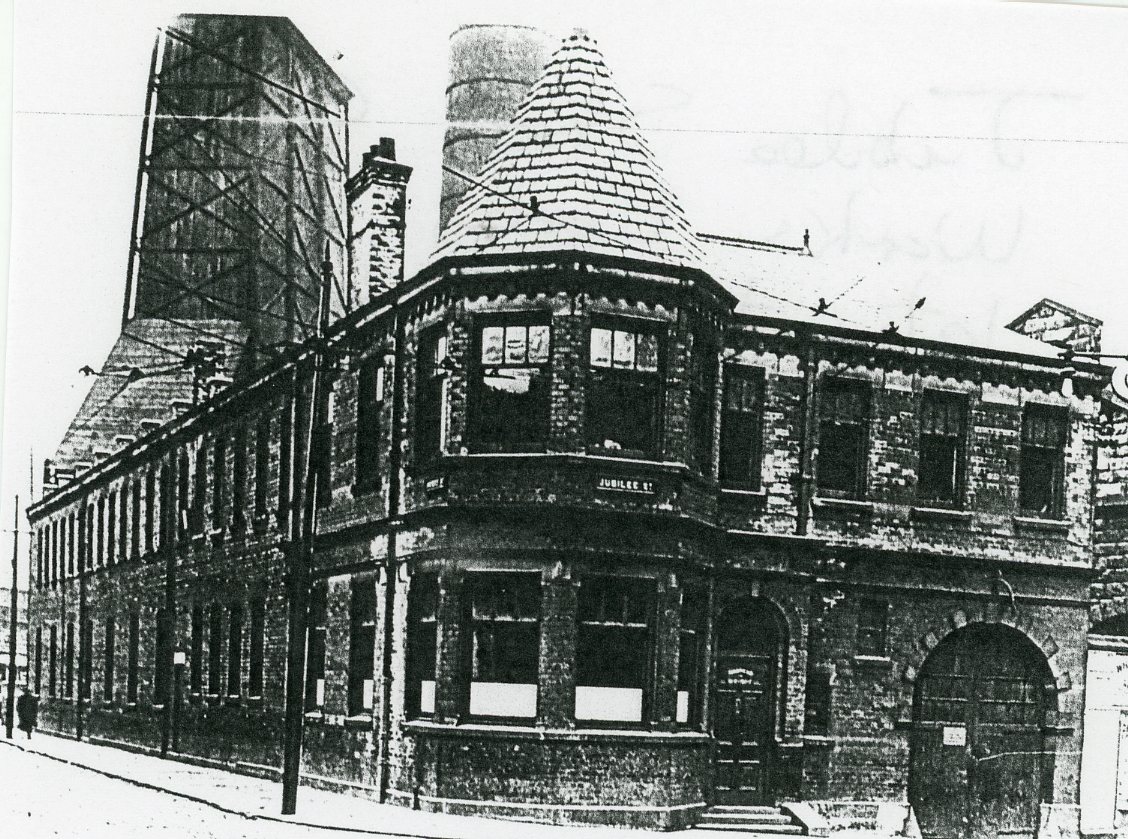
Jubilee Street Gas Works early 1900 later to become the Electricity Centre.
10. TOWN CORN MILL – this was situated on the side of the River Blakewater, at the far end of Mill Gate (later Mill Lane) off Darwen Street opposite Jubilee Street and was a very early water mill with the wheel being activated via a goit (pond) and a weir. When the mill turned to steam power the goit was not needed and was later filled in and the weir was also removed. An early tenant of the mill was Samuel Derbyshire who farmed Audley Hall and, in 1824, it was worked by Benjamin Tattersall. The mill had a massive square stone chimney with masonry at its base being four feet wide and a stone ledge running round it about twenty feet from the ground. It was probably the oldest mill chimney in the town.
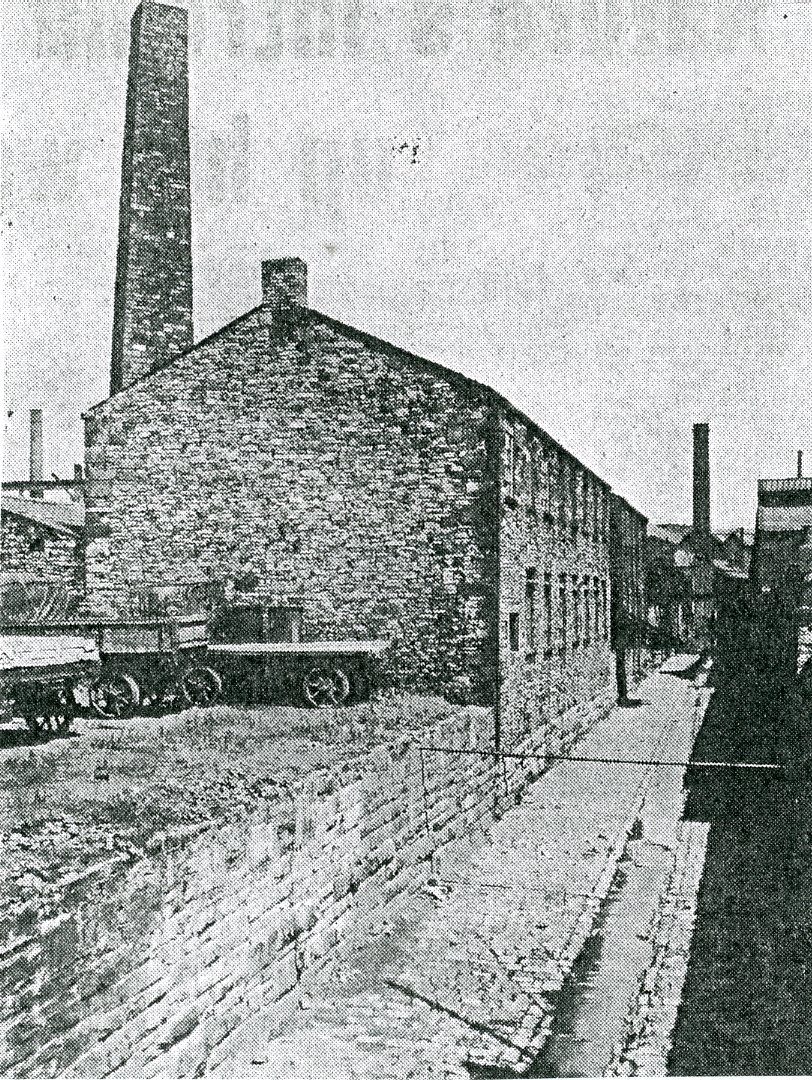
The Corn Mill sited just off Darwen Street on the banks of the River Blakewater.
11. THE OLD GRAMMAR SCHOOL – this stood on a site on St Peter's Street which ran off Darwen Street, opposite the General Post Office; the School was close to both Freckleton Street and the Town Corn Mill. It was also opposite St. Peter's Church on a site originally called the Bull Meadow. The single-storey school was erected in 1825 and was used as a place of learning until 1882 when its governors agreed to move the school to a site between Dukes Brow and West Park Road, close to Corporation Park where it is today and is now known as Queen Elizabeth’s Grammar School. Its origins were within the Parish Church grounds; the School was established in 1567 by a royal charter from Queen Elizabeth 1 and housed in the Lady Chapel on the south side of the old parish church and later in purpose-built premises erected in the churchyard.
12. THE GRAND THEATRE – this was situated on Jubilee Street, close to Darwen Street. The Theatre was first erected in the 1880s, as a wooden building, which later burned down after a Salvation Army meeting had been held there one Sunday night. Edward Trevanion then built an Amphitheatre in 1880 and, when this closed, the Princess Theatre evolved. Thereafter, several owners gained a high reputation under the management of Edward Herman Page who introduced many famous artists of the day including Vesta Tilley and George Formby. It was the proud boast at this time that the Princes Theatre was never closed for a single night while Mr. Page ran it. In 1906, the Theatre was rebuilt and became the New Princess and, after the death of Mr. Page, in 1921, its name was changed to The Grand Theatre. In 1934, the Murry family took over running the Theatre and audiences were treated to top class variety for the next 21 years with artists such as Tommy Trinder, Max Wall, Ted Ray and Hughie Green. George Formby was the star of the pantomime “Babes in the Wood” in 1935. In 1939, a seat in the orchestra stalls cost 1s.6d with the stalls and dress circle priced at 1s, pit stalls at 9d, grand circle 6d, gallery 4d and children under 14 half-price. However, the advent of the television era saw audiences decline steeply with the curtain finally coming down in January 1956.
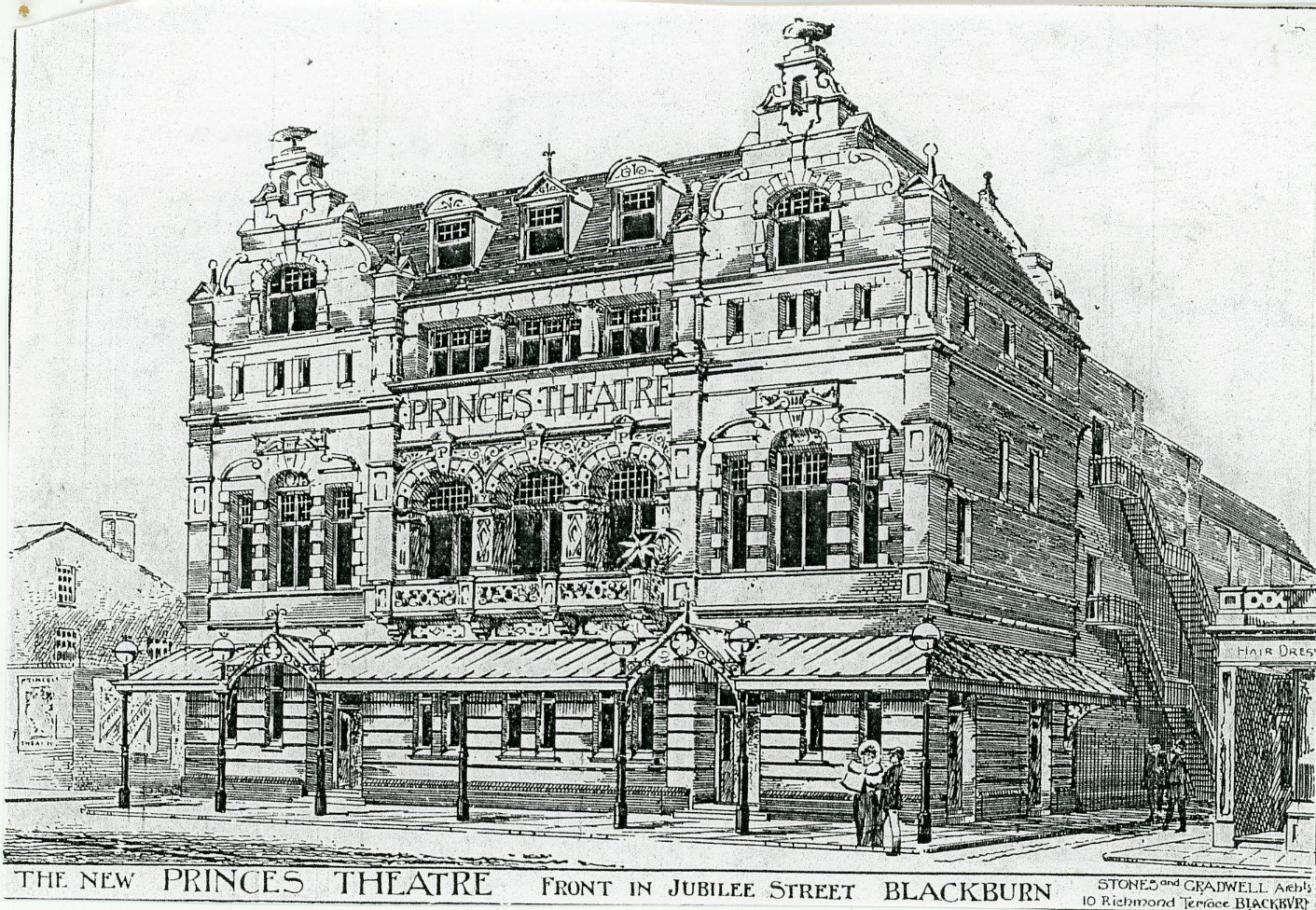
The Princess Theatre on Jubilee Street later to become The Grand.
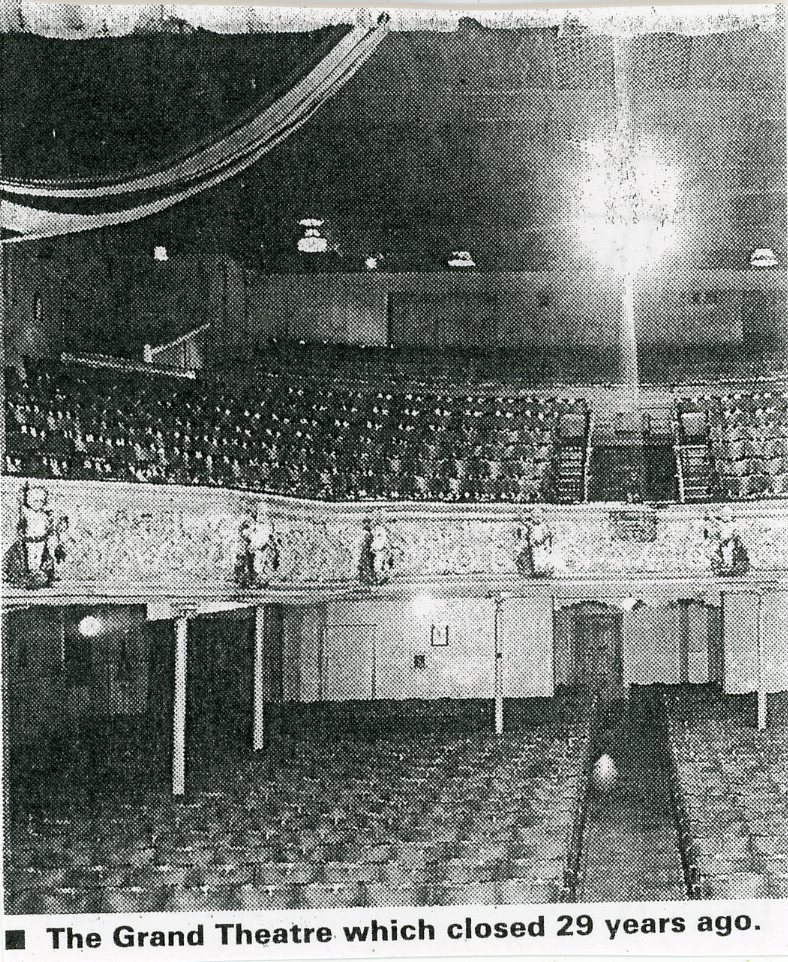
Interior view of the Grand Theatre.
DARWEN STREET SHOPS/BUSINESSES
Baines Directory of 1824 shows the following tradesmen in Darwen Street and it will be noticed that the shops etc. are numbered consecutively and not as now with odd numbers on one side of the street and evens on the other:
OLD BULL INN (Posting House for mails)
1. John Kay – Butcher and deputy police constable.
1a Charles Holland – Hat Manufacturer
2. Richard Horner – Cooper
3. John Watson – Watchmaker
4. Daniel and John Dewhurst – Bakers and Confectioners.
5. John Beech – Landlord of the Legs of Man.
6. John Thwaite – Chemist and Druggist.
7. Hargrave Wraith – Chemist and Druggist.
8. John Haworth – Landlord of Bird- in- Hand.
9. Thomas Sharples – Gardener
Edward Horseman – Cheesemonger.
10. Ralph Marsden – Landlord of the Queens Head.
11. John Myers – Saddler.
12. John Polding – Grocer, Corn and Flour dealer.
13. John Clark – Grocer, Corn and Flour dealer.
14. Robert Carter – Saddler.
15. Elizabeth Gill – Butcher.
16. Thomas Ainsworth – Farrier.
17. Joseph Pomfret – Brushmaker.
John Whewell – Brushmaker.
19. William Bradley - Baker and Shuttlemaker.
21. Hugh Gregory – Umbrella maker.
22. John Kenyon – Clogger.
23. William Holden – Landlord of the White Bull.
25. Richard Pilkington – Joiner and Timber Merchant.
29. Thomas Wensley – Blacksmith.
30. William Wilson – Ropemaker.
32. Thomas Sagar – Shopkeeper.
33. Thomas Duxbury – Baker.
34. John Gill – Butcher.
35. Thomas Feilden – Clogger.
36. John Farrer – Tallow Chandler.
37. Elizabeth Williams – Straw Hat Manufacturer.
37. William Williams – Wood Turner.
38. Elizabeth Eckroyd – Shoemaker.
39. James Abbott – Shoemaker.
40. Bridget Howard – Milliner.
42. James Caughey – Shopkeeper.
44. Philip Lancaster – Ladies Bootmaker.
45. Thomas Hatch – Dyer.
46. James Graham – Butcher.
47. Matthew Dean – Nail Maker.
47. William Walkden – Dyer.
47a Jonathan Wright – plumber.
48. Thomas Sellers – Butcher.
49. T. & J. Stones – Joiners and Cabinet Makers.
50. John Harrison – Shoemaker.
51. Thomas Holden – Landlord of the Duke of York.
52. Richard Pilkington – Householder.
53. Mary King – Milliner.
53. Benjamin King – Attorney.
56. Henry Leigh – Grocer.
57. Ralph Waddington – Clogger.
58. Robert Byrom – Clothier.
59. Edmund Mullineax – Blacksmith and Shopkeeper.
60. Peter Longworth – Blue Dyer.
60. William Grimshaw – Nailmaker.
61. Mary Ainsworth – Milliner.
62. Henry Dean – Landlord of the Hare and Hounds.
63. James Bradshaw – Joiner and Cabinet Maker.
64. Thomas Haworth – Landlord of the Ship Inn.
65. Thomas Howarth – Clogger.
66. Jane Harrison – Eating House.
67. Joshua Goldsboro – Tailor.
68. John Sharples – Shoemaker.
71. John Gibson – Cooper.
72. James Wilkinson – Shoemaker and Currier.
74. Barnhill – Tailor.
79. Mary Taylor – Milliner.
80. John Thompson – Corn and Flour dealer.
81. James Bradshaw – Rag Merchant.
82. William Bury – Shopkeeper.
83. Edmund Holden – Landlord of the Three Crowns.
84. John Kitchen – Butcher.
86. James Broadly – Landlord of the Anchor Inn.
87. Margaret Brown – Confectioner.
88. Richard Robinson – Saddler.
89. Henry Whittaker – Landlord of the Wheat Sheaf
Wheat Sheaf Yard – Richard Cunliffe – Baker, William Parker – Blacksmith
John Todd – Wheelwright.
90. Joseph King – Shoemaker.
91. McGhie and Knox – Grocers and Drapers.
92. Thomas Turner – Residence (Calico Printer).
93. John Threlfall – Ironmonger.
94. Robert Briggs – Glass and China Dealer.
95/96 Henry Copeland – Grocer, Wine and Spirit Merchant.
97. William Blackburn – Corn and Flour Dealer.
98. Ralph Booth – Landlord of the Eagle and Child.
99. John Briggs – Butcher.
100. William Callis – Grocer.
101. John Middlehurst – Grocer and Flour Dealer.
102. Richard Walker Grocer and Corn/Flour dealer.
103. Foster and Smithson – Grocers.
104. Ralph Knight Marsden – Hat and Shoe Warehouse.
105. John Foster – Bacon factor, Grocer.
106. Roger Wood – Printer, Newsagent, Tea Dealer, Library.
106a. William Butterfield – Fruiterer.
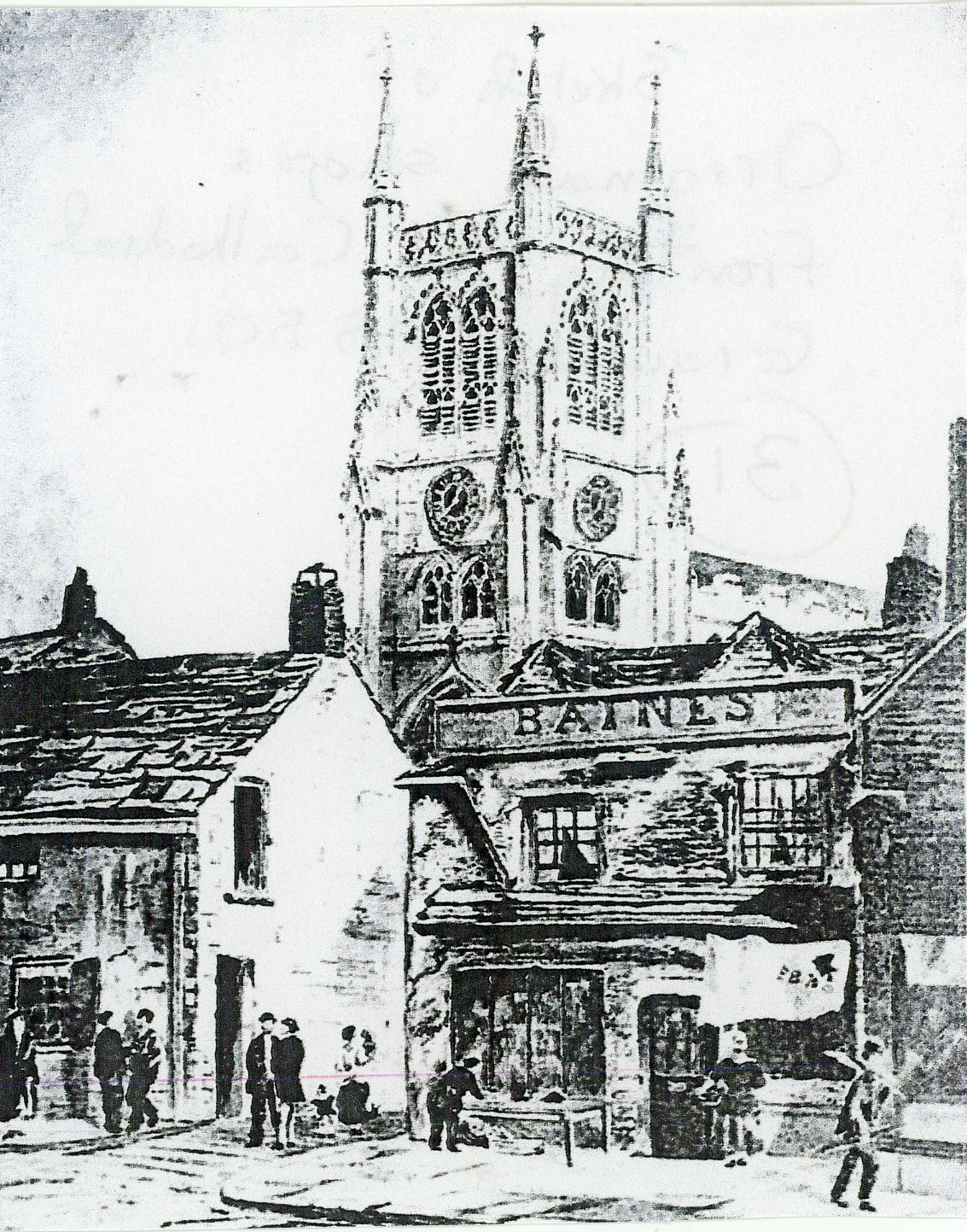
Original sketch of shops fronting the Cathedral Grounds in 1850.
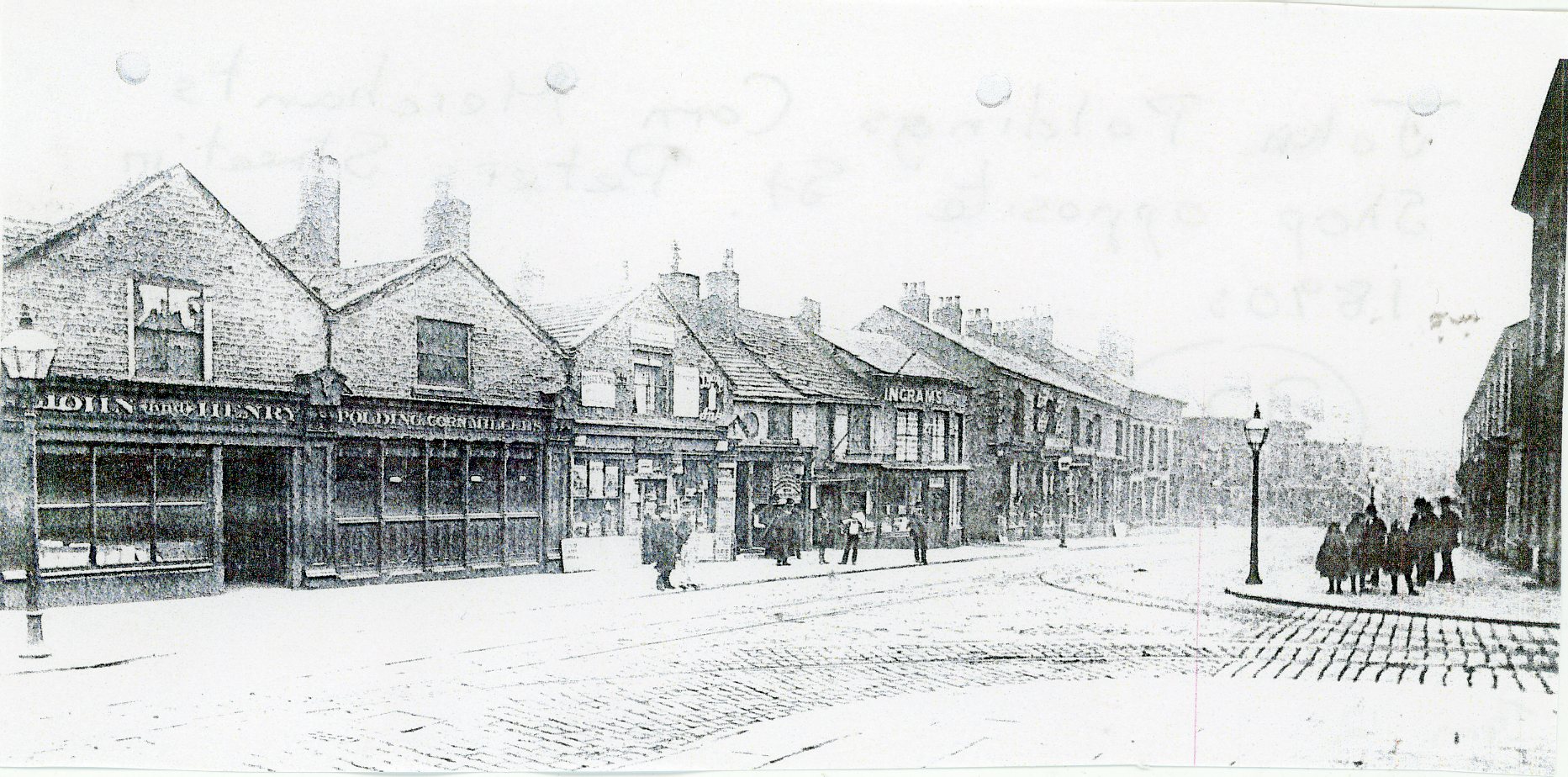
John Polding’s Corn Merchants Shop opposite St. Peter Street in 1890s.
OTHERS IN DARWEN STREET AREA
Jane Durham – Ladies Day School – Turner’s Court.
Robert Turner and sons – Calico Manufacturers.
Bannister Eccles and Co. – Cotton Spinners and Manufacturers – Jubilee Mill.
Reverend John W. Whittaker – Vicarage - Darwen Street.
Dorothy Carter – Milliner – Churchyard.
PLACES OF INTEREST OFF DARWEN STREET
1. FLEMING SQUARE – The land and buildings in this square were bought in 1816 by Merchant and Broker, John Fleming, from whom the square is now named. It appears that originally the present access onto Darwen Street didn’t exist as it was covered by a huge Mansion House that faced the town’s market place, stretching from Higher Church Street down towards Market Street Lane. Behind this mansion was a public house called the New Black Bull which could explain why the square before Fleming bought it was called New Square. Fleming built the Exchange Arcade, the town’s first shopping arcade whose buildings are still present having been restored. Prior to its erection, the site was occupied by shop premises that included a Whitesmiths, Reed maker for weaving looms and Stables. In 1823, Fleming built the Cloth Hall on the side of the square which was intended for the sale of woollens but most of the premises were soon occupied by 22 butchers to take advantage of the proximity of a slaughter-house in the square. However, when the market moved most of them moved with it. On the Back Lane (Mincing Lane) side of the square was a large barn and stables but, by 1856, it had been demolished for new premises which also had a colonnade like the cloth hall. The Exchange Arcade has a date stone for 1849 above what was originally the entrance into the inner units and, it was in that year, George Hopwood, a former handloom weaver turned the premises into a slipper and steam baths which continued into the next century and had two tall brick chimneys. It is thought the Hot Air Baths were Russian baths which had stone cubicles lit by skylights. During the 1950s this area became run down but, in 2001, the area and the Exchange were part of a restoration and renovation project.
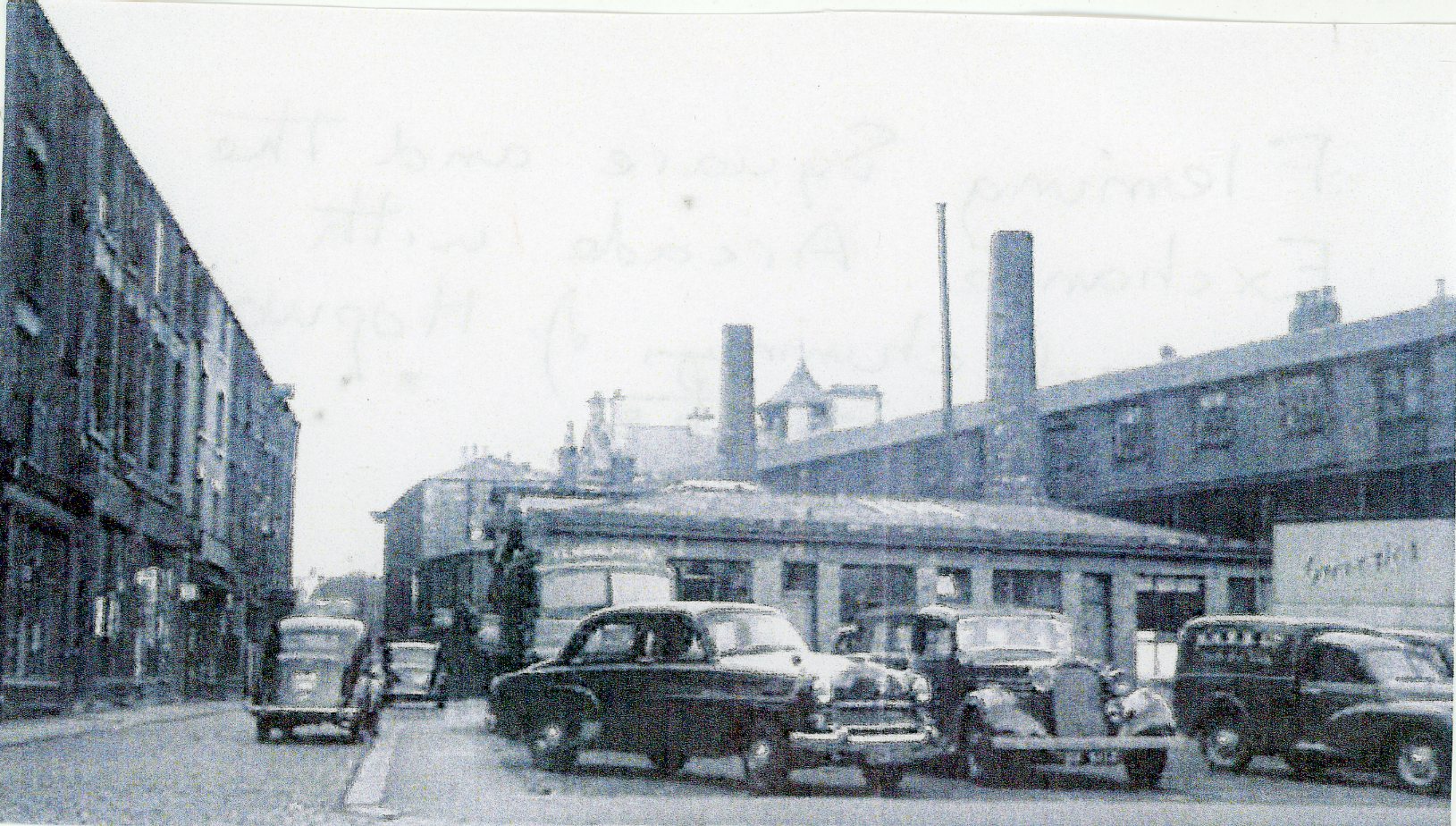
Fleming square and the Exchange Arcade with the
original chimneys of Hopwood’s Hot Air Baths.
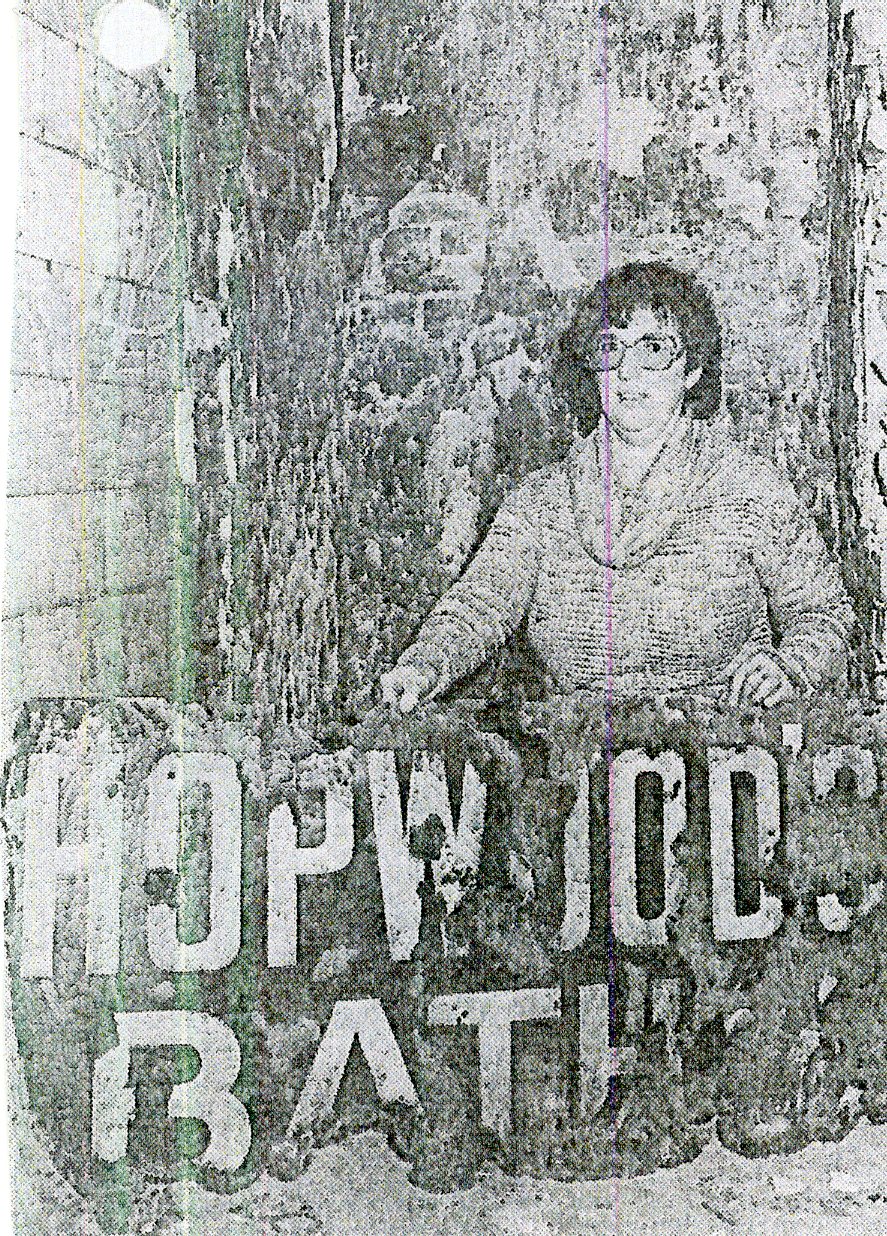
Hopwood’s Baths old enamel sign discovered during later
renovations in the Exchange Arcade.
2. MR. ROBERT JEPSON – 12, Fleming Square – commenced business in 1890 supplying the trade with all kinds of better-class paper-hangings including Lincrusta, Japanese, Leather, Anaglypta and Salamander papers. He also dealt in paints, varnishes brushes and many other items used by the painting and decorating trades. His premises consisted of a shop and office and three upper floors and a basement to house his stock. The family of Jepson’s later moved into household furniture and furnishings and operated from Nova Scotia Mill off Bolton Road.
3. MARKET STREET LANE – This narrow-cobbled lane connected Darwen Street to Back Lane (Mincing Lane) taking its name from the fact it led from the busy market on Darwen Street therefore it had many old buildings, including warehouses and hostelries, to make use of the market’s location. One of its main features was the ancient Blackburn hostelry known as THE CASTLE INN one of Blackburn’s oldest inns as it can be traced back to the 1790s when the first known landlord was Mr. Gornall. During the loom riots of 1808, 145 of the town’s main townsmen were sworn in as “assistant constables” at three main hostelries including "The Castle" where 49 special constables were sworn in, including its landlord Mr. T. Scott. During 1810, the Inn was re-built with extensive alterations offering a Travelers Room and a new central staircase giving easy access to the new bedrooms and private rooms. At the same time, the extensive Stabling and Coach Houses were completely repaired, these catered for Post Horses and Chaises. Like all the houses of its period erected in the older central streets of Blackburn, the Castle Inn was built of red brick. All the restoration work on the inn was carried out by Mr. J. Cronshaw of Montague Street from designs by the architect Mr. J.H. Sandbach of Richmond Terrace for its owner Mr. John Crook of Spring Vale Darwen. As with other local inns on or close to Darwen Street it benefitted from being near the original market on Darwen Street.
The main feature of the inn were the two semi-circular bays carried up in three storeys to the full height of the roof, designed to give the building a castellated appearance in keeping with its name. During the period prior to the development of the Central Conservative Club, the Castle Inn was one of the main inns frequented by the Conservative Party for meetings and looked upon as a headquarters for the party. In 1826, the new landlord, Mr. Robert Graham, advertised the fact that a London daily and various provincial papers were received regularly, which was a great inducement to its patrons as the papers at that time were expensive, so only the more affluent could afford them. In 1859, the landlord was James Riding better known to his locals as “Cock Robin” as he was the first driver of the “Highflyer Coach” which started from the nearby Dun Horse and ran to Manchester.
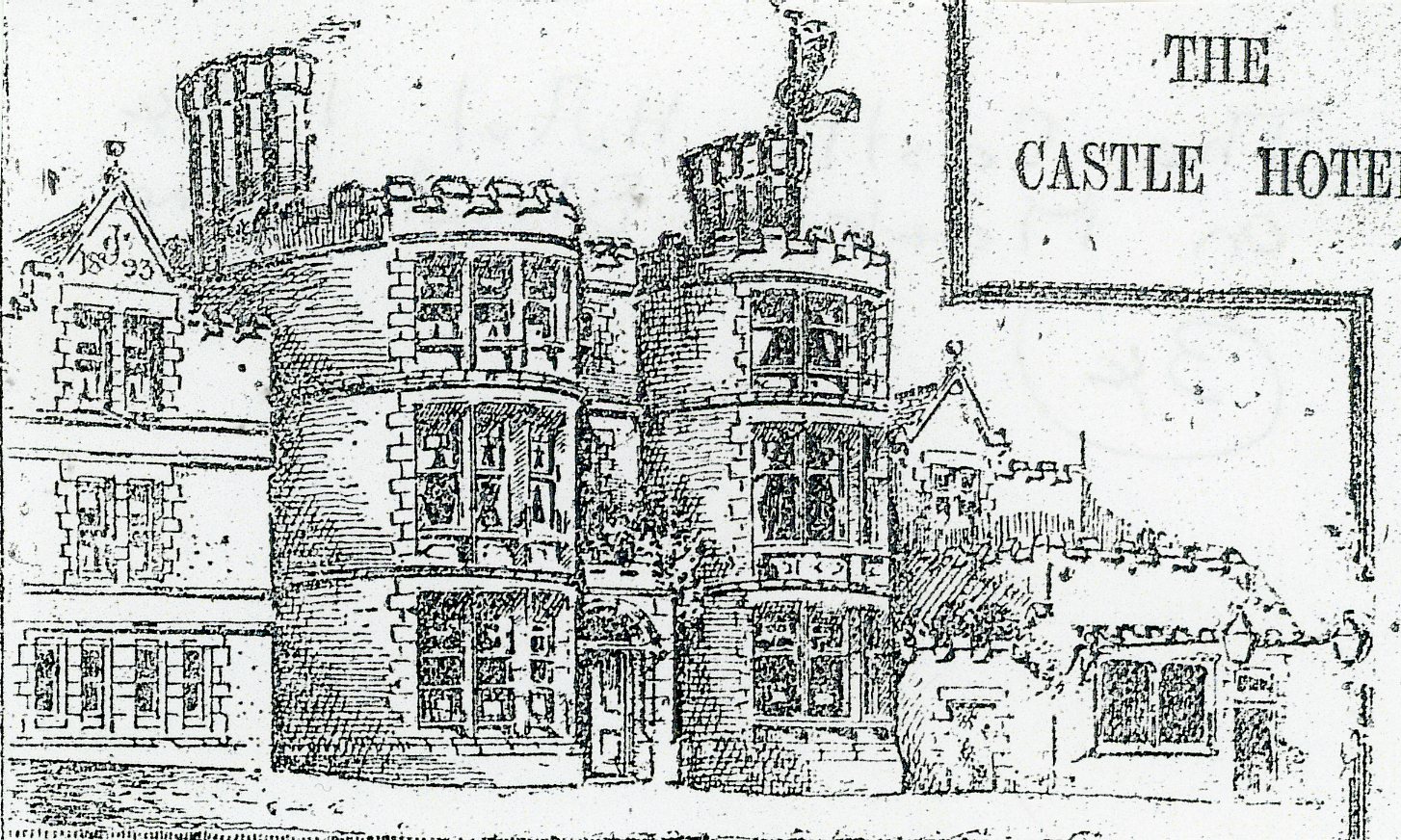
Castle Hotel in 1894 on Market Street Lane.
Another ancient hostelry on the lane was THE DUN HORSE INN on the corner of Market Street Lane and Mincing Lane. Originally, the Dunn Horse was located further back in the lane, closer to Darwen Street and its market, almost opposite the Castle Inn. It moved in 1873 to its present location when the Darwen street market moved; its older location could be traced back to the 1770s when it was sold with a mansion house, cottages, barn and land in the Beardwood area of Blackburn. Like the Castle Inn, it ran coaches and post carriages. The pictorial sign of the Inn was a dun coloured horse in keeping with its name. The Inn had accommodation for travellers and could provide Post Chaises with careful drivers, Gigs and excellent saddle horses at short notice, according to an advert of the early 1800s. Being a posting-house, as opposed to a coaching inn, meant it was devoted to private travellers so it kept relays of horses ridden by postillions or a post-chaise or two. This meant a traveller could be taken in his own carriage or a hired chaise to any destination, often used by the landed gentry, postilions and other important personages. Riding Post soon became known for travelling at breakneck speeds and urgent letters were endorsed “Post Haste” but were also responsible for some spectacular crashes. In 1824, a carrier’s waggon left the Dun Horse yard for Preston and Kirkham every Tuesday morning at 11am whilst others left daily for Manchester and Chorley.
4. THE OLD ASSEMBLY ROOM– was situated on the opposite corner of Market Street Lane and Mincing Lane to the present location of the Dun Horse Inn. It was originally the venue of Blackburn’s gentry when it flourished in the 1790s; it was built in 1787 and was called the New Assembly-Room, a title later used by the premises on Heaton Street. It comprised of a large well-lit room on the second floor but the building saw many changes over the years. During one period, it was used as a Grammar School (before the erection of the school on Freckleton Street) then it became a Mechanics Institute, and later, it was used by the Temperance Society. In 1851, it was converted into a Music Hall later called Papa Pages Lyceum. It is recorded that the first week of Mr. Page's reign at the Lyceum was celebrated by a visit from the Royal English Opera Company and subsequently many famous artists of the day followed, including comedians such as Harry Whaling who had the audacity to poke fun at the audience, a brave thing to do when Lyceum audiences were known to give artist “the bird”. Not all artists were male and perhaps the most famous artiste to ever visit The Lyceum was Vesta Tilley who once played a week there when approaching stardom. One of the greatest names in show business was that of George Formby but there were two of them, namely father and his famous son. The father, born in 1880, was originally a blacksmith’s striker in Ashton-under-Lyne but the work was too heavy for him and his only solace was to sing comic ditties and strum on an old banjo in his spare time until he was spotted and signed up as an artiste and later appeared at the Lyceum. The Lyceum orchestra consisted of a pianist who was Mr. Page and a violinist. The Lyceum finally closed in April 1902.The ground floor of the building was owned by J. Haworth of the Borough Wire works from 1887 and, from 1902, by A. Duckworth till 1966 when the owner was G Martin Ltd and run as a Hardware Shop.
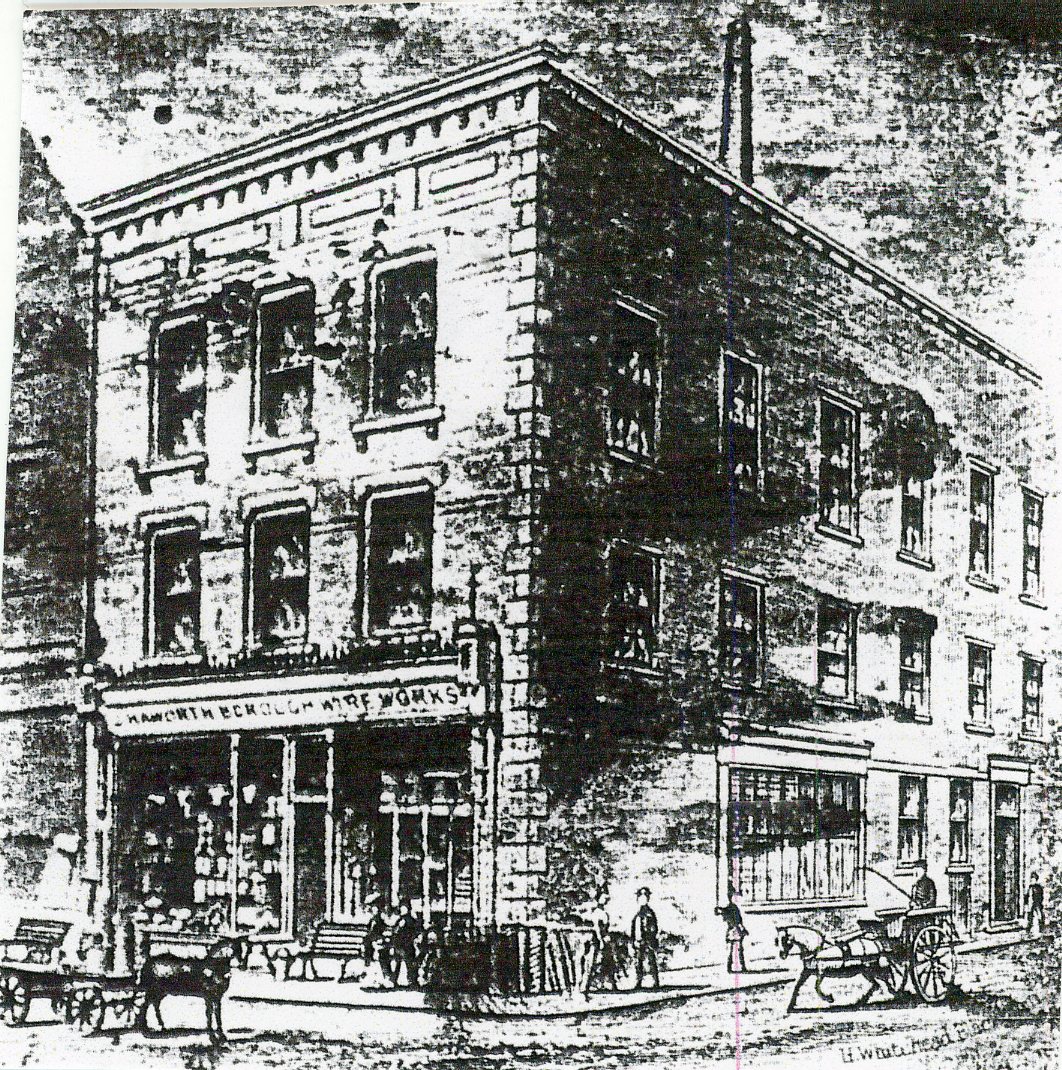
The Old Assembly Room on the corner of Market Street Lane and Mincing Lane,
Later the Borough Wire Works from 1887, then a hardware shop in more recent times.
5. ST. PETER STREET – This was established after 1848 when property on Darwen Street was demolished and Brogdens Yard used to create the street connecting Darwen street to Back lane (Mincing Lane).
THOMAS LEWIS – established his carriage building business at No 1 Peter Street in 1868 on the corner with Mincing Lane. In 1875, he was joined, as a partner, by his brother-in-law, John Lewis, creating T. & J. Lewis until 1885, when the partnership was dissolved. The works of the firm occupied a handsome showroom, body- making room, trimming room, paint room and a large smithy and, by 1900, was using steam power to operate machinery for the business. There was also a spacious yard and outhouses. Every type of vehicle was created at the works including broughams, landaus, wagonettes, phaetons and dogcarts. Mr. Lewis also did a large trade in repairs and employed a large staff for the business. Apart from a large proportion of the business being for the gentry and tradesmen of Blackburn, business connections reached all over Lancashire, Yorkshire and Cheshire. Later in the 1900s, the business was taken over by J. E. Farr, a motor coach builder who advertised that Farr’s bodies make the most of any chassis. The firm also produced Cape Hoods, Wind Screens and side cars for motor cycles and van bodies for commercial vehicles. The cousin of Thomas Lewis who went on to marry him, namely Mrs. Elizabeth Lewis, was known as Blackburn’s Temperance Queen or the “Drunkard’s Friend”. Mrs Lewis waged a life-long battle against drink, starting in 1882, when the town had 604 licensed premises and a reputation of being the beeriest town in England. She ran her campaign at the Lees Hall Mission in Mincing Lane now the Headquarters of the town’s St. John Ambulance. At outdoor meetings she persuaded thousands to sign the pledge and became a local personality having anthems dedicated to her and her movement.
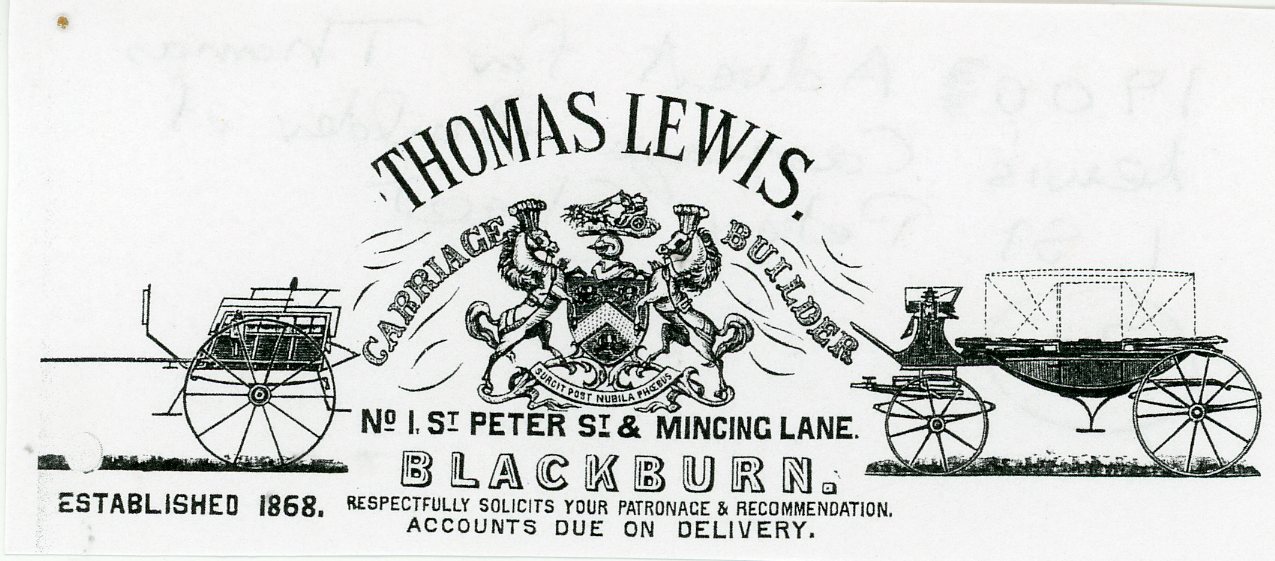
1900 Advert for Thomas Lewis Carriage Builder of 1, St. Peter Street.
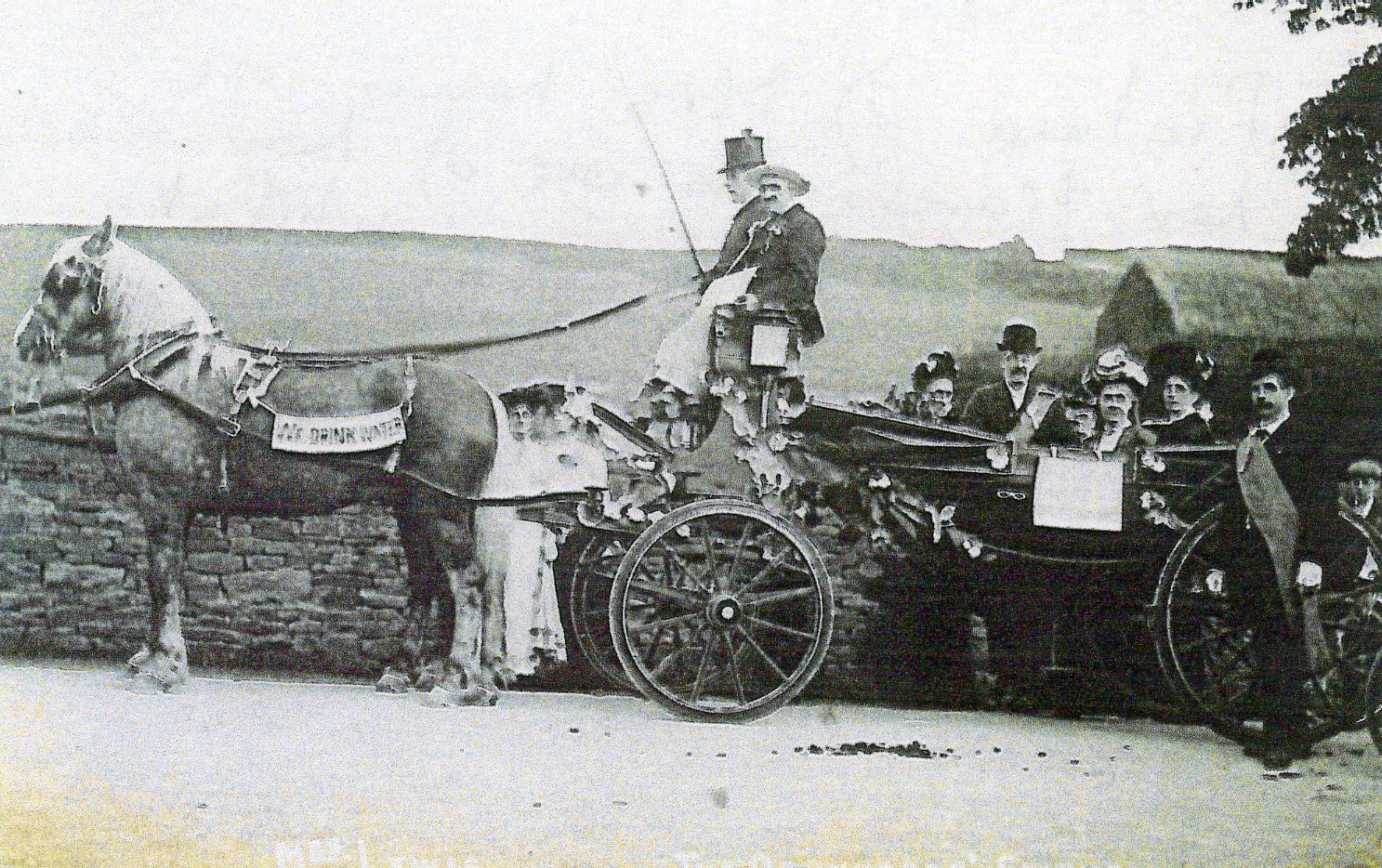
Picture of Mrs. Lewis on her travels in one of her husband’s carriages
whilst lecturing on the folly of drinking alcohol,
with the horse carrying a sign “We Drink Water.”
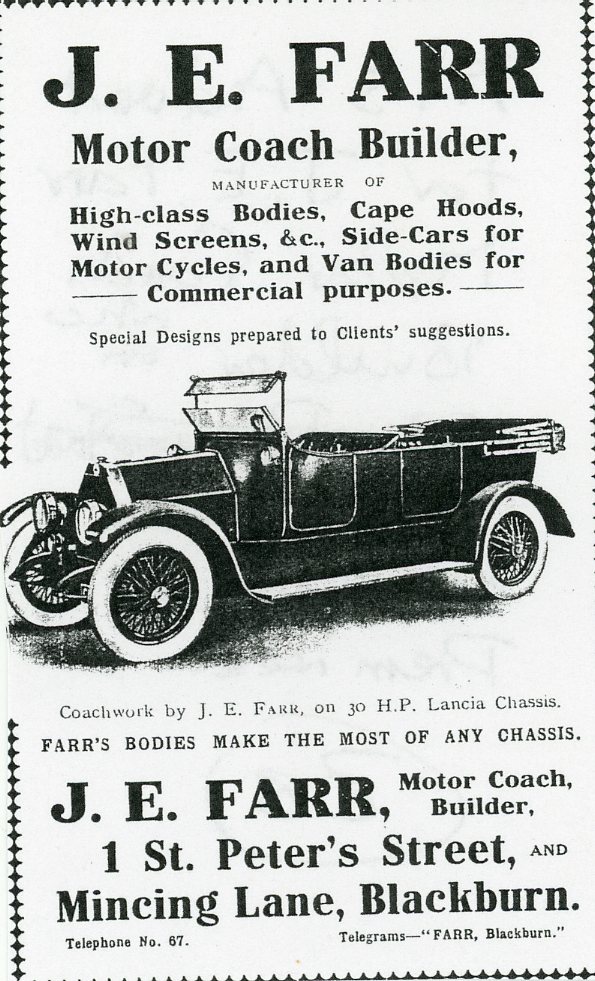
1915 advert for J.E. Farr Motor Coach Builder
who took over Mr. Lewis’s premises.
OLYMPIA – was another well-known Town landmark on St. Peter Street which first opened in 1909 as the Olympia Roller Skating Rink on the site of Thomas Lewis’s old livery stables. The Olympia was one of four opened in just four months in Blackburn to meet the new craze. The boom only lasted two years and the Olympia then became a Concert Hall and Theatre. After this, it became the Olympia Cinema, one of fourteen Blackburn had at its picture-going peak. By 1958, however, it was transformed into the swish Locarno Ballroom which opened in 1959 and catered for up to 1000 people a night. As a result, it became the top dancing spot in East Lancashire boasting two resident bands, a revolving stage, a “Cupids Corner” with a two-tier bar, the Pony Tail milk bar and the plush Viceroy Bar. Many well- known pop stars of the day appeared at the ballroom and Monday Rock ‘n’ Roll nights were hugely popular when teenagers paid 1s 6d to dance to records. Its holding company Mecca then gave it a £30,000 facelift in 1969 and turned it into the Golden Palms nightspot with the dance hall being given a night-club atmosphere. This venture later gave way to Bingo in 1981 when it became the Mecca Social Club. In more recent times it has again been transformed into a night-club under various names including Liquid Envy to keep pace with modern trends.
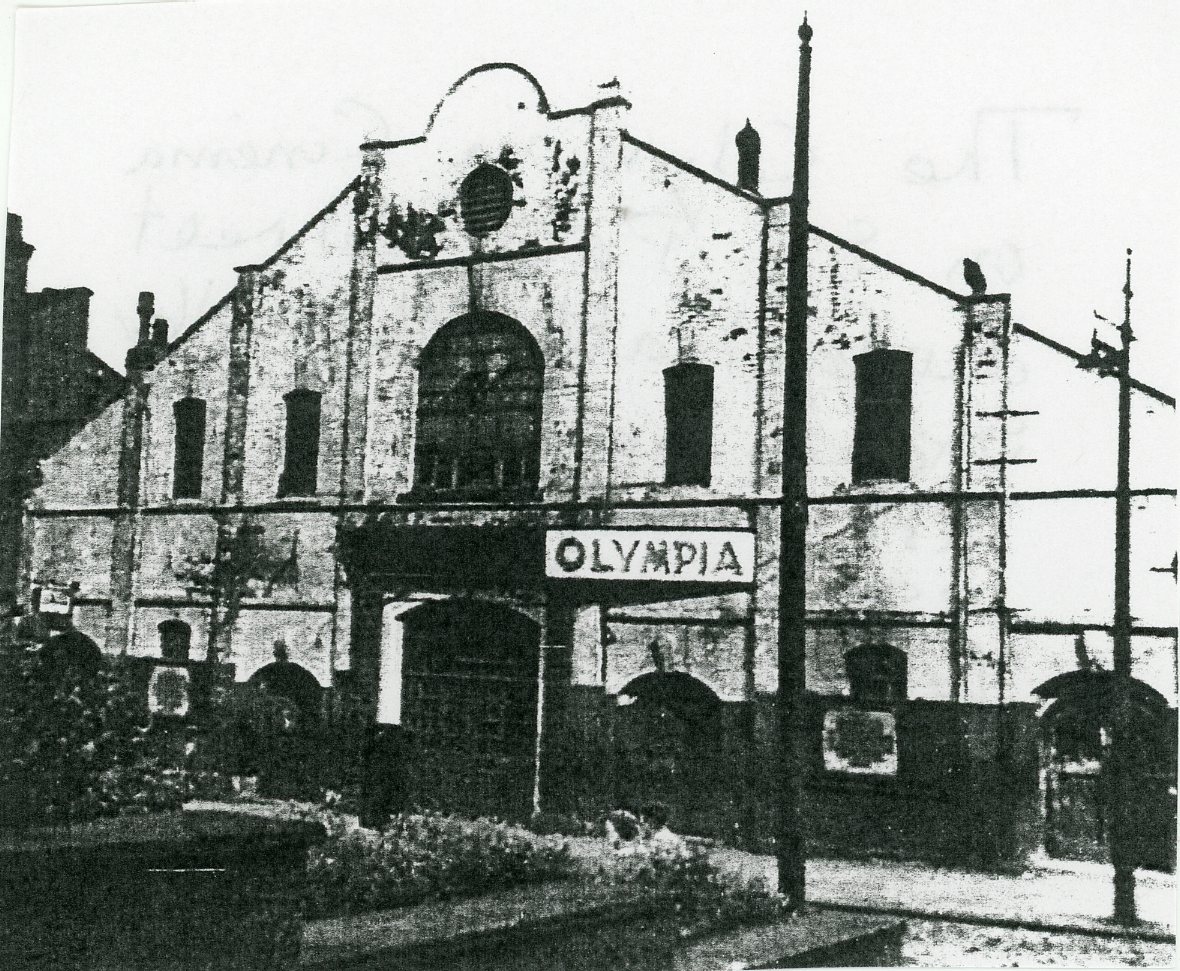
Olympia Cinema on St Peter Street developed after the Roller Skating in the 1950s.
It last showed films in 1958 and later became the Mecca Ballroom.
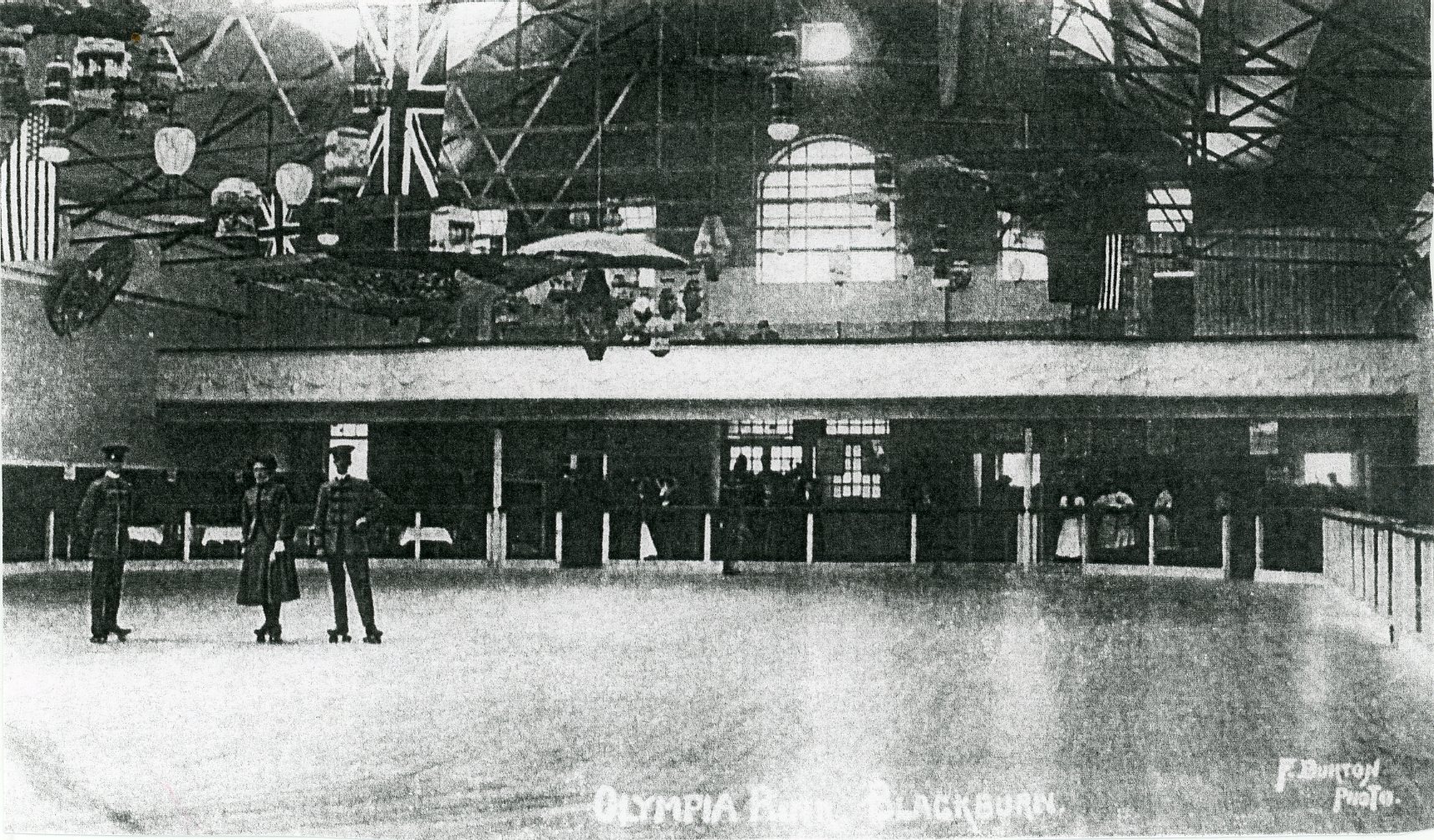
Interior view of the Olympic Roller-skating Rink in early 1910 on St. Peter Street.
The WHEATSHEAF HOTEL – on the opposite corner of St. Peter Street and Mincing Lane to Tom Lewis’s premises was an ancient hostelry first sited on Darwen Street (see earlier text) before transferring to this site after the market left Darwen Street. The rear of the hotel was used as a livery stable. This Victorian hostelry is at present closed.
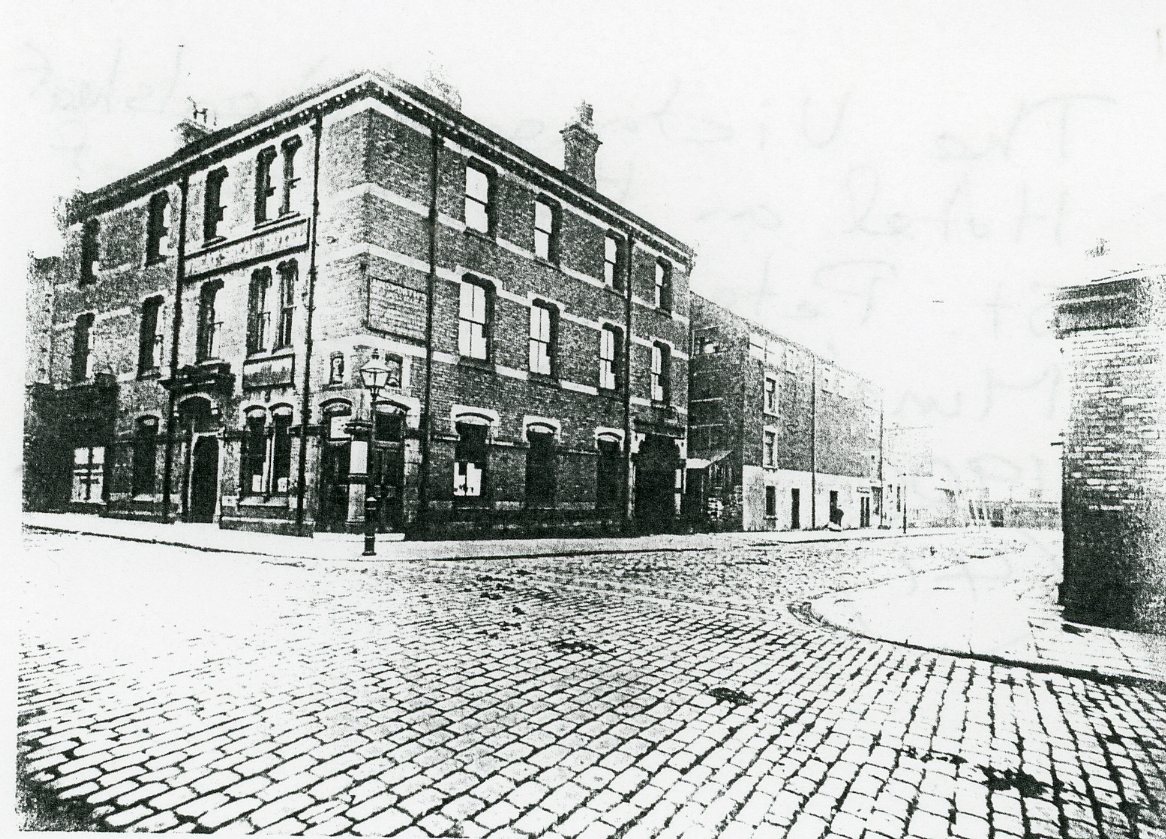
The Victorian Wheatsheaf hotel on the corner of
St Peter Street and Mincing Lane early 1900s.
The NEW WESLEYAN SCHOOL– was built further along St. Peter Street which opened in 1862 at a cost of £1800. It provided school places for boys, girls and infants during the week and became a Sunday school on the Sabbath and had a separate house alongside it for the schoolmaster. Later, during the wartime rationing era it became the local Food Control Offices and, more recently, became used as a glass-works.
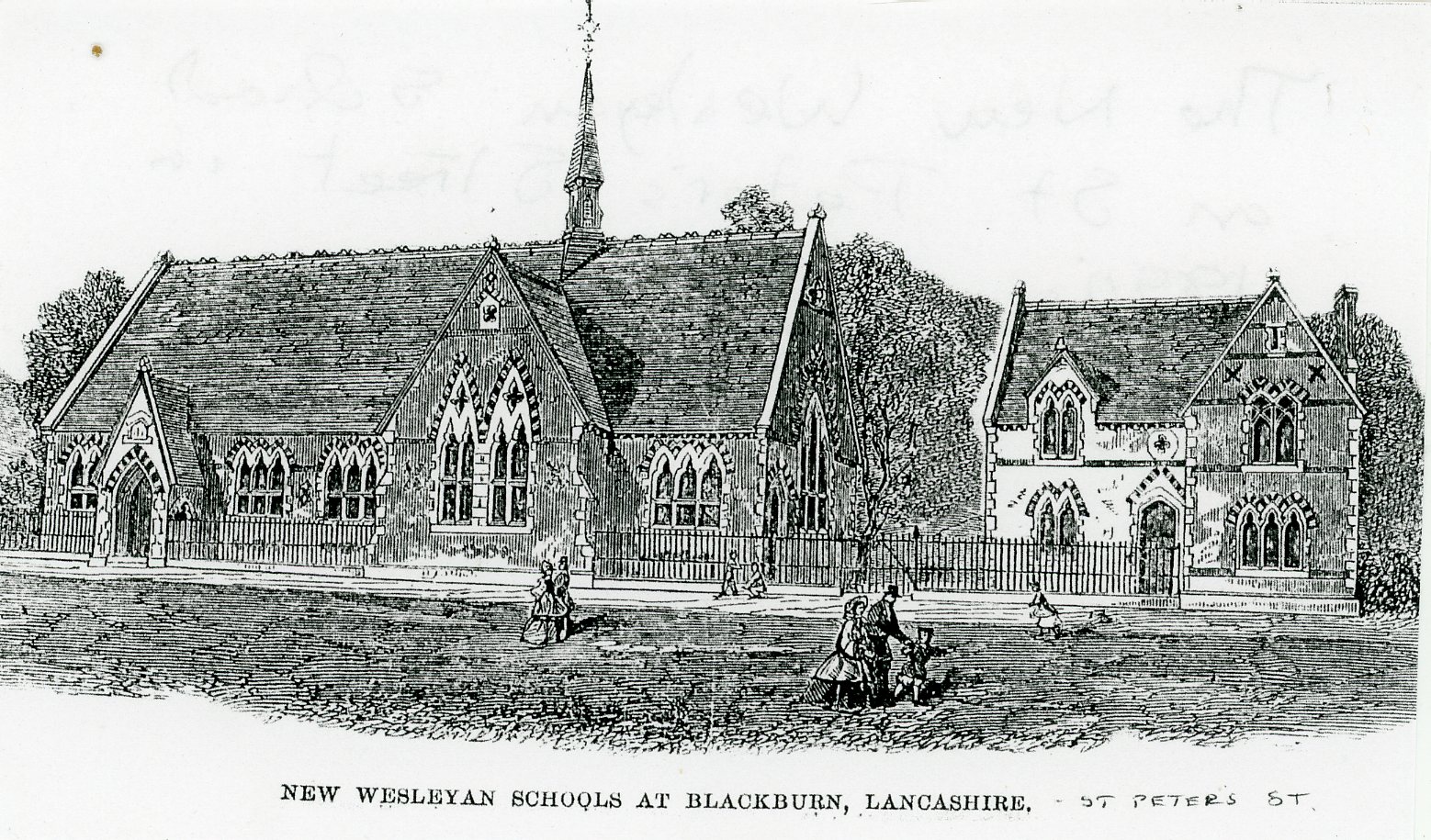
The New Wesleyan School on St. Peter Street in 1890.
THE OLD BEDDING SHOP – this was an old, interesting building that ended up attached to the lower end of the General Post 0ffice on Darwen Street and was demolished in 1923 when the Post office was extended. The building formed an interesting link with Blackburn’s past. The little building had been a bedding shop for 65 years and was run by Messrs. Carlisle’s for the last 16 years prior to demolition. Going back in history it was a plumber’s shop and, before that, a brush maker’s, and its history takes it back to Blackburn’s early business times. It had massive walls from two to three feet in thickness and stone buttresses supporting the roof with old oak beams one foot in diameter indicating its age probably 16th or 17th century. There is speculation that it could originally have been a farm as indicated by its interior roof construction.
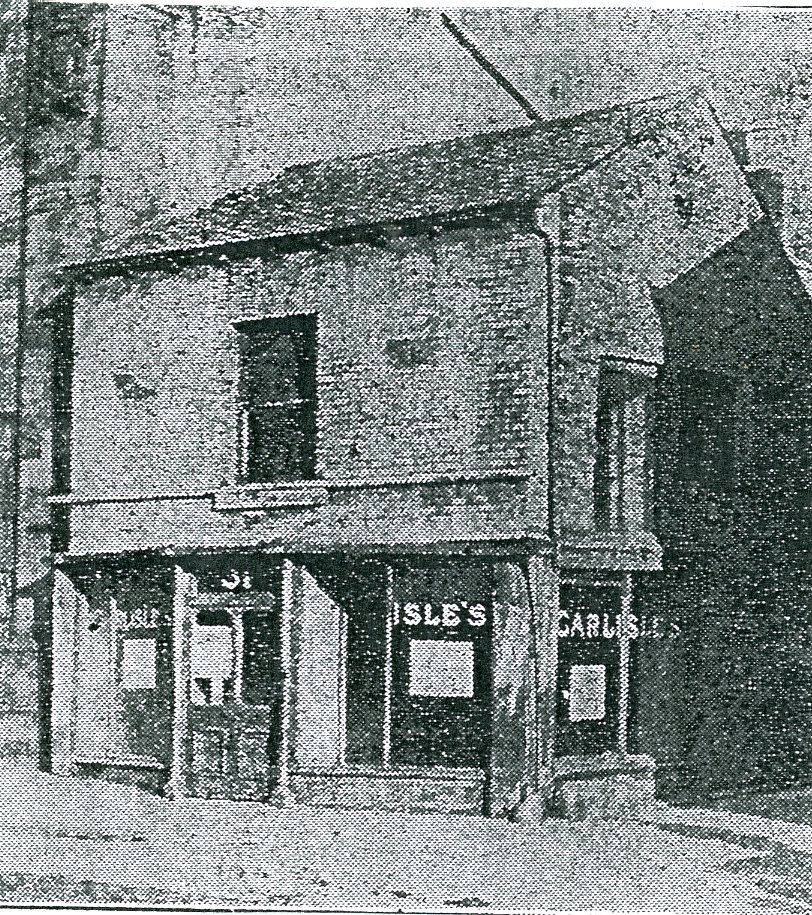
The ancient Old Bedding Shop Darwen Street 1923
demolished when the General Post Office was extended.
TYPICAL FRONTAGE OF OLD DARWEN STREET SHOPS
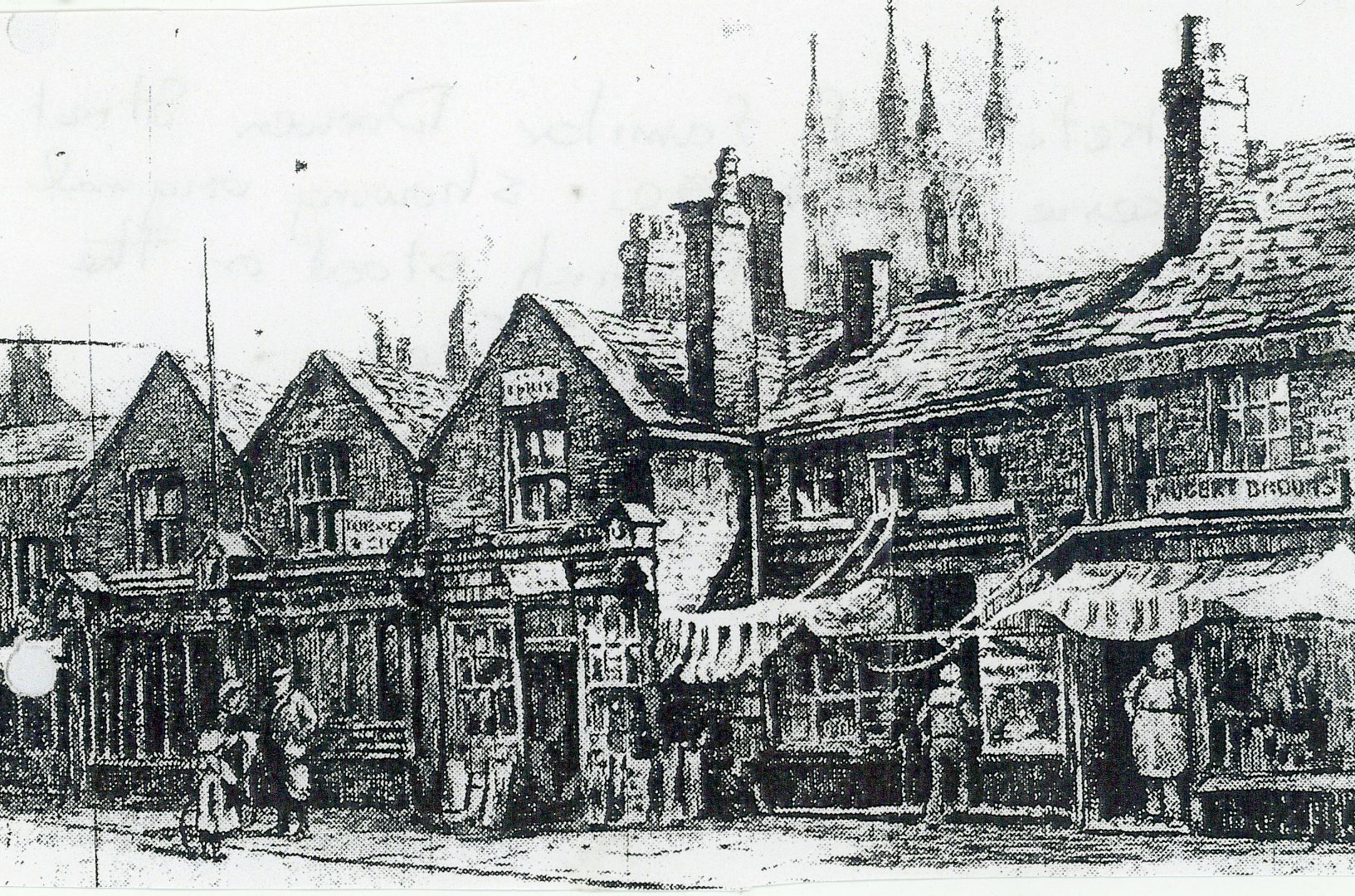
Sketch of a familiar Darwen Street scene from 1850s, showing original
shops some of which stood on the later site of the Post Office.
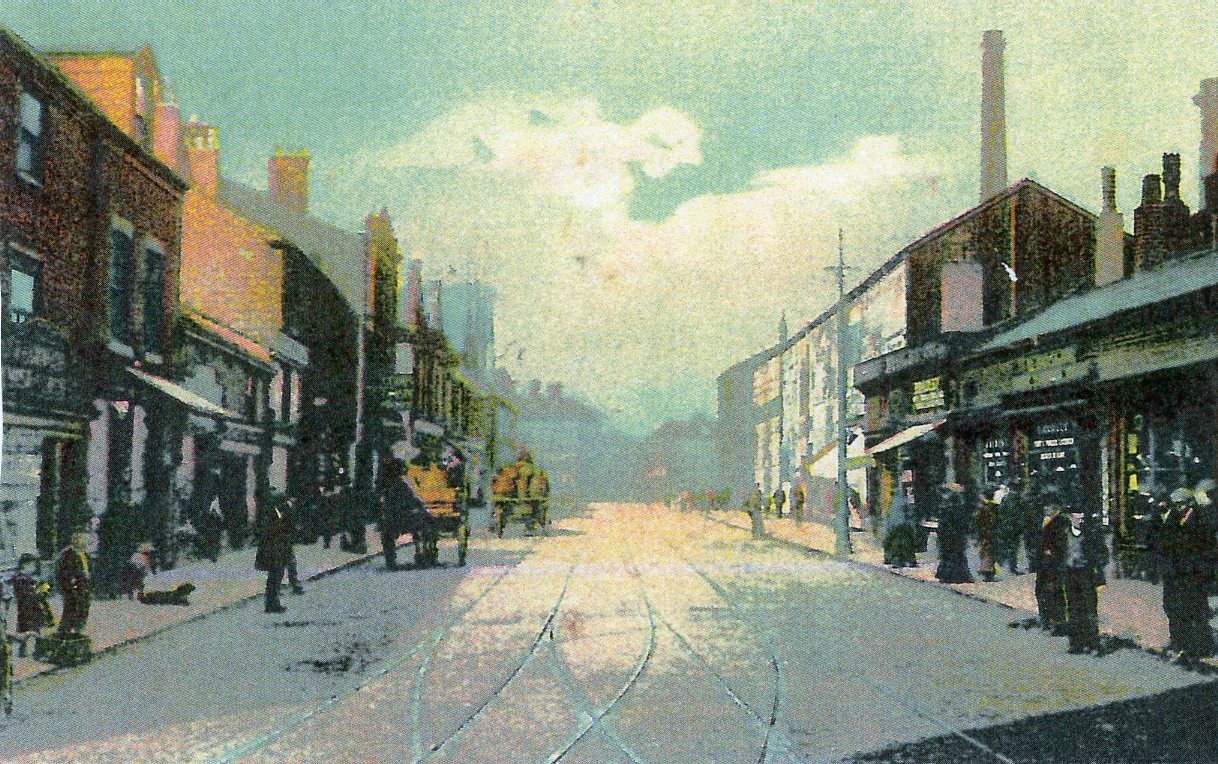
Early 1900s view of Lower Darwen Street with original shops on the right,
the later site of Edmondson’s house furnishers.
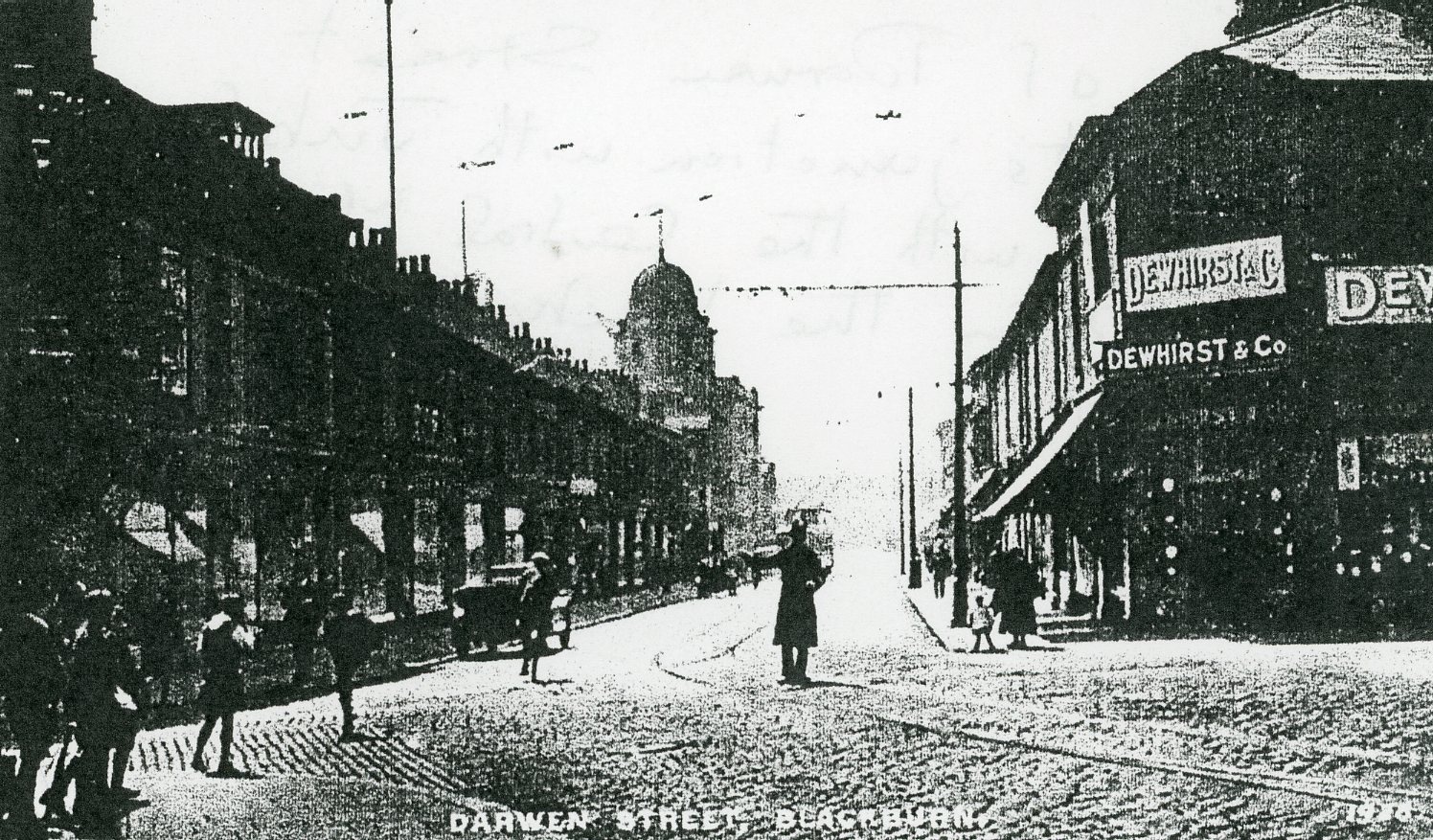
View of Darwen Street from its junction with Jubilee Street
with the Central Mission Hall in the background.
OLD BILL HEADS FOR DARWEN STREET BUSINESS PREMISES
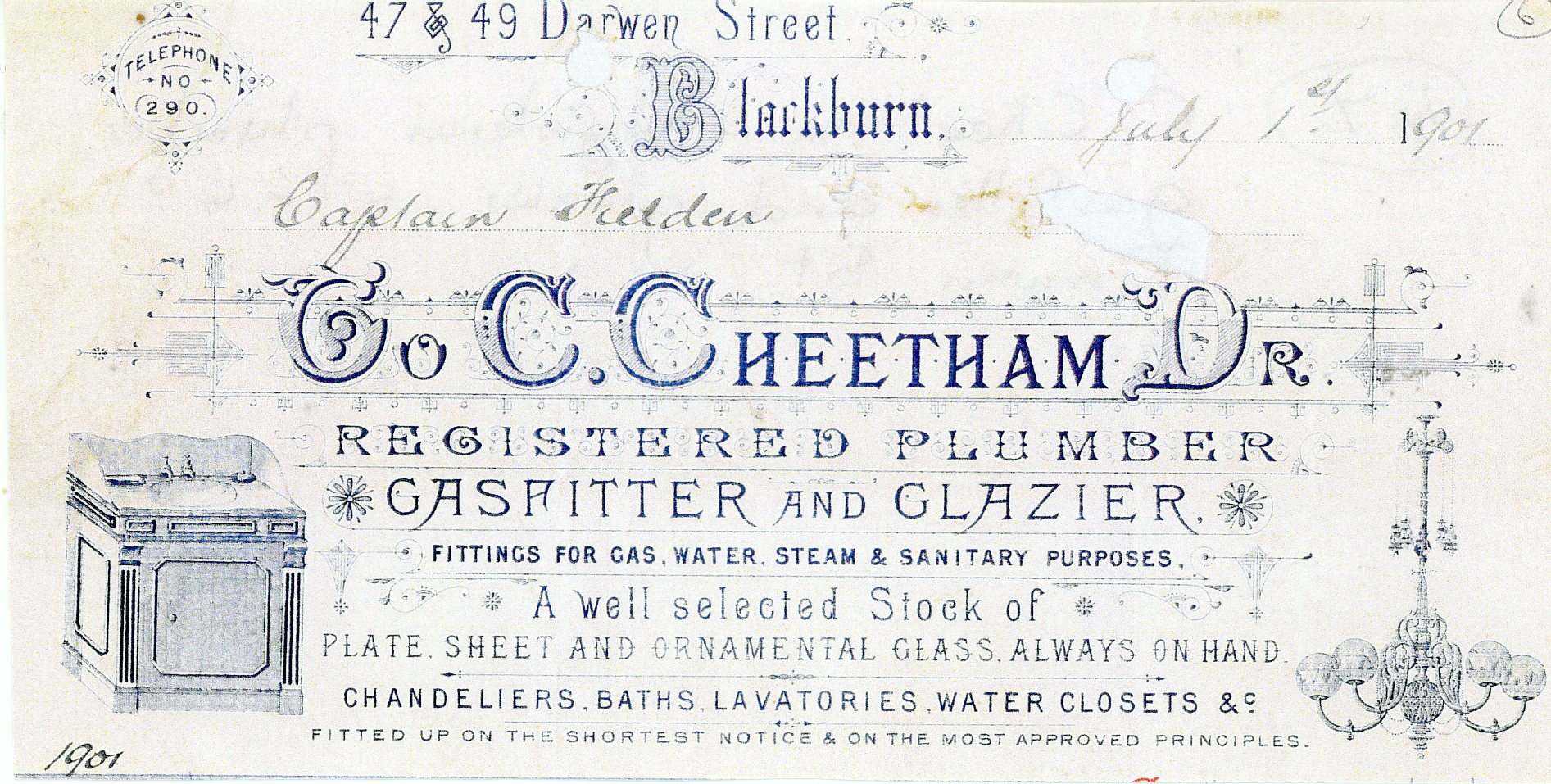
C. Cheatham, Registered plumber, gasfitter and glazier,
47 and 49 Darwen Street.
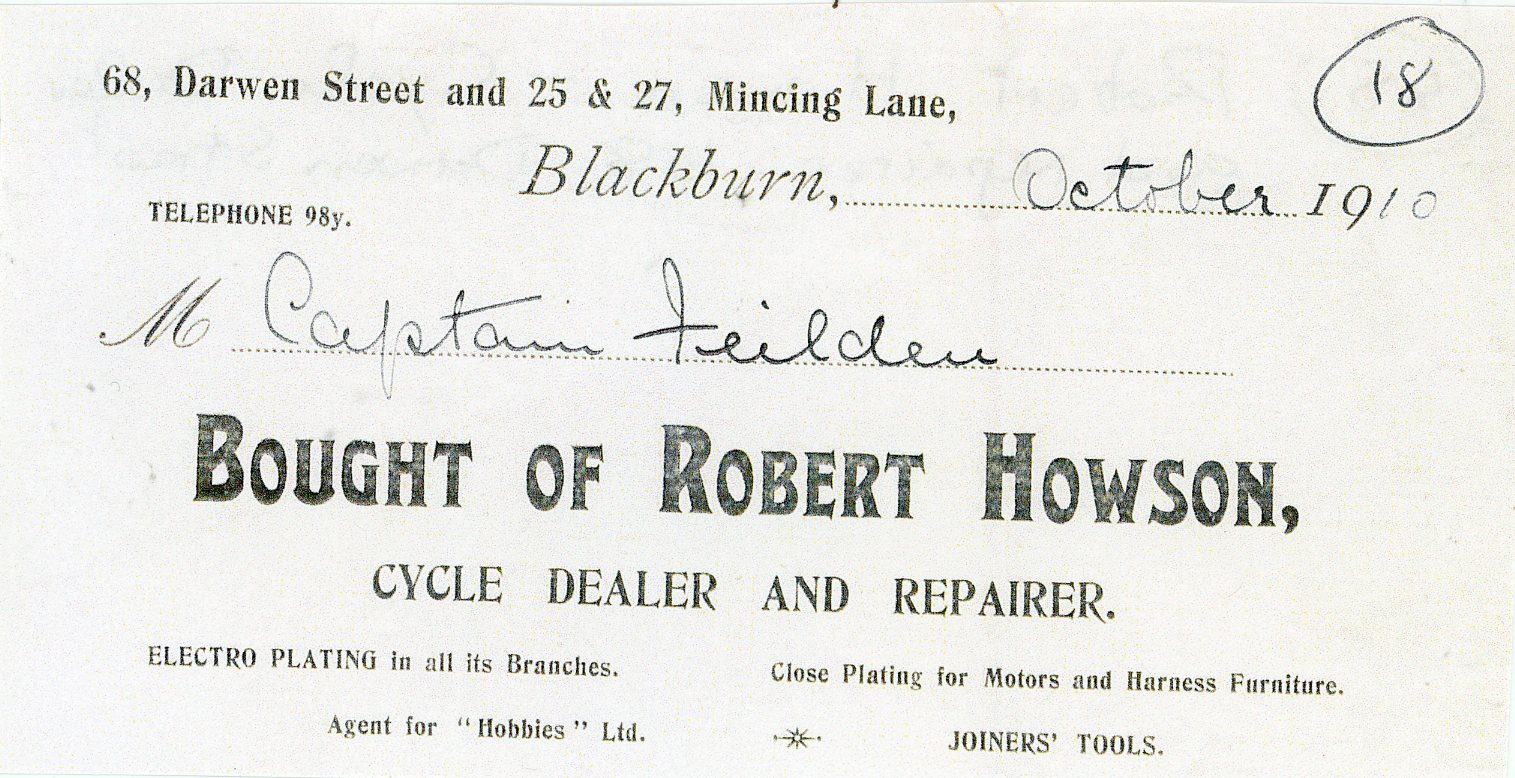
Robert Howson, Cycle dealer and repairer, 68, Darwen Street.
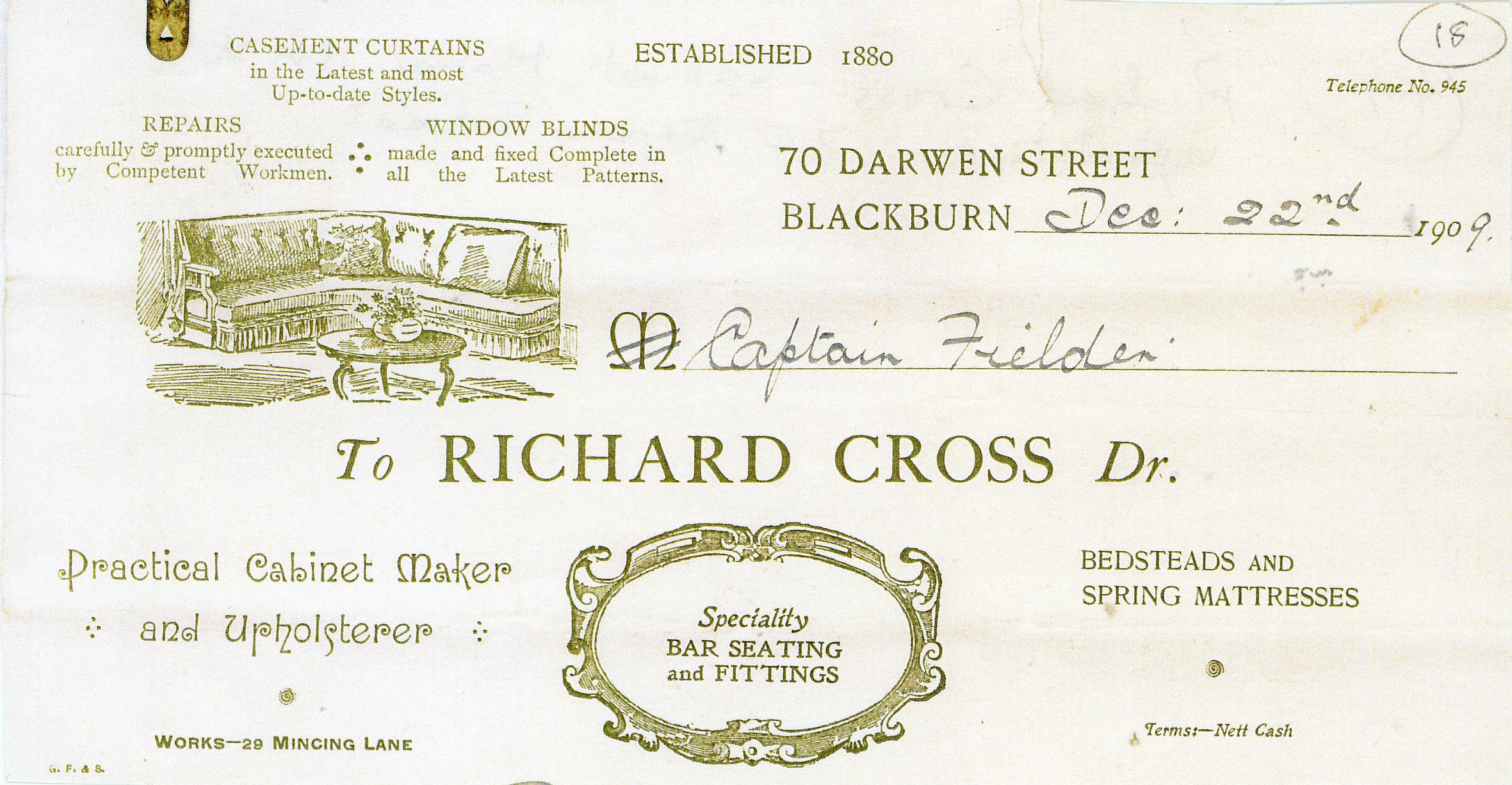
Richard Cross, Cabinet Maker and Upholsterer, 70, Darwen Street.
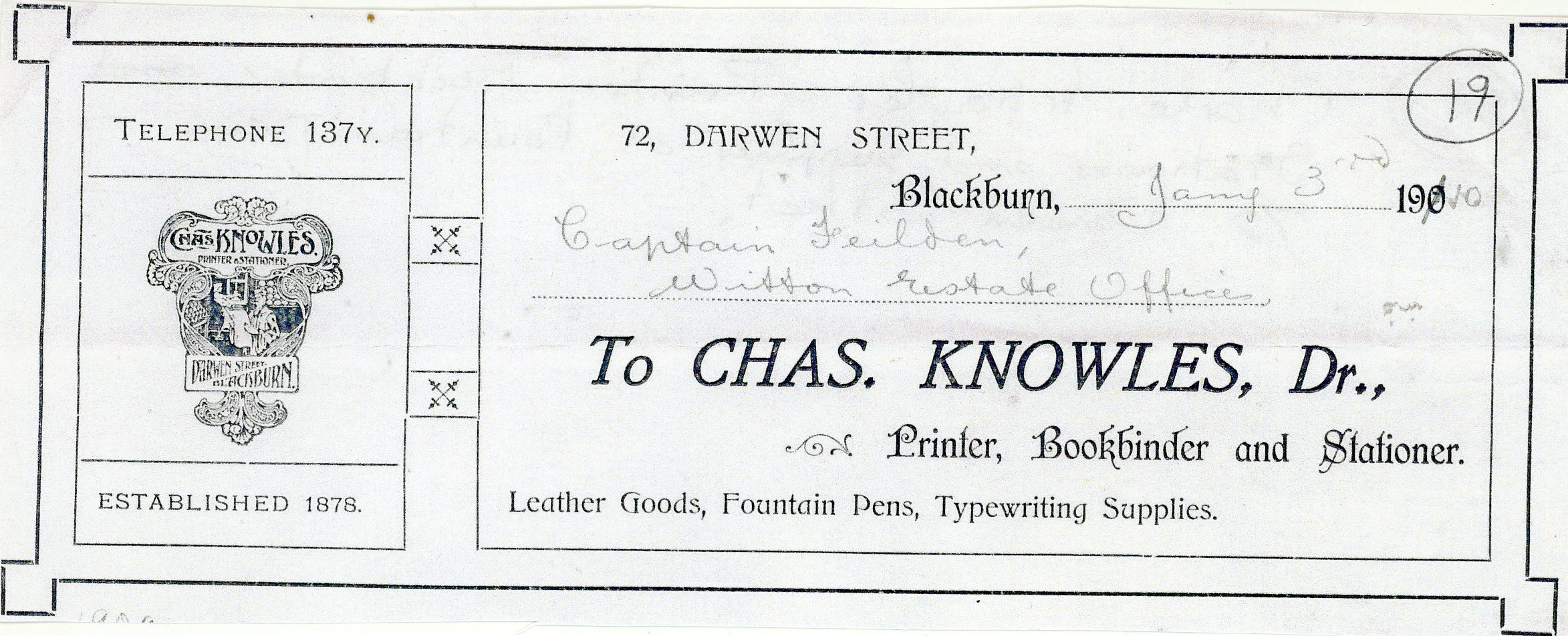
Charles Knowles, Printer, Bookbinder, Stationer and supplier of fountain pens,
72, Darwen Street.
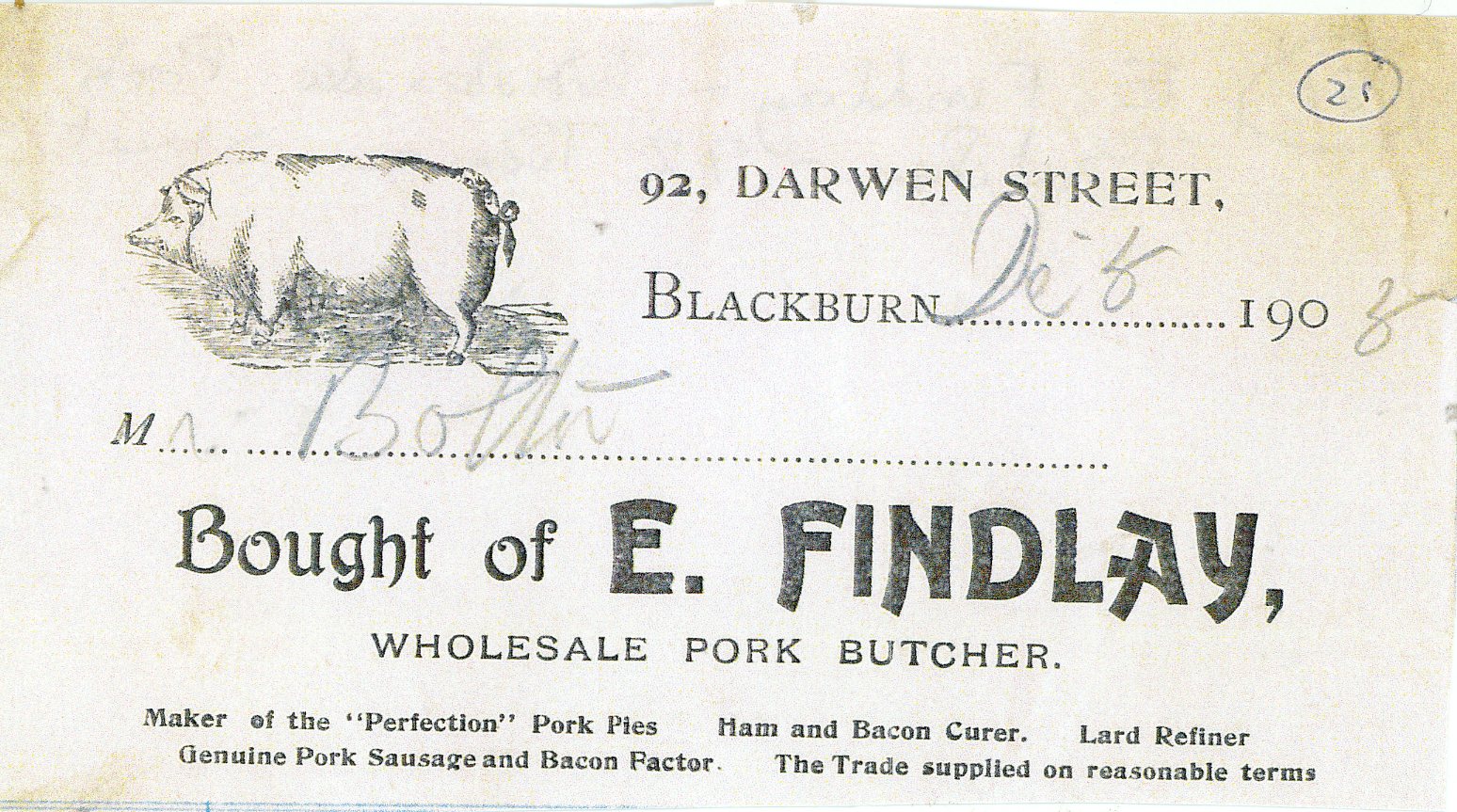
E. Findlay, Wholesale Pork Butcher, 92, Darwen Street.
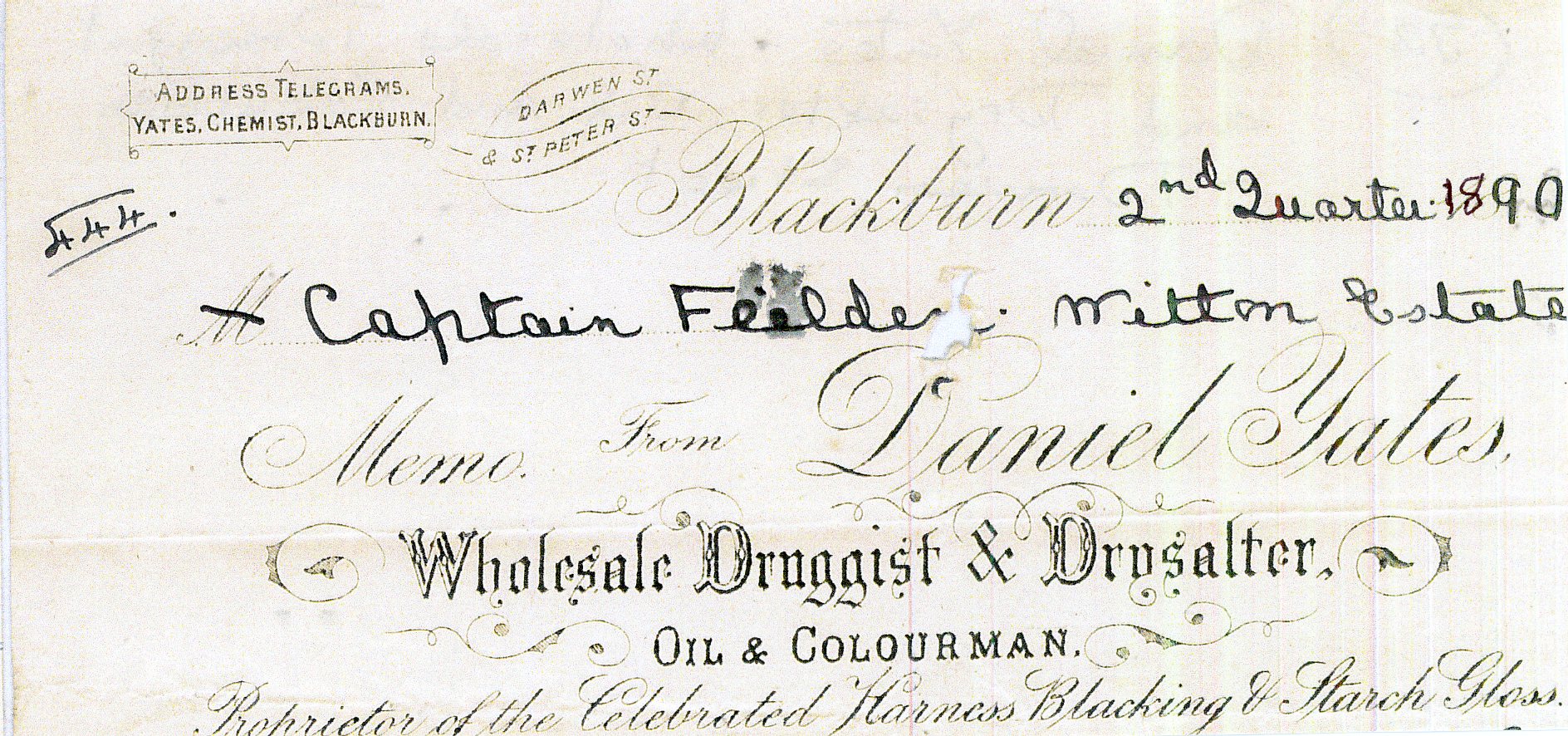
Daniel Yates, Wholesale Druggist and Drysalter, Oil and Colourman, Darwen Street.
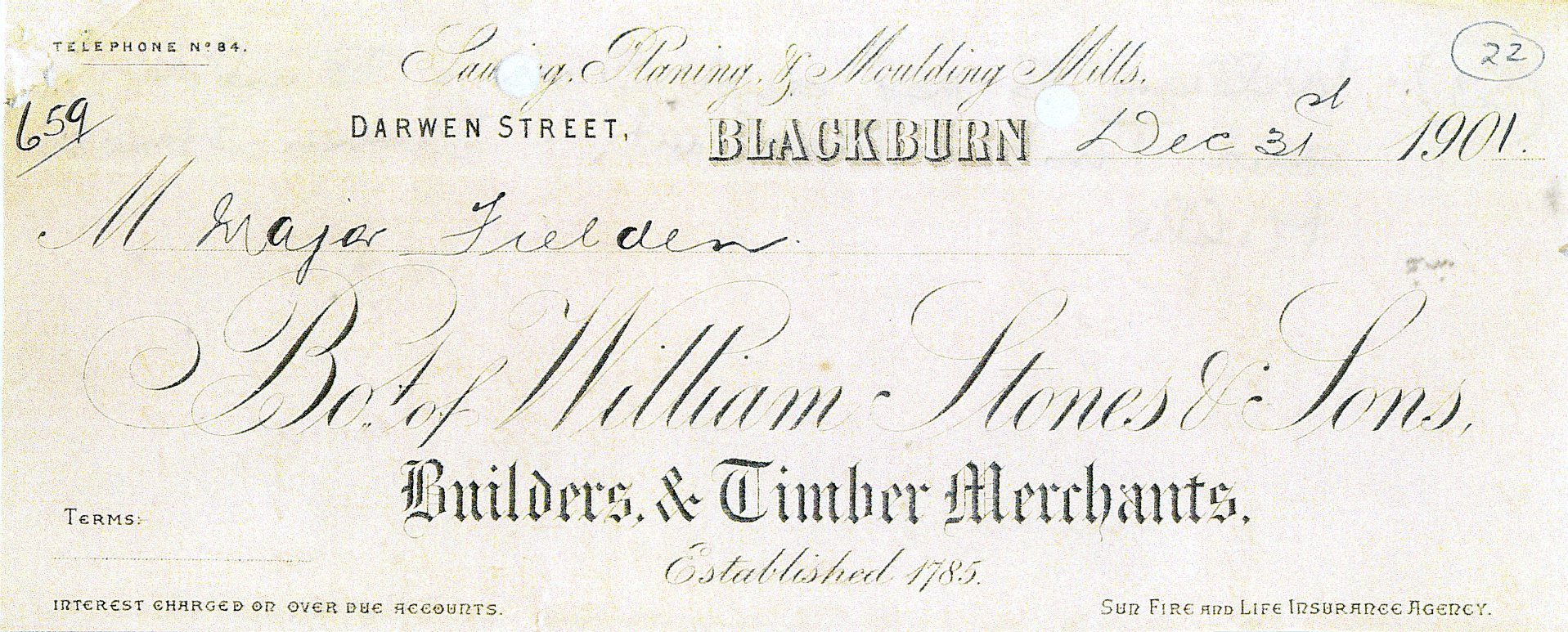
William Stones and Sons, Builders and Timber Merchant, Darwen Street Mills.