
 Loading more
Page 2
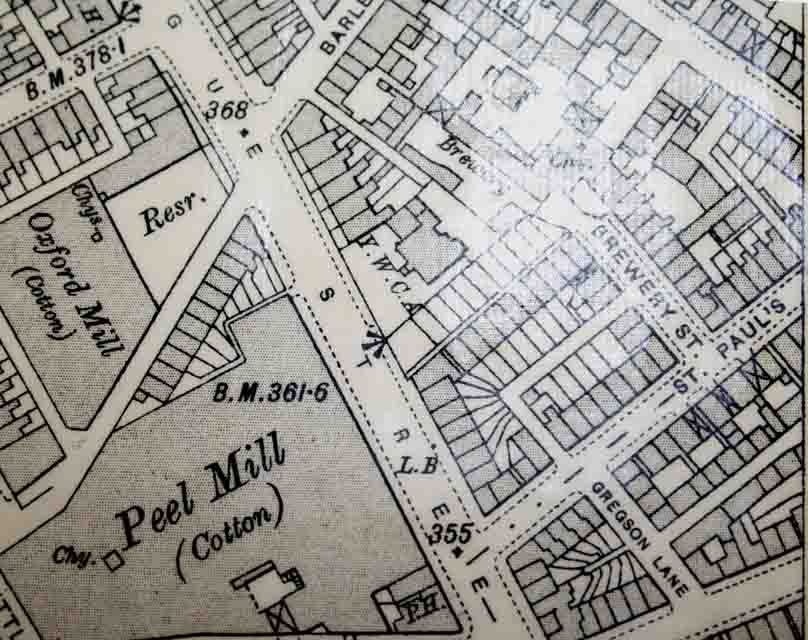
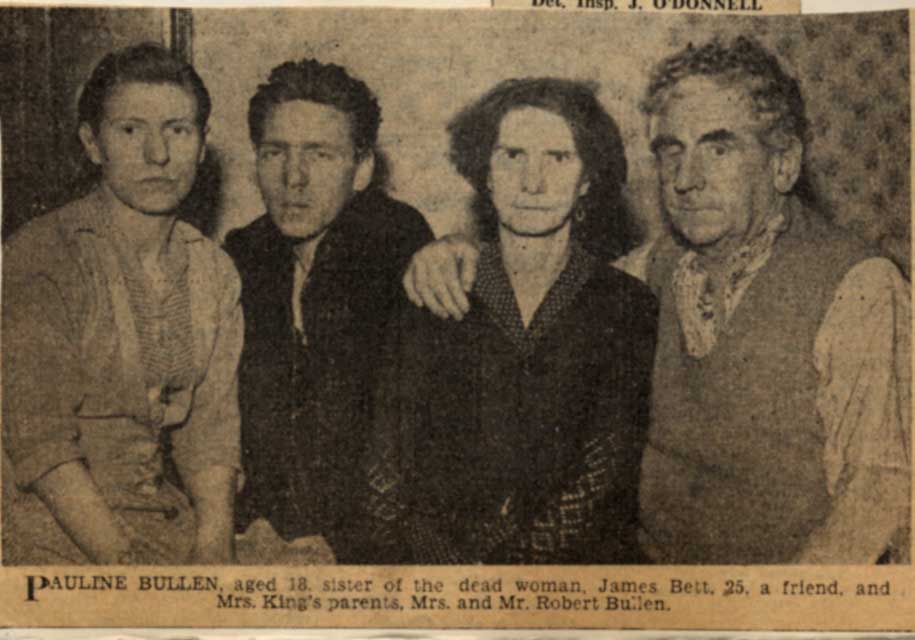
The incident was happening at 8 Brewery Street, a cul-de-sac just of St Paul’s Street Blackburn. The house belonged to Mr and Mrs Bullen. The Bullens had retired to bed at 9.45pm, leaving downstairs, their daughters Sheila King and Pauline Bullen, Sheila’s six-month-old son David, Pauline’s boy friend James Betts and next door neighbour Blanche Cowell.
The siege had started at about 10.45pm with a knock at the front door of the house. Sheila King had got up to answer it. When she opened it she saw her estranged husband, 27 year old Henry King. He pushed his way into the house brandishing a shotgun. The two sisters saw the gun, and panicked, running upstairs to their parents’ room. Mr and Mrs Bullen got out of bed and went downstairs with Pauline, leaving Sheila alone in the bedroom. King told Pauline to shout for his wife to come downstairs. Mrs Bullen, in a temper, tried to get King to leave the house. She was shouting and threw a poker at him, which missed. She then began to bang on the stairs with an empty bottle to try an attract attention from outside, but King had had enough and threatened to shoot her if she kept the noise up. They were now all made to stand in front of the fire in the front room.
King asked Sheila “Do you love me? Will you kiss me? Because you have got to die tonight”. She replied, “You have killed what love I had for you”. Mrs Bullen then suggested the gun was not loaded, which annoyed King and, aiming the gun up at the ceiling fired bringing down a large part of it. King now told them all go upstairs. In the bed room he made his wife stand under a crucifix which was fixed to the wall. They were kept there for about half an hour. Then he took them back downstairs to the kitchen, and they were ordered to stand at one side of the room with King standing between the kitchen table and the back door. He said to his wife “You and me will go back to church and make some new vows”.
Mr Bullen had put the baby into its pram and started to wheel it out but was stopped by King who said “Bring that pram back inside Mr Bullen, quick”. Now things took on a different slant with King threatening to kill himself. He tied the trigger of the gun to a chair with the belt of his coat. He was now getting more and more disturbed. It was now that Blanch Cowell saw her opportunity and manged to get out of the house to raise the alarm.
A taxi driver, Harry Barker, who had been dropping off a fare in the street, heard Mrs Cowell shout, “Go away he’s got a gun”. Getting back into his taxi he drove to the police station, reported the incident then returned with three plain clothed police officers, DC’s John Covill, Jack Riley and Peter Halliwell. When the police arrived Pauline Bullen said “Here's the Police,” to which King replied, “Now then we’ll have some fun”. The front door was already open and DC Cavill ran straight into the front room. King pointed the gun at Cavill from the kitchen and shouted “Get back, it’s loaded” Cavill held out his hand and told King to give him the gun. He refused and fired it, wounding Cavill in the groin. Without any hesitation King turned round and shot his wife in the back as she stood by the kitchen fireplace. PC Riley pulled Cavell out of the house. King shouted to the rest of those still in the house, “Get out before someone else gets it! Get out the lot of you”.
After they were all gone PC. Halliwell slammed the kitchen door on King. One of the constables sent Harry Barker, the taxi driver, back to the police station for assistance. Detective inspector’s James O’Donnell, Jack Harrison and Herbert Taylor arrived on the scene with police backup. Inspector O’Donnell entered the house. The door to the kitchen was shut and he shouted through it, asking King if he could go in. O’Donnell finally persuaded him to open the door. Inspector O’Donnell and DC Halliwell went into the kitchen, King, recognising Halliwell and not wanting him there shouted at him to get out. After some negotiating, he agreed to let Inspector Harrison come in with O’Donnell. Inspector Harrison stood at the side of the kitchen door, while Inspector O’Donnell faced King. The kitchen was in darkness, the only light coming from the front room. King said that he wanted to make a statement and Inspector Harrison began to ask King about what he had done. Inspector O’Donnell stood with his note book open, but was not writing anything down. This seemed to upset King and he asked why O’Donnell was not taking down the statement, then, raising the shotgun he fired, hitting Inspector O’Donnell in the chest, just beneath his heart. The Inspector fell. King then turned the gun on Harrison, threatening to shoot him Harrison picked up a chair threw it at King and managed to jump back through the kitchen door to safety. Inspector O’Donnell somehow dragged himself along the kitchen floor to the door and was pulled out.
At 1pm the police sent for Henry King's brother, who arrived shortly after, King spoke briefly to him and threw a note out of the window written by his wife Sheila to another man. It read;
Dear Dennis.
Just a few lines to say I am OK. Hoping you can say the same. I got home all right. I have not seen him yet as I have to get my case settled. It was very nice to get to know you.
My writing is not very good as I have a bad hand. Would you send me a photo of you. I will send one to you later. My Mum bought me a skirt, coat and underwear. Dennis, could you send me a bit of money as I want to pay solicitor? If you can’t I understand love.
Well Dennis this will be all for now. So till I write again I will say
Cheerio. Love
Sheila.
Just a few lines to say I am OK. Hoping you can say the same. I got home all right. I have not seen him yet as I have to get my case settled. It was very nice to get to know you.
My writing is not very good as I have a bad hand. Would you send me a photo of you. I will send one to you later. My Mum bought me a skirt, coat and underwear. Dennis, could you send me a bit of money as I want to pay solicitor? If you can’t I understand love.
Well Dennis this will be all for now. So till I write again I will say
Cheerio. Love
Sheila.
The Chief Constable R.R. Bibby and the Deputy Chief Constable J.M. Rodgers arrived at the house and were quickly made aware of the situation. Mr. Bibby called for the police officers to be armed, and issued with tear gas. Police dogs with their handlers were also brought in.
At about 2.15am after a three hour stand-off, it was decided that the siege should be brought to an end. Orders were now given for the police to enter the house by force. Tear gas was thrown through the kitchen window, and a police dog was sent in closely followed by armed police officers. There was a shot heard from the kitchen. King shouted that he had shot himself. When the police got to the room he was laying on the floor, the dog was barking at him. King was wounded on the left side of his chest. He held the gun, a twelve bore repeater shotgun, in his left hand. On the floor the police found five spent cartridges a further sixteen live cartridges were found in his pockets when he was searched.
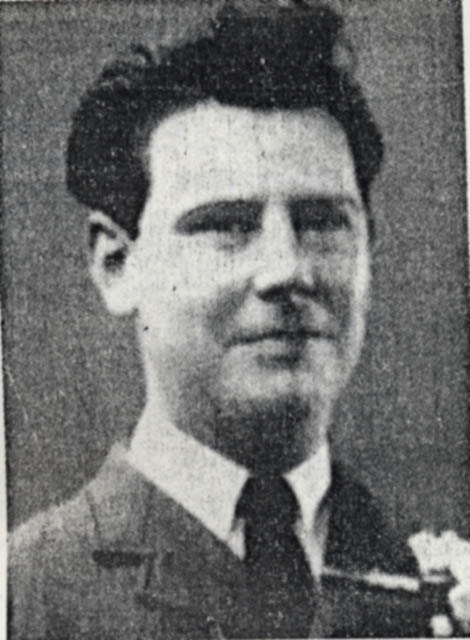
Chief Inspector O’Donnell, DC. James Covill and Henry King were all taken to Blackburn Royal Infirmary. Covill was badly wounded, with a gunshot wound to his groin, which had fractured his pelvis. The wound was not life-threatening. King had a slight chest wound. He was later transferred to Walton jail hospital. After being admitted to the Infirmary, Inspector James O’Donnell underwent a major operation. He was then in a critical condition. Later in the day he improved slightly, but then his condition began to deteriorate and it was felt another operation was necessary. At about 10 pm he was taken to the operating theatre, two hours later, just before midnight, on Saturday the 13th of December, Inspector James O’Donnell died.
Forty seven year old Inspector James O’Donnell had, before joining the police, been in the Irish guards, leaving the army in 1932. When war broke out in 1939 he rejoined his old regiment. 1940 saw him in Holland, and whilst fighting a rear guard action with the Irish Guards, covering the evacuation to England of Holland’s royal family, he was wounded. He was sent to a hospital in The Hague and while there was captured by German forces, having to spend the rest of the conflict as a prisoner of war. In 1945 O’Donnell made his escape. He evaded capture for eleven days, before he met up with British Forces near to Belsen Concentration camp. When he got back to England, he was awarded the Military Medal and four months later he received the bar to go with it. In December 1945 O’Donnell rejoined the police and two years later was promoted to Sergeant. In 1955 he was promoted to Inspector and made head of the CID in Blackburn. He had been married to Florence O’Donnell for about 11 years. They lived in Higher Croft Road, Lower Darwen, and had no children.
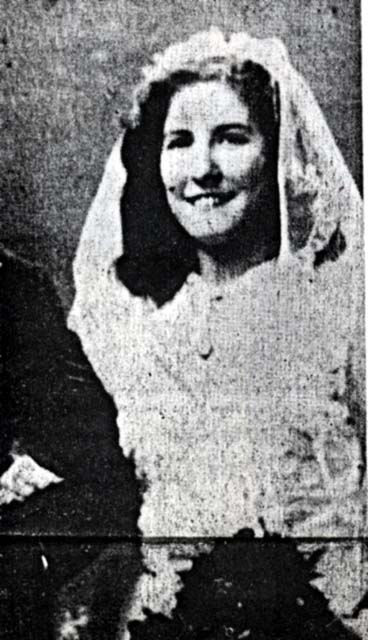
Henry King and Sheila Bullen had been married In January 1957, while King was in the air force. Their marriage was not a success there had been numerous separations. About the end of November 1958 Sheila once again left her husband and with her six month old son moved back to her parents' house in Brewery Street.
Henry King and Sheila Bullen had been married In January 1957, while King was in the air force. Their marriage was not a success there had been numerous separations. About the end of November 1958 Sheila once again left her husband and with her six month old son moved back to her parents' house in Brewery Street.
Henry King had gone to a Pet shop on Penny Street at about 3.30pm on the day of the siege and had bought a Browning automatic five shot shotgun with twenty-five rounds. At 8pm King went into the Dun Horse Hotel on Mincing Lane and started to talk to Sheila Whipp, a lady he knew. In the course of their conversation, he gave her a live cartridge She, having no idea what it was' gave it him back. He then told her he was going to shoot his wife and baby that night. At about 10pm, after having about 6 or 7 whiskeys and dry ginger he left the pub saying to Sheila Whipp on his way out “Ta-ta. You won't see me again. You will read about it in the papers tomorrow”. He made his way to Brewery Street stopping of to pick up his gun.
THE TRIAL
On the 16th of January 1959 Henry King was committed to stand trial at Manchester Assizes by Blackburn Magistrates, charged with the murders of his wife Sheila King and Inspector James O’Donnell. The trial at Manchester Assizes began on the 10th of March 1959. When asked for his plea on the murder of his wife, King at first pleaded guilty. He was then asked to plead again. This time he pleaded not guilty. He also pleaded not guilty to the charge of the murder of Inspector O’Donnell.
Witnesses were now called, for the prosecution and the defence. Both King and DC Cavill were brought to court in ambulances. Cavill had to be helped to the witness box by colleagues. The defence wanted the charges of murder reduced to one of manslaughter due to diminished responsibility and they set out to show this throughout the trial The jury, which consisted of ten men and two women, were told that King had said he both loved and hated his wife. He had told a psychiatrist that she had been a prostitute and then later denied ever saying it. She would laugh at him behind his back. Throughout this King sat in the dock holding a Bible on his knee.
The jury was also told that when he was a teenager, King had spent time in borstal for theft. He had later joined the RAF as an assistant cook working his way up to corporal, however he had had a hard time of it, especially after he got married. While in the camps he had kept his wife on a tight leash and quickly broke up any friendships she made. Later, after being posted to Germany, he would often upset the military powers and also the locals who worked in the camp. He was described as a bully and quick to lose his temper with those under him and this included his wife. He was paranoid that the police, both civil and military, were persecuting him, and the defence suggested that King had suffered from paranoid schizophrenia. Much more evidence was given as to the state of King's mind at the time of the incident at Brewery Lane, with the defence trying to show that it stemmed from mental problems he had in the past.
At the end of the three-day trial, the jury were sent out to consider its verdict. After deliberating for four hours, they had failed to reach a finding. The judge sent them back. After a further half hour ,they retuned with a verdict. He was found not guilty on both counts of murder, but guilty of manslaughter.
On the 13th of March 1959 Henry King was sentenced to life imprisonment for the manslaughter of his wife Sheila King and Inspector James O’Donnell.
All the above information was taken from the local newspapers
Written by Stephen Smith, a CottonTown volunteer
The Murder of Emily Holland
"I never had such a thing in my head when I sent her for the ’bacca"
On the Tuesday 28th March 1876 seven-year-old Emily Holland had dressed in her Sunday Best to go to school at St Alban’s RC School. There was a Government inspector coming to test the pupils and as a bright intelligent girl she wanted to both look and do her best. At half-past-four, at the end of the school day she set off home; around her waist she had tied a ribbon in celebration for winning a prize. Although her home, at 140 Moss Street, was only 400m away on Moss Street she never made it and despite increasingly frantic searches by her father, James Holland, she was never seen alive by her family again.
James searched throughout Tuesday night and on Wednesday morning the police became involved.
Emily was described as having a pale complexion and dark hair; she was of a slender build. She was wearing a black frock, a black hat, a purple and white scarf and boots.
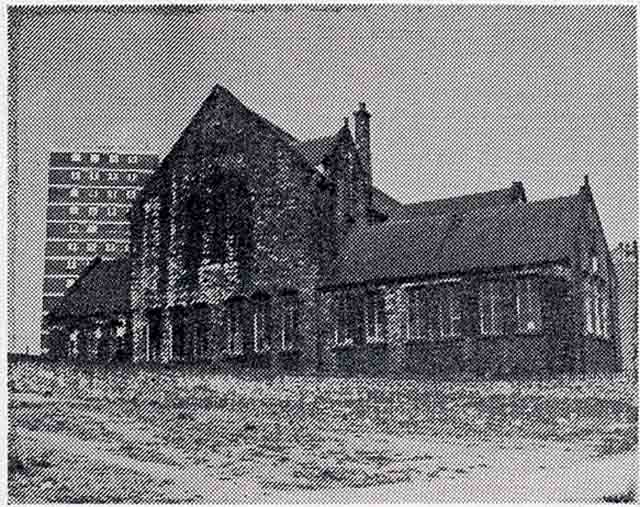
The people in the area suspected a local man must have been responsible because Emily was an intelligent child who would not have gone off with a stranger.
The police’s first suspect was a roughly dressed man who Emily’s friends had seen in the street when she disappeared. He was described as 40 years of age, about 5' 6" and having the appearance of a navvy. He was wearing a dark coat, vest and trousers and with dark hair.
His description was circulated across the north of England and this led to a huge manhunt and men were arrested as faraway as Leeds. However, the man in the street, who was eventually arrested, proved to be a ‘red herring’.
All of this activity did not bring the searchers any closer to finding Emily until a gruesome find on Thursday morning indicated her likely fate.
All of this activity did not bring the searchers any closer to finding Emily until a gruesome find on Thursday morning indicated her likely fate.
It was Thursday, shortly before 12 o’clock when Mrs White went to investigate a parcel lying in a field at the end of Bastwell Terrace, off Whalley Road.
The site of the discovery is now covered by houses but then it was by the side of a cinder path leading to Lower Oozebooth Farm.
The parcel was made from newspaper and it had attracted a local dog. Inside she found the torso of a child. Shocked, she called to a man, Mr Dewhurst, a labourer, who was passing and he fetched the police. When he arrived at the scene PC Rostron marked where the body was found and took the parcel to the Police Station.
The site of the discovery is now covered by houses but then it was by the side of a cinder path leading to Lower Oozebooth Farm.
The parcel was made from newspaper and it had attracted a local dog. Inside she found the torso of a child. Shocked, she called to a man, Mr Dewhurst, a labourer, who was passing and he fetched the police. When he arrived at the scene PC Rostron marked where the body was found and took the parcel to the Police Station.
It’s worth remembering that at this time there was no Forensic Science Service and although police detectives did exist, none were available to Blackburn’s police force.
The police called upon three doctors to help them. The Blackburn Police Surgeon was Dr Martland; he worked at Blackburn Infirmary and he was helped by Dr Cheesbrough (who also worked at the infirmary) and Dr Patchett. The work of these three men was to be instrumental in catching the murderer.
When the family were told of the discovery Mrs Holland collapsed and James Holland went to identify the remains. The naked torso was that of a young girl but as it missing the head, arms and legs, James was unsure. The identity of the body was confirmed by Emily’s aunt; because at the child’s bath time she had noticed a white birthmark on her back, this birthmark was on the torso. The aunt also told the police that she had given Emily a piece of fig pie and the autopsy, performed by the three doctors, confirmed the presence of figs in the child’s stomach. The autopsy concluded she must have died before 6 o’clock and discovered that the child had been subjected to a violent sexual assault.
The townspeople were horrified by the discovery and the search began for the missing body parts. On Saturday the legs of the missing girl were discovered by Richard Fairclough in a culvert at Lower Cunliffe. Like the torso they were wrapped in a copy of the Preston Herald but this time the murderer had made more of an effort to hide them.
The next day, Sunday, thousands of people from the town set out to search for the rest of her body but the head and arms remained undiscovered. They had even emptied all the cesspits and ash pits.
The next day, Sunday, thousands of people from the town set out to search for the rest of her body but the head and arms remained undiscovered. They had even emptied all the cesspits and ash pits.
The arrests continued. The children in the street, who included Emily’s cousin, told the police that when Emily disappeared she had been sent on an errand to buy three ha’pence of tobacco by a man who had offered her £1 if she did so. Perhaps as a sign of their desperation, they even arrested George Cox, the owner of the Tobacconist’s shop on Birley street, even though he was nowhere near the scene when Emily had disappeared. The police eventually tracked down and arrested the man seen in the street, he was called Robert Taylor and his circumstances must have been very frightening even though there was very little evidence against him; as one contemporary observed “Yet people have been hanged for less, and Robert Taylor probably escaped a similar doom by the narrowest chances.”
Reward money totalling £300 was offered; £200 was offered for finding the rest of the body and the Home Office offered £100.
The breakthrough in the case came from the forensically minded Dr Martland,he noticed that Emily’s body was dirty and also that hairs were sticking to the body. On closer examination the hairs were seen to be of varying length and colour. In addition, some of the hairs were very short and turned out to be men’s whiskers.
He told the police that the body must have been dismembered on the floor of a barber's shop.
He told the police that the body must have been dismembered on the floor of a barber's shop.
This new evidence led to the Police searching all of the barbers shops in Blackburn. Nothing was found but the police’s suspicions were now focused on two local men – Denis Whitehead whose shop was on Birley Street, close to its junction with Moss Street and William Fish whose premises were at 3 Moss Street; Emily would have walked past Fish’s shop on her way to and from school.
The police weren’t the only people to suspect Fish. For whatever reason, local people also suspected him and when a rumour spread that the child’s head was in Fish’s shop a crowd of a thousand people gathered in the street outside.
The police hastened to reassure the crowd that they had searched the shop and that nothing had been found. However, the pressure was on Fish and he agreed to be interviewed by the Blackburn Standard newspaper and he took the opportunity to explain his alibi.
In the meantime the family had quietly buried Emily’s remains.Perhaps surprisingly, the funeral did not attract a large crowd. Her remains were buried in a polished oak coffin finished with silver handles. The hearse carrying her coffin was followed by three mourning carriages for family and friends. As it made its way down Moss Street, it passsed William Fish's shop where he sat on the doorstep smoking his pipe.
The funeral started at 11 o’clock and the funeral was taken by Reverend Berry and Reverend Dunderdale.
Blackburn’s Chief Constable Mr Potts came to the funeral and the undertaker was Mr Walker.
Blackburn’s Chief Constable Mr Potts came to the funeral and the undertaker was Mr Walker.
© Gordon Hartley - terms and conditions
The police investigation seemed to have stalled. Fish’s shop was searched a second time but nothing was found; following this Whitehead was arrested but because he rented the rooms in his house out to four men they were able to provide him with an alibi.
The breakthrough came on 16th April when a man called Richard Taylor travelled from Preston and offered the police the use of his Bloodhound, called Morgan, together with a Springer Spaniel he also owned.
That same day, Easter Sunday, the police arrived at Whitehead and Fish’s shops simultaneously. They secured Fish’s shop and took the dogs to search Whitehead’s shop first.
The dogs found nothing in Whitehead’s shop and so the police took the dogs round to Fish’s shop.
The shop was in a two-up two-down brick built terraced house, like all the other housing in the area. The front room, downstairs, was the shop with its barber’s chair and mirror. There was a fireplace in this room, as there was in every room. In the other room on the ground floor there was a slop-stone (a shallow sink) under the window and, under the stairs, a pile of coal for the fires. Upstairs there were two rooms which were probably quite bare because Fish lived with his wife and family at the other end of Moss Street, at number 162, quite close to the Holland’s home.
The dogs were taken into the shop through the front door and went straight through into the back room and started to sniff around the slop-stone. The police officers searched it but could find no traces of blood. Richard Taylor took the dogs upstairs, accompanied by the Chief Constable, William Fish and his wife. In the back room nothing was found but in the front room the dogs ran straightway to the fireplace and started barking.
Richard Taylor moved forward and startled the Chief Constable, Joseph Potts, by thrusting his arm up the chimney. Fish’s wife started to shout at Taylor but it was too late, Taylor stood up from the fireplace with a parcel in his hand. In this, wrapped in a copy of the Manchester Courier, they found the charred skull of the girl and “some other bones”.
Fish must have known that the game was up and he said not a word as the parcel was opened
Richard Taylor moved forward and startled the Chief Constable, Joseph Potts, by thrusting his arm up the chimney. Fish’s wife started to shout at Taylor but it was too late, Taylor stood up from the fireplace with a parcel in his hand. In this, wrapped in a copy of the Manchester Courier, they found the charred skull of the girl and “some other bones”.
Fish must have known that the game was up and he said not a word as the parcel was opened
Outside a large crowd had started to gather, several thousand angry people. The police realised that if they got hold of Fish he would be killed and so Chief Constable Potts stood in the front doorway and talked to the crowd whilst his other police officers got everyone else in the house away down a back street.
When Potts told the crowd of their discoveries a huge cheer went up.
The crowd followed Potts down into town where Fish was already locked up in a cell, in the Police Station at the back of the Town Hall.
The next afternoon Fish told PC Parkinson where the rest of the clothing was and that he wanted to make an confession “so that the innocent would not suffer.”
Fish’s confession
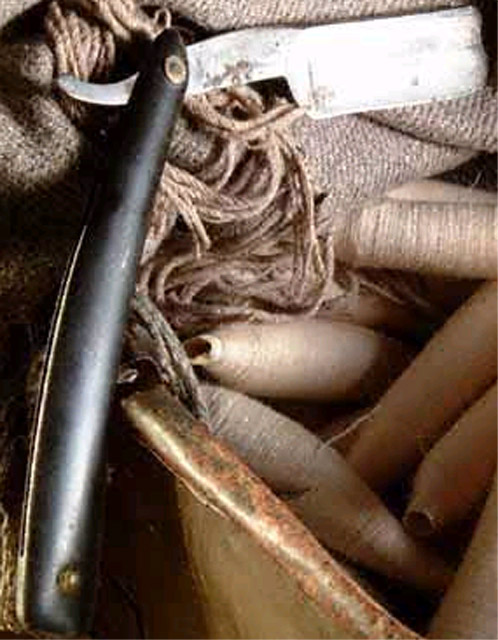
I told Constable William Parkinson that I burnt part of the clothes, and put the other part under the coal in my shop; and now I wish to say I am guilty of murder. I further wish to say that I do not want the innocent to suffer . At a few minutes after five o’clock in the evening, I was standing at my shop door, in Moss Street when the deceased child came past. She was going up Moss Street, I asked her to bring me one half–ounce of tobacco from Cox’s shop. She went and brought it to me. I asked her to go into my shop. She did. I asked her to go upstairs, and she did. I went up with her. I tried to abuse her, and she was nearly dead. I then cut her throat with a razor. This was in the front room, near the fire. I then carried the body downstairs into the shop; cut off head, arms and legs; wrapped up the body in newspapers, on the floor; wrapped up the legs also in newspapers, and put those parcels into a box in the back kitchen. The arms and head I put in the fire. On the Wednesday afternoon I took the parcel containing the legs to Lower Cunliffe; and, at 9 o’clock that night, I took the parcel containing the body to a field at Bastwell, and threw it over the wall. On Friday afternoon I burnt part of the clothing.
On the Wednesday morning, I took part of the head which was unburnt, and put it up the chimney, in the front bedroom.
I further wish to say that I did it all myself; no other person had anything to do with it.
The foregoing statement has been read over to me, and is correct. It is my voluntary statement, and , before I made it, I was told that it would be taken down in writing , and given in evidence against me.
(Signed) WILLIAM FISH
Witnesses, Robert Eastwood, Superintendent
William Read, Superintendent
Joseph Potts, Chief Constable”
Fish’s trial
Fish was taken to Kirkdale Goal near Liverpool and sent for trial at Liverpool Assizes in late July.
Given his confession, the fact that he had told the police where to find the rest of Emily’s clothes and that he had even corrected the Police Surgeon at the inquest, Fish’s trial might have been expected to have been very brief indeed.
Nevertheless, The Judge, Justice Lindley, instructed that a plea of ‘insanity’ was entered on Fish’s behalf and appointed a lawyer, Mr Blair, to defend him.
Nevertheless, The Judge, Justice Lindley, instructed that a plea of ‘insanity’ was entered on Fish’s behalf and appointed a lawyer, Mr Blair, to defend him.
After all of the evidence had been heard and summed up by the judge, the jury were asked to consider their verdict. They did not even bother to leave the Jury Box but conferred briefly amongst themselves and within a minute the Foreman of the Jury returned a verdict “GUILTY.”
Fish’s last words, before the Judge passed the death sentence on him were “I never had such a thing in my head when I sent her for the ’bacca.”
William Fish was hanged at Kirkdale Goal on 14th August 1876. Uniquely for a nineteenth century murder case, there was no attempt to raise a public petition asking the Home Secretary to show mercy.
Although completely forgotten today, the murder of Emily Holland was, in its time a notorious case and raises some interesting issues which still resonate today.
It was the first time that a Bloodhound had been used to help detect evidence of a crime. In the most infamous crime of the nineteenth century, the Jack the Ripper murders, bloodhounds were used because a policeman remembered their successful use in the Emily Holland case.
The lack of police detectives in Blackburn at the time of the murder is noteworthy as a very early example of the use of forensic science by the doctors assisting the police.
The response of the newspapers was quite different from today. Even though it was a paedophile crime there was no moral panic such as we would see today but Fish’s physical appearance was discussed at length. He was only 5' 2" but because of the popularity of phrenology his peculiarly-shaped head was described in detail and Liverpool Waxworks had a model of his head made even before his trial had taken place.
After his execution some of William Fish’s family history came to light. Of course, it in no way excused his actions but does perhaps offer a clue to them.
William’s mother died when he was three years old and his father then ran away leaving his children to be put into the Workhouse. One day, whilst playing on the workhouse roof, William fell forty feet and landed on his head. Amazingly, he wasn’t killed but he had to have three pieces of bone removed from his skull, leaving him with a misshapen head. He would certainly have suffered a brain injury and, even if he hadn’t, one of his brothers was described as “an idiot” and his other siblings as “feeble minded”. Ironically, the Prison Governor described William as “the gentlest prisoner he had ever met”.
Robert Taylor, the man in the street seen by Emily’s friends, was lucky to escape with his life as society’s desire to see someone held responsible for the crime would probably have led to his trial for her murder if Fish had not been caught.
Today, very little survives to remind us of this terrible crime; the murder of a lively, bright and intelligent little girl on her way home after winning a prize at school.
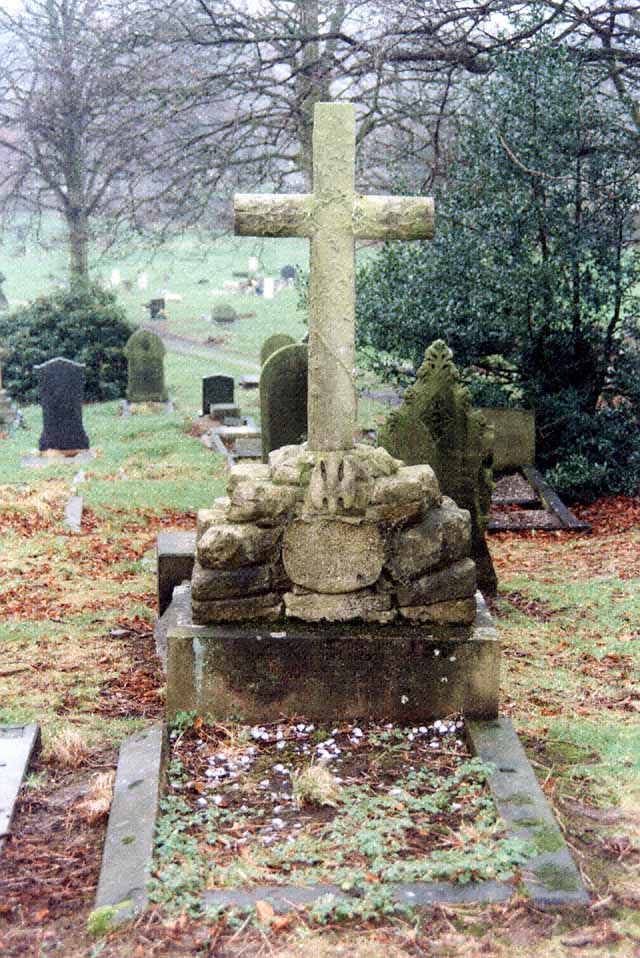
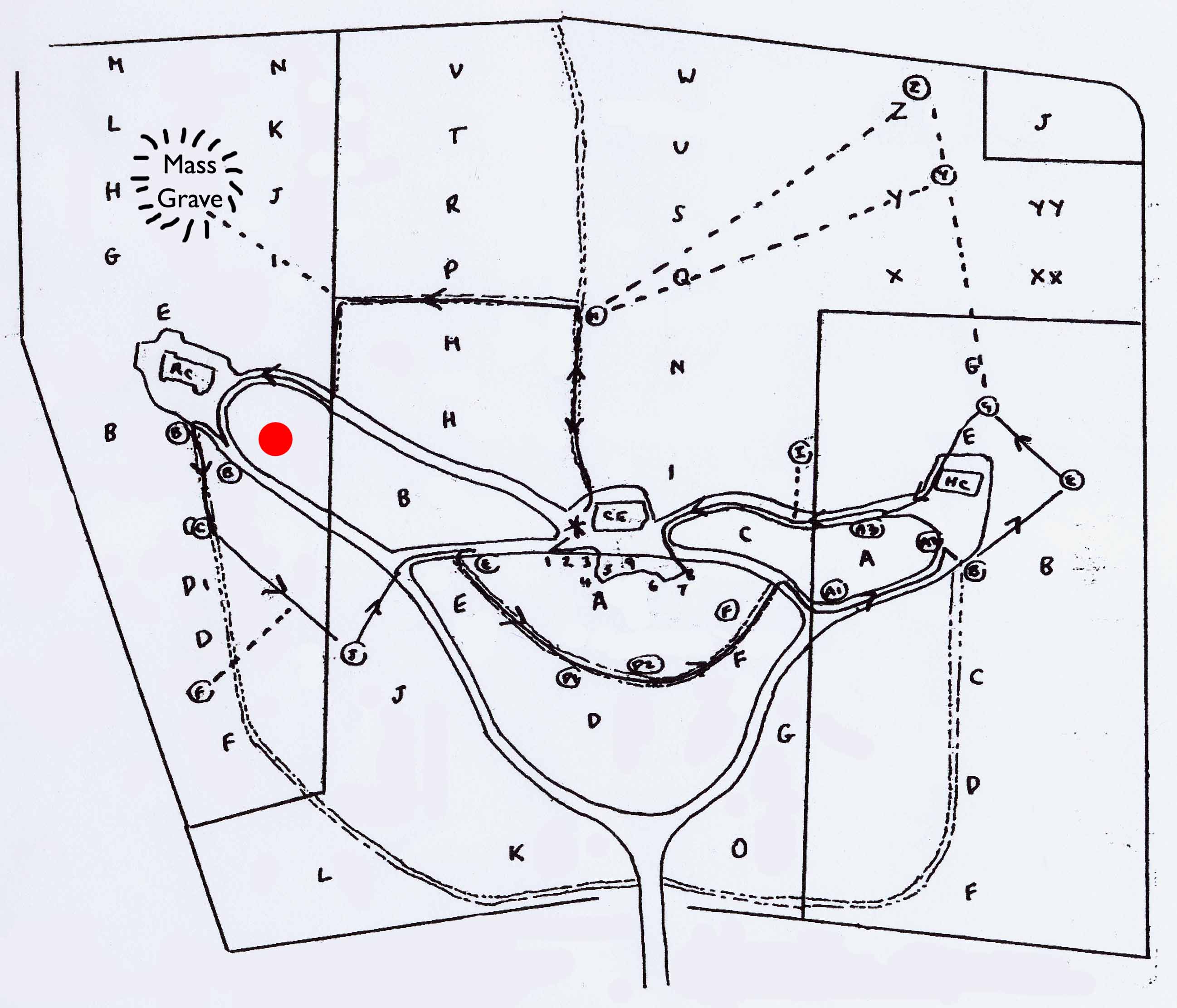
The houses on Moss Street were all demolished in the late 1960s but Emily’s grave survives and can be found in Blackburn Cemetery. The map below indicates the location.
Researched by Justin Smith, student from Beardwood School, whilst on work experience at Blackburn Museum.
© BwD - terms and conditions
Alice Beetham
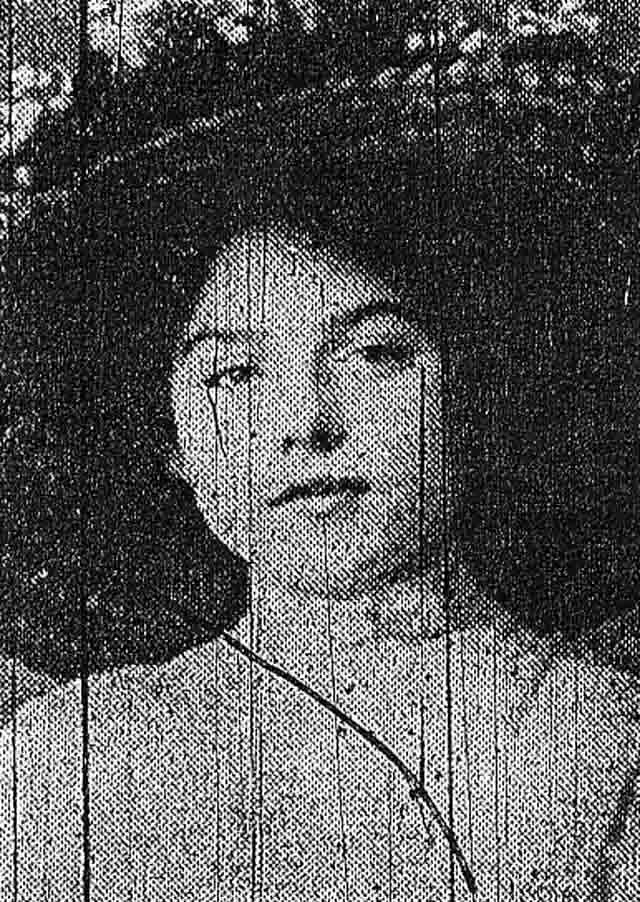
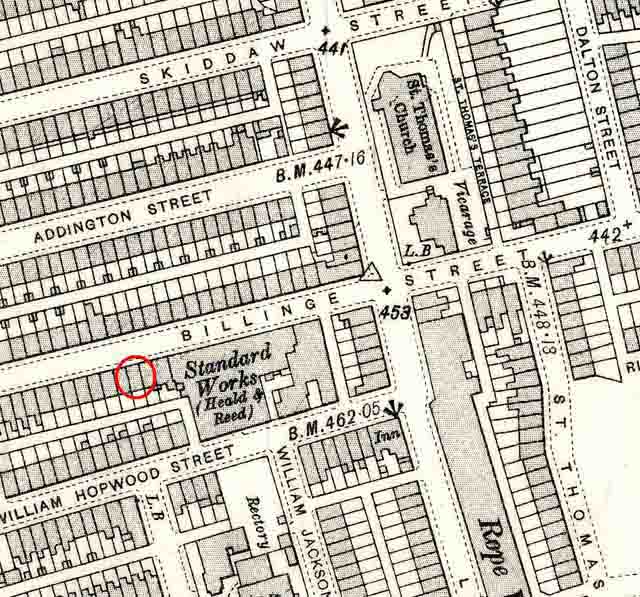
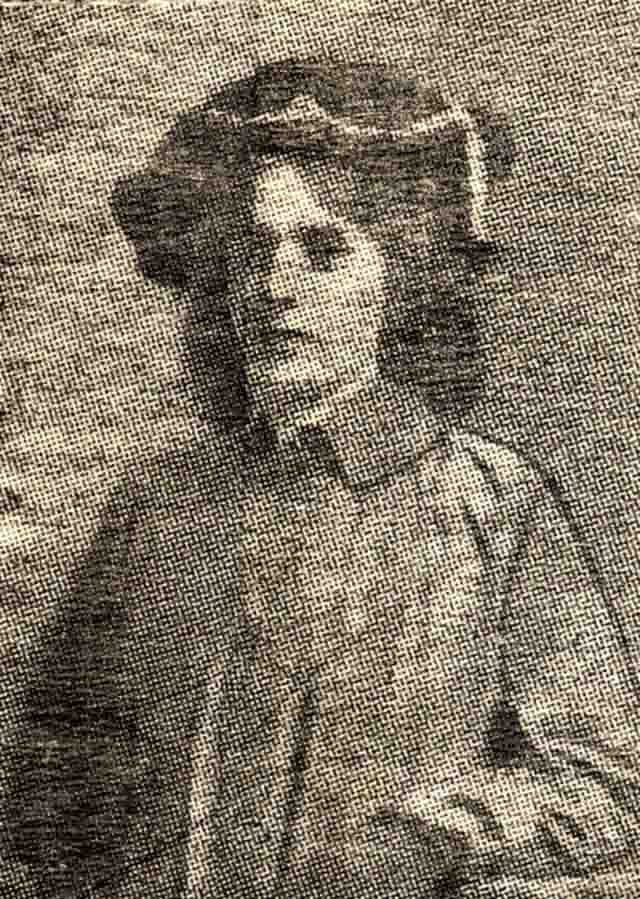
Alice Beetham was 18 years old, and lived in Billinge Street with her parents, her three brothers and a younger sister. She attended St Joseph's. worked as a weaver at Jubilee Mill in Gate Street. She had been 'keeping company' with Arthur Birkett for about three weeks. Her father was a driller at a foundry. That's all we know. Her photograph is more revealing. She is pretty and aware of it. She is not discomposed by the photographer, but neither does she trouble to pose for him. She looks away, aware perhaps that her full gaze might reveal too much. Had she got into that habit, knowing her eyes would give her away. How often had she avoided Arthur Birkett's glare when he demanded to know why, why didn't she want to see him anymore?
Alice Beetham had always been beyond poor Arthur's reach. She'd caught the eye of many a better man than him. What a pity it is that her kind heart led her to look at Arthur Birkett at all.
Ironically, on the very page of the Blackburn Times that records the tragedy of her death are detailed the weddings of the week. These are 'society' weddings. Note the difference in the photos, how confident and serene these young people look. There would have been no list of gifts in the paper if Alice had lived to be married, no cheques, no cases of silver apostle spoons from guests who'd motored in from Lytham. Maybe she'd have been happy though with the right man and her kids and neighbours to chat to when she stood on her doorstep at night
© BwD - terms and conditions
© BwD - terms and conditions
Arthur Birkett
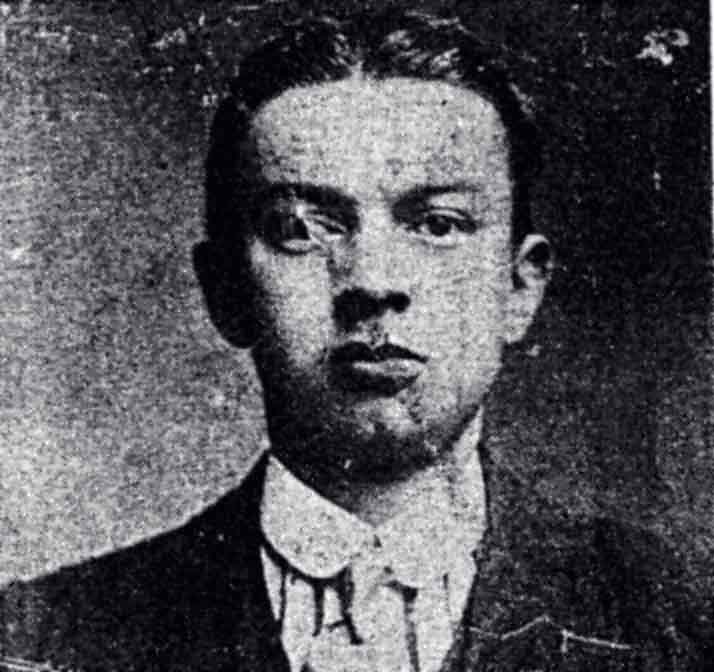
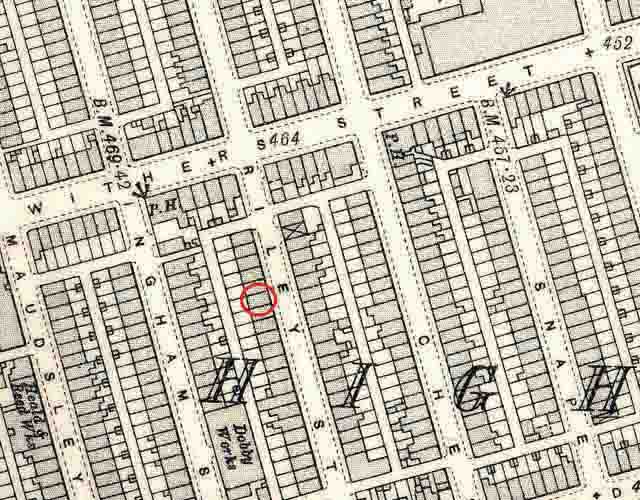
Arthur Birkett was 22. He was a weaver at Jubilee Mill, living in Riley Street. His father was dead and he lived with mother, grandmother and little sister. His brother had recently emigrated to Canada.
The newspaper photograph, presumably taken when Birkett was a young boy, shows an anxious face with a suggestion of truculence about it and with something petulant about the bottom lip.
We know a little more about Birkett from his behaviour during his trial. It's hard not to get the impression that he felt ennobled by his 'love,' hard too not to get the impression that people took him at his own estimation. Over 50,000 signed the petition for a reprieve, including Alice Beetham's mother, though not her father. Hard to detect any real remorse, let alone any real love for Alice. He gave her a chance; she stubbornly refused, so she had to pay.
There must be something darker there though. It takes real savagery to decapitate someone with a razor. There must have been something monstrous in his psyche. It is said he was glad not to get a reprieve and went to his death with fortitude. He must have known there was that within him that he could not live with.
Was his death a release for him? He wrote from Strangeways that he hoped to be united with Alice in heaven, where presumably she would have seen the error of her ways and repented. No doubt she rushed into his arms with joy, when he entered through the pearly gates, anxious to be forgiven for her silliness.
© BwD - terms and conditions
© BwD - terms and conditions
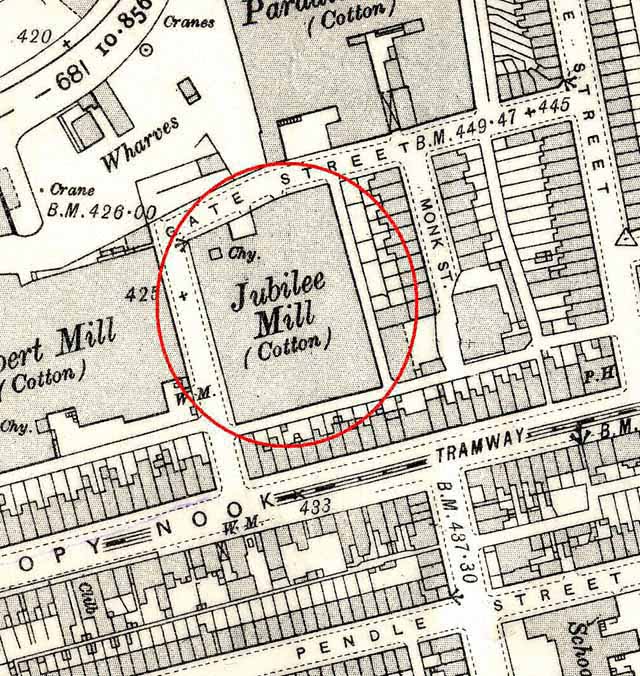
Jubilee Mill
There had been a mill on the site between Gate Street and Copy Nook since the early 1850s. In 1886 this was demolished to make way for a modern mill with the latest machinery. It opened in 1887, the year of Victoria's golden jubilee and was named Jubilee Mill accordingly. It was operated by D. and W. Taylor and had 570 looms.
In 1894 John Taylor took control and was still in charge 18 years later when Alice Beetham was murdered there. No doubt John Taylor was on the premises at the time. It was said of him that he arrived in the morning with the earliest workers and was still there at eleven o clock at night.
John Taylor died in 1915. Harwood Prospect Mill took over and closed in 1932, when the premises were renamed Orient Works and drying machinery was manufactured there.

© BwD - terms and conditions
"There's only one girl for me..."
The murder of Alice Beetham took place on Monday 20th May 1912; it was gruesome murder which took place at Jubilee Mill Gate-street where they were both employed. For several weeks, she had been going out with Arthur Birkett of Riley Street. On the previous Thursday she had told Arthur that she no longer wished to go out with him. It is believed that Alice's father did not approve of Arthur, which may have been the reason for breaking off the relationship, or it may have been because she felt Arthur was too passionate.
Not long before the murder he had spoken to a fellow weaver about Alice saying "There's only one girl for me, and if I don't get her I'll have none". On the day after Alice had finished with Arthur he went to the home of another weaver, Mrs. Wagg who was a friend of both of them. He told her that Alice had "chucked him". She tried to console him, saying "there are plenty more". Arthur made a remark "I will chop her.... head off". At the time this seemed like an innocent remark spoken in the heat of the moment, but was later to assume greater significance.
© BwD - terms and conditions
"You look crammed, what's to do?"
On that fatal Monday morning Arthur and Alice turned up for work as usual, by 6 o'clock they were at their looms in the weaving shed. Another weaver, Mrs. Wilkinson said to Arthur "You look crammed (upset), what's to do?" Arthur explained about the situation with Alice. A couple of hours later, during the breakfast interval, Arthur went to a nearby shop where he enquired about buying a razor. He looked at a few and finally purchased one for 1s 6d (about 13 pence). When questioned later, the shopkeeper thought he seemed like an ordinary person, perhaps rather quiet.
© BwD - terms and conditions