
 Loading more
Winter
Seasons Greetings |
Christmas Past Christmas Traditions Christmas Miscellany My Memories of Bonfire Night
Darwen Moors Tragedy: December 1917 Harold HeysCollecting Conkers
© Northern Daily Telegraph - terms and conditions
Christmas was not always celebrated as it is now. The issue of the Blackburn Mail, which was actually published on December 25th 1793, has no reference to Christmas whatsoever. Clearly then it was not a day for celebration and probably not a holiday for most people.
One hundred years later things were very different. Blackburn had become a town, no longer a large village. There was greater prosperity. Christmas had become a commercial opportunity. Queen Victoria had made Christmas trees fashionable. Charles Dickens had single-handedly invented many of the traditions we associate with Christmas. The Blackburn Standard for December 23rd 1893 is full of articles and stories about Christmas. Shop displays are described in great detail, especially the butchers and poulterers: Messrs Munroe and Miller of the Market House had a display of a thousand turkeys, Fylde-fed geese, hares, pheasants, partridges and grouse, along with seasonal fruit and flowers. The best display of all though was at Messrs Worswick Bros, the furriers in King William Street. They had got their window up as a forest scene and filled it with stuffed examples of best-selling lines: Tiger, leopard, Russian wolf, seal, otter etc.
The paper carried a stern editorial criticising a London-based lady journalist, who had written a world-weary piece complaining that Christmas had become too long, too overblown and that there was nothing to do, but eat and drink too much in the company of relatives one couldn't stand. Wonder what she'd think of today's Christmases.
In Darwen too Christmas had blossomed and Darwen's shops too did not lag behind in displaying their abundance. The accompanying piece from the Darwen News for December 22nd 1888 captures the spirit of the season.
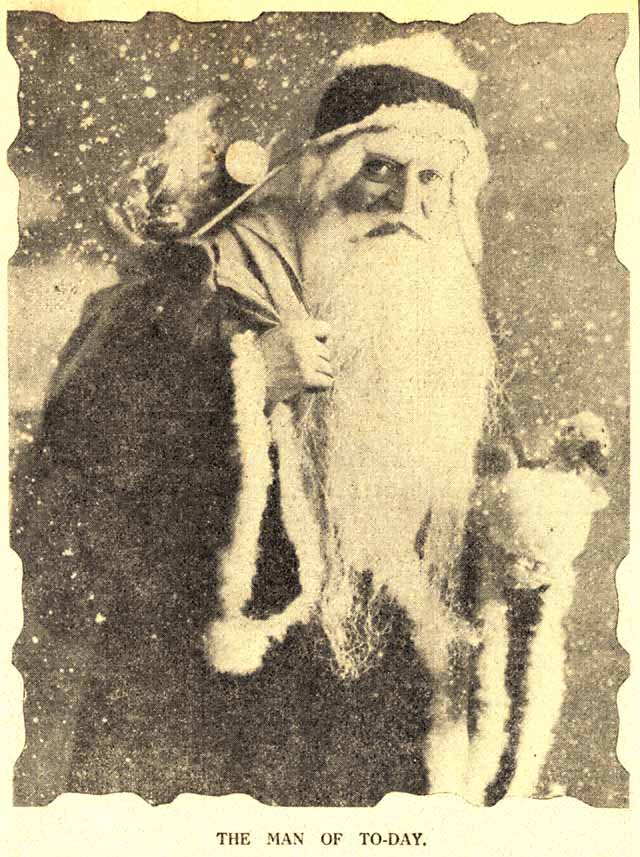
Fifty years later the Northern Daily Telegraph for December 24th 1943 reflects the sombre war-time mood. Christmas is featured, but it is clearly going to be a low-key affair. There will be no oranges, apples or nuts in Christmas stockings. Chickens and turkeys are in short supply, and an item about a woman making new clothes out of her husband's old suit to give to her children at Christmas is reported with great approval.
Today Christmas is more bloated and demanding than ever before. The carols are echoing round the shopping centres from November onwards, and when most people can eat and drink more than is good for them every day of the year, doing justice to Christmas requires a real effort. Most homes with children in them look like Santa's grotto on Christmas morning. It makes you wonder: had Scrooge got it right in the first place, before the ghosts started meddling with him?
© Northern Daily Telegraph - terms and conditions
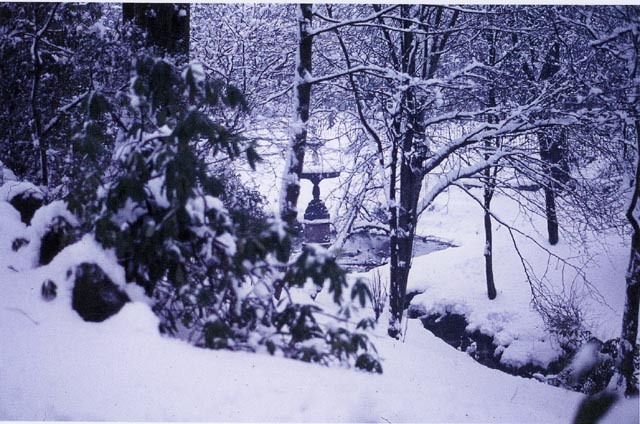
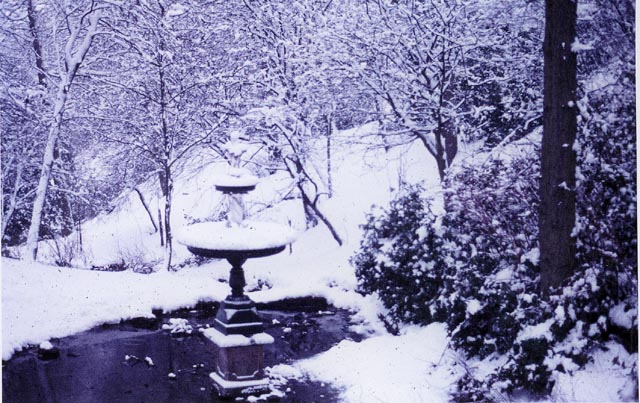
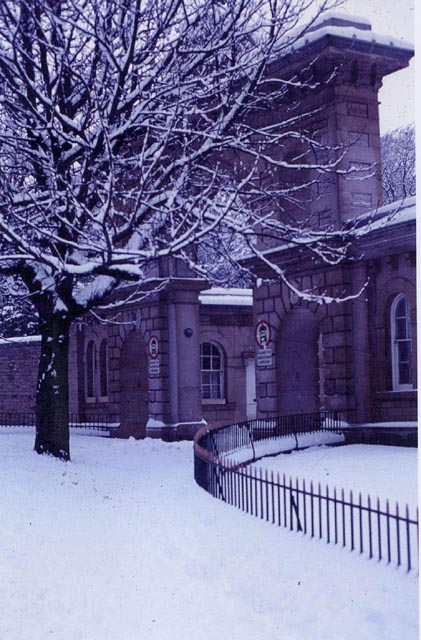
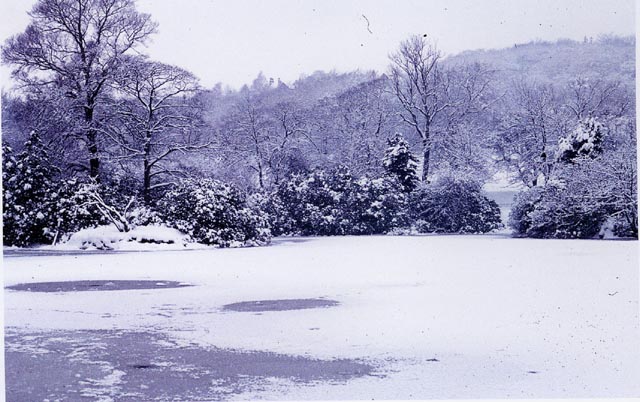
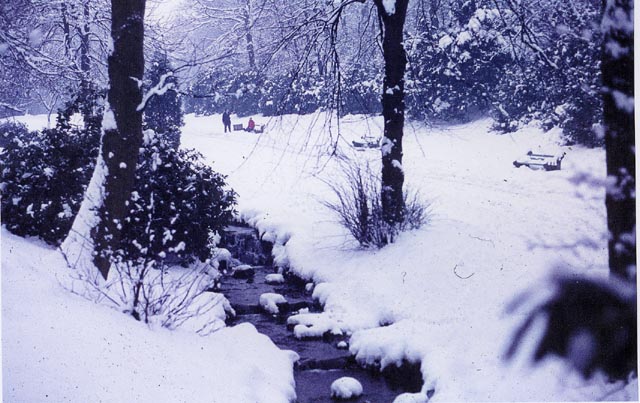
Snowy Scenes in Corporation Park
The following photos were taken a few years ago showing a heavy fall of snow, giving Corporation Park a very "Christmassy" look.
Christmas Postcards
© BwD - terms and conditions
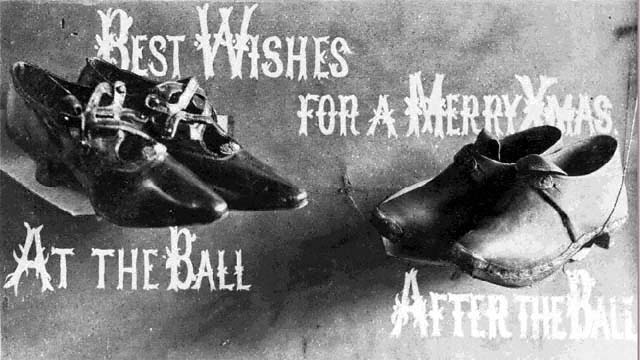
At The Ball
This charming postcard brings to mind the popular song of the 1900s “After The Ball Was Over” which tells the sad story of a man and his bride-to-be. On returning from getting her a drink of water he finds her kissing another man. He refuses to hear her explanation and calls the wedding off. Only after she dies of a broken heart does he discover that the “other man” was her brother.
© BwD - terms and conditions
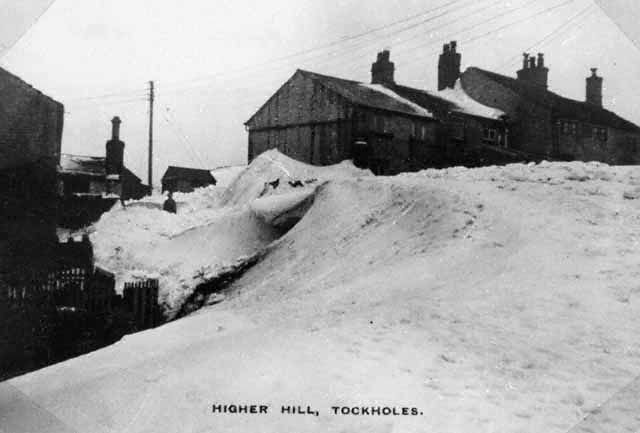
Higher Hill, Tockholes
The year is 1930 and we see Tockholes disappearing under a deluge of snow. How unlike the winters of today! But Tockholes suffered a similar experience 50 years later in 1981 when the village was cut off for over a week and the drifts were more than 10 feet high. The name of the village is derived from Tocca who dwelt in a hollow or clough “Tocca’s Hollow” becoming Tockholes.
© BwD - terms and conditions
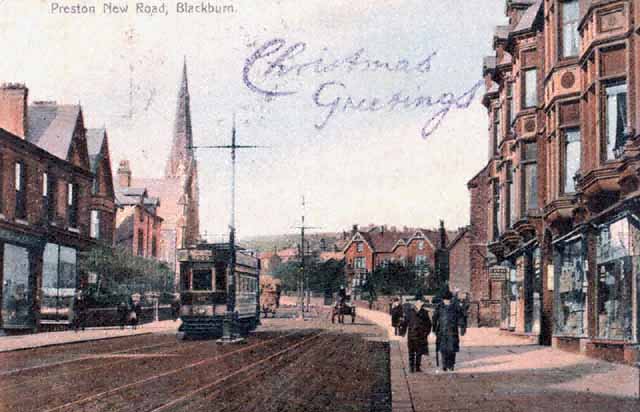
Christmas Greetings from Preston New Road
A once familiar view of Preston New Road with the tram and the horse drawn cart adding a touch of “old world charm”. Sadly the elegant shops on the right were demolished for the inner relief road known as “ Barbara Castle Way”. The church at the left is St. George’s Presbyterian Church.
The gabled building in the background was the birthplace of Professor John Garstang, famous archaeologist.
© BwD - terms and conditions
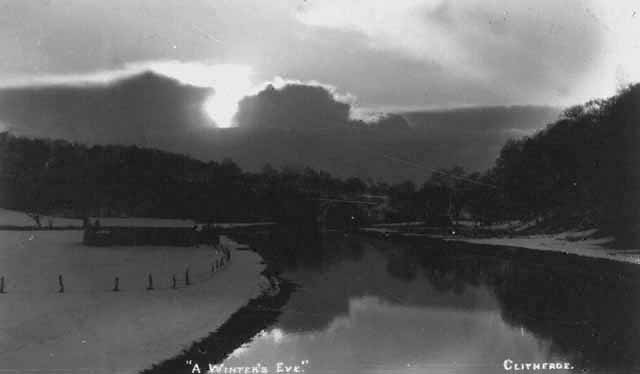
This view is taken from Brungerley Bridge. In 1801 a wooden bridge was erected by public subscription, with Clitheroe Corporation contributing 3 guineas (£3.30 pence) towards the cost. Prior to that, no bridge had existed. By 1816 it had fallen into such a state of decay that it was unfit for use. It was replaced by the present stone bridge, also paid for by public subscription. This time the Corporation contributed £60.
© LET - terms and conditions
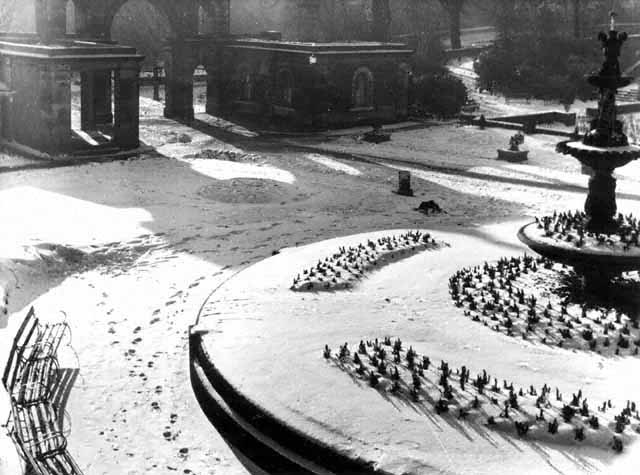
Corporation Park in Winter
The Preston New Road entrance in the 1950s. Originally this snow covered flower container was the largest of the Park’s 4 fountains. It caused annoyance to park users with the drift from the water jet and it was eventually turned off and the basin was filled with flowers.
© LET - terms and conditions
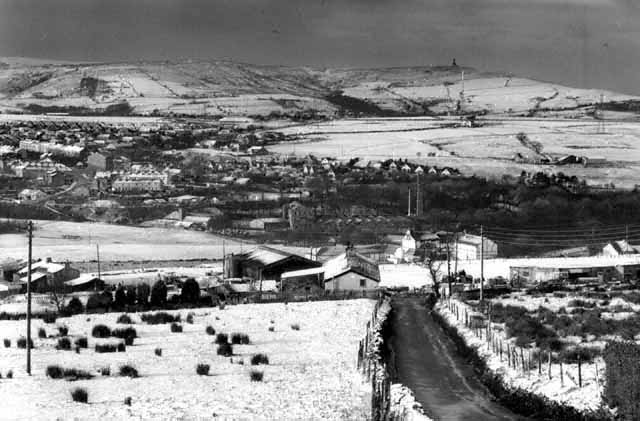
Darwen in Snow
This view of Darwen is taken from the Pickup Bank area. On the skyline Darwen Tower is just visible. The Tower was built to commemorate Queen Victoria’s Diamond Jubilee in 1898. The surrounding hills look particularly bleak and foreboding in this shot.
© LET - terms and conditions
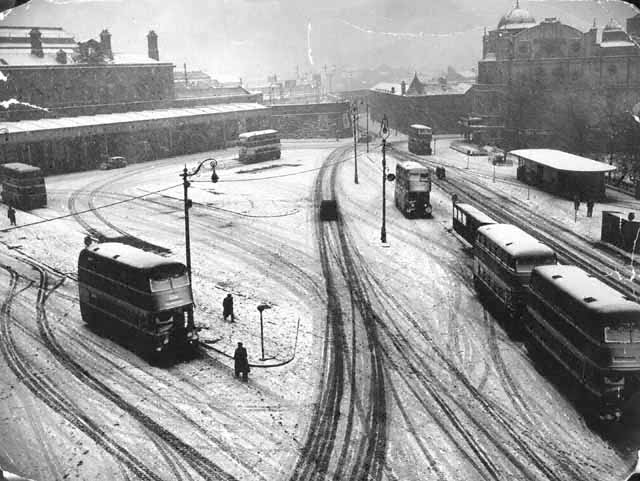
The Boulevard
A 1950s image of the Boulevard. Usually a busy area, this shot seems to be almost devoid of people. Perhaps the townsfolk had hurried home to avoid the worst of the weather. The large building in the background is the Palace Theatre which opened in 1899. It was once a thriving music hall, which became a cinema and ended its days as a bingo hall. It was demolished in 1988.
CHRISTMAS, 1901
A Look Around The Shops
And A Peep At Other Institutions,
[“Standard And Express” Special]
And A Peep At Other Institutions,
[“Standard And Express” Special]
Transcribed form the Blackburn Standard & Weekly Express of 21st December 1901
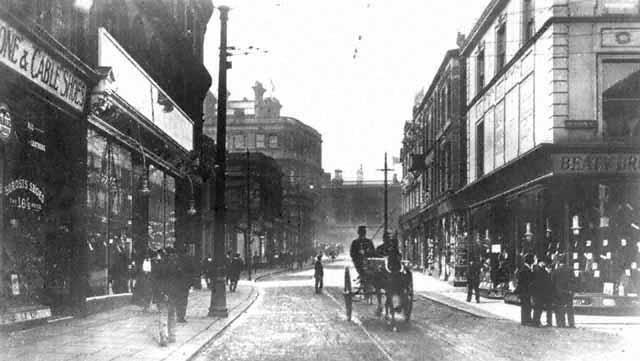
Christmas might very properly be regarded as our greatest institution, and however elaborate are the preparations for its recognition, they are never greater than the festive season merits. The Christmas of our childhood is always associated with a hoary frost and a snow-bound earth, and we are unable to conceive of one without the other. Now we have come to realise that our ideas were as immature as our experience, and we regard the “green Christmas” as something to be looked for. We have had so many of them in recent years and the snowy herald of the joyful season is a thing almost lost to memory dear. But this year has so far, proved an exception to the rule, and I feel sure we are all thankful. Christmas without snow is like Hamlet without the Prince of Denmark, and one puts more zest in his festivities at this time if the snow is several feet in thickness and hoar frost glitters in the moonlight like diamonds in a claim.
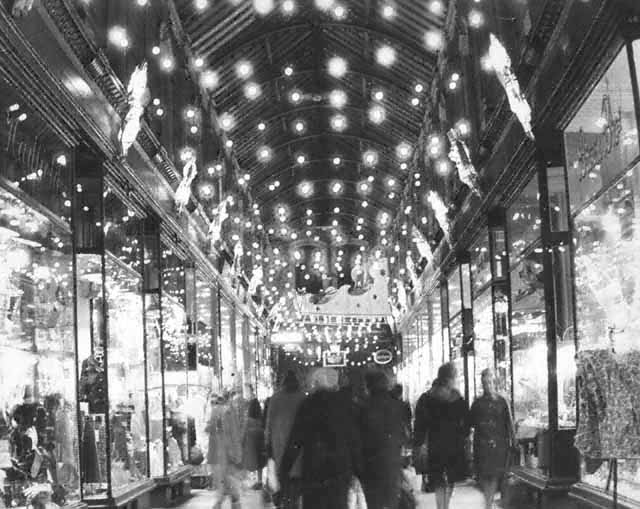
There are few tradesmen who don’t devote a good deal of extra time and labour to the improvement of their customary show, and my experience has been that there are few of these displays that don’t well repay a few minutes observation. I trotted round the principal streets of the town the other evening and glanced at a few of the shop windows. They were all decked in Christmas finery and they all repaid those who were responsible for the adornment.
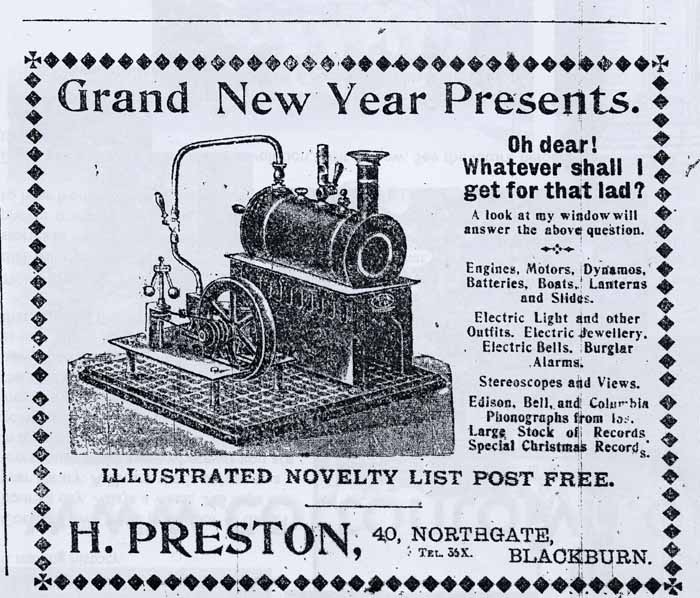
Church-street made a good display. “Astley’s” newsagency was one mass of seasonable missives of every kind. They were there in thousands, large and small, cheap and costly, but all assisting to produce an effect only attainable by a combination of deft fingers and excellent materials. Higher up the street Mr. Crossley’s well-known novelty emporium was looking even better than usual. A miniature electric train made a circuitous tour of the window front, passing a host of charming Christmas presents and encircling an assortment of both useful and beautiful articles fashioned in almost every conceivable design, and calculated to please the most fastidious. Mr. Sagar, jeweller, exhibited a collection of jewellery attractive and valuable, a new stock making a small window swell almost with its own importance. I walked on and saw that excellent provision was made by “Tills,” tailors and as I shivered with the cold I envied this enterprising firm their splendid stock of winter coatings and suitings, and marvelled at the ingenuity which had made up-to-date fashion and splendid value shine with such lustre in the public eye. I found a similar state of things at “Leavers,” who made a brave show and also at Dewhurst’s. At the shop of “Harris and Sons,” in Northgate, I stopped to admire the fine collection of ladies’ silks, umbrellas, etc. I then traversed King William-street with admiration. The window of “Worswick Bros,” the furriers, was a treat as it usually is and the spectator wondered as he gazed on the scene whether a herd of valuable skinned animals had suddenly stopped short in a tramp among the scores of costly garments, which, by the way are among the most adaptable winter wearing apparel I have seen.
“King and Blackburn’s” made a grand show, and went in for colour with magnificent effect. Their window was a treat, and one surveyed bargains of all kinds peeping from beneath their season’s coating of floral or decoration. At the shop of “Mellor Bros.” was a seasonable variety of gentlemen’s necessaries, all with tempting appearances and calculated to inspire the average young “Johnny” with envy. Round the corner the Shop window of Mr Whittle, Jeweller, possessed a grandeur all its own. The stock of rings was a splendid one, and the prices such as could not possibly prove a matrimonial barrier. His show of watches was just as good, but one of them silently reminded me that there were other displays to view, and I peered inside the Market Hall and gazed on the long rows of pheasants at Munroe and Miller’s stall, with a sigh for the families of the birds and an admiration for the shots who had “potted” them. I looked in on the special show of novelties at the establishment owned by Simpson and Son’s. Ltd., Market-place, and fancied myself a millionaire for a few minutes as I wended my way in and out of long rows of statuettes, pottery, art goods, fancy chairs and Japanese screens. I also dropped in to see the grand display of furniture, carpets, etc., at the shop of Thos. and Sidney Smith, in Ainsworth-street, where a window decked out to represent an up-to-date furnished bedroom charmingly arranged, was attracting a good deal of attention. I also traversed the lower end of Preston New-road, where Mr. Wyatt’s splendid “at home” work was attracting a great deal of attention.
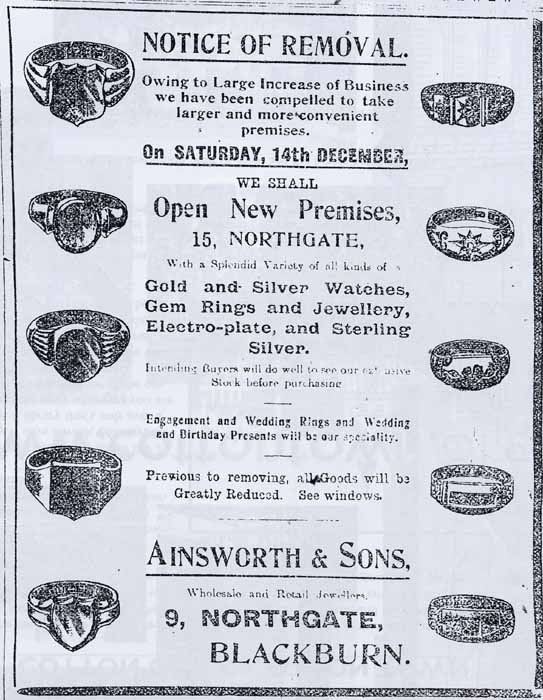
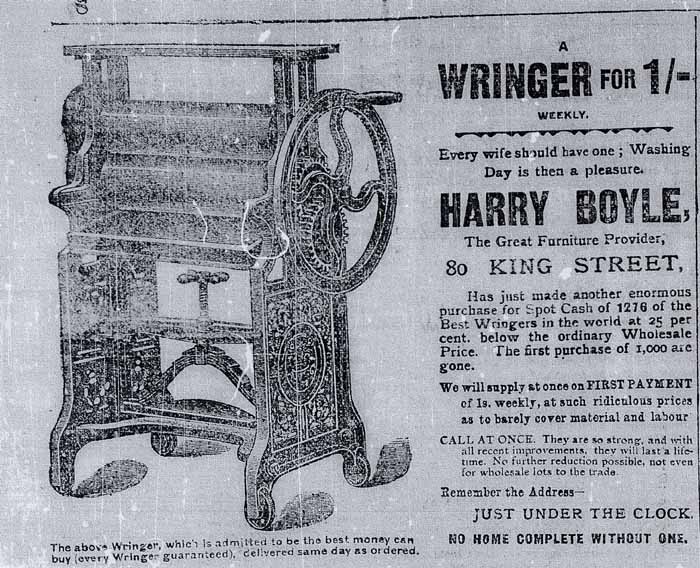
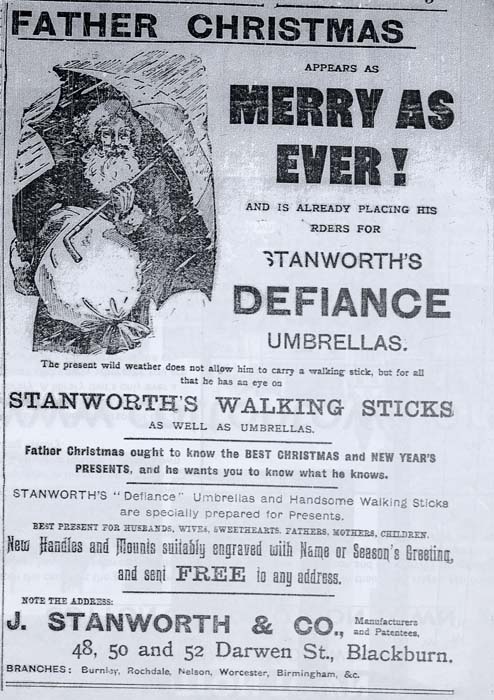
Mr Garsden’s grand display of beef, mutton, etc., in Northgate, made me wish for Christmas before its time. Quality was written on every joint in language that need no notices to explain it. Retracing my steps, Gibson’s in King William-street attracted my attention with the customary tempting and admirably laid-out selection of seasonable fruits. In Darwen-street “Stanworth’s” showed a magnificent stock of umbrellas and walking-sticks, arranged in their well-known admirable style, whilst the Castle Wine Stores in Market –street Lane, Mr. Blakey came to the front as usual in the public estimation with his liquids. Booth and Openshaw’s window was a centre of attraction. Beautifully-chased scent bottles with dainty brightly-coloured tassels exhibited excellent taste and skill, and I was informed that Sandow’s developer was being advanced by this enterprising firm as a Christmas gift. In the musical line the show was not a brilliant one, but Mr. Edward Smith and Mr. Sharples are too well known to require any laudatory notice in these columns. The latter is just now making a speciality of a free lesson arrangement with purchasers to commemorate the festive season. I saw a lovely assortment of books, writing cases, dressing cases, ladies companions, and the like in the window of Denham’s, and the show of cards and stationery was one of the finest yet seen in the town. I also noticed that Page’s were offering some wonderful bargains in the way of ladies’ and children’s clothing at their shop in Eanam, and I did not forget to glance at and admire the beautiful selection of Jewellery in the newly-opened establishment of “Ainsworth and Sons” in Northgate. Special tea in specially decorated canisters was, I noticed, being sold by Thos. Jones and Co., Ltd., in Lord–street, and the assured me there was nothing so acceptable. On Victoria-street Green and Sons were endeavouring, with a fine show of fine-fed pork, tongue, sausages, etc., to enhance an enviable reputation for quality and cheapness, There was the usual crowd congregated round the window of Aireys, picture framers and art dealers in Railway-road, but my trouble to get a view was repaid by a glance at the choice water-colour drawings, etc., on view, and I had no difficulty in voting this one of the “treats.” The establishment of Mr. Sharples, in Darwen-street, was on the usual scale, filled with bargains and Christmas presents in every class of goods that are dealt with by an up-to-date silk mercer. Thompson Bros., tailors, Market-place, were well to the fore with their fine selection of winter clothing, and the Household Stores in Preston New-road made housekeepers rejoice to know that such excellent provision was made for Christmas appetites. Many more fine displays did I witness and “Fieldings,” jewellers, in Montague-street was one of the best with a well stocked window full of rings, brooches, watches, etc., admirably suited for Christmas presents, and arranged in a manner that could not fail to catch the eye. Much disappointment has been occasioned by the absence of Harry Boyle’s usual show. This is owing to police vigilance. Mr Boyle finds it necessary to utilise a little space in front of his shop, and the police authorities object. Green’s, in Penny-street, and Scholes, in Queen’s Park-road, always have displays as interesting as they are attractive, but Christmas usually witnesses an improvement. Their Christmas shows this year are fine, well worth seeing, and the bargains are such as only large dealers are accustomed to offer
The local supply of holly and mistletoe is not so great this year as in the past years, and dealers have been greatly inconvenienced owing to bad weather interfering with its transit. The first large consignment arrived on Thursday morning from Kent, where a large amount of the mistletoe is usually packed of to the north at Christmas time. Loads of holly continued to arrive during the day from Cheshire and Shropshire. The demand was pretty large on that and the following day, and it is calculated that upwards of twenty tons were distributed in Blackburn homes.
© Blackburn Times - terms and conditions
The scores whose needs are always greater than their supplies are not to be forgotten. At the Bent-street Ragged School, on Christmas morning four hundred poor children will be treated to breakfast, and 120 parcels, each containing articles of food, will be sent out to persons in need of assistance. In the afternoon four hundred poor people from the lodging-houses of the town will be entertained to tea, followed by an entertainment, and 130 cripples will receive at home a parcel each containing one shilling and articles of clothing.
There will be the customary treat provided for the inmates of the Workhouse on Christmas Day, and in order to do this handsomely 2,000lbs. of beef, mutton, etc., along with 1,000lbs. of plum pudding, as well as vegetables, will be cooked for consumption on the day. Fruit, tobacco, sweets, snuff, etc., will also be provided. A number of Guardians have, with several ladies and gentlemen of the town, contributed towards defraying the cost of the treat. The wards will be decorated and there will be the usual concert on the evening of Christmas Day. Similar provisions will be made at the Cottage Homes, where the children will spend the festive season just in the same way as other children. They will enjoy their games after a good dinner, and will then be allowed to visit their respective schools and witness or take part in the entertainments.
The usual admirable preparations have been made at the Post Office where there is always a prodigious amount of work to be got through during the festive season. About fifty extra men have been engaged for the delivery of letters and parcels on Christmas Eve and the following day, and Messrs. Hamer’s and Messrs. Smith’s auction rooms have been hired for the transaction of special parcel business and the housing of the extra postmen. In the Absence of delay it is expected that all the letters will be delivered by three o’clock on the afternoon of Christmas Day. The postal authorities in Blackburn inform us that they generally dealt with about 5,000 parcels at Christmas time, and it is expected that more will be dealt with this year. Several horses and conveyances have also been engaged for the carting of parcels.
CHRISTMAS PAST
Even now, when Christmas is so lavish and we want for nothing, I still remember with affection the excitement of Christmases as a young child when there was a scarcity of just about everything. The anticipation, weeks before the event, was intense and I never remember being disappointed on the day.
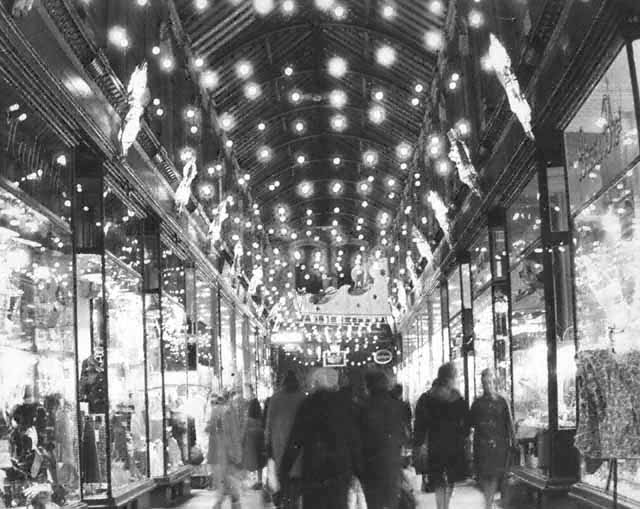
My first memory of Christmas was 1946 when I was three years old. There were six of us children then, dad was in the army and things must have been extremely difficult with necessities being in short supply and luxuries unheard of. Nevertheless our parents always managed to make something of the occasion for us. My very early memories of are of warmth and pleasure. I remember a big fire in the grate and all of us children sitting around the kitchen table with mum making chains out of coloured paper to be used for decorations, or trimmings as we called them. We spent ages cutting out the strips and forming them into circles using little pots of white, pasty glue. They were then made into long chains which would go from one corner of the room to the other. We had coloured balloons too which I remember trying to blow up but never having the breath - only Robert, the oldest of us, seemed able to get any air into them. We always had a little Christmas tree modestly decorated with bits and pieces of coloured crepe paper or fabric strips and baubles that had been collected by mum over the years. There were no lights on the tree of course but that tree, with its home made ribbons and garlands, was a glorious and amazing sight.
My first memory of Christmas was 1946 when I was three years old. There were six of us children then, dad was in the army and things must have been extremely difficult with necessities being in short supply and luxuries unheard of. Nevertheless our parents always managed to make something of the occasion for us. My very early memories of are of warmth and pleasure. I remember a big fire in the grate and all of us children sitting around the kitchen table with mum making chains out of coloured paper to be used for decorations, or trimmings as we called them. We spent ages cutting out the strips and forming them into circles using little pots of white, pasty glue. They were then made into long chains which would go from one corner of the room to the other. We had coloured balloons too which I remember trying to blow up but never having the breath - only Robert, the oldest of us, seemed able to get any air into them. We always had a little Christmas tree modestly decorated with bits and pieces of coloured crepe paper or fabric strips and baubles that had been collected by mum over the years. There were no lights on the tree of course but that tree, with its home made ribbons and garlands, was a glorious and amazing sight.
© LET - terms and conditions
Festive Food
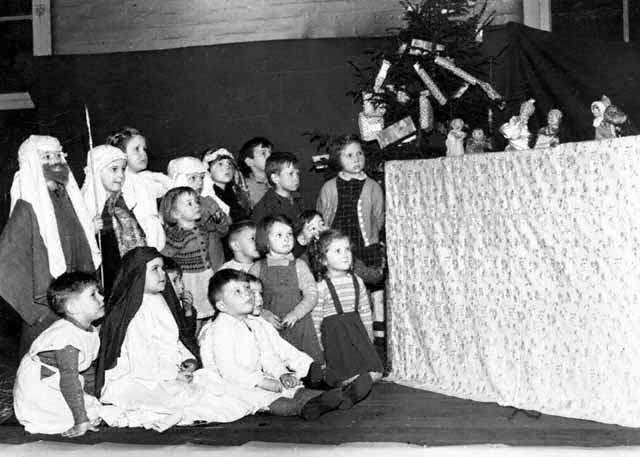
Food was then, as it is today, an important part of Christmas. There was always a Christmas pudding and preparation of the pudding was the first indication that the festive season was just around the corner. Mum always referred to the day when the pudding was made as ‘stir up Sunday’ My sister, Kathleen and I helped with stoning and washing the fruit and shredding the creamy coloured suet which was used well before suet came in packets. Before the pudding was ready, each one of us would get to stir the mixture whilst making a wish, mum would then add a couple of silver threepenny bits before putting it into the basin and steaming it for several hours.
I don’t remember much in the way of meat although I know we never had turkey, that didn’t come for many years. I doubt if we children bothered so much about the dinner part of the meal, which I suspect would have been made up mostly of vegetables and tolerated as part of filling yourself up when food was scare. It was always the ‘afters’ we relished. We loved the trifles mum made and the jam tarts, finished off with a blob of whipped Nestles cream, were scrumptious. A vivid memory I have is the time when mum took a freshly baked batch of tarts out of the oven and put them to cool. As she turned her back to do some job or other, dad surreptitiously popped a whole one into his mouth hoping he hadn’t been seen. Unfortunately the tarts were burning hot and the jam stuck to dad’s mouth, he was in agony but we kids thought it hilarious that he had been caught out, mum wasn’t too sympathetic either.
© BwD - terms and conditions
Christmas At School
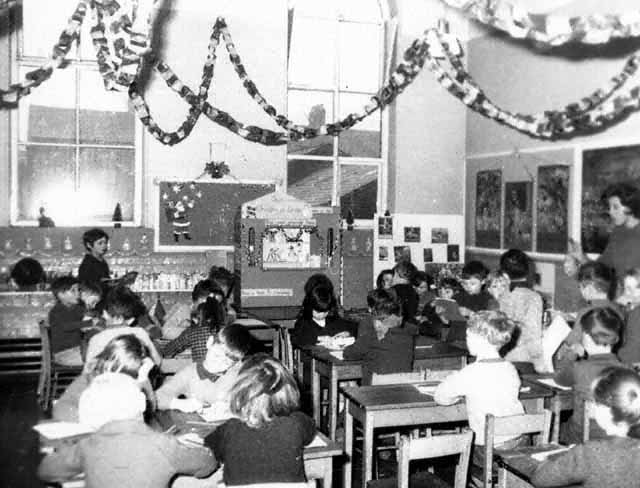
Then, as now, Christmas activities at school were very important to us. We all attended Emmanuel C of E school at Ewood in the 1940s and in the run up to Christmas we loved the excitement of making cards to take home to our parents, practising for the nativity play and the carol service; every child in the school was involved in these activities. I remember one particular Christmas we went singing around the neighbourhood. We had all been asked to take a jam jar to school and the teacher lined the jars with red cellophane paper and a candle was put inside. The jar was then suspended by string from a stick. All the children from the school walked through the streets with the candles shining through the red of the cellophane. We sang carols as we walked along and stopped from time to time to allow the people from nearby houses to join in with the singing. I still remember how wonderful it was to see those glowing candles and hear all the voices singing in the cold night air.
© BwD - terms and conditions
Presents And Playthings
Of course, in the 1940s, people in our circumstances didn’t give parties and outside school we rarely went to any, in any case we had enough entertainment with the family to keep ourselves well amused. We sang, told stories and played card games such as Old Maid, Happy Families and Find the Lady. There were loads of parlour games too; charades, hide the thimble and blind man's bluff amongst others.
Although we didn’t get lots of present, a kind of tradition we had was choosing a book for ourselves. Although we often chose annuals such as The Dandy and The Beano, my favourite choice ever was ‘The Wizard of Oz’ – I still watch the film every Christmas and am always thoroughly enchanted with the story. The tradition was kept going for many years when choices changed to Boys Own Annual, The Eagle, The Girl and Girls Crystal along with some of the classics such as Treasure Island and Jane Eyre.
With a family of our size we had few shop bought presents. However, we didn’t really go short as many of our toys were made by dad who was very gifted in carpentry. Over the years I remember him making a fort for the boys and dolls house for us girls. He also made many wooden puzzles and a shove ha’penny board. We all got a great deal of pleasure from these homemade toys and I have spotted many of the kind of things dad made at local Craft Fairs. I’m told they still sell well.
© Northern Daily Telegraph - terms and conditions
Christmas has arrived
After what seemed like forever to us children, Christmas Eve eventually came around. We could scarcely contain our excitement; I think it was the only night of the year when we asked to go to bed.
Each one of us took a sock up with us to hang over the end of the bed. I still remember longing to go to sleep but feeling far too excited and anxious to even close my eyes. ‘Will Father Christmas come?’ I would whisper to my sister who shared the bed with me. ‘Not if you don’t go to sleep he won’t’, she would whisper back crossly. I would ask and ask until in the end she got so annoyed she would threaten to tell Father Christmas not to fill my stocking; that usually had the desired effect and we all drifted off to sleep.
We always woke early on Christmas morning and our stockings had disappeared. They were never left full on our beds and we were left to worry if ‘he’ had been.
None of us were allowed downstairs until the fire had been lit and everything was ready for us. I think it must have been Robert, the eldest of us, who decided that each of us would sit on a stair, with the youngest at the bottom and the oldest, himself, at the top. This stopped us falling over each other to get downstairs and kept us very orderly. We kept this up every year until there were eleven of us children and every step was occupied by a child.
Our presents were all kept in neat individual piles and, to our relief; our Christmas stocking was on the top. It was lovely emptying the stockings. Each one contained an apple, a tangerine, a handful of nuts and a small coin; pennies for the younger children and a nice shiny sixpence for the older ones. Sometimes there would be a few sweets too which, because we still had coupons, were a real treat.
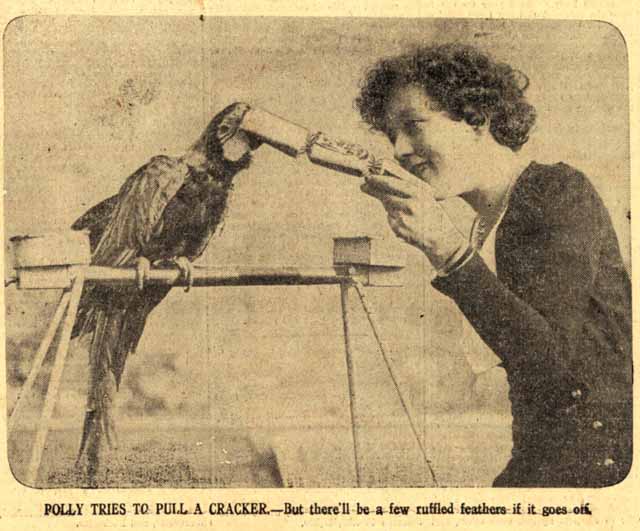
Christmas day was the only day of the year when we didn’t have to sit at the table for breakfast. We were allowed to have it at the same time as we opened our presents and this relaxation of the strict rule of eating at the table was much appreciated. However, when it came time for our Christmas dinner we couldn’t wait to sit down. Great ceremony was made of pulling our crackers and everyone, including mum and dad, had to wear their paper hat. It seems very strange today but in those years Christmas day was the only time we were allowed to talk at the table and we enjoyed the relaxed atmosphere.
After our meal we usually played games and there was always plenty of laughter and sometimes arguments over who should have won or who was thought to have cheated; however, these disagreements didn’t last long and we always finished up tired and content.
Today things are very different, we want for nothing now but I always tried to make Christmas as traditional as possible for our daughter when she was a child and for her family when she married. However, our grandchildren are now in their teens and though they still have their Christmas stockings, the presents and the dinner, they no longer want to do the same things as when they were children. And this is the way it should be, things move on. I do hope though that they will remember their young Christmases with as much affection as I remember mine.
By Marian Beck
Christmas Traditions
History of the Christmas Tree
Although the history of the Christmas tree dates back nearly a 1000 years to Germany and St. Boniface, it was not until the early 17th century that the people there began taking them in to their homes and decorating them. At that time they would be decorated with barley sugar, wax ornaments, paper flowers and all sorts of little trinkets.
Queen Charlotte, the German wife of George III, is said to have introduced the Christmas Tree to this country for a party that was held at Windsor on Christmas Day. The young Victoria always had a decorated tree at her home in Kensington Palace.
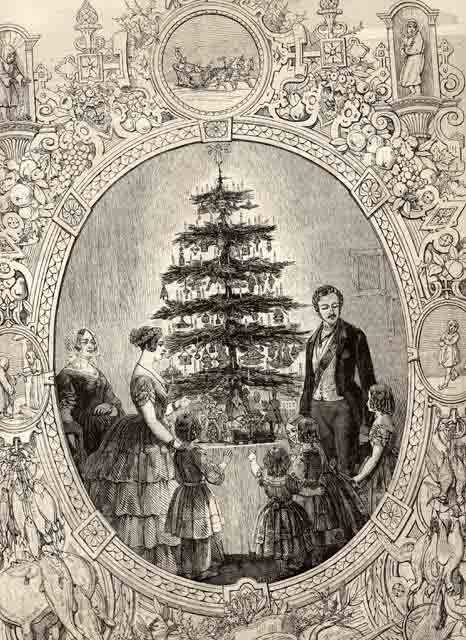
In 1848 a woodcut illustration appeared in the Illustrated London News showing Queen Victoria with her husband Prince Albert and their children standing around their tree at Windsor. The Duchess of Kent (The Queen's mother) is also shown to the left of the queen. The tree was decorated with wax tapers. Hanging from the branches were coloured ribbons and tied to them were baskets of sweetmeats, gingerbread, eggs full of toffee and other sweet things. Under the tree were piles of presents each with the name of the recipient written on a label.
Victoria, at this time, was a very popular ruler, unlike her German predecessors, and when the above picture appeared Christmas trees began to gain in popularity. Most decorations would have been home made at this time and hours would be spent in making the decorations and hanging them on the tree.
As time went by the Christmas tree went through phases, by the 1890 large and highly elaborately decorated tree were the vogue. By this time commercial decorations could be bought but a lot were still home made. After the death of the Queen the large Christmas tree went somewhat into decline and people had small trees that would sit on a table. Some of these would have been artificial ones, which started to appear in the late 19th century.
After the hardships of World War Two, people once again started to buy the biggest trees they could afford and gaudy decorations began to appear such as plastic stars, icicles, paper angels, bells and glass balls. Flashing lights would be draped round the tree.
Now in the 21st century most trees seem to be artificial and can be very good imitations of the real thing, when decorated they can add warmth and joy to an otherwise cold, damp wet time of the year, and as long as they bring joy to the children I think that’s all that really matters.
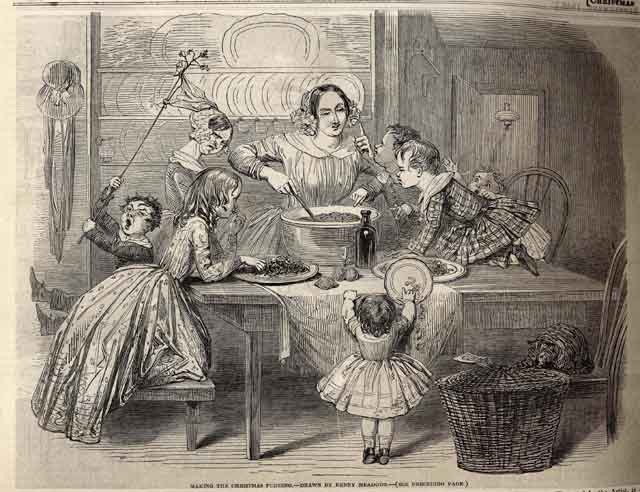
The Christmas Pudding
The Christmas pudding can be traced back to the 14th century, but its beginnings are a far cry from what it is today. It was originally known as a porridge or frumenty and contained things like beef, mutton, raisins, currents, prunes, wines and spices it was at this time more like a soup or porridge and was eaten as a fasting dish before Christmas. By the 1500s other ingredients were being added to thicken up the dish, such as dried fruit, eggs, breadcrumbs. The meat at some time was removed from the dish and replaced by more fruit and sweeter ingredients. The puritans banned it in the 1660s. They thought it a vulgar tradition, the ingredients being, “far too rich for God fearing people”.
King George I was thought to have made the Christmas pudding part of the Christmas celebrations, but it was Prince Albert, Queen Victoria’s husband, who, having an insatiable appetite for the pudding made it a tradition.
It was traditionally made on the Sunday before Advent, which was 5 weeks before Christmas. The day was known as “stir up Sunday” from the opening lines of the collect for that day in the book of common prayer:
It was traditionally made on the Sunday before Advent, which was 5 weeks before Christmas. The day was known as “stir up Sunday” from the opening lines of the collect for that day in the book of common prayer:
“Stir up, we beseech thee, O Lord, the wills of thy faithful people…”
The verse became associated with the Christmas pudding and the stirring of it. The pudding was made with 13 ingredients, which represented Christ and His Disciples and every member of the family would stir it with a wooden spoon making a wish whilst doing so. The stirring had to be from east to west in honour of the three Kings. At this stage silver three-penny bits, or rings were added into the mixture. It was then left until ready for cooking. The initial steaming of the pudding would take about 8 hours and then on Christmas day it would get a further steaming for 4 hours. A sprig of holly was added which signified the crown of thorns and just before taking it to the table, brandy was poured over it and set alight. This was said to represent Christ’s passion.
Each person would look through his or her portion of pudding in the hope of finding a charm; the money would mean wealth in the coming year and the ring foretold a marriage or romance.
Now-a-days most people neither have the time nor inclination to make their own Christmas puddings. It is much easier to go to the supermarket and “buy one, get one free”
What a lot we are missing out on.
What a lot we are missing out on.
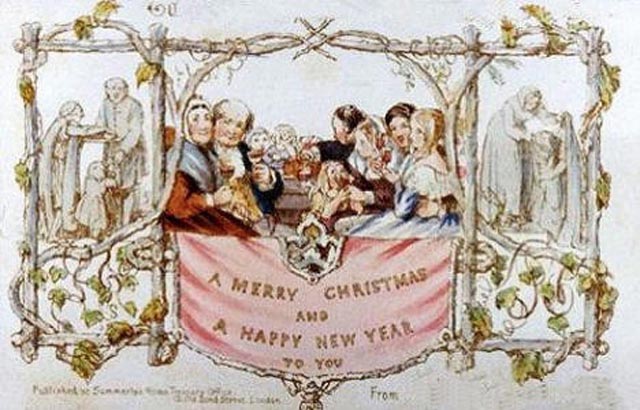
The Christmas Card
The first commercially produced Christmas card, was commissioned by Sir Henry Cole and drawn by John Calcott Horsley in 1843. The card shows a moderately wealthy English family enjoying Christmas, and each side depicts people in the act of charity, which was a very important part of the Victorian Christmas. Not everyone thought the card appropriate and some religious groups condemned it. The temperance society condemned it for depicting a young child taking a sip of wine. Sir Henry Cole had a thousand copies of the card printed. Some of them were given to his friends and the remainder were sold for one shilling (5p) a card. The early cards rarely had religious or even winter themes, but would show children or animals. The following year W.C.D. Dobson produced another card for sale and in 1848 W.M Edgley produced a card which was similar to the one J.C. Horsley had done. The card had holly on it for the first time and used the spelling “Christmass”. With the penny post, introduced in 1840, Christmas card sales soared and became a success. When printing methods improved Christmas cards become big business and by 1878 over 4 million cards were sent. Charles Goodall and Son, was one of the first firms to mass publish Christmas cards. In 1866 C.H. Bennett designed a set of four cards for Josiah Goodall. They were printed in Ireland and became the forerunner of the Christmas card as we know it today. The cards now depicted the nativity but robins (the postmen at this time were called Robins because of their red uniforms), snow scenes, holly and other winter scenes were also used.
Today the Christmas card is big business and millions are sent each December all over the world. The designs on them have changed and now you can buy them with all sorts of pictures on them: traditional winter scene, comic or cartoon characters. Cards with jokes on them even vulgar ones are now on sale. The only sort which seems to have seen a down turn in their sales are the ones showing religious scenes which is a shame really, because that is what Christmas is supposed to be about.
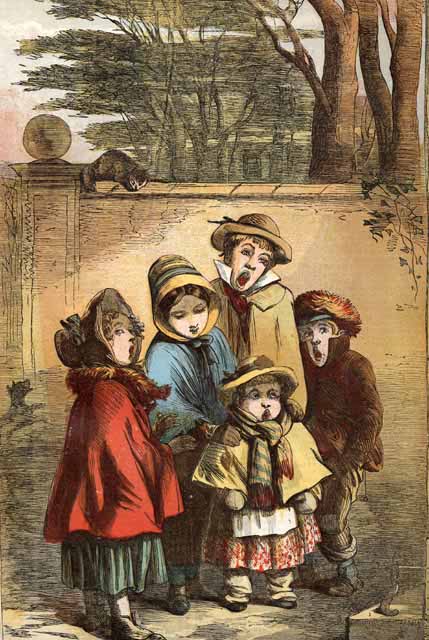
The Christmas Carol
The word carol comes from the old French word carole meaning “round dance with singing”. It was originally associated with seasons of the year and not just Christmas. One of the earliest known songs to do with Christmas is ”Jesus refulsit omnium” which was composed by Hilary of Poitiersne in the 4th century. St. Francis of Assisi (1181-1226) introduced Christmas carols to the church service. He also used them in the nativity plays he made. During the 15th century in Italy carols were written with a more festive slant to them. In the same century Johannes Gutenberg made his printing press (about 1447). With this copies of carols could be easily made and distributed to other churches. The earliest English printed carols came from the press of Wynken de Worde (yes that was his name), which included the Boar's Head carol. When the puritans came to power in the 17th century, as with all other Christmas traditions, the Christmas carol was banned and many copies of older carols were destroyed.
It was the 18th and 19th century when most of the carols we know and love today were written. Every church now has a carol service at Christmas. Perhaps the most famous is 'The Festival of Nine Lessons and Carols' held in King's College Chapel, Cambridge. It takes place on Christmas Eve and always begins with the carol, 'Once in Royal David's City,' the first verse of which is sung by a solo chorister. The service ends with the carol “Hark! The Herald Angels Sing”. The service was first performed in 1918 and revised in 1919. It was started by the newly appointed Dean of Kings, Eric Milner-White. The service was first broadcast to the nation in 1928 and apart from 1930 has been broadcast annually. It was broadcast throughout World War Two.
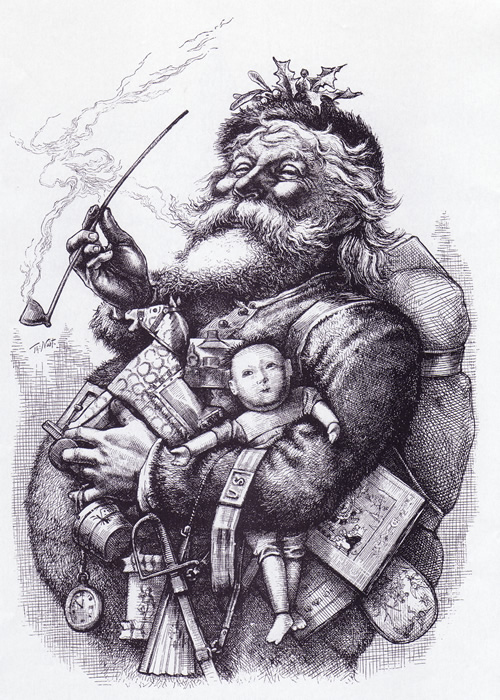
History of Father Christmas
The history of Father Christmas goes back to the 3rd century A.D. to Saint Nicholas. He was born in Patara in modern day Turkey about 280 A.D. He is the patron saint of Russia and, among others, pawnbrokers, parish clerks, seamen and many others, but more famously, the patron saint of children. Nicholas was a very pious and kind man who, it is said, gave away his wealth to the poor and needy. One thing he was noted for was giving secret gifts to children. He would also go out in a hooded cloak and leave clothing, food and money for poor families. All his good deeds made him very popular especially with children, in fact he became known as protector of children. He died on the 6th of December, which became his feast day. By the 15th century Nicholas had become the most popular saint in Europe.
A Father Christmas type figure appeared in ancient British mid winter festivals, dressed in green robes with a wreath of holy and mistletoe on his head. In the 5th and 6th century he was known as King Frost. Someone would dress in a green robe and would visit people's houses. He would be given something to eat and drink. By being good to him, it was thought he would bring good luck to people.
A Father Christmas type figure appeared in ancient British mid winter festivals, dressed in green robes with a wreath of holy and mistletoe on his head. In the 5th and 6th century he was known as King Frost. Someone would dress in a green robe and would visit people's houses. He would be given something to eat and drink. By being good to him, it was thought he would bring good luck to people.
When the Normans invaded in 1066 they brought the story of St. Nicholas with them, and, with this story added to the stories of the Saxons and Vikings, the idea of Father Christmas was born. He is mentioned in an old 15th century carol as Lord Christmas”.
The puritans banned Father Christmas, along with other Christmas traditions in the 17th century, but he was not forgotten and during that period of history he went underground, being remembered in mummers' plays and underground newspapers
By the mid Victorian period Father Christmas had more or less got all the characteristics he is now famous for. He is portrayed as a well fed, happy, bearded man, dressed in a green-fur lined robe and is depicted like this in Dickens book “A Christmas Carol” as the ghost of Christmas present. His outfit however was yet to be standardised. Pictures of that time show him dressed in a red, blue, green or brown costume, sometimes covered in stars. Thomas Nast, the American cartoonist, shows Santa Claus visiting an army camp during the American civil war and handing presents out. Another American, Clement C. Moore, wrote in 1822 the now famous poem “The Night before Christmas”.
Father Christmas was now being highly influenced by America and the final touch was made by Coca Cola, who in 1931 gave us the Santa we know today.
In recent years some school have tried to change Santa or even do away with him altogether. They have tried to change the colour of his costume into a green one, and have even told children that he does not exist. Even in our multicultural society there must be room for Father Christmas otherwise where will we all end up?
By the way I hope you have written your letters to Santa. There’s not much time left if you want that special gift.
Merry Christmas To you All!
By Stephen SmithBy the way I hope you have written your letters to Santa. There’s not much time left if you want that special gift.
Merry Christmas To you All!