
 Loading more
Page 2
Catherine (Katie Johnson)
Katie (Catherine) Johnson
Nurse
Date of Engagement: 25.08.1915
Date of Discharge: 25.02.1919
Catherine Johnson was the eldest daughter of James and Catherine. Catherine, who was born in Blackburn during 1894, had three younger sisters, Mary (b. 1900), Josephine (b. 1903) and Harriet (b.1906). Her father was a police constable at Blackburn; he joined the force in 1891. By the time of the 1911 census he had attained the position of Sergeant and, by 1920, when he retired, he had attained the rank of Inspector. The family residence in 1911 was 83 Lynwood-road but later they were to remove to 42, New Bank-road.
When the First World broke out in 1914, Catherine was 21 years old, and, soon after, volunteered to work at “Ellerslie" where she probably have obtained experience working as a nurse. On the 25th August 1915, she joined the Voluntary Aid Detachment (V.A.D).
The Voluntary Aid Detachment was formed in August 1909 by Lord Keogh, being organised by the Red Cross.
When Catherine signed up, she used the name of Katie. Already having nursing experience, she was sent to the 1st General Hospital, Liverpool as an Auxiliary Nurse. Working here provided an opportunity for her to gain more nursing experience. On the 22nd July, 1916 she was sent to No. 1 General Hospital in Britanny, France. The newspaper report below gives more detail of Katie's service. Katie served with the V.A.D. until 25th February 1919. In 1920, she was awarded the Victory Medal and the British Medal.
From “The Blackburn Times", September 29th, 1919
Mentioned in Despatches
Blackburn Nurse Honoured
Miss Katie Johnson, eldest daughter of Inspector James Johnson, of New Bank-road, Blackburn, has returned home after strenuous service with V.A.D. in France, and as previously mentioned in these columns, she has had the honour of being mentioned by Lord Haig in his last official dispatch. The work has had a marked effect on her general health, but with rest she is gradually recovering. Nurse Johnson volunteered for service at “Ellerslie" in the early days of the war, and after some months she was transferred to a large hospital in Manchester. She was always anxious to cross the water to the scene of actual hostilities, and eventually she was accepted for active service. She spent three years in France in different hospitals. At first, she was stationed at No. 1 General hospital in Britanny and later was transferred to No. 6 stationary which came under fire of the Germans and had to be hastily evacuated during the enemy advance of March of last year. The wounded men were got away safely, and on that occasion Nurse Johnson did very useful work. AT this period, she was attached to the third Army Corps. She has nursed Australians, New Zealanders, Canadians and a few Frenchmen as well as the British “Tommy" regarding whom she speaks of in the highest praise. She has found the British soldiers manly and brave, and she has a decided preference for them above all the others.
Whilst in Blackburn she has received a letter from the Matron-in-Chief attached to the British Expeditionary Force, congratulating her on her honour. The Matron-in-Chief with the British Expeditionary Force, France and Flanders, 1914-1919 was Dame Emma Maud McCarthy.
By the start of the war there were over 2,500 aid detachments and about 74,000 members, two thirds of which were women and young girls. They were all trained in first aid and home nursing, hygiene and cookery; the men were also trained in first aid in the field and stretcher bearing. To begin with women were not allowed to nurse on the front line but were accepted as workers in canteens. By 1915, with the growing shortage of nurses it was decided Female volunteers over the age of twenty-three with more than three months hospital experience were accepted for overseas service.
By 1916 on the home front some 8000 nurses were looking after 126,000 hospital beds, and abroad, 4,000 nurses with 93,000 beds. By the end of the war 80,000 V.A.D. members, both paid and unpaid were working in hospitals.
Research undertaken by Stephen Smith, Community History Volunteer at Blackburn Central Library.
Henrietta Edith Davies
1885-1966
A Blackburn VAD nurse that served in Egypt during WW1
Compiled by Dr Andrew Cronshaw
A few years ago, a collection of photographs with a Blackburn interest came up for sale on an on-line auction site. Unfortunately, the original album was cut up by the seller and its integrity was lost.
However, a fair proportion of images were saved from dispersal and are displayed here.
The collection centres around an exceptional Henrietta Edith Davies, a Blackburn nurse brought up by her aunt and uncle in Preston New Road. Her uncle Dr Griffith Humphry Davies worked as an ophthalmic surgeon at Blackburn Royal Infirmary for 40 years. The pictures are remarkable as they portray a Blackburn life and follow Henrietta’s travel to America and Africa.
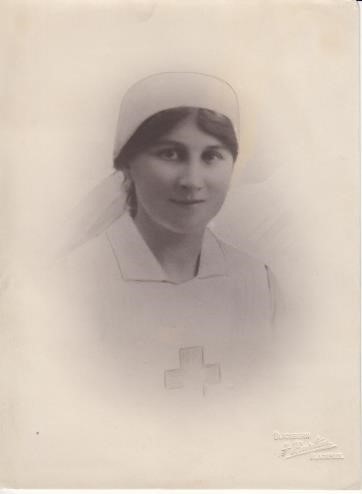
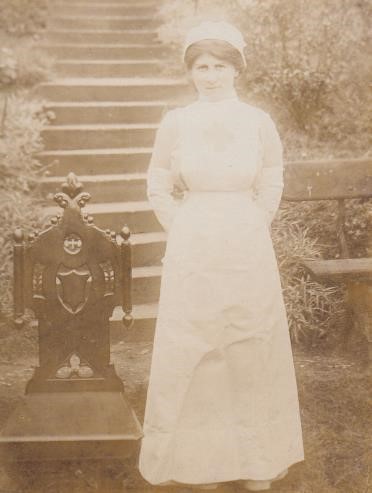
Henrietta Davies by F. Baxter? Blackburn Henrietta Davies in VAD Nurses uniform c.1915
Henrietta Edith Davies, daughter of Humphrey (Professor of Languages) Davies and Emma Ida Davies (Nee Kretschner) was born on 12 May 1885 in France. She was baptised 24 November 1887 at St Mary’s All Saints, Whalley in Lancashire. However, she appears to have grown up with her aunt and uncle in Preston New Road Blackburn as a consequence of her parents’ divorce. Divorce was unusual at this time.
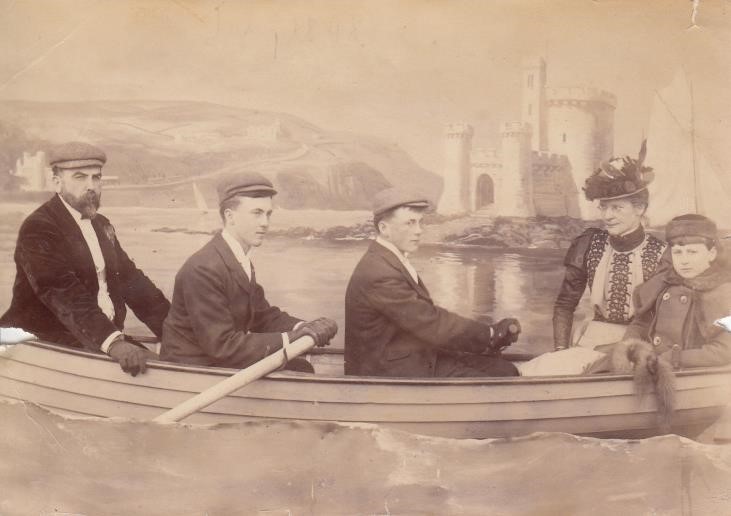
Griffith Humphry (uncle), two brothers(?), Ann Ellen (aunt) and Henrietta Davies.
Studio photograph dated in pencil July 1898
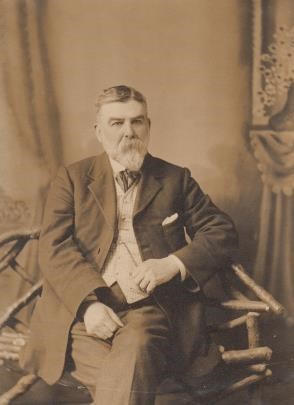
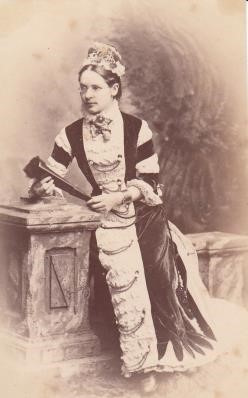
Griffith Humphry Davies c.1913 Ann Ellen Davies c.1885
Dr Griffith Humphry Davies (1853 - 1923)
Dr Griffith Humphry Davies, son of Humphry Davies, was born in Wisconsin, USA in 1853. His parents were Welsh farmers whom had emigrated. Griffith came to Britain in 1871 and studied Medicine at Edinburgh and Glasgow Universities. In 1876-77 he was house surgeon at Glasgow Royal Infirmary and later practiced in Nottingham. He specialised on Ophthalmology at Moorfield Hospital, London. After a visit to Paris, he came to Blackburn in 1883. A year later he became the first honorary Ophthalmic Surgeon at Blackburn Royal infirmary. Griffith married Ann Ellen Ramsbottom at Holy Trinity Church, Blackburn on 25 April 1886. At this time, they were both aged 32 and Ann had an income from property and investments and had been living with her sister at 7 Sunny Bank, Shear Brow, Blackburn. In 1904 Griffith retired but was appointed honorary consulting surgeon, a position he held until his death in 1922.
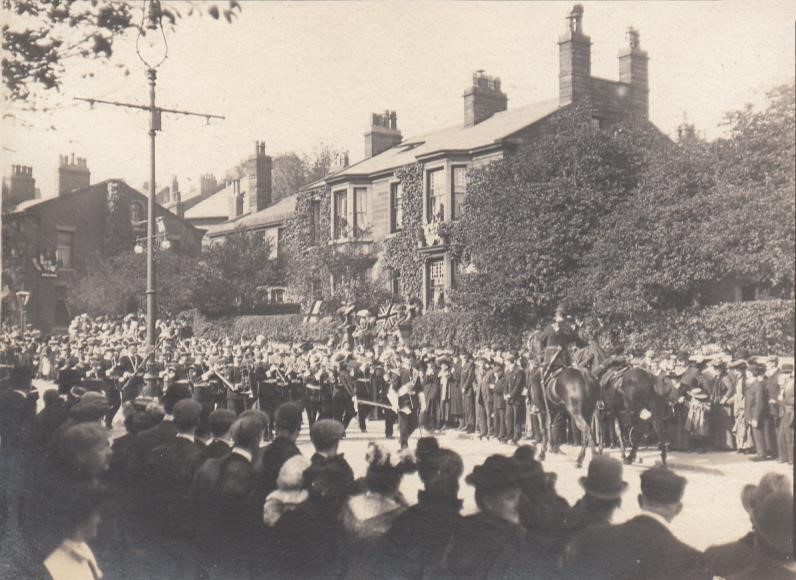
The image above shows the Volunteer band passing the Davies’s home at ‘Penrhyn’, 91 Preston New Road, Blackburn, 30 September 1905. The house with the wide gable is at the bottom of Dukes Brow and has the street name Dukes Brow.
The family travelled to America in May 1906.
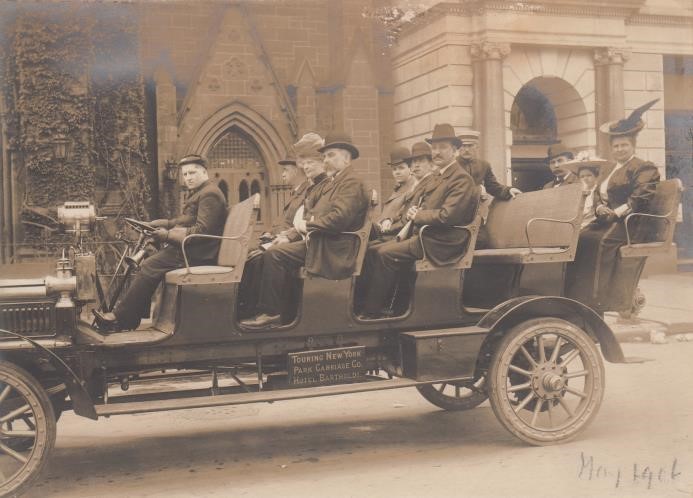
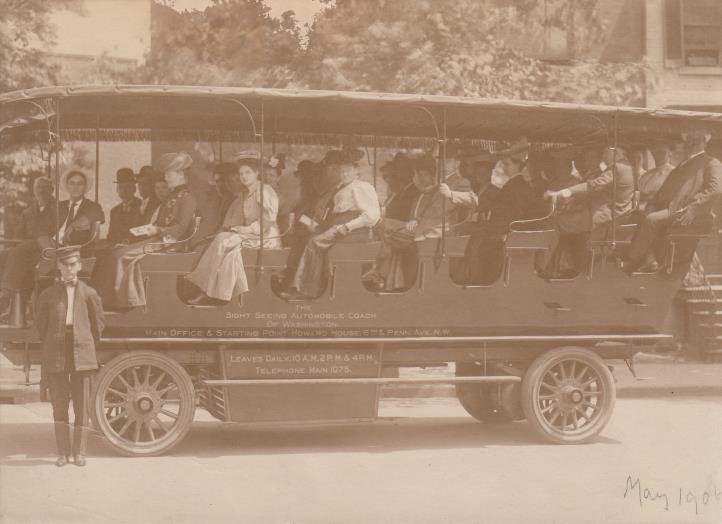
Griffith and Ann Davies Touring New York, May 1906 Ann (front row) and Henrietta (second row) touring Washington, May 1906
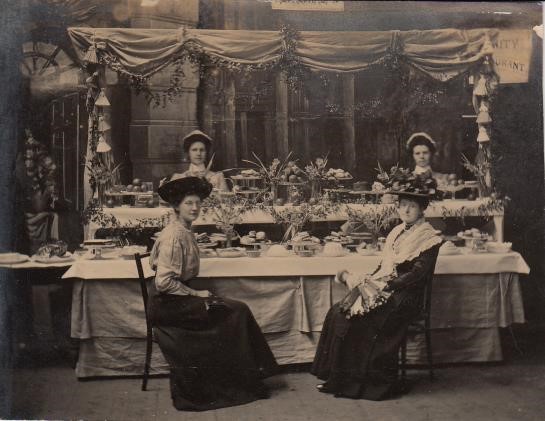
Ann Ellen Davies front left at a fund-raising bazaar, perhaps to raise money
for the church or for Blackburn Royal Infirmary c.1910
Henrietta’s Career
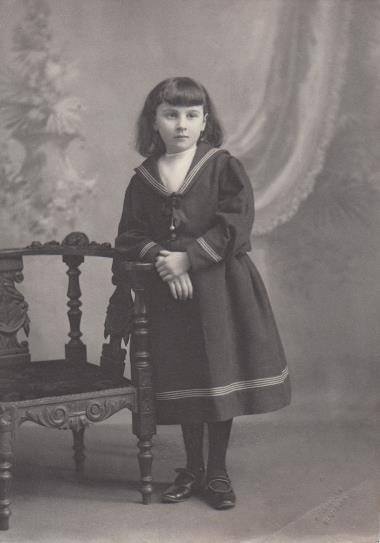
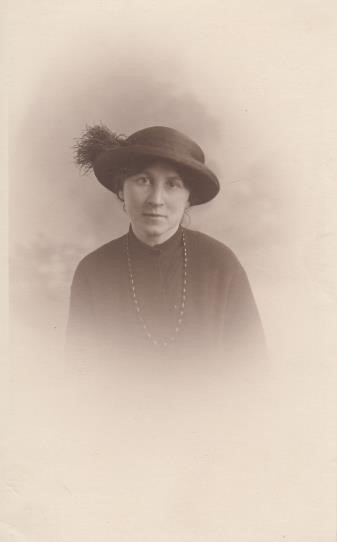
Henrietta Davies c. 1895 by A.P. Gregson, Blackburn Henrietta Davies c. 1919 by Burton & Garland, Blackburn
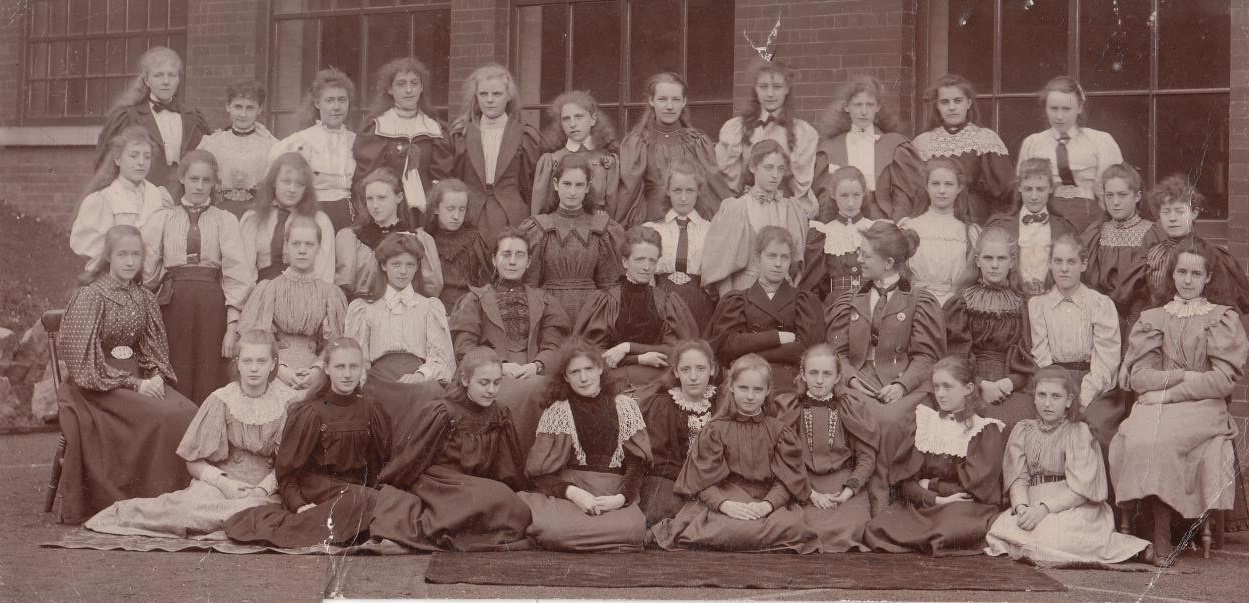
Henrietta Davies, possibly one in from right on the front row, Girls High School, Blackburn
In 1891, Henrietta aged 5 was living with her Aunt Ann Ellen Davies and uncle Griffith Humphry Davies (an Ophthalmic Surgeon) and Alice Lawton a domestic servant, at 91 Preston New Road, Blackburn.
In 1901, Henrietta aged 15 was living with her brother, Walter Emory, aged 20, cousin Marian Anne Ramsbottom, aged 22, aunt Ann and uncle Griffith and plus Harriette Grace, a domestic servant at the same address.
In 1911 Henrietta was ‘living off private means’ with Ann and Griffith supported by a cook and housemaid at the same address. This was her address when she joined the Voluntary Aid Detachment (VAD) as a nurse, aged 30, on 11 September 1915. She served at the Military General Hospital Egypt, until she was demobilised on the 7 March 1919. This was part of Queen Alexandra’s Imperial Military Nursing Service (QAIMNS).
In recognition of her war service, Henrietta was awarded the VAD Nurse 1914-15 Star, British War Medal (BWM) and Victory medals for her service in Egypt.
VAD nurses worked in hospitals and convalescent homes in Britain as well as hospitals near the War’s frontlines. They supported the work of professional doctors and nurses and were highly skilled themselves however they were unpaid but got subsistence food and accommodation.
Alexandria, Egypt
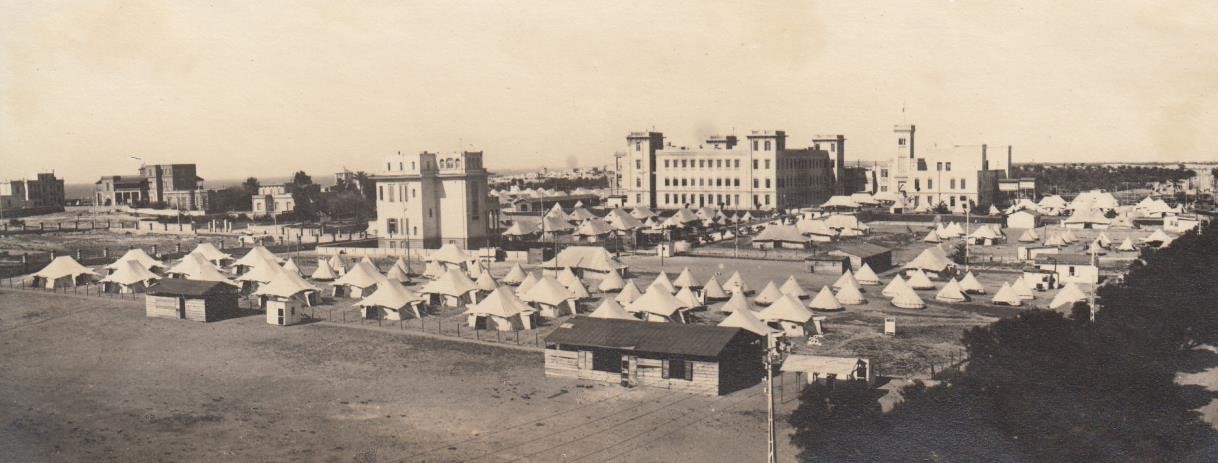
British Military Hospital No. 17, Alexandria, Egypt c.1916
The tents may have provided accommodation for the nurses.
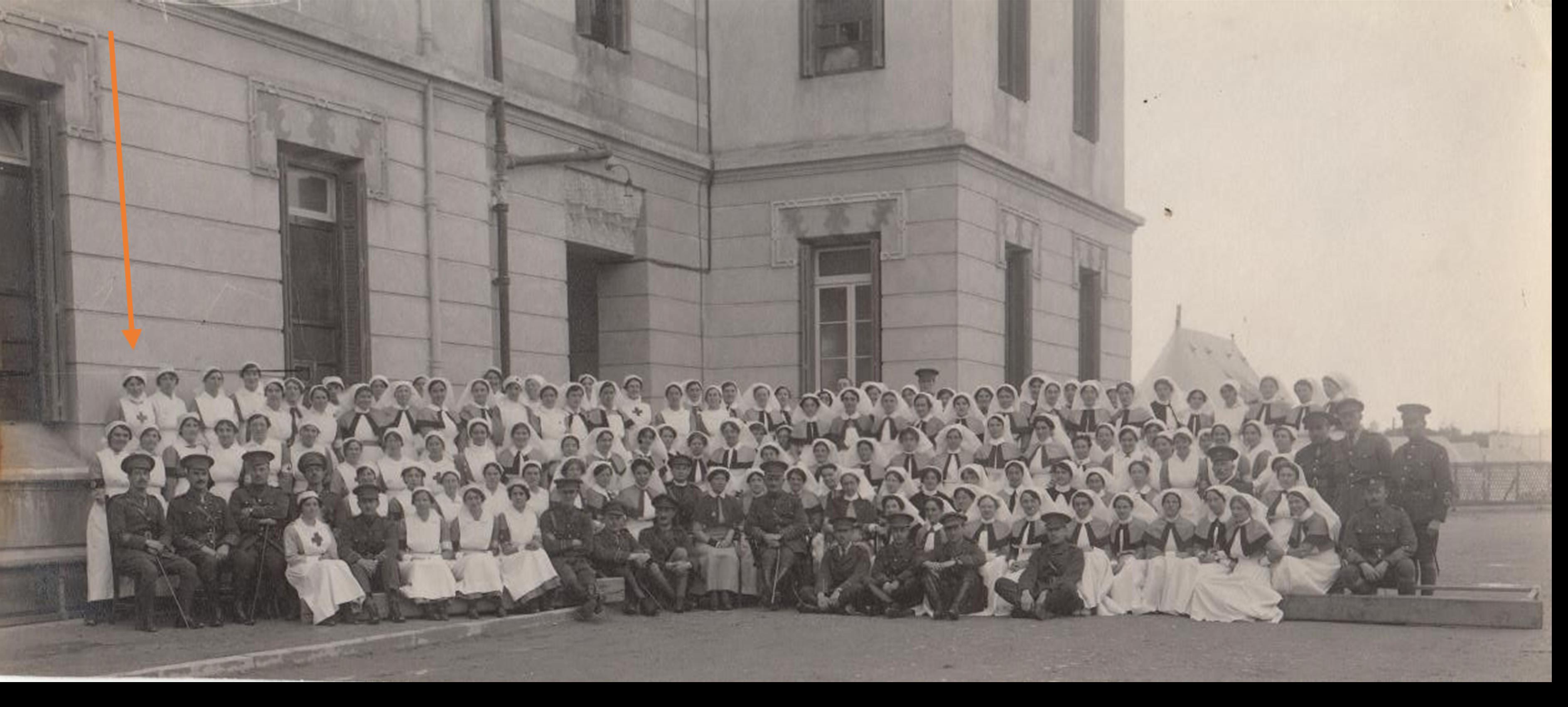
British Military Hospital No. 17, Alexandria, Egypt c.1916
Henrietta is shown by the Arrow.
There appear to be 3 VAD nurses in the group with the Red Cross on their apron.
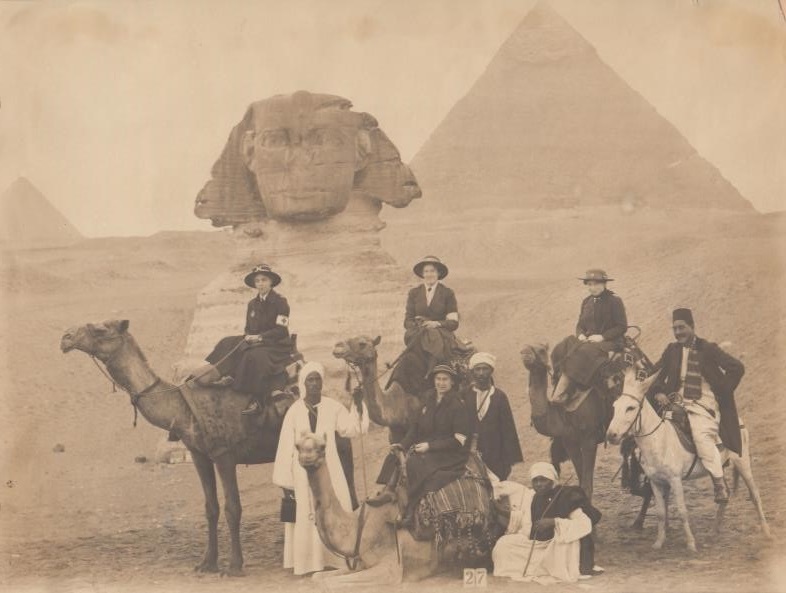
Henrietta on the right, perhaps with three VAD nurses, February 1916
The lady in the centre of the group on the camel in the picture above is possibly the same as person as in the first image below to the right of Henrietta.
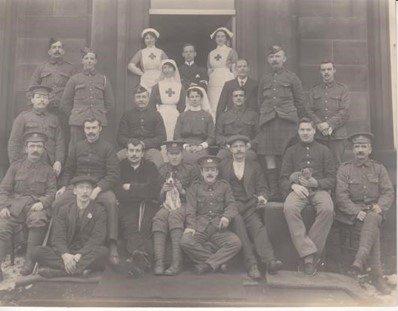
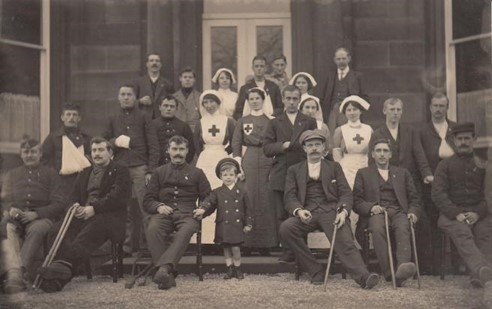
Henrietta Davies outside an unknown convalescent home/hospital, c.1919.
On the first picture Henrietta is on the left on the back row.
On the second picture Henrietta is on the second row on the right.
Blackburn
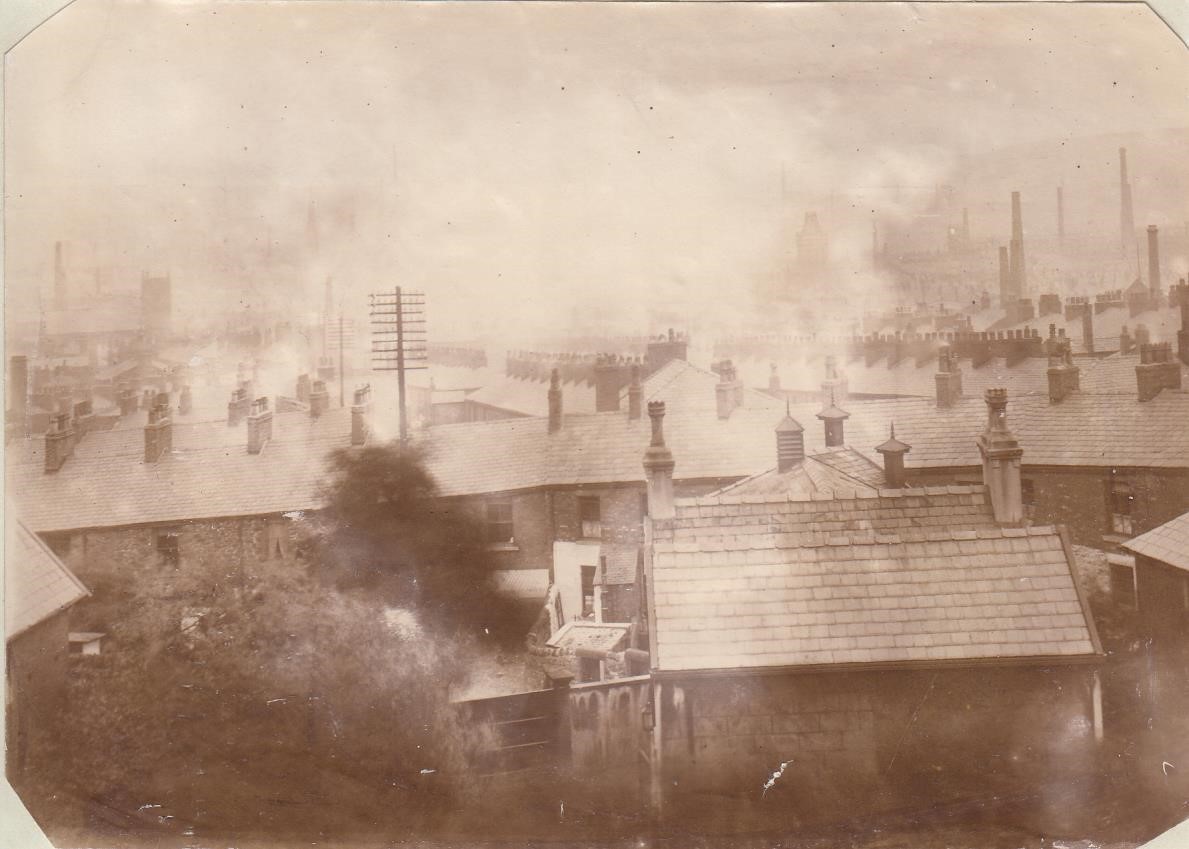
A smokey view over Blackburn, c.1919.
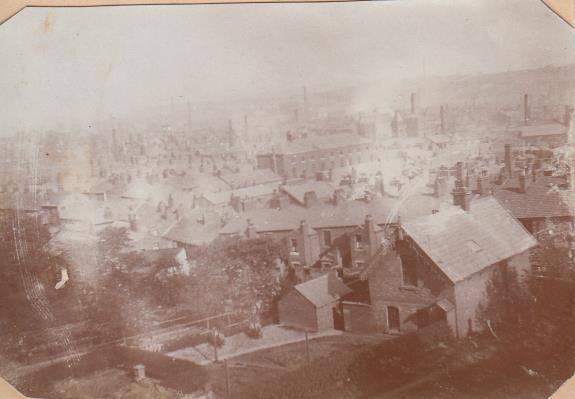
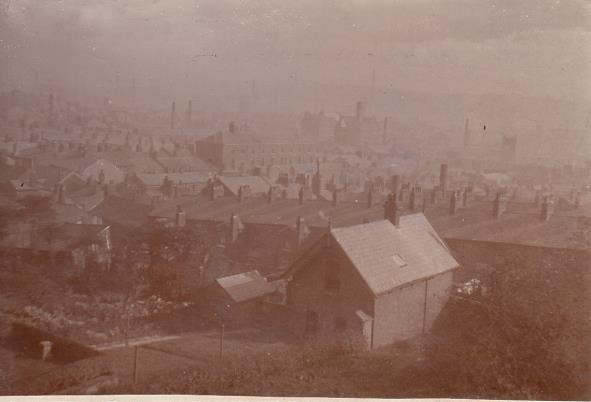
Two views over Blackburn
Henrietta, who never married, moved to 7 Saxon Road, Hoylake, Cheshire sometime before 1919, after the death of her uncle. By 1939 she was ‘doing unpaid domestic duties’ for her aunt Ann Ellen Davies whom was living off private means as a widow. Henrietta died in Clatterbridge Hospital, Wirral on 7 March 1966 leaving probate of £6,855 (today about £100,00) to a solicitor and spinster friend.
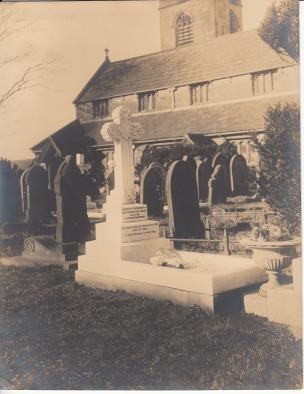
The Grave of Dr Griffith Humphry Davies (1853-1923)
Griffith is buried at St Leonard’s Church, Samlesbury, Near Blackburn.
Conclusion
Many young girls in Blackburn would be working in the mills from a young age earning a low income. It is an unusual story of a girl from a well-to-do background having lost contact with her parents at a very young age. Her aunt and uncle cared for her in Blackburn. Having some travel experience, WW1 provided her with an opportunity to care for injured soldiers in Egypt. After her uncle’s death she looked after and cared for her aunt. She clearly treasured the photographs which were passed on after her death in 1966, but with the passage of time were seen to be of little value and importance to subsequent viewers. The collection of images gives a previously untold glimpse into one girl’s contribution to the life changing WW1.
Acknowledgements
Thanks to Dr David Barnett for his careful assistance in researching this article and to Angela Barnett for constructive comments.
References
National Archives WO 372/23/10571
scarletfinders.co.uk
https://victorianweb.org/history/empire/egypt/alexandria/7.html
Andrew Cronshaw 2023