
 Loading more
Page 3
Letter C
Chappell, James | Cooper, William | Cox, Herbert | Crompton, John
Sergeant James Chappell
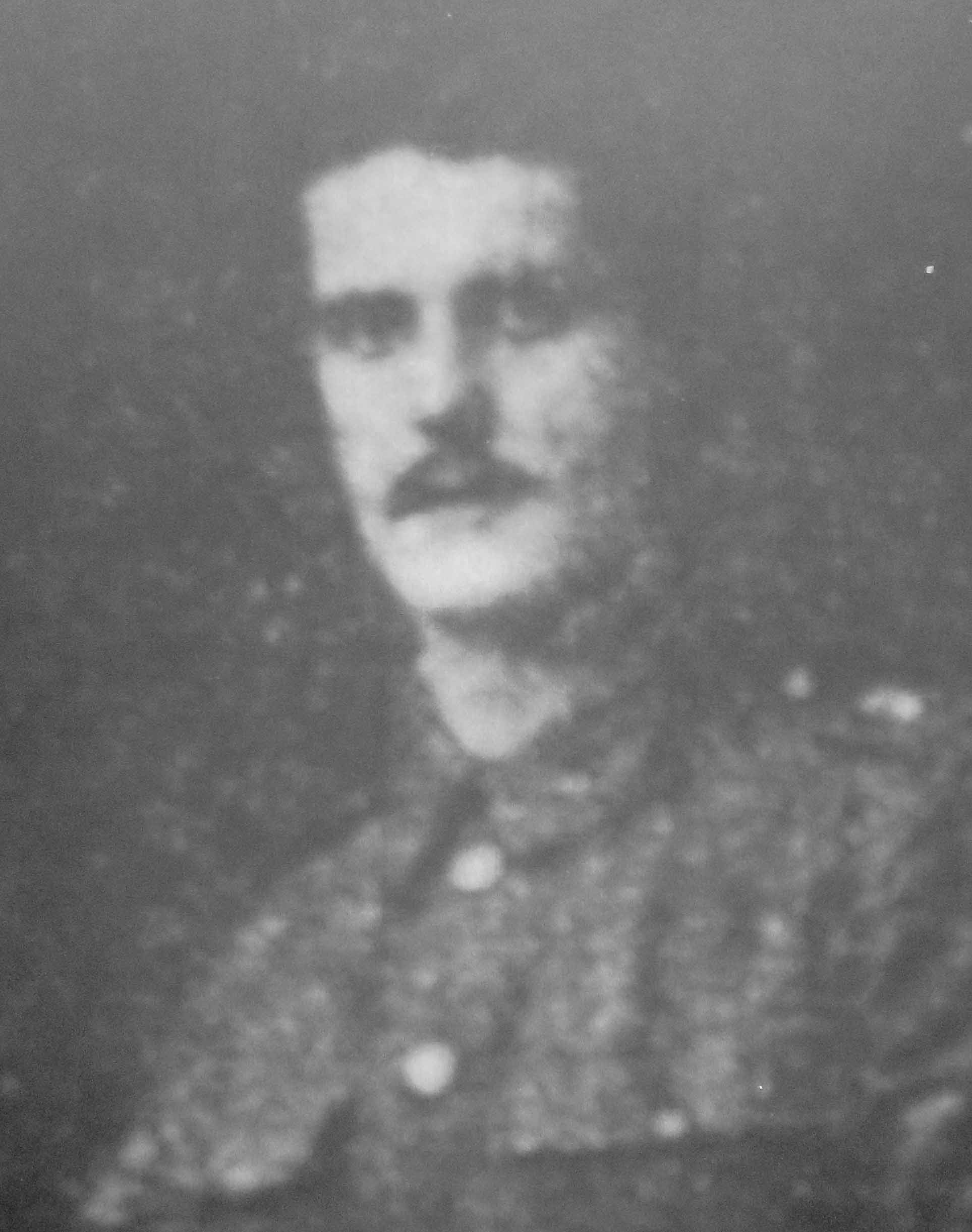
Royal Scots Fusiliers, 15643
The son of a Corporation labourer, James Chappell, was born in 1893 to George and Hannah Chappell, of 63 Hindle Street, Darwen. James was a cotton weaver, along with his brothers and sisters: Sarah Alice, Annie, Ethel, Mary, Victoria and George.On the outbreak of war, James signed up, and joined the 1st Battalion Royal Scots Fusiliers.
Following nine months of training, in April 1915, James was finally sent to France. James would see actions at Hooge and Bellewarde in Belgium in 1915, before moving to the Somme Region in June 1916 for the major offensive.The 3rd Division, of which the Battalion was a part of, was selected to attack Bazentin le Grand, on 14th July 1916.
On the right, attacking between Bazentin le Grand and Longueval were the two XIII Corps Divisions, left to right, the 3rd Division and the 9th (Scottish) Division. The 9th Division, which also contained the South African Infantry Brigade (in reserve near Carnoy), took Longueval and reached the fringe of Delville Wood which flanked the village but were unable to take the German redoubt at Waterlot Farm.
In the centre, things did not go well for the 3rd Division attacking from Montauban towards Bazentin le Grand. The German wire was uncut and the defenders alert. The German defensive barrage laid down in no man's land missed the assaulting battalions but caught the supporting waves. In this attack, James, aged twenty-three years was killed, 14thJuly 1916. He has no known grave, but is remembered on the Thiepval Memorial to the Missing on the Somme, Pier and Face 3 C.
Private William Cooper
East Lancashire Regiment, 24829
William Cooper was born 1887 to James and Jane Ellen Cooper of 12 Primrose Street, Darwen. Like most Lancashire families, William, his brothers Samuel, Joseph and Albert, and his parents, worked in the Cotton industry. William was, in fact, one of eight children.
William had joined the army prior to the First World War, and he was on the Reserve list. He was immediately recalled, and posted into the 1st East Lancashire Regiment. William would be one of the first British soldiers to fight in the war, as the Battalion landed on 22nd August 1914.
William would spend the next two years fighting with the Battalion, across Flanders and France, before finally arriving at the Somme. On July 1st, the Battalion took part in the Battle of Albert, and suffered horrific casualties. After that, the Battalion was sent for rest and refit, returning in the October to fight in the Battle of Le Transloy.
“On the 15th orders were issued from XIV Corps Headquarters for the 4th and 6th Divisions to make another attack, on the 18th, on the trenches of the Le Transloy line.
The ground was in the most appalling condition; heavy rain had fallen for weeks and continued throughout the attack, with the result that the terrain was a vast lake of mud, pitted with shell-holes. The night was pitch black and the enemy's line was extremely vague ; German trench maps had been issued, but they were of little use for the German line really consisted of detached machine-guns in shell-holes. At zero hour a barrage was put down on Dewdrop trench which lasted for 4½ minutes. At the same time the battalion and the 1st Rifle Brigade floundered into the mud of "no-man's land."
The men, wearing full equipment and carrying extra bombs, made slow progress; some were utterly exhausted and scarcely mobile, only to be shot down, drowned in shell-holes or rounded up at daybreak.
The day (18th) was quiet, and after dark "B" Company relieved "D” Company. "A" “C" and “D" Companies then went into support in Shamrock. Patrols were sent out who were met by hot rifle-fire as they approached Rainy and Dewdrop. Wounded men were sought for and a few brought in, also wounded men in the trenches, unable to walk, were evacuated by special stretcher parties after dark.
The casualties of the action were heavy - other ranks were killed 12, wounded 58, missing 292.”
William was one of the missing from that day. His body was never found. He is remembered on the Thiepval Memorial to the Missing on the Somme, Pier and Face 6 C.
Acting Corporal Herbert Cox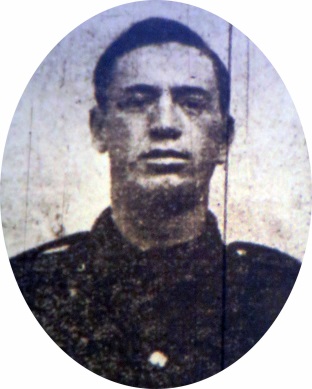
3rd King’s Royal Rifle Corps, 9107
Acting Corporal Herbert Cox of the 3rd King’s Royal Rifle Corps (No. 9107) was killed 25th September 1915 at Frise on the Somme.
Herbert was born 17th March 1888 at 63 Kay Street, Darwen. He was the son of Walter William Cox and Elizabeth Ann (nee Bottrell) and Herbert was baptised at Holy Trinity (now St Peter’s) on 20th May 1888. The family had moved to Darwen from Oxfordshire during the early1880s and had settled in India Street and later Kay Street. At the time of the 1901 census, Herbert was aged thirteen years and he was working as a cotton weaver.
Herbert was an all-round athlete and around 1908 he won the first prize at the Darwen Sports Day. Shortly after winning the sports prize, he enlisted in the Army and joined the 3rd King’s Royal Rifle Corps. Prior to the Great War, he saw service in England, India and Malta where he continued with his running and carried off various prizes. On the outbreak of War, his unit was recalled to England and then to France where they arrived 26th September 1914.
In France, his unit was concentrated in the area between Aire and Arques where Herbert saw action at St Eloi (14th-15th March 1915), and, at the Second Battle of Ypres (22nd April –25th May 1915). During quiet moments Herbert found time to take part in races which his Battalion organised and, in August 1915, he won the 100 yards and 400 yards races. Prince Hiram Sing also gave him a prize for the best all-round athlete.
By mid-September, the Battalion had moved to Frise on the Somme and on the night of 19th/20th September had taken over the trenches from the French 414th Regiment (6th Corps). The Battalion’s War Diary for 25th September 1915 reads “Frise: In the trenches. Rained almost all day but cleared at sunset. Germans shelled us killing one of our machine gunners. In the afternoon and evening we shelled the Germans. Battalion relieved in the evening by 4th KRR relief was complete by 10.15p.m. and Battn marched to the huts at Frosissy reaching them by 1a.m. (last companies)." The man killed referred to in the above entry was Herbert Cox.
Herbert Cox has no known grave and is remembered on the Thiepval Memorial to the Missing on the Somme Pier and Face 13 A and 13 B.
Lance Corporal John Crompton
East Lancashire Regiment, 14710
Lance-Corporal John Crompton, 7th East Lancashire Regiment (14710) who was killed on the 5th July 1916, was formally an employee at Messer’s Shaws’ Glazed Brickworks, Hoddlesden.
Born in 1894, the son of John and Priscilla Crompton, he was one of 4 children: Hilda, Isabel, John and Walter.In September 1914 he enlisted, and, in July 1915, he was drafted to the front.
Captain Pone, the Company commander, sent a very sympathetic letter to Mrs. Crompton expressing his sympathy with her in her bereavement. N.B. Her other son Private Walter Crompton is now in a London Hospital. He enlisted in January, 1915 and went to the front early this year. He was injured in action and removed to a hospital in London, where his right foot has been amputated. Before enlisting he worked at Messer’s Place’s Sanitary Pipe Works. Both brothers were connected with St. Pauls Church, Hoddlesden.
The War Diary reads:
The Batt was ordered to attack GERMAN front line X 15 C 2.4 X 14 D 5.8 - X 14 D 3.8 by bombing up communication trenches (92 - 24,33 - 58, 96 - 38) 57th Brigade operated on the left; 23rd Div. on the right. Attack was preceded by a heavy bombardment of 1 hour's duration. Operations commenced at 2p.m. The Battalion gained its objective on the left but owing to the right being held up by heavy machine gun fire it had to fall back to itsoriginal line.
Casualties were as follows officers 4 killed 6 wounded O.R's 31 killed 49 wounded.”"At 2.30p.m. on the 5th, after a short bombardment by our guns we attacked all along the battalion front ; “A” and “D” Companies on the left assaulted across the top, while “B” and “C” Companies made bombing attacks up the communication trenches. At first considerable progress was made; the left-flank company got well into the village, but were then met by heavy machine-gun fire, Major Tyser being killed and Russell and Humphries wounded.”
John was killed outright, but has no known grave.
He is remembered on the Thiepval Memorial to the Missing on the Somme, Pier and Face 6 C.
Letter D
Dockerty, John
Private John Dockerty
East Lancashire Regiment, 20772
Private John Dockerty of the 8th Battalion East Lancashire Regiment (Number 20772) was killed on 15th July 1916, aged thirty-seven. He had married Anne Maria Higgins in Holy Trinity Church (now St Peter’s), Darwen on 18th December 1897. The 1911 census shows that John is living with his wife and five children at 79 Crown Street and that he was employed as a labourer.
His obituary in a local newspaper says that prior to enlisting into the army he was employed as a “moulder” at Messrs. Henry Livesey’s Greenbank Foundry in Blackburn, and was associated that he was associated with St. Joseph’s Church.
John’s enlistment papers do not survive but it is known from the medal rolls that he embarked to France on 15th September 1915.The War Diary shows:
“15th July 1916 Pozieres
At 9.20am after heavy bombardment of POZIERES for one hour, the Battalion led a Brigade attack on the village: “A” and “B” companies in the Front Line and “C” and “D” companies in support.
Owing to Artillery Barrage and Machine Gun Fire the Battalion was unable to achieve its objective but was joined by other units of the Brigade and consolidated existing trenches to East and South East of POZIERES. At 5.00pm a further bombardment of POZIERES was carried out and the Battalion with remainder of the Brigade attempted another assault on POZIERES at 6-8.00pm. This assault was again held up by Machine Guns and the wire not being cut in the hedges surrounding the village. The Battalion handed over the trenches to the 10th Battalion.
Loyal North Lancashire Regiment; at 2.30am and proceeded to Trenches in Close Support. Casualties: Officers Killed 1, Wounded 8. Other Ranks Killed 56, Wounded 276, Missing 33.
16th July 1916:
The Battalion was relieved by a Northumberland Fusiliers Battalion at 3.15pm. The Battalion proceeded to billets in ALBERT.”
John Dockerty has no known grave and is remembered on the Thiepval Memorial Pier and Face 6 C. His widow would receive his 1914-15 Star together with the British War and Victory Medals.
Letter E
Eccles, Edgar | Eccles, Harry | Edwardson, Richard | Elder, James | Entwistle, John
Entwistle, Joseph | Entwistle, Walter | Eva, Joseph
Rifleman Edgar Ethelbert Eccles
1st/8th City of London (Post Office Rifles) Regiment, 4779
Edgar Ethelbert Eccles was son of Joseph Eccles and Margaret Ann Catherall of Darwen, He was born in 1877 in St. Petersburg, Russia. Some of his siblings were also born in Russia before they moved to Darwen.
Edgar joined the Darwen Post Office as a telephonist, before transferring with his sister Margaret to Manchester. Prior to leaving Darwen, Edgar had spent some time at the Duckworth Street Congregational Church.
As war broke out, Edgar joined thousands of others to enlist, and like so many others, joined with his work colleagues. The Post Office had formed their own “Pals Battalion”, the 8th City of London Regiment (Post Office Rifles).
After fighting successfully across the Somme for months, the Battle of Le Transloy Ridge began. It started well with the capture of Eaucourt L'Abbaye by the 47th Division, as well as an advance along the Albert–Bapaume Road towards Le Sars.
The advance was resumed on 7th October and Le Sars was taken by the British 23rd Division but progress along the Canadian lines stalled. The 47th Division failed to take Stag Trench but was able to get posts onto the Eaucourt 'Abbaye–Warlencourt road. It was fighting at Stag Trench where Edgar was killed.
Edgar Eccles has no known grave, but is remembered on the Thiepval Memorial to the Missing on the Somme Pier and Face 9 C and 9 D.
Gunner Harry Eccles
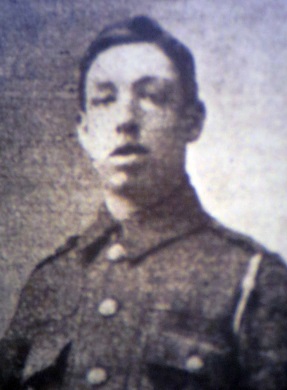
150th Brigade Royal Horse Artillery/Royal Field Artillery, L/9114
Gunner Harry Eccles of the 150th Brigade Royal Horse Artillery and Royal Field Artillery (No. L/9114) was killed on 28th September 1916 at the Battle of Albert on the Somme.
Harry Eccles was born on 16th September 1895 at 25 Heys Lane, Darwen. He was the son of Hugh Eccles and Jane (nee Snape). Harry was baptised at Redearth Road Primitive Methodist Church. By the time the 1911 census was taken, the family had moved to 31 London Terrace by which time Harry was working as a reacher in Sudellside Mill.
On the outbreak of war, Harry enlisted and arrived in France on 28th November 1915. He would have seen action at Vimy Ridge. The German’s attack on 21st May fell most heavily on 47th (London) Division, which was to the 23rd Division's right in the area of Berthonval. Shellfire fell heavily around Aix Noulette from 4.30pm. The Divisional Artillery was very active in support of the 47th Division until 24th May, and again, on 1st June when 2nd Division continued operations to recover lost ground. The 23rd Division was relieved by 47th (London) Division on 11th June and moved to Bomy, with the Artillery going to Chamblain Chatelain ("Charlie Chaplin") and Therouanne. It was here that intensive training commenced in preparation for “The Big Push.”
The Division took part in the Battle of Albert (part of the Battle of the Somme) in which the Division played a part in the capture of Contalmaison. Contalmaison village was destroyed during the Battle of the Somme. The fortified village was an objective on 1st July 1916. Although elements of the 34th Division reached it that day, it was not secured and bitter fighting continued. On 7th July reinforcements from the 23rd Division fought their way into the village, releasing some of the British soldiers captured earlier in the battle. Contalmaison did not finally fall until 10th July.
Harry later saw action at the Battle of Bazentin Ridge. The battle commenced on 14th July 1916 and marked the start of the second phase of the Battle of the Somme and lasted until 17th July. He later saw action at the Battle of Pozières was a two-week struggle and lost his life at the Battle of Morval on 28th September 1916.
Harry Eccles has no known grave and is remembered on the Thiepval Memorial to the Missing on the Somme Pier and Face 1 A 8 A. He is also remembered on the war memorial for Redearth Road Primitive Methodist Church.
Private Richard Edwardson
East Lancashire Regiment, 17480
Richard Edwardson was originally born in Liverpool, in 1868. By 1901, he had moved to the area with his wife Margaret and his children: Edward, Elizabeth, Richard, Margaret, Edith and William. Like most families, they were in the cotton industry, working at Howard & Bullough, Accrington.
Richard had already served his country during the Boer War, and after the First World War began, he re-enlisted, into the 8th Battalion East Lancashire Regiment. At forty-six years he was an old soldier, but his experience would have been invaluable.After months of training, the Battalion left for France in mid-1915, and saw action. The Battalion was again thrown into battle in July 1916 at Pozieres, on the Somme.
In the early hours of 15th July 1916, Lieutenant-Colonel Mackay, Officer Commanding, 8th East Lancashire’s received the specific orders that 112th Brigade would attack at 9.20am after an hour’s bombardment of the village of Pozieres, the key to the German second line of defence. The Battalion led the Brigade in the assault on the village - the men's first experience of going 'over the top'.
They were to lose over 350 casualties including almost 100 killed outright. The Battalion would never be the same again. The war diary states:At 9.20am after heavy bombardment of Pozieres for one hour the Battalion led a Brigade Attack on the Village. “A” and “B” Company’s in the Front Line, “C” and “D” Company’s in Support. Owing to Artillery Barrage and Machine Gun Fire the Battalion was unable to achieve its Objective but joined by other Units of the brigade and consolidated existing trenches to East and South East of Pozieres.
At 5.00pm a further Bombardment of Pozieres was carried out and the Battalion with remainder of Brigade attempted another assault on Pozieres at 6.30pm, this assault was again held up by Machine Guns and the Wire not being cut in the Hedges surrounding the Village.The Battalion handed over the Trenches to the 10th Loyal North Lancashire Regiment, at 2.30am and proceeded to Trenches in Close support. Casualties Officers 4 killed 1 Wounded.
It was during this assault that Richard was killed. He has no known grave, but is remembered on the Thiepval Memorial to the Missing Pier and Face 6 C
Private James Elder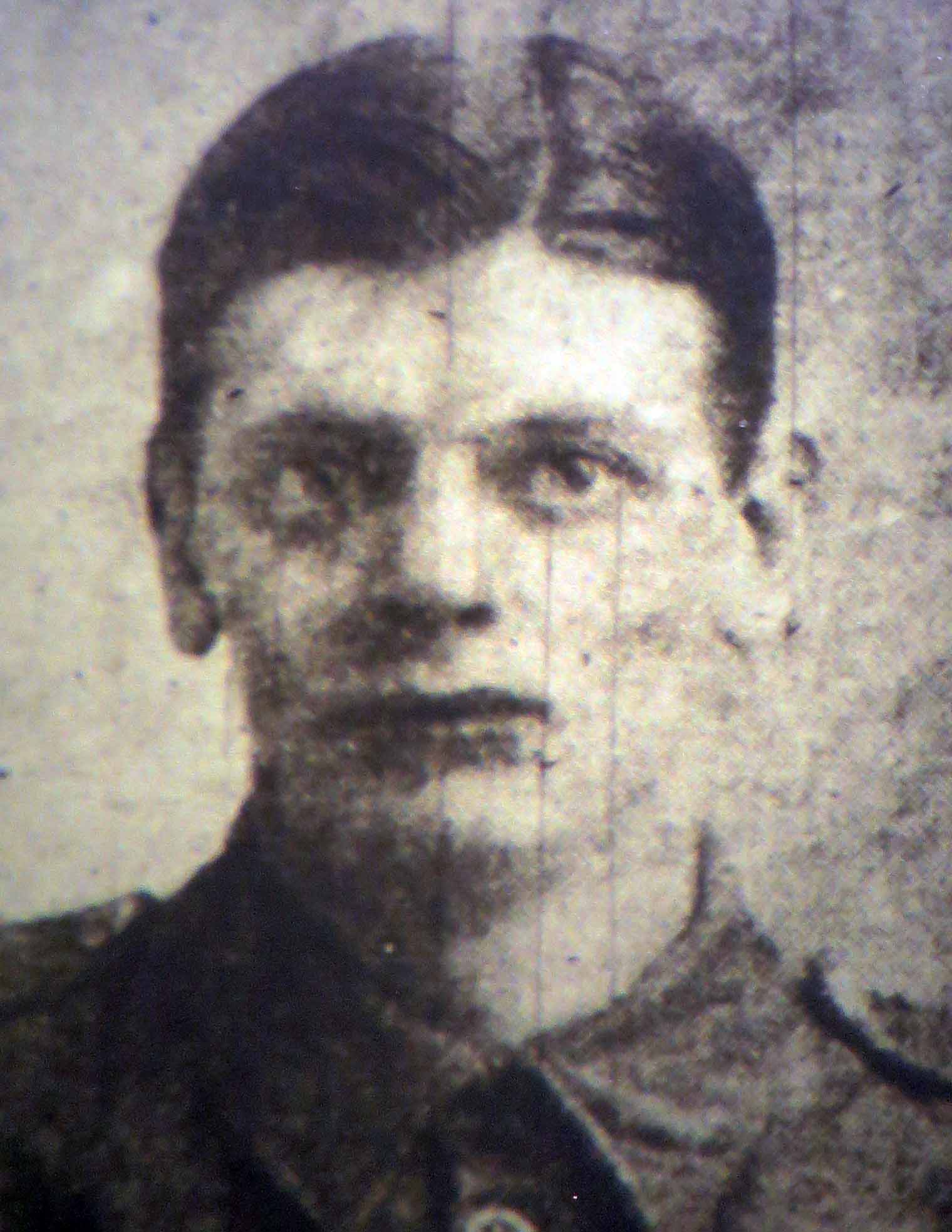 East Lancashire Regiment, 12218
Private James Elder of the 7th Battalion East Lancashire Regiment (Number 12218) was killed on 3rd July 1916, aged twenty-seven. He was the son of James Elder and Betsy (nee Snape). On the 1911 Census James is living with his widowed mother and three sisters at 82 Tockholes Road, where he is shown to be a “Reeler” at a paper staining works.
A newspaper obituary noted that before the war he was employed at Belgrave Mills and that he was connected with the Baptist Church.
His enlistment papers have not survived but we know from the medal rolls that he embarked for France on 14th October 1915.
Opening phase: the Battle of Albert, 1st -13th July 1916:
In this opening phase, the French and British assault broke into and gradually moved beyond the first of the German defensive systems. For the British, the attack on 1st July proved to be the worst day in the nation's military history in terms of casualties sustained. It is the aspect of the battle that is most remembered and most written about, and for good reason - but to concentrate on the failures is to entirely miss the point of the Somme and why the battle developed into an epic period of the Great War.
On the first day, British forces at the southern end of the British line made an impressive advance alongside the French Sixth Army, capturing the villages of Montauban and Mametz and breaking through the enemy's defensive system. North of Mametz the attack was an almost unmitigated failure.
The situation led to a redirection of effort, with the offensive north of the River Ancre effectively being closed down and all future focus being on the line south of Thiepval. There was a stiff fight for Trones Wood and costly, hastily planned and piecemeal attacks that eventually took La Boisselle, Contalmaison and Mametz Wood during the rest of the period up to 13th July.
James Elder has no known grave and is remembered on the Thiepval Memorial Pier and Face 6 C. His sisters received his 1914-15 Star and British War and Victory Medals.
Private John Entwistle
8th Border Regiment, 12909
He was the son of Andrew Entwistle and Ellen (nee Ashworth). John was born on 31st July 1894 at 60 Cranberry Lane, Darwen. His mother died in 1904 and his father remarried the same year to Thirza Blandford.
John attended Lower Chapel Sunday School, for whom he played cricket and football. He worked as a weaver at Mr T. D. Pickup’s mill in Marsh House Lane.When war was declared he attested on 9th September 1914 at Darwen and he was posted to the 8th Border Regiment on the same day. He joined his Regiment at Carlisle.
According to his army record, his height was given as 5ft 5½ins, weight 119lb, chest 32½ins (expansion 3ins), complexion fresh, eyes hazel, hair brown and his religion was Congregationalist. He had a scar in the middle of his forehead.
As soon as the Battalion was at strength they were deployed on training from 10th September 1914 to Codford at Salisbury Plain, Wiltshire. On 16th September 1914, John was granted one week’s leave on account of his brother being ill. (This may have been George or Edmund.)
In early 1915, the Battalion moved to Aldershot for Brigade training. Here, the men learned the arts of soldiering in large formations. On completion of their training, it was time for the 8th Border Regiment to move for service overseas in the war zone.
After a spell of leave at home they gathered at Codford Camp and prepared to travel to the Western Front.They left Aldershot on the 25th September 1915, arriving in France on the 27th, at the Port of Boulogne. On arrival in France they travelled by train to Hazebrouck, marched to Strazeele and took lorries to Nieppe then marched on to Le Bizet where they were billeted.
From here they went into the line at Ploegsteert for the first three months of "acclimatisation", as they learned the 'arts and tricks' of Trench Warfare under the guidance of the 48th Canadian Highlander Battalion.Once they were trench ready they commenced trench warfare's cycles on front line, reserve line, rest and fatigues, as and when needed.
The Battalion started a period of turn and turnabout with the 10th Cheshire’s in line at East of Ploegsteert.
The nights of 4th to 9th October were full of sniping and machine gun fire from the enemy as the 8th Border tried to repair and reinforce the trenches in their sector. On the 9th they were relieved to billets at Ploeagsteert, exchanging places with the 10th Cheshire’s who went into line, in their place. The 10th -15th October was spent in the second line, doing fatigues and physical drills, followed by bathing.
On the 15th October they went back into the front line to relieve the Cheshire’s again. The front line was as active as the first tour and the following gives a flavour of the action.
Poor weather was experienced during November and December 1915. Most of the Battalion activity concerned trench repairs and sniping duels. On a lighter note, one of the British snipers bagged a pheasant! Christmas this year was most definitely not a time for fraternisation and although the 8th Border were out of line and had Christmas Eve bath and a service on Christmas Day.During the early part of 1916, the 8th Border were in training for the upcoming Offensive of the summer months, with which the British and French planned to break the German lines and win the war.
Periods of training were alternated with periods in line and a gradual progression to be in the area of attack in time for the 'Big Push' (The Battle of the Somme).
On 26th January 1916 the 8th Border, part of the 75th Brigade, 25th Division moved via La Creche, to Strazeele, where the men had Company Training. General Plumer and Lord Kitchener inspected the Brigade during route marches and some men attended a demonstration of the new German weapon, the Flammenwerfer.
On the 10th March 1916 they left Strazeele and moved to Nedon and Bryas for more training, all in preparation for the upcoming summer offensive. Sir Julian Byng inspected the men on 20th March 1916 and Sir Douglas Haig on the 31st, all while the men were on route marches.
Things were beginning to ramp up now, as Wood Fighting in defence and attack, night fighting, bombing, training against the German Flammenwerfer and musketry and Lewis Gun firing was practiced.In early April, training continued for preparation to go in line north of Neuville St Vaast on the 21st April 1916.
Whilst in line early during their stint, in the pouring rain and struggling to maintain the trenches, the Germans decided to test the 'new boys'.
On 25th and 26th April 1916, the front line was subjected to a set of bombing raids which cost the lives of two men. May 1916 was spent in and out of line in the Neuville area and it was here the 8th Border got their first real taste of two notorious facets of Western Front warfare; mining and gas.
On 4th May 1916 John was granted 8 days leave.The 8th Border went out of line on the 20th May 1916, but they were harassed in Neuville by gas shells and heavy calibre shelling during the time in billets. They returned to the front line in late May and experienced a spate of casualties, due to mining, bombing and shelling as the enemy sought to make the area as uncomfortable for the troops as they could.
Rumours of the build up to the “Big Push” must have been rife on both sides of the line. June 1916 saw the Battalion moving towards the Somme Area, training and exercising as they went.
The training was aimed at getting the men into a peak of battle readiness for the Battalion’s part in the Somme Offensive, set for the end of June or early July.
When the Battle of the Somme commenced, the 8th Battalion was stationed at Forceville, some four miles behind the front lines, but were ordered to be ready to move up at short notice, if events required.
On the 2nd July 1916, they were marched to Martinsart Wood and the front lines south of Thiepval, to take part in an attack at 6 a.m. on July 3rd, in an area which had resisted attackers the previous day. With no attack taking place either side and severe enfilade fire from these flanks, the attack was costly to the 8th Border.
The German trench was only captured for 200 yards in the centre of the attack and this was too badly damaged by shellfire to hold against counter attack. The men had to hold the line for another night as the battered 32nd Division who had attacked on the 1st July in this area, were in greater need of relief due to their higher casualties.
The 8th Border were relieved on the night of the 4th July and bivouaced in Aveluy Wood as they and other Division battalions recovered from the failed attack.
It was here that John lost his life but his body was never found.John’s father received his son’s 1914-1915 Star on 19th September 1921 and the Victory & British War Medals 22nd September 1921.
Private John Entwistle was killed on 5th July 1916 at Aveluy Wood, during the Battle of Albert.
John Entwistle has no known grave and is remembered on the Thiepval Memorial to the Missing on the Somme Pier and Face 6 A 7 C.
He is also remembered on the Lower Chapel war memorial.
Private Joseph Entwistle
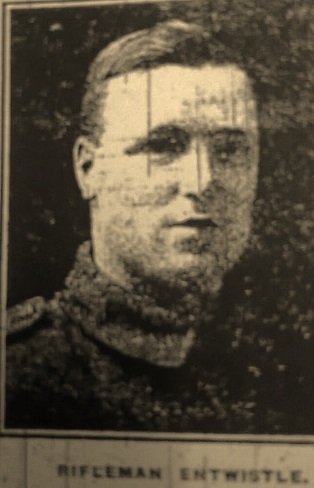
King's Royal Rifle Corps., R/11390
Joseph Entwistle, born 1890, was the son of Joseph and Betsy Entwistle of 13 George Street West, Darwen. He was employed as a weaver at George Street Mill, and attended Duckworth Street Chapel.
Joseph Entwistle enlisted into the 7th King’s Royal Rifle Corps in February 1915, following in the footsteps of his brother Albert, who was serving with the East Lancashire Regiment in Gallipoli. Tragically, Albert was killed in September 1915.
Joseph was sent to France at the beginning on 1916, just in time to prepare for the Somme Offensive in July.On 18th August 1916, the Battalion was engaged in the Battle of Delville Wood when Joseph was killed. He was shot through the heart.
His body was never found, but he is remembered on the Thiepval Memorial to the Missing on the Somme Pier and Face 13 A 13 B.
Private Walter Entwistle
The Loyal North Lancashire Regiment, 31800
Private Walter Entwistle of 1st Battalion the Loyal North Lancashire Regiment (Number 31800) was killed on 15th November 1916.
He was the son of John Edwin Entwistle and Hannah (nee Bury). On the 1911 Census the family are recorded as living at 83 Sudellside Street, Darwen and Walter’s employment is shown as an “Apprentice Clogger”.
Walter’s enlistment papers are not available but the medal rolls show his Battalion and service number.
The 1st Division, of which 1st Battalion Loyal North Lancashire Regiment was a part, had been involved in the battles of the Somme from the beginning of July, namely the Battle of Albert, the Battle of Bazentin, the Battles of Pozieres, Flers-Courcelette and Morval. They were still in the area of Mametz Wood at the end of 1916
.Walter Entwistle has no known grave and is remembered on the Thiepval Memorial 11 A.His parents would receive his British War and Victory Medals.
Private Joseph Henry Eva
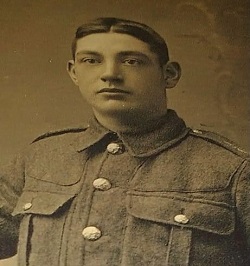
1st East Lancashire Regiment, 18998
Joseph was born on 10th February 1896 at 73 Bury Street, Darwen, the son of Thomas James Eva and Rachel Ann (nee Green). When Joseph was nine years old his mother died and his father remarried in 1909 to Elizabeth Ann Green. The family later lived in Finch Street, Darwen and Joseph attended Blackburn Road School and worshiped at Blackburn Road Wesleyan Church. When he enlisted in 1915, he was working as a weaver at Messrs. Ward’s in Moss Bridge Mill.
He sailed with his Battalion and arrived in France on 9th June 1915 and saw action on the Western Front. By 5th May 1916, the Battalion was at Bernaville; here training and musketry commenced. They marched to Carmont 15th May, on the edge of French manoeuvre ground, near Yvrench. At Yvrench, they underwent further training ready for “the Big Push.” Six days later the Battalion marched to Berrnaville and on the following day to Bertrancourt and then to Beaussart. They were billet about four miles west of Beaumont Hamel where further training took place.
On the morning of 1st July the bombardment of the enemy trenches became intense, but the German machine-guns continued to fire from Beaument Hamel throughout the bombardment. The 1st East Lancashire Regiment, as part of the 4th Division, attacked between Serre and Beaumont Hamel and captured the Quadrilateral ("Heidenkopf") but could not exploit the success, because of the repulse by the Germans of the attacks by the flanking divisions.
Cross-fire from Beaumont Hamel and Serre and determined counter-attacks held up the Division. No other gains were made and German counter-attacks recovered the position early on 2nd July, by which time the Division had suffered 4,700 casualties.
Private Joseph Henry Eva was killed on 1st July 1916 at Beaument Hamel on the Somme. his mother received a letter from a Sergeant saying that her son was reported missing.
It would be another 12 months before Joseph’s family received official news of Joseph’s death.
Joseph Henry Eva has no known grave and is remembered on the Thiepval Memorial to the Missing on the Somme Pier and Face 6 C.
Letter F
Flannery, Thomas | Fowler, Ernest | Frisby, Edgar
Private Thomas Flannery
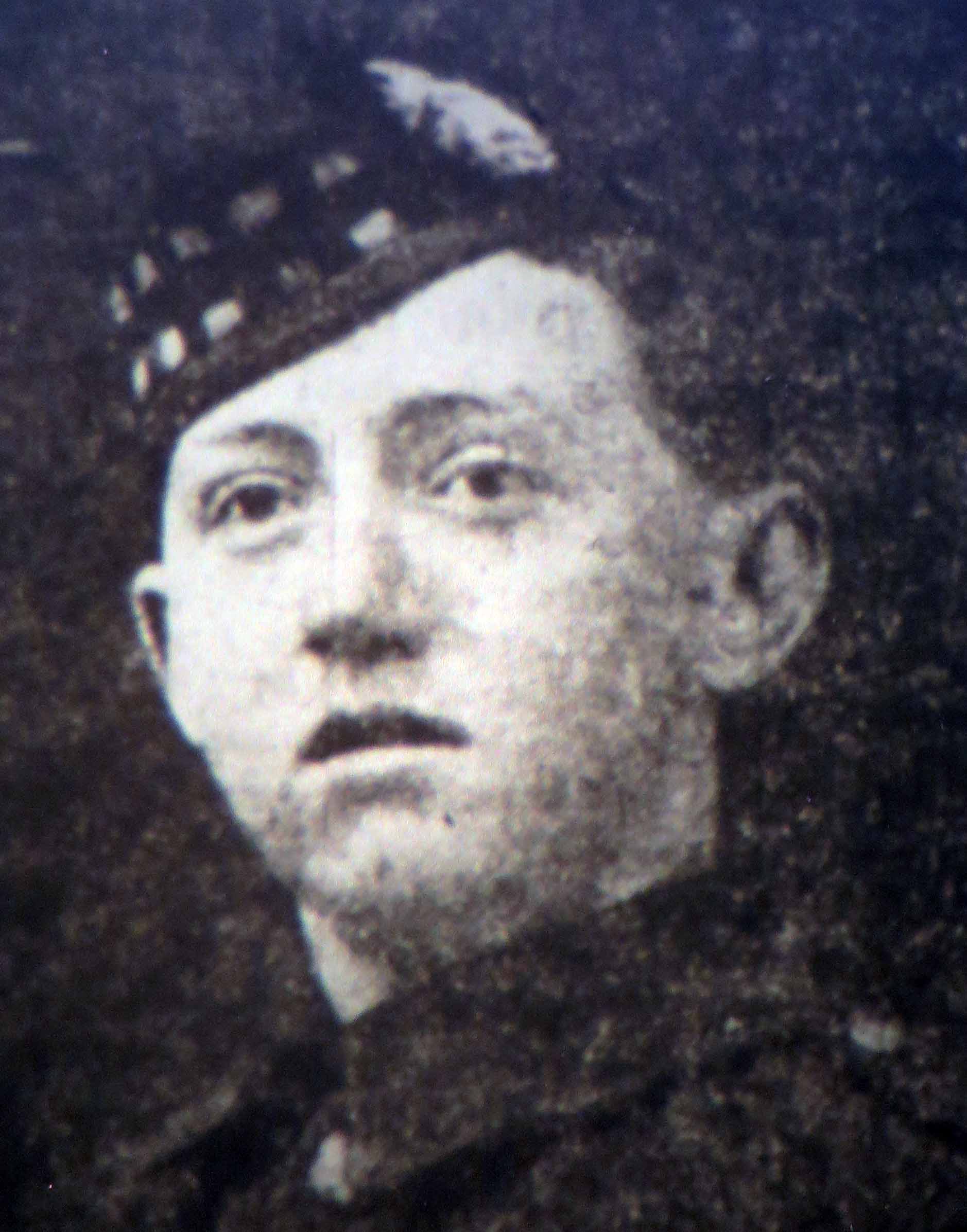
King's Own Scottish Borderers, 14025
Private Thomas Flannery of 7th/8th Battalion the King’s Own Scottish Borderers (Number 14025) was killed on 8th August 1916.He was the son of John and Ellen Flannery, one of six siblings, who resided at 42 Cavendish Street on the 1911 Census. A former pupil of St. Edward’s School, Thomas Flannery was a weaver at Hindle Street Mill prior to enlisting in the army.
The War Diary for the 7th/8th Battalion shows:
8th August in trenches near Franvillers:
“Battn Hd.Qrs. moved to Dugout built by our troops in WELCH ALLEY – ‘D’ Coy. Hd Qrs going to dugout were evacuated. Orders were received to hand over our left of line to 12th H.L.I. (three platoons), ‘A’ Coy moving back to O.G.2. Relief was completed by 3.30pm, our left then being from WELCH ALLEY inclusive.
At 8.10am a party of 12 German, preceded by a Red Cross flag, was seen leaving the extreme left house in MARTINPUICH moving across the open to their front line. This was reported by Artillery to be a daily occurrence so Lewis Guns were turned on.
Only 9 Germans regained the cover of the house. Remainder of the day was quiet, little movement being seen. Casualties in the evening mounted up, a work party of ours on LANCS SAP on extreme right of our line suffering heavily from shell fire.2nd Lt. J. B. WALMSLEY, a gallant young Officer, was taking a patrol out from that area at 11pm, when a sniper’s bullet killed him. Casualties: 3 killed in action, 30 O.R. wounded in action.
Right company – work party – in LANCS SAP were working in conjunction with 6th Berkshires, who attempted to take the corner of INTERMEDIATE TRENCH running up to road in S.2.C. The extension of LANCS TR. would have been joined up to this line if attack had been successful.
At 12.15am the attack was reported a failure and our work party withdrawn.”A colleague of Private Flannery wrote to his parents to say he had been with him prior to his death, and that he had buried him at the time.
This grave must have subsequently been lost during the extensive fighting in the area, as Thomas is remembered on the Thiepval Memorial Pier and Face 4 A 4 D, along with the many thousands of other soldiers with no known grave.His parents would receive his 1914-15 Star together with the British War and Victory Medals.