
 Loading more
Preserving with Chutneys and Chats
A jar of chutney can hold much more than fruit, vegetables and spices. For communities in Blackburn, recipes can carry memories of gardens, grandparents, migration, celebrations, family kitchens and the flavours of home.
A community food-heritage project by Arts 2 Heal
Preserving with Chutneys and Chats brought people from Blackburn’s diverse communities together to explore the memories, traditions and stories preserved within something seemingly simple: a jar of chutney.
Delivered by Arts 2 Heal with support from The National Lottery Heritage Fund, the project explored how recipes travel through generations, families and countries, and how food can help us remember the people and places that have shaped our lives.
Food, memory and Blackburn
Blackburn’s story has been shaped by generations of people, cultures and migration. Food is an important part of that history. Recipes are carried from one home to another, adapted to new ingredients and passed between relatives, friends and neighbours.
During the project, local people were invited to make chutneys and share the memories connected with them. Some recipes recalled parents or grandparents; others were linked to weddings, family gatherings, childhood gardens, visits overseas or the everyday meals people remembered from home.
Some recipes had been handed down. Others had changed over time or were rediscovered through conversation. Together, they created a small but valuable record of Blackburn’s living food heritage.
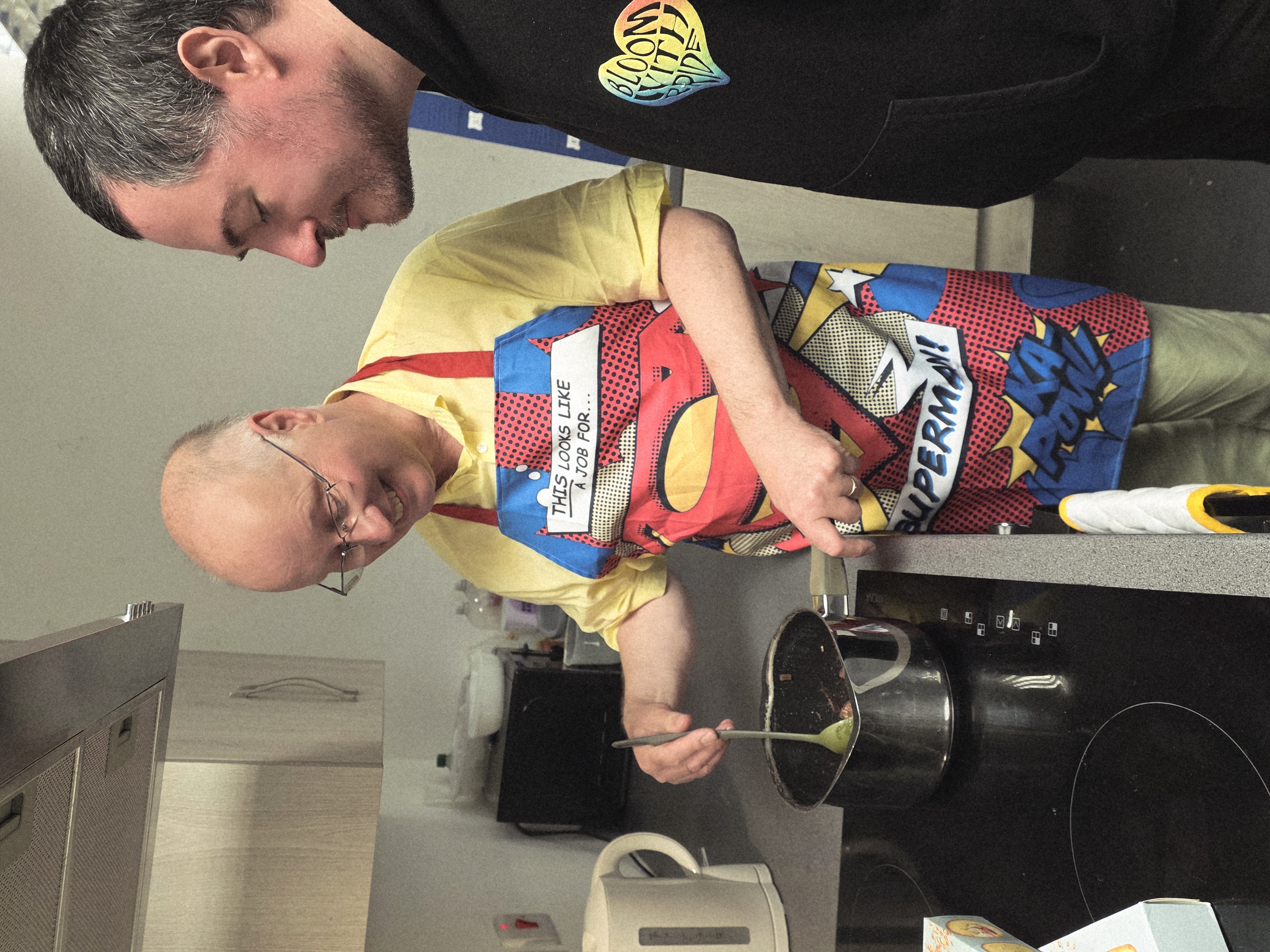
David and Nicholas making pear chutney
Twelve chutneys, many journeys
The project created and explored chutneys, each opening a different conversation about food, place and memory:
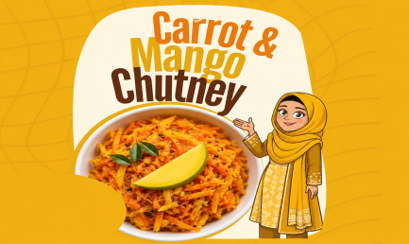
- Carrot & Mango
- Beetroot & Chilli
- Apple & Mint
- Tamarind & Date
- Mango & Lime
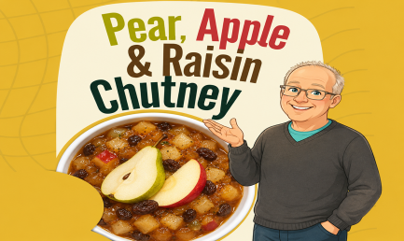
- Pear, Apple & Raisin
- Coconut
- Pineapple & Ginger
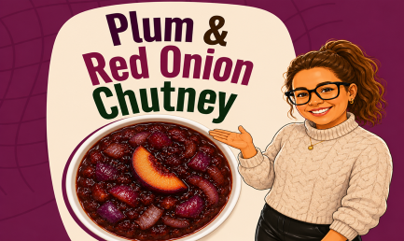
- Plum & Red Onion
- Roasted Cauliflower & Red Pepper
- Mint, Yoghurt & Cucumber
- Roasted Aubergine & Garlic
The stories connected Blackburn with a wide range of family and cultural traditions, including those associated with Pakistan, India, Iran, Syria, Eastern Europe, Poland and Kenya, alongside English gardens, allotments and family kitchens.
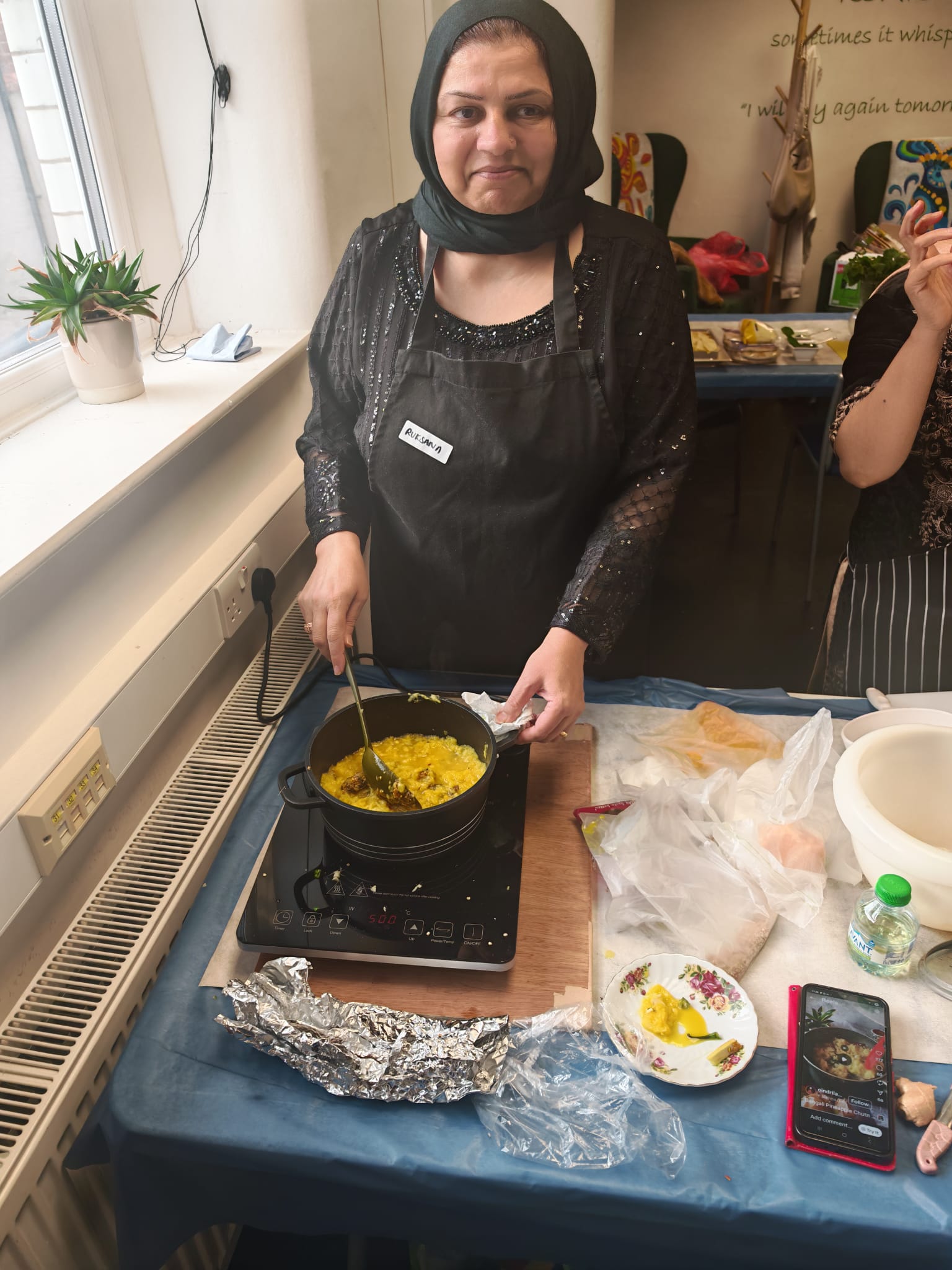
Ruksana making a pineapple chutney
Recipes as memories
An Apple & Mint chutney recalled a grandmother’s apple tree and the family tradition of making apple sauce, before mint was added to create a flavour that became a favourite with roast lamb.
Carrot & Mango reflected the crisp, fresh chutneys often prepared for South Asian weddings and large family gatherings: quick to make, easy to share and adaptable when families needed to use affordable ingredients.
Mint, Yoghurt & Cucumber evoked an everyday accompaniment to bhajis, samosas and curries, while Mango & Lime, Tamarind & Date, Pineapple & Ginger and Roasted Aubergine & Garlic opened conversations about travel, migration, family visits and flavours remembered across generations.
Other recipes celebrated what was available close to home: apples, pears, plums, beetroot and vegetables from gardens or allotments. These stories also recalled older habits of preserving seasonal produce, sharing surplus and avoiding waste.
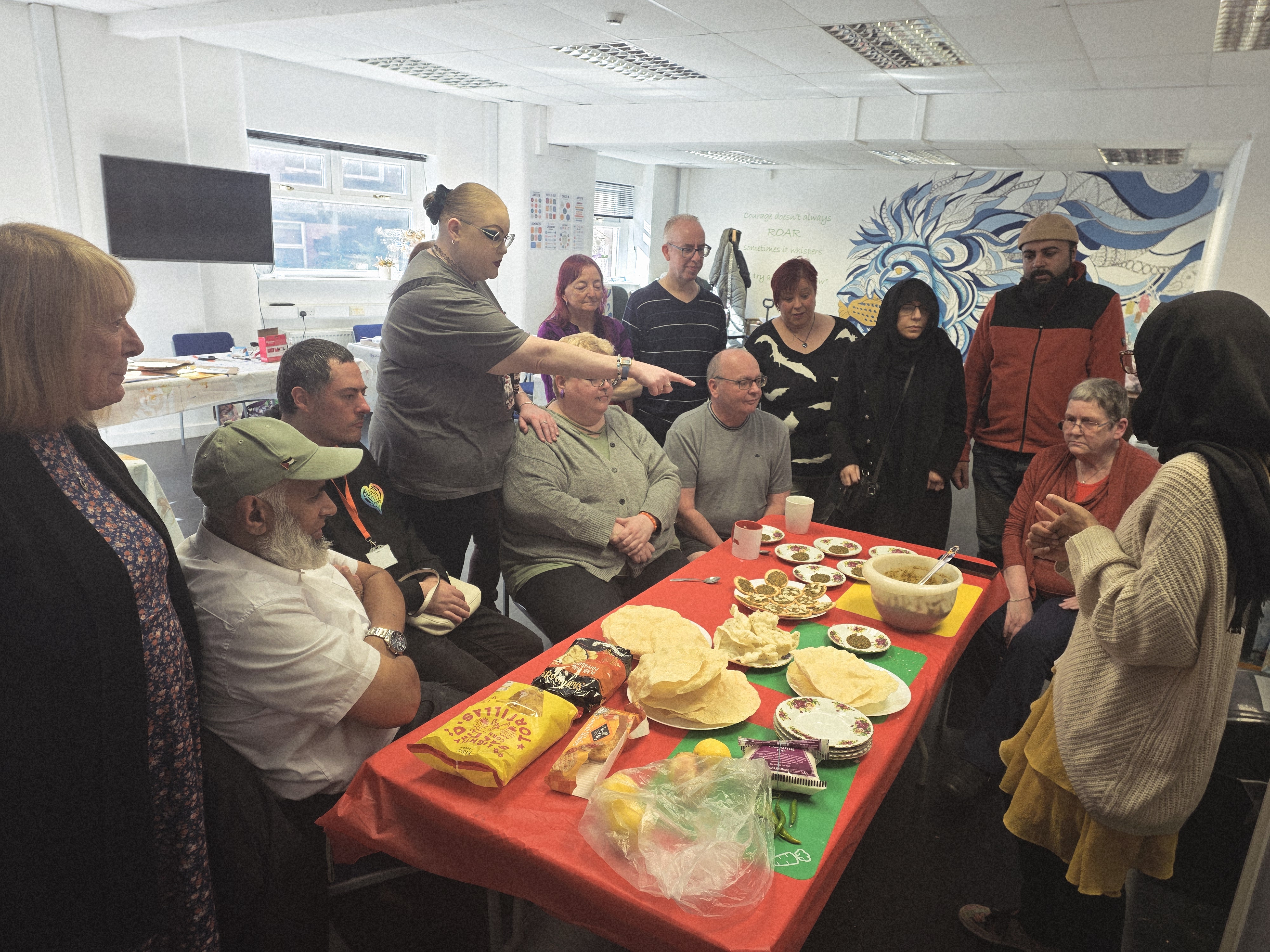
Tasneem from the Herbal Path making tomato & coriander chutney
Making, talking and sharing
The project was deliberately practical. Community members took part in regular chutney-making workshops, demonstrations and conversations. Ingredients were chopped, cooked, tasted and adapted together while people talked about where recipes came from and why particular flavours mattered to them.
Guest cooks and community members shared knowledge, and the activity created an informal space where stories emerged naturally. The project culminated in community tasting and celebration activities, with people sampling the chutneys and voting for their favourites.
The competition added fun, but the lasting value was in what happened around the table: people exchanged memories, compared traditions, learned from one another and recognised similarities between food customs that at first appeared very different.
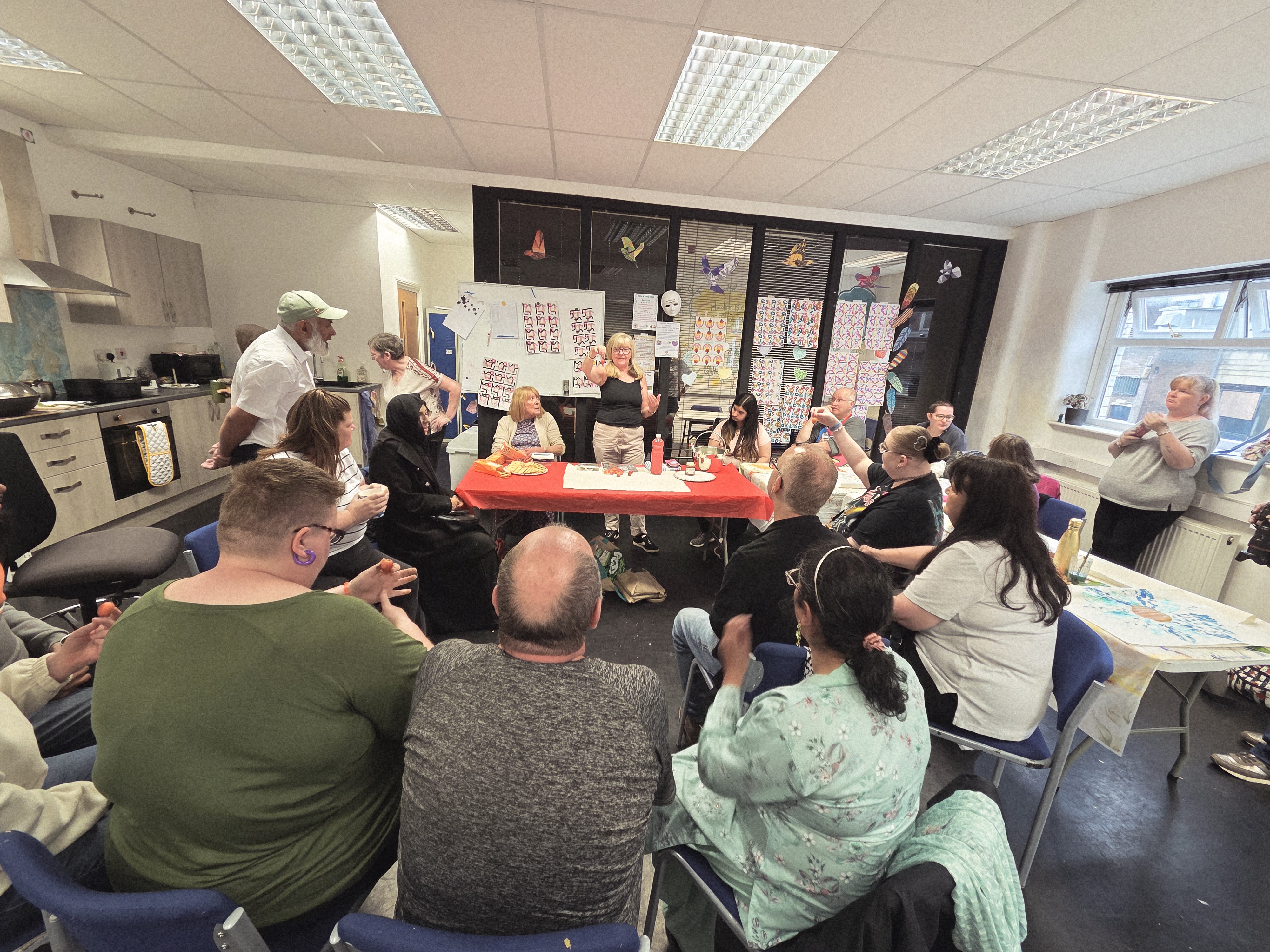 Apple Jelly workshop by Janet
Recording local voices
Alongside the practical workshops, the project recorded oral histories connected with the recipes. Twelve stories were brought together as an audio collection so that participants’ own voices could form part of the heritage record.
These recordings capture personal memories that might never appear in a conventional historical archive. Together with the recipes and photographs, they provide a snapshot of food, family and community life in Blackburn in the mid-2020s.
Preserving more than food
As the project developed, the word ‘preserving’ came to mean more than preserving fruit and vegetables. The project was also preserving recipes, memories, voices and community history.
It showed that heritage is not found only in museums, historic buildings or official records. It also lives in kitchens, gardens, handwritten recipes, shopping habits, family gatherings, celebrations and the stories people tell one another.
By bringing these memories together, Preserving with Chutneys and Chats created a record of ordinary experiences that are part of Blackburn’s wider story.
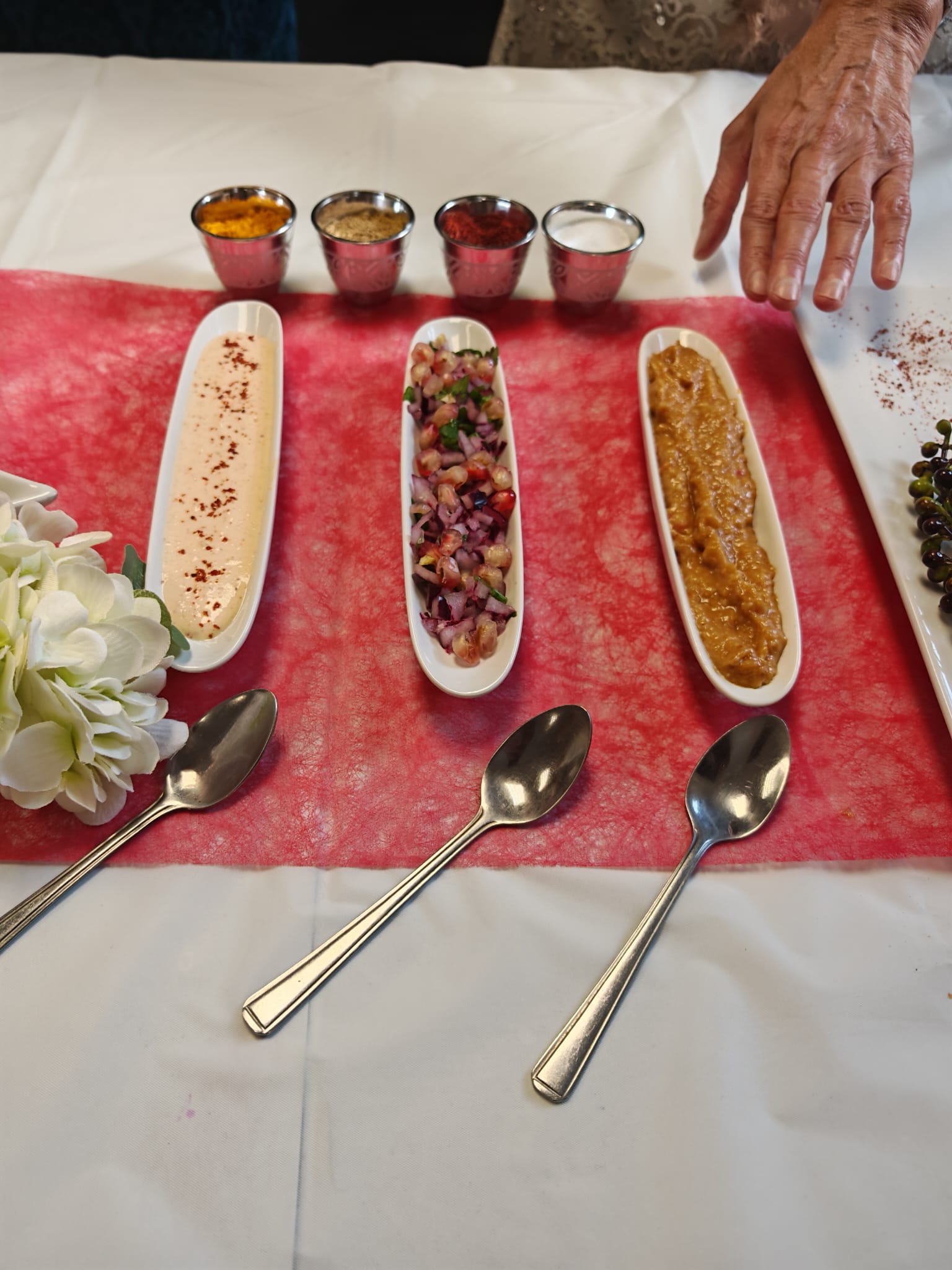
A selection of tamarind based chutneys
A living legacy
The project has encouraged continued interest in chutney making and in recording local food heritage. Community members have remained interested in sharing recipes and skills, and volunteer-led chutney activity has continued beyond the funded programme.
The recipe collection and project material are being offered to Blackburn with Darwen Library as a community archive, allowing future generations to discover not only how these chutneys were made, but why they mattered to the people who shared them.
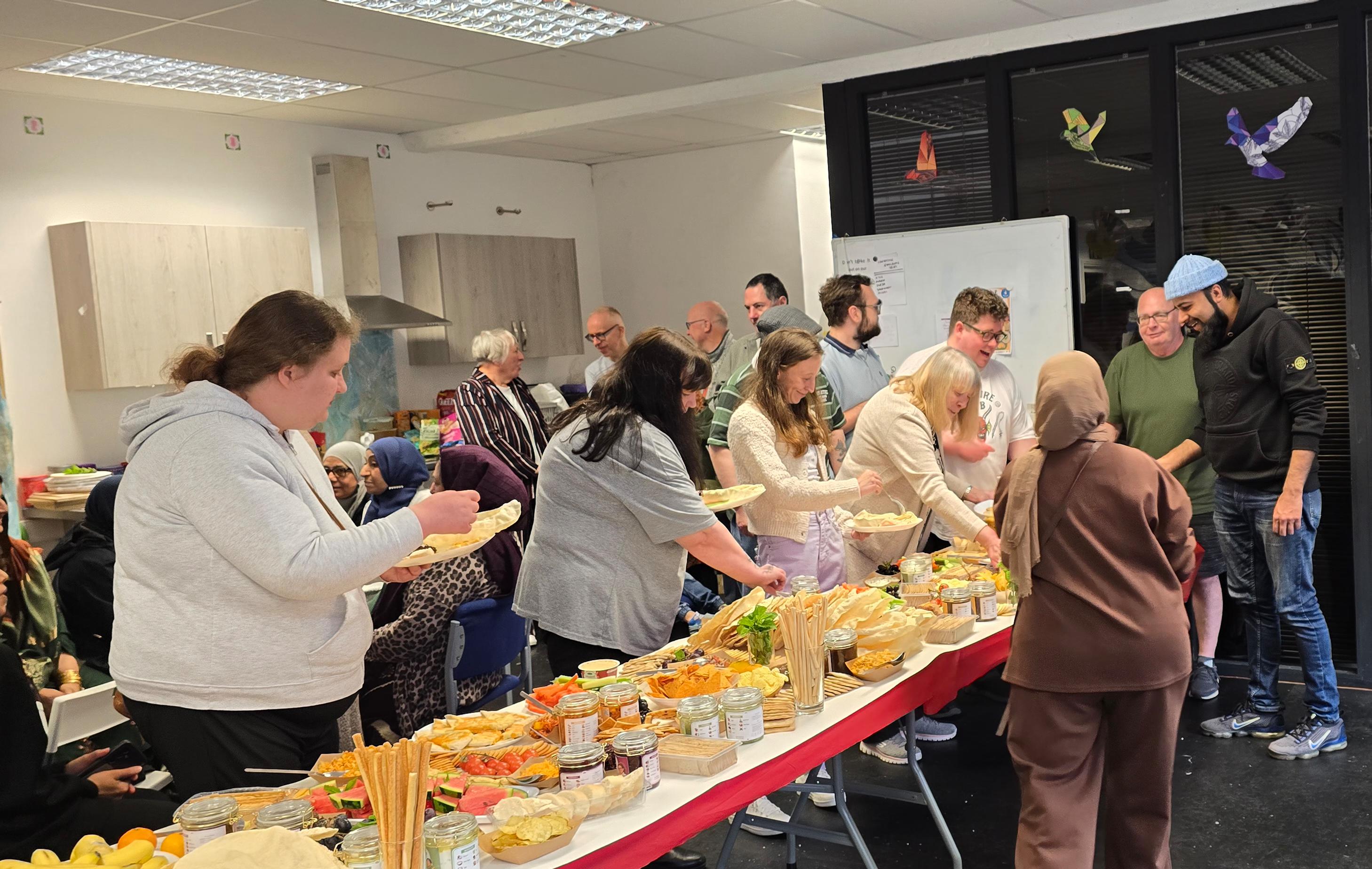
Community open day with a chutney grazing table
Acknowledgement
Preserving with Chutneys and Chats was delivered by Arts 2 Heal with support from The National Lottery Heritage Fund.
Published August 2026