
 Loading more
Church Street Blackburn’s Premier Street
Church Street Blackburn’s Premier Street
By Mike Sumner
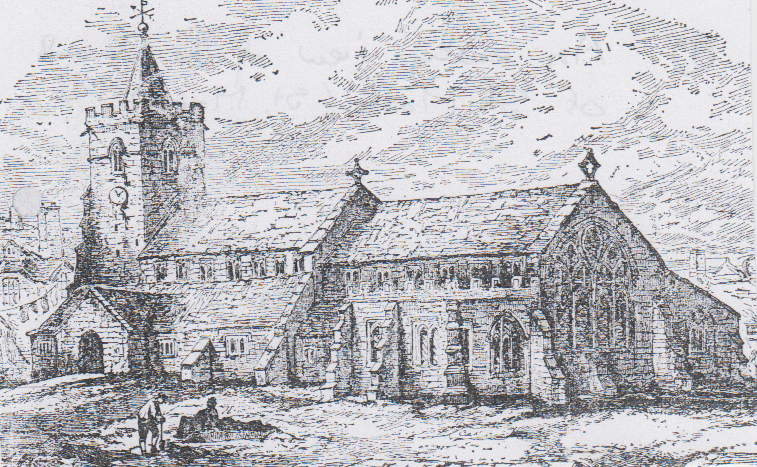
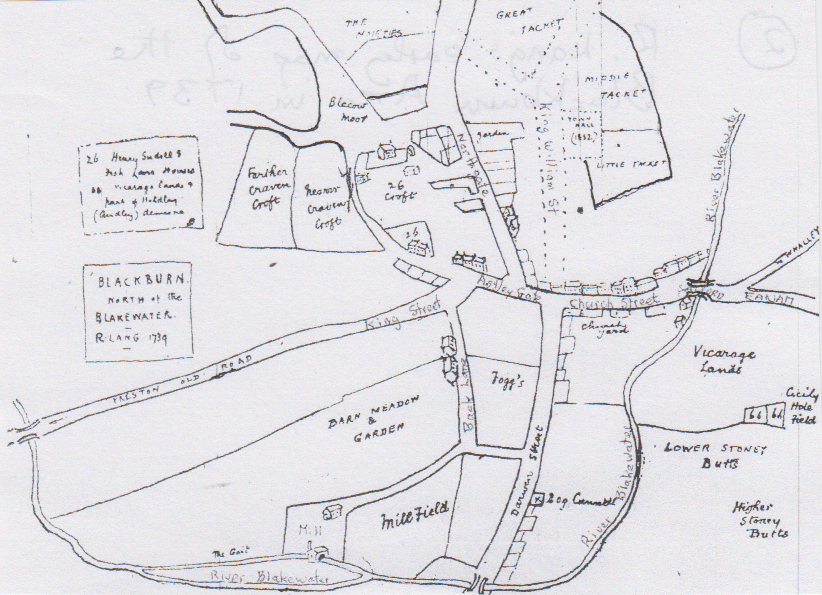
R. Lang’s early map of the Blackburn Area in 1739
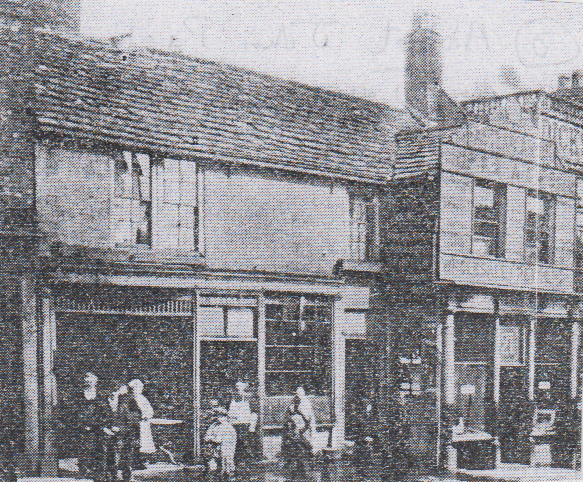
Abbot John Paslew's Town House in 1870
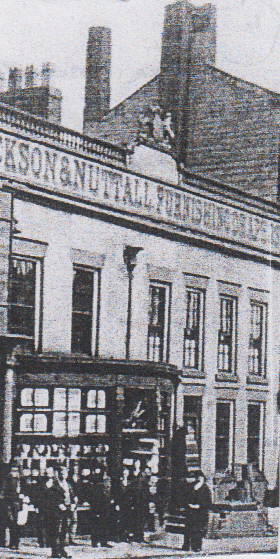
The Manor House of the Feilden Family
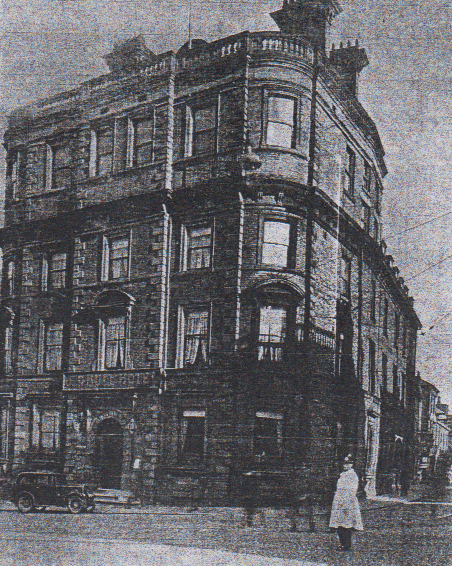
The Newer version of the Old Bull Hotel
*Please note that details of the Old Market Place and further details on the Old Bull Hotel can also be found in my article on on Cotton Town.
As recently as 1833, there was a public whipping in the Old Market place when a local weaver was punished for stealing weft from his employer which was a recurrent problem. As a result, the local magistrates, most of whom, were cotton manufacturers with a vested interest, decided on this drastic measure as a warning. The man was tied to the back of a four-wheeled chaise and an official from Preston Gaol administered the punishment.
Nine stone buildings known as the Waterloo Buildings or "Pavilions"were sited on the upper church side of Church Street. The Waterloo buildings were built in 1835 of stone from Catlow Quarry, near Burnley, and were made up of five double and four single shops, leaving an opening through which the parish church could be seen.
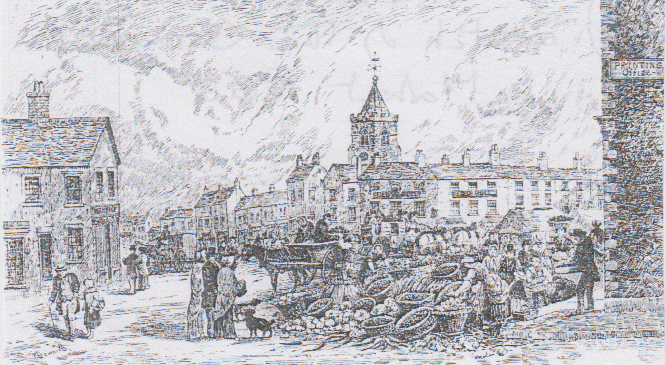
Sketch of the original Market Place
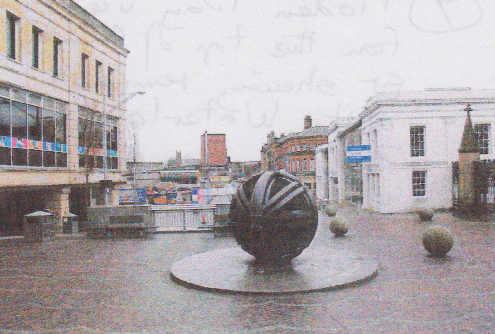
Modern day view from the top of Church street showing remnants of the
Waterloo Buildings painted white and modernized on the right of the picture
Another ancient, three-storied house, on the opposite side of Church Street to the Waterloo Buildings was the town house of the Sudell family. The brick frontage of the original Jacobean house shown in the illustration below is of considerable age. The upper windows with their slanted brickwork in the window-heads is typical of houses built in the 1700 to 1750 period, probably 1725-1730. The ground-floor had been altered when it was later transformed into shops. Mr. John Sudell, lived there with his sons, one of whom became joint Lord of Blackburn with Henry Feilden; he did not keep a shop as he was a Chapman who received spun cotton which he had put out to local hand-loom weavers who produced fabric for him to sell. In its time, the street-floor would have been offices, a warehouse for textile goods and living rooms. It is possible that the original structure would have been of stone, gabled towards the street and that John Sudell sometime after buying the property put in the brick front of the house as shown in the illustration below. The building was later demolished to make way for more modern Victorian Buildings/shops.
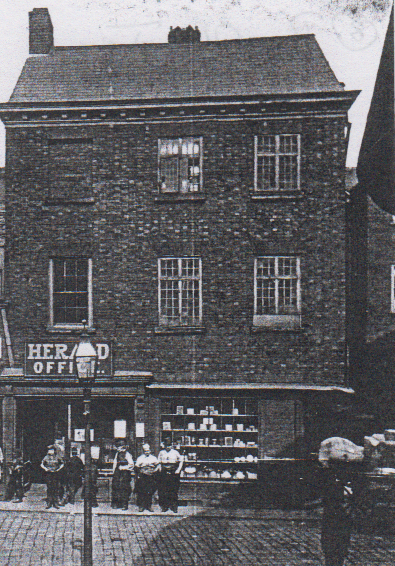
The Old Town House of the Sudell Family
Tenants Living in Property in Church Street in 1824
- William Earl – Tailor.
- Yates – Brazier.
- William Houlker – Cabinet Maker.
- James Houlker – Earthenware, Glass and China Dealer.
- Margaret Addison – Confectioner.
- Robert Brooks – Draper and Hatter.
- Alice Watson – Draper and Glover.
- William Hargreaves – Fruiterer and Fishmonger.
- John Farnworth – Hairdresser and Register Office.
- WIilliam Stackhouse – Silk Mercer.
- George and Thomas Brennand – Drapers and Isabella Brennand – Milliner.
- Thomas Rogerson – Printer, Bookseller and Publisher – Manchester Almanack.
- Elizabeth Cross – Post Office, Draper and Glover.
- Taylor Simpson – Earthenware, Glass and China Dealer.
- William Clarke – Bookseller and Binder.
- John Lewis – Grocer and Tea Dealer.
- John Jackson - Fruiterer.
- Jonathan Pinckner – Butcher.
- Thomas Edge – Painter and Gilder.
- Henry Sharples – Dyer.
- Benjamin Hall – Tailor.
- Robert Latham – Grocer and Tea Dealer.
- William and Thomas Hart – Rope Makers.
- Joseph Duxbury – Landlord of the Golden Lion Hotel.
- J.W. Astley – Bookseller and Binder.
- John Martin – Staymaker.
- John McKean – Brazier.
- Susanna Brown – Millner.
- John Aspinall – Gentleman and William Aspinall – Attorney.
- Thomas Dugdale – Surgeon.
- Henry Stanley & Co. – Wine and Spirit Merchants.
- William Greenwood – Landlord of White Bull Hotel and Martha Hudson – Butcher.
- Elizabeth Melling – Milliner.
- Thomas Melling – Collector of Church Rates.
- James Ainsworth – Tailor.
- Elizabeth Ingram – Milliner.
- Ann Royle – Shopkeeper.
- George Jackson – Tallow Chandler.
- Joseph Makinson – Attorney.
- James Butcher – Ironmonger, Whitesmith and Bellhanger.
- Peter Atkin – Wholesale Draper and Alice Atkin – Silk Mercer.
- Thomas Pomfret – Brazier.
- James Haworth – Draper and Mary Wilson – Earthenware, Glass and China Dealer.
- Joseph Pomfret – Hozier.
- John Badger – Draper and Mary Badger – Milliner.
- A.J. Yeadon – Straw Hat Manufacturer.
- Robert Holgate Sagar – Watch and Clock Maker - B.F.Allen & Co –Corn/Flour Dealers.
- Robert Yearsley – Landlord Old Bull Hotel and Posting House.
- John Lewis – Grocer and Tea Dealer.
- Robert Coxon – Pork Butcher.
- Ellen Worthington – Draper and Tea Dealer. – Sarah Boardman – Haberdasher.
- H. Alderson & Co. – Tea Dealer.
- Thomas Duckworth – Landlord of Lower Sun Inn and Plumber and Glazier.
- Constant Whiteacre – Baby Linen repository.
- Mary Sharples – Landlord of Higher Sun Inn.
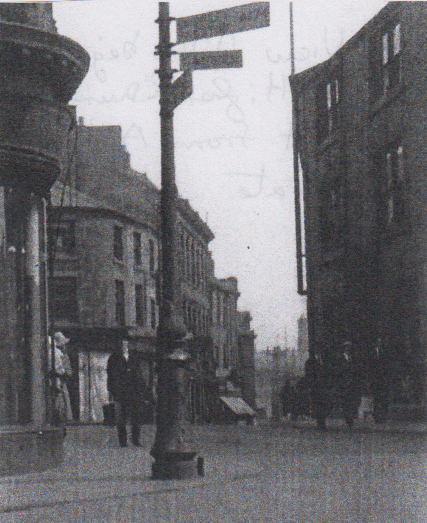
View of the beginning of Higher Church Street from Astley Gate
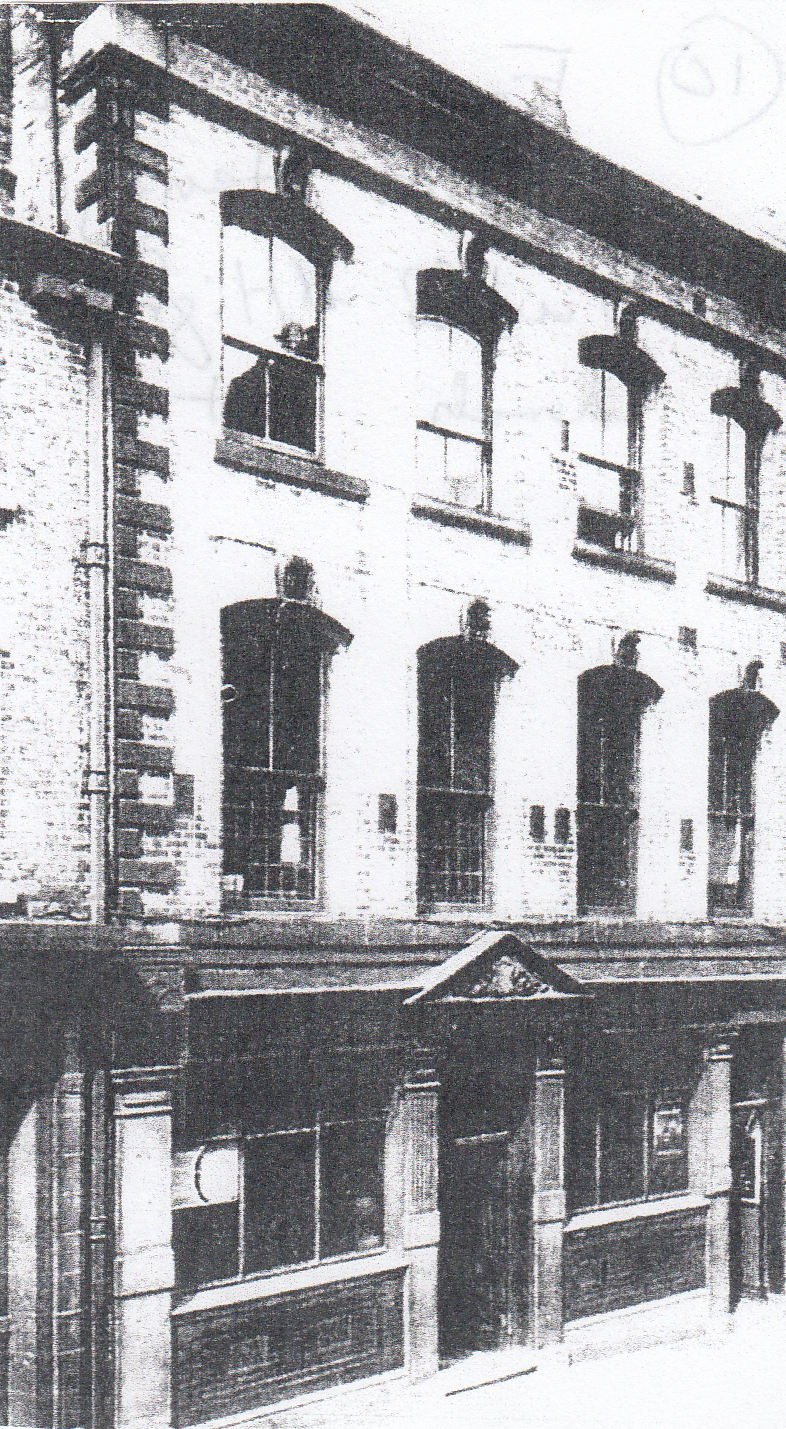
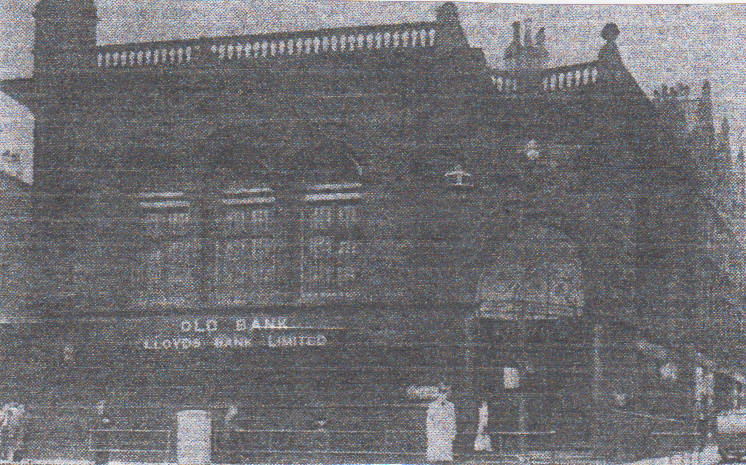
The Old Bank (Lloyds), 1 Darwen Street
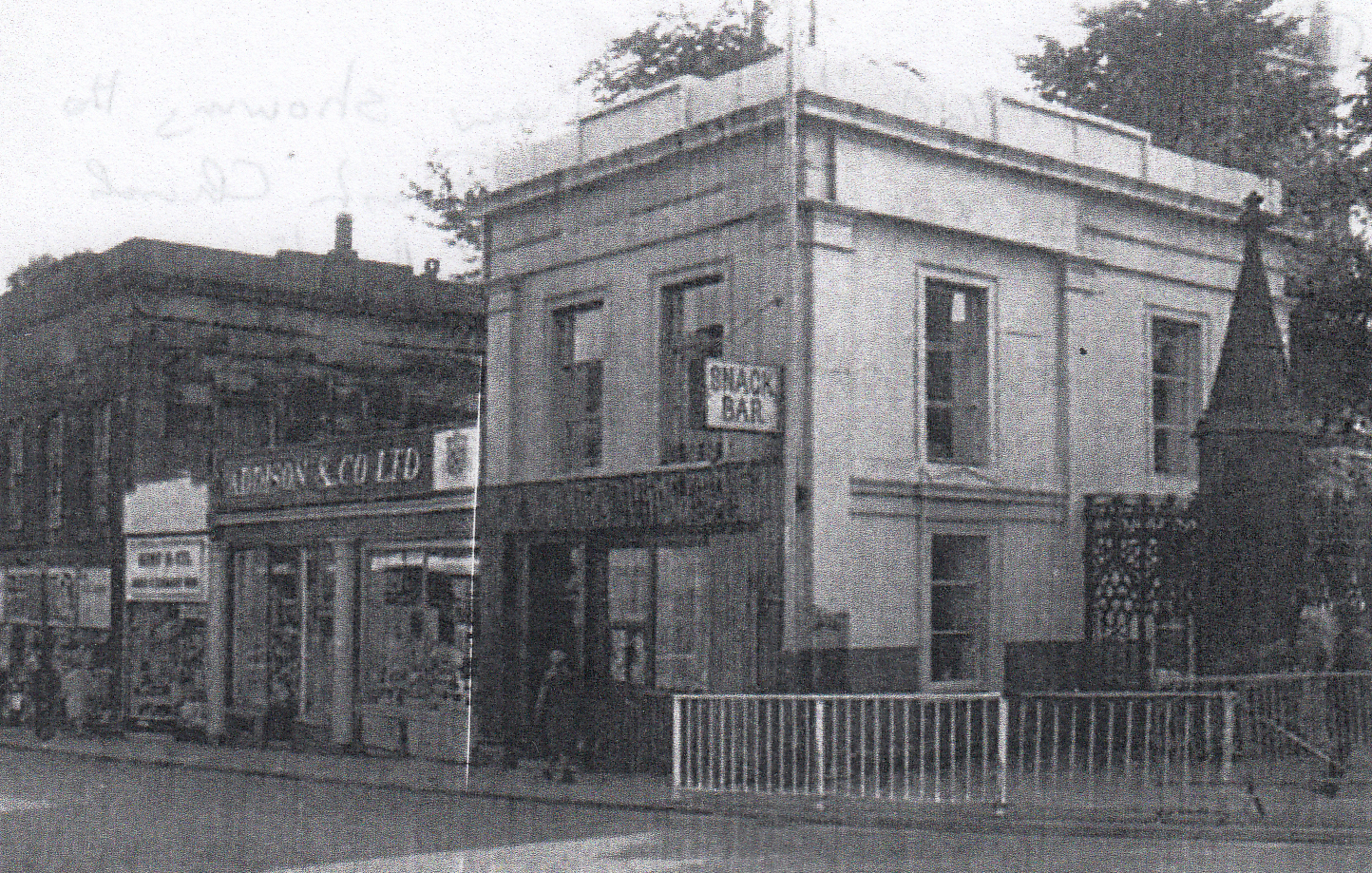
This 1960s/'70s view shows the top entrance to the parish church and below
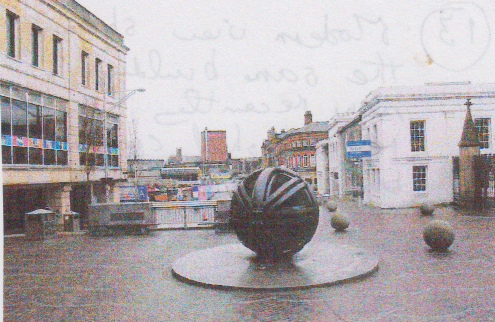
Modern View showing the same buildings now recently refurbished connected
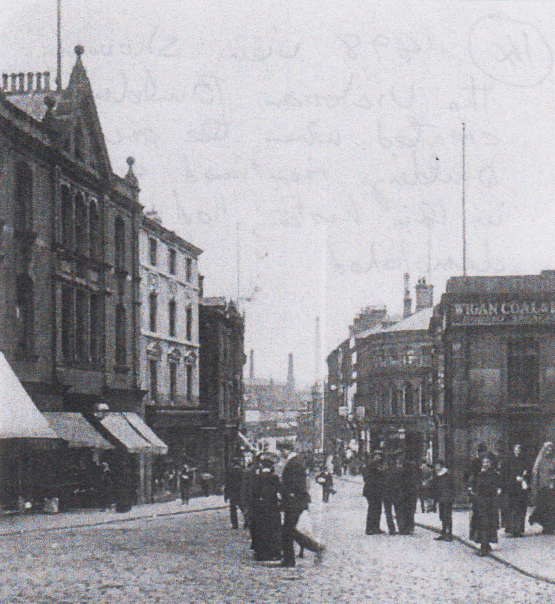
1898 View showing the Victorian Buildings created when the original buildings
mentioned earlier in this history had been demolished. Mostly three storey with high chimneys and more uniformity
with their awnings out over the shop's windows created at ground level.
Opposite is the Wigan Coal & Iron Company in the lowest of the Waterloo Buildings
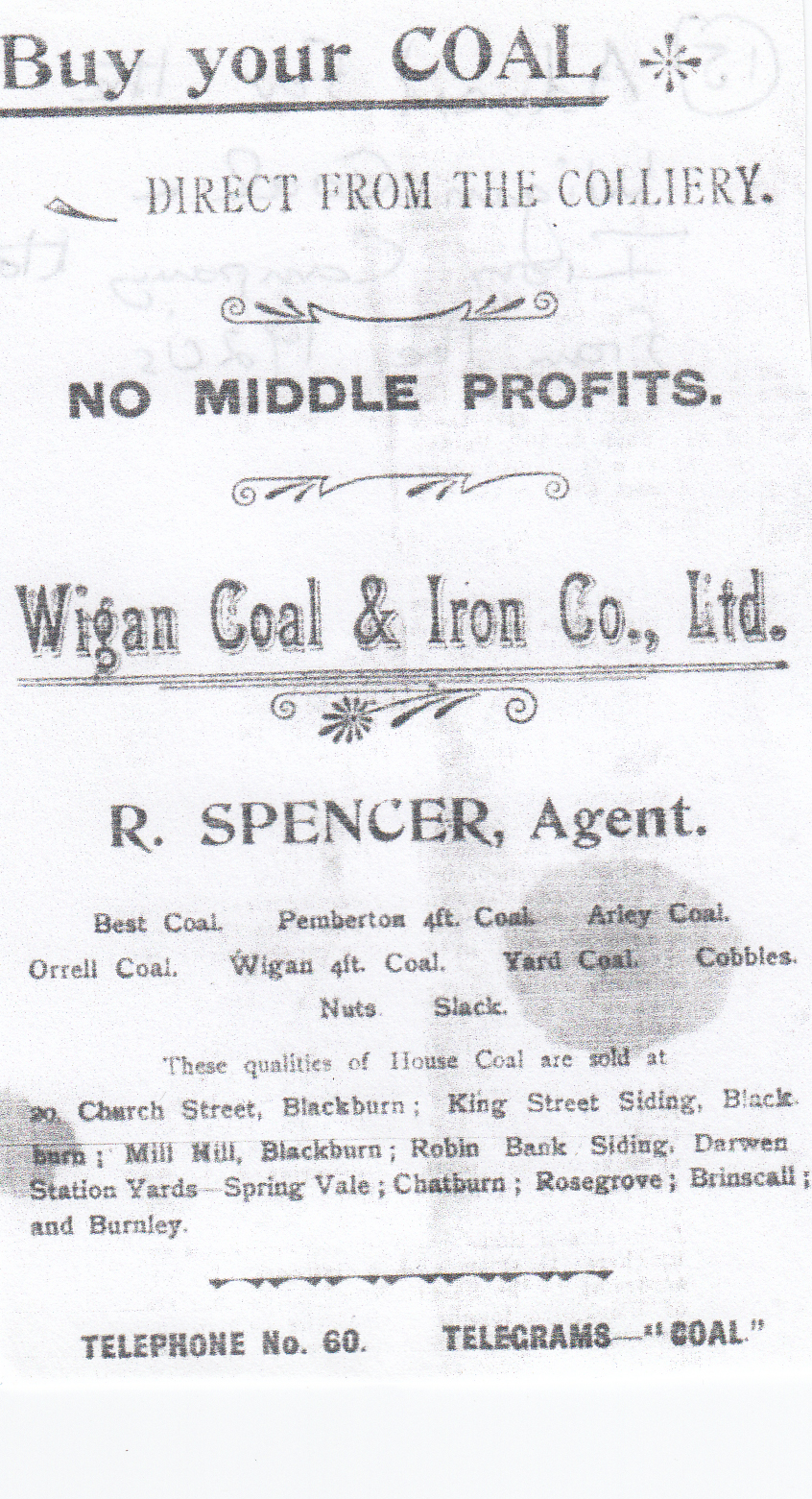
Advert for the Wigan Coal and Iron Company Ltd from the 1920s
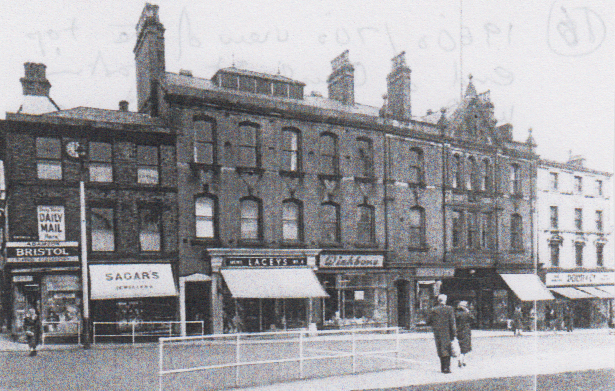
1960s/'70s view of the top end of Church Street starting with the newsagents on the corner of
King William Street and Church Street. Below this, is Sagar’s a long established Jewellery Business
followed by Lacey’s a clothing outfitters and originally a hatters,
then Wishbone and another business before Thwaites Arcade.
The Arcade was erected on the site of some ancient buildings already mentioned in the earlier part of this article. The Arcade linked Church Street with Lord Street and was built in 1883, after demolition of the older property on the site, and, opened in 1884. It was constructed by the Blackburn Brewer and the town's one-time Member of Parliament, Daniel Thwaites, and, had a date stone at either end of the arcade, together with the Thwaites coat-of-arms. The Arcade accommodated 22 shops, and, an additional two, flanking each entrance, where, there was ornate lamps, and, it had a high vaulted glass roof to give plenty of illumination. The shop fronts in the arcade had large glass windows that almost reached the floor. At either end of the arcade, above the entrances, were rooms extending in from the entrance, each of which, were at one time, rented out to two different political parties, namely, the Liberals and the Whigs. The Arcade was demolished in July 1971; 38 premises in the area bounded by Lord Street, Church Street, King William Street as well as the Victoria Street building, namely, Littlewoods Store, were toppled to make way for the third phase of Blackburn’s new shopping precinct. Some of the well- known shops in the Arcade included Worswick’s Jewellers, Timothy White’s Chemist, Porritt’s drapers and haberdashers and Hornby’s shoe shop.
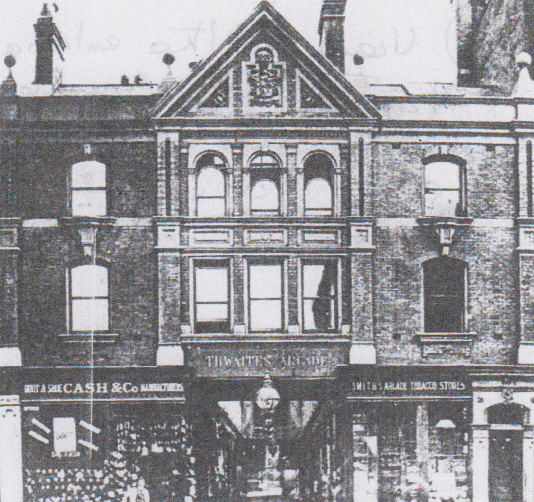
View of the entrance to Thwaites Arcade from Lord Street, early 1900s
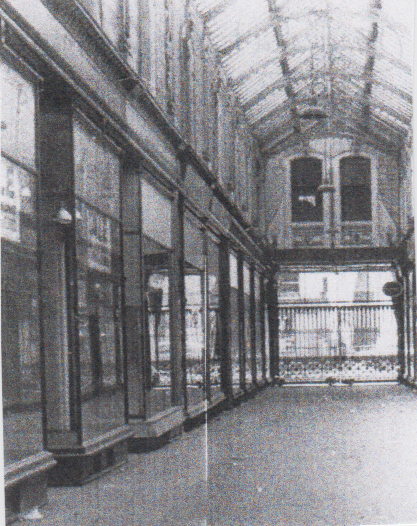
Internal view of Thwaites Arcade showing the shop fronts
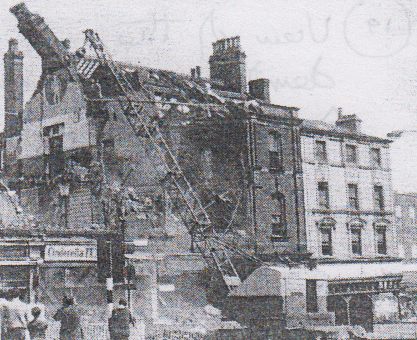
View of the demolition of Thwaites Arcade in July 1971
This much-used passage and remnant of Old Blackburn, leading from Church Street to Lord Street and the Market Square (formerly old Haworth Square) which led to the Tacketts (fields), was sited below Thwaites Arcade .
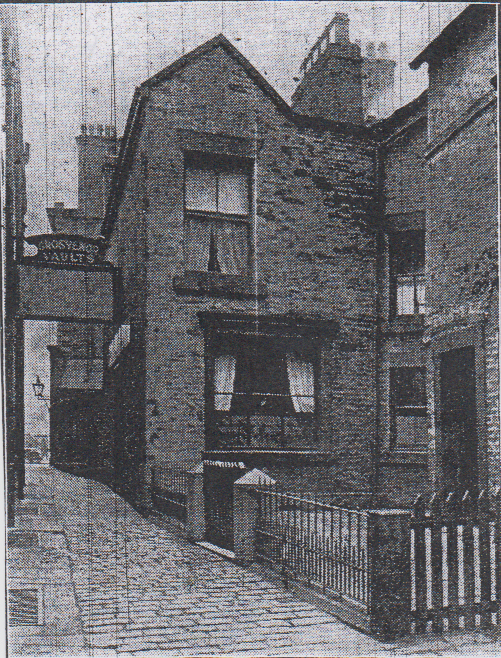
A 1920s view of Shorrock Fold showing a secluded residential house on the right of some considerable age and still occupied
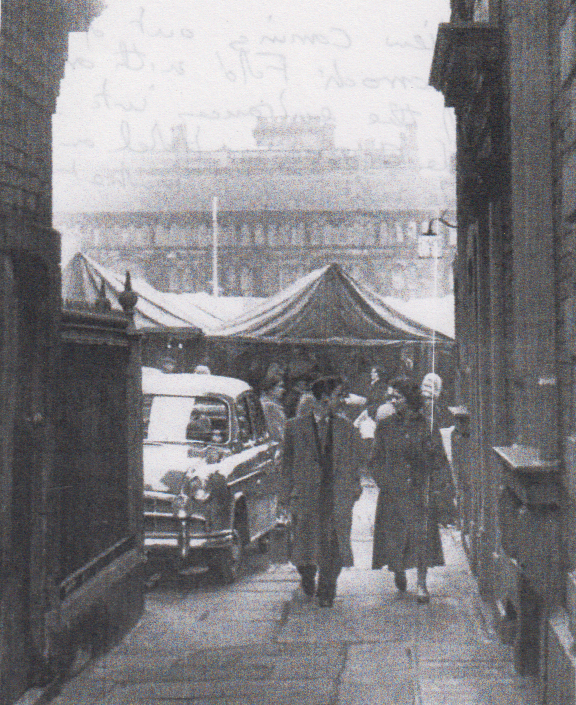
View coming out of Shorrock Fold with one of the entrances into the
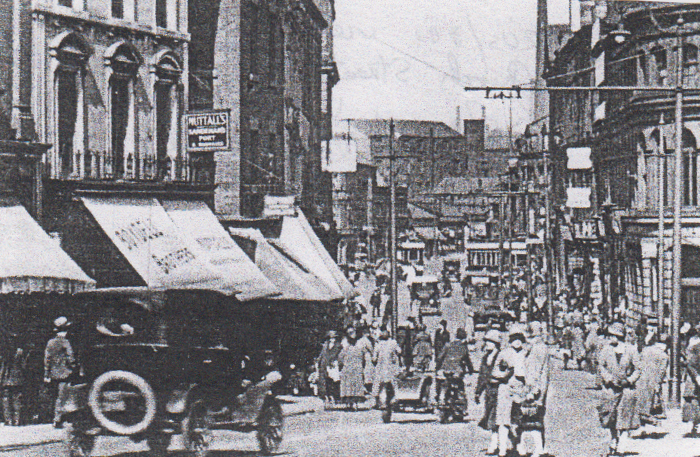
Lowest Waterloo Building in the 1970s;
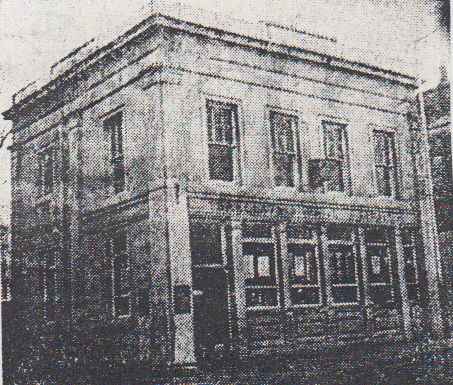
1976 view of the former Barclay Bank building in Church Street
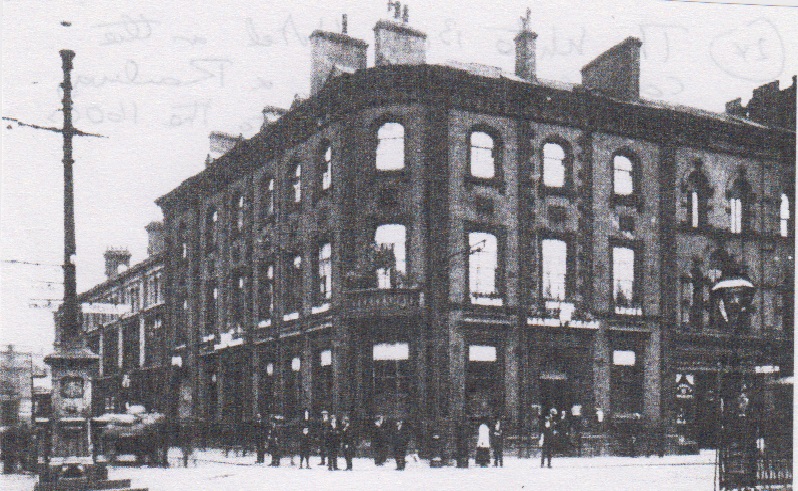
The White Bull Hotel on the corner of Church Street and Railway Road dates back to the 1600s
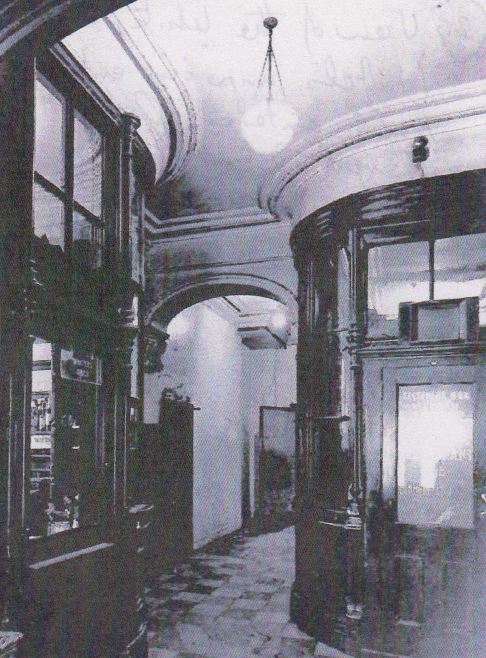
View of the White Bull Hotel’s imposing entrance hall entered from Church Street
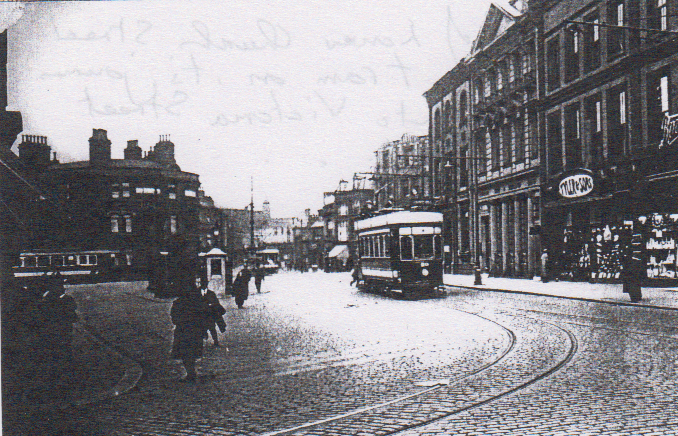
View of Lower Church Street with a tram on its journey round into Victoria Street
with a row of Victorian buildings starting with the White Bull, then the Midland Bank, Tyler and Sons
displaying their goods and Boots the chemists probably taken in the 1920s.
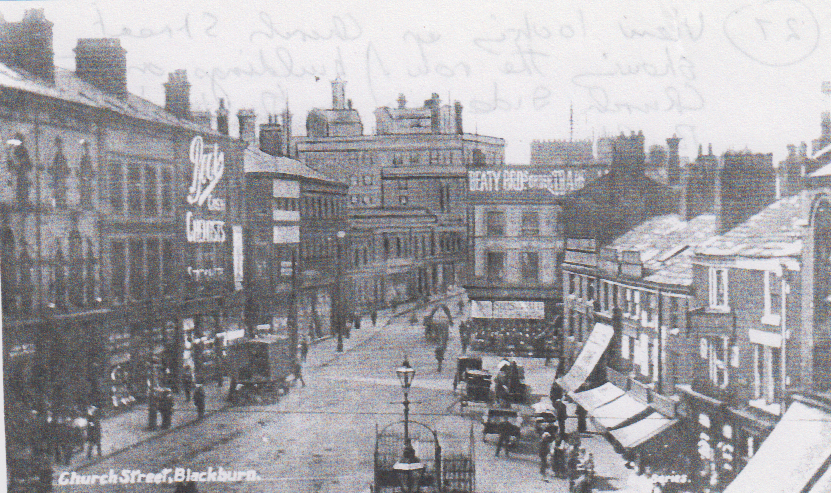
View looking up Church Street showing the row of buildings on the Church side up to the Waterloo Buildings
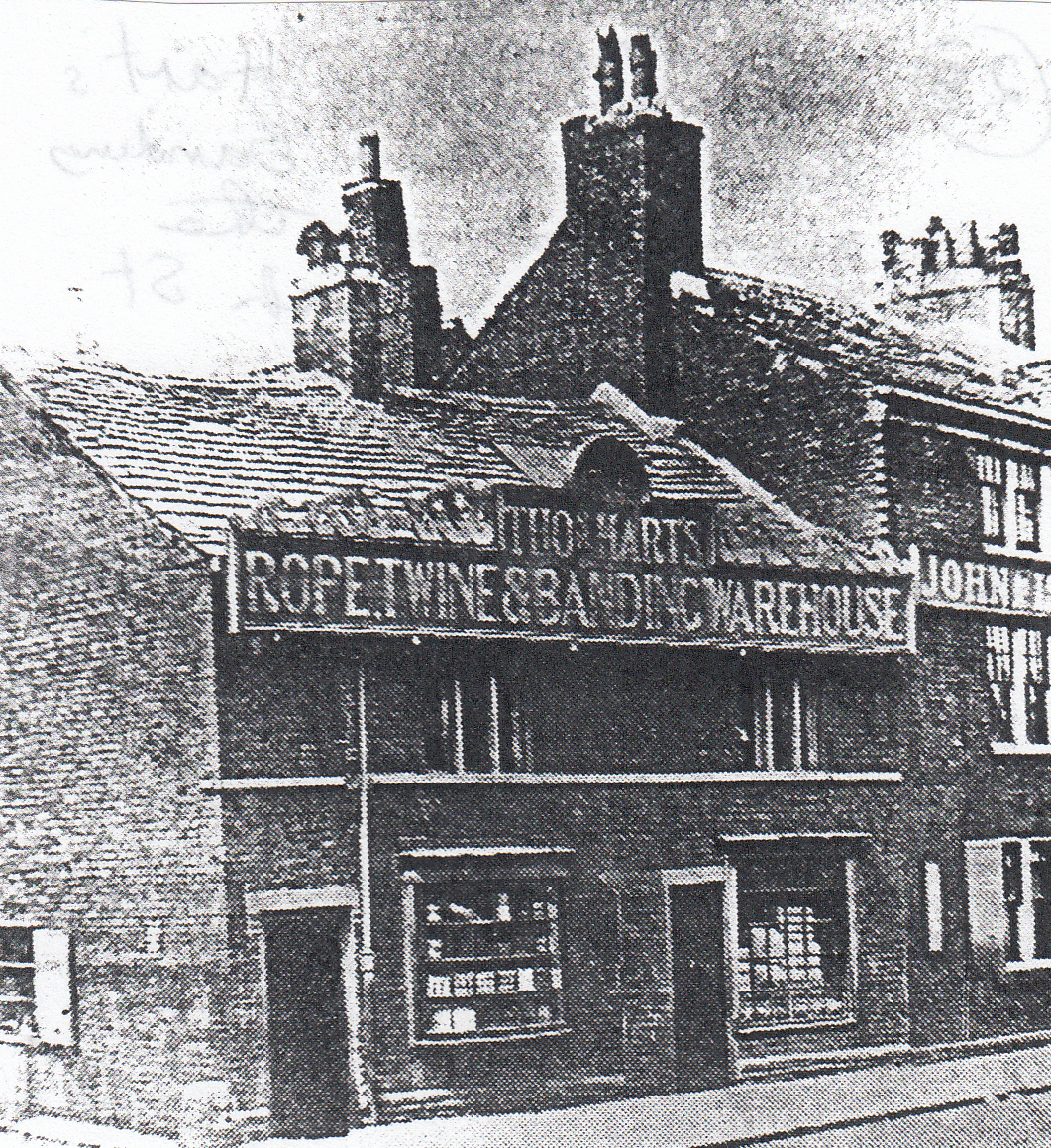
View of Thomas Hart’s Rope, Twine and Banding Warehouse on the corner of Church Street and Victoria Street
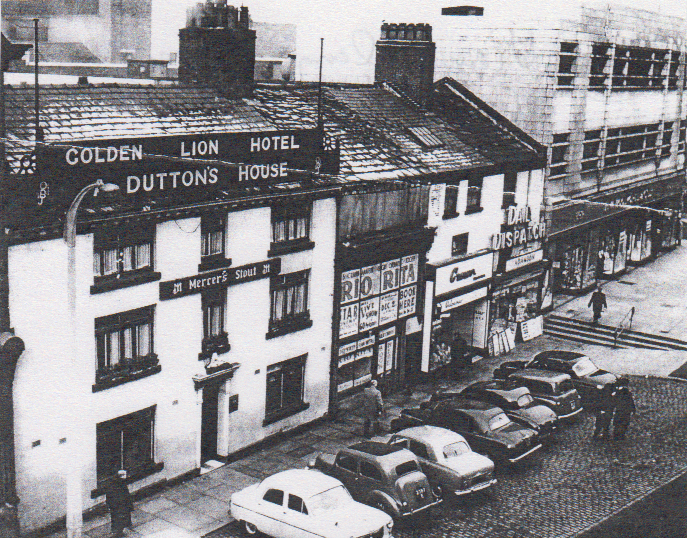
View along lower Church Street in 1958
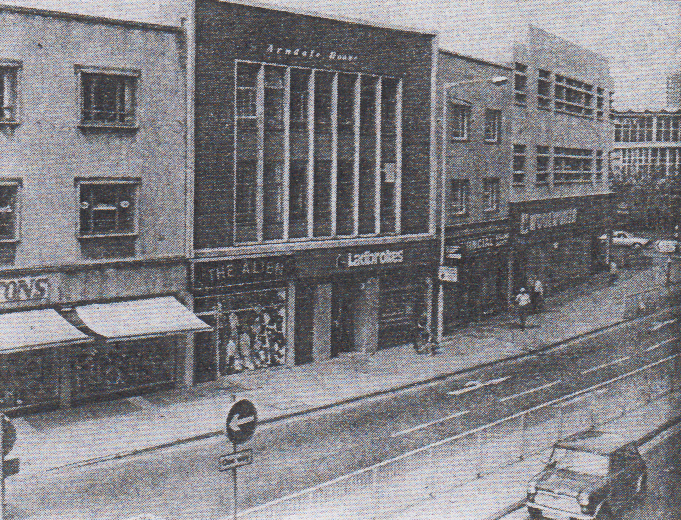
View of Hiltons, Arndale House, another shop outlet and Woolworths in the mid 1960s
before they were cleared later for the new market and shopping mall
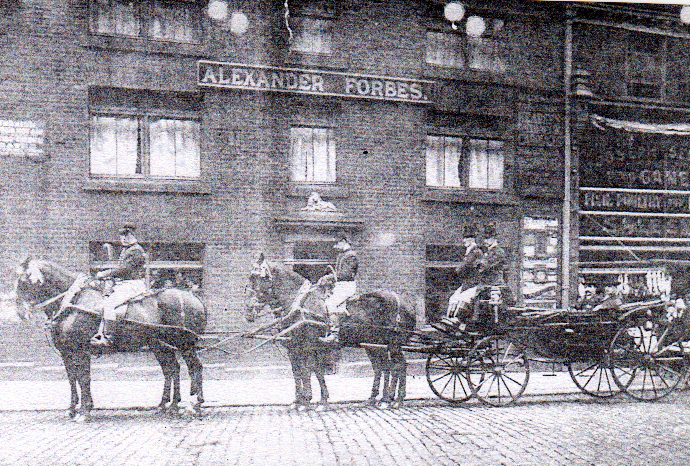
View of the front of the Golden Lion Inn when Alex Forbes was the landlord in the late 1890s with a fancy
carriage, footmen and two out-riders on the four lead horses carrying dignitaries
Originally, to the right of the Golden Lion was the shop of J.W. Astley bookseller and binder, followed by John McKean a brazier, Susannah Brown milliner, then William Aspinall Attorney, and finally, the Georgian mansion of Thomas Dugdale, the Surgeon, standing on the corner of what was then Woolworth's.
The 1958 picture displayed earlier shows a theatre booking office displaying the next performance of Blackburn Amateur Light Operatic Society's, "Rio Rita" and the Star Cinema's offerings in Little Harwood. Next door is the Crown Paints and decorating store, followed by a newsagents selling the daily Dispatch in front of which are a line-up of classic 1950's cars parked in a cobbled area including Ford's, Vauxhall's and Austin with steps leading up to Woolworth's.
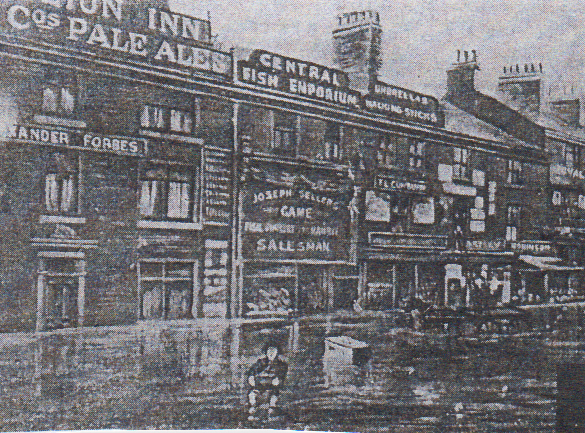
An artist’s impression of the great flood in November 1901 outside lower Church Street properties including floating debris
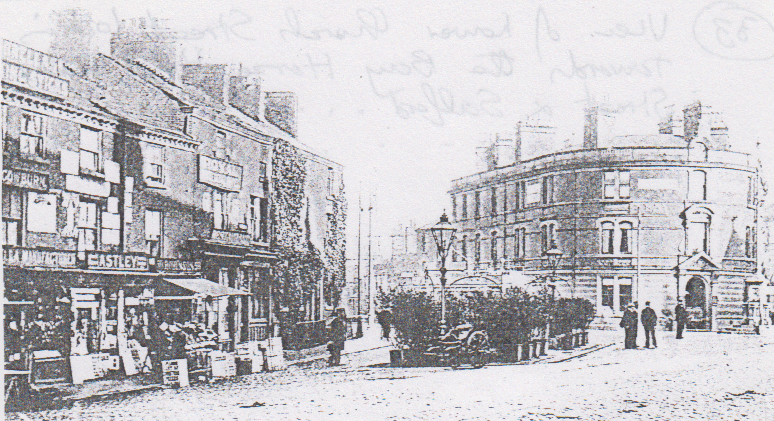
View of lower Church Street looking towards the Bay Horse Hotel, Water Street and Salford
which shows the properties, original public toilets (underground) surrounded by plants
and an original lamp standard around the late 1890s
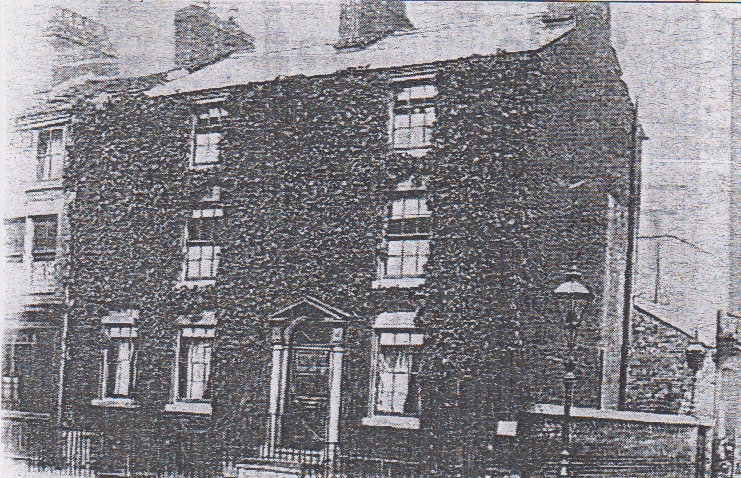
View of the Georgian mansion called Ivy House where Woolworths was eventually built on the corner with Ainsworth Street in 1888.
For many years, it was the surgery for Doctor J. Forrest and Doctor W.R. Pollard, then Doctor Thomas Dugdale.
By 1920, the building and shops next door were demolished to create a store called Hepworth, next door to Arndale House,
which changed ownership becoming Blackburn Corporation Transport Office which was later removed to create Woolworth’s Store
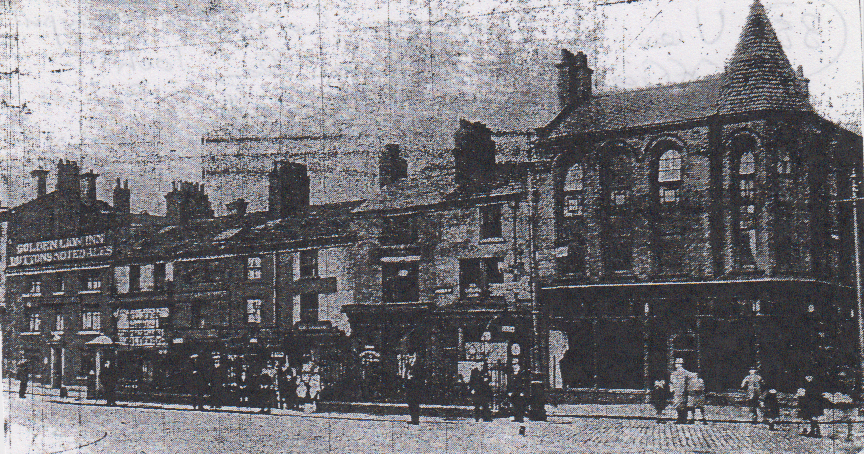
View of Blackburn Corporation Transport Offices in1925 when they took it over from Messrs. J. Hepworth and Sons Ltd., Clothiers.
It was used as an administration office by the Tramways Department
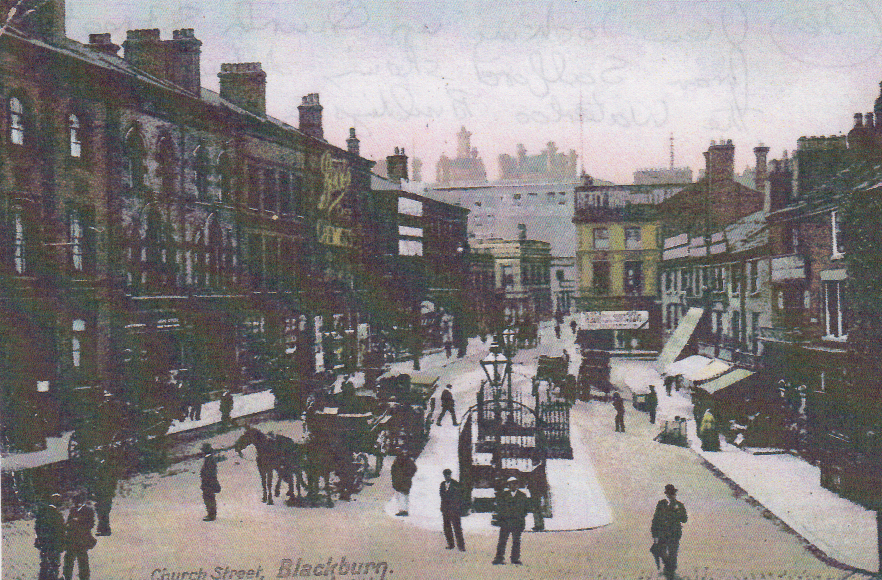
View looking up Church Street from Salford showing detail up to the Waterloo Buildings in the 1890s