Encounters with alcoholism in a Blackburn family:
dilemmas and conflicts
By Richard James Holden
A London paper in the mid 1800s described Blackburn as the most beery town in the world ! (1). Conflict and controversy surrounding alcohol consumption in the northern industrial towns and cities in the Victorian and early Edwardian era provides the backcloth to this article. On the one hand the temperance movement, some advocating total abstinence, argued that the evils of drink harmed both physical and mental health. On the other, there was the conviction that the drink trade was unfairly targeted by temperance advocates because it was a legitimate and respectable business which served the public and generated substantial revenue for the nation. The article seeks to recall some of the issues of the time through the lens of one Blackburn family.
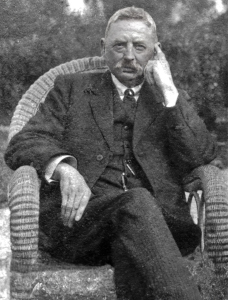
In 1894 George Holden, my great-grandfather (pictured below), a leading cotton manufacturer in Blackburn, resigned his position as superintendant of the New Jerusalem Church Blackburn Sunday School. I discovered the hand-written letter (Figure 1) offering his resignation when exploring the archives of the Swedenborgian Society (2) as part of my ongoing research into the Holden weaving mills of Blackburn. The letter reveals his reasons for the resignation and enables a rather fuller story to be told not only about the temperance movement in Lancashire but about alcoholism and the Holden family.
The letter reveals how George found himself in a difficult position following a meeting of Sunday School scholars to discuss the work of temperance and specifically the establishment of a ‘Band of Hope’ and the signing of the ‘Pledge’. It appears that many in the meeting were of the view that teetotallers alone should carry on the work of temperance and that this position was raised in the meeting and with specific reference to my great-grandfather.
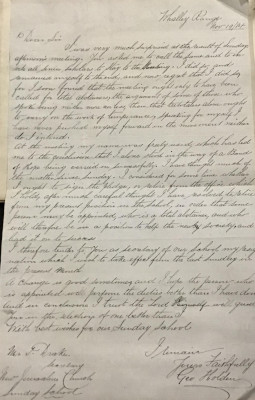
Figure 1: George Holden's letter of resignation (14/11/1894)
My great-grandfather, whilst very sympathetic to the temperance movement, did not subscribe to this ‘purist’ position yet clearly considered he could be an obstacle to the progress and success of the movement (3). Reflecting on the meeting my grandfather states in the letter:
“I have thought much of this matter since Sunday. I considered for some time
whether I ought to sign the pledge or retire from the office which I hold.
After much careful thought I have resolved to retire from my present position in the
School, in order that some person may be appointed who is a total abstainee and
will therefore be in a position to help the new society and lead it on the success”
In the next section I seek to place my great-grandfather's dilemma into a wider context. A final section adds a more personal note about the Holden family and its 'encounters' with alcholism.
The Temperance Movement, the Sunday School and Bands of Hope
 The significance of the New Church Sunday School in relation to my grandfather’s ‘dilemma of office’ becomes clear with the knowledge of the School’s role in the temperance movement. Interestingly, the temperance movement has its origins in Lancashire, most notably Preston with its memorial to the supposed ‘Father of Teetotalism’, Joseph Livesey, from Walton-Le-Dale. The Sunday School, whilst not a uniquely New Church institution, came to the fore of New Church activities to eradicate the evils of drink in the latter half of the 1800s. Again, the Schools were most prosperous in Lancashire (Lineham, 1978). Accrington, for example, had over 500 children registered. The Blackburn New Church records of 1896 show 250 scholars. A principal objective of the New Church Sunday Schools was to teach children the importance and principles of sobriety, a means of providing activities for children that encouraged them to avoid alcohol problems. Sunday school scholars taking the “Pledge”, promised not to drink alcohol and became members of the Band of Hope. At its peak, in 1897, the Band of Hope numbered 3.5 million children and adults. The temperance (use of alcohol in moderation) v teetotalism controversy is reflected in policy advice on establishing local Bands of Hope societies. Whilst advice from‘head office’ stopped short of stating that Sunday School committee members should be teetotal, a number of societies argued strongly that officials should be “intelligent abstainers” (4).
Alcoholism and the Holden family
My great-grandfather, whilst unprepared to sign the ‘Pledge’, nonetheless had considerable empathy with the temperance movement. The extent to which this influenced his business practice as a weaving manufacturer remains subject to conjecture. However, within his own family alcoholism and teetotalism took on a very personal note. Tom Holden, George Holden’s eldest son, died of alcohol related illness at the age of 42. Despite being a Sunday School attendee at the time of the resignation letter Tom Holden succumbed to alcohol in his early 20s. In his book on the Holden weaving mills of Blackburn my father reflects on the impact on the family:
“He had been a chronic alcoholic for some time and the whole thing must have
been a ghastly family tragedy. His name was rarely mentioned when I was a boy
and if ‘it’ were to be mentioned then in hushed tomes. For the Chapel going,
slightly puritanical Holden ‘clan’, this must have been shattering and shaming
episode. (Holden, 2021)
History has shown that it does not matter how often or to what extent alcohol consumption has been problematised or prohibited people still continue to drink. Whereas in 1894, the date of my great-grandfather’s resignation letter, we had the temperance movement and Bands of Hope, today we have sobriety societies and alcoholics anonymous. This article, whilst a family based story, nonetheless provides an insight into society’s alcohol ‘conflicts and dilemmas’, as pertinent today as in the late 19th Century.
Notes
1: Cottontown
2: Emanuel Swedenborg (1688 - 1722), a religious philosopher, is widely regarded as the founder of the New Jerusalem Church (often simply referred to as The New Church). I am indebted to Alex Murray and James Wilson (Swedenborgian Society) for their asssistance in seaching the records from the New Jerusalem Church, Blackburn, held in the Society’s archives.
3: Interestingly, my great-grandfather’s letter of resignation was rejected at a Special General Meeting of the Church called later the same month. The Minutes show unanimous support for a resoultion to inform him of “the very great desire of the meeting that he should retain his present position in the School” (New Jerusalem Church Blackburn, 1894)
4: Runcorn Historical Society; How to Establish Bands of Hope
References
Holden, T., 2021; Boom and Bust in Cotton Manufacturing; The Holden Weaving Mills of Blackburn.
Lineham, P.J., 1978; The English Swedenborgians 1770-1840, A Study in the Social Dimensions of Religious
Sectarianism; University of Sussex
Published December 2023

 Loading more