Loading more
Personal Experiences
The Old School Memories Of Bygone Days
THE FIRST SCHOOL DENTAL CLINIC
By Jack Point
From the Blackburn Times of April 24 1937.
© BwD - terms and conditions
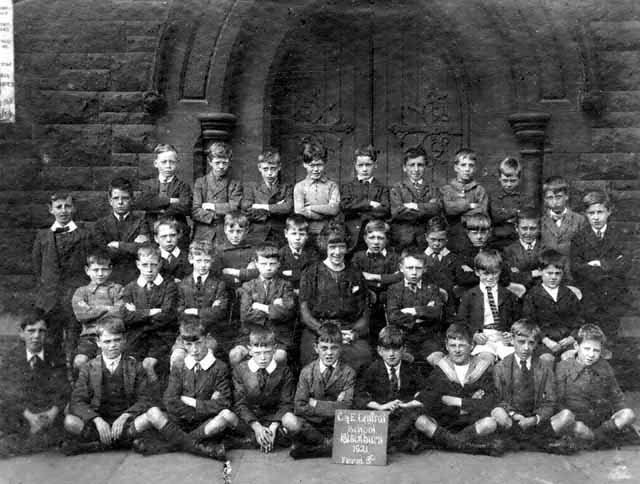
Passing the old school the other day, after many years, I was tempted to look in just to refresh memories of bygone days. I went through the yard, but what a shock was mine! Surely this pettifogging space was never the scene of so many strenuous football matches, of so many happy hours at cricket, at “trust” and “cap-on-back,” and all the boyish pastimes that made the playtime pass all too quickly. If memory served me aright, it was at least ten times the size. Why, it seemed to take us an age then to run from one side to the other. How it had shrunk with the years. Yet it was the same old playground, for there was the house where the caretaker—old Forrest—lived. Old Forrest, who was a second edition of President Lincoln in appearance, having a black goatee under his chin, was the one man whom we feared as much as we feared the head master himself, for he stood no nonsense. His wife was cast in gentler mould, and on a hot day we would sneak to the back door of the house, and beg drinks of water until her husband appeared, when, our terror swallowing up our thirst we vanished instantly.
© BwD - terms and conditions
COCKPIT OF THE SCHOOL
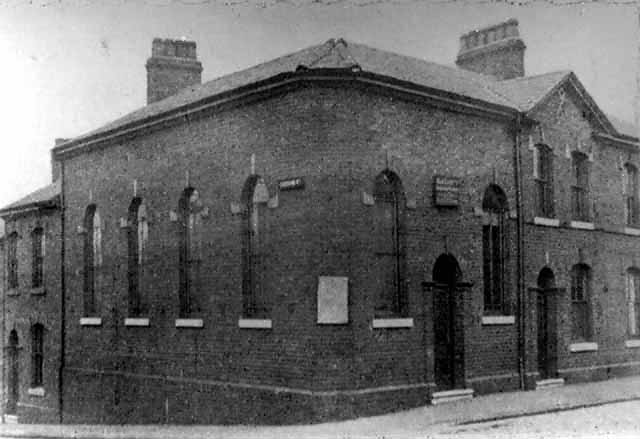
There again just beyond the north wall of the playground, was “t’ back,” as we called it, where most of our boyish quarrels were settled. It was the cockpit of the school, and the fights, which took place there were very serious businesses indeed. At any rate, the preliminaries were serious. No Italian duello needed so much ceremony, and modern heavyweight championships have been carried through with no more arrangements.
An intermediary was always employed. If there was bad blood between Jones and Smith the intermediary would approach Smith and inform him that Jones had been saying he could “lick” him. If Smith told the intermediary that Jones couldn’t “lick” him, progress was being made. The next step was for Jones to catch Smith’s eye when the teacher wasn’t looking. Then Jones would give a most fearful scowl with his lower teeth showing over his upper lip and shake his fist. If Smith did likewise, the preliminaries were completed, and word went round the class like wildfire that there was a sanguinary combat in “t’ back” after school.
There was never much blood shed in these encounters, however, for the first good stout blow generally ended the contest and the victor usually strutted off, surrounded by a host of admiring friends, while the defeated one was left alone, deserted by his former supporters. This, however, was always the way of the world.
I peeped into the classroom itself. That had been considerably altered. Now it consists of a number of classrooms, but in my time there were two large rooms divided by a sliding partition. The partition itself consisted of two parts, which slid towards or away from one another along an iron rail. They were pushed apart at the opening and closing of school so that the two rooms became one, and pushed together again when lessons began. The pushing was done by a couple of lads who each grabbed an iron handle and pushed for all they were worth. If they achieved a tremendous bang when the partitions met, or reached the end of their rail the lads were highly delighted.
© BwD - terms and conditions
© BwD - terms and conditions
LEGEND OF THE HORSE HAIR
In addition to morning and evening prayer, we had grace before and after meat, and, strange as it may seem, though we all sang most lustily, it was mostly gibberish, as scarcely any of us knew the words, and it was a great surprise to me when I learned what the words really were. I am quite certain that if we had been asked to write the words the staff would have received a shock.
The teachers in the old school were very great on discipline, and corporal punishment was their way of obtaining it. Canes were generally used, and these varied from long to short, and from thick to thin. One of my teachers used to prefer long thin ones, and was in the habit of sending me to purchase them. My orders were always to purchase a sappy one, as the dry ones were apt to split up the middle very soon.
I can’t say I was particularly fond of this job, as I was sent back if the cane was unsatisfactory, while, if the teacher was pleased with it, I was none to popular with the rest of the class. This belief in sappy canes, however, was so widespread that in after years I met a head master who confessed that he kept his canes in water in a long, narrow-minded tin (as Teddy Whittle would have called it), so that they should always be nice and moist. Some of the teachers burned the ends of their canes, as it was thought that this prevented them from splitting. Some of the scholars burned the ends of the canes too, but this was because they found father’s twist rather to strong!
There was a legend at this time that if you put a horse-hair across your hand when you were being caned the cane would split, but so far as I was concerned it remained a legend, and fit company for the Indian rope trick for I never saw it proved.
Old Towler was the wisest of the teachers as regarded corporal punishment. He didn’t trouble about a cane—he used instead the top half of a substantial-looking walking stick. Having a knob on one end, it resembled a shillelagh as much as anything. There was no fear of that splitting. Even a horsehair wouldn’t do it. Canes might come and canes might go, but that went on forever, and if old Towler is doing any whacking now it’s odds he has his old shillelagh with him.
Comparisons are often made by old-stagers between the old education and the new, which are considerably to the disadvantage of the latter, but everything in the garden wasn’t lovely in those days, as a little reminiscence will show. In many schools then were very young pupil-teachers, whose duty as a rule it was to take the “exceptions” as they were called. These “exceptions,” being considered exceptionally dull of intellect, were generally pushed away in some obscure corner, where they were taught the alphabet and given some very simple exercises in numbers.
One pupil-teacher who was in charge of a class of this kind, and out of sight of everyone, found his job very irksome. He conceived the strange idea of extracting the pupils’ teeth for a change. Any lad who consented to have a tooth drawn was allowed to go home half-an-hour earlier. The idea caught on marvellously. I don’t know what time wickets were pitched, but “stumps” were drawn at all hours! Some of the mothers, however evidently considering this drawing of “stumps” was not quite “cricket,” intervened, and thus the first school dental clinic came to an untimely end.
Though his implements were of the rudest—merely a nail and a piece of string—who shall blame the youthful operator when learned professors tell us that the real meaning of “to educate” is “to draw out”?
Though his implements were of the rudest—merely a nail and a piece of string—who shall blame the youthful operator when learned professors tell us that the real meaning of “to educate” is “to draw out”?
© BwD - terms and conditions
THE TUCK SHOP
At one period the spirit of speculation was in the air, for “lucky balls” and “lucky turnovers” were introduced, and great was the excitement thereat among the scholars. In a few of these sweetmeats—a very few—a coin was hidden. It might be a halfpenny, it might even be a three-penny bit, so lucky sweetmeats were the order of the day until the authorities intervened.
One lad won quite a reputation as a “spotter.” He claimed to be able to tell the ones which contained the coins. He became the consulting expert. Sometimes he was sent in to make the purchase himself, sometimes he stood outside the shop window with the “capitalist” and indicated the one which was to be purchased. His fee—for every consulting expert must have his fee—was the toffee; his financial backer took the coin. If there were no coin, he received a small portion of the toffee.
At times we became vegetarians and devoured liquorice root, sweet locust, and “monkey-nuts” as we called them. Peanuts I suppose they would be called now. The liquorice in this case was the natural product. It was brown in colour, and consisted of long, tapering strands. The sweet locust was in appearance like pieces of dried black leather. It was easily chewed, however, and was rather pleasant to the palate.
There was much discussion amongst the lads as to whether it was the food of John the Baptist in the wilderness or not. But the question was never finally settled so far as I know. As regards the peanuts, one pioneer conceived the brilliant idea of eating the shells as well, and we all followed his example, and pretended to enjoy them, too, though I imagine that chewing a straw shopping basket would be just as toothsome. Which only goes to show that lads can persuade themselves into anything.
© BwD - terms and conditions
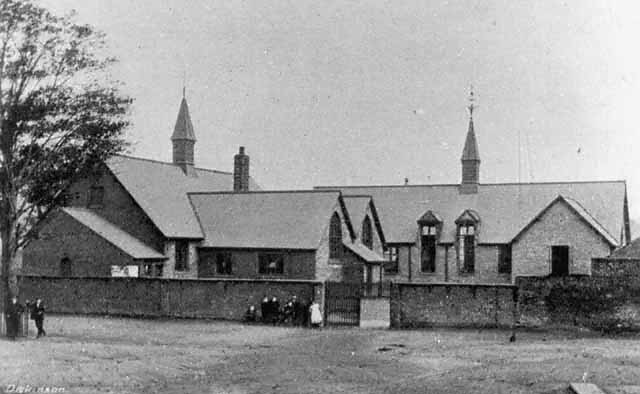
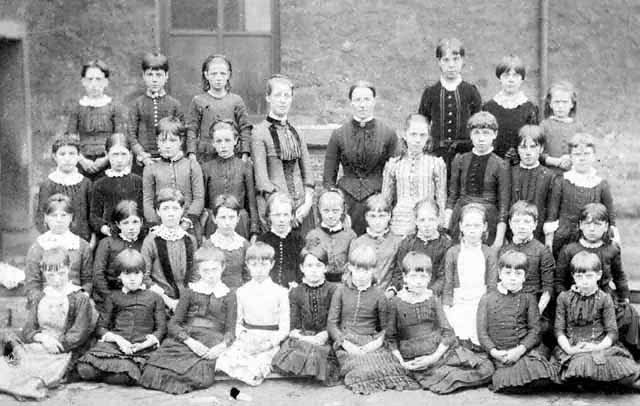
No account of the old school would be complete without an allusion to the “tuck shop,” as I suppose it would be called now. It was a two-windowed shop at the corner, but only one of the windows interested us—the one facing the school, which contained sweets. Chocolate was not so much to the fore then. The most popular sweets were liquorice, horse or aniseed balls, “hot toffees,” one percent sugar and ninety-nine per cent cayenne, and acid drops. In some cases the sweets were not weighed, but were counted, and we knew exactly how many we ought to receive.
At one period the spirit of speculation was in the air, for “lucky balls” and “lucky turnovers” were introduced, and great was the excitement thereat among the scholars. In a few of these sweetmeats—a very few—a coin was hidden. It might be a halfpenny, it might even be a three-penny bit, so lucky sweetmeats were the order of the day until the authorities intervened.
One lad won quite a reputation as a “spotter.” He claimed to be able to tell the ones which contained the coins. He became the consulting expert. Sometimes he was sent in to make the purchase himself, sometimes he stood outside the shop window with the “capitalist” and indicated the one which was to be purchased. His fee—for every consulting expert must have his fee—was the toffee; his financial backer took the coin. If there were no coin, he received a small portion of the toffee.
At times we became vegetarians and devoured liquorice root, sweet locust, and “monkey-nuts” as we called them. Peanuts I suppose they would be called now. The liquorice in this case was the natural product. It was brown in colour, and consisted of long, tapering strands. The sweet locust was in appearance like pieces of dried black leather. It was easily chewed, however, and was rather pleasant to the palate.
There was much discussion amongst the lads as to whether it was the food of John the Baptist in the wilderness or not. But the question was never finally settled so far as I know. As regards the peanuts, one pioneer conceived the brilliant idea of eating the shells as well, and we all followed his example, and pretended to enjoy them, too, though I imagine that chewing a straw shopping basket would be just as toothsome. Which only goes to show that lads can persuade themselves into anything.
© BwD - terms and conditions
FORTUNES LOST IN MARBLES
Of course, in all our yard games it was a case of “minding our step,” for old caretaker Forrest was a regular martinet, and a believer in corporal punishment, too. Though he did not, like the teachers, use a cane or a stick, he carried in his hip pocket a good stout two-foot rule, which, when occasion arose, he used just as effectively.
And now we must leave the old school. What was its name, you ask? Perhaps it was Narkover, perhaps it wasn’t. All I can say is that we hadn’t an old school tie, we hadn’t even a badge on our caps, but most of those who attended that school think that it’s the best school that ever was or ever will be. And who’s going to undeceive them? Well, I’m not, at any rate.
© BwD - terms and conditions
We had many games such as are played to-day, but there were others. In the marbles we had a game called “Chuck-at-hoyle,” or “Odd and E’en.” We made a small hole close up to the schoolyard wall. Each player staked so many marble or “stooanies,” as we called them. One of the players threw the marbles against the wall just above the hole. Some marbles simply rebounded, others rolled into the hole, if the number of marbles in the hole were odd the thrower won, if even, he lost. Thus many a fortune (in marbles) changed hands in the old schoolyard, and no keener gamesters were ever found, no, not even in Monti Carlo.
Tops, too, in their season, were very popular, but we went beyond the common or garden order of top-spinning, and indulged in “top fights.” We whipped our tops up against each other so that they collided and one was knocked out. This, however, led to a certain amount of sharp practice, for some of the lads’ brought tops of such enormous size that the smaller tops had no chance against them. Others went further still and brought tops made entirely of steel, which were called “boilers” and when one of the wooden walls of old England came up against one of these steel-clad monsters it was a case of shiver my timbers and no mistake.
Of course, in all our yard games it was a case of “minding our step,” for old caretaker Forrest was a regular martinet, and a believer in corporal punishment, too. Though he did not, like the teachers, use a cane or a stick, he carried in his hip pocket a good stout two-foot rule, which, when occasion arose, he used just as effectively.
And now we must leave the old school. What was its name, you ask? Perhaps it was Narkover, perhaps it wasn’t. All I can say is that we hadn’t an old school tie, we hadn’t even a badge on our caps, but most of those who attended that school think that it’s the best school that ever was or ever will be. And who’s going to undeceive them? Well, I’m not, at any rate.
© BwD - terms and conditions
Schooldays in the 1950s
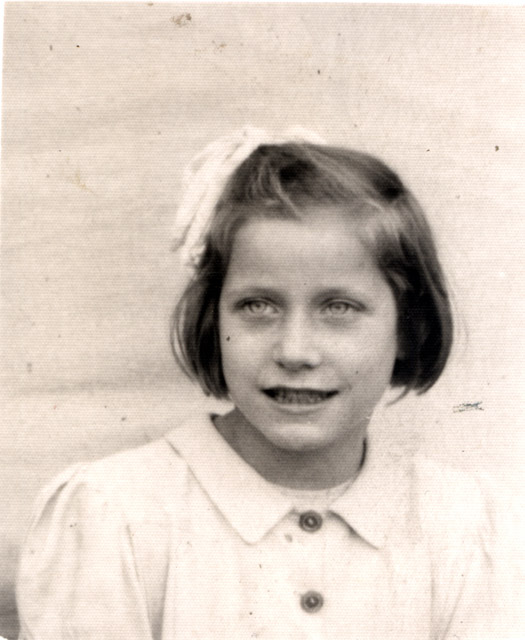
Marian Smith prior to starting at Bangor-street School
Reading about schools today and talking to young people about their thoughts and feelings on how they are taught and the way they behave makes me wonder what they would make of being at my school in the 1950’s. I am well aware that even for that day and age the regime at that establishment was strict in the extreme. The school wasn’t a swanky upper class organisation or even a grammar school, it was in a very modest part of Blackburn and most of the pupils came from poorer backgrounds but to say the standards were high would be a major understatement. My school was Bangor Street Secondary Modern School, home to youngsters who had failed the eleven plus exam.
© BwD - terms and conditions
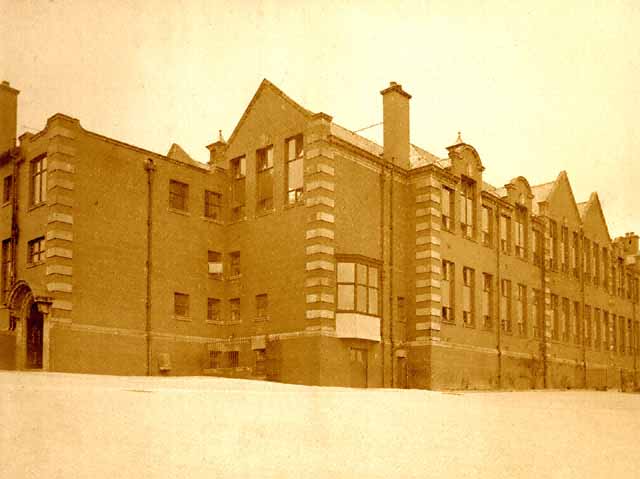
Bangor-street School showing the girls playground. Fraternising with the boys was taboo.
Bangor Street School was a two storied, red brick building which housed 200 girls in the lower level and the same number of boys in the upper level, the crucial part of this arrangement was that the girls and boys never, ever came into each others company – it was a mortal sin for us girls to be caught talking to a boy. My friend Marjorie Robinson, remembers passing the time of day with a boy and being slapped hard by the gym mistress for doing so. It’s just as well the punishment didn’t put her off talking to the boy for good as the pair married in 1963; she became Mrs. Alan Thorne and they moved to Australia where they have lived for over forty years.
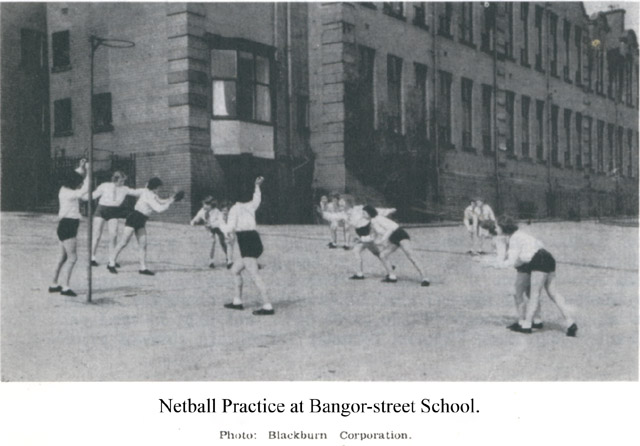
So strict was the rule on not talking to boys that I was told I could not walk home with my brother who attended the boy’s part of the school. The reason given was that I was in school uniform and the general public would not know he was my brother and might think there was some impropriety!!!! Even eye contact with the boys was discouraged and this proved to be a real problem when we had outdoor games. The boys would hang over the walls separating the two playgrounds and yell out inappropriate remarks - they were not put off by the constant cuffs across the ear which were doled out by their school masters. It didn’t help that we girls did our gym in blouse and knickers. Now this might sound like the key to raising a young man’s passion to great heights but believe me, if you saw the garments you’d wonder they bothered to look at all. We were allowed only one button to be undone on our voluminous white, long sleeved blouses and our regulation navy blue knickers were huge, baggy creations with elastic sewn around the legs which almost reached our knees; sexy they were not!!!
© LET - terms and conditions
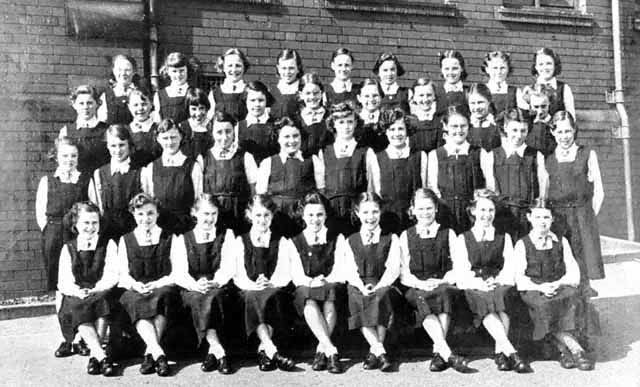
A class photgraph of girls dressed in their immaculately cared for uniforms.
SCHOOL UNIFORM
School uniform played an important part in keeping up the image of the school. Our uniform consisted of a navy blue gym slip, a shapeless garment tied around the middle with a matching sash (prefects wore a distinguishing yellow sash), a white blouse, red and yellow striped tie, white ankle socks and black lace up shoes. Outdoor wear was a navy blue gabardine mac, a beret with the school badge on the front and in winter a red and yellow striped scarf and navy blue woollen gloves. Woe betide anyone who deviated from the laid down rules of correct uniform; no wearing a belt instead of the sash, no slip on or buckled shoes and to be seen in uniform out of school without your beret on it was a cardinal sin. Our uniforms were regularly inspected by the headmistress and I well remember girls being sent to press a crumpled gym slip or creased blouse in the ‘housewifery room’. The sight of anyone wearing jewellery, make up or nail varnish was enough to send the mistresses into shock and girls were sent to the staff room to be stripped of such fripperies.
School uniform played an important part in keeping up the image of the school. Our uniform consisted of a navy blue gym slip, a shapeless garment tied around the middle with a matching sash (prefects wore a distinguishing yellow sash), a white blouse, red and yellow striped tie, white ankle socks and black lace up shoes. Outdoor wear was a navy blue gabardine mac, a beret with the school badge on the front and in winter a red and yellow striped scarf and navy blue woollen gloves. Woe betide anyone who deviated from the laid down rules of correct uniform; no wearing a belt instead of the sash, no slip on or buckled shoes and to be seen in uniform out of school without your beret on it was a cardinal sin. Our uniforms were regularly inspected by the headmistress and I well remember girls being sent to press a crumpled gym slip or creased blouse in the ‘housewifery room’. The sight of anyone wearing jewellery, make up or nail varnish was enough to send the mistresses into shock and girls were sent to the staff room to be stripped of such fripperies.
© BwD - terms and conditions
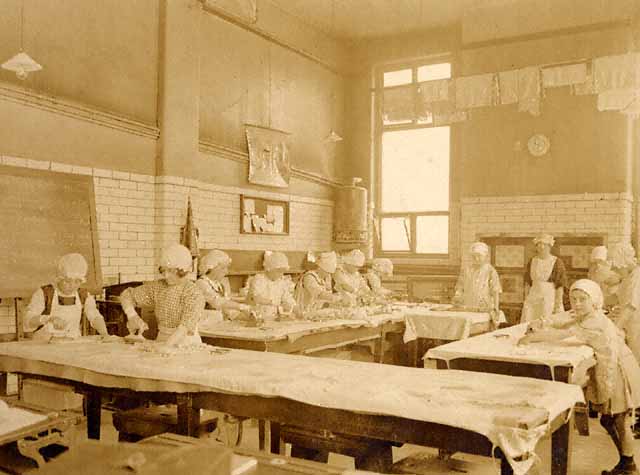
Cooking and housewifery was taken very seriously from the earliest days of the School
LESSONS
Every morning there was a formal assembly in the hall, teachers sat in a row on a stage and, as there was no seating, we girls sat in rows on the floor. We started each day with a hymn, a prayer, a talk from the headmistress and any notices which had to be made. This was the time when wrongdoers were often brought to book and I well remember a girl in my class who was a prefect and had been found playing truant the previous day, being brought out in front of the whole school and stripped of her yellow sash and badge. The poor girl was left standing in embarrassed isolation in her shapeless gymslip whilst the rest of the notices were read, accolades doled out to deserving pupils and the final blessing given. I’ve never forgotten the incident and wonder if the ‘human rights’ card would come into play nowadays!!
Every morning there was a formal assembly in the hall, teachers sat in a row on a stage and, as there was no seating, we girls sat in rows on the floor. We started each day with a hymn, a prayer, a talk from the headmistress and any notices which had to be made. This was the time when wrongdoers were often brought to book and I well remember a girl in my class who was a prefect and had been found playing truant the previous day, being brought out in front of the whole school and stripped of her yellow sash and badge. The poor girl was left standing in embarrassed isolation in her shapeless gymslip whilst the rest of the notices were read, accolades doled out to deserving pupils and the final blessing given. I’ve never forgotten the incident and wonder if the ‘human rights’ card would come into play nowadays!!
In the classroom we sat in rows of paired desks and most of our books were kept inside the desks, there was no humping of enormous rucksack around the school as is the case nowadays. Inkwells and nibbed pens of awful quality were still in use in the 1950s. and we all found it hard to master copperplate writing which was demanded of us. Every morning an ink monitor would go round filling up the inkwells so that we were ready for the days work; it was expected that this be done without spilling even the tiniest drop. Needless to say no one ever wanted to do the job.
All our lessons were done in a very formal way. In English spelling and poetry were learnt by rote as were our tables. This was always done for ten minutes or so before we got into the core of whatever we were doing. I have to say, I was never any good at arithmetic but I can still say all my tables without making any mistakes.
One of my very favourite lessons however, was cookery and housewifery. We didn’t just learn to cook, we learned to clean, wash, iron in fact everything that helped to run a house smoothly. I can’t see today’s young girls taking to lessons like that very easily but I enjoyed it enormously. Also we had the most inspirational teacher, Miss Smith, who made what could have been a mundane and tedious subject into something of interest. She was kind, caring and understanding and I’m glad she taught me.
© BwD - terms and conditions
Girls playing netball in their "knickers."
GAMES AND SPORTS
The playing of games and sports was always very much encouraged for the girls at Bangor Street. In the hall was a gym which included a climbing frame with ropes, a ‘horse’ and the ‘box’ for leaping over and a high jump bar. These were for use when we were unable to go outside for our PT lessons though the weather had to be pretty bad before we stayed inside. We had no playing field and games were played on the asphalt yard, there were many cuts and bruises from falling on the hard surface but, unlike today, health and safety was not an issue and just dusted ourselves off and carried on. Our main sports were netball and rounders but we also sprinted and had relays. All classes were split into four houses, Austen (green), Darling (blue), Mcdonald (my house, yellow) and Wordsworth (my friend Marjorie’s house, red). Our houses were pitted against each other for all games and there was a great deal of rivalry between us. Once a year we had a sports day where girls from all the schools in Blackburn competed against each other, this was held at Pleckgate and we sporty girls looked forward to it with relish.
Once a week we went swimming at Blakey Moor Baths. Our visit to the baths entailed a two mile walk whatever the weather. In winter the walk there was pretty daunting but coming back was truly awful when we were chilled to the marrow with our wet hair almost frozen to our scalps. Marjorie said her lasting memory was of the freezing cold wind whipping against her bare legs making them red and chapped. However, the summer walks were really quite pleasant and by the time we got to the baths a lot of us had divested ourselves of half of our uniforms in order to get in the pool quickly!! Our annual swimming gala was held at Belper Street Baths and again, this was something we looked forward to with great pleasure.
© LET - terms and conditions
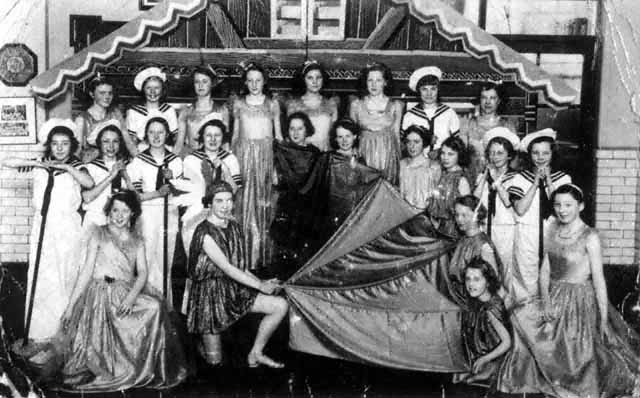
Speechday at Bangor-street. Although this is in 1938 things would not have changed that much in the early 1950s.
SPECIAL OCCASSIONS
I think most girls in the school looked forward to the special times at school. It was a chance to get away from the routine of everyday lessons and do something different. We had nature walks when we would go into Corporation Park or into the countryside surrounding Blackburn (little of which is left now) to learn about birds, wild flowers and trees and I still remember a lot of what I learned on those walks. At Easter time we made cards and painted eggs in our art classes and always had a lovely service to celebrate as we did in autumn for the harvest festival. Then we would take fruit and vegetables which were given out after the service to poorer pupils and their families. Coming from a family of thirteen I was usually given something to take home but as my father was a gardener and my sister and I always took masses of produce we often ended up taking home the stuff we had taken in the first place!!!
I think most girls in the school looked forward to the special times at school. It was a chance to get away from the routine of everyday lessons and do something different. We had nature walks when we would go into Corporation Park or into the countryside surrounding Blackburn (little of which is left now) to learn about birds, wild flowers and trees and I still remember a lot of what I learned on those walks. At Easter time we made cards and painted eggs in our art classes and always had a lovely service to celebrate as we did in autumn for the harvest festival. Then we would take fruit and vegetables which were given out after the service to poorer pupils and their families. Coming from a family of thirteen I was usually given something to take home but as my father was a gardener and my sister and I always took masses of produce we often ended up taking home the stuff we had taken in the first place!!!
Then of course was the best time of all – Christmas, how we loved Christmas; making the trimmings to decorate the classrooms, making Christmas goodies in cookery and of course, the nativity. I always loved that and longed to be chosen to take a main part in the play. However it was not meant to be and the best I got to do was to read a passage from the bible and sing a verse from the carol, ‘Oh Little Town of Bethlehem’. Nevertheless it was my favourite time and I still think about it all with fondness and joy.
These are some of my memories but I have so many more, far too many to be written down here. I hope there is someone out there who will see this, be reminded of their times at school in the 1950s and submit their memories to this wonderful site.
by Marian Beck (nee Smith)
Pupil at Bangor Street Secondary Modern School
From 1954 - 1957
Pupil at Bangor Street Secondary Modern School
From 1954 - 1957
By
Mike Sumner
I did my training at Chorley Teaching College and after completing my third teaching practice in 1968 I joined the staff of Pleckgate school in September 1969. I retired in 2012 after 43 years’ service. I can relate happy memories of the school with the use of my large archive that I built up over the years I spent there
Early History
There was a Pleckgate School at the top of St. James Road as early as 1860’s which catered for pupils from the local hamlets of Lammack, Pleckgate and Revidge Fold. Later the school moved down to the lower Pleckgate area as St Chads which also acted as a church.
Pleckgate High School History
In the 1960’s there were moves from the Government to change the existing school system from the three-tiered types of school, Secondary Modern, Technical College and Grammar Schools. At these school’s places were allocated top pupils according to the results of the 11-plus examination. In its place they introduced the Comprehensive School which contained pupils of all abilities this forced Grammar Schools to go private. Blackburn Education Authority created Pleckgate High School at a cost of £326,579 which they built as Blackburn’s showpiece first Comprehensive School to be located on a “Greenfield Site” on the outskirts of Blackburn. It first opened its doors on Wednesday 24th April 1968 but on the first day, the new Headmaster Mr. Peter Jolley had to tell the 600 new pupils to go home after lunch and not to return until the following Monday because there were still minor works to complete by the school’s contractors on the Language Laboratory and 200 desks had not been delivered. The pupils selected for Pleckgate High School came from the former Bangor Street Boys High School and Blakey Moor Girls High School and was planned to accommodate 660 pupils. The school site covered an area of twenty-seven acres with plenty of room to develop playing fields and further extensions to the school. The design of the school was, to some extent, limited by low bearing capacity of the sites ground resulting in a series of single storey buildings apart from the two- storey classroom block.
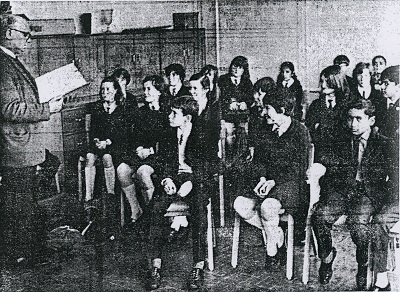
Mr. Jim Hayhurst a Woodwork teacher marking the register for a form of pupils who have seats but no desks before they were sent home.
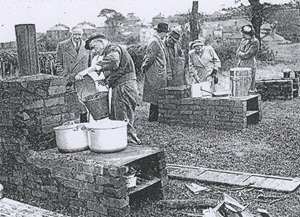
Civil Defence Emergency Feeding Exercise with makeshift ovens on the grass area which was in front of the new school taken in 1954
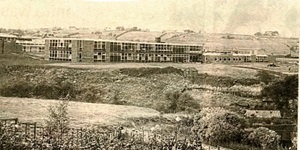
The new High School taken in September 1968
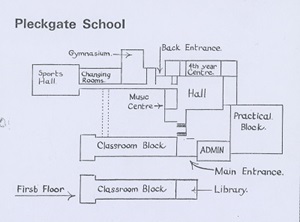
How the Original School was Made up showing its various teaching areas
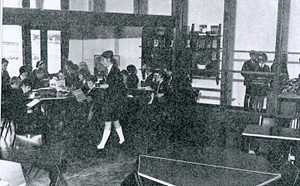
The school’s 4th and 5th year Centre.
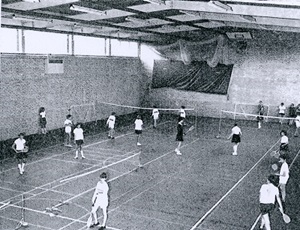
Pleckgate High School was officially opened on Tuesday 8th October 1968 by Alderman W. A. Henshaw who was vice-chairman of Blackburn Education Committee.
The traditional Assembly Hall with stage was replaced by a more flexible area with an open stage which could also be used for dining. It had windows looking out to a courtyard with biology pool, paved areas and grass banks. The school also had a sports hall, the first to be built in Blackburn, which was twice the size of a normal gymnasium which was also added to the sports area. Another new feature of the school was a 4th and 5th year centre sited off the main hall this was used for teaching and a social area for senior pupils. The classroom block included a language laboratory, three science laboratories, a full range of normal classrooms and an excellent library. The lower floor was referred to as G block and the upper floor F block with G block covered Maths, English and Science and F Block included History, R.E., Geography and Science. Other specialist accommodation was developed in suites based on paved courts separated from the main teaching block by the administrative offices and staff room, with accommodation for art and crafts, housecraft and needlework, woodwork metalwork and technical drawing in J block. Prior to entry into the main hall there was the Music Centre classroom. As the school was designed for heavy use by school, Youth, Further Education and Community purposes there was a caretaker’s bungalow built at the front of the school so that the school could be better served out of normal school hours.
The school’s 4th and 5th year Centre.
The new Sports Hall.
The First School Staff
Mr. P.B. Jolley – Headmaster, Miss E. Blackledge – Deputy Head, Mr. C. Crossley – Senior Teacher.
Mr. R. Adamson- First Year Housemaster- School Social Worker and Boys careers, Mr. J. Beardwood – Arts and Craft, Miss S. Brigham – French, Mrs P. Cave – temporary French, Mr. J. Crompton – 3rd. Year Housemaster, Mr. J. Eccles (Maths), Mrs. J. Edmundson (Home Economics), Miss H, Haigh (Head of R.E.), Mr. J. Hartley (Metalwork), Mrs. C. Haythornthwaite ( P.E.), Mr. J. Hayhurst ( Head of Technical Studies), Miss N. Holt (Head of Remedial Dept, Mr. A G. Hook (School Librarian/ Temporary Head of English), Mr. P. Jenkinson (French), Miss C. Kirk (Maths), Mr. Malin (Part- Time Latin), Mr. J. Morris (Head of Maths), Mrs. Mort (part- time Music), Mr. A Pomfret (Ethnic Teacher), Mrs. J. Pratt (English/History), Mrs. B. Redhead (Part-Time Biology), Mr. T. Redhead (4th Year housemaster), Miss J. Redwood (Head of Home Economics), Mrs. J. Rowntree (Chemistry), Mrs. M. Sandford (Needlework/Girls Careers), Mrs. F. Scholey (Head of Commerce), Mrs. M. Seymour(English), Mr. P. Shackleton(Head of Art), Mrs. M. Shaw (2nd Year Housemistress)/English), Mrs. K. Staziker(Head of Music), Mrs. J. Taylor (Head of Science), Mrs. P. Wall (Geography), Mrs. J. Wallace (Biology), Mr. R. Wareing (P.E.), Mrs. Weryell (Geography/History), Mrs. Whalley (Part-Time Geography/Needlework).
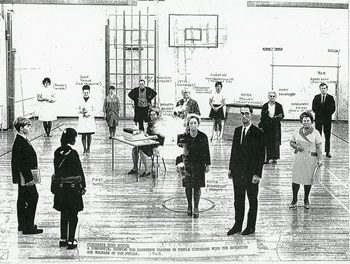
Members of the First School Staff posing in the School Sports Hall.
The 1970’s a Period of Major Changes.
During this period the school increased in size with the building of Blocks A, B, C, D, & E to the rear of the school which resulted in a large increase in pupil numbers, initially nine hundred and then on to intake levels closer to modern times. Blocks A, B, C, and D were opened in 1972 and E. Block in 1978. Over time A Block became a humanities area with mostly Geography and History, Geology and later Languages), B Block ground floor was used for a variety of activities including drama, media/film making, C. Block originally Science(prior to E Blocks creation) and some Technology and the Art Department), D Block created as a 6th Form Centre and when 6th form left was the Geography Department, E. Block was created to house the expanded Science Department and the R. E. Department). During the period of growth and the building phases various groups of children had to be housed in annex buildings including Four Lane Ends School, Blakey Moor Boys School and St. Chads Church. At the same time the school staff numbers had risen to 72 in 1974 including a Youth Tutor, Five Year Heads and a Head of Sixth Form and the need to cater for increased numbers of Ethnic children. Another change was the curriculum which now included new subjects giving pupils a greater choice including Integrated Studies (1970), 6th Form subjects (1973) Media studies (1976) Geology (1976) and Drama all of which led to increased and improved GCE O Level and A Level pass rates above the national average as the Headmaster Mr. Keith Walmsley could tell parents at the 1978 Speech Night. By 1979 GCE/CSE courses on offer included French, German, Geography, World Studies, Geology, Modern History, Commerce, Typewriting, R.E., Comparative Religion, Social Education, Music, Art, Metalwork, Woodwork, Technical Drawing, Domestic Science, and Needlework. The school also started to recognize the importance of school trips for widening pupils' education and was developed by Year Teams taking pupils to various locations including London, Chester, York and Knowsley Safari Park. The development of the Duke of Edinburgh Award Schemes at Bronze, Silver and Gold Levels led to pupils being taken to the Lakes especially Keswick for outdoor pursuits. Foreign holidays also took place organised by the Language Department with trips to France and Germany and exchange holidays, there was also sports holidays with early ski trips to Austria and the French Pyrenees, a football tour to Belgium and Geography trips to Switzerland and Russia.
During the 1970’s the school first organised several notable Stage Productions starting with Oliver (1973), Oklahoma (1976), South Pacific (1978) and Staff and Year Group Shows. The school also organised various money raising events for Charity from an early date and by the late 1970’s had a well- developed Parent Teacher Association which helped the school organize events to raise money both for charity and specific school targets.
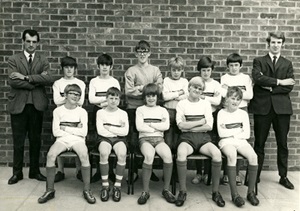
First Year Football Team During the 1969/70 Season
Back Row – Mr. Frank Largan (Manager), Neil Harrison, Paul Flannery, Andrew Ingham, Christopher Bardsley
Paul Smith, Stephen Wallace, Mike Sumner (Manager)
Paul Smith, Stephen Wallace, Mike Sumner (Manager)
Front Row – David Silson, Alan Walsh, Gary Chapman, Stephen Lucas, Paul Standring
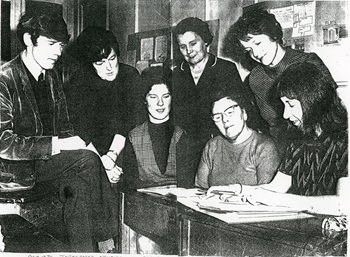
Meeting of the First Integrated Studies Team in October 1970 at Blakey Moor.
From left to Right – Peter Doidge, Mary Lions, Judith Rowntree, Mary Whalley, Eileen Wallace Margaret Seymour and June Pratt
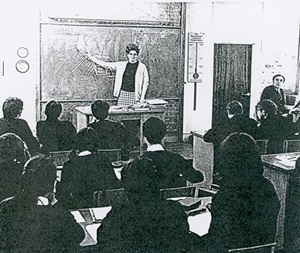
Mrs Pat Wall Delivering a Geography Lesson in Classroom F8 in !970