
 Loading more
Pennine Films
Pennine Films: A Brief Chronology
by Robin Whalley
The successful marriage of sound and film in the late 1920s and early 1930s transformed the film industry. Having experimented with disc recorders, two local men Roland Whiteside, a photographer, and Eric Pollard, an electrician and wireless enthusiast, devised their own sound-on-film system and formed “Northern Film Productions”.
In August 1934 the Northern Daily Telegraph reported that they, and the director Cuthbert Cayley, were filming the interior of the recently discovered White Scar Caverns, near Ingleton. The cramped, wet conditions were not conducive to film making, and the cold spray caused a couple of the four 2000 candle power lamp bulbs to explode.
By September 1934 Northern Film Productions had acquired a studio, 3,800 sq.ft. of Ordnance Mill, a former cotton mill owned by the Coddington/Cayley family. Cuthbert Cayley was one of the directors of Ordnance Mill and had approached them with finance. However, the cotton industry was in decline and Ordnance Mill was sold at auction.
The following month they had produced a short test sound film Blackburn Calling, which they showed to a reporter from the Northern Daily Telegraph. Also shown was the footage taken to date, for what was to be their next film Land of Waterfalls, though the sound track had yet to be added. The reporter felt that it compared favourably with the short “interest” films in the average cinema programme, and that it would also be an excellent educational resource.
In May 1935 Northern Film Productions, filmed King George V’s Silver Jubilee celebrations in Blackburn. The film Blackburn’s Homage (919 ft.) had been commissioned by Mr. J.V. Sanders, manager of the New Central Hall cinema.
They could not use their sound on film system on this occasion as Sanders wanted to show it promptly rather than wait for the film to be returned from processing at Elstree. Consequently an HMV waxed aluminium disc was used. It was post synchronized with musical marches and effects, with a commentary by S. V. Morgan, second projectionist at the New Central. However, the disc was really designed for use as a master, not for repeated shows, it wore out more quickly than anticipated, requiring Sanders to provide a running commentary on the later shows.
The reporter from the Blackburn Times considered it to be “an excellent production from all points of view” which had been “thoroughly enjoyed” by the audiences that week.
A copy of the film was presented to the Mayor at a special Civic Evening on 14th May when the film was shown twice, before and after the feature. That copy is now in the North West Film Archive.
On 23rd July 1935, Whiteside and Pollard were formally joined by Cuthbert Cayley and Pennine Films Ltd. was incorporated to take over Northern Film Productions’ interests. The new company had capital of £3,000, 1000 ordinary £1 shares, split equally between Whiteside and Pollard, whilst Cayley had 2,000 deferred shares. Cayley was the managing director and producer, Whiteside the photographer and Pollard the sound recording engineer.
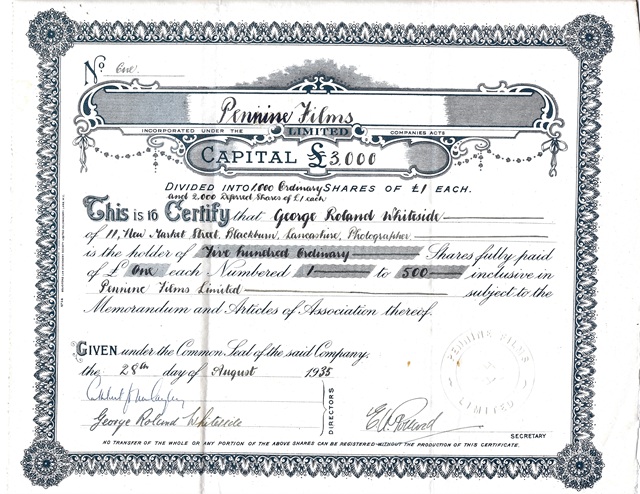
Fig. 1 Roland Whiteside's share certificate
They established a new studio on Tontine Street, occupying two floors of a former shuttle making factory, the studio was on the top floor. There they installed their “Synchrotone” sound on film recording system which was able to lip-sync or post synchronise the sound and commentary. This was the first sound on film recording studio in the county.
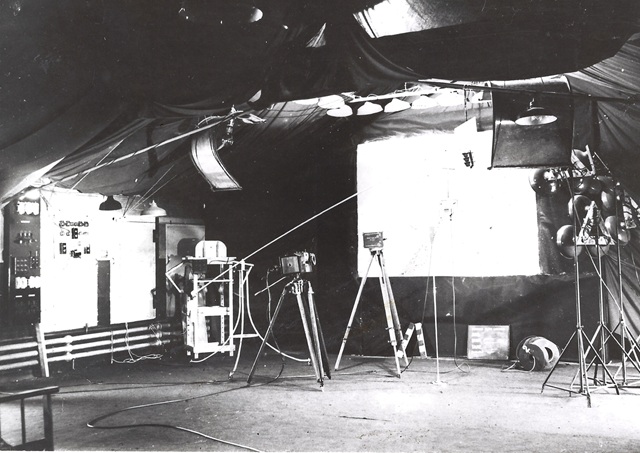
Fig.2 Tontine Street studio interior 1935, heavy felt drapes were used as soundproofing
Figure 2 shows the interior of the studio. Whiteside recalled that “the main picture camera was a converted to motor drive wood Debrie Parvo 400 ft camera of 1911 - this was linked to the sound recording camera in the sound room and maintained synchronization for around 300 feet of camera run. A hand DeVry Automatic 100ft silent camera is also seen in the picture. On the left is the camera stand with its lighting 'arms' used for title and animation shooting. The microphone boom was mostly constructed from electrical conduit. The screen seen in the picture was removable for set construction when required.”
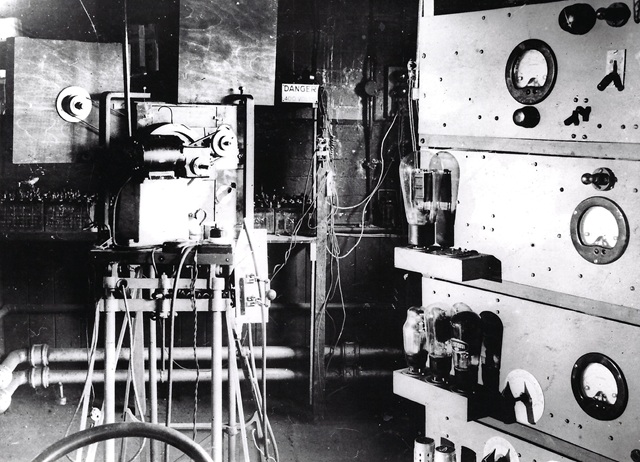
Fig.3 sound on film recording equipment integrating the Williamson silent camera
Figure 3 shows the sound recording room, as Whiteside recalled “on the left is the converted Williamson wood silent camera erected on a Gaumont projector stand. Large external 1,000 ft. film boxes were constructed and the whole clamped down with heavy brackets to overcome vibration. A heavy fly-wheel had to be hand cranked to commence the run before the motor drive switched in - a leader film of some 50 feet was always attached to the recording stock for start-up.”
Whiteside continued “on the right is the main amplifier which derived its power supply from large accumulators and a wet high tension supply from banks of wet cells for 'pure D.C. supply'. The system of recording was by modulated light provided by an Aeolight tube supplied from Holland by Messrs. Philips Limited. The tube required a constant D.C. supply of 400 volts to strike and maintain glowing during mute periods of recording. This was provided by the wet high tension supply seen on the shelfs behind the sound recording camera.”
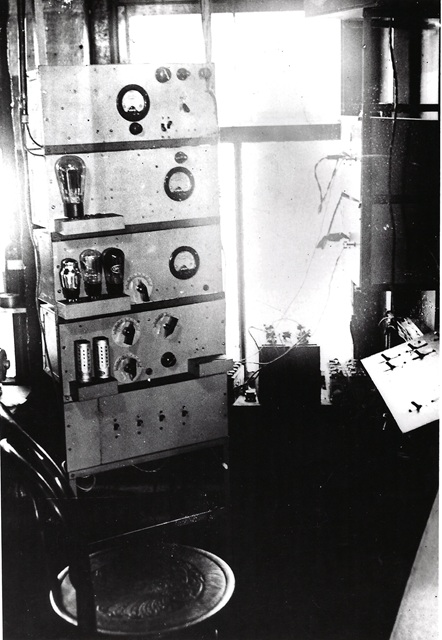
Fig. 4 shows the recording amplifier and right the sound engineer’s control panel
In August 1935, at the suggestion of local antiquary Mr. T. B. Lewis, they embarked on what was to become their most ambitious project – the Samlesbury Saga. This was a lavish period costume piece which followed the fortunes of nearby Samlesbury Hall through the ages. The drama utilised some sixty local amateur actors and archers.
Pennine's output was principally short travelogues which were shown in cinemas in addition to the feature film. In July 1936 the first three of these - Land of Waterfalls (890 ft.) about the Ingleton district, Glorious Ribblesdale (1,110 ft.), tracing the Ribble from its source to the sea, and Where Kingdoms Meet (1,050 ft.), about the Scottish border country, were shown at a private screening in the Rialto Cinema, Blackburn. They were released the following month by their London distributors - Equity British Films Ltd. The photography of these featurettes was generally well received by the trade press, though the reviewer from Kine Weekly considered Cayley’s commentary on the first two films was delivered in an irritating “mannered” voice. However, things had improved on the third film, where both the photography and commentary were considered to be “up to standard”.
In September 1936 they were filming in the Derwent valley in Derbyshire. The film By Dove and Derwent included footage of Ashopton village and Derwent Hall, both now submerged under Ladybower reservoir which was under construction at the time. The film was not released until October 1938.
Further filming on the Samlesbury Saga took place in the summer and autumn of 1936. The film was previewed the following April at the New Central Hall.
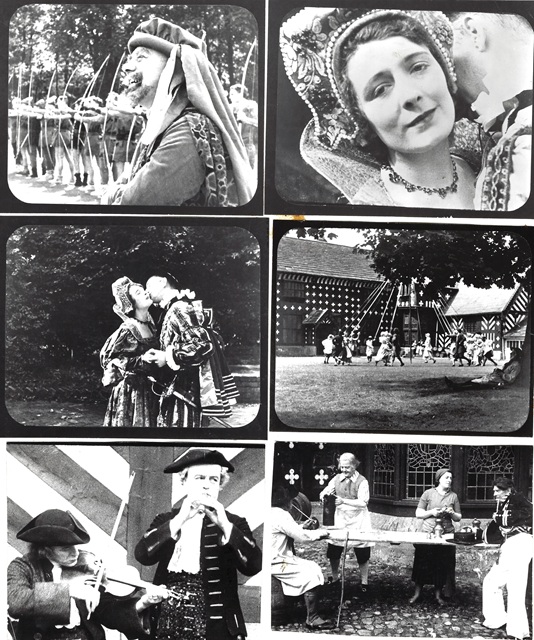
Fig.5 stills from a Samlesbury Saga, the cast was made up of actors from local dramatic societies
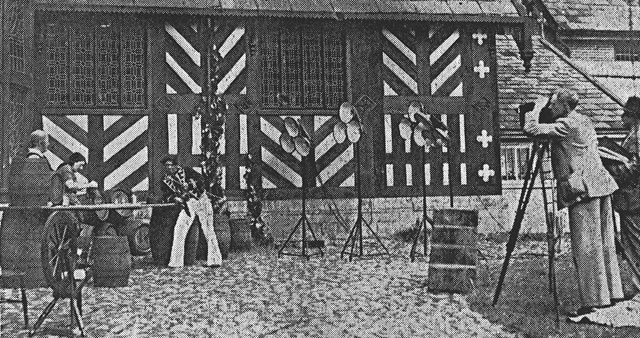
Fig.6 Roland Whiteside filming a Samlesbury Saga, August 1936
In April 1937 Doug Hardy joined the company as a cameraman, initially working on the finishing stages of This Other Eden and Lancashire Lakeland.
One of their travelogues, This Other Eden (870 ft.), about the River Eden in Cumbria, was trade-shown in Manchester in June 1937 where it was well received. Kine Weekly considered it to be a “good scenic”. The reporter for the Times considered that the photography was “excellent and the commentary pleasing”. It was later selected to be shown in the British Pavilion at the New York World's Fair in 1939, alongside Cayley’s film Misty Isle.
Another of their productions made in July 1937 was A Glorious Adventure, an appeal by Dr. P.M. Herbert, the first Bishop of Blackburn, for funds to build the necessary extensions to Blackburn Cathedral. The short four minute film was shot in the studio by Doug Hardy, and was Pennine’s first lip-synced direct sound on film recording. It was shown in cinemas around the Diocese, collections were made during the interval; it premiered in Blackpool in July and was well received in Blackburn the following month.
.jpg)
Fig.7 Bishop Herbert, on set at the Tontine Street studio, a still from A Glorious Adventure, 1937
In October 1937 Cuthbert Cayley resigned to make films on his own, Eric Pollard acquired his Pennine shares. John Lambert, a local journalist and the commentator on some of the films, including This Other Eden, joined the company as an additional director.
Cuthbert’s first film Down to the Sea traced the River Mersey from its source in the Pennines, it was photographed by Doug Hardy on detachment from Pennine. It was later transmitted from Alexandra Palace in February 1939. He followed this with a series of films of Hebridean islands, including Misty Isle about Skye, and Isles of the West about the Outer Hebrides.
In January 1938 Eric Pollard was examining some films when the electric bulb in his hand exploded, despite suffering some burns, he was able to put the fire out before the fire brigade arrived, so the studio only suffered slight damage.
Later that year another of their travelogues Lancashire Lakeland (758 ft.), featuring the part of the Lake District which used to be in Lancashire, was trade shown in London before release by the firm's new distributors - Kinograph. Kine Weekly considered the photography to be good and that overall it was “fair average fill-up”. “Fill-up” was the trade term for the short films shown alongside the then one main feature film. A reporter from the Times agreed that the photography was good but felt that the commentator was overly aggressive as he extolled Lancashire’s charms.
In the spring of 1938 Pennine made a 16mm film entitled Our Service To Your Children which gave an insight into Blackburn Corporation's Health Department. The film, which ran for about an hour, was shown during the town's Health Week, May 9th - 11th.

Fig.8 Filmed in March 1938 and shown as part of Our Service To Your Children during Health Week in May 1938
For the Royal Visit in May 1938 Roland Whiteside was said to have had every available camera in Blackburn placed at his disposal to record the event; it was screened twenty four hours later.
In October 1938 the Mayor, officials and members of both the Blackburn and Darwen education authorities were given a film show in the studio to illustrate the educational benefits of portable 16mm projectors. Pennine had already provided the Blackburn authority with projectors for use in schools.
Also in October that year their latest travelogue By Dove and Derwent (featuring the valleys of those Derbyshire rivers) was shown pre-release to a private gathering of Yorkshire authors at the Bradford Civic Playhouse. Kine Weekly considered that the photography was variable, and that on the whole it was “average fill-up”.
In February 1939 it was announced that Doug Hardy and Roland Whiteside were to produce a film, over the next six months, dealing with the “northern airlines”. The permission of the Air Ministry had been obtained, and with the co-operation of the airline companies some test footage had already been shot.
In June 1939 the local papers featured Roland Whiteside and Doug Hardy hard at work on their latest production Police Patrol, which illustrated the work of the Lancashire County Police Mobile Section, whose patrol cars were now linked by radio to headquarters. The intention was that it would be a two reel documentary, of about 1,600 feet, with sound and commentary. However, it was only screened once for the Police at the New Victoria cinema, Preston, before apparently being confiscated by the Ministry on the outbreak of war.
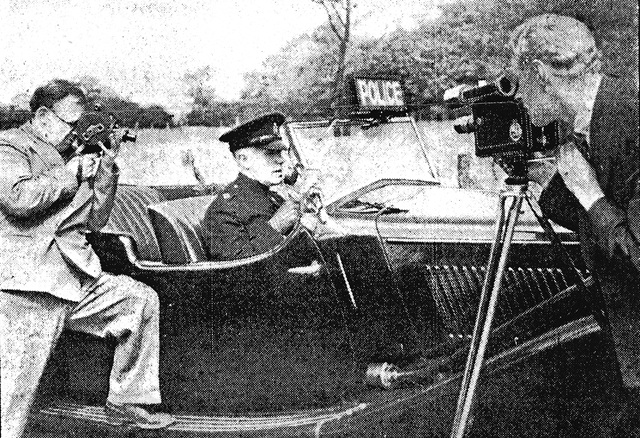 Fig.9 Doug Hardy and Roland Whiteside filming Police Patrol
It was reported in July 1939 that Pennine Films were producing a series of four short films for the 1939 season. The first of them Lancashire Reminiscences was said to be in the cutting room. Another one Sunset City, a 10 minute film about Peel, Isle of Man, was later sold to Pathe Pictures and used in one of their pictorials.
The outbreak of war soon forced them to suspend work on these latest projects. Roland Whiteside resumed his activities as a radiographer, at Calderstones which was again taken over as a military hospital. Doug Hardy joined British Paramount News, he was soon posted overseas as a war correspondent, work which earned him first an M.B.E. then an O.B.E. The studio was commandeered by the Civil Defence who used it to show ARP training films.
By the time the war ended their film making technology had been superseded and they all reverted to their other careers, Roland Whiteside as a photographer, Eric Pollard as an estate agent, whilst Doug Hardy returned to Paramount News, later joining Independent Television News (I.T.N.) as their northern cameraman.
Whilst all trace has been lost of some of their films, like the one they made in 1938 on Doulton Pottery, many of Pennine's films survived in Roland Whiteside's possession.
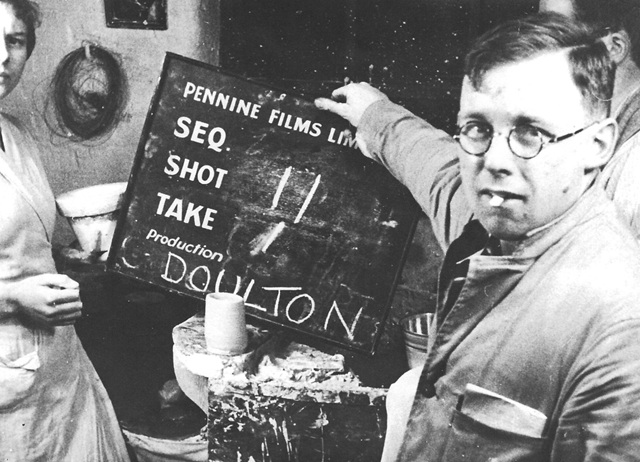
Fig.10 Douglas Hardy on location
In December 1976 Roland Whiteside and Cherry Gray, Keeper of Arts at Blackburn Museum, staged an exhibition on "The Blackburn Movies", it ran for two months. This was the first real attempt to document and illustrate the town's contribution to the film industry. Figure 10 features a poster, and frame stills of the Mitchell and Kenyon film Moon Man, both showing Percy Honri. His son, Baynham, wrote a piece about the Blackburn Movies exhibition for the British Journal of Photography in March 1977, it featured figures 3 and 4 above.
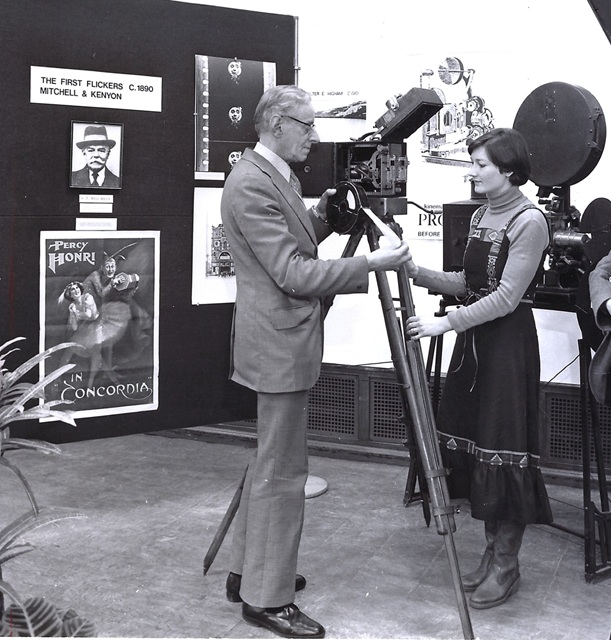
Fig. 11 Roland Whiteside and Cherry Gray, Blackburn Movies exhibition, with the Debrie Parvo 35mm camera used to shoot Pennine’s films.
The 'Blackburn Movies' exhibition and the accompanying film show created a great deal of interest. Whiteside found an ally in Peter Worden, a local optician and amateur film-maker. Further inquiries were made to try to unearth more 'long lost' films.
In 1979 Roland Whiteside was interviewed by Chris Kelly for a Granada Television “Clapperboard North West” programme which was first transmitted on 24th August, with repeats on 9th November and 28th January 1980.
Long thought to be lost in London during the war, Roland Whiteside discovered some of the original negative material for the Samlesbury Saga in Blackburn when Pollard’s estate agents was being cleared out for sale. After cleaning and recutting on his kitchen table it made its official debut at Blackburn Arts Club in March 1980. A new sound track had been added by Peter Worden.
Also in 1980, whilst searching the attic of the family home in Ireland his executor, Sir Digby Cayley, found a suitcase containing some of Cuthbert Cayley’s films, as well as documentation relating to Pennine Films. Amongst this haul was some early two colour dot matrix 16mm film taken by Cayley which showed Roland Whiteside filming the saga at Samlesbury Hall.
In December 1981 Worden and Whiteside gave two film shows at Blackburn Museum which included the re-edited Samlesbury Saga film. They were joined by Robin Whalley, a local historian who did more research about the firm, and they went on to give many more film shows of some of Pennine’s films over the following years, including some in conjunction with the Mid Pennine Arts Association and other local groups. These film shows usually included A Glorious Adventure, This Other Eden and Lancashire Lakeland, before they finished with the Samlesbury Saga.
The 35mm films, and the 16mm showreel, survived in Peter Worden’s possession. After his death in 2013 his vast collection of films, went to the North West Film Archive. Although it has yet to be fully inspected and assessed, it is believed that Pennine’s films are amongst them.
Brief Biographies
-
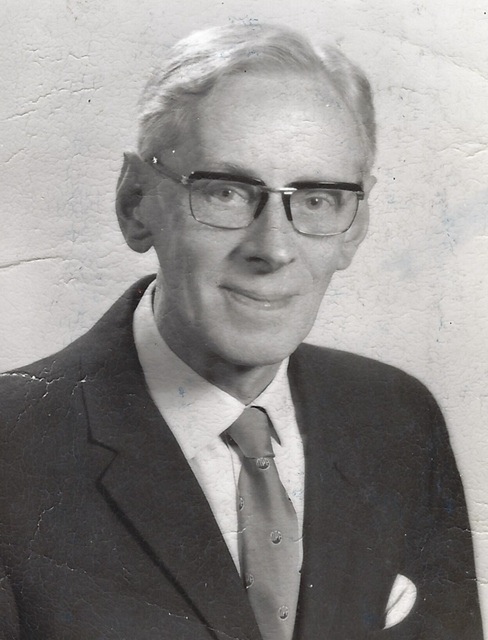
Roland Whiteside MSIA, FRSA (1911 – 1988
George Roland Whiteside was born in August 1911, to George and Edith Whiteside (nee Counsell), his father was the General Manager of the Blackburn (Amalgamated) Cooperative Society Ltd. Roland was educated at Queen Elizabeth’s Grammar School, and left at 16 to study medical radiography in London.
On his return to Blackburn in the early 1930s he bought Jetta’s Studios on New Market Street from Bert Smith.
Before Northern Film Productions Roland had made a number of mute 16mm films, not designed for theatrical showing, these included “From Whence they Came” for Salon Electrical Co. Ltd, Nelson and “The Blue John Stone” about the Derbyshire mine. He also made a recruitment film for William Birtwistle Allied Mills, and a film in conjunction with Accrington School of Art on fabric printing.
In 1939 he was living with his parents on Billinge Avenue. In 1943 he married Mary H. T. Barnes, she was affectionately known as “Molly”.
Roland did a variety of photographic work for King Peter II of Yugoslavia and Queen Alexandra whilst in wartime exile in England, including portraits for the King’s memoirs. The King presented him with a special bound edition.
As the war in Europe was coming to an end he moved briefly to Formby to recuperate and later to Oxenholme (his wife was from Kendal) taking over Winspear Herbert’s branch studio in Kendal.
He returned to Blackburn and bought another photographic business, Rudini, which he ran initially at 97, and later 161, Preston New Road.
Roland died in December 1988, aged 77, he was survived by his widow Molly and daughter Ilene.
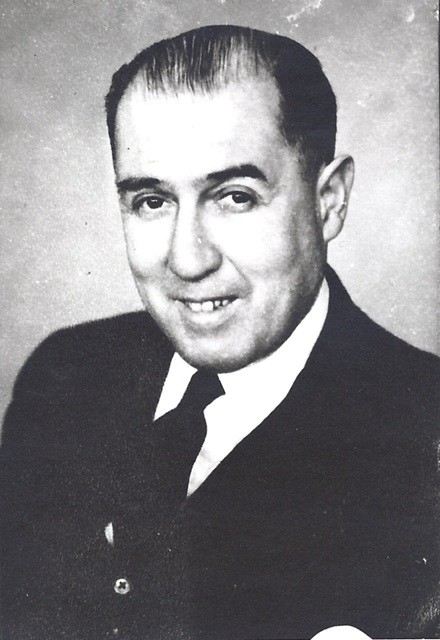
Eric Pollard (1900 – 1964)
Eric Aspden Pollard was born in August 1900 and baptised the following month at Holy Trinity church. He was the son of Frederick and Elizabeth Alice Pollard (nee Aspden); his father was an estate agent. Eric was educated at Queen Elizabeth’s Grammar School before going onto ‘wireless college’ at Liverpool. He built a transmitting station at home, his callsign was G5HQ.
In 1934 he married Adelaide Fitzgerald. In 1939 they were living on Ramsgreave Drive, he was an Estate Agent and Valuer, she was his clerk. Also resident was a Joan M. Marsden, a Film Producer’s Secretary.
The firm of Joseph Pollard and Sons, estate agents, St. John’s Corner, Victoria Street, Blackburn had been founded by his grandfather in 1870, and when his father, Fred, died in April 1939, Eric took over the business and ran it until his death.
In February 1941 Pollard helped ‘Ted Maxwell-Harvey’ demonstrate his new “Natura-Stereo” system of stereography at the Cinema Royal, Blackburn. Maxwell-Harvey was the latest incarnation of former Blackburn photographer Edwin Hargreaves. After giving up photography Hargreaves had made a successful career on stage as the then internationally famous illusionist “Signor Arvi”.
Eric died suddenly in October 1964, aged 64, leaving a widow Adelaide. At that time he was the Chairman of the Blackburn Property Owners and Ratepayers Association and a prominent member of Blackburn Rifle Club.
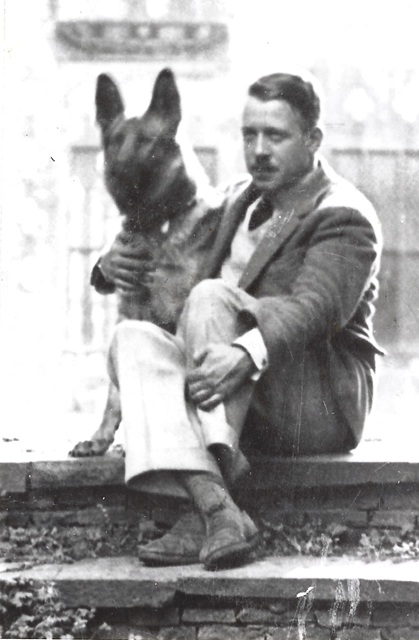
Cuthbert John Cayley FRGS (1907 – 1980)
Cuthbert John Cayley was born in June 1907 in Marylebone, the youngest son of Arthur Cayley and Beatrice Cayley (nee Coddington). He had a privileged upbringing. In the 1911 Census he and his parents were living with his grandfather Sir William Coddington Bart., formerly Blackburn’s M.P., who was in retirement in Bournemouth; the household included 12 servants. By 1921 Cuthbert, his parents and two brothers, Digby and William, had moved to Lytham, their household only included four servants.
Cuthbert was educated at Eton and Pembroke College, Cambridge, before joining the family textile firm W.D. Coddington & Sons, Blackburn. He was a gifted musician and collector of musical boxes.
Having resigned as a director of Pennine Films, and of the family textile firm, he joined a Manchester shipping company. In July 1938 he married his first cousin Iris at Carham-on-Tweed Parish Church, close to his parents’ home, Carham Hall, Coldstream. Roland Whiteside attended and took the wedding photos.
In August 1941 he was commissioned as an acting Pilot Officer in the R.A.F.
He and his wife moved to various addresses in Scotland before moving to Ireland in 1946, and later to a villa on the Algarve in Portugal, where his wife died in 1972.
Cuthbert died in hospital in London, following a motor accident, in March 1980, he was 72.
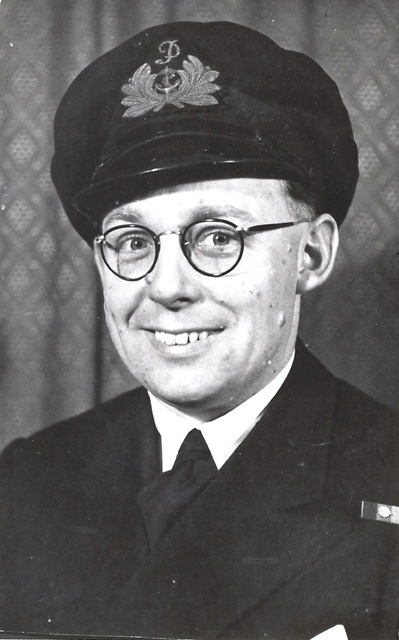
Douglas H. J. Hardy OBE, ARPS (1915 - 1980)
Doug Hardy was born in Leicester in July 1915 and educated at Douglas High School, Douglas, Isle of Man. Between 1933 – 1936 he studied physics at Manchester University, before joining Pennine in April 1937.
By the outbreak of war Doug had been doing an increasing number of newsreel assignments for British Paramount News, which early in 1940 resulted in him being appointed as their northern cameraman on £8 per week. He then became an accredited war correspondent for the Army filming for their Northern and Western Commands. In 1941 he filmed Queen Wilhemina in exile, and was then assigned to the Free French and went to Brazzaville, then in French Equatorial Africa, with de Gaulle.
Later that year he was sent as a Naval War Correspondent with the Home Fleet at Scapa Flow, he sailed aboard convoy cover warships in numerous convoys on the northern route to Russia into early 1942.
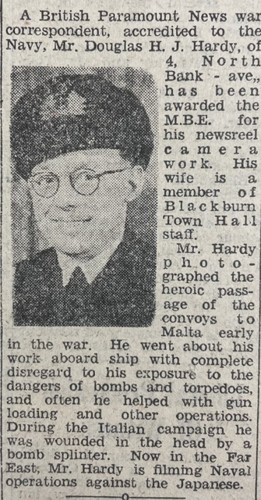
In April 1942 he was with a small cruiser force in the Mediterranean filming in and around Gibraltar. He filmed numerous patrol and reconnaissance flights in RAF Sunderland flying boats. In June he covered the desperate convoy to Malta when only two of the six ships got through. He was under fire on HMS Eagle and HMS Charybdis on their subsequent trips to Malta.
In September 1942 he was recalled to Scapa Flow, before in November he sailed aboard HMS Duke of York with the battle squadron for the North African landings. He was initially based with the 12th Cruiser squadron based in Bone (now Annaba), Algeria. During 1943 he covered many of the central Mediterranean actions, the fall of Tunis and Pantelleria, the relief of Malta from the west and the Kings subsequent visit. He was temporarily detached to the 51st Highland Division for their assault on Sicily and may well have been the first war correspondent to return to Europe.
He returned to 12th Cruiser squadron as they shelled the Italian Coast and entered Taranto on the capitulation of the Italian Fleet. In the autumn he moved to Alexandria.
He was wounded when HMS Aurora was hit during a heavy dive bombing attack off the Turkish coast, returning home at the end of the year. In 1944 he returned to the Mediterranean covering various operations in France, Italy and the relief of Greece and the subsequent revolution.
In 1945 he was recalled to England and sent to Australia and the British Pacific Fleet. He was present at the surrender of the Japanese in Tokyo Bay, going ashore with US forces tasked with picking up British prisoners of war. He spent the rest of the year in Japan, China and Korea, returning home for Christmas 1945.
In the King’s Birthday Honours list in June 1945 he had been awarded an MBE for his wartime newsreel work as an accredited naval correspondent of British Paramount News. He was appointed as an O.B.E in June 1946 having received an expression of commendation for brave conduct.
From 1946 he returned to more normal newsreel assignments with Paramount, however, newsreels were on the decline and they, like other newsreel companies, shed staff. He did freelance newsreel work and some work for the BBC when it opened up.
In 1955 he joined the new Independent Television News (ITN) as its northern cameraman, though this also involved shoots in Scotland, Wales and Ireland.
In March 1959, Doug appeared as a surprise guest on the This Is Your Life programme devoted to the actor Kenneth More. Their paths had crossed when they were both onboard the HMS Aurora when she was divebombed. They were together on the lower bridge, Hardy was wounded in the head by shrapnel whilst filming as More was giving a commentary to the crew below decks. They screened the footage Doug had shot before he made his entrance, More greeted him with open arms, he thought that Doug had died that day.
Probably the most dramatic footage that he took for ITN was at Coniston in January 1967. He was there to cover Donald Campbell’s latest attempt to break the water speed record in Bluebird. Roland Whiteside accompanied him on that fateful day and took some photographs of Doug and his two linked cameras.
In 1968 he was badly injured in a car crash whilst on assignment and later returned to less arduous duties. Sadly most the footage that he had taken and saved was lost in a garage fire at his home in June 1969.
In 1977 he was made a fully paid up member of the Association of Cinematograph, Television and Allied Technicians to mark 40 years of film and television work.
Doug died of a stroke in March 1980, he was 64. He left a widow Evelyn and two daughters.
“Cottontown has a news clipping on Doug in the Military Image Gallery from the Blackburn Times, 6th July 1944:”
With grateful thanks to Robin Whalley
Published October 2026